Gone is the dense toxic smoke, gone is the blood-red sun and gone is the feeling of tense anxiety about the imminent danger of the wildfires all around us. The joy of being free from the oppressive atmosphere that dominated our lives during the past two months let our spirits rise in jubilation. Prompted by the fortuitous turn of events, my wife and I decided to go on a hike on a rarely used trail past the Needles cemetery that led us straight to the Whatshan waterfalls. Here is a brief virtual tour to one of the oases of peace in our region. Enjoy.
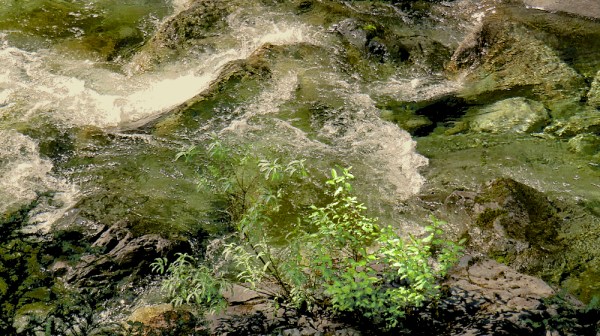
Past Green Shrubbery Holding out against the Turbulent Waters
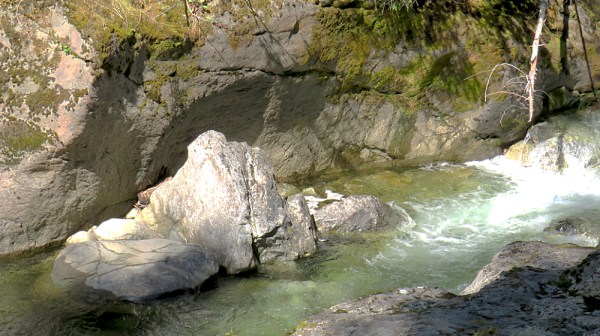
Past Rocks Sculpted by Millenia of Aquatic Erosion
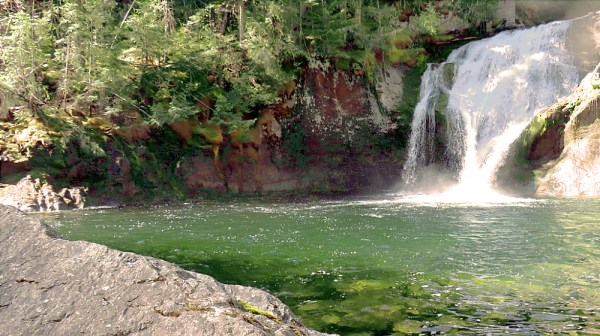
The Whatshan Waterfalls
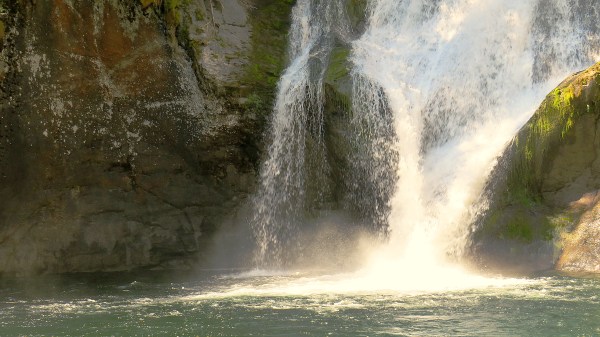
The Falls Hardly Diminished by the Long Summer Drought
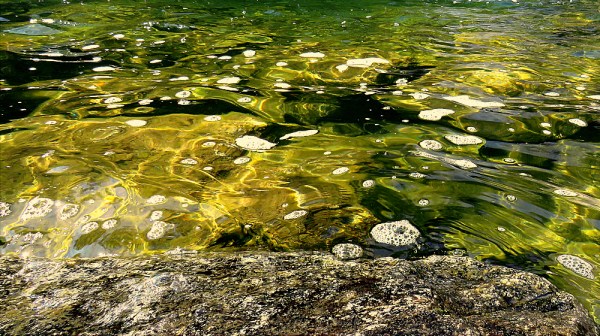
The Beauty of Crystal-Clear Water, Tiny Bubbles and Reflections
Suddenly, the weather changed from one day to the next and brought rain and more for the next seven days. Temperatures plunged to near freezing at night, while water soon filled their clay huts and made it impossible to sleep on the ground. Poor Papa Panknin tried to sleep while standing on one leg for a couple of minutes, then switching to the other. Once, he succeeded in catching a few winks, only to wake up in horror discovering to his utter dismay that he had plunged face down into the mud. He summarized his dismal experiences as triple torture of standing, starving and freezing. From the highest-ranking officer down to the common soldier, every POW had to endure the cold nights and the rainy days. The weather made no distinction. It fooled the prisoners by raising their hopes when short periods of clear skies promised a sunny, dry day, only to revert to more rain during the day.
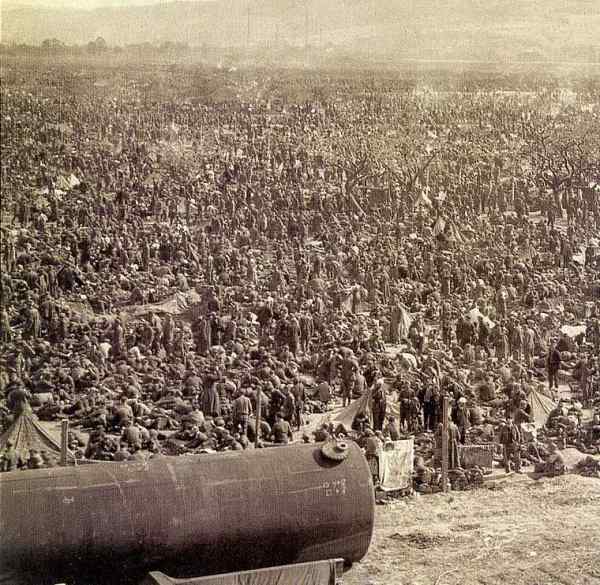
One of the many overcrowded POW camps: The Rhinewiesen Camps, where Papa landed in April 1945
In the first week of May, the sun did not show its face for five long days. Papa was constantly scanning the sky for a sign of change in the weather. His long gaze created the hope that if he looked hard enough, he would perhaps discover a patch of blue on the murky horizon. Indeed, Papa thought he had found a definite shift from gray to blue. When he proudly announced his comrades the changes he had observed in the clouds, they all laughed at him. Like a desert traveller fancying an oasis, where there is none, so Papa had fallen victim to the mirage that had formed in his desperate mind. Perhaps hot, nutritious meals would have helped a little to provide some strength and warmth. Alas, the thin soups were getting lighter and often arrived cold at their swampy mud hole.
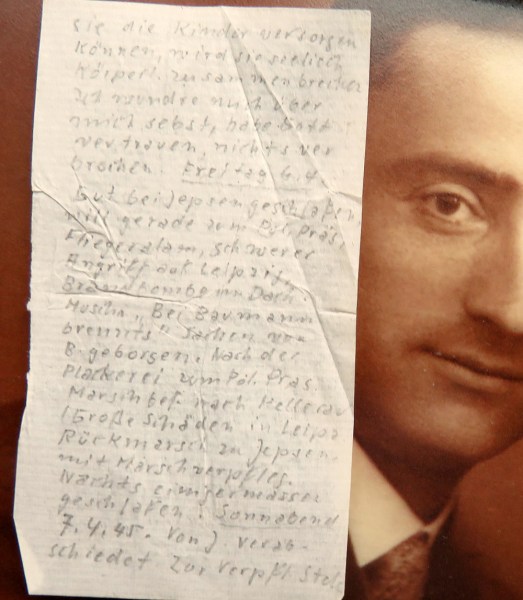
The posts on Walter Panknin are based on the notes he had written on tiny cigarette paper before and during his POW time. How he could write his experiences on such miniscule paper will be perhaps be forever a mystery.
During one night, Papa tried to find some rest for his tired feet by sitting on a water container, but completely exhausted fell two times asleep and into the muck. Unkempt and unshaven, covered in filth, he felt more like an animal than a human being. There was strife and petty spats over tiny morsels of food. There was no wood to make a fire, not even for roasting the few potatoes that had been made available for the hungry men. Papa built a primitive grating tool out of a tin can, into which he had punched some twenty holes. Now he could shred a potato into a porridge-like pulp, which he ate raw to get some badly needed nutrients, minerals and vitamins into his belly.
The wildfires that have been devastating nearby forest and were threatening to destroy our small community have finally been brought under control. This week, I observed a helicopter flying over the lake to pick up water, then carrying the bucket to the few remaining hotspots left from the recent wildfire. The pilot made the 20 km round trip in 20 minutes. That is 3 trips per hour and 24 buckets in his 8-hour shift. We are so grateful to all the firefighters who saved our little community of Fauquier from disaster.
 The Peter and Gertrud Klopp Family