Carthage: A Love Story – Chapter II Part 1

Carthage by Peter Klopp ©


The Fate of the Roman Traders and Farmers

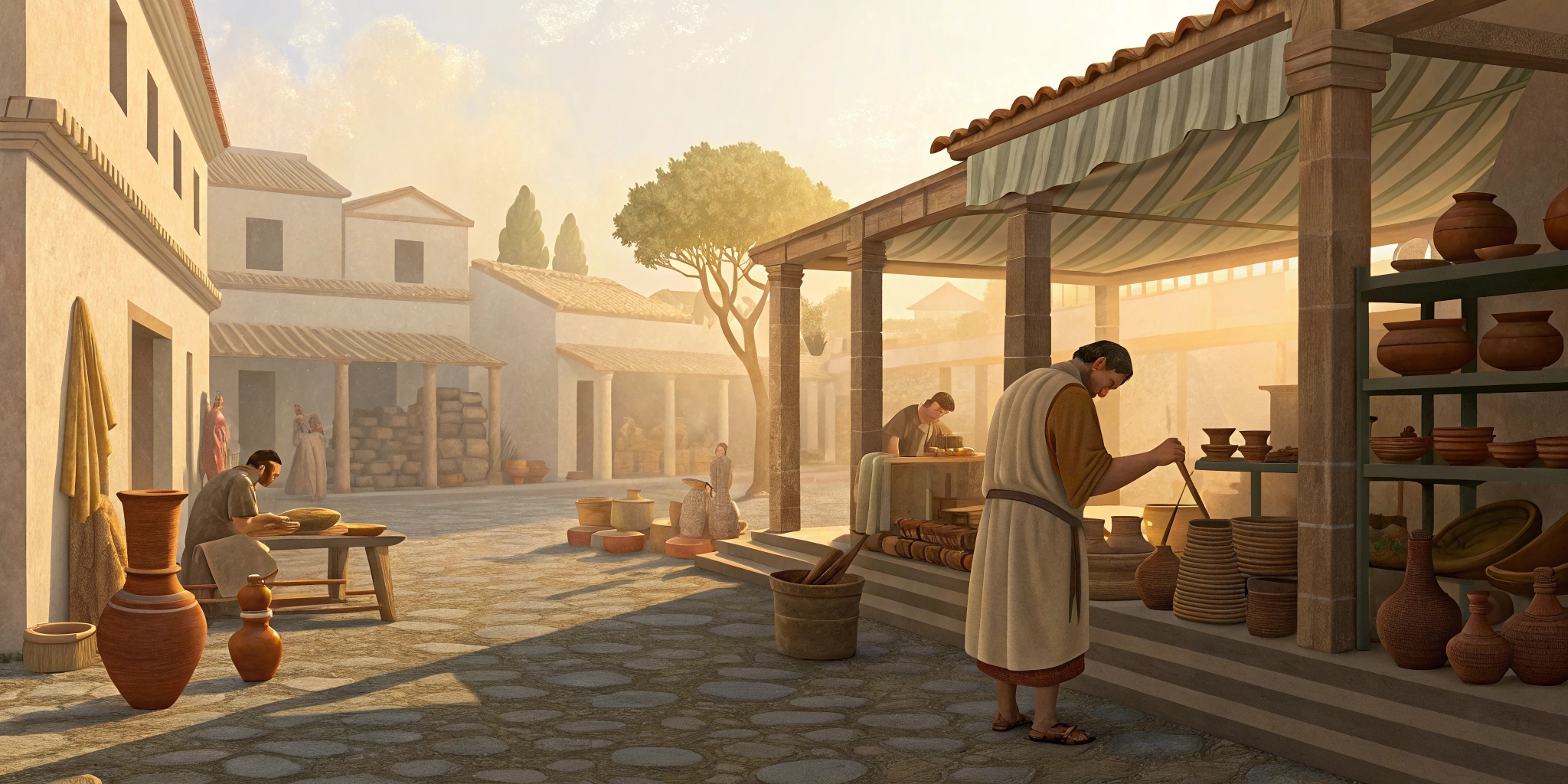
The more millionaires grew out of the financial and commercial city of Rome, the worse the situation was for factories, workshops and all the facilities that provide work and bread for the people of a healthy state. The cheap imported goods, mostly expensive ointments, hair dyes, wines, silver and gold utensils and clay vases, displaced every domestic industry. The situation was even worse for the Latin, once free farmers. African and especially Sicilian grain was offered to the Roman mob at knockdown prices.

Thus, the local farmers soon found themselves in a devastating interest situation with the Roman bankers. They held out until they could no longer pay the interest rates due, and then moved to the capital impoverished so that they could at least live off foreign grain, but this increased the number of people without property even further. The money merchants who took over the indebted farms combined them into large, expansive areas and handed them over to a manager who managed them with a constantly growing slave population. An enormous number of cattle ready for slaughter flowed from these estates to Rome every year and helped to fill the coffers of the moneyed aristocracy.

Whereas previously the eye of the law watched closely on the way in which slaves were treated, they were now outside the city, in a sense removed from the law and at the mercy of the slave owner. So they lived miserably and were often treated worse than cattle. Although they were threatened with severe punishment, many dared to leave their masters in secret, band together and cause mischief in gangs. Their former masters often paid for their excessive cruelty with their lives. Since the Roman state could not get to the root of the evil, it had no choice but to take military action against them.

Karthago von Peter Klopp ©

Das Los der Händler und Bauern

Je mehr Millionäre der Geld- und Handelsstadt Rom entwuchsen, desto ärger stand es um Fabriken, Werkstätten und all die Einrichtungen, die den Menschen eines gesunden Staates Arbeit und Brot verschaffen. Die billigen Importwaren, meist kostbare Salben, Haarfärbemittel, Weine, Silber- und Goldgeräte und Tonvasen verdrängten jede heimische Industrie. Noch schlimmer war es um den lateinischen, einst freien Bauern bestellt. Das afrikanische und vor allem sizilianische Korn wurde dem römischen Pöbel zu Schleuderpreisen angeboten. 

So gerieten die eigenen Bauern bald in ein verheerendes Zinsverhältnis der römischen Bankiers. Sie hielten sich so lange zäh, bis sie die fälligen Zinssätze nicht mehr bezahlen konnten, und zogen dann bettelarm in die Hauptstadt, um wenigstens vom ausländischen Korn leben zu können, vergrößerten aber noch mehr die Zahl der Besitzlosen. Die Geldhändler, die die verschuldeten Höfe übernahmen, fassten diese zu großen, weiten Flächen zusammen und übergaben sie einem Verwalter, der sie mit einer stetig anwachsenden Sklavenschaft bewirtschaftete. Eine ungeheure Zahl von schlachtreifen Rindern floss jährlich von diesen Gütern nach Rom und half, die Kassen der Geldaristokratie zu füllen. 

Wachte früher aufmerksam das Auge des Gesetzes auf die Art, wie die Sklaven behandelt wurden, so waren sie nun außerhalb der Stadt, gewissermaßen dem Gesetz entzogen und der Willkür des Sklavenhalters ausgesetzt. So lebten sie elendig und wurden oft schlimmer behandelt als das Vieh. Obwohl ihnen hohe Bestrafung drohte, wagten viele, ihre Herren heimlich zu verlassen, sich zusammenzurotten und als Banden ihr Unwesen zu treiben. Oft bezahlten ihre ehemaligen Herren ihre allzu große Grausamkeit mit dem Tod. Dem römischen Staat, da er das Übel nicht bei der Wurzel packen konnte, blieb nichts anderes übrig, als gegen sie mit militärischer Gewalt vorzugehen.
Carthage: A Love Story Chapter I Part 19

Carthage by Peter Klopp ©

Sad Farewell

Publius couldn’t believe it. That couldn’t be the final decision. The mob’s bloody deed was certainly terrible, but the hatred of those who threatened it was also understandable. But he had little time to think. His things had to be packed and loaded onto the ship. His two friends helped him. 

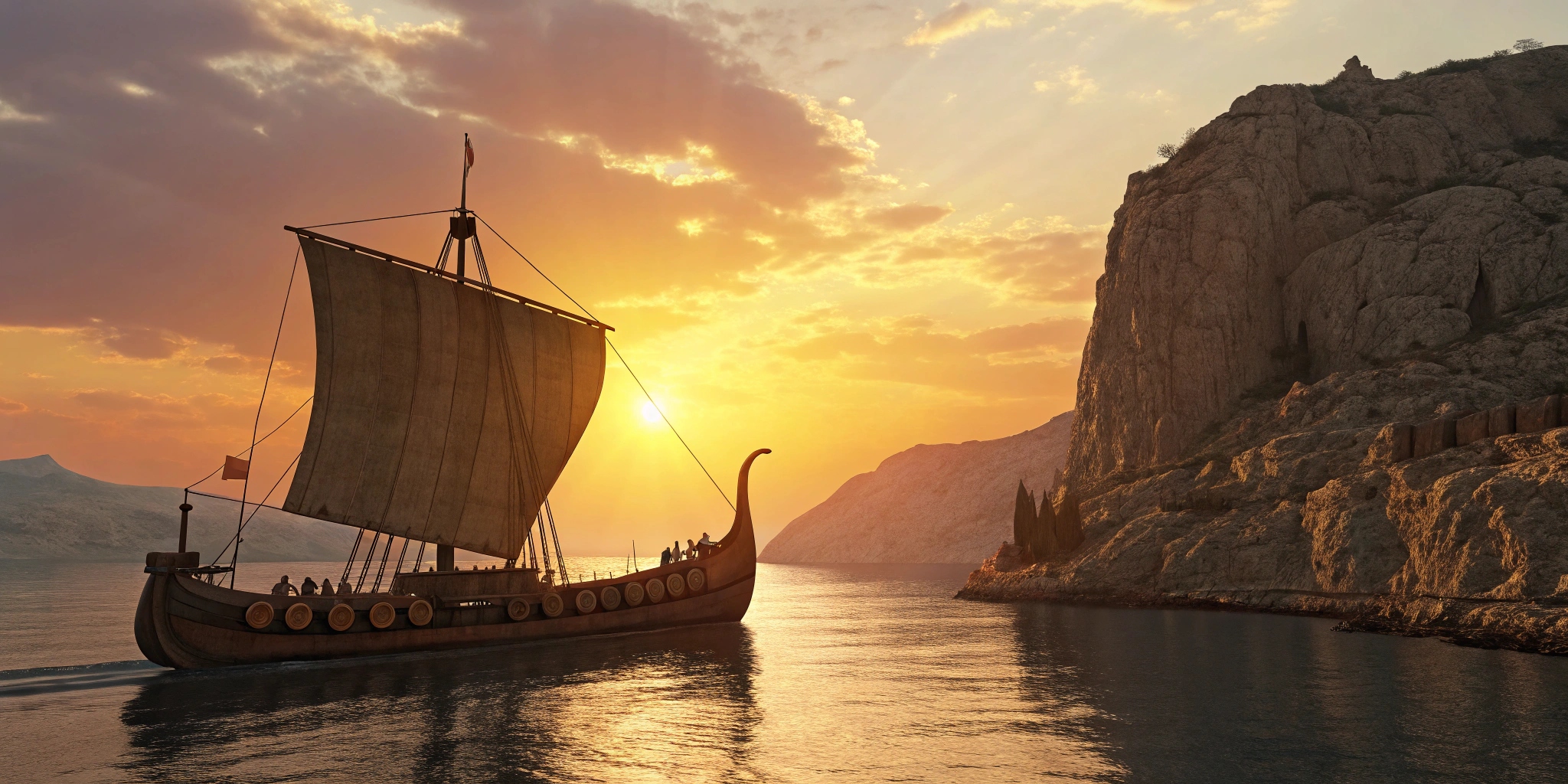
As the Roman sailor navigated out of the trading port, there were only a few people on the quay. Nobody waved. Publius watched you go sadly. What a terrible turn the negotiation had taken. He thought of the friendly welcome the residents had given them. Now everything was over. There will be war, war! Everything still seemed so peaceful. The murder of the ambassadors was so unimaginable for Publius, so unreal, as if it had never happened. 

A whistle interrupted his worried thoughts. They had to gather; because Naso had something to say. 

“The following soldiers must remain on board upon arrival in Ostia. Soldier, Cornelius Aper, Soldier Quintus Poccus, Soldier Publius Fabricius… These soldiers are still needed in the Capua area for 10 to 14 days. Runaway slaves worry farmers. I draw your attention to the fact that it is an honour and distinction…”

So Publius had not yet been released. The evening sun dipped into the Carthaginian mountains, whose shining peaks gradually sank into the sea.

End of Chapter I

Karthago von Peter Klopp ©

Trauriger Abschied

Publius konnte es nicht fassen. Das durfte nicht die letzte Entscheidung sein. Sicherlich war die Bluttat des Pöbels furchtbar, aber der Hass gegen die Bedränger auch wieder verständlich. Aber ihm blieb wenig Zeit, zu überlegen. Seine Sachen mussten verpackt und aufs Schiff verladen werden. Seine beiden Freunde halfen ihm dabei. 

Als der römische Segler aus dem Handelshafen hinaus navigierte, standen nur wenige Menschen am Kai. Keiner winkte. Publius sah Ihnen traurig nach. Welch furchtbare Wendung hatte die Verhandlung genommen. Er dachte an den freundlichen Empfang, den die Bewohner ihnen bereitet hatten. Nun war alles vorüber. Krieg wird es geben, Krieg! Noch schien alles so friedlich. Der Mord an den Gesandten  war so unvorstellbar für Publius, so unwirklich, als wäre er nicht geschehen. 

Ein Pfiff unterbrach ihn in seinen sorgenvollen Gedanken. Sie mussten sich versammeln; denn Naso hatte etwas anzusagen. 

“Folgende Soldaten haben bei der Ankunft in Ostia an Bord zu bleiben. Soldat, Cornelius Aper, Soldat Quintus Poccus, Soldat Publius Fabricius … Diese Soldaten werden für 10 bis 14 Tage im Raum von Capua noch gebraucht. Entlaufene Sklaven beunruhigen die Bauern. Ich mache euch darauf aufmerksam, dass es Ehre und Auszeichnung … “

Publius war also noch nicht entlassen. Die Abendsonne tauchte ins karthagische Gebirge, dessen leuchtende Zacken allmählich im Meer versanken.

Ende von Kapitel I

Carthage: A Love Story

Post from June 10, 2016

Destruction of Ancient Carthage

Personal Background to the Novel

A Metaphor for my Emotional Turmoil

There was enough explosive emotional energy bottled up inside me. Having no one to write to, I had to return to the unfinished novella to release it. At the park bench near the German Corner in Koblenz I had most of its content on Carthage written up in my notebook. The personal experiences making the story come alive were missing though. Now they were burning with a searing fire in my heart. My fingers were itching to commit them to paper.

Ancient Carhtage - Image Credit: ancient.eu

Ancient Carthage – Image Credit: ancient.eu

(The missing paragraph dealt with my transfer to Bavaria)

So I had more time than ever before to write in the semi-private room of our Maxhof residence. The historical sections of the novella heavily leaned on Mommsen’s historical work ‘History of Rome’ and to the best of my knowledge they described the power politics and Machiavellian schemes of Rome very accurately. My heart, which had lost two girlfriends within the span of less than six months, was the fertile breeding ground for the stuff that good writing feeds on. I transformed my former pen pal Margret, into Bersika, the daughter of a wealthy member of the Peace Party of Carthage to make the final dramatic encounter in the burning capital of the Carthaginians more believable. On the other hand, Claudia (Biene) and her twin brother received a more realistic description reflecting our first encounter at Lake Baldeney and the ensuing correspondence, which had for the time being ended so painfully. On the Palatine Hill in Rome Publius (Peter) and his friend became acquainted with an old sage, who introduced the young men to the philosophical centre piece of the novel, which reflected my ideas, in part burrowed from Democritus, on God and His creation and how He lives within it in a mysterious interplay between mind and matter. The destruction of Carthage, the fierce house to house street fighting, the slaughter of tens of thousands of civilians, the senseless resistance of the dictatorial ruling party against the almighty Roman war machine, the burning houses, the stench of unburied corpses provided the background for the final scene symbolizing my chaotic troublesome state of mind.

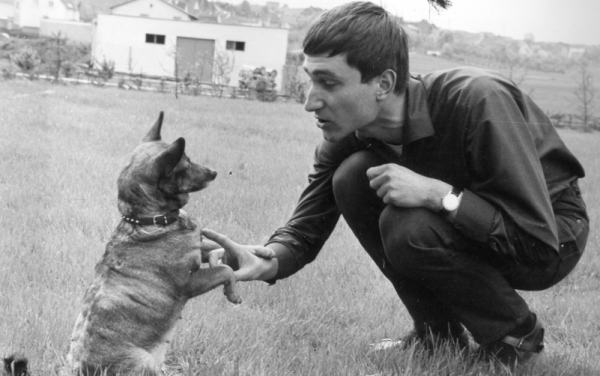
Peter playing with theneighbour's dog 1963

Peter playing with the neighbor’s dog (1963)

When I had penned the last line, I felt an eerie calm come over me. For a while I sat at my desk without a thought, without a feeling; it seemed that my inner being had been poured out into the thick writing book before me. Private Gauke entered the room. He had been teasing me about my writing craze for the past couple of weeks and had noticed with genuine concern how I was withdrawing more and more into my crusty shell. He said, “Peter, it is about time that you get off your chair. I just discovered a cozy pub in Feldafing. Let’s go and have a drink of that great Bavarian beer.” Gauke was a fine fellow. I gladly came along. The novella was finished.

The novel will continue next week.

Carthage: A Love Story Chapter I Part 18

Carthage by Peter Klopp ©

The Massacre

“Today was the final session of the Senate of Carthage,” Decimus began.

“Naso had given a brilliant speech, weighed the reports of the Numidian envoys and the Carthaginian statements against each other, and had given Massinissa the right to collect the compensation demanded and to occupy and manage the disputed territory. In addition, the Carthaginians were to pay the full costs of the negotiations to the commission in Rome.

We were standing outside the town hall, Publius, and could hear everything. You would not believe the storm of indignation that arose in the Elders’ Council. The tumult was such that the inhabitants of the immediate vicinity ran together and only increased the shouting. Then Harso rose from his seat. You know, the one with whom you stayed the night on the first day. He spoke words of moderation and reflection, but no one listened to him. Then Naso’s commanding voice rang out and brought instant calm. “We await your answer,” he called out imperiously. Another murmur arose in the ranks of the senators. Then Harso, who was still standing, spoke again, “For the sake of peace, we accept.” Then the Numidian envoys stood up, bowed gratefully to our commission leader and left the town hall, still looking around haughtily. I have never encountered anything so pompous before. You should have seen them strutting past us. The town hall square was densely packed with people who had all abandoned their work and rushed there to hear the terrible news. Icy silence greeted the envoys. Hate-filled eyes stared at them. But hesitantly, a narrow alley formed in front of the Numidians who wanted to reach their horses in the nearby stables.

They had taken about 50 double steps when the crowd refused to open up any further. Wherever they looked, they were hemmed in by the crowd. The Numidians demanded passage loudly and unimpressed. One even raised his ambassador’s staff threateningly at the people standing next to them.

Suddenly, a cry rang out from behind. “Kill them, the desert pigs.”

“Yes, kill them,” rang out from all sides, and then a terrible commotion began. Those at the back pushed forward, whether the first wanted it or not. They were pushed against the ambassadors. When the latter defended themselves with their weapons, the people had to stop the ambassadors if they would rather not be killed. They snatched the weapons from them, threw them to the ground, and then we saw nothing more. The unleashed mass trampled over them, and the roar of hatred was so loud that we could not hear any of the cries of pain and death. The news had spread quickly in the Senate, and the Carthaginians turned as white as a sheet. Almost as if our commission leader had foreseen this, he spoke his words so calmly and carefully. “It is fortunate that we are still alive. Arrange this with the Roman consul. As for us, we will leave this very night to report to the Senate on the Carthaginians’ love of peace. The guards should make room for us outside.” We had little to do. The people, probably shocked by their bloody deed, retreated silently into their houses,” Decimus concluded his report.

Karthago von Peter Klopp ©

Das Massaker

„Heute war die Schlusssitzung im Senat von Karthago“, hob Decimus anzusprechen. 

„Naso hatte eine glänzende Rede geschwungen, die Berichte der numidischen Gesandten und die karthagischen Aussagen gegeneinander abgewogen und hatte Massinissa das Recht zugesprochen, die geforderte Entschädigungssumme zu kassieren und das umstrittene Gebiet einzunehmen und zu bewirtschaften. Außerdem sollten die Karthager die Kosten der Verhandlung im vollen Umfang der Kommission gleich mit nach Rom geben. 

Wir standen draußen vor dem Rathaus, Publius, und konnten alles mit anhören. Du glaubst gar nicht, welch Sturm der Entrüstung sich im ältesten Rat erhob. Der Tumult war derartig, dass die Bewohner der nächsten Umgebung zusammenliefen und das Geschrei nur noch vermehrten. Da erhob sich Harso so von seinem Sitz. Du weißt, bei dem du am ersten Tag übernachtet hast. Jener sprach Worte der Mäßigung und Besinnung, aber keiner hörte ihn an. Da ertönte die Kommando-gewaltige Stimme Nasos und schaffte augenblicklich Ruhe. 

„Wir warten auf eure Antwort“, rief er gebieterisch. Ein erneutes Gemurmel erhob sich in den Reihen der Senatoren. Dann sprach wieder Harso, der noch immer stand, „Um des lieben Friedens willen, wir nehmen an.“

 Da erhoben sich die numidischen Gesandten, verbeugten sich mit dankbaren Gesten vor unserem Kommissionsleiter und verließen noch hochmütig um sich blickend das Rathaus. So etwas Aufgeblasenes ist mir bisher nicht begegnet. Du hättest sie mal sehen sollen, wie sie an uns vorbei stolzierten. Der Rathausplatz war dicht gedrängt von Menschen, die alle ihre Arbeit im Stich gelassen hatten und auf die fürchterliche Nachricht dorthin geeilt waren. Eisiges Schweigen empfing die Gesandten. Hasserfüllte Augen starrten sie an. Aber zögernd bildete sich eine schmale Gasse vor den Numidiern, die ihre Pferde in den in der Nähe befindlichen Stallungen erreichen wollten. 

Sie waren etwa 50 Doppelschritte gegangen, als der Menschenhaufen sich nicht mehr weiter öffnen wollte. Wo sie auch hinblickten, überall waren sie von der Masse eingekeilt. Die Numidier forderten laut und unbeeindruckt Durchgang. Da erhob einer sogar drohend seinen Gesandtenstab gegen den nächsten der umstehenden Menschen. 

Da erscholl plötzlich von hinten. „Schlagt sie doch tot, die Wüstenschweine.“

„Ja, schlagt sie tot“, ertönte es von allen Seiten, und dann begann ein furchtbares Getümmel. Die Hintersten stießen nach vorn, ob die Ersten es wollten oder nicht. Sie wurden gegen die Gesandten gedrängt. Als sich diese mit der Waffe wehrten, mussten die Leute, wenn sie nicht getötet werden wollten, die Gesandten daran hindern. Sie entrissen Ihnen die Waffen, warfen sie zu Boden, und dann sahen wir nichts mehr. Die entfesselte Masse trampelte über sie hinweg, und das Hassgebrüll war so groß, dass wir nichts von den Schmerzen- und Todesschreien vernehmen konnten. 

Die Botschaft hatte sich schnell im Senat herumgesprochen, worauf die Karthager kreidebleich wurden. Fast, als hätte unser Kommissionsleiter dies vorausgesehen, sprach er so ruhig und überlegt seine Worte.

„Es ist ein Glück, dass wir noch leben. Macht dies mit dem römischen Konsul aus. Was uns betrifft, fahren wir noch diese Nacht ab, um im Senat über die Friedensliebe der Karthager zu berichten. Die Wachmannschaft soll uns draußen Platz schaffen.”  

Wir hatten wenig zu tun. Die Leute ,wohl erschrocken über ihre Bluttat, zogen sich stumm in ihre Häuser zurück“, endete Decimus seinen Bericht.