Carthage by Peter Klopp ©
Publius and Claudia Win the Dice Game
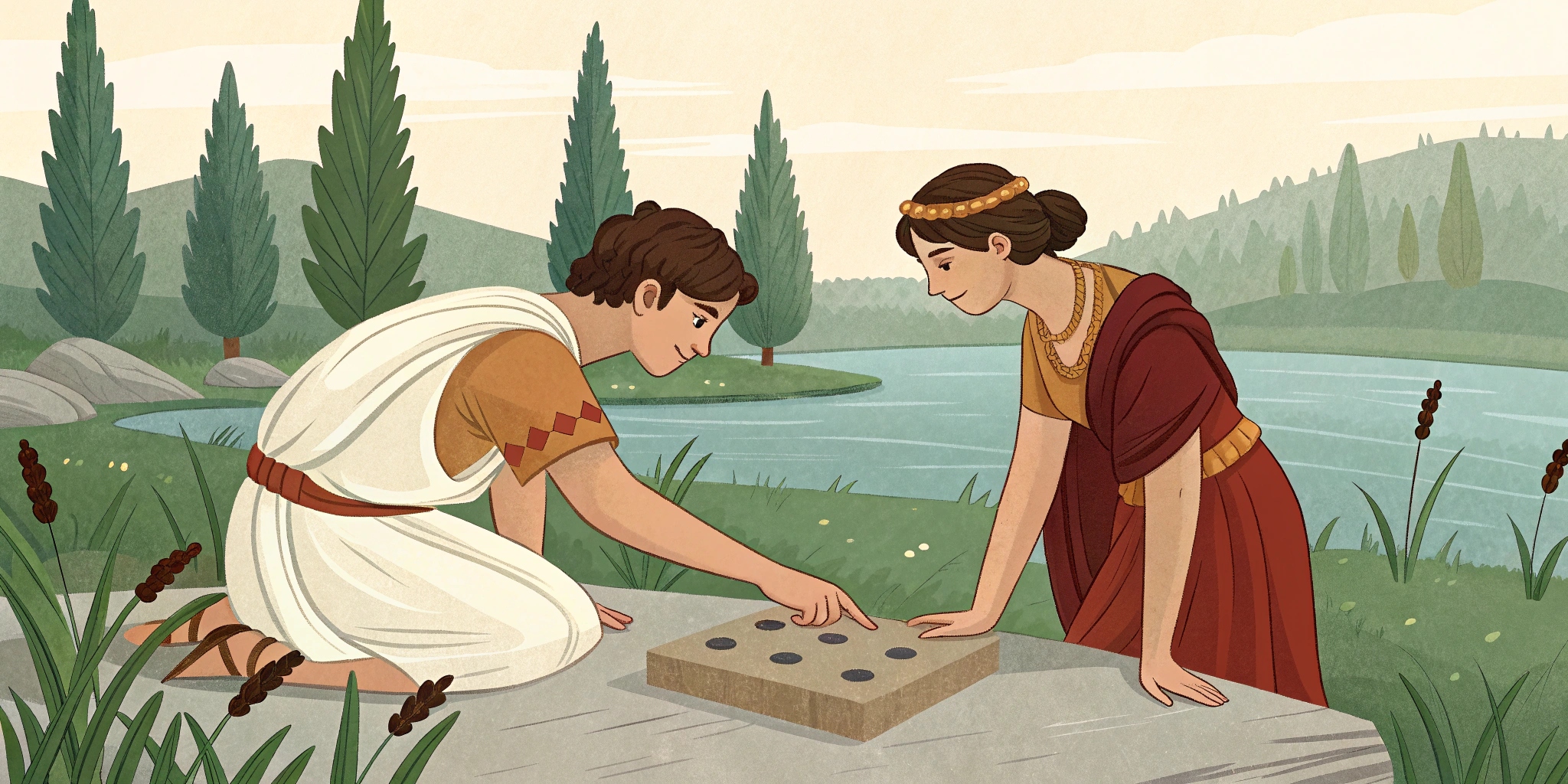
While Lucius was still explaining the rules, Claudia and Publius had already come to an agreement. The two of them would form a team. So the other one made a stupid face when he saw that he had to play with Antonius. It was a fun game. Antonius’ team lost every game, but since he was able to laugh so heartily about his bad luck, the dice rolling never stopped.
It was Publius’ team’s turn. Claudia took the face off and threw two, four and five.
“Five, three and two,” Publius summoned the dice. One, six, four. A malicious laugh arose from the other side.
“Lost, lost! New game!”
“Four and four still make doubles,” Publius asserted his right to repeat the throw. He proudly placed a die in Claudia’s delicate hand. This time a six appeared on the smooth stone slab, and Publius added a second. One die was recovered. The two of them managed fifteen laps and were beaming about their great success. The wax tablet recorded the result and the game began again. When the sun had sunk behind the Capuan mountains, they stopped playing the fun game because they could no longer read the score on the dice.
But they chatted for a while about their experiences. Antonius knew how to imitate his Greek tutor so convincingly that a bright laughter often rang out in the mild autumn air, and finally the father of the household came out and told the young company to go to bed. After they had shaken hands for a long time, Antonius called out, “And tomorrow we will take the boats out on the lake,” which was greeted with great shouts of joy. A new friendship was formed.
Karthago von Peter Klopp ©
Publius und Claudia Gewinnen das Würfelspiel
Während Lucius noch die Regeln erklärte, waren sich Claudia und Publius schon einig geworden. Sie beide würden ein Team bilden. So machte der andere ein recht dummes Gesicht, als er sah, dass er mit Antonius zusammen spielen musste. Es wurde ein lustiges Spiel. Das Team von Antonius verlor jedes Spiel, aber da er so herzlich über sein Pech lachen konnte, wollte das Würfeln kein Ende nehmen.
Das Team von Publius war an der Reihe. Claudia machte das Anspiel und warf zwei, vier und fünf.
„Fünf, drei und zwei“, beschwor Publius die Würfel. Eins, sechs, vier. Ein schadenfrohes Gelächter erhob sich auf der Gegenseite.
„Verloren, verloren! Neues Spiel!“
„Vier und vier machen immer noch Pasch“, machte Publius sein Recht auf eine Wiederholung des Wurfes ist geltend. Stolz legte er Claudia einen Würfel in ihre zierliche Hand. Diesmal zeigte sich eine Sechs auf der glatten Steinplatte, und Publius fügte eine Zweite hinzu. Ein Würfel war zurückgewonnen. So schafften die beiden fünfzehn Runden und strahlten über ihren großen Erfolg. Die Wachstafel hielt das Ergebnis fest, und das Spiel begann von Neuem. Als die Sonne hinter dem kapuanischen Bergland versunken war, stellten sie das lustige Spiel ein, da sie die Punktzahl vom Würfel nicht mehr ablesen konnten.
Sie plauderten aber noch eine Weile über ihre Erlebnisse. Antonius wusste so überzeugend, seinen griechischen Hauslehrer nachzuahmen, dass oft ein helles Lachen in die milde Herbstluft schallte und schließlich der Hausvater heraustrat und die jugendliche Gesellschaft zu Bett mahnte. Als sie sich lange die Hände geschüttelt hatten, rief Antonius, „Und morgen fahren wir mit den Booten den See hinaus“, was mit großem Freudengeschrei begrüßt wurde. Eine neue Freundschaft war geschlossen.

 The Peter and Gertrud Klopp Family