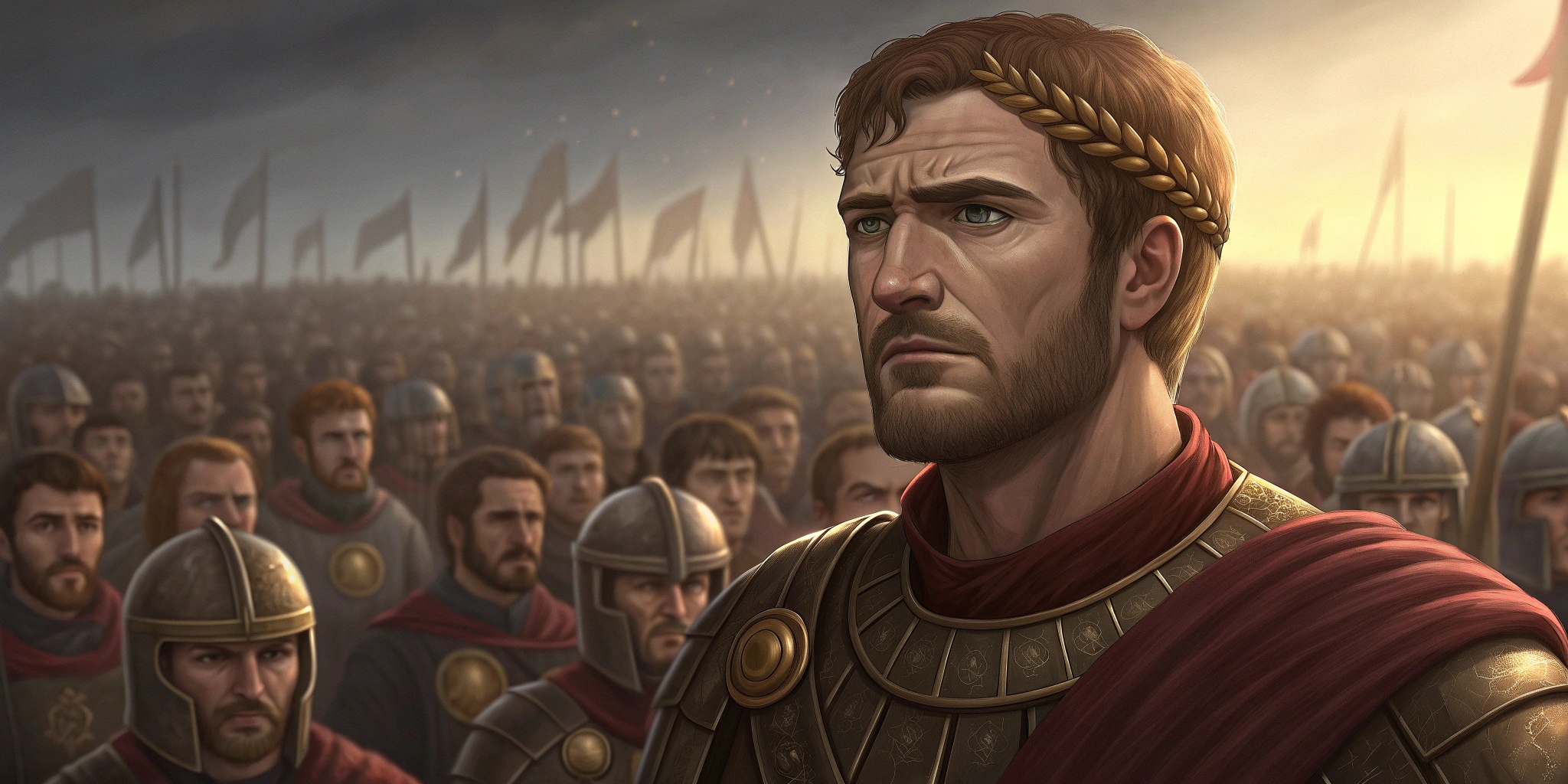
Carthage by Peter Klopp ©
Change of Command
The next morning, the wall stood as high and as strong as on the first day. The gap in the wall had been closed again. Consul Manlius and his army made no progress with their operations. He tried in vain to take the citadel wall from the west. The enemy successfully repelled him every time. The summer heat, with its associated swamp diseases, did the rest and did little to improve the morale of the soldiers. Thus, the war dragged on, and the Carthaginians regained their courage. The following year brought no change. On the contrary, even less was done. The new consuls limited themselves to cutting off the city’s supply lines from the sea and launching mostly unsuccessful attacks on smaller sea fortresses.
In Rome, Cato died, and in Numidia, the elderly Massinissa passed away. Sheikh Bythyas, weary of Roman rule, defected to the Carthaginians with his cavalry. The Patriotic Party forged connections with the now-divided Numidia, and even with the royal house of Mauretania. The false Philip of Macedon also promised the tormented citizens relief from the burdensome siege through rebellion and murder throughout Greece.
As the year 147 dawned, Carthage stood more magnificent and powerful than the proud would-be conqueror. And the entire non-Roman world secretly began to wish the valiant city, which bravely defended its freedom, good fortune and blessings. An uneasy mood hung over Rome. One rumor chased another. The consuls were prolonging the war to line their own pockets. Others claimed that Hasdrubal was assembling a large army in Mauritania, intending to cross the Alps a second time and exact devastating revenge. The people cried out for the famous saviour, whose name sounded so reassuring to everyone: Scipio Aemilianus. Indeed, Scipio was on everyone’s lips. Although he had not followed the career path prescribed by law, the Senate sent him to Africa in the spring as commander-in-chief of the fleet and army with extraordinary powers to put an end to the troops’ sluggish activity.
Karthago von Peter Klopp ©
Kommandowechsel
Am nächsten Morgen stand die Mauer so hoch und so fest wie am ersten Tag Die Lücke in der Mauer war wieder geschlossen. Auch Konsul Manlius mit seinem Landheer kam mit seinen Operationen nicht weiter. Vergeblich versuchte er, die Burgmauer von der Westseite zu nehmen. Die Feinde schlugen in jedes Mal erfolgreich ab. Die Sommerhitze tat mit ihren Sumpfkrankheiten das Übrige und hob nicht gerade die Stimmung und die Kampfmoral der Soldaten. So zog sich der Krieg in die Länge und die Karthager schöpften wieder neuen Mut. Auch das nächste Jahr brachte keine Wendung. Im Gegenteil, es wurde noch weniger getan. Die neuen Konsuln beschränkten sich darauf, von der See her die Zufuhr von der Stadt abzuschneiden und kleinere Seefestungen meist erfolglos anzugreifen.
In Rom starb Cato und in Numidien der Greis Massinissa. Der Scheich Bythyas ging, der römischen Vormundschaft überdrüssig, mit seinem Reiterhorden zu den Karthagern über. Die Patriotenpartei knüpfte Verbindung zu dem nun geteilten Numidien, ja zum Königshaus von Mauretanien an. Sogar der falsche Philipp von Mazedonien, versprach der gequälten Bürgerschaft durch Aufruhr und Mord in ganz Hellas Entlastung von der lästigen Belagerung.
Als so das Jahr 147 anbrach, stand Karthago herrlicher und mächtiger dem stolzen Möchtegern-Bezwinger gegenüber. Und alle nichtrömische Welt begann insgeheim der tapferen Stadt Glück und Segen zu wünschen, die todesmutig ihre Freiheit verteidigte. Eine ungute Stimmung lastete über Rom. Ein Gerücht jagte das andere. Die Konsuln ziehen den Krieg in die Länge, um sich die Taschen voll zu stopfen. Andere wollten wissen, dass Hasdrubal ein großes Heer in Mauritanien zusammenziehe, um damit ein zweites Mal über die Alpen zu ziehen und verheerende Rache zu nehmen. Das Volk schrie nach dem berühmten Retter, dessen Namen so vertrauenserweckend in aller Ohren klang: Scipio Aemilianus.
Ja, Scipio war in aller Munde. Hatte er auch nicht die Laufbahn durchmessen, die ihm das Gesetz vorschrieb, der Senat schickte ihn im Frühjahr als Oberbefehlshaber über Flotte und Heer mit außerordentlichen Vollmachten nach Afrika, um dem müden Treiben der Truppen ein Ende zu setzen
 The Peter and Gertrud Klopp Family
“And the entire non-Roman world secretly began to wish the valiant city, which bravely defended its freedom, good fortune and blessings.” Is that something you’ve plausibly imagined, or does the historical record give any support for it?
LikeLiked by 1 person
This is in response to your question what I dug up for you, Steve:
Greek Sympathy
LikeLike
Peter, yours is the only blog right now about which I don’t get any notifications of any kind when you are posting. I did before. So I just go into the reader regularly to see if there is something new.
LikeLike