The Peter and Gertrud Klopp Story – Chapter XXIX

Working from the Bottom Up

“Without ambition one starts nothing.

Without work one finishes nothing.

The prize will not be sent to you.

You have to win it.”

Ralph Waldo Emerson

My First Job – Painting my Brother’s House


X324

The three Brothers from Left to Right; Peter, Adolf and Gerry

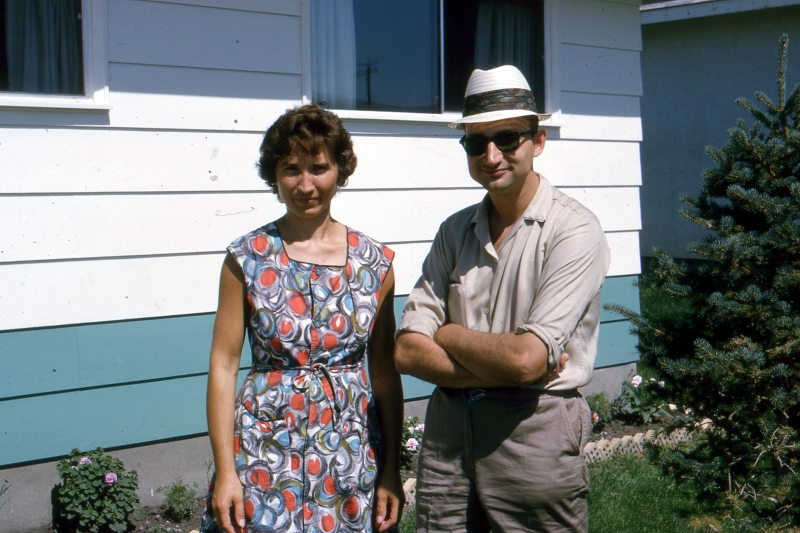
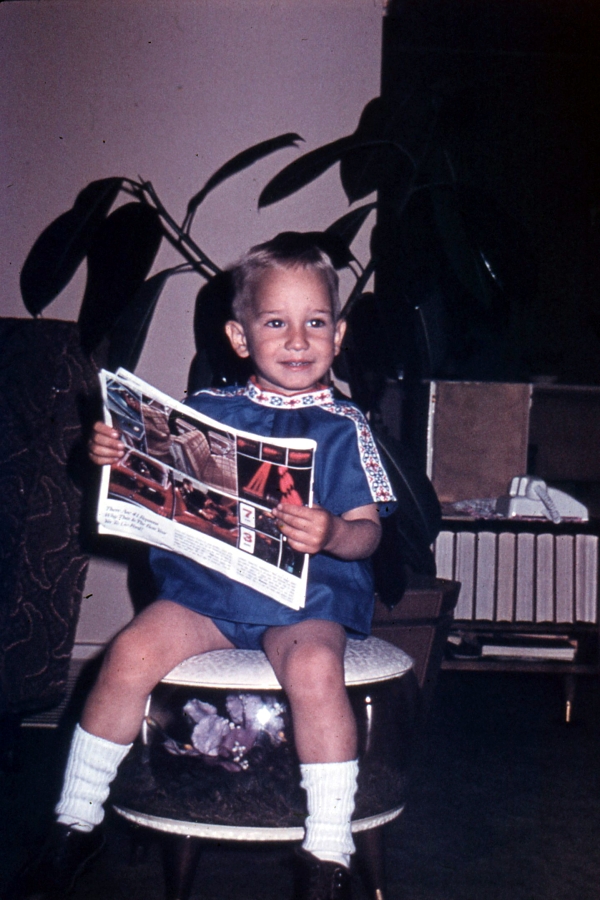
Arriving in the late afternoon at Gerry’s place on Fyffe Road in Calgary, I felt as if I was receiving a warm welcome way back home in Germany. Gerry greeted us in German. He introduced me to his wife Martha, who also spoke German in a strong southern dialect. The only one I could practice my English language skills with was their three-old son Wayne. Gerry, always straightforward and forthright, told me that he had some work for me. He wanted me to paint the house, while I was searching and applying for a paying position on the job market. I was eager to get my hands dirty and do something real useful after all this loafing around during the past two weeks. I really surprised him with my cheerful reply, “Why, can I start tomorrow?” Well, it turned that he had to buy paint, brushes and other equipment first, before I could start doing the paint job.
X342

Gerry and his Beautiful Wife Martha

My sister Erika, who had come by train a few days before us, had already run afoul of Gerry’s house rules, not the least of which was that he and Martha alone were in charge of their son’s upbringing. Any criticism no matter how constructive that might seem to be to our sister was therefore not welcome. As I have indicated in previous chapters, as long as I could remember, she was always inclined to speak her mind, indeed a valuable attribute of one’s character. However, when her tongue was faster than her mind that was supposed to control the former, the problem could easily escalate to a downright family feud. Fortunately for her, she soon moved out, as she had found work as a nurse’s aid in a rural hospital in the small prairie town of Bassano 143 km southeast of Calgary. She had found out that recognition of her German qualifications as an RN would depend upon the successful completion of her senior matriculation. So she had a long arduous road ahead. Tenacious and ambitious like all of us Klopp children she went back to school, attended night classes and studied hard to obtain her grade 12 diploma. This was all the more remarkable, as she did not have the advantage of having learned English in school.

195

Painting my brother’s house was more involved than I had anticipated. First, I had to sand the old flaky paint off the wood sidings, which was a dusty and laborious task that would take days to complete. While the job was time consuming, standing on a ladder and holding the electric sander above my head to reach the soffit boards was very tiring and not altogether pleasant with paint and dust particles flying into my face. The thought occurred to me that Gerry definitely got his money’s or, more accurately stated, his food’s worth of work out of me. Yet, I was enthusiastic about a job, where one could see its result for years to come. The best part of it was that I could take as many breaks as I felt necessary during which I drank some refreshment, which my sister-in-law so kindly provided from time to time.

Everyone was at work. When Gerry came home from work, he checked the progress I had made during the past eight hours and most of the time commented approvingly on the quality of my workmanship.

On the second week since our arrival in Calgary I was ready to paint. I enjoyed that part the most, because with each passing day the new white color had advanced a noticeable distance on its tour around the house. Not familiar with the use of brush and roller, I stained myself at the beginning with the paint dripping and splattering on my hands, face and clothes. But as my work progressed, I gradually looked more like an experienced painter at the end of the day. By the time June came around I had put on the second and final coat and Gerry’s home turned out to be most beautiful among the bungalows on the Fyffe Road loop.

Occupational Dreams and a Trip to the Dairy Queen

Calgary-1960s

Downtown Calgary in the Mid 1960’s

Every morning before breakfast the newspaper boy came by on his bicycle and dropped off the Calgary Herald at the front entrance. Actually he only dropped it off on rainy days, which happened very rarely in this semiarid climate. On all other days he would not even get off his bike. He would grab a paper from his bag and in a precisely calculated arc would land it right in front of the door. Before you knew it, he was already on the way to the next house. Later in the morning, when I granted myself a break from painting Gerry’s house, I would rush into the house and grab the Calgary Herald, which my brothers had left on the kitchen table. There was only one section in which I was really interested. I did not care about local, national or international news. Instead I quickly thumbed through the thirty odd pages of this massive newspaper until I reached the classifieds. There I soon found out what was hot on the job market. Day after day I noticed that there was an incredible teachers’ shortage in the province as evidenced by the large number of teaching positions in practically all subject areas, but especially in math both at the junior and senior high school level. The children of the baby boomers were flooding the school system, while many teachers were retiring.
187.jpg

Peter’s Nephew Wayne 1965

But I did not ignore the ads from the mining, oil and other resource based companies, which were trying to attract high school graduates offering free training in their respective fields with pay. Reading about all these promising positions was like entering a dream world. In a sense it actually was a dream world, more accurately put a fantasy world. I did not recognize in my unrestrained enthusiasm that it was a long, hard road from the effortless reading of an ad to landing the job of my dreams. I found out much later that the positions had often been filled at the time, when they finally appeared in the newspaper. However, as to the openings in the teaching profession, I had a fairly realistic picture in my mind. I further learned that the farther one was prepared to move away from the few major cities into isolated areas, where young city slickers would not be eager to live, the greater were the monetary and housing incentives that school boards were willing to offer. It was not uncommon in those days to offer $500 up front for each year a candidate would commit himself to teach with subsidized housing and isolation allowances to sweeten the pot.

Of course, in spite of Biene’s and my agreement we had made with each other to wait for two or even three years, deep inside we were always hoping for a quicker way of getting us two back together again. The first hint that Biene shared the same desire perhaps even more so came when I wrote her that I had almost made a foolish mistake in my career planning by responding to an ad from the IBM Company, which was looking for trainees in the fledgling computer industry. Indeed I felt, I would be the right candidate with my high school diploma and aptitude in math and analytical thinking. From Biene’s reaction expressing regret that I did not commit such foolishness, I could see that she too was counting on a shorter waiting period for our wedding date. In spite of these occasional flights of fancy that I allowed myself to paint a different future for Biene and me in Canada, I squashed any ideas that smacked of immediate gratification with regrets to follow in its footsteps. I realized that I could only be a good husband, father and family man, if I found fulfillment and satisfaction in my professional life. As one of Gerry’s friend so correctly once stated, work you enjoy doing is not work at all, rather it could become a source of relaxation and happiness. It was my hope and aspiration that one day teaching would do the same for me, and so also for Biene and the family.
216

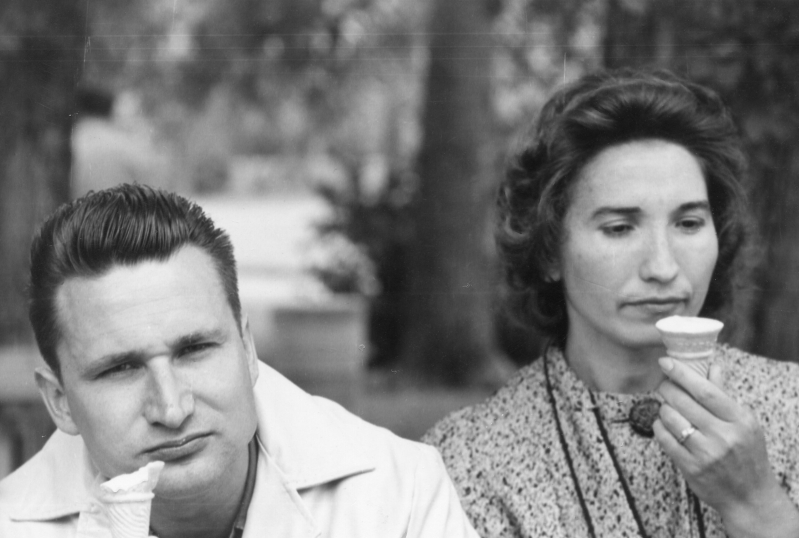
Peter’s Brother Gerry and his Wife Martha – 1965

One day, after I had finished my paint job to Gerry’s complete satisfaction, he drove the family and me to the nearest Dairy Queen. He mentioned to me that I had a special treat waiting for me. I did not quite understand what he was ordering and wondered as to why he kept repeating the word Sunday. ‘What a strange world, in which one had to order a dairy product two days in advance’, I thought to myself. But then what a delightful surprise it was first for my eyes, then for my taste buds, after Gerry handed me on a large cardboard tray with a gorgeous ice cream sundae served with syrup, whipped cream, chopped nuts and strawberries! It was truly a heavenly treat, even richer, creamier and more delicious than my grillage torte my mother used to order for my birthday parties in Germany.

Splendour of the Rocky Mountains and Disappointment at the Employment Office

217

On the weekend before I began to actively look for work, Gerry took his family and me for a ride into the Rocky Mountains. Even though the mountains were partially concealed in a shroud of low clouds and fog, the stark unspoiled beauty of the wild scenery was stunning. Half way up to Banff, Gerry suddenly stopped the car at a viewpoint at Lac des Arcs. There we took a long admiring look at the majestic beauty of the Three Sisters, a trio of peaks in the Rockies named Faith, Charity, and Hope. Then my brother handed me the car keys and encouraged me with his peculiar tone of voice that did not leave much room for refusal, “Now Peter, you drive.”

Except for one day of driving lessons in an army truck I had never sat behind a steering wheel before. I received a one-minute lesson on the use of the power brakes, gas pedal and the simple way of putting the automatic transmission into gear. As it turned out, driving an eight-cylinder American car was a piece of cake. I enjoyed it so much that I did not notice how fast we were going on the four-lane superhighway, until Gerry remarked, “Watch your speed, Peter. For a greenhorn like you this is way too fast.”

At the gate of the Banff National Park Gerry took over the driving again, and I had time to marvel at the mountains that began to close in on us from either side of the highway. Words cannot describe the splendour of the landscape with its rivers, mountain streams, lakes, and forests. I mailed Biene a booklet about the park, so she would be able to experience vicariously what I had seen with my own eyes.

X327

Peter at Lac des Arcs – June 1965

On Monday morning bright and early I joined the ranks of the job seekers at the Canada Employment Office. While waiting in the long line-up for my turn to register, I listened in to the conversations among the men in front of me. What I heard and what little I understood was not very encouraging. The government workers here received daily memos from companies, which were looking for skilled, certificated workers, preferable journeyman ticket holders with years of experience.

“How would I ever get experience, if nobody hires me?” I heard one man in his thirties complain.

“They drop your name and application form into a file and tell you that if anything comes up they will notify you. It’s like playing in the Irish Sweepstakes. If you are lucky, they pull your name out of the hat,” said another.

“Then tell me you know-it-all. Why are you wasting your time here?”

“Because I sometimes get lucky playing the lottery!” was his smug reply.

When I had finally advanced to the front desk, I had from all the talking around me the distinct impression that I would be going nowhere with my search for work at least not here, where the only people who had work were the government employees. In a sudden surge of sarcasm I felt that they were being paid for the number of applications they processed in any given day, for shuffling papers from one stack to another, and then burying them in their gigantic filing system, thus squashing the hopes and aspirations of people like me. I filled out the forms that the main clerk had handed to me and filled them out as well as I could. I wondered who would ever find the time to look over the detailed responses we were expected to provide. With a feeling of gloom and doom I stepped out of the Canada employment office into the sweltering heat.

X306

Happy Family Life at Gerry’s Place in Calgary

“Welcome to the Calgary slave market!”

Learning the Difference between Up and Down
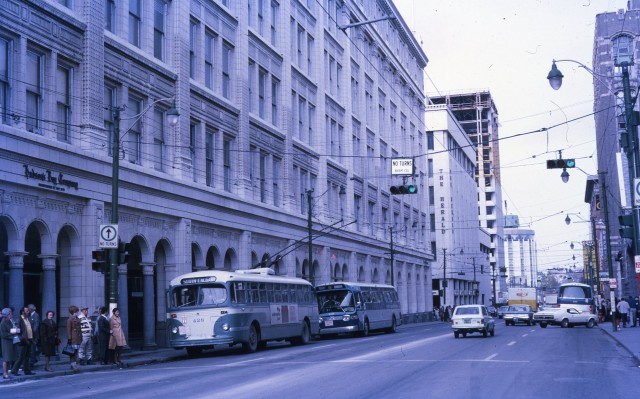
Calgary Hudson’s Bay Department Store 1965

Leaving the office building, I noticed a commotion at the street corner to the left. Someone near me shouted, “Quick! They are hiring over there.”

I ran as fast as I could to see what was going on. Half a dozen men were standing on the back of a half-ton truck, which was parked at a slant with two wheels on the sidewalk. The brawny looking men apparently were the lucky ones, who had been hired. A short man with the looks of an aggressive army sergeant was carefully examining those left standing on the sidewalk as to their suitability for hard labour. His keen eyes immediately spotted me and noticed that I looked healthy, well fed, and physically fit for the kind of work he had in mind. He merely pointed to the six men on the truck and said, “Up you go!”

In utter surprise by this speedy hiring process all I could do was stammer questions in my peculiar Oxford English mixed in with a strong German accent, “What kind of work is it? What is the pay? Aren’t there papers to be signed?”

Instead of answering my questions he barked, “Do you want a job or not?”

When I climbed onto the truck, he only answered my last question in a vague sort of way, “We will do the paper work later.”

When the man, who turned out to be my future boss, had collected altogether eight strong men, he critically looked them over once more weeding them out in his mind and fired half of them before they even had done any work. I was not among those who had to jump off the truck.

“Welcome to the Calgary slave market!” whispered a husky young fellow with a heavy foreign accent into my ear. I had just become a labourer in the work crew of Milne Construction Limited.

Barely thirty minutes later we arrived at the construction site, where an upscale apartment building was to be encased by a wall of bricks instead of the usual wood panel sidings. Mr. Milne assigned me to the foreman for placement at the site. He was from Yugoslavia, as were most of the steady labourers, who spoke only a few words of English, and therefore, as far as I could see, had been enslaved to provide cheap labor within the narrow confines of a construction company. Two masons were already clamouring for bricks and mortar. It did not take very long to recognize that this was not merely an introduction to my work routine, after which I could go home to have lunch, put some work clothes on and report for work in the afternoon. No, I was expected to start my job immediately and provide mortar and bricks to the impatient looking masons. Apparently my predecessor had been fired or did not show up for work this morning. After I had with the help of a pulley hoisted up a pail of mortar, I picked up the first two bricks with my bare hands and laid them on the heavy board, on which the masons were standing. In no time at all I had figured out the rhythm of providing a pail of mortar followed by twenty or thirty bricks in thirty-minute intervals. By the time lunchtime came around, I was very hungry and thirsty. One mason with a heart seeing that I had nothing to eat threw me a bologna sandwich over to the pile of lumber where I was sitting. I wolfed it down with plenty of water from the tap. He also talked to me in detail of what my job was all about. This was not a union outfit. If I didn’t like it, the only way for me to file a complaint was to quit. Also this was the beginning of a new building project. So at first, work would be relatively easy. But he warned me that once the wall would grow higher, the masons would continue building it at the same pace. That meant only one thing, with all my climbing up the scaffold I would still have to provide the same number of bricks within the same time frame. Mr. Milne came by to tell me that I was hired at $1.80 an hour and could keep it for as long as the masons weren’t complaining about me. That was indeed good news. For the next day I decided to buy some durable work pants and a pair of leather gloves to prevent my hands from bleeding.
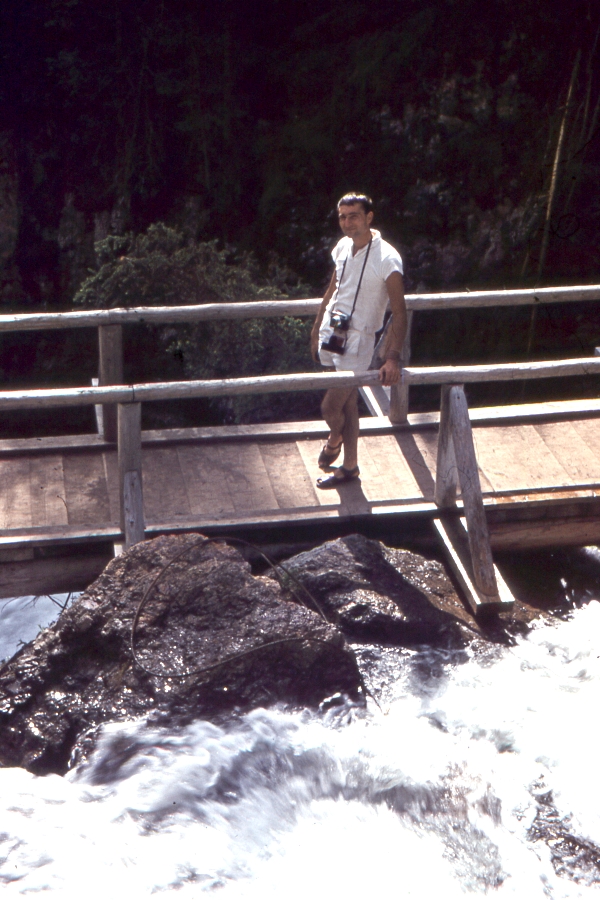
Peter during Happier Times in the Canadian Wilderness

A few days later my mason friend entrusted me with the preparation of the mortar. That gave me a little break, because during that time another labourer had to move the bricks to the ever increasing new heights on the scaffolding. I also received my first lesson on the proper use of language on a Canadian construction site. My school English, especially when presented with a strong German accent, would just not do around here. My friend almost had a laughing fit, when he heard me ask, “Sir, shall I fetch a bucket of water and shed it on the mixture to soften the mortar?”

Good-naturedly he replied but with the intent of teaching me a valuable lesson. “Peter, you don’t talk like that. Your Yugoslav coworkers will not understand a single word you saying in your stilted Shakespearian language. This is how you should put it, ‘Hey you! Should I get a pail of water, pour it over this f…g mix, and stir till it turns into that soft sh*t the masons like to work with?’ I got the drift. This was the real world with hardworking people with both feet on the ground without that highfaluting talk raining down from academic ivory towers.

Another time, when the midday heat was almost unbearable, I was dragging two heavy boards up the rickety scaffolding frame. I was standing on the third tier taking a short break to catch my breath. Standing near the new stone wall with its heat radiating back, I was about to lift the boards one level higher into the steel frame above my head, when the boss looked up and to his dismay saw me what he thought to be loafing on the job. Pointing to the load I was carrying, he hollered, “Up!”

Noticing my hesitation to respond to his simple command, he shouted all the louder, “Up!”

What he did not realize at that very moment was that I was engulfed in a state of total confusion. ‘Ab’ means ‘down’ in German. I was thinking, ‘Even if the order makes absolutely no sense at all, I must obey. After all he is the boss. He must have his reasons’. By now the boss was seething with anger about the delay and he screamed at the top of his voice one more time, “Up!”

What happened next, he had not expected at all. “There,’ I cried and let the boards drop to the ground. It turned out that Mr. Milne in spite of his stern, autocratic style also had a sense of humour. He laughed and laughed, as he walked away from the scene of my embarrassment, ordering a little more kindly, “Of course, Peter, it goes without saying, you still have to deliver these boards all the way UP there”, pointing to the masonry people on the fourth level.
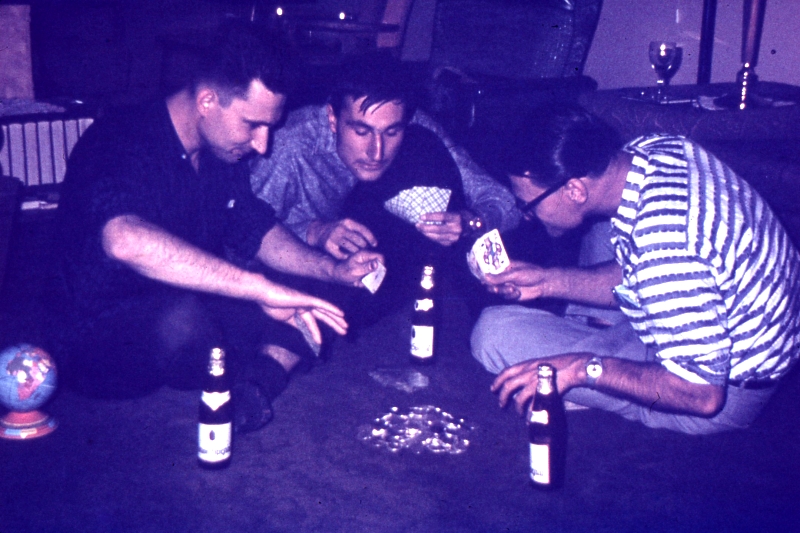
The three brother at a pretend poker game
The Peter and Gertrud Klopp Story – Chapter XXVIII


 Cross Country Canada

My dream is for people around the world to look up and to see Canada like a little jewel sitting at the top of the continent.

Tommy Douglas – 7th Premier of Saskatchewan

Late Start in Montreal

It was almost noon when after hours of waiting we finally got our turn to go through Canada customs. The officials were friendly and efficient. The long delay was due primarily to the large number of passengers whose innumerable suitcases, boxes and crates needed to be checked. Afterwards we stowed away our stuff in rental lockers and took a taxi to the City of Montreal. Our sister had already said good-bye to us, as she was going to board the next available train to Calgary. So Adolf and I were on our own in search for a car dealer. My brother needed a reliable vehicle that would carry us across the North American continent.

160

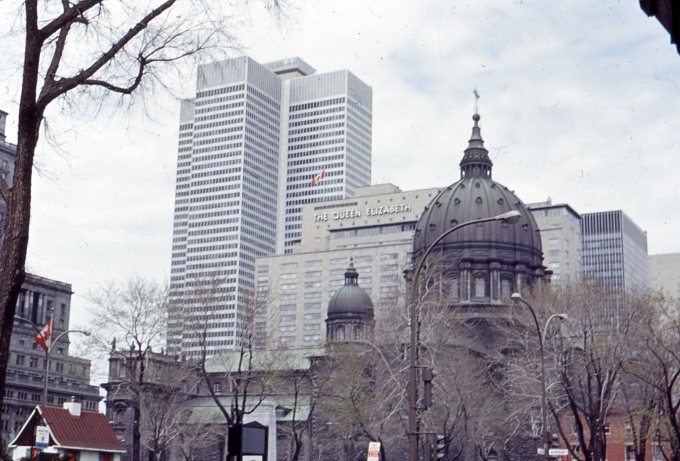
Queen Elizabeth Hotel at Montreal – May 1965

Near the city center we got off the taxi and decided to make use of the much cheaper transit system or cheaper and healthier yet to just walk. Now I had a chance to take a few photos of the new office buildings that were popping up everywhere like mushrooms after a heavy rain. I found that the Elisabeth Hotel towering over a much smaller church building was especially interesting, as the structure symbolized the transformation of Quebec from a church dominated province to a secular society. I was getting a little worried, while Adolf dragged me from one car dealer to another. He had not yet found, what he had in mind and was already talking about taking the train as well.

161

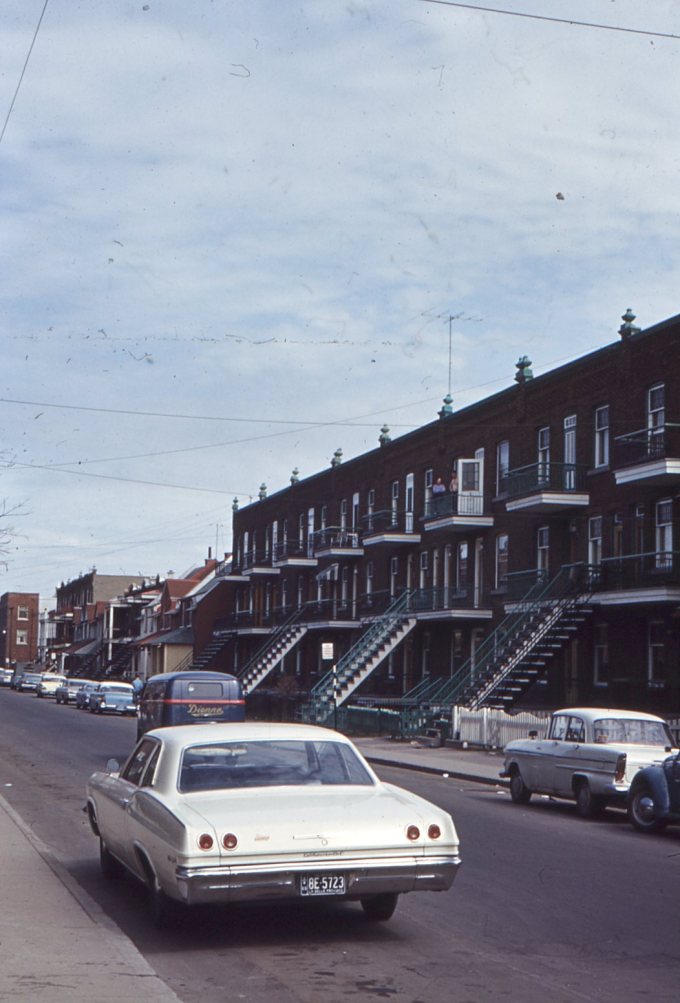
Typical Outside Staircases in a Residential Area

As we were roaming through the streets of a residential area searching for another car dealership, I noticed the peculiar construction of most of the houses. In order to gain more living space, they had no interior staircases but had metal stairs leading up to the entrance doors at the second and even third floor. I was thinking of the densely populated cities back in Germany, where floor space for renters was at a premium. How much more apartment space could be generated with this typical French-Canadian building concept.

170

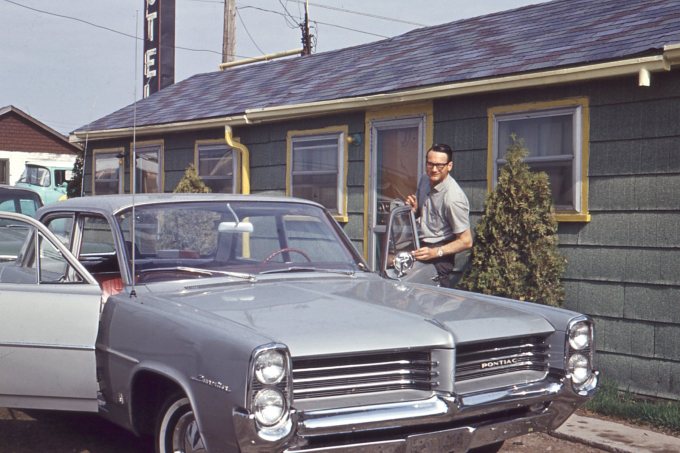
Proud Owner Adolf of a Used Pontiac

Finally Adolf had found a good, used 8-cylinder Pontiac at an equally good price of $2,500. The manager, apparently very pleased with my courageous attempt to communicate in French with him, made an arrangement with Adolf that quickly consolidated the sale. It happened exactly the way my brother had once explained to me on our summer wine tour to Trier. He paid the full amount in cash. In return M. Gagé allowed him to travel with the dealer’s license plates to Alberta to save him the high provincial sales tax. Those were the days when business transactions were concluded with a handshake based on mutual trust. M. Gagé expected Adolf to mail back the plates to Montreal.

I had never sat in the such comfort of a huge and powerful American car before. It was even equipped with automatic transmission quite rare in Germany during the mid 60’s. I really enjoyed the ride back to the storage facilities, where we picked up our suitcases and wooden crates with all our belongings. It was already getting late in the afternoon, when our cross-country Canada trip began.

Peter’s Immersion into the English Language

Looking across the Ottawa River into Gatineau QC

Heading west our first goal was Ottawa. On a secondary road following the densely populated St. Lawrence valley, we drove quite slowly. The leisurely pace allowed me to take a closer look at the landscape near the river. Hundreds of islands were glowing in the evening sun. Many a romantically inclined individual had built his dream cabin on a treed retreat surrounded by water away from the hustle and bustle of the nearby City of Montreal. The properties on the mainland were generously large, where people had built their homes according to their fancy. Some dwellings were constructed entirely out of wood, others were stone buildings, some were imposing castle-like mansions, but most were simple and of modern design. Adolf must have noticed my admiring glances and remarked that in contrast to the Old Country – he always referred to Germany as the Old Country – hard working people from all walks of life could afford to live in their own house with a bit of help with a mortgage from a financial institution. His remarks swept away any remaining doubts and worries about the plans I had made with Biene earlier this year. Now I was almost certain that barring any unforeseeable adverse circumstances there was no turning back. It was here in Canada where I wanted to put my roots down. Looking at the setting sun that flooded the valley and immersed it into liquid gold, I felt energized, optimistic, and adventurous all at once. I also realized that the obstacles ‘Fate’ would throw into my path would be there to test my resolve to stay. It was almost dark when Adolf pulled up at a roadside motel, where for $6.00 we spent a restful night in comfortable beds somewhere between Montreal and Ottawa.

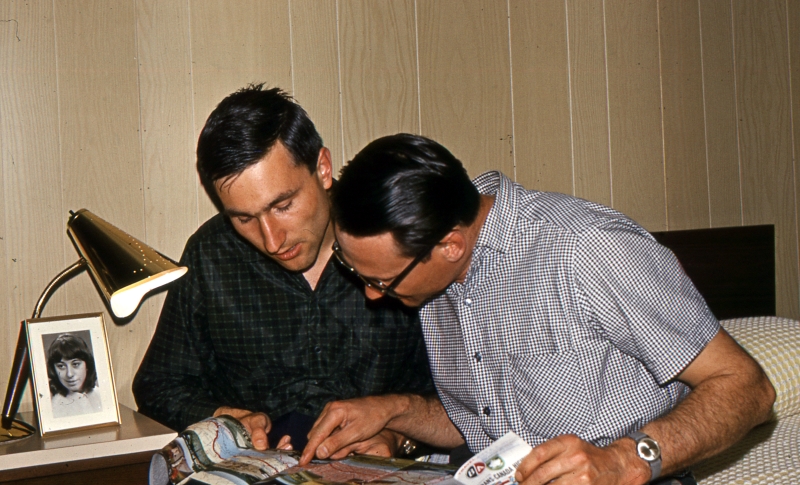
Adolf and Peter Studying a Road Map

The next morning at a nearby coffee shop I had my first Canadian breakfast, which consisted of two eggs fried over easy, two strips of crisp bacon, hash browns with plenty of ketchup, four slices of toast, all sorts of jam in tiny plastic cups and the standard not-so-strong coffee. Hunger is the best sauce, as the English proverb asserts. So for me this simple meal was a culinary delight. With Adolf switching to English only conversation, my English immersion program began, when he explained the difference between eggs over easy and eggs sunny side up. Obviously such fine details about the different ways of frying eggs had not been part of our English curriculum at the German high school. But there was much more to learn, especially in the use of idiomatic expressions. The waitress came by our table and asked me whether I wanted her to warm up my coffee. I replied a little taken aback by this seemingly silly question, “No thanks, my coffee is still warm!”

Fortunately, my strong German accent made it clear to her that I had not understood what she offered and that it had not been my intention to insult her. With a shrug she moved on to another table and asked the same question. “You idiot”, Adolf scolded me. “All she wanted was to give you a refill!”

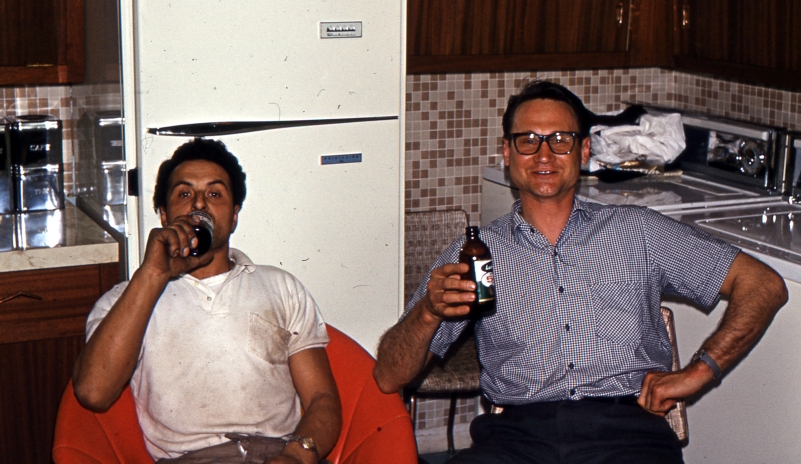
My brother and his buddy Waldemar enjoying a beer

Having received my first English lesson under somewhat embarrassing circumstances, we traveled on to Ottawa and then crossed the Royal Alexandra Bridge over the Ottawa River into Hull now better known as Gatineau. There my brother had a friend by the name of Waldemar Klein from Rohrdorf, who immigrated with him to Canada in 1953. His house looked like it was in need of repairs on the outside, downright ugly from a critical perspective. In Germany a residence including its surrounding hedge or fence and even the lawn had to be prim and proper. Much later I found out that some property owners deliberately keep the exterior of the house unfinished with unsightly tar paper nailed to the walls in an attempt to keep the property taxes low. This was obviously the case with Waldemar’s home. However, the inside presented an entirely different view. It seemed to me that every spare dollar was invested into making their home feel more comfortable, cozier and more beautiful. The modern kitchen was equipped with the latest appliances to make life easy for Waldemar and his wife. She spoke mostly French and very little English, which made communication almost impossible. Obviously, she did not like strangers to enter her home. When she had at last comprehended that Adolf was her husband’s old buddy form Germany, she invited us in for coffee and called Waldemar from work. He was making good money as an independent contractor installing windows in the new federal office buildings that were popping up all around the city center. When he showed up shortly after the call, the joy of seeing his friend Adolf was great. Over a case of beer they revived old memories and exchanged the latest information on the Klopp and Klein families. Then it was time to move on.

A Brief Visit to Ottawa and a

Four-Hour Drive into the Night

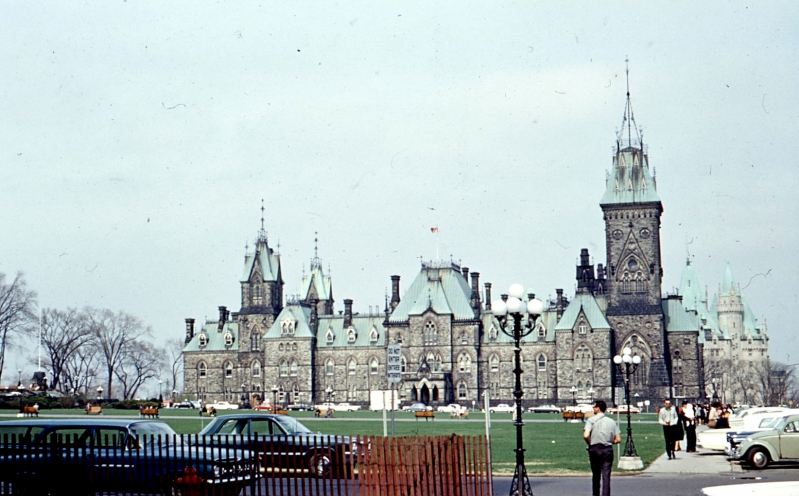
Canada’s Parliament Buildings in Ottawa – May 1965

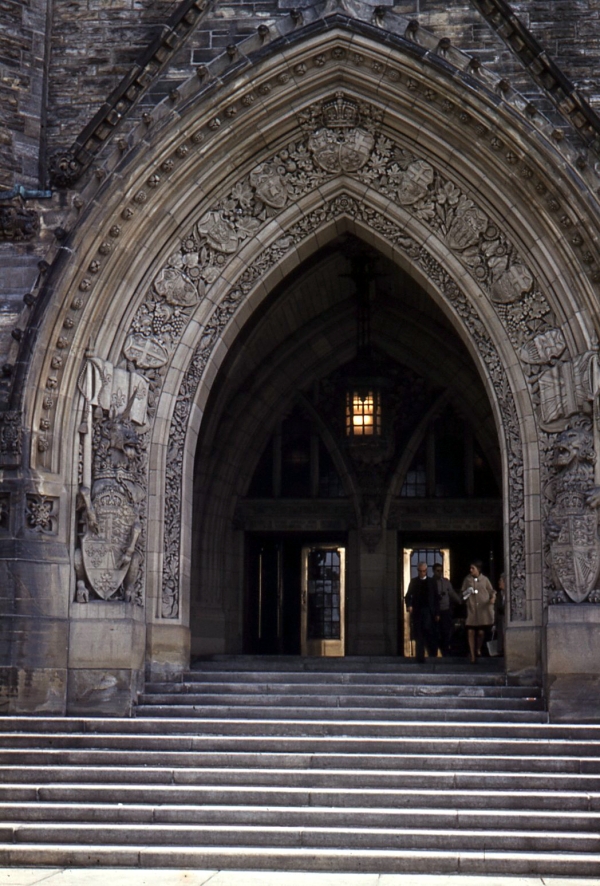
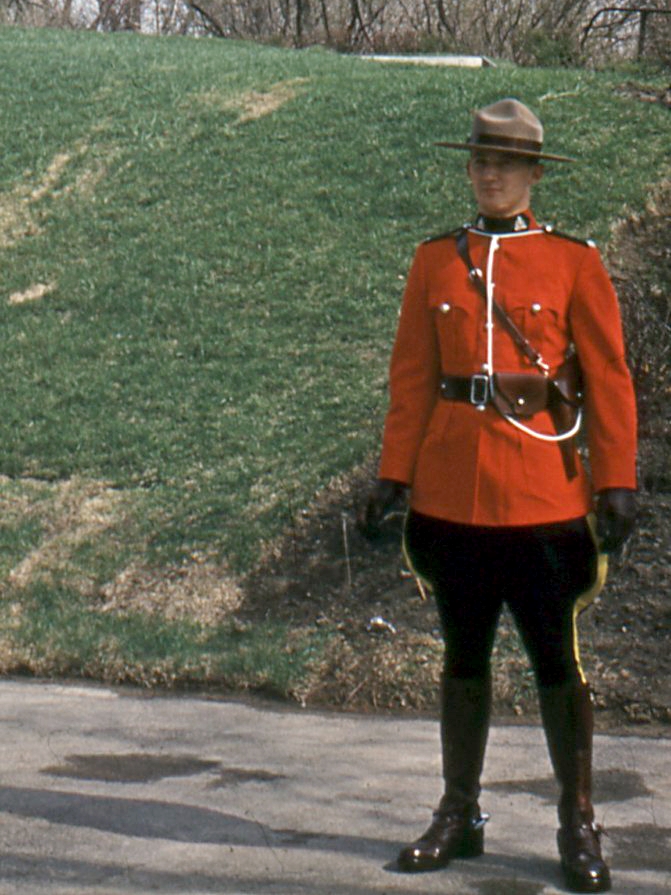
We crossed again the Ottawa River and half an hour later we were standing in front of the Parliament Buildings that was not in session at the time. Its Gothic revival suite of buildings serves as the home of the Parliament of Canada. The huge square looked almost deserted. A lonely mountie, short for a member of the Royal Canadian Mounted Police, was kind enough to let me take a picture in his red uniform. Too bad that the tulips were not out in full bloom yet! They would have added some much needed color to the somewhat dreary early spring landscape. Just then the afternoon sun was breaking through the cloud cover reminding us with its warm rays that spring was not too far off even in these northern climes of Canada.

Main Entrance to the Parliament

Back in the car we figured we had about three or four hours of daylight left to cover until dark a few hundred kilometres on the Trans Canada Highway. It is, along with the Trans-Siberian Highway and Australia’s Highway 1, one of the world’s longest national highways spanning more than 6,000 km from Victoria, BC to St. John’s, NL. As we were rolling through the great Canadian Shield, the largest and oldest rock formation in the world, towns and villages became sparser and except for the road there were few signs of human encroachment on the stark beauty of the bare undulating hills, pristine forests, crystal-clear lakes and wild rivers. I was fascinated by the images of the constantly varying scenes and yet conveying the feeling of one unified untouched wilderness.

A Mountie in Traditional Uniform posing for a Picture

All of a sudden like in a bad dream barbed wire fences, military installations, artillery shooting ranges and barracks emerged in the distance. ‘What would it be like to be a Canadian soldier?’ I asked myself. But I instantly brushed aside this silly question, which had brought back some bad memories. Shortly afterwards we drove by a nuclear research facility at Chalk River. What was the purpose to have it operating out here in the bush far away from the big population centres of Toronto and Montreal? Was it concern for public safety that motivated the Ontario power corporation to experiment with radioactive materials? Or would there perhaps be less criticism, less public opposition out here in the wilderness? These were some of the questions Adolf and I raised and could not answer.

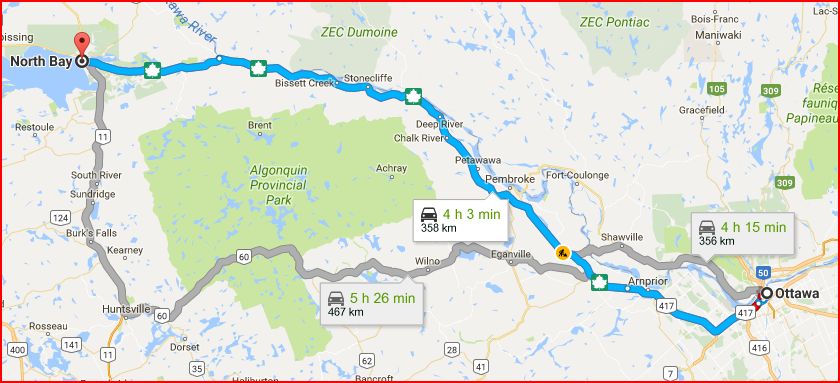
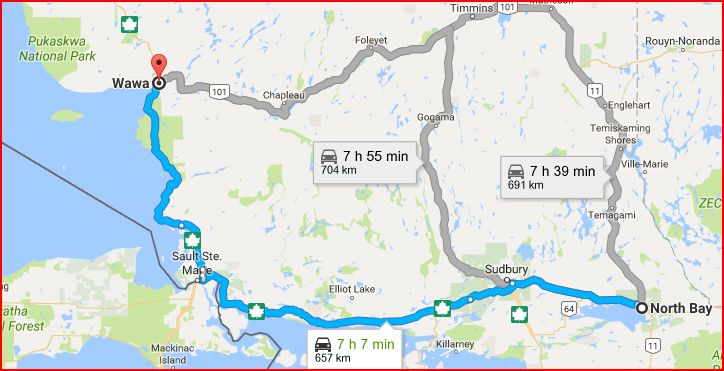
Route on the Third Day of our Cross-Country Journey

We were now following the Ottawa River in a northwesterly direction. It once had provided access for the intrepid voyageurs and enterprising fur traders to the vast interior of Ontario. My brother switched on the headlights, as it was getting dark. He also drove a lot faster now. The next service station and motel was still more than two hours away. One hour before midnight we finally arrived at a small motel at the outskirts of North Bay. Needless to say we were dead tired and slept like a log in our cozy motel beds.

Canada’s Natural Splendour

And the Price of Economic Growth

172

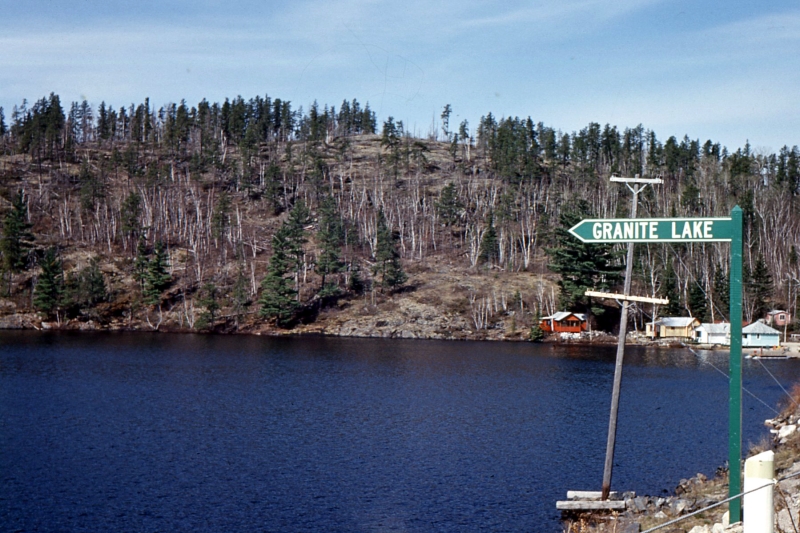
Granite Lake, Ontario – One of the many Lakes Dotting the Landscape on Highway 1

The next morning we had to put up with an annoying delay. Adolf, having noticed disturbing vibrations from the front wheels, decided to have them balanced. Unfortunately, the mechanic of the small town service center took his time showing up for work on this Sunday morning. He gave us the distinct impression that he would rather go fishing than manning the lonely service station and doing repairs on a car that should have been fixed on a weekday. On second thought, we were lucky that we did not have to wait till Monday.

day 4

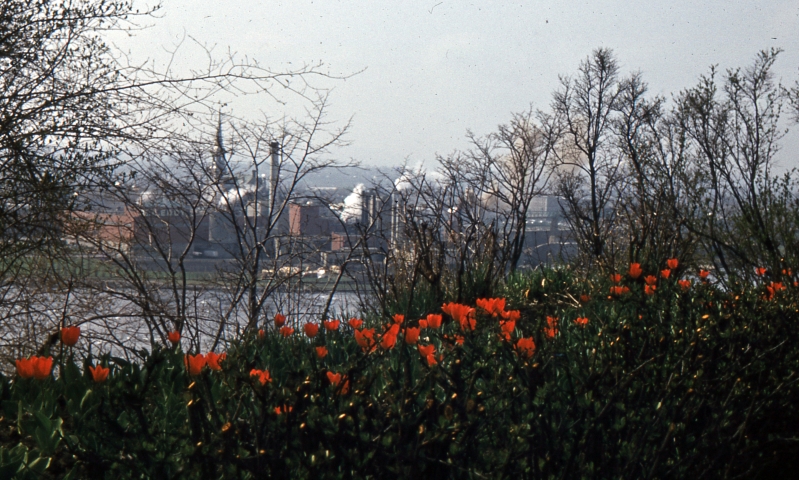
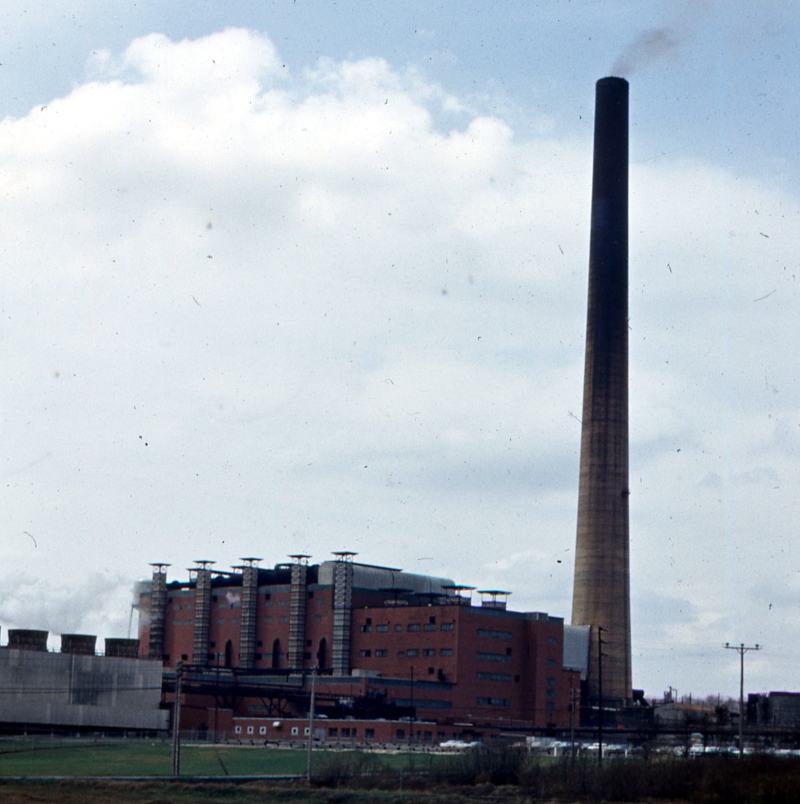
To make up for lost time Adolf especially on the long straight stretches exceeded the speed limit often clocking 130 km/h on the speedometer. I was not too unhappy about it, since the landscape, as we were approaching Sudbury, looked more and more like a moonscape, barren and desolate. The city named after a town in England had once been a major lumber center, but now was a booming mining community, where high concentration of nickel ore was being mined. Looking at the treeless industrial wasteland, where big processing plants with their tall chimneys belching out a mix of steam and smoke, I had a first real inkling of what man’s emphasis on economic growth could do to nature. I was not interested at all how many thousands of tons of ore were being processed in the Nickel Capital of Canada. One could even read these facts on picture postcards and travel brochures.

X332

Nuclear Research Station 

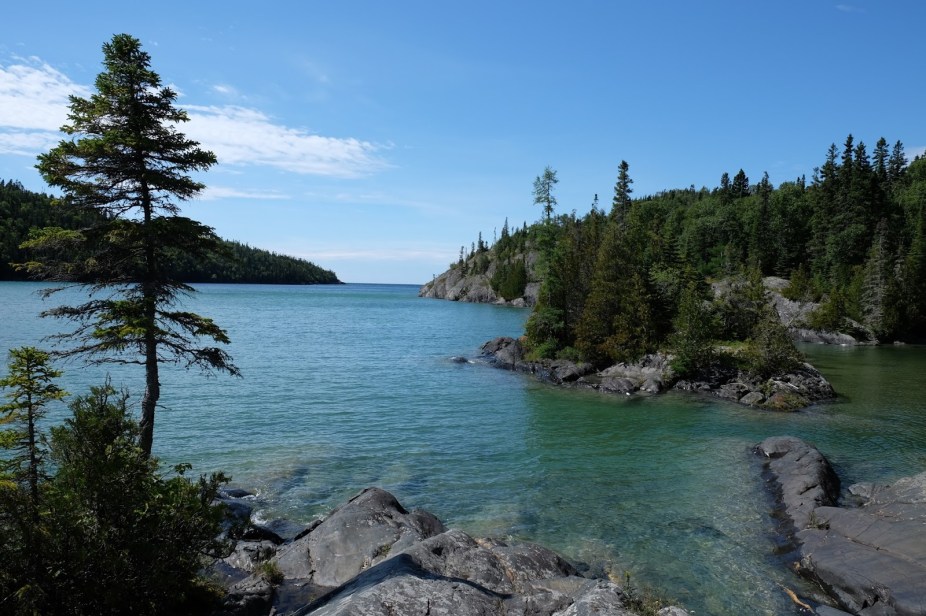
Adolf stopped for lunch at a downtown restaurant where the food was good and the prices were reasonable. While we were eating a juicy hamburger, I softened a little my critical stance on the devastating effects of industrial exploitation. I realized that people in order to live needed work. I also found out later that much larger regions, some greater in size than the two Germanys put together, remained untouched and unspoiled wilderness. I could see that Adolf was right after we left the dust and grime of the city, where a quarter of all its workers were employed by the giant nickel company Inco. Once we had traveled past Sault St. Marie, a steel manufacturing town just across from the State of Michigan, I was in for a visual treat. All of a sudden we were back in the forest driving past idyllic lakes and streams, then through the Lake Superior Provincial Park. All I remember is a blur of images and impressions of one the greatest freshwater sources in the world. Whenever we drove close to the shoreline of Lake Superior, fantastic scenery would present itself to our eager eyes. When I glimpsed a chain of islands large and small within an easy reach by canoe, many of them treed, I enthusiastically exclaimed, “Adolf, as soon as I have earned enough money, I am going to buy one these lovely islets for Biene and me.”

Adolf put on a sardonic grin and replied, “To earn money, you need a job, perhaps in a place like Sudbury.”

174.jpg

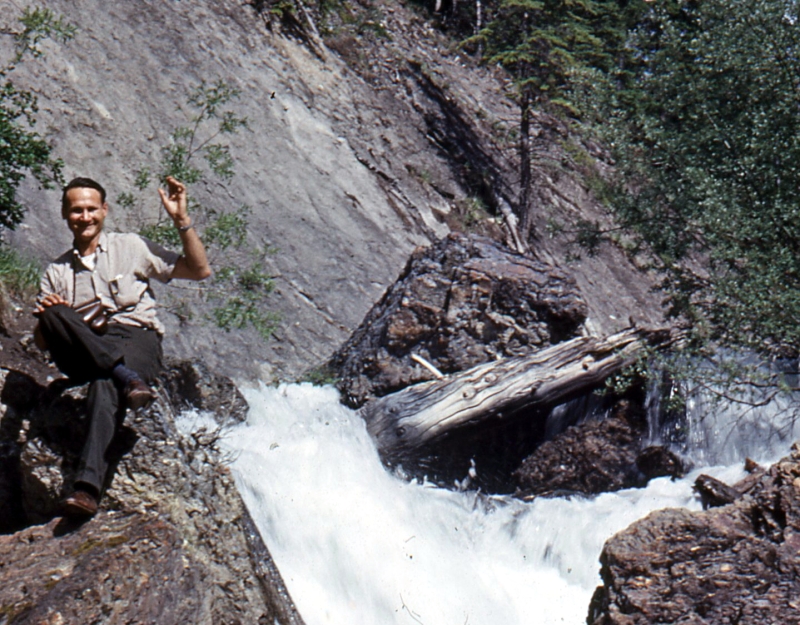
My Brother Adolf Taking a Break at a Picturesque Waterfall

We stopped at one of the recreational areas with its robust wooden picnic tables near the edge of the water. It seemed like we had the entire park to ourselves, as it was still early spring for tourists to venture out to this remote natural paradise. In the cool of the approaching evening fog patches settled over both land and water creating a magical effect. The islands with their spruce tops sticking out in dark silhouettes against the orange evening sky appeared to be drifting like ghosts across the tranquil lake. Then we drove on to the small community of Wawa, the gateway to the hunting and fishing grounds of Northwestern Ontario. On this night we slept in a hotel for a change, having spent altogether $23.00 for gas, repairs, food and lodging.

Romantic Rhapsody About Canada

Lake Superior.JPG

National Park at Lake Superior – Photo Credit: camperuno.blogspot. com

Up with the lark we walked through the sleepy town of Wawa. At 9 o’clock we stepped into a Chinese restaurant to have breakfast. The owner, cook and waiter all under the same hat looked just as sleepy as the town. He took a long time to prepare and serve the usual bacon, eggs and toast for the only two customers. We were quite annoyed with the delay and decided to buy our own food for the remainder of the trip, such as ready-made meals in cans, butter, bread, milk, fruit juices, oranges and apples. At a service station I bought gasoline for the camp stove, on which I planned to heat up the chunky soup at any of the roadside rest areas. At a hardware store we picked up basic cooking and eating utensils. By the time we had eaten breakfast and finished our shopping, half the day had already slipped away on us.

180.jpg

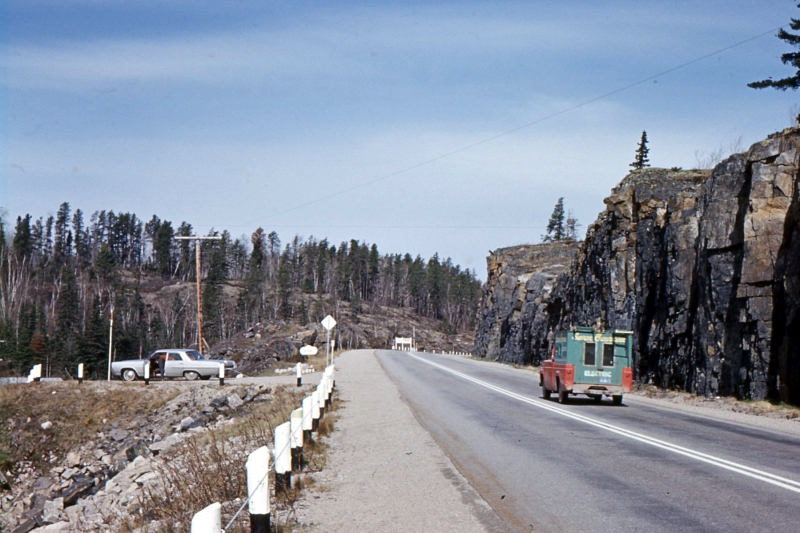
Early May on the Trans-Canada Highway – Adolf’s Car on the Left

Then we were on the road again at times traveling through dense forests often very close to Lake Superior. Unfortunately, fog and low clouds obstructed our view. They were so dense at times that Adolf had to turn on the headlights. At the entrance of a small village, whose name I have forgotten, was a large billboard, which claimed in large letters to hold the record at –72º F for being the coldest place in Canada. On we drove now along the seemingly endless shoreline. The impenetrable blanket of fog prevented us from viewing the lake. At a picnic area we stopped for lunch and unpacked our victuals in the frigid air. When the icy mist briefly lifted, we could hardly believe our eyes. A finger thick coat of ice still covered the Great Lake at a time, when on the same latitude on our planet flowers were already announcing the arrival of spring! We ate our frugal meal of homemade sandwiches not far from the city of Port Arthur, which a few years later amalgamated with Fort William to become today’s city of Thunder Bay. The only noteworthy thing about the drab scenery around these two towns were the huge grain elevator strategically placed near the railroad tracks. They stored the prairie wheat waiting to be shipped as far away as Vancouver and Montreal.

X331

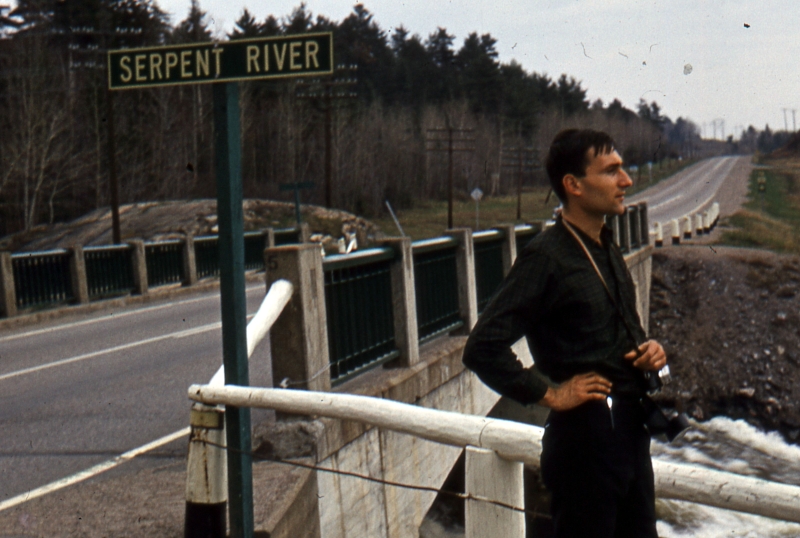
Peter Taking in the Sights at Serpent River Ontario

Heading north into the Land of Thousand Lakes, we began to cheer up as the sun finally broke through the clouds. A look at the map of Northwestern Ontario will convince anyone that the description of this boreal region is not an exaggeration. On the contrary, I would call it the Land of Ten Thousand Lakes. What incredible mazes of lakes and rivers branching out in all directions, which the native canoeists, early explorers and the dauntless coureurs des bois had to navigate without the aid of any maps!

As if to underline the upbeat mood I was in, I took my harmonica out of my briefcase and played one merry tune after another. I was amazed how many different songs I could string together in a potpourri of folksongs, scout melodies and pop music. Adolf contributed to the sense of camaraderie by cheerfully whistling or singing along, while we were driving into the setting sun.

28_5

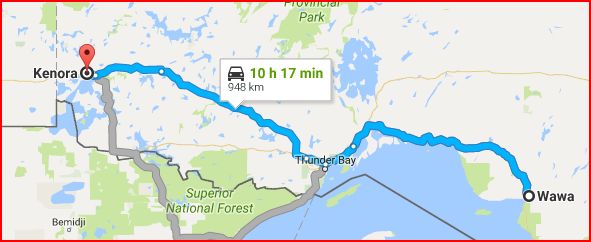
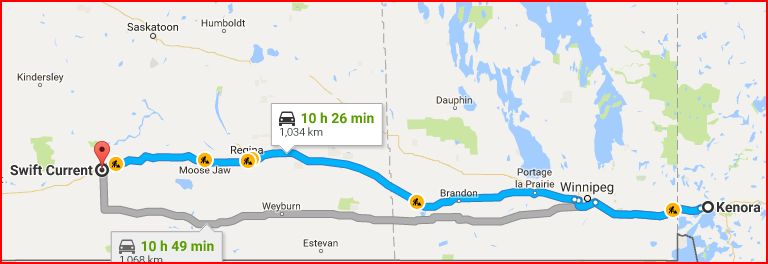
At Vermillion Bay I would have liked to call it a day. A cozy motel located directly at a lake beckoned us to stay. But our goal was Kenora near the Manitoba border. Also we had just gained over the past three days another hour of daylight in our journey to the Western Provinces. So after a short break we decided to roll on. The sun was almost blinding us. Adolf lowered the visor to protect his eyes from the glare. A few minutes later the fireball nearing the horizon was shooting crimson rays through the forest, flickering and dancing in a kaleidoscopic display of color and motion. At dusk myriads of tiny lakes swept by our left window like precious pearls strung up on invisible threads. In the absolute stillness on their glassy surface black spruce trees mirrored themselves with such clarity that on a photo one would have had problems in telling which were the trees and which were their reflections. Looking at this beautiful monochromatic scenery, I thought, as I often did when I discovered another facet of nature’s beauty, ‘One day, I will take Biene on a road trip to experience all these wonderful places that we are now having to rush through.’

On the Home Stretch

Kenora_ontario_skyline_2.jpg

Kenora Ontario – Photo Credit: Wikipedia.org

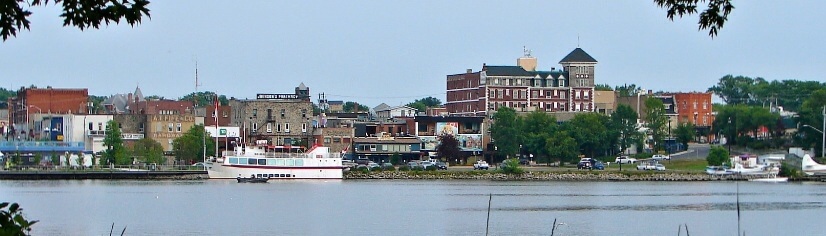
I have no recollection of Kenora, where we spent the fourth night. In those days it was just a small town on the main highway between Thunder Bay and Winnipeg. In the fifty years since then it has seen a major transformation from a backward lumber town to a modern city with a sharp focus on tourism and support for recreational ventures at the Lake of the Woods with its 105,000 km of shoreline making it the longest coastline of any Canadian lake. Its name did not hint in the least at the wonders it had to offer to the outdoor enthusiasts. There was an incredible number of over 14,000 islands on this sixth largest lake after the Great Lakes. Surely there had to be a separate island for each canoeist and camper to land on here.

Kenora_Swift Current

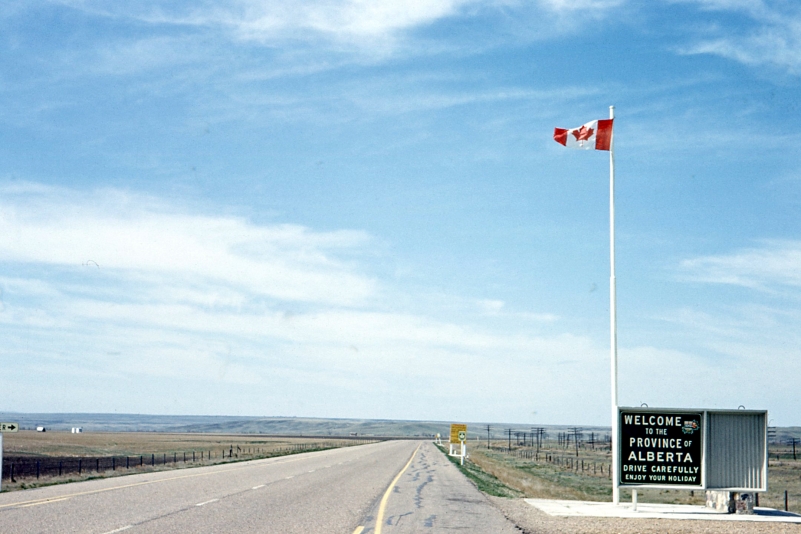
As we crossed the provincial border into Manitoba the next morning, the lakes became rare, the forest denser, the land increasingly more level, and the highway had fewer curves. Adolf and I began to get bored. We were both eager to get to Calgary as quickly as possible. When we left the trees behind and entered the open prairie, which was only now beginning to show some signs of spring, Adolf stepped on the gas to cover as many miles as the speed limit would allow. The grey monotony of the fields still waiting to be planted with wheat and the unfiltered harsh sunlight made our eyes burn. I was feeling tired, although I was only sitting on the comfortable car bench. I began to view the second last lap of our trip more as a burden than a pleasure. Adolf, my good brother in times, when my spirit was noticeably drooping, encouraged me, “You should come back here in June, when the wheat fields begin to green or better yet in the fall, when an ocean of golden stalks greets you with waves of ripe wheat stirred up by the wind and is putting on a show that you don’t want to miss.”

183

Roadside Lunch

185.jpg

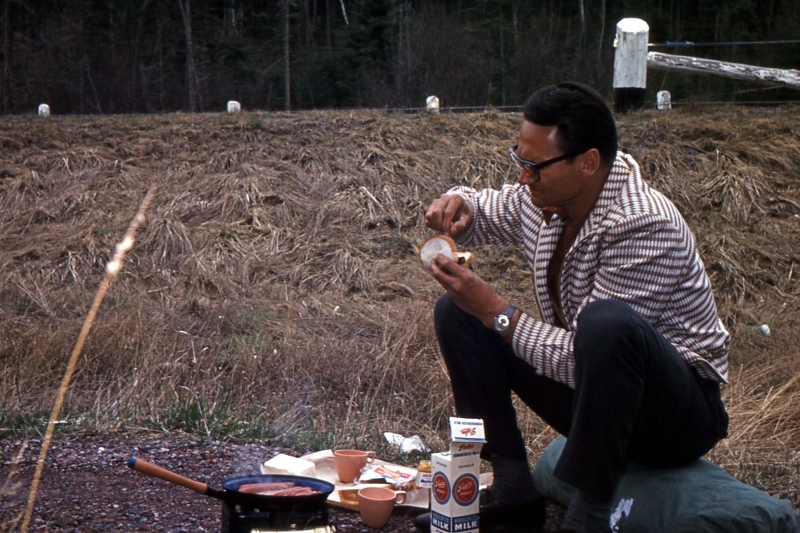
He was right. I should not have allowed my enthusiasm for the land to sag so quickly. Looking back at the marvellous sights of the past few days, I felt thankful to Adolf for having taken me on this trip. A few kilometres past Port La Prairie we stopped at a roadside rest area to have a lunch break. I delighted in seeing the first signs of spring in the green grass already growing around our picnic table. Cooking a simple meal like chunky soup from cans was really fun on the little gasoline stove that had been useful so often since my boy-scout years in Wesel. After this short rest in the sunshine we put in six or seven more gruelling hours of travel time and eventually dropped in at a small modest motel in Swift Current, Saskatchewan. It was going to be our last night on our way to Calgary. Thanks to Adolf’s tireless driving often at speeds going over the posted speed limits we arrived at Gerry’s house on Fyffe Road two days earlier than we had planned.

The Peter and Gertrud Klopp Story – Chapter XXVII

The Voyage

There is a tide in the affairs of men.
Which, taken at the flood, leads on to fortune;
Omitted, all the voyage of their life
Is bound in shallows and in miseries.
On such a full sea are we now afloat,
And we must take the current when it serves,
Or lose our ventures.

Shakespeare

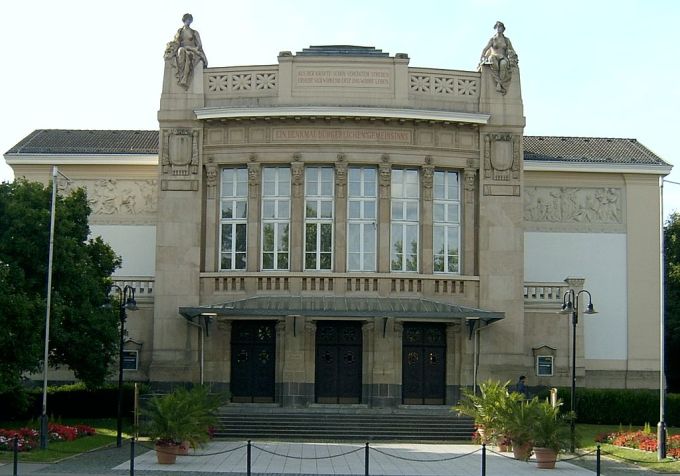
1024px-2005-08_Gießen_-_Theater

Theatre in Giessen – Photo Credit: wikipedia.org

Travel Preparations and a  Farewell Speech on a Vinyl Record

The day after Biene had returned home, Adolf took my sister Eka and me on a whirlwind tour to Berlin, where we saw for the last time Aunt Alma and her family. On the way back we dropped in at the apartment of our brother Karl in Braunschweig, where he had recently embarked on a banking career at a local bank. There in the beautiful apartment we spent a few days with our brother, his wife Ingrid and their little baby daughter Annekatrin.

93

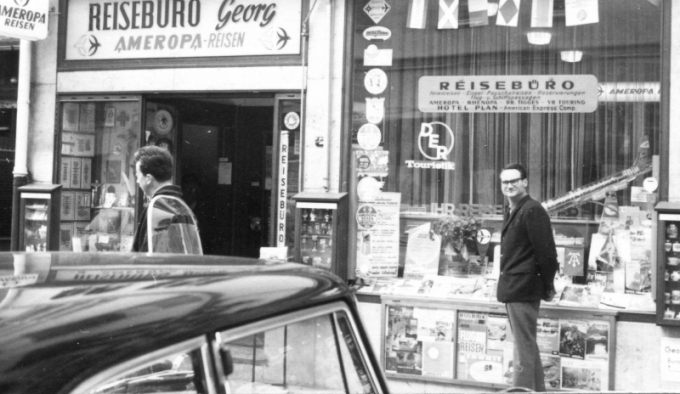
Adolf Standing in front of the Giessen Travel Agency

Back at home we directed our attention to the task of getting our belongings packed and ready. Our tickets for the voyage to Canada included the shipping charges for the wooden crates that contained all our personal effects. Almost too late we found out that we were responsible for moving them to the travel agency in Giessen. Almost instantly arose a heated argument among the hot-tempered siblings, myself included, as to whose fault it was for having overlooked such an obvious problem. Accusations were flying back and forth. It seemed that each one of us was on a faultfinding mission. Of course, no matter how hotly we debated the issue, the heat of the arguments would not move our big, heavy crates to Giessen.

94

Problems Worked out over a Mug of Beer

Fortunately our cousin Jürgen arrived just at the right time and helped diffuse a potentially explosive situation. He suggested a cooling-off period for the enraged brothers. In Giessen we dropped in at the ‘Vienna Forest, a popular restaurant, where they served us grilled chicken and beer. Tension and lingering hostility abated quickly at the same rate as our stomachs filled with delicious food and copious amounts of beer. Now we were ready to tackle the shipping in a more amiable environment. Jürgen had just made the acquaintance of a fellow student, who would be willing to provide his old and dilapidated VW bus for the crates. After a few more drinks at a roadside fast food outlet we were going to announce the good news at home. However, the pub, ‘The New Homeland’, was still open in Watzenborn. We thought a few more beers would not hurt and would definitely clear away the last little bit of rancour, before going home. So we finally arrived in a fairly boisterous mood. Everybody had already gone to bed. But this did not prevent us from loudly announcing to Eka that we had found a solution to the shipping problem. We all withdrew into the furnace room, which with its excellent sound-proofed walls offered a modicum of protection against the noise. Befuddled by all that beer I played the guitar rather poorly often missing the correct fret, while Adolf sang the song merrily out of tune with the chords I was playing. In the meantime  Jürgen and Eka had an animated discussion on the poor timing of our nocturnal arrival. Not receiving the appreciative reception that we were expecting, we decided to spend the night at Jürgen’s place in Giessen and slept for want of something more accommodating all three in one bed, but not before having a taste from the bottle of whiskey that happened to be there for this crazy occasion. Next morning (or was it noon?) Adolf and I, feeling somewhat remorseful for our rambunctious behaviour the night before, drove home quite willing to accept any criticism with a repentant heart and to make amends by getting the crates ready for shipment.

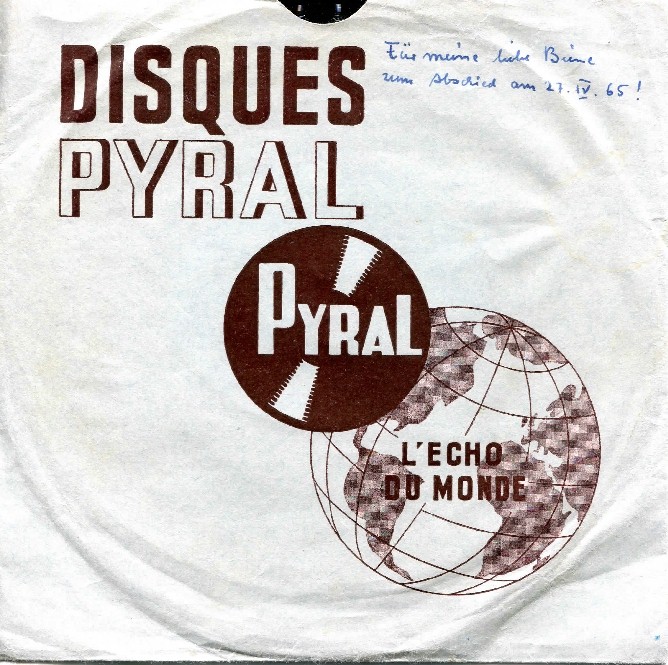
Record

In the turmoil of the endless visits of well-meaning relatives and friends, who all came to say good-bye, I still managed to keep up the correspondence with Biene, although it was almost impossible to find a quiet corner in the house. I had  made a recording of a few simple classical guitar pieces that I felt were good enough for her to listen to. In addition, I recorded a farewell message on tape and mailed it together with the music to a company in France to have it pressed onto a vinyl record. A few days before our departure date the record arrived, which I embellished with some pretty labels and redirected it to Biene’s home address. It so happened that on the very day we boarded the Canada bound vessel, the ‘Ryndam’, she received my gift.

The recording sounds a bit scratchy. But what do you expect from a 50-year old vinyl record?

Farewell to Germany

54

Papa Panknin with Daughter Biene and Son Walter 1965

Career planning for his daughter was on Papa Panknin’s mind, when he asked Biene to have a serious talk with him. He was not fond of seeing her becoming a teacher. He felt that it would be too stressful for her.  Sitting endless hours in lecture rooms, bending over and studying textbooks would lead to even getting more stressed out, when after her university training Biene would enter again the educational treadmill. In his opinion the best thing for her to do would be to get a job and earn money as quickly as possible. Being a little tightfisted and in control of the family purse strings, he may also have been thinking of the expenses, which a prolonged period of university training for his daughter would incur. In contrast to North American practice German law required that parents were at least in part financially responsible for their children’s post-secondary education. In addition, there was probably on his mind his son Walter, Biene’s twin brother, who was embarking on a six-year program at the Institute of Engineering at the University of Hanover. Biene, with her eyes firmly set on getting married, agreed to a compromise that her father had proposed. She would start immediately her teacher’s training at the university of Wuppertal, but at the same time apply at the German airline Lufthansa to enter a training program to become a stewardess at the age of twenty-one. In my eyes this was a good plan. I really wanted her to become a teacher. So I took comfort in the fact that thousands of young girls were dreaming about becoming a stewardess and only a few had their applications accepted every year. Therefore, I had no difficulty of sending my wholehearted approval and let Biene romanticize about working for Lufthansa and flying to Calgary, where she could visit me on her stopover flights to Western Canada.

107

Adolf and Eka in the Waiting Room at the Rotterdam Terminal Station

          At last, the day arrived when Adolf, Eka and I were on our way to Rotterdam, where we would board the passenger ship Ryndam that was to carry us to Canada. Mother woke us at 3 a.m. to make sure we would have ample time to enjoy a solid breakfast before we parted. One hour later we sat at the breakfast table. Aunt Mieze read from her devotional booklet and included us in her morning prayers, with which she had been greeting the day for as long as I can remember. The outside world was still shrouded in darkness, which put us all into a somber mood. The thought that we would not be seeing Mother and all the other dear relatives for a very long time was weighing heavily on our mind. Later on, we were occupied loading Jürgen’s car with our possessions, five suitcases, my tape recorder, guitar and a gigantic duffel bag with personal belongings too valuable to be trusted to the wooden crates. The heavy work made us forget a little the pain of leaving home. We even managed to put on a cheerful face, when we said our good-byes adding comforting words like ‘We’ll meet again in beautiful Canada!’

108

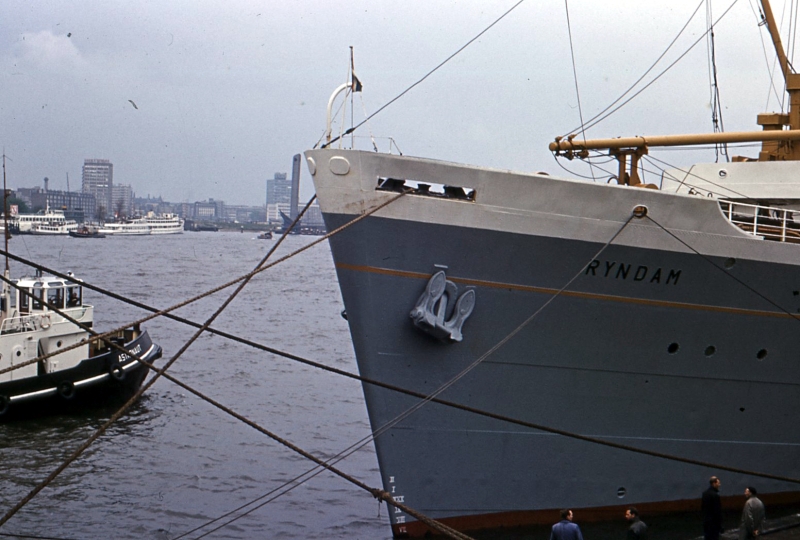
The Ryndam that brought us to Canada – Anchored at Rotterdam Harbour

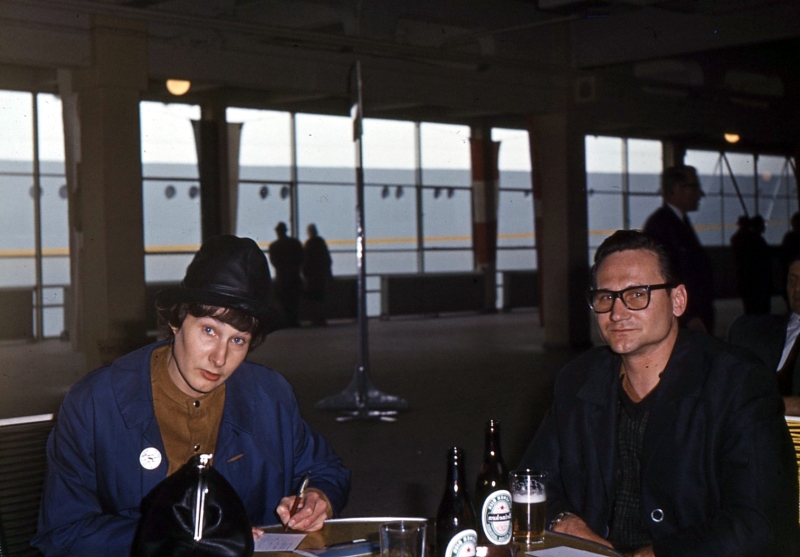
          The Trans European Express train (TEE) was racing at an incredible speed towards the Dutch border stopping only at major urban centres. At Wesel, my previous hometown, which had grown into a city of almost 50,000, the train did not stop either. Shortly after noon we arrived in Rotterdam, where a taxi took us to the harbour, which was and still is one of the biggest and busiest ports in the world. There our ship was waiting for her passengers to come on board. In the harbour inn Adolf and I sat and drank beer, while Eka had a coffee to perk up with after such a long train ride. We were quite annoyed at the delay of our departure caused by the much larger sister vessel of the Holland-America line bound for New York, which happened to leave port on the same day. Finally we were allowed to embark. Before heading out into the Atlantic Ocean, the Ryndam, for the next ten days our home, hotel, restaurant, and entertainment centre, had to make two ports of call, Le Havre and Southampton. From England I mailed Biene my first letter written at sea.

Two Letters and a Poem

129

Meal Time on the Ryndam – Adolf, Eka and Peter at the Back

April 28th, 1965 Le Havre

           My dear Biene,

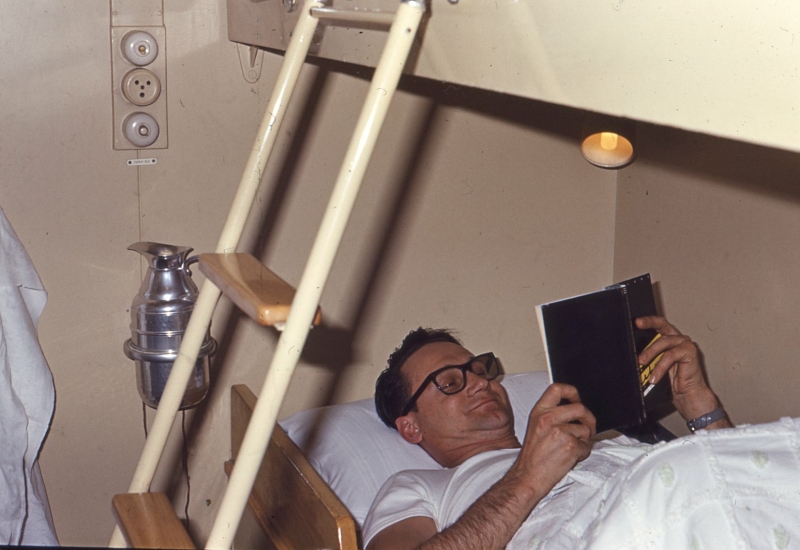
           We just left Le Havre and are heading towards England. Thousands of impressions hit me all at once. I feel as if I had already been on board  for a very long time. It is like paradise. Yet, I am restless, because you cannot experience all this with me. I’d like describe to you how a typical day is panning out for us travelers. The tinkling of bells wakes us up in the morning. It is also reminds us in this gentle way to show up for breakfast soon. Then I climb down the ladder. For I sleep in the upper bunk, while Adolf sleeps below. We can shower or take a bath for as long as we like.  Then we march off to the dining room. Never before have I seen a greater variety of food. When we return to our cabin, the steward has already made our beds. The cabin is very small, and if one had to share it with a stranger, that would definitely not be a pleasant experience. We all have our own peculiar habits, which someone else would have to get used to.

124

Shuffle Board on the Sun Bathed Deck

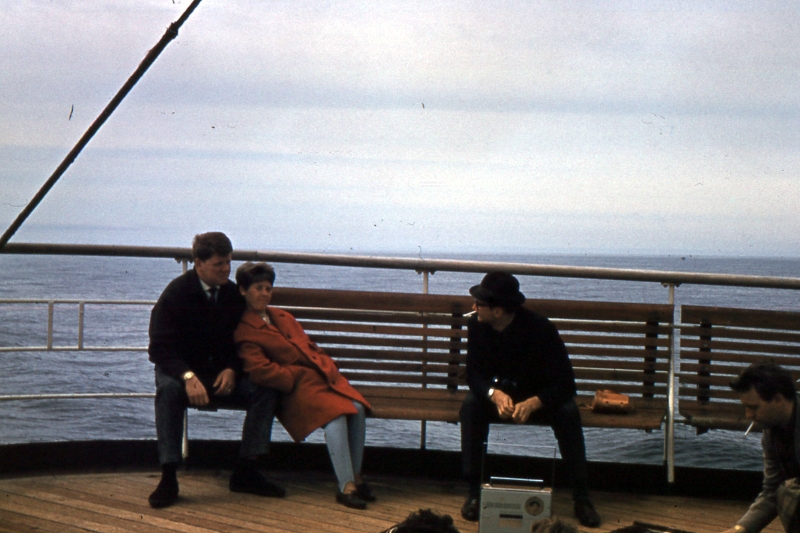
          The entertainment program is so rich and varied that one does not know which item to choose first. You can watch English movies, go to the library, play all kinds of games. The big hit here is Shuffleboard. After lunch you can attend a concert, go dancing in the evening or have a beer in the bar. And now I experience all this without you! That makes me a little sad and pensive. When I turn melancholic, I gladly withdraw from all these fun activities and write in my travelogue.

          Oh this heavenly weather! People are presently sun bathing and there is no rough sea, not even a trace of a swell. I wanted to experience a real storm. But my brother said that it would come soon enough, if I were really that keen on getting seasick.

134

Peter Strumming on his Guitar

          Your picture stands on my little desk. When at night I look down to you from my bed, I feel infinitely happy. I wished I could do the voyage all over again with you, when I have enough money to pick you up in Germany.

In a few days you will begin your studies, whereas I while away the time here doing nothing. Tackle your academic work as if you never applied for the stewardess program and as if you pursued a life’s career. You should know that you can help me also as a trained teacher, perhaps later assist me for a little while, in case my own studies should be dragging on.

          What would I give to be able to kiss you now! Until next time greetings to you and your parents!

          Your Peter

           On the same day Biene also wrote me a letter, which of course I was unable to read, until I arrived at my brother’s place in Calgary. I only included excerpts here to avoid breaking the chronological order of the family history.

April 28th, 1965 Velbert

           My dear Peter,

           Again you have made me cry. But don’t you worry, Peter. I did not have to cry out of sorrow (it was only lingering at the back of my mind), but from an overwhelming feeling of joy, happiness and unfathomable love. I listened to your guitar music  and to your voice on the record you had sent me. I could not grasp it! I just sat there, and tears were streaming down my cheeks. I once read that only a few people really understand how to say good-bye, and you knew how, Peter. Never will I forget this!

Dear Peter, now you have been on board for one day and with every minute you are getting closer to your destination. And when you read this letter, the long sea voyage and the road trip across Canada will already be behind you. Tell me Peter, isn’t it an incomprehensible feeling to be on the high seas and to experience the vastness and beauty of the ocean? When I experienced the sea for the first time, I was deeply moved. It was in the year we had met. My family and I were spending our vacation on the island of Corsica. Toward evening we had landed on the island. It was night, when we reached after an adventurous trip through the mountains our vacation village at the sea. Completely exhausted we immediately fell into a deep sleep, from which I awoke unusually early in the morning. In eager anticipation to finally cast my eyes onto the sea, I quietly sneaked out, because my brother Walter was still fast asleep. Outside the air was cool and still. The sun had just risen above the horizon. The beach spread before me still completely untouched. I went a few steps down the slope and then I took in the full view of the sea! Somehow I was like in trance and could not move another step forward. Although the view was overwhelmingly beautiful, the infinite vastness also instilled in me a little bit of fear. I sat down very quietly in the sand and remained there, until the first beach guests, who frolicked in the water, broke the charm that had kept me spellbound. You alone, dear Peter, would not have dispelled the magic atmosphere.

          Inspired by her memories Biene wrote the following poem and entered it into the Book of Dreams.

The Sea

 I will forever love the sea,

Even when the gulls scream

Above thousands of storm-tossed waves.

I love the play of colors in the surf,

The billowing clouds, the sun, the warm sand, …

Oh Peter!

How much would I like to sit with you

On a lonely beach, at the sea

With its music

Rather than being

Separated from you

So infinitely far away

On the other side of the ocean.

On board of the Ryndam I also romanticized the sea as if in response of her letter that I had not even read yet.

Gale Force 7 in the North Atlantic

130

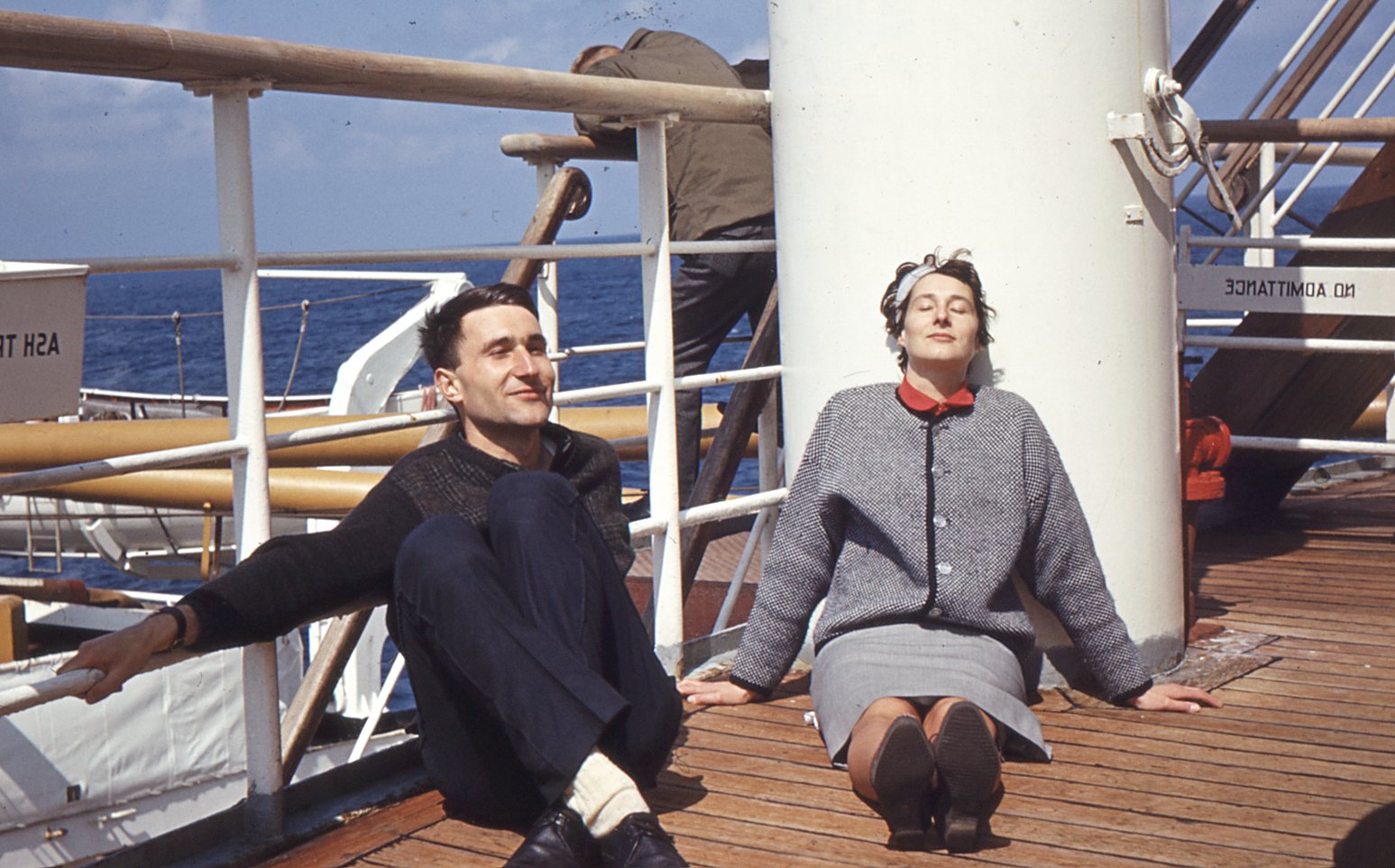
The calm sea and the sunshine are deceiving (my sister and I relaxing on deck of the Ryndam)

After a few days of calm and sunny weather a violent storm broke out, which put an end to the leisurely lounging on deck and made most passengers withdraw into their cabins. I entered into my travelogue:

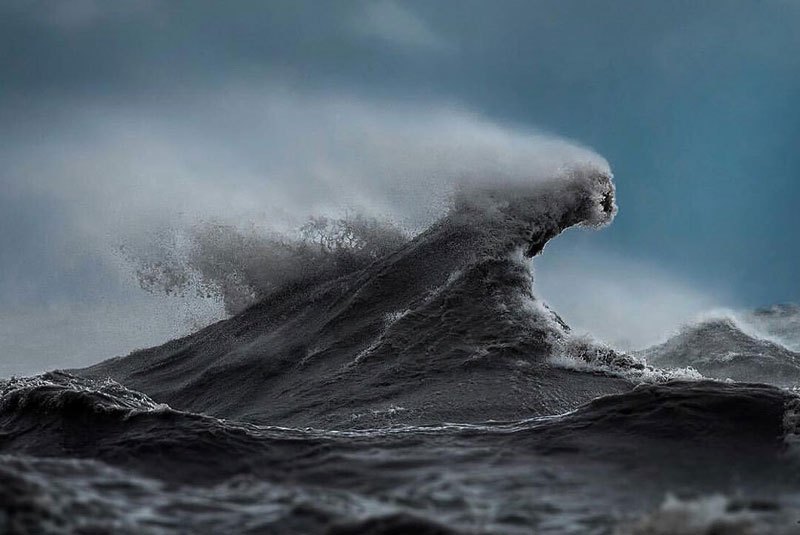
“ Today is an especially stormy day. Most passengers don’t dare to come on deck. They play cards instead or while away the long hours in some other way. But outside awaits the intrepid traveler an indescribable experience. I believe, if you fellow travelers were not afraid of becoming seasick, you would, like my brother and I, be eager to see what a storm Poseidon can whip up for you. At the stern of the ship we view how one of the most awesome spectacles are playing out in front of our eyes. Presently we have wind force 7 on the Beaufort scale, and the waves are piling up high threatening to engulf the Ryndam. In the dark all this takes on an all the more eerie appearance. The waves are bedecked with white foam. And it seethes and hisses like in a witch’s cauldron. When the crests reach a certain height, they seem to lose by the sheer wind force their support and dissolve into sheets of spray, which drift like blowing snow up against us. Feeling the mighty wind and tasting salt in our mouth, we are invigorated in body and soul. A great sea voyage turns into an inner experience.”

Storm zaujimavysvet.sk

Giant Wave – Photo Credit: zaujimavysvet.sk

World literature is replete with fascinating stories dealing with violent storms at sea. Confronted with the raw unbridled forces of Mother Nature man seems so small, so weak and insignificant. In the early days of exploration sailing ships were being tossed about like little nutshells by mountainous waves and hurricane-force strong winds. In ballads, short stories and novels the authors extol the indomitable human spirit that pushed man beyond what was thought to be possible. Standing with Adolf at the stern, hanging onto the safety ropes, and leaning against the wind that threatened to knock us down, we caught a glimpse of what it must have been like to be a sailor on a small sailing ship. On the other hand the Ryndam passengers hardly noticed the storm that was howling on the outside of the steel hull. The 200 m long vessel pitched and rolled just a little. None of the entertainment programs were cancelled. Most passengers continued to play cards, watch movies, danced, or sipped whiskey in the bar. They all missed out on the adventure of a lifetime.

          It was Sunday. I attended the church service provided by a Dutch minister in a large stateroom that served as church on this particular day. It was only a few months ago that I had bought a New Testament book in Latin with the twofold purpose of reading its message and keeping my ancient language skills alive. For similar reasons I felt attracted to the religious service. I wanted to hear God’s word and at the same time reinforce my English that had been getting rusty from lack of practice, since I graduated form high school. Was I ever into a treat on both counts! The minister spoke with a strong Dutch accent but very clearly. He explained how the Jews were devastated, after the Romans had utterly destroyed their temple in 70 AD. They believed that God had lost his dwelling place on earth and therefore could no longer live among them. The pastor emphasized that God had never lived in a temple. No man-made structure would be adequate to contain the glory of God. Instead he lives in the hearts of those who are seeking His presence and accept His Son Jesus as their personal savior. Hearing these words it felt like water was being poured on the parched soil of my impoverished soul and the seed that was once planted had just received the spiritual nourishment to grow and develop in the New World that I was about to enter.

          A Mysterious Thing Called Love

126

The Ryndam Approaching Canada

      We had already set back our time on board by three hours, which meant that we had covered more than half of the total distance of our route to Canada. Like a giant magnet the approaching American continent channeled and directed my thoughts and feelings towards it as to make me feel at home before we even arrived at the port of entry. At Adolf’s portable radio, which he had bought on board at the duty-free shop, we picked up the first Canadian stations and eagerly listened to music and news from the island province of Newfoundland. Yet, in spite of my joyful anticipation of soon setting foot on my new homeland, there were also moments, when being alone in our cabin I began to examine in a critical manner my motives for leaving Germany.

     For my brother Adolf the voyage was simply a return to where he belonged after the successful completion of his journeyman program as a machinist. My sister Erika, a fully trained and certified nurse, wanted to escape the deplorable working conditions in the German hospitals, where she was overworked and underpaid.

118

My Brother Adolf Chatting with a Butcher’s Couple

       But what about me? Wasn’t I a fool to leave Germany, where I could have enrolled in any of the post-secondary programs leading to a diploma in my favourite field in high frequency technology? The words of the kind army major at the basic training camp were still ringing in my ears and entered my thoughts about a great opportunity I may have missed. He had urged me to consider a career in teaching at the technical army schools as a high-ranking and well-paid officer. I could have also gone into teaching with excellent prospects in Germany. Seeing all these real opportunities I realized the painful irony of my situation. Even though I had never met Biene’s parents except for a brief encounter at the Baldeney campground, I was unknowingly sharing their conservative – we would say old-fashioned today – expectations for their future son-in-law. I felt like they did that to be acceptable to marry their daughter I would have to be able to support her. To achieve this goal, I needed a minimum of six years at a German university in order to become a high school teacher or an engineer in electronics. At the time of my immigration to Canada, there existed a two-years teachers’ training program. This would have been a crash course, which upon successful completion allowed the student to go out and teach as long as he or she was willing to put in the extra course work in summer sessions to complete the diploma requirements. So the main reason for me to emigrate was not to seek better jobs, to enjoy a greater sense of freedom, or to experience the grandeur of the Canadian wilderness, albeit very appealing in and of themselves, but that it was a means to an end, i.e. to get married to Biene as soon as possible. It was truly paradoxical that in order to be close to Biene in the future, I had to be far away from her, At this point in time we couldn’t even dream of meeting in the next couple of years.

135

Adolf in his Tiny, but Cozy Bunk

          It is a strange thing about love. We feel its power, yet we cannot describe it. It has no physical location, even though we assert we feel it in our hearts. It has no substance, yet we say metaphorically love is in the air. However, we know it exists whenever we are in it and feel its tug at our heartstrings. We begin to see things associated with our beloved that we did not see before. So it was the case with Biene and me. I was on my way to Canada. All of a sudden this relatively unknown country from a German perspective had taken on an entirely new meaning for Biene. If love had not established a connection to this alluring country across the Atlantic, she would not have cared much about it, when her sister Elsbeth in Gotha romanticized about Canada and the wonderful things she had seen on TV. But now the floodgate of associations was wide open. Anything that had even remotely to do with Canada filled her heart with joyous anticipation. Somehow its name had taken on an auspicious meaning for her. She bought travel books on this second largest country in the world. Soon she described herself tongue-in-cheek as an expert on Canadian affairs. Whenever something related to this country came up on the radio, she perked up and eagerly listened to the news. On her daily trip to the teacher’s college in Wuppertal she walked by a large clock that indicated also the times in many other locations in the world. Of course, she would be interested in knowing the time in Calgary, where I would soon arrive by car with Adolf. When a seminar with slide presentation on travels in North America was offered to the general public at a community college, Biene attended the session. The presenter Martin Winter had traveled across all the Americas. He showed his slides of the Canadian wilderness, the majestic Rocky Mountains, serene lakes and raging rivers. When he talked about Calgary and the Stampede, the greatest rodeo spectacle on earth, Biene was so thrilled, she went to see him after the presentation and told him that her fiancé was just then on his way to Canada. ‘One day’, she wrote me in her enthusiasm for this wild and beautiful country, ‘you must take me camping to one of these glorious mountain lakes.’

         Arriving in Canada in our Sleep

Iceberg – Photo Credit: icebergwatereurope.com

In the meantime on board of the Ryndam we could tell that we were approaching Canada’s territorial waters. The storm that had been stirring up the ocean moved on eastward and made room for sunny sky and calm conditions. The temperature plunged to 2° C. On deck we had to wrap ourselves in woolen blankets to enjoy a short sunbathing session in the cold air. The Ryndam seemed to have reduced her speed although there were hardly any waves. Suddenly we heard a message over the intercom speakers to alert us to an iceberg that was floating by less than one km to the right. As we were coming closer, we marvelled at the beauty of the mountainous object that glittered in the bright sunshine like a diamond of gigantic size. Knowing that ninety percent of an iceberg is submerged and invisibly spreads into all directions, we now understood why the captain had decided on a slower pace. Fifty-five years ago about the same time and in the same waters a single iceberg had sent the ‘unsinkable’ Titanic in less than three hours to the bottom of the sea.

The First Seagulls

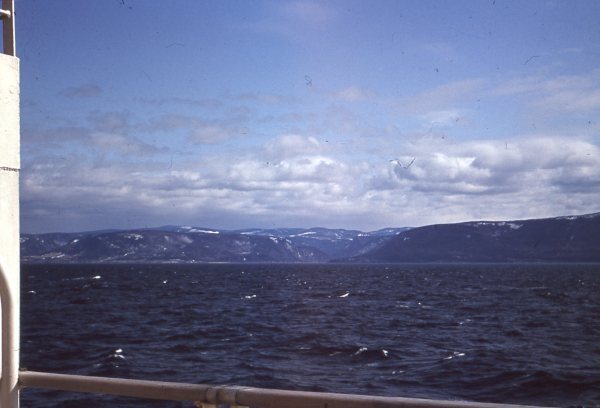
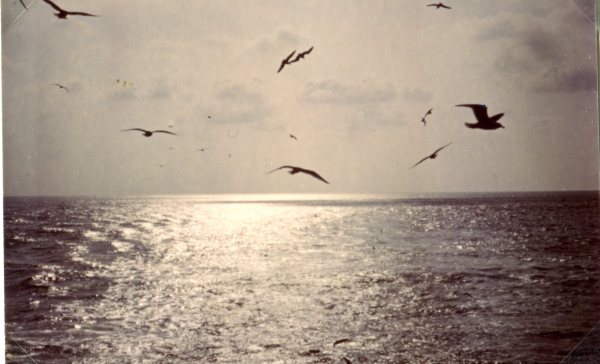
The next morning three fishing vessels were slowly passing by on starboard, a sure sign that we were not far from land. Seagulls suddenly appeared as if from nowhere and trailed our ship at the stern expecting to find scraps of food that someone might have thrown overboard. Then the first offshore islands emerged from the hazy horizon. They looked desolate and uninhabited. They were all covered in snow. The icebergs, the snow on the islands and the chill in the air made us feel that spring had not yet come in this part of Canada.

The First Off-Shore Islands

My sister suffered from a sore throat and decided not to accompany us in the car to travel across the continent, but to take the train instead. In the evening Adolf and I went into the bar that was more crowded than usual to say good-bye to our friends and table companions. At three in the morning, I am not sure after how many shots of whiskey and how many glasses of beer, we were finally done with saying our good-byes. After getting only a few winks of sleep, we awoke this time not by the familiar tinkling of the breakfast bell, but by an eerie quietness. Still groggy from all the partying the night before we however managed to jump into our clothes at lightning speed and rushed on board. We were anxious to find out what kind of calamity the Ryndam had gotten itself into. Perhaps the engines had broken down. Or did those dreadful icebergs surround us? What a pleasant surprise was unfolding before our eyes! The Ryndam peacefully lay securely tied to the pier posts at the Quebec Harbor. What a shame! While sleeping we had arrived in Canada.

Quebec Harbor – May 1965

After breakfast Erika and I with all the other immigrants walked over the gangway past large cargo and shipping facilities to the federal office building. There a friendly bilingual customs and immigration official greeted us and carefully examined our passports and the flimsy unassuming piece of paper we had received from the Canadian embassy in Cologne. The terrorists of today would be laughing at the simple document of fifty years ago. A photocopy on ordinary paper would have sufficed to let them slip by our border checkpoints. While we were waiting to get our documents stamped and approved, a charitable organization offered us our first cup of coffee on Canadian soil. It turned out to be a typical brew as offered then in most American coffee shops, so weak and bland you could be drinking it all day without any adverse effect, as some people were in the habit of doing. A Catholic priest asked us about our plans and provided us with useful information on Alberta, British Columbia and the other provinces of Canada. Then quite relieved that we had successfully jumped the first hurdle and had officially become a member of the Canadian society with all its rights and responsibilities except for the right to vote, we returned to our ship to reconnect with Adolf. The French-Canadian officials at the pier smiled, when I played the German folk song ‘Muss i denn, muss i denn zum Städtele hinaus’ on the harmonica. Elvis Presley sang this lovely tune while with the American Armed Forces in Germany. Wooden Heart was its English title. The sentimental Germans who themselves were beginning to forget and to neglect their very own folk songs liked the Elvis version so much that the song maintained the number one position on the German record charts for several weeks in a row.

First Impressions

Picturesque Quebec City – May 1965

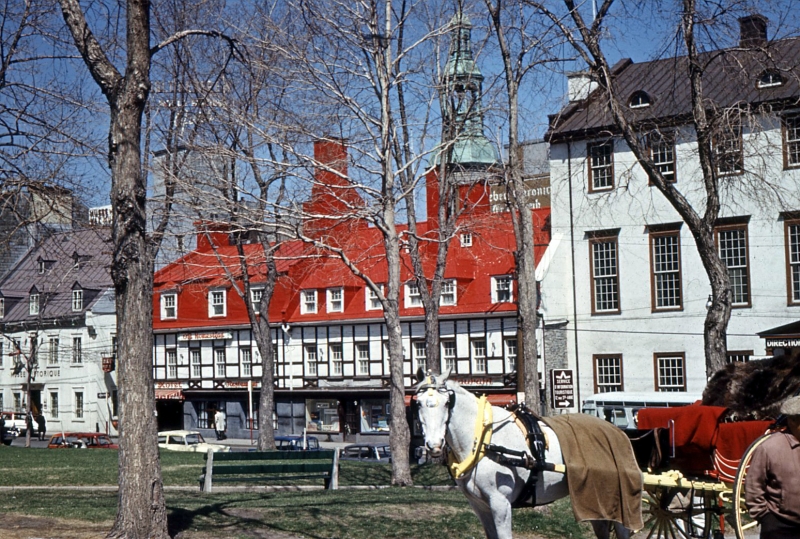
Now we were at liberty to visit Quebec City. Adolf, who as Canadian citizen did not have to go through the immigration procedure, joined us to explore the only walled city in all of North America. We took a taxi to the city centre. We traveled past wooden houses painted in bright, sometimes garish-looking colors offering a bewildering sight for the new immigrants from the Old Country. When my sister and I noticed the ugly power poles often leaning at a precarious angle in the back alleys with wires seemingly helter-skelter stretching out in all directions, we broke out in irreverent fits of laughter. Adolf was quite annoyed, as we had touched a sensitive nerve. After all it was his home country that we were insulting with our disrespectful conduct.

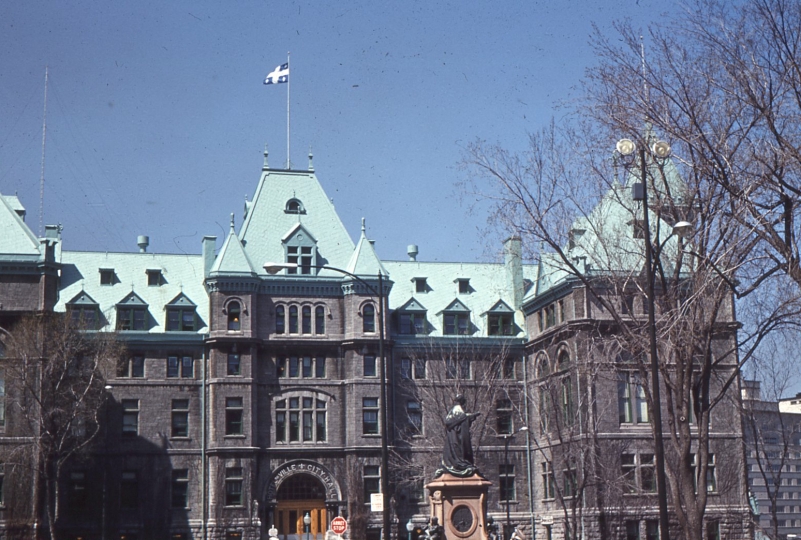
City Hall Quebec City

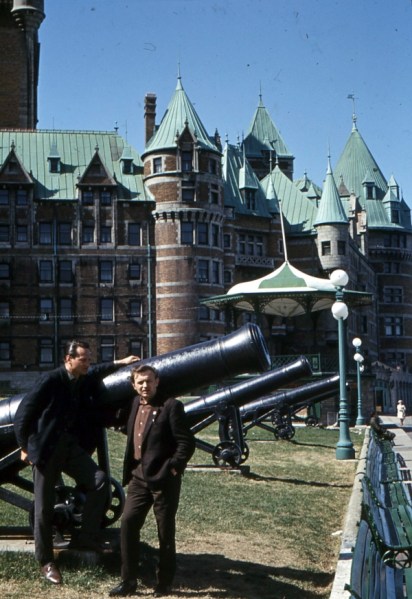
We got out of the taxi at the statue of Samuel de Champlain, the French explorer, founder and first governor of Quebec. There Adolf and I decided to separate from Erika and her companion Beate, as they were more interested in shopping. We two brothers, however, wanted to have a good look at the ramparts and fortifications of this historically rich city. So we took a tour of the classical 17th century defense systems with its mighty walls, which unfortunately in the end did not prevent the British redcoats from taking over all the French colonial possessions in North America.

Samuel Champlain – French Explorer and First Governor of Quebec

When hunger pangs reminded us that it was time to have lunch, we dropped in at one of the many restaurants catering to the tourists that were flocking to Quebec City by the tens of thousands every year. We ordered steaks, large enough to fill out the entire plate and at $2.00 a bargain even at the then current dismal German Canadian currency exchange rate of four marks to one dollar. I had trouble communicating with the waiter with my Parisian school French. So I could not figure out, why they could not serve us any beer, which would have complemented nicely the fabulous meat dish. To quench our thirst, it felt odd that we had to move on in search of a beer parlor. To call it a pub would have definitely been a misnomer. The place was filled with dense cigarette smoke wafting above oversized round tables, the jabbering of hundreds of people echoing from the bare walls gave more the impression of a large waiting hall at a German railroad station than that of a cozy inn, like the one where Biene and I had spent a romantic afternoon on Mount Vogelsberg. These beer parlors had been built based on the mistaken belief that their grotesque ugliness would deter people from gathering and drinking beer. Great was my amazement to watch the clients order half a dozen glasses of beer all at once, not caring about their drink getting stale. Some even sprinkled salt on their brew or ate heavily salted peanuts to increase their thirst for more. Adolf was quite used to this custom, which seemed to me a relic of the past. It was a bit of a culture shock to me and I was happy when we returned to the Ryndam, where we enjoyed the sumptuous farewell dinner that the cooks had prepared for us, truly a culinary experience par excellence.

Cannons and Fortifications – My Brother Adolf on the Left

There were many last times on this floating hotel and entertainment centre that had safely carried us across the Atlantic, the last dinner with our table companions, the last game of chess with a Yugoslav doctor, the last card game of Mau Mau, the last visit to the bar, the last time I climbed up to my upper bunk, a last glance from above on Biene’s portrait on the cabin’s tiny desk, the last time the little room bell tinkled and called us for the last breakfast on board of the Ryndam. My heart filled with a sense of nostalgia and bittersweet feelings of regret. I had to leave this wonderful ship with her dedicated staff behind. I felt sad that I had not been able to share all these memorable experiences of the eight days on board with Biene.
 

The Peter and Gertrud Klopp Story – Chapter XXVI

Of a Young Man’s Needs and Faithfulness

Do not spoil what you have by desiring what you have not; remember that what you now have was once among the things you only hoped for. Epicurus

Biene’s Second Visit to Gotha

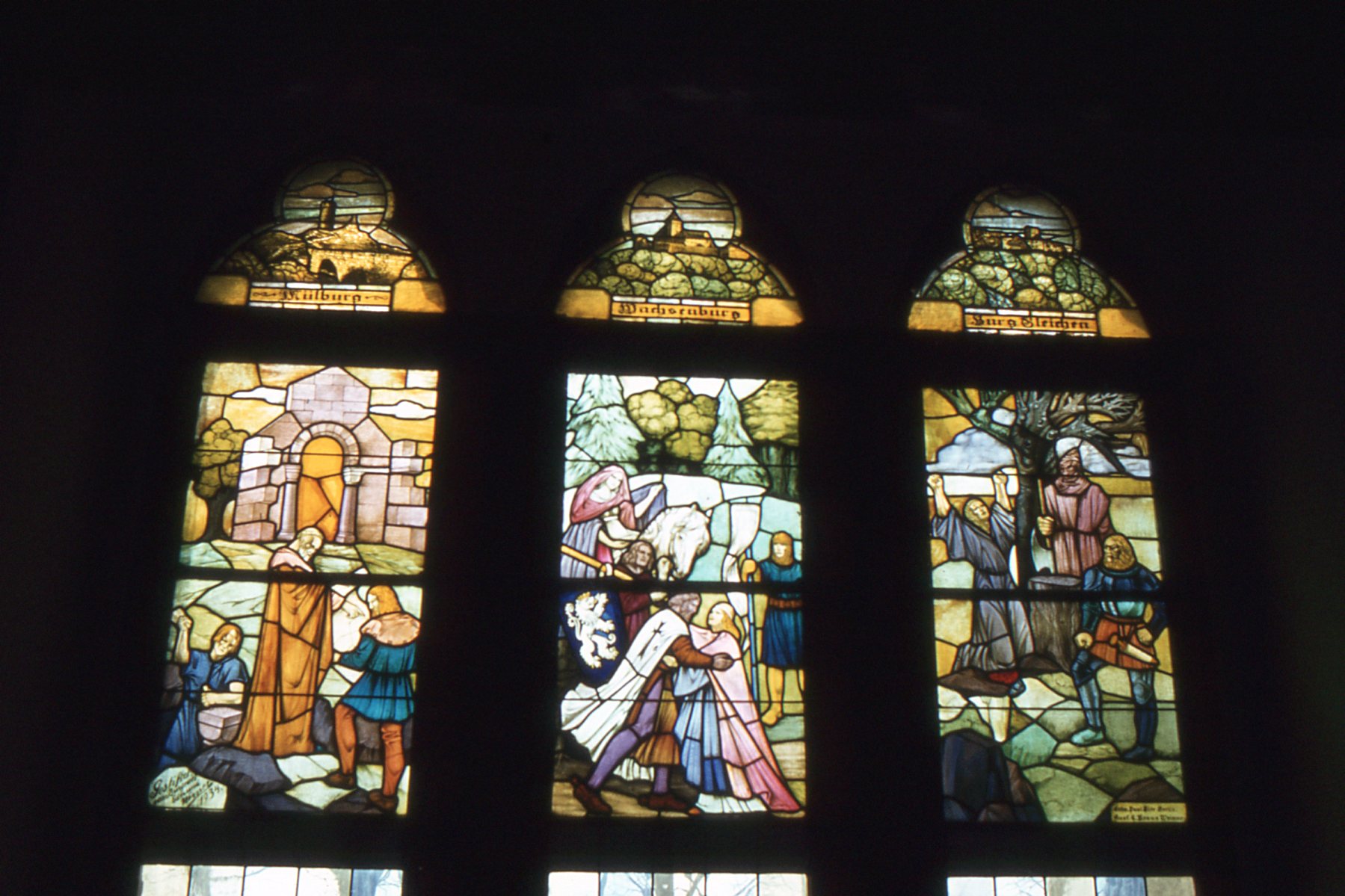
Beautiful Stained Glass Windows at the Erfurt Cathedral

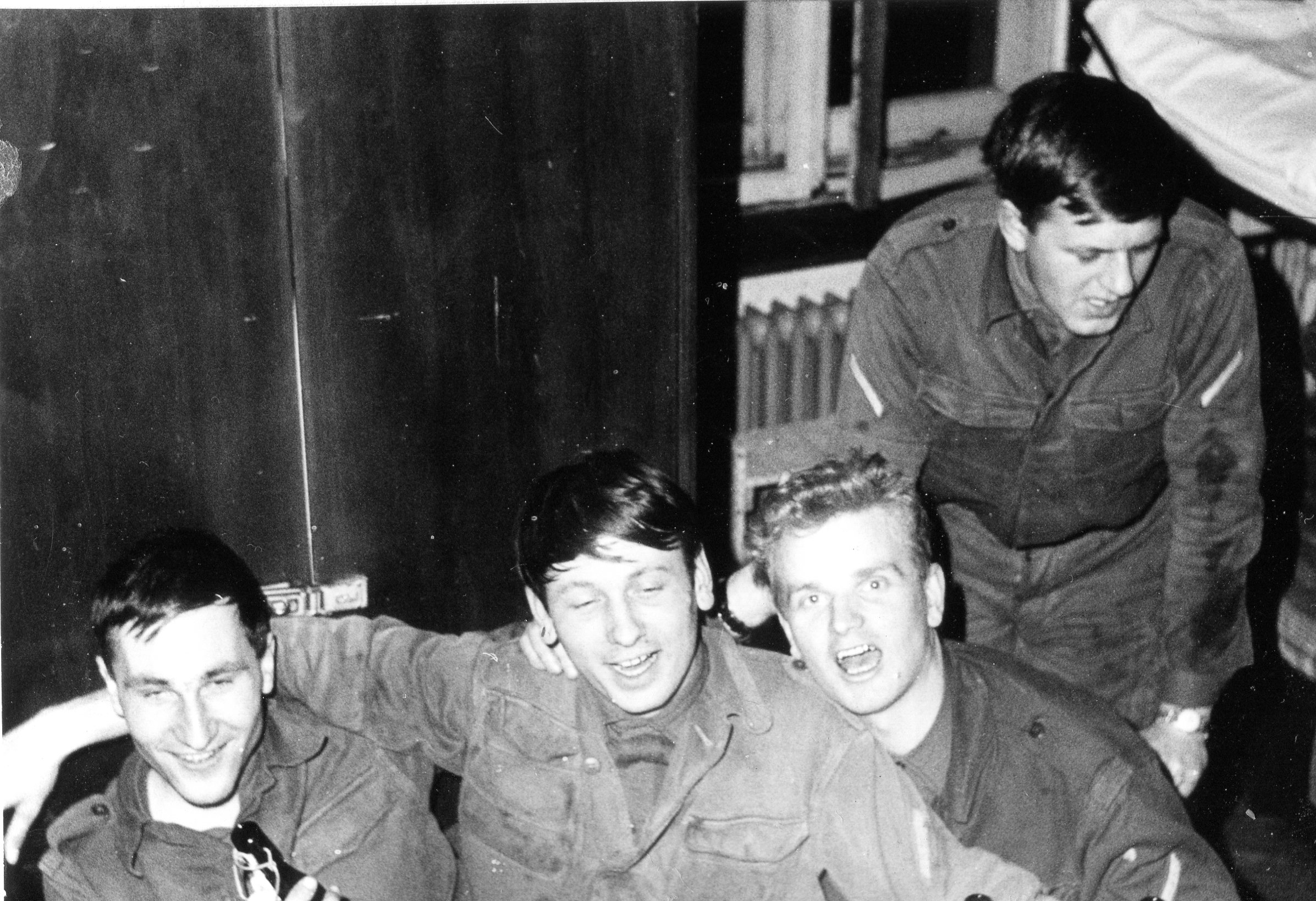
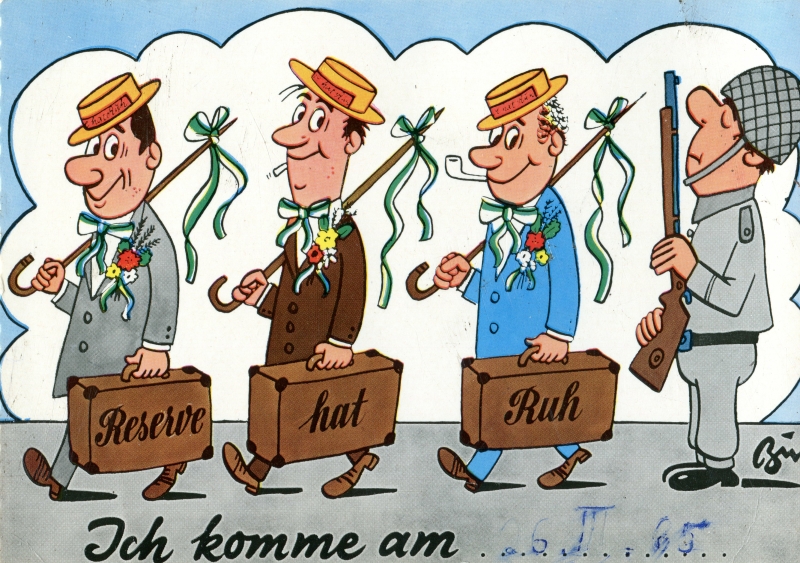
During the last three weeks of my military service I took the time to write a report on my army experiences. I intended to mail it to the ombudsman, whose job was to receive and act on the written complaints from soldiers about alleged abuses and injustices in the West German army. Having gained the much-needed distance from the upsetting transfer episode and having received fair and respectful treatment at my final army post at Marburg, I was in the right frame of mind to describe in an emotionally neutral and objective manner some of the deplorable conditions at the Koblenz barracks, where low ranking army personnel were fraternizing, drinking, and getting drunk with common soldiers and thus tarnishing the public image of the Armed Forces. I also pointed out the errors, which the officer in charge – whether intentionally or not I could not say – committed to bring about my transfer to Maxhof. Furthermore I made it clear that while I lost out on a chance of becoming a lieutenant of the reserve, the army itself would suffer in the long run from such careless and wasteful practices. Biene helped me by typing up the handwritten draft copy of the report.  She was quite impressed how I managed to control my anger and yet decidedly communicated my legitimate concerns to the ombudsman. Being aware of the fact that for the first time we worked together to address and solve a problem, she remarked in her letter that all her thoughts were directed to a time in the future with me. She wanted to do her part that our life would not turn to be something, upon which we would look back with regret, rather a life that was perhaps difficult, but would fill our hearts with joy, because we mastered it together.
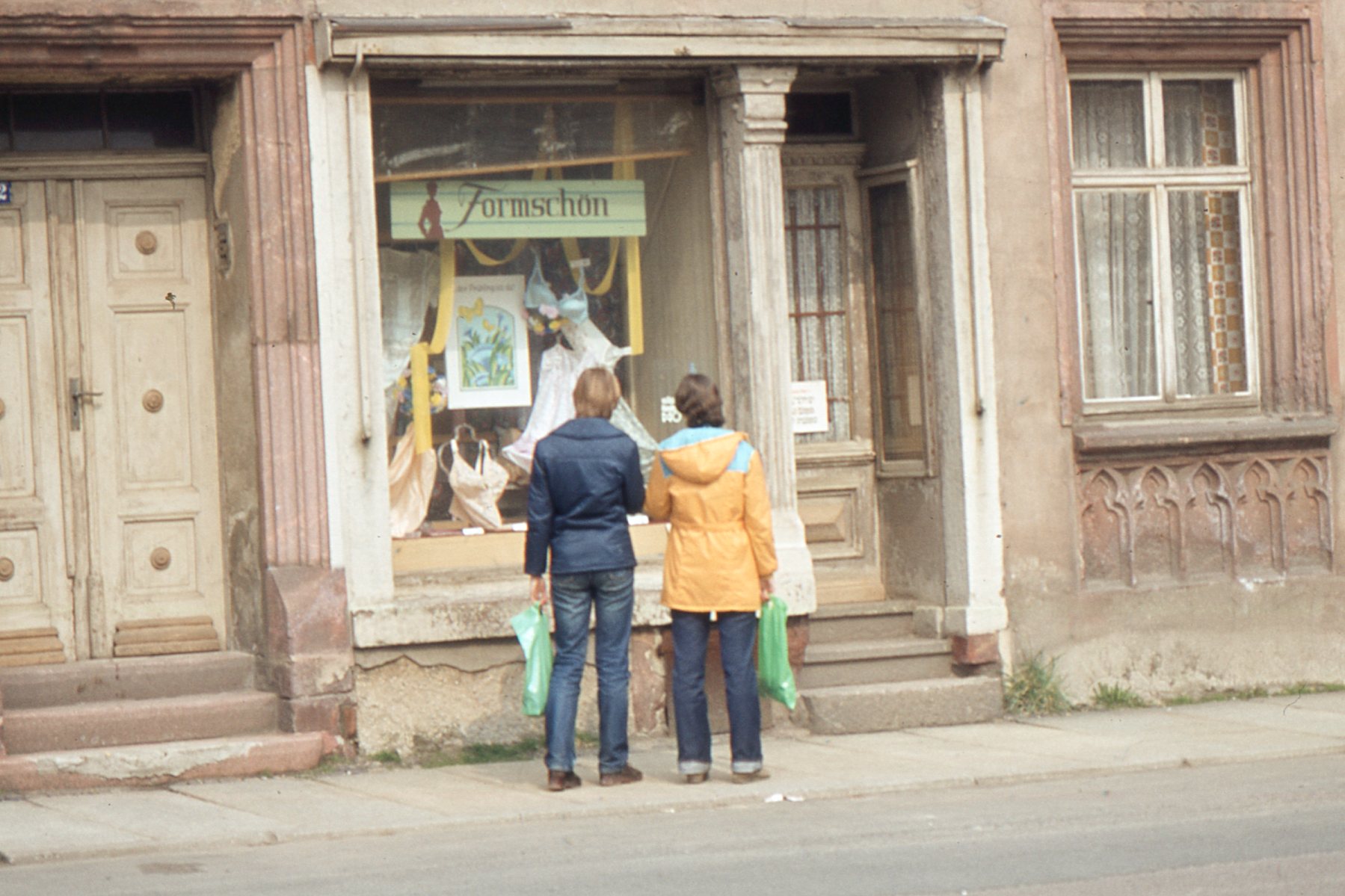
Lingerie Boutique in East Germany 30 Years after the End of World War 2

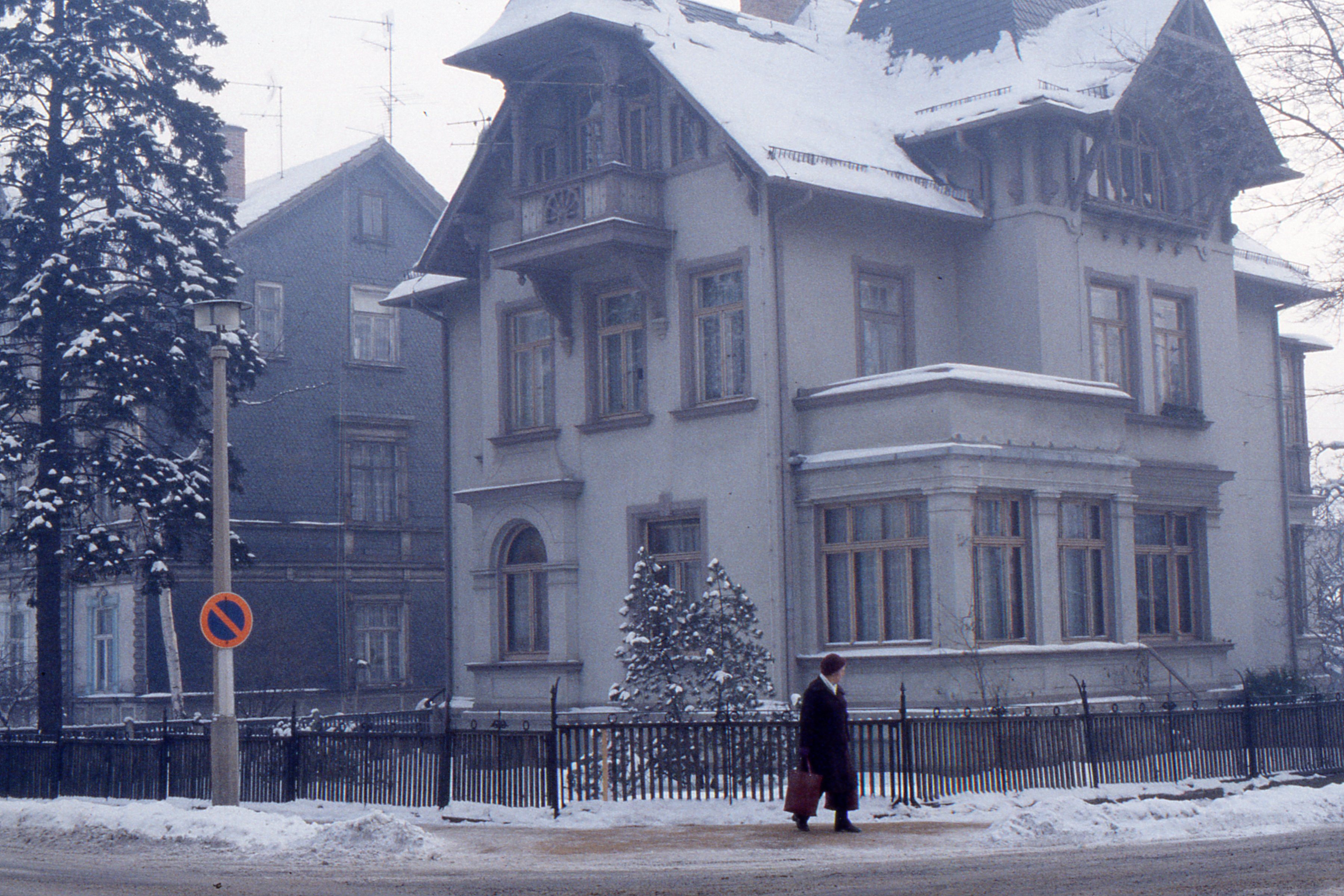
About a week before my birthday Biene and her twin brother Walter traveled to Gotha to visit their sister Elsbeth in the GDR behind the Iron Curtain. In those days, when a fence heavily guarded by the National People’s Army (NVA) divided the two Germanys, a person needed a traveling visa and a residence permit in order to cross the border and visit close relatives. What made the application process so frustrating for so many West Germans was not the hefty fee they had to pay, but the arbitrariness in the approval process by the East German authorities. Only in the event of a severe illness or death of a close relative could one be fairly sure to get that all important entry document. So Biene and Walter were lucky indeed to make their journey to their former hometown Gotha and to be together with sister Elsbeth and her family at their birthplace. The apartment, where Elsbeth, her husband Paul Werner, and their two sons Norbert and Christian lived, was located in a beautiful house that had escaped the destruction of the Allied bombing raids during the war. The home offered the warm, cozy feeling of a secure harbour, where the family found refuge from the desolation of the outside world, the depressing sights of dilapidated houses all around the neighbourhood. While West Germany had experienced an incredible economic boom with an unprecedented growth in prosperity during the past twenty years, not much had changed on this side of the border and large parts of the major cities still lay in ruins. There was a shortage of the most basic consumer goods that forced shoppers to buy, whenever and wherever they happened to be available in the drab city stores.

Biene and her two Nephews Norbert and Christian – 1965

On Biene’s previous visit in the summer of ’64, the two sisters had already formed a close bond with each other. Now Elsbeth was jealously watching that nobody spent too much time with her cherished guest. Together they traveled to Erfurt to visit the famous cathedral, where Martin Luther was ordained in 1507. Inside the 1200-year-old Gothic church they marveled at the beauty of the altar. Biene was impressed by the rich colors of the stained glass windows that let the vibrant light stream into the interior. In the evening the entire family would sit around the table and play a round of the German card game Doppelkopf, which was also our favorite game at the Kegler Clan. Of course, her two nephews were delighted, when they were allowed to spend a little bit of time and go for a sightseeing tour around town with their elegantly dressed and pretty Aunt Biene from the West.

Biene’s Birth Place in Gotha

Elsbeth had watched on East German TV many interesting documentaries on the landscapes and people of Canada. She confided to Biene that if she could live her life over again and had the freedom to travel, she would immigrate to this fascinating country with its magnificent scenery and its promise of a better future. When Biene told her that I was going to Canada in a matter of a few weeks and that we had promised to be faithful to each other, Elsbeth voiced her skepticism and did not mince words in sharing her opinion on what a man of my age needed. She warned her younger sister that I would be looking for a girl who would offer more than she had been able to give. Biene was quite troubled by her sister’s pessimistic views on men’s desires for sex and their  potential lack of faithfulness. True to our promise of always sharing our thoughts and concerns with each other, she immediately communicated her worry regarding these disturbing insights in a letter directly from Gotha and asked me to respond and hopefully reassure her.

A Delicate Question Answered

Gertrud (Biene) Panknin’s Graduation Class – Who can find her?

On my 23rd birthday with less than a week left before my release from the military service, I sneaked away from the electronic maintenance job, which had been completed long ago and only existed for one purpose to keep us busy and to kill time. I sat alone at the table of Room 328. No sergeant, drillmaster or officer would bother me here. The carrier frequency equipment, for which I had been responsible for its smooth operation, was in top shape and my absence would not be noticed anywhere at the Falkenstein Barracks. I wanted to do something special on my birthday. The daily celebrations, the drinking and carousing to mark the remaining ‘glorious’ days in the army were not that special anymore.

43

Endless Celebrations: Less than Ten Days Left of Military Service

I longed for quiet, a time to reflect on this idle Wednesday morning. I wanted to respond to Biene’s anxious questions and genuine concerns. Here at the soldiers’ simple living and sleeping quarters no loud talking and singing were distracting me, I found the ideal space to grapple with the contentious issue raised by Biene about faithfulness. It was good to know that Biene trusted me to provide an honest answer. I was proud of her courage to touch on the topic of sexuality, which we two had been too shy to discuss at our few encounters. I took out from my closet pen and paper and began to write down my thoughts. It turned out to be a very long letter, in which I, trusting Biene as much as she trusted me, did not hesitate to truthfully lay bare my innermost feelings. The following are excerpts taken from my lengthy reply.

33

Peter and his Buddy at the Last Military Exercise – March 1965

“March 24th, 1965

 My dear Biene,

Yesterday I received your letter from Gotha. Your sister seems to have a rather strange opinion on men. I am glad that you broached the delicate subject of sexuality. But I found it a little troublesome  that you let yourself get so easily misled. But I don’t want to reproach you; for I myself had often to deal with opinions of young married and unmarried men who asserted that a girl could only be faithful and true to her partner, after she had gone to bed with him. Please forgive me this drastic manner of expression, but why should I beat around the bush? You see the accusations are coming from both sides. As for me, I refuse to accept any form of generalization, when people say, that’s how women are, that’s how men are.

 But now to your concerns! You would like to know how I think about it, dear Biene. Like in all men there is undoubtedly a force that drives me to the opposite sex. Yes, furthermore I concede that the drive is not necessarily directed to a particular person. Dear Biene, you must absolutely believe in what I am writing you now. Let no ever so bold opinion throw you off balance again, if you truly love me. Sexuality does not stand on its own, otherwise we would be like animals, but it is intertwined most intimately with the entire personality of the human being. There will always be tensions, in which we have to struggle to maintain the balance and keep this vital force under control.

 Whoever surrenders in this battle and needs to run to a woman to relieve his tensions is in my opinion a weakling and a coward no matter how assertive and self-assured he might otherwise appear. And in what comes now, you can totally put your trust. Since we love each other, this battle for me is over. I have been able to have this uncanny force coexist in harmony with myself. It is always there, lurking behind the scenes, surprising me at times, but it does not bother me any more. When I read a book, look at pictures, walk in the streets or watch a movie, it often and unexpectedly flares up, and then in full awareness of control I have to smile at myself. Don’t you think that one has overcome much, if one can smile at oneself? Do you still worry about me, even when I tell you that I am strong enough to wait for you and through you alone I have become so strong? As long as I can hope for the fulfillment of my ideals, which I have set for myself, you may chase your worries away. You stand in the midst of this sphere, dear Biene, whether I am in Canada or at the end of the world.

 How beautiful it is that we are so frank with one another! This will not only keep us together, but also bring us ever closer together. Do we want to show this spiteful world that one can wait for one another for years without so-called ‘side leaps’, do we want to, dear Biene, do we want to?

 Finally I would like to say one thing, your sister will one day have to concede that there are some exceptions among men, who will turn out to be ‘miracle men’. Now you will smile; thank you so much! Be completely reassured!

          Your Peter”

The modern reader may scratch his or her head over the outdated notions about love and faithfulness expressed in our letters over fifty years ago. Yet, in our mind they remain completely unchanged and have been our beacon of hope even through the darkest and most turbulent times in our life-long relationship.

Last Rendezvous in Germany

Peter on the Left Walking out of the Falckenstein Barracks

The day of our official release from the West German Army had finally arrived. For the last time we stood in attention in front of the main building. One could easily spot the reservists and distinguish them from the soldiers on active duty by just looking at their clothes. We wore civilian clothes, while the others were standing in their uniform. In spite of all the drudgery during the past two years, it now felt good to have served one’s country. To prevent a war through the presence of a strong army as a deterrent to a would-be attacker was in my opinion far more important than being involved in a conflict with its horrors at the front line and with its casualties among the civilian population. I was grateful for the opportunity to spend my final six months in Marburg. I felt enriched by the outstanding technical training, blessed with a company of cheerful comrades, respected by a competent staff of officers and sergeants. Last but not least I was awarded a fine testimonial, which gave credit to my successful teaching assignments. Soon after the brief farewell speech and words of encouragements and good wishes by the commanding officer we walked through the open gate into momentary freedom until new duties and responsibilities – some of our own choosing, others forced upon us by circumstances beyond our control – would limit our choices all over again. But at this very moment we were truly free. I took the very first available train to take me home to my mother in Watzenborn. In an almost nostalgic mood I hummed in my mind: Parole heißt Heimat, Reserve hat Ruh!

Card Sent Home to announce my Coming

Biene’s reply to my long-winded exposition on love and faithfulness was very encouraging. She also confided to me that only two years prior to meeting me she was not even allowed to step outside the door. Her mother, to whom I will remain for ever grateful, worried a lot about her, kept a watchful eye, and thoroughly investigated, where she was going and with whom she was getting together. At that time quite a few dramas were rolling over the home stage. Biene admitted that during that time she was often in danger of being swept up by her impulsive and passionate feelings. Mother Panknin kept her from getting lost on the wrong path and made sure that her precious daughter would not be led astray by false emotions. But now it seemed that she had trust in her daughter. And even though she had never really got to know me, through the eyes of her daughter she seemed to have developed a favorable image of me. How else, so I asked myself, could she let her travel to me and allow her to stay overnight at a distant location? On Biene’s last visit, before I departed for Canada, with full support of her parents, she came to visit me for an entire week. Perhaps Herr and Frau Panknin shared Biene’s older sister’s view believing that once I was off to another country far away from Biene, our relationship would eventually fizzle out and die a natural death.

Peter and Biene in Front of Erna’s House in Michelbach

On Monday, April 5th, Biene arrived by train in Giessen, where I met her at the station. From there we traveled together to Michelbach near Schotten at the foot of Mount Vogelsberg. The week before I had given Erna, Father’s second wife, advance notice that we were coming for a visit. She knew that this would be the very last time Biene and I would be seeing each other before my voyage to Canada. Even though she was still mourning over Father’s sudden and unexpected death the year before, she did her best to make us feel welcome in her so typical cheerfulness. Everything was prepared for a comfortable and enjoyable stay for us. I was going to sleep in Father’s bedroom upstairs, while Biene was sleeping in the guest room.

Erna, Father’s second Wife, on the Left with her Friend Friedchen Langlitz

After a good night’s rest and a hearty breakfast, Biene and I decided to hike up to the Hoherodskopf, one of the higher peaks of the Vogelsberg Mountains, a 2500 square km terrain that was formed totally from volcanoes some 19 million years ago. This volcanic region has been long extinct. It had created one of the most amazing basalt rock formations anywhere in the world. But on this wonderful April day we were not going to study geology, we had better things in mind. We were more interested in each other’s company, living in the here and now, savouring each precious moment. It was cool, but the sun shone brightly over the park like landscape. Thunderclouds arising above the western horizon lent the vernal panorama a dramatic effect. We were grateful that we encountered very few people on our leisurely stroll, as it was early in the season. There was nothing that would disturb the warm, tender feelings we felt for one another. This was also not the time to look back at all the obstacles, challenges, and problems that we had to deal with in the past. We had mastered them and had set them aside not allowing them to interfere with our blissful state of mind.

Biene on our Hike to the Vogelsberg Peak

There was no need to talk. Our hearts and souls felt at one. We reached the top just in time to find some shelter from a heavy downpour that was threatening to spoil our outing. Near the peak of the Taufsteinhütte we stepped into a cozy restaurant by the same name, when the first raindrops began to fall. The dining area created that special kind of ambience so conducive for a romantic get-together, each table place at a window with a view over the spectacular scenery. Just then lightning lit up the dark clouds. Then followed the rumbling of thunder in the distance. I ordered a bottle of Mosel wine to celebrate and drink to our love that had carried us so far and would help us bridge the long time of separation ahead. For on this day we had not only climbed Mount Voglsberg, but even more importantly we had also reached a new pinnacle in our relationship. The rain was now coming down in buckets. Thunder and lightning engendered an electric atmosphere. In a strange mixture of fear and passion it made us move closer together. In the spirit of ‘carpe diem’ we did not gulp down our wine as if in hurry, instead we sipped the sweet wine from the Mosel valley to make the moment last. We almost wished that the storm would last forever. At least for the moment, time appeared to stand still. When we tasted the last drop, the storm and rain had subsided and had moved on. Erna, having worried about us, had sent a neighbour to pick us up in his car. We reluctantly got up and with a feeling of regret let the neighbour drive us back to Michelbach.

Schotten – April 1965

On the following day Biene and I promenaded down to the quaint town of Schotten with their timber-frame houses so typical of this region. Biene was quite excited and full of anticipation. For I had announced that I would buy her a mystery gift. Of course, I could not tell her what it was; after all it was supposed to be a mystery gift. Biene behaved as if she knew the secret. Therefore, she kept her innate curiosity for all things unknown to her in check. If I had a picture of us two walking into town, I would in a comic-book-like fashion place two speech bubbles above our heads. The one above Biene would say, ‘Today is the day Peter will buy me an engagement ring. I will be so happy!’ And my bubble would say, ‘Today is the day I will buy her a genuine Hohner harmonica. She will be so happy!’ Had I not played the mystery game, had Biene said just one word, I would have bought the ring and put it on her finger for everyone, her parents, friends and all would-be suitors to see that she was engaged. Instead she was now in possession of a fancy harmonica that could be played on both sides in keys C and G. Biene looked pleased and even appeared happy, but I am sure that deep inside she was also a bit disappointed. What I could vaguely at the time was that we could have saved ourselves a lot of pain and agony in the not too distant future, if we had been able to communicate with each other just a little better.

Michelbach, the Little Village, between Schotten and Vogelsberg Mountain

It was the night before we had to head back to Mother’s place at Watzenborn Was it the moon, or the noisy cats prowling and meowing in the attic, or fear of the unfamiliar surrounding, or romantic passion stirring in us? Perhaps all of these things! The plain fact, however, was that we could not sleep. With the two upstairs bedrooms so close to each other it would have been so simple on any of the three nights to yield to temptation. But we did not. I would be a hypocrite, if I was going to explain our conduct in terms of a moral victory. It just happened, almost certainly for our own good.

The Peter and Gertrud Klopp Story – Chapter XXIII

The Complexities of the Heart

 The heart has its reasons which reason knows not. Blaise Pascal


Marburg Castle - Photo Credit: wikipedia.org

Marburg Castle – Photo Credit: wikipedia.org

Biene and I had met twice in the early summer of 1964, each time for only a few hours, as I had a long train ride to get back to the barracks before midnight. Being completely incapable to feel happy for any length of time until then, I was amazed how my restless heart and mind could be in perfect harmony to permit that elusive sensation of happiness during those five wonderful hours I had spent with Biene along the shores of Lake Baldeney. This blissful feeling was further enhanced when Biene wrote that she now knew that I was no longer just a fantasy person, but a real human being she could love and be happy with.

Alas, barely two weeks later, while I was still deeply immersed in a state of euphoria, a letter from Biene arrived with an obscure message out of which I could make very little sense.

“Dear Peter,

You will probably ask yourself why I haven’t written to you sooner. Indeed, you may ask this question. It is strange with me; for I can’t get rid of my sadness. When everything outside looks so peaceful and when I think of you, it is getting even worse. I would rather crawl into my bed being so much in pain and cry. How beautiful it is outside! The sun is shining and the wheat fields have already turned completely yellow and the stalks are swaying in the wind and making a gentle sound. Normally wheat fields fill me with joy and let me dream many a beautiful dream. And now?

I would like to talk to you about everything that moves me. But it is not because of you that I cannot do it. I have a great longing to be with you. But I cannot tell you what I want to tell you. It would increase my sadness, because I would hurt you, and I would like you so much to be happy, if you think of me. Please forgive me that I write nothing that would cheer you up. Normally, I am not like that. Now even beautiful memories don’t comfort me. I don’t want to think about anything of the past …”

Uncle Günther and Peter

Uncle Günther and Peter

I reread this passage at least half a dozen times in an effort to penetrate the veil, with which Biene may have covered a secret of the past. With all the talk in the male-dominated army, where many a room buddy had made himself an expert on what made the girls tick, on how to deal with their capricious behaviour, on how to please them, what to do and what not to do, with all that half knowledge of the opposite gender floating around in the gossip mills, not one of the so-called specialists ever mentioned the devastating influence of the monthly period. I was completely ignorant about what most women had to put up with, their mood swings, feeling psychologically and physically down, often bordering on severe forms of depression. More likely than not, the topic was one of the few remaining taboos left in the otherwise rough and tumble world of the military environment. If only I had had an inkling of those terrible days, often labeled ‘the evil days’, then truly I would have worded my reply with greater understanding. But not knowing the true nature of her problem I merely encouraged her to unburden herself of her troubling past.

Do you really believe, dear Biene, that I could be happy at your expense? I know that so much of your past has been left unexplained and remains shrouded in darkness.  Now you write that the ‘before’ oppresses you or whatever else it might be. But you won’t say, because you don’t want to hurt me. How sweet of you! But you must understand me right. If you are not happy, I cannot be happy either. It makes no sense to shield me from your pain. On the contrary, the silence is more torturous. I start to dig in my memories and try to figure out what it is that bothers you. And someone, who contemplates, gets too many ideas.  I’d rather be sad with you than to wander about in fateful darkness, where there is no room for true happiness. Does it have to do with Henk? Or haven’t I understood you yet? Are you afraid that I would some day be lost to you forever? A thousand questions that make me sick! Dear Biene, I ask you, be of good courage and write what oppresses you. Otherwise, I don’t feel happy any more …”

Then there was Biene’s question about my brother Adolf.

“Sometimes I think of your brother from Canada. I cannot understand that no girl would want to be his wife. If two love each other, it does not matter where the two are together, and if it were at the end of the world. Don’t you think so?”

It was obvious that Biene used the example of my brother Adolf to indirectly tell me that if I was going to Canada and stayed there, she would be willing to follow me and be my wife. However, dense as I was then with regard to her hypothetical questions, I failed to read between the lines – the very same ineptitude, of which I had often accused Biene in the past. Or was it that we both suffered from the same tendency to back off whenever we came dangerously close to making a commitment? So I lamely replied as if Adolf had truly been her main concern.

Family Gathering: Aunt Mieze, Eka (Lavana), Mother, Peter and Adolf

Family Gathering: Aunt Mieze, Eka (Lavana), Mother, Peter and Adolf

“You wonder, dear Biene, why Adolf can find no girl, who is willing to follow him to Canada. Have you ever put yourself into this position? Think about what a girl would have to give up: her parents,  friends, dear acquaintances, her home country, etc. Girls cling much more to matters of the heart than boys.  Adolf knows this …”

So we two continued to beat around the bush. We only indirectly described to each other our innermost desires and hopes and out of fear of appearing too bold, we foolishly held back and failed to openly state what really was important to us, our love for each other.

Biene’s Visit to her Birthplace in Gotha

and her Vacation on the Island of Majorca, Spain

In the meantime Biene traveled to Gotha, where her half-sister Elsbeth and husband Paul Werner with their two children Norbert and Christian lived. Biene grew up in Gotha, until her parents and family escaped to West Germany. After a lengthy ordeal at the refugee camp in Aurich her parents eventually succeeded in receiving a decent apartment in Velbert.

Castle Friedenstein, Gotha - Photo Credit: thueringerschloesser.de

Castle Friedenstein, Gotha – Photo Credit: thueringerschloesser.de

Biene reported enthusiastically about her former home province Thuringia. They made many excursions into the surrounding area of Gotha, even visited the famous castle, the Warthburg, where Martin Luther within the safety of the massive walls translated the Bible into German. But what mattered most to Biene was that she and Elsbeth became close friends. They spent as much time as possible together.

biene

Biene with her sister Elsbeth

While everyone was sound asleep, Elsbeth, twenty years her senior, would share her most precious memories with her. The two would often talk into the wee hours. Biene learned that Elsbeth loved to pen stories and even contemplated writing a book. After the wedding she was deeply saddened that her husband did not share her passion for writing. He was a very practical man with both feet on the ground and was focusing only on what had to be done to survive in the postwar communist society, where most basic consumer commodities were scarce. Paul ignored what was dearest to his young wife’s heart and treated with contempt what was in his eyes useless, sentimental tripe. He callously burned her entire portfolio of creative and much cherished writing leaving her nothing of her priceless collection except for a very few stories, which she managed to save from the senseless destruction. Overall, Biene had spent a wonderful time at her birthplace, that quaint house and apartment, where little had changed, since Biene and her family had escaped from the socialist ‘paradise’ in 1954.

The House in Gotha - Biene's Birthplace

The House in Gotha – Biene’s Birthplace

Within barely a week upon her return to Velbert she was getting ready to fly with her friend Gisela to the Spanish Isle of Majorca. There in the company of other young girls and boys she enjoyed two relaxing weeks at the sandy beaches of the Mediterranean Sea. This was the first time Biene was allowed to travel alone without parental supervision. Her mother had always kept a watchful eye on her stunningly beautiful and romantically inclined daughter, who had given her in the past much grief with her dangerous, almost fateful attraction she exerted on her male admirers. But as it turned out, Biene returned home safe and sound, tanned by the southern sun so dark she could have easily been mistaken for a Spanish senorita.

Biene on Vacation on Majorca Summer 1964

Biene on Vacation on Majorca Summer 1964

Apart from lounging at the beach and going swimming, Biene had once gone scuba diving in the crystal clear waters to explore the mysterious seascape, which gave her quite a thrill. However, as she soon discovered, diving and depending on the vital air supply from the oxygen tank on her back was not entirely without danger. While she took in the wonders of the strange world under the sea, the air supply suddenly dwindled forcing her to quickly surface. There was plenty of oxygen left in the tank. Perhaps Biene had put a kink into the connecting hose. Fortunately she had kept her cool and after being confronted with imminent danger did not panic. After this scary experience Biene decided that it was safer to stick with the more relaxing beach routine. Their flight back to Germany had been delayed by more than a day due to the loss of a plane, which the small tourist airline had suffered in a plane crash elsewhere. When they finally arrived in the dead of night at the Düsseldorf Airport, no busses were running any more to take them home. Biene and her friend were stranded. They were waiting at the dreary railroad station for the morning to come. Then a small miracle happened, which I let Biene describe in her own words.

Beach on Wild Coastline of Majorca - Photo Credit: wikipedia.org

Beach on Wild Coastline of Majorca – Photo Credit: wikipedia.org

          “In the bungalow village was also a young girl who was teased by all, especially by the boys. She was strutting about in an extravagant attire entirely too dressed up. Nobody liked her. I had only once exchanged a few words with her. When Gisela and I were now waiting at the station for the morning and had gone outside to catch a little bit of fresh air, she suddenly walked up to us. She knew that our plane had landed late. When she learned that our bus would arrive only in the early morning, she took us without hesitation to her place not far from the station. She gave us each a couch, where we totally exhausted slept until she woke us with coffee and buns. You wouldn’t believe how lovingly she cared for us. I had never before noticed so prominently how much one lets outer appearance deceive oneself. I was really stunned by such kindliness.”

The Pain of Indecision

73

Romantic University City of Marburg, Hesse, Germany  1964

Love that is engulfed by fear is not perfect. It cannot grow in the darkness of uncertainty, where doubt enters the heart and where there is no commitment. In my excessive sensitivity towards Biene’s past distressing experiences of love coming too early and too suddenly, but also out of the horrid fear of rejection, I never found, as I should have, the courage to ask her point-blank to marry me. With a clear yes or no, we both would have been able to carry on with our lives and make plans for the future with or without being together. There is infinite wisdom in the convention to have a formal engagement when both partners gather with their families, relatives and friends, exchange rings, and promise before witnesses to marry each other. In as much this formal coming together was lacking, doubtfulness and its evil ally distrust cast a dark shadow on our relationship in spite of our declared love for each other. Until we met again in November, the pretence to be happy with a mere friendship on my part caused us both to sit on the fence. Frustrated with the regression to a mere amicable correspondence between two very good friends, I responded to Biene’s lamentation over the power of Fate, which was threatening to separate us,

          “Leave Fate, dear Biene, out of the picture. Fate in our case is not a blind, impersonal power, to which we must submit. We all create it with our own desires and action. When you say that Fate will one day separate us; that we have to knuckle under; that we have to be happy with what we have given to each other, then you don’t mean Fate, but you yourself and your hidden wishes. What should separate us? Is it perhaps my voyage to Canada? This is not Fate’s power, but my own wish. My wish is also to return if necessary, and yours could be simply to follow me. Why am I harping on it so long? Because I remember all too well our agreement right from the beginning to be honest and truthful, even if it meant to hurt one another. Please don’t be angry with me that I am writing to you so openly… I do not stand terrified and inconsolable before this mysterious force called ‘Fate’. No tyrant, nor any distance, nor any ocean can separate us. We alone separate each other.”

Marburg, Germany on the Lahn River - Photo Credit: wikipedia.org

Marburg, Germany on the Lahn River – Photo Credit: wikipedia.org

          There is some truth in my reflections of some fifty years ago. People do indeed use this irrational force as a pretext to excuse their own lack of courage, inability to act when action is required, their self-doubt and uncertainty about that portion of their personal life that could be given direction and purpose if there was a will. However, truth becomes tarnished when mingled with disingenuous motives and intentions. Such was the case when I accepted the boundary that Biene had set for our love, although in reality I had always wanted to cross that boundary. Instead of giving a pedantic lecture on Fate, why didn’t I tell her that I loved her, asked her to marry me, and then, if she said yes, point out that we needed to make plans to turn our dreams into reality? With horror I look back and realize how much I had been willing to risk with my provocative letter, in which I had renounced my true intentions. But I was young and inexperienced, only a little over a year out of high school. I was groping in the dark. I had nobody to turn to for advice. I only had Biene’s responses and reactions, which were often just as bewildering and confusing to me as were my letters to her. The problem was that we were so much alike in our fear of the pain of permanent separation, which was looming more and more ominous with each passing month that we were erecting walls to protect ourselves, when we should have been busy building bridges of love and faithfulness. Thus, it is not surprising that Biene shrouded in darkness about my true feelings for her would not be writing very encouraging words to bolster our relationship.

          “Alas, I also hope, as you do, that everything will work out nicely between the two of us, before you depart, although then the good-bye will be even harder. I thank you that you want to grant me my wish (respecting the boundary) and imagine, sometimes I even wish the opposite. Oh Peter, it is so confusing. Please forgive me! I don’t understand it myself. The more I want to free myself from you, the more my longing for you increases.”

          Were these lines popping up sporadically in her letters not an urgent plea to me to make a move, to take the first step to reach out to her, to comfort her with a word of commitment? In the culture of traditional values and conventions of the mid-sixties Biene expected me to take the initiative and break the stalemate. But shy like a little schoolboy I kept beating around the bush. The word marriage was not part of my vocabulary. However, mindful of my good friend Dieter’s advice, I began to arrange another rendezvous with Biene. She was eager to prepare our meeting and combine it with a visit to the Wuppertal Opera House. We both were looking forward to it. We sincerely felt that seeing each other again would chase away those gloomy thoughts and ominous forebodings about our impending separation and potential break-up of our tenuous, yet so cherished relationship.