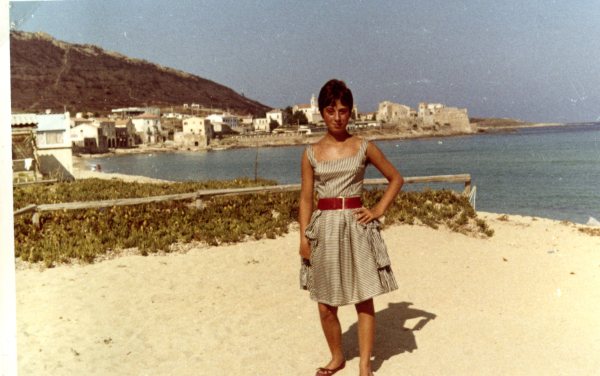
The Peter and Gertrud Klopp Story Chapter XXII

From Darkness into Light

Immature love says: ‘I love you because I need you.’ Mature love says ‘I need you because I love you.’ Erich Fromm

Filing a Complaint

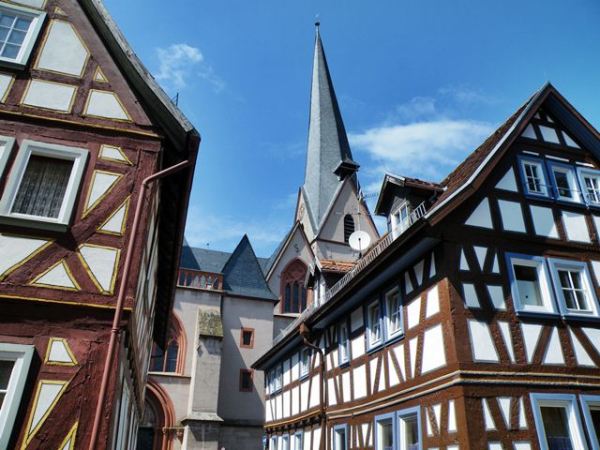
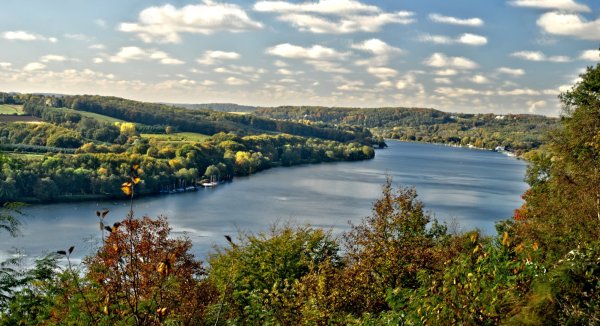
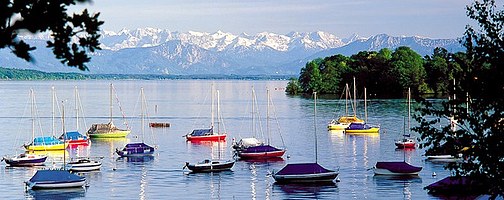
Beautiful Feldafing at Lake Starnberg - Photo Credit: bergfex.com

Beautiful Feldafing at Lake Starnberg – Photo Credit: bergfex.com
Soon after my return to Maxhof, Gauke and I received the order to report to the commanding officer. I wondered what could be so important that we would be sent away from our very first driving lesson in the New Year. The young clerk in uniform behind the massive office counter told us that the captain was expecting us in his office. With a heavy heart we entered. After the perfunctory military salute the captain asked us to take a seat. I had the ominous feeling that we might have unknowingly broken some rules resulting in a disciplinary issue that the sergeant at the driving school could not handle himself. Without giving any explanation the officer informed us that we would be transferred back to our unit in Koblenz as of April 1st. We were stunned. But when the officer asked us whether we had any questions, Gauke inquired, “Why are we being sent back, if the purpose of the transfer was to have us trained as certified truck drivers?”
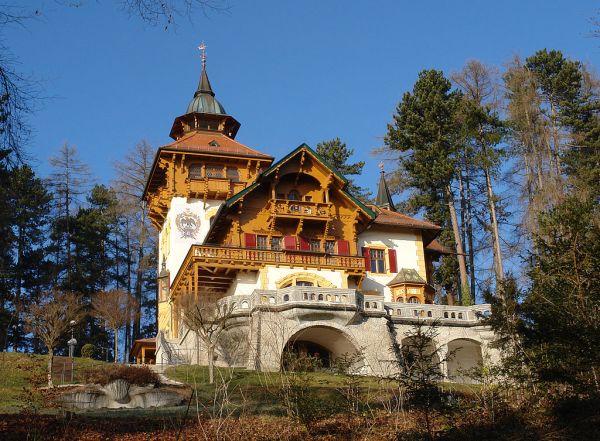
Villa Waldberta Feldafing - Photo Credit: wikipedia.org

Villa Waldberta Feldafing – Photo Credit: wikipedia.org

The officer was a little taken aback, as soldiers are only allowed to ask questions, but not to question orders. But he must have realized that in this case we were entitled to know. For he said, “Soldiers that were transferred to my unit were supposed to be already fully trained as truck drivers. That was my request. Instead THEY send you! Dismissed!” From the furious tone of his voice, with which he pronounced ‘they’, it seemed to me that he was not angry at us, but at the system that cheated him out of two valuable truck drivers. Because of this ridiculous transfer I had not only lost out on the officer’s training program, but now I would also be deprived of the golden opportunity of getting my driver’s license. But what bothered my sense of justice the most was that we had been lied to, that the promise to provide driving lessons in January had been broken. In a violent outburst of angry words I released my frustration in a ten-page letter to Mother, which she acknowledged in a postcard expressing her hope that I had been able to calm down. In her motherly wisdom she had also destroyed the letter because of its incriminating content that she did not want anyone else to read.
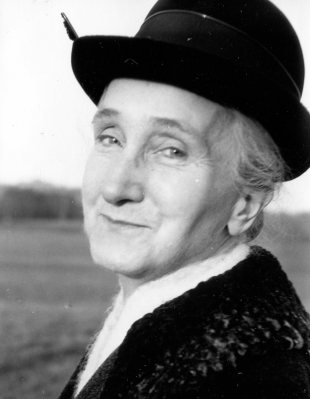
Portrait of my mother - Erika Klopp

Portrait of my mother – Erika Klopp

Gauke and I had a good talk over a mug of beer in one of the local pubs and discussed what our next move should be to address the unfairness of our transfers. I suggested grieving the matter at the next higher authority. Gauke agreed and encouraged me to write the letter of complaint,  since with all my novel-writing I should have the better writing skills. Then we ordered another beer to drink to what sounded to us as a good decision. Within less than a week our grievance to the major in charge of the signal corps was in the mail.

Challenging Times at Maxhof

In these turbulent days I now and then pulled out Biene’s letter and carefully read it over looking for a sign of encouragement, a key to her heart, but there was none except perhaps that she had written to me at all. Again I was in a dilemma. One side of me said, ‘In view of her engagement and promise of marriage to another, it is unfair for me to keep writing. Let her go! Leave her alone!’ The other more irrational side, which by definition is not persuaded by reason, urged, ‘You loved her; and you love her still. Cling to her as long as you can.’ So unable to keep the two warring parties apart within me, I wrote a short note intended to show that I was still thinking of her, but at the same time emphasizing that we were hopelessly drifting apart.
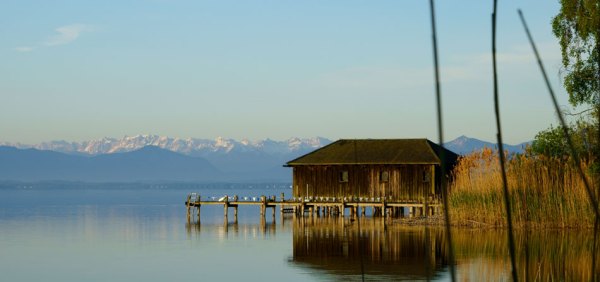
Feldafing - Photo Credit: immo-vilalta.com

Feldafing – Photo Credit: immo-vilalta.com

In a poisonous blend of regret and resignation I wrote, “From month to month our tracks are more and more drifting apart, and what is left, as you write so correctly is the pain. But also pain eases over time. What seemed so devastating at first does not hurt as much any more. Only from time to time when I look at your pictures, melancholy sets in and spreads its debilitating influence. But even that will end like a river disappearing in the parched sands of the desert…”

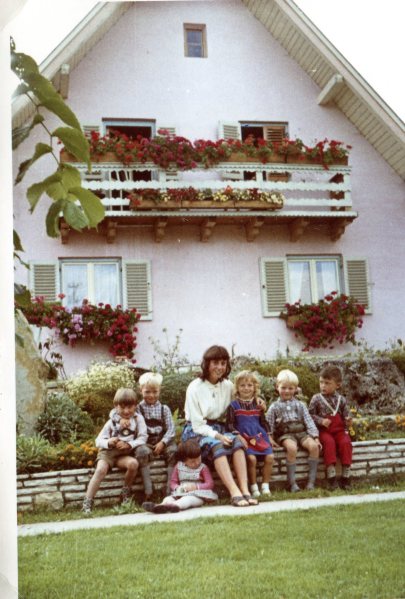
Kegler Family: Helga. Gerhard, Günther, my mother Erika Klopp, Marie and Lucie Kegler

Kegler Family: Helga. Gerhard, Günther, my mother Erika Klopp, Marie and Lucie Kegler

Picking up Biene’s very own words I continued, “Will we see each other again? Perhaps. But may Fate prevent this from happening! We met, played and laughed at Lake Baldeney. We were dreamy idealists, when we wrote each other! It was good that things turned out this way for you and also for me. We would have deeply disappointed each other; I would have certainly disappointed you. Believe me, there are a thousand sides to my personality, and in my letters I showed only one. Until next time! Farewell, dear Biene! Your Peter.” As soon as I had dropped off the letter in the mailbox, I called myself a fool. For I was sure that Biene after reading these confusing, despairing, heartless lines would not consider me worthy of another reply.
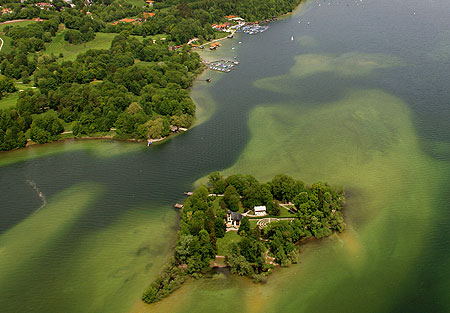
Feldafing from above = Photo Credit: bayern.de

Feldafing from above – Photo Credit: bayern.de

The response to our complaint was swift, and realizing that most things in my life lately have turned out to be a surprise, I began to expect the unexpected. The way the army brass dealt with the transfer grievance was no exception. I wanted the major of the signal corps to deal directly with our problem, invite us to respond to more questions, and eventually serve justice by reinstating us into the driving school or even put us into the officer-of-the-reserve program. Instead, we were called in to see the very same officer we had filed our complaint against. If he was angry at the system on our first visit, he was now openly hostile at us. He resented that we had the audacity to bypass him and that we had gone straight to his superior to complain about him, even though we had not even mentioned him in our letter. With a calm voice calculated to instill fear he told us while pointing to our letter on his massive desk that we had two choices. Either we withdrew our grievance with no disciplinary action taken against us or we foolishly insisted on following through with our complaint before a hearing committee with most unpleasant consequences if it is determined that we had made false accusations. Barely concealing the intended threat he nevertheless spoke matter-of-factly almost in a conciliatory, amiable tone, “You must know, young fellows, we merely spoke of the possibility of getting you into the driving school. The office staff for some reason or other did not inform you of the impending transfer. That’s the whole story, regrettable for you, but true.” Gauke and I looked at each other. The threat had worked. We would have no leg to stand on, even if the hearing committee was going to lend us a sympathetic ear. Thus, we signed the document certifying the withdrawal of our grievance.

“Listen,” the officer said with a triumphant smirk on his face, “Enjoy your stay at Maxhof. You have more than two months left here. Most soldiers would only be too happy to trade with you.” So Gauke and I had accomplished nothing. We returned to our living quarters deeply disappointed.


A Good Friend’s Advice
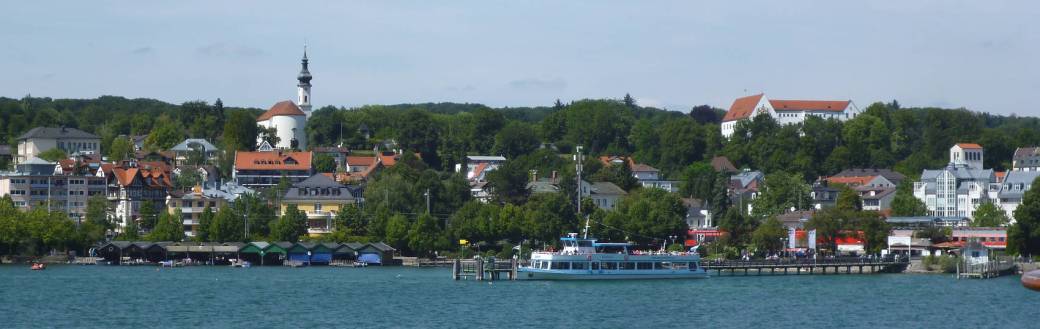
starnberg-starberg24-de

Starnberg – Photo Credit: starberg24.de

Gauke and I were dining at the Gasthof zur Post, a small inn not far from the beautiful Starnberg Lake. We savored the tender pork roast served with the traditional dumplings and salad. It was midweek and hardly any tourists ventured out from the big cities to see the lake country in the dead of winter. So we had the cozy dining area all to ourselves in the ideal ambience, where the refreshing Bavarian beer and conversation make a great pair to enhance friendship and companionship. We had decided to accept the captain’s advice and make the best of our remaining time in Bavaria. I was still reeling under the effect of the double whammy of a lost opportunity for advancement in the army and the specter of unrequited love. But the fine food and drink started to ease the tension and made me at least for the moment forget both the headaches and heartaches of the past three weeks. My friend started talking about his sweetheart in a town near Frankfurt, with whom he got together almost every other weekend. The previous summer they had gone on a bicycle tour out from the searing city of concrete and steel. Following the picturesque River Main they found an idyllic spot at one of its tributaries, where they pitched their tent. They had a most wonderful time at the campfire gazing at the stars, listening to the nearby murmuring brook, then huddled together, as the chill of the cloudless night made them seek each other’s warmth. Hearing Gauke so passionately describe his summer weekend with his girlfriend, I almost choked. There was my friend and comrade sitting across from me with a romantic spirit just like me although with one painful difference. What he had so vividly portrayed that I could almost sense their happiness, he had experienced in the real, tangible world in perfect harmony of body and soul. In my dream-like fantasies I had visions of similar experiences. But they were mere figments of my imagination coupled with the hope that somehow or someway, if I waited long enough, they would as if by the stroke of a magic wand become reality.
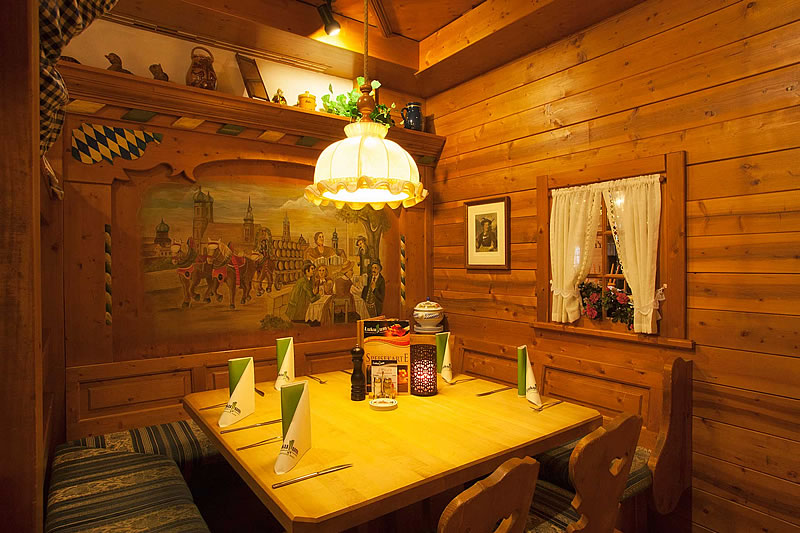
bayrische-stube-lukullum-de

Bavarian Pub – Photo Credit: lukullum.de

Gauke not knowing the feelings he had stirred up within me kept on talking. “Now, Peter, do you know what the sweetest moment is when I come home on the weekends?” He was so eager to tell that he did not wait for me to answer. “When the train arrives at my hometown just a few minutes before midnight and I step off the train, I see at the end of that long empty platform behind the iron gate my girlfriend with her long black hair fluttering in the night breeze.”

I wanted to shout at him, ‘Stop it! You are torturing me with your romantic talk!’ Instead I quickly grabbed the stein of beer and gulped down the cool liquid in a desperate effort to quell my emotions. As if Gauke had read my mind, he briefly interrupted his ardent story telling and ordered two more mugs of beer. Then perhaps sensing my embarrassment and uneasiness over all this romantic talk he quickly added in conclusion that he was invited to meet her parents this coming weekend and being only an ordinary soldier he was quite a bit nervous about it. I was thankful to Gauke about his tactfulness. For his talk reminded me of everything I had done wrong in my relationship with Biene and it confirmed what Dieter Krug had already stated on our scenic bike tour up the Moselle valley. To capture the affection of a heart and to desire to be loved, the two need to be together to feel each other’s presence and to experience each other through the five senses. This can never happen in and through letters. Remove the sight of your love walking with you on a shady trail on a warm summer day, remove her cheerful laughter, pleasant voice, her songs, remove her touch, a walk with her arm in arm, remove the sweet taste of her kiss, remove the fragrance of her hair and skin, and you will have blocked the gateway to each other’s soul, doomed to wither and die. We had been drinking our beer in silence, when Gauke indicated that now it was my turn to talk. After a long pause I told him that I had nothing to say.

“I noticed that you were writing a novel about her. And you want to tell me that you have nothing to say?” he rebuked and teased me in a jokingly disarming manner. Then he began to extract bit by bit like an experienced lawyer the details of my relationship with Biene and in doing so put them like little pieces in a mosaic clearly before me. He was surprised to hear that I had met her only once; he was even more surprised to hear that I loved her on the basis of mere letters; and he was most surprised to hear that she was engaged to a young man in Holland. He shook his head in utter disbelief. He ordered another beer for us. Then he spoke kindly and softly no longer like a lawyer. With his balding head and the concerned looks on his face he actually looked more like a counselor.

“Peter, I urge you. Let go of her. The love you feel for her has no foundation. The love you think she feels for you is not based on reality but comes out of the make-believe world of sentimental novels or movies. Let go of her. You are heading for disaster. A girl who is engaged to marry another cannot possibly love you. And if she does, she is as crazy as you are, and she too will be heading for disaster. As a friend I give you my advice, let go of her, Peter.”

We sat for a while and silently finished our beer. Gauke was sensitive and kind. He did not speak another word. On the way back to the barracks I thanked him for his friendship and told him I would take his advice very seriously. I slept well that night as if a great burden had been taken off my chest. How could I have suffered so much about something that did not exist? With such rhetorical musings I drifted off to sleep.

Light at the End of the Tunnel

Late Sunday night Private Gauke entered our room after spending the long weekend at his girlfriend’s home. He was so excited about it that he felt justified in waking me up. Even though I was still half asleep I could tell that my friend was beaming with joy. He had good news to tell me. He had met his girlfriend’s parents who were delighted to get acquainted with the young man their daughter had been telling them about so much. He was amazed almost embarrassed how much they knew about him. For them the most important thing was to see their daughter happy. In their eyes he seemed to be the right man for her. My companion would have gone on to share his happiness with me, but when he looked at my sleepy and grumpy face, he stopped. I was annoyed and wondered why he could not have waited with all that chatter till next morning. Then I would have perhaps appreciated his latest romantic tale with a wakeful mind. I made no effort to suppress a loud yawn to indicate that I wished to get back to sleep. However, Gauke had still something else on his mind that was supposed to cheer me up.
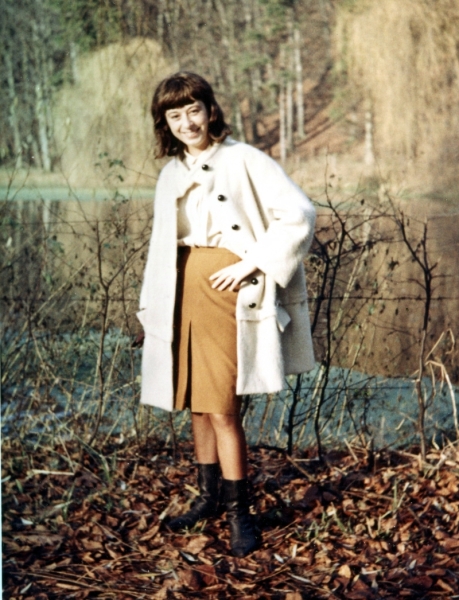
115

Biene quite in Tune with the Fashion of the Sixties

“Peter,” he started again with undiminished exuberance in his voice,   ”my sweetheart back home has a wonderful girlfriend who is just like you; she loves poetry, even writes her own verses …”

“I’m not interested,” I interrupted him gruffly.

“Peter, don’t get me wrong. You need to break out of your doom and gloom. I invite you to come with and spend the weekend at my parents’. We could go out together and meet …”, I interrupted him again raising my voice just a notch higher to make it clear that I had enough of his idle talk.

“Well, suit yourself”, he replied. “All I wanted is to advise you to keep your options open. It is not a good idea to have just one egg in your basket. In case it breaks, you know.”

Poor Gauke, he tried so hard. He was a nice chap and a good friend. He was truly trying to help. I was stubborn or insanely in love, or both. It took me a long time that night before I managed to catch a few winks of sleep.
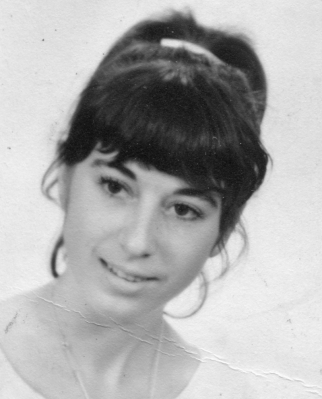
img196

Biene (Gertrud)

In the second week of February, just when I had given up ever receiving a message from Biene again, her letter arrived, which I expected to be the final farewell letter. Instead it contained a bombshell. I read with relative calm that her engagement with Henk had been broken off. Her dream about a life together with him had been shattered through unfortunate events and circumstances, which she was unable to describe except to say that Henk had loved her so much that she for a while believed to love him too. However, what led up to the actual break-up, she left unsaid setting in motion an avalanche of speculations on my part. In vain I tried to penetrate the veil that shrouded the circumstances that she was alluding to. Had Henk revealed an aspect of his character that made her shudder? Had he been too aggressive and demanded of her too much, too soon? Many more questions were racing through my head, for which I found no answer, creating a jumble of mixed emotions. If she had given me a few concrete details no matter how shocking, I would eventually have accepted with love and understanding her tragic experiences. As I continued reading I noticed how much she was troubled by my plans to emigrate to Canada.

“How can we possibly meet again, when you are so far away,” she asked, “and disappoint each other? Do you really believe ‘disappoint’? I cannot imagine it; but I would not be afraid to see you again.” At that moment my heart beat a little faster. The horizon began to brighten up with the rays of hope and eager anticipation. Unfortunately, like a bolt out of the blue, without any merciful transition, Biene continued, “Imagine this, my pen pal from Morocco intends to come this summer to get to know me and Germany. Will he be like I imagined him to be? My parents don’t agree with the idea; for they fear we could fall in love with each other.” I felt that the tenuous thread that so far had held us somehow together was ready to snap. What prevented this from happening was a mental trick that moved my mind to a distant vantage point from which I looked down upon the bizarre soap-opera-like comedy show below. The Moroccan pen pal had miraculously risen from the dead and imbued with renewed zest for life was eager to see her, to meet her, to get to know her, while her poor parents having just been saved from one disaster were heading into the next. I could not help but internally smile and laugh. My friend Gauke would be laughing too, He was absolutely right in his urgent plea to let go of her and also in his opinion to have more options than one. In an ironic twist it was Biene, who obviously had more than one egg in her basket. One broke, but she had two or more eggs left to break. I tried to probe into the possible reasons as to why in this particular moment she would tell me this. Was she trying to goad me into action? Her concluding sentence seemed to confirm my speculation, “Sometimes, even though you wouldn’t like it, I would really like to see you again.” A new seed had been planted. It was now up to me to water it, to nourish it, to make it grow in the fertile soil of reality. To accomplish it, a rendezvous with Biene was the key and time was of the essence. To blaze a trail to the doorsteps of her heart, I made some unusual preparations.

Four Deaths in Four Months
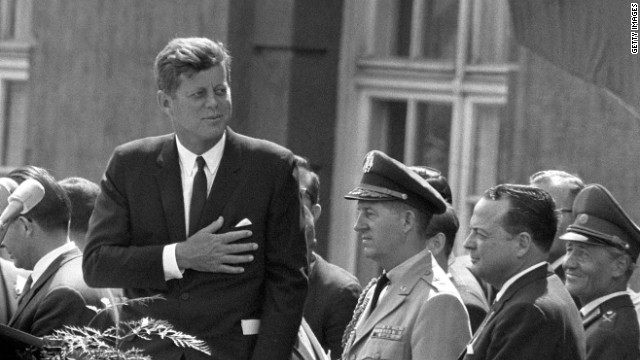
President Kennedy, "Ich bin ein Berliner" - Photo Credit: cnn.com

President Kennedy, “Ich bin ein Berliner” – Photo Credit: cnn.com

But first I had to endure another blow. Death had given me in quick succession several reminders of our transitory life here on earth. On November 22nd at the Maxhof army residence. I was listening to the American Forces Network (AFN Munich). The DJ suddenly interrupted the Country and Western music and after a short pause announced that President Kennedy has been shot in Dallas, Texas. Later that night it was reported that he had died of his gun shot wounds. I was shocked over the news of this tragedy, as I had taken a liking to this great man for his fortitude to force the Soviet Union to remove their missiles out of Cuba. I liked the way he had publicly committed himself to the security of West Berlin. His famous statement, ‘Ich bin ein Berliner.’ will remain in me for as long as I live. Then in January our staff sergeant Wohl had a fatal accident, when his VW beetle collided with a public transit bus on an icy hillside road in Feldafing. Gauke and I and two other comrades accepted the sad task of becoming his pallbearers. I will never forget the heart-rending sobbing of the widow in the front pew, when the officiating priest addressed her with a few consoling words. A couple of weeks later, almost if death intended to remind me again of its presence, I lent sixty marks to a comrade so he could buy a train ticket to attend his grandmother’s funeral. On the morning of February 26th I was called out of the office to see the captain for an important message. This time Gauke stayed behind at his typewriter, and I went a little puzzled and worried to the captain’s office alone. After I sat down, he informed me with genuine regret that my father had died of a massive heart attack during the night of February 25th. The officer granted me a five-day compassionate leave, effective immediately. I was numb. I could not respond with a single word. The captain deliberately ignoring military protocol shook hands with me and spoke kind words of condolences. Only a small number of family members, aunts, Erna’s relatives and friends attended the funeral in Michelbach. I wrote and dedicated a poem to my dad. The poem ended with a line in Latin:

Viventium, non mortuorum misereor.
I mourn the living, not the dead.

Grieving Father’s death and attempting to overcome the blow, I wrote Biene that I needed time to respond to her wish to see me again. It also took me quite an effort not to mention her pen pal from Morocco in my letter. Perhaps I should not have suppressed my feelings. For jealousy although often portrayed as a negative force has its legitimate place. Just as we need fear to protect us from dangerous situations, a small dose of jealousy at the very least reveals that you care and are sincerely concerned about your partner’s affection.
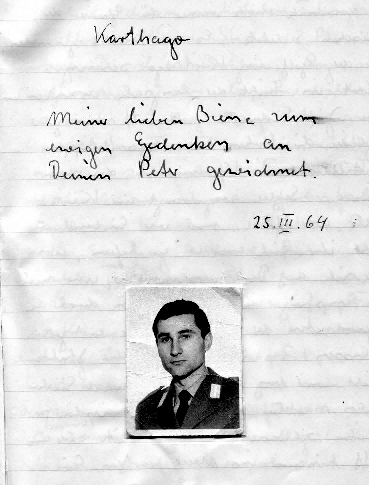
Novella 'Carthage' Dedicated to Biene

Novella ‘Carthage’ Dedicated to Biene

Back at Maxhof I began to edit and to copy in my very best handwriting the novella ‘Carthage’ into a thick green covered notebook. I dedicated the more than 200-page book to Biene. As it was not only a historical novel but also a testimonial of my love to her, it turned out to be quite literally the longest letter I had ever written. More importantly it ended in such a way that Biene herself one day could write the final chapter not as a flowery addition to an imaginary tale, but a true story with Biene and me being the main characters in the real world. At the time of my transfer back to Koblenz I was back home to celebrate my 22nd birthday.  There I mailed the book to Biene, after I had mysteriously hinted in a previous letter that I would be mailing her a very interesting book portraying us as Claudia and Publius. In the accompanying letter I wrote, ‘Dear Biene, you have sensitivity and understanding, Even though in this book everything had happened over two thousand years ago, its content is so current and volatile that I would not dare to show it to anyone but you. Whoever opens his heart is twice as sensitive and vulnerable. You will read many a chapter filled with blood-curdling details about this fateful city. Just remember what happens here in terms of physical suffering and pain is to be understood at the psychological level. I have been writing the novella for a long time. Personal experience and history went hand in hand to create it. The shock I experienced last fall put a sudden end to the story. You will notice that the form of the narrative lost its formal structure and the story ends in a desperate monologue. About some of the things, which I have written, I think differently today. But I have not lost my idealism. I am searching for a world, where I can turn my hopes and aspirations into reality.’  I felt like a general, who in a last-ditch effort committed all his troops and resources and staked everything on one card to win the battle and claim the prize of victory.
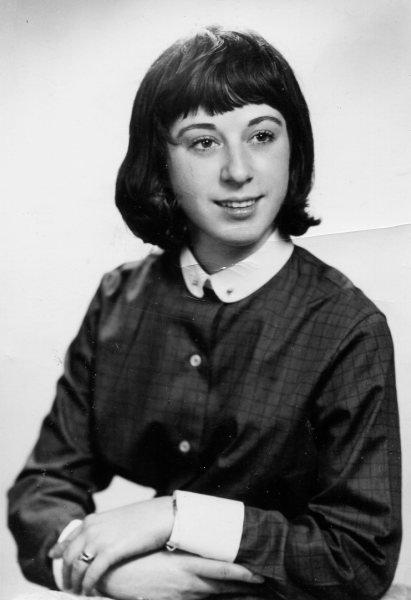
Gertrud (Biene) Panknin

Gertrud (Biene) Panknin

Peter‘s Musing on the Nature of Platonic Love

Fortunately, I did not have to wait very long. Biene had expected a store-bought book that in content and style would bear a strong resemblance to our turbulent relationship, where the ending would perhaps provide an urgent plea to get our act together and leave our fantasy world behind. To put it mildly, the handwritten book had overwhelmed her. Never before had she received a gift like this, where every single page had been written exclusively for and about her. She did not insult me in the least (as a matter of fact I took it as a compliment), when she questioned for a moment the authenticity of the book’s claimed authorship. Then came the sentence I had been waiting for, ‘I believe we love each other.’ What all my letters in the lines and between the lines could not accomplish, it seemed to me the novel had succeeded in pronouncing my unequivocal and unmistakable message ‘I love you’ and that at last I had received the long-awaited, if somewhat faint echo, ‘I believe we love each other’. However, when she qualified the kind of love she had in mind, I realized that I had rejoiced too soon and that at best I had only scored a partial victory.

47

Biene’s Parents Mr. and Mrs. Walter Panknin

‘But it is a strange love’, she continued, ‘like a dream not bound to reality. I love your words, your soul, which your words express. I love you as a human being, Peter, but I am very much afraid to love you as a man, and I fear that you already love me as a woman. That will bring much pain. How shall I make it clear to you, so you will understand what I mean? I cannot yet belong to a man. It has been my greatest desire for a long time to love a man and to completely belong to him, and yet I know, and I have experienced it myself that I am not yet ready for it .’

‘Therefore, Peter’, she continued, ‘I must ask you, do not love me as a woman, for then we could quickly lose each other again! I would like to write to you the opposite and yet let us this time not go with our dreams any farther than what reality will be able to give us as fulfillment. I find it so hard to tell you this and yet, Peter, grant me this wish, let us be friends just as in the beginning.’

I reread her letter looking for clues in the bewildering plea to turn back the clock to the time, when we had started our friendship. But I found nothing apart from just a vague hint of something horrible that she had experienced in the recent past. It was obvious to me that she had not written the happy ending to the novel in real life, which I had so intensely been hoping for. It was a now-or-never situation for me. I realized that she was in a complete state of confusion and afraid of a man-woman relationship, so afraid that she risked losing the one whom she believed she truly loved. The spirit within me that so often in the past had said ‘one last time, try just one more time’ goaded me to write. I felt completely calm. I wanted to pass on to her that sense of tranquility, which would ultimately provide the pillar upon which she could rest her final decision without regret. It was either a life together with me, or the end of a friendship that could not be maintained. I was one step ahead of Biene in that I had felt the pain of jealousy over Henk and the Moroccan pen pal. She was in my opinion naïve to believe that she could find a broad-minded, speak indifferent husband, who would tolerate another soul mate in their marriage, no matter how platonic such a relationship would be.

So I wrote after some considerable time of reflection, ‘I have the feeling, you want to cut off the roots to a tree, but still want to harvest its fruits. You must not be so fearful, dear Biene. When one talks about love between a man and a woman, one must not think right away of its consummation. What I think about it will perhaps be to you a bit of a consolation. I can belong to only one girl. Then all the others vanish with time. If they don’t, they cause hard to solve conflicts within me. The girl that I mean was and is you, dear Biene. Don’t be shocked if I tell you that the love, which you are renouncing, took control of me from the moment I met you the first time. But in its purest form, as it finds expression through passion, it comes last. Many thousands of steps precede it. But it lives within me not strictly separated from all other human values. It plays its role in everything I am doing and thinking. In every sentence that I write to you it is there. Even if it is never mentioned, it is there. My entire being is woven into it through and through. And I feel happier now than in the times when I tried to suppress it as something evil.
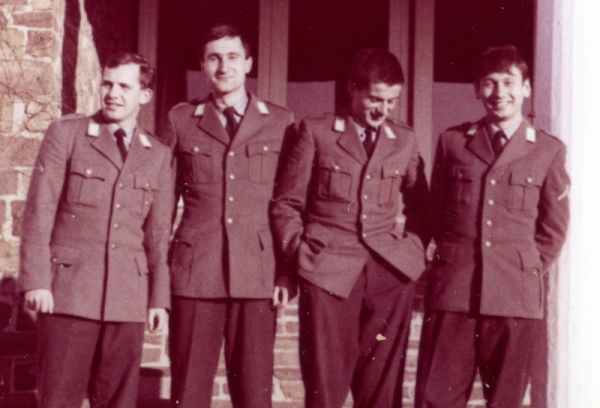
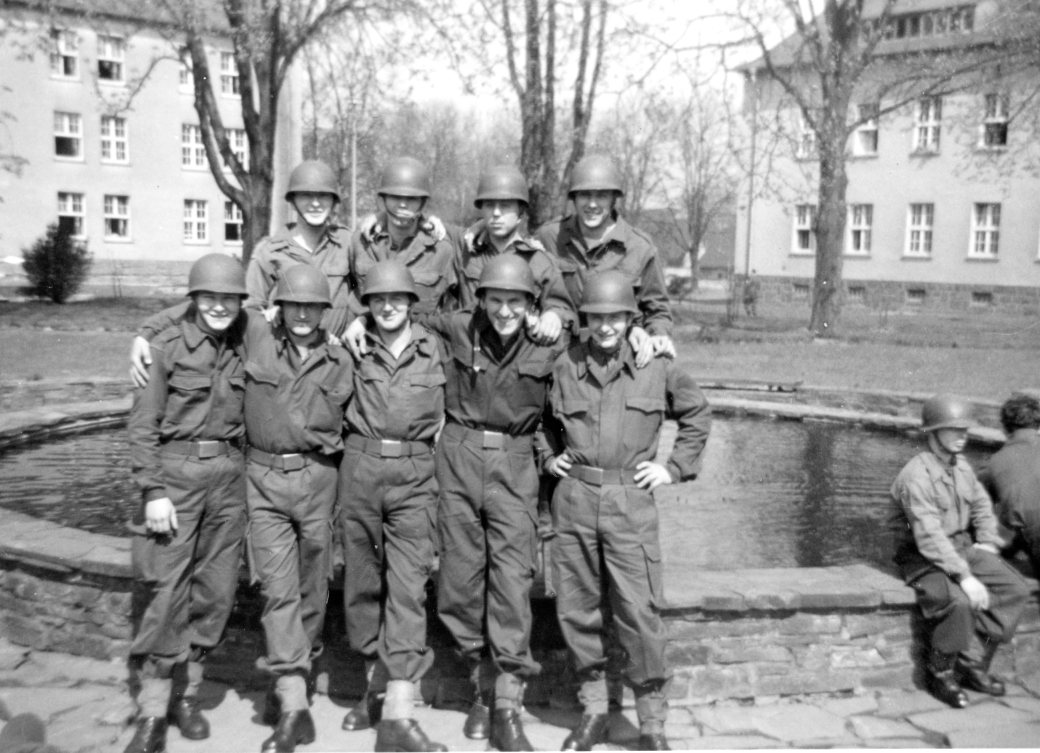
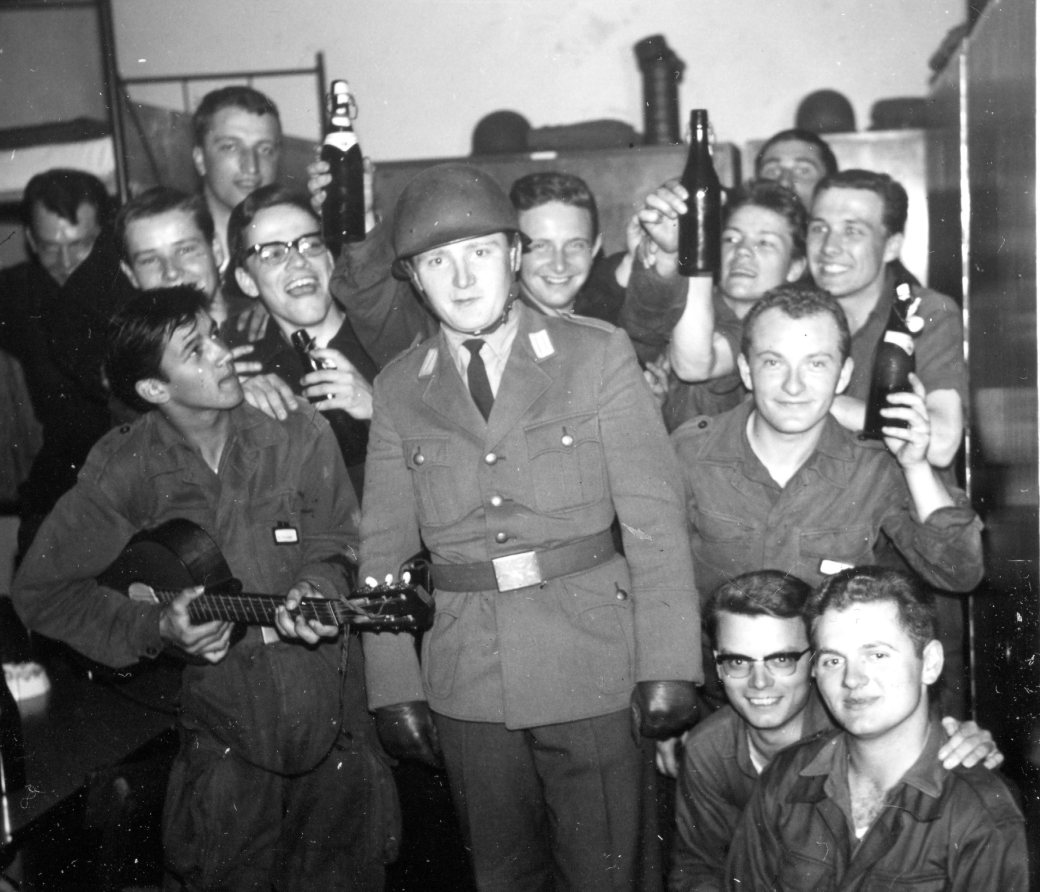
Peter with his Buddies at an Army Training Site

Peter with his Buddies at an Army Training Site

Dear Biene, you have a decision to make. But it is not difficult; I am not getting lost to you, at least not in the way you envision it now with a pure friendship between soul mates. What your attitude will be later does not matter now. The question for you is whether you will accept me with my love as a man. You can keep me just as I am or you set yourself and me free for the ‘love’ for somebody else that fate will bring into our lives. I give you complete freedom with your decision and accept everything. But I must have clarity! Take your time to answer my letter, just as I have taken my time.’

A few days later feeling sorry of having had the audacity to force a decision upon her, I thought it wiser to go back to Biene’s original plea for platonic love between the two of us and describe it vividly with a good measure of irony so that she could see at long last that this kind of love would not be worth pursuing.

‘I think I know now what is troubling you. Recently it stood before my eyes like a vision. It is the relationship between two souls pure, aiming upward, self-sufficient. This kind of love permits no passion; it wishes to be pure. That’s why you were afraid that our friendship would be in jeopardy, if you didn’t warn me. In your eyes we are two souls completely separated from our bodies in quiet distant solitude, eyes open for the wonders of nature and its beauty. Lovingly we exchange experiences we each had suffered from the blows of fate; we mature and rise upward towards ethical perfection. Earth with its horrors is no longer important; nothing bothers us any more. We let ourselves go, when we say farewell to our bodies. The day has arrived; we reach out for each other; the gate to our ideals opens. Who then should stop these innocent souls from entering the land of arts? One admires Spitzweg’s idyllic pictures, listens to romantically imbued poetry and goes into raptures over Beethoven’s Pastoral Symphony. One meets great spirits: Goethe, Lessing, and Schiller. We take flight and seek refuge at philosopher Seneca, who teaches us to relish contentment and happiness. But we are not so simple-minded as to ignore that even this is a dubious fabrication of human beings seeking escape from this odious world. Shuddering, we rise even higher, leaving everything behind. It feels so warm and fuzzy around our hearts; like a bridal veil our souls become transparent. Nothing weighs us down any more. Indeed, we are being lifted up; we melt into nothingness. You are I, and I am you. How magnificent and glorious! Our contours begin to blur. Eternally happy and content we have been transported into the heavenly realms. Dear Biene, with all that bliss why don’t we just go ahead and die?’

With this bitter-sweet rhetorical question I ended my letter and wondered about how Biene would respond to the imagery of my emotional diatribe.

 Career Planning and a Painful Self-Assessment
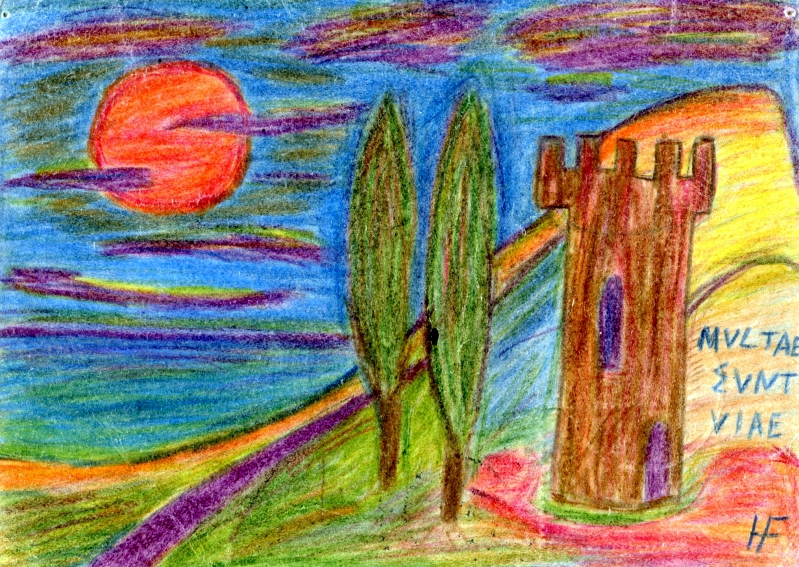
creative-work-by-my-friend-hans-fricke

Art Work  Entitled ‘There are many ways’ by my Friend Hans Fricke


My brother Gerry, who lived in Medicine Hat, while I was in the West German army, is not exactly known among family members as an avid letter writer. All the more I was surprised to receive a detailed answer from him to my inquiry regarding teacher’s training in Alberta, Canada. Driven by a youthful desire for adventure but also by a kind of escapism that was getting stronger with each additional month in the army I wanted to explore a possible teaching career in Canada.
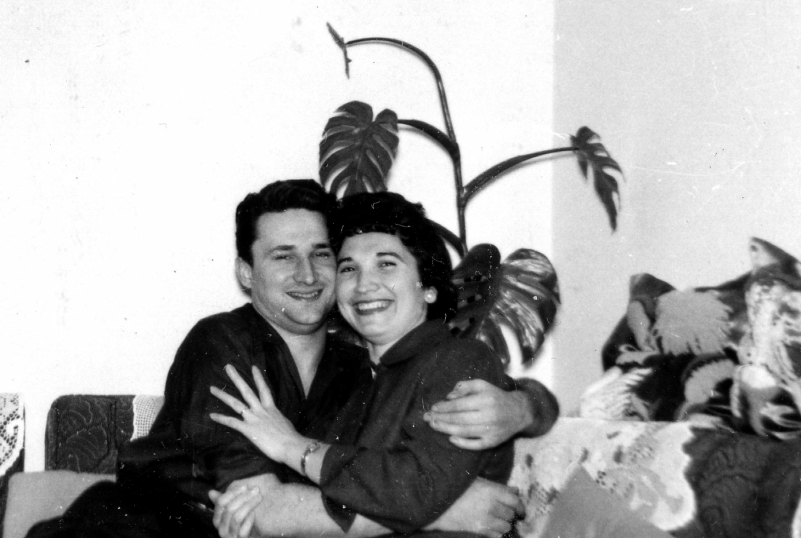
my-brother-gerry-and-wife-martha-in-the-early-60s

My Brother Gerry and his Wife Martha at Medicine Hat

Equally important for the understanding of my sudden interest in a totally different profession was that my staff sergeant in Koblenz had taken notice of my knowledge of basic electricity and electronics and had given me the task to instruct the new recruits. This went over so well that I was given more and more time off from regular duty to prepare my lessons and teach. So it happened that I discovered a talent, which I thought I did not have. Gerry accurately explained the current requirements for entering the teaching profession in Alberta. I had to have my German high school diploma validated, had to give evidence for proficiency in the English language, and to successfully complete a minimum of two years university training. With this information I was able to do some serious planning for the future. Suddenly a most fortuitous train of thoughts popped up in my mind that greatly increased my longing to go to Canada. Exciting ideas followed in rapid succession: immigration, teachers’ training at the University of Calgary, a teaching career, an income with the prospect of pay increases with more training, getting married to Biene and having a family.

mother-and-daughter-in-law-martha-in-medicine-hat

Mother and Daughter-In-Law Martha at her Home in Medicine Hat

I am still thankful to the captain from the basic training period for instilling the desire for good planning in order to achieve a dream by visualizing all the necessary steps in-between. The target I aimed for was still years ahead. It was actually a twin target of a rewarding meaningful career and life with Biene at my side. To hit the bull’s eye at such a distance would require a great deal of determination and persistence. Would I have those qualities, but most importantly would Biene support me in something – I am ashamed to admit – that I had not even mentioned to her yet? So this would be a good time to have a critical look at myself. In my own eyes I had become a very mature young man years ahead of my comrades in terms of acquired wisdom and good planning. But when I looked at the erroneous assumptions I had made about the world around me, about Biene and myself, I marvel at the way all my dreams had eventually become a reality.

Firstly, in my letters to Biene I had written about love, but never about marriage. I assumed that my ‘I love you’ would translate into ‘Will you marry me?’

Secondly, what was Biene to make out of my long-winded flowery dissertation on love between a man and woman?

Thirdly, Biene had already been frightened by the painful events leading up to and following the break-up of her engagement with Henk. Now I came and frightened her some more by openly writing about my passion for her without revealing or at least hinting at my genuine intention to marry her.

Fourthly, it was preposterous to assume that just because I was willing to marry her she would want to marry me too. This was truly the mark of an egocentric ass that I was at the time.

Fifthly, twelve months in the army and my comrades’ boastful talk about their amorous adventures should have taught me that being married and making love do not necessarily belong together. How was Biene supposed to know what was on my mind about a topic that had been a taboo throughout our childhood years?

Last, but not least, was the foolish assumption that just because I had broken off the correspondence with my girl friend, Biene in turn should have done the same with her Moroccan pen pal. Or put differently, just because my heart from now on belonged to Biene  did not mean that she should also restrict herself to a permanent commitment.

So in summary I had built a dream castle with love, marriage, family and career on the preconceived notion that Biene had read all this and much more between the lines. It was then one of the great miracles of our relationship that no storm tide came rushing in at that particular juncture and made the castle collapse like a deck of cards.

In a postcard Biene briefly assured me that she no longer wanted a mere soul-mate relationship. She wrote that many of the questions and problems that were troubling us would be resolved once we had met again. And indeed we met exactly two years after we had our first encounter at Lake Baldenay. This brought some sunshine into my heart. My brother Adolf contributed a great deal to enhance that joie de vivre, which I felt all the more intensely, whenever I went with him on an excursion in and around the Rhine, Moselle and Lahn valleys.

Exploring the Moselle Valley with my Brother Adolf

x294

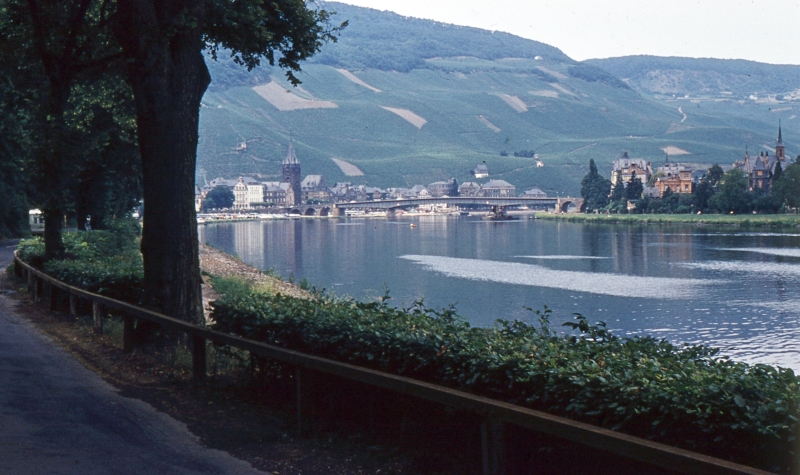
Moselle River – Summer 1964

My brother Adolf was in the final year of his apprenticeship program at the Honeywell Company in Hanau. This city north of Frankfurt was not far from Koblenz. When the weather was fine, Adolf would make it a weekend practice to pick me up at the gates of the Falckenstein barracks. From there we went on trips in his venerable old VW beetle to explore together the beautiful Lahn and Moselle valleys. The summer of 1964 brought an exceptionally long period of sunshine quite unusual for this western part of Germany, when cloudy skies and rain often drove sun-seeking German tourists south to the Mediterranean beaches of Italy and Spain. On one of these fabulous weekends Adolf suggested a wine sampling tour all the way up the River Moselle to Trier, the ancient location of the imperial summer residence of the Roman emperors.

x303

Peter Relaxing in the Famous Wine Region of Germany

Having finally moved by two rendezvous with Biene at Lake Baldeney beyond a mere fantasy world to a more solid relationship, I felt carefree and cheerful. I readily agreed to Adolf’s proposal, and off we rolled into a westerly direction. Small towns and quaint villages, medieval castles on hill tops, the meandering river, the hills covered with the light green carpets of vineyards offered a magnificent view. At the town centres often located near the local fountain, vintners with samples from last year’s vintage were catering to the traveling tourists in the hope of selling their fine bottled wine. The labels on the bottles were just as alluring as they were their precious content. Some had grotesque, unusual, even titillating names, such as Zeller’s Black Cat, Bare Bottom, Dear Woman’s Milk, just to name a few. Adolf and I took full advantage of the incredibly inexpensive samples of the finest wines in the country. In high spirits we drove on to the next ‘watering hole’, sampled another exquisite wine, and kept on going from town to town, from sampling station to sampling station, like bees flitting from flower to flower savouring the delicious nectar. We happy-go-lucky brothers were singing, joking and drinking all the way up to Trier, where Adolf feeling generous invited me to have dinner in a cozy restaurant not far from the historic Porta Nigra and the famous ruins of the Roman thermal baths.
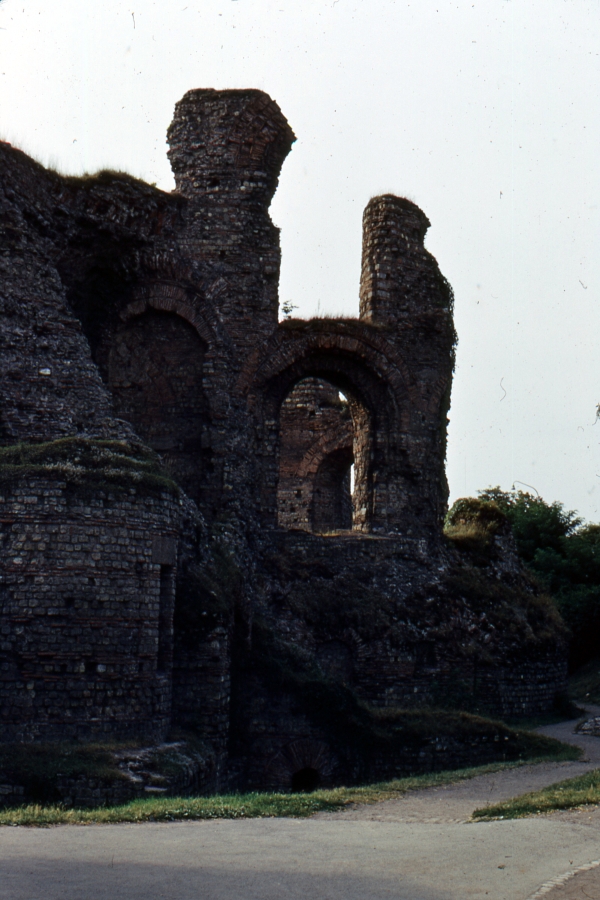
x301

The Imperial Baths of Trier

It felt good to enter the cool premises of an inn after such a long ride through the sweltering summer heat. After a hearty meal we lingered over a cool refreshing beer while waiting for the heat in the valley to come down to a more tolerable level. Air conditioning in a VW was virtually nonexistent in those days.

x298

My Brother Adolf at the Thermal Baths at Trier

There I sat, a bit sleepy and drowsy from the wine and beer, listening half-heartedly to Adolf’s tirades against the American imperialists, the war in Vietnam, the killing of innocent women and children perpetrated by the American ice cream soldiers as he contemptuously called the GI’s, the exploitation of the working people, the advantages of socialism for the common people and the evils of capitalism. When Adolf was talking politics, a passionate fervour seized his entire being; his words poured out as if he had experienced all these real and imagined injustices himself. When the verbose eruption of truths, half- truths and lies had finally subsided with no notable effect on me, the apolitical person that I was at the time, Adolf returned to his congenial and humorous self again, ordered another beer for us from the pretty and courteous waitress, whom he described benevolently as a ‘nice kid’. Now it was time to introduce me to the kind of vocabulary that would definitely not be very useful for my later academic career. The stock of swearwords coming from the oil patch environment was quite impressive.

x304

Peter on a Sightseeing Tour with his brother Adolf

When he changed topics and began to talk with extravagant enthusiasm about Canada, I was all ears, even though he described a totally different country from the one I had learned from books. Adolf’s opening line for almost anything that had to do with Canada was, “Peter, with us in Canada things are like this.”
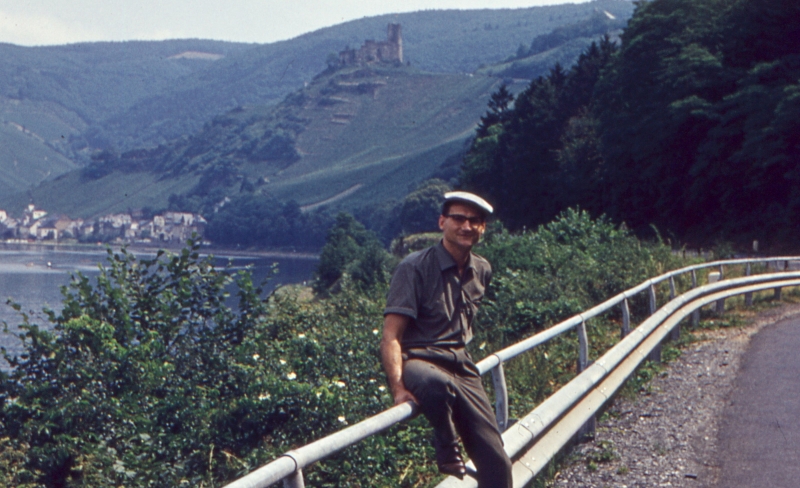
x293

Adolf taking a Roadside Break at the River Moselle

Before coming to Germany for a three-year stay, he had worked in the oil fields at Swan Hills in northern Alberta, where work was hard and money was plentiful. He loved to tell me stories of the rough-and-tumble of camp life. At payday many workers would rush to Edmonton, the capital city of Alberta, to spend their hard earned money on booze, women, and cars. Adolf having a good grip over his finances was not entirely immune to the lure of owning a shiny new car. In a sudden wave of nostalgia for the good old days at camp he described how he had once walked into a car dealer’s showroom and pointed at the latest model of an eight cylinder muscle car that he wanted to purchase on the spot. When the delighted salesman asked him how he intended to pay for it, Adolf’s moment of glory had come, which he now revived by telling the story to his kid brother.

“Why,” Adolf answered, “in cash, of course!” And with these words he pulled out a bundle of hundred dollar bills and counted out the full amount of the purchase price on the counter of the astonished salesman. Adolf never failed to make critical remarks about the painfully slow German bureaucracy that he had to put up with, when he bought his VW beetle in Germany.

“Peter, with us in Canada things are like this,” he used his opening pet phrase again. “With all the paper work done and the registration and insurance papers signed I drove that beauty of a car out of the dealer’s parking lot within less than an hour.” Having learned how things were done in Canada, I remarked that it was time for me to return to the barracks. The evening sun flooded the eastern mountains in a sea of gold. When Adolf and I arrived in Koblenz, the sun began to set and only the pinnacles of the volcanic Eifel Mountains were still reflecting the last rays of the day.

The Romantic Soldier

x305

Beautiful City of Koblenz – Summer 1964

I often wondered how it was possible that at certain times all troublesome events seemed to come together to create one powerful drama. Such was my deplorable situation between Christmas and Carnival, when I could barely stem the tide in a string of fateful events, such as the fatal accident of Sergeant Wohl on the icy roads of Feldafing, the loss of my father, emotional upheaval over the injustices caused by red tape in the army bureaucracy, and above all the almost certain demise of a shaky relationship with Biene. And now barely six months later, emerging from an apparently bottomless pit, it seemed as if all favourable currents had joined forces to lift me out of my deep depression into the blissful realm of true happiness in quick succession of small but significant steps: a book written exclusively for Biene, clarifications of the intentions of my heart and their acceptance albeit somewhat hesitatingly by Biene, two rendezvous to show that we were real human beings, not phantoms of our distorted imagination, the discovery of the joy of teaching, the instructional sessions in the afternoons, and the recognition of my newly discovered talents by my superiors. All these events in combination raised my self-esteem so much that I almost regretted having requested a transfer to the Tannenberg barracks in Marburg.

The most enjoyable outings with my brother Adolf on the weekends tore me away from my history books. With his congenial companionship he gave me a renewed spirit with emphasis on the social aspects of life that I had been neglecting far too long. When Adolf was unable to come and I for one reason or another wanted to spend the weekend in the barracks, I would still read Roman history books, but with a focus on topics that were more relevant to my own life and closer to my heart. Instead of dwelling on Roman conquest with the inevitable theme of death and destruction, I now learned about the importance of values, particularly of those pertaining to marriage, family and the raising of children. On sunny days I would find a cozy spot on the lawn near the 400 m oval racetrack. There I would open Mommsen’s chapter on the status and significance of the family in the Roman Republic and would read with increasing interest about the family as the smallest unit, upon which the entire state depended for its health and its very existence. I marvelled at the role that the wife (domina) played in running a large and complex Roman villa and in nurturing and imparting values onto her children, while her husband (dominus), being still intimately connected to the soil, would work the fields to provide food and income for the family. Like myriads of individual healthy cells make up a strong body, so the Roman family units protected by law and honoured by society provided the moral fibre, which made the early Roman republic so strong and powerful. After such undisturbed moments of contemplation on matters so distant and yet so relevant I returned to my room with the distinct realization that I had received valuable clues for the unfolding of my own personal life in the not too distant future.

roman_family

Roman Family

If there was ever a period in my early adult years that reflected the spirit of 19th century German Romanticism, it was during the summer months of 1964, while I was awaiting my transfer to the Tannenberg barracks at Marburg. My new friend Josef Hegener and I made use of every free moment to escape the stuffiness of the poorly ventilated barracks rooms. Away from the noise and heat of the city we found refuge in the nearby wooded hills, where hiking trails invited us to explore nature in the cool of a Sunday morning. We delighted in the colourful sight of a mountain meadow bedecked with innumerable wild flowers. The buzzing of bees and bumblebees, the happy chirping of birds at the edge of the forest, the murmuring of a brook, the croaking of an army of frogs making their presence known from a pond were together with all the other joyful sounds music to our ears. From a footbridge we gazed at the athletic performances of water striders skimming gracefully over the surface of the gently flowing waters. Joyously we followed the trail to a hilltop, where our eyes feasted on the magnificent mosaic of woods, fields and villages below. Down in the valley a church bell was ringing inviting us to attend the church service and to give thanks to God for His wonderful creation. As we entered the village church, the congregation had just started singing ‘Now thank we all our God’, a hymn that became one of my favourite songs of praise both in German and in English. I felt elated after having been granted such a rare glimpse into the connectedness between the grandeur of nature and God’s presence in it. In my exuberance over this wonderful experience I quickly wrote a postcard to my folks back home in the form of a wedding announcement: We have been united in marriage signed Nature and I.

dandelion

Dandelion Flower

The following Monday I met Sergeant Otto Schmidt, as I was crossing the huge centre yard on my way to the building, where I was going to deliver another lesson on basic electricity. The sergeant was beaming with pride, because he had just received praise and recognition from his superior officer for his success in running an outstanding instructional program for his unit. He was actually very generous in giving me some of the credit. Then I noticed how his facial expression suddenly changed. Otto Schmidt about a head shorter than I was no longer looking up into my eyes, but gazed straight ahead in utter amazement and bewilderment at my uniform jacket. Had a button come off or had I left the shirt collar too casually unbuttoned? No, these minor flaws in my outer appearance had never been a problem with this friendly sergeant. There was something that he had most likely never seen before. In total disbelief his eyes were fixed on the humble head of a dandelion flower, which I, following my current romantic inclinations, had placed conspicuously on my uniform. Sergeant Schmidt was almost speechless. All he could do was shake his head and stammer, “Klopp, Klopp, what is the meaning of this all?” To his great relief I removed the objectionable flower and hurried off to my electricity class. A symbol of love, a symbol of peace was on the uniform of a German soldier!
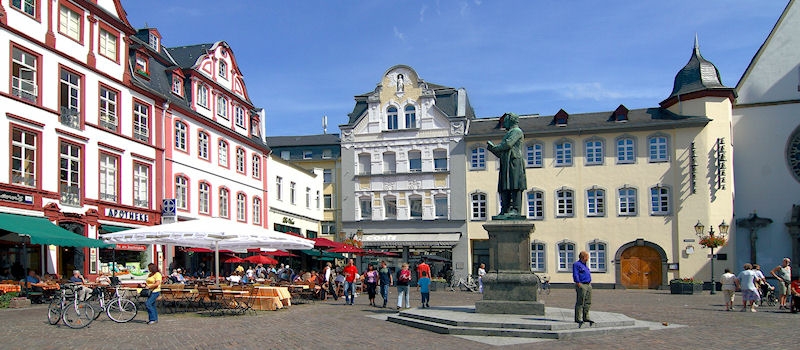
koblenz-altstadt

City of Koblenz – Photo Credit: Ferienwohnungen.de

Vittorio’s Entanglement in Sex, Love and Marriage

In our room there was a 17-year-old volunteer with the Italian sounding name Vittorio. At this tender age he was the youngest soldier in the signal corps. He had committed himself to a five-year service in the army and was obviously seeking a life long career with the Armed Forces. As a government employee in uniform he had a sizeable income at his disposal, which he squandered with his buddies in the local bars and in establishments of questionable reputation. So it was no surprise to any of us in the room that eventually he fell victim to one of the ladies of the night that was plying her trade in the lucrative barracks city of Koblenz. What I found bizarre, even shocking was that he was openly bragging about his amorous adventures with a prostitute, who had apparently singled him out as an easy target. Even the most hardened comrades in our room gave him contemptuous looks when he treated his sordid affair as if it was true love. At the end of a long weekend he felt especially inclined to proclaim from the top of his bunk his progress with the most wonderful woman he had ever met. I wondered how many women he could possibly have  met considering that he was only seventeen. A more outspoken roommate asked him in a sarcastic tone, “Are you paying for her services?”

“Not any more than what you would if you took your girlfriend out on a date,” Vittorio was quick to reply.

“Well, well, you don’t seem to understand. Let me put the question to you a bit differently. Are you paying to have sex with her?” Everyone in the room was itching to know how the argument about this hot topic would end.
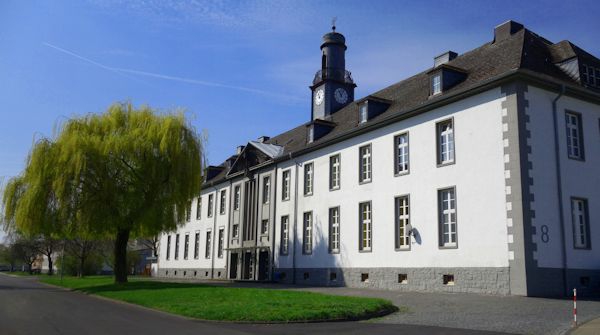
falckenstein-army-barracks-koblenz-casino-falckenstein-kaserne-koblenz-org

Falckenstein Barracks – Photo Credit: casino-falckenstein-kaserne.org

Vittorio was not easily intimidated. He knew how to fight back. He was aware of the saying that a good offense is the best defense. So he countered, “If you were a volunteer soldier and had a tidy income like me, wouldn’t you make her gifts and give her money because you love her?”

I was sure that our roommate must have felt a bit nettled by Vittorio’s suggestion that as a draftee with a mere pocket-money he would be in no position to argue with him on this point. Unable to respond to this powerful argument, he resorted to the most obscene and offensive language I had ever heard. If this had been the end of the story, I would not have considered it worthy of being part of my autobiography. As a matter of fact, the story was just beginning.

In the weeks that followed Vittorio was getting more and more quiet and was no longer bragging about his most wonderful woman. I thought that he was afraid of our unnamed roommate. But I was wrong.  One Sunday evening he returned much earlier than usual to our room. He appeared to be in a very agitated state of mind. Not caring whether we wanted to listen to him, he started ranting and raving about the woman he once loved so dearly. We were stunned by the complete reversal of his opinion and wondered whether or not we heard him talk about the same woman. His language now was just as crude and offensive as if his antagonistic roommate was still lecturing him on the definition of women of ill repute. He described the most wonderful woman in the world as a crooked slut, who first was content with twenties, then wanted fifties, and now demanded his entire monthly income.

“I am finished with her,” he screamed, “I will not see her again; she is a whore; she can go to HELL!” Then he threw himself on his bed and cried like a little boy that he actually still was.
aaltstadt_koblenz

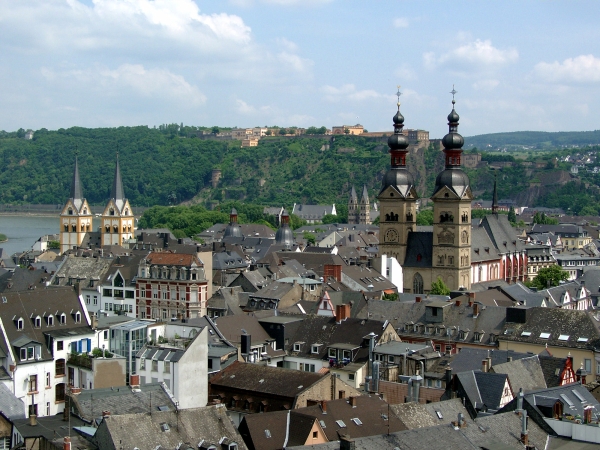
City of Koblenz – Photo Credit: Wikipedia.org

It was near the end of the summer shortly before my transfer to Marburg, when a woman walked through the barracks gate and requested to see the commanding officer of the second company of the signal corps. The above lieutenant learned that one of his soldiers, Private Vittorio to be exact, was the cause of her being with child. The officer concerned about the honour and respectability of the army in general and of his unit in particular had Private Vittorio called in and confronted him with the woman he had vowed never to see again. The officer after having established the truth of the woman’s claim suggested in unmistakable terms – one might say he decreed that Vittorio marry the woman who was expecting his child. Upon proof of marriage Private Vittorio would receive two weeks of paid leave for their honeymoon.

Vittorio told us later how things had been arranged in the office and that he was going to get married. Having flip-flopped once more he proudly announced that he was the happiest man in the world to have such a wonderful woman for a wife and soon to have a family. His words were gushing out in a sentimental torrent. This time nobody dared to interrupt him; even the quarrelsome roommate kept quiet. Vittorio had chosen a dubious path. I felt pity, even compassion for the young man who had in my opinion such a small chance of success in his upcoming marriage. I never found out what became of him and his wife to be.

Shortly afterwards I was on my way to Marburg. I left Koblenz with mixed feelings. Not aware that with the recommendations from the commanding officer I would soon be teaching again I looked back with regret at the rewarding instructional sessions, which I had enjoyed so much. I would also miss Josef Hegener and our nature excursions into the local hill country . On the other hand I felt relieved to get away from the revolting environment that our room had become of late. Even though I had been open-minded about listening to jokes, I knew that Vittorio’s story was not a joke. It was a personal tragedy that shocked me to the core. If there was one good thing that came out of this sordid affair, it made me more determined than ever before to seek and strive for a better world. While an ideal by its own definition remains unobtainable, it nevertheless provides a vision and a goal worth aiming for. To the extent we struggle and make the effort to approach the ideal, we define our character. With a fresh new sense of optimism I was looking forward to spend the remaining 180 days of my army time in Marburg. I promised myself to meet Biene again, as soon as an opportunity would present itself. For me she represented the embodiment of the light and the hope for a better future.
The Peter and Gertrud Klopp Story Chapter XXI

Sorrows of Young Peter

“The Five W’s of Life:
WHO you are is what makes you special. Do not change for anyone.
WHAT lies ahead will always be a mystery. Do not be afraid to explore.
WHEN life pushes you over, you push back harder.
WHERE there are choices to make, make the one you won’t regret.
WHY things happen will never be certain. Take it in stride and move forward.”

Anonymous

With the transfer to the Falckenstein Barracks in Koblenz things were looking up for me. Our room was only slightly smaller than the one we had at the basic training camp, but instead of fifteen men only ten would share the sleeping facilities. The only drawback at the beginning was that the windows were facing one of the major north-south traffic arteries. The noise from the trucks and cars was considerable and lasted right through the night. At first I thought I could not sleep at all in a room inundated by the roar of engines and swishing of tires even with the windows closed. But little by little I got used to it and like the loud surf at the seashore at the Baltic Sea it no longer bothered me after a few days. I am sure that if the din below had suddenly stopped the silence would have woken me up.

80

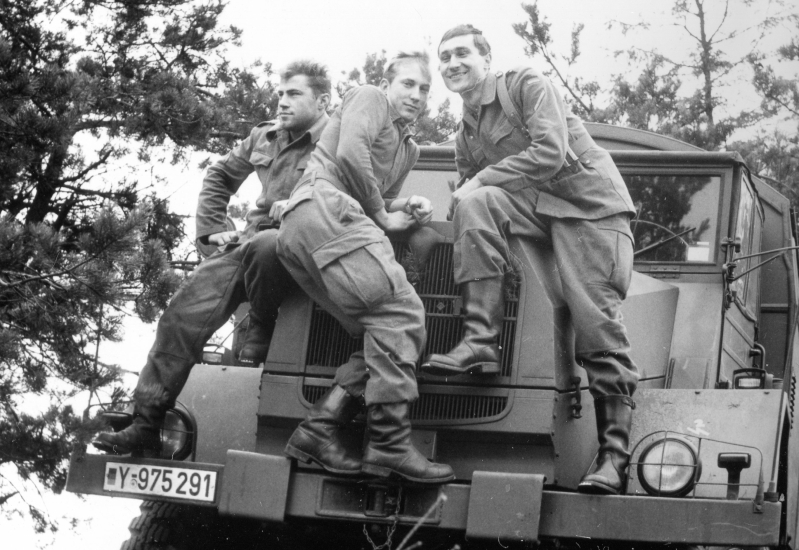
Peter on the right with truck driver and communication assistant

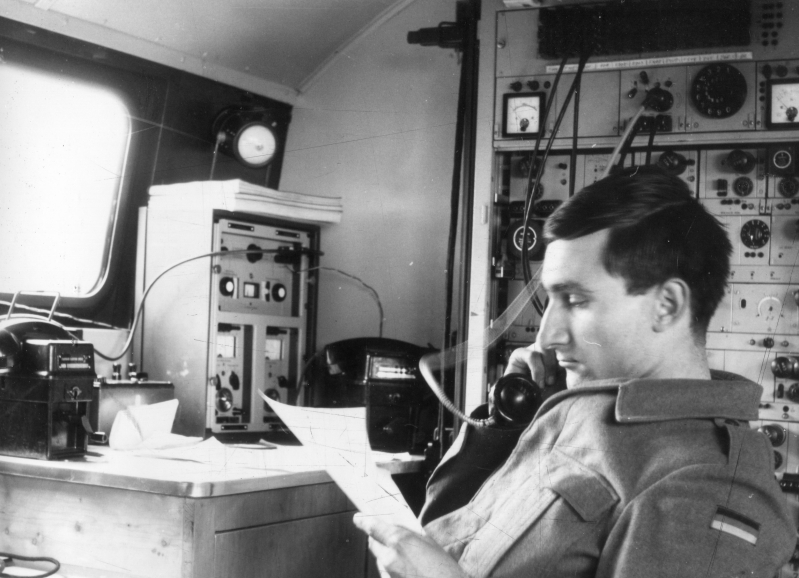
Also the pace of our daily routines significantly slackened. We still had to line up and stand at attention for the morning and noon announcements. But there were now more instructional sessions both theoretical and practical with emphasis on specialization depending to which of the three major groups we belonged in the signal corps. The linemen were responsible for connecting the various field centres during military exercises. They had from a physical perspective the toughest job. Rain or shine, heat or cold, their task was to unroll miles of cable and when the maneuver was over roll it back onto the empty drums on their backs. I had the good fortune that I was assigned to the second group. I was working inside a Mercedes truck packed with electronic gear, which I had learned to operate during my training sessions. The linemen would arrive huffing and puffing after a strenuous march through forests and fields. All I had to do was to connect the wires to the carrier frequency sets, call up my counterpart at the other end and tune up the line so that it would be capable of carrying several channels at once. It was the latest technology in those days, but miniscule by today’s standards, where thousands of telephone calls can be placed over a single wire or a wireless connection. The third and most prestigious group consisted of the wireless operators trained to set up and maintain point-to-point, line-of-sight connections. To be useful, the linemen also had to connect them by cable to our stations. I liked maneuvers of this kind, especially the ones that lasted a whole week, and often as a bonus resulting in an extra long weekend pass. It was during these action filled times that I began to reflect on the career proposal the captain had made to me less than a month ago. During guard duty, which I had to do every three weeks or so, whenever my turn was announced on the company bulletin board, I had also some time to do some thinking on the purpose and meaning of military service in a world that lived under the spell of the Cold War and under the threat of a massive attack by communist forces to take over Western Europe. While walking inside the fenced perimeter of our barracks I was searching for answers to those questions that popped up in my mind during the boring two-hour shifts in the dead of night. I composed a poem, which I included here in the hope that not too much is lost in translation.

Peter at work at his 'home' packed with electronic gear

Peter at work at his ‘home’ packed with electronic gear

Night Watch

Drearily the rain is falling.

I am walking in monotone even steps.

Nothing is moving in the semi-darkness.

Radio trucks like monsters are staring at me.

They appear to mock me,

Indeed threaten to devour me.

You servants of men!

To what end are you being abused?

Abused?

Aren’t you defending freedom and peace?

If you prevent that

For which you have been built,

Then sacred is your presence.

Yeah, just stare at me!

Your power brings me joy.

And I am walking past them

In monotone even steps.

To avoid war, an army must be strong so that an aggressor will understand that nothing would be gained and much more would be lost. It was the balance of power that kept the peace in the Cold War period, in which I was a soldier.

Discussion with a Friend on the Nature of Love

Mother had just returned from a visit to Gerry, daughter-in-law Martha and her one-year old grandson Wayne in Medicine Hat, Alberta, Canada. It so happened that I was on a ten-day leave and spent a relaxing vacation with her and Aunt Mieze, Aunt Lucie and Uncle Günther at their wonderful house in Watzenborn-Steinberg (Pohlheim). Mother talked a lot about her exciting trip to Canada. The proud grandmother had traveled with Gerry’s family over the Rocky Mountains all the way to beautiful British Columbia. Gerry described the countryside with its lush valleys, wild rushing streams, spectacular scenery and mild climate as God’s country. True to a long family tradition in the Kegler branch of the family, Mother wrote a report of her experiences of her journey to the land of the beavers.

12

Mother Erika Klopp with Gerry on her visit to Canada

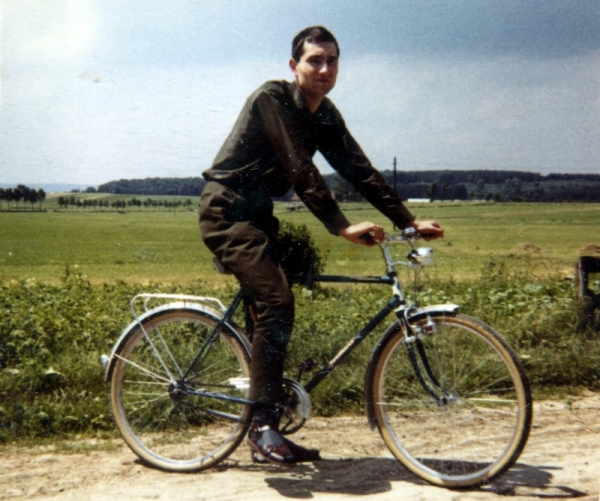
Biene’s school holidays were approaching. In 1962 her family had spent their vacation on the Mediterranean island of Corsica. Now they were planning to spend a couple of weeks at Lake Ammer in Bavaria. Even though I felt my love for Biene was getting stronger with every passing week, I did not openly declare it to her, because I erroneously assumed that she would already know. When she once asked me if I had ever been in love, I missed the golden opportunity to reveal what was on my heart. Instead I used a ride on my brand-new bicycle as a metaphor to describe in the most abstruse way the chaotic state of my inner being. I described how I got lost in the woods. I did not know which way to choose to get out. I dug deep into my psyche, too deep for comfort. Not yet realizing that the good and the evil lie close together within each and every human being, I criticized the world for failing to give me directions. Blind as a bat to my own flaws and weaknesses, I declared the entire world with its political systems, the church, and the army rotten and corrupt. These pathetic meanderings of my mind did very little to express my true feelings for her and would have been better left unsaid.

28a

Peter on his Bicycle

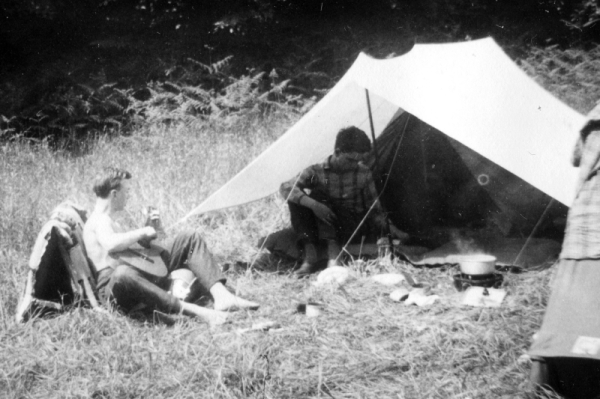
For the remaining three or four days I went on a bicycle tour with Dieter, my new army buddy. We traveled first up the River Moselle, then climbed up into the Eifel Mountains and stopped at a beautiful campsite named Pomerania, which reminded me of my grandparents’ lost home province in the east. At nightfall we sat in front of our tent looking at the rising moon in a cloudless sky. The day before I had bought a bottle of Moselle wine, a Riesling well known for its distinguished qualities due to the grapes, which incredibly ripen more fully during extended periods of autumnal fog in the river valley. Gazing at the crescent of the rising moon I remarked, “If me girl-friend in Velbert also looked at the moon this very minute, our eyes would be fixed on the same heavenly object and in some esoteric way we would be connected with one another.”

X294

Famous Moselle Valley with Germany’s finest Vineyards

Dieter chortled a few times, before he retorted, “But my friend, don’t be an idiot. That is not the same as being physically present. When I kiss my beloved Heidi, I know real love, love that you cannot even fathom with your strange romantic ideas in your head.” And that was the beginning of a long discussion on the nature of love. When we had savoured the last drop of the wine and were ready to crawl into the tent, we had moved away from our opposite points of view and found some middle ground. We agreed that in order for a relationship to be meaningful both the physical and spiritual dimensions would have to be present. We learned something important from each other. As for me, I resolved to arrange a rendezvous with Biene at the first opportunity that would offer itself in the near future. But you never know to start with, how things turn out in the end.
Storm Clouds on the Horizon

In the meantime Biene had an exciting vacation with her family in Bavaria, often went paddling on Lake Ammer with her parents’ folding boat. She and her twin brother Walter almost drowned, when their boat capsized in a violent storm. They traveled to the German Alps and even took a gondola ride up to the Zugspitze, which is with an altitude of 3000 m the highest mountain in Germany. She returned home filled with wonderful memories. There was so much to tell, but the flow of letters began to ebb. The intervals between them began to widen into two-week gaps. Something must have happened that made me worry. Had my letters lost its fervour? Were the thoughts expressed too philosophical, self-centred, out of touch with reality? I could not tell.

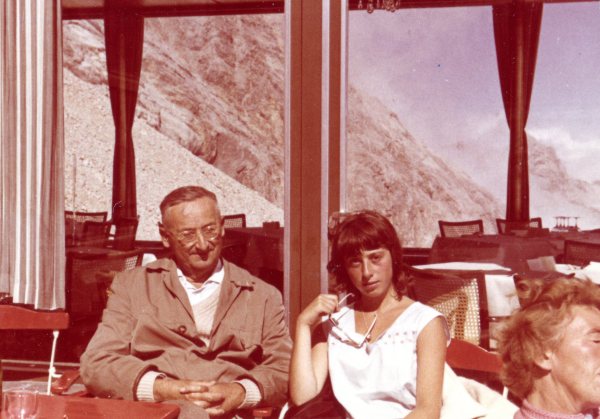
Biene and her father on the Zugspitze 1963

Biene and her father on the Zugspitze 1963

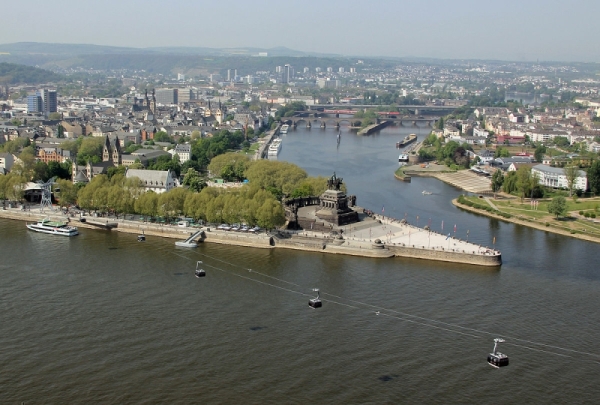
Fall was a beautiful time in Koblenz. The park at the German Corner, located at the confluence the Rivers Moselle and Rhine, was ablaze with brilliant red, yellow and orange colours. There I often sat on a park bench alone away from the noisy inner city and read about the fall and utter destruction of Rome’s rival Carthage in Mommsen’s History of Rome. I was fascinated to discover that the cause of the three Punic wars was the same as of most other conflicts in the history of mankind, namely the desire for economic power and growth at the expense of some other country. I gained important insights into the ways in which imperialistic expansions were intertwined with a general decay of the moral fibre of a nation. I saw so many parallels in our modern world that I contemplated writing a novella on the mighty city on the North African shore, if I could only add and weave in some personal experiences to the story to make it more interesting. These experiences were coming my way faster than expected, and in the end I got more than I had bargained for. Indeed I would have preferred not to write the novella in exchange for the pleasant status quo.

Deutsches Eck in Koblenz, Germany

Deutsches Eck in Koblenz, Germany – Photo Credit: wikipedia.org

I had just settled into the routine of orderly army life with its duties of monthly night watches, sessions of theoretical and practical instructions and the occasional maneuvers, which I enjoyed more and more, because they took place in the great outdoors away from the stuffy barracks in the city. Then a command from the newly formed signal corps at Maxhof in Bavaria went out to all army divisions to provide two truck drivers each. Our crafty commanding officer in Koblenz selected private Gauke and me for the transfer effective October 1st, even though we had no driver’s license for those colossal Mercedes communications trucks. Obviously, he wanted to keep his precious truck drivers for himself. We were told that we would receive professional training and certification that could be very useful later on, when we returned to civilian life. However, it was immediately clear to my that with the transfer to Maxhof, I would lose out on the chance of becoming part of the upcoming officer’s training program. It would upon successful completion raise me to the rank of a lieutenant of the reserve with a much higher pay-out at the end of my two-year term. The wheels had been set in motion. I had no recourse to an appeal process. The decision was final. I was devastated.

58

Peter in a contemplative mood at home in Watzenborn-Steinberg


One Misfortune Never Comes Alone

I was still reeling under the blow of the unexpected military transfer to Maxhof, Bavaria, when another one hit me like a bolt out of the blue. Biene wrote that she had met a young Dutch man by the name of Henk, to whom she was now engaged. They were dreaming about their own home at the edge of a forest near the city of Arnhem and were planning to get married. The news nearly tore me apart, all the more as Biene described our relationship as merely a nice correspondence between friends. Although my emotions were running high, I immediately responded to her letter and thanked her for being honest. It was a miracle of sort that I agreed to keep writing her. That promise was so terribly out of character, so contrary to what my pride and sense of honour would have allowed me to do that there was only one explanation. I was still in love with her.

Biene on Vacation at Lake Ammer 1963

Biene on Vacation at Lake Ammer 1963

Sleepless nights followed. I held endless conversations with myself. At times I would place the entire blame on my shoulders. Dieter was perhaps right, when he said that a kiss is more powerful than words, passion stronger than tender sentiments expressed merely in letters. Then the American folk song ‘On Top of Old Smokey’ was going through my mind during those agonizing hours of wakefulness. The apparent truth of the line ‘I lost my true lover for courting too slow’ hit me especially hard. Suddenly the pendulum swung into the opposite direction. For a short while, I found relief by putting the blame on Biene. ‘Surely, one does not get engaged overnight’, I argued. ‘Why didn’t she write me sooner? Why did she allow the correspondence to drag on so long? What about her other pen pals, the young man from Morocco for example? Does she want to keep all her options open? Is she like a bee, as her name implies, flying in a kind of romantic dance from flower to flower to see where she would find the sweetest nectar?’ Having experienced both ends of the emotional spectrum, I finally settled for a more balanced view. The wildly swinging pendulum was coming to rest in the middle. Concern for Biene pushed anger and jealousy aside; she might have responded to the lure of marital bliss too quickly. These internal monologues went on and on through several nights, at the end of which I was completely exhausted. But I had calmed down enough to finish my letter to Biene with the words, “Just one thing you must promise me. If you perceive a danger for your happiness in that you cannot distinguish between true friendship and love between a man and a woman or if your future husband does not like our correspondence, then have the courage to say goodbye. For I do not want to destroy your happiness.”

Frauenkirche, Munich, Bavaria - Photo Credit: wikipedia.org

Frauenkirche, Munich, Bavaria – Photo Credit: wikipedia.org

With my Phillips tape recorder in one hand and a heavy suitcase in the other, train tickets and army papers in my wallet, I stepped on the Intercity train to Munich. Private Gauke, whose first name I no longer recall, accompanied me to our destination. We were both in uniform, as this was a requirement when traveling on official assignments. While the high-speed electric train was rushing toward the Bavarian capital, Gauke tried to cheer me up by pointing out all the advantages of the prestigious truck driver’s license later in civilian life. But he succeeded only partly in pulling me out of my morose taciturn shell. He did not yet know about the other problem, for which the possession of a driver’s license offered no solution. In Munich we had to catch a local train to Starnberg. Thousands of passengers were milling about the main station. At the crowded automated billboard announcing arrival and departure times I spotted the wrinkled face of my former scout leader, Günther von A. He was as surprised to see me, as I was to see him. What were the chances of this occurring? Once in a million or less. And what were the chances of still being in love with Biene? The question made me think about fate and destiny, a topic that philosophers and theologians great and small have been grappling with for centuries, a can of worms, which I decided in my present state of mind to leave unopened.

Army Heaven

Lake Starnberg, Bavaria - Photo Credit: bavaria.by

Lake Starnberg, Bavaria – Photo Credit: bavaria.by

Maxhof, a modern army training centre, was a pleasant surprise to me. In contrast to the drab sameness of the 19th century design of the Falckenstein barracks, Maxhof impressed me with its pleasant appearance. It had more the looks of a hypermodern youth hostel than of a military building complex. Trees and ornamental shrubs surrounded the sleeping quarters, the cafeteria, and the administration building. There were even flowerbeds at the main entrance. Best of all was the room, where we were going to sleep. With its comfortable beds, its large windows with a view from the park-like setting all the way up to the nearby mountains, its brightly painted walls, a spacious desk for Gauke and me, all I needed was Mother’s fancy tablecloth, a vase with some pretty fall flowers to have the illusion of being at home.

Maxhof with Lake Starnberg in the background

Maxhof with Lake Starnberg in the background

Gauke and I reported for duty the following morning at the main building. There was a momentary kafuffle over us two soldiers from Koblenz. Apparently the officer in charge of the transfer was supposed to have provided certified truck drivers. The officer behind the counter was very much upset over being cheated out of two valuable experienced drivers. But in the end he assigned us to a driving instructor and informed us to show up for our lessons the very next morning. Gauke and I could hardly show restraint in our ecstatic joy over this most fortunate turn of events. Apart from our first positive impressions about the physical surroundings we noticed with glee that there were no mandatory line-ups, no check-ups of room, closet, and clothes; this was army heaven.

Massive Mercedes truck - the type we were trained on

Massive Mercedes truck – the type we were trained on

After two weeks of enjoyable driving lessons on the big Mercedes trucks, the compass needle of my inner life was no longer spinning out of control. More than three weeks had passed by now. Biene had not yet responded to my letter and I thought that if our correspondence was to end it should at least end on a good note. So I wrote,” … A relationship, no matter how you look at it, which had so beautifully and lovingly developed, is not the kind that we just break off. Something of that, which we shared, will remain open and will eat forever at our hearts. Therefore, I would like to amiably end, what we have so amiably started. Let us if not in reality then at least symbolically shake hands and without any bitter feelings part from each other. I am thankful for all the dear letters and  I tell you once more that you have given me much during the time of inner trouble and distress. Please do not turn down my last request, dear Biene, and write to me just one more time. One last sign from you, and I will be content…”

But there was no sign, and I was not content.

Destruction of Ancient Carthage

A Metaphor for Emotional Turmoil

There was enough explosive emotional energy bottled up inside me. Having no one to write to, I had to return to the unfinished novella to release it. At the park bench near the German Corner in Koblenz I had most of its content on Carthage written up in my notebook. The personal experiences making the story come alive were missing though. Now they were burning with a searing fire in my heart. My fingers were itching to commit them to paper.

Ancient Carhtage - Image Credit: ancient.eu

Ancient Carthage – Image Credit: ancient.eu

Our driving lessons had unexpectedly ended. We were told that the instructor was needed elsewhere and we would start over together with the next batch of soldiers coming in to render the course more efficient. Gauke and I were delegated to work  in the office. The assignment was to catalog the total electronic equipment with all its individual parts down to the last nut and bolt. Thus, we created a giant database for the signal corps stationed at Maxhof. I dictated the names and parts numbers and Gauke typed. One can hardly imagine anything more boring than this. But there was one advantage. We only worked during regular office hours, and we were done with our daily chores of number crunching by 4:30 p.m.

69

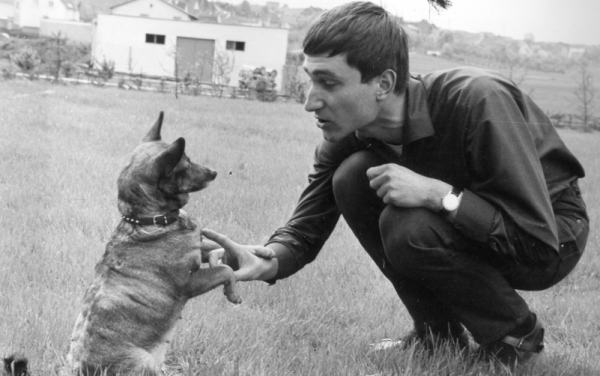
Peter playing with the neighbor’s dog (1963)

So I had more time than ever before to write in the semi-private room of our Maxhof residence. The historical sections of the novella heavily leaned on Mommsen’s historical work ‘History of Rome’ and to the best of my knowledge they described the power politics and Machiavellian schemes of Rome very accurately. My heart, which had lost two girlfriends within the span of less than six months, was the fertile breeding ground for the stuff that good writing feeds on. I transformed my former pen pal Margret, into Bersika, the daughter of a wealthy member of the Peace Party of Carthage to make the final dramatic encounter in the burning capital of the Carthaginians more believable. On the other hand, Claudia (Biene) and her twin brother received a more realistic description reflecting our first encounter at Lake Baldeney and the ensuing correspondence, which had ended so painfully. On the Palatine Hill in Rome Publius (Peter) and his friend became acquainted with an old sage, who introduced the young men to the philosophical centre piece of the novel, which reflected my ideas, in part burrowed from Democritus, on God and His creation and how He lives within it in a mysterious interplay between mind and matter. The destruction of Carthage, the fierce house to house street fighting, the slaughter of tens of thousands of civilians, the senseless resistance of the dictatorial ruling party against the almighty Roman war machine, the burning houses, the stench of unburied corpses provided the background for the final scene symbolizing my chaotic troublesome state of mind.

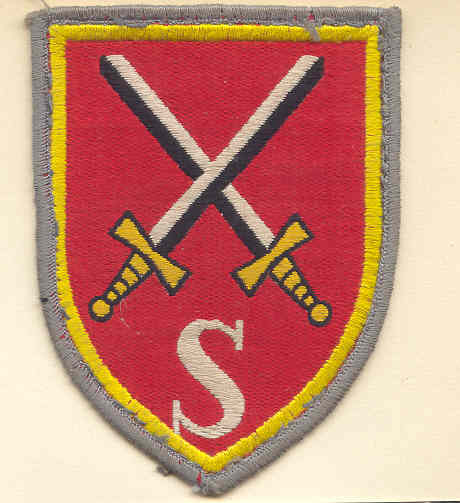
Crest of the Signal Corps

Crest of the Signal Corps

When I had penned the last line, I felt an eerie calm come over me. For a while I sat at my desk without a thought, without a feeling; it seemed that my inner being had been poured out into the thick writing book before me. Private Gauke entered the room. He had been teasing me about my writing craze for the past couple of weeks and had noticed with genuine concern how I was withdrawing more and more into my crusty shell. He said, “Peter, it is about time that you get off your chair. I just discovered a cozy pub in Feldafing. Let’s go and have a drink of that great Bavarian beer.” Gauke was a fine fellow. I gladly came along. The novella was finished.

New Year’s Eve Party

Chief Günther Kegler provides some much needed distraction

The stupendous outpour of pent-up emotions alleviated the anger and the pain. I began to enjoy the almost daily outings with my friend Gauke. But in spite of the pleasant distractions the visits to the pubs provided by the excellent beer, wholesome food, Bavarian music in the background, and the pretty waitresses in their traditional dirndls, I could not push the troubling spectre of my lost love out of my mind. I had asked her for a farewell letter or card to end amiably what had started amiably. Two months had passed. The silence became unbearable. So against my own conviction like a moth attracted to the flame of a burning candle I wrote her another letter from home before Christmas, in which I reiterated how much I appreciated her supportive letters during the hard days of my basic training, Then all of a sudden as if triggered by the emotionally cry of despair on the last pages of my novella, I let the proverbial cat out of the bag, “… Add to that the devastating fantasy, which produced during our correspondence the strangest imaginary flowers. At times I saw you – please don’t be alarmed, dear Biene – in my arms, then at my side travel to Canada, study with me in Marburg or Berlin, and in the more distant, but all the more brighter future spend a life with you through joy and sorrow. All these fantasies essentially destroyed our relationship…”

Biene and Mother ß Christmas 1963

Biene (Gertrud) and her mother  Elisabeth Panknin – Christmas 1963

Again I urged her to reply, even if she had no desire to write, just one more time. Before I sealed the envelope, I inserted a short story, which I had especially written for her. I hoped that it would in allegorical terms evoke the tender feelings we had once felt for one another. I did not mention the novella, which as an unedited rough copy I did not yet consider complete. Within three days and just in time for Christmas a miracle occurred. The letter that I no longer expected, but had hoped for arrived. And what it contained surpassed all my expectations. Instead of a farewell message, she wrote that my story about little Irwin had moved her to tears, but more importantly that she had once entertained similar thoughts and dreamed similar dreams about the two of us living a life time together. Even though she too had also allowed her fantasy to go too far and expressed doubts about the fickle nature of dreams, which often do not bring the fulfillment one had longed for.  She placed her trust in the mysterious force called Fate that one day things would work out between the two of us. The way she was wording her sentences I sensed that she had gone through some troublesome times during that long period of silence in our correspondence. Some way or another the anguish was connected to her fiancé Henk, whose father had suddenly and unexpectedly passed away. Nevertheless the news that our friendship at least at the correspondence level had been restored gave me a big boost.

Helga Kegler - daughter of General Gerhard Kegler

Helga Kegler – daughter of General Gerhard Kegler

I participated eagerly in the preparations for the New Year’s family party planned by the ‘chief’ of the Kegler clan, Uncle Günther. In the large vestibule of the basement suite we set up a bar, which we dubbed the Flamingo Bar. The good uncle had it well stocked with choice wine and beer as well as nonalcoholic drinks for this festive occasion. We decorated the wall with pictures, photos and old movie posters. I even contributed my painting of the 21st century space woman now looking down on a happy party crowd. Happy and diverse indeed was the crowd ringing in the New Year, young and old celebrating in perfect harmony, Uncle Günther, Aunt Lucie, Mother and Aunt Mieze, Adolf, Erika, my cousins Helga and Jutta, two young ladies, the daughters of a pastor’s couple, whose names I can no longer recall, and my humble self. My tape recorder provided the background music for the party, and whenever there was a call for a dance I cranked up the volume and switched the music to a livelier beat.

From left to right: Helga, Uncle Günther, and my sister Eka (Lavana)

From left to right: Helga, Uncle Günther, and my sister Eka (Lavana)

At midnight we raised and clinked our champagne glasses wishing each other a Happy New Year. With Biene’s letter tucked away in my suit pocket I looked with confidence into the future. I felt that 1964 was going to be a great year for me. However, if I had read Goethe’s autobiographical novel ‘The Sorrows of Young Werther’ and understood how I, like Werther, was also entangled in a love triangle, I would have been less optimistic. The frayed thread on which our love was hanging was ready to snap any time. Whether I would have shot a bullet through my brain on a night watch in the army, if Biene had married Henk, was doubtful. Eventually I would have found and married another girl. But the oppressive awareness of having lost my first love would have lingered on my consciousness for the rest of my life.
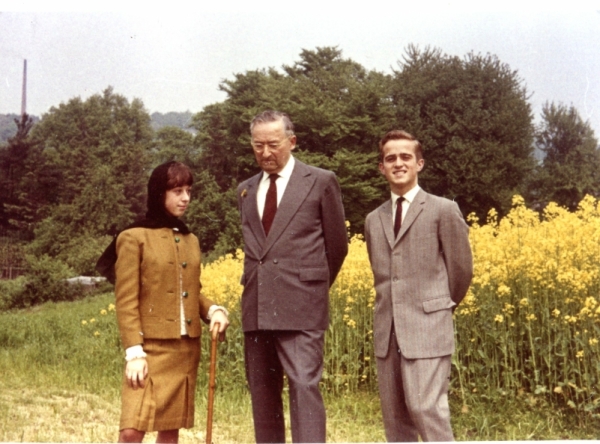
Jutta Kegler - Youngest daughter of General Gerhard Kegler

Jutta Kegler – Youngest daughter of General Gerhard Kegler


The Peter and Gertrud Klopp Story – Chapter XX

Basic Military Training

The soldier is the Army.  No army is better than its soldiers. The soldier is also a citizen. In fact, the highest obligation and privilege of citizenship is that of bearing arms for one’s country.

George S. Patton Jr.

The train wound its way through the picturesque Lahn valley to my destination in Koblenz, where I was to receive my basic army training. I had celebrated my 21st birthday in the new home that Mother, Aunt Mieze, Uncle Günther, Aunt Lucie were renting in Watzenborn-Steinberg. After the traditional coffee and cake party we played several rounds of our favourite card game ‘Doppelkopf’ in the evening.

Chief of the Kegler Clan, Mother, Aunt Lucie, and Aunt Mieze- Pohlheim near Giessen 1963

Chief of the Kegler Clan, Mother, Aunt Lucie, and Aunt Mieze- Pohlheim 1963

Aunt Mieze was not fond of playing cards, so I had become a valuable game partner now and for all future occasions when I came for a visit. My aunt would rather sit a good distance apart from the noisy bunch in an easy chair and read a book. Often she would fall asleep in spite of the racket we made around the card table. Then the book she was reading would slip out her hands and fall on the wooden floor with a loud thud. Mother suggested to her to go to bed. However, she rather wanted to have the feeling of being part of the family than to give in to nature’s urgent call to sleep. Now on my way to the barracks I had the train compartment all to myself and while passing by ancient castles on the hillsides above the lazily meandering river below I had time to contemplate about the military service that I was about to render to my country. I was now of age, had the right to vote, could do things on my own, I was free, and yet, as I was approaching the city of Koblenz, I felt that I was not. I had simply traded one set of responsibilities for another. And I wondered whether that would always be that way.

German Corner (Deutsches Eck) Koblenz - Photo Credit: wikipedia.org

German Corner (Deutsches Eck) Koblenz – Photo Credit: wikipedia.org

In the early afternoon of April 1st I walked through the barracks gate carrying my suitcase with the few personal belongings we were allowed to bring during the training period. After I identified myself to the guards on duty as one of the new recruits, I proceeded to the building, where I was told I would find further instructions on the bulletin board located on the ground floor. There were about a dozen buildings all in the nondescript shape of rectangular boxes placed around a huge yard that served as the ‘playground’ for the military practice and drill sessions. The entire area was almost devoid of people. The previous generation of soldiers had been successfully ‘calved’ and been transferred for further training to the three major technical companies of the Signal Corps located in the city. Expecting the place to be brimming with activity where there was none gave me an eerie feeling as if I had erred perhaps on the start-up date or worse had fallen victim to a nasty April Fool’s trick. When I looked through the names list of some 120 men, I found it somewhat reassuring that Klopp was indeed on the roster. I even had a rank, which I shared with the other newcomers. From now on until I had advanced to the rank of a private, I would be Fu Peter Klopp, Fu not standing for a four-letter word, but rather more appropriately for ‘Funker’ (radio operator). I was assigned to Room 203, which meant Room 3 on the second floor in the three-story building. The extremely wide staircase surprised me and I wondered about the waste of space until I discovered that there was a method to the madness of the architect’s design of the overly generous width of the staircase and of the hallways. How else during an alarm could 120 soldiers rush out of the building in the required three minutes?

Peter as Civil Servant in Uniform 1963

Peter as Civil Servant in Uniform 1963

I was the first to enter Room 203. Although later on I had sometimes regrets about my eagerness to report for duty, my early arrival had the advantage that I could pick and choose the best location for my bed and closet. The room was definitely not set up for comfort. In the middle of the austere room stood a long table, around which 15 chairs were placed. Five bunks with three beds each were pushed against the walls. Each soldier would have for his personal belongings, army clothes and equipment a lockable wooden closet. The placement of these lockers was such that they formed a partial visual barrier between some of the bunks, thus granting a modicum of privacy. I chose the bottom bed of the bunk nearest to the left window and the closest locker for easy access. I was happy about my choice. The window would provide fresh air and the bottom bed would to some modest degree protect me from the disgusting bodily fumes permeating the entire room, especially after the soldiers returned from the local pubs, where low quality beer was being served.

Crest of the Fifth Tank Division - German NATO forces in Koblenz

Crest: Fifth Tank Division – German NATO Forces in Koblenz

I opened up the closet and stowed away my clothes, toiletry items, Mommsen’s ‘History of Rome’ and a few other books, which I intended to read during the weekends, during which we were not allowed to leave the barracks. There was plenty of room left. The empty shelves were waiting to be filled with army garb from the quartermaster on the very next day. When my belongings were neatly put away in the closet, I locked it securely with a padlock. It was considered just as great a crime to tempt your fellow soldier with an unlocked closet, as it was to steal from it. I put a pocketbook on the pillow of my spartan bed as a sign that I had claimed it as my own. Then I went outside and enjoyed sitting on the retaining wall of large circular pond in the late afternoon sun watching as the other recruits came trickling in at first, then eventually swelling to a human flood, as the deadline of the arrival time was rapidly approaching. Today we were still civilians. Tomorrow we would be soldiers wearing uniforms (derived from Latin ‘una forma’, meaning one form, one shape), individuals still on the inside, but a gray mass of young men pressed into the same mold of dress code, rules, military routines and activities. With the total uniformity of regulated daily life came the assault on our individuality with its profound effect on character and soul. Life in the army became the crucible, in which our character was put to the test, and for me, even though very painful at times, the process brought about refinement, which prepared me well for the many challenges further down the road in my personal life.

Getting to know my Army Buddies

We did not have much time to really get to know each one another in Room 203. But before we settled down for the first night, I had learned that most of us came from the same region in Northwest Germany. However, nobody came from the same town no matter how big and, as I discovered later, no more than two were high school graduates. It seemed to me that someone in the personnel department had done a good job in creating groups from social and regional backgrounds as diverse as possible. This was to prevent cliques from forming and to promote harmony. The other high school graduate was a violinist . He planned to further his musical talents after his mandatory 18 months by studying at a music conservatory. He had applied for a transfer to the band division of the army before he arrived in Koblenz showing convincingly that regular army service would ruin the dexterity of his delicate fingers needed for becoming an accomplished violinist. I took an instant liking to him and, enthused about his virtuosity, recorded on quiet weekends many of his solo pieces on my tape recorder. Overall the troop in Room 203 fitted nicely together. Perhaps the only thing that made me feel slightly uncomfortable when conversing with my comrades was that in contrast to the heavy Low German accent of the Ruhr industrial area (the Ruhr Pot) I spoke the standard High German, which made me stick out like a sore thumb in the otherwise very congenial group. But that did not seem to bother them in the least. They would often good-naturedly tease me or would say, if they had a problem or question, “Let’s ask the professor. He will know.” In short, I had the good fortune to be among a good bunch of people. And if there was any misery coming our way– to be sure there was going to be lots of it -, it would come from the drill sergeants, whose job was to toughen us up for the tasks ahead.

Old City Center of Koblenz - Photo Credit: wikipedia.org

Koblenz at the Confluence of the rivers Rhine and Moselle – Photo Credit: wikipedia.org

At the morning line-up we were standing on the pavement neatly arranged in a triple row from the tallest to the shortest. I occupied a fairly safe position from the critical eyes of the corporals in charge of the inspection. I stood in the third row on the left being one of the tallest in the company. The soldiers in the front row were the most vulnerable to harassment, where a missing button on the uniform, an half-open fly, dirty boots would come under an instant scathing rebuke peppered with such earthy language, were it not delivered half in jest with great exaggeration, it would have scared us right out of our wits. We at the back internally chuckled, when the sergeant noticed that we were not perfectly lined up and scornfully shouted, “You are standing there like the bull pisses!” or at the fly that a soldier had not completely buttoned up, “You pig, it smells like leather around here!” If one had learned to develop a thick skin, these verbal assaults were of little consequence. They simply put you on the alert to make sure that at line-up time you looked prim and proper by military standards. If you were found with dirty boots, the consequences were of a more serious nature. You usually wound up losing a weekend leave over such an outrageous crime against the honor of the army. On rifle inspection days you could expect similar punitive action, if you allowed a few dust particles to settle inside the shiny barrel of you rifle. Comments describing in most hyperbolic terms the lack of care for our most precious weapon were quite common like, “It looks like a herd of elephants has been stomping through your gun barrel!” Finally the captain as if on cue arrived. After his noncommissioned underlings had done the dirty job of whipping us into shape, he could afford to play the nice guy. With his kind, encouraging remarks he radiated the image of a loving surrogate father. He even suggested during one of the assemblies that, if we had a problem, which kind of problem he did not care to specify, his door to his office on the ground floor would always be open to us.

Army Buddies of Room 203 - Peter at Center Back (1963)

Army Buddies of Room 203 – Peter at Center Back, the Violinist at the Far Left

I was always looking forward to the afternoon line-up. Not only did I feel well rested after the noon break and pleasantly drowsy with a nutritious meal in my stomach, but also I was also full of anticipation that there might be a letter from Biene. At least once a week the sergeant would call out my name, and I would happily emerge from the back row to receive my mail. If a red wax seal adorned the backside of the envelope, I knew it was a letter from her. I buried it deep into the side pocket of my army pants, so I could secretly read it during the boring afternoon lessons on the organization and structure of the fifth tank division, to which we belonged.

Gertrud (Biene) with Papa Panknin in the Gruga Park

Gertrud (Biene) with Papa Panknin during a walk in the Gruga Park

There was only one other soldier, who received letters with the same frequency as I did. One evening, when all the other comrades were out for a beer, he proudly showed me the content of his girlfriend’s letter, which I was not in the least interested to see. From the top to the bottom of a piece of foolscap she had written repetitively just one single sentence: I love you. My roommate looked at me with that special kind of vulnerable expectancy that warned me to be careful with my response to this rather bizarre love-letter. He had to share his happiness with someone like me of whom he was almost certain, but not quite certain that I would not mock his tender feelings apparently so out of line with the rough environment of our life in the army. After a long pause of hesitation, which must have heightened the young man’s tension almost to the breaking point, I simply remarked, “A very powerful message!” Of course, I kept Biene’s letter in my pocket, her words were so precious to my heart that I would not have shared it even with any of my best friends. For it contained her responses to the world of thoughts and feelings about each other on a more elevated plane, where the word love had not yet surfaced and its presence could only be fathomed on second and third reading somewhere hidden between the lines.

The Good Samaritan of Room 203

By the beginning of May the intensity of military training increased dramatically. We were going on long marches clothed in battle fatigues carrying heavy equipment on our back and the rifle slung over the shoulder. During the training exercises we were crawling through dirt and mud on elbows and knees. All such activities plainly showed that the honeymoon was over. It is said that the best sleep is the one before midnight. One night we had just fallen asleep, when a piercing whistle blow in the hallway ripped us out of the deepest slumber.

Koblenz_im_Buga-Jahr_2011_-_Festung_Ehrenbreitstein_45

Koblenz with view to Fortress Ehrenbreitstein – Photo Credit: wikipedia.org

“Get up! Hurry! Muster completely dressed in combat uniform!” Threatening voices were echoing through the hallways. The lights had been switched off. It was pitch dark. If you ever tried to get dressed in complete darkness, you will know the state of utter chaos and confusion we found ourselves in. There were quite a few soldiers who pulled their boots on their bare feet, because they could not find their socks. After three minutes we lined up at the courtyard in a relatively straight line with helmet, rifle, and full marching gear.

20

“Back in three minutes in your sports attire!” shouted the sergeant. Then we knew that this was going to be one of those ridiculous chicaneries that had no value except perhaps to test our willingness to obey without questioning orders no matter how senseless they appeared to be. The masquerade, as we would call it, lasted till one o’clock in the morning leaving us only a few hours of sleep. The very next morning we marched to a remote hill near the Moselle river where we ‘practiced’ the fine art of lying down and getting up and similar grotesque exercises. Like the rest of my comrades, I found them very tiring and annoying.

18

More enjoyable for me were the long marches. We had learned a large number of marching songs. They were peppy, they had rhythm and with their frequent reference to a soldier’s sweetheart tended to romanticize the otherwise unromantic world of army life. They lent to a marching column of soldiers the spirit that brought joy and strength to endure the drudgery of marching for endless miles in the heat and dust of the country roads. To make sure that the entire company would know which song to sing the soldier on the left in the front row would holler at maximum volume the title of the song, which would be repeated by the men behind him, until it had reached the very end of the marching column. The soldiers at the rear would then shout, “Song through!” That was the signal to all to start singing on the next step. The singing soothed the strain of the march, alleviated the fatigue, and let us forget the pain and discomfort of the heavy load on our back very much like the spirituals once providing relief to the black slaves working in the cotton fields of colonial America.

21

After such ordeals we frequently had a party in Room 203, seeking comfort in the merry companionship enhanced by drinking copious amounts of the cheap Koblenz brew available in the large half litre bottles. We sang our favourite army songs and shared the latest jokes not necessarily all clean. The corporal responsible for order on the second floor would occasionally join us and in my view was a freeloader with easy access to free beer. A roommate who had been barhopping returned just as we were cleaning up. He was so intoxicated that he could barely stand. The ten o’clock deadline was approaching, at which time we all had to be in bed except for the soldier on duty that week. The room had to be spick and span for the upcoming nightly inspection. Since the party had produced quite a mess, we all chipped in and helped to wipe the table clean, removed the empty bottles, and swept the floor. Meanwhile our drunken comrade barely managed to slip into his pajamas and then with great difficulty crawled into his bed, which fortunately was at the bottom of the bunk. The corporal who had participated in the drinking and carousing was grateful enough to overlook a multitude of infractions against the rules of cleanliness, such as the ashtray that someone had forgotten to empty. He had just closed the door to move on to Room 204, when a retching sound came from the corner, where our intoxicated friend had rolled out of his bed and fallen limply onto the wooden floor with a dull thud. He was unable to get up. The room was swirling around him. He made a desperate attempt to crawl on all fours to the door hoping perhaps that someone would be so kind to open it for him. He badly needed to go to the bathroom. But it was too late. He gagged in convulsive spasms. The stomach could no longer hold its disagreeable content and ejected it like in a violent volcanic eruption. Presently the stench of the vomit permeated the entire room. If we had not become somewhat accustomed to other unpleasant smells, of which beer farts were the worst kind, we too would have been sickened by this odoriferous environment. Horrified by sight, sound and smell we lay frozen in our beds and did nothing. How quickly could the boozer have received help, the floor cleaned up and the room aired, if we all had been ready to help? Then a miracle of tender love for one’s fellow human beings unfolded before our very eyes. The violinist – I later called him the Good Samaritan – climbed down from his bunk, opened his closet and took out some towels and a washcloth. From the bathroom down the hallway he brought a pail of water. Within the next few minutes he had the poor fellow all cleaned up, had helped him into a clean pair of pajamas and had gently heaved him back into his bed. Then he opened all the windows, wiped the smelly vomit with his own towels off the floor, went back to the bathroom to return the pail and wash up. Finally he came back and quietly climbed into his bed. From that night on, my friend, the violinist had gained my highest respect and admiration for the love that he had shown to one of his comrades of Room 203.

Biene’s Moroccan Pen Pal

One Saturday morning, not long before the short weekend leave, the corporal nervously entered our room and told us that the captain himself would be checking out hallway, room and closets. “Don’t disappoint me,” he demanded half pleadingly, half threateningly. We were eager to oblige being interested only in one thing, the pass that allowed us to go home. So we scrubbed and polished the wooden floor, mopped the tiles of the hallway especially well. For weeks I had specialized in cleaning the windows. I discovered that the toilet paper available in large quantities worked best to give the glass that desirable sparkling look. Of course, the closet had to be immaculate. Over one speck of dust a grumpy sergeant could deny your weekend pass or at the very least cause a delay of several hours.

Biene, Papa Panknin, and Twin Brother Walter

Biene, Papa Panknin, and Twin Brother Walter

The captain, however, not only represented the kind and benevolent father figure to us, but also had recently become the proud father of twins, the event that among us soldiers earned him the title Scatter Gun (Streubüchse). He now entered the room. We stood at attention next to our closet. It was clear from the way the captain approached the first soldier that he was more interested in passing on a few words of wisdom than in the inspection of our open closets. So when it was my turn, I was quite relaxed. He must have gone through our personnel files, for he said, “Klopp, I see that you are a high school graduate. What are your plans for the future?” Without waiting for an answer, he continued, “When you are young, you must have a dream. Without a dream you are nothing but a hollow entity. Understand me right; I am not talking about a fuzzy dream about getting rich and famous. What I mean is the dream of becoming a valuable member of society and a contributor to the common good.” With about these words the officer, turned philosopher, spoke to me. Now he reminded me that he had not answered his question.

“I love electronics and would like to become a high frequency engineer,” I stated emphatically.

As if ignoring my reply, the captain went back to the importance of having a dream. “A dream is nothing but an idle pipe dream, if you cannot find the means to realize it. You must have a plan backed up by a number of concrete steps. You must always keep your goal no matter how distant before you inner eyes, so you don’t miss your target.”

Then he came to the point, “So you want to become a high frequency engineer. That’s your dream. Well, here is a plan for you to consider. The Bundeswehr (German army) will send you to a postsecondary technical institute all expenses paid. In return, you commit yourself for ten years of service or if you wish, you can opt for a permanent career as officer and instructor. Think about it and let me know when you are ready to talk.” With these words he moved on to the next soldier, who had a picture of a naked woman taped to the inside of his closet door. The captain took one look and to our surprise did not reveal the slightest trace of anger, when he addressed him with a soft voice, “Say, young man, how would you feel to see a photo of your sister in the nude on somebody else’s closet door?” and with that remark he moved on to the next soldier. Needless to say we all got our weekend pass including the one with the pornographic picture. In a general assembly of the company our leader once spoke about his dream to read and understand Immanuel Kant’s ‘Critique of Pure Reason’ before his retirement. To be sure, it was a far loftier goal than mine of becoming an electronic engineer. The book that he was referring to is to the understanding of philosophy what Einstein’s theory of relativity is to the understanding of physics.

Falckenstein Barracks still in Use Today - Photo Credit: wikipedia .org

Falckenstein Barracks still in Use Today – Photo Credit: wikipedia .org

In the meantime Biene’s letters kept coming with the regularity of a clock and brought the sunshine of her empathy for the hardships of a soldier into my heart. We agreed to write one another in such a way as if we had known each other for a long time, to treat each other with honesty so that in the absence of face-to-face encounters no false impressions developed in our minds. Even secretiveness would be a form of dishonesty I noted in one of my letters. Being sincere was the necessary ingredient for the development of a true friendship leading so I was hoping to something more permanent. All Biene and I had for now were the letters, in which we expressed our feelings in the discussions of poetry, movies we had seen, or simply the daily obstacles that fate would throw into our path.

Up to this moment I had also maintained a loose correspondence with my dance partner Margret, who was working as a nurse’s aid in the Wesel hospital with the goal of becoming a registered nurse. The letters we wrote read more like newspaper reports and contained for the most part our criticism of the rotten world around us that we could not change. In short they were devoid of any feelings expressed or implied. In response to the dilemma that could only grow worse over time, I decided to write her a short note explaining to her in keeping with our sober writing style matter-of-factly as to why I did not wish to carry on with our correspondence. She acknowledged receipt of my message in a final postcard. I was relieved that she took my note with a sober mind and in the end did not get emotional about it.

Morocco's Beautiful Coastal City - Photo Credit: wikipedia.com

Morocco’s Beautiful Coastal City – Photo Credit: wikipedia.com

In the meantime Biene was raving about the sunshine, warmth, beauty of a rocky coastline in a distant land in North Africa. I attributed the sudden and unexpected passion for Morocco to the extended periods of rain and depressing overcast skies we had experienced of late. But later she wrote about her grave concern for her pen pal. He had suddenly become ill and wanted her to come and visit him presumably in the hope for a miraculous recovery. The news came like a cold shower and considerably dampened my spirits. I realized that while I had read perhaps too much between the lines, Biene might have read too little. But who was I to assume that just because I had broken off the correspondence with Margret, Biene should do the same with her pen pals? So I did the right thing and expressed my sympathy with the fatally ill young man of Morocco. ‘Thousands of people’, I wrote, ‘die every day and it does not affect us. But if a friend or close relative passes away it is as if our world is falling apart. The bridges we so lovingly and carefully built to reach across suddenly collapse and only memories remain at the end.’

Final Photo of the entire Company - Who can find Peter?

Final Photo of the entire Company – Who can find Peter?

In the meantime my basic training was coming to an end and I was getting ready for the transfer to the Falckenstein barracks. There was a lengthy pause in the flow of mail. Biene’s high school class went on a field trip to Paris, which was intended to be a short immersion into French culture. Upon her return she sent me a long letter describing her exciting adventure with her class in France, but did not mention her Moroccan friend any more. I carefully avoided the topic. Instead, knowing that Biene was taking Latin classes at high school I boldly sent her a signal in Latin: Amor qui non agitur moritur, which means ‘Love that is not active dies.’

The Peter and Gertrud Klopp Story Chapter XIX

Alone at the Siemens Apartment Building

“Study hard, for the well is deep, and our brains are shallow.”

Richard Baxter

In search for a place to spend the next six months Mother had found a mini-apartment in a huge building complex that had been specifically built for single workers in the local Siemens factory. Small it was indeed. The room I called my own covered hardly an area of fifteen sq. m. I shared the hallway, which contained a few basic kitchen facilities, with an older man next door, who fortunately moved out before Christmas with no one moving in to replace him. On the right side of the hallway was the common bathroom with a shower instead of a bathtub. In spite of the limited space I was extremely happy to have my own four walls with a large window and even a tiny balcony facing the rising sun.

Wesel at the Rhine

It was from here that I wrote my first letter to Biene’s twin brother Walter at the end of August. As promised I included schematics of electronic circuits that I thought might be of interest to him. Of course, I had not forgotten Biene, whose image began to fade in my mind, but whose idealistic afterglow I cherished all the more. “And do not forget to greet your parents and Biene from me,” I ended this letter and all subsequent ones. Walter promptly replied and inserted an advanced RC transistor diagram that was far too complex for me to understand or to be useful for my simple projects. But the desired connection had been made, and before long Biene and I were corresponding with each other. There were two important aspects to the letters, which were traveling back and forth between Velbert and Wesel. One, they opened a window and brought bright sunshine and fresh air into the often gloomy, stuffy interior of my soul; two, due to the physical distance we could write about our thoughts and feelings, wrapped up in a flowery language, carefully worded and lovingly presented. We opened our hearts to each other and discovered that we both had a romantic vein that was rich and seemed to be inexhaustible. In short, the seeds of our developing relationship had fallen on fertile ground. For me in particular, the correspondence proved to be a journey into the wonderful world of self-discovery. I enjoyed creating written tableaus depicting dream-like, often melancholic scenes with fact and fiction imaginatively intertwined. They engendered in a perpetual cycle an ever increasing sense of self-awareness. Reminiscing about a stopover at a railroad station I once wrote her.

Wanne-Eickel 22:10

          Over the railroad station sways the moon. Its pale light flickers through dense patches of fog, and the moist shimmering rails vanish behind the impenetrable wall of uncertainty. I am pacing the empty platform up and down, three minutes forth, and three minutes back. Slowly, hesitatingly the heavy hand of the clock advances from one-minute mark to the next. Lost in thoughts I look up to the moon. The cold, damp forces of nature’s power attempt to snuff out its golden light. But it is not you, good moon, who are eluding me, you, the embodiment of all my happiness. No, around me lurk the cold forces; they seize me with their moist fingers. Oh happiness, you would always dwell among people, if darkness were not all around us that hides you and saddens my heart. Two lights emerge from out of the fog. They have a goal; they glide over solid tracks. I can put my trust in them. In vain the dense fog is clutching to hold the iron vehicle; it cannot delay its course. I step onboard. 22:20

Old City Hall of Rendsburg - Photo Credit: wikipedia.org

Shortly after I had written the letter to Biene with its sentimental railroad story, I traveled by train to Rendsburg in Northern Germany to attend my eldest brother’s wedding. Karl’s bride was Ingrid Lehmann, born in Königsberg (now Kaliningrad), East Prussia, whose father was a retired sea captain. Karl was making sure that everything was prim and proper for the festivities. He checked out my clothes and appearance very carefully and was quite pleased with the new suit I was wearing. Even though I had shaved in the morning, Karl spotted the beginning of new growth darkening the area around my chin and requested for the sake of the important event another shave. Putting my usual stubbornness aside, I complied with his request.

Wedding Ceremony at City Hall

With almost all close relatives present it was a memorable wedding. At the banquet Captain Lehmann and Uncle Günther solemnly delivered words of wisdom, reflections on their lost home provinces in the East, fine speeches, which were recorded on tape and can still be heard today on audio CD. It was here in Rendsburg that for the first time I was seriously contemplating about what it would be like to tie the knot and form a life-long partnership in marriage. I also began to see that hard work at school and university must come first to realize such dreams. I thought that as an electronics engineer I might have a fairly good income to support a wife and family.

Karl and Ingrid Klopp (Lehmann) at the Wedding Banquet

One Drink Too Many

550_6_historische-rathausfassade--grosser-markt-flaggschiff-film

When I returned from my brother’s wedding, I resolved to be more goal-oriented, to study hard, to raise myself above mere mediocrity to an academic achievement I could truly be proud of. On the wall hung the work schedule, which I had imposed upon myself outlining a rigorous timetable: getting up at six, attending school from 8 a.m. to 1:30 p.m., taking some time off till three, doing homework and studying till five. After supper followed another two hours of intensive study. I had a lot of catching up to do. An hour before it was time for me to go to bed. usually around ten o’clock, I critically reviewed my day. And if according to the work schedule I had passed the test, I rewarded myself (and only then) with a small shot of vodka and let the pleasant warmth penetrate my body as a form of instant relaxation. The master allowed the slave to temporarily forget the self-imposed burden. At moments like these I would grab my guitar, play a few simple classical pieces composed by Carulli, or take out the harmonica and strike up a potpourri of folksongs, pop music or my favourite scouting melodies.

Bild 62

Water Colour by Peter Klopp 1962

At times when I felt in a creative mood, I would open the metal box with a dozen or so water colours and try my untrained hands to paint a picture often with a futuristic theme inspired by my voracious reading of science fiction novels. One picture (see above) depicts a romantic scene showing a young couple sitting on a park bench under the light of the full moon. High above the horizon towers the head of a helmeted space woman of a distant century in the future, whose envious eyes are glaring down on the romantic couple below.

          Wilhelm, my classmate, came to school from a neighbouring town. His father produced apple juice, with which he tried to compete with the popular Coca Cola product that was making economic inroads into the German beverage market. Wilhelm once demonstrated in our school how corrosive coke was by filling two glasses, one with his father’s apple juice and the other with coke. He then threw an iron nail into each glass. In the following week, when we entered the chemistry lab, we were astounded by what we saw. The nail in the glass filled with coke was completely encrusted with rust, whereas the one in the apple juice was still shiny and unaffected. However, we failed to see the connection to the possible ill effects that the popular drink might have on our sensitive stomach linings.

          It was about two weeks before Christmas, when Wilhelm came up to my apartment and brought me a 10-liter jug of apple juice. I placed it on the hot water radiator. Without the aid of a wine making kit with its expensive accessories we embarked on producing a cider by letting Mother Nature do the job. After only a few days I could report to my friends in school that bubbles were rising in the bottle, a certain indication that the process of fermentation had begun. Hans, Helmut, Wilhelm and I were already looking forward to our Christmas break party with the potent apple wine in the making. Soon the bacteria finding ample food in the juice and turning the sugar into alcohol multiplied a million times over generating COat first weakly fizzing, then growing into a crescendo very much like the sound of rushing waters. Finally the bacteria had done their duty, and the homemade cider was ready for the party. School was out. In the New Year the final race would come to the finish line. The dreaded written and oral exams were looming on the horizon. So we four all felt the need to let go and put aside for a while our worries and graduation blues. I had put the jar outside into the wintry air on the balcony to chill the brew into a refreshing drink. We made ourselves as comfortable as possible in my tiny room. My three friends were sitting on the couch that converted into a bed and I sat on the only chair at my desk, whose prominent occupant was the giant jug with its delicious content. I poured the cider into coffee mugs. There were no glasses in the mini-kitchen. At first we had a serious talk about our plans for the future. The classroom genius Hans wanted to enroll at the Marburg University to study nuclear physics; Helmut, the lawyer’s son, was seeking a position in economics; Wilhelm planned to embrace a teaching career, and I had set my eyes on becoming an electronics engineer specializing in high frequency technology.
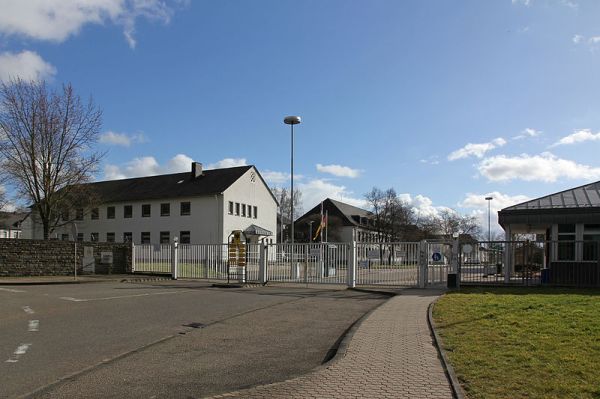
Aus Elektronik 62

 I poured us another cup of that deceptive cider that tasted like a refreshing fruit drink but carried a powerful punch. Hans tuned my guitar and starting picking a few melodies. Most Siemens workers in the building had gone home to their families. The apartment building was almost devoid of people. So there was nobody we would disturb with our singing. After another cup we had reached the point where singing had become the necessary ingredient for the continued success of the party. The vocal chords well lubricated by the smooth drinks were ready to metamorphose us into a cheerful bunch of young men.

Wine Jug

To the great delight of my friends, after we had gone through our favorite scouting and traveling songs, I offered to sing a spiritual to express my sentiments over our oppressive teachers in school: “When Israel was in Egypt’s land, let my people go. Oppressed so hard, they could not stand …”, which I sang with the deepest voice I could muster without floundering. Now Hans injected rhythm into the life of the party and played masterfully one of the Flamenco style pieces with the beats being pounded vigorously on the guitar body. “That was the rendition of our friend and maestro worthy of another drink”, I said. By now the content of the 10-liter jug had dropped to about the halfway mark. Suddenly Helmut got up and said he had to go to the bathroom. The way he staggered into the hallway made it clear that he had already had too much to drink. Someone said, “I hope he’ll find the toilet in time. He looks ‘blau’ (German slang for drunk) to me!” Now one must know that in Germany you locked the bathroom door with a key. Poor Helmut must have taken it out and dropped it on the floor. All of a sudden we heard him call, “Let me out! You locked me in!” We rushed into the hallway and tried to convince him that he was the one who locked himself in and that he would have to find the key. “It is not in the lock”, he complained.

          “Then it must be on the floor. Look for it”, we replied. Finally he located the key. What came next is incredible. Helmut’s level of intoxication was so far advanced that his eye-hand coordination was severely hampered. He was unable to insert the key into the keyhole. Imagine the hilarious scene, in which we three friends tried very hard to give him directions how to put the key into the hole. I was just about going to call the janitor for help, when Helmut managed to open the door. He looked pale and disgruntled, whether it was out of embarrassment or intoxication, we could not tell. Without saying good-bye he took his coat and left. Needless to say the bathroom incident had put a damper on the jolly time we were having. Nobody felt like having another drink. The party was over.

From Graduation into Carnival

Wesel 'Berlin Gate' - Photo Credit: wikimedia.org

When school continued in the first week in January, I avoided all distractions and focused all my energies on last minute studies. By now the school administration had let us know the subjects and topics, in which we were to receive our oral examinations. For me it was Charles V in History and Calculus in Mathematics. In the remaining four weeks I emptied an entire bottle of vodka, which one could take as evidence for my industriousness. I rarely missed to fulfill my daily work quota. Indeed I would go sometimes overboard and even skip my time for relaxation with guitar or harmonica. One morning I woke up late. I was shocked to discover that I had forgotten to set the alarm clock. School had already started, so I quickly jumped into my clothes, grabbed my books, and without having had breakfast I raced to school in record time and barged into the classroom, where my homeroom and German teacher Herr Aufderhaar had just begun a lesson on German romanticism. Because he was bald and also taught religion, we had given him the nickname ‘Kahler Jesus’, which means Bald Jesus in English. He took one look at me and instead of being angry about my tardiness showed remarkable understanding for my circumstances. He teased me good-naturedly and remarked to the entire class, “Klopp is not just late for class. He did not even shave!”

Charles V

 For the oral exam in History I was well prepared. The main topic that I was given was the era of Reformation with special consideration to the way Emperor Charles V dealt with the schism that threaten to tear apart the Holy Roman Empire of German Nations. I had about thirty minutes to write down a few notes for my presentation. Then when my turn had come and I was led into the somber exam room, I described in poignant details the political struggles of the emperor against France and the Turks and the frustrations he, as a good catholic, experienced with the rapid spread of the protestant revolt against the corrupt Church of Rome. I was no longer the timid student who once stood trembling with fear in front of our history teacher. I boldly and convincingly expounded all the pertinent factors that determined Germany’s future historical and religious landscape. I took the entire time allotted for the oral exam. So the committee of principal and teachers had no time to ask any unsettling questions at the end. I walked away with the confident feeling that I had consolidated my satisfactory standing in History. Also in Math I was able to prove that I deserved a better final grade. My task was to find a solution for the total amount of work required to dig a cylindrical hole of a certain depth. Herr Müller, my beloved math teacher in the senior division, guided me through this difficult problem of integration. He so cleverly posed the right questions that they contained valuable hints allowing me to bring the session to a successful conclusion. It would have been nice to express my gratitude to an excellent teacher some fifty years later. Unfortunately, while I was searching the school Website I found out that he had passed away the year, before I started to write our family history.

Front Page of my Graduation Diploma

With the prestigious graduation certificate (Abitur) in our possession we had access to many postsecondary programs offered by the German universities. As for me, two years of military service at the Bundeswehr (West German army) had to come first. In those days it was still possible to enlist as a volunteer for a period of 24 months instead of the mandatory 18 months with the advantage of receiving a handsome salary, becoming an officer of the reserve, and being able to choose an army unit in keeping with one’s technical abilities. I opted for service in the signal corps, a choice that definitely reflected my interest in electronics and communication technologies.

Newspaper

Newspaper Clipping with Names of the Graduates

It so happened that the graduation exercises had ended exactly at the start of the carnival season. Being together one last time with my friends and classmates, before we would scatter into all directions, I made full use of the golden opportunity to celebrate the great milestone and to lose myself in the relaxed atmosphere of the dance hall, forgetting the trials and tribulations before graduation and not worrying for the time being about the future. When the time of drinking, dancing and attending late night parties was over, I was physically exhausted, but for the moment I felt free as if a heavy burden had been taken off my shoulders.

Biene with her first pair of skis - Winter 1963

I had not forgotten Biene. Now with more time at my disposal I wrote her a letter bringing her up to speed on my success at school and the tumultuous days at the carnival festivities. But what mattered the most I found the courage to express my feelings about what was so special about her in my mind. At the campground in the spring the year before I had discovered in her appearance the natural beauty that needed no cosmetic enhancement with rouge, lipstick or artificial hair colour. Biene for me embodied the ideal image of a girl. In the letter I gave her my father’s address hoping that she would reply.

The Peter and Gertrud Klopp Story – Chapter XVIII

On my Moped to Father in Michelbach

It doesn’t matter who my father was; it matters who I remember he was.

Anne Sexton

50

My Father in front of Erna’s House in Michelbach near Schotten

It had been more than five years, since I had seen Father. He had left one day looking for work at friends and relatives. Considering his poor health and age, he was faced with the dilemma of having to return to Wesel, where he would be dependent on Aunt Mieze’s financial support or else be content with the odd casual work, which barely supported his livelihood. Furthermore considering his intensive pride as a former successful agricultural administrator and the pain he must have suffered from the dismal failure of his farming venture in Southern Germany, I can understand his anguish and feelings of having become utterly worthless in his own eyes and in the eyes of his family. Pride and failure have never been good bedfellows in a man’s heart, and Father was no exception. As for me, I missed his presence a lot, but I was too timid to ask as to when he would come back and did not know what was going on behind the scenes. Much later I found out that with Uncle Günther’s support Mother had initiated divorce proceedings. On the basis of the law that required common residence and conjugal relations Mother was able to get a divorce in exchange for waiving any rights to financial support from Father. So to make this sad and depressing story short, Father after the divorce joined and not long afterwards married Erna Krämer, an old acquaintance from the Warthegau days, who lived in her rustic and cozy home in the village of Michelbach at the foot of Mount Vogelsberg north of Frankfurt.

Schotten_Uebersicht_Kirche

Picturesque Schotten – Photo Credit: wikipedia.org

The last summer holidays before graduation were only a few weeks away. It was also to be the last year Mother and Aunt Mieze would reside in Wesel. Uncle Günther and Aunt Lucie had invited them to live with them in Watzenborn-Steinberg (now Pohlheim), where all four would share the rent of a brand-new house that had been built by a teacher as a retirement home in the distant future. Naturally there was a lot of joyful excitement among the three Kegler siblings having been raised together at the parsonage in Grünewald and now having the chance of living once more under one roof. There was just one problem. How would I fit into the grand plan of bringing the family members together? A transfer to a high school in another province with different graduation requirements was out of the question. The solution was an obvious one. I had to stay behind and continue my studies later on in the fall, while they would move to the land of the Hessians. The decision to finish my secondary education in Wesel proved to become one of the great milestones and turning points of my life.
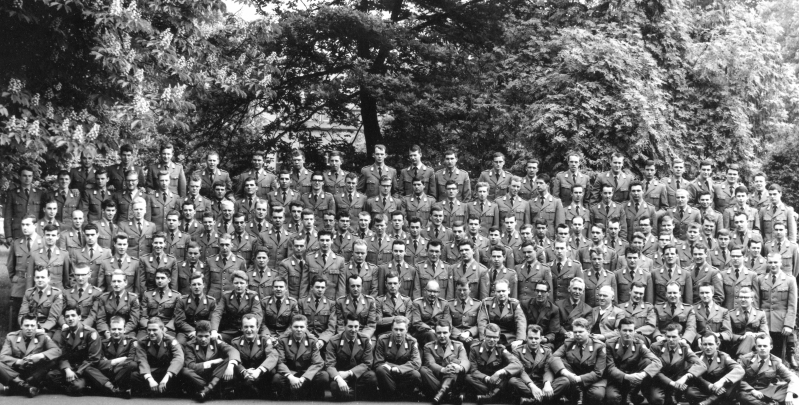
34

Twenty-year Old Peter

But for now at the beginning of the six-week break from school I had other things on my mind. I had to think of visiting Father. One of my old scout buddies sold me his moped for DM 50.00, a true bargain at the equivalent of ten monthly allowances. It had a peppy engine and in spite of being quite old was in excellent shape. The best part was that I did not need a driver’s license. Having always envied Klaus for his scooter, I now had my very own motorized transportation with which I could travel to Michelbach to see Father and his new wife Erna.

60

Philosophical Discussions with my Father

At a maximum speed of 50 km/h it took me all day to reach the scenic hill country around Mount Vogelsberg. Father and Erna gave me a warm welcome alleviating immediately all fear that Father might have turned into a stranger. I had departed from Wesel with these somber feelings, which had been building up due in part to our long separation, but also due to Mother’s bitter and regretful remarks that she had sometimes made about the divorce. So it was a great relief to be greeted so cordially and be welcomed as son and friend into their cozy old farmhouse. Here then I was going to spend the next six weeks, would become reacquainted with a rural environment slightly reminiscent of Rohrdorf, would get to know Father more closely through our philosophical and historical discussions, would begin to like his wife, would be introduced to her friends and relatives in the village, would taste her hearty meals albeit a little too rich in fat, in short I was here to relax and feel completely at home in an atmosphere of genuine friendliness and camaraderie.

Joy at my Father’s Home

Right from the beginning of my visit Erna and I got along very well. Her cheerful and lively disposition did not allow me to lose myself in gloomy moods, as I was occasionally prone to do, especially during prolonged periods of idleness and aimlessness. I could even see, even though I was reluctant to admit it, that Erna was the right person for Father. She was the sunshine that had brought lightness and contentment to his sunset years. From her radiated a contagious joyous spirit that created the in-peace-with-the-world atmosphere so conducive to Father’s healing process from a torturous past, from which he only now began to recover. I definitely do not remember him as a man broken in body and spirit, as my distant cousin Eberhard Klopp described him in his book of the Klopp Family History.

Schotten - Photo Credit: vogelsbergtourist.de

Town of Schotten – Photo Credit: vogelsbergtourist.de

Erna also had a moped of the same make and the same 49 cc class as mine, on which she would travel down the steep hill into the town of Schotten to buy the few things she needed for the small household in Michelbach. When there is company, one always seems to find the time to show off the beauty surrounding one’s home turf. Without visitors one tends to delay and leave such outings for another day. Erna was no exception. Now she was eager to travel with me to the nearby-forested hills, up the scenic Nature Park around Mount Vogelsberg, down winding country roads into the lush verdant valleys neatly tucked in between minor mountain ranges. There was no better form of transportation than our two mopeds. With a lunch pack clamped to the rear luggage rack we were ready to dart off into the wonderful Hessian landscape. Father a little overweight for these light machines gladly stayed behind looking after a few chores still to be done on this mini-farm with just a few goats to feed and milk,. Just as we were revving up the engines, Father came to the road to congenially shout over the noise, “Have a good trip!” At the end of my vacations thanks to our weekly excursions into the hill country, I had acquired a solid geographical knowledge of the region. As I was internally preparing myself to leave the Rhineland for good after my graduation, I had already created a new base to drop in as son and stepson, a place I could truly call home.

Landscape of Vogelsberg Hill Country - Photo Credit: vogelsbergtourist.de

Landscape of Vogelsberg Hill Country – Photo Credit: vogelsbergtourist.de

In the long summer evenings after supper we three would sit in the living room leisurely sipping homemade apple cider. We would talk until it was time to go to bed. More accurately speaking it was Erna, who did most of the talking. She truly had the gift of the gab. With the unerring memory for minutest details spiced up with colourful expressions and peppered with the melodious dialect of her village she was the born storyteller. I will never forget how she described the chaotic scene of the German Reichstag of the roaring twenties. She and her friends were sitting in the same living room forty years earlier and acted out the ugly political debates they had heard over the radio. And they did this with such exuberance, with so much mock yelling and screaming that the poor cats terrified by the brouhaha created by the inflammatory speeches sought refuge under the sofa and added to the parliamentary cacophony with much hissing and growling.

Incredible Rock Formations near the Top - Photo Credit: myheimat.de

Amazing Rock Formations near the Top – Photo Credit: myheimat.de

Is it Love?

Within the scope of the family history I would go too far if I included Erna’s side of the family except the ones that I came into contact with. There was the Langlitz family, Walter, Frieda (Friedchen) and their two daughters Helga and Anita. Walter had become a successful contractor who ran a prosperous business with his impressive array of trucks,

Church of Michelbach now part of Schotten - Photo Credit: wikipedia.org

Church of Michelbach now part of Schotten – Photo Credit: wikipedia.org

caterpillars, backhoes and other heavy machinery that he had acquired to assist in the government sponsored land reform program. In contrast to the northern provinces of Germany, where the eldest son inherits the farm, inheritance laws in the south required equal division of the fields among all the children of the deceased farmer. Thus, over time emerged a chaotic patchwork of tiny fields often less than one ha in size, which made farming more and more inefficient and unproductive. So Walter profited from the reallocation of land by owning the right equipment at the right time. The two daughters, Helga and Anita, age 12 and age 10, whose exact degree of relationship to Erna I do not recall, often showed up to play board games, such as chess and checkers with the newcomer in Father’s home.

52

Peter Basking in the Sun – Summer 1962

Erna was also anxious to have me meet her 16 year-old niece Roswitha, who lived a few houses down the street with her widowed mother. Even though I did not recognize it at the beginning, it was clearly a matchmaking effort supported by Father. In collusion with her sister-in-law, Erna invited her niece over for coffee and cake to make sure we would see each other as often as possible. Roswitha in terms of the standards I had set for what a girl should look like fell well within the range of acceptability. However, inner qualities, such as interests in activities that one could do together, readiness to share and exchange thoughts and feelings, to support them and if necessary even to oppose them, such qualities, which began to gain more and more in importance for me, were severely lacking. In a way my encounter with her helped me set the bar a few notches higher, which further limited the number of choices for my future mate. I vaguely felt for the first time that only love could help jump the hurdle. But what is love? I could not tell, because I had not experienced it yet. So what Erna had hoped for, did not happen. We were friends, who did things together for a while. We walked down the steep hill down to the town and district swimming pool in Schotten and on Saturday evenings we went dancing in the nearby villages. The music was not exactly rock ‘n’ roll, but we could dance to it, whenever a fast beat would permit. The performance of the band improved with each refill of the giant beer mugs during the frequent breaks. Thanks to the loud music there was no opportunity to talk, and there would not have been much to talk about. On our long walk home in the moonlight I explained to her how the stars would move like the sun following the rotation of the earth. For everything I said during my scientific dissertation she approvingly giggled. Only once did she protest to express her utter disbelief, when I insisted that the moon shining so brightly now onto the forests and meadows would also show its pale face during daytime.

My brother Adolf relaxing at the Schotten Swimming Pool

My brother Adolf relaxing at the Schotten Swimming Pool

With my first visit to see Father after such along gap inconceivable in the light of today’s custody laws that require visiting rights at regular intervals, I accomplished much more than just reconnecting with him. The ice had been broken. Other family members now were eager to come in a spirit of reconciliation that was shared even by Mother albeit somewhat reluctantly. Near the end of my holidays my brother Adolf dropped in for a visit. He had returned from Canada to Germany on a temporary basis to learn a trade in an apprenticeship program at the Honeywell Company at Hanau. There he eventually acquired a journeyman ticket as a trained machinist that would – so he was hoping – land him a good paying job upon his return to Canada. Adolf endowed with a witty sense of humor and an extroverted personality was the life of the party no matter where he went. In formal or informal gatherings, in suit or in jeans, with academics or with factory workers, he was the born entertainer who made people cheer up when they were depressed, got things rolling when they appeared to be stuck. Everybody liked him. He had many friends and few enemies. There was just one problem with this gregarious likeable brother of mine. He seemed to be shy, yes even afraid of unmarried women, who might take too much of a liking to him, pursue him with the full force of passion and lock him up in the golden cage called marriage. When we received an invitation to a social evening by Roswitha’s mother, Adolf felt safe, because his youngest brother was with him. On the surface it looked like we were the suitors, Roswitha being courted by two promising young men. In reality in a strange reversal of the customary roles it was the other way around. As we gathered in the living room, Frau K. served us wine, crackers and cheese, spent a few perfunctory minutes in conversation with us and discretely withdrew with a few cheerful words meaning that we now were on our own. I found the situation very odd and to some extent embarrassing, because I had expected her to stay. It was Adolf who saved the day or more accurately the evening with his social skills that helped to get the ball rolling. He asked Roswitha about school, hobbies, her likes and dislikes, the weather, and all the other trivia that he was so apt in using as a social lubricant. To her replies often accompanied by the aforementioned giggles he added humorous comments that made us laugh and feel at ease. Eventually even I emerged out of my taciturn shell and presented to everyone’s amusement a few jokes and riddles. Around eleven o’clock Adolf ironically remarked that it was time for us ‘boys’ to go home. We politely said good night and cheerfully departed to have another drink of a more potent kind at our Father’s place.

Happy End to a most Enjoyable Visit

Then my sister Erika dropped in for a brief visit. When she heard that I had been going out dancing with Roswitha, she mockingly and contemptuously commented on her in Father’s presence, “Ho! Ho! Peasant duffer! (Bauerntrampel in German)” By now I had become quite accustomed to the unpredictable outpourings of her sharp tongue. Her caustic and biting remarks at Mother’s place in Wesel had been edged forever into my memory. However, Father was livid. Having respected all his life the hard honest work of the farmers from whom we receive our daily bread, he was deeply insulted by that derogatory remark. He gave her a severe dressing-down for displaying unjustified disdain for such an honourable class of people. Never since my early childhood days, when he had read me the riot act for stealing eggs from Mother’s henhouse, had I seen Father so angry. If I did not know the meaning of holy wrath, I knew it now.

My brother Karl and his wife Ingrid with an aunt in front of Erna's house

Erna Klopp with her neighbor’s baby in her loving arms

Erna’s house was at least half a century old and the electrical wiring was outdated and no longer in compliance with the latest electrical code. It required that all circuits be properly grounded. It made me feel good that I was not just there to enjoy a relaxing summer visit but also had the opportunity to make myself useful. Father had bought the three-prong wire, and I installed it and connected it to the junction boxes, outlets and switches. When I showed reluctance to take the twenty marks Father wanted to give me as pay for my work, he lectured me somewhat like this, “Listen, Peter, if someone offers you money, not dishonest money mind you, but money earned for work you did, do not hesitate to accept it. For you not only cheat yourself out of the reward that is rightfully yours, but you also insult the generosity of the giver.” To such a powerful argument I had nothing to reply and took the twenty marks.

Together with Helga and Anita in Michelbach

Together with Helga and Anita in Michelbach

At times when Father’s back pains were hurting too much, he stayed in bed for most of the day. Adolf and I were sitting at his bedside to keep him company. Then Father and I would often talk about the great empires of the past and the lessons one might learn from the causes of their decline. I really warmed up to this topic as I had recently taken a keen interest in the history of the Roman Empire. We came to the conclusion that if one allows foreign religious and ethnic elements to penetrate the cultural core of the nation, it will sooner or later lose its identity, its values and strength and will eventually have to face first decline and then total collapse. Germany according to Father has not learned her lessons and was headed in the same direction. He pointed to the record player on the night table remarking, “The record is turning, the needle appears to be progressing even though it is running in circles, but in the end it will be starting all over again symbolizing the eternal recurrent of the same in world history.” Adolf feeling a little left out in this highfalutin talk said he would buy himself a couple of history books to study up on the things he had missed in school.

Reading and Relaxing - Summer of 1962

Reading and Relaxing – Summer of 1962


The Peter and Gertrud Klopp Story – Chapter XVII

Some Reflections on the So-called Coincidences of Life

“Coincidence is God’s way of remaining anonymous.”
Albert Einstein

Camping with Hans and Helmut
Hans Playing the Guitar and Helmut Sitting in frontofmy Tent

Hans playing the Guitar and Helmut sitting in front of my Tent

Spring came early in 1962. I no longer played an active role in the scout movement. But my desire to get out of the city and enjoy nature in the company of friends was as strong as ever. Among my friends, who had survived the nine-year culling process at the high school, only Hans and Helmut were left. All the others were either eliminated by the academic hurdles or departed on their own looking for other ways of moving up the educational ladder. Ever since I did Helmut that great favour at the ballroom final, he was seeking my friendship and clung to me like a burr on a woollen sweater. He wanted to be included in our overnight camp-outs. When I objected on the grounds that there was not enough room in my tent, he replied that he would sleep in his own tent. So it happened one sunny weekend that three young men went out camping together, with Helmut – so it appeared – being the odd man out. Hans and I in spite of our differences shared a bond that had lasted for more than five years. Our friendship was based on experiences in the boy scout movement, on our common interest in experimental electronics, all the way back to early days on the school yard, when I was Ede Wolf and Hans one of three piglets that I was supposed to catch. Helmut was a newcomer and in a sense also an intruder, gentle, polite, simply wanting to be part of our camaraderie. Perhaps on his part it was a struggle against loneliness that intellectuals feel more intensely, but we perceived him as an intruder just the same.

13

Peter strumming a few tunes on Hans’ guitar

It was evening, when we arrived on our heavily packed bikes at a clearing. We quickly erected our tents helping each other to get ready for the night. After we had wolfed down our sandwiches, which our mothers had so lovingly prepared, we hurried into the woods, gathered dead branches and proudly started a campfire with only one match. In no time, flames leaped up and around the kettle, which we had suspended over the fire on a wooden tripod. Helmut, in my eyes still an intellectual nerd, impressed me how well he had learned the basics of camping in such a short time, and most of all how hard he tried to be helpful. The tea water in the kettle had almost come to a boil. Hans and I ceremoniously took turns adding tea bags, plenty of red wine, pepper and other assorted spices into the steaming brew. We lifted the kettle off the tripod to prevent the alcohol from evaporating. To fortify the punch some more, I pulled from my coat pocket a small bottle of rum and poured its brown content under the approving applause of my friends into the aromatic brew. By now it was getting dark. The stars began to shine in ever increasing numbers on the canopy of a moonless sky. The fire merrily crackled and its fiery tongues shot up high casting dancing shadows of us onto the mossy ground. It was time to fill our cups to the rim, to cheer to each other’s health and happiness, and drink. Hans grabbed his six-string and entertained us for a while with Spanish guitar music, which he played superbly off the cuff. In the meantime, the cups needed a refill. The warmth of this miraculous elixir penetrated deep into our bodies and spirits. During a pause I suggested to Hans to do something together, while the drink was good and the fire burning, “Let’s raise our voices and sing our favourite scouting songs.” Helmut being a good sport supported my suggestion, even though he did not know the lyrics of most of these specialized traveling songs. He would whistle along, whenever he recognized the tune, he said. Soon a chorus in a strange blend of young male voices, guitar chords, and whistling rose above the campfire strengthened in volume and enthusiasm by the concoction from the kettle. The birds waking up in the forest may have wondered why we were making such a cheerful noise. The more the night advanced, the more boisterously we belted out the songs, which glorified the violence and cruelty of the German and Swedish pike men in the Thirty-Year War in lines like, ‘We also came to Rome, there we threw the pope from his throne.’ ‘The little nobleman’s daughter we cast her into hell.’ And ‘Hang the chaplain on the window cross’. The booze, the raucous singing, the flickering flames, the starry night, all contributed to conjure up images in our young hearts of a time wild and free, in which we participated for this one short moment and in which Helmut had become a member of our friendship circle. Long after midnight we poured the remaining dregs from the kettle over the embers and happy and sleepy crawled into our sleeping bags.

A Most Curious Camping Trip

How I Met Biene

Pentecost was a long weekend and the beginning of a one-week break from school, the last one before the summer holidays. Hans had dropped out of our planned camping trip, because he had to baby-sit his younger stepbrothers and sisters. So Helmut and I got together to discuss our destination and the supplies we needed for the two and a half days. The reasons for the choice of our campsite will forever remain one of the great mysteries of my life. The nearby forests on either side of the River Rhine were within easy reach of a two- or three-hour bike ride. Our favourite camping sites were on federal land, rarely controlled for trespassing by forestry officials, miles away from the noisy highways, perfect places to be in tune with Mother Nature. The choice for this particular location was the opposite of everything I had learned to cherish during the years as a scout. As Helmut and I unfolded the map for the area of North Rhine Westphalia, we glanced over the tent icons, which marked the locations of campsites, and spotted one that bordered directly on a lake. On closer inspection we found out that it was Lake Baldeney between the city of Essen to the north and the city of Velbert to the south.
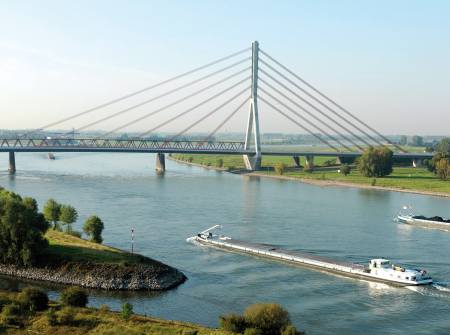
Lake Baldeney - Photo Credit: dirkosada.de

Lake Baldeney – Photo Credit: dirkosada.de

Apart from the dead side branches of the River Rhine, there was no real lake in the vicinity of Wesel. It appears to me that the things one does not have exert a certain attraction that one often finds hard to resist. So despite nagging doubts that in the light of the hard facts we had made a poor choice about our camping destination, our decision to go there was irrevocable. Who would have thought it possible that I would have considered taking a train to go camping? Was it not totally insane to trade a peaceful refuge in the forest for the hustle and bustle of a noisy commercial campground? The Rhine was filthy and burdened with chemical pollutants that came from the Ruhr industrial area, to which we were planning to go. With the economic recovery of West Germany came the demand for energy. Mining for the high-quality anthracite coal was in high gear bringing work and prosperity to the region, albeit at a price. On windless days the coal dust polluted the air. Dirt and grime covered walls, lawns, and even the wash that women hung up to dry. Yes, it is hard to believe that Helmut and I actually went, where – as people who knew the area around Essen warned us – the sun would seldom completely break through the grey cover of a leaden sky.

Lake Baldeney near Essen - Photo Credit: mapio.net

Lake Baldeney near Essen – Photo Credit: mapio.net

So it came to pass that on the late afternoon of June 9th, 1962, two young men carrying heavy backpacks and holding a two-man tent between the two of them arrived at the Baldeney Lake campground. Helmut and I were pleasantly surprised to view scenery quite different from what we had anticipated to find. The sky had cleared from the cleansing action of an early morning rain. There was not even a layer of industrial haze left to obscure the blue sky. The sun shone brightly, the trees were in full leaf, the lawn impressed us with its light-green spring verdure, best of all the brilliantly shining lake reflecting the blue sky created an ambiance we had not expected in a park south of the city of Essen. Since it was still early in the season and only a few hardy people had ventured out to camp, we had no trouble finding a suitable site near the lake shore to set up our tent. We enjoyed an early supper, which I had prepared from a can of chunky soup and had heated it up over my gasoline fuelled camp stove. We spent the evening listening to pop music from my transistor radio and were taking in the lush-green trees and bushes that the locals call the green lung of the Ruhr region. The only reminder that the black gold was mined north of here deep down from the rich coal deposits came when we looked at the dark soles of our feet black from our bare-foot walk through the park.

Next morning after a frugal breakfast with cereal and milk we pulled out our air mattresses into the brilliant morning sun. We relaxed reading, listening to music from Radio Luxembourg and watched people saunter by on the way to the beach. Two men, one in his early sixties, the other a little bit younger than I, caught our attention as they brought two of those so-called folding boats down to the lake shore. They can be easily transported on buses, trains, and even in the trunk of a car, because when folded together they easily fit into a large duffle bag.
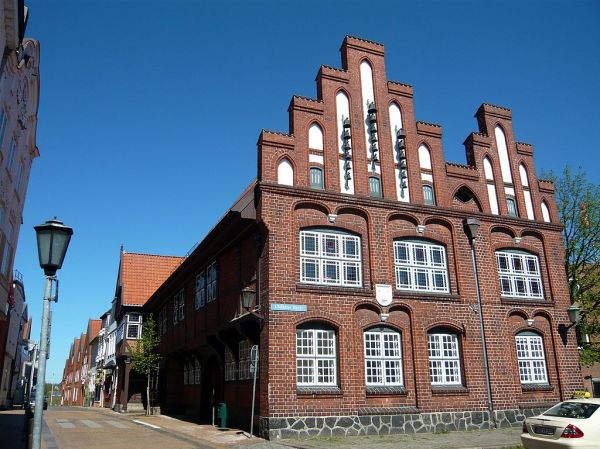
Biene and her Dad

Biene and her Dad

For lunch I opened a can of sardines, an excellent staple for people like us traveling on a shoestring budget. Helmut having relied on me for the provisions grumbled about the meal that consisted only of slices of dry bread and fish. In the meantime the boaters had returned to their tent with the folding boats. As we found out later, they were Herr Panknin and his son Walter. It seemed strange to us that they had nothing to eat and just sat there as if they were waiting for something. That something was obviously food. For now at a distance we noticed two persons approaching the camping area. As they came nearer, they turned out to be a woman and a young girl carrying baskets filled with delicious food perfect for a picnic in the sun. Enviously we looked on, as Frau Panknin and daughter Gertrud with a rather curious nickname Biene (Bee in English) unpacked the mouthwatering content of the baskets. We could see that this was culinary heaven on earth, Schlaraffenland, as a German fairy tale by Grimm so aptly describes the land, where people eat the finest delicacies in gluttonous quantities without having to work for them.

Twin Brother Walter with one of his Model Airplanes

Twin Brother Walter with one of his Model Airplanes

What attracted me to this family, however, was not so much the food, which in comparison to our lunch was so alluring, but rather that pretty seventeen-year old girl whose first impressions on me provided a good match with the image of idealized beauty that had been growing in my mind for the past two years. Biene, from the moment I cast my eyes on her, radiated a charm whose magic did not depend on bracelets, earrings, and similar outward adornments, not on make-up or perfume, which I rightly or wrongly loathed as poorly disguised cover-ups, but rather on the very lack of all those artificial means. In short, I gazed in admiration at the girl of my dreams.

Biene at the Mediterranean Sea

Biene at the Mediterranean Sea

Helmut and I were watching Biene and her twin brother play badminton in the open field. There was no net. The game was not very competitive. Its objective was to set new records by counting the number of times the birdie would fly back and forth before hitting the grass. Suddenly the idea occurred to me that we all could organize a mini-tournament with two pairs competing with each other for the highest score. After we had introduced ourselves, I explained the idea of a badminton tournament to be played with two pairs. Seeing that this would add a little bit of excitement, Walter and Biene readily accepted the proposal. As I had secretly wished, Biene wanted to form a team with me. I no longer recall how many rounds we played, but Biene and I always succeeded in getting the greatest number of hits. We were both very competitive, but the success in the game depended on complete cooperation. We felt good about our victories over our rivals and even more so, because we had won them together.
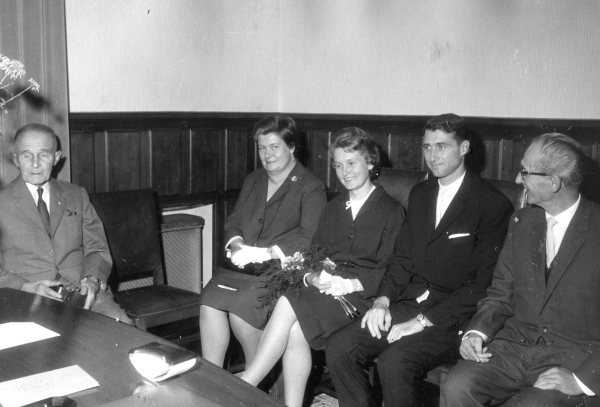
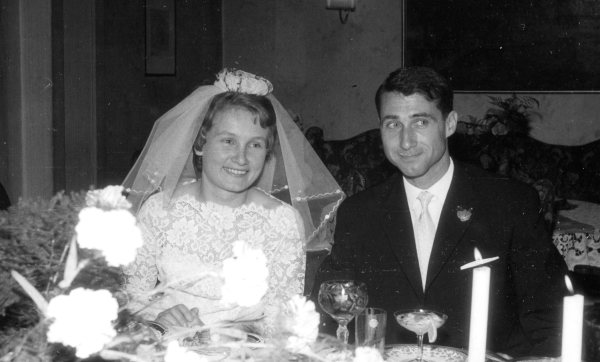
It was only a matter of time, until the topic of the folding boats would surface in our conversation. Walter suggested going for a ride on the lake. Herr and Frau Panknin voiced no objections, indeed they were happy to see their twins go boating and at the same time having a little bit of peace and quiet. Somehow Helmut had managed to partner with Biene, which at first made feel quite annoyed. But he argued convincingly that it was now his turn, since I had spent so much time playing badminton with her. As I was paddling with Walter, I soon got over my disappointment. Full of enthusiasm for his hobbies, Walter talked about his model airplanes and ships that he had been building. That was quite a pastime for Walter and took a lot of time, skills and dedication to bring a building project of this kind to perfection. I thought that just as Walter needed to have a plan and all the parts ready before he could even begin, so did I going through the same process in building a working radio. The moment Walter mentioned that he was thinking of using radio controlled devices to direct his model in the air or on water, I got quite excited and told him about my electronics projects, especially about the tube driven transmitter that provided musical entertainment to my friends in the apartment block in Wesel. Having found an area of common interest, we paddled less and less vigorously and talked all the more enthusiastically not realizing how fast time had been slipping by. When we pulled the boat ashore, we had already exchanged addresses and promised each other to mail each other schematics of electronic circuitry. Of course, what Walter did not know was that I had established a link to Biene, a connection that went beyond mere electronics. Like in an electric current, which the battery is pumping through a circuit providing energy and action to its individual parts, so warm feelings were flowing through my heart in the belief that Biene may have taken a liking to me during our badminton contest with Walter and Helmut.