Kokanee’s Name Spread Far and Wide

The Origin Of Kokanee’s Name

Article Credit: Arrow Lakes News (December 3, 2015)

by Greg Nesteroff
One hundred and fourth in an alphabetical series on West Kootenay/Boundary place names

In addition to being a fish and a popular beer, kokanee is the name of 14 geographic features in BC: a settlement, bay, creek, two provincial parks, glacier, recreation area, lake, landing, narrows, pass, peak, point, and range. As a result, it’s probably this areas most widely used indigenous word. Kokanee is derived from kekenit the Sinixt term for the landlocked salmon once plentiful in this region. (There’s no need to capitalize kokanee when referring to the fish, al­though many people do anyway.)

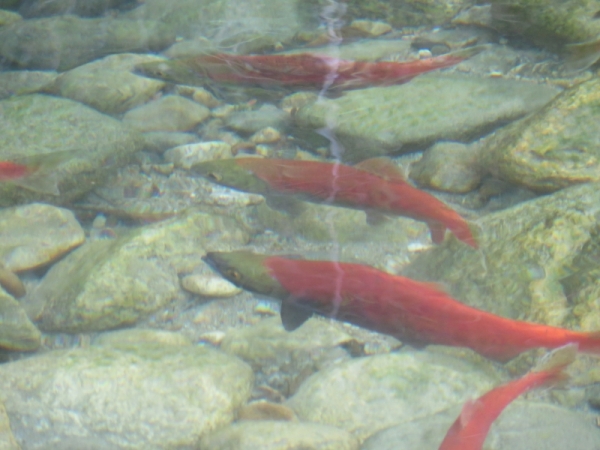
Kokanee spawning at Taite Creek

Kokanee spawning at Taite Creek

However, when Europeans first adopted the word, they didn’t know its definition. The earliest reference in the Nelson Miner of June 15, 1895 said: “The jagged ridge visible from Nelson away up the lake to the North-East is Ko-ko-nee, of the meaning of which we are sorry to say, we are ignorant”. The present spelling was adopted the follow­ing year when the Columbia and Kootenay Steam Navigation Co. launched the SS Kokanee on Kootenay Lake. The Trail Creek News of March 21, 1896 explained the name was “after the range of mountains near Nelson.”

Kokanee Creek, also known as YuiU Creek, was so named by October 1896 and a town site called Kokanee was laid out at its head, adjoining the Molly Gibson mine. The Sandon Pay streak of Aug. 14, 1897 kidded that “its inhabitants, when they become numerous enough to need a name, will be called the Kokakanucks.” Kokanee Glacier was first called by that name in The Ledge of lune 17, 1897. After climbing the glacier in the fall of 1898, mining promoter Ernest Mansfield renamed it after Lord Kitchener, but following his departure from the area in 1901, it reverted to Kokanee. Near the spot that the creek emptied into the lake was Kokanee Landing, first mentioned in the Nelson Tribune of April 9, 1899. The earliest known reference to kokanee mean­ing the fish was in a promotional booklet produced in late 1899 or early 1900 called Health and Wealth: Kaslo, BC: “During summer months in many streams emptying into Kootenay Lake, spearing a peculiar red fish of the trout species, called by the Indians ‘Kokanee is quite an amusement. Long strings of these are frequently seen.”
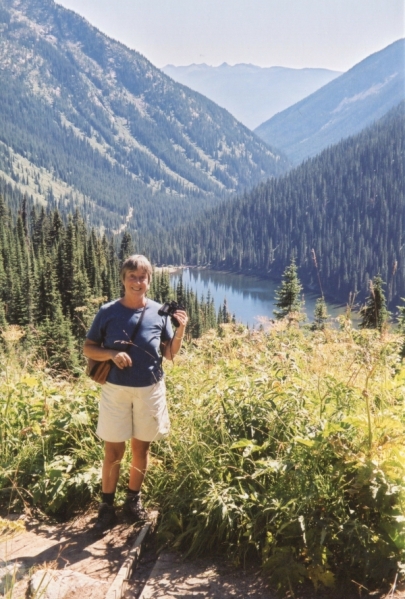
Biene Klopp hiking with me in Kokanee Glacier Park

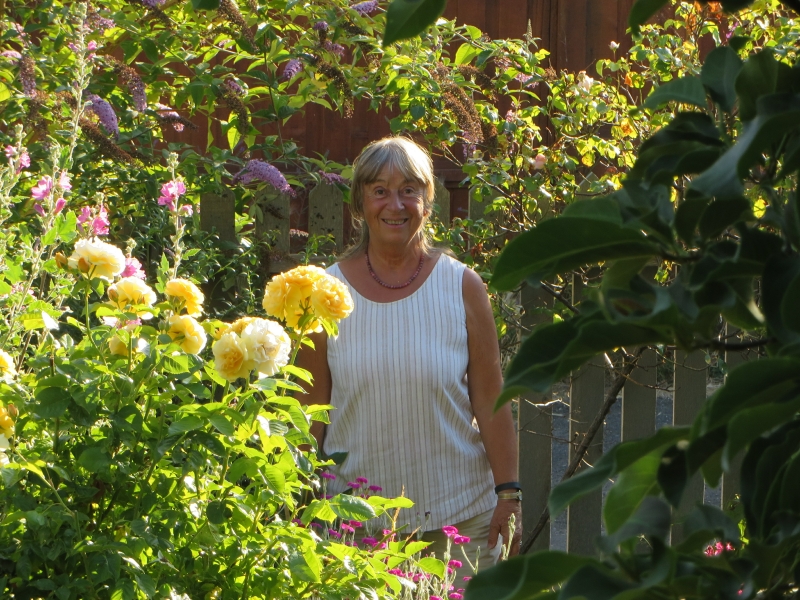
My wife hiking with me in Kokanee Glacier Park 2001

Somewhere along the West Arm of Kootenay Lake — probably at Lasca Creek, directly oppo­site Kokanee Creek — was what the Sinixt called Yaksakukeni: place of many kokanee. However, it was many more years before kokanee was com­monly used by European settlers to refer to the fish. Two Kokanee post offices existed, the first ap­parently at the townsite, from 1902-11, and an­other at the landing, from 1911-15.

OLYMPUS DIGITAL CAMERA

Biene’s Nephews Norbert and Christian at Kaslo 2005

But what made kokanee a household word be­yond West Kootenay was a conversation between Nelson mayor Tom Shorthouse and H.F. Puder of Interior Breweries in 1959 about the company’s recent move from Nelson to Creston. Shorthouse pointed to the potential of Kokanee Glacier Park — created in 1922 — as a tourist attraction and sug­gested the company name a beer brand Kokanee. “This thought really stuck,” Puder told Shorthouse a year later, “and the more the name ‘Kokanee’ was considered, the better we liked it … To you goes full credit for originating the idea and you may be assured that you will be among the first to sample the product.”
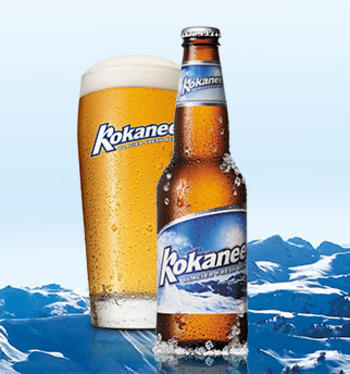
Popular Kokanee Beer

Popular Kokanee Beer

Kokanee pilsner beer first appeared in the spring of 1960 with a label featuring a painting of the gla­cier by Vancouver designer George Me Lachlan. While the artwork has changed over the years, it continues to use a glacier motif and remains one of BC’s best-selling brands.

The name has since spread far and wide. Lots of businesses adopted the name — including Kokanee Springs golf resort. There’s a Kokanee Bay in the Cariboo; a Kokanee elementary school near Seattle; and streets named Kokanee in Nelson, Cranbrook, Vancouver, Whitehorse, Ontario, Washington, Idaho, Montana, Oregon, Colorado, California, and New Mexico. Most of these were presumably taken out of atlases and don’t have anything to do with our area, but there’s a Kokanee Bend fishing area in Montana.
From Dover in England to Fauquier in BC – Addendum

Note that the usual Klopp family post for Thursdays has been omitted and will resume next week with a new series on Anna Rosa Klopp.

Richard (Dick) Horace Andrew Hall

by Guest Contributor Paul Loseby

Click here to view the original post.

Thank you so much everyone, for all of your help. It is really appreciated. Actually since Peter put my message on the Guest page, I have been doing some more research and whilst I don’t think it was as bad for Dick, it was an absolutely horrendous time for many. These were the Home Children and it seems that 11% of Canadians are descendants of these children.

Photo Credit: reginalibrary.ca

Photo Credit: reginalibrary.ca

I came across an absolutely riveting video on YouTube yesterday and we watched it last night. This is the link:

It seems that children as young as 6 were taken from their parents; frequently without their parents’ knowledge or consent, and shipped over to work as domestics or farm workers in Canada. The authorities would only let them know by sending a card after they were in their new country.
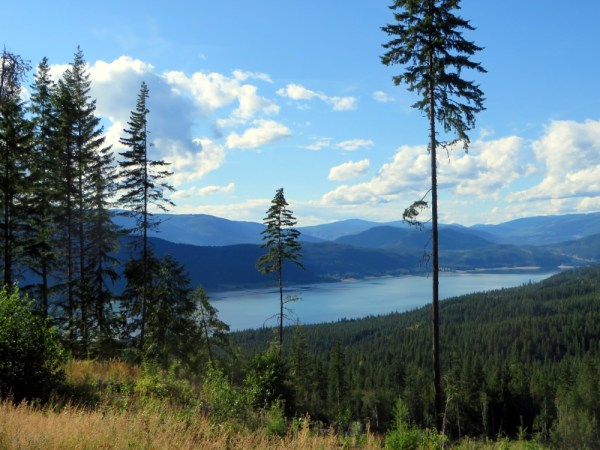
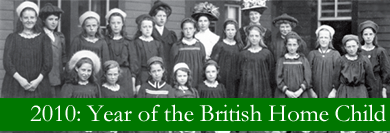
Photo Credit: web.ncf.ca

Photo Credit: web.ncf.ca

Between 1869 and 1939, over 100,000 children were taken from their homes and sent to Canada. More than that were sent to Australia and the British government didn’t stop doing that until the 1970’s. The children were considered waifs, orphans and strays. Many had parents who could no longer afford to feed them or take care of them.

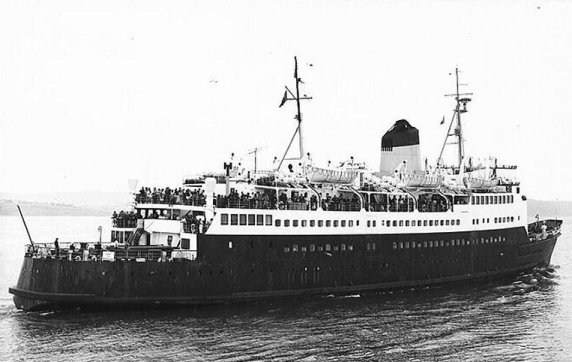
SS Sarnia 1892 - Photo Credit: bytown.net

SS Sarnia 1892 – Photo Credit: bytown.net

Usually when the children reached Canada, they had a train ride of several days and eventually most were sent to help farm families with all of the work – even those as young as 6. Some children were accepted into the family and treated well, but many were treated very badly and some were treated like slaves.

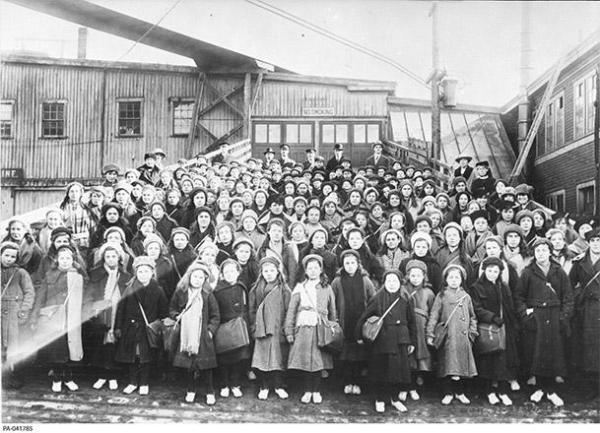
Home Children - Photo Credit: humanrights.ca

Home Children – Photo Credit: humanrights.ca

If you watch the 46 minute video, you at times have tears in your eyes – at the young lad whose home was a small wooden garden shed that he shared with the dog. He only got food if the dog left some. He was beaten daily as many were – often just because they were Home Children.

We think now that Dick Hall was one of the lucky ones. He stayed at William Hewlett’s farm in Stouffville for three years and then returned to the UK to spend Christmas with his parents. He then traveled back to Canada.

These children were given food and accommodation and a small amount of pay – but this money was not paid until they had finished their term on the farm or other place of work, when they were 18. So, it was just food, accommodation, hard work, possibly many beatings and they lost their childhood. You will see if you watch the film that when the children grew up, they had no emotions to show love to their own children.

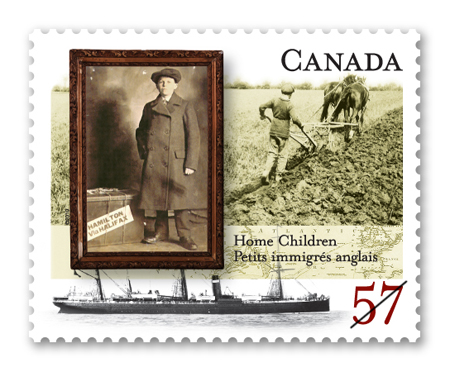
Home Children Stamp - Photo Credit: canadapost.ca

Home Children Stamp – Photo Credit: canadapost.ca

I really am grateful to all of you for the help that you have been giving me – particularly Peter. I have discovered things that I would never have known but some of those things, (not to do with Peter as he obviously moved to a Country and town where most would love to be including me) have shown us a great deal of sadness too.

I only found this YouTube video yesterday and it is a part of British and Canadian history. If you get a chance, it really is a ‘Must Watch’. The link again is:

https://www.youtube.com/watch?v=I-aDoWnK2Ic&feature=youtu.be

Kindest regards

Paul

Presenting Part 2 of Local Author and Activist Lucia Mann

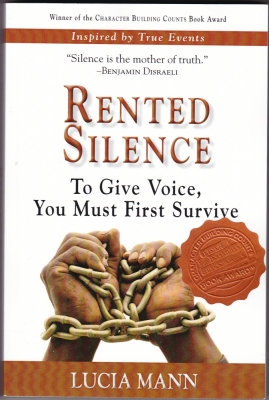
Rented Silence: Chilling Historical Novel Exposes South Africa’s Deplorable Crimes Against Humanity, as Mother Buries Newborn Daughters Alive…

Masterfully crafted by Lucia Mann, ‘Rented Silence’ calls on actual events from WWII to the present day, to expose the unconscionable crimes committed in South Africa both during and after British Colonial rule. Readers join a mother who is at her wit’s end, choosing to bury her two tiny daughters alive to spare them the torment of a life in the sex trade. But one of them is saved, afforded a short idyllic existence before she is captured; the very crime her mother intended to prevent. This is her story, fusing fact and fiction in a narrative critics have said will “…make you view your life with a new-found sense of gratitude”.

Lucia 4

Bakersfield, CA – When South Africa’s National Party toppled in 1994 and apartheid came to an apparent end, the nation slowly began to carve out a new reputation to make it a major player on the global stage. However social activists such as Lucia Mann, who was born in British Colonial South Africa just after WWII, know that the country still has many deplorable acts to answer for.

In her latest, revised-edition novel, ‘Rented Silence’, Mann takes readers on a journey spanning seven decades, into the gut-wrenching story of a mother’s unconditional love, the unlikely survival of one of her daughters and a shocking exposé’ of South Africa’s very real human trafficking epidemic.

Author and Social Activist Lucia Mann

Author and Social Activist Lucia Mann

Synopsis:

From the “African Freedom Series”

TWO TINY NEWBORNS WERE BURIED ALIVE IN A COMPOST PIT, covered with corn husks and left to die. A hungry wild dog, saliva flowing, stood impatiently over the mound. As it started to dig out its prey, an escaped slave whooshed it away. Drawn by the sound of a weak human cry, the runaway cautiously approached the mournful whimper. What could provoke a new mother to bury her twin babies alive? A will to protect her children from the inescapable pain and horror of becoming chattel to an evil South African plantation owner.

Experience post-WWII Africa through the eyes of characters who unearth the painful secrets of those times:

  • – Shiya, a white newborn rescued from an intended grave, who lives five idyllic years in the bush before she is captured, tormented, and eventually freed.
  • – Anele, the black runaway slave who saves Shiya’s life and suffers the consequences for the rest of her days.
  • – Alan Hallworthy, the wealthy, cruel plantation owner who lusts for the bodies of young girls, even that of his own five-year-old daughter.
  • – Brianna, Shiya’s modern-day daughter who is mystified by her mother’s secrets and never stops trying to reveal the truth.

Lucia Mann’s story exposes South Africa’s crimes against humanity during and after British colonial rule. It takes you through a roller coaster of emotions as it describes South Africa from post-WWII to the modern day.

“The point of this story is to raise alarms about modern-day slavery, a problem many people think has somehow been abolished, and to do it through a story that captivates its readers by fusing real-world grit with an engrossing fictional narrative,” explains Mann, Founder of The Modern Day Slavery Reporting Center. “It’s vital to understand that unconscionable crimes against humanity still take place daily, and that it’s not a new problem.”

Continuing, “That’s why I have written a story that spans from British Colonial South Africa right up to the present day. I’ll admit that it’s an uncomfortable read in places, but a story that needs to be told so that we can start to acknowledge and take action on an epidemic that is only going to grow with time.”

Since its release, readers have come out in force with rave reviews. For example, one Amazon customer comments, “Without wishing to give anything away let me simply say what an awesome read this book is. The fact that it is based on true events makes it the more remarkable. If you like a book that is both compelling and heart wrenching then this is for you. A wonderful piece of work from a very gifted author. It’ll make you view your life with a new-found sense of gratitude. Highly recommended.”

‘Rented Silence’ ISBN: 9780979480591 is available now: http://www.amazon.com www.amazon.ca or directly from author.

The above released book is not to be mistaken for a copy by PublishAmerica/StarBooks ISBN 9781462629428 who have no legal copyright.

For more information, visit the author’s official website: http://www.luciamann.com.

About the Author:

Lucia Mann is a former British journalist and author of the two sequels in the African-set Freedom novels devoted to slavery and racial prejudice: Africa’s Unfinished Symphony (Indie Excellence winner), and A Veil of Blood Hangs over Africa.

Born in British Colonial South Africa in the wake of WWII, Mann saw and felt firsthand the pain and suffering of those who were heinously treated because of the color of their skin. She currently resides in British Columbia, Canada, where she is fine tuning her next novel: The Sicilian Veil.

Visit Lucia Mann on-line at www.luciamann.com.

Lucia Mann is also the founder of The Modern Day Slavery Reporting Center at www.reportmdsrc.org.

Contact: Lucia Mann / authorluciamann@vahoo.com / (250) 269-7280

No Longer a Bachelor: A Little Love Story

How I Met Lisa

Contributed by Anthony Klopp
Klopp Family Tree – Chart I – IV

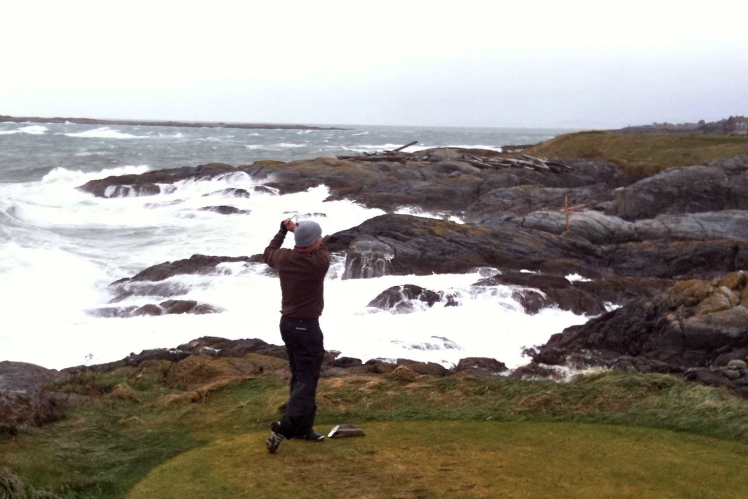
I have never been more thankful to go out for a round of beers after golf than that night. I had just finished, what I am sure was the best round of golf I have ever played and was feeling pretty happy about breaking 80. When my golf buddies asked me to go to the local watering hole, I thought, “I deserve a celebratory pint”. While waiting for the finishing touches of my Guinness to be poured, I saw her. I had seen her once or twice before but had never done anything about it. Considering how well I played that day I thought perhaps luck was on my side.IMG_1316

It was after high school when I moved to Victoria to attend the university. My first few years were like many others I am sure, floundering around with little focus. I somehow narrowed my field and wound up with a bachelor of science in economics.  I had managed to put my self through school with some interesting jobs along the way (I will save those stories for another time). After university, I actually found a job in my field, which allowed me to stay in Victoria.   Enough about that, let’s get back to the love story.

So there I was a 40 year old successful business man with a blossoming golf game enjoying my pint when she sat down next to me.  It turned out she had just finished her shift and my buddy Guy (a regular at the pub) asked her to join us. There she was sitting on the stool next to me making idol chitchat. It didn’t take long to learn she was as sweet as she looked. She was working as a server at the pub and the Empress Hotel while attending university for nursing. It was clear she loved her family, her friends and enjoyed a good laugh. For those of you who don’t know me, I am usually a little shy at first but with her it was easy. We talked all night. It was a bit of cliché how many things we had in common. Good food, wine, traveling and the outdoors. But alas the night ended and we went our separate ways. I remember thinking to myself she was amazing but for some reason I didn’t get her number.

It was about a week later and things were back to normal, me moving numbers around on a spreadsheet with breaks to practice my golf swing until I received a note from my friend Guy with her number. It was probably a few days later when I contacted her and we were going on a date.

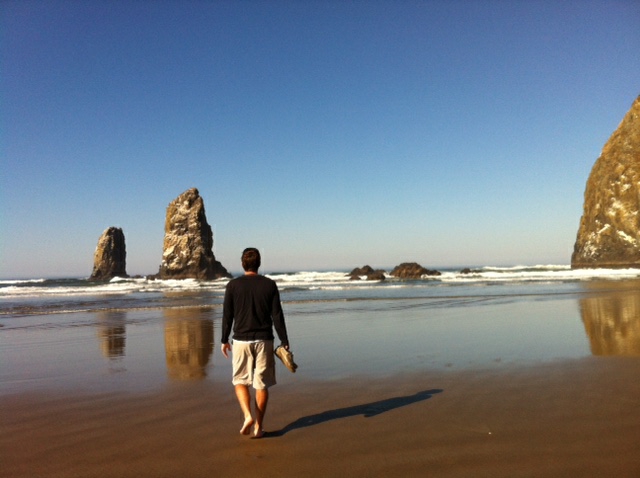
We dated for a while seeing each other a few times a week. I would make Tuesday night dinners. Something new and delicious each week to keep her intrigued, not to mention it was so nice to cook for someone other than myself.  It went on for a while like that, seeing each other a few times a week. Since things were going so well we decided to try our blossoming relationship on the road and headed to the Oregon coast. The coast was stunning and we enjoyed our time together. Campfires on the beach and counting stars were the perfect setting for a new love. It was not long after, when I could no longer say I was living the bachelor life.

IMG_1318
Fast-forward to this year we decided to buy a house together in the beautiful Oak Bay area. It is a charming 1931 house with heaps of charm. There is an established garden with grapes, strawberries and new blooms every week. We have been very lucky to have about half of the Klopp clan come to stay and we are hoping the rest will come this year. We are lucky to have Lisa’s family so near because we are able to have family dinners including this past Christmas dinner. It was really great this Christmas because I received the ultimate gift, I proposed to Lisa and she accepted.
IMG_1317
I hope you enjoyed this little story of how I met the love of my life. The Klopp family is lucky to have such a wonderful addition.
IMG_1315

Pictorial Review of 2015 III

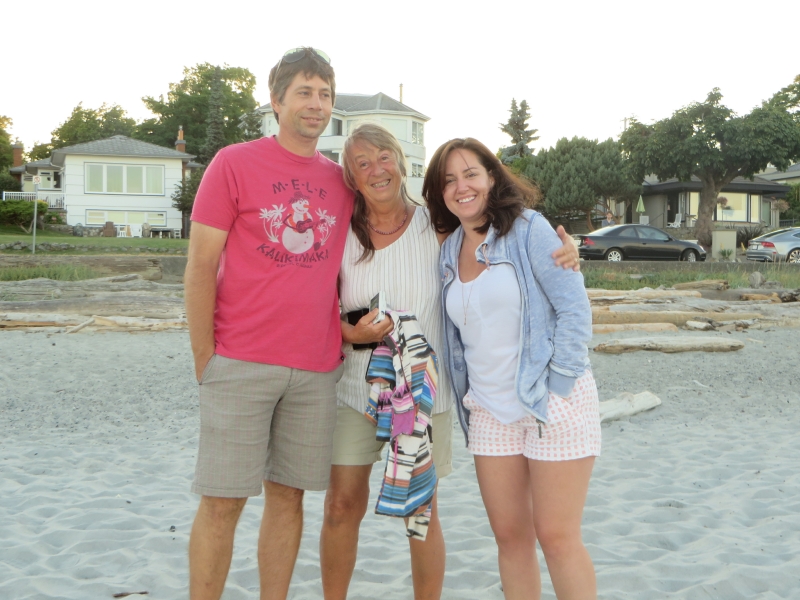
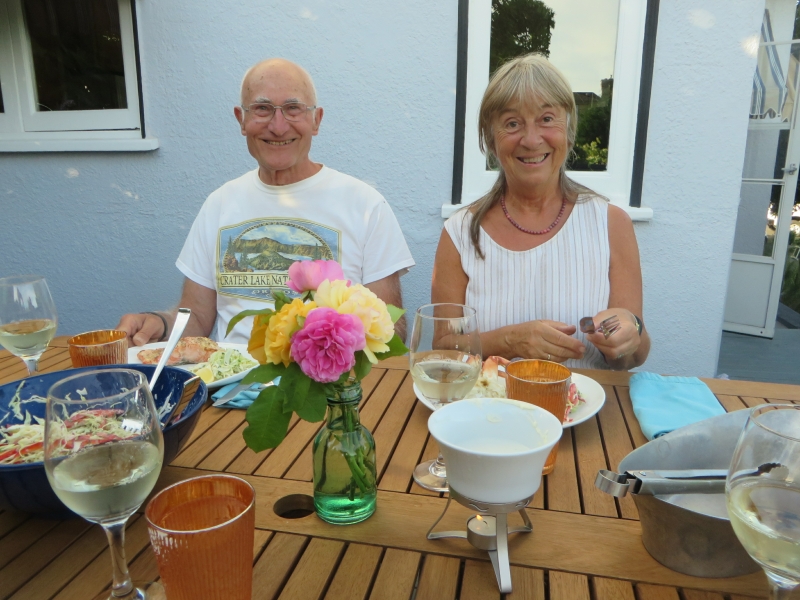
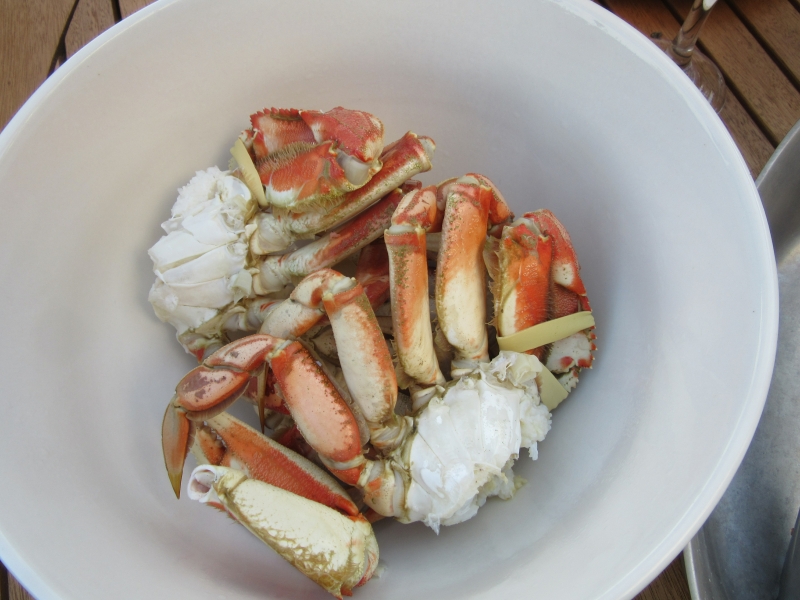
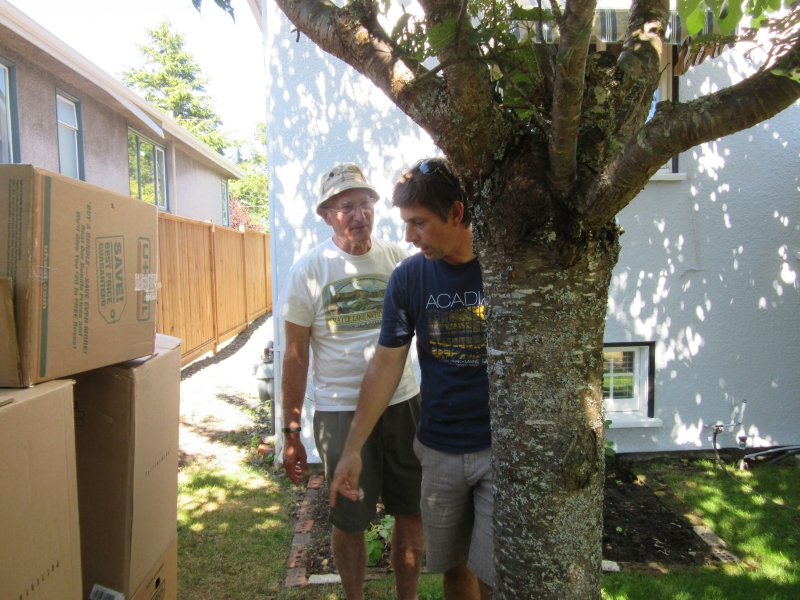
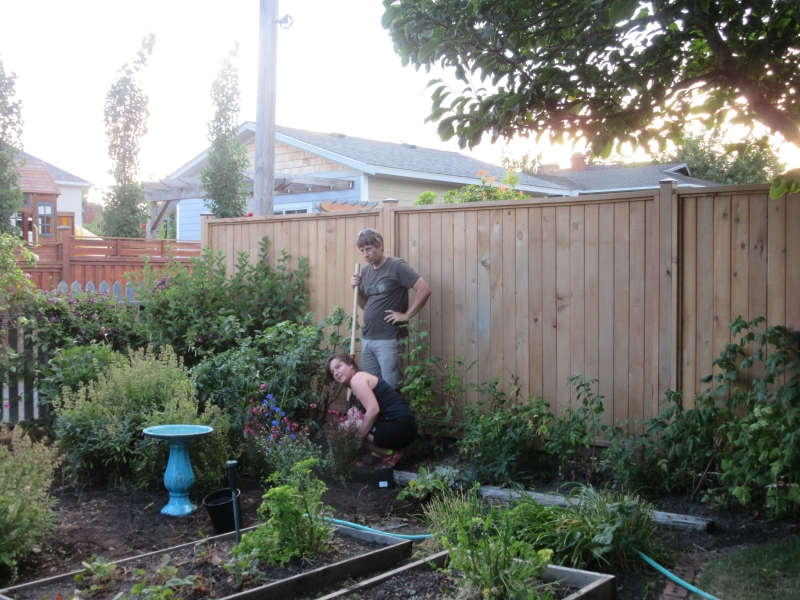
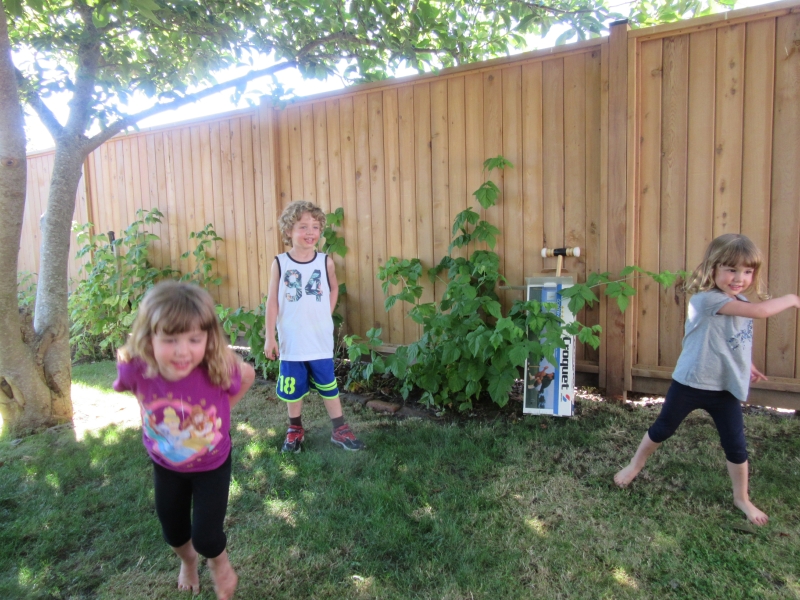
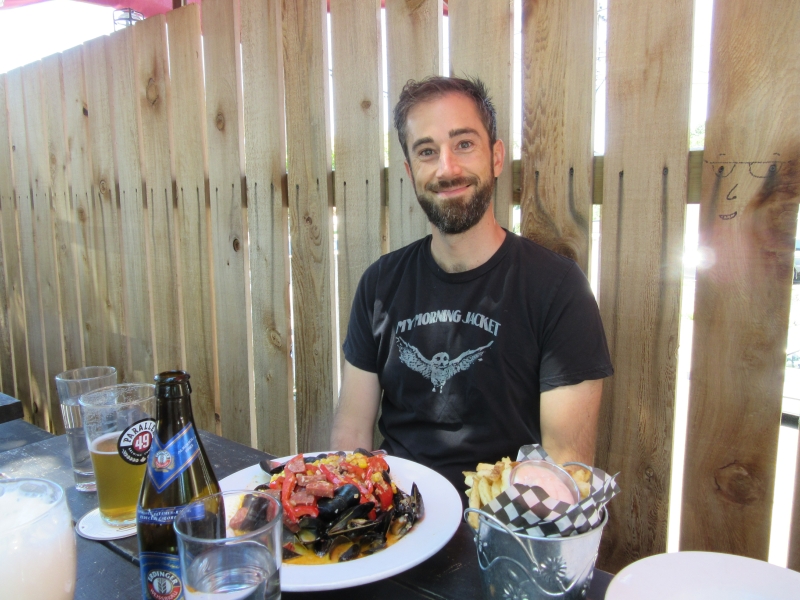
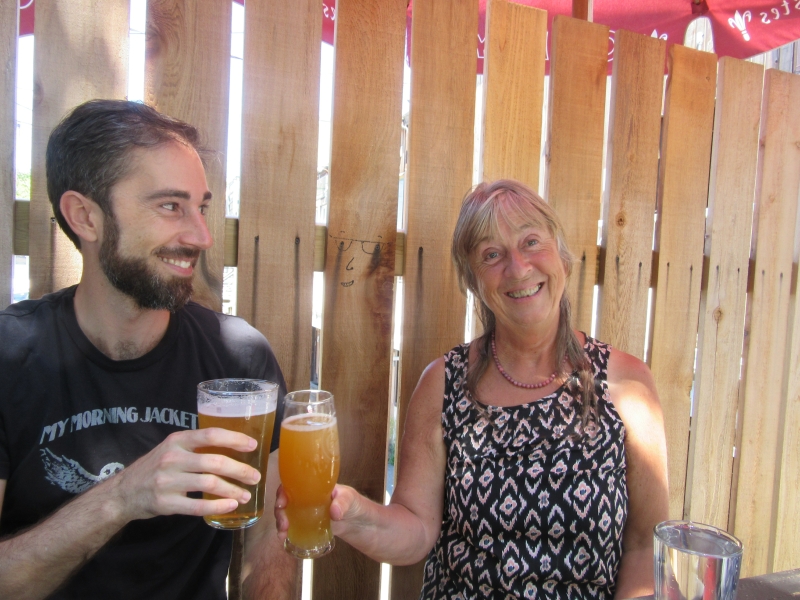
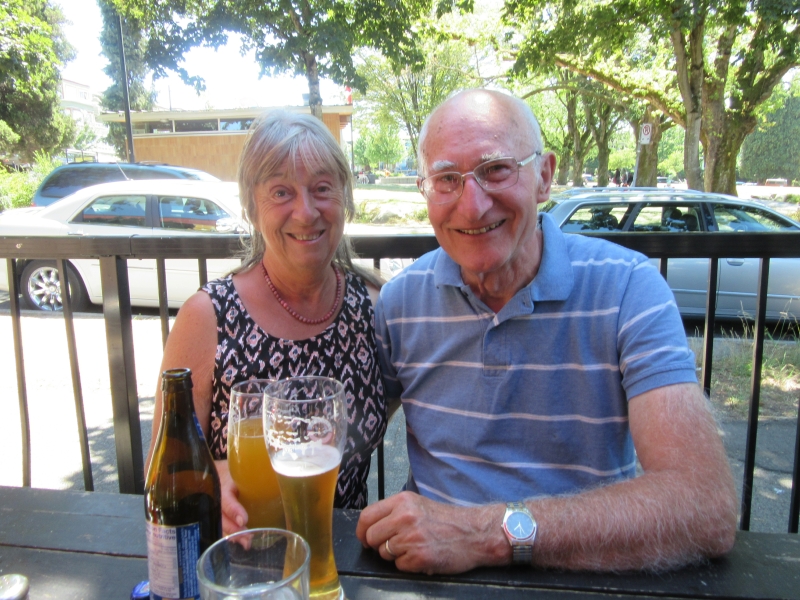
At Tony and Lisa’s New Home

Victoria BC (July 2015)

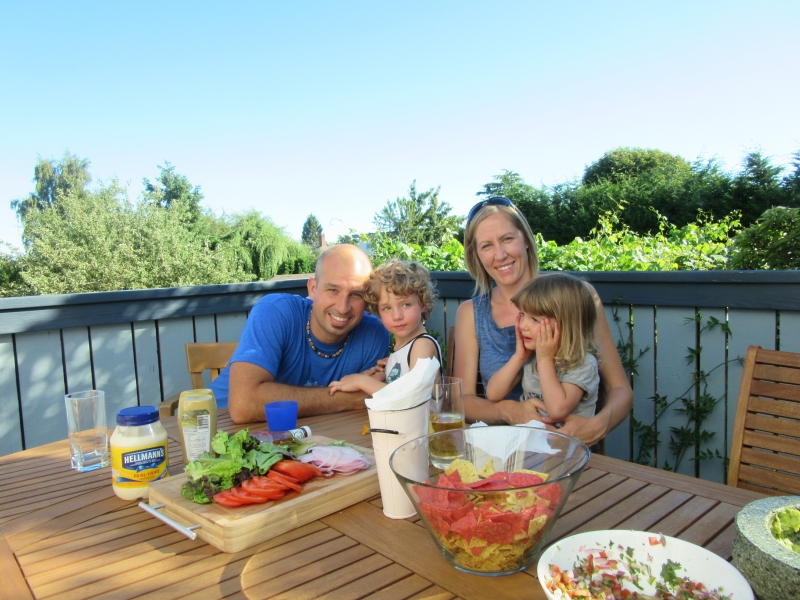
and a brief visit to Stefan’s Place

Vancouver BC (last 3 images)

(See Klopp Family Tree, Chart I – III & IV)

01 02

03 04 05 06 07 08 09 10 11 12

Next Week I will publish a short contribution by my grandparents’ great-great-granddaughter Johanna Pasdeloup of Paris, France.

Pictorial Review of 2015 – I

Our Community – Fauquier, BC, Canada


IMG_3558

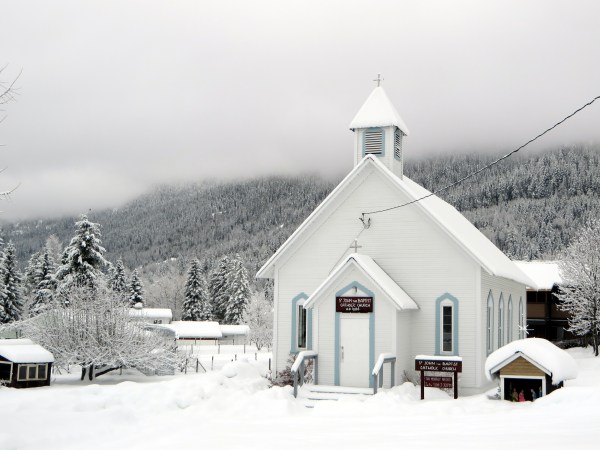
Our Little Village Church in Early January


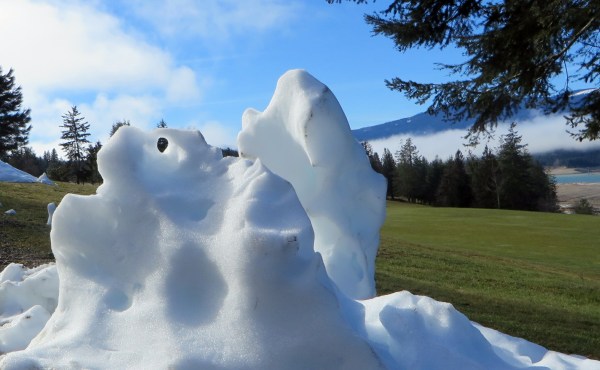
Nature's Snow Sculptures Melting in the Warm Air

Nature’s Snow Sculptures Melting in the Warm Air

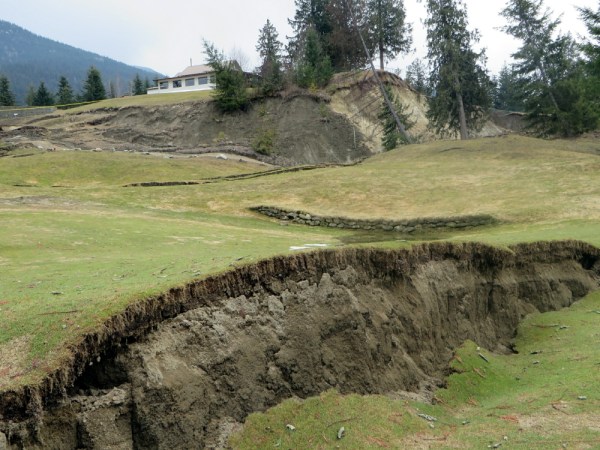
Part of the Local Golf Course Slipping after Heavy Rain

Part of the Local Golf Course Slipping after Heavy Rain

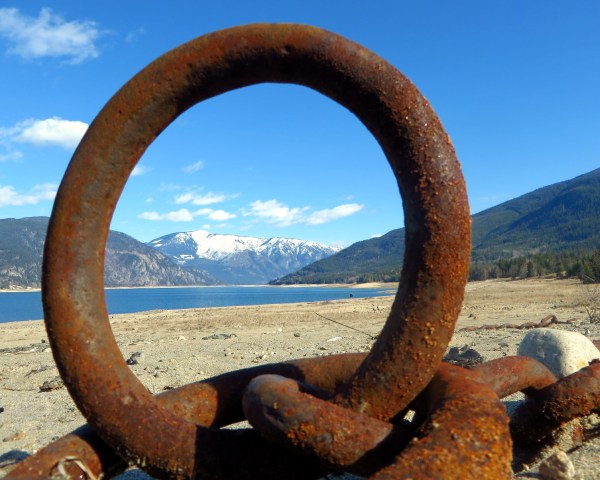
Unusual Lake View through an Iron Ring

Unusual Lake View through an Iron Ring

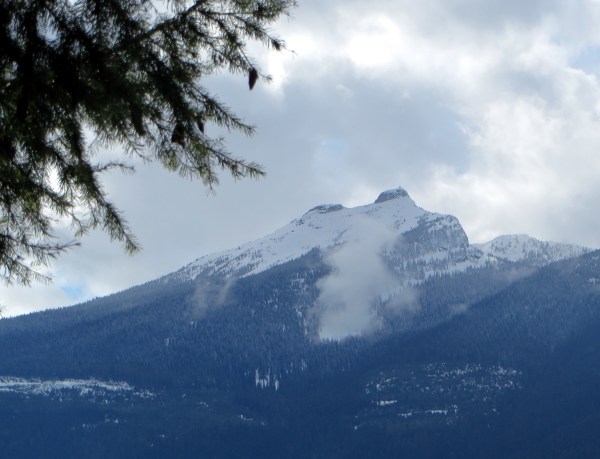
Saddle Mountain still Covered in Snow

Saddle Mountain still Covered in Snow

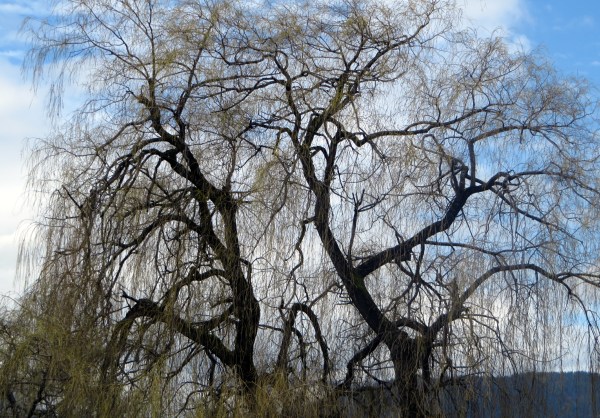
Willow Showing off a Hint of Green - Spring has Sprung

Willow Showing off a Hint of Green – Spring has Sprung

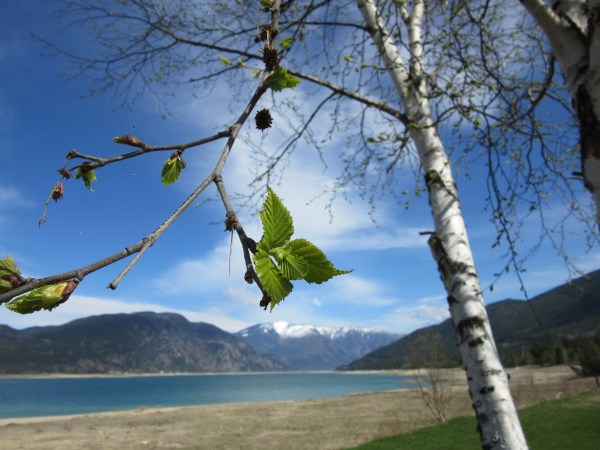
Leaves are Out at Fauquier Golf Course

Leaves are Out at Fauquier Golf Course

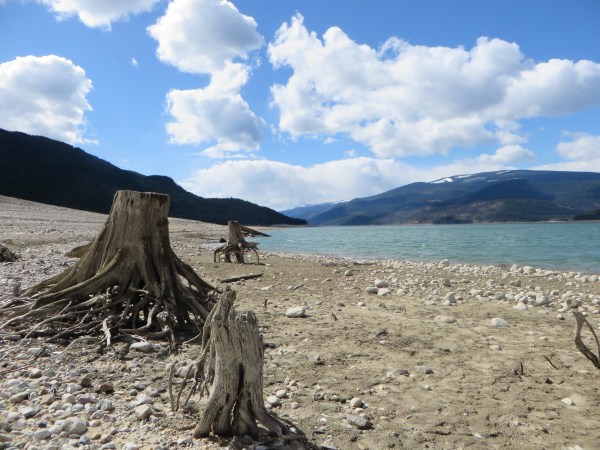
Lake at its Lowest Level before Spring Run-off

Lake at its Lowest Level before Spring Run-off

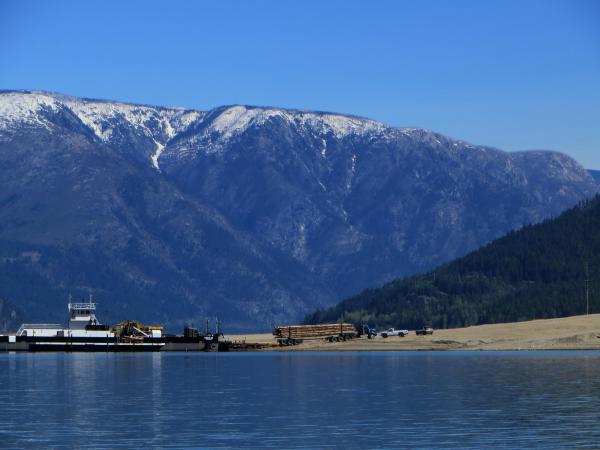
Looking North: Logging Truck Leaving Needles Ferry at Fauquier

Looking North: Logging Truck Leaving Needles Ferry at Fauquier

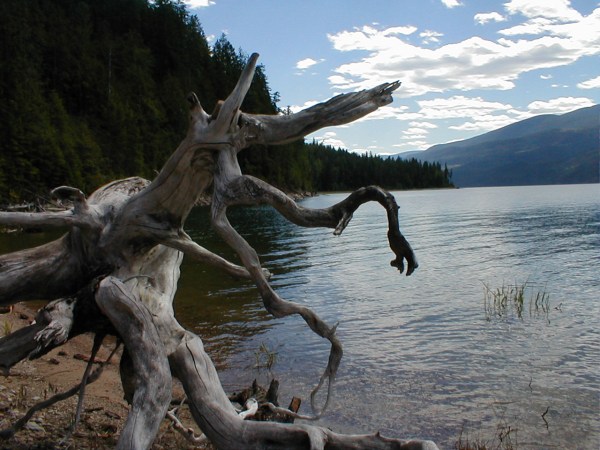
The Arrow Lake that attracted Like-Minded People on Applegrove Road

The Arrow Lake that attracted Like-Minded People on Applegrove Road

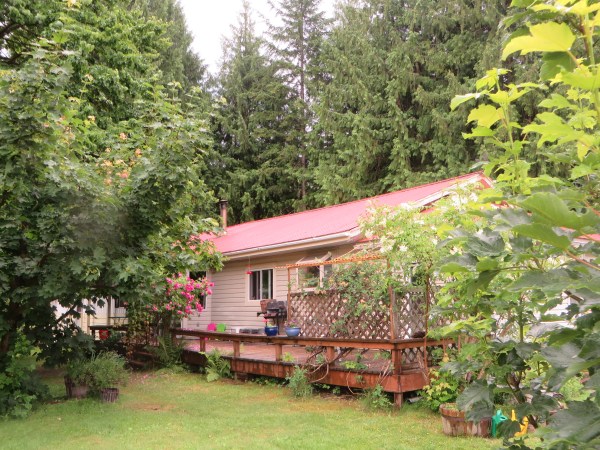
Our Quaint Little House in the Spring

Our Quaint Little House in the Spring

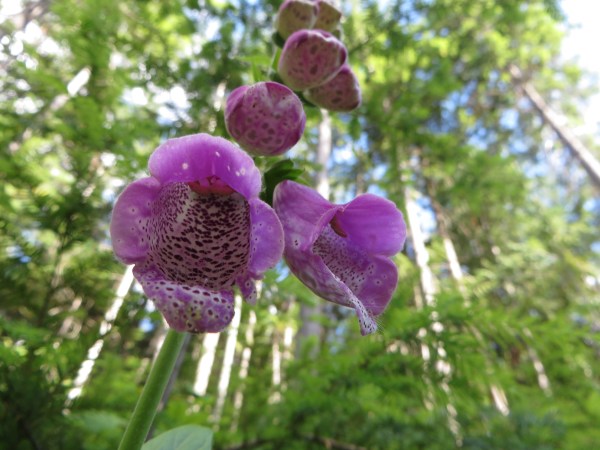
Fox Gloves Announcing Early Summer at Taite Creek

Fox Gloves Announcing Early Summer at Taite Creek

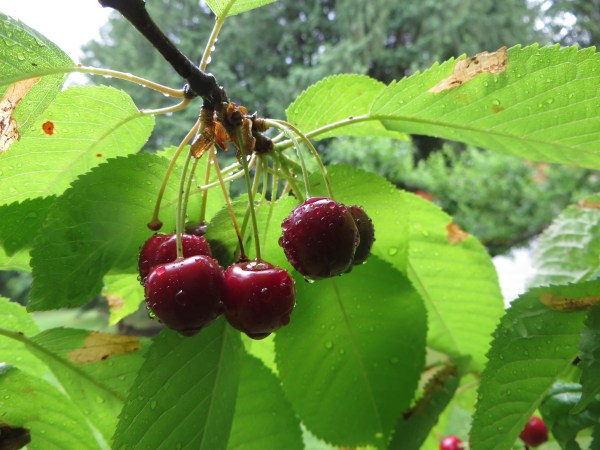
Cherries Ripening under Ideal Conditions Promising a Bumper Crop

Cherries Ripening under Ideal Conditions Promising a Bumper Crop

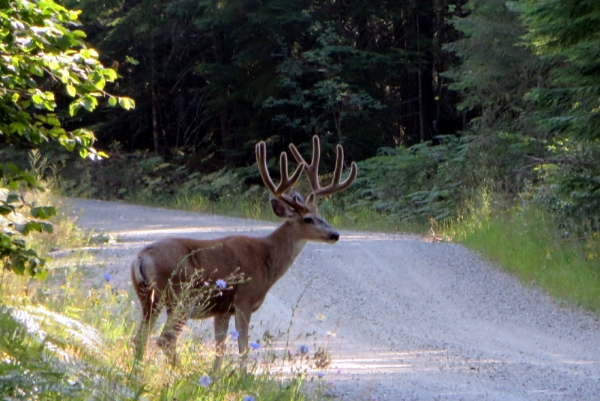
Buck with Antlers Illuminated by the Morning Sun in July

Buck with Antlers Illuminated by the Morning Sun in July

Peter on Top of the Mountain on the Power Line Road - Late July

Peter on Top of the Mountain on the Power Line Road – Late July

One could hike to this fantastic viewpoint in about 2 hours. View onto the Arrow Lake

One could hike to this fantastic viewpoint in about 2 hours. View of Arrow Lake

Triplets of Boletus Mushrooms

Triplets of Boletus Mushrooms – Choice Mushrooms Growing in our Area

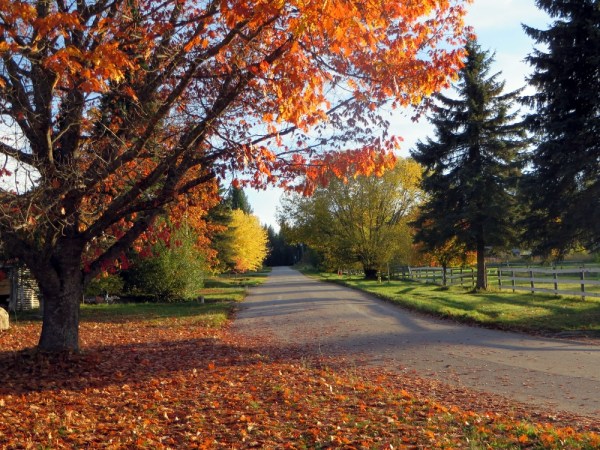
Spectacular Fall Colors on the Way to our House

Spectacular Fall Colors on the Way to our House

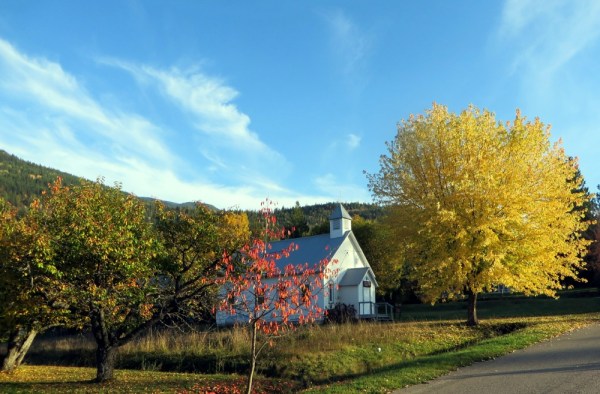
Our Little Village Church on a Beautiful Fall Day

Our Little Village Church on a Beautiful Fall Day

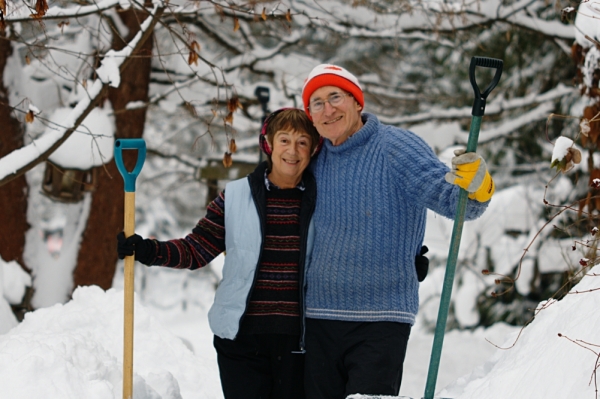
My Wife and I on a Wintry Day in December

My Wife and I on a Wintry Day in December

Next Tuesday I will give a year-end pictorial review of our family.