Gerhard Kegler, the German general, who dared to disobey Himmler – Part I

A Brief Overview of Gerhard Kegler’s Education and Military Background

1898 – 1986 (Chart II a – II)

On January 26, 1898, Gerhard Kegler was born in Grünewald, Pomerania (Province of Germany until 1945). Posts on his three older siblings Marie, Günther, and Gertrud can be found in the archives of this blog. They show how the children of Pastor Carl Kegler and his wife Elisabeth had a happy childhood in the small Pomeranian community of Grünewald. Also the third chapter of the P. and G. Klopp Story has more information on the Kegler family background, which therefore need not be repeated here. Like his brother Günther, Gerhard began his military career as a cadet in 1908. The outline of his comet-like rise in the ranks of the German army follows below.

  • 1904 -1908 Elementary School at Grünewald
  • 1908 – 1914 Military Academy at Plön
  • 1914 – 1917 Military Academy at Groß-Lichterfelde
  • March 1, 1917 Officer Cadet at the 149th Infantry Regiment in Schneidemühl
  • September 1917 On the Western Front at Champagne and Argonne
  • November 1, 1917 Lieutenant
  • 1918 Participated in the last major German offensive of World War I
  • 1919 – 1920 Border Patrol at the section between Schneidemühl and Bromberg
  • End of November 1920  Transfer to the 4th infantry regiment of the newly created army, which was limited by the Treaty of Versailles to 100,000 men
  • 1921 – 1922 Officer’s training in Munich
  • 1924 Teacher at the Officer’s Sports Training School in Berlin
  • 1925 Promoted to the rank of first lieutenant
  • 1926 – 1929 Trainer and Sports Teacher at the Infantry School in Dresden
  • 1929 – 1933 Leader of military courses for officers’ trainees in Berlin and Dresden
  • March 1, 1933 Advanced to the rank of captain
  • 1933 – 1934 In charge of the 11th Infantry Regiment 9 at Spandau
  • 1934 – 1938 In charge of the 3rd MG Battalion 8 at Züllichau
  • 1937 Promoted to the rank of major
  • 1938 Teacher at the Military Academy in Munich
  • 1939 At the beginning of World War II Battalion commander in the Infantry Regiment 282 of the 98th Division at the Western Front
  • 1940 Commander of Infantry Battalion in Training at Kreuznach; front-line duty in the attack on the French Maginot line in the Vosges Mountains
  • November 1, 1940 Commander of the Infantry Regiment  27 and promoted to the rank of lieutenant-colonel
  • 1941 – 1944 Invasion of the Soviet Union
  • February 1942 Promoted to the rank of colonel
  • October 1, 1944 Promoted to the rank of major-general
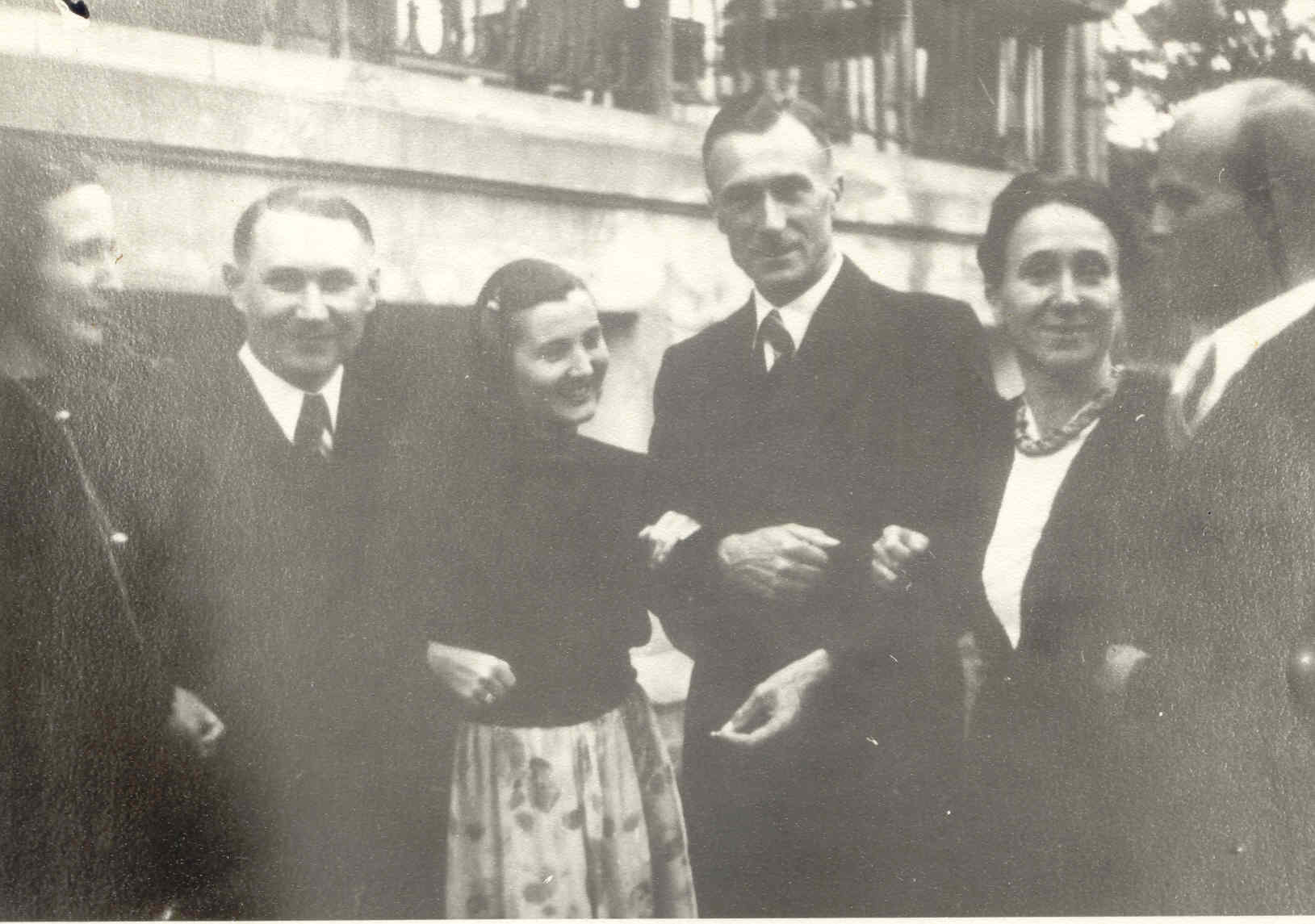
Gerhard Kegler on a Visit at Gutfelde 1944

Gerhard Kegler on a Visit at Gutfelde 1944 (the tall person in the middle)

In February 1945, Gerhard Kegler was condemned to death after being court-martialed for disobeying Himmler’s orders to defend the town of Landsberg on the River Warthe. The following posts will deal with the circumstances leading up to this terror verdict and will hopefully contribute to dispel the myth about all German officers blindly following the Nazi Regime without any moral backbone.

To be continued
A Salute to Marie-Louise Klopp, a Courageous and Fiercely Independent Woman

Midwife Marie-Louise Klopp (1880 – 1924)

Adapted from Eberhard Klopp’s Family Chronicle – Chart I – II

In response to her mother’s endless disturbing attacks, Marie-Louise told her with an oath, “I am going to move with my family so far away that you cannot visit and bother me any more.” She resolutely converted this intention into reality. The former seamstress took up nurses’ training at the Wolmirstedt hospital to become a qualified midwife. Even against this career choice her mother voiced her opposition, although Marie-Louise after 12 years of marriage has been out of her parental home for such a long time. According to her mother’s distorted and overheated fantasies, Marie-Louise was entering a field that somehow was connected to the world of the ‘wise women’ and ‘witches’ of the Middle Ages. Indeed, according to her opinion, this was an evil consequence of her daughter marrying into the Jewish Klopp clan. From this point on, the few remaining family connections broke off all together.

Gardelegen - Photo Credit: scrapbookpages.com

Gardelegen – Photo Credit: scrapbookpages.com

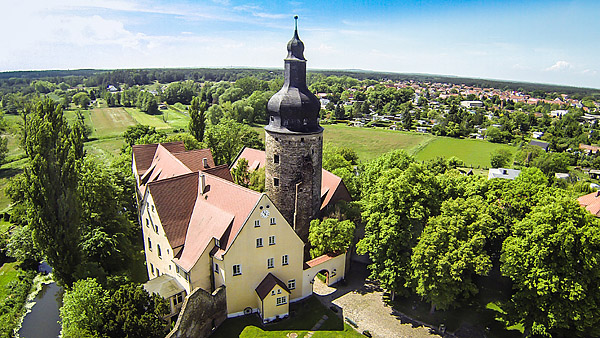
Marie-Louise started her work as midwife in 1912 in Algenstedt, north of Gardelegen, where the family had acquired a house at the outskirts of the village. Friedrich found employment as mason or rather as laborer here and in the neighboring towns and villages. Marie-Louise, by having chosen the profession of midwifery, displayed in this male-dominated world a high degree of personal independence. Her work proved to be highly useful in the following years, especially during World War I. While her husband Friedrich was fighting in the war, she became the major bread earner of the family of four children. Fortunately Friedrich returned unharmed from the war. In 1921/22 he got together with his brother-in-law August Diesing (1875-1939) to prepare for a construction business. The plan was to acquire an older, unused school building close to Gommern by putting in a bid for that property. The devaluation of money and the collapse of the German economy put a quick end to their dream.

Gommern - Photo Credit: wasserburg-zu-gommern.de

Gommern – Photo Credit: wasserburg-zu-gommern.de

On the other hand, from 1912 and 1924, his wife Marie-Louise built up an excellent reputation for being a competent and reliable midwife in the towns, villages and farms north of Gardelegen. Unheard of at a time, when men dominated the work place, she was the one in the Klopp family, who put bread and butter on the table. Her son Friedrich together with his siblings Liesbeth and Hermann attended the tiny one-room school at Algenstedt. The eldest sister Frieda took care of the younger siblings and general household duties during the frequent absences of their mother.

Jacob - Photo Credit: thefreequark.com

Jacob – Photo Credit: thefreequark.com

They all remembered the tame crow ‘Jacob’, which rain or shine sat on the bike’s mudguard of Mother Klopp and traveled along. In-between it would disappear in the long treed boulevards and waited there for her return. Hours later it would travel back with her to Algenstedt. One day a neighbor shot the poor crow, because it had pulled  the clothes pins off the wash line.

Night shifts, hardships, a weak physical constitution, last but not least, constantly recurring trouble with her mother brought about her premature death at the young age of 44. From the Zielitz family nobody showed up for the funeral of their ‘Jewish-affiliated’ daughter.

A Visit to Hartmut and Gisela Kegler’s New Home in Kochstedt

Our Visit with Uncle Hartmut and Aunt Gisela

by Dieter Barge

Chart II a – II and III

From April 28th to April 30th, 2015, we paid a visit to Edda’s Uncle Hartmut and his wife Gisela in Kochstedt near Dessau.

Hartmut, the first child of Bruno and Johanna Kegler, was born in 1931 in Stettin (Szczecin). He attended the elementary and high school in Hirschberg (town in Lower Silesia). In Thuringia he graduated from an agricultural institute and took his post-secondary education in Rostock and Halle.

From 1955 to 1991 he worked as a scientist at the Institute of Plant Pathology Aschersleben of the German Academy of Agricultural Sciences of Berlin. In 1959 he pursued his doctoral studies, which earned him in 1964 the postdoctoral qualifications as professor. Gisela was born in 1931 in Havelberg and had an active career in the teaching profession.

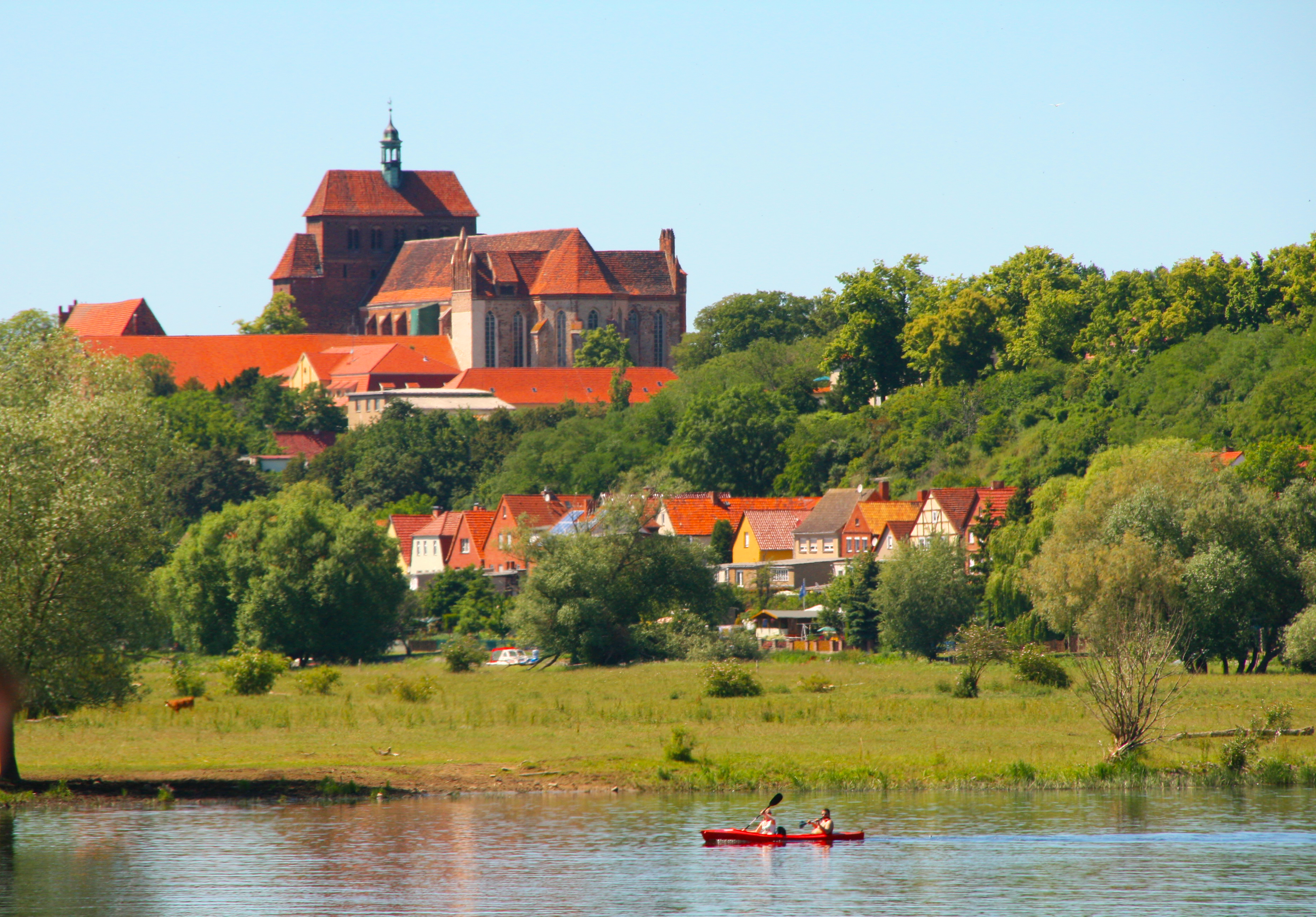
Havelberg Dom

Havelberg Dom

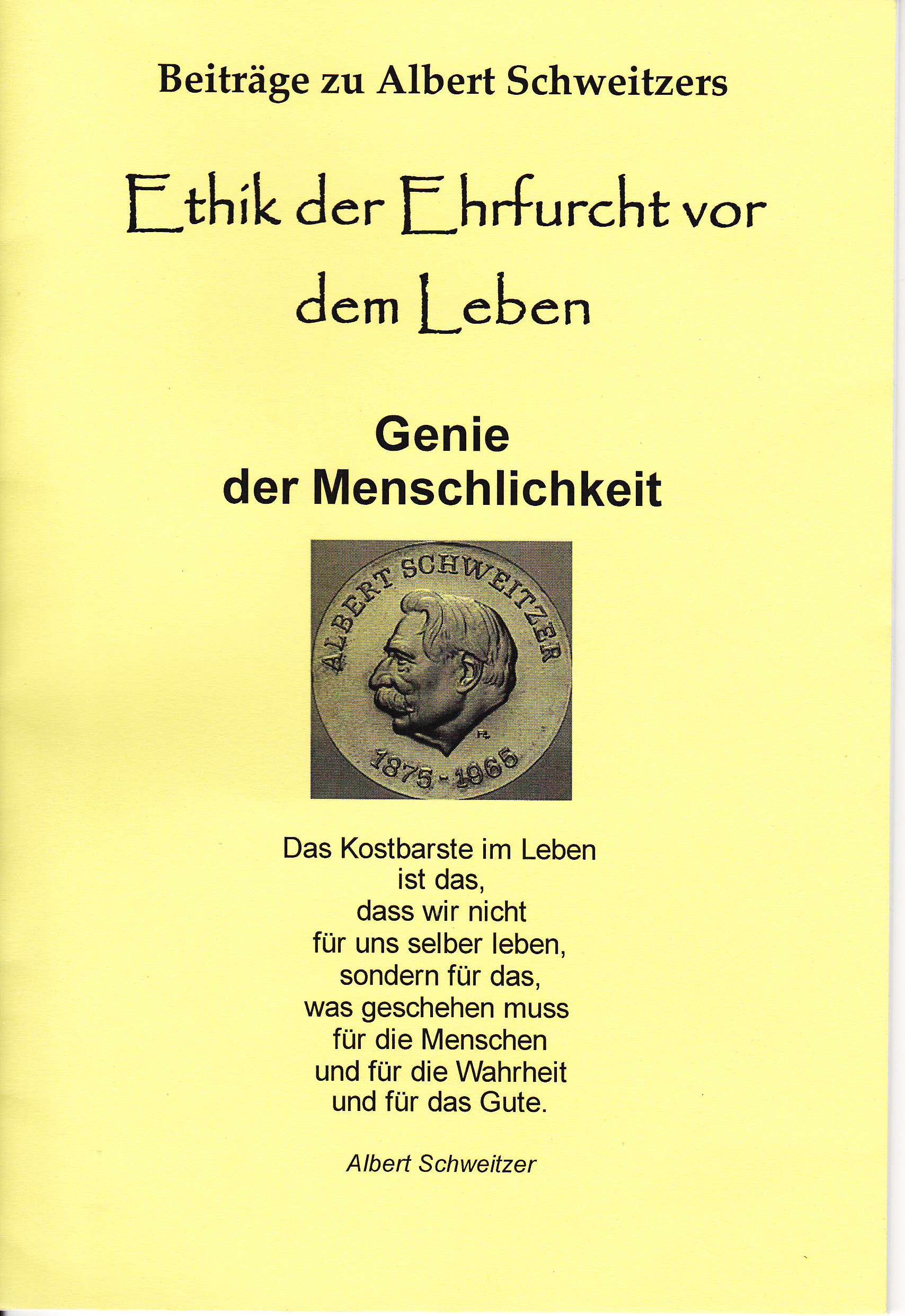
After the reunification of Germany, Hartmut was dismissed and became unemployed and a pensioner. This came as a result of the closure of the institure. Both Hartmut and Gisela are occupied with keeping the cultural heritage of Nobel Prize winner Albert Schweitzer alive, hold conferences and publish works related to this theme. The lived in Aschersleben am Bäckerstieg 11, where we had often visited them in past.

One of Numerous Publications about Albert Schweitzer's Legacy

One of Numerous Publications about the Albert Schweitzer’s Legacy

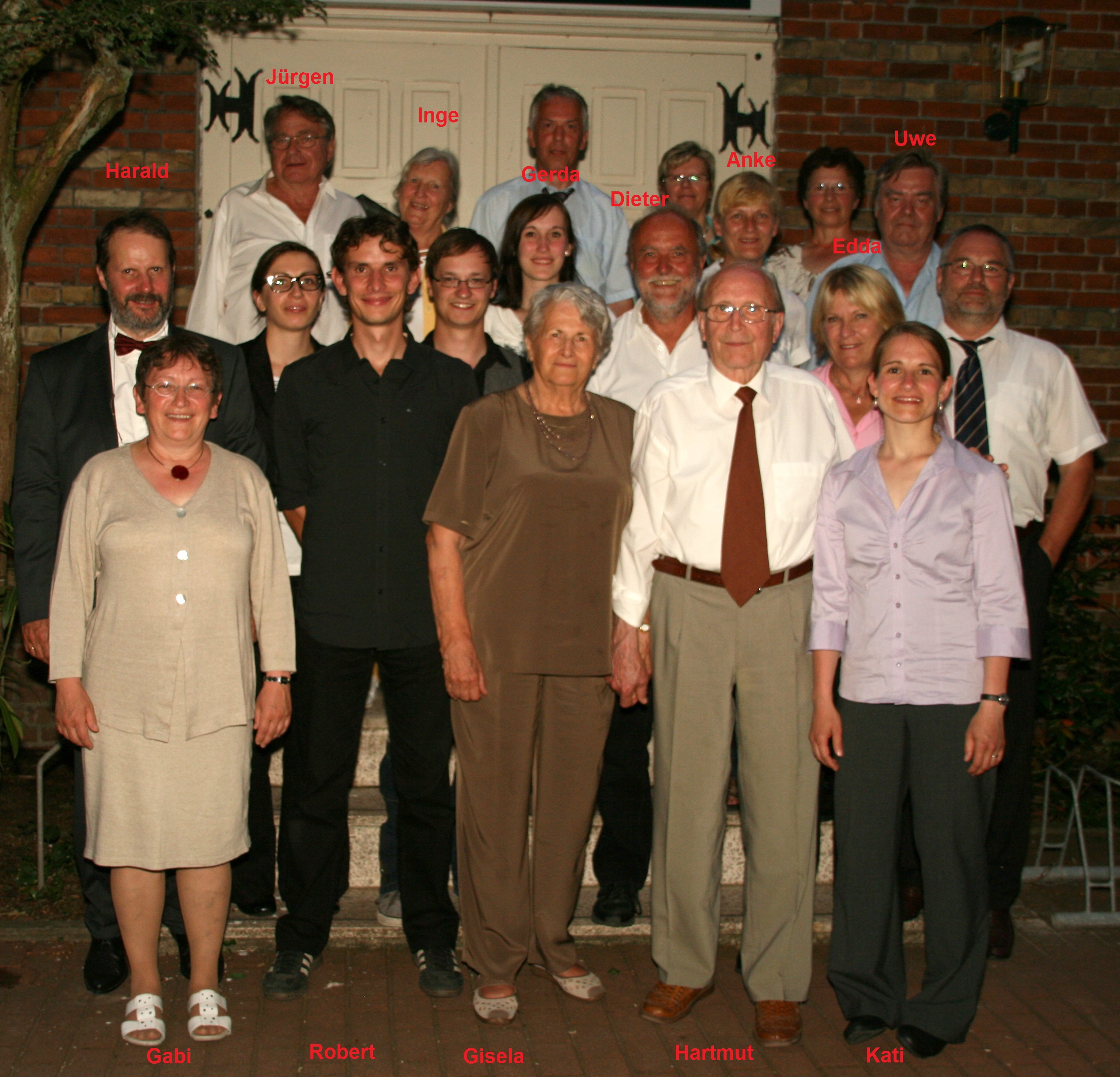
In 2011 we celebrated their combined 160th birthday in the wonderful town of Havelberg at the confluence of the Havel River (great for going paddling) with the Elbe River.

160th Combined Birthday of Hartmut and Gisela Kegler

160th Combined Birthday of Hartmut and Gisela Kegler

In 2014 their son Harald procured for them accommodation with in-house care facilities in the Dessau city district of Kochstedt.

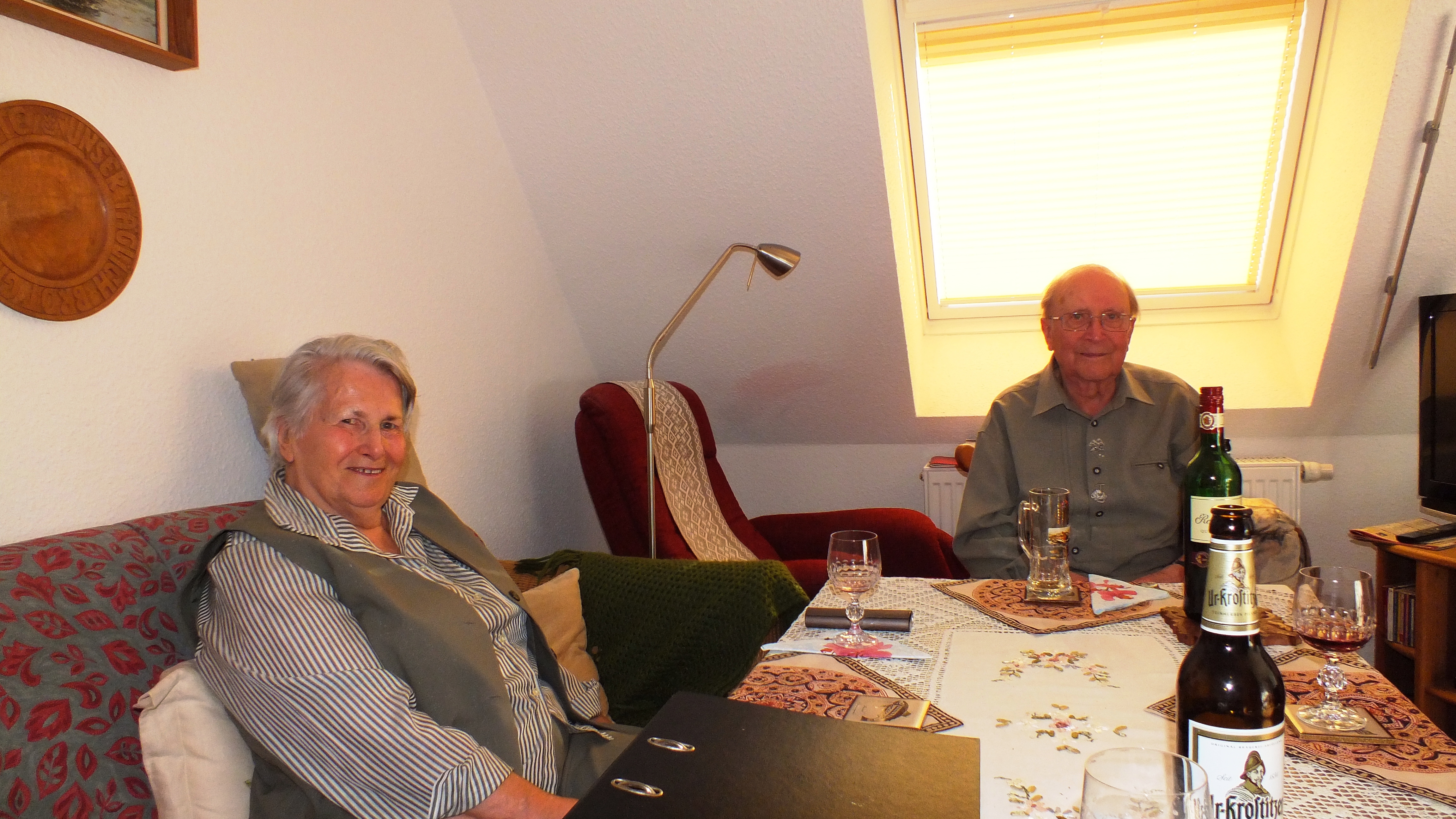
Hartmut and Gisela in their Cozy Livingroom

Hartmut and Gisela in their Cozy Livingroom

Here we visited them for the first time. Hartmut had reserved a room for us in the guesthouse ‘Heideperle’. We had lots of time for stimulating conversation.

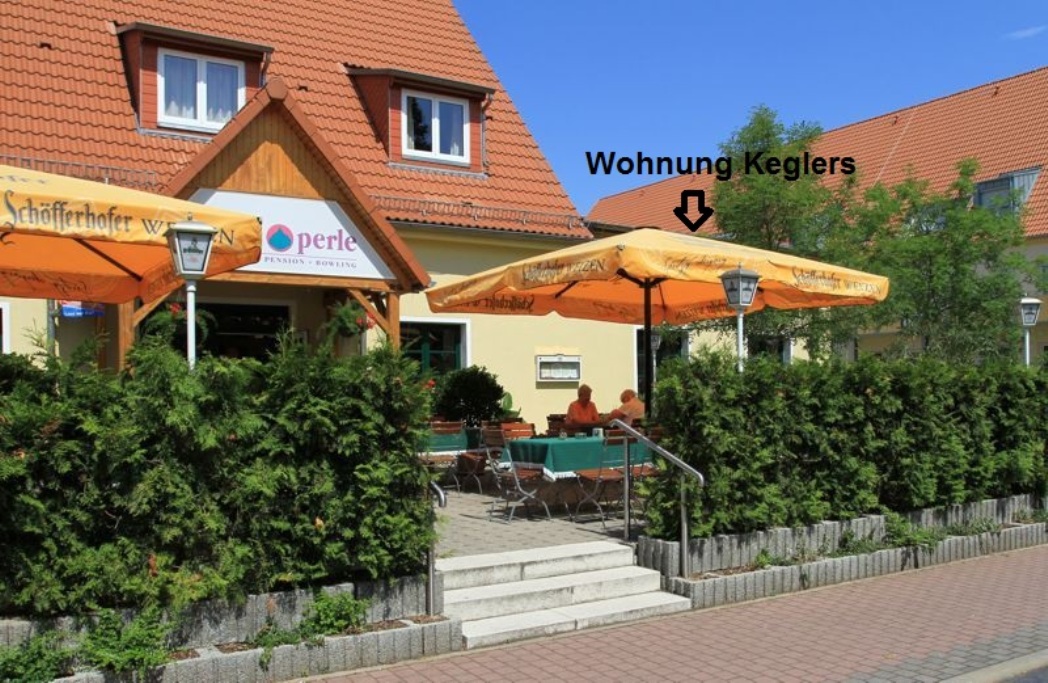
Guesthouse Heideperle at Kochstedt

Guesthouse Heideperle at Kochstedt

Gertrud Kegler 1896 – 1957

Life-long Service to the Sick and Wounded

Chart II a – II

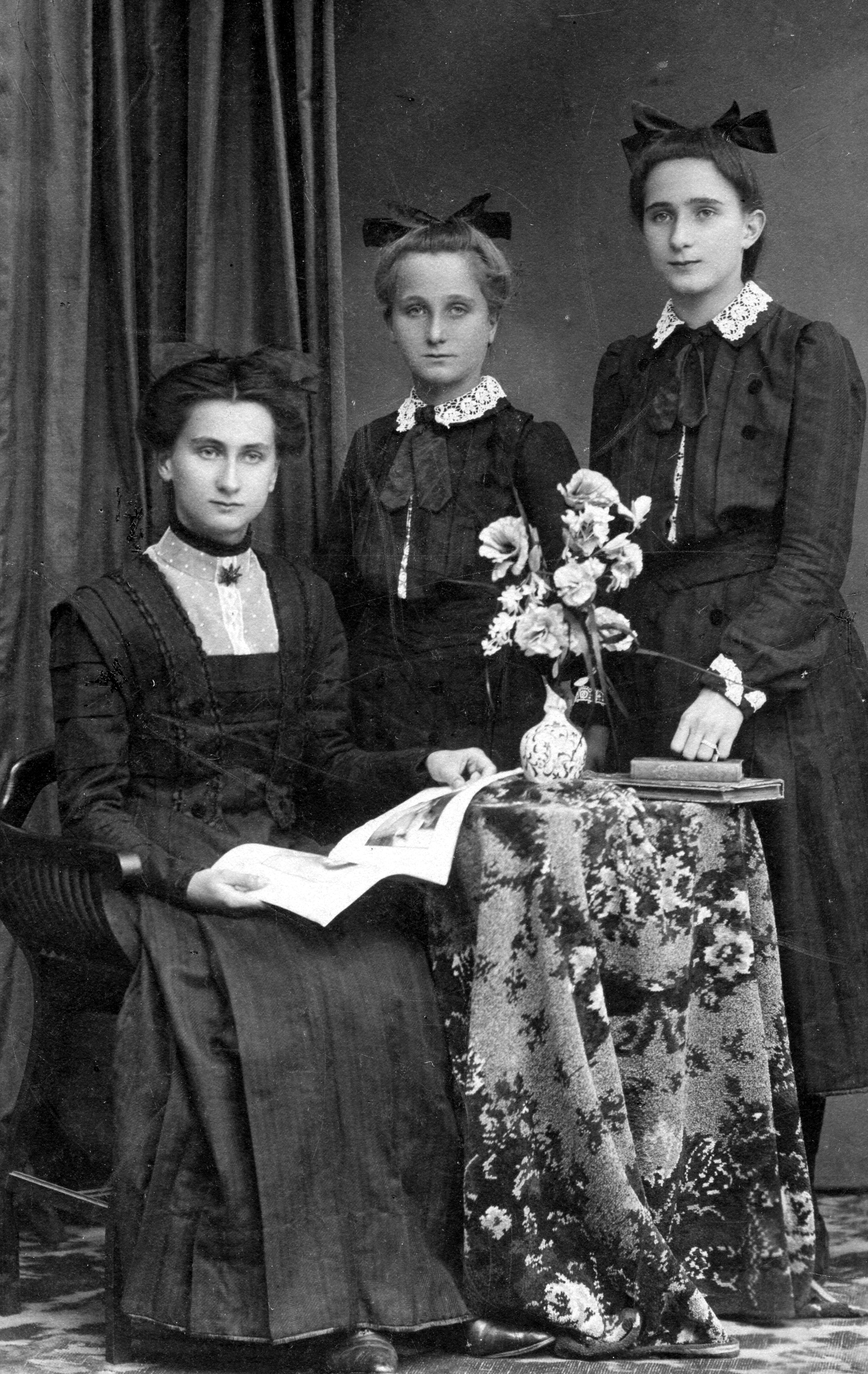
On March 27, 1896, Gertrud Kegler, second daughter of Pastor Carl Kegler, was born at home in the parsonage of Grünewald, Pomerania. She attended the local elementary school from 1902 to 1905. For the following three years she received private instructions in a neighboring village to prepare her for the all girls’ high school in Stettin (Szczecin). Like all the other Kegler children she was confirmed by her father in the village church of Grünewald. It must have been a great joy for Pastor Kegler to see his three lovely daughters sitting in the front pew, while he was delivering his Sunday sermon from the pulpit. He endearingly called Marie, Gertrud and Erika (my mother) his three lilies.

The Three 'Lilies'

The Three ‘Lilies’

After graduation from high school she took nurses’ training in Neustettin (Szczecinek) and obtained certification as a registered nurse in 1919. For almost 20 years she worked as a member of the sisterhood of the Johanniter Order. The Order’s regulations have worded this command as, “The Johanniter answers the call, where the suffering of his neighbor awaits his act of love, and where the irreligion of the afflicted demands that he witness his faith.”

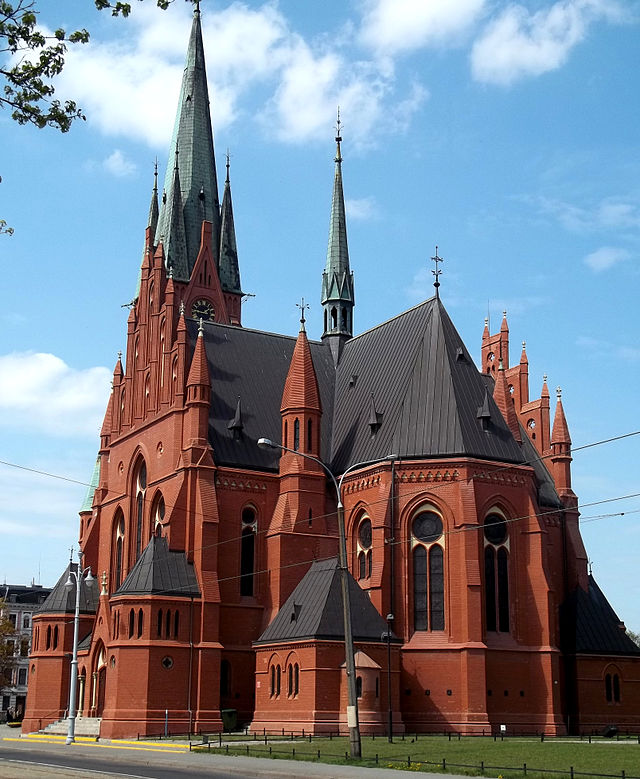
Saint Catherine of Alexandria church Photo Credit: wikipedia.org

Saint Catherine of Alexandria church in Thorn – Photo Credit: wikipedia.org

During the Second World War she worked from 1939 to 1945 in a military field hospital at Thorn (Torun) tending to the needs to the sick, disabled and injured. This came to a sudden end, when the advancing Red Army forced the medical administration to close down the hospital. Gertrud fled with her colleagues and managed to reach Stolpmünde (Ustka), where my grandmother Elisabeth and Aunt Marie were renting a small apartment. Shortly after,through a kind of ethnic cleansing all Germans in Pomerania and all the other eastern provinces were expelled from their homeland. So the three eventually arrived in Middle Germany, what later  came to be known as the German Democratic Republic.

A276

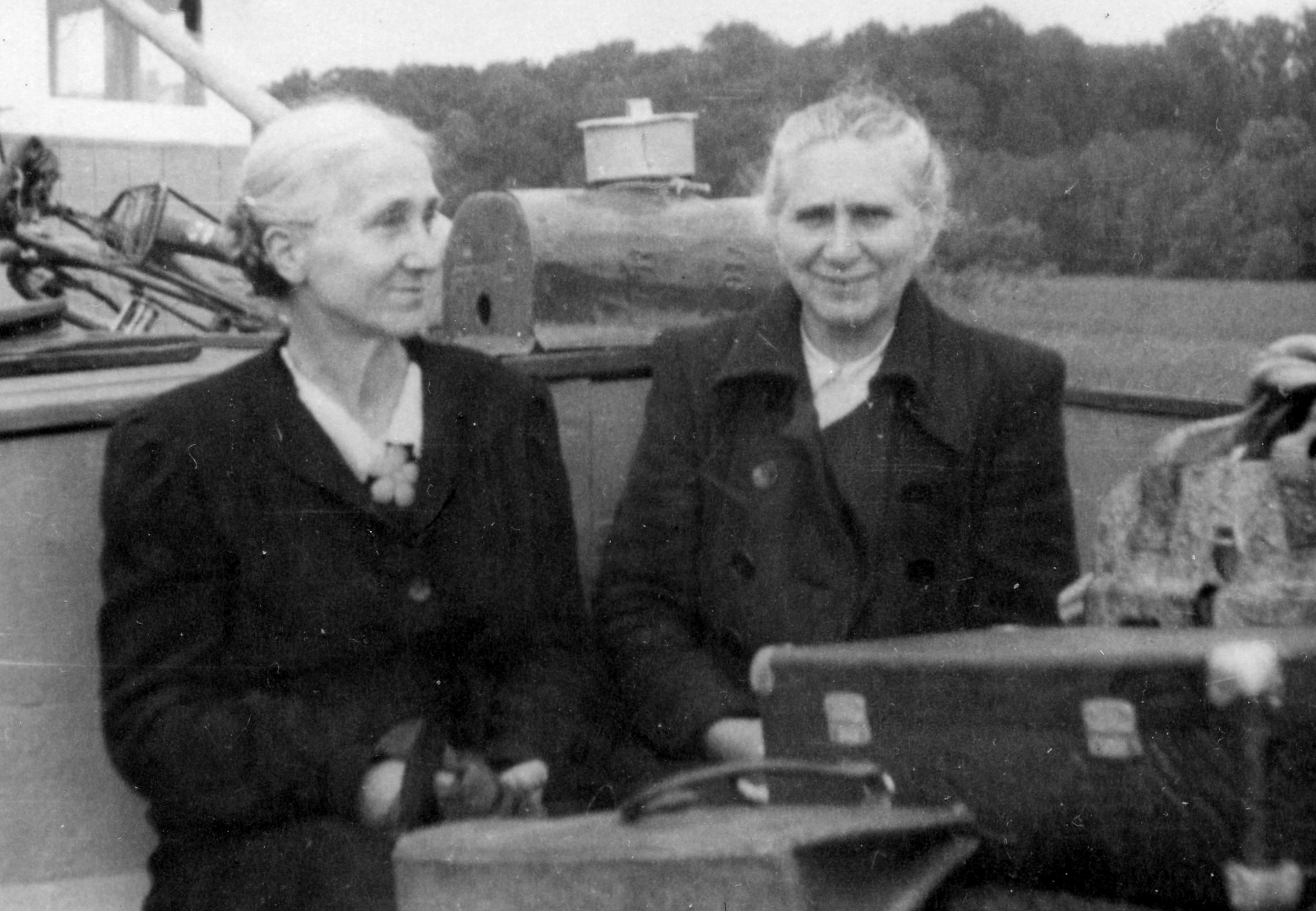
Mother and Aunt Gertrud on the Right

After the war from 1945 to 1947 Gertrud Kegler continued to work as a nurse in Belsen-Bergen, where nearby the infamous Nazi concentration camp was located. In 1948, the chief physician, who had worked with Gertrud in Thorn, West Prussia, remembered her as a highly qualified and competent nurse. He asked her to join his staff at the hospital in Malchin. There she was employed as head nurse. She helped under most difficult circumstances to build up the medical facilities of the hospital.

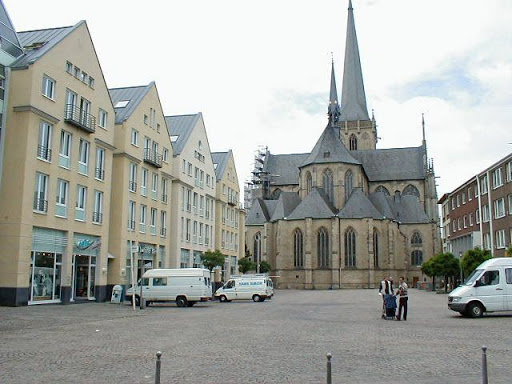
My wife Biene already described in her fascinating blog ‘This Miraculous Life’ at bieneklopp.com the lure of the ‘Golden West’. In addition to the attraction of greater freedom and prosperity in West Germany, there was a third factor that prompted my aunt to cross the Iron Curtain. Her sister Marie, who lived with my mother and me in Wesel from 1956 to 1962, had noticed an ad in the local newspaper for the position of a head nurse in a senior citizens’ home and alerted her Gertrud to the opportunity to start a new life in Wesel. When my aunt arrived in 1956, the three sisters were finally reunited.The Dom in 2001

However, what could have been a joyful period for the three, ended in tragedy. On her time off from work, Gertrud would often drop in at our small two-bedroom apartment on the street corner of ‘Auf dem Dudel 1’. Stress from the new and very challenging position as head nurse was written all over her face. It was not just the tremendous workload in a totally different environment that caused her a lot of grief. It was rather the envious and ill feelings her staff had toward the Ossie (slang for someone from East Germany) that gave her so much pain. Also they may not have liked the conscientious attitude of their supervising nurse, who put the care and well-being of the elderly front and center before comfort and ease at the work place. Gertrud did not mince words when it came to correct sloppiness and negligence in the treatment of the most vulnerable in her care. She may also have suffered under depression, which had struck on and off quite a few members of the Kegler family when they had been under great duress and mental strain. After one year of suffering she could not take it anymore. She committed suicide on February 21, 1957. I was not yet 15 years old at the time. Not having a concept of death as a final event for us here on earth, I was not overly shocked by her parting. I remember her as the kind aunt with enormous eye brows, who liked to listen to me, when I was reading aloud from my Latin reader.

The Rise and Fall of the F. Klopp Rope Making Enterprise

The Collapse of the Wolmirstedt Business Venture

Adapted and translated from Eberhard Klopp’s Family Chronicle

Chart I – II

Within five years the Klopp and Weihe families had added amongst and against each other so many wounds that only after a century one can look at them with a certain emotional detachment. They should not remain the last ones. Within the course of one generation, the two families had drifted apart and  the deep gulf of enmity between them was steadily widening. In the Weihe family the daughter did no longer communicate with her mother, in the Klopp family mother, brothers, sisters no longer with Emma’s eldest son. In the Klopp/Weihe family – no longer worth being called a family – all members completely acted out their mutual dislikes emerging out of the most varied and unlikely causes.

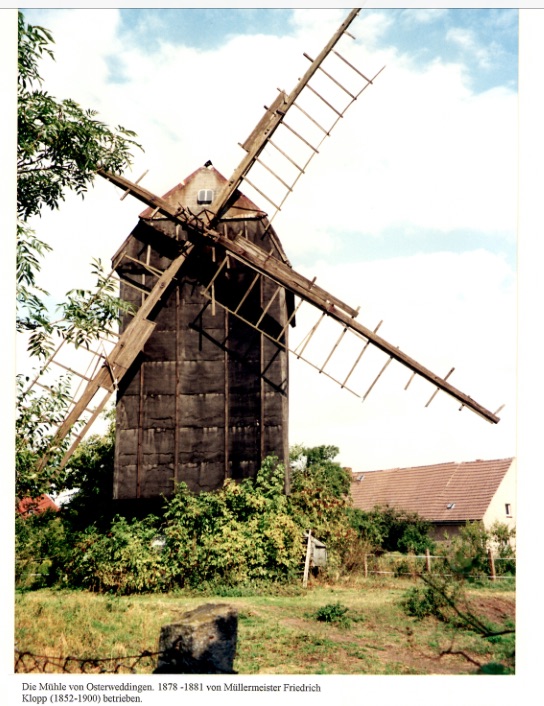
Windmill

The mill my grandfather Peter Friedrich Klopp owned and operated is now a German heritage site.

In the Klopp house in Wolmirstedt Friedrich devoted all his energies to the business. For the boat people on the River Ohre he produces ropes and cords, which the rope manufacturing plant ‘Seilerei von Friedrich Klopp’ kept ready for his costumers. Furthermore, he acquired a piece of land with a workshop south of the Ohre bridge on the right side on the road to Elbeu. There Friedrich and his workers twisted hemp fiber into ropes, The length of the ‘rope course’ was 15 m. In front of the bridge ramp the last house on the left at the Magdeburg Str. was the inn ‘At the Anchor’ (Zum Anker). It served as the meeting place for the Ohre boaters and was strategically located only 40 m from Friedrich’s factory and residence. Diagonally across stood ‘Fatje’s Hotel’, which served as a kind of exchange agency for goods and services, where the Wolmirstedt business elite would do their trading transactions. At the business table would often sit among other dignitaries Carl Loß (1865 – 1937), owner of a nobleman’s estate and of the largest sugar and starch factory of the region. Through him Friedrich primarily sold his various rope products. Ropes and nets were very useful and much-needed during harvest time. In order to secure the safe transport of sugar beets on the horse-drawn wagons they found much use in the Loß’s agricultural enterprise.

In these years 1907 and 1908 two more children were born to the Friedrich Klopp family. Under slowly deteriorating economic conditions Friedrich managed to provide food and shelter for his growing family until 1912, when he gave up his business. The steady decline of shipping  on the Ohre River reduced the profitability of his business. The taking down of the old wooden Hindenburg Bridge in 1908 and the long wait for the construction of the new stone bridge cut off Friedrich’s access to the market, further diminishing his already declining business. Add to these problems new attempts by his brother Ferdinand to seize house and business and we find the perfect recipe for financial ruin and disaster.

To be continued ….

Salute to Günther Kegler (1894 – 1986) Chart II a II

Günther Kegler was a true patriot who dearly loved his fatherland. Historians made many attempts to trace back the causes of the two World Wars. By doing so they put the blame on Prussia. This German state with its military might was the driving force behind Germany’s first unification after the French-German War in 1871. To single out Prussia as being the root cause for the great wars of the 20th century is a gross oversimplification of history. It totally ignores the injustice done by the Treaty of Versailles, which imposed through its harsh economic measures incredible hardships on the German population. Thus, it created among millions of unemployed workers a fertile breeding ground for the radical ideas promoted by the Nazis, which were swept to power in 1933. There is a lesson to be learned. Social injustice leads to widespread unrest and turmoil, which is often taken advantage of by demagogues, who will gain control with their promises to bring prosperity and set things right.

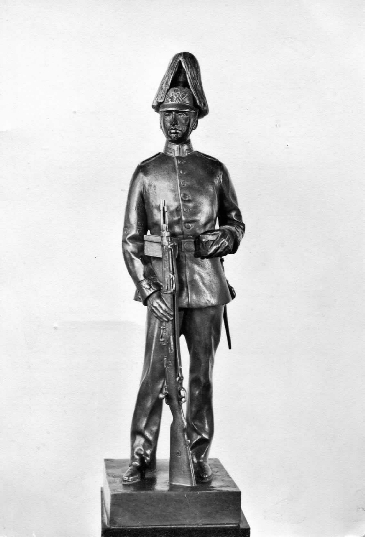
Prussian Cadet

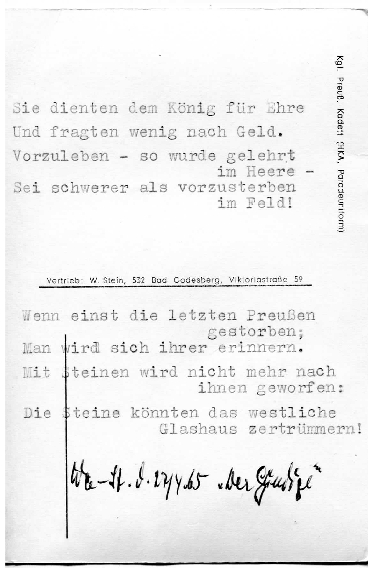
My uncle was deeply troubled by the prevailing historical claims in postwar Germany. They made the ideals of Prussia responsible for all the misery and horror of the two World Wars. When I immigrated to Canada in 1965, he gave me a postcard with a picture of a Prussian cadet and on the backside he typed a little poem, which I will attempt to translate into English.

Prussian Cadet Text

They served their king for honor

and did not much ask for money.

To live as model to follow – so it was taught in the army –

was more important than to die as hero in battle.

When one day the last Prussians have passed away;

One will remember them.

Stones will no longer be thrown at them:

The stones could shatter the Western glass house.

With these lines I conclude my report on my uncle. Looking at our present day world one might detect in them a somber warning, a prophecy perhaps we wish not to come true.