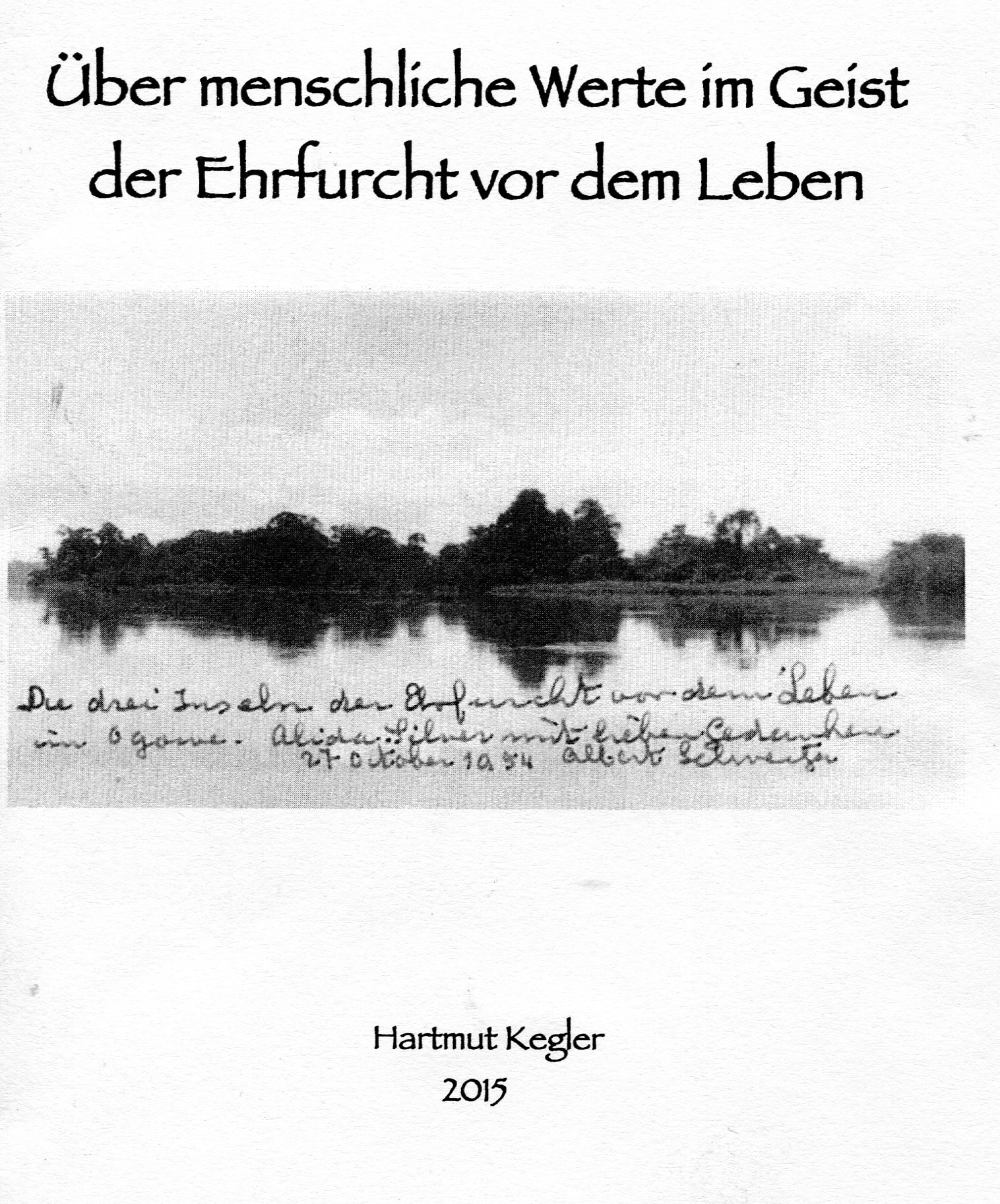
Über menschliche Werte im Geist der Ehrfurcht vor dem Leben – 2. Teil

A012Anteilnahme

Sprichwörter sagen: „Geteiltes Leid ist halbes Leid, aber geteilte Freude ist doppelte Freude.” Am Schmerz und an der Freude von Mitmenschen teilzuhaben, ist ein wichtiger Ausdruck von Menschlichkeit. Denn Anteilnahme hilft, seelische und körperliche Leiden zu ertragen und zu überstehen; aber auch erfahrenes Glück hilft es, tiefer zu empfinden. Doch Anteilnahme muss von erzen kommen und darf keine Floskel nach dem Muster: „Schönen Tag noch!” sein. Anteilnahme bedeutet, dass man Leid und Freude des Mitmenschen mitempfindet und ebenso betroffen ist wie er selbst. Anteilnahme zu zeigen erfordert aber auch ein Gespür, wie weit sie gehen darf. Oft fehlen die richtigen Worte, dann genügt ein Händedruck, eine Umarmung oder auch nur ein Blick. Hilfe kann oft auch durch Taten zum Ausdruck kommen und Trost spenden. Die Anteilnahme muss natürlich ehrlich gemeint sein, sonst sollte man auf Zuspruch lieber verzichten.

Nun gibt es auch Berufe, in denen man ständig mit hilfs­bedürftigen, unglücklichen, leidenden Menschen zu tun hat. So kann kein Arzt, keine Krankenschwester, kein Pfleger oder Geistlicher mit seinen Patienten, Anvertrauten in vollem Umfang mitleiden. Sie brauchen neben der Nähe auch die Distanz.

Anteilnahme ist ebenso eine gesellschaftliche wie politische Notwendigkeit. „Natürlich kann ein Politiker nicht jedes Schicksal eines Arbeitslosen zu seiner Sache machen”, schreibt Jutta Schreur (in Möllering und Behlau). „Aber er – oder sie – muss ein Gespür dafür behalten, dass hinter jeder Statistik solche Einzelschicksale stehen …” Ein Vorbild aus der Politik auch in dieser Hinsicht war für mich die Sozialministerin des Landes Brandenburg, Regine Hildebrandt, die ihre Anteilnahme stets mutig und deutlich zum Ausdruck gebracht hat. Sie hat dafür nicht immer nur Beifall geerntet. Für mich ist sie ein Beispiel dafür, dass man ethische Werte auch in der Politik verwirklichen kann – wenn man Charakter hat.

Wenn wir von Anteilnahme sprechen, muss bewusst bleiben, dass es um Menschen geht, nicht um eine „höheres Ideal oder Ziel”. Es geht um die Ehrfurcht vor dem Leben und dem Schicksal eines Menschen neben mir. „Wahrhaft ethisch ist der Mensch nur”, schreibt Albert Schweitzer, „wenn er der Nötigung gehorcht, allem Leben, dem er beistehen kann, zu helfen, und sich scheut, irgendetwas Lebendigem Schaden zuzufügen.”

Über menschliche Werte im Geist der Ehrfurcht vor dem Leben – 1. Teil

Diese Serie ist, wie der Gesamttitel schon andeutet, den menschlichen Werten im Geist der Ehrfurcht vor dem Leben gewidmet. Sie wurde liebevoll von meinem Vetter Dr. Hartmut Kegler zusammengestellt, die er 2015 als kleines Heftband in Deutschland veröffentlichte. Ich drücke hiermit meine Dankbarkeit aus, diese kostbaren Gedanken in meinem Blog aufnehmen zu dürfen. Möge der Leser Inspiration und viel Freude beim Lesen dieser Schrift haben. For my non-German readers I recommend using Google Translate.

Vorbemerkung

Es wird oft von menschlichen Werten gesprochen, denen wir verpflichtet seien. Unsere Gesellschaft versteht sich auch mitunter als eine „Wertegemeinschaft”. Doch um welche Werte es dabei geht, wird selten genau erklärt. Es bleibt einem auch oft verborgen, wenn man nach dem geht, was in der Öffentlichkeit be- und geachtet wird: Politiker, Schauspieler, Sportsleute, der gehobene Adel lassen nicht immer die Werte erkennen, die gemeint sein könnten. Doch wenn man auf den Alltag des schlichten Mitbürgers achtet, begegnet einem manches, was ehrenwert ist. In Krankenhäusern und Altersheimen, in Kinderdörfern und Familienwerken, in Frauenhäusern und Hospizen, in Obdachlosenheimen und „Tafeln”, aber ebenso in vielen Nichtregierungsorganisationen wie „Ärzte ohne Grenzen”, „Brot für die Welt” oder Caritas, in Natur-, Umwelt- und Tierschutzvereinigungen wirken Menschen, die ethische Ziele aufopferungsvoll verfolgen und verwirklichen helfen. Sie finden in Illustrierten und Fernsehsendungen zu selten öffentliche Würdigung. Deshalb habe ich einmal versucht, einiges über menschliche Werte zusammenzutragen und habe dabei auch nicht nur weise Persönlichkeiten zitiert, sondern vor allem die Gedanken und das Wirken eines „Genies der Menschlichkeit” anklingen lassen, der mit seiner Ethik der Ehrfurcht vor dem Leben menschliche Werte nicht nur benannt, sondern auch vorgelebt hat.

Möge die Schrift Interesse und Zuspruch finden.

Hartmut Kegler

Baroness Anna von Waldenfels (née Klopp) – Part XX (Final Episode)

Aunt Anna’s Neglected Gravesite

At the end of the 1950s, after giving up the house in Söcking, Bavaria, Anna von Waldenfels moved to Freiburg/Breisgau close to her sister Meta Mülbert, who lived at Maria-Theresiastraße 4. Her husband Vincenz had passed away in 1958. Anna at first rented an apartment at number 7 across the street.

In the summer of 1959, while on a bike tour through Germany with my friend Rainer Schüler, I visited both aunts, who add moved together at No. 4. I remember Aunt Anna quite well, a feisty old lady filled with an unbroken spirit and a fervour, which revealed strong nationalistic overtones. She spoke to us young men of sacrifices to be rendered in blood and honour to put Germany back on her feet again. Obviously, her heart and mind were still dreaming of an era that no longer existed. These bizarre ideas of a past imperialistic Nazi-Germany, having brought nothing but extreme suffering and total destruction to many nations under its control, were completely foreign to us growing up in democratic West Germany.

At about the same year she met for the last time her granddaughter, the then 23-year old Carola von Waldenfels (born in 1932 at Lagowitz). She had most likely made a farewell visit and proceeded from there to travel as a photographer to California, USA. The two widows maintained contact with Ernst Klopp (my father), who had remarried and lived with his new wife Erna Klopp (née Krämer) in Michelbach near Schotten.

Once a resolute, energetic lady, always leaving the impression of a governess, now suffered from bladder incontinence, which considerably restricted her mobility and physical activities. At 82, she died of cancer on 3 November 1969 in Freiburg/Breisgau. The two families Georg von Waldenfels from Haren/Ems and Meta Mülbert provided on 7 November 1967 a final resting place for Anna on her beloved husband’s side in the Starnberg forest cemetery. Her son had arranged the transfer of his mother’s remains to Söcking, but he did not deem it necessary to take care of the completion by adding a cross for his mother. Fate’s irony is that her gravesite remained nameless just as the one of her eldest brother Friedrich Klopp (1875 – 1946)  in Gardelegen in the former German Democratic Republic. “Sic transit gloria mundi.”

Baroness Anna von Waldenfels (née Klopp) – Part XVIII

Escape from the Horrors of War

On the morning of 29 January 1945 Ludwig von Waldenfels was totally against leaving Panwitz. Being a former WW1 officer of the Bavarian army, he planned to hide in the forests of Panwitz and armed with a pistol intended to sacrifice his life if necessary. His wife Anna knew how to curtail such dramatic, but senseless undertaking and with gentle force manoeuvred him into the waiting car.

The population of East Brandenburg (to which Panwitz belonged) experienced all the brutalities of the Russian hordes. The people percentage-wise paid the highest blood tribute rendered in 1945 at their expulsion from the German eastern provinces. In Rogsen alone, a village of 761 inhabitants 10 km south of Panwitz, a dozen men were shot and on the night of 29 January 1945 forty brutally raped women and girls committed suicide. Already in the afternoon of the same day, Soviet artillery shot from Heidemühl and Kupfermühle at a distance of 5km into Meseritz.

For Ludwig and Anna, in view of the military situation, there was only one escape route. It led over icy and snowed-in country lanes via Lagowitz and Brätz to the main connecting road to Schwiebus. With little luggage and the few things on their body, the couple reached after one week of travel Gauting near Munich. There they found first reception at their brother/brother-in-law Ernst von Waldenfels (1877 – 1955). He was a bank chief inspector and lived at 10 Hindenburg Street. He was in charge of money matters before the chaotic times set in. Here they experienced the arrival of the Americans and thus survived the war’s end.

Within just a few hours a life’s work and dream had sunk into oblivion. Only the nostalgic feelings of 18 years of Panwitz and Lagowitz remained, which nobody of the former residence would ever see again. Alive remains the memory of the shadowy gravesite of grandmother Emma Klopp (née Bauer) in the park of the Panwitz estate. Her final resting place was supposed to have become the family gravesite of the Klopp and von Waldenfels clans. The fury of war and the greatest mass expulsion in history had swept all this away.

Baroness Anna von Waldenfels (née Klopp) – Part XVI

‘Castle’ Lagowitz in Ruins

In a chaotic flight with lightning speed from Posen (Poznan), passing through his beloved Lagowitz, Georg von Waldenfels reached his wife’s home turf, the Münster province in the northwest of Germany and became a POW of the British Army. Ilse von Waldenfels, when approached for an interview by my cousin Eberhard Klopp, the author of the Klopp Family Chronicles, was very reluctant to share any information on her husband’s past. In her eyes, more than 40 years later in 1996, Georg was ‘an insignificant subaltern officer, who did not play any special role in the SS. After the war, he paid his tribute. We never talked about those bad years anymore.” She like many other Germans of her generation had buried and suppressed deep within her guilt-ridden psyche a considerable number of events of the Nazi era.

In the night from 28 to 29 January 1945, a certain SS general was passing through Panwitz and demanded the immediate evacuation. His urgent warning revealed that the Red Army would be at their doorsteps within just a few hours. Perhaps it was only the SS-Obersturmbannführer by the name of Georg von Waldenfels, who in his flight from Posen in the direction of Berlin had quickly warned his parents. As early as 1980 the author of this book in translation had received the following information in Trier from a reliable source: “Our all-rounded super-provisioner in France, a man from the nobility, Sepp Dietrich’s staff officer, succeeded before the arrival of the Russians in burning down Castle Lagowitz.”

Should von Waldenfels have really destroyed his very own NS-Headquarters and Castle Lagowitz with all its incriminating documents and evidence turning them into a heap of rubble and ashes? Eyewitnesses can no longer be found. But the action in a time of perilous urgency fits perfectly within the overall frame of his mentality. Treacherous documents and correspondence of all sorts in the hands of the Russian or Polish authorities would have heralded a dangerous new beginning for Georg. If all these collected facts agree, the parents Anna and Ludwig von Waldenfels on the morning of their own flight from Panwitz may have seen Castle Lagowitz for the last time as a smoking and smouldering pile of ruins. Georg von Waldenfels has taken this particular piece of history with him into his grave.

Baroness Anna von Waldenfels (née Klopp) – Part XV

More Promotions for Georg von Waldenfels

As noted earlier, Georg von Waldenfels had experienced a number of promotions in his officer’s career, quite unheard of and irregular in the German army, where advancements were based on military training and especially on merit on the battle field. The SS was, however, no regular army. On 1 July 1942, he was promoted to SS-Hauptsturmführer, somewhat equivalent to the upper rank of lieutenant  and in April 1943 to SS-Hauptsturmführer (captain).  Although von Waldenfels occupied the same ranks in another branch of the SS, he acquired them all over again in a more prestigious  division. Now under the protective umbrella of influential Sepp Dietrich he now became so-to-speak a ‘regular’ in the hierarchy of the Common SS. It is not surprising that after the war the Allies were facing an incomprehensible phenomenon within the hierarchal structure of the SS.They were unable to cope with all the confusing differences within the ranking system and ignoring them erroneously treated all cases the same. In May 1943, barely four weeks later, Georg was promoted to SS-Sturmbannführer (major).

In the spring 1944 there were definite signs that the idyllic life in the eastern province of Posen (Poznan) would come to an end.The commander Sepp Dietrich engaged on the western front arranged Georg’s transfer from the so-called ‘Common SS’ (Allgemeine SS) to the prestigious “Leibstandarte SS”. As support officer at the various battle locations after D-Day in France and Belgium he was never employed in a military function, but was responsible for providing food, drink and entertainment for his boss and his entourage. Georg must have experienced – obviously mostly far removed from the actual fighting – at least three of the four major battles, which took place after 6 June 1944.

The casino chef Georg von Waldenfels survived the dramatic weeks shortly before the Allied troops marched their troops into Paris away from the front lines in any of the numerous secure headquarters of the SS, which were mostly requisitioned hotels, residences and castles in and around Paris. Before the battle between Falaise and Caen, which ended in defeat and signalled the retreat of the SS units in August 1944, Georg, unsuitable for military duties, managed to be ordered back to Germany. By 1945 he acquired, no doubt with the help of some influential political ‘friends’, the rank of SS-Obersturmbannführer.