Walter Panknin (1898 – 1977) and His Family Ch 5 Part 4

Harrassing Interogations
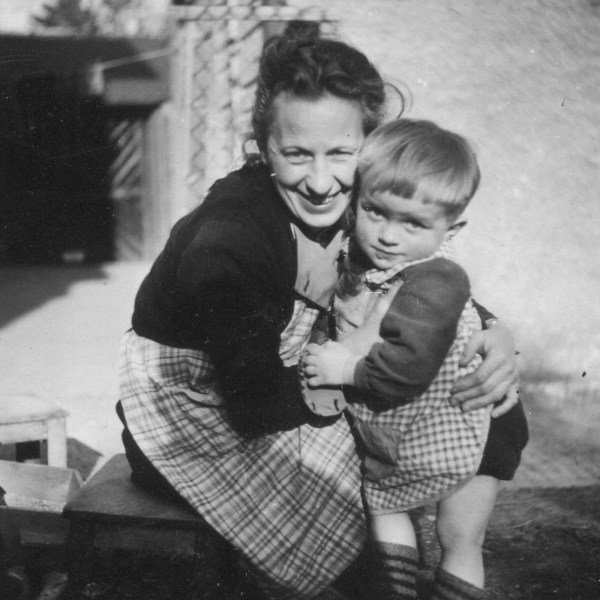
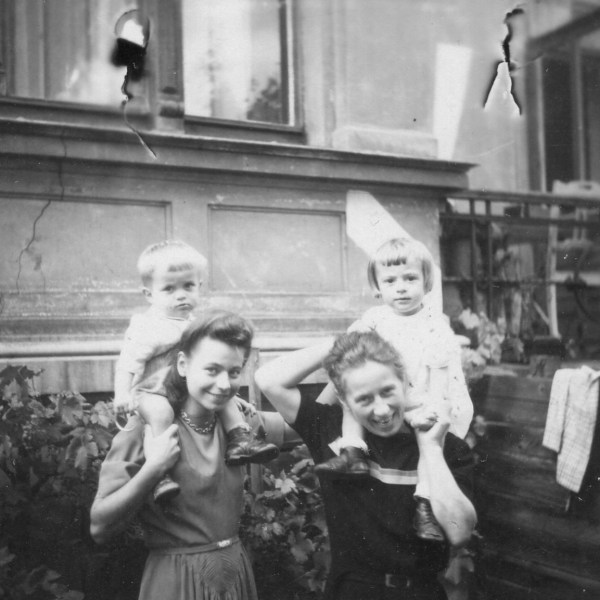
Mutti and Little Walter Junior

The Soviet authorities must have known Papa’s background well before they even summoned him to appear for the lengthy interrogations. They mostly took place in the late evening hours. Believing him to be a solid antifascist, they decided to apply the soft treatment on him. Papa was fortunate not to undergo any physical pain or even torture. But the psychological burden weighed heavily on his heart and mind. He never knew what to expect and when he had to show up for the round of these nerve-wracking sessions.

Worst of all, his source of income as a dental technician hung in the balance. For without clearance from the Soviet secret service, he would not be able to work. During one of those evening sessions, the Russian officers took on a very conciliatory approach. They told him that his antifascist background would make him appear in a favourable light. All that Papa would have to do was provide them with names of former Nazi officers in the German army. Indeed, Mr. Panknin would know which ones had displayed through their actions and voiced opinions a pro-Nazi disposition. Ratting on people, however, Walter Panknin was not willing to do.

He courageously replied, “I met so many police force officers and of the German army. But I cannot remember any of these with pro-Nazi leanings.”

“In that case, we will have to keep you here for the night. Perhaps that will help refresh your memory to come up with a list of names in the morning,” was their response via the interpreter.

“But sirs (Meine Herren),” Papa protested, “I haven’t eaten supper yet”.

Upon hearing this somewhat naive statement, the Russian security officers broke out into roaring fits of laughter. For the longest time, Papa could not figure out the cause of their merriment. Somehow Captain Panknin’s remark about not having eaten yet broke the ice. The committee decided to let him go home and stop the interrogations of this honourable gentleman. No doubt, they continued to keep a close watch on my father-in-law. Shortly after, Papa began his employment as a dental technician.
Walter Panknin (1898 – 1977) and His Family – Chapter 5 Part 2

Papa is Coming Home

Any part written in the first person singular has been contributed by my wife Gertrud (Biene) née Panknin

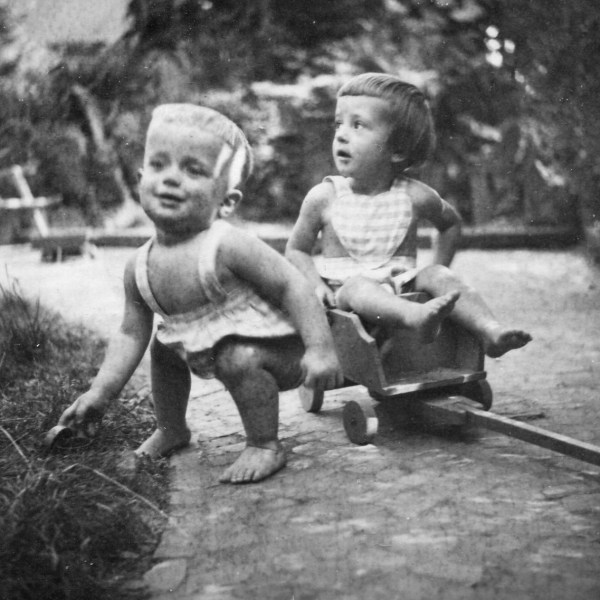
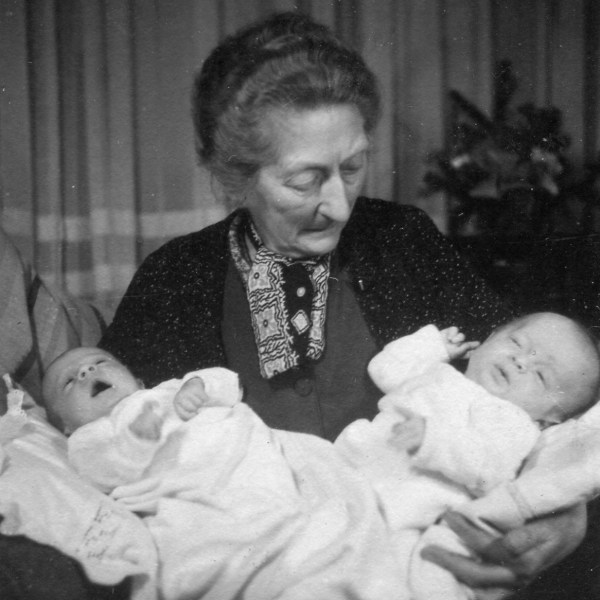
Great was Elisabeth’s joy when her husband suddenly and unexpectedly arrived at their home at Gotha. Papa could finally embrace his beloved wife, hug his stepdaughter Elsbeth, and hold the baby twins Walter and Gertrud in his arms. He had not seen them for over half a year.

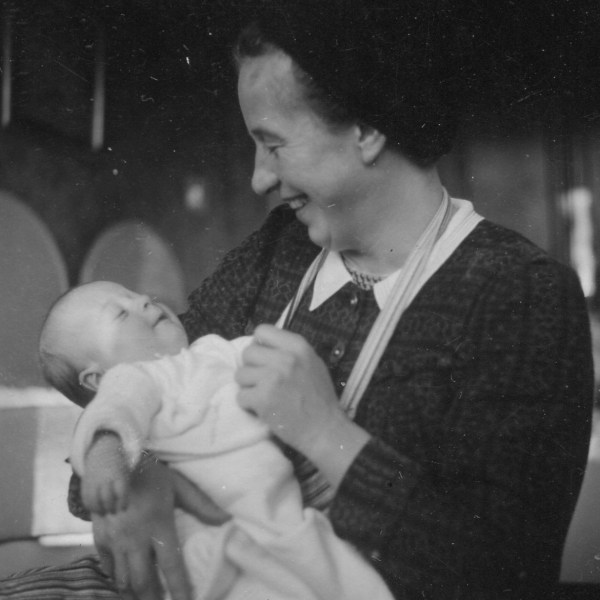
Mutti Panknin with One of her twins

Unfortunately, several flies in the proverbial ointment all too quickly disturbed the family bliss. The house owner had covered up his illegal black market dealings by having a high-ranking police force officer renting the ground-floor apartment in his house. As many essential items were getting scarce during the war, he used Captain Panknin’s status to deflect suspicion from his shady activities. Now that the war was over, the landlord found him no longer useful and tried to get rid of his tenants. Perhaps he knew some well-to-do people able to pay a much higher rent. With so many destroyed cities, Germany experienced one of the worst housing crises in history.

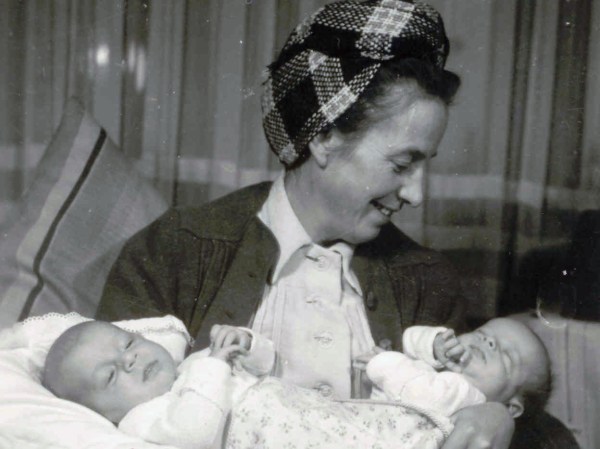
Oma Panknin with her Twin Grandchildren

Being without a job and having no regular income turned out to be a more significant problem. Papa got by for a while, trading in the plum brandy for things they were lacking. Indeed, his foresight and the effort of collecting and bringing home the liquid gold are remarkable.

Walter Panknin (1898 – 1977) and His Family – Chapter 5 Part 1

Mutti Panknin and her Three Children

Any part written in the first person singular has been contributed by my wife Gertrud (Biene) née Panknin

The American forces under General George Patton had advanced with lightning speed into Thuringia in April 1945. There, along with thousands of other German officers and soldiers, Walter Panknin became a POW. If the German high command had placed him at the Western front a month earlier, he would have enjoyed spending his captivity in the United States. Life, food and treatment would have been generally good for a German POW. 

The Twins Walter and Gertrud Panknin

In the late summer or early fall, the notorious Rhine Meadows POW camps were shutting down. The western Allied Forces began shipping the POWs to their designated regions of occupied Germany. If you were a soldier with a permanent address in the Soviet-occupied zone, then there they would ship you. By now, the Americans had handed over Papa’s home province Thuringia to the Soviet administration. They had withdrawn their troops to the American Zone in Bavaria and Hesse. Before they left, food was already scarce. However, life was tolerable even in the bombed-out cities if you were among the lucky people who still had a roof over your head.

Mutti Panknin and Her Children Walter, Elsbeth and Gertrud

Papa’s wife Elisabeth recalled a heart-warming event in the spring of 1945, which she passed onto to her daughter Gertrud. An Afro-American G.I . regularly came by the house in Gotha. There she had been living with her family since the early 1930s. At first, Mutti was terrified and believed he was threatening her when he was wildly pointing as if wielding a gun at something at her doorstep. He kept shouting, “Milk for the babies!” Finally, she realized what the kind-hearted soldier intended to tell her when she saw the bottle of milk at her doorstep. Mama Panknin kept this miraculous story in her heart for the rest of her life.

Walter Panknin (1898 – 1977) and his Family – Part 27

Light at the End of the Tunnel

The soups were getting thinner. The German cooks were stretching the available food supplies to the very limit of human existence. If only the poor prisoners had received a little bit of fat, they would not have lost so much weight. Papa humbly praised the administration when he received an additional allotment of a quarter litre of fresh water. Indeed, a man needs very little food and drink to survive. He was even making a written promise that reads like a solemn oath. ”If I should ever be able to return home, I will be content with even the most basic meal,” and then adds with a full measure of doubt, “thus we think now. But how will it be, once we are free and live a life marked by waste and abundance?”
If you managed to get a job as a kitchen aid in this climate of hunger, your comrades considered you the luckiest person in the world. For your survival, at least as far as food was concerned, had been secured. While helping with the preparation and distribution of the most primitive meals, you always had a chance to stuff a slice of bread or a cooked potato into your mouth. No wonder kitchen service was one of the most sought-after occupations in the entire camp. But it appeared from reading his notes that Papa had no such luck.

In contrast to Papa’s ordeal, these German POWs were lucky to have been captured by the US Army before April 1945. They were shipped to the United States to work on farms. In most cases they were treated fairly according to the provisions of the Geneva Conventions. Many liked it so much they did not want to return home after the war.

One day, when morale was low and hopes were down, there came an unexpected order from the prison guards, “All POWs from Zone II assemble at the sundial.” For the longest time, the captured German soldiers appeared to have been a wholly forgotten bunch. They were the ones that had their homes in the Soviet-occupied part of East Germany. Finally, the camp authorities told them that they could soon return home to their families. Many, including Papa, refused to believe, being well aware of the many times they had been lied to and misled by false promises. But when the guards asked them to line up to receive all their confiscated personal belongings, they put up their hopes again. After Papa had gotten back all his money down to the last penny, he too was convinced that finally, after all these horrible ordeals, his release from the camp would be close at hand. They even received a new name. They were now officially called the ‘reprocessed.’
It is challenging for me to determine the exact time of Papa’s release from the POW camp. However, it is safe to assume that he belonged to the lucky ones. His notes written on minuscule cigarette paper ended abruptly with no reference provided to the date of his release from the POW camp. According to reliable sources, the Western nations had allowed most prisoners to go home by the end of 1948. So Papa was lucky to return home to his family in Gotha no later than late summer or early fall of 1945.

End of Chapter IV

Walter Panknin (1998 – 1977) and His Family – Part 26

Sources Backing up Papa’s POW Experiences

After reading the horrific tales in Papa’s notes, I thought he was exaggerating the conditions he had to suffer through. So I did some research on US administered POW camps in general, but especially on the one near Bad Kreuznach, where Papa had spent most of his camp time. I avoided German websites that might appear to harbour pro-Nazi sentiments. Instead, I sought out American sources to lend credibility to Papa’s eyewitness account. 

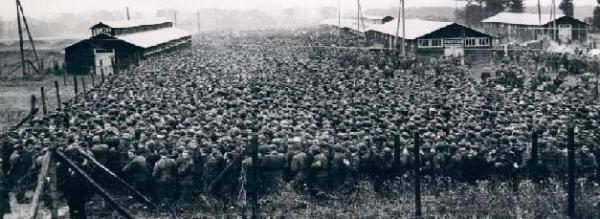
The first quote is from the US-based Journal of History: “Half of the German POWs in the West were imprisoned by US forces, half by the British. The number of prisoners reached such a huge proportion that the British could not accept any more, and the US consequently established the Rheinwiesenlager from April to September of 1945, where they quickly built a series of “cages” in open meadows and enclosed them with razor wire. One such notorious field was located at Bad Kreuznach, where the German prisoners were herded into open spaces with no toilets, tents, or shelters. They had to burrow sleeping spaces into the ground with their bare hands, and in some, there was barely enough room to lie down. In the Bad Kreuznach cage, up to 560,000 men were interned in a congested area and denied adequate food, water, shelter, or sanitary facilities, and they died like flies of disease, exposure, and illness after surviving on less than 700 calories a day. There are 1,000 official graves in Bad Kreuznach, but it is claimed there are mass graves which have remained off-limits to investigation. There were no impartial observers to witness the treatment of POWs held by the US Army. From the date Germany unconditionally surrendered, May 8, 1945, Switzerland was dismissed as the official Protecting Power for German prisoners, and the International Red Cross was informed that, with no Protecting Power to report to, there was no need for them to send delegates to the camps..”

Overcrowded POW Camp

The second quote is from the universal online encyclopedia Wikipedia.com: “To circumvent international regulations that dealt with the handling of POWs, the surrendered forces were termed “Disarmed Enemy Forces” (DEF), and the term “Prisoner of War” (POW) was not applied. Due to the number of prisoners, the Americans transferred internal control of the camps over to the Germans. All administration such as doctors, cooks and workforces were all undertaken by the prisoners. Even the armed guards were former troops from the Wehrmacht’s Feldgendarmerie and Feldjägerkorps. Known as Wehrmachtordnungstruppe (English: Armed Forces Order Troop), they received extra rations for preventing escapes and keeping order in the camps. In June 1946, these military police would be the last German soldiers to officially surrender their arms.”

Thus, by a mere change of the term “Prisoner of War” (POW) to “Disarmed Enemy Forces” (DEF), the International Red Cross was prevented from entering the camps and providing care packages to the starving soldiers. Terrible things happened to the soldiers of both Allied and Axis nations during World War 2 on the battlefields and in the POW camps. But what happened to the German soldiers after the war was over can only be described as an act of revenge and a crime against humanity. My father-in-law was lucky to survive the ordeal relatively unharmed who perhaps received slightly better treatment because of his officer’s rank in the army.

Walter Panknin (1898 – 1977) and His Family – Part 25

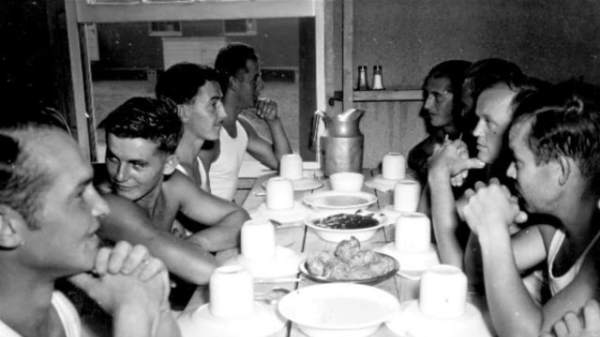
POWs on Starvation Diet

Papa compared the US camp administration with the Sphinx of Ancient Egypt. The secrecy about the political development in their respective home provinces was a riddle to which there was no answer. With its heavily censored articles, the camp newspaper ‘Wahrheit’ (Truth) offered very little information and even less ground for an early dismissal. One thing Papa was able to figure out, though. The Russians had taken over Thuringia and Saxony and had become the master over his hometown Gotha. Whether his wife and children had been able to survive the war, he did not know. He repeatedly expressed his worry and concern over their safety.

The Family Constantly on Papa’s Mind

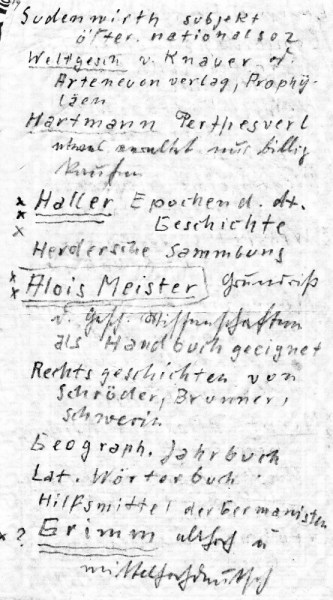
Among the captured officers, many intellectuals, professors from various disciplines were taken out of their university. They served in the army in a commanding position. To fight boredom and help their colleagues get their minds off the common misery, they offered lectures on their expert knowledge of their particular field of research. These open-air sessions were top-rated and offered a broad range of topics, interpreting operas, 5000 years of Ancient Egypt, understanding Goethe’s Faust, to name a few. Through conversation with some of these impressive presenters, Papa hit on the idea of jotting down all the books, which they recommended for further study and which he was eager to read to feed his idea-hungry intellect. A glance at the list gave me deep insight into Papa’s enquiring mind, and I could not help admiring his fascination for history. Later on, after his release, he began to acquire these books, primarily historical and devoured them at a rapid pace. He went through an entire set of over 20 volumes on world history written by world-renowned historian Leopold von Ranke.

Papa’s Partial Book List


Unfortunately, from week to week, the food situation was getting worse. One day their thin, sugary breakfast soup arrived only at one o’clock in the afternoon. Even the most exciting talk about ancient history could not detract from the fact that the POWs at the Bad Kreuznach Camp were starving and growing weaker every day. Papa noticed the absence of mice, which was highly unusual considering so many men concentrated in such a small area. He concluded that in the most humble household, there was always some food left in the pantry. Here at the camp, with thousands of men milling about in constant search for food around the camp kitchen or some mouldy scraps from the garbage cans, nothing was edible left that might attract even a hungry rodent.