Walter Panknin (1898 – 1977) and his Family – Part 3

Embarking on a Career as a Police Officer

At age twenty-eight, Papa embarked on a police force career. He was in charge of maintaining law and order in the Weimar Republic during the most turbulent and chaotic 20th century Germany. The hierarchy and structure leaned heavily on the model provided by the army. So within the first five years, thanks to his military experience, Papa worked his way up to a lieutenant’s rank. At the end of a decade of dedicated service to the state advanced to the first lieutenant’s position. As such, he was in charge of about a dozen men and was responsible for the city of Dortmund’s safety and security. One day as he was riding home from work, he fell off his bike. His letters did not reveal whether he had slipped on loose gravel or a patch of oil on the road. But when he landed on the pavement, he must have fallen on his service pistol. A shot went off triggered by the impact of the nasty spill. The bullet went straight through his lower abdomen and destroyed one of his kidneys. It was a miracle that the shot had taken that particular path and caused no life-threatening injury except the loss of a kidney.
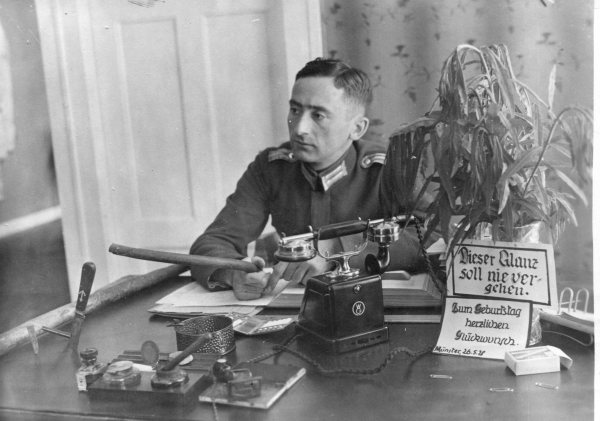
Walter Panknin’s 30th Birthday

Near the end of the 1920s, it was pretty standard for people to go to a professional photographer to have one’s picture taken. Many well-to-do citizens were now using high-quality cameras. But people preferred a portrait from a photo studio by a professional photographer for its quality and beauty. Papa had started a successful career as a police officer. I can easily picture him feeling a need to have his picture taken for his mother Gertrud, brother Rudi and sister Toni. I see him drop in at one of the nearby studios, where Elisabeth Reifferscheid was employed.
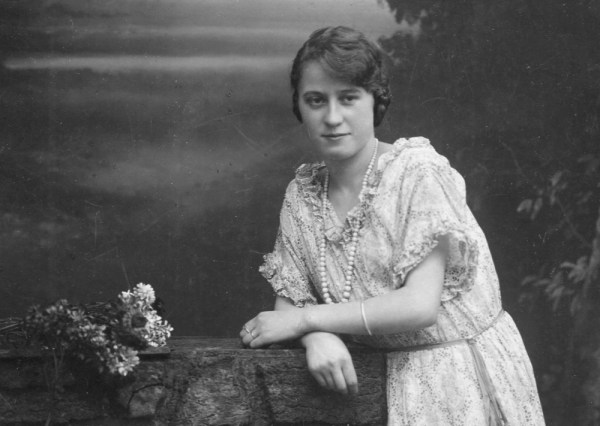
Elisabeth Reifferscheid 1926

Furthermore, I visualize him being deeply touched by Elisabeth’s graceful preparations for the portrait. He liked how she directed him on the armchair for that perfect pose. He had gone through the rigours of paramilitary training in the sober Prussian environment. Feelings and sentiments were being kept bottled up. They, sadly enough, were considered totally out of place in a man’s world. The young officer took in with delight the sight of that rare combination of beauty, competence, charm and Rhinelandish cheerfulness, which he found in the woman, who was getting him ready for the picture. It was love at first sight, but I do have to declare for the sake of truth that I made up the story of their first encounter. I had looked at the exquisite photos of my beautiful mother-in-law in her mid-twenties. She also worked at the time as a photo model. Her photos inspired me. They reminded me so much of my own experience when I beheld Biene’s beauty for the very first time at Lake Baldeney.
Walter Panknin (1898 – 1977) and his Family – Part 2

Papa and the Horrors Of World War I

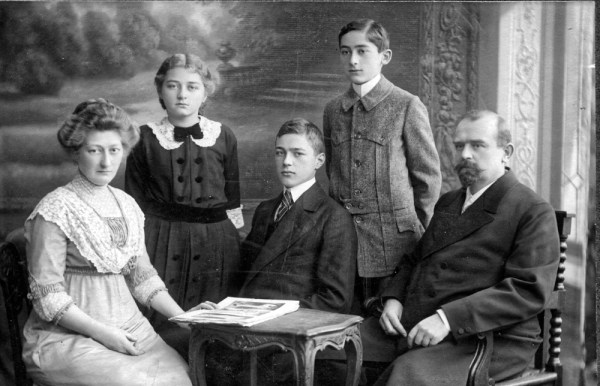
The Arnold Panknin Family: Gertrud, Toni, Rudi, Walter (standing) and Arnold Panknin

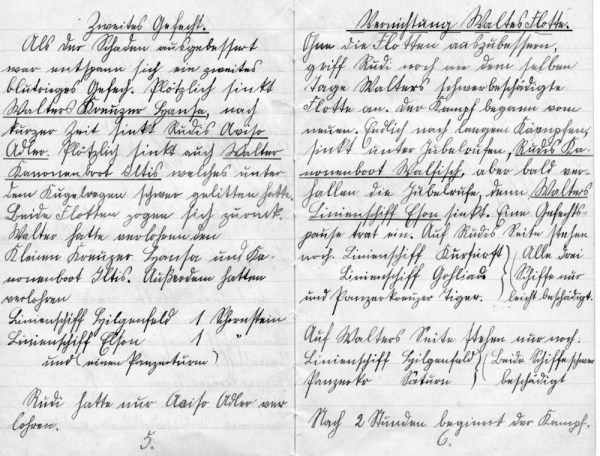
Like my parents, Papa had his family roots in the Eastern provinces of Germany, which are now part of Poland. After WWI, when as part of the Treaty of Versailles, West Prussia was incorporated into Poland’s newly re-established state, the Panknin family members resettled and resided in and around Berlin. Walter Panknin was born to Arnold and Gertrud Panknin (née Weber) on May 26th, 1898, in Kalthof near Marienburg (Malbork in Polish), former West Prussia. He had two younger siblings, his brother Rudi and sister Toni. During the early war years, probably inspired by the great naval battles between the British and German Imperial fleets, Papa and Rudi devised a naval battle game, not unlike the war game that I had created during my teenage years. The game board, of course, has long been lost. But the notebook, with its meticulously drawn pictures of Walter and Rudi’s fleets with the neat description of the ships’ tonnage and type in beautiful gothic handwriting, has survived a century-long journey. After WWII, Papa maintained with brother and sister and his old penpal Kampmann an extensive correspondence. I was able to glean a wealth of information, as they referred in their letters to the turbulent times before and during the war.

Page from Papa’s Notebook 1915

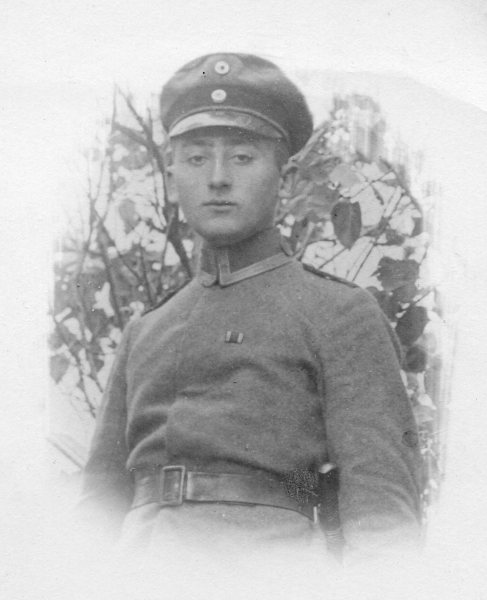
When Papa turned eighteen in 1916, the year after his father had passed away, he fought on the Western Front for Germany’s honour and glory. Likewise, in an unparalleled patriotic fervour, young men on the British and French side were willing to die in a senseless and gory war. Papa escaped death on numerous occasions. And when the war that was supposed to end all wars was finally over, he emerged physically unscathed from the horrific slaughterhouse of the killing fields in the West. But Papa had to bear for the rest of his life a heavy psychological burden. For he witnessed the maiming and killing of comrades, the endless shelling, and the miserable life in the trenches. The inglorious forced march back to Germany and the pain of the awareness that it had all been in vain must have affected him deeply.

Walter Panknin 1917

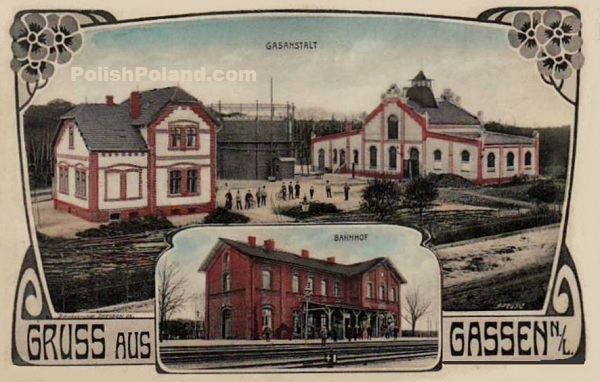
By the provisions of the Treaty of Versailles, the German army was reduced to 100,000 men. Thus, there was no future in a military career for Papa, even though he had advanced to a lieutenant’s rank while fighting on the western front. In his search to find meaningful employment, he went into a training program, which at its successful completion allowed him to seek employment as a qualified dental technician. In 1922 he moved to the small town of Gassen (Polish Jasien today), West Prussia, and until 1927 worked in a dental lab facility.

Walter Panknin (1898 – 1977) and his Family – Part 1

Gotha, my Wife’s Birthplace

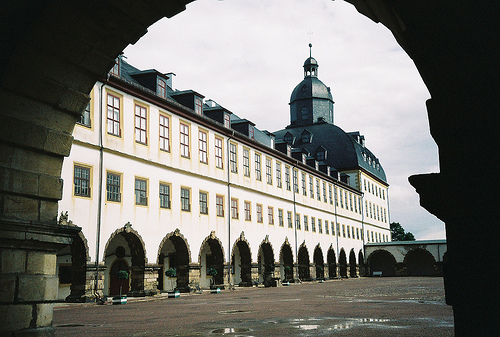
Gotha today is the fifth-largest city in Thuringia, Germany, located 20 kilometres west of Erfurt with a population of 44,000. In the Middle Ages, Gotha was a prosperous trading town on the trade route Via Regia. Between 1650 and 1850, Gotha saw a cultural heyday as a centre of sciences and arts, fostered by the dukes of Saxe-Gotha The first duke, Ernest the Pious, was famous for his wise rule. The cartographer Justus Perthes and the encyclopedist Joseph Meyer made Gotha a leading centre of German publishing around 1800. In that period, Gotha became an industrial core with companies like the Gothaer Waggonfabrik, a producer of trams and airplanes. One of the main sights of Gotha is the early-modern Friedenstein Castle, one of the largest Renaissance/Baroque castles in Germany. It was built between 1643 and 1654 and is one of Germany’s first sizeable Baroque residence castles. Some essential scientific institutions were the ducal library (today’s Forschungsbibliothek Gotha as part of the University of Erfurt), founded in 1650, the “coin cabinet” (1712), the “art and natural collection,” basis of today’s museums, and the Gotha Observatory at Seeberg mountain.

Friedenstein Castle

Much of Thuringia’s acclaim as the green heart of Germany is due to the Thuringian Forest (Thüringer Wald), not far from Gotha. Germans have celebrated its landscapes at least since the time of Goethe. Its romantic villages with cottage workshops do little to dispel the illusion of an era that appears frozen in a time when life was still uncomplicated and beautiful.

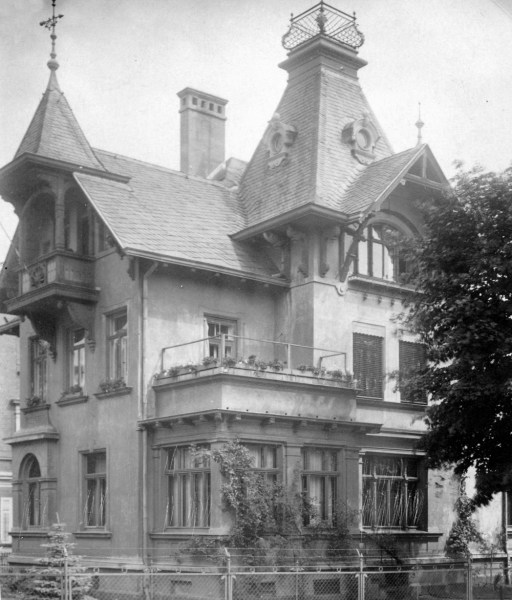
My Wife’s Birth Place in Gotha

In 1937 Walter and Elisabeth Panknin (née Reifferscheid), moved from Dortmund to Gotha. After they had met and fell in love in 1928, they married two years later, on November 25th, 1930, in Berlin-Charlottenburg. Not long after their daughter arrived in Calgary in April 1966, her parents became my parents-in-law. Therefore, I will, for the sake of simplicity, often call them Papa and Mutti when describing their lives in this family history.

Ernst Klopp (1900 – 1964) and his Family – Part 39

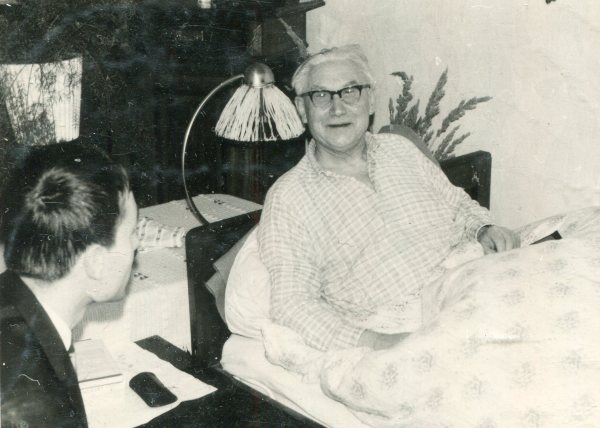
Philosophizing at Father’s Bedside

When Father’s back pains hurt too much, he stayed in bed for most of the day. Adolf and I were sitting at his bedside to keep him company. Then Father and I would often talk about the great empires of the past and the lessons one might learn from the causes of their decline. I really warmed up to this topic as I had recently taken a keen interest in the Roman Empire’s history. We concluded that if one allows foreign religious and ethnic elements to dominate the nation’s cultural core, it will sooner or later lose its identity. Its values and moral fibre will undergo first decline and then total collapse. Germany, according to Father, has not learned her lessons and was headed in the same direction. Pointing to the record player on the night table, he remarked, “The record is turning. The needle is progressing in its groove. But in the end, it will be starting all over again. symbolizing the eternal recurrent of the same in world history.” Adolf feeling a little left out in this highfalutin talk, said he would buy himself a couple of history books to study up on the things he had missed in school.


Before the end of my vacation in Michelbach, I gave Erna my moped. The engine of her better-looking moped had utterly broken down. Adolf, the skilful mechanic and jack-of-all-trades, took the working motor out of mine and installed it into Erna’s moped. As a reward for my generosity, Adolf drove me in his Volkswagen beetle back home to Wesel, where he would spend a few days to visit with Mother and Aunt Mieze. In this joyful summer of 1962, I saw Father for the last time alive. I am so glad that I did. How great would have been the loss if I had missed this golden opportunity to see him!

Ernst Klopp (1900 – 1964) and his Family – Part 38

More Children Visiting Father

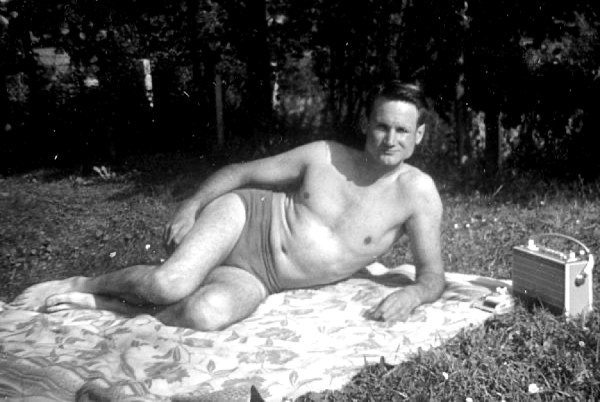
With my first visit to see Father after such a long gap inconceivable in the light of today’s custody laws that require visiting rights at regular intervals, I accomplished much more than just reconnecting with him. The ice had been broken. Other family members now were eager to come in a spirit of reconciliation that was shared even by Mother, albeit somewhat reluctantly. Near the end of my holidays, my brother Adolf dropped in for a visit. He had returned from Canada to Germany temporarily to learn a trade in an apprenticeship program at the Honeywell Company at Hanau. He eventually acquired a journeyman ticket as a trained machinist that would – so he was hoping – land him a good-paying job upon his return to Canada. Adolf, endowed with a witty sense of humour and an extroverted personality, was the life of the party no matter where he went. In formal or informal gatherings, in a suit or jeans, with academics or factory workers, he was the born entertainer who made people cheer up when they were depressed and got things rolling when they appeared to be stuck. Everybody liked him. There was just one problem with this gregarious, likeable brother of mine. He seemed to be shy, yes, even afraid of unmarried women, who might take too much of a liking to him, pursue him with the full force of passion and lock him up in the golden cage he called marriage.

My brother Adolf relaxing at the Schotten Swimming Pool

Then my sister Erika dropped in for a brief visit. When she heard that I had been going out dancing with a girl from the village, she contemptuously commented on her in Father’s presence, “Ho! Ho! Going out with a peasant duffer! (Bauerntrampel in German)” By now, I had become quite accustomed to the unpredictable outpourings of her sharp tongue. Her caustic and biting remarks at Mother’s place in Wesel had been edged forever into my memory. However, Father was livid. Having respected all his life the hard, honest work of the farmers from whom we receive our daily bread, he was deeply insulted by that derogatory remark. He gave her a severe dressing-down for displaying unjustified disdain for such an honourable class of people. Never since my early childhood days, when he had read me the riot act for stealing eggs from Mother’s henhouse, had I seen Father so angry. If I did not know the meaning of holy wrath, I knew it now.

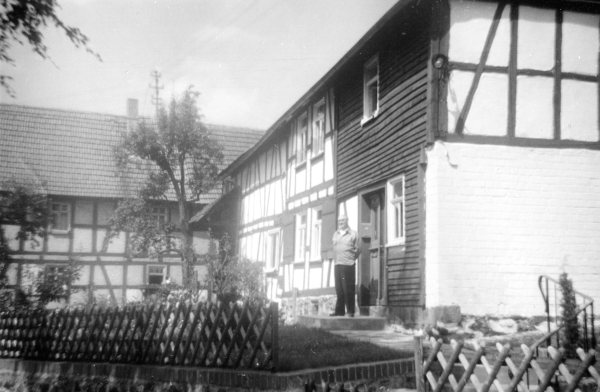
My Father in front of Erna’s House in Michelbach near Schotten

Erna’s house was at least half a century old, and the electrical wiring was outdated and no longer in compliance with the latest electrical code. It required that all circuits be correctly grounded. It made me feel good that I was not just there to enjoy a relaxing summer visit but also to make myself useful. Father had bought the three-prong wire, and I installed it and connected it to the junction boxes, outlets and switches. I showed some reluctance to take the twenty marks Father wanted to pay for my work. He lectured me somewhat like this, “Listen, Peter, if someone offers you money, not dishonest money, mind you, but money earned for work you did, do not hesitate to accept it. For you not only cheat yourself out of the reward that is rightfully yours, but you also insult the generosity of the giver.” To such a powerful argument, I had nothing to reply to and took the twenty marks.

Ernst Klopp (1900 – 1964) and his Family – Part 37

Sweet Memories

Right from the beginning of my visit, Erna, Father’s second wife, and I got along very well. Her cheerful and lively disposition did not allow me to lose myself in gloomy moods, as I was occasionally prone to do, especially during prolonged periods of idleness and aimlessness. Even though I was reluctant to admit it, I could even see that Erna was the right person for Father. She was the sunshine that had brought lightness and contentment to his sunset years. From her radiated a contagious joyous spirit that created the in-peace-with-the-world atmosphere so conducive to Father’s healing process from a torturous past, from which he only now began to recover. I do not remember him as a man broken in body and spirit, as my distant cousin Eberhard Klopp described him in his book of the Klopp Family History.

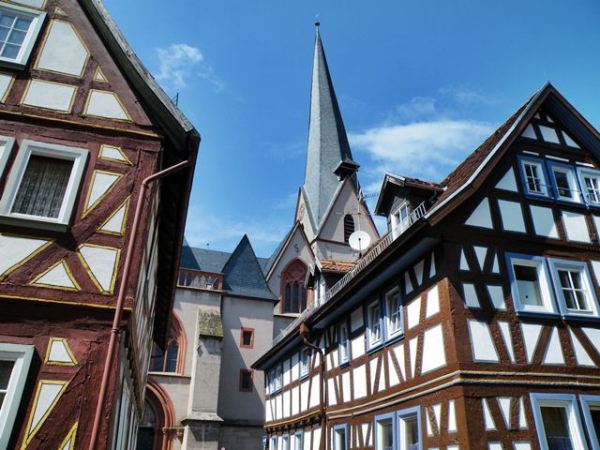
Schotten – Photo Credit: vogelsbergtourist.de

Erna also had a moped of the same make and the same 49 cc class as mine, on which she would travel down the steep hill into the town of Schotten to buy the few things she needed for the small household in Michelbach. When you have company, one always seems to find the time to show off the beauty surrounding one’s home turf. Without visitors, one tends to delay and leave such outings for another day. Erna was no exception. Now she was eager to travel with me to the nearby-forested hills, up to the scenic Nature Park around Mount Vogelsberg, down winding country roads into the lush verdant valleys neatly tucked in between minor mountain ranges. There was no better form of transportation than our two Miele mopeds. With a lunch pack clamped to the rear luggage rack, we were ready to dart off into the magnificent Hessian landscape. A little overweight for these light machines, Father gladly stayed behind, looking after a few chores still to be done on this mini-farm with just a few goats to feed and milk. Just as we were revving up the engines, Father came to the road to congenially shout over the noise, “Have a good trip!” Too soon, my vacations came to an end. Thanks to our weekly excursions into the hill country, I had acquired a solid geographical knowledge of the region. As I was internally preparing myself to leave the Rhineland for good after graduation, I had already created a new base to drop in as son and stepson, a place I could truly call home.

Landscape of Vogelsberg Hill Country – Photo Credit: vogelsbergtourist.de

After supper, we three would sit in the living room leisurely sipping homemade apple cider in the long summer evenings. We would talk until it was time to go to bed. More accurately speaking, it was Erna who did most of the talking. She certainly had the gift of the gab. With the unerring memory for minutest details spiced up with colourful expressions and peppered with her village’s melodious dialect, she was the born storyteller. I will never forget how she described the chaotic scene of the German Reichstag of the roaring twenties. She and her friends were sitting in the same living room forty years earlier and acted out the ugly political debates they had heard over the radio. They did this with such exuberance, with so much mock yelling and screaming that the poor cats terrified by the brouhaha created by the inflammatory speeches sought refuge under the sofa and added to the parliamentary cacophony with much hissing and growling.