Gerhard Kegler, the general, who dared to disobey Himmler – Part V

In and Out of the Generals’ Reserve List 1944/45

(Chart II a – II)

Before I took a break from writing at the end of June, I described in several posts my uncle’s military career in the German army and the events leading up to the disintegration to the Woldenberg Division. By clicking on the Kegler family page, you will find the combined posts in chronological order.

For the newcomers I will give a summary of the dramatic story of my uncle’s last two weeks before he was arrested and charged for failing to defend the city of Landsberg (Gorzów Wielkopolski) on the Warta river.

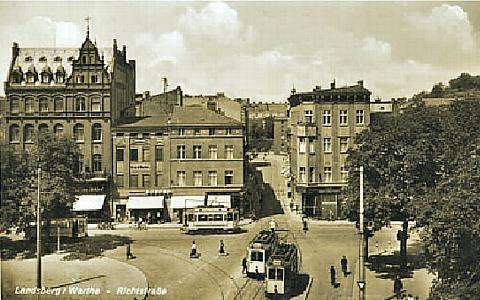
Landsberg before WWII

Landsberg before WWII

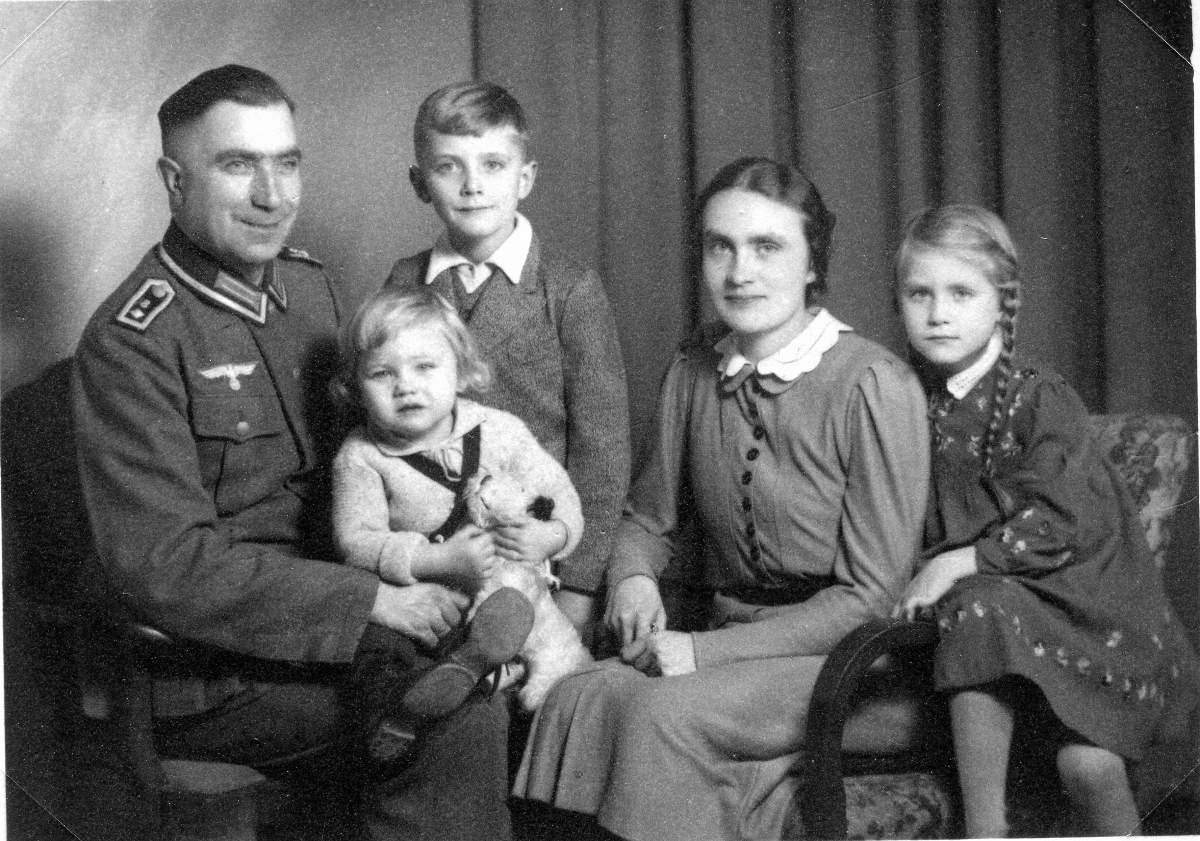
What follows is partly translation partly adaptation of a report I found in the German army encyclopedia: Lexicon der Wehrmacht. On January 14, 1945 Gerhard Kegler was put on the generals’ reserve list, which was no surprise considering the fact that so many entire German divisions were wiped out during the closing weeks and months of WWII. During that time he took a six-week medical leave at my parents’ place at Gutfelde (Zlotniki) near the town of Dietfurt (Znin), where I was born in 1942.

Bild Gutfelde 29

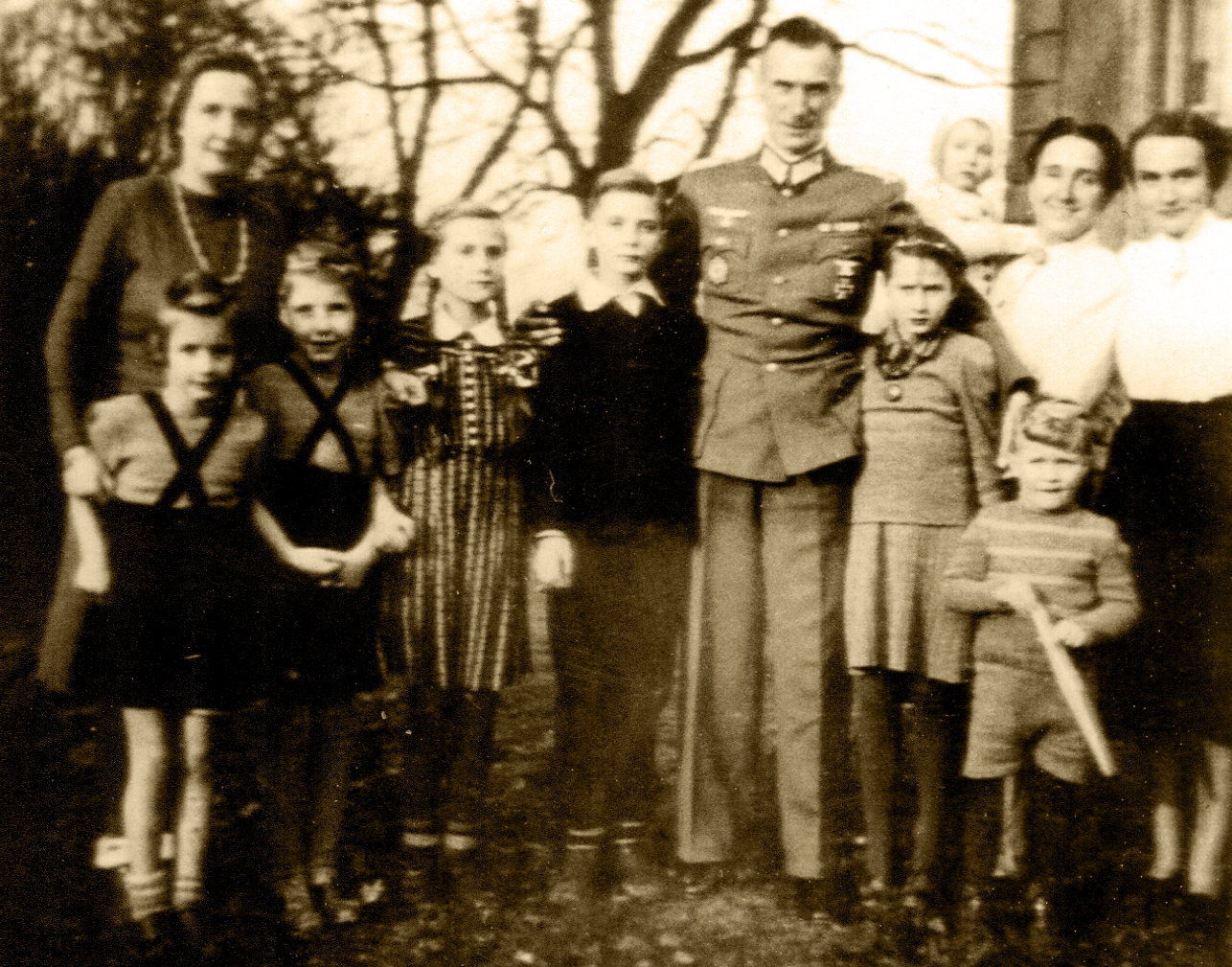
Uncle Gerhard in the Middle, his Wife, Aunt Margot, on the Left, my Mother with me on her Arm, and Aunt Johanna, Uncle Bruno’s Wife to the Right of the General

He believed he would best recuperate in the presence of his wife and children, who had found refuge in Gutfelde from the bombing raids in Central Germany. Perhaps, if he had gone to an official health spa instead, to which he had been entitled, he might have avoided all the troubles that lay in wait for him.

To be continued …

Chapter XIII of the P. and G. Klopp Story – Part 3

Dangerous Play with Ammunition

The Siegfried Line (Westwall) was a German defense system covering a distance of 630 km with over 18,000 bunkers, tunnels and tank traps, the so-called dragon’s teeth. It started in Kleve on the border with the Netherlands along the western border and went as far south as the town of Weil am Rhein on the border with Switzerland. Touted by the Nazi propaganda as a unbreachable bulwark, the Siegfried Line was only able to delay the Allied advance to the center of Germany for a very short time in early 1945.

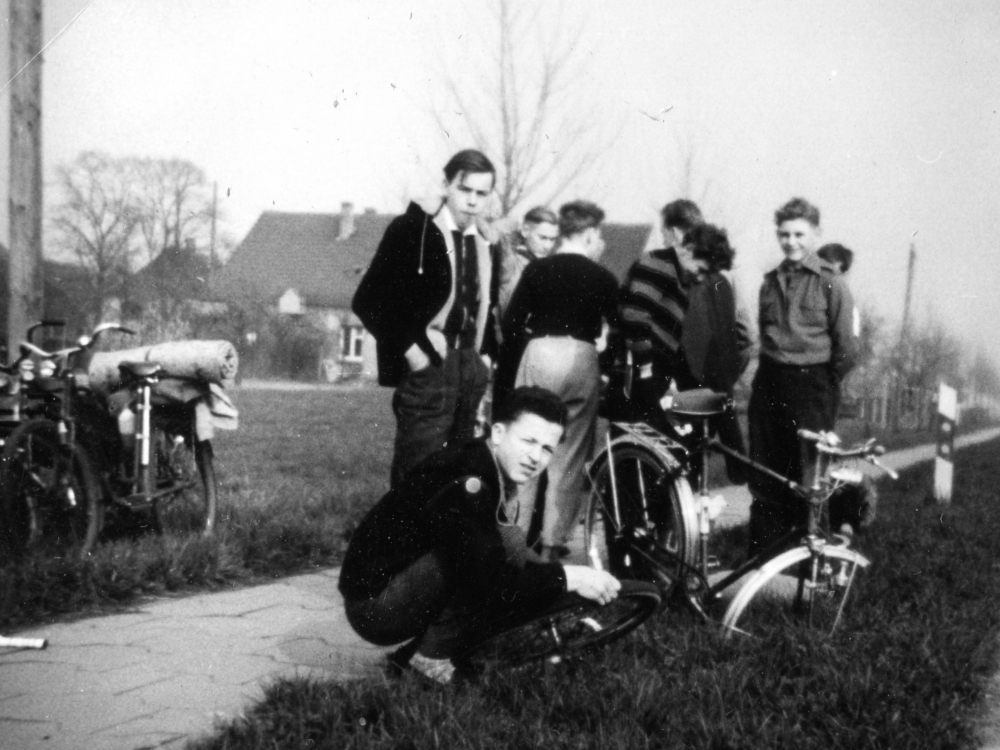
Fixing a Flat Tire on the Way to our Hide-Out

Fixing a Flat Tire on the Way to our Hide-Out

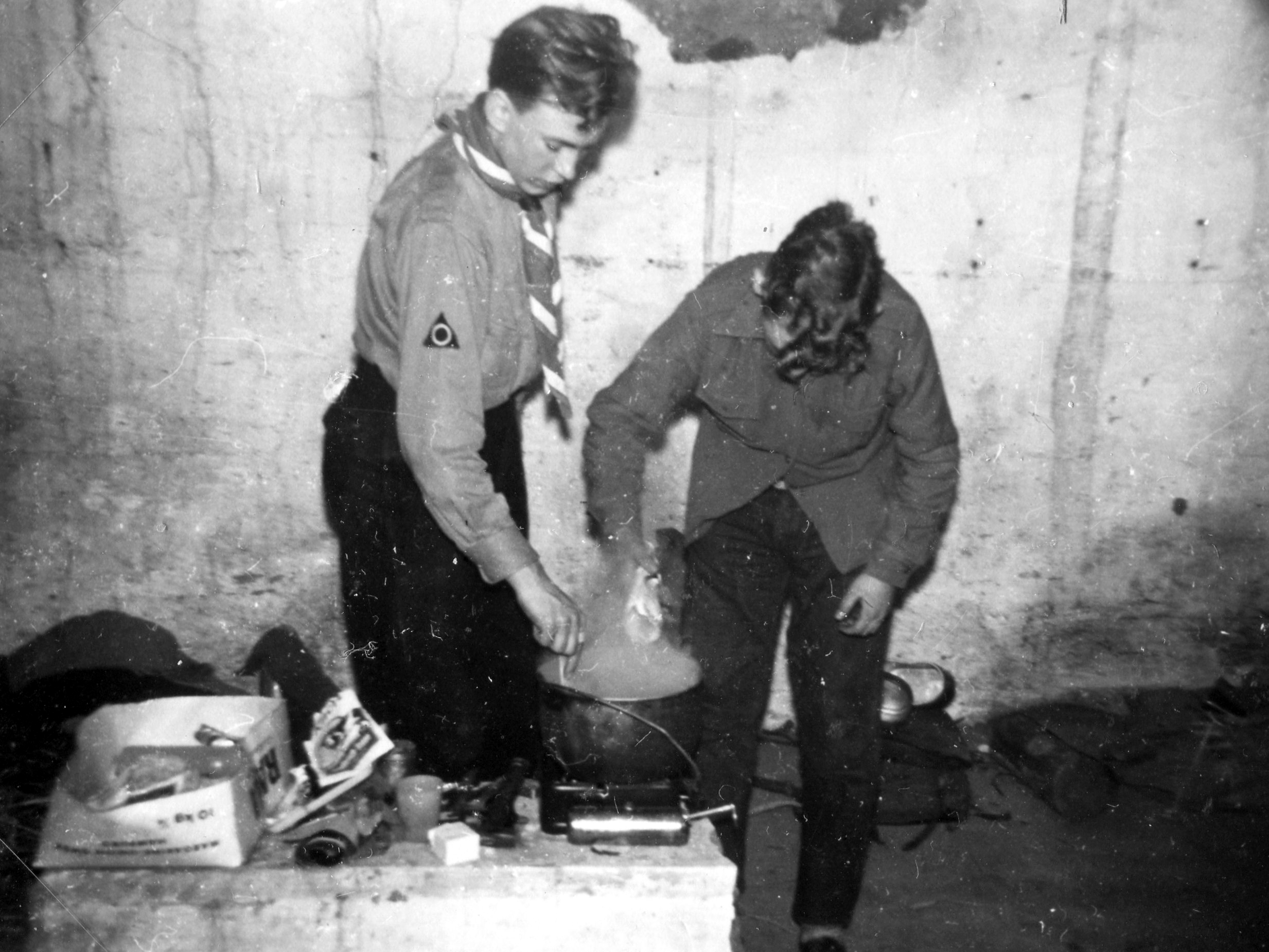
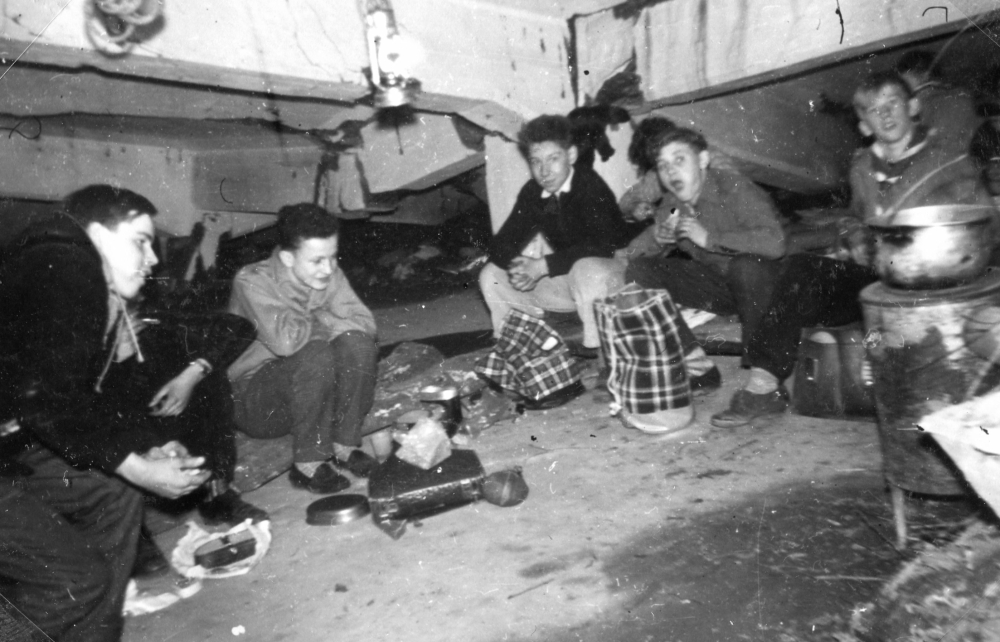
On our way home taking another route away from the main highway we discovered deep in the forest of the Reichswald a number of bunkers from that famous last line of defense. Their walls and ceiling were 1.5 meters thick and had once offered room for a dozen soldiers each. This would be an ideal shelter and hideout for my clan, I thought. Far from the major traffic routes we would be shielded from curious eyes. There in the densest part of the forest we selected the least damaged bunker that would serve as a permanent base for our outdoor activities. I instantly realized the advantage of a bunker over a tipi. The communal tent would have to be laboriously set up. Young trees would have to be cut to provide the poles for the tipi that was barely large enough to accommodate the clan. Of course, enthusiasm among the scouts was high. Attendance went up and new members showed up for our weekly sessions in the citadel. After two or three weekend trips to our fortress, we had transformed the austere looking concrete dwelling into a cozy shelter complete with beds, table and chairs all made of dead wood that we had picked up from the forest floor. We even had turned a barrel into a primitive stove, which provided warmth during the chilly nights of the approaching fall season.

Hans and a Fellow Scout Preparing a Meal for the Clan

Hans and a Fellow Scout Preparing a Meal for the Clan

Fifteen years after the war great dangers were still lurking in this section of the Reichswald. Heavy fighting must have taken place around our bunker. For we found unexploded shells, so-called duds on the forest floor. One young scout stumbled over one of these rocket-shaped shells and tossed it against the concrete wall. I guess in his total ignorance of the potentially fatal consequences he expected it to blow up like a giant firecracker. Fortunately for us it did not go off. When I had somewhat recovered from the initial shock, I blew the whistle as a signal to the scouts to assemble around me. Then pointing to the shell I gave them a stern lecture on the danger to life and limb and ordered them not to touch any of these explosive devices. As punishment for the reckless boy I ordered that they should throw a rope over a sturdy tree branch and attach to it a stick, on which the delinquent would have to sit. In a somber, authoritative voice I pronounced the verdict. The boy shall be pulled up three meters above the ground, where he will have time to reflect on his reckless behavior and serve as a warning to all others who might be tempted to imitate his foolish act. While I maintained a straight face, the entire clan including the culprit took the whole proceedings as excitement and fun. With shouts of hooray they pulled at the rope to raise the boy to the desired height. There he was swinging back and forth until his release from his lofty prison.

Peter's Clan Relaxing in a WW2 Bunker

Peter’s Clan Relaxing in a WWII Bunker

Had I learned my very own lesson about safety regarding WWII projectiles? Looking back, I would say no. For on the day we were breaking camp, I secretly wrapped one of the best looking shells in a towel, placed it deep inside my luggage bag and took it home. There it stood for a while like a trophy in my room on the windowsill. With a new coat of red paint it looked shiny and new and attracted the attention of my visiting friends. It was a very fitting display at a time, when the Russians were launching with great fanfare the first man-made satellites, their famous Sputniks.

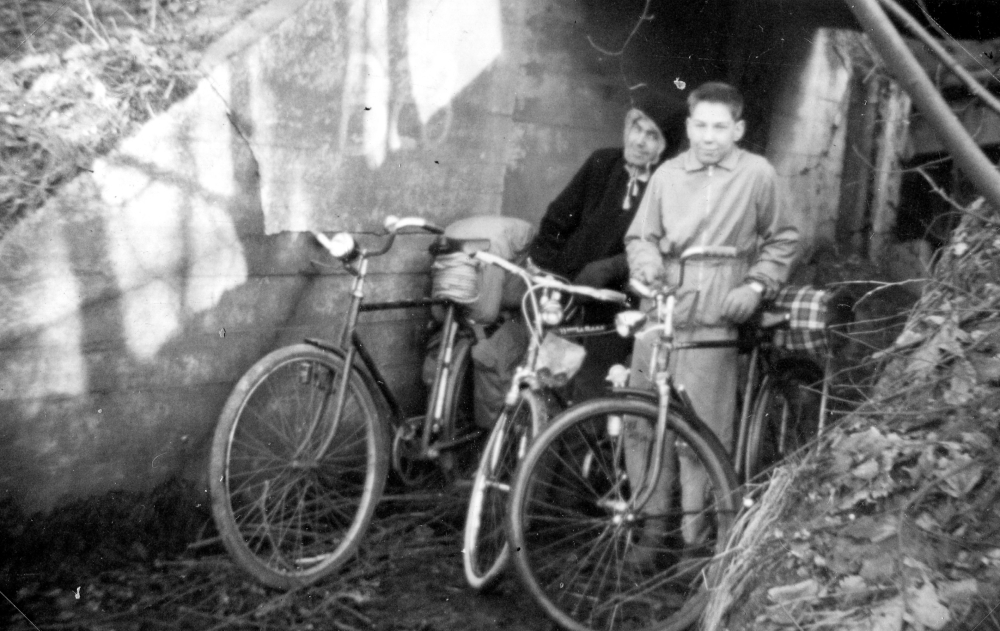
Two Scouts Posing in front of Our Bunker

Two Scouts Posing in front of Our Bunker

On the next bike trip to our bunker we were in for a great disappointment. Someone had discovered our weekend base and reported it to the police as a potential hideout for fugitives from the law. Thus, being alerted, they began patrolling the access roads to the Reichswald. How surprised were they when instead of nabbing a gang of criminals they caught a bunch of teenage boys dressed in neat scout uniforms. Unlike the irate youth hostel man the officer told us in a calm, professional manner how dangerous it was to camp out here with all those explosive devices lying all over the forest floor. He also gave us a scare when he recorded all our names and addresses with a warning that he would notify our parents and that there would be possible fines for trespassing. Luckily, the letters never came. But the encounter with the police made us go to safer wooded areas and sleep again in our tipi. As for me the leader of the clan, I now realized that even though I had taken vigorous measures to alert the scouts to the dangers of the shells I should have avoided the bunkers in the first place. In retrospect it was like divine intervention that the police had put a sudden stop to our adventurous trips to the Siegfried Line. That very same weekend I took the ‘rocket’ and threw it in the garbage can. For all I know it still rests somewhere in the Wesel garbage dump.

A Touching Love Story in German

Die Wunderbare Liebesgeschichte meiner Großeltern

von Anke Schubert  ( Chart II a – II & IV)
Published in English on Jan. 30, 2015
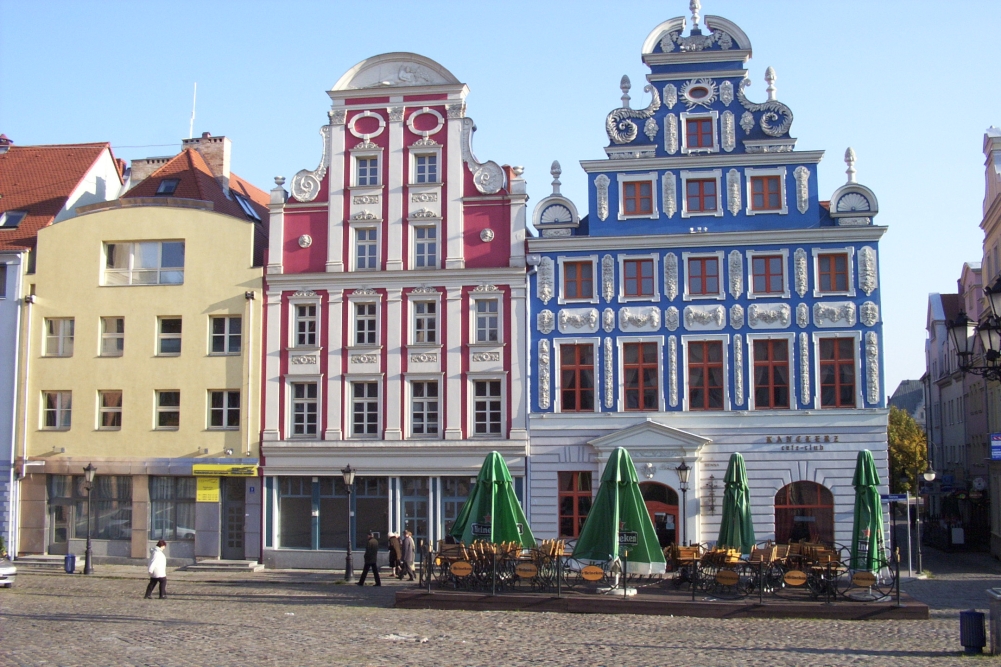
Altstadt von Stettin (heute Szczecin) Photo Credit: Wikipedia.org

Altstadt von Stettin (heute Szczecin) Photo Credit: Wikipedia.org

Meine Großmutter Johanna besuchte von 1929 bis 1931 ein Lehrerseminar in Stettin. Sie stammte aus Hirschberg im Riesengebirge. Ihr Vater, der Oberschullehrer Ludwig Engel, hatte diese Lehranstalt ausgesucht, weil hier im Gegensatz zu anderen Hochschulen nur Studentinnen ausgebildet wurden. Nun trug es sich zu, dass bei einer Cousine von Johanna ein junger Zollbeamter namens Bruno Kegler zu Gast war. An der Wand der Wohnung hing ein Bild von Johanna, und Bruno fragte neugierig, wer das sei. Ihm wurde Bescheid gegeben, und er bat darum, der Cousine einen Gruß ausrichten zu dürfen. Das wurde ihm gestattet. Als Johanna ihre ersten Semesterferien zu Hause in Hirschberg verlebte, erhielt sie eines Tages eine Brief mit fremder Schrift und mit der ihr bis dahin fremden Anrede „Sehr geehrtes gnädiges Fräulein!“. Lachend zeigte sie die Zeilen ihren Eltern und las ihnen vor, dass der Briefeschreiber um ein Treffen bat, um ihr die Grüße ihrer Cousine ausrichten zu dürfen. Vater Ludwig sagte sogleich: „Du schreibst, dass aus dem Treffen nichts wird, da du ja gerade in Hirschberg bist“. Johanna setzte sich sofort hin und schrieb auf einem winzigen Briefkärtchen die Absage. Der Brief wanderte in den Briefkasten – der Vater kontrollierte das vom Balkon aus – und Johanna verlebte zufrieden ihre Ferien.

Als sie wieder in Stettin war, schrieb Bruno wieder nach Hirschberg. Der Brief wurde geöffnet, aber Johanna immerhin nach Stettin nachgeschickt. Er enthielt die wiederholte Bitte, die Grüße ausrichten zu dürfen. Johanna zeigte das Schreiben ihren Klassenkameradinnen, die sie vor den energischen Schriftzügen warnten. Sie antwortete aber trotzdem und gab den Termin und den Ort – ein Café – an. Alle Klassenkameradinnen wollten mitkommen!

Bruno und Johanna - Eine Glückliche Zeit

Bruno und Johanna – Eine Glückliche Zeit

Als Kennzeichen hatte Bruno angegeben, dass er einen grauen Anzug mit einer weißen Nelke im Knopfloch tragen würde, Johanna wollte ein weißes Kleid und einen weißen Schal tragen.

Als sie sich an dem verabredeten Termin im Café einfand, sah sie … zwei Herren in grauen Anzügen, und keiner hatte eine weiße Nelke im Knopfloch! Aber einer stand auf, kam auf sie zu und stellte sich vor – und es war, als ob sie sich seit Jahren kennen würden.

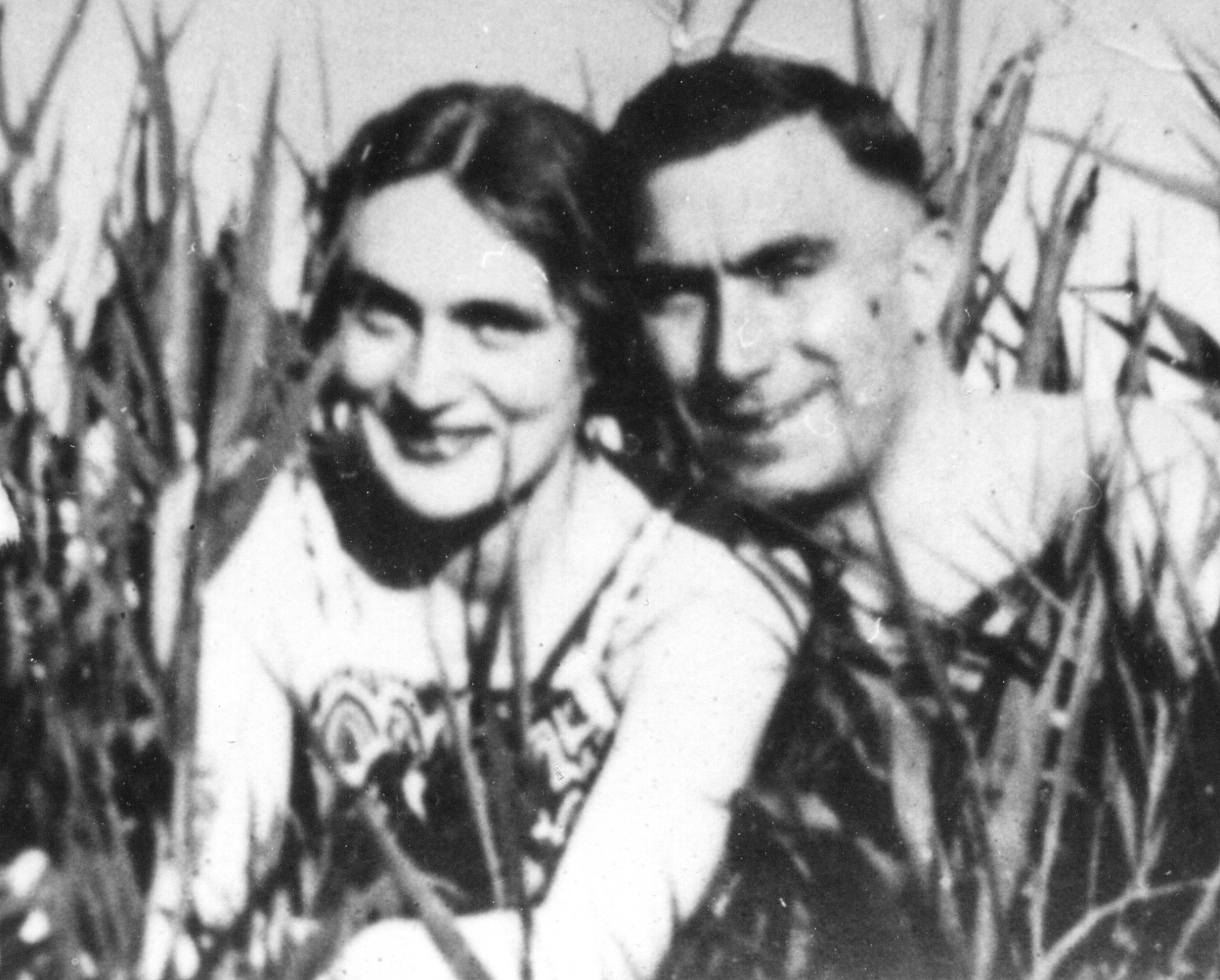
Bruno und Johanna - Liebe auf den Ersten Blick

Bruno und Johanna – Liebe auf den Ersten Blick

Für Johanna begann nun eine wunderschöne Zeit. Sie sahen sich so oft sie konnten, unternahmen gemeinsame Wanderungen und Dampferfahrten.

Schon nach dem ersten Treffen sagte Bruno zu den beiden alten Damen, bei denen er als „möblierter Herr“ wohnte, er habe gerade seine zukünftige Ehefrau kennen gelernt. Ohne Johannas Wissen schrieb er an ihre Eltern, schilderte seine wirtschaftliche Lage und seine Familie und bat darum, einen Besuch machen zu dürfen. Das wurde ihm gestattet, man lernte sich kennen und am 29. April 1930 heirateten Johanna und Bruno. Sie waren sehr glücklich miteinander, und in den folgenden Jahren wurde dieses Glück durch die Geburt ihrer Kinder Hartmut, Elisabeth und Jürgen vervollkommnet.

Bild 26

Chapter XIII of the P. and G. Klopp Story – Part 2

Visitors new to this blog can read earlier chapters on the Klopp Story menu item.

Bike Ride to Xanten and Kleve

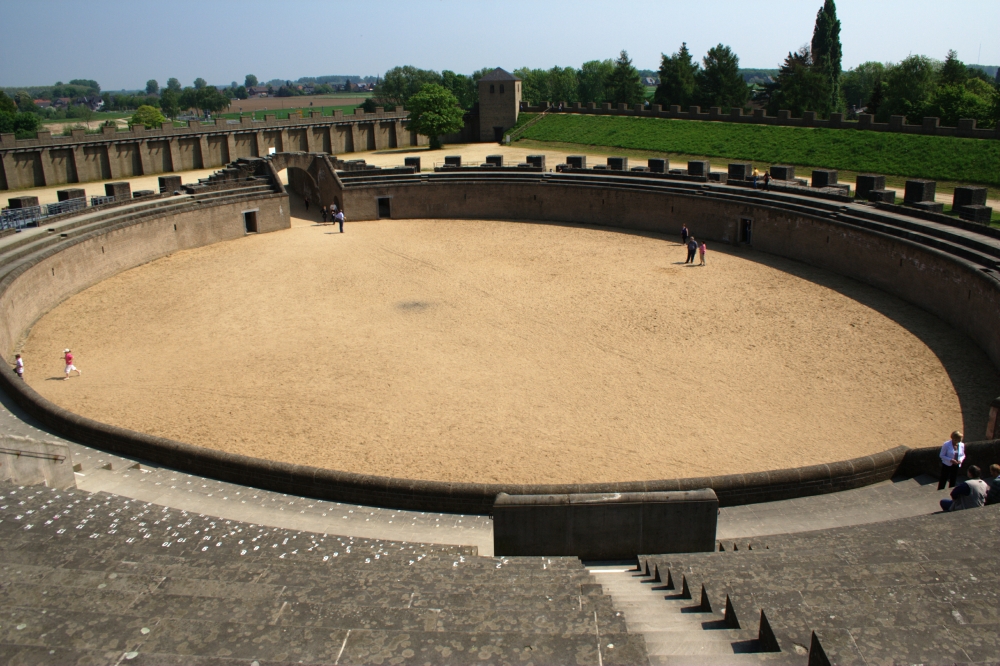
Roman Amphitheater at Xanten - Photo credit: wikipedia.org

Roman Amphitheater at Xanten – Photo credit: wikipedia.org

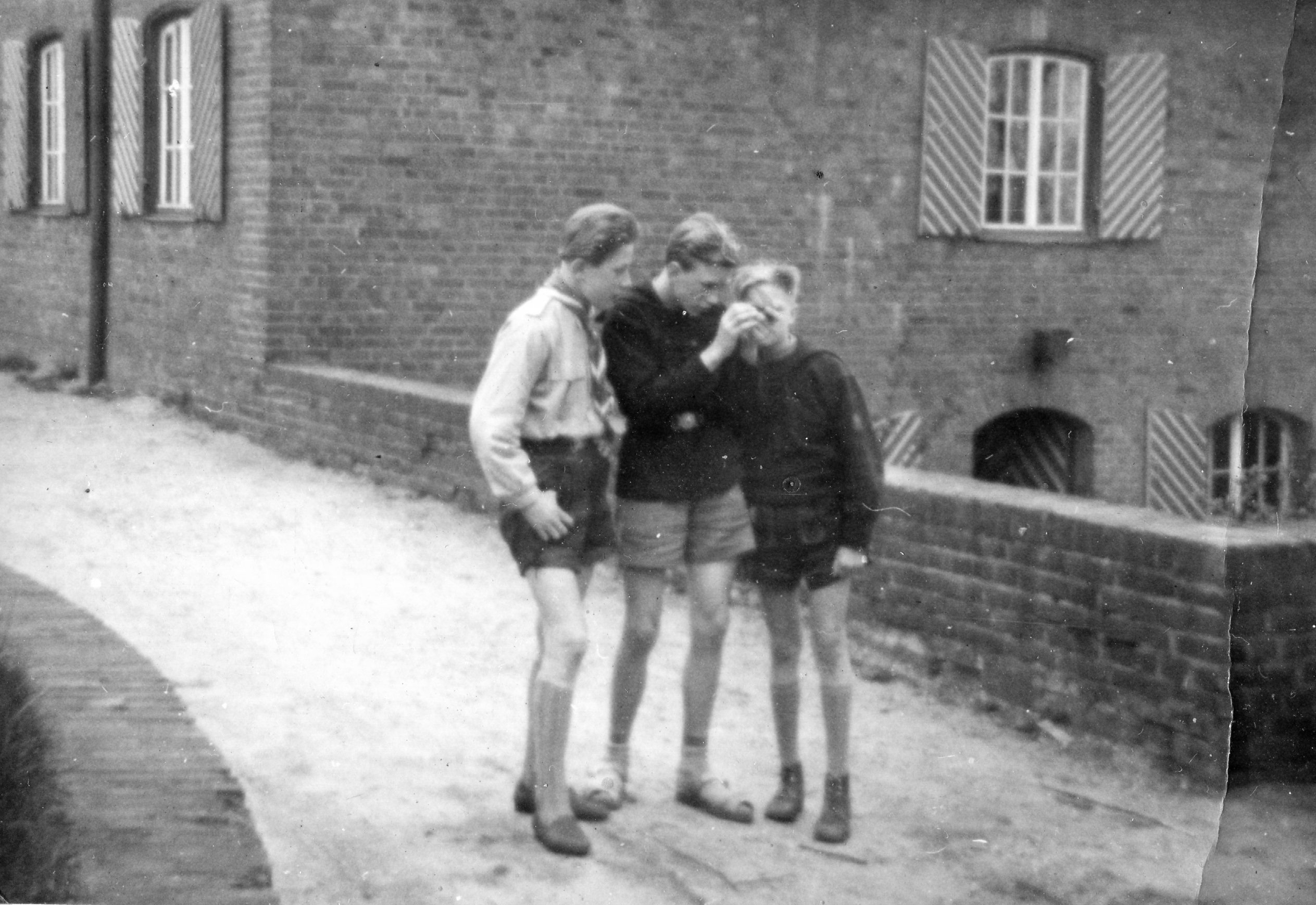
Our weekly gatherings in the citadel provided opportunities for learning sessions, singing of scout-oriented hiking songs and preparing our favorite monthly weekend excursions on bicycles. These sessions were cheerful and noisy. The singing, which my new friend Klaus accompanied with his guitar, was especially enjoyable. Our voices reverberated powerfully from the ancient stonewalls in the large assembly hall. But nothing would surpass the anticipation and enthusiasm for the actual camp life in the nearby forests. Before we ventured out into the wilds, we biked to Kleve, a town on the other side of the River Rhine near the Dutch border. The road, a biker’s dream, so level that one would have to search hard to find even a hillock, passes by the town of Xanten and Kalkar before ending at Kleve, where a large youth hostel was located. Even though the total distance from Wesel was only 50 km, we spent all day getting there.

On the Road to Kleve an Orienteering Lesson

On the Road to Kleve an Orienteering Lesson

There was so much to see, especially in the archeological park of Xanten. Here the Roman legions had their headquarters. The centerpiece of the Roman town was the amphitheater, which used to be the focal point for entertainment in every city of the Roman Empire. When we glanced at the circular arena, we conjured up in our youthful imagination gory scenes of Germanic barbarians struggling against wild beasts, gladiator fights, and the bloodthirsty spectators yelling and screaming from the tiered rows of benches. When we arrived at the amphitheater, there were very few other visitors, no park warden and entrance fees to be paid. Today Xanten attracts an incredible crowd of over a million tourists a year. Late in the evening we rolled into the large yard of the Kleve youth hostel, single file on our bikes, very proud in our black scout uniforms decorated with badges, but also very tired after so much sightseeing on the way.

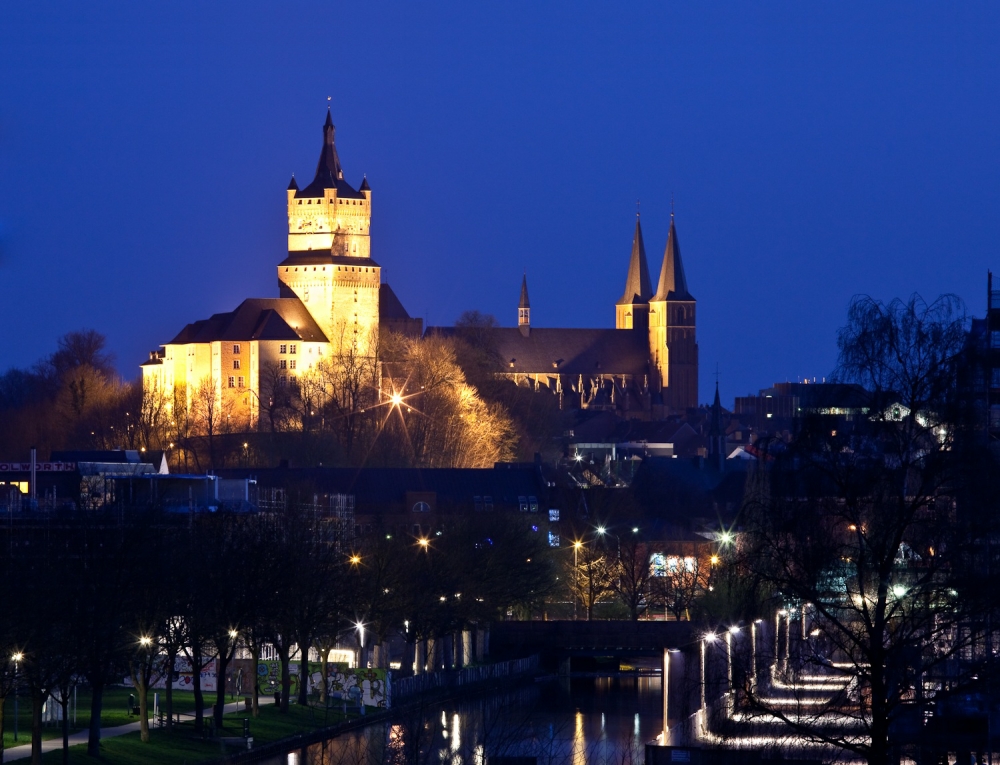
Schwanenburg_(Swan Castle) at_Kleve - Photo credit: Wikipedia.org

Schwanenburg_(Swan Castle) at Kleve – Photo credit: Wikipedia.org

The man in charge of the hostel looked annoyed, when he saw a bunch of boys dropping in so late in the day to disturb his peace and quiet. He immediately singled me out with his keen eyes as the leader and pounced on me giving me a severe dressing down for failing to give him advance notice of our arrival. When I meekly showed him the youth hostel membership card that Hühnchen had given me with the prospect of easy access to food and lodging, he exploded in anger and with his yelling and screaming almost scared me out of my wits. I learned from his verbal attacks that using somebody else’s ID is forbidden. He made me feel so guilty that all I could do was to remain silent. At last he ended his abusive tirade, which included scornful remarks about my shabby appearance. Having thoroughly blown his stack, he felt much better and to our relief calmed down, even managed to give us a smile. He instructed me to inform my ignorant boss not to hand over his membership card to others and, with a hint of reconciliation, asked us to come in and register for the night.

To be continued …

Chapter XIII of the P. and G. Klopp Story – Part 1

Visitors new to this blog can read earlier chapters on the Klopp Story menu item.

The Scout Years

In Scouting, a boy is encouraged to educate himself instead of being instructed. Robert Powell

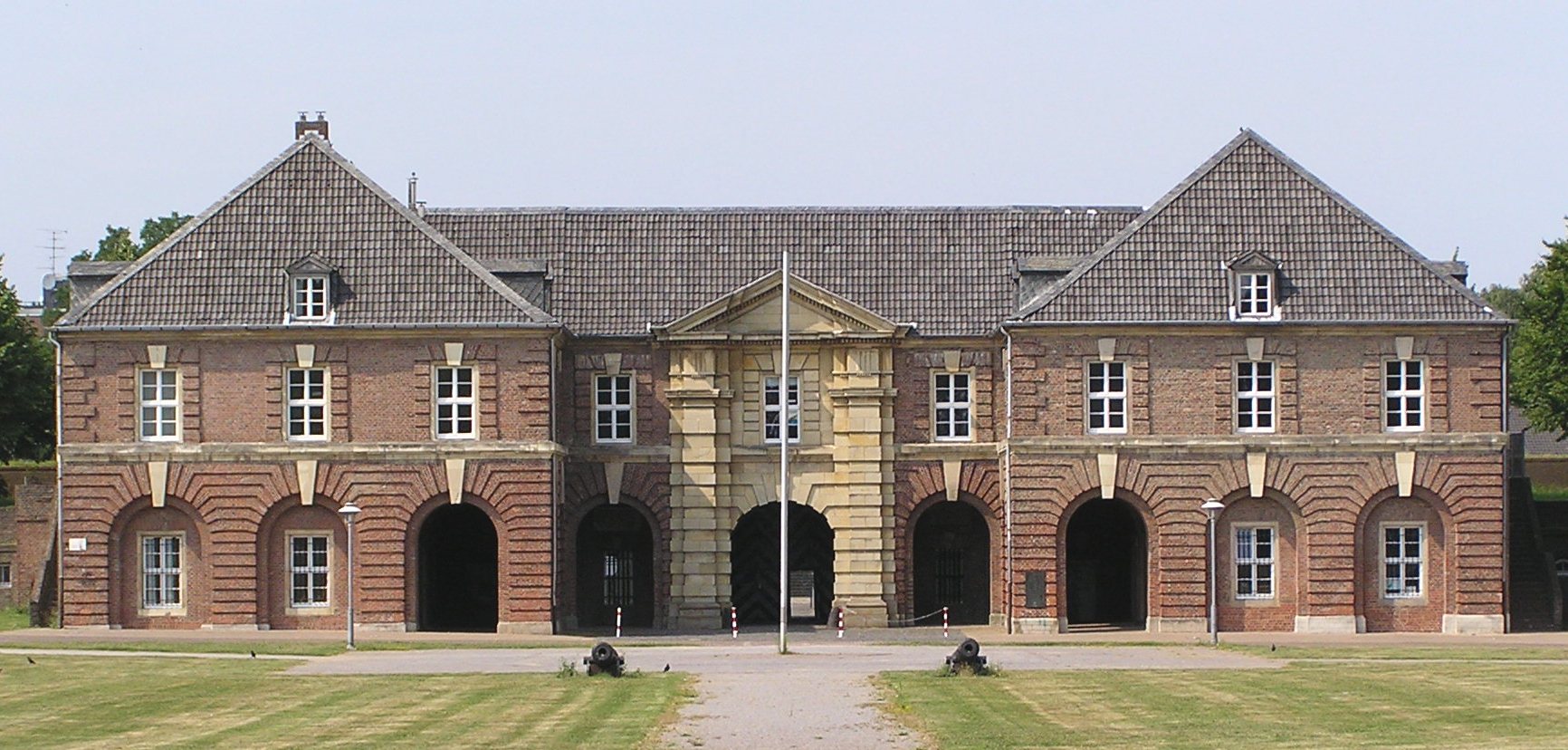
Zitadelle_Wesel = Photo Credit: wikipedia.org

Citadel in Wesel – Photo Credit: wikipedia.org

How I became a scout, I can no long remember. Perhaps a friend or a classmate introduced me to the Union of European Scouts (BEP), a new organization that sprang up in many towns in the late 1950’s. In an era when European countries still lived in fear, distrust, even hatred for each other, the idea of a European community without borders appeared to be absurd. However, it was the key mission statement of this fledgling movement to bring young people of Western Europe together. They were not burdened by the weight of old political prejudices by former generations.

My experiences as a scout did much to enrich my life with lasting effects and nurtured qualities that became rewarding and useful later on in my adult years. Among those qualities were the ability to work in teams, the development of leadership skills, self-reliance, the love of the outdoors in general and the joy of camping in particular, the indescribable pleasure of singing pirate and lansquenet songs, shanties and spirituals, hearty tunes of adventures in distant lands in unison with like-minded boys, contentedness with simple things in life, a certain degree of frugality with food and clothes, just to name a few.

The city of Wesel had generously made the citadel available to youth groups and other non-profit organizations for their meetings and activities. The citadel is the only intact fortification left in all of Westphalia. Its history goes back to the Napoleonic era and even much earlier, when the French were in control of the Lower Rhine region. The citadel was the massive and robust building where we gathered. The solid interior walls emanated the kind of imagery befitting the stalwart character of scouts in their late teens: strength and dependability. Here we learned under the capable leadership of Günther Alvensleben with the misleading nickname Little Chicken (Hühnchen in German) the rudiments of scouting, from tying knots, writing down our favorite camp songs in notebooks to orienteering with map and compass.

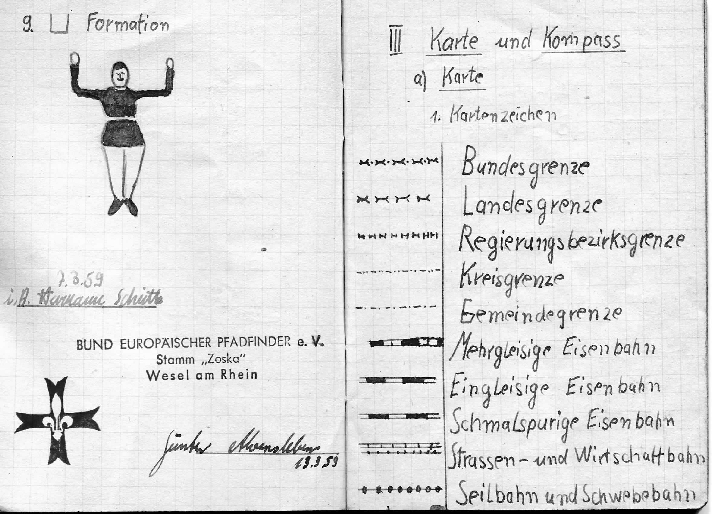
Page of Handwritten Scout Book

Page of my Handwritten Scout Book

My friend Hans and I were chosen to take on a leadership role in the rapidly expanding local chapter. To become a leader we had to be acquainted with the history of the scout movement and its founder Lord Baden-Powell. We also had to demonstrate competence in a variety of skills related to scouting. Since we had no books, we created our own using small notebooks complete with hand-drawn diagrams and illustrations. After passing an oral test, we had our entries in the booklets signed and provided with the official rubber stamp of Tribe Zoska, to which we belonged. Thus, after a period of intense training, I became leader of a clan consisting of about a dozen boys in their early teens. For the first time in my life I felt responsible for the welfare and safety of others. In the beginning I had become a member of the local scout chapter merely to find enjoyment in their exciting outdoor program. But now I  had moved away from a mere egocentric perspective and began to care and feel an obligation towards my fellow scouts in the clan. I also started to understand the truism in the saying ‘By helping others, you help yourself’.

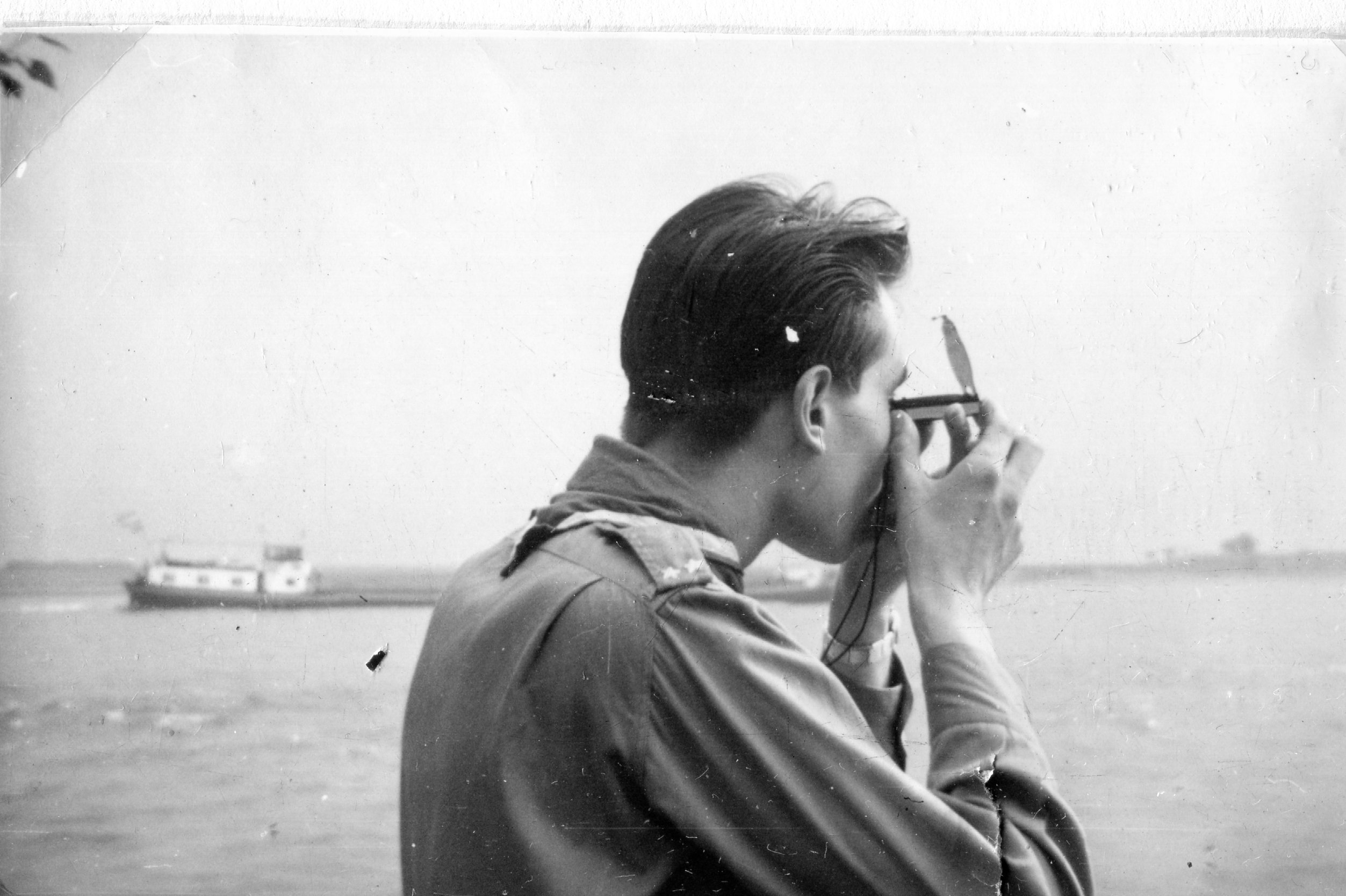
Peter Working with Compas

Peter Working with Compass at the River Rhine

Talents for teaching, organizing activities, bringing about order in chaotic situations, abilities hitherto unknown to me were slumbering and waiting to be awakened. All these hidden capabilities were being developed while learning to be a good leader. What I did not realize at the time was that I also started to bring my own house in order. Gradually I became acutely aware that I had a tendency to lose myself in a dream world indulging in the entire gamut of fantasy-driven emotions. I began to suspect that avoidance of the requirements and obligations of every day living made me dwell so much in my disconnected inner world. My active involvement as leader of a clan brought fresh air into my life, encouraged me to focus on planning, organizing, and executing projects and camp-outs. In short I began to steer away from my unproductive self-centeredness.

To be continued…

Chapter XII of the P. and G. Klopp Story – Part IV

Exploring Germany by Bike

Summer 1959

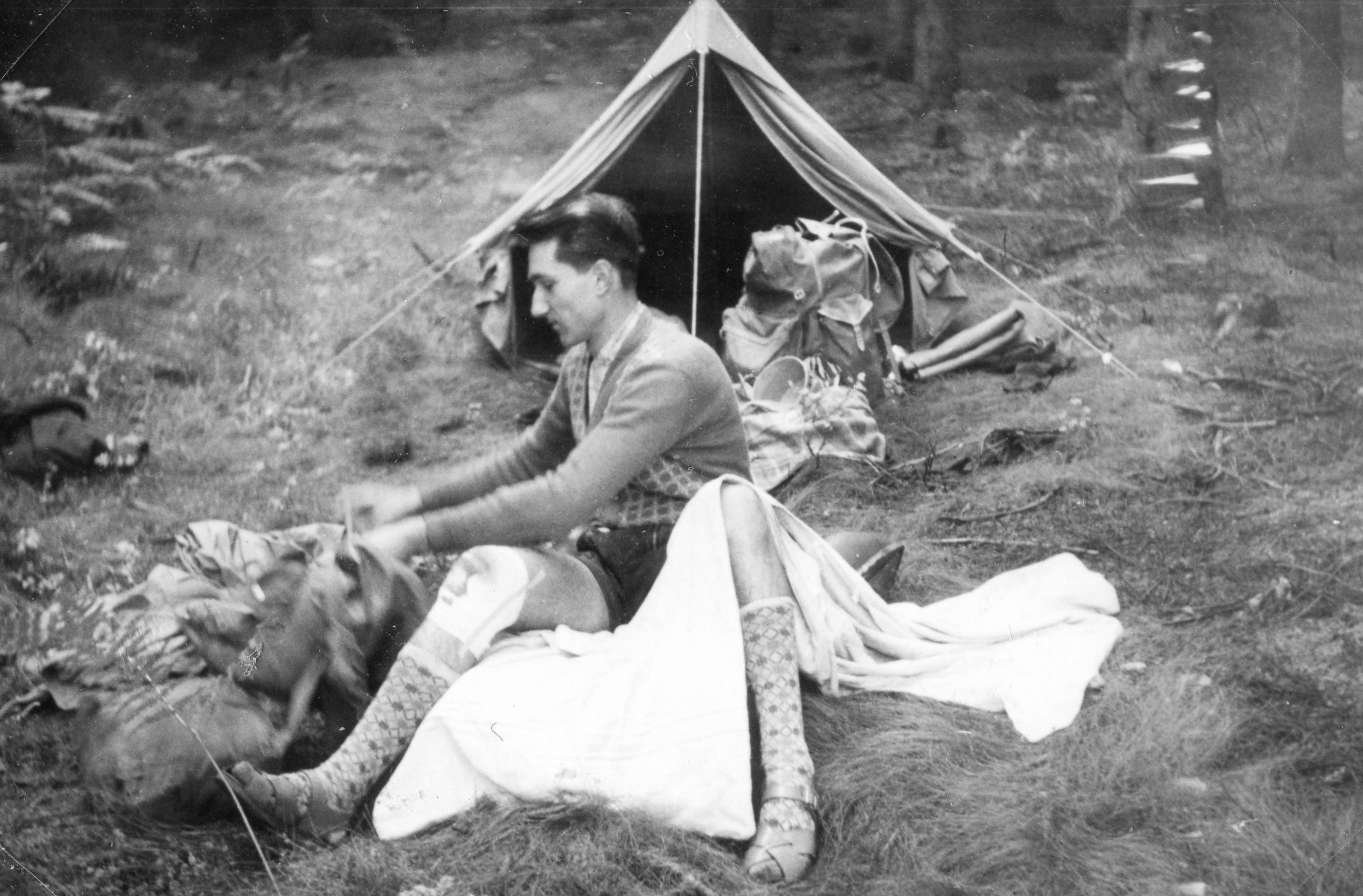
In preparation for our ambitious goal to travel by bike all the way down to Lake Constance with stopovers in Bad Kissingen and Freiburg at Aunt Meta’s place, Rainer and I had a lot of things to do. We planned to camp in the fields and woods along our route and stay away from the campgrounds to save money. I already owned a two-person tent, for which Mother had so lovingly sewn together a sheet of cloth that could be draped over the tent for extra protection against the rain. Rainer, being the son of the owner of a lucrative car repair shop, had access to telephone and quickly set the approximate date of our visit as promised by Christine’s father the previous summer. For food we limited ourselves to non-perishable goods, such as canned sardines, meat, even pumpernickel, and fruit for dessert. For entertainment I took along my harmonica and also a novel written by Jerome K. Jerome at the turn of the century with the title ‘Three Men in a Boat’. In English class we had to read excerpts from the book and we had so much fun with many of the hilarious passages that I decided to buy the book in German translation. At the end of a long and tiring day on the saddle we would crawl into the tent and I would read aloud from this delightful traveling book. We often had to pause to recover from our fits of laughter over a particularly comical description of the three boaters and their temperamental dog.

Peter after his Bike Accident

Peter after his Bike Accident

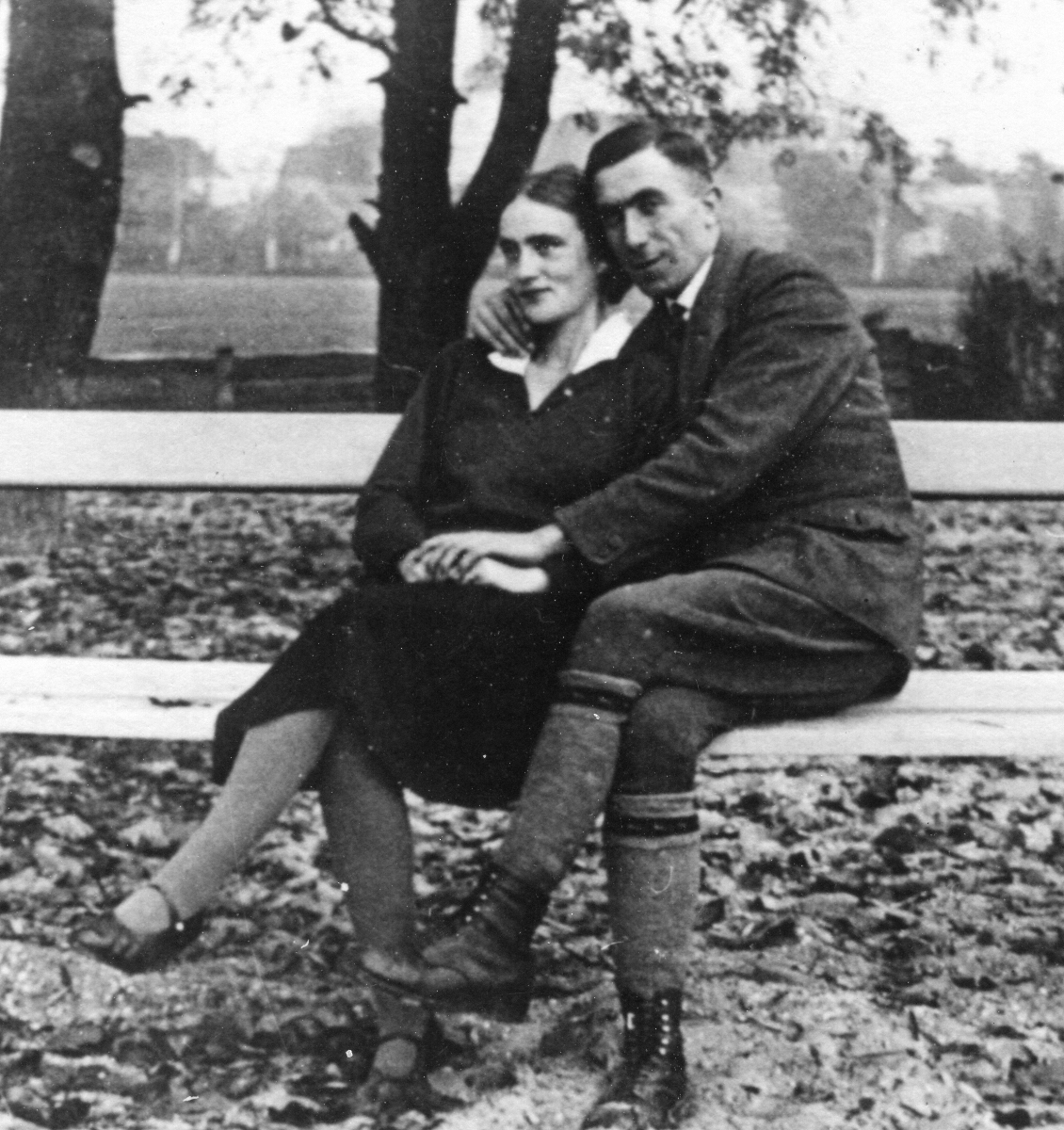
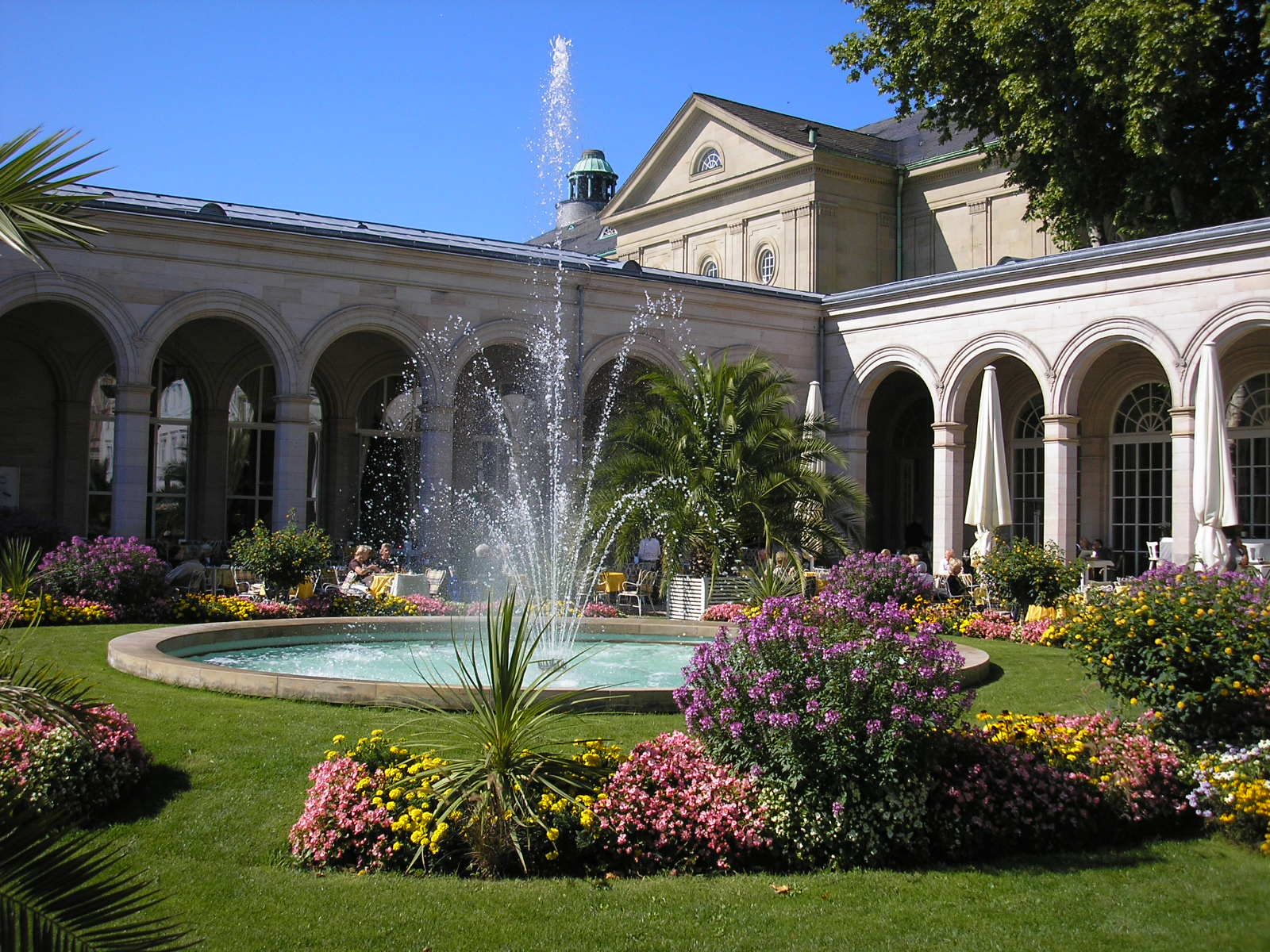
The Lower Rhineland and the adjacent Ruhr industrial area are almost level. So traveling was easy and light for the first couple of days, even though our bikes were loaded to the maximum capacity with supplies. But when we were nearing the halfway mark to Bad Kissingen we were in the hill country. The slope was getting steeper. Riding old-fashioned bicycles without being able to shift into a lower gear, we often had to get off our bikes and push them with the heavy luggage several kilometers uphill. Oh, how I wished then to be back again in the cool refreshing breeze of the Baltic Sea. Eventually though we were rewarded for our hard labor with a comfortable coasting down into the valley bottom. On one of these pleasant downhill rides not too far from our first stopover I lost control on a sharp curve and took a nasty spill over loose gravel. I badly scratched up my right knee and was bleeding profusely. Other than feeling the stinging pain I got away without any major injuries. Fortunately, the bike had not suffered any damage. So Rainer and I, disheveled and myself a little bit shaken up, arrived at our first major destination. Dr. Baudach took immediate care of my knee and applied a stinging disinfectant and a healing cream to my wounds from a little tube that was worth fifty marks, the equivalent of 10 days of my traveling budget. Bad Kissingen is a spa town and a world-famous resort town in the Bavarian region of Lower Franconia about 300 km southeast of Wesel. We were thankful for the opportunity to recover from our arduous climbs over the hill country and thoroughly enjoyed the hospitality in the doctor’s home during our three-day resting period. When we said good-bye and our heart-felt thank-you to Mr. and Mrs. Baudach, we promised to write as soon as we had finished our journey. We also promised Christine to start as pen pals a correspondence with her. After all she was the one who initiated our invitation from her dad in the previous summer.
Bad Kissingen - Photo Credit: wikimedia.org

Bad Kissingen – Photo Credit: wikimedia.org

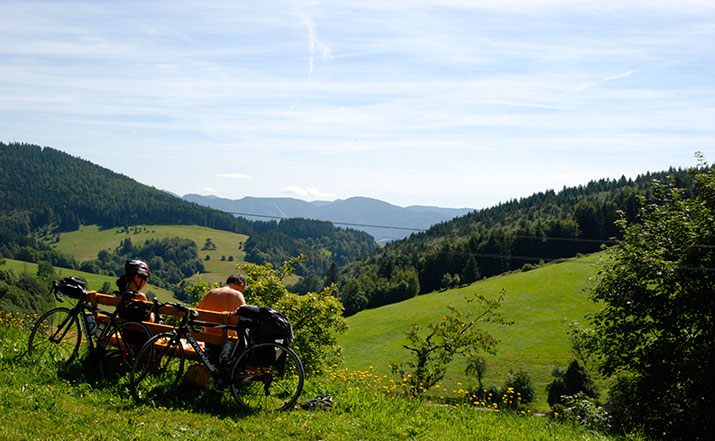
Having already been almost two weeks on the road, Rainer and I decided to drop Lake Constance from our itinerary and ride on in a southwesterly direction to Freiburg. Because of the sultry and hot weather we did not average more than sixty kilometers a day. More and more often we had to walk our bikes, as the road was getting steeper. When we had finally reached the famous Black Forest Highway, we realized that the toughest part was still to come. We had to overcome the difference in elevation of more than five hundred meters in order to reach the top of this arduous mountain road. Our progress dwindled to a mere thirty kilometers a day. We would need seven days or more to get to Aunt Meta’s place in Freiburg.

On a particularly long and steep stretch we almost despaired and were ready to buy train tickets in the next major town to escape what appeared to us to be self-inflicted torture rather than a fun-filled journey through one of the most beautiful parts of Germany. While we had parked our bikes on the roadside and contemplated what to do next, we noticed how sluggishly the big trailer trucks were crawling up the mountain road. Necessity is the mother of invention. Seeing the trucks rumbling by at a very slow pace sparked the idea. We would pick one with a trailer and attach ourselves to its back-end. At less than twenty kilometers per hour we figured we would be able to hang onto it with one hand and steer the bicycle with the other. Totally ignoring how dangerous and unlawful it would be, we tried out our plan on the next curve, where we could be sure not to be seen in the rear view mirror of the truck driver. It worked marvelously. Even though we had to switch trucks several times to give our arms a rest, we reached the summit of the North Black Forest road in a matter of a few hours. Tired and exhausted, but happy and content we set up our tent in a cool forest meadow near a mountain creek, whose gentle murmuring quickly lulled us into a deep and well-deserved sleep.
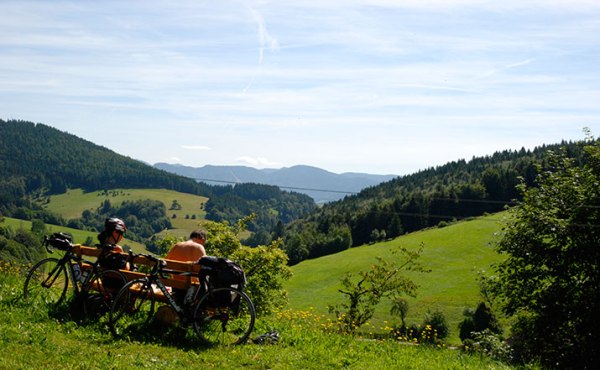
Blackforest with Mountain Bikers - Photo Credit: breisgau-schwarzwald.de

Blackforest with Mountain Bikers – Photo Credit: breisgau-schwarzwald.de

Well rested we made excellent progress on a relatively level stretch of highway on the Black Forest plateau. We refrained from hitching onto the much faster moving trucks this morning. Turning west near the picturesque town of Hinterzarten we were now heading toward the Höllental (Valley of Hell). Below these high-lying hollows of the town the federal highway B31 winds downhill in spectacular loops. Riding on this road turned to be a fantastic joyride, even though in hindsight it could have easily turned into a disaster, if the simple back pedal brakes had failed. After the railway station Hirschsprung with its steep slopes up to six hundred meters high came a section with towering cliffs known as the Höllenpass (Hell Narrows). The narrowest part of the gorge is called the Hirschsprung (Deer’s Jump). A common tale reports that a deer escaped hunters by jumping over the nine-meter wide gorge. Enjoying more the exhilarating high-speed ride than the magnificent scenery all around us we zipped by in typical teenage fashion toward the widening valley of the Freiburg district. It was late afternoon when we arrived at Aunt Meta’s place, where we received the warmest reception and for the first time in days had a decent meal again.

Since my last visit in 1953 Aunt Anna after the death of her husband Baron von Waldenfels had been living with Aunt Meta at the same apartment. Her colorful life as baroness, a very interesting piece of family history, can be read in the voluminous book ‘Familienchronik Klopp’ written by Eberhardt Klopp, a distant cousin of mine. Having grown up in the nationalistic era of Imperial Germany, she was still filled with the fervor of German patriotism. While we were savoring Aunt Meta’s delicious cake at the coffee table, her passionate plea to us strapping young men to embrace and adhere to the archaic concepts of blood and honor is still ringing in my ears after all these years.

Rainer made a phone call to his mother describing to her the fun we had but also the ordeals we experienced in pedaling through mountainous terrain. Whether it was compassion for her son or whether she just wanted to take a break from her household chores, I do not know. But she decided to pick us up in her VW beetle. We took our bikes to the railroad station and had them shipped to Wesel. The trip home with Rainer’s cheerful mom along the scenic River Rhine with its impressive mediaeval castles brought another adventure to a most pleasant conclusion.