Chapter XI of the P. and G. Klopp Story – Part I

 Until one has loved an animal, a part of one’s soul remains unawakened.
Anatole France

 Adventures Above and Below the City of Wesel

In 1956, the same year my brother Gerhard (Gerry) immigrated to Canada, Mutter, Aunt Mieze and I moved into our brand-new apartment near the center of the city of Wesel. Just a little over a decade after the war, the city lay still to a large part in ruins. Reconstruction was in full swing. Looking from my bedroom window I had an unobstructed view of a three km stretch with no houses standing all the way to the railroad station.
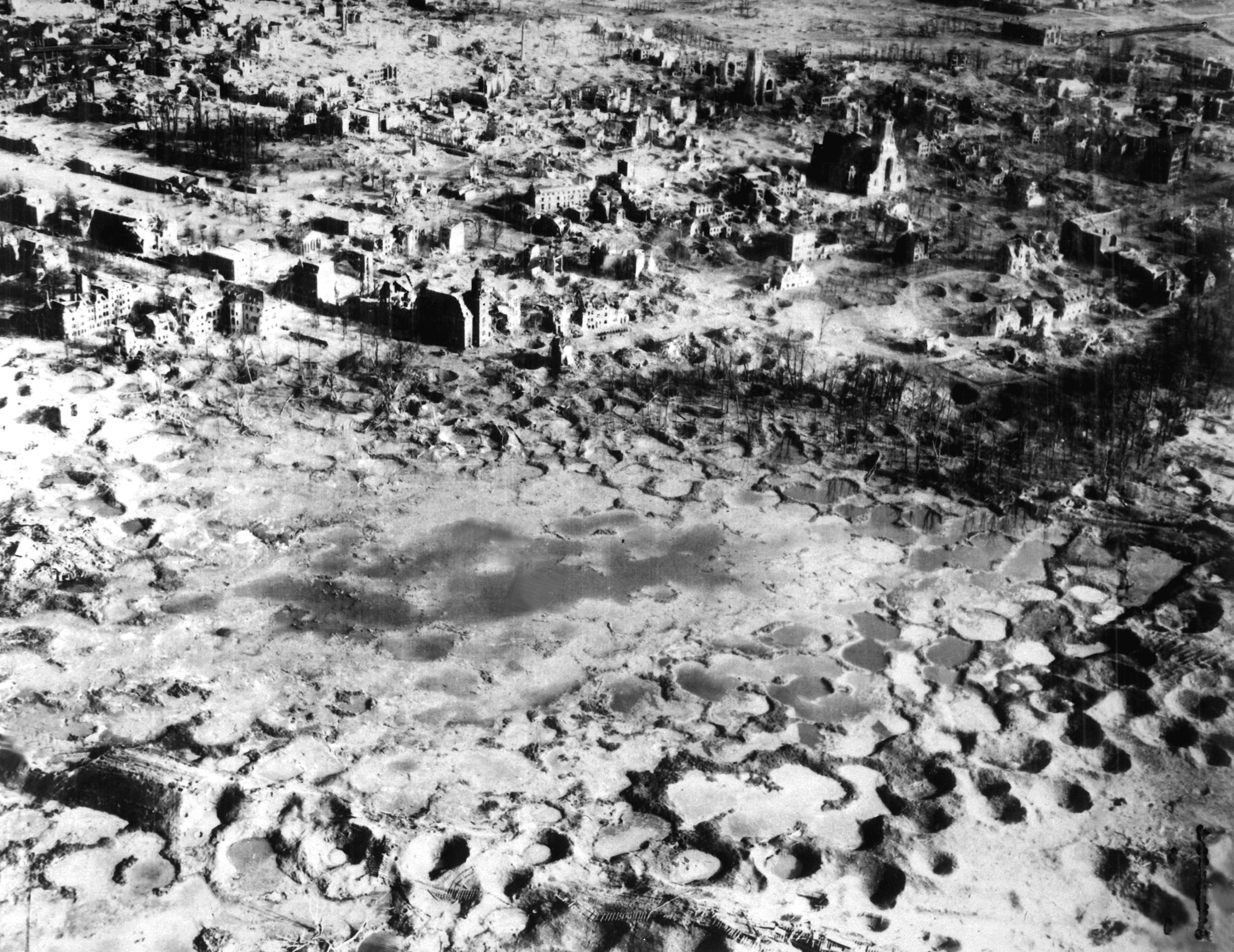
Walls of houses of Wesel still stand, as do the churches, but a great part of the town was destroyed when the German commander forced the Allied troops to fight their way street by street through the ruins.  Germany, 1945.  Army.  (OWI) Exact Date Shot Unknown NARA FILE #:  208-N-39903 WAR & CONFLICT BOOK #:  1336

Wesel after Allied Bombing Raids in March 1945 – Photo Credit: wikipedia.org

Of course, from a boy’s perspective, the city was an exciting place waiting to be explored. With my friend Hartmut I went on adventurous exploration into the huge bombed-out area not far from the street with the melodious-sounding name Auf dem Dudel, where I lived. Not finding much in the rubble that had been picked clean long time ago, we felt the magnetic pull of the few houses, which had been declared unsafe by the authorities. There were warning and ‘no trespassing’ signs. Did curious teenagers ever heed such notices? Hartmut and I found a window at the back that the city workers had forgotten to board up. Assisting each other we gained quick access to the interior of the house that had miraculously escaped total destruction from the Allied carpet-bombing raid a decade ago. We climbed up a fancy wooden staircase to explore the upper rooms. From the ornamental engraving and carving of the railing and the decorative oak panels on the walls we knew we had entered a small mansion. Eagerly we scurried from room to room in search of some treasure that the owner might have left behind. To our greatest disappointment the rooms were bare and the floors had been swept clean. Only the old-fashioned flowery wallpaper offered a hint that this little mansion had seen better days. To get at least one benefit out of our discovery, we decided to come back and turn one room into the headquarters of our secret society that we soon formed under the mysterious name “The Black Hand”. Unfortunately on the following excursion, we made the sad discovery that the only remaining opening into our hiding place had been properly nailed shut.
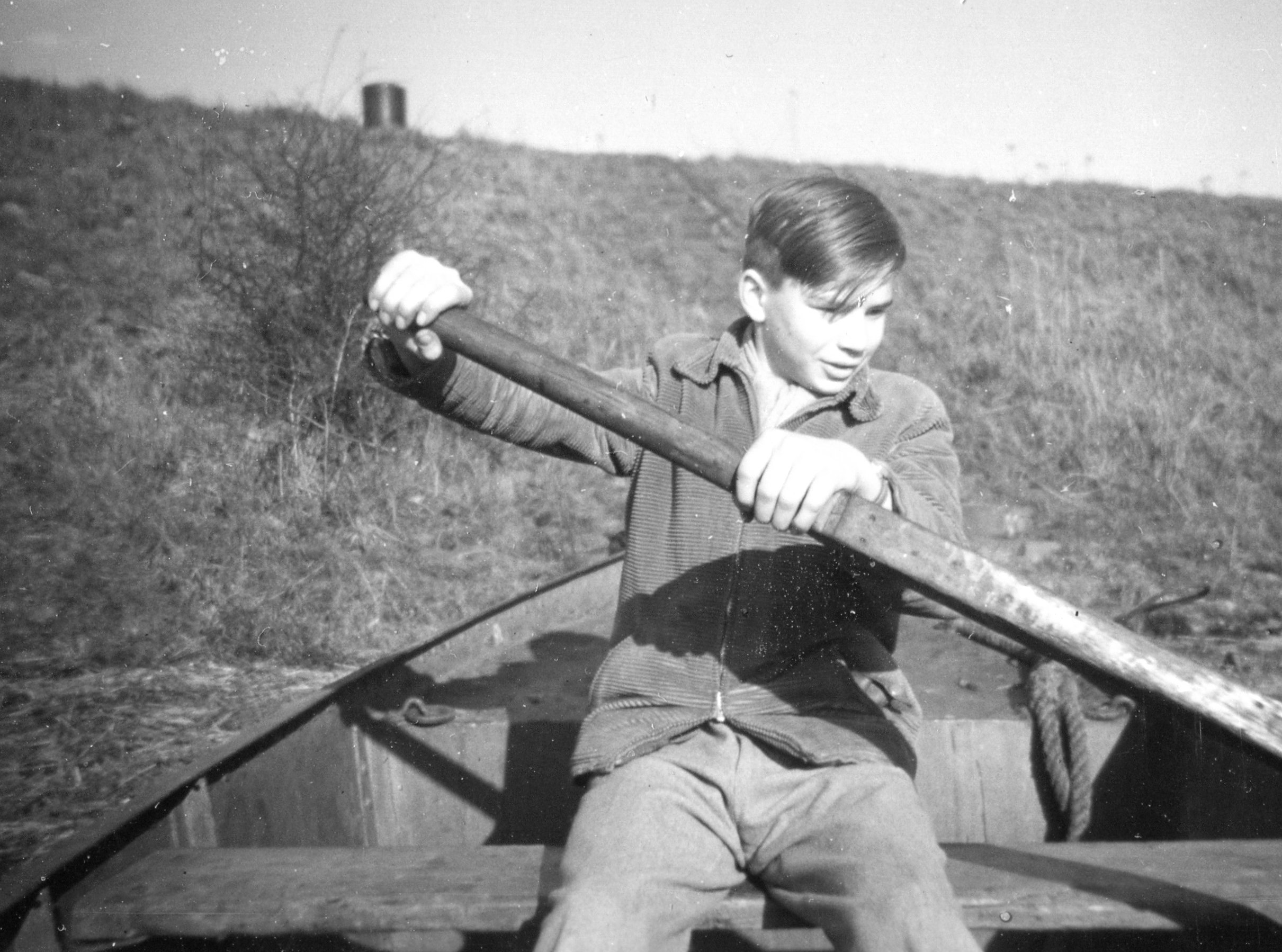
Friend Hartmut on the River Rhine at Wesel

Friend Hartmut on the River Rhine at Wesel

At the outskirts of the city there was a brand new sewage treatment plant. Construction workers were still busy installing underground concrete pipes more than two meters in diameter. A few weeks before the town sewage and drainage system was to be connected to the new facility, Hartmut and I came across an open manhole, which led down via an iron ladder to one of the underground tunnels. Our plan was to come back the next day with flashlights and to embark on a new adventure underneath the city of Wesel. The following afternoon we descended into what seemed to our excited imagination Minotaur’s labyrinth. Fear of the unknown and the desire to prove our courage heightened the excitement. Iron rung by iron rung we lowered ourselves into the municipal underworld, where three giant pipes joined to form a Y-connection. We decided to follow the larger pipe that led away from the city. It was eerie to walk through the dark passageway, where the feeble flashlights could not reach farther than a few meters. The echo of our steps reverberated a million times from the smooth concrete walls. We did not dare to speak, for we were afraid of our own hollow sounding voices. Every ten minutes or so we encountered a shaft leading up to a manhole. But they were all securely closed and the metal lid would have been too heavy for us to lift. With some trepidation we realized that we had to return to the manhole we had just climbed through, if we wanted to get out of this gloomy environment. We were just about ready to turn around, when I saw a faint circular light. It was the proverbial light at the end of the tunnel. It gave us hope to escape a little sooner from this frightening darkness, since our flashlights were already beginning to fade. We were moving faster now toward the exit. Soon we were close enough to hear the grinding noises and then we felt the vibrations from heavy machines. Just then a crane was lowering another pipe section into place, when the foreman of the work crew spotted us emerging from the darkness into the broad daylight.

“What the hell are you little devils doing down there? Get out of there this very minute! I want to talk to you.” Seeing the man seething with anger and hearing the verbal abuse that came raining down upon us, we stood there stunned and paralyzed for a short while as if glued to the edge of the pipe. But when he threatened to call the police, we regained our mobility. We quickly turned around and rushed back into the safety of the underworld that just a moment ago we were so eager to escape from. With the flashlight flickering and threatening to go out completely we raced back without granting ourselves a single break fearing all the time that the foreman had sent his work crew to catch us. The two or three kilometers seemed endless, but all of sudden we had reached, huffing and puffing, the Y-section, where our adventure had begun. Except for our heavy breathing no footsteps from the other end could be heard. The light from the open manhole above signaled that we were safe. We were totally exhausted from the run, but very happy to see the light of day again.
Chapter X of the P. and G. Klopp Story – Part III

Creative Use of Margarine Cards and Early Insights into Marital Spats

When Mother had a day off, we were able to do things together. What I liked the most was to go with her on hikes through the wooded hill country surrounding the town. At the end of a two- or three-hour leisurely walk along the highways that were not plagued too much by traffic, we always found a cozy roadside inn, where we dropped in for some refreshment and relaxation. Mother would order a cup of coffee for herself and for me a glass of mineral water or some homemade apple juice. On one occasion the innkeeper, who was running a small farm on the side, was too busy to stay with us being the only guests. So Mother and I spent the afternoon alone in the guest room and watched a movie on the small b/w TV screen. This was the very first time that I watched TV. I was thrilled getting acquainted with the new media that was just beginning to conquer the German entertainment market. The film most likely boring by today’s standards caught my immediate interest with its simple but captivating story about an immigrant from Europe who was on death row in an US state prison. He asked for and was granted permission to write letters to his aging mother in the Old Country. Within two weeks he wrote more than a hundred post-dated letters describing his imaginary tale about his proud achievements leading him from rags to riches in the New World. After his execution a prison guard with a heart sent off a letter every few months to his mother. A sad, but compelling story I remember vividly to this day.

Rudersberg - Photo Credit: weather-forecast.com

Rudersberg – Photo Credit: weather-forecast.com

On the few rainy days, when we could not go on our beloved hikes, we stayed in Mother’s room and played her particular variation to the German card game ‘Six-and-Sixty’ with a double-deck of cards, which allowed us to unite in ‘marriage’ lots of queens and kings. Each marriage resulted in twenty more points than the marriage before. On these occasions Mother inspired by a glass of local wine or a satisfying victory in the card game would talk about her life in Pomerania, both sad and humorous stories. At times she would back to her childhood years in Grünewald. Proudly she told me that what she enjoyed the most. She liked horsing around and roughhousing with her brothers, which, although not becoming for a girl, was very much respected by her older brothers. Curiously she did not talk much about Father, nor did I ask any questions about him. I lived in the present; the future and the past did not yet have any meaning for me.

Back in Brünen, where the excellent food from the Wefelnberg country kitchen did miracles to the still slightly undernourished pre-teenage body of mine. In no time I gained enough weight so that I suddenly appeared quite chubby, perhaps even a little stout. There are no photos of the time, but I remember distinctly that I easily won wrestling matches with boys of my age by simply pinning them to the ground on account of my sheer weight.

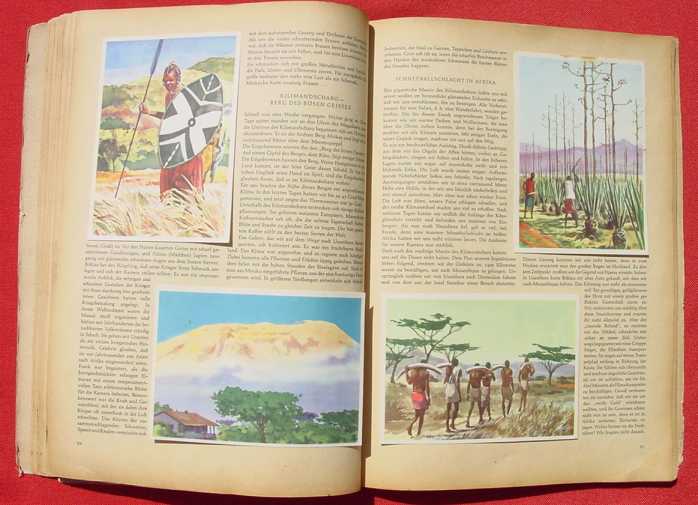
Sanella Album of Africa - Photo Credit: delcampe.net

Sanella Album of Africa – Photo Credit: delcampe.net

Butter was still expensive in the mid-fifties. Many households therefore were using margarine made of vegetable oil as an alternative to butter. One of the major margarine manufacturers added picture cards in the size of a standard 4 by 6 in. photo to their packaging and encouraged customers through their advertising to collect them and eventually paste them into booklets available from the company for a small fee. These booklets contained text and additional drawings, maps and illustrations for the cards and when completed represented a veritable treasure trove in the geography of Germany and other countries. I eagerly collected these cards. Frau Welfelnberg made sure that I would get them, when she opened another margarine package. Since there were many doubles, I traded them like stamps with many like-minded friends in the neighborhood. Since I had no money to order the corresponding booklets, I sorted them by themes of my own creation and glued them together to make a roll of forty to fifty pictures. Out of a sturdy cardboard box I fashioned a miniature stage. I cut out a rectangle roughly the size of one picture, inserted a round wooden peg on the right side of the box to serve as a pick-up spool for the roll of colorful images that would slip through the rectangular viewing area one picture at a time.

Now it was time to invite all my friends together with their younger brothers and sisters for the show that would take place in the natural theater of the backyard. The children sat on the lawn, while I presented the pictures very close to them on a small table taken out of the house for the performance. I invented the accompanying story and presented it extemporaneously in the form of a travelogue. The slide presentation became an instant success. The spectators not yet spoiled by children’s TV shows wanted to see more episodes. To help me they gathered as many picture cards they could scrounge up at home. What a creative way on the part of the Sanella margarine company to get people to buy their product!

One evening, while I lay on my bed that was wedged between the walls of my tiny bedroom, I overheard a conversation between the young miller and his wife, whose names I have completely forgotten. I witnessed a most peculiar spat between husband and wife behind the wall that separated their bedroom from mine.

Wife: How do like my new dress?

Husband: It looks beautiful on you.

Wife: Don’t you think it is VERY beautiful?

Husband: It is beautiful, indeed.

Wife: Now, now, you must admit that it is VERY beautiful.

Husband: There is nothing to admit here. It is my honest opinion that the dress is beautiful.

Wife: But you must see that my dress, the dress I bought with my own money, is VERY beautiful.

Husband: Whether you or I paid for it has nothing to do with its beauty. That’s illogical, my dear!

Wife: Leave me alone with your logic. Don’t you want me to look VERY beautiful?

Husband: Indeed, indeed! I want to …

Wife: So then, why don’t you say that the dress looks VERY beautiful on me?

Husband: Because there is a difference between beautiful and very beautiful.

Wife: So what you’re saying is that I look less than very beautiful. Why don’t you come right out and say I look VERY ugly in my new dress.

The conversation went on for a long time and became more and more animated and vociferous, but suddenly and rather abruptly ended with the wife sobbing quite miserably and with the husband deciding that it would be wiser to add no more fuel to the heated argument. It was time for the couple to make peace. A few minutes later the not so quiet springs of the marital mattress announced that love had overcome their verbal sparring. I had often pondered about the meaning of this curious episode.

Gerhard Kegler, the German general, who dared to disobey Himmler – Part I

A Brief Overview of Gerhard Kegler’s Education and Military Background

1898 – 1986 (Chart II a – II)

On January 26, 1898, Gerhard Kegler was born in Grünewald, Pomerania (Province of Germany until 1945). Posts on his three older siblings Marie, Günther, and Gertrud can be found in the archives of this blog. They show how the children of Pastor Carl Kegler and his wife Elisabeth had a happy childhood in the small Pomeranian community of Grünewald. Also the third chapter of the P. and G. Klopp Story has more information on the Kegler family background, which therefore need not be repeated here. Like his brother Günther, Gerhard began his military career as a cadet in 1908. The outline of his comet-like rise in the ranks of the German army follows below.

  • 1904 -1908 Elementary School at Grünewald
  • 1908 – 1914 Military Academy at Plön
  • 1914 – 1917 Military Academy at Groß-Lichterfelde
  • March 1, 1917 Officer Cadet at the 149th Infantry Regiment in Schneidemühl
  • September 1917 On the Western Front at Champagne and Argonne
  • November 1, 1917 Lieutenant
  • 1918 Participated in the last major German offensive of World War I
  • 1919 – 1920 Border Patrol at the section between Schneidemühl and Bromberg
  • End of November 1920  Transfer to the 4th infantry regiment of the newly created army, which was limited by the Treaty of Versailles to 100,000 men
  • 1921 – 1922 Officer’s training in Munich
  • 1924 Teacher at the Officer’s Sports Training School in Berlin
  • 1925 Promoted to the rank of first lieutenant
  • 1926 – 1929 Trainer and Sports Teacher at the Infantry School in Dresden
  • 1929 – 1933 Leader of military courses for officers’ trainees in Berlin and Dresden
  • March 1, 1933 Advanced to the rank of captain
  • 1933 – 1934 In charge of the 11th Infantry Regiment 9 at Spandau
  • 1934 – 1938 In charge of the 3rd MG Battalion 8 at Züllichau
  • 1937 Promoted to the rank of major
  • 1938 Teacher at the Military Academy in Munich
  • 1939 At the beginning of World War II Battalion commander in the Infantry Regiment 282 of the 98th Division at the Western Front
  • 1940 Commander of Infantry Battalion in Training at Kreuznach; front-line duty in the attack on the French Maginot line in the Vosges Mountains
  • November 1, 1940 Commander of the Infantry Regiment  27 and promoted to the rank of lieutenant-colonel
  • 1941 – 1944 Invasion of the Soviet Union
  • February 1942 Promoted to the rank of colonel
  • October 1, 1944 Promoted to the rank of major-general
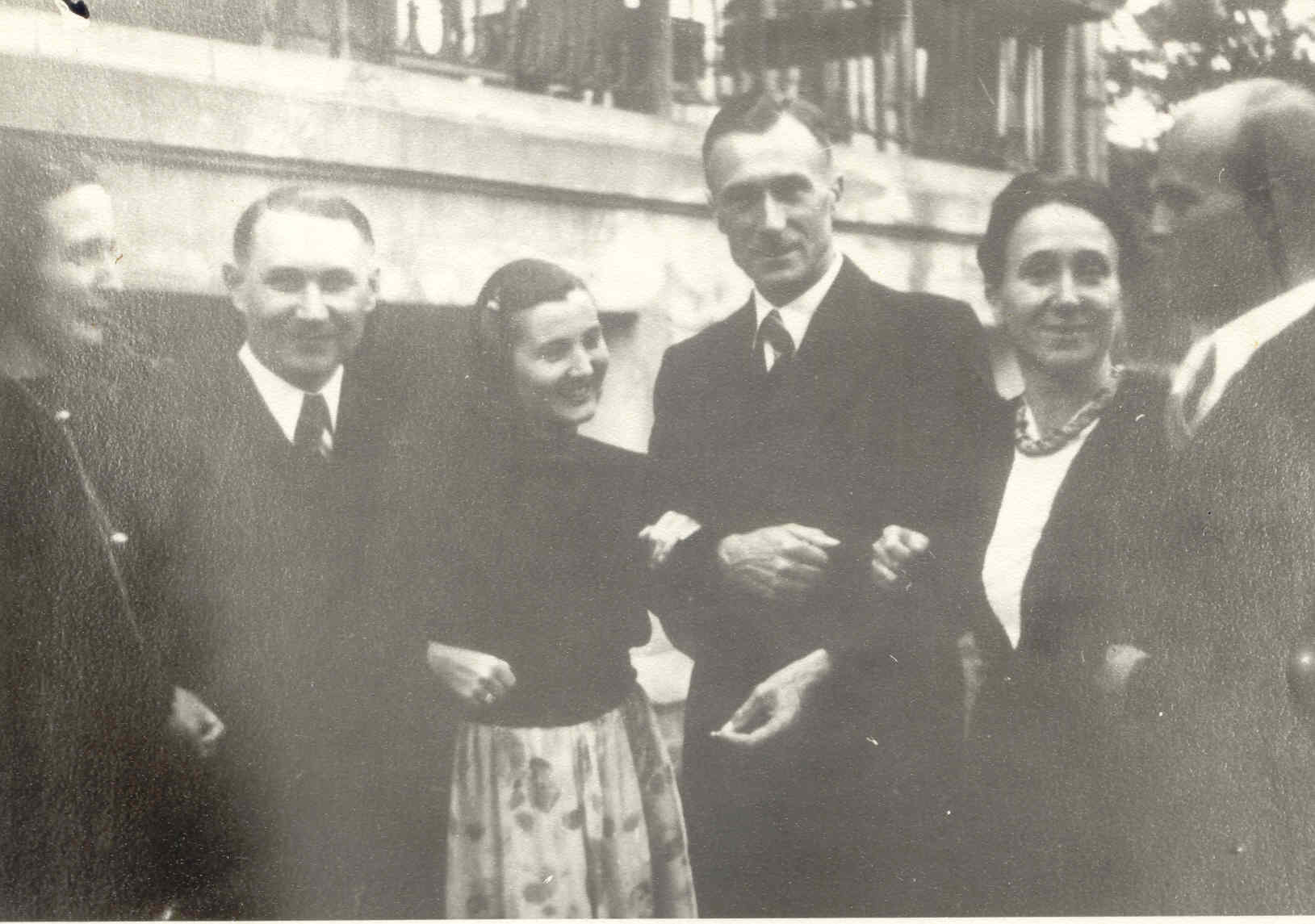
Gerhard Kegler on a Visit at Gutfelde 1944

Gerhard Kegler on a Visit at Gutfelde 1944 (the tall person in the middle)

In February 1945, Gerhard Kegler was condemned to death after being court-martialed for disobeying Himmler’s orders to defend the town of Landsberg on the River Warthe. The following posts will deal with the circumstances leading up to this terror verdict and will hopefully contribute to dispel the myth about all German officers blindly following the Nazi Regime without any moral backbone.

To be continued

A Salute to Marie-Louise Klopp, a Courageous and Fiercely Independent Woman

Midwife Marie-Louise Klopp (1880 – 1924)

Adapted from Eberhard Klopp’s Family Chronicle – Chart I – II

In response to her mother’s endless disturbing attacks, Marie-Louise told her with an oath, “I am going to move with my family so far away that you cannot visit and bother me any more.” She resolutely converted this intention into reality. The former seamstress took up nurses’ training at the Wolmirstedt hospital to become a qualified midwife. Even against this career choice her mother voiced her opposition, although Marie-Louise after 12 years of marriage has been out of her parental home for such a long time. According to her mother’s distorted and overheated fantasies, Marie-Louise was entering a field that somehow was connected to the world of the ‘wise women’ and ‘witches’ of the Middle Ages. Indeed, according to her opinion, this was an evil consequence of her daughter marrying into the Jewish Klopp clan. From this point on, the few remaining family connections broke off all together.

Gardelegen - Photo Credit: scrapbookpages.com

Gardelegen – Photo Credit: scrapbookpages.com

Marie-Louise started her work as midwife in 1912 in Algenstedt, north of Gardelegen, where the family had acquired a house at the outskirts of the village. Friedrich found employment as mason or rather as laborer here and in the neighboring towns and villages. Marie-Louise, by having chosen the profession of midwifery, displayed in this male-dominated world a high degree of personal independence. Her work proved to be highly useful in the following years, especially during World War I. While her husband Friedrich was fighting in the war, she became the major bread earner of the family of four children. Fortunately Friedrich returned unharmed from the war. In 1921/22 he got together with his brother-in-law August Diesing (1875-1939) to prepare for a construction business. The plan was to acquire an older, unused school building close to Gommern by putting in a bid for that property. The devaluation of money and the collapse of the German economy put a quick end to their dream.

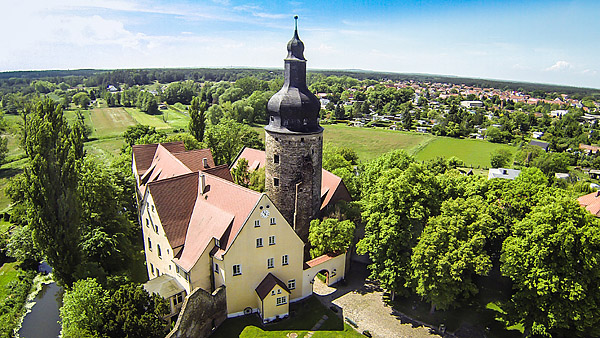
Gommern - Photo Credit: wasserburg-zu-gommern.de

Gommern – Photo Credit: wasserburg-zu-gommern.de

On the other hand, from 1912 and 1924, his wife Marie-Louise built up an excellent reputation for being a competent and reliable midwife in the towns, villages and farms north of Gardelegen. Unheard of at a time, when men dominated the work place, she was the one in the Klopp family, who put bread and butter on the table. Her son Friedrich together with his siblings Liesbeth and Hermann attended the tiny one-room school at Algenstedt. The eldest sister Frieda took care of the younger siblings and general household duties during the frequent absences of their mother.

Jacob - Photo Credit: thefreequark.com

Jacob – Photo Credit: thefreequark.com

They all remembered the tame crow ‘Jacob’, which rain or shine sat on the bike’s mudguard of Mother Klopp and traveled along. In-between it would disappear in the long treed boulevards and waited there for her return. Hours later it would travel back with her to Algenstedt. One day a neighbor shot the poor crow, because it had pulled  the clothes pins off the wash line.

Night shifts, hardships, a weak physical constitution, last but not least, constantly recurring trouble with her mother brought about her premature death at the young age of 44. From the Zielitz family nobody showed up for the funeral of their ‘Jewish-affiliated’ daughter.

Chapter X of The P. and G. Story – Part II

Appearance and Reality

Dangerous Adventure on the Roof Top

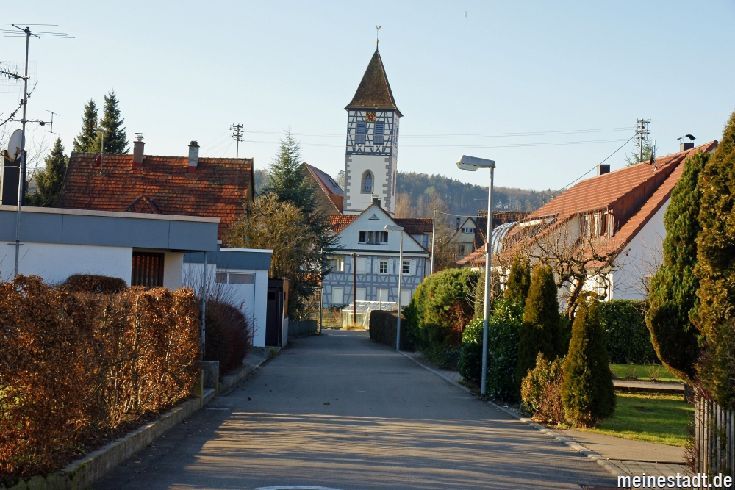
In the summer holidays I traveled by train to Mother’s work place, the Senior Citizens Home in Rudersberg less than half an hour’s drive from the commercial hub and center of southwest Germany, the city of Stuttgart. Here I spent six carefree weeks alone or with a newfound friend, who spoke a similar dialect as the people in Rohrdorf. When it comes to language, I had and still have, to a lesser degree, the ability to quickly assimilate a new dialect. Looking back at the first few months at the Wesel High School, where very formal and standard German was spoken, I am amazed at the speed, at which I lay aside all traces of my southern dialect.

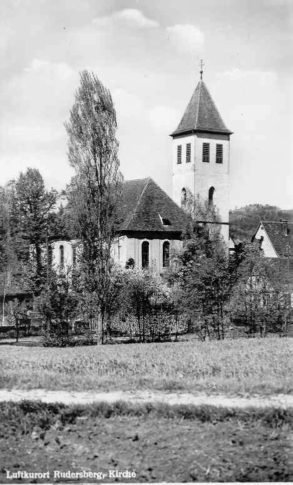
Church of Rudersberg

Church of Rudersberg

Right across from the Seniors Citizen Home was a small two-storied house with stone stairs leading up to the main entrance. Here a girl by the name of Ursula perhaps a year or two younger than I lived on the first floor. The two of us often sat on the steps chatting, swapping information about school life, our hobbies and the like. When the sun was coming around the building and it was getting too warm to sit on the stairs, we withdrew into the shade under the staircase. On a particularly hot afternoon we had spent quite a long time in our cool hiding place – perhaps a bit too long in the eyes of suspicious people who saw evil where there was none. When we eventually emerged and stepped into the glaring light, a barrage of angry words came raining down on us out one of the windows from the building across the street. An older woman all dressed in dark clothes shocked us with a seemingly endless tirade on the decline of morals, on the shameless and open display of inappropriate conduct between two, oh so young and already so corrupted individuals and all that so close to a Christian home for the elderly. “Shame on you! Shame on you!” she exclaimed, before she slammed the window shut. Apparently she had been following the invisible drama in her own imagination that was as far apart from reality as night is from day. We both were stunned by this outburst of incomprehensible accusations. Perhaps if we had been a few years older, we would have understood what this woman’s rage was all about. As for me, the unknown person in dark had already created an ever so vague impression that there was something unwholesome, sordid and morally questionable in dealing with the opposite sex, something I did not yet know what it was, but which came back to haunt me later in my adolescent years.

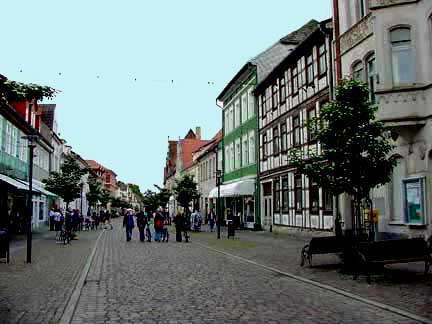
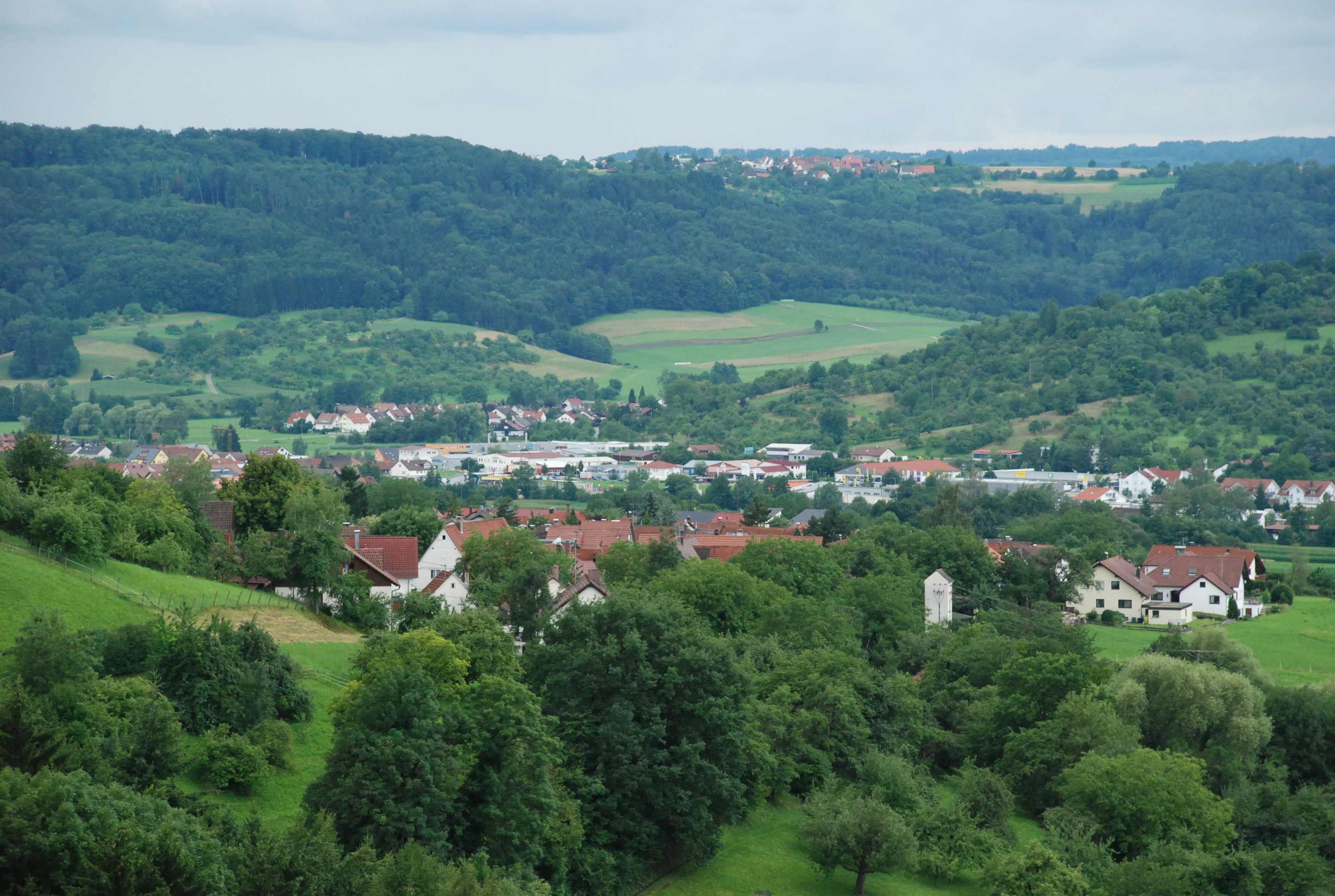
Town of Rudersberg - Photo Credit:

Town of Rudersberg

There happened to be a kermesse, in size and variety of entertainment, quite similar to the one I had attended in Messkirch the year before. This was a welcome distraction for me. Not having much money in my pocket, I simply enjoyed milling around in the crowds, going from booth to booth, from merry-go-round to roller coaster, listening to the rock n roll that was just beginning to penetrate the German pop music. I watched people play games or buy little toys and trinkets from noisy peddlers. As long as the kermesse lasted, I walked down to the fairgrounds every afternoon. One day I invited two elderly ladies who were sitting on a bench in front of the Seniors Home to walk with me down to the fairgrounds. From their reaction I could tell that this had never happened to these venerable old ladies before. A twelve-year-old boy offered to take them to the town square. After they had gotten over their surprise, they encouraged each other, and then nodded with a smile as a sign of acceptance. The scene that followed was quite comical, actually downright hilarious. Swaggering down the hillside sidewalk, one lady hooked in my arm on the left, the other one on the right, so full of joy, we were giggling and laughing all the way down to the fair grounds. What a wonderful feeling to bring happiness into people’s lives and not to care how crazy it might appear to bystanders or what they might think or say!

My desire to explore the things around me led me once into gravest danger. I had discovered by chance the stairs leading up to the huge unused attic space in the building of the Seniors Home. Inside the attic it was pitch dark. Overcoming my fear of darkness, I waited until my eyes had adjusted sufficiently to see that there was a hatch, which a storm perhaps may have pried open just a crack to let a shaft of sunlight shine through onto the wooden floor. Towards that single source of light I was directing my steps. When I had arrived near the far end of the attic, I discovered that the hatch had a simple locking mechanism. To let more light in, I pushed the hatch fully open. Now my eyes had to adjust again this time to the overpowering brilliance of the midday sun, which was flooding the beautiful landscape around the town before me. The ridge was less than three meters from the hatch. I thought that I would have a much better view if I climbed over the slate tiles onto the ridge. I immediately turned this daredevil thought into action, even though I severely suffer from acrophobia. It helped that the massive roof surface prevented me from seeing how high I was above from the parking lot below. So I slowly and carefully crept up on all fours until I reached the top and sat proudly on one of the ceramic ridge tiles. For extra measure of security I straddled the ridge and feasted my eyes on the magnificent panoramic view. Then the thought occurred to me that if I slid tile by tile forward I would reach the opposite end of the roof whence I could look down on the entire town of Rudersberg. Totally ignoring my fear of heights, I boldly went ahead. After thirty minutes of lifting and lowering alternately arms and legs in caterpillar-like fashion I arrived at the end of the roof. Far down below, people looked like ants and cars like matchbox toys. Had I before just seen mostly the roof surface with the lovely scenery on each side, it seemed to me now as if I was looking into a bottomless chasm. Three stories high on the rooftop I felt the first signs of a vertiginous attack making the world spin around me. Sensing the oncoming vertigo, I instinctively closed my eyes, lay prostrate with arms and legs straddling the ridgeline. I displayed, if anyone could see it, a picture of humble admission to my total stupidity and ignorance of the truism, what goes up must come down.

After the horrid sensation of twirling motion had ebbed away, I dared to open my eyes again. Then another fear far worse than the first seized me. I realized I was trapped. I could not get back to the hatch without turning around. And I could not turn around without falling off the roof. The thought crossed my mind to call for help. It would have been the most sensible thing to do in my situation. But what made sense, my pride did not allow me to do. So I lay there for a long time thinking and taking some comfort in the fact that as long as I did not move, nothing could happen to me. Many life-threatening situations require prompt decision and action. However, this one was different. After a long time that seemed like eternity I found the courage to sit up. Forcing myself not to look down in order to avoid another onslaught of dizziness, I moved my bottom backwards the short distance of a single ridge tile, stopped for a while, then encouraged slid back to the next tile a little further away from the house front. Now I knew that I had found the solution to my own rescue. Once the dizzying depth was out of sight, I regained my calm and retreated more quickly at a steady and rhythmic pace. Hands down, bum up, slip back one tile, bum down, short break and repeat. Finally I reached the hatch, climbed through it and felt at last the solid wooden attic floor under my feet.

Chapter X of the P. and G. Klopp Story – Part I

Problems with Latin and Yearnings of a Miller’s Maid


One cannot answer for his courage when he has never been in danger.
Francois de La Rochefoucauld


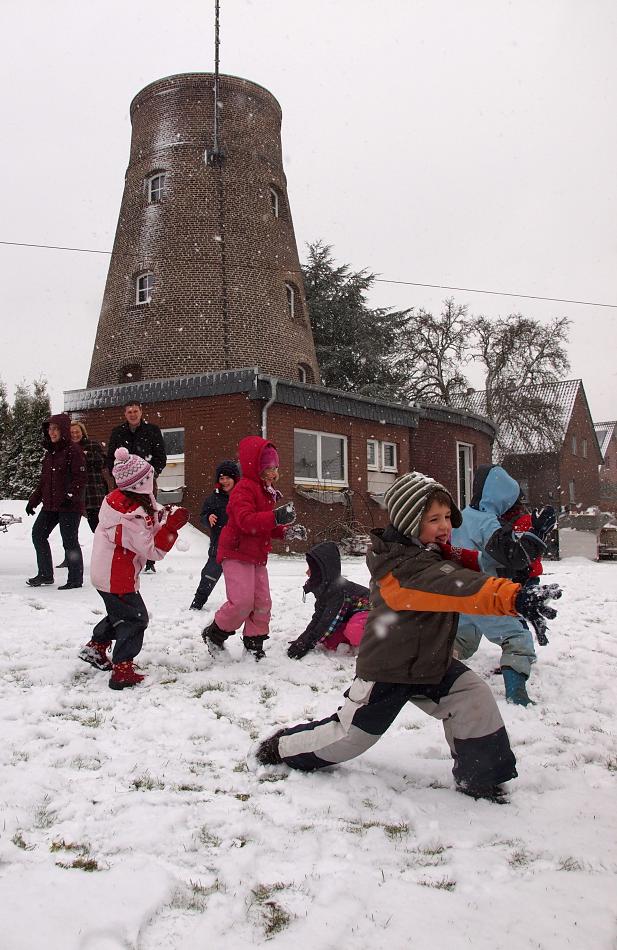
Mother had taken a new position in a senior citizens’ home in Rudersberg near Stuttgart. Aunt Mieze (Aunt Marie), her eldest sister, found a teaching position in Brünen near Wesel in the province of North Rhine Westphalia. In the mid-fifties the rebuilding of the 98% bombed-out Wesel was in full swing. Aunt Mieze had applied for an apartment and for a transfer to the Wesel Elementary School. About the same time she must have invited Mother to run the household in exchange for free lodging for her and me, the youngest son. This arrangement would become reality, as soon as the apartment already under construction would be available. How Father on a long-term basis would fit into these plans, I have never been able to figure out. While Mother was still working for another year in Rudersberg, I was going to live with my aunt at the farm-like residence across from the historical Wefelnberg mill that had lost its wings, but with the aid of electric motors was still turning grain into flour until the early seventies.

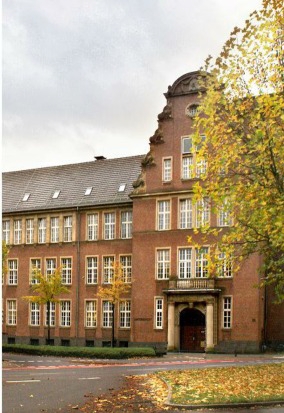
Staatliches Gymnasium Wesel

Staatliches Gymnasium Wesel

From here I took the bus to attend the high school for boys in Wesel. In those days smoking was still permitted on public transport. I often felt sick from breathing in the lingering smoke of cigarettes and cigars. Things did not go very well at school either. I had started with French as the first foreign language. Here at the ancient language school, Latin was taught first and carried on for nine long years. Although I had received some private tutoring in Latin, it became abundantly clear after my first report card with an F in Latin that I had to repeat the grade. In order to survive in a school, whose claim to fame was being the toughest in the region, there was no other option.

Historic Wefelnberg Mill now used for Kindergarten School

Historic Wefelnberg Mill now used for Kindergarten Classes

At the opening assembly Dr. Marx, the principal, announced that out of the hundred students there would only be one-quarter left at graduation nine years later. There was no doubt in our minds that the process of weeding out the feeble and incompetent would be ruthless and merciless. My high school years were going to be fraught with stress and anxiety. At least at the miller’s home in Brünen I had a good life. Aunt Mieze was strict, but fair. When she felt the needed to teach me a lesson, I deserved the punishment. When she gave me on rare and exceptional occasions a spanking, it was intended to correct unacceptable behavior. Love and care for her nephew were her main motivation, not anger and rage as I had experienced at the Stoll house.

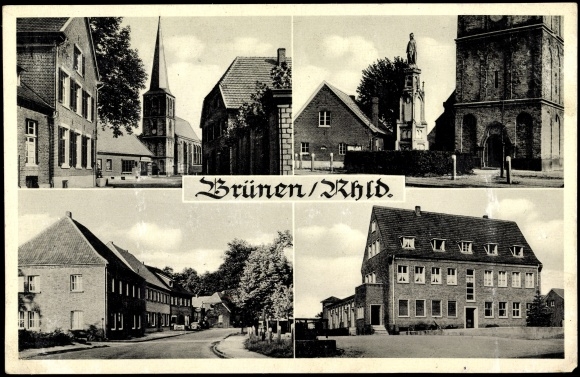
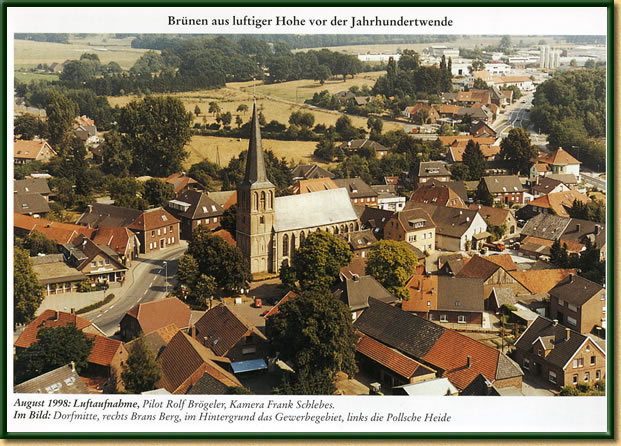
Post Card of Brünen near Wesel

Post Card of Brünen near Wesel

There were at least seven people in the Wefelnberg household: Aunt Mieze and I, robust widow Wefelnberg in her early sixties, her daughter, who had remarried, after she had lost her first husband in the war, a 10 year old daughter from her first marriage, and Leni, the maid. The couple had their bedroom next to mine. The new husband and experienced miller had taken over the duties of running the mill. With so many widows eager to remarry and competing for the few men that survived the war, it seemed that the young man had made a good choice. My tiny room of less than six square meters, even judged by the standards of the cramped living conditions in postwar Germany, would hardly qualify as a bedroom. It used to be a storage facility located under the slanting roof and was now skimpily furnished with a cot, a chair and a small desk on which I could do my homework. The door on the left of the wooden staircase was in the shape of a square just large enough for me to crawl through. On the upper floor to the right were Aunt Mieze’s office, living room and bedroom all combined in an area not larger than twenty-five square meters. At the far end on the right was Leni’s bedroom. She was responsible to assist Mrs. Wefelnberg with general household duties and was happy like most unmarried young women to have employment for free room and board and a little bit of extra pocket-money.

Protestant Church in the Village of Brünen - Photo Credit: See caption above.

Protestant Church in the Village of Brünen – Photo Credit: See caption above.

          Aunt Mieze’s room in spite of its shortcomings was a very cozy place and created with a comfortable sofa, coffee table, desk and books on the shelves a pleasant ambiance that my Spartan attic room could not match. Here I sat often in the evening hours, when my aunt, a very conscientious teacher, had gone back to school to prepare her lessons for the next day. Leni, who had taken a liking to me, often, especially when nobody was around, dropped in to chat or to play a game of checkers with me. The latter I liked very much. Although being at least ten years younger I was able to beat her by managing to convert my pieces into kings more quickly than she did. For someone who was at the time in school emotionally wrapped-up in a fierce struggle of survival, the survival of the fittest, our principal would say, these small victories and the praises Leni lavished on my battered ego were indeed balm for my soul.

          One day after being defeated again and providing heart-warming accolades for my strategic prowess, Leni unexpectedly slid over to my end of the sofa. What followed would have been a perfect scene for a comedy hour. The miller’s maid generously endowed by Mother Nature burning with desire of which I did not have the slightest inkling sat uncomfortably close to me, the twelve-year-old boy, and almost in a whisper asked me to kiss her. As for me having been raised in a family, where physical closeness, such as kissing, embracing and hugging, was rarely experienced, where aloofness and demureness were the norm rather than the exception, I was shocked at the maid’s incomprehensible request. For five marks as a prize I once ate an earthworm sandwiched between two slices of bread. But to touch those lips longing to be kissed, for my lips to make actual contact with her mouth was a most horrifying thought to me. When I refused, she pleaded with me, this time more urgently with a considerably louder voice, “Please do me this small favor. Please, please I want you to kiss me …” Suddenly the door burst open. At the door stood the miller’s wife and ordered Leni in a stern, authoritative tone to get into her room and never ever be seen again in Frau Kegler’s room. Whether she had been eavesdropping or even spying on us through the keyhole, I do not know. But to this day I am grateful to her for rescuing me from one of the most embarrassing moments of my life.