Walter Panknin (1898 -1977) and His Family CH6 Part 18

Biene’s High School Curriculum

Biene wrote this post.

We read works of world literature, first in German and then in English and French, and in the last three years, a few excerpts in Latin. We would discuss, debate and talk about the great themes which moved and influenced man’s quest for the meaning and purpose of life. I loved our philosophical discussions and would always actively participate.  Although our teachers were authoritarian in many respects, they encouraged free thinking.  We were expected and allowed to have our ideas and opinions as long as we could back them up with solid arguments to prove their validity. We were fortunate to have “Mecki” as our classroom teacher.  He eloquently expressed deep thoughts and guided us through difficult discussions.   He was a great model.

Our school emphasized language arts, while science-related subjects were neglected.  Our physics teacher did not expect much of us.  He would spend most of his lessons telling us interesting and entertaining anecdotes about his life and war experiences.  Maybe he did not want to waste his efforts teaching science to girls who would never pursue a career in that field.  This was still the pervasive opinion at that time.  Although I was not scientifically inclined, I once delivered an amazing technical drawing of a Wankel motor.  That was my only success in science, and I earned the respect of my teacher. I have to admit remorsefully that my brother had helped me with it.
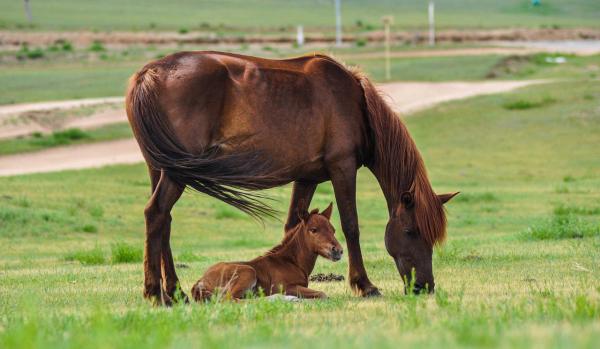
Biology was another neglected subject.  Our squeamish elderly teacher was supposed to provide sex education.  She would show us a film of a pregnant mare who miraculously suddenly had a newborn foal beside her.  The actual birthing scenes were left out.  We were left in the dark. Another substitute teacher took over the topic by telling us a Greek legend of a pot that eventually finds its matching lid.  It sounded all Greek to us, and we were quite bewildered. Finally, we searched for answers in real life, not at school.
Walter Panknin (1898 – 1977) and His Family Ch6 Part 16

Two Outstanding Teachers

Biene wrote this post.

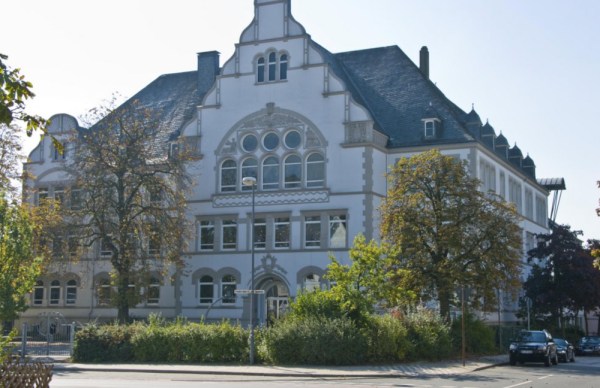
This is the beloved school I attended for nine years. Over the entrance was a stained glass window that read “Non scholae sed vitae.” I hardly ever missed a day and was always eager to go and learn for life.

Biene’s High School in Velbert

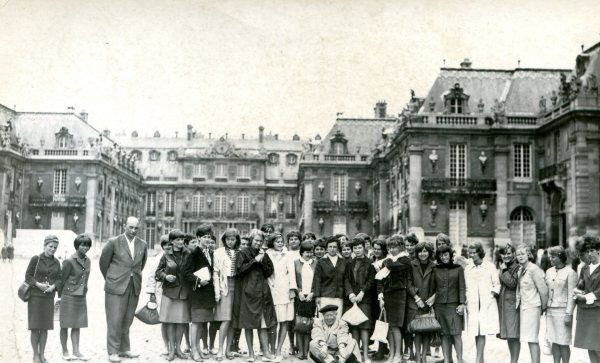
We started with 45 girls in grade 5, and after nine years, only 15 of us graduated. Our homeroom teacher was called Mr. Meckenstock. He mentored us for the entire school time. We fondly nicknamed him Mecki after our generation’s beloved little stuffed hedgehog toy. Mecki faintly resembled the little toy because he had lost most of his hair. However, he was very strict (like almost all German teachers) and also kind and warm-hearted. Above all, he was a unique character full of contradictions. He taught us English and French with lots of enthusiasm. He was proficient in both languages, even though he had never studied them in his native country. He had never been abroad until we went on a field trip to Paris with him in grade 11. The comical adventures of that memorable trip I will never forget. But I will talk about them in detail later. Mecki laid great stress on oral participation in classroom discussions which I liked. I enjoyed sharing thoughts and opinions on ideas or books we had to read in English and French.

Biene’s Class in Paris

Our math teacher, nicknamed Ata (father), was also popular; this short, round, red-cheeked jovial man was a wizard with numbers. Every math lesson he magically turned into a fun experience by engaging us in group math competitions on the blackboard. He cared that we understood and freely helped us when we had problems. We tried very hard not to disappoint him.

These two outstanding teachers probably had the most significant influence on my academic achievement. I will talk more about other teachers soon; teachers at my time were highly respected. When they entered the classroom, we had to rise and greet them in unison. Whenever we volunteered an answer, we also had to stand up. In their presence, we had to act and speak politely and respectfully. But life is full of paradoxes. We girls were not as docile and disciplined as was expected.Before concluding this post,  one more afterthought on our school building.  As I mentioned, the boy’s high school was adjacent to ours.  The schools were so close that we had to cross the boy’s schoolyard to go down some rock steps to our yard. We were not allowed to talk or interact with the boys when walking to our yard below.   The boys would stand at the retaining wall and look down on us.  Maybe that reflected an attitude symbolic of that time.

Walter Panknin (1898 – 1977) and His Family Ch6 Part 15

Biene and Her Twin Brother Attending Separate High Schools

Biene wrote this post.

When my twin brother and I were at the end of grade 4,  my parents had to decide if they wanted us to attend high school. After successfully concluding grade 13, we would obtain the senior matriculation certificate, Abitur in German, a prerequisite for post-secondary education at a university.

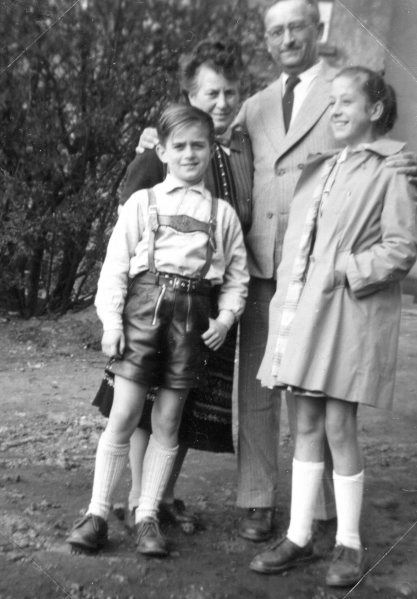
Biene and her twin brother Walter with their parents

Only a tiny percentage of students would enter high school.  Your elementary teacher had to recommend you based on your performance, and you had to pass a stringent entrance exam.  While all children by law received eight years of free elementary school education,  high school students had to pay tuition fees and finance their books and other educational materials.  It was an honour and a privilege to attend high school.  You belonged to an elite group if you passed your senior matriculation.  Only about half the number of students that started high school would accomplish that goal.

There were scholarships for top students who had financial difficulties paying the tuition fees.  My twin brother and I, plus my best friend Gisela,  were the lucky recipients after completing grade 4 with top marks.

My twin brother and I would attend different schools for the first time in our life.  The two high schools in Velbert were segregated by gender and academic orientation.  I went to the modern language branch for girls and my brother to the science and ancient language branch for boys.  While the school buildings were nearby,  we had no contact with students of the opposite sex for our entire high school life except for a short extracurricular ballroom dancing course in grade 10.

While our school had a high percentage of male teachers, my brother only once,  for a short time,  had a female teacher teaching at his school.  She enjoyed a special status that was “sensational” for the boys.  The boys “adored” her like a queen.

Walter Panknin (1898 – 1977) and His Family Ch6 Part 14

Field Trip to Cologne

Biene wrote this post.

To my relief, the school year came to an end about two weeks later.   Our new teacher in grade 5 quickly restored my faith and trust in teachers. Although he was very strict,  he never lost his temper or control.  I loved his exciting lessons, fairness, warm smile, and sense of humour.

This teacher decided to take us on a field trip to meet Vater Rhein or Father Rhine, as it is fondly called the longest and mightiest  German river. On a beautiful sunny spring day, we went by train to Cologne.  Cologne is the fourth largest city in Germany, situated on the Rhine river. We visited the awe-inspiring cathedral, which towers majestically at the river shore.  We went down to the banks and immersed our hands in the water to greet Father Rhine.  He was starting to get polluted.  When revisiting the Rhine river, my friends prevented me from putting my hands in the water because of the dangerous pollution levels.  Now Father Rhine is clean and safe again.

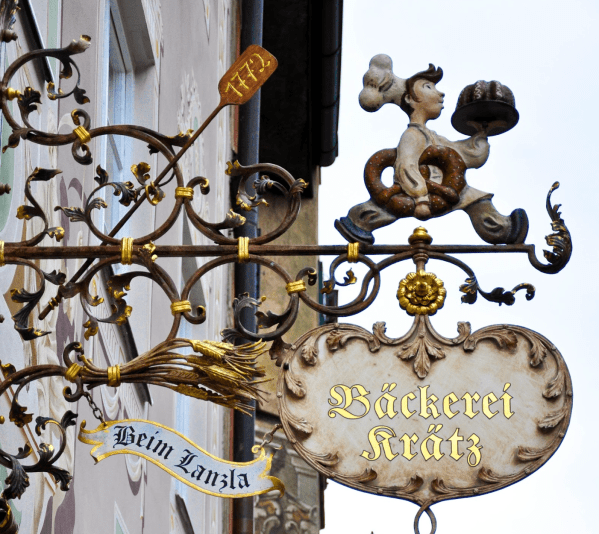
Towards the end of our excursion, we walked through the Altstadt, the picturesque historic part of the city.  We did window shopping and were allowed to buy some small souvenirs in the romantic boutiques. I remember the fun we had reading the ornate and artistically designed shop and pub signs hanging on beautifully crafted cast iron brackets. We laughed at the often funny and clever names.  A butcher shop was called  The Jolly Fat Pig; A wine pub was named  The Bottomless Barrel.  In the Busy Bee Bakery, we bought some honey-sweetened pastries.

Back at school, we had to write about our excursion.  Our teacher told us that the best report would be published in our class journal.   We all had to read out what we had written and then voted on which one we liked best.  I was the proud and happy winner because I described all the humorous signs and other fun impressions of our exciting trip.

Walter Panknin (1898 – 1977) and His Family Ch6 Part 12

Long Walks with Papa

Biene wrote this post.

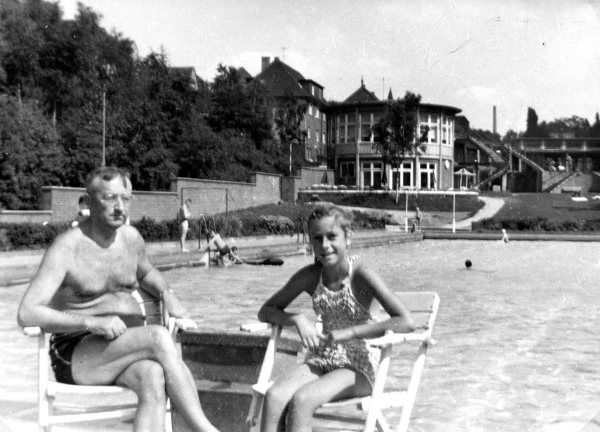
Located near Essen is the beautiful lake Baldeney, a dammed reservoir of the Ruhr River.  It was the destination of one of our first family excursions on a sunny spring day.  It would become our favourite recreation spot.  Lake Baldeney has personal significance for me because it changed my life forever.  But I won’t get ahead of myself.

My dad, who loved nature and, above all, water sports, was delighted to have this jewel of a lake in our vicinity.   It would still take some effort to travel there by bus, but these outings were recreational highlights and brightened our otherwise drab existence in the Old House.

 My dad and I walked approximately 16 km distance through forests and fields a few times.  I felt very proud to keep up with my dad on these long hikes.  My brother, who was not fond of swimming in cold water and hated exertion, seldom accompanied us.

Papa Panknin and his Daughter Biene

My dad and I would often daydream about the future on those hikes.  We envision a beautiful home built on a hill surrounded by forests and overlooking a big lake.  Far, in the end, this dream would come true for me at the Arrow Lakes in Canada.  On his last visit to Canada before his death, my father experienced the fulfilment of our vision for a short time with us.

The first time we walked barefoot at the shore of Lake Baldeney, we were puzzled that our feet were sooty black even after a swim in the clear water.  At that time, the coal industry was still in total production, and there was heavy pollution around Essen.   As seen in these pictures, blue skies were rare in my childhood, but I appreciated it when we had them.

Walter Panknin (1898 – 1977) and His Family Ch6 Part 11

Hard Work in the Golden West

Biene wrote this post.

Although the yard was neglected, it was an ideal play area for kids. We had plenty of safe space to engage in ball games, skip rope, play badminton, hopscotch, marbles, tag and even hide and seek in the bushes and behind the old trees. There were even grassy areas where we could put blankets to suntan, read or do gymnastics. We played outside in all kinds of weather until nighttime. The rooms in the Old House were too small for children to play in. Our parents struggled to cope under the primitive and restrictive conditions in the decrepit emergency shelter. However, we had lots of freedom, space and companionship with other kids. We were happy.
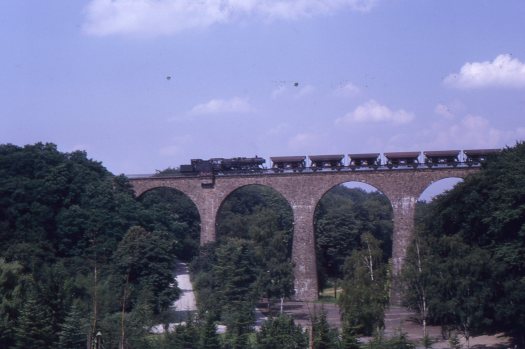
Velbert is a big town in North-Rhine Westphalia. Its primary industry is small-scale steel production. It is renowned worldwide for the manufacturing of keys, locks and fittings. You can see all kinds of exciting locks and keys in the local museum. Velbert has a primarily small-based metal industry that evolved from backyard forges. Right beside the Old House was such a small forge. At suppertime, we would see tired, and grimy-looking workers emerge from the dark, windowless stone building to trudge home.

Peter took this photo near Velbert in 1968.

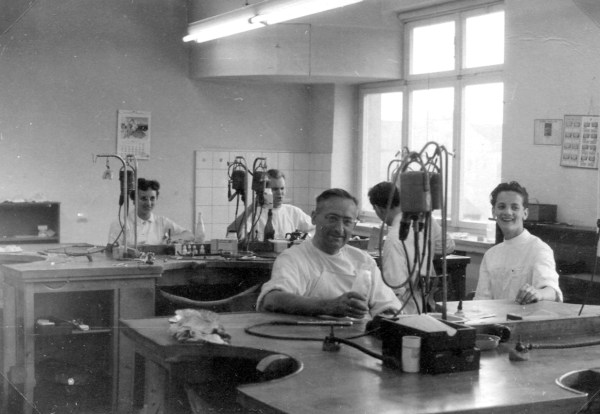
My mother had respect and pity for these hard workers looking emaciated and pale from working long hours in that hellish plant. North of Velbert is the city of Essen, where the largest steel manufacturing plant in Europe was located. My dad found employment in the dental laboratories of the 400-year-old Krupp dynasty of steel manufacturing.

Papa Panknin Working in a Dental Lab

Every morning my dad would leave by bus around 6:00 a.m. to go to work. It would take him about an hour to get to his workplace in Essen. He would return at 6:00 p.m., dead tired but happy to have employment with a prestigious and socially progressive company that treated its employees well. For my parent’s 25th wedding anniversary, a representative of the Krupp management visited my parents at the Old House and delivered some gifts and well wishes. My parents were touched and honoured by my dad’s employer’s caring and generous treatment.