Chapter VIII of the P. and G. Klopp Story – Part IV

 Great Acting, a Chocolate Stand and a Scary Tale

 Each year the school organized a concert for the parents and the general public. We students would sing in a choir, recite poetry, and put on plays. In this annual event we had an opportunity to showcase our artistic achievements. As to the drama performance this year, Frau Schroff was especially ambitious. She selected a medieval play, the farcical comedy: The Wandering Scholar from Paradise. The author Hans Sachs gained international fame as the central figure of Richard Wagner’s opera: Die Meisteresinger von Nürnberg. Sachs was a Meistersinger or mastersinger, who plied his trade as a shoemaker in the city of Nurnberg. He was also a creative narrator in the local guild of poets and musicians. ‘The Wandering Scholar from Paradise’ is about a farmer’s gullible wife, who falls victim to a traveling student’s claim that he had seen her beloved first husband in paradise. Frau Schroff decided that I would be the best candidate to play the role of the wandering student. And I did not disappoint her. As it turned out this challenging comedy was such a success on our modest school stage that we three actors received a standing ovation. Needless to say our teacher was beaming with pride over our success. At the end of the concert, she took me aside to tell me that I had earned with my spectacular performance the price of a new ruler. She also promised not to write that ominous letter to my parents. So I did not only bask in the glory of a wonderful performance that evening, but I also felt a great relief from the anxiety caused by my recklessness in the classroom.
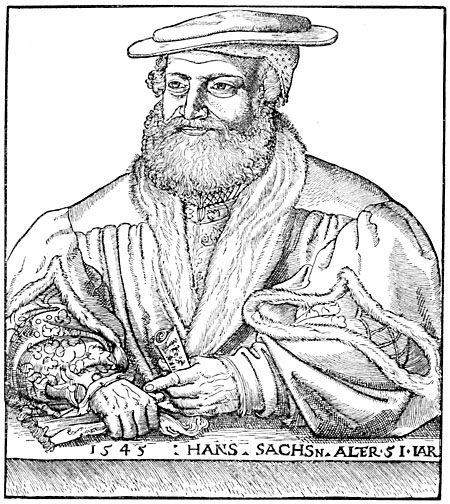
Hans_Sachs

Hans Sachs, Author of ‘Travelers from Paradise’ – Image Credit: Wikipedia

It is one thing to do something creative because it is a school function, such as organized and directed by a competent teacher. It is quite another when young children prompted by their own inspiration start an activity strictly for their own enjoyment. This is exactly what happened in a group of seven boys, which we called ‘The Rohrdorf Village Musicians’. Once or twice a week, when the weather was fine and the grass was dry, we would get together on a sunny hillside between the Upper and Lower Village at least two km away from the nearest farmhouse, where nobody could disturb us during band practice. Our immensely talented bandleader was Klaus. His personality radiated confidence and enthusiasm. I remember the energetic movements of his arms, hands and fingers controlling our musical endeavors with the élan worthy of a professional conductor. But what was there to conduct, since we had hardly any musical instruments? There were only two, one was a tin bucket placed upside down, which served in combination with two wooden spoons as the drum section. The other was slightly more complicated and consisted of a large comb with widely spaced teeth and a sheet of wax paper loosely wrapped around it. The musician had to hum and barely touch the wax paper with his lips to create a rasping musical note. Today one can buy a metallic kazoo for as little as two dollars. The boys without instruments would add variety to the sonorous qualities of the kazoo and the tinny clang of the drum by whistling and humming. My friend Günther even managed to complement the drum by clicking his tongue. I for my part added tonal depth to the ensemble by creating a flute-like sound. To do this I clasped both hands, interlocked my fingers and thus created a hollow between my palms. All I had to do was to blow at a certain angle between the thumbs changing the pitch by expanding or contracting the cavity. With each band session our repertoire of the most common German folksongs grew until we were able to play for half an hour without repeating any of the tunes. Even though we never played for others, it was a most enjoyable experience, a definite highlight of my childhood years.
Continue reading

Chapter VIII of the P. and G. Klopp Story – Part III

 Sledding Accident and Trouble in School

After the first heavy snowfall the boys and girls of the Lower Village took out their sleds to celebrate the beginning of winter on our long and steep hill. The Davos sled named after a Swiss village, where this most popular sled in the world originates, is traditionally fashioned from hardwood and is 80 to 130 cm long accommodating up to three persons in an upright position. Two metal runners in this otherwise all-wood construction ensure a smooth and stable ride. The Klopp children had only one long sled. So we took turns to take on the 1 km run down the street that had next to no traffic in the winter. Gerhard would lie down on the slatted seat and I would sit on top. Safety helmets were unknown in those days. The speed increased with each run, as the snow was packed down and turned into a icy surface. Exhilarating was the experience, when I felt the fresh air in my face and the sensation of being part of the fun in the community of children young and old. Soon someone came up with the idea to form a human train by hitching the sleds together. One simply had to hook the feet into the upward-curved front of the next sled. Up to half a dozen sleds connected this way and expanded into a super long snake-like figure. The pilot alone in the front had to make sure that the trip down the hill would be safe and would not result in broken bones. Often I was allowed to sit on the back of the front man. Being the only one sitting erect, I felt like an admiral in charge of an entire fleet. When I think of having so much fun together with friends and family, very fond memories still linger in the crevices of my mind after all these years.

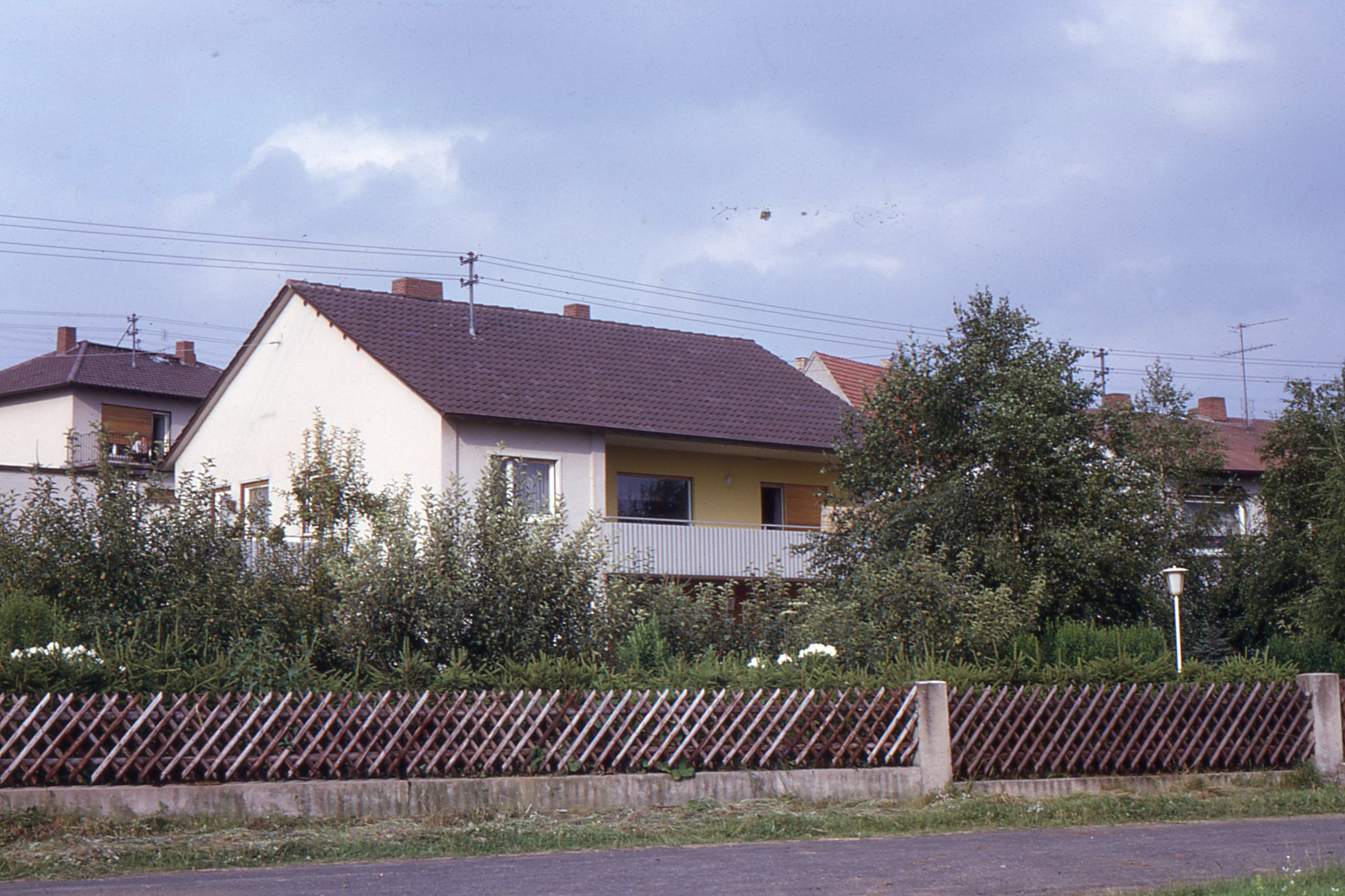
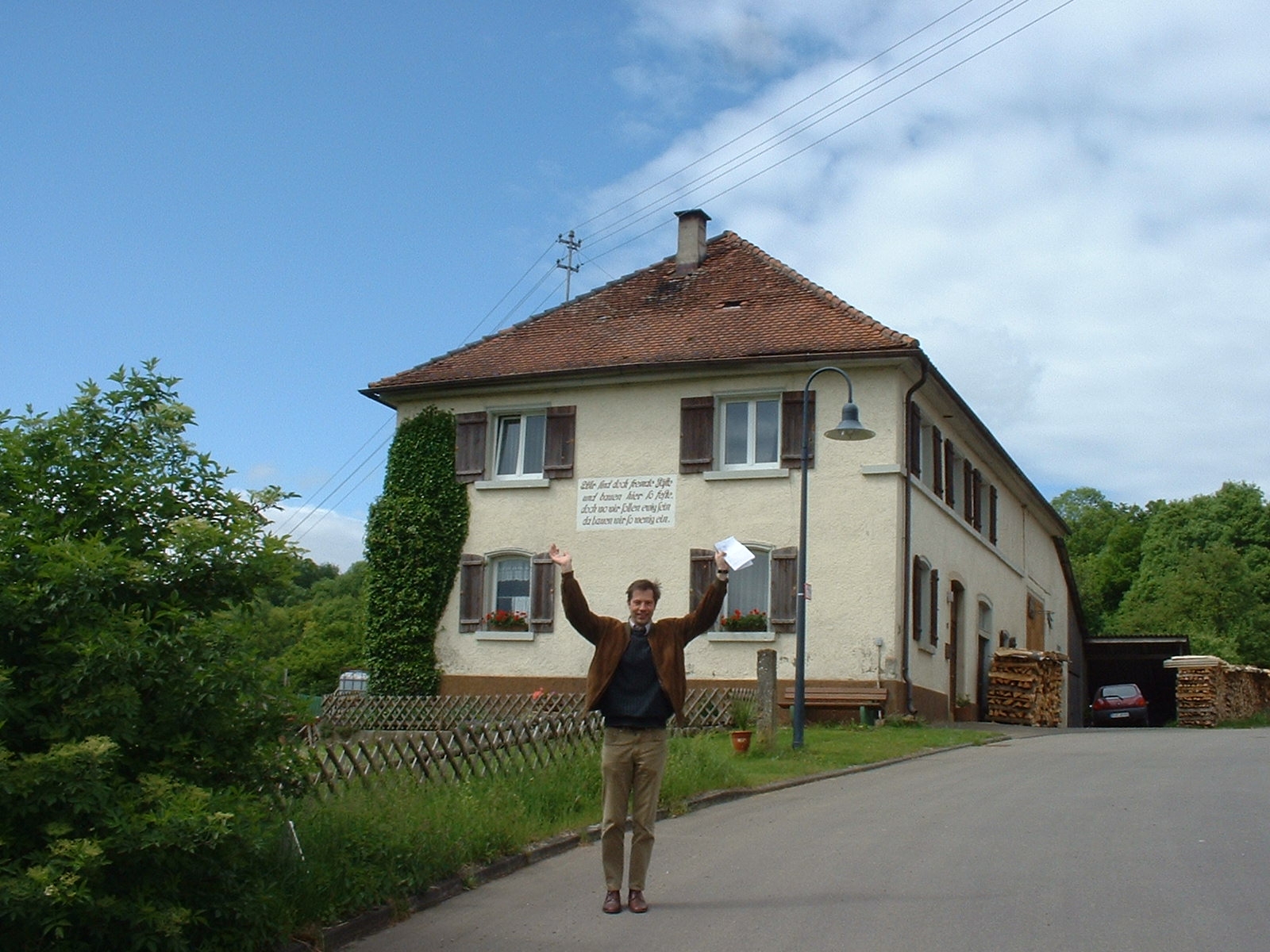
House across from the Ös Farm 2003 - Photo Credit: Stefan Klopp

House across from the Ös Farm 2003 – Photo Credit: Stefan Klopp

 When I was a little older, perhaps 10 or 11, I was allowed to use the family sled to go sledding with my friends on a nearby hill. Cattle would be grazing there in spring, summer and fall. It was completely fenced in except for a gate just wide enough to allow a hay wagon to pass through. When cows were on the pasture, the farmer simply closed the gate by sliding two poles through the horseshoes that were hammered into both end posts of the fence.

The frost in the night before had turned the snow into a crusty surface strong enough that we could with some care walk on it without breaking through. As we were climbing up to the top, an idea suddenly occurred to me,

“Hey, guys, how about making a single pair of tracks with our sleds on the first run. Then we don’t have to plow through deep snow on the following runs and we will go faster, faster, and FASTER.”

“Plus”, I added, “guess what? We don’t have to steer anymore. We will be zipping down the track like a speeding freight train!”

The plan found instant approval with loud cheers. In less than three trial runs we created the double track. And indeed, as I had predicted, our speed increased, because with each trip down the hill the sleds’ runners packed down the snow more and more into a hard and slippery surface. It was about the tenth time that I had climbed to the starting point.

As before I shouted, “Clear the gate opening! I’m coming”, and in one jump I landed belly-down on the slatted seat.

Now I zipped down the track reaching top speed about half way down the hillside. Looking up for the first I noticed that my friends had ignored my warning and were still blocking the gate. Even if they moved out of the way now, it would be too late. Fear of crashing into them gripped and paralyzed me. I was less than twenty meters away. I could have rolled off the sled and let it continue to speed toward the human target, but I didn’t. The collision seemed inevitable within just a few more seconds. Suddenly another force took control over my mind, a force that ignores all danger to oneself and only cares about the welfare of one’s fellow human beings.

My left foot dug deep into the snow. It exerted enough force to make the sled jump out the tracks and veer to the left and away from where my buddies were still idly standing. But now I had to think of myself, as the barbed wire fence and its posts appeared to rush toward me. In a desperate attempt to reduce speed I used both feet now and pushed my boots as far down into the icy crust as possible. I slowed down a bit. But it was too late. The post, worse the iron horseshoe on the post, was less than a meter away. An automatic reflex made me raise my right hand and cover my forehead, before everything around me submerged into complete darkness. When I came to, only a few of my friends were standing around me. Some had run home to get help, but others had left the gory scene of the accident, because they had never seen so much blood before. I was bleeding profusely. Eventually I was able to get up. Completely dazed I took my sled and stumbled home with injuries to the hand and forehead, which the visiting doctor later determined as a severe concussion. The scar under my right index finger reminds me to this day how my hand covering my forehead had softened the potentially fatal impact.

Continue reading

Günther Kegler, Chief of the Kegler-Clan (Part IV)

Günther Kegler Struggling Through the Postwar Era

From June 1946 to April 1975

Charts II a & b – II

In June 1946 former Lieutenant-Colonel Günther Kegler had the humiliating experience of two long years of unemployment, which in all likelihood was forced upon him by the new Soviet rulers of East Germany. On rare occasions he was able to hire himself out privately as a common laborer or as a helper in all kinds of pest control in and around Erfurt. During this time, as reported in Chapter 6 in the P. and G. Klopp Story, his nephews Karl and Adolf and later his niece Eka (Lavana) quite unexpectedly arrived at his doorstep. The Klopp children had no idea of the whereabouts of their parents. It was a miracle that the entire Ernst Klopp family was reunited in 1948 in the small village Rohrdorf in Southern Germany.

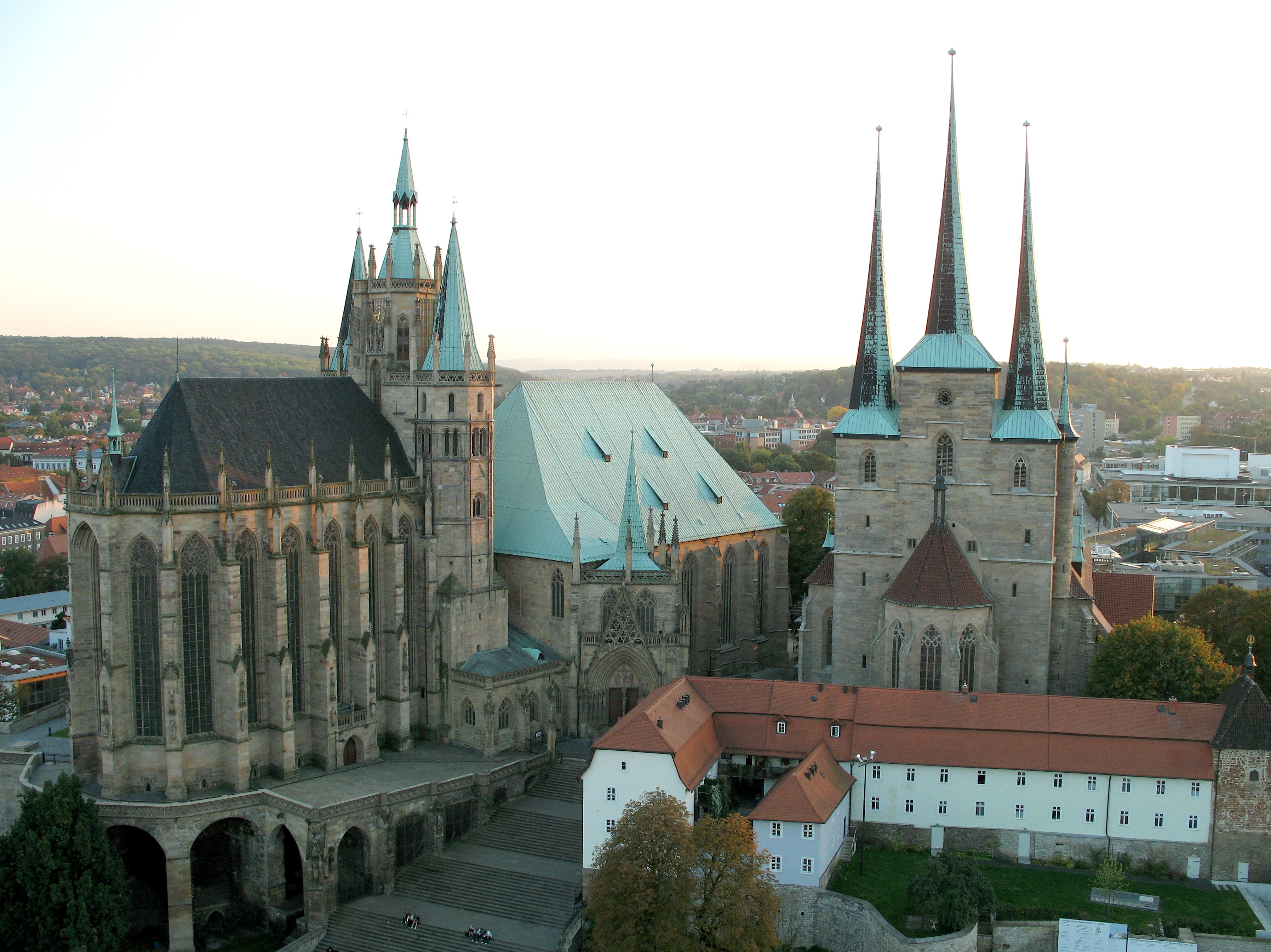
Erfurt Cathedral and Severi Church - Photo Credit: Wikipedia.org

Erfurt Cathedral and Severi Church – Photo Credit: Wikipedia.org

Finally in March 1947 Günther Kegler found employment at his son-in-law’s beverage plant in Erfurt and in 1950 within the same company became its bookkeeper. Thus, he could make use of his skills in accounting, which he had practiced between the two World Wars. On April 28, 1955 he fled with his wife Lucie to West Germany leaving behind all his furniture and other bulky belongings. Fortunately, he found immediate employment at the newly established beverage company that was owned by his son-in-law A. Lotz, who also had fled from East Germany. In 1956 his status as a refugee from the GDR was officially recognized. In the same year he was able to retire with a pension that at last provided a comfortable standard of living for the rest of his life.

The Rental House in Watzenborn-Steinberg (now Pohlheim)

The Rental House in Watzenborn-Steinberg (now Pohlheim)

However, his plan was not to live out the remaining years in meaningless idleness. On the contrary, he helped many people with advice on legal issues, accounting problems, and above all he gave assistance in their struggle with the notoriously slow  bureaucracy of the West German government offices. In 1962 he invited his sisters Marie and Erika to join him and share a beautiful rental house in Pohlheim (former Watzenborn-Steinberg). That’s where his wife Lucie after a lengthy illness passed away in 1968. My uncle spent the next decade with his second wife Elfriede in their seniors’ apartment in Kassel-Wilhelmshöhe. I will write about Elfriede in another post.

65

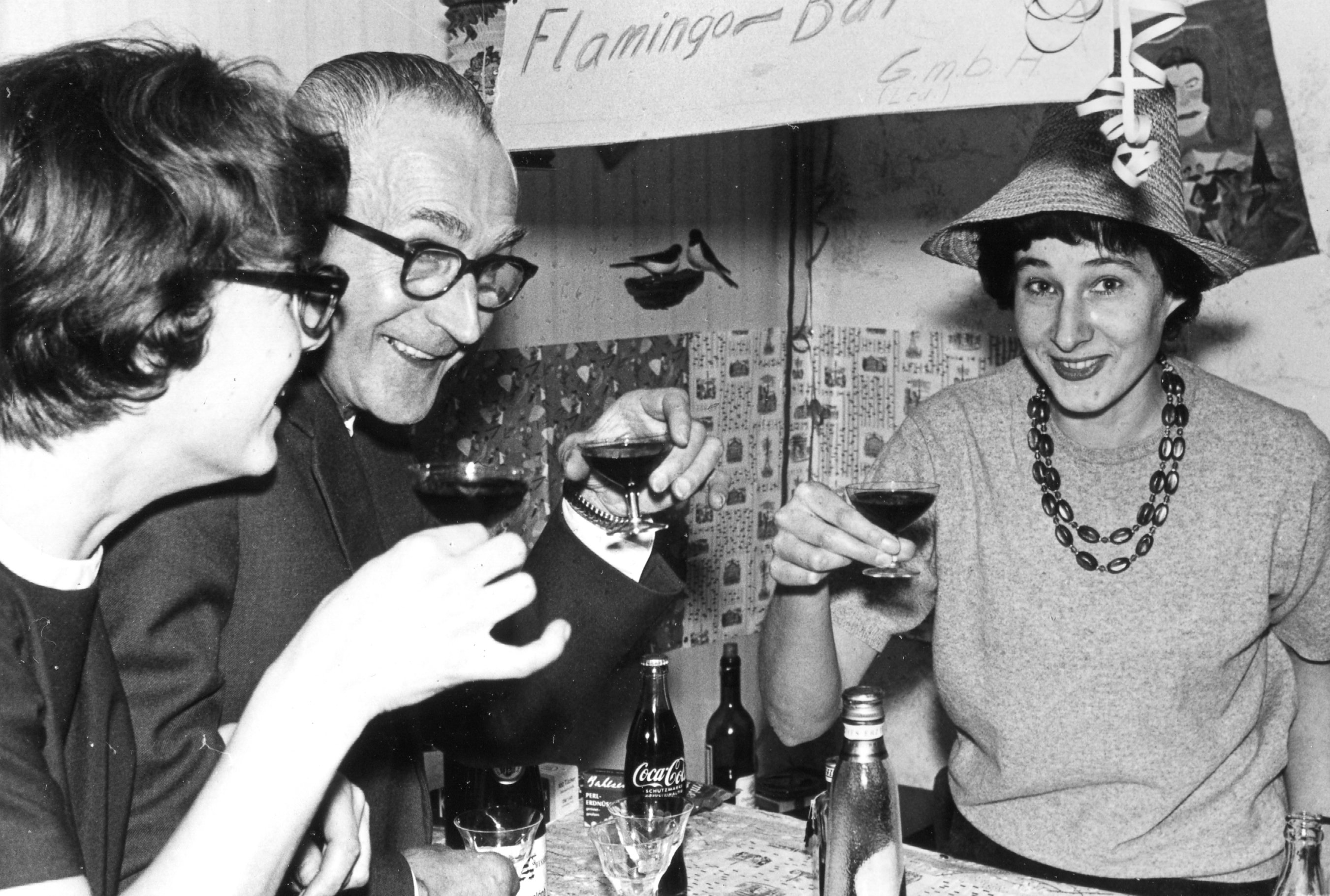
New Year’s Eve Party 1963 – Helga Kegler, Uncle Günther, and Eka (Lavana)

I remember Uncle Günther as a dear friend, who was also a fun loving individual. He enjoyed a good beer and passionately played the German card game ‘Doppelkopf’. In our correspondence we exchanged all kinds of humorous tales, while I was a soldier in the West German Armed Forces. He held the family together in a spirit of giving and outstanding hospitality. He truly deserved the prestigious title ‘Chief of the Kegler-Clan. Long after I emigrated to Canada, he sent me in keeping with his admirable Prussian sense of duty documents, which he had carefully arranged by date and importance. With the help of these papers I was able to draw some forty years later a small pension for my military service in Germany. Every month I buy two cases of beer with that money. And when I drink the refreshing brew, I often think of my dear old uncle in Germany.

The Klopp Grandparents VII

The Meddling of a Troublesome  Mother-in-law

Chart I – I & II

Adapted from Eberhard Klopp’s Family Chronicle

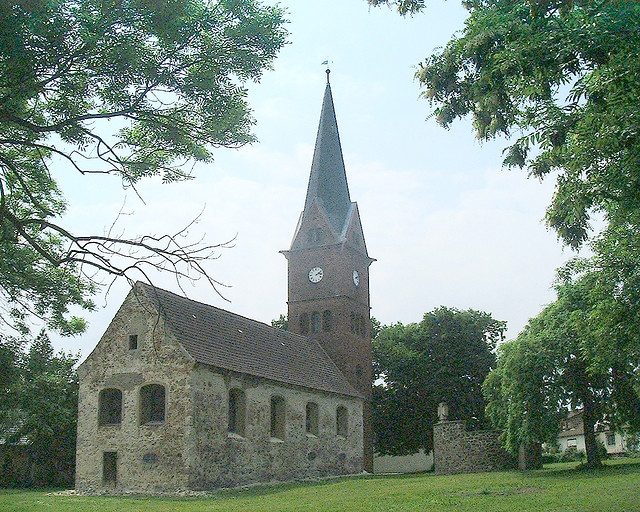
Zielitz Church

When Emma’s eldest son Friedrich married Auguste Weihe of Zielitz, he could not foresee how much trouble the new connection would bring to the entire Klopp family. The cause was not so much his young wife, whom he loved dearly, but rather his mother-in-law Luise Weihe, who had her own ideas about the way the couple should conduct their life and business. She insisted that her daughter should share with no one her new nest in Wolmirstedt. She was not exactly excited over Auguste’s choice of her son-in-law. So her daughter should at least be spared from Friedrich’s siblings and relatives. She viciously described them as the ‘vagabond and fugitive children of Cain’ with reference to the Bible verse in Genesis 4, 14.

Behold, thou hast driven me out this day from the face of the earth; and from thy face shall I be hid; and I shall be a fugitive and a vagabond in the earth; and it shall come to pass, that every one that findeth me shall slay me. King James Bible

With this remark Luise Weihe not only poisoned the climate of the newly established household, but also brought on the estrangement  of Emma and her younger children with the family of her eldest son.

Emma’s grandfather Johann Christian Bauer (1792-183) was of Jewish ancestry. It would go beyond the set limits of this blog to report in detail the colorful and eventful life of Johann Bauer. However, it is important to note here that his parents had already converted to the Christian faith and that their 14-year old son had been confirmed in Sudenburg-St. Ambrosius and also got married as a protestant groom on October 29, 1843 in the same place.

At the turn of the 20th century antisemitism was already a malignant phenomenon and spread like an epidemic throughout Germany. So far Friedrich’s mother-in-law had only hinted at her antisemitic sentiments against the Klopp family. But now she went too far with her unconcealed, racially driven diatribes, which she shamelessly showered on Emma and the rest of the ‘children of Cain’. The result was that even the young wife, her very own daughter, could not take it any more. She was by nature and temperament a resolute and energetic woman. In the end she too distanced herself from all connections to her parental home in Zielitz.

Her father Friedrich Weihe (1854-1944) suffered a great deal from his wife’s convoluted thoughts and attacks against the Klopp clan. But he was unable or unwilling to do anything about it except to contemptuously break wind on each step of the staircase he climbed to withdraw himself from the incessant and repetitive tirades in the living room below. This was in a sense his running commentary on his wife’s annoying and irksome prattle, which seemed to have no end.

To be continued …

Chapter VIII of the P. and G. Klopp Story – Part II

Getting Caught in the Hen House and Schadenfreude at its Best

The new hen house that Father had built brought much joy to Mother. Early in the morning, when the chickens were still sitting on their roost, Mother would enter quietly the chicken coop and perform the finger test to find out, which ones were ready to lay an egg that day. She grabbed one and held it firmly in her left arm while inserting the little finger of her right hand. If the tip her finger pushed against something hard, she knew that an egg was on its way, and the chicken would have to spend the rest of the morning in the wooden cage, until it had done its duty. On the other hand the chicken that had failed Mother’s test would immediately be released into the yard. The eggs that our feathery friends produced for our household were of excellent quality. Today we would claim them to be 100% organic and delivered by free-range chickens.

Photo Credit: tobuildachickencoop.com

Photo Credit: tobuildachickencoop.com

To acquire money – so I had learned on my daily milk run – involves work. After I received my pay, I would convert it into anything I wanted provided that there was enough of it. However, my parents insisted that I saved most the money I earned. So unfortunately, it turned into a meaningless number in a tiny savings booklet issued by the local credit union.

Photo Credit: fastcoexist.com

Photo Credit: fastcoexist.com

 It did not take me very long to see the connection between a commodity, such as an egg, and its monetary value. What my slowly developing conscience did not recognize right away was that just because something was there within reach of my little hands did not mean that it was mine. So one day while I was exploring the chicken coop, I discovered an egg in the wooden cage under a chicken. I immediately set her free and released her into our yard. I took the egg, which was still warm, into my hands. Seeing this wonderful oval object in front of me was in my mind almost like owning it. So I walked to the nearest grocer in the Upper Village and converted the egg into cash. This was my first sale. Its success goaded me to look for more eggs in the following days and to sell them to the colluding grocer who was not asking me any disquieting questions. This went on for a while, until Mother caught me red-handed in the hen house. Normally she took care of matters of discipline, but this case of mine was severe enough to let Father deal with it. I did not have a good feeling, when he took me to the barn, where he made it absolutely clear with the help of his cane on my bare bottom that taking something that did not belong to me was the same as stealing. This was another major lesson I learned, and there were certainly many more to follow.

Photo Credit: imgarcade.com

Photo Credit: imgarcade.com

Winter was approaching again, but it had lost its harsh bite, since we had moved into the Ös farmhouse. On the contrary, the cold enhanced the feeling of comfort and coziness, especially when the tile stove was radiating its warmth throughout the entire house. Firewood – split and neatly stacked – lay ready in large enough quantities to provide heat during the coming cold months of the year. Adolf, my second oldest brother, had helped in a big way to make sure that we would not run out of fuel for our stoves. In his eagerness to show off the highest and most beautiful stack in the world, he had built it just a trifle too high. The stack was already leaning away from the wall at a precarious angle, when he added one more piece of wood to complete his masterpiece. That extra weight broke the camel’s back, and with thundering might the entire stack came crashing down fortunately leaving Adolf unharmed on the ladder on which he was standing. Now this was embarrassing enough for him, who had just been bragging about his stacking skills. But living in a family, where Schadenfreude, the pleasure derived from the misfortune of others, was not completely unknown, poor Adolf had to put up with derisive laughter and spontaneous mock poetry coming from our sister Eka (Lavana). She sang,

“Öcher, Öcher, Bum, Bum!

 Dem Beuger fiel die Beuge um!“

This would roughly translate into English as,

“Shame on you, shame on you, clumsy packer!

 The pretty stack fell down, you lousy stacker!”

Even though Adolf rebuilt the stack with great dexterity to make sure it would not tumble over again, the lines and accompanying melody were very catchy, and soon all his siblings were singing and reciting the jingle. It goes to his credit that he took it in stride and waited good-humoredly for the torture to end.

To be continued …

Günther Kegler, Chief of the Kegler-Clan (Part III), Charts II a & b – II

Günther Kegler at the Brink of a Mental Breakdown

The Boys and the Old Men – Cannon Fodder

January to May 1945

On September 19, 1944 Günther Kegler became leader of the military registration offices at Sangerhausen and Querfurt, Thuringia, about an hour’s drive northeast of Gotha, Biene’s place of birth.

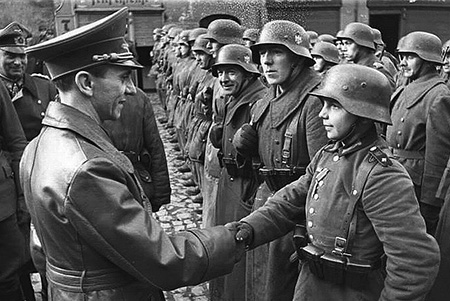
As he could clearly see the imminent collapse of his beloved country on the horizon, he did everything in his power to save what was in his mind the only resource left after Germany’s defeat. To spare young boys from the draft was foremost on his mind. After January 1945 even the diehards of the regime could see the writing on the wall. But instead of preparing for a quick surrender, which would have saved tens of thousands of lives, they obstinately clung to the glimmer of hope for final victory. Goebbels’ relentless propaganda machine fueled a patriotic fervor, especially among boys. Men capable of carrying a rifle or an antitank weapon were to be conscripted.

Goebbels congratulates a young recruit - Photo Credit: rarehistoricalphotos.com

Goebbels congratulates a young recruit – Photo Credit: rarehistoricalphotos.com

The leader of the NS district Querfurt started to meddle in Lieutenant-Colonel Kegler’s realm of authority and insisted that 16-year old boys be included in the draft procedures. They were to fill the gaps of the dwindling forces of the war machine. Against this directive Günther Kegler put up as much resistance as was in his power. But the constant pressure and harassment from above wore him out. Then he heard about Himmler’s horrific order of his court martialed brother General-Lieutenant Gerhard Kegler being demoted to a private and slated to be executed after the final victory.  (His amazing story will be published at a future post.) Günther Kegler broke down under the burden of these fateful events and was admitted to a sanatorium at Erfurt on April 1, 1945. He stayed until May 31, 1945 and recovered sufficiently to allow him to return to his family at Nonnenrain Street, Erfurt.

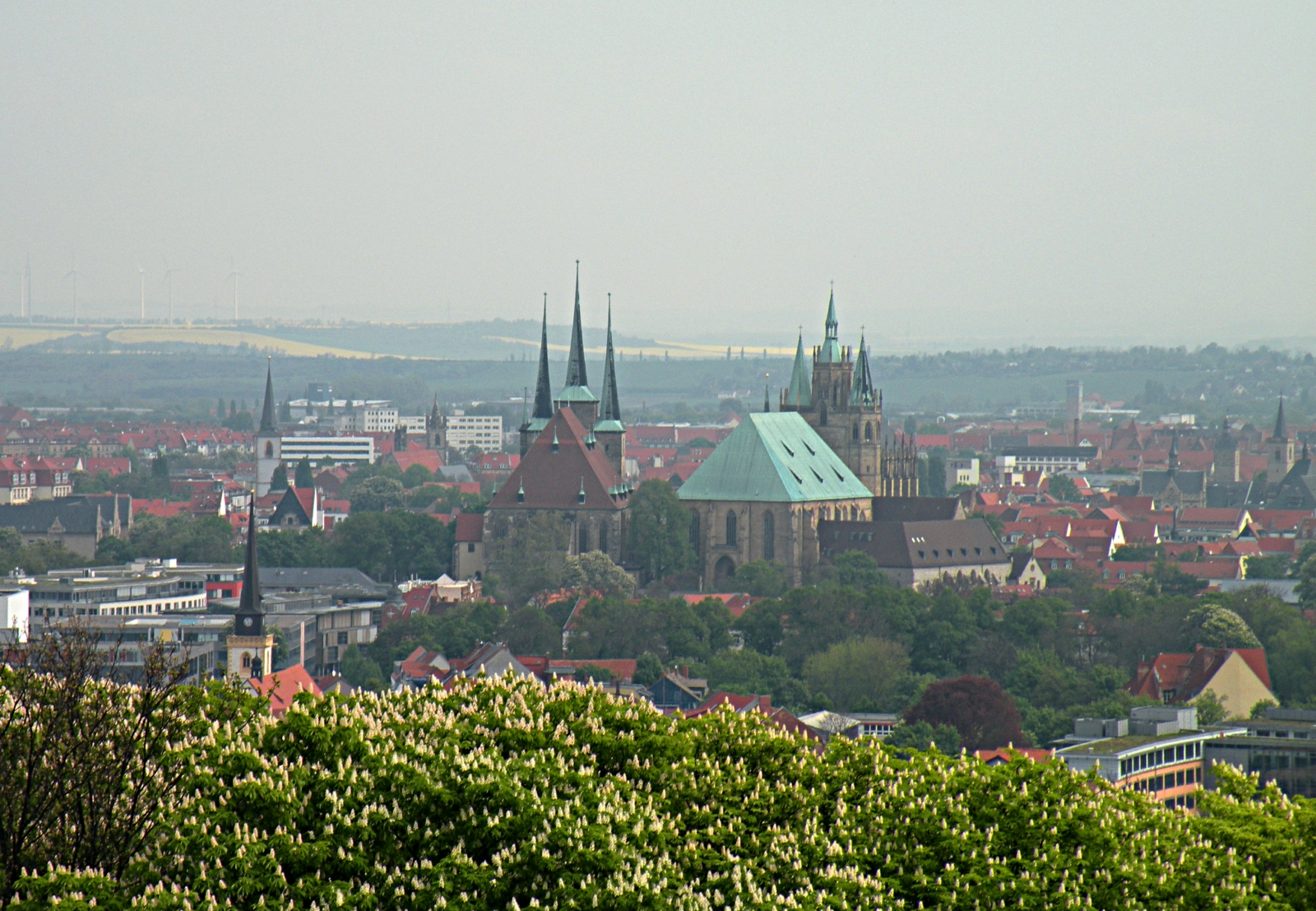
Erfurt, Thuringia - Photo Credit: Wikipedia.org

Erfurt, Thuringia – Photo Credit: Wikipedia.org

Unfortunately, his ordeal was far from over. By prior arrangement between the US and the Soviet Union, the American occupation forces withdrew from Thuringia and handed over the administration of the province to the Russians. Arrests, interrogations mostly conducted at night, closing of savings accounts and all sorts of other chicanery followed in quick succession. As my uncle stated in his family chronicle,  it was the fate of countless other German officers in the Soviet Occupation Zone.

To be continued …