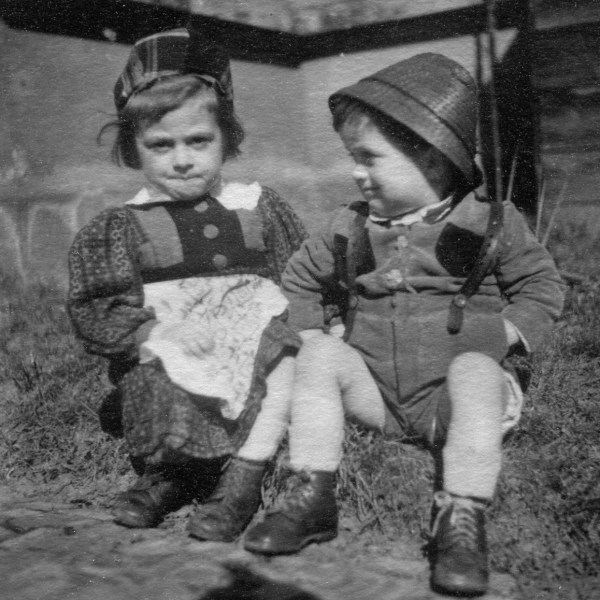
Walter Panknin (1898 – 1977) and His Family Ch5 Part 16

A Happy Childhood in a Time of Fear and Oppression

While my parents increasingly suffered under the oppressive political system, my brother and I experienced a happy childhood. We were oblivious to the hardships my parents had to endure. My mother had to struggle every day to provide food and other necessities.
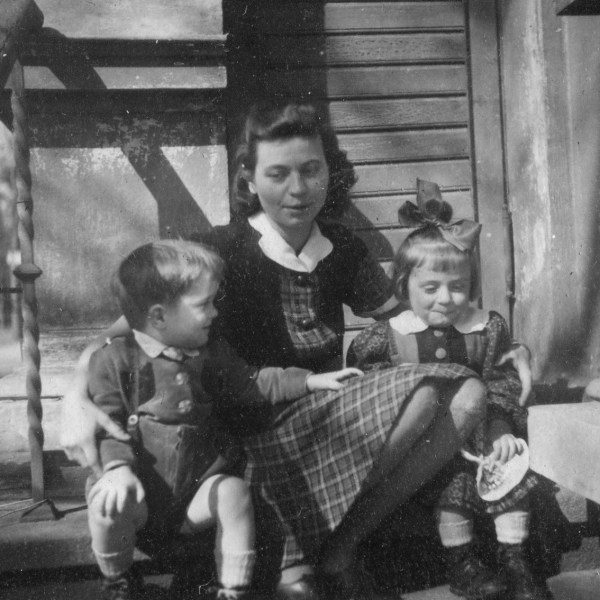
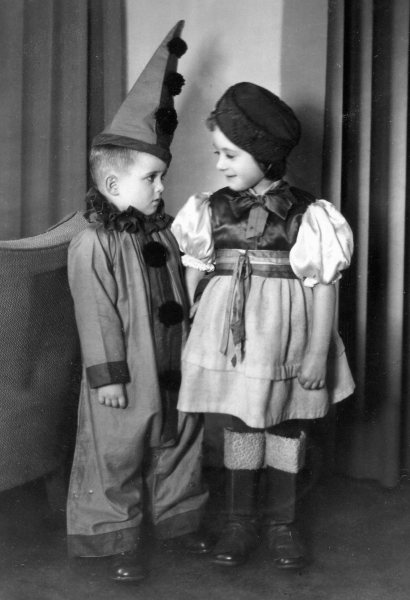
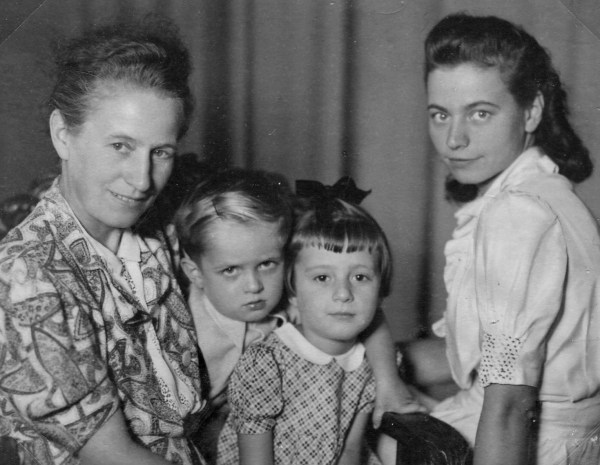
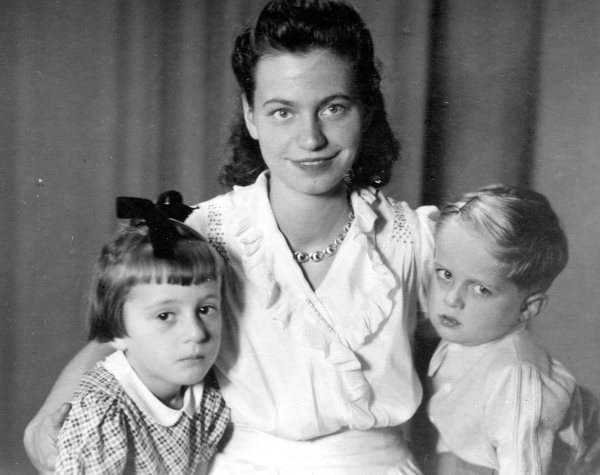
The Three Panknin Children

Even essential food items such as butter, flour, sugar, meat and cheese were scarce, and there were long lineups at the grocery stores every day for the limited supplies. Luxury items such as coffee, cocoa, chocolate, citrus fruit and cigarettes were hardly ever available. Ironically, the most coveted things for many people were cigarettes and coffee.
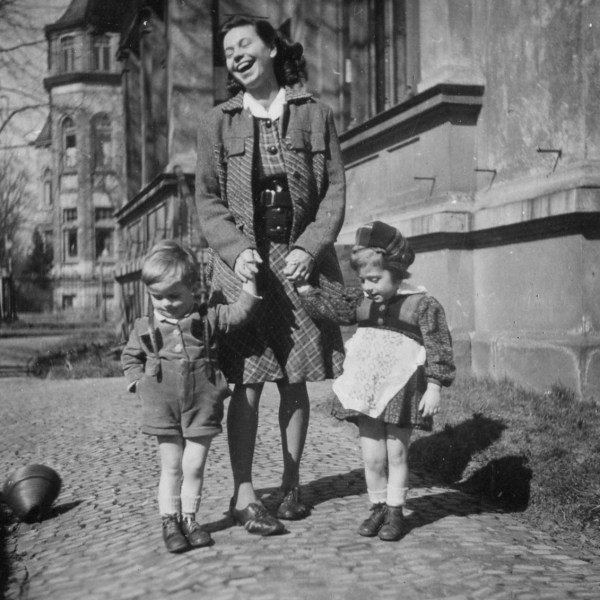
Food was scarce, but basically, everything from clothing to building materials was in short supply or unavailable. Regular planned outages rationed even electric power. While West Germany had a rapid economic boom after the war, East Germany had an economic decline. People in the East were angry and upset that they had to struggle for survival under a totalitarian system while their brothers and sisters in the West were enjoying freedom and prosperity. If people complained or criticized the system, they could be “denounced” to the authorities and severely punished. People could no longer trust each other. For many demoralized people in the East, West Germany became the “Promised Land,” They started calling it the Golden West. Significant numbers of desperate people escaped to the West, risking their lives and giving up all their material possessions in the pursuit of freedom and happiness. There wasn’t much that West German people could do to help their friends and relatives across the border.
Walter Panknin (1898 – 1977) and His Family Ch5 Part 15

Scarlet Fever and Diphtheria

Biene contributed this post.

 Shortly before we started school, my brother and I fell ill with scarlet fever, a severe disease at that time, often leading to death. We were hospitalized. It was a very traumatic time for us. Missing my mother was almost more agonizing for me than the pain and the fever of this savage disease. My brother was far worse off than I was and was put in an isolation chamber partitioned from the ward by glass walls. I often saw doctors and nurses bend over him with serious expressions on their faces.

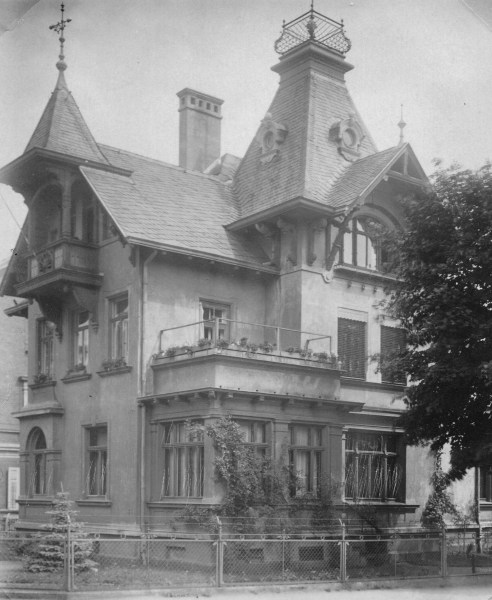
Our Home in Gotha

My mother knew how distressed we were. During the day and even at night, she would race on her bike to the hospital. She would find ways to sneak into our ward and comfort us, disregarding strict visitor regulations until she was asked to leave. My bed was close to a window. I would often stare out onto the street in the hope to spot my mother in the distance on her bike.

Antibiotics were very scarce in East Germany. Even in the West, there was only a limited supply because of the recent war. My brother was at the point of death when a desperate doctor asked my mother if she had relatives in West Germany. He suggested to phone them and ask for antibiotics to be sent to the hospital. He helped my mother contact her aunt via his private phone and make arrangements with a doctor in the West. Making these calls was a risky undertaking because contact with the West was considered a severe offence. Miraculously the mission was successful.

When the antibiotics finally arrived, I was already on the road to recovery. However, for my brother, they came just in the nick of time. He was saved from death but suffered from a weakened heart for the rest of his life. Shortly after we recovered, my newlywed sister and husband came down with a severe case of diphtheria, from which they took a long time to recover. They were in quarantine for many weeks, and my parents had to look after their infant son during that time.

Looking back now, I wonder how my parents coped with all these extreme hardships. As my mother often told us, my brother and I were the reason why they never despaired or gave up. We were their pride and joy. Trying to raise us for a better future gave them strength and hope. Especially my mother was prepared to sacrifice anything for our well-being and prospects for a happy future. Without personal freedom, these prospects were compromised. My parents felt increasingly oppressed by the totalitarian state.

Walter Panknin (1998 – 1977) and His Family – Ch5 Part 14

Gender Inequality at the Panknin Household

Biene contributed this post.

My brother had an inquisitive mind and constantly tried to figure out how things worked or how people made them. I would often discover that my toys or dolls were broken or taken apart. They had fallen victim to my brother’s curiosity. It would upset me tremendously. Although my parents expressed some sympathy, they never punished my brother or tried to change his behaviour. They not only condoned his often destructive explorations but almost encouraged them. They were proud of his clever findings and discoveries. In the name of science, they expected me to sacrifice my toys.

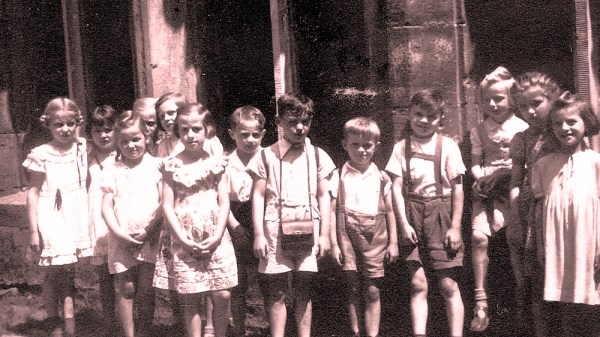
I do not have many memories of our early school days. But I remember that our teacher was called Frau Gans (Mrs. Goose). Her name very much amused my dad. In German, you say “dumme Gans” to a “dumb female.” Our teacher definitely was not “a stupid goose.”

Photo Credit: Pixabay

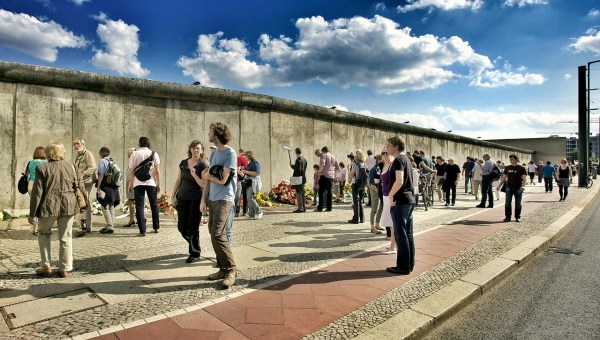
Both my brother and I were artistic and liked to draw and paint. I produced my first “masterpiece” in grade one. We were supposed to paint a picture of a wall. Mrs. Goose was very impressed with my work because I painted such a realistic-looking brick wall and a happy worker beside it. My dad was a bit puzzled by this unusual theme. “Why paint an ugly wall?” he asked. Ten years later, the communist regime built the Berlin Wall to separate the two parts of Berlin. Maybe this early art exercise in wall paintings was the first step to glorifying wall building. Or was it a premonition?

Walter Panknin (1898 – 1977) and His Family Ch5 – Part 13

School Memories

Biene contributed this post.

As I already mentioned, my dad prepared us well for school. Before every lesson in his roomy study, he would say in English, “I am your teacher.” He wanted to acquaint us with a foreign language early on in life. He refused to teach us Russian, which would have been more helpful in a communist state controlled by the Soviet Union. Math was always fun. My brother and I had competitions in mental math, which I would usually win. Until my last years in high school, I consistently outperformed my brother. But then he surpassed me, and I could never catch up. Calculus was my downfall.


We had to memorize poems, ballads and, of course, lots of folk songs, which we would sing on long hikes in the beautiful forests of Thuringia. Most of the songs are still fresh in my mind. They bring back happy memories of picking berries, swimming in rivers and lakes, and picnics under beautiful trees. My dad would tell us legends and fairy tales often connected to the region’s folklore on these outings. Since the German language has fairly consistent phonetic rules, I learned reading almost on my own before entering school.

Walter and Biene

The famous German “Zuckertüte” or sugar cone bag originated in Thuringia near Gotha. This giant, brightly decorated cone-shaped paper bag was filled with chocolates, candies and other delicacies or little gifts to “sweeten” the first day of school. I wished we had a picture of ours. But at that time, my parents did not have the means to buy films.
We only had a few hours of school every morning for the first few years, including Saturdays. Students were expected to do homework and practice their new skills after school. Since my brother and I were fast learners, we had lots of free time to play when we returned home for lunch.

Walter Panknin (1898 – 1977) and His Family Ch5 – Part 12

More Questionable Child-Rearing Practices

Biene contributed this post.

Another child-rearing practice my parents employed is also of dubious nature. My parents’ generation stood under the influence of the naturopathic medicine movement of Sebastian Kneipp. He believed in the therapeutic power of cold water. My parents wanted us to grow up strong and healthy. Every Saturday, my brother and I had our weekly bath in a big zinc tub placed on two chairs in our spacious kitchen. A hot bath was a luxury at that time.  We enjoyed this rare pleasure tremendously. But all treats come to an end, and for us, it was very abrupt. Without warning, my mother would dump a bucket full of cold water, which she had hidden under the chairs over us, as suggested by Sebastian Kneipp.

This “shock therapy” was supposed to toughen and strengthen us. Before we could utter desperate cries of protest, we were wrapped in warm towels. Time and again, my mother would assure us that she would not do it again. But she never kept her promise and was very skillful in hiding the bucket of frigid water. Until the end of his life, my brother detested cold water. I, on the other hand, started to like this invigorating therapy. To this day, I love swimming in cold lakes and conclude my warm bath with a cold shower. 

Another Kneipp practice my parents employed was even more dramatic and terrifying. As a small child, my brother had terrible temper tantrums. He frequently would fly into such a rage that he almost turned blue in his face screaming.  All measures to calm him down failed until my mother and sister started to resort to another Kneipp treatment. They would quickly pick up my hysterical brother and hold his head under running cold water from the tap.  The shock would instantly calm him. I was very scared watching this cruel procedure.

Like my brother, I was also strong-willed. But I did not voice my protests in furor. I would instead use passive resistance. My mother tried to give us one teaspoon of pure cod liver oil every day during the fall and winter season to prevent rickets and other health conditions. I vehemently detested this foul-smelling and even worse-tasting liquid. My mother could neither coax nor threaten me into compliance. I kept my mouth pressed shut. When all attempts failed to change my mind, my sister would hold me down on the couch, open my mouth forcefully. In an instant, my mother would pour the disgusting sticky liquid down my throat. I could not understand why my mother and sister, who loved us so much, could do such horrible things to us.

Walter Panknin (1898 – 1977) and His Family – Ch5 Part 11

Bizarre Child Rearing Practice

Biene contributed this post.

“The door flew open, in he ran,
The great, long, red-legged scissor-man.
Oh! children, see! the tailor’s come
And caught out little Suck-a-Thumb.
Snip! Snap! Snip! the scissors go;
And Conrad cries out, “Oh! Oh! Oh!”
Snip! Snap! Snip! They go so fast,
That both his thumbs are off at last.”


I sucked my thumb with passion and abandon right from birth and maybe even before. My parents never got tired of telling the embarrassing story when I tried to suck my brother’s thumb. He often stood still when observing something with his hands folded on his back like a statesman. I played on the floor behind him when I suddenly grabbed his hand and tried to put his thumb into my mouth. He screamed in horror, thinking I was going to bite him. Initially, my parents thought that I would eventually give up this bad habit on my own. But when I continued past the toddler stage, they started to get worried. All their attempts to stop me from putting my thumb into my mouth failed. As soon as their attention was diverted, I made up for the lost time, especially at night.

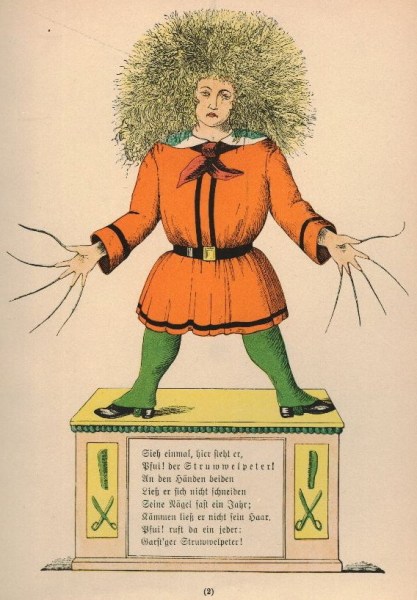
Heinrich Hoffmann: Der Struwwelpeter;

Finally, my mother and sister decided on more drastic measures. To me, they read the then bestselling children’s book ‘Struwwelpeter’ by Heinrich Hoffman. I listened attentively, sucking my thumb peacefully when suddenly my ears pricked up. There was a story of a little boy who had this habit of thumb sucking like me. Like me, the boy did not stop when told so by his parents. Then one day, the thumb cutter came and cut off his thumbs. Thus he stopped him once and for all.

I was getting a bit worried hearing the story when suddenly the doorbell rang. My sister got up to answer it. She returned after a few minutes looking very serious. “The thumb cutter is here looking for Biene,” she told my mom. “Should I let him come in?” My mom replied, looking at me, “Tell him to go because Biene will not suck her thumb anymore.” My thumb was out of my mouth in an instant. I was shaken to the core. “Miraculously” from that day on, I stopped this bad habit for good.