Presenting Author and Activist Lucia Mann

Courage and Commitment in the Face of Modern Day Slavery

Every once in a while on my blog I introduce a past or present resident of Fauquier and area, who have made a significant contribution to our community. There was the colorful personality of Mr. Fauquier, whose name our small village now bears. Then there was Bill Laux, the eccentric artist and castle builder.

Today I would like to introduce you to the illustrious writer, novelist and activist Lucia Mann. It is my hope that this post will help spread her ideas about social justice and increase awareness about modern-day slavery. I am republishing with her kind permission the page about the author, which can be found at http://www.luciamann.com.

LuciaPortrait

Lucia Man is Sicilian-bred, born in British Colonial South Africa in the wake of WWII.  She is a citizen of Britain and Canada who recently applied for a U.S. Green Card because she believes she is an American at heart. She was educated in London, England and retired from freelance journalism in 1998. After suffering from racial prejudice most of her early life because she was part Italian and part South African, she saw and felt firsthand the pain and suffering of those who were thought to be inferior because of the color of their skin. Her mission is to end prejudice and slavery now and in the future.

A woman was recently sentenced to 140 months in prison after using two Nigerian immigrants as personal unpaid servants in her luxury home in Atlanta, Georgia. A few days later, two Ukrainian brothers were convicted of smuggling desperate villagers into the United States to work long hours, cleaning retail stores and office buildings at little or no pay. The prosecuting U.S. attorney in Philadelphia, Daniel Velez, said it was “modern-day slavery. It’s hiding in plain sight.”

However, according to a woman who lived through the racial prejudice, segregation and slavery in post-World War II Europe, the slavery crisis in the modern world is far greater than that.

“Anyone who thinks slavery died when America abolished it in the 1800s has a shock coming to them,” said Lucia Mann, whose mother was a sex slave and a WWII concentration camp survivor.  Mann, a former journalist and author of “RENTED SILENCE” (www.rentedsilence.com), a novel about slavery and racial prejudice based on her life experiences and those of other persecuted souls she witnessed says, “According to the United Nations, there are more than 27 million slaves worldwide, which are more than twice the number of those who were enslaved over the 400 years that transatlantic slavers trafficked humans to work in the Americas. Many are forced into prostitution while others are used as unpaid laborers used to manufacture goods many of us buy in the U.S. In fact, it’s almost impossible to buy clothes or goods anymore without inadvertently supporting the slave trade.”

Mann said that the crisis extends far greater than in the African and Asian nations typically associated with slavery or indentured servitude.

“After the hurricane in Haiti, the economy was so devastated, with as many as 3,000 people sold into slavery right there in their own country,” she added. “It affects all racial groups and slaves come from every single continent on the planet. The irony is that there are more slaves now that slavery is illegal than there were when it was a legal part of international commerce. Moreover, because of its illegal nature, it’s practically impossible to track and contain. It’s not a matter of how to stop it. It’s a matter of how we even begin to address it.”

One of the reasons Mann wrote her book was to establish an awareness of the problem, so that people could have a frame of reference for action.

“The wrongs of the past as well as the present must continue to be exposed so that they can be righted in the present and future,” Mann added. “This means educating society about evil and injustice and motivating them to take steps to ease others’ pain and anguish. The key is to get people aware of it, and then let them know what they can do to end the practice. In America, the first thing we need to do is address our own consumer habits. To help, the United Nations has created an online and mobile phone application to help people track if what they buy is supporting slavers.”

Mann said the awareness and concern of the American people are the first steps to ending slavery around the world.

“If there is no money to be made from enslaving people, it will end,” she said. “Many innocent people become the victims of viciousness or the prey of prejudice. While fear and anger are filling the cells and souls of innocents, the rest of us can bolster their spirits and lighten their load by having the guts to fight their fight and the heart to bring hope to humanity. Courage and commitment are powerful weapons, and we should not hesitate to use them against the dishonorable people of the world”

My wife is presently reading this book and is available on line and at Home Hardware Nakusp.

My wife is presently reading this book, which is available online and at the Home Hardware store at Nakusp.

Visit Lucia’s website at luciamann.com to find out more about her quest for social justice.

Heart Creek Bridge Nearing Completion

Excerpt from the Arrow Lakes News

Reprinted with their Kind Permission

Illustrated by my own Photos
Insurmountable Barrier for Spawning Fish 2014

Insurmountable Barrier for Spawning Fish 2014

In a previous issue of Arrow Lakes News, it was stated that the collapse of the highway was not a technical issue.

“This is a Mother Nature issue, not a maintenance issue,” said Bart Chenuz, area manager for roads with the Ministry of Transport and Infrastructure.

Repairs couldn’t begin until ground had stopped moving. A geological technician had been keeping track of the site. As of March 1, the ground had stopped moving, and work could begin.

Construction on the bridge began in mid-July after the contract to build it was awarded to the company Neel-co in May of 2015.

Part of the reason the bridge is being worked on is because there was a barrier for fish spawning in the river. The barrier was the fact that the fish couldn’t access the upper part of the Creek. The increased length allowed Kokanee to spawn upstream of Highway 6 this year for the first time in 45 years.

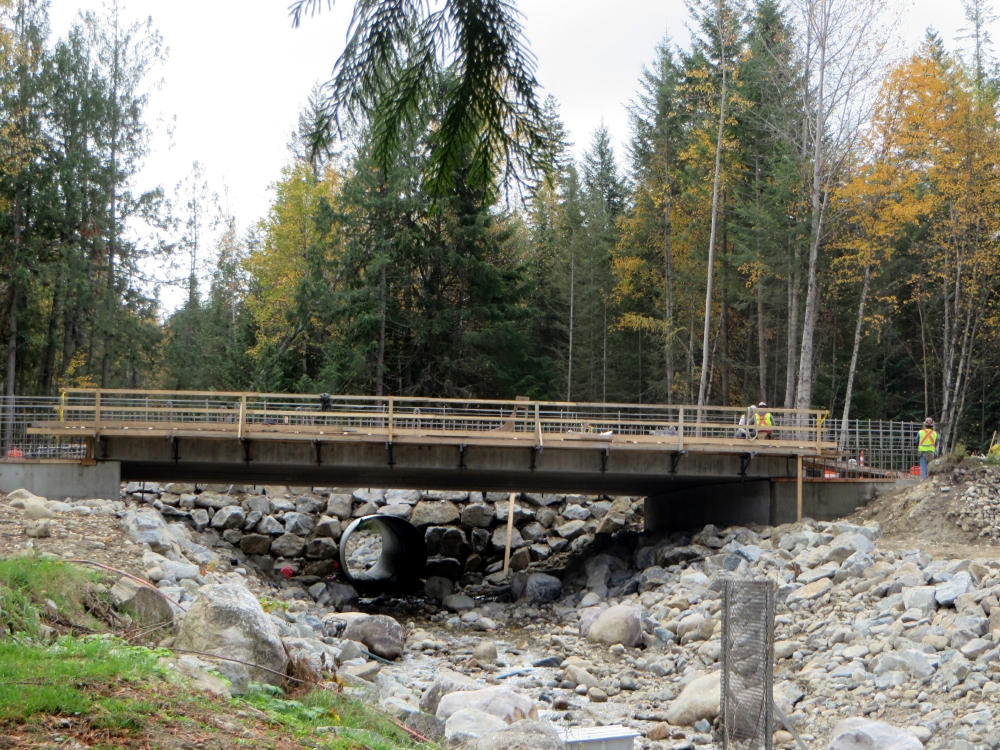
Bridge Replacing the Culvert almost Complete

Bridge Replacing the Culvert almost Complete

Once completed, fish such as Kokanee, Rainbow Trout and Bull Trout will have better access to the lower part of the stream.  The new clear span bridge will enable the habitat of the fish to be doubled.

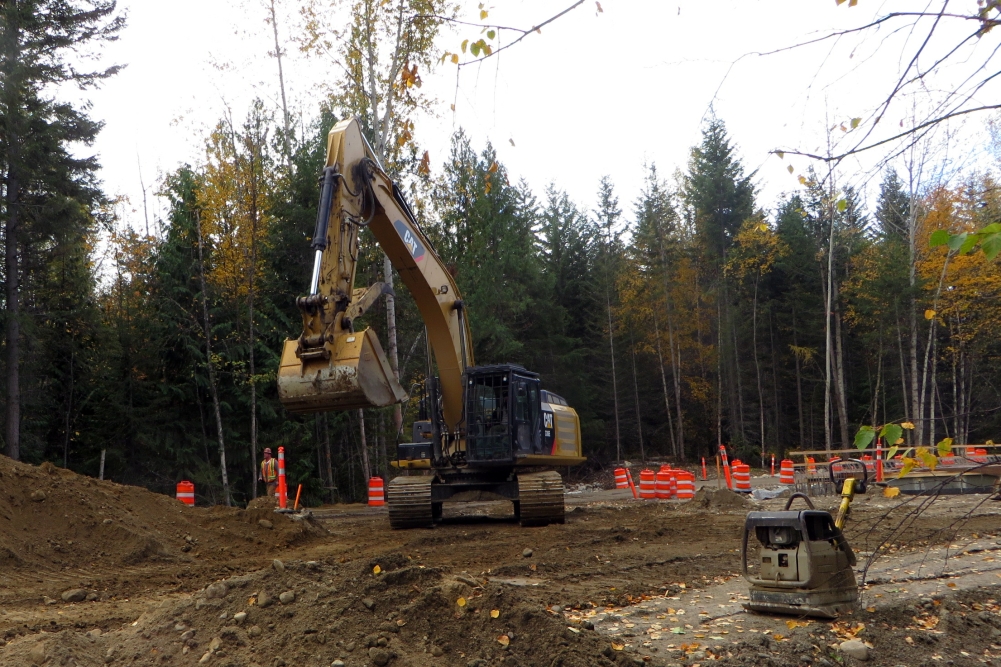
Heavy Duty Machines October 2015

Heavy Duty Machines October 2015

The bridge is 18 metres long and almost 11 metres wide. It will feature steel H-piles with reinforced concrete abutments. H-Piles are dimensionally square structural beams that are driven in the ground for deep foundation applications.

The pilings are imbedded 23 metres into the ground. The bridge deck will be constructed of concrete with steel railings.

Precautions to protect the bridge have been taken if the road ever washes out again. The creek channel has been reinforced with rock in order to contain it within the existing channel.

Construction is scheduled to wrap up around mid-November.

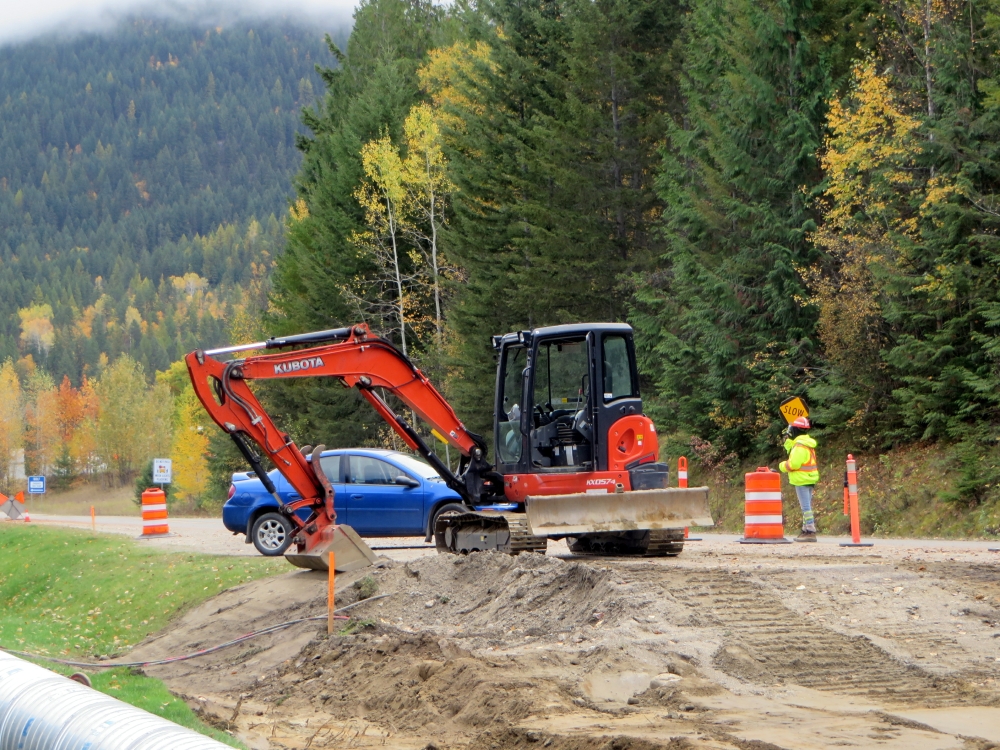
One Lane Traffic until Completion of Project

One-Lane Traffic until Completion of Project

Irony of Life

A Wish Squashed Unexpectedly Granted

In 1976 our family moved to Fauquier, BC, at the beautiful Arrow Lake. Between our neighbor’s and our house grew a dozen or so young cedar trees. Nor more than five meters tall at the time they were just the right height to let the sun shine on our deck and provide the privacy Gertrud needed for taking a little break from the mounting duties in our seven-members’ household.

Our House after a Mobile was Added in 1977

‘Old’ House with Attached Mobile Home to Accommodate  our Large Family in 1976

Inge, our neighbor,  often came over for a visit and a cup of coffee. At one of those occasions she made the generous offer to have the cedar trees cut down to add more light to the south side of our house. However, we opted to maintain the fine balance between light and privacy and adamantly opposed the idea.

Ten years later we began to regret our decision as the cedars had almost doubled in height. Inge had moved to Vancouver and eventually sold the house to Dave, who although being a bachelor impressed us with his impeccably clean house and yard. He also loved the trees on his property, which, having turned into green giants, were preventing with their dense foliage the sun rays from reaching our home. We virtually lived in a shadowy world. I approached Dave a couple of times in an attempt to convince him to take out just a few of his beloved cedars. But he always gave me the negative reply. So at the end Gertrud and I gave up and resigned ourselves to the steadily growing darkness in and around our house.

Suddenly, Dave passed away one night of some undetermined illness and his brother  sold his house to some friends in Calgary. Again we are very lucky in getting some very fine neighbors, who take good care of their yard. Even though Tony and Anne are using their property mostly as a summer residence, they often travel the 600 km or more to keep their land attractive and in top shape. For them work appears to be recreation. First they built a storage shed, then they solved their drainage problem by building a massive retaining wall and then  after their trailer showed some water damage, they decided to build a garage.

By now, you must be wondering what I am driving at with my strange post. Perhaps you think that Peter got ‘off the rail’ with his theme “Irony of Life”, but read on and look at the photo gallery below. You guessed it. To build a garage between their house and ours more than half of the cedar trees had to be removed.

After only three days, for the first time in 30 years, precious sunlight was flooding bedroom, bathroom, and the mobile home living room and office. This is the irony of life. After you have given up on whatever your desire used to be, no matter how intense and urgent, you see its fulfillment, when you least expect it.

Now we feel a new conflict in our hearts. Yes, we need and love sunshine. But we also love trees and know their value for our environment.For that reason we also feel a little bit saddened by the loss of those mighty trees.

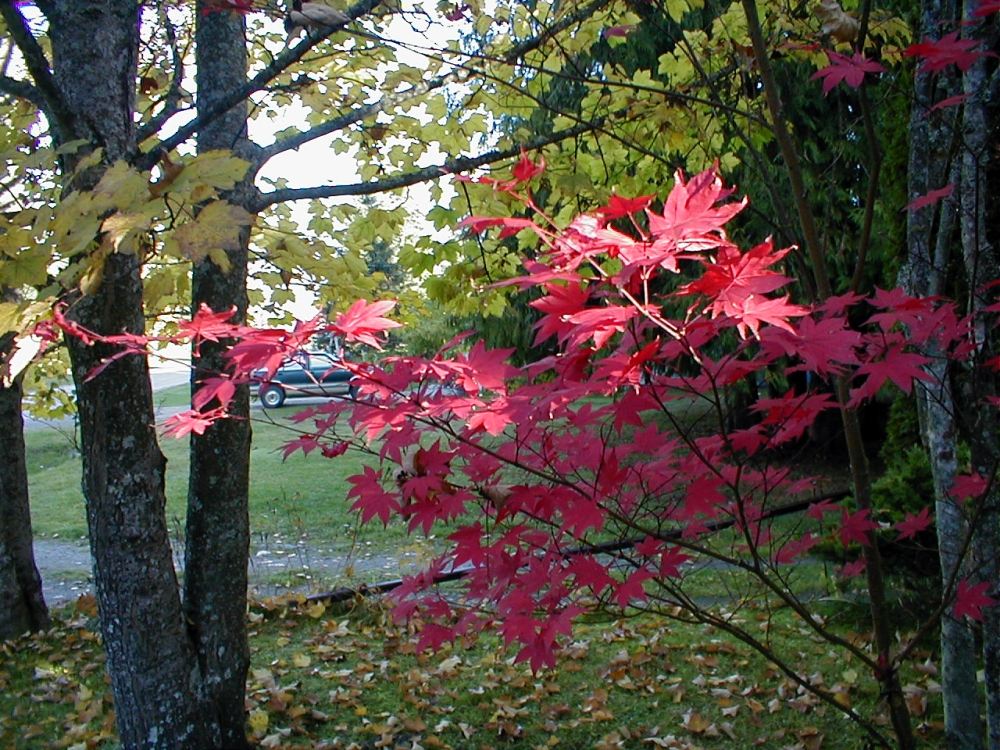
Autumnal Splendor in and around Fauquier BC

OLYMPUS DIGITAL CAMERA

Photo Story: Autumn Fire

02

My wife wrote this lovely poem in 2002.

Keeping Watch over the Fallen Leaves

Keeping Watch over the Fallen Leaves

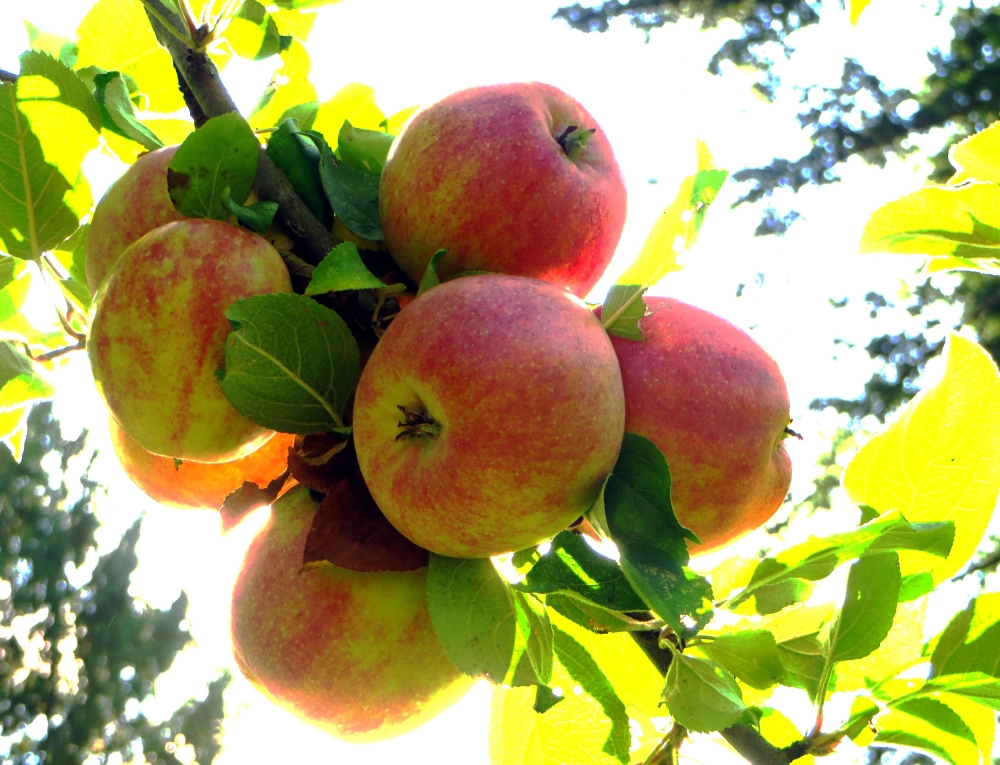
Gravenstein Apples ready for the Picking

Gravenstein Apples ready for the Picking

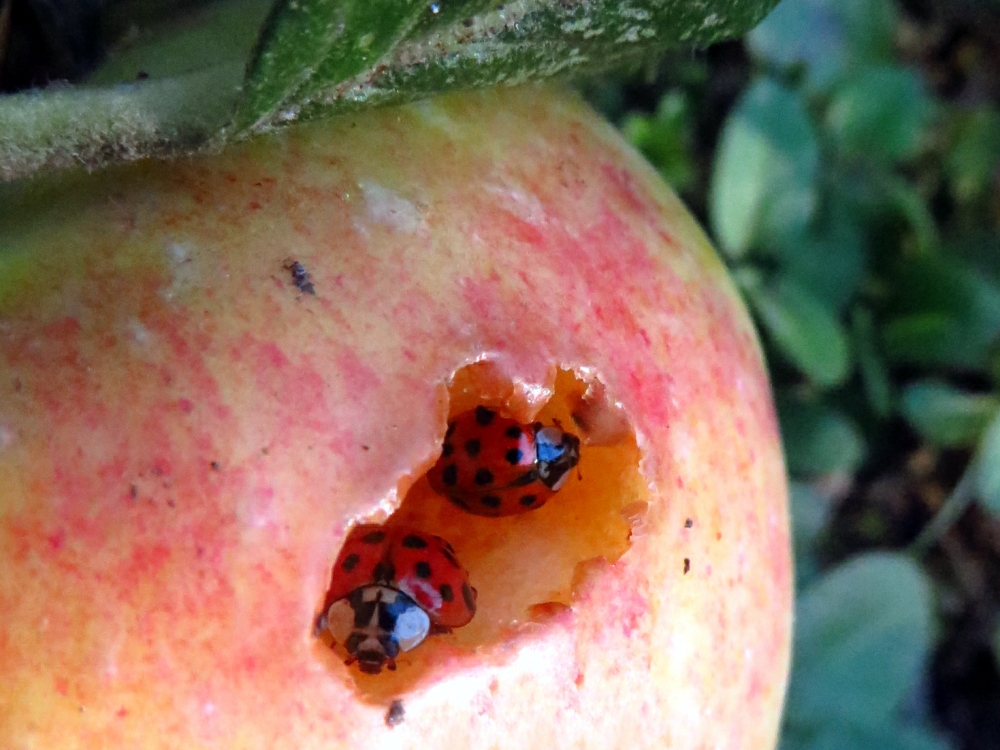
Ladybugs digging themselves a Fruitful Den

Ladybugs digging themselves a Fruitful Den

OLYMPUS DIGITAL CAMERA

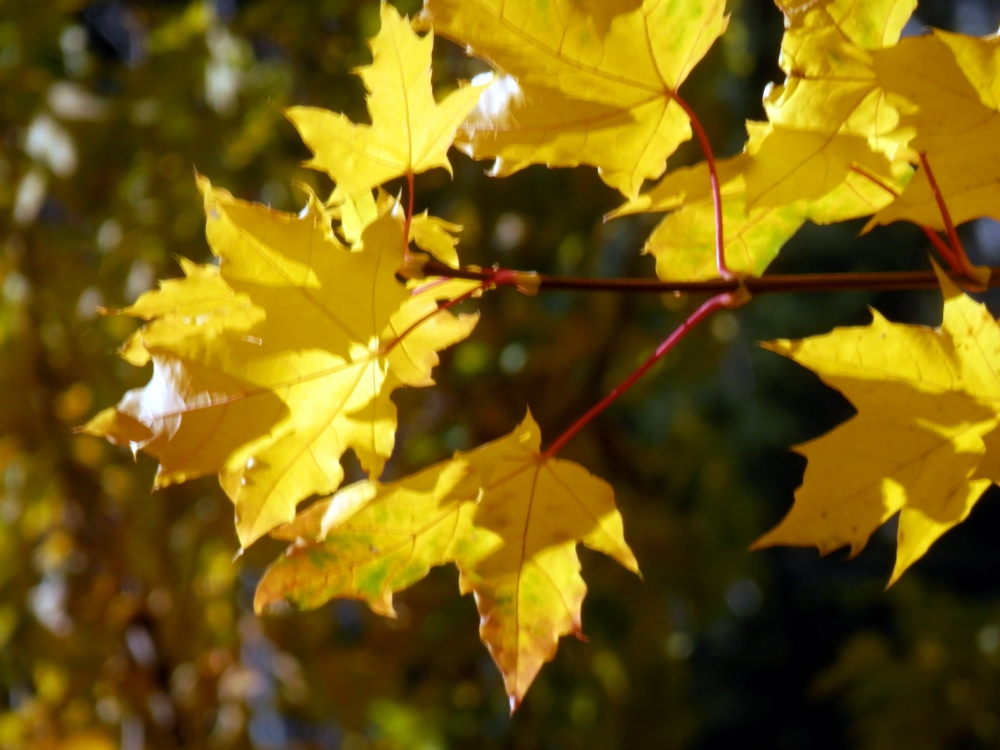
Golden Maple Leaves in our Yard

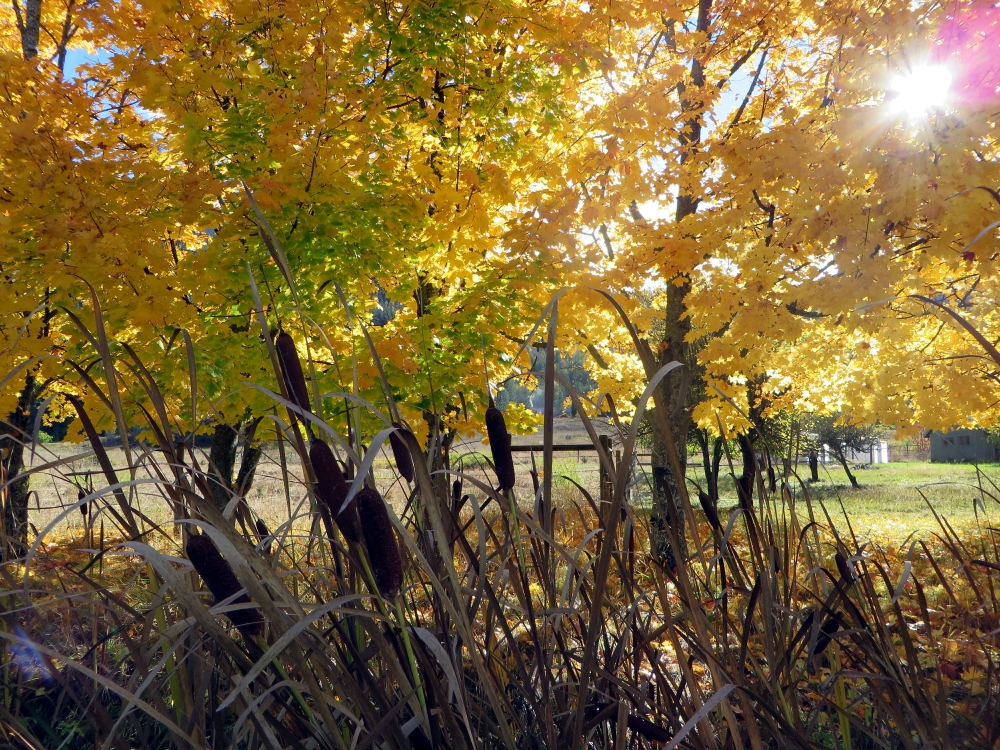
Sun Rays Putting on a Light Show by the Roadside

Sun Rays Putting on a Light Show by the Roadside

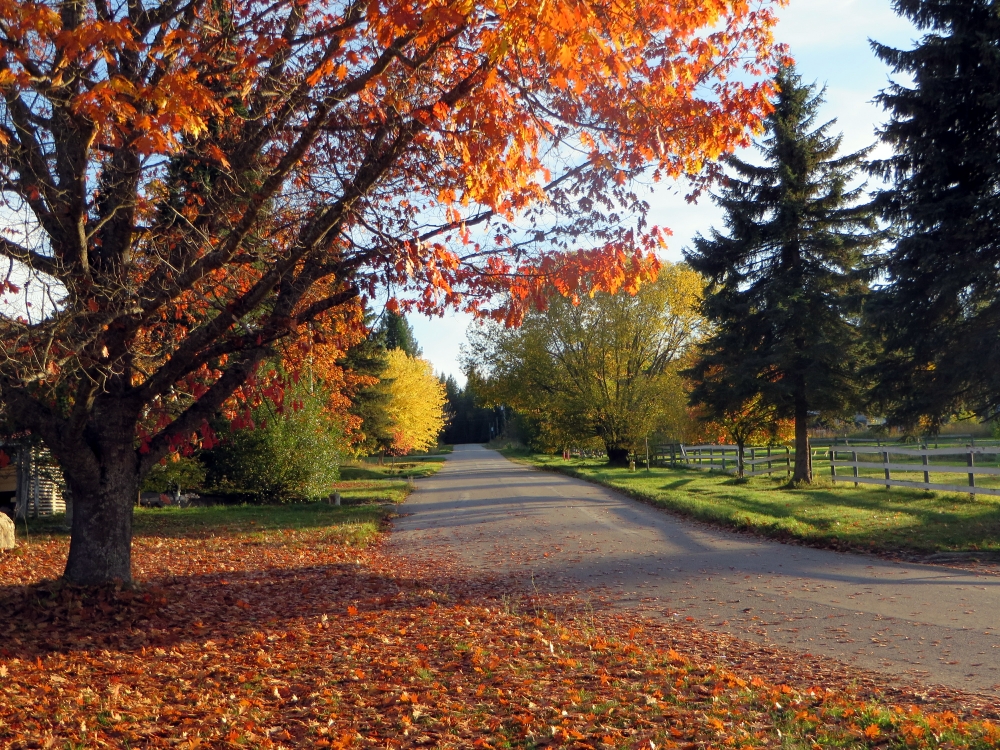
Spectacular Colors on the Way to our House

Spectacular Colors on the Way up to our House

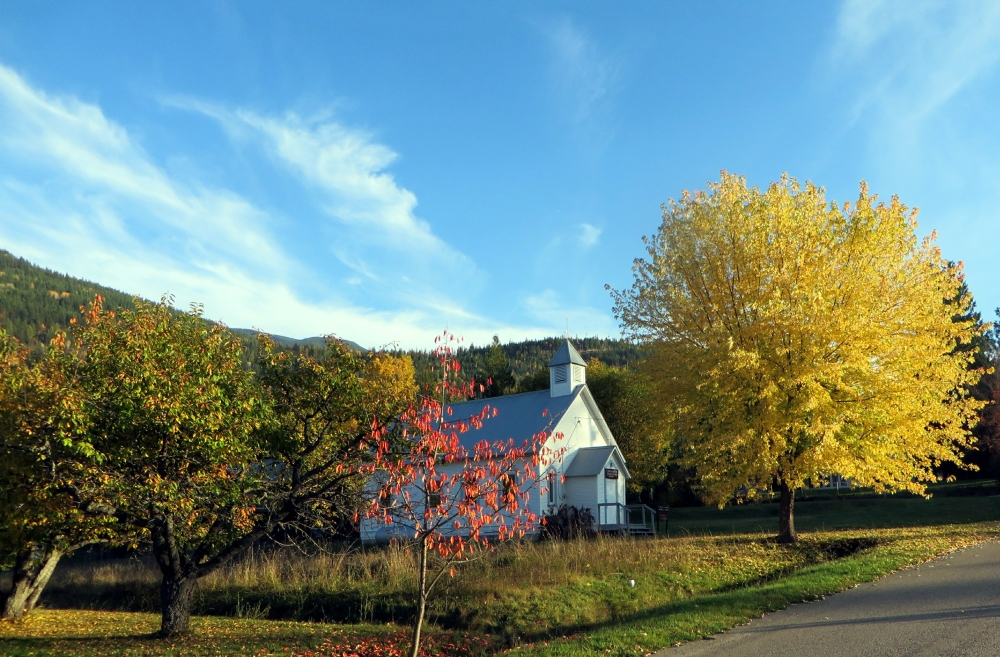
Our Little Village Church on a Beautiful Fall Day

Our Little Village Church on a Beautiful Fall Day

Ornamental Maple Tree in its Fiery Dress

Ornamental Maple Tree in its Fiery Dress

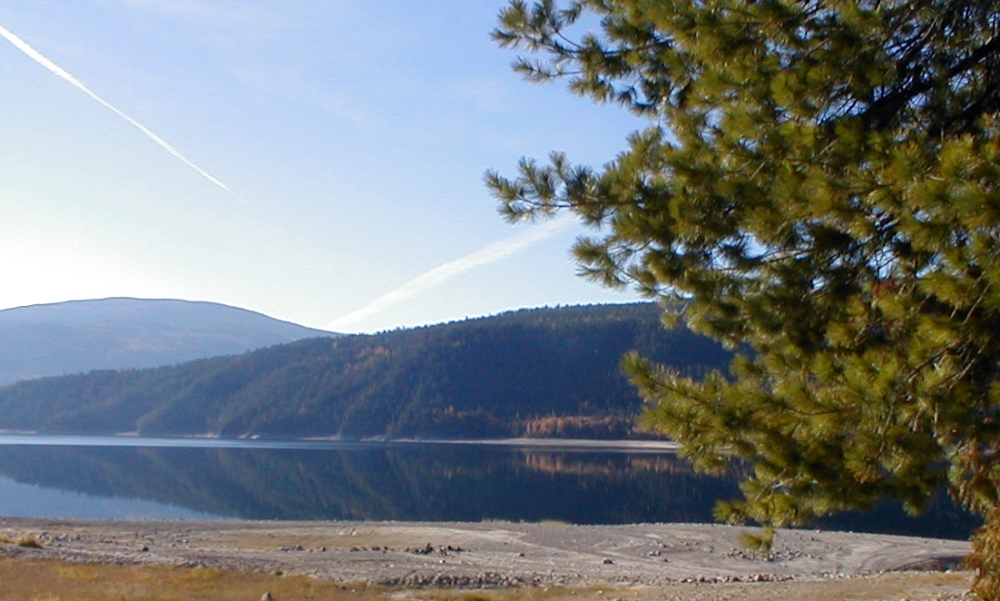
The Arrow Lake Inviting to a Canoe Ride

The Arrow Lake Inviting to a Canoe Ride

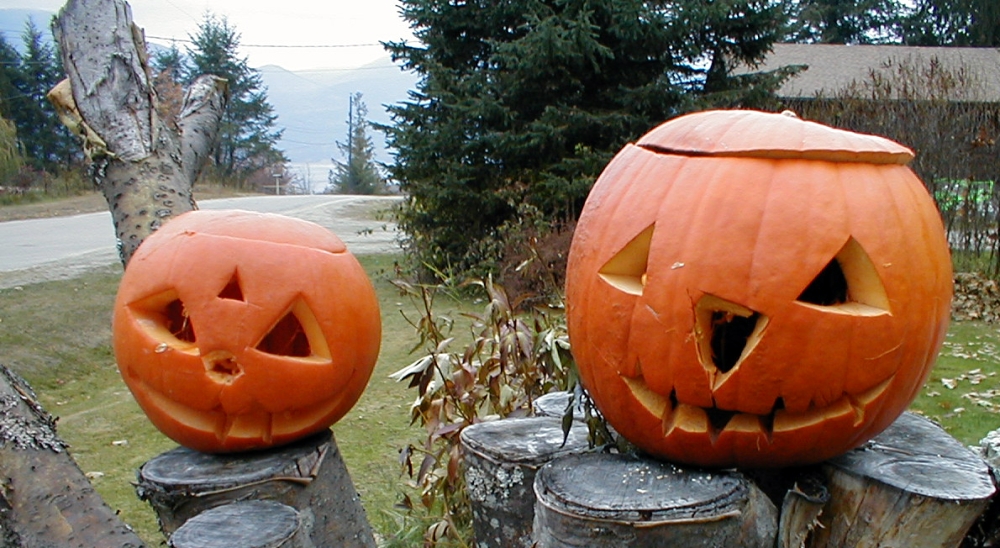
The bright orange pumpkins announce that Halloween is not very far.

The bright orange pumpkins announce that Halloween is not very far.

Adding Meaning to Thanksgiving

Michael and Angie Helping Gathering Firewood

Chart I – IV

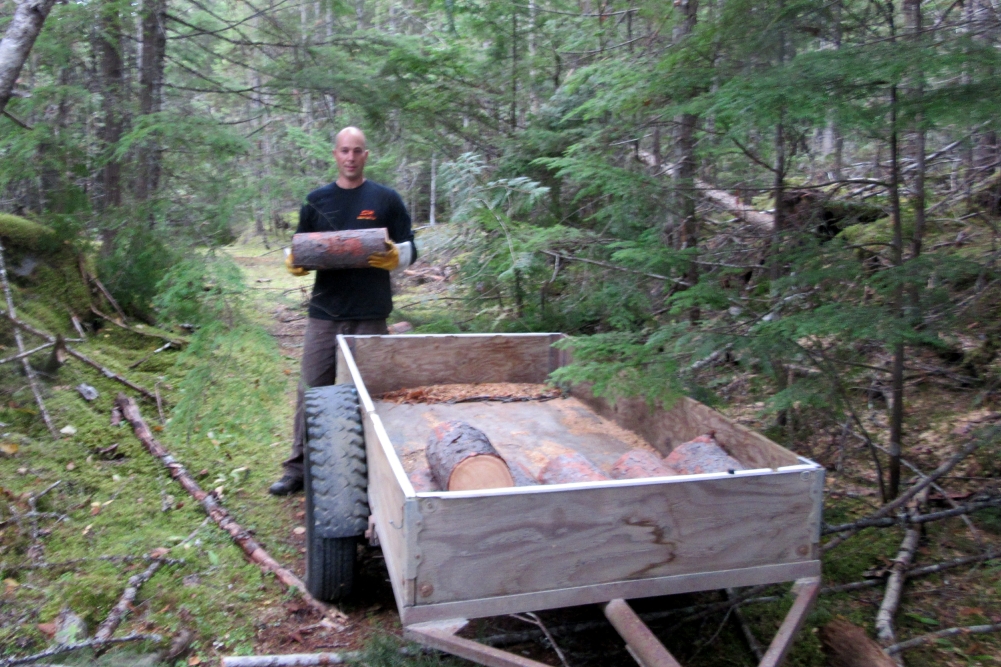
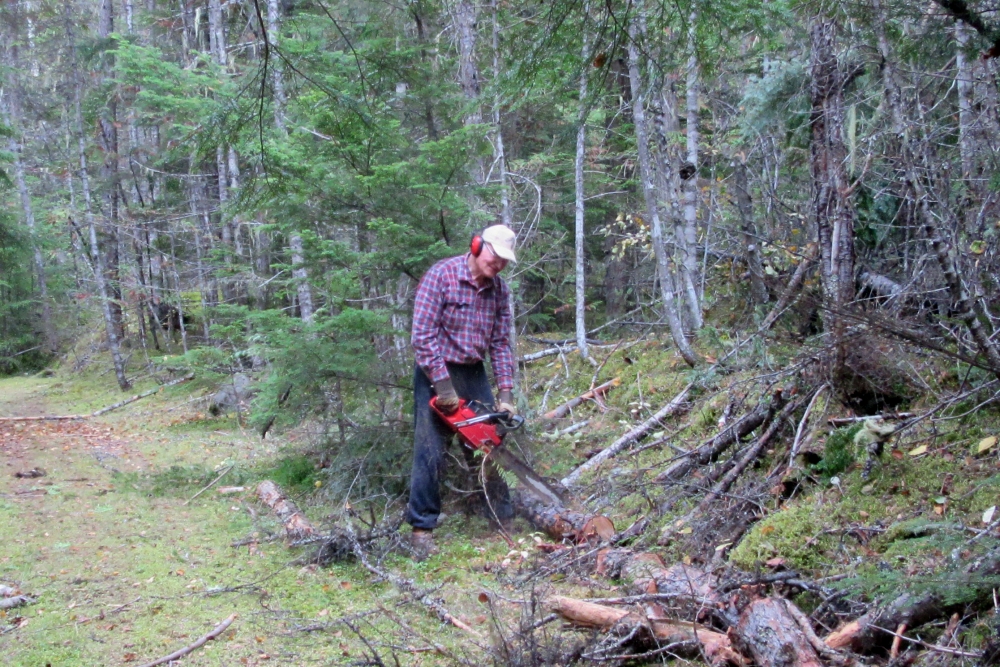
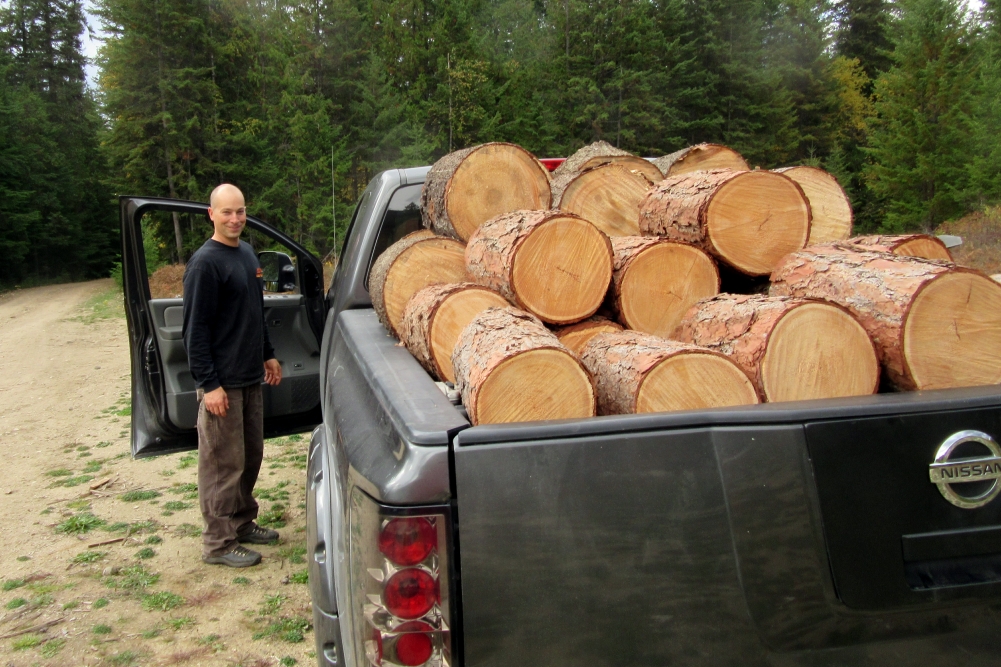
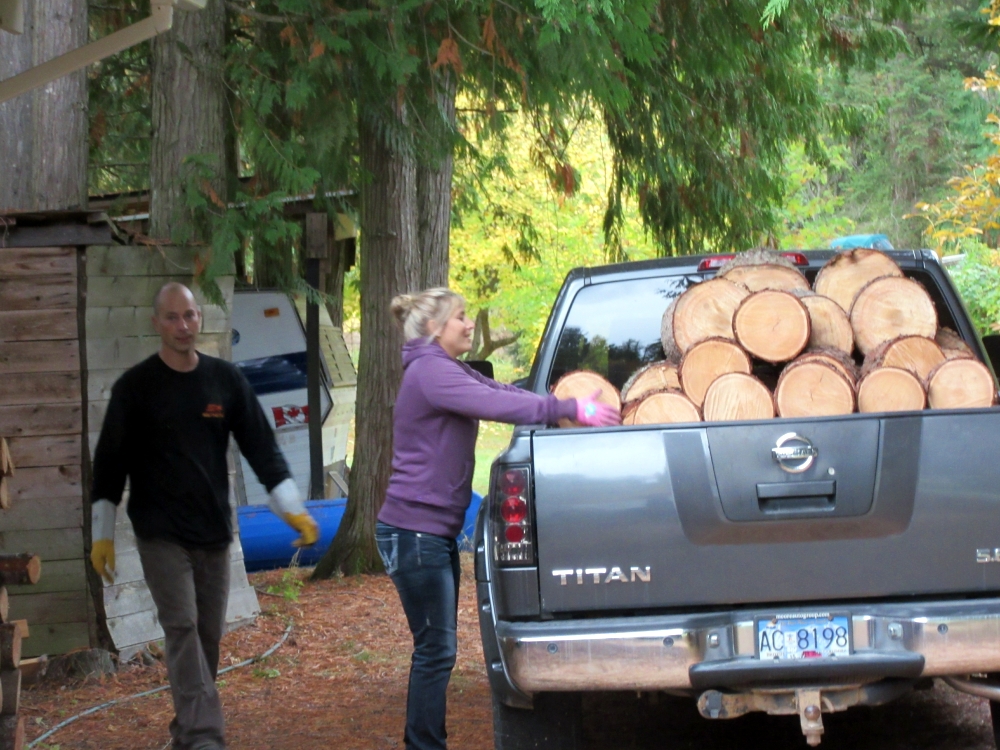
On the Canadian Thanksgiving Weekend our son Michael and daughter-in-law Angie dropped in on a surprise visit. And what a surprise it was! They came to help  to get some firewood out of the Taite Creek area. While my foot had healed quite well over the past eight weeks, our family doctor insisted that I should not yet go into the woods picking mushrooms or cutting firewood. So the following photo essay will express our joy and appreciation for what Michael and Angie have done for us.

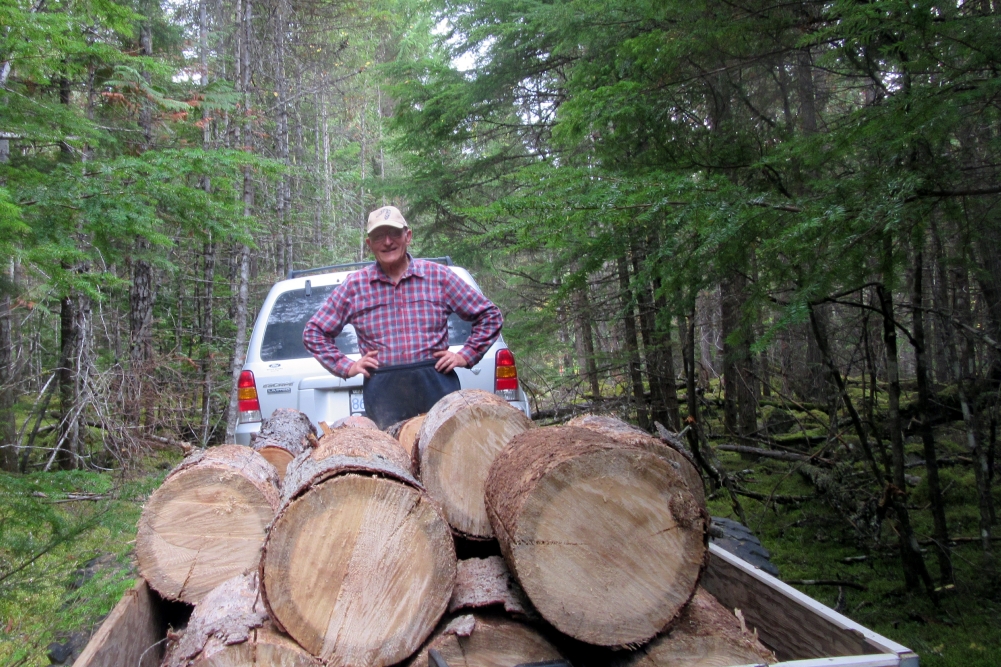
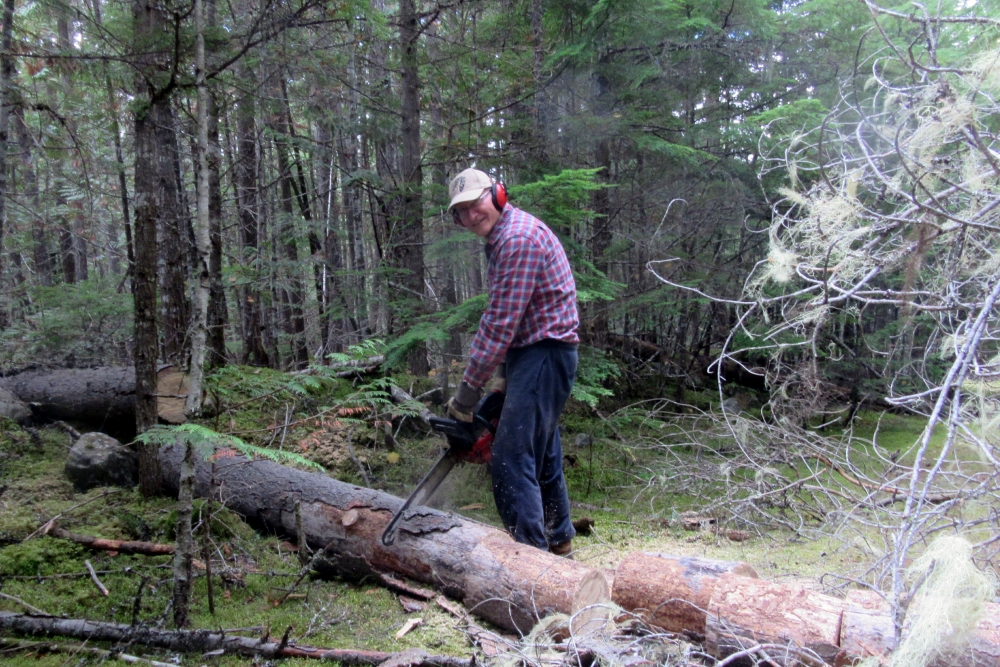
After Michael's truck was loaded with logs from a large pine tree, Michael cut down a larch for my small trailer.After Michael’s truck is loaded with logs from a large pine tree, Michael cuts down a larch for my small trailer.
Still having to be careful with my right foot, I cut the fallen tree into small pieces, while Michael carried them to the trailer,Still having to be careful with my right foot, I cut the fallen tree into small pieces, while Michael carries them to the trailer.
When there was still room for more logs on the trailer, Michael cut down another pine tree.Because there is still room for more logs on the trailer, Michael cuts down another pine tree.
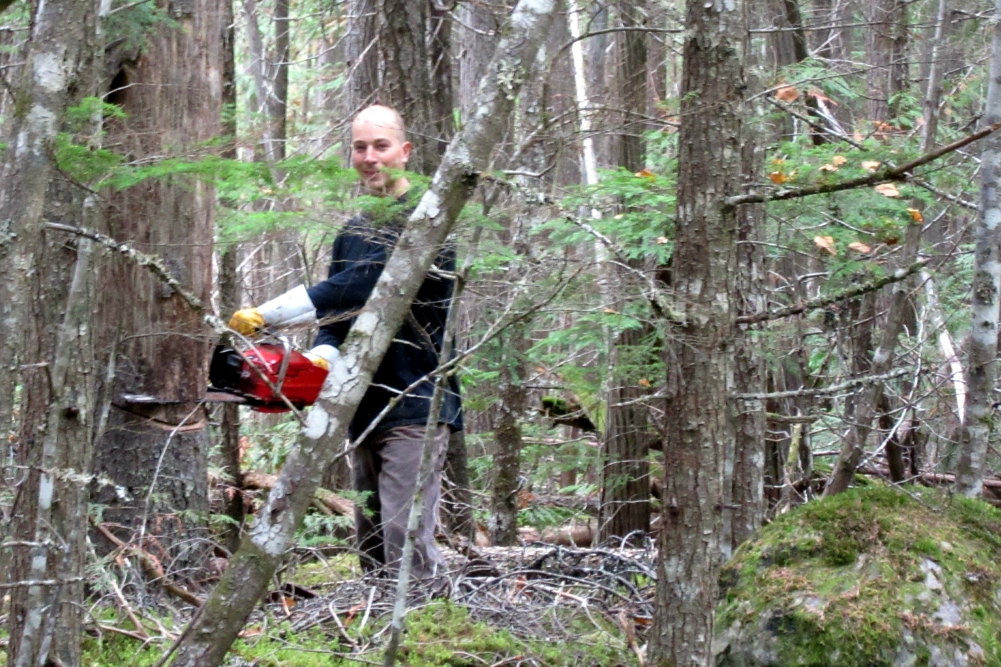
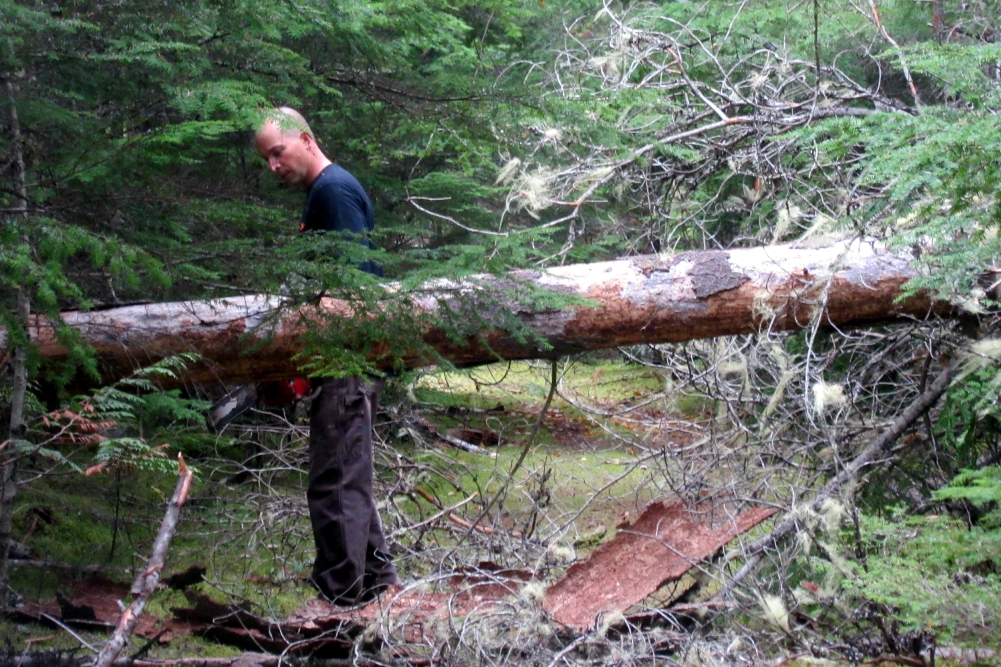
Since the fallen pine tree was blocking the road, Michael cut the middle section out of the tree.Since the fallen pine tree is blocking the road, Michael cuts the middle section out of the tree.
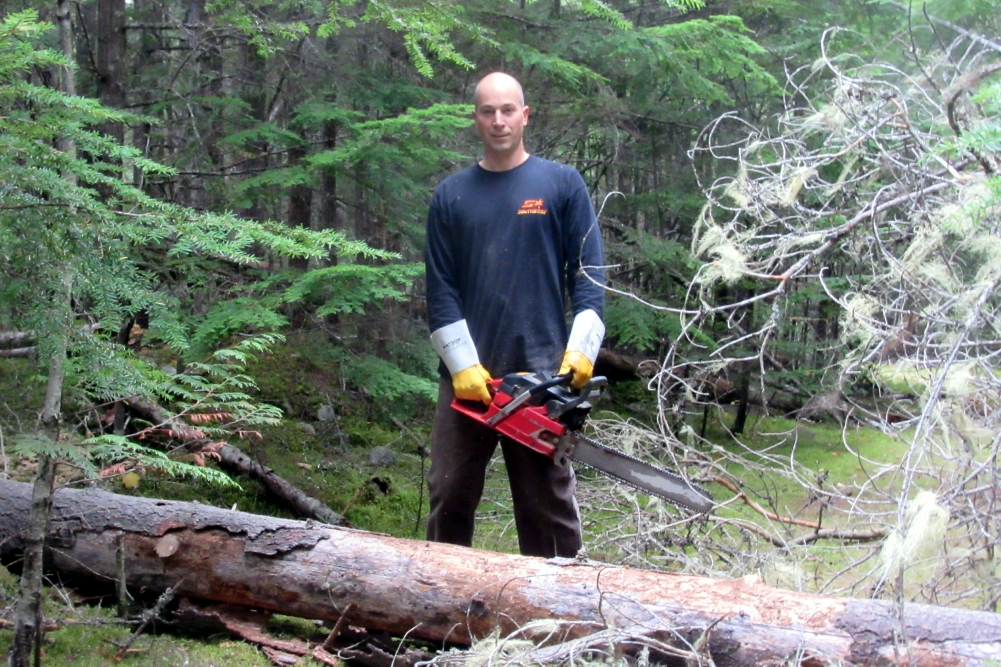
05He expertly accomplishes this task by two undercuts and then proudly presents himself with the chainsaw for the photo above.
Then it was my turn to cut the large section into logs that Michael carried to the trailer.Then it is my turn to cut the large section into logs that Michael then carries to the trailer.
07Standing behind our trailer, I am looking thankfully at the load of pine and larch firewood.
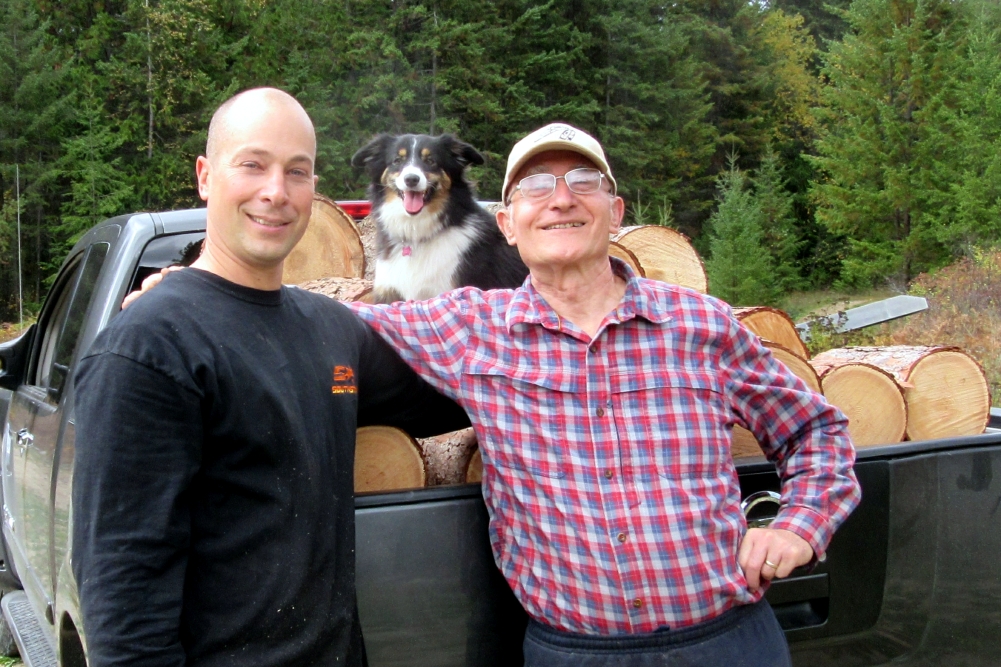
08With a truck full of precious firewood, we are thankful and all smiles. Even Piper, the miniature Australian shepherd, appears to make a happy face.
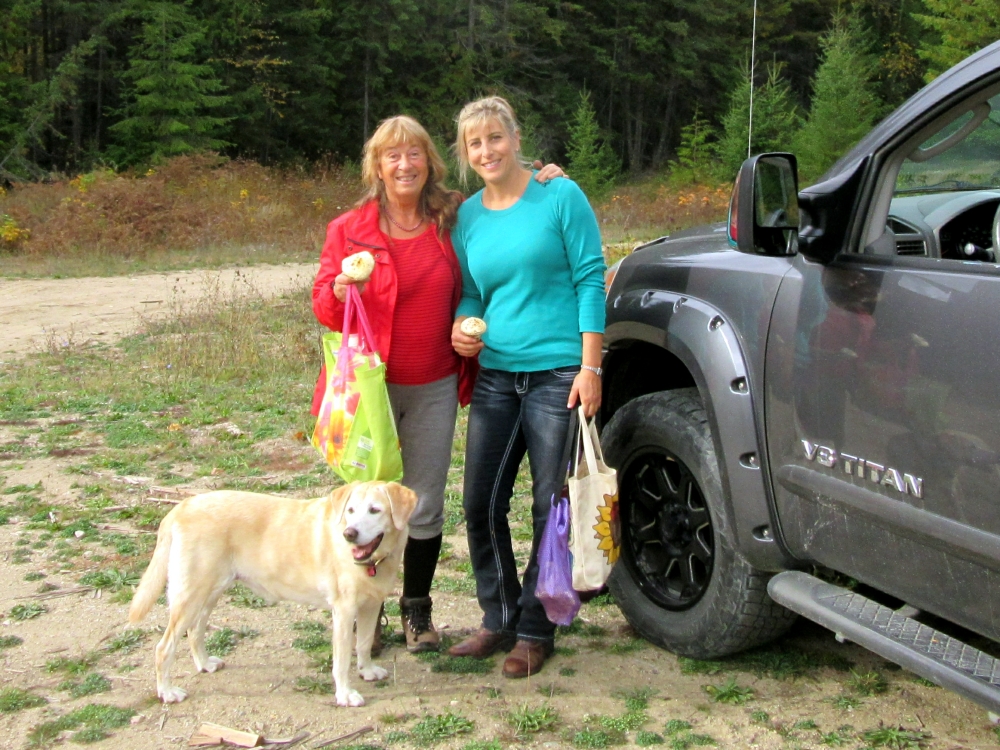
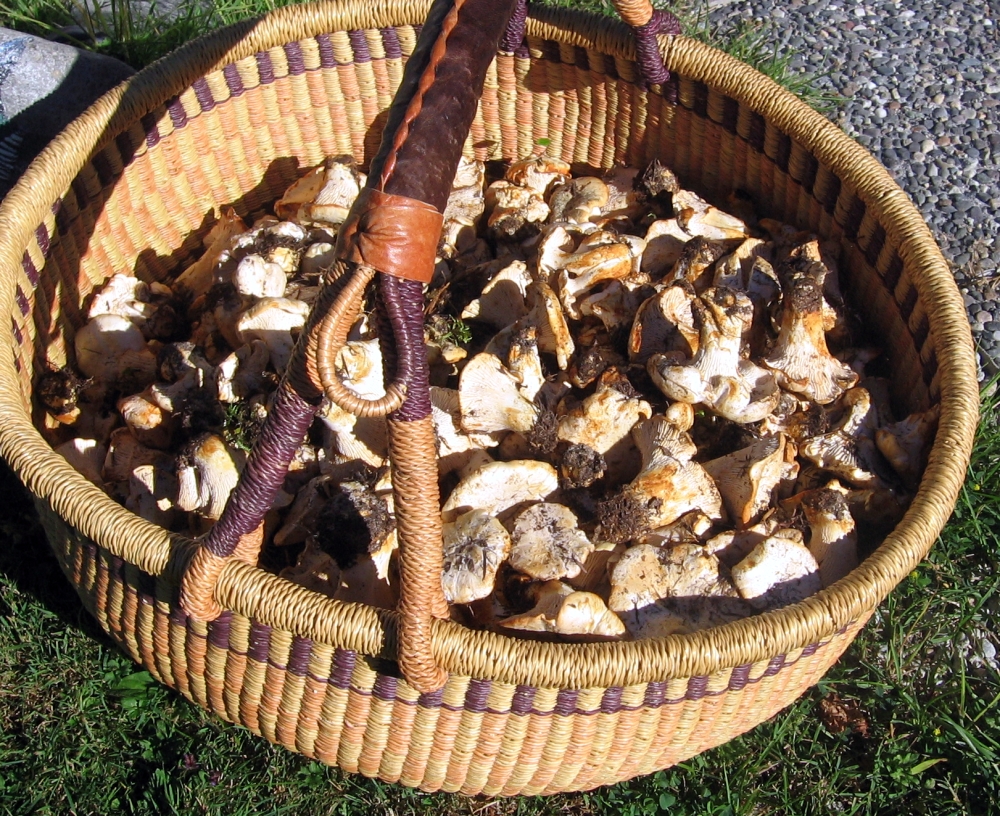
09In the meantime Biene and Angie had been scouring the woods for those elusive pine mushrooms and are showing off their loot.
11Now it is time to bring home the treasure to keep us warm this coming winter season.
12While I am taking pictures, Michael and Angie are unloading the truck. What a joy in a father’s heart!

After all this hard work, we all sat down for an early Thanksgiving dinner that Biene had so lovingly prepared before our outing into the woods.

Happy Thanksgiving to you all!


The Annual Pine Mushroom Bonanza at the Arrow Lakes

The Pine Mushroom, a Renewable Resource

Mushroom Picker's Delight: A Pine Mushroom Button

Mushroom Picker’s Delight: A Pine Mushroom Button

Among all the choice mushrooms growing in our forests, such as Chanterelle (Pfifferlinge), Lobster, King Boletus, Honey Mushroom, and many others, no fungus can compare in monetary value to the prized Pine Mushroom.  Every fall local and out-of-town mushroom buyers set up shop for the annual harvesting bonanza. This is the time of the year, when people, who would normally sleep a few extra winks on the weekends, get our of bed way before dawn and scour the woods for that elusive fungus.

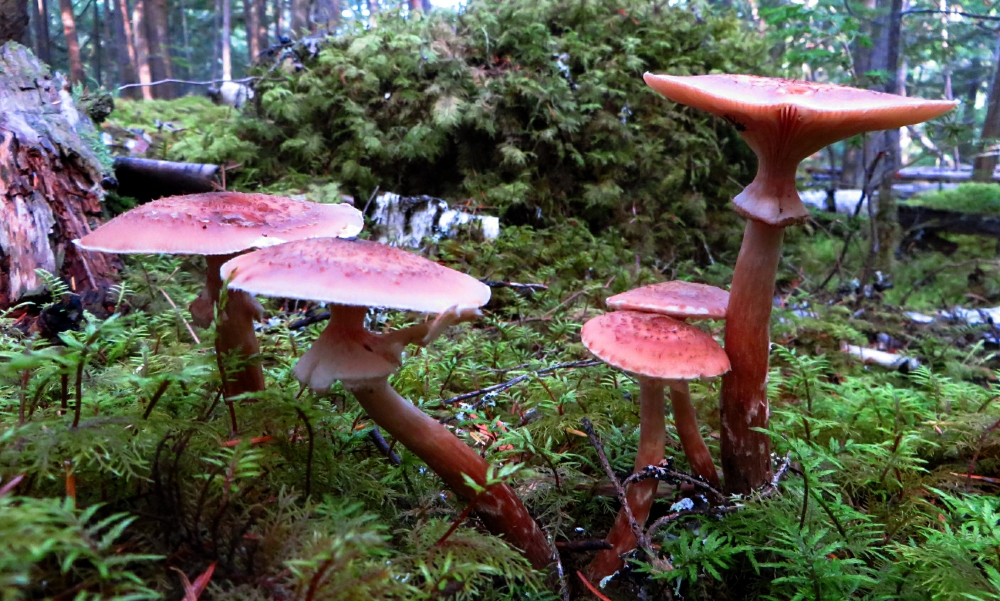
A Nest of Honey Mushrooms

A Nest of Honey Mushrooms

The article below is an excerpt taken from the Arrow Lakes News published last year in their October 29th edition. It describes very well the dilemma of the major industries in our area, timber and mushroom, being in conflict with each other over the management of our natural resources. The photos shown on this post are from my own personal archive.

Triplets of Boletus Mushrooms

Triplets of Boletus Mushrooms

Since she was 12 years old, Jean Hewat has been involved in the mushroom industry. As a kid, she went out with her family picking for pocket-money and she’s been buying mushrooms from other pickers at her place on 15 Avenue on the north end of town for the past 21 years. With some help from her mother and occasionally other family members, she is more or less a one-woman show.

A Basket Full of Chanterelles

A Basket Full of Chanterelles

The set up has moved from her garage to a new building still being finished on her property with plenty of parking and a large walk-in cooler. She explains the unfinished building during an interview with the Arrow Lakes News as her mother answers the phone and groups of pickers come in carrying their bounty — large buckets of freshly picked fungi.

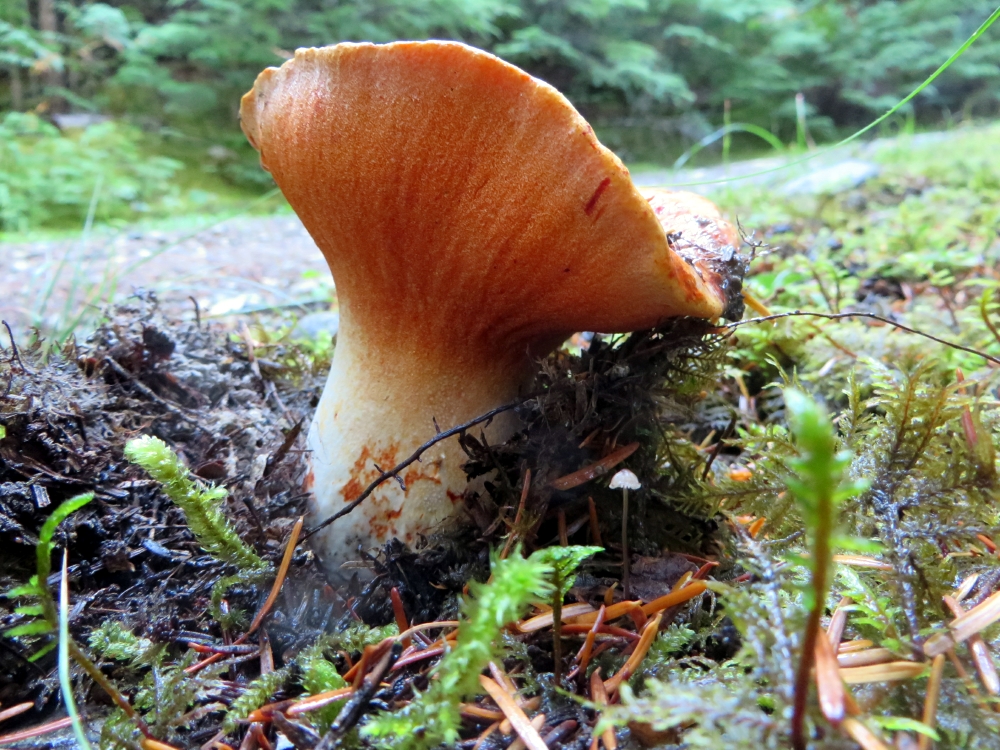
Lobster Mushrooms are rarely as clean as this one.

Lobster Mushrooms are rarely as clean as this one.

The odour inside is damp and mossy — the baskets of mushrooms are mostly the large, fluffy white pine, or Matsutake as they are known in Japan, where most of these are destined to go. The largest market for pine mushrooms in the world is in Japan, but Canada is not the only supplier. They are also grown in the US, China, Scandinavia and elsewhere.

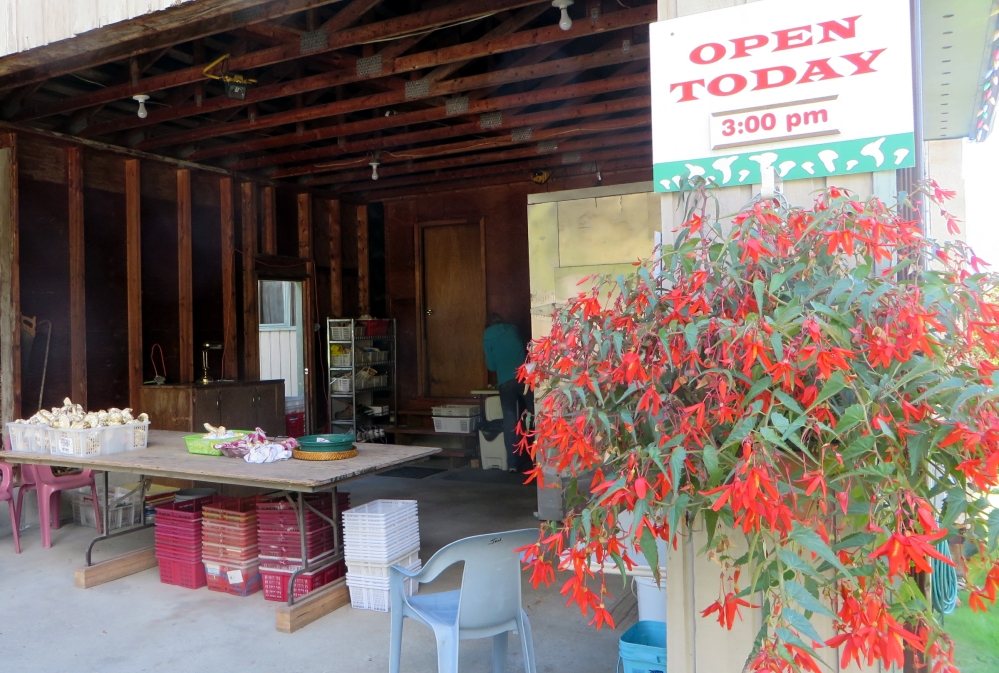
Dan and Jan's Buying Station in Nakusp

Dan and Jan’s Buying Station in Nakusp

Local to Nakusp, Chanterelles, Lobster and several other varieties sprout up inexplicably in pockets throughout the forest. Many locals covet their spots; at least those that haven’t been decimated by the biggest competitor to mushrooms: forestry.

Logging is one of the highest paying primary industries in the Kootenays, yet it poses the biggest threat to the niche industry of mushrooming.

Mushrooms are a multi-million dollar industry bringing tourists, pickers and buyers to the area. During September and October, the streets are lined with vehicles belonging to people who are in town because of this natural resource. They are buying gas, groceries and other supplies and are staying in hotel rooms and going out to dinner. More dollars are being pumped into the local economy, but all of it is threatened by clearcut logging.

“Mushrooms grow naturally in certain little micro climates, pockets and patches that are ideal for their growth. It is possible for the two industries to coexist. My family grew up on logging,” Hewat explains while sorting pines by hand. “They don’t grow everywhere; just small spots in the forest. In hindsight, things like selective logging, saving sections probably could have been done but it hasn’t.”

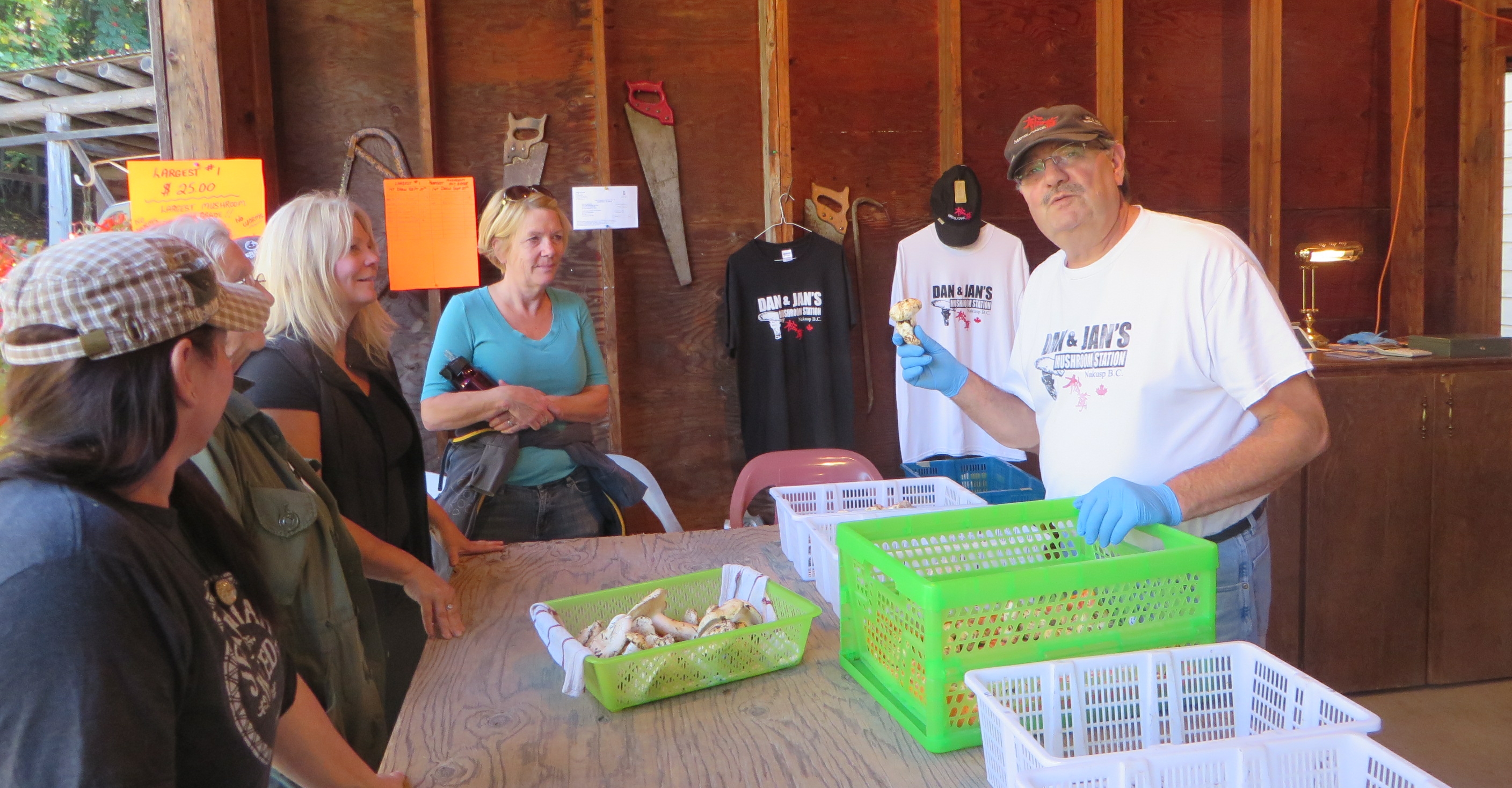
Dan Dahlen Carefully Grading my Wife's Mushrooms

Dan Dahlen Carefully Grading my Wife’s Mushrooms

Janis Dahlen of Jan and Dan’s Mushroom Station echoes the same sentiment.

“Clear cutting—it takes the mushrooms right out and it could be 80 years before they grow back. We’ve worked the last couple of years with Nakusp and Area Community Forest (NACFOR) to do some strip logging to try to preserve some of the mushroom areas. But (much of it is) being logged as we speak and the mushrooms will never come back. Logging is our first industry in Nakusp. It’s a hard mix.”
Pine Mushroom Just Pushing through the Forest Floor

Pine Mushroom Just Pushing through the Forest Floor

Next week I will talk about habitat, harvesting, grading and manipulative pricing of the Pine Mushroom.