Breaking the Code – Part IV

Patience and Persistence Pave the Road to Success

The search was on for software that would convert Bill Laux’s ClarisWorks files into Word documents. For information I visited Apple and MS Word forums. Some offered very lame solutions: Load the file into word processor X, wade through the first 4 pages through a jungle of gibberish, delete it and you are left with just the text. I decided against this odd solution, which may be fine for just a few files, but with hundreds of files that would have turned into a nightmare.

img_1538

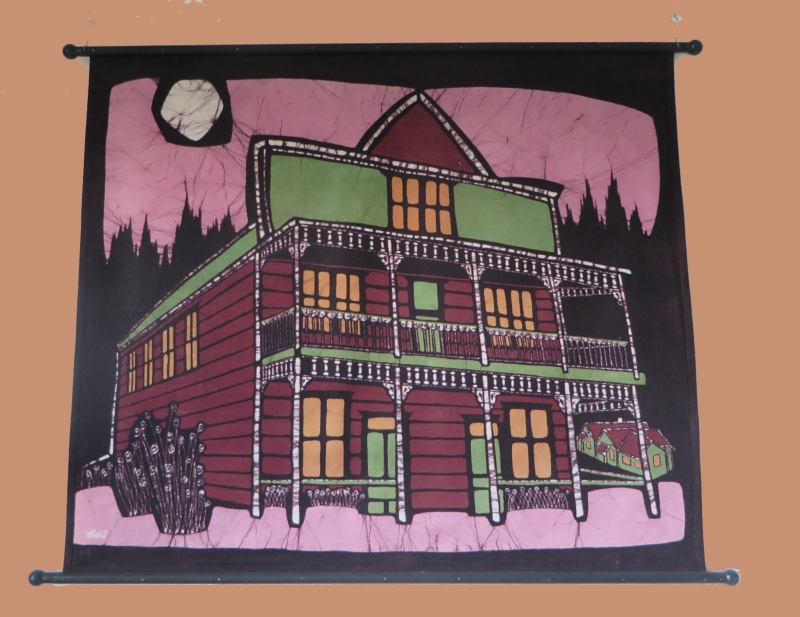
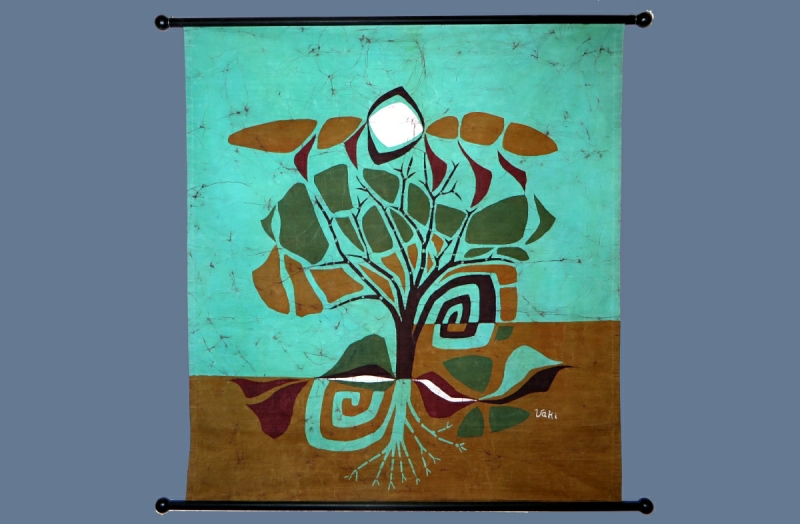
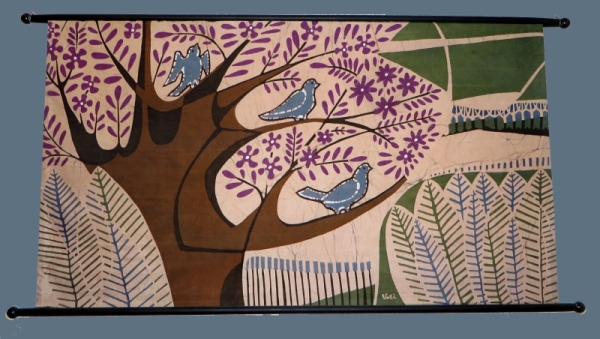
Batik by Artist Bill Laux

There were a lot of complaints against the Apple Company, which did not produce a single program that was backward compatible with their old product. But many forum contributors were also unhappy with MicroSoft Word not being able to read files with the cwk extension. In other words there was a real dearth of information on the Internet. Someone suggested downloading the open source software Abiword, whose claim to fame is that it can read all kinds of text files without any gibberish on the screen. I tried it with no success, but learned on the side that it is otherwise a very powerful word processor that can easily read and write Word document files. It is free and but accepts donations for further development.

30

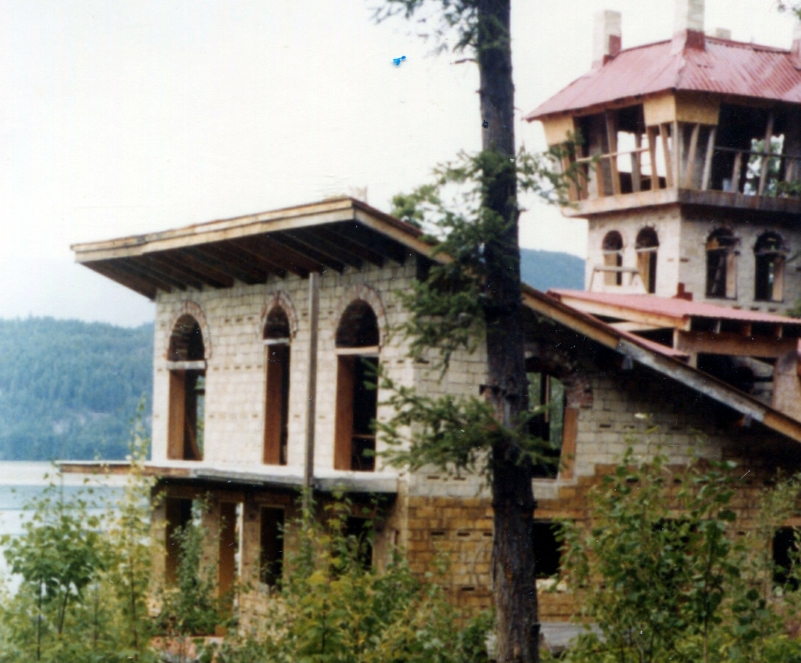
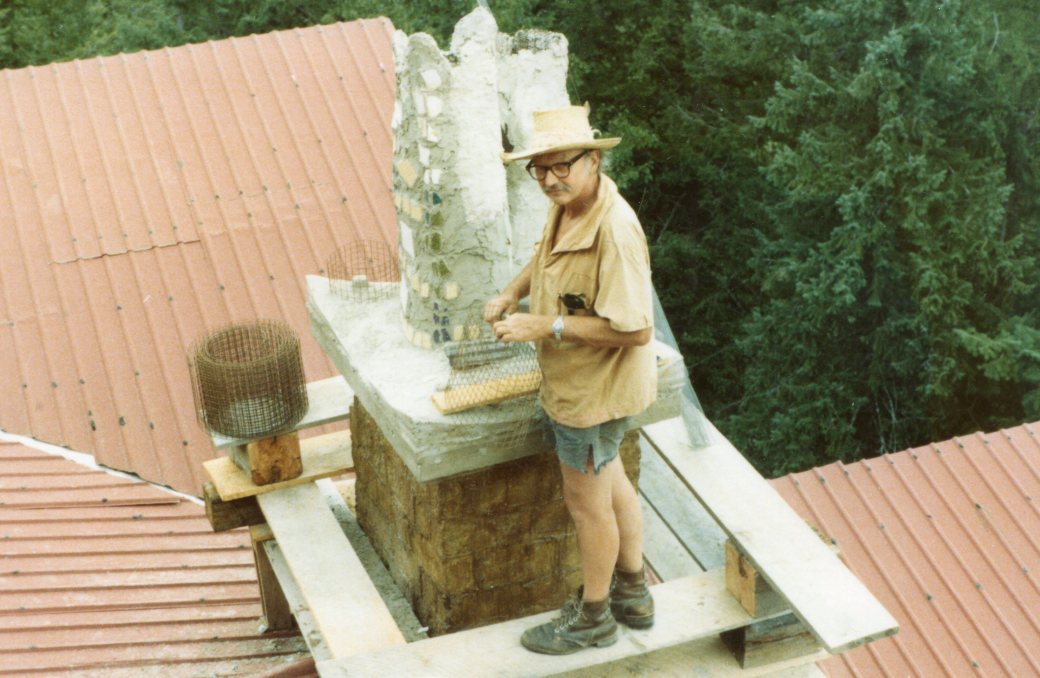
The Castle that Bill Laux built – Photo Taken in 1977

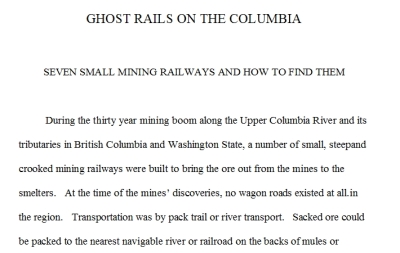
Then by mere luck – and we need it when we do work like this on the Internet – I stumbled across a comment made in a users forum to the effect that a program with the promising title docXConverter by Panergy might just do the trick. It was supposed be free. I eagerly downloaded the software and tried it out immediately. After the installation you simply drop the file into its window on the screen and voilà it works! Yet there was another fly in the ointment. After being mesmerized by the first couple of pages directly decoded and translated into Word format, I was confronted with another message, this time by the Panergy company to pay to get the full version. Being enticed to bite the bullet and pay the reasonable amount, I finally experienced the ultimate success in my quest to unearth Bill`s mystery files.

bill-laux

Tiny Portion of a Bill’s First Document Decoded and Revealed

So my plan for the New Year is to collect as many text files from Bill`s research and publish some on my blog, but also donate them to the Arrow Lakes Historical Society. Of course, I will do this on the shaky assumption that MS Word will be around for a few more years or with any luck even decades.

If you would like to read the previous posts on Breaking the Code, click on the following links (part I, part II, part III)

Breaking the Code – Part III

 The Unholy Union of Success and Failure

img_1536

The Unicorn by Batik Artist Bill Laux

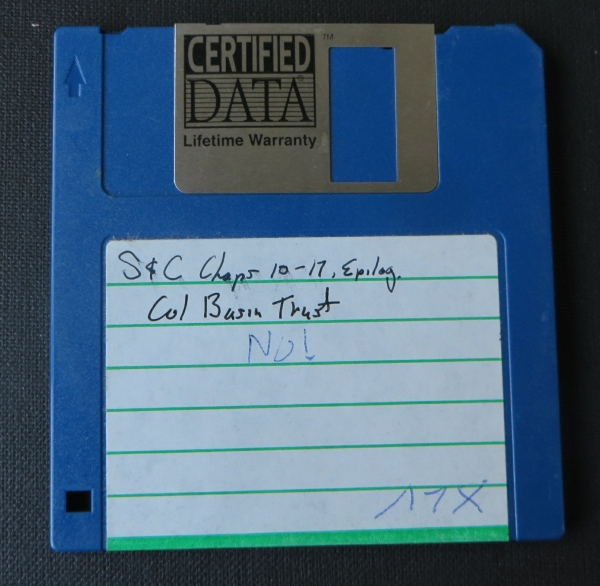
The new external disk drive arrived. Hooray, it worked! I was able to retrieve one floppy after another. The feeling of success after such a long wait almost created a sense of euphoria. After checking some fifty disks with all those enticing file names, I came across only one disk that the floppy disk drive could not read. Some contained images, but most had text files all carefully numbered by chapters indicating that massive amounts of research were hidden on these archaic storage devices. That was exactly what I was hoping to find. I randomly picked one disk and transferred its content onto my harddrive. In our era abounding in giga- and terabytes, we easily forget the times when we had to struggle to make do with 3.5 kilobytes, with which the Vic-20, the dinosaur of ancient computer world, came so equipped. Still if the content was merely text and NOT the byte gobbling images and videos, then an entire novel of 800 pages would easily fit on a floppy disk.

img_1540

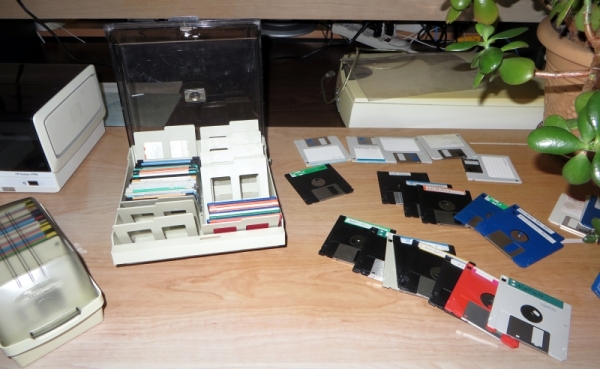
One of the Dozens of Floppy Disks with Bill Laux’s Writing

Now came that long expected moment to get a first look at Bill’s writing. From the first list of titles I could tell that their content dealt mostly with the political wrangling over the building of the great Canadian transcontinental railway, whose purpose was to unite the second largest country in the world.

27

Bill Laux Working on his Castle at the Arrow Lake in 1977

Full of anticipation, I double-clicked on chapter1.cwk. Like a lightning bolt out of the blue sky, I was struck by the ominous computer message on the screen, “Windows cannot open this file”. Upon further investigation, I discovered that the file extension cwk comes from the extinct word processor Clarisworks, which the Apple company had acquired in 1998, renamed it AppleWorks, but later on abandoned it after its final upgrade in 2004. Owning 4 different word processors, I was almost certain that at least one of them would be capable of decoding those archaic files. Having thus recovered from my disappointment, I loaded one text file into the queen of all word processors (of course, I am referring to Word by Microsoft). But its performance was a total disaster. All it could produce was a whole pile of gobbledygook on the screen. Similar results surfaced, when I tried the other three word processors. Great was my disappointment, but I was not yet ready to give up. How the story ends will be revealed in next week’s post on Bill Laux and his mysterious collection. So stay tuned.

Breaking the Code – Part II

Finding the Drive to Unearth Bill’s Files

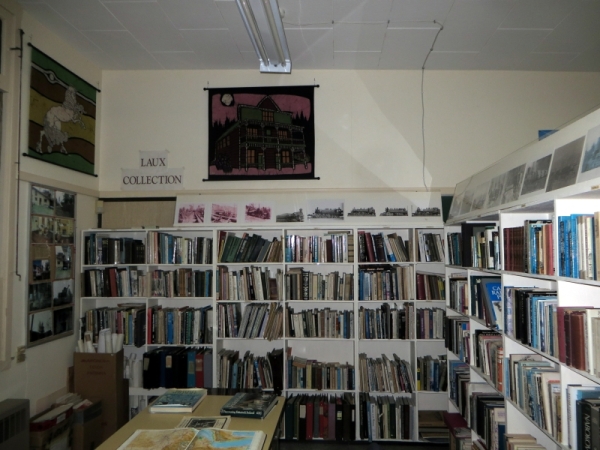
One evening last spring I spent some time at the Fauquier Communication Center. More precisely, I stood in awe at the section dedicated to the late writer and artist Bill Laux of Fauquier, BC. There in the archives I discovered a wealth of books from Bill’s private library, complete manuscripts of mostly unpublished plays, short stories, and even novels, research papers on the 19th century railroad and mining industries of the Pacific Northwest. As already mentioned in Part I of this series, what fascinated me the most were the many floppy disks that I had found on the side shelves of the archive. What mysterious files would they contain on those poorly labeled plastic squares?

vaki3

Batik by Bill Laux

The oldest working computer, which my wife once used, is a Toshiba laptop. Unfortunately, it does not have a floppy disk drive. Searching the world wide web, I found that there are two ways to get to the files locked away in outdated storage systems.

  • 1) mail the disk to floppytransfer.com, a company in California, which downloads the files and transfers them onto a USB flashdrive. That would have been OK, if I had only a few disks to copy. But with such a great number to copy I rejected this option. It would have demanded an exorbitant price tag.
  • 2) Buy an external drive that connects to a USB port on my computer.

Full of joyful anticipation, I ordered such a device from China for as little as 10 dollars shipping and handling included. Two weeks later the item arrived in the mail. Imagine my utter disappointment, when – no matter which of Bill’s disks I inserted into the machine – I got the same horrible message. ‘This disk must be formatted before it can be used.’could  For those not familiar with technical jargon, formatting is the death sentence for any files residing on the disk. For they will permanently erased.

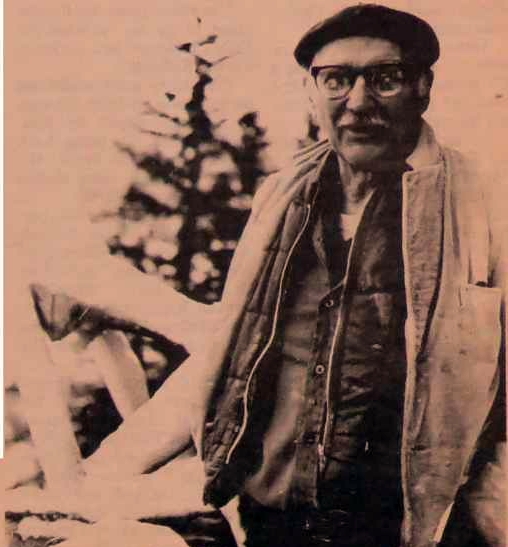
Bill Laux

Artist, Writer, and Castle Builder Bill Laux

Starting a search on the Internet all over again, I stumbled on a great deal at amazon.ca (for our American neighbors I guess you could use amazon,com with similar results). I decided to give it one more shot and buy a floppy disk drive that came with the guarantee of being capable of reading all the files. After another anxiety ridden waiting period I experienced a most peculiar sequence of initial euphoria followed by a free fall into utter frustration.

 vaki6

To be continued next week in Part III

Breaking the Code – Part I

Bill Laux and the Mysterious Floppy Disks

vaki1

In spite of my wife’s courageous leap into the world of information technology, she has remained very critical of the many shortcomings of the new tools that our digital era has forced upon us. Would the archeologists a thousand years from now, so she often raises the question, ever be able to find out what lies hidden underneath the shiny layer of a CD or DVD disk. They might claim that the 21st century inhabitants had regressed to a form of sun worship, as it was practiced in ancient civilizations. Those glittering round objects could have been used to invoke the sun to provide more light for the planet darkened by pollution and nuclear fall-out. Having turned mellow after half a century of exposure to marital bliss, I found enough room in my heart to admit, although somewhat reluctantly, that my wife had raised a very important question whose relevance will become evident in the light of my own experiences with outdated technology.

vaki2

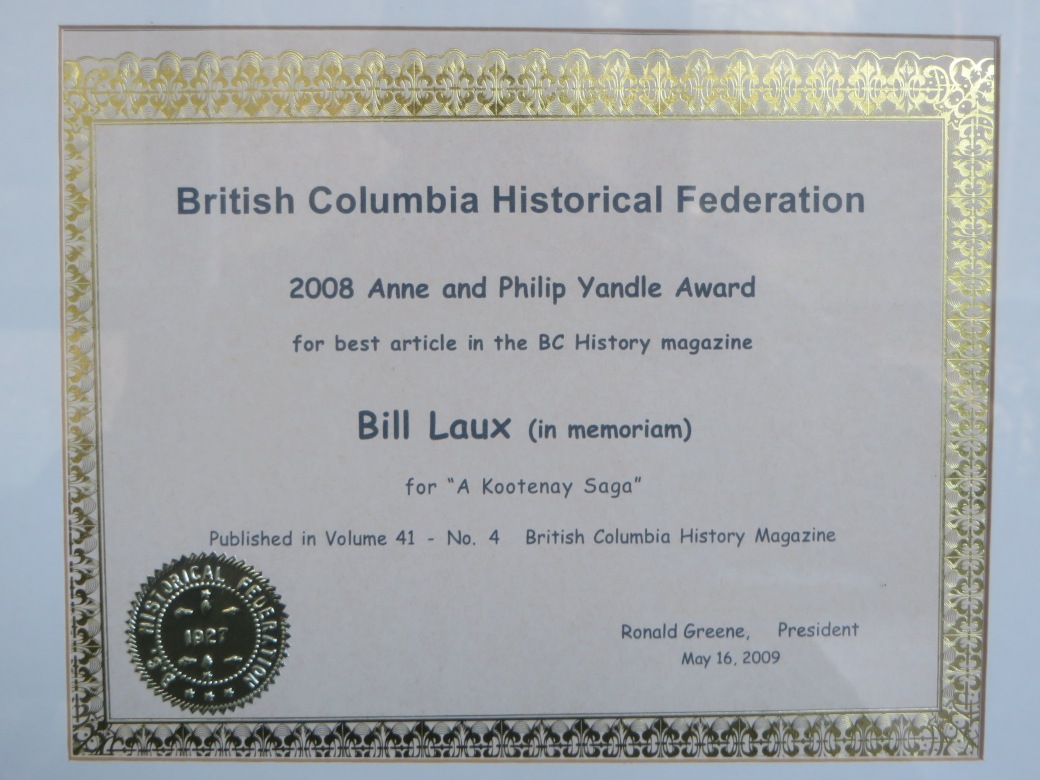
If you had read my previous posts on Bill Laux, the eccentric artist, who built his own castle at the shore of the Lower Arrow Lake, you would know that he was not only famous for his works in batik, but was also known as a writer and researcher of the early mining, logging, and transportation industries in the Pacific Northwest. When he passed away in December 2004, he bequeathed  his entire collection of pictures, books, manuscripts, journals and sundry documents to the Fauquier Communication Center. There his work has found a permanent home and is waiting to be explored, evaluated and hopefully published on the Internet.

vaki5

What really piqued my curiosity, were scores of floppy disks stashed away on the side shelves of the computer room of the Fauquier Communication Center. Their content had remained a deep mystery until very recently. On next week’s post I will share with you the immense difficulties I experienced in decoding the information from a storage device barely a quarter century old. What I found was a veritable treasure trove of Bill’s work, which would have been lost forever on the junk pile of modern civilization. Stay tuned.

Origin of Needles, BC

Needles took name from Arrow Lake Sandspits

by Greg Nesteroff

reprinted by kind permission from Arrow Lakes News

Needles, the western terminal of the Lower Arrow Lake ferry, was for­merly known as The Needles, and was first mentioned in the Nelson Miner of Nov. 30,1895, concerning two mining claims recorded by John D. McDonald and A. A. McPherson “at the Needles, Lower Arrow Lake.” In an interview published in the Arrow Lakes News on June 19,1958, Rose Wright explained the names origin: ‘“Why do you and many old timers speak of Needles as The Needles?’ ‘Well, it was always The Needles in the old days, due to the long points that reached out into the lake. It is only in later years that it has been shortened to Needles.”’ Actually, the shortened version actually first appeared in the Miner a week after the long version debuted, also in relation to mining claims, but it wasn’t until the Fire Valley post of­fice was renamed Needles on Oct. 1, 1906 that it became commonplace. Even so, the “The” stuck around for some time — the Nelson Daily News of July 13,1911 noted “Welford Beeton of the Needles came in last night…”

Needles Ferry (Fauquier - Needles) - Photo Credit: Gertrud Klopp

Needles Ferry (Fauquier – Needles) – Photo Credit: Gertrud Klopp

According to the BC Geographical Names database, Needles is the land­ing’s name, but The Needles is still the official name of the narrows, even though construction of the High Arrow Dam in the 1960s submerged both the sandspits and the commu­nity that grew up there.

A new Needles post office was established in 1908 and closed in 1968 upon the flooding of the Arrow Lakes. Today the only thing left of the old community is its cemetery.

In 1910, A.H. Green surveyed what’s now Fauquier, on the east side of the lake, but the map called it Needles Ranch, a name by which it had been known since at least 1905.

According to Just Where is Edgewood, a place between Needles and Edgewood was known as McKallister’s Landing, after “the land agent who settled the townsite of Needles.”

No contemporary examples have been found of this place name and it’s not known exactly who its namesake was, although he was apparently still in the area selling property as of 1911.

The late Bill Laux said McKallister’s (or McAllister’s) Landing was the site of the original Fire Valley post office, which opened in 1894. Later, the CPR called this place Page’s Landing after William Henry Page (1861-1933), an English miner who came to the area from Butte, Mont. around 1893 and served as Fire Valley postmaster from 1908 to 1910.

Just Where is Edgewood (which erroneously calls him Walter Page) describes him thusly: “ [H]e lived on the lakeshore between Edgewood and Needles … He had been married at one time but his wife never moved to the valley. He was always referred to as Captain Page and often took the part of Santa Claus in the early Edgewood years. He was a fat, jolly type of person.”

He was among the first burials at the Needles cemetery, although his grave is unmarked. A mountain ridge was supposedly named for him as well, but it’s no longer on the books.

Pages Landing was first referred to in the Revelstoke Kootenay Mail of Sept. 26,1902: “The scene of the new strike is only 16 miles from Page s Landing, on Arrow Lake …”

It was only ever mentioned a few more times.

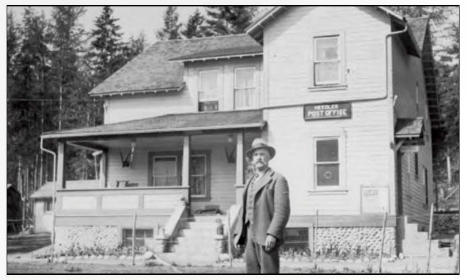
George Craft is seen in front of the Needles Hotel, which was also the post office. He was postmaster from 1920 until his death in 1942, whereupon his wife Edith took over the job. Today all that’s left of the old Needles townsite is the cemetery. Courtesy Ed and Marian Craft

George Craft is seen in front of the Needles Hotel, which was also the post office. He was postmaster from 1920 until his death in 1942, whereupon his wife Edith took over the job. Today all that’s left of the old Needles townsite is the cemetery.
Courtesy Ed and Marian Craft


Speech by Bernice Rutski on the History of the Edgewood Schools

The First Schools in and around Edgewood BC and the Grand Opening of the New Edgewood School in 1983

This slideshow requires JavaScript.

SPEECH: Written and delivered by Bernice Rutski, Board Chairperson, on behalf of the Board of School Trustees, on the occasion of the official opening of Edgewood Elementary School, December 2nd, 1983.

It is my great pleasure to welcome you on behalf of the Board of School Trustees, on this momentous occasion.

This evening we witness the culmination of long years of planning and consultation, designing and decisions, by a great number of people.

Now, I’d like to tell you a story – a true story, to take you back on a journey in time; to follow through, from the birth and growth of education, in Edgewood and Inonoaklin Valley – your Valley! I’d also like to name some of the people, and history, involved in this part of your past, some who are now long gone, and those who are with us yet.

Legend has it that the Indians named this Valley. It seems that long ago, before the arrival of the settlers, when the Indians visited the Valley, there was a fire burning, the whole area seemed to be one huge flame. Hence, the name “Fire Valley”.

The year was 1909, the place, Fire Valley School in Sleepy Hollow (which is now on the Gary Wood property). The proposed teacher was a Dr. George Heaton. There was, however, one big problem. The magic number of 6 year olds and up needed to start a school was then 7. There were but 6 youngsters, rumour says, all from one family. Nothing daunted, the elders searched the Valley far and wide, found one little 5-year-old boy named Frank Olds whose schooling began then and there.

That same year, 1909, another school was opened in old Edgewood town site (in what some of you may remember as the old Vroom home) . The teacher here was also a Heaton – named Leonard, and brother to Dr. George Heaton.

1918 saw a new Valley School built by Jack McLeod’s father, and known as the “old school-house”. A retired soldier named Ashmore was the first teacher in this school.

Edith Flick’s brother Harry Olds was Secretary-Treasurer of the local Valley School Board until some time in the mid or late 20’s. Edith Flick attended the Valley School at one time. Some of the teachers during these years were: Cole, Freeman, Don Burch, the late Wilfred Jowett, Dora Olsen and Mary Mills.

Much later in 1973, the old Fire Valley School was rented, and a library was opened by Joanne Shipman and Vivian Paseka, who kept it going for 2 years.

Late in 1979, Ambrose Laboucaine bought the place, is gradually renovating it, and plans to make it his permanent home.

The following year, 1919, old Edgewood had a new Grade 1-8 school.

The dividing line between the old Edgewood and Valley School attendance zones was Ferret Road. This is the road to Gerald Ferguson’s place. Each school had its own School Board at this time as well.

The 1920’s and 1930’s saw farmers come and go. Some farmers felt that the name “Fire Valley”, was a deterrent to gaining new settlers. They were instrum­ental in having that name changed to “Inonoaklin Valley”.

These years (30’s) were also the “Depression Years”. Scores of people, some young and some not so young, were on the move, looking for work. Due to the then limited access to this Valley, more people came here by design, than by chance. Some who came to teach were Edith Cummings, Mrs. Lees, Freddy Job and Vince Downing. With the advent of war in 1939 many of the young men left this Valley, some temp­orarily, others forever.

1940’s – Education in the 1940’s, as now, was important to the people, and to certain people that meant getting involved. For several years in the 40’s Minnie deGans, Mother of Margaret Bateman, was a school trustee for the Valley School.

During the years of the 1930’s and up to 1947, for those who wished to go beyond a Grade 8 education, there were 2 choices. One was to take the required courses by correspondence, and the other was to lodge in and attend school in a larger centre, such as Vernon, Nakusp, which was, to say the least, expensive.

Several, who ventured out, were Evelyn DeYeager, Winifred Ferguson and Hedwig Kline who went on to Trail and Vancouver.

1946-47 – Consolidation of schools took place in 1946 and into 1947. This meant that all local schools were incorporated into District No. 10. Local school boards were disbanded. Initially one person was appointed and one was elected to rep­resent this area.

1947 – Changes made by consolidation by 1947 were:

  1. All Grades 1-4 students from Needles, Edgewood and the Valley went to the Edgewood school. (Elsie Sugden, the teacher)
  2. Grades 1-5 went to Fauquier School.
  3. All Grades 6 and 7′ attended the Valley School, Doris B. Gibbs the teacher.
  4. Grades 8-9-10 went to Needles School (with John Wood  as teacher).

1949 – In 1949 a new 2 room Grades  1-6 School  was built in Edgewood, while a new 2 room School with Grades 7-12,    was built in Needles. This resulted in the closing of the Valley School.

1950 – From January to June of 1950, Hazel Haggart, still of Edgewood, replaced Elsie McBurnie nee Sugden, in the old Edgewood site school.

1950’s – A newcomer to the Valley in 1952 was a teacher named Yvonne Pattie, who taught 1 year here and 1 year in Nakusp, then she and Roy Donselaar were married in 1954 and Yvonne quit teaching. In 1957 Yvonne came back to teach and taught until 1966. Then in 1968-69 she was asked to teach High School students in Needles for its final year.

The year 1952 also saw electrical power made available to the Valley.

1950’s – Two of the trustees who represented the Valley and Edgewood during the 1950’s were Roy Bateman and Roy Donselaar.

As well, old timers, who have left us, Scotty Delvin, Charlie Claridge, and Vance Taylor served on the School Board from other areas of the District during the 50’s.

In 1959, the Edgewood School received an addition of a third room to house the Grades 1-6 students from Fauquier, Needles, Edgewood and the Valley.

The early 1960’s saw the introduction of T.V. to Edgewood and surrounding area.

1962 – By 1962, unease was growing in the District, due to fear of ratification of the Columbia Treaty. This treaty, which could and eventually did, changed the lives and the whole world adversely for a great many people.

1962 and on – Teachers coming into the District from 1962 on, had great difficulty in securing accommodation, due to the influx of Hydro workers in the area.

1962 and 1963 saw two new teachers come to the area, Erick Walters, and a young lady, who soon became Mrs. Terry Ewings. Nina has remained a teacher on staff since that time. Very commendable, Nina!

Mid 1962-66 – During the next few years, mid 1962-66, numerous people – Board members, parents, B.C. Hydro officials and teachers all spent a great deal of time trying to decide on a logical location for a new school. The difficulty was to accurately gauge the potential growth areas.

1966 – The trustees of this time, 1966, some of whom were the late Bill Craft of Fauquier, Don Williams and E. Milne of Edgewood, Robazzo of Burton, Glen Weatherhead and Jotf Lee of Nakusp were striving for a realistic sum of monies to be realized from the sales of schools, garages, teacherages and much land, south of Nakusp, with an option to purchase given buildings from B.C. Hydro, should they so desire. Eventually, the sum of $251,000 was received.

The Superintendent of Schools during the negotiations with B.C. Hydro was Claude Bissell, and H. Miller was the Secretary-Treasurer, until July 1966, when Laura Beingessner took on the job in September 1966. All dealings with B.C. Hydro were done before July 1966.

In 1967 the School Board accepted B.C. Hydro’s offer of 4.1 acres of land on the edge of new Edgewood town site for $1,200. The cost of the ATCO’s (trailers) and set up on the new site was $50,050.

With the impending flooding of Arrow Lakes imminent, October 1968 saw a new 3 room (ATCO) School in New Edgewood town site for Grades 1-7. Grades  8 -12 were bused to Nakusp, with Bill Penner as the driver.

It’s interesting to note that the school populations down the lake, which include High School students, vary little from then to now: Then – 243; Now – 253.

The garage from the old Edgewood town site school and the Needles garage, which Roy Donselaar dismantled, were used to make the 2 bus garage recently demolished to accommodate this new 1983 School.

In 1978-79 a kindergarten room was added to the Edgewood school (due to population explosion a few years earlier). The cost to the School District was $25,000 for the ATCO building alone.

During the years, the School Board, some of whom are with us tonight, was aware that the ATCO’s needed more than band-aid treatment. The buildings were wearing out quickly. Major repairs were needed, and a decision had to be made.

Finally in 1981 definite steps were taken. Late that year (81) Ministry Officials visited the District and the necessity for a new building was concurred with.

1981-82 – Much red tape was dealt with by the Senior Administration, (Stewart Ladyman and Norm Kuhn),in the next two years. The file on obtaining a bit of Crown Land is one inch thick.

  • 1981 The Board engaged the Architectural firm of Allen, Huggins, Thorburn in early 1982 to draw up plans for this school, estimated cost to be 1.2 million dollars. All staff, the community and various levels of government were involved in its design and services.

What was a dream in ink is now a reality in brick.

My thanks to all for the interest, co-operation and help shown me in my quest for historical information. A special thank you to Yvonne and Roy Donselaar and as well to my patient husband, who has been a brick (no pun intended).

On behalf of the Board of School Trustees I thank all those people, who in any way were involved in making this building a functional, educational environment for the students, and the adults of our Valley.

THANK YOU.