Kokanee’s Name Spread Far and Wide

The Origin Of Kokanee’s Name

Article Credit: Arrow Lakes News (December 3, 2015)

by Greg Nesteroff
One hundred and fourth in an alphabetical series on West Kootenay/Boundary place names

In addition to being a fish and a popular beer, kokanee is the name of 14 geographic features in BC: a settlement, bay, creek, two provincial parks, glacier, recreation area, lake, landing, narrows, pass, peak, point, and range. As a result, it’s probably this areas most widely used indigenous word. Kokanee is derived from kekenit the Sinixt term for the landlocked salmon once plentiful in this region. (There’s no need to capitalize kokanee when referring to the fish, al­though many people do anyway.)

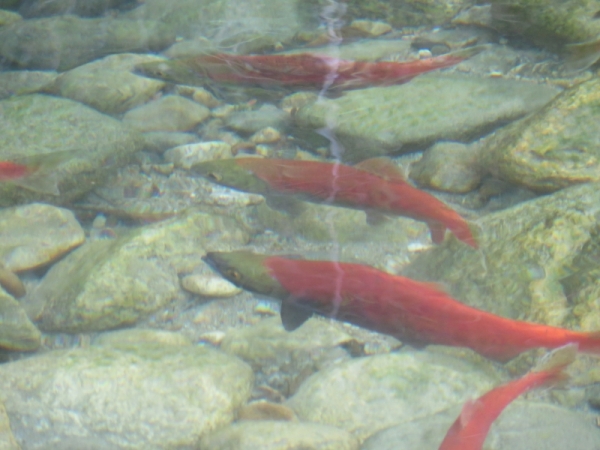
Kokanee spawning at Taite Creek

Kokanee spawning at Taite Creek

However, when Europeans first adopted the word, they didn’t know its definition. The earliest reference in the Nelson Miner of June 15, 1895 said: “The jagged ridge visible from Nelson away up the lake to the North-East is Ko-ko-nee, of the meaning of which we are sorry to say, we are ignorant”. The present spelling was adopted the follow­ing year when the Columbia and Kootenay Steam Navigation Co. launched the SS Kokanee on Kootenay Lake. The Trail Creek News of March 21, 1896 explained the name was “after the range of mountains near Nelson.”

Kokanee Creek, also known as YuiU Creek, was so named by October 1896 and a town site called Kokanee was laid out at its head, adjoining the Molly Gibson mine. The Sandon Pay streak of Aug. 14, 1897 kidded that “its inhabitants, when they become numerous enough to need a name, will be called the Kokakanucks.” Kokanee Glacier was first called by that name in The Ledge of lune 17, 1897. After climbing the glacier in the fall of 1898, mining promoter Ernest Mansfield renamed it after Lord Kitchener, but following his departure from the area in 1901, it reverted to Kokanee. Near the spot that the creek emptied into the lake was Kokanee Landing, first mentioned in the Nelson Tribune of April 9, 1899. The earliest known reference to kokanee mean­ing the fish was in a promotional booklet produced in late 1899 or early 1900 called Health and Wealth: Kaslo, BC: “During summer months in many streams emptying into Kootenay Lake, spearing a peculiar red fish of the trout species, called by the Indians ‘Kokanee is quite an amusement. Long strings of these are frequently seen.”
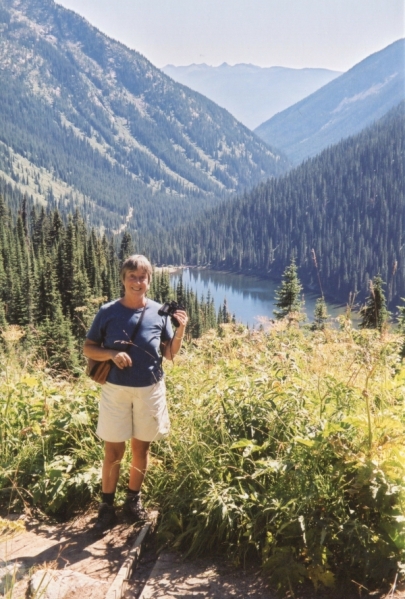
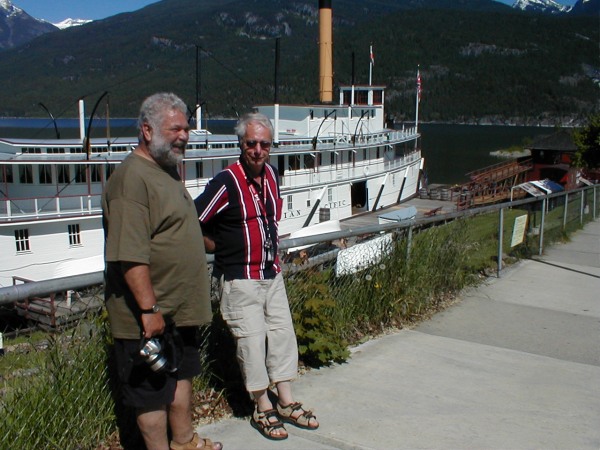
Biene Klopp hiking with me in Kokanee Glacier Park

My wife hiking with me in Kokanee Glacier Park 2001

Somewhere along the West Arm of Kootenay Lake — probably at Lasca Creek, directly oppo­site Kokanee Creek — was what the Sinixt called Yaksakukeni: place of many kokanee. However, it was many more years before kokanee was com­monly used by European settlers to refer to the fish. Two Kokanee post offices existed, the first ap­parently at the townsite, from 1902-11, and an­other at the landing, from 1911-15.

OLYMPUS DIGITAL CAMERA

Biene’s Nephews Norbert and Christian at Kaslo 2005

But what made kokanee a household word be­yond West Kootenay was a conversation between Nelson mayor Tom Shorthouse and H.F. Puder of Interior Breweries in 1959 about the company’s recent move from Nelson to Creston. Shorthouse pointed to the potential of Kokanee Glacier Park — created in 1922 — as a tourist attraction and sug­gested the company name a beer brand Kokanee. “This thought really stuck,” Puder told Shorthouse a year later, “and the more the name ‘Kokanee’ was considered, the better we liked it … To you goes full credit for originating the idea and you may be assured that you will be among the first to sample the product.”
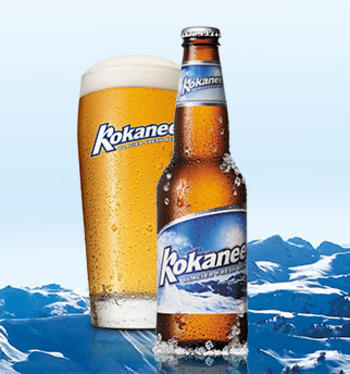
Popular Kokanee Beer

Popular Kokanee Beer

Kokanee pilsner beer first appeared in the spring of 1960 with a label featuring a painting of the gla­cier by Vancouver designer George Me Lachlan. While the artwork has changed over the years, it continues to use a glacier motif and remains one of BC’s best-selling brands.

The name has since spread far and wide. Lots of businesses adopted the name — including Kokanee Springs golf resort. There’s a Kokanee Bay in the Cariboo; a Kokanee elementary school near Seattle; and streets named Kokanee in Nelson, Cranbrook, Vancouver, Whitehorse, Ontario, Washington, Idaho, Montana, Oregon, Colorado, California, and New Mexico. Most of these were presumably taken out of atlases and don’t have anything to do with our area, but there’s a Kokanee Bend fishing area in Montana.
From Dover in England to Fauquier in BC – Addendum

Note that the usual Klopp family post for Thursdays has been omitted and will resume next week with a new series on Anna Rosa Klopp.

Richard (Dick) Horace Andrew Hall

by Guest Contributor Paul Loseby

Click here to view the original post.

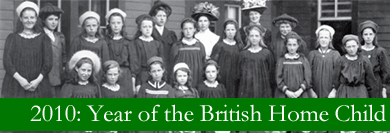
Thank you so much everyone, for all of your help. It is really appreciated. Actually since Peter put my message on the Guest page, I have been doing some more research and whilst I don’t think it was as bad for Dick, it was an absolutely horrendous time for many. These were the Home Children and it seems that 11% of Canadians are descendants of these children.

Photo Credit: reginalibrary.ca

Photo Credit: reginalibrary.ca

I came across an absolutely riveting video on YouTube yesterday and we watched it last night. This is the link:

It seems that children as young as 6 were taken from their parents; frequently without their parents’ knowledge or consent, and shipped over to work as domestics or farm workers in Canada. The authorities would only let them know by sending a card after they were in their new country.

Photo Credit: web.ncf.ca

Photo Credit: web.ncf.ca

Between 1869 and 1939, over 100,000 children were taken from their homes and sent to Canada. More than that were sent to Australia and the British government didn’t stop doing that until the 1970’s. The children were considered waifs, orphans and strays. Many had parents who could no longer afford to feed them or take care of them.

SS Sarnia 1892 - Photo Credit: bytown.net

SS Sarnia 1892 – Photo Credit: bytown.net

Usually when the children reached Canada, they had a train ride of several days and eventually most were sent to help farm families with all of the work – even those as young as 6. Some children were accepted into the family and treated well, but many were treated very badly and some were treated like slaves.

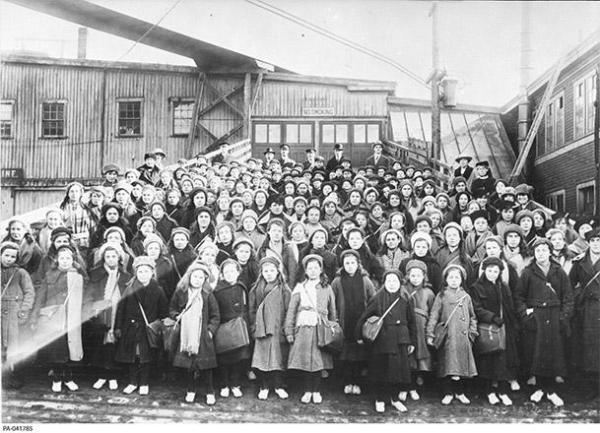
Home Children - Photo Credit: humanrights.ca

Home Children – Photo Credit: humanrights.ca

If you watch the 46 minute video, you at times have tears in your eyes – at the young lad whose home was a small wooden garden shed that he shared with the dog. He only got food if the dog left some. He was beaten daily as many were – often just because they were Home Children.

We think now that Dick Hall was one of the lucky ones. He stayed at William Hewlett’s farm in Stouffville for three years and then returned to the UK to spend Christmas with his parents. He then traveled back to Canada.

These children were given food and accommodation and a small amount of pay – but this money was not paid until they had finished their term on the farm or other place of work, when they were 18. So, it was just food, accommodation, hard work, possibly many beatings and they lost their childhood. You will see if you watch the film that when the children grew up, they had no emotions to show love to their own children.

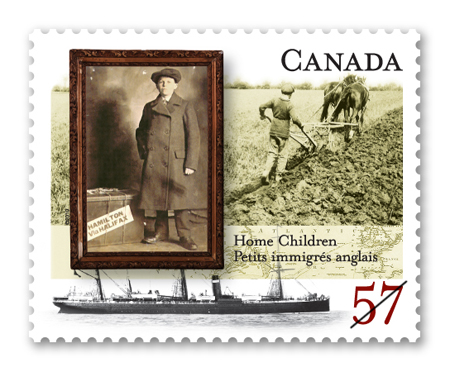
Home Children Stamp - Photo Credit: canadapost.ca

Home Children Stamp – Photo Credit: canadapost.ca

I really am grateful to all of you for the help that you have been giving me – particularly Peter. I have discovered things that I would never have known but some of those things, (not to do with Peter as he obviously moved to a Country and town where most would love to be including me) have shown us a great deal of sadness too.

I only found this YouTube video yesterday and it is a part of British and Canadian history. If you get a chance, it really is a ‘Must Watch’. The link again is:

https://www.youtube.com/watch?v=I-aDoWnK2Ic&feature=youtu.be

Kindest regards

Paul

From Dover in England to Fauquier in BC

Richard (Dick) Horace Andrew Hall

A Call for Help by Guest Contributor Paul Loseby

My name is Paul Loseby and I live with my wife here in the middle of England.  My wife Penny’s heritage takes her through Kent and her she came across something which really saddened her until she heard about Fauquier, BC.

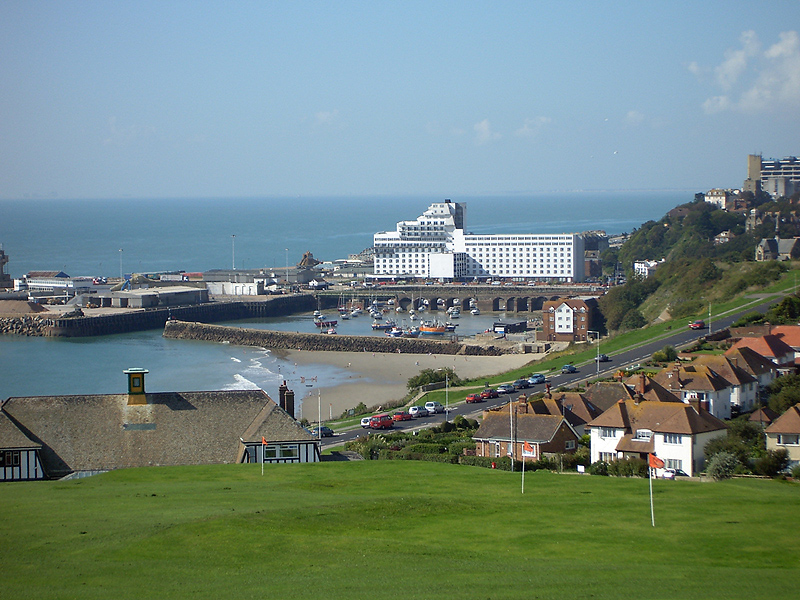
Fstone

Modern Folkestone in Kent – Photo Credit: wikepedia.org

Penny’s grandmother married for a second time in 1946.  Her new husband was a Richard Hall who had a son by a previous marriage.  That son’s name was Richard (Dick) Horace Andrew Hall and he was born in 1914 in Folkestone in Kent. Throughout the early 1900’s, the Canadian government had been trying to get young men and women to migrate to work on farms or as domestic servants.  Many youngsters went willingly but a great many, under the excuse of being unruly children or where their parents were suspected of being unable to bring them up properly,  were just taken from their parents and put on a ship.  This was contrary to the apparent aims of the people running the scheme – the British Immigration and Colonization Association.  There were also many stores of the children being poorly treated and cared for in the new country.  An uncertain future indeed.

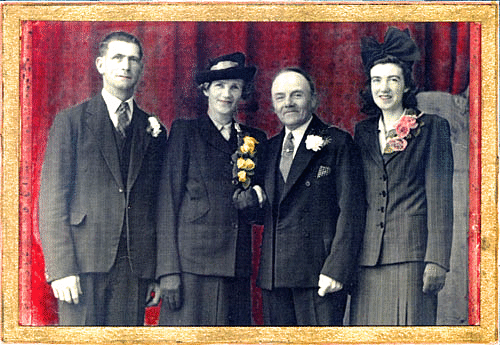
dickswedding

Dick’s Father with Second Wife Edith – Wedding Picture 1946

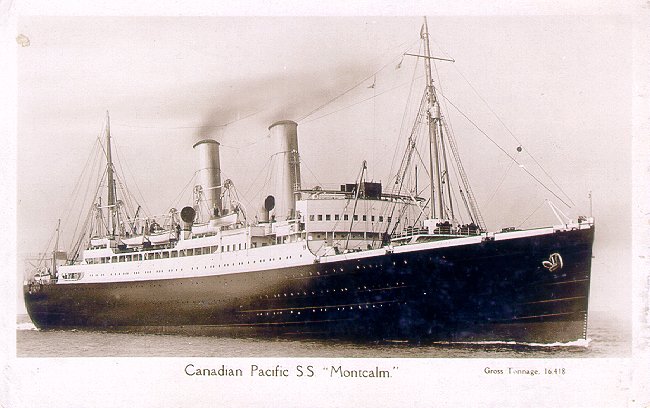
We don’t know whether Dick went willingly or not but on the 18th October 1928 with the equivalent of a couple of Canadian dollars in his pocket and the clothes he stood up in, he boarded the SS Montcalm in Liverpool.  How could this be – a 14 year old child taken from his parents to start a new life alone? Dick was with a group of other minors under a scheme by the BICA whose headquarters were at 87, Osborne Street in Montreal.  These premises were also a hostel for the boys where they waited to be distributed throughout Canada.  They landed in Quebec on the 20th October.

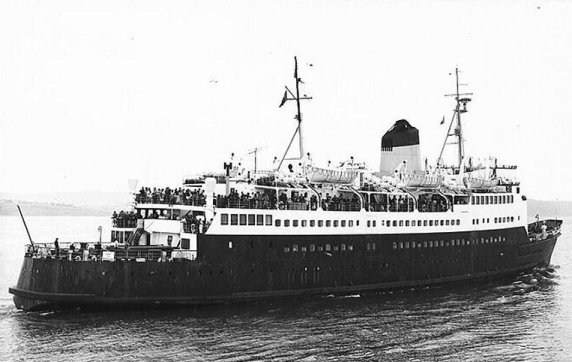
SS Montcalm

Sadly not everyone fared well – some boys had committed suicide; not all were found homes and there had been a high failure rate.  This led to the BICA being temporarily closed in 1925 so that their affairs could be put in shape.

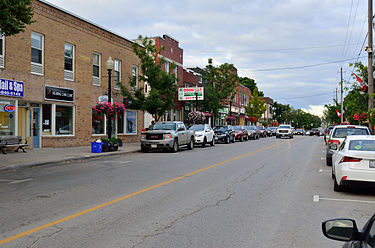
MainSteetWhitchurch-Stouffville2

Today’s Main Street of Stouffville, Ontario

Dick it seems was one of the lucky ones who not only survived but thrived in his new country.  Shortly after arriving, Dick was sent to Stouffville in Ontario.  Here he began his work as a farmer’s hand.  He was obviously paid well as within three years, he had earned enough money to return to England to see his parents and spend the 1931 Christmas with them.  It was obviously his wish to return though as at the beginning of April 1932, he set sail, again on the SS Montcalm, for Halifax.

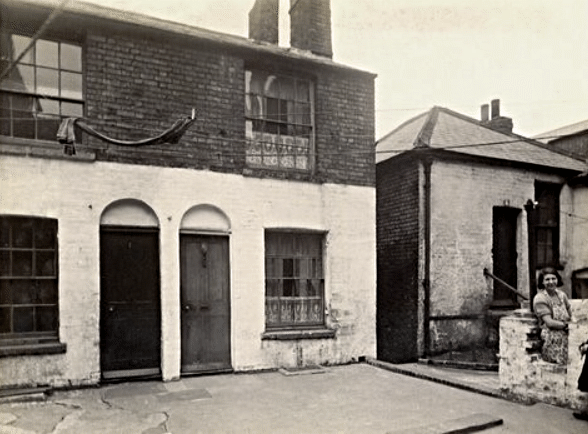
Thehomeheleft

Home that the young boy Dick Hall left to go to Canada

Dick went straight back to Stouffville and then went to work on another farm owned by a William Hewlett.  The following year, still working on the farms, he moved up to Winnipeg in Manitoba.  There he worked for a Mr. Lindsay and was earning what would have been a lot of money in those days, $25 CA with his food and accommodation thrown in.

He then had the opportunity to move across to Lander, initially staying with relatives but within a few months, had moved up to the Bralorne mine where he worked for a couple of years.  When Canada entered the war, Dick tried to enlist but was rejected on medical grounds.  Not deterred and still wanting to help the war effort, Dick moved to the Vancouver Shipyards where he worked  during the war.

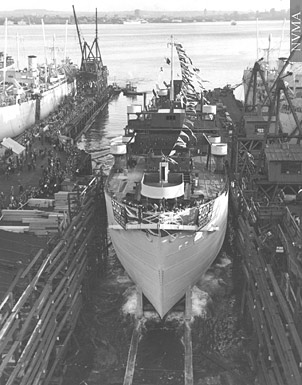
Vancouver Shipyards during WW2

Vancouver Shipyards during WWII – Photo Credit: North Vancouver Museum and Archives

In 1943, he met and married Alice Gledhill of Aldergrove.  He eventually left the shipyards and went to work for BC Electric for eight years before moving to Summerland.  In 1951, he was in partnership with his brother in law Morely Austin, running  a garage and grocery store in Needles.  He stayed running the garage until just before Needles was flooded.  In 1966, he moved to Trout Creek where he owned Trout Creek Shell but in September the following year, he died during heart surgery in Vancouver.

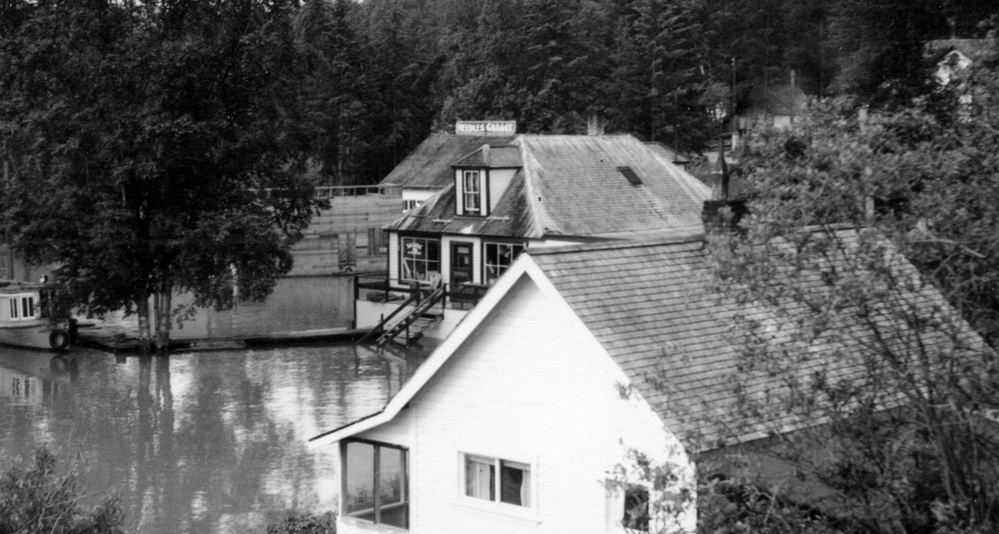
A332

Needles across from Fauquier after Flood 1948

My wife and I met and married in 1968 and Penny’s granddad, Dick’s father used to tell us of how proud he was of his son and that he was living in Canada. He obviously never knew that  Dick had died the previous year. We wouldn’t normally have pursued the family history of someone who was not a direct blood relative but we did know Dick’s father well and have many memories and photographs of him in his later years. As soon as Penny realized what had happened to ‘Canadian’ Dick, she was heartbroken and in tears.  At that time, all we knew was that he had been put on a ship with just the clothes he stood up in and enough money for a drink on the way.  How could they do that to him?  We just didn’t know.  Since then we have tried to find out more about Dick, not just for ourselves but in the hope that we could find Dick’s children, Gordon, Lois or Carol and give them some insight into their grandfather who they would have never known.

IMG_9659

Dick Hall’s house that had been moved  by barge to Fauquier

Canadian family history can be difficult with no records of births and marriages being readily available online so we have no idea whether ‘the children’ got married and had children of their own.  It would appear that after Dick’s passing, Mary his wife, married someone called Jackson as Dick is buried with her in the beautiful Peach Orchard Cemetery.

Now, looking on the internet at the absolutely beautiful place you live in, perhaps we should have moved too. If anyone does have any information or photographs of Dick and his family, we would really love to hear from them.  We can be contacted on our email pal@loseby.co.uk
Paul Loseby

Note by Peter Klopp: An alternative way of sending information via Paul’s email would be the comment section of this post. Thank you, Paul, for writing this touching story on a former resident of Needles, BC. I am confident that the Arrow Lakes Historical Society will add your report to their archives.

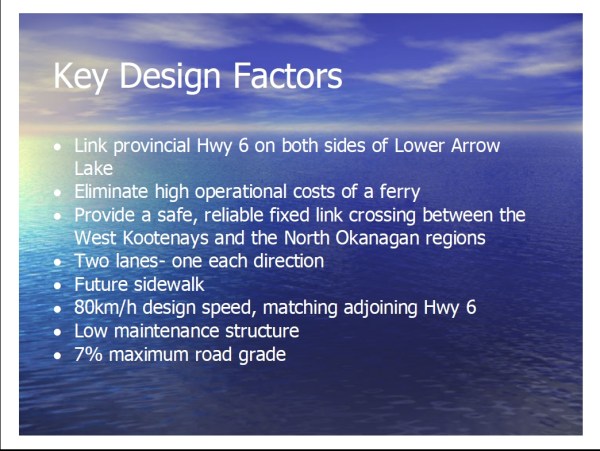
Tenth Anniversary of the Fauquier Phantom Bridge

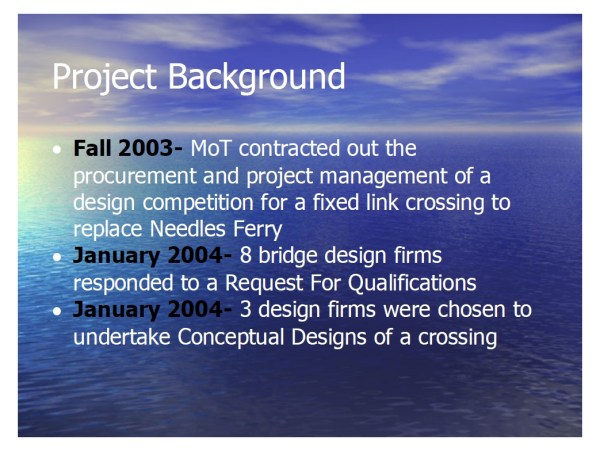
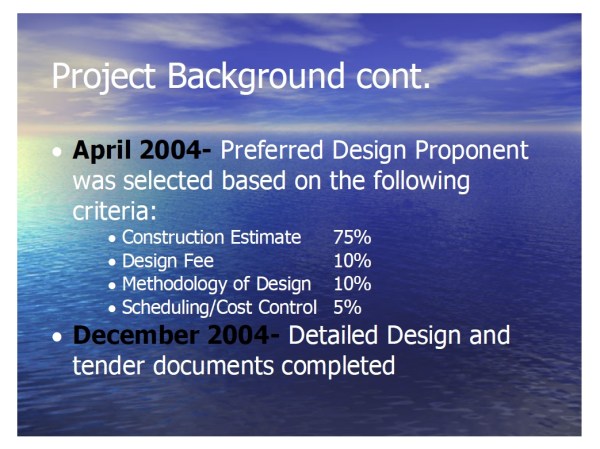
Ten years ago a team of engineers and surveyors came to Fauquier. The BC government announced with great fanfare the building of the bridge promised nearly 50 years ago to replace the present ferry system. Then the price of steel went up and the estimated cost of the construction nearly doubled and the project was scrapped. Today we are still using the ferry to get across the Arrow Lake.

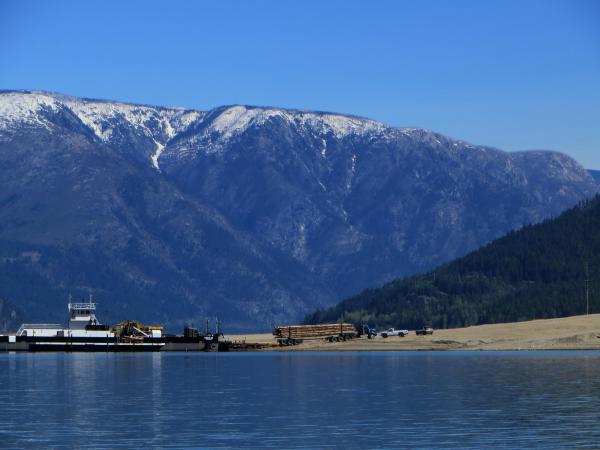
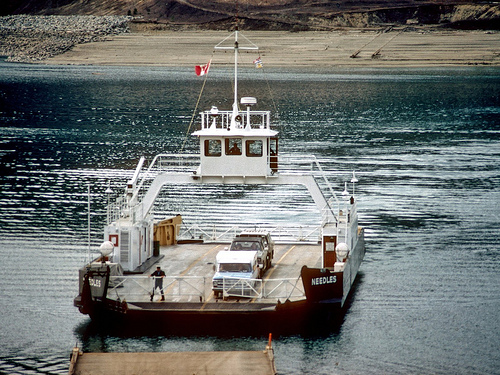
Looking North: Logging Truck Leaving Needles Ferry at Fauquier

Looking North: Logging Truck Leaving Needles Ferry at Fauquier

Quite a bit of costly planning had already gone into the bridge project. The following are pictures and a video I dug up from the files in my archive and I present them here as a little nostalgic piece about a bridge that never was.

BC Government Picture 2

BC Government Picture 3

BC Government Picture 4

If one takes a close look at the second panel with the cost projections, one can easily see that a large amount of tax payers money was wasted, before the project was scrapped. Below is the video of the bridge as envisioned by design engineers, which is beautiful, but no doubt was also very expensive to make.

In 2006 as manager of the Fauquier Internet Society I helped build the wireless system to provide broadband service to the people of our small rural community. The name of the website is ‘arrowbridge.ca’, and quite intentionally so to serve as a perpetual reminder of the ‘bridge that never was’.

Adding Meaning to Thanksgiving

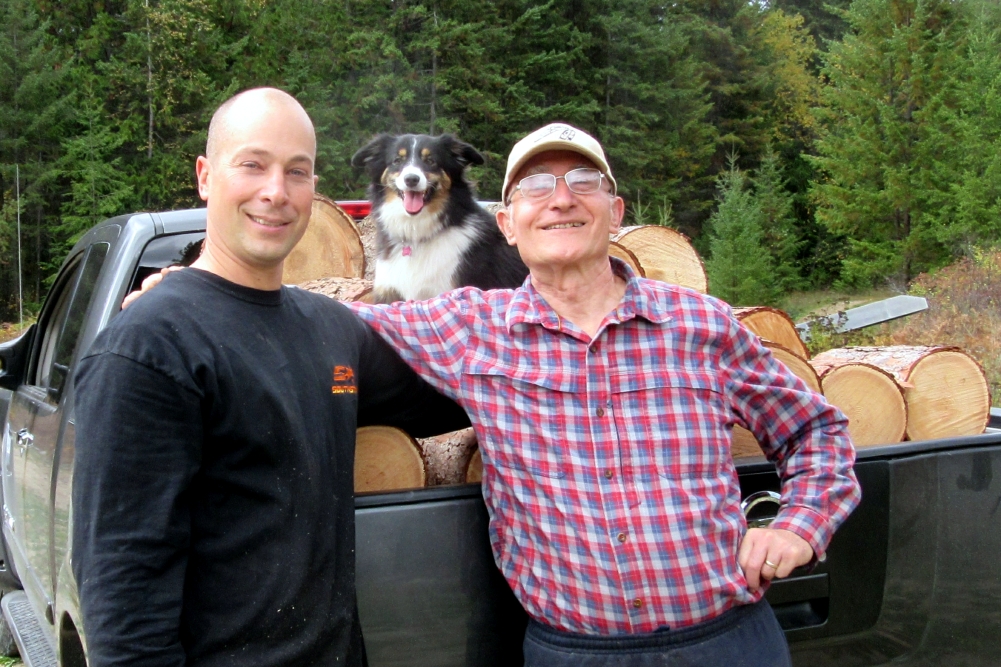
Michael and Angie Helping Gathering Firewood

Chart I – IV

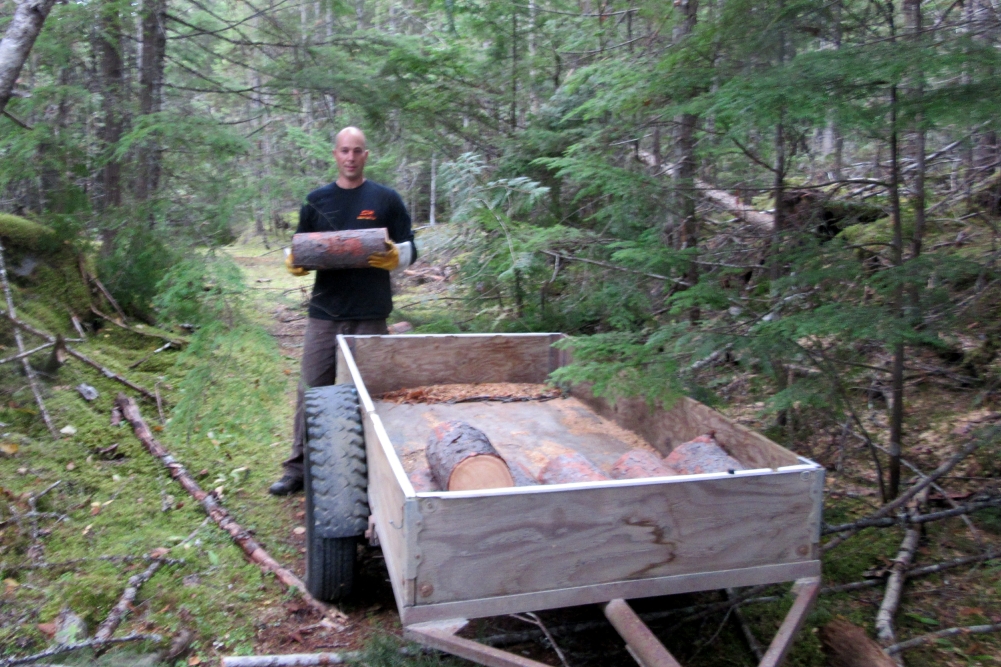
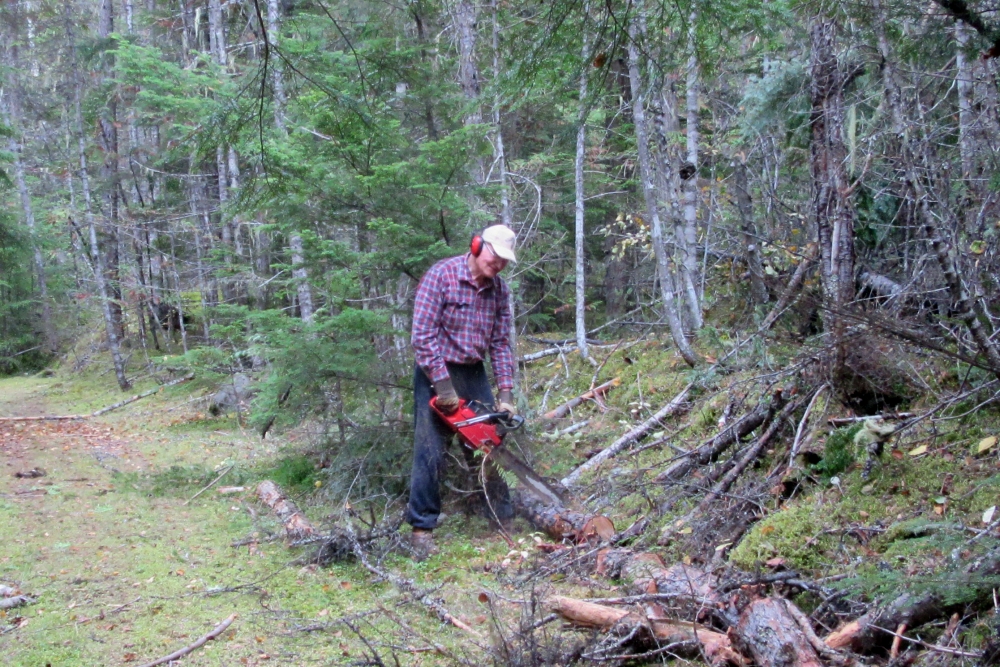
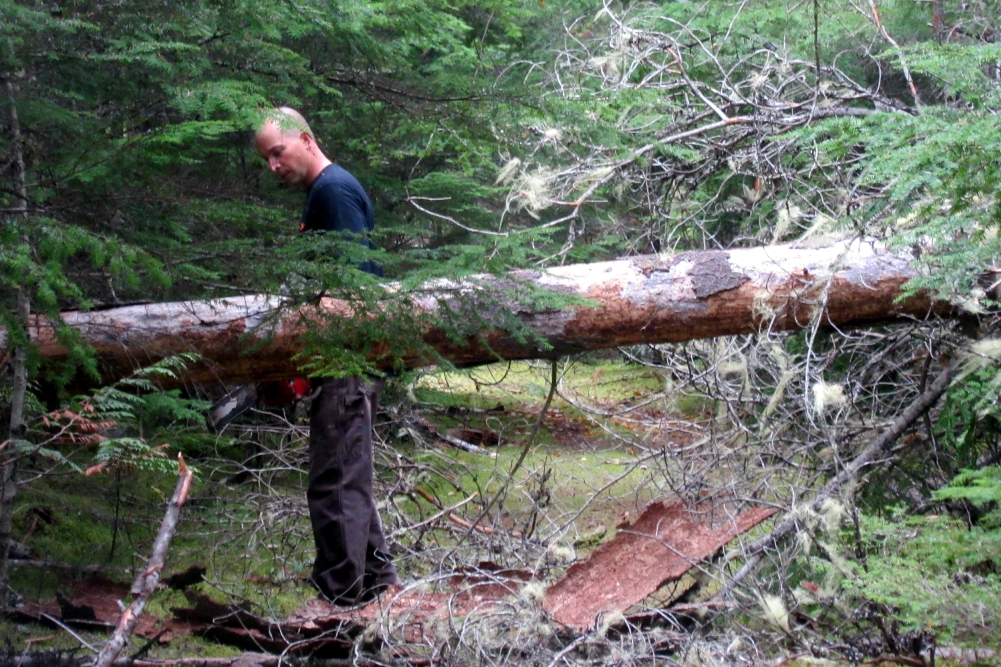
On the Canadian Thanksgiving Weekend our son Michael and daughter-in-law Angie dropped in on a surprise visit. And what a surprise it was! They came to help  to get some firewood out of the Taite Creek area. While my foot had healed quite well over the past eight weeks, our family doctor insisted that I should not yet go into the woods picking mushrooms or cutting firewood. So the following photo essay will express our joy and appreciation for what Michael and Angie have done for us.

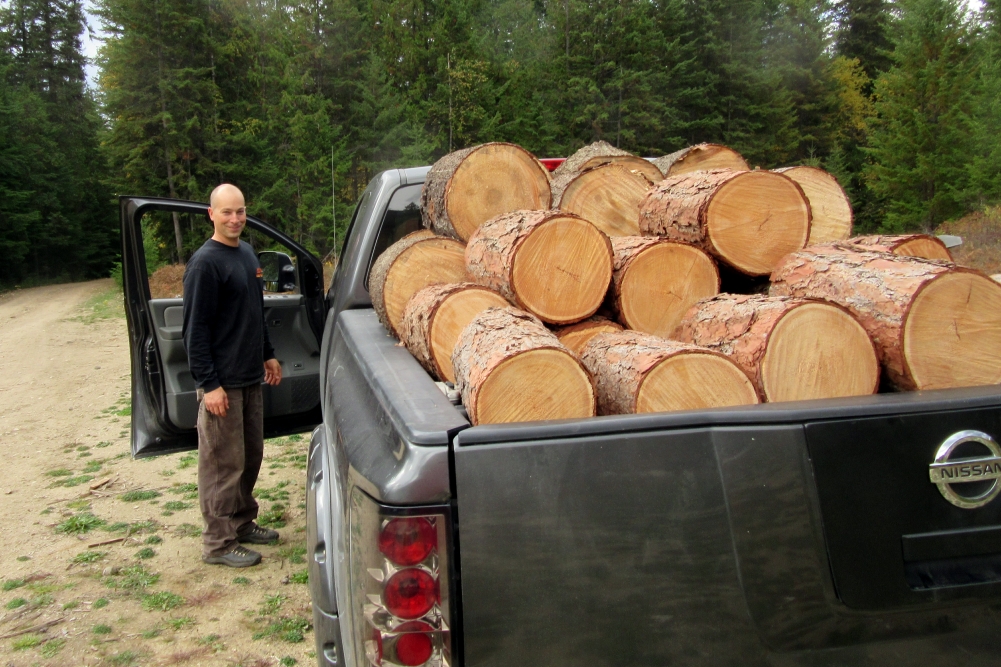
After Michael's truck was loaded with logs from a large pine tree, Michael cut down a larch for my small trailer.After Michael’s truck is loaded with logs from a large pine tree, Michael cuts down a larch for my small trailer.
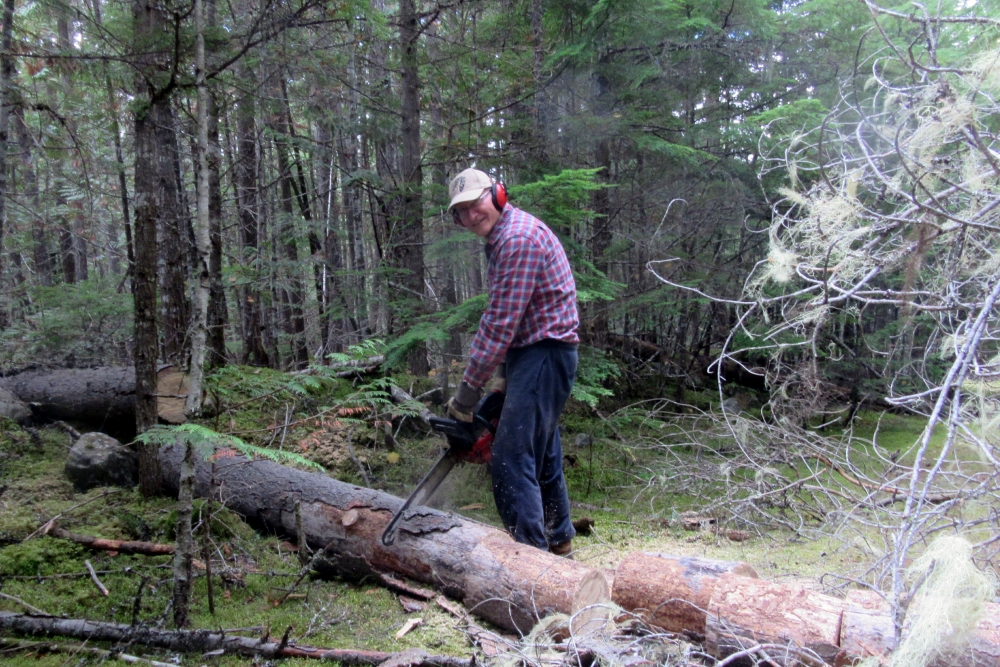
Still having to be careful with my right foot, I cut the fallen tree into small pieces, while Michael carried them to the trailer,Still having to be careful with my right foot, I cut the fallen tree into small pieces, while Michael carries them to the trailer.
When there was still room for more logs on the trailer, Michael cut down another pine tree.Because there is still room for more logs on the trailer, Michael cuts down another pine tree.
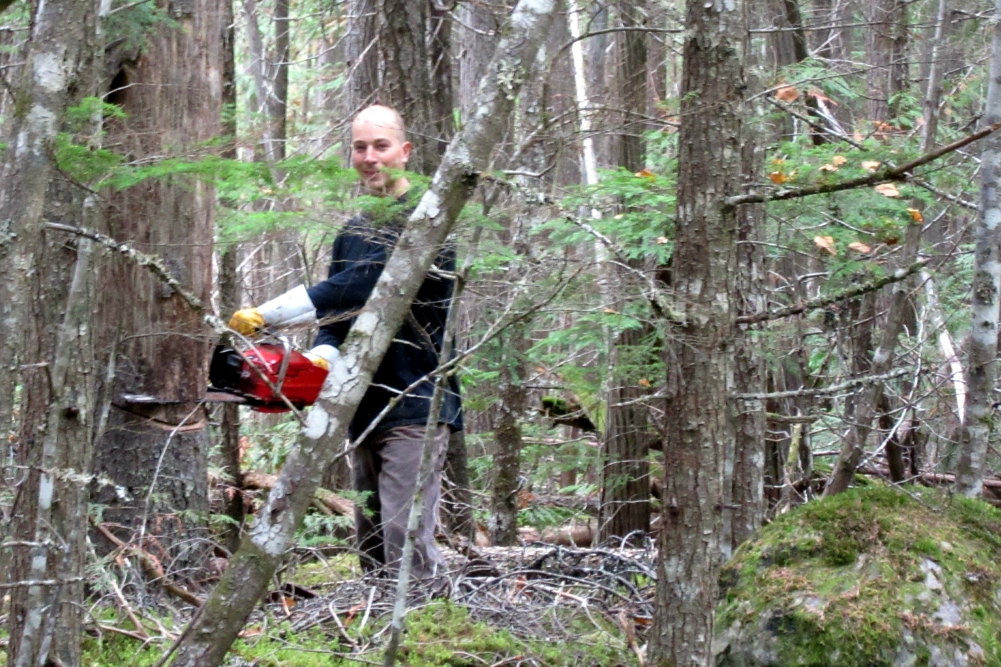
Since the fallen pine tree was blocking the road, Michael cut the middle section out of the tree.Since the fallen pine tree is blocking the road, Michael cuts the middle section out of the tree.
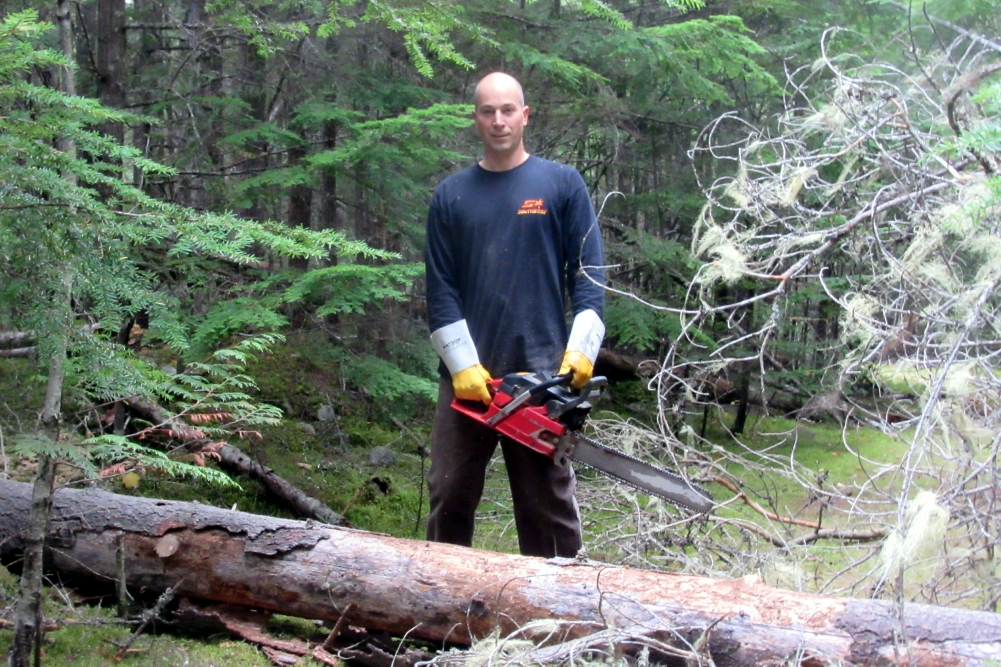
05He expertly accomplishes this task by two undercuts and then proudly presents himself with the chainsaw for the photo above.
Then it was my turn to cut the large section into logs that Michael carried to the trailer.Then it is my turn to cut the large section into logs that Michael then carries to the trailer.
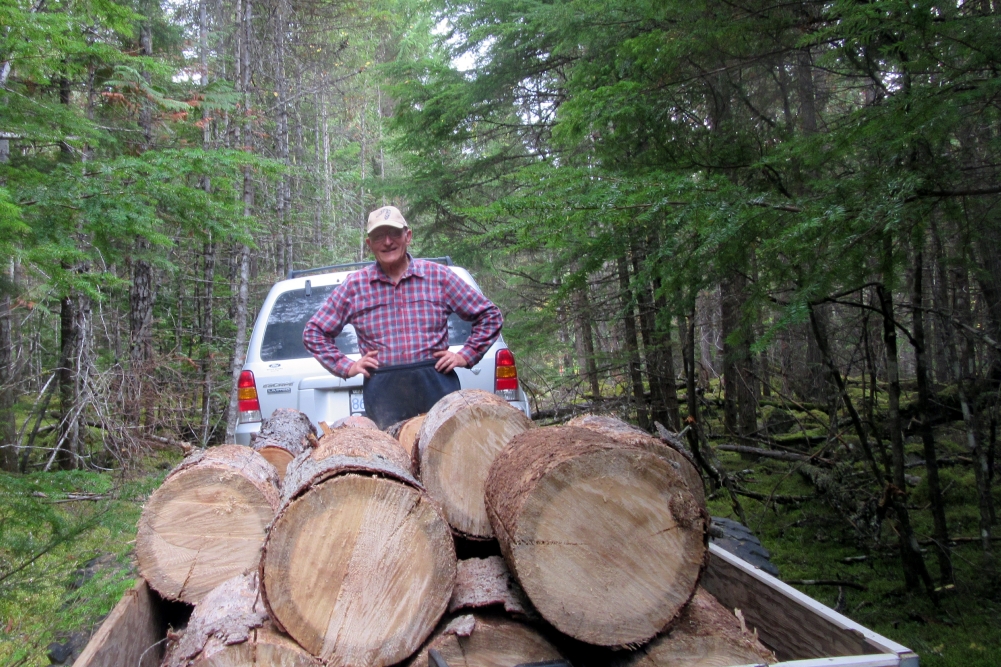
07Standing behind our trailer, I am looking thankfully at the load of pine and larch firewood.
08With a truck full of precious firewood, we are thankful and all smiles. Even Piper, the miniature Australian shepherd, appears to make a happy face.
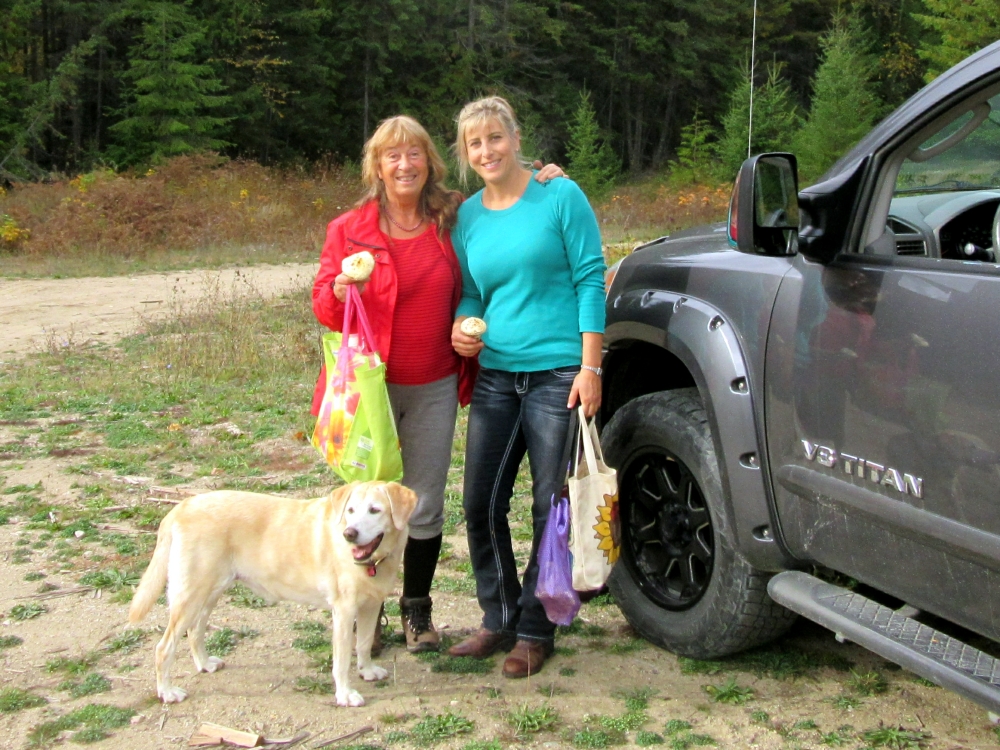
09In the meantime Biene and Angie had been scouring the woods for those elusive pine mushrooms and are showing off their loot.
11Now it is time to bring home the treasure to keep us warm this coming winter season.
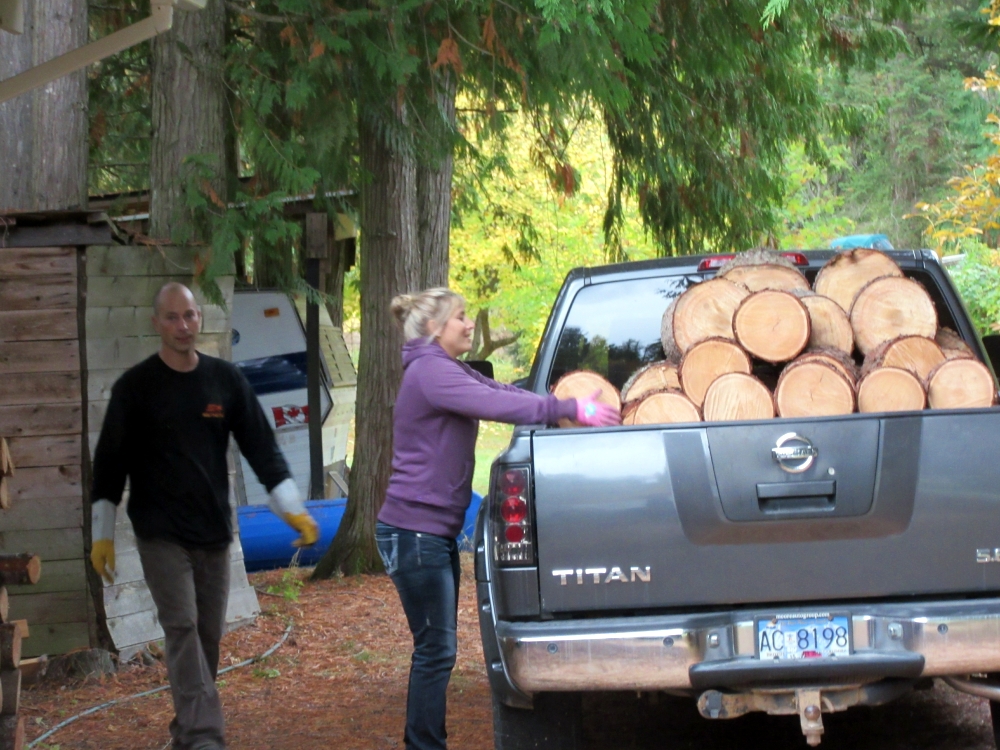
12While I am taking pictures, Michael and Angie are unloading the truck. What a joy in a father’s heart!

After all this hard work, we all sat down for an early Thanksgiving dinner that Biene had so lovingly prepared before our outing into the woods.

Happy Thanksgiving to you all!


Short History of the Fauquier-Needles Ferry

Special Thanks to the Arrow Lakes Historical Society

for the Newspaper Clipping of 1922

The community of Fauquier has been around for over a hundred years. If you are new to this site, it would be a good idea to view and read a few of the previous articles on the colorful history of mining. logging, fruit-growing in this little town. They can be found under the heading of Fauquier BC.

Early Fauquier Ferry - Photo Credit: Anette Devlin's Personal Archive, Fauquier BC

Early Fauquier Ferry – Photo Credit: Anette Devlin’s Personal Archive, Fauquier BC

Right from the start there was a great need to ferry people, goods and cattle across the Arrow Lake between Fauquier and Needles, which was a thriving and much larger settlement on the west side of the lake. A few enterprising people began to provide transportation by using their boats and barges. But as the newspaper article of the Arrow Lakes News of September 27, 1922, clearly indicated that was no longer good and safe enough.

Traffic Between Edgewood and Nakusp on Increase – Roads Need Attention

NAKUSP, Sept 27, 1922

With the in­crease in the number of motor cars in the various towns along the Arrow lakes making the through run between Edgewood and Nakusp and intermediate points, there is an equally increasing need of a proper ferry service between the east and west side of the lake at Fauquier and Needles. The present ar­rangement of a crude raft operated by an enterprising rancher at Fauquier for the public convenience is inadequate and even dangerous, especially for heavy cars.

 On Sunday alone four cars were fer­ried across both ways, one of which had its wheels in the water. There is much credit, due to Mr. Kendrik of Fauquier for assisting autoists across the water, but the operation is accompanied with a great amount of danger to lives. It is full time that the public works department of the provincial government rises to the occasion and build a ferry similar to that at Robson. The request has been made and passed by the asso­ciated board of trade on more than one occasion, but so far nothing has been done. A petition is being drawn up and circulated praying that this be carried out this fall, also the overhauling of four miles of road three miles south of Burton, which is covered with brush.

Fully Navigable Ferry - Photo Credit: flickriver.com

Fully Navigable Ferry – Photo Credit: flickriver.com

The outcome of increasing public pressure for better service was that the provincial government provided from that point on regular, safe and reliable transportation facilities, which included not only the ferry between the two communities, but also a highway link to Vernon over the Monashee Pass. When in 1967 the valley was flooded through the building of the dam near Castlegar, the provincial government was going to build a bridge across the lake at Fauquier. When this proved to be too expensive, a promise was made to provide government ferry service 24 hours a day free of charge.

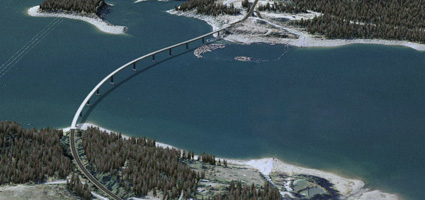
Some thirty years later the costs of running and maintaining the service has become prohibitively expensive. The government attempted to wiggle itself out their obligation to the public by cutting back the time the ferry would be running and by charging a fee. This did not sit very well with the populace and public protests made the government back down. Another bridge building proposal surfaced, which almost became reality if it had not been for a sudden and unexpected increase in steel prices. The photo below shows the designer’s areal perception of the wonderful bridge that never was.

Photo Credit: http://www.b-t.com/

Photo Credit: http://www.b-t.com/

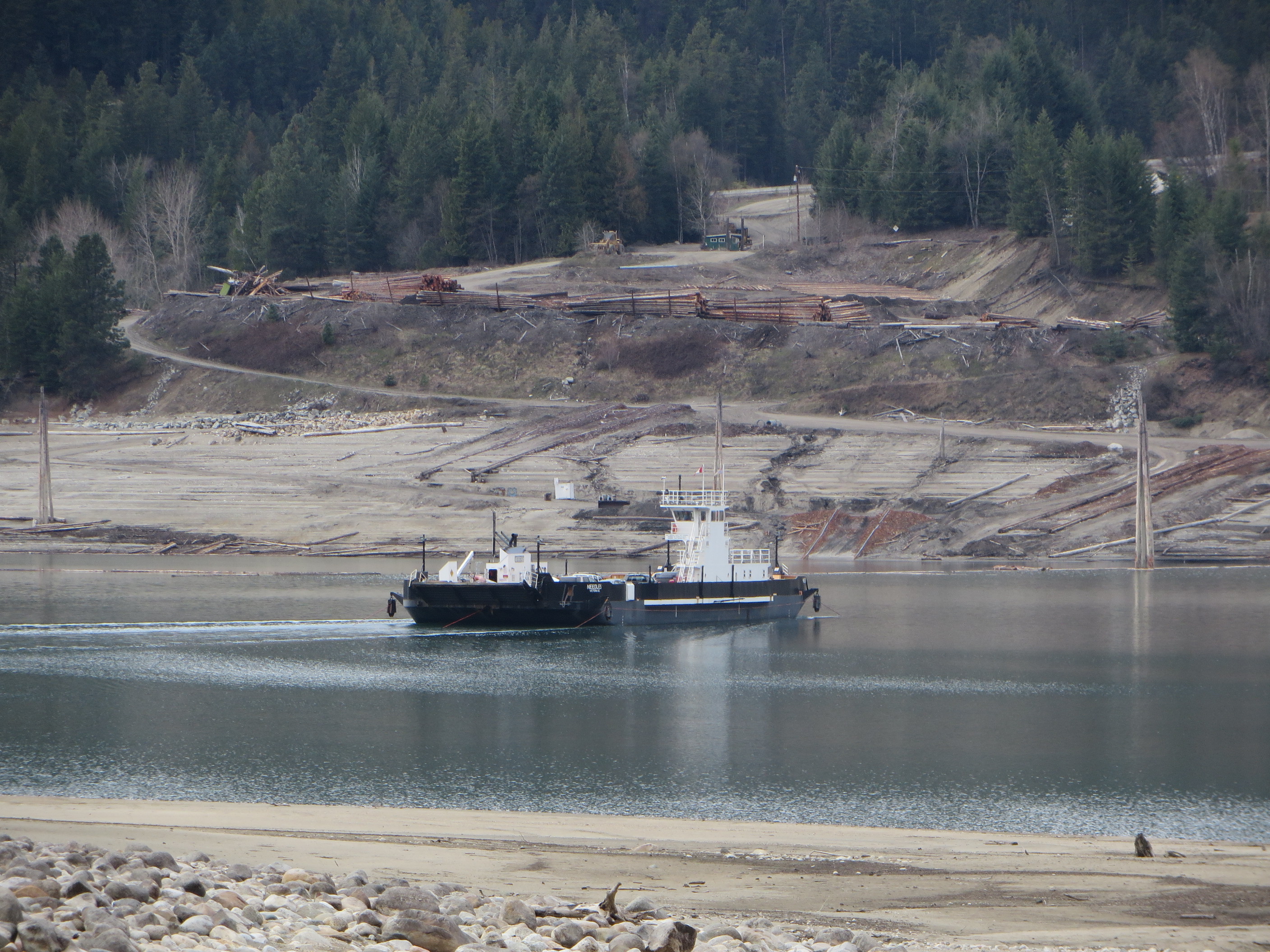
So today the cable ferry is still ferrying people, trucks and cars back and forth between Fauquier and Needles every 30 minutes between 6 am and 10 pm and is on call during the remaining night hours.

Fauquier Cable Ferry 2015

Fauquier Cable Ferry 2015