Walter Panknin (1898 – 1977) and His Family Ch5 – Part 13

School Memories

Biene contributed this post.

As I already mentioned, my dad prepared us well for school. Before every lesson in his roomy study, he would say in English, “I am your teacher.” He wanted to acquaint us with a foreign language early on in life. He refused to teach us Russian, which would have been more helpful in a communist state controlled by the Soviet Union. Math was always fun. My brother and I had competitions in mental math, which I would usually win. Until my last years in high school, I consistently outperformed my brother. But then he surpassed me, and I could never catch up. Calculus was my downfall.
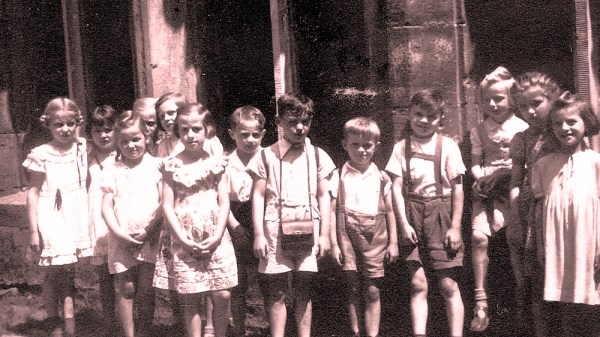

We had to memorize poems, ballads and, of course, lots of folk songs, which we would sing on long hikes in the beautiful forests of Thuringia. Most of the songs are still fresh in my mind. They bring back happy memories of picking berries, swimming in rivers and lakes, and picnics under beautiful trees. My dad would tell us legends and fairy tales often connected to the region’s folklore on these outings. Since the German language has fairly consistent phonetic rules, I learned reading almost on my own before entering school.
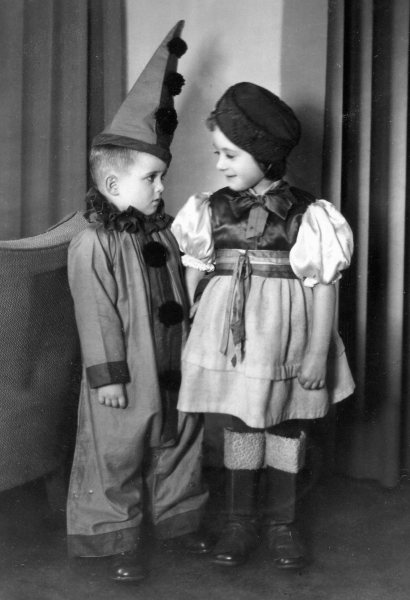
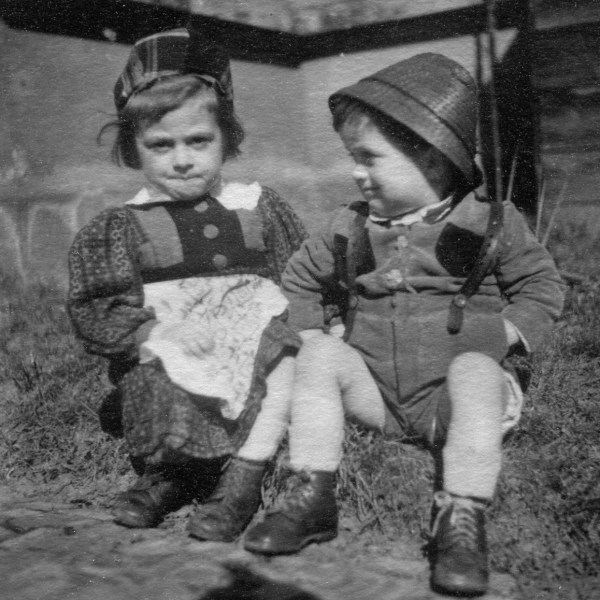
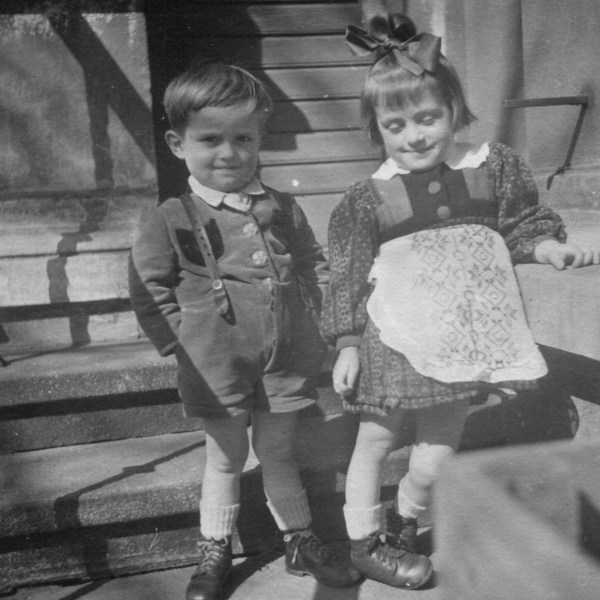
Walter and Biene

The famous German “Zuckertüte” or sugar cone bag originated in Thuringia near Gotha. This giant, brightly decorated cone-shaped paper bag was filled with chocolates, candies and other delicacies or little gifts to “sweeten” the first day of school. I wished we had a picture of ours. But at that time, my parents did not have the means to buy films.
We only had a few hours of school every morning for the first few years, including Saturdays. Students were expected to do homework and practice their new skills after school. Since my brother and I were fast learners, we had lots of free time to play when we returned home for lunch.
Walter Panknin (1898 – 1977) and His Family Ch5 – Part 12

More Questionable Child-Rearing Practices

Biene contributed this post.

Another child-rearing practice my parents employed is also of dubious nature. My parents’ generation stood under the influence of the naturopathic medicine movement of Sebastian Kneipp. He believed in the therapeutic power of cold water. My parents wanted us to grow up strong and healthy. Every Saturday, my brother and I had our weekly bath in a big zinc tub placed on two chairs in our spacious kitchen. A hot bath was a luxury at that time.  We enjoyed this rare pleasure tremendously. But all treats come to an end, and for us, it was very abrupt. Without warning, my mother would dump a bucket full of cold water, which she had hidden under the chairs over us, as suggested by Sebastian Kneipp.

This “shock therapy” was supposed to toughen and strengthen us. Before we could utter desperate cries of protest, we were wrapped in warm towels. Time and again, my mother would assure us that she would not do it again. But she never kept her promise and was very skillful in hiding the bucket of frigid water. Until the end of his life, my brother detested cold water. I, on the other hand, started to like this invigorating therapy. To this day, I love swimming in cold lakes and conclude my warm bath with a cold shower. 

Another Kneipp practice my parents employed was even more dramatic and terrifying. As a small child, my brother had terrible temper tantrums. He frequently would fly into such a rage that he almost turned blue in his face screaming.  All measures to calm him down failed until my mother and sister started to resort to another Kneipp treatment. They would quickly pick up my hysterical brother and hold his head under running cold water from the tap.  The shock would instantly calm him. I was very scared watching this cruel procedure.

Like my brother, I was also strong-willed. But I did not voice my protests in furor. I would instead use passive resistance. My mother tried to give us one teaspoon of pure cod liver oil every day during the fall and winter season to prevent rickets and other health conditions. I vehemently detested this foul-smelling and even worse-tasting liquid. My mother could neither coax nor threaten me into compliance. I kept my mouth pressed shut. When all attempts failed to change my mind, my sister would hold me down on the couch, open my mouth forcefully. In an instant, my mother would pour the disgusting sticky liquid down my throat. I could not understand why my mother and sister, who loved us so much, could do such horrible things to us.

Walter Panknin (1898 – 1977) and His Family – Ch5 Part 11

Bizarre Child Rearing Practice

Biene contributed this post.

“The door flew open, in he ran,
The great, long, red-legged scissor-man.
Oh! children, see! the tailor’s come
And caught out little Suck-a-Thumb.
Snip! Snap! Snip! the scissors go;
And Conrad cries out, “Oh! Oh! Oh!”
Snip! Snap! Snip! They go so fast,
That both his thumbs are off at last.”


I sucked my thumb with passion and abandon right from birth and maybe even before. My parents never got tired of telling the embarrassing story when I tried to suck my brother’s thumb. He often stood still when observing something with his hands folded on his back like a statesman. I played on the floor behind him when I suddenly grabbed his hand and tried to put his thumb into my mouth. He screamed in horror, thinking I was going to bite him. Initially, my parents thought that I would eventually give up this bad habit on my own. But when I continued past the toddler stage, they started to get worried. All their attempts to stop me from putting my thumb into my mouth failed. As soon as their attention was diverted, I made up for the lost time, especially at night.

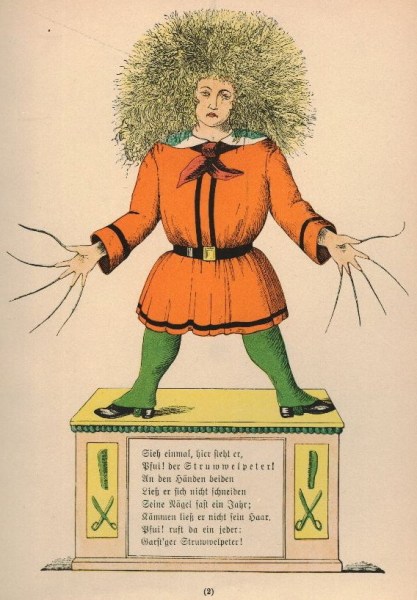
Heinrich Hoffmann: Der Struwwelpeter;

Finally, my mother and sister decided on more drastic measures. To me, they read the then bestselling children’s book ‘Struwwelpeter’ by Heinrich Hoffman. I listened attentively, sucking my thumb peacefully when suddenly my ears pricked up. There was a story of a little boy who had this habit of thumb sucking like me. Like me, the boy did not stop when told so by his parents. Then one day, the thumb cutter came and cut off his thumbs. Thus he stopped him once and for all.

I was getting a bit worried hearing the story when suddenly the doorbell rang. My sister got up to answer it. She returned after a few minutes looking very serious. “The thumb cutter is here looking for Biene,” she told my mom. “Should I let him come in?” My mom replied, looking at me, “Tell him to go because Biene will not suck her thumb anymore.” My thumb was out of my mouth in an instant. I was shaken to the core. “Miraculously” from that day on, I stopped this bad habit for good.

Walter Panknin (1898 – 1977) and His Family – Ch5 Part 10

Early Childhood Education at Home

Biene contributed this post.

When we turned four years old, my father started teaching us on weekends.  He had a large world map, which covered a wall in his study. He introduced us to geography. We had to point to and name all the continents, major countries, capitals, rivers, mountain ranges and oceans.

We had to draw maps and were rewarded with pennies if they were accurate. Papa explained the solar system to us and allowed us to colour his beautiful pen drawings for the ballads he had written. At bedtime, he would read books of the great explorers and inventors of the past or other historical events.  I loved cuddling close to my father on the bench of the big tile stove and listen to the great stories of mankind. 

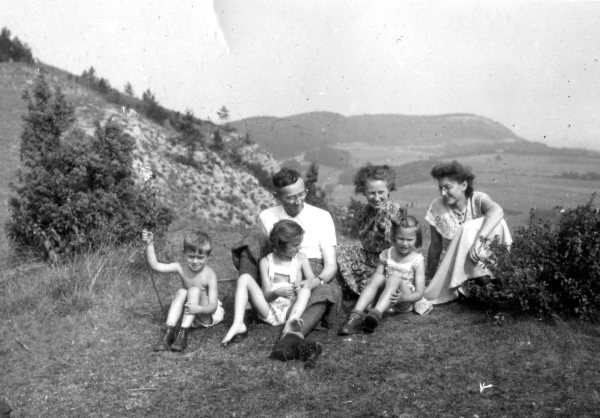
Hiking – From the left: little Walter, Gertrud (Biene), Walter and Elisabeth Panknin

I learned to read before I even went to school and have always been a voracious reader from then on. I was six years old when I read my first novel. My mom had the book sitting on her night table. It was a gift from my father, who loved historical novels. Whenever I had the opportunity. I secretly read this big book which intrigued me. It introduced me to an exciting world far beyond my years. To this day, it is my favourite novel. The author is Hervey Allen, and the title is “Anthony Adverse.”  It was translated into German. 

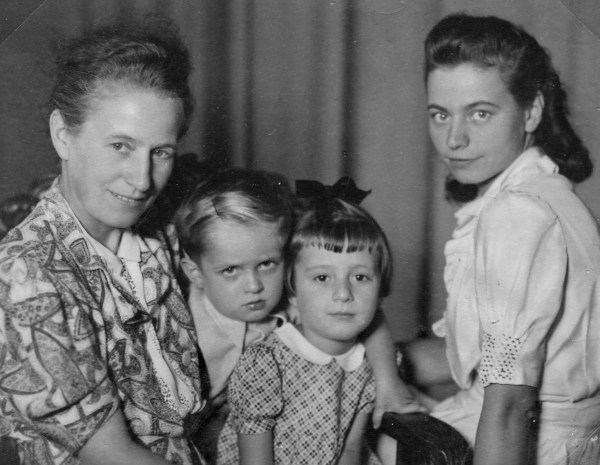
Elisabeth Panknin, the twins and their sister Elsbeth

Although religious practices were tolerated under the new regime, they were not being encouraged. My mother had been strictly brought up in the catholic faith by her guardians.  However, my father was protestant.  Shortly after our birth, even before my dad had a chance to meet us, she had us baptized in the protestant faith out of respect for my father. My mother was always a firm believer in the Christian faith and instilled this faith in me. For her, the differences among the various religious denominations were not of great importance. She believed in a personal relationship with God and salvation through Jesus Christ. She would always encourage us to pray and believe in the power of God’s love.

We were introduced to the word of God by an interdenominational Christian group that read bible stories to preschool children. They must have sown seeds falling on fertile ground. To this day, I have never lost my faith in the goodness and truth of God’s word and the miracle of Christ’s promise of salvation.

Walter Panknin (1898 – 1977) and His Family – Ch5 Part 9

The Anemic Yet Picky Eater

Biene contributed this post.

After their failed attempt to flee to the West, my freedom-loving parents had to survive in a totalitarian state. The communist regime had curtailed many of their freedoms. For example, my parents could not visit their friends and relatives on the other side of Germany and the rest of the world.
Before the war, my Dad had transferred to the police force in Gotha. Now, under communist rule, he could no longer keep his position as a police officer. Miraculously, one of my Dad’s old friends, a dentist, remembered that my father had worked as a dental technician in the past. He offered him a job to work in his dental laboratory.
Food supplies were very short for several years after the war, especially in the East. I remember my Dad taking us to small villages in the surrounding area. He would try to trade in his high-quality police boots, belts, leather gloves and other valuable clothing for precious food like flour, butter, eggs and cheese. I will never forget the tasty delight of a freshly baked heart-shaped waffle a kind farmer’s wife handed me on a chilly fall day. It was still warm and tasted heavenly!! I never had one before.

Biene and her Twin Brother Walter

Our diet mainly consisted of porridge, root vegetables, bread, molasses and some butter or other fat. There were strict government food rations. Since I was underweight and slightly anemic, a concerned doctor prescribed extra rations for me. But I was also a picky eater. It upset my Dad tremendously when I refused to eat or left something on the plate. He had experienced extreme hunger as a POW. My mother ended up feeding us children separately to keep him calm.

Walter Panknin (1898 – 1977) and His Family Ch5 Part 8

Failed Attempt to Escape

Biene contributed this post.

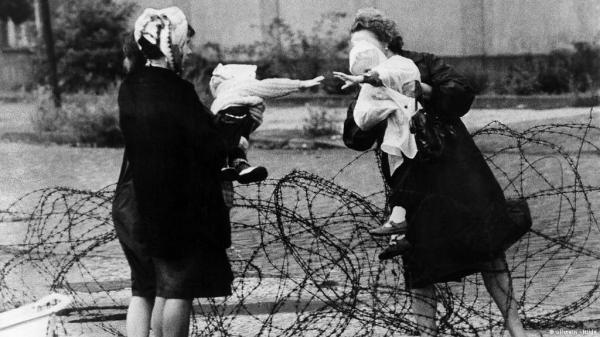
My brother and I were three years old when my mom made the first attempt to escape with us to the West. Fences, ditches and surveillance towers did not yet fortify the newly established borders between the divided Germanys. Heavily armed border guards patrolled the unmarked dividing line between the East and the West. My mom planned to cross the densely forested border at a remote village with my sister and us two. Once safely across, my sister would take us by train to relatives in the West while my mother would return home to escape with my Dad via Berlin to the West to rejoin us later. At that time, the East German regime had not yet built the wall, and it was still possible to escape from the eastern part of the city to the West by the subway system, which still joined the two parts of Berlin.

Early Border between East and West – Infants Reaching out across a FencePhoto: DW

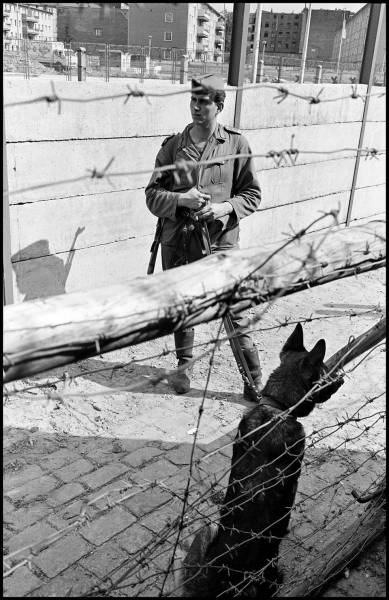
The memories of that night are etched in my memory forever. My mom and my sister struggled to push our twin stroller over a rugged forest path at the approach of the night. When the going was getting too rough, my mother allowed us to walk a short distance ahead of them. My brother and I didn’t like being cooped up in the stroller for too long. We started to run and chase each other around a bend of the narrow path when a gigantic figure with a gun stepped out of the dense bush and blocked our way. We all stood motionless for a long moment until my mother and sister came around the path.  My sister started to scream with fright, but my mother stayed calm. She tried to explain that we had lost our way, but she could not fool the guard. He told my mother that he would walk the other way pretending he never met us, on condition that she immediately returned to the village. If she refused to comply, he would have to shoot, as were his strict orders. If he showed mercy, his own life was at stake. He did show some pity by giving my mother directions to a house nearby. There we would find the porch door unlocked and spend the night under a roof.  “There will be shooting tonight,” were his last words. 

East German Border Guard with Dog Photo: DW

Once again, we experienced the unexpected mercy of an enemy soldier. We spent the night huddled in the corner of a spacious porch. My sister broke down, crying hysterically. We had never heard her cry before, and it scared us more than the sounds of shots fired in the distance. Part of my sister’s breakdown was that she experienced the first stages of pregnancy still unknown to her.A few months later, she married her long-time boyfriend, and soon after, our first nephew was born. Thus, my brother and I became uncle and aunt at the tender age of four.