Walter Panknin (1898 – 1977) and His Family Ch5 Part 7

Gotha, Thuringia, Germany

Biene contributed this post.

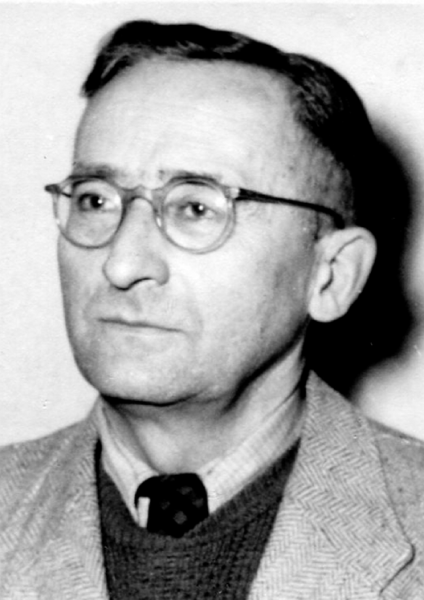
Gotha is a picturesque city located in Thuringia, one of the most beautiful regions of Germany. It is called the Green Heart of Germany because of its vast pine and mixed forests stretching over rolling hills. My dad did not have the outgoing, cheerful personality of my mom. Although he could be humorous and enjoy company, he was more introverted and loved reading, studying, and writing. History was his passion. But he also was an outdoor enthusiast and loved to hike, bike, ski, swim, go camping and boat in his canoe-like paddle boat. My mom and dad explored all the major rivers of Germany by embarking on extensive boating and camping trips in the summer.
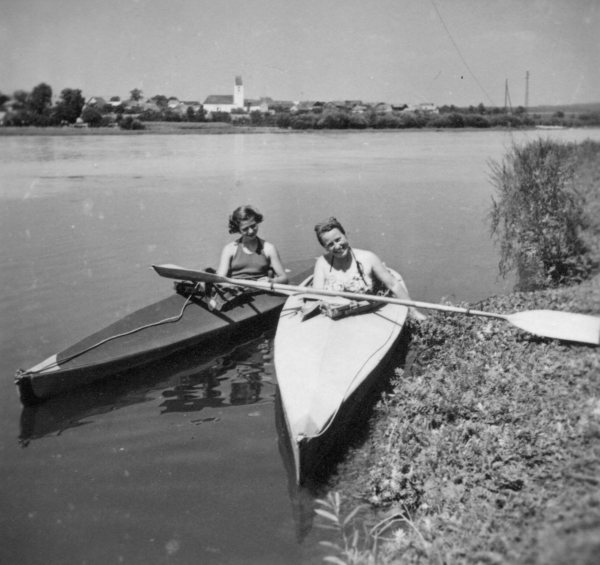
Mutti Panknin and Daughter Elsbeth – Paddling on the Danube

Until late in his life, my dad led hiking clubs. He loved exploring and marking new trails. He also loved collecting mushrooms and became an expert in researching new species and cataloging them. He also liked to compose poetry, especially ballads, illustrating with beautiful ink drawings. The only thing he lacked was practical skills. According to my mom, he could not even “cook water.” While my mom was loved, my dad was respected.

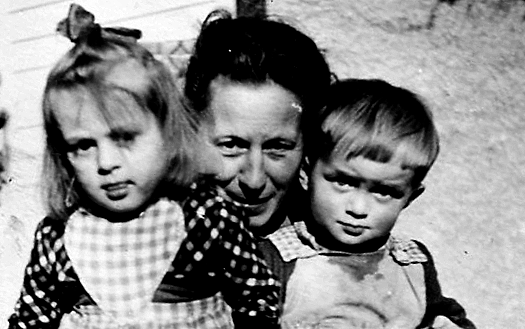
 Our family lived on the main floor of a spacious villa not far from the castle and its fantastic park. It is the most famous landscape park in Germany and contains many rare and exotic trees. This wonderful park became our playground. Every weekend through the changing seasons, my father would take us on long walks to this charming place.
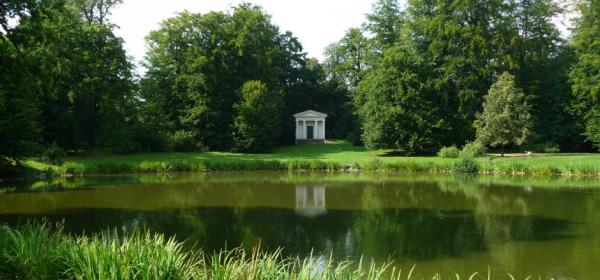
Castle Park in Gotha, Germany

Before we even went to school, he had taught us to identify and name trees, flowers, plants and animals, more than I can recognize now. My brother and I would collect colourful leaves, tasty hazelnuts, shiny chestnuts, acorns, pine cones, rose hips, and other seeds and berries. These treasures would delight us more than toys. We loved to watch the birds, chipmunks, insects, butterflies, frogs, toads, snakes, salamanders and other small animals living in this enchanting realm. Two big ponds were another exciting attraction to explore. Some of my earliest memories are holding my dad’s hand and walking in this peaceful and magical place.
Walter Panknin (1898 – 1977) and His Family Ch5 Part 6

Mutti Panknin’s Loss of her Fiancé

Biene contributed this post.

Born in the Rhineland region of Germany, my mom incorporated all the positive qualities attributed to a typical Rhineland personality.  She was always cheerful and full of vitality. She loved life and, above all, people. Her keen sense of justice and fairness added strength to a tenacious fighting spirit. Her memory was astounding. She could recall events and people of the past in minute detail. She was very resourceful and overcame many insurmountable obstacles.  She always fought for freedom in all its forms.

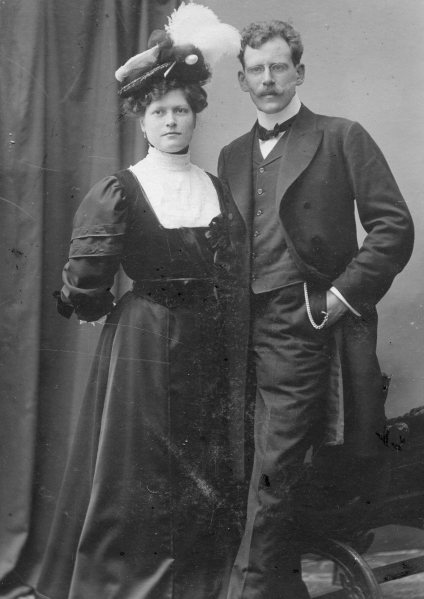
Biene’s Maternal Grandparents circa 1900

People would gravitate towards her; even strangers would love her almost at first sight. Sometimes my brother and I were a bit embarrassed by the attention strangers gave her when we travelled with her. Her hospitality was famous and all our friends loved to visit our home. She took a genuine interest in other people.  She had good advice, and people accepted it with gratitude. She was also beautiful. After leaving the convent school, she found employment as a receptionist for a photo studio and frequently sat as a model for her employer.

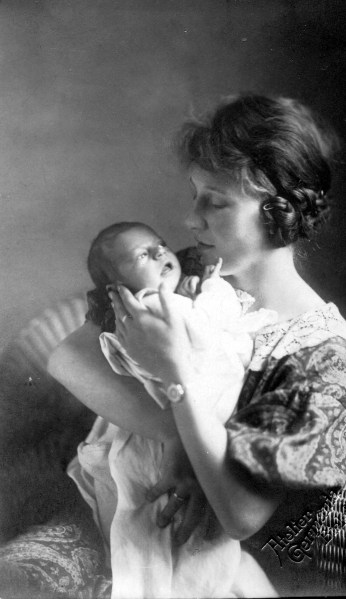
Biene’s Mother and Half-sister Elsbeth 1924

My half-sister was born when my mom was 23 years old. My mother never talked about that time, and the identity of my sister’s father has remained a mystery to this day.  My nephews are still searching to find out who their grandfather was. Until I was 20 years old, I did not even know that my father had adopted my sister.  My parent’s generation kept a lot of secrets. There are some indications that my sister’s father was not acceptable to my mother’s strict catholic guardians. Very likely, he was a Jew. I remember a rare moment when my mother told me that she was once given a beautiful necklace by a Jewish man who loved her very much but died in a motorcycle accident. At that time, I did not know that my sister had a different father. Looking back now, I believe that my mother wanted to force the marriage by her pregnancy. Tragically, her lover died in a fateful accident before my sister was born. This scenario is speculation. I do not know how my mother coped as a single parent and how she eventually met my father.  I only can presume that my father must have loved her very much to overcome the social barriers of that time to marry an unwed mother and thus jeopardize his status as a police officer.

Walter Panknin (1898 -1977) and His Family Ch5 Part 5

Frau Panknin Accused of Theft

Tempora mutantur et nos mutamur in illis. This Latin adage, meaning “Times are changing, and we are changing with them,” rings especially true when examining cultural norms for human behaviour. When Papa was a police officer before and during the war, his elevated status in society did not allow him to have his wife working. A man of his rank was supposed to feed his wife and family. Now having been a former officer of the German army, he could not hope to find employment as a police officer in the Soviet-occupied province of Thuringia. Fortunately, he eventually found work as a dental technician at a friend’s dentistry lab. All of a sudden, the honour code of the former police force no longer applied, and his wife Elisabeth was working for a Russian officer who needed help to keep his rather large household organized and running well. For a few hours every day, Elisabeth Panknin had to do housework for him in exchange for a modest wage and some precious victuals from the kitchen. 

Elsbeth, Gertrud

One day when she reported for work, the whole household of the commander was in disarray and upheaval. The commander had lost his precious ring. An extensive search by all the members of the home had been unsuccessful. The ring was not found. Finally, mother Panknin was accused of having stolen it. The commander told her that she had to return the precious object by the following day or face dire consequences. Elisabeth was scared to death. She had seen and admired the ring but had no idea where it was. She spent the night in agony, not knowing what to do. Finally, after many prayers, she decided to offer the commander all her jewellery the next day to prove her innocence.

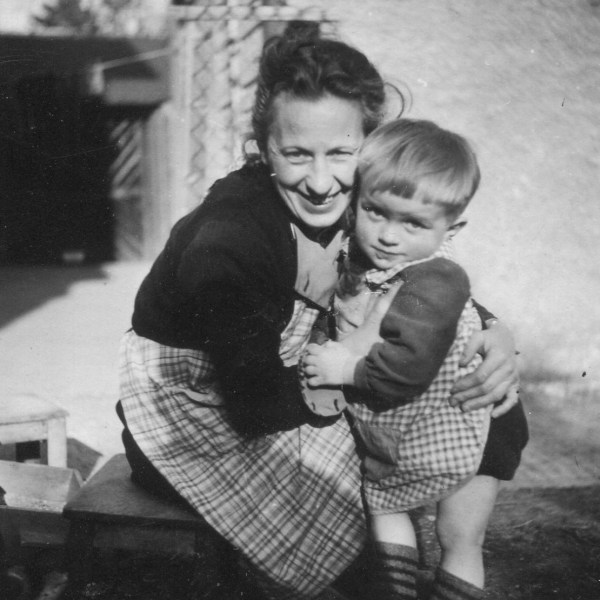
Mutti Panknin with Little Walter

The following morning, weak with fear and apprehension, she arrived at her workplace. She was immediately sent to the commander’s office, who was holding out his hand when she entered. Frau Panknin could not believe her eyes when she saw the precious ring sparkling on his finger. In his broken German, the commander explained how he had found the ring. When he was getting dressed that morning, he had felt a small object in the lining of his jacket. On further investigation, it felt like his lost ring. He suddenly remembered that he had put it in his jacket pocket for some reason Frau Panknin could not understand. His coat pocket had a small tear in the seam, and the ring had slipped through it into the silk lining. That the ring was found in the nick of time to save my mother-in-law from dire consequences was another miracle. From that day on, the commander rewarded her more generously for her work.

Walter Panknin (1898 – 1977) and His Family Ch 5 Part 4

Harrassing Interogations

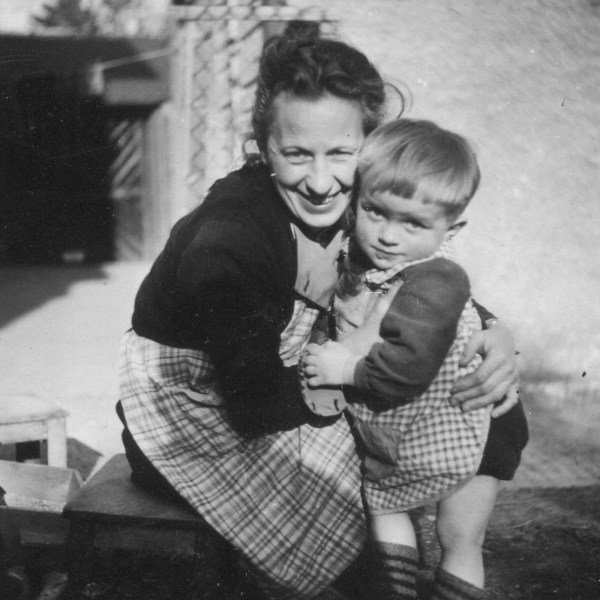
Mutti and Little Walter Junior

The Soviet authorities must have known Papa’s background well before they even summoned him to appear for the lengthy interrogations. They mostly took place in the late evening hours. Believing him to be a solid antifascist, they decided to apply the soft treatment on him. Papa was fortunate not to undergo any physical pain or even torture. But the psychological burden weighed heavily on his heart and mind. He never knew what to expect and when he had to show up for the round of these nerve-wracking sessions.

Worst of all, his source of income as a dental technician hung in the balance. For without clearance from the Soviet secret service, he would not be able to work. During one of those evening sessions, the Russian officers took on a very conciliatory approach. They told him that his antifascist background would make him appear in a favourable light. All that Papa would have to do was provide them with names of former Nazi officers in the German army. Indeed, Mr. Panknin would know which ones had displayed through their actions and voiced opinions a pro-Nazi disposition. Ratting on people, however, Walter Panknin was not willing to do.

He courageously replied, “I met so many police force officers and of the German army. But I cannot remember any of these with pro-Nazi leanings.”

“In that case, we will have to keep you here for the night. Perhaps that will help refresh your memory to come up with a list of names in the morning,” was their response via the interpreter.

“But sirs (Meine Herren),” Papa protested, “I haven’t eaten supper yet”.

Upon hearing this somewhat naive statement, the Russian security officers broke out into roaring fits of laughter. For the longest time, Papa could not figure out the cause of their merriment. Somehow Captain Panknin’s remark about not having eaten yet broke the ice. The committee decided to let him go home and stop the interrogations of this honourable gentleman. No doubt, they continued to keep a close watch on my father-in-law. Shortly after, Papa began his employment as a dental technician.

Walter Panknin (1898 – 1977) and His Family – Chapter 5 Part 3

Trying to Find Work in Post-War Germany

Any part written in the first person singular has been contributed by my wife Gertrud (Biene) née Panknin

Being without a job and having no regular income turned out to be a more severe problem. Where would he find work in the Soviet occupation zone as a former police officer and a Wehrmacht battalion commander in Croatia? As such, the Russian authorities viewed Walter Panknin with suspicion and kept a close eye on him.

Papa once experienced joblessness after returning home as a young man with the rank of lieutenant at the end of World War I. How fortunate it was that now he could use the skills he had acquired while training to become a dental technician! He had also built up considerable work experience in Gassen in the 1920s. Good or bad times, there will always be a need for skilled people in the field of dentistry. Finally, a job related to these skills provided hope on Walter’s prospects of a steady income after his return from the POW camp at Bad Kreuznach.

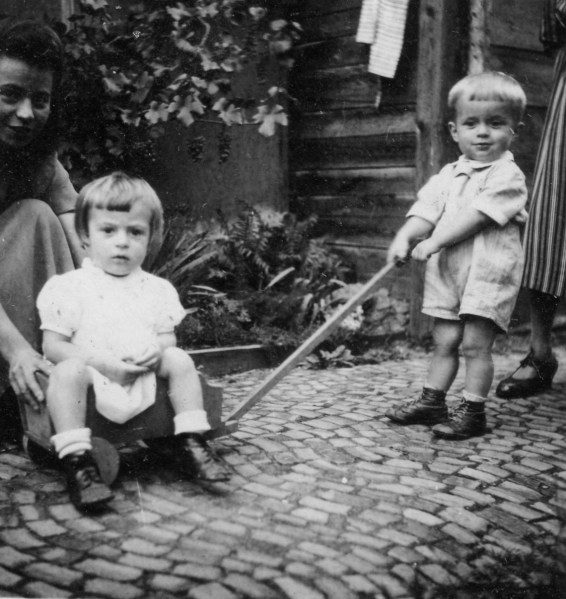
Motti Panknin and the Twins

But there was a major hurdle that the Soviet secret service had placed before my father-in-law. The Russians must have received the list of POWs returning from the infamous Rhine Meadows camps. Undoubtedly, they were especially interested in the higher-ranking officers. They aimed to extract valuable information from those with a Nazi background. They also wanted them to rat on former military friends and colleagues.

Walter Panknin (1898 – 1977) and His Family – Chapter 5 Part 2

Papa is Coming Home

Any part written in the first person singular has been contributed by my wife Gertrud (Biene) née Panknin

Great was Elisabeth’s joy when her husband suddenly and unexpectedly arrived at their home at Gotha. Papa could finally embrace his beloved wife, hug his stepdaughter Elsbeth, and hold the baby twins Walter and Gertrud in his arms. He had not seen them for over half a year.

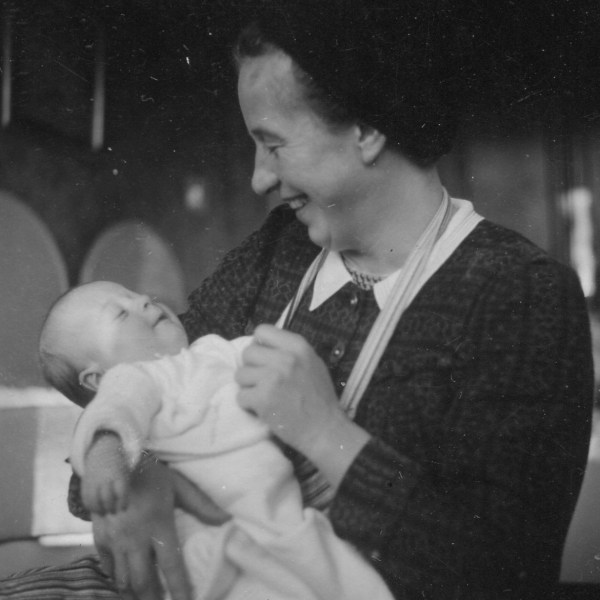
Mutti Panknin with One of her twins

Unfortunately, several flies in the proverbial ointment all too quickly disturbed the family bliss. The house owner had covered up his illegal black market dealings by having a high-ranking police force officer renting the ground-floor apartment in his house. As many essential items were getting scarce during the war, he used Captain Panknin’s status to deflect suspicion from his shady activities. Now that the war was over, the landlord found him no longer useful and tried to get rid of his tenants. Perhaps he knew some well-to-do people able to pay a much higher rent. With so many destroyed cities, Germany experienced one of the worst housing crises in history.

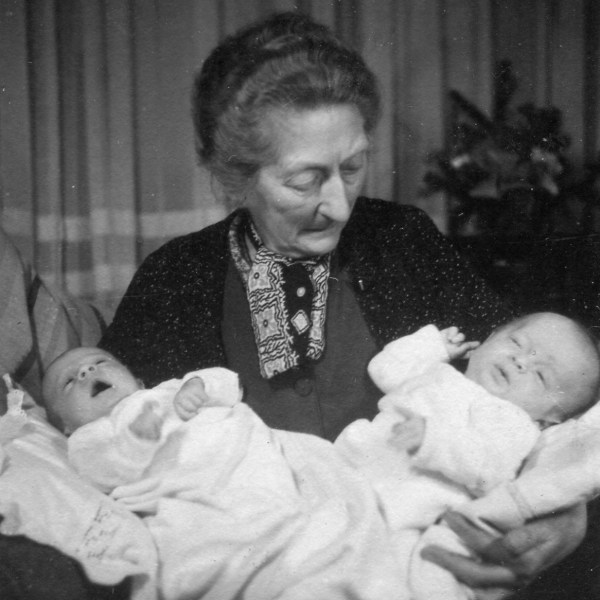
Oma Panknin with her Twin Grandchildren

Being without a job and having no regular income turned out to be a more significant problem. Papa got by for a while, trading in the plum brandy for things they were lacking. Indeed, his foresight and the effort of collecting and bringing home the liquid gold are remarkable.