Gustav Robert Hermann Klopp – Friedrich and Emma’s Eleventh Child – Part 1

Fighter Pilot and Hereditary Estate Farmer

Friedrich and Emma’s eleventh child, Hermann was the first one to be born in the recently acquired house on 30 August 1892. In 1903 the eleven-year-old boy moved with his mother Emma and his six younger siblings to the farmstead at the village of Elsenau near Schönsee (now Polish: Kowalewo Pomorski) in West Prussia. Hermann completed an agricultural apprenticeship in that area and found before 1916 an administrative post of the Prussian state property Wtelno near Gogolinke, county of Bromberg (now Polish: Witelno near Gogolinek, about 20 km northwest of Bydgoszcz). The agricultural area of the domain was 385 ha.

In 1916 Hermann became a soldier and participated in World War I. He enlisted at the newly established air force unit just as his brother Ferdinand, who had served from 1915 on at the airstrip Großenhain. In August 1917, according to an army postcard, he became a fighter pilot trained at the “Flieger-Ersatz-Abteilung I”.

From March 21 to November 10, 1918, the day of the unit’s closure, Hermann Klopp belonged as a lieutenant and fighter pilot to the Airforce Unit I, which was headed by Manfred von Richthofen (1892 – 1918). Hermann was on active duty when his leader was fatally shot down on 21 April 1918 between Bray and Corbie (France).

Since the end of March 1918 the headquarters of the famous unit JG I was moved forward to the airport Léchelle as part of the German March offensive. After Richthofen’s death, First Lieutenant Reinhard became Herman’s new leader. On 6 July 1918 Captain Hermann Göring (1893 – 1946) was installed as the last commanding officer of the Imperial Airforce.

Under Göring’s leadership, the distinguished and audacious unit suffered heavy losses in the summer and fall of 1918. During the course of these air battles, during which Lieutenant Hermann Klopp flew the fighter plane Fokker D VII, his flying machine was shot down in the vicinity of Léchelle/Cappy. Seriously wounded he was transported to the nearest field hospital. It was found that he received a non-operable lung shot, from which he suffered for the rest of his life.

To be continued …

Hermann Valentin Friedrich Klopp (1890 – 1903?)

Mittellandkanal_bei_Calvörde

Typical Landscape near Jersleben, Lower Saxony – Photo Credit: Wikipedia

A Young Boy’s Early Death

Like the seventh child, the tenth descendant of Friedrich and Emma Klopp (my grandparents) died prematurely. Hermann was born on 26 April 1890 in Jersleben near Wolmirstedt. His name is not mentioned in the Klopp family records. The sixth Klopp son was baptized by the renowned regional historian of the Altmark Dr. Friedrich Daniel, who had been a pastor in Jersleben since 1887. The date of the boy’s death could not be determined from the official towns’ records of Wolmirstedt, Jersleben and Elbeu. All relevant circumstances point to the fact that Hermann took part in mother Emma’s resettlement and move to Elsenau, West Prussia (County of Schlochau) in 1903, where he passed away shortly after their arrival in his early youth.

Czluchow,_Poland_-_panoramio_(26)

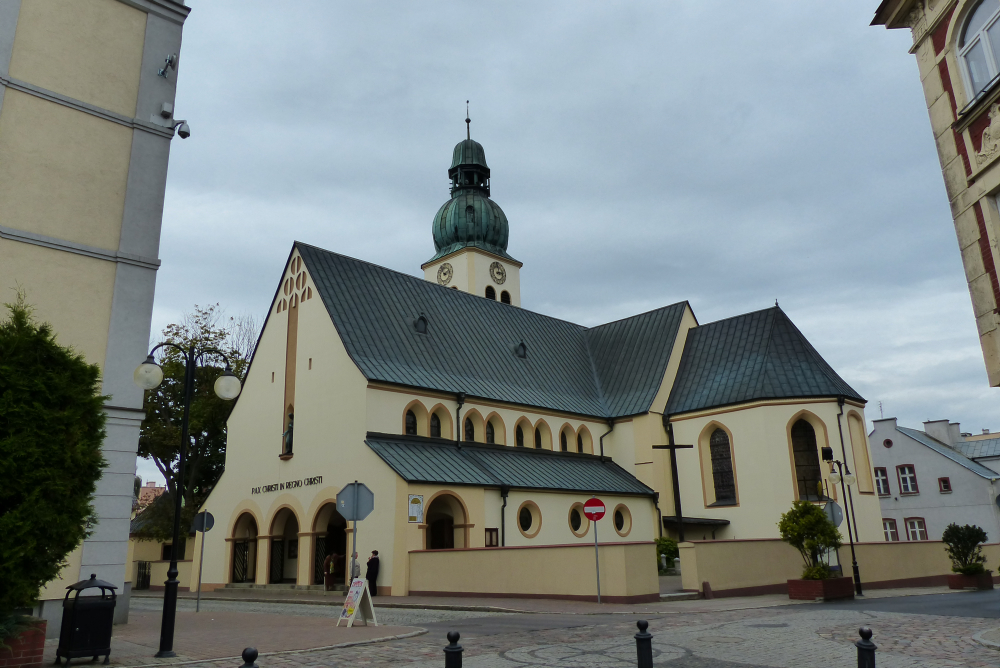
St. Jacob’s Church in Schlochau, the administrative centre to which the village Elsenau belonged.


Friedrich Wilhelm Otto Klopp (1886 – 1937)

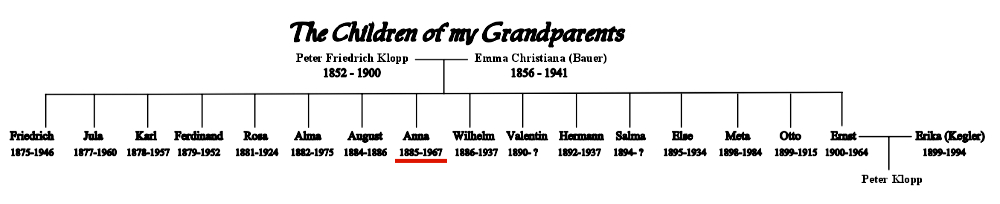
Chart I Peter and Emma Klopp Tree simple

The stories of the first eight children of my paternal grandparents have been told in earlier posts last year. Here are the links to the first half of Friedrich and Emma Klopp’s sons and daughters: Friedrich, Juliane, Karl, Ferdinand, Rosa, Alma, August, and Anna.

Friedrich Wilhelm Otto Klopp (1886 – 1937)

The Innkeeper of the “Brown Elk”

As the ninth child Wilhelm was born on 8 December 1886 in Jersleben. Due to the sparse memory retention of the descendants, Eberhard Klopp, the author of the Klopp Family Chronicles, had not been able to dig up any information on Wilhelm all the way up to 1919, when after the lost WW1 the latter returned from the eastern German provinces (given to Poland by the provisions of the Treaty of Versailles) to Elbeu. At the Magdeburg Street of Elbeu, Wilhelm bought a house, presumably with agricultural land attached to it. With his brother Ferdinand he seemed to have come to some sort of financial arrangement involving a considerable sum of money paid out by the state to compensate for lost property in the eastern provinces.

From Wilhelm’s first marriage with Maria Söchting come two sons: Wilhelm and Gerhard. Their mother died in 1912. In 1912 Wilhelm married his second wife Louise (née Grünwald). From this marriage originate four children: Viktoria (1914), Fritz (1916), Heinz (1919) and Günther (1924). It is safe to assume that 28-year old Wilhelm became a soldier in 1914. When he returned from the war with his brothers, he procured for his brother Ferdinand Klopp (1879 – 1952) the lease of the Elbeu Inn “Brown Elk”. Over financial disagreements in August 1922, the two had in the barroom a fight, during which Ferdinand shot his brother. Wilhelm was wounded at his left shoulder. Louise, who was standing behind him, was grazed by the bullet. Mother-in-law Emma Klopp must have heard about this incidence either at her daughter Rosa Diesing’s (1881 -1924) place at Schöneberg or experienced it first hand right on location in Elbeu. At any rate, it had been passed down through the grapevine that Emma had used the highly defamatory term “Satan’s wife” in describing her daughter-in-law. Mother Emma condemned Wilhelm’s excessive alcohol consumption, which she blamed on his wife’s bad influence. Louise died in 1924, presumably on account of the injury she suffered from the grazing bullet. Wilhelm was reconciled with his brother Ferdinand – at least on the surface, took over the “Brown Elk”, and remained innkeeper for the rest of his days.

Around 1925 he married for the third time: Ruth (née Grünwald), the sister of his second wife. Six underage children needed to be cared for. From this marriage descended two more sons: Hans-Georg and Hans-Joachim, both were born in Elbeu. On 7 August 1937, Wilhelm passed away at the age of only 51 years. At the end of his short life, he had apparently become his own best customer of the local watering hole.

Baroness Anna von Waldenfels (née Klopp) – Part XX (Final Episode)

Aunt Anna’s Neglected Gravesite

At the end of the 1950s, after giving up the house in Söcking, Bavaria, Anna von Waldenfels moved to Freiburg/Breisgau close to her sister Meta Mülbert, who lived at Maria-Theresiastraße 4. Her husband Vincenz had passed away in 1958. Anna at first rented an apartment at number 7 across the street.

In the summer of 1959, while on a bike tour through Germany with my friend Rainer Schüler, I visited both aunts, who add moved together at No. 4. I remember Aunt Anna quite well, a feisty old lady filled with an unbroken spirit and a fervour, which revealed strong nationalistic overtones. She spoke to us young men of sacrifices to be rendered in blood and honour to put Germany back on her feet again. Obviously, her heart and mind were still dreaming of an era that no longer existed. These bizarre ideas of a past imperialistic Nazi-Germany, having brought nothing but extreme suffering and total destruction to many nations under its control, were completely foreign to us growing up in democratic West Germany.

At about the same year she met for the last time her granddaughter, the then 23-year old Carola von Waldenfels (born in 1932 at Lagowitz). She had most likely made a farewell visit and proceeded from there to travel as a photographer to California, USA. The two widows maintained contact with Ernst Klopp (my father), who had remarried and lived with his new wife Erna Klopp (née Krämer) in Michelbach near Schotten.

Once a resolute, energetic lady, always leaving the impression of a governess, now suffered from bladder incontinence, which considerably restricted her mobility and physical activities. At 82, she died of cancer on 3 November 1969 in Freiburg/Breisgau. The two families Georg von Waldenfels from Haren/Ems and Meta Mülbert provided on 7 November 1967 a final resting place for Anna on her beloved husband’s side in the Starnberg forest cemetery. Her son had arranged the transfer of his mother’s remains to Söcking, but he did not deem it necessary to take care of the completion by adding a cross for his mother. Fate’s irony is that her gravesite remained nameless just as the one of her eldest brother Friedrich Klopp (1875 – 1946)  in Gardelegen in the former German Democratic Republic. “Sic transit gloria mundi.”

Baroness Anna von Waldenfels (née Klopp) – Part XIX

New Beginning for Anna and Ludwig von Waldenfels

From Gauting as their starting point, Anna and Ludwig von Waldenfels, both already at retirement age, began once again to build up a foundation for their livelihood. At the end of 1947, they leased one half of the former Wehrmacht training camp Pentenried, which had become the possession of the State of Bavaria. They purchased the living and material inventory for the property. The couple kept about 15 to 20 cows, 2 or 3 teams of horses, 2 German shepherds; they had access and use of a tractor and employed three coachmen, also Walter Schirrmeister, their former estate manager of Panwitz, as well as a certain Ulrich Kennemann, and between February 1948 and February 1949 their nephew Karl Klopp (1929 – 2019) [Peter’s brother]. At the beginning of 1950, the couple von Waldenfels gave up the lease again and went into retirement. Ludwig was 75, and Anna was 65 years old. Today there remains very little of the Pentenried estate, a few outbuildings, and a hall with pigs’ troughs dating back to the army years.

Anna and Ludwig acquired subsequently the house at Hauptstraße 1 in Söcking near Starnberg and there they spent their golden years. On 17 March 1954, Ludwig von Waldenfels died at the age of 79. His wife had him buried in his Bavarian officer’s uniform. In September 1990, the author of the Klopp Chronicles, which I am translating into English, Eberhard Klopp, visited the neglected gravesite and found Ludwig’s wooden cross, which while still showing name and vital dates of the deceased von Waldenfels had due to weathering greatly deteriorated over the past four decades. Ludwig’s unserviced gravesite No. 84/85 is located at the forest cemetery of Söcking. One searches in vain for the mention of Anna von Waldenfels (née Klopp), who has also been buried here in 1967.

Baroness Anna von Waldenfels (née Klopp) – Part XVIII

Escape from the Horrors of War

On the morning of 29 January 1945 Ludwig von Waldenfels was totally against leaving Panwitz. Being a former WW1 officer of the Bavarian army, he planned to hide in the forests of Panwitz and armed with a pistol intended to sacrifice his life if necessary. His wife Anna knew how to curtail such dramatic, but senseless undertaking and with gentle force manoeuvred him into the waiting car.

The population of East Brandenburg (to which Panwitz belonged) experienced all the brutalities of the Russian hordes. The people percentage-wise paid the highest blood tribute rendered in 1945 at their expulsion from the German eastern provinces. In Rogsen alone, a village of 761 inhabitants 10 km south of Panwitz, a dozen men were shot and on the night of 29 January 1945 forty brutally raped women and girls committed suicide. Already in the afternoon of the same day, Soviet artillery shot from Heidemühl and Kupfermühle at a distance of 5km into Meseritz.

For Ludwig and Anna, in view of the military situation, there was only one escape route. It led over icy and snowed-in country lanes via Lagowitz and Brätz to the main connecting road to Schwiebus. With little luggage and the few things on their body, the couple reached after one week of travel Gauting near Munich. There they found first reception at their brother/brother-in-law Ernst von Waldenfels (1877 – 1955). He was a bank chief inspector and lived at 10 Hindenburg Street. He was in charge of money matters before the chaotic times set in. Here they experienced the arrival of the Americans and thus survived the war’s end.

Within just a few hours a life’s work and dream had sunk into oblivion. Only the nostalgic feelings of 18 years of Panwitz and Lagowitz remained, which nobody of the former residence would ever see again. Alive remains the memory of the shadowy gravesite of grandmother Emma Klopp (née Bauer) in the park of the Panwitz estate. Her final resting place was supposed to have become the family gravesite of the Klopp and von Waldenfels clans. The fury of war and the greatest mass expulsion in history had swept all this away.