Chapter 28 of the Peter and Gertrud Klopp Story – Part I


 Cross Country Canada


My dream is for people around the world to look up and to see Canada like a little jewel sitting at the top of the continent.

Tommy Douglas – 7th Premier of Saskatchewan

Late Start in Montreal

It was almost noon when after hours of waiting we finally got our turn to go through Canada customs. The officials were friendly and efficient. The long delay was due primarily to the large number of passengers whose innumerable suitcases, boxes and crates that needed to be checked. Afterwards we locked away our stuff in rental lockers and took a taxi to the City of Montreal. Our sister had already said good-bye to us, as she was going to board the next available train to Calgary. So Adolf and I were on our own in search of a car dealer. My brother needed a vehicle that would carry us across the North American continent.
160

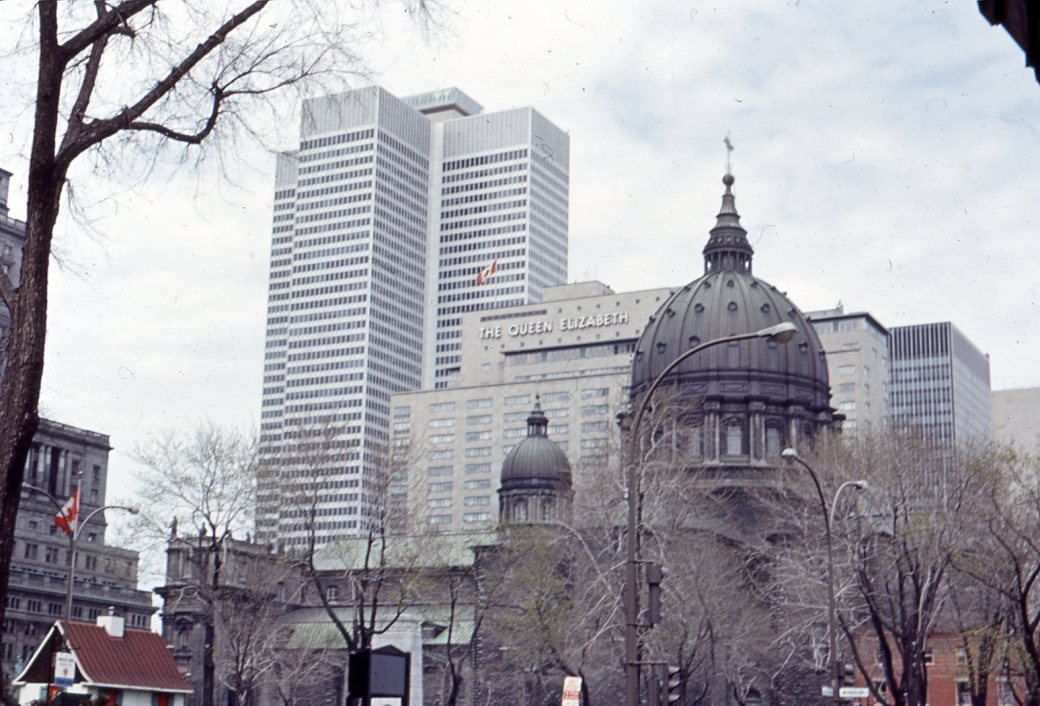
Queen Elizabeth Hotel at Montreal – May 1965

Near the city center we got off the taxi and decided to make use of the much cheaper transit system or cheaper and healthier yet to just walk. Now I had a chance to take a few photos of the new office buildings that were popping up everywhere like mushrooms after a heavy rain. I found that the Elisabeth Hotel towering over a much smaller church building was especially interesting, as the structures symbolized the transformation of Quebec from a church dominated province to a secular society. I was getting a little worried, while Adolf dragged me from one car dealer to another. He had not yet found, what he had in mind and was already talking about taking the train as well.
161

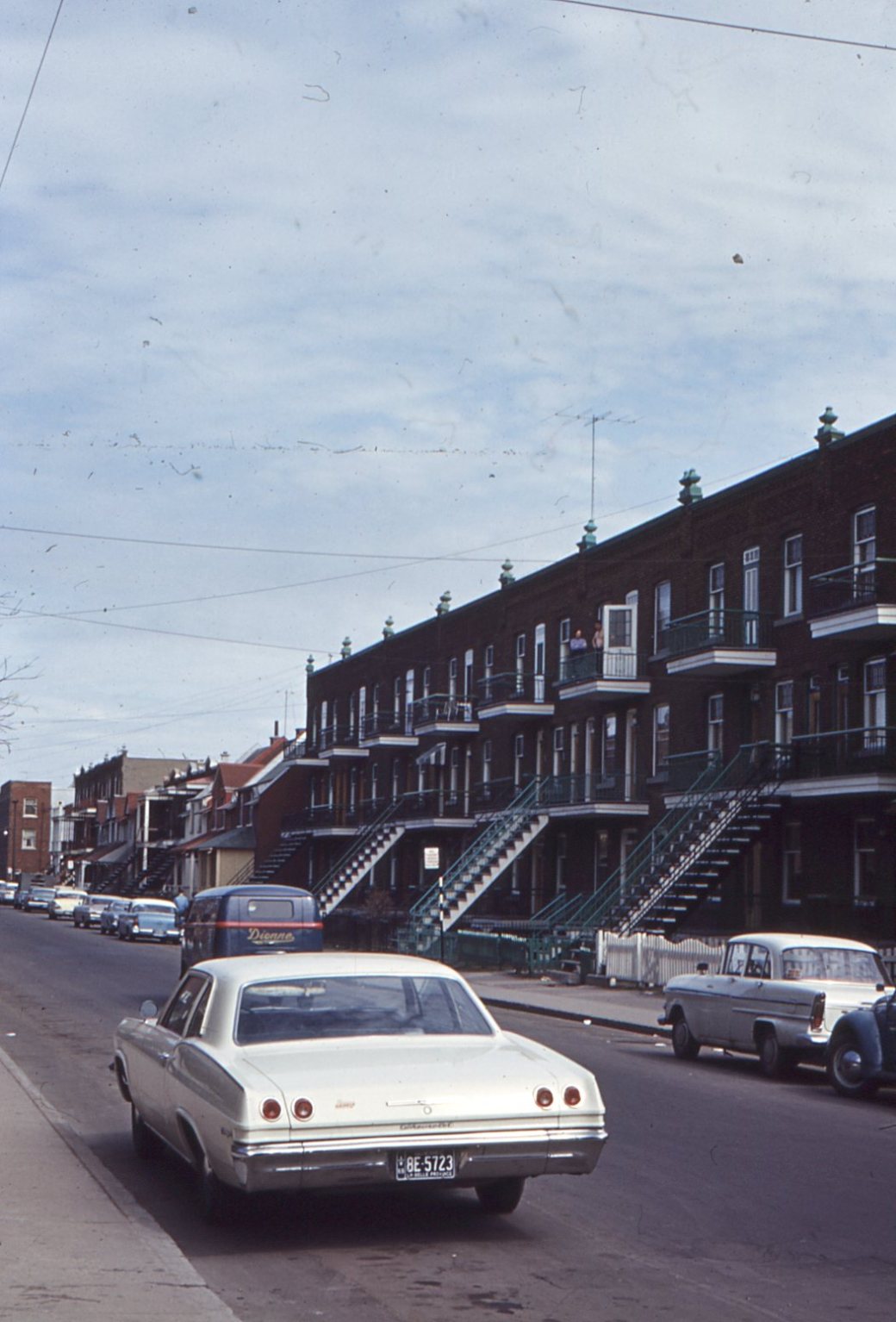
Typical Outside Staircases in a Residential Area

As we were roaming through the streets of a residential area searching for another car dealership, I noticed the peculiar construction of most of the houses. In order to gain more living space, they had no interior staircases but had metal stairs leading up to the entrance doors at the second and even third floor. I was thinking of the densely populated cities back in Germany, where floor space for renters was at a premium. How much more apartment space could be generated with this typical French-Canadian building concept.
170

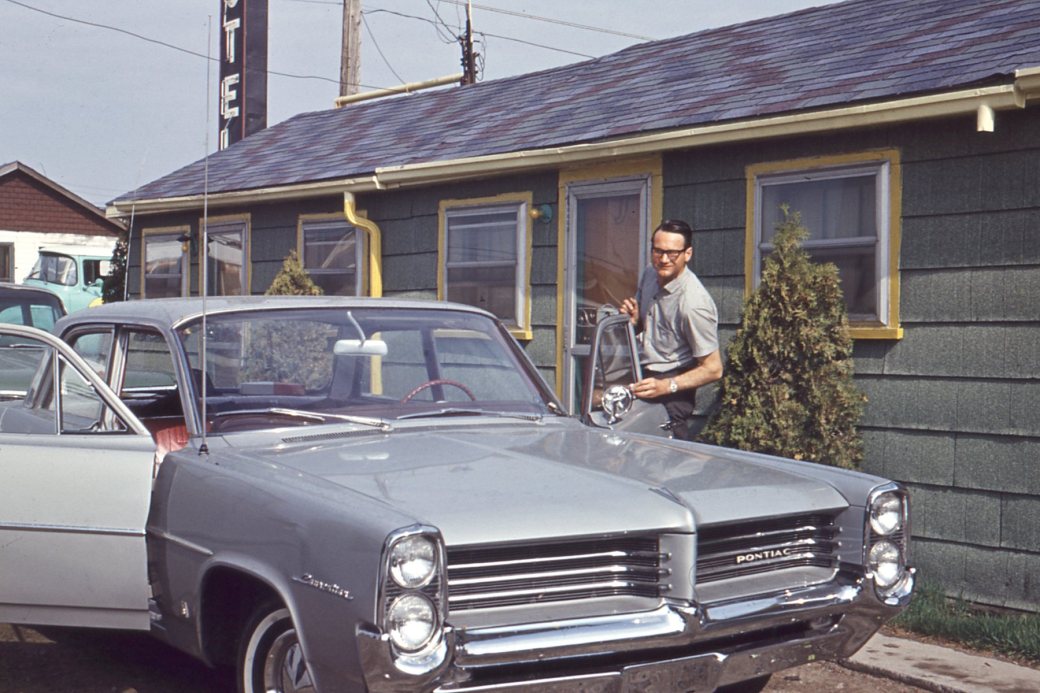
Proud Owner Adolf of Used Pontiac

Finally Adolf had found a good, used 8-cylinder Pontiac at an equally good price of $2,500. The manager, apparently very pleased with my courageous attempt to communicate in French with him, made an arrangement with Adolf that quickly consolidated the sale. It happened exactly the way my brother had once explained to me on our summer wine tour to Trier. He paid the full amount in cash. In return M. Gagé allowed him to travel with the dealer’s license plates to Alberta to save him the high provincial sales tax. Those were the days when business transactions were concluded with a handshake based on mutual trust. M. Gagé expected Adolf to mail back the plates to Montreal.

I had never sat in the such comfort of a huge and powerful American car before. It was even equipped with automatic transmission quite rare in Germany during the mid 60’s. I really enjoyed the ride back to the storage facilities, where we picked up our suitcases and wooden crates with all our belongings. It was already getting late in the afternoon, when our cross-country Canada trip began.
Chapter 27 of the Peter and Gertrud Klopp Story – Part VII

First Impressions

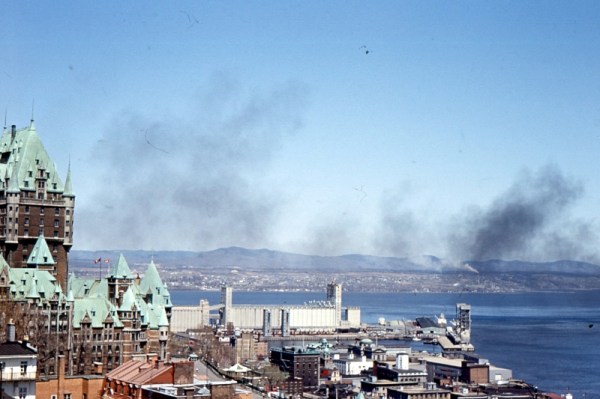
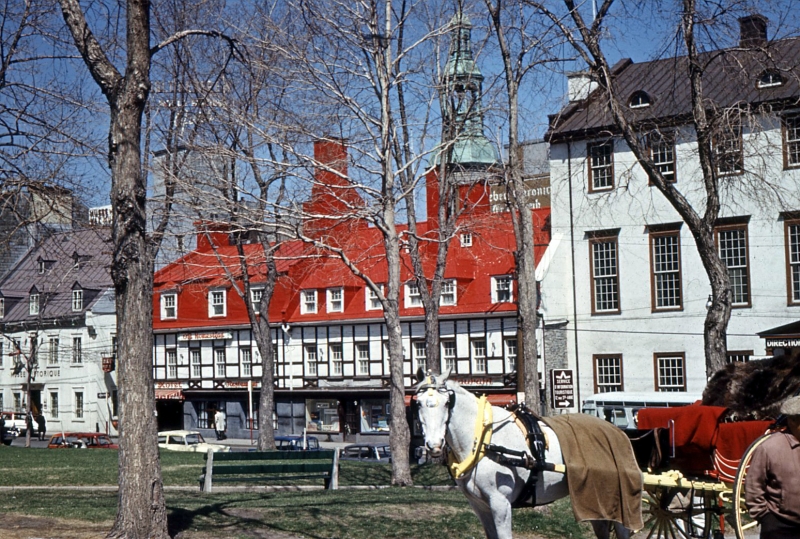
Picturesque Quebec City – May 1965

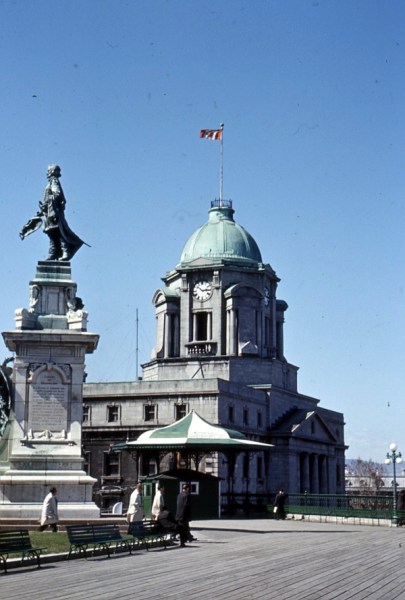
Now we were at liberty to visit Quebec City. Adolf, who as Canadian citizen did not have to go through the immigration procedure, joined us to explore the only walled city in all of North America. We took a taxi to the city centre. We traveled past wooden houses painted in bright, sometimes garish-looking colors offering a bewildering sight for the new immigrants from the Old Country. When my sister and I noticed the ugly power poles often leaning at a precarious angle in the back alleys with wires seemingly helter-skelter stretching out in all directions, we broke out in irreverent fits of laughter. Adolf was quite annoyed, as we had touched a sensitive nerve. After all it was his home country that we were insulting with our disrespectful conduct.

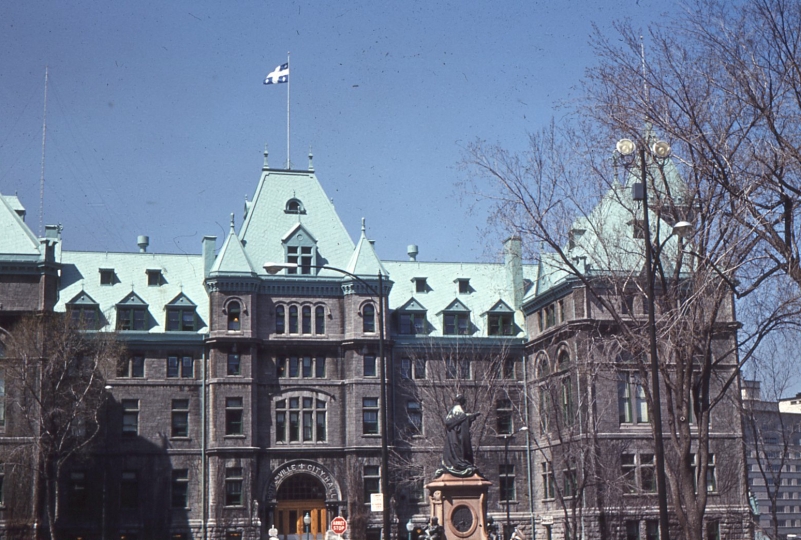
City Hall Quebec City

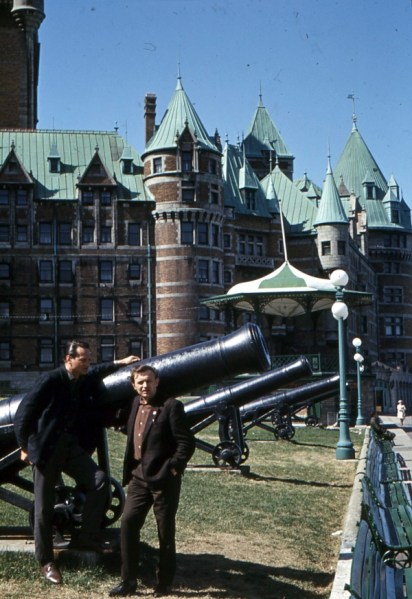
We got out of the taxi at the statue of Samuel de Champlain, the French explorer, founder and first governor of Quebec. There Adolf and I decided to separate from Erika and her companion Beate, as they were more interested in shopping. We two brothers, however, wanted to have a good look at the ramparts and fortifications of this historically rich city. So we took a tour of the classical 17th century defense systems with its mighty walls, which unfortunately in the end did not prevent the British redcoats from taking over all the French colonial possessions in North America.

Samuel Champlain – French Explorer and First Governor of Quebec

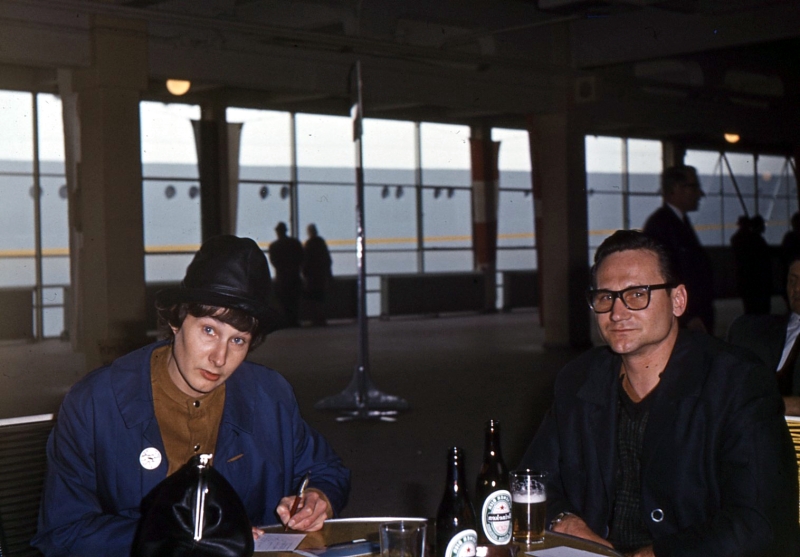
When hunger pangs reminded us that it was time to have lunch, we dropped in at one of the many restaurants catering to the tourists that were flocking to Quebec City by the tens of thousands every year. We ordered steaks, large enough to fill out the entire plate and at $2.00 a bargain even at the then current dismal German Canadian currency exchange rate of four marks to one dollar. I had trouble communicating with the waiter with my Parisian school French. So I could not figure out, why they could not serve us any beer, which would have complemented nicely the fabulous meat dish. To quench our thirst, it felt odd that we had to move on in search of a beer parlor. To call it a pub would have definitely been a misnomer. The place was filled with dense cigarette smoke wafting above oversized round tables, the jabbering of hundreds of people echoing from the bare walls gave more the impression of a large waiting hall at a German railroad station than that of a cozy inn, like the one where Biene and I had spent a romantic afternoon on Mount Vogelsberg. These beer parlors had been built based on the mistaken belief that their grotesque ugliness would deter people from gathering and drinking beer. Great was my amazement to watch the clients order half a dozen glasses of beer all at once, not caring about their drink getting stale. Some even sprinkled salt on their brew or ate heavily salted peanuts to increase their thirst for more. Adolf was quite used to this custom, which seemed to me a relic of the past. It was a bit of a culture shock to me and I was happy when we returned to the Ryndam, where we enjoyed the sumptuous farewell dinner that the cooks had prepared for us, truly a culinary experience par excellence.

Cannons and Fortifications – My Brother Adolf on the Left

There were many last times on this floating hotel and entertainment centre that had safely carried us across the Atlantic, the last dinner with our table companions, the last game of chess with a Yugoslav doctor, the last card game of Mau Mau, the last visit to the bar, the last time I climbed up to my upper bunk, a last glance from above on Biene’s portrait on the cabin’s tiny desk, the last time the little room bell tinkled and called us for the last breakfast on board of the Ryndam. My heart filled with a sense of nostalgia and bittersweet feelings of regret. I had to leave this wonderful ship with her dedicated staff behind. I felt sad that I had not been able to share all these memorable experiences of the eight days on board with Biene.


Chapter 27 of the Peter and Gertrud Klopp Story – Part VI

         Arriving in Canada in our Sleep

Iceberg – Photo Credit: icebergwatereurope.com

In the meantime on board of the Ryndam we could tell that we were approaching Canada’s territorial waters. The storm that had been stirring up the ocean moved on eastward and made room for sunny sky and calm conditions. The temperature plunged to 2° C. On deck we had to wrap ourselves in woolen blankets to enjoy a short sunbathing session in the cold air. The Ryndam seemed to have reduced her speed although there were hardly any waves. Suddenly we heard a message over the intercom speakers to alert us to an iceberg that was floating by less than one km to the right. As we were coming closer, we marvelled at the beauty of the mountainous object that glittered in the bright sunshine like a diamond of gigantic size. Knowing that ninety percent of an iceberg is submerged and invisibly spreads into all directions, we now understood why the captain had decided on a slower pace. Fifty-five years ago about the same time and in the same waters a single iceberg had sent the ‘unsinkable’ Titanic in less than three hours to the bottom of the sea.

The First Seagulls

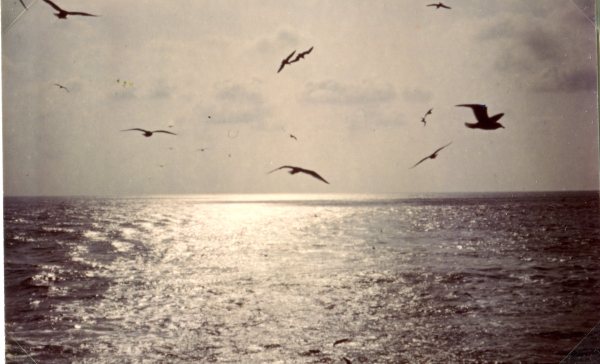
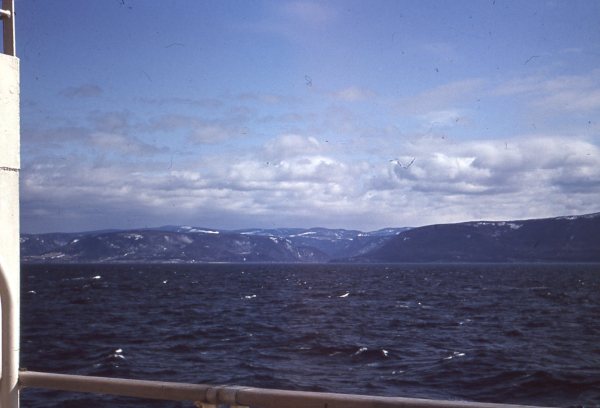
The next morning three fishing vessels were slowly passing by on starboard, a sure sign that we were not far from land. Seagulls suddenly appeared as if from nowhere and trailed our ship at the stern expecting to find scraps of food that someone might have thrown overboard. Then the first offshore islands emerged from the hazy horizon. They looked desolate and uninhabited. They were all covered in snow. The icebergs, the snow on the islands and the chill in the air made us feel that spring had not yet come in this part of Canada.

The First Off-Shore Islands

My sister suffered from a sore throat and decided not to accompany us in the car to travel across the continent, but to take the train instead. In the evening Adolf and I went into the bar that was more crowded than usual to say good-bye to our friends and table companions. At three in the morning, I am not sure after how many shots of whiskey and how many glasses of beer, we were finally done with saying our good-byes. After getting only a few winks of sleep, we awoke this time not by the familiar tinkling of the breakfast bell, but by an eerie quietness. Still groggy from all the partying the night before we however managed to jump into our clothes at lightning speed and rushed on board. We were anxious to find out what kind of calamity the Ryndam had gotten itself into. Perhaps the engines had broken down. Or did those dreadful icebergs surround us? What a pleasant surprise was unfolding before our eyes! The Ryndam peacefully lay securely tied to the pier posts at the Quebec Harbor. What a shame! While sleeping we had arrived in Canada.

Quebec Harbor – May 1965

After breakfast Erika and I with all the other immigrants walked over the gangway past large cargo and shipping facilities to the federal office building. There a friendly bilingual customs and immigration official greeted us and carefully examined our passports and the flimsy unassuming piece of paper we had received from the Canadian embassy in Cologne. The terrorists of today would be laughing at the simple document of fifty years ago. A photocopy on ordinary paper would have sufficed to let them slip by our border checkpoints. While we were waiting to get our documents stamped and approved, a charitable organization offered us our first cup of coffee on Canadian soil. It turned out to be a typical brew as offered then in most American coffee shops, so weak and bland you could be drinking it all day without any adverse effect, as some people were in the habit of doing. A Catholic priest asked us about our plans and provided us with useful information on Alberta, British Columbia and the other provinces of Canada. Then quite relieved that we had successfully jumped the first hurdle and had officially become a member of the Canadian society with all its rights and responsibilities except for the right to vote, we returned to our ship to reconnect with Adolf. The French-Canadian officials at the pier smiled, when I played the German folk song ‘Muss i denn, muss i denn zum Städtele hinaus’ on the harmonica. Elvis Presley sang this lovely tune while with the American Armed Forces in Germany. Wooden Heart was its English title. The sentimental Germans who themselves were beginning to forget and to neglect their very own folk songs liked the Elvis version so much that the song maintained the number one position on the German record charts for several weeks in a row.

Chapter 27 of the Peter and Gertrud Klopp Story – Part IV

Gale Force 7 in the North Atlantic

130

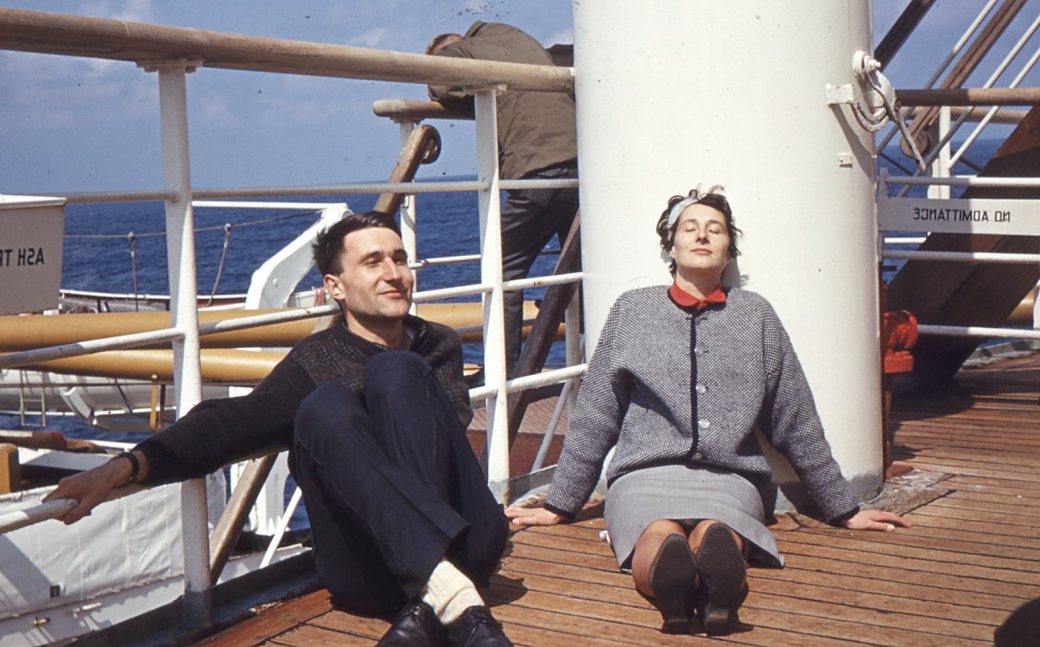
The calm sea and the sunshine are deceiving (my sister and I relaxing on deck of the Ryndam)

After a few days of calm and sunny weather a violent storm broke out, which put an end to the leisurely lounging on deck and made most passengers withdraw into their cabins. I entered into my travelogue:

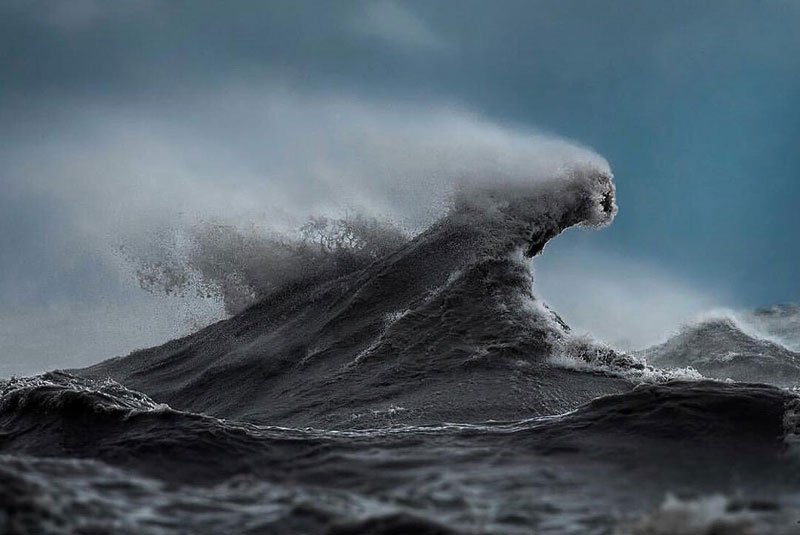
“ Today is an especially stormy day. Most passengers don’t dare to come on deck. They play cards instead or while away the long hours in some other way. But outside awaits the intrepid traveler an indescribable experience. I believe, if you fellow travelers were not afraid of becoming seasick, you would, like my brother and I, be eager to see what a storm Poseidon can whip up for you. At the stern of the ship we view how one of the most awesome spectacles are playing out in front of our eyes. Presently we have wind force 7 on the Beaufort scale, and the waves are piling up high threatening to engulf the Ryndam. In the dark all this takes on an all the more eerie appearance. The waves are bedecked with white foam. And it seethes and hisses like in a witch’s cauldron. When the crests reach a certain height, they seem to lose by the sheer wind force their support and dissolve into sheets of spray, which drift like blowing snow up against us. Feeling the mighty wind and tasting salt in our mouth, we are invigorated in body and soul. A great sea voyage turns into an inner experience.”

Storm zaujimavysvet.sk

Giant Wave – Photo Credit: zaujimavysvet.sk

World literature is replete with fascinating stories dealing with violent storms at sea. Confronted with the raw unbridled forces of Mother Nature man seems so small, so weak and insignificant. In the early days of exploration sailing ships were being tossed about like little nutshells by mountainous waves and hurricane-force strong winds. In ballads, short stories and novels the authors extol the indomitable human spirit that pushed man beyond what was thought to be possible. Standing with Adolf at the stern, hanging onto the safety ropes, and leaning against the wind that threatened to knock us down, we caught a glimpse of what it must have been like to be a sailor on a small sailing ship. On the other hand the Ryndam passengers hardly noticed the storm that was howling on the outside of the steel hull. The 200 m long vessel pitched and rolled just a little. None of the entertainment programs were cancelled. Most passengers continued to play cards, watch movies, danced, or sipped whiskey in the bar. They all missed out on the adventure of a lifetime.

          It was Sunday. I attended the church service provided by a Dutch minister in a large stateroom that served as church on this particular day. It was only a few months ago that I had bought a New Testament book in Latin with the twofold purpose of reading its message and keeping my ancient language skills alive. For similar reasons I felt attracted to the religious service. I wanted to hear God’s word and at the same time reinforce my English that had been getting rusty from lack of practice, since I graduated form high school. Was I ever into a treat on both counts! The minister spoke with a strong Dutch accent but very clearly. He explained how the Jews were devastated, after the Romans had utterly destroyed their temple in 70 AD. They believed that God had lost his dwelling place on earth and therefore could no longer live among them. The pastor emphasized that God had never lived in a temple. No man-made structure would be adequate to contain the glory of God. Instead he lives in the hearts of those who are seeking His presence and accept His Son Jesus as their personal savior. Hearing these words it felt like water was being poured on the parched soil of my impoverished soul and the seed that was once planted had just received the spiritual nourishment to grow and develop in the New World that I was about to enter.


Chapter 27 of the Peter and Gertrud Klopp Story – Part III

Two Letters and a Poem

129

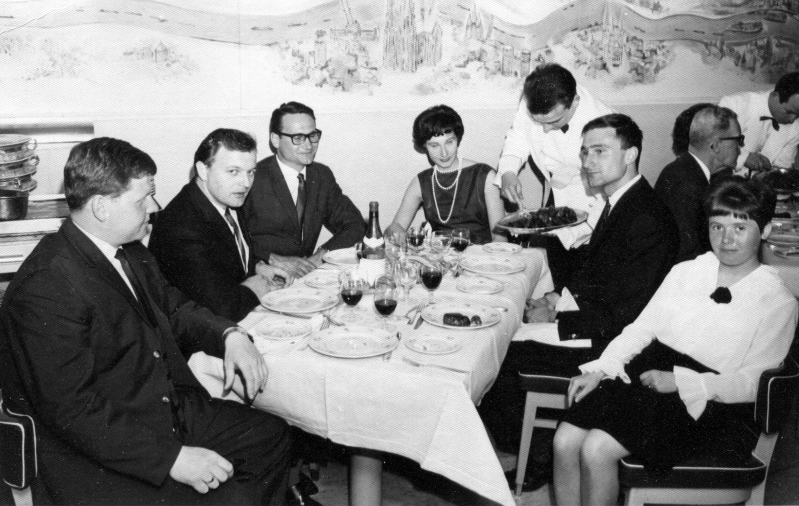
Meal Time on the Ryndam – Adolf, Eka and Peter at the Back

April 28th, 1965 Le Havre

           My dear Biene,

           We just left Le Havre and are heading towards England. Thousands of impressions hit me all at once. I feel as if I had already been on board  for a very long time. It is wonderful. Yet, I am restless, because you cannot experience all this with me. I would like describe to you how a typical day is panning out for us travelers. The tinkling of bells wakes us up in the morning. It also reminds us in this gentle way to show up for breakfast soon. Then I climb down the ladder. For I sleep in the upper bunk, while Adolf sleeps below. We can shower or take a bath for as long as we like.  Then we march off to the dining room. Never before have I seen a greater variety of food. When we return to our cabin, the steward has already made our beds. The cabin is very small, and if one had to share it with a stranger, it definitely would  not be a pleasant experience. We all have our own peculiar habits, which someone else would have to get used to.

124

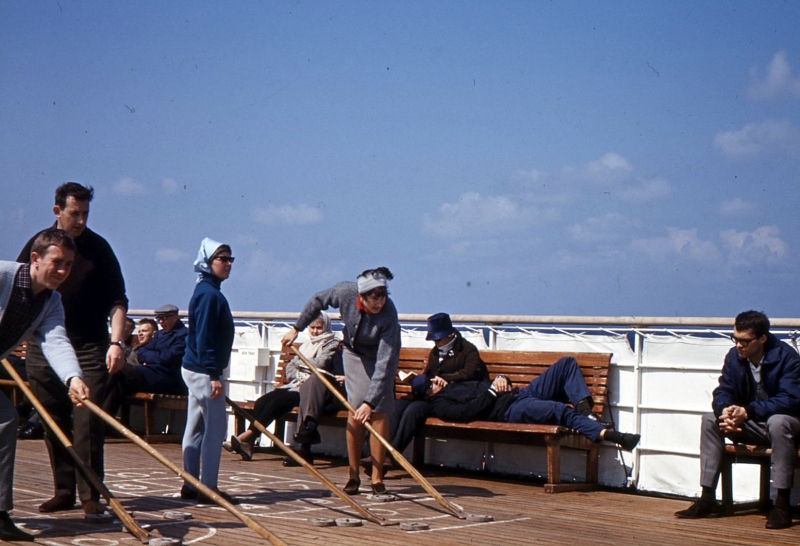
Shuffle Board on the Sun Bathed Deck

          The entertainment program is so rich and varied that one does not know which item to choose first. You can watch English movies, go to the library, play all kinds of games. The big hit here is shuffleboard. After lunch you can attend a concert, go dancing in the evening or have a beer in the bar. And now I experience all this without you! That makes me a little sad and pensive. When I turn melancholic, I gladly withdraw from all these fun activities and write in my travelogue.

          Oh this heavenly weather! People are presently sun bathing and the sea is not rough, not even a trace of a swell. I want to experience a real storm. But my brother says that it will come soon enough, if I am really that keen on getting seasick.

134

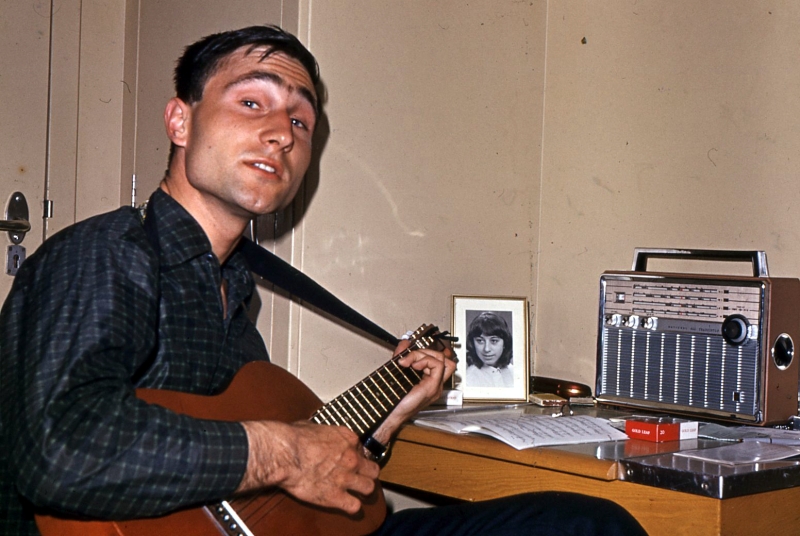
Peter Strumming on his Guitar

          Your picture stands on my little desk. When at night I look down to you from my bed, I feel infinitely happy. I wished I could do the voyage all over again with you one day, when I have enough money to pick you up in Germany.

In a few days you will begin your studies, whereas I while away the time here onboard doing nothing. Tackle your academic work as if you had never applied for the stewardess program and as if you pursued a life’s career. You should know that you can help me also as a trained teacher, perhaps later assist me for a little while, in case my own studies should be dragging on.

          What would I give to be able to kiss you now! Until next time greetings to you and your parents!

          Your Peter

           On the same day Biene also wrote me a letter, which of course I was unable to read, until I arrived at my brother’s place in Calgary. I only included excerpts here to avoid breaking the chronological order of the family history.

April 28th, 1965 Velbert

           My dear Peter,

           Again you have made me cry. But don’t you worry, Peter. I did not have to cry out of sorrow (it was only lingering at the back of my mind), but from an overwhelming feeling of joy, happiness and unfathomable love. I listened to your guitar music  and to your voice on the record you had sent me. I could not grasp it! I just sat there, and tears were streaming down my cheeks. I once read that only a few people really understand how to say good-bye, and you knew how, Peter. Never will I forget this!

Dear Peter, now you have been on board for one day and with every minute you are getting closer to your destination. And when you read this letter, the long sea voyage and the road trip across Canada will already be behind you. Tell me Peter, isn’t it an incomprehensible feeling to be on the high seas and to experience the vastness and beauty of the ocean? When I experienced the sea for the first time, I was deeply moved. It was in the year we had met. My family and I were spending our vacation on the island of Corsica. Toward evening we had landed on the island. It was already night, when we reached our vacation village at the sea after an adventurous trip through the mountains. Completely exhausted we immediately fell into a deep sleep, from which I awoke unusually early in the morning. In eager anticipation to finally cast my eyes onto the sea, I quietly sneaked out, because my brother Walter was still fast asleep. Outside the air was cool and still. The sun had just risen above the horizon. The beach spread before me still completely untouched. I went a few steps down the slope and then I took in the full view of the sea! Somehow I was like in trance and could not move another step forward. Although the view was overwhelmingly beautiful, the infinite vastness also instilled in me a little bit of fear. I sat down very quietly in the sand and remained there, until the first beach guests, who frolicked in the water, broke the charm that had kept me spellbound. You alone, dear Peter, would not have dispelled the magic atmosphere.

          Inspired by her memories Biene wrote the following poem and entered it into the Book of Dreams.

The Sea

 I will forever love the sea,

Even when the gulls scream

Above thousands of storm-tossed waves.

I love the play of colors in the surf,

The billowing clouds, the sun, the warm sand, …

Oh Peter!

How much would I like to sit with you

On a lonely beach, at the sea

With its music

Rather than being

Separated from you

So infinitely far away

On the other side of the ocean.

On board of the Ryndam I also romanticized the sea as if in response to her letter that I had not even read yet.

Chapter 27 of the Peter and Gertrud Klopp Story – Part II

Farewell to Germany


54

Papa Panknin with Daughter Biene and Son Walter 1965

Career planning for his daughter was on Papa Panknin’s mind, when he asked Biene to have a serious talk with him. He was not fond of seeing her becoming a teacher. He felt that it would be too stressful for her.  Sitting endless hours in lecture rooms, bending over and studying textbooks would lead to even getting more stressed out, when after her university training Biene would enter again the educational treadmill. In his opinion the best thing for her to do would be to get a job and earn money as quickly as possible. Being a little tightfisted and in control of the family purse strings, he may also have been thinking of the expenses, which a prolonged period of university training for his daughter would incur. In contrast to North American practice German law required that parents were at least in part financially responsible for their children’s post-secondary education. In addition, there was probably on his mind his son Walter, Biene’s twin brother, who was embarking on a six-year program at the Institute of Engineering at the University of Hanover. Biene, with her eyes firmly set on getting married, agreed to a compromise that her father had proposed. She would start immediately her teacher’s training at the university of Wuppertal, but at the same time apply at the German airline Lufthansa to enter a training program to become a stewardess at the age of twenty-one. In my eyes this was a good plan. I really wanted her to become a teacher. So I took comfort in the fact that thousands of young girls were dreaming about becoming a stewardess and only a few had their applications accepted every year. Therefore, I had no difficulty of sending my wholehearted approval and let Biene romanticize about working for Lufthansa and flying to Calgary, where she could visit me on her stopover flights to Western Canada.

107

Adolf and Eka in the Waiting Room at the Rotterdam Terminal Station

          At last, the day arrived when Adolf, Eka and I were on our way to Rotterdam, where we would board the passenger ship Ryndam that was to carry us to Canada. Mother woke us at 3 a.m. to make sure we would have ample time to enjoy a solid breakfast before we parted. One hour later we sat at the breakfast table. Aunt Mieze read from her devotional booklet and included us in her morning prayers, with which she had been greeting the day for as long as I can remember. The outside world was still shrouded in darkness, which put us all into a somber mood. The thought that we would not be seeing Mother and all the other dear relatives for a very long time was weighing heavily on our mind. Later on, we were occupied loading Jürgen’s car with our possessions, five suitcases, my tape recorder, guitar and a gigantic duffel bag with personal belongings too valuable to be trusted to the wooden crates. The heavy work made us forget a little the pain of leaving home. We even managed to put on a cheerful face, when we said our good-byes adding comforting words like ‘We’ll meet again in beautiful Canada!’

108

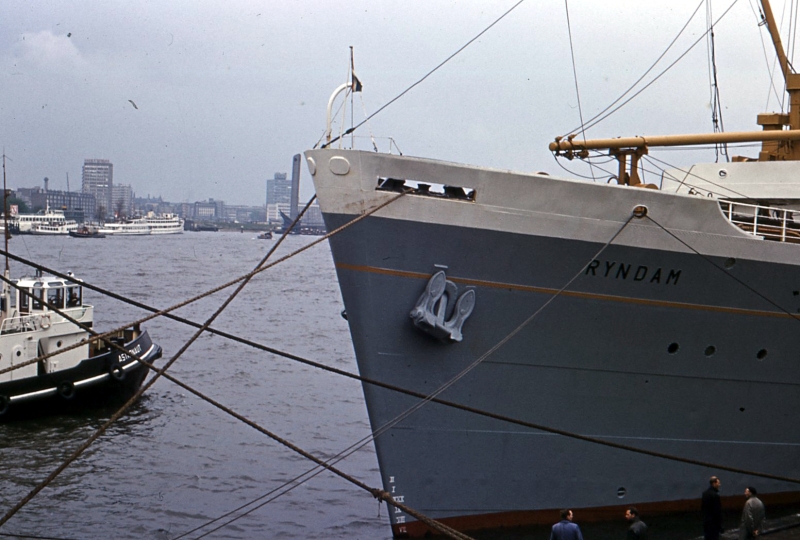
The Ryndam that brought us to Canada – Anchored at Rotterdam Harbour

          The Trans European Express train (TEE) was racing at an incredible speed towards the Dutch border stopping only at major urban centres. At Wesel, my previous hometown, which had grown into a city of almost 50,000, the train did not stop either. Shortly after noon we arrived in Rotterdam, where a taxi took us to the harbour, which was and still is one of the biggest and busiest ports in the world. There our ship was waiting for her passengers to come on board. In the harbour inn Adolf and I sat and drank beer, while Eka had a coffee to perk up with after such a long train ride. We were quite annoyed at the delay of our departure caused by the much larger sister vessel of the Holland-America line bound for New York, which happened to leave port on the same day. Finally we were allowed to embark. Before heading out into the Atlantic Ocean, the Ryndam, for the next ten days our home, hotel, restaurant, and entertainment centre, had to make two ports of call, Le Havre and Southampton. From England I mailed Biene my first letter written at sea.