Chapter XIV of the P. and G. Klopp Story – Part 5

School Visit of the Berlin Wall (1961)
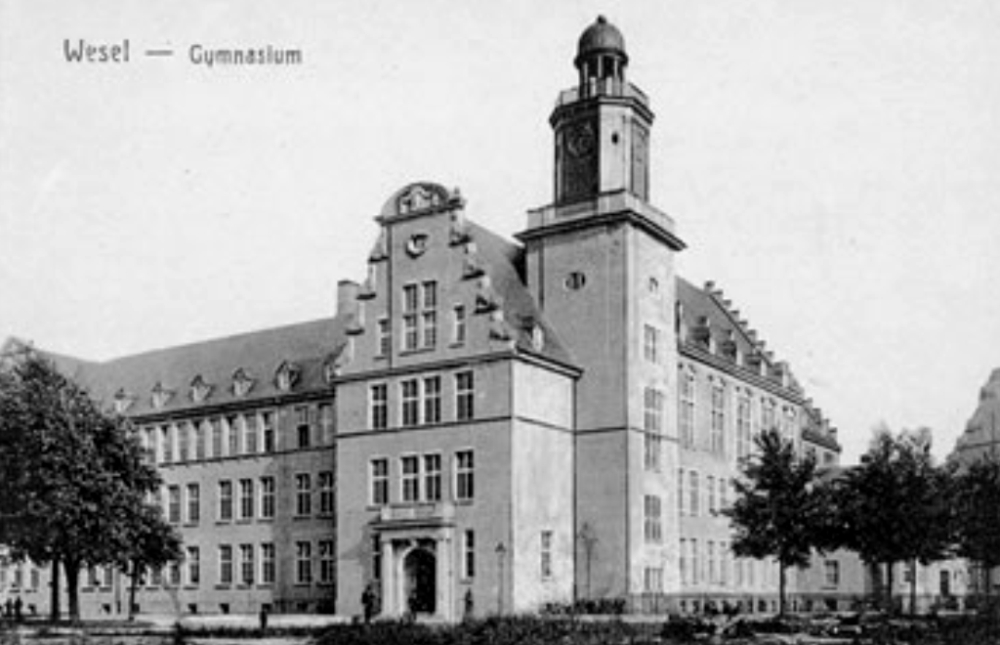
Our High School in Wesel built in 1912 - Now Court House Building

Our Former High School in Wesel built in 1912 – Now Court House Building

It is not surprising that the Wesel High School amongst many other schools in North Rhine-Westphalia organized, one year before our graduation, a field trip to the capital of Germany to provide the students with first-hand experience of the wall that was going to separate Germans from Germans for almost 30 years. The day after our class had participated in a guided tour of a small section of the wall, the teacher in charge of our group granted me permission to go see my relatives in East Berlin. Mr. Zorn with the Latin nickname Ira was personally responsible for our safety. I often wondered how he could have allowed me to cross the border on my own with all the horror stories circulating in the daily newspapers about harassments, arrests, even disappearances of people from West Germany. At the checkpoint I had to list all my personal belongings. I had nothing to declare except my cheap DM 20.00 camera.
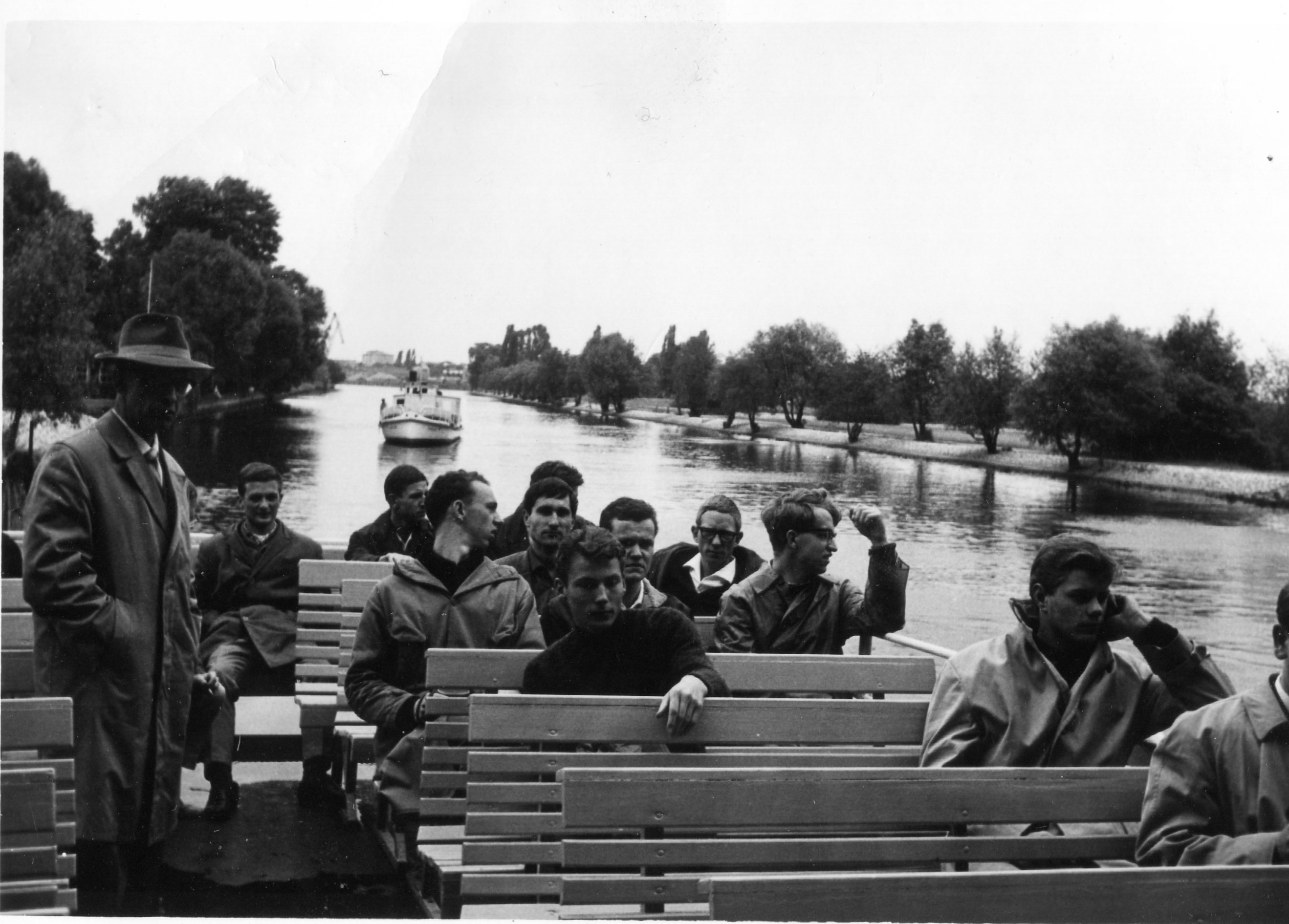
Boat Ride in Berlin

Boat Ride in Berlin – Peter on the Second Last Bench on the Far Left

Again I enjoyed a most pleasant visit with Aunt Alma and her family. I cannot recall having announced my coming, but I must have sent them a card, because the whole family had assembled in the living room, when I arrived at their door. Uncle Artur with his biting sarcasm softened only by a disarming sense of humor was again, as on my previous visit, at his best poking fun at the political system in general, but especially at the wall very much to the chagrin of his party-loyal sons-in-law. He asked whether I knew why there were so many round holes in the wall. When I shook my head, he answered the question for me, “To let off the cabbage steam.” Now this riddle makes only sense in English if one knows that cabbage steam (Kohldampf) was a euphemism for ravenous hunger.
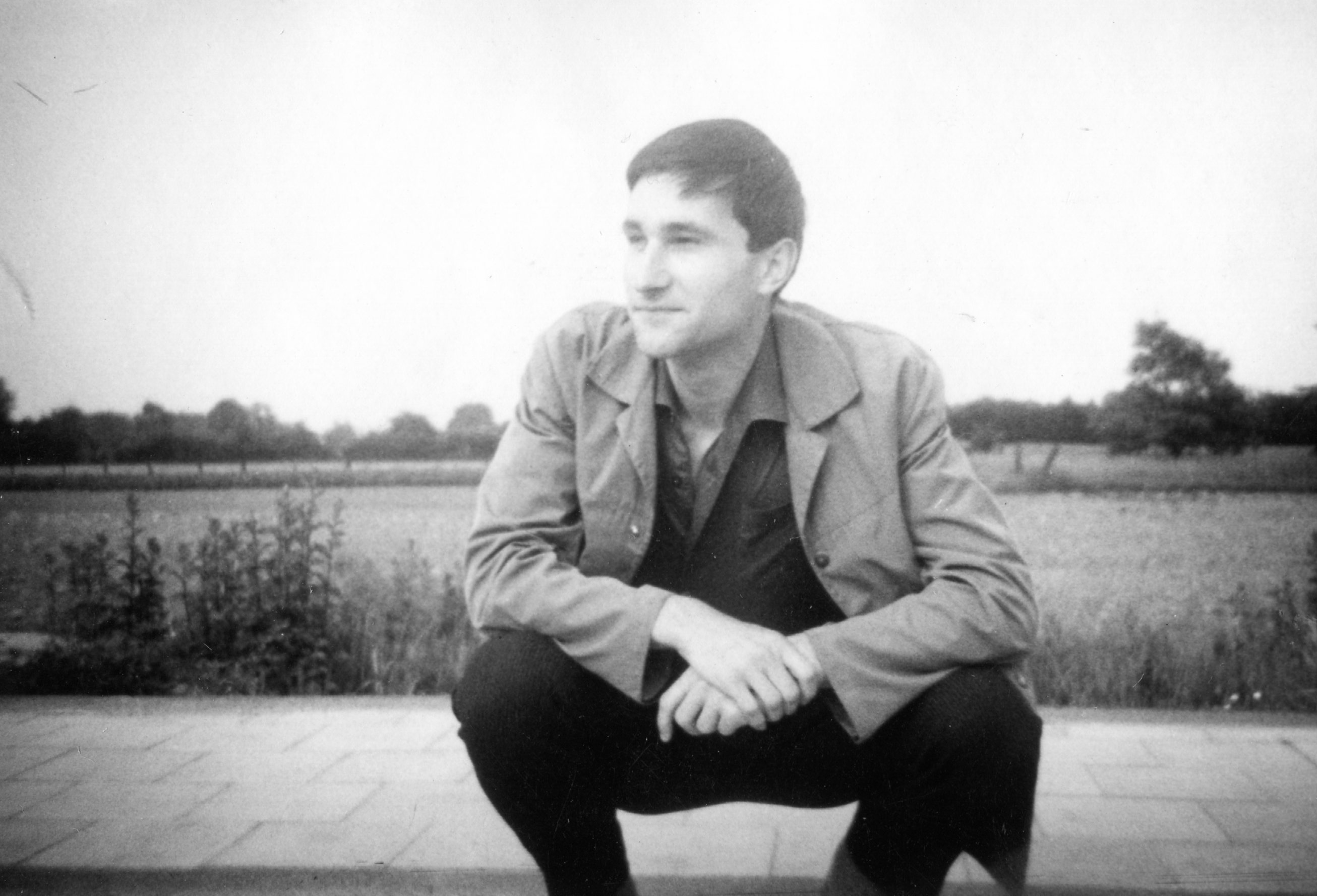
Peter Klopp at Age 19

Peter Klopp at Age 19

Now the sons-in-law had their turn to inform me from their perspective the raison d’être for the wall. It was built, so they insisted, to protect the citizens of the GDR from the attacks of the Western imperialists. Surely I must have seen the tank traps and the barbed wire in front of the wall facing west. They would serve as the first line of defense. If they were intended to keep people from leaving their socialist country, they would have been set up behind the wall. I remained unimpressed. Their fervor for the system showed me that they had pulled blindfolds over their eyes. They believed what they wanted to believe on the principle that you do not slap the hand that feeds you. With Uncle Artur`s help the family finally steered away from the political hogwash and focused on their guest.
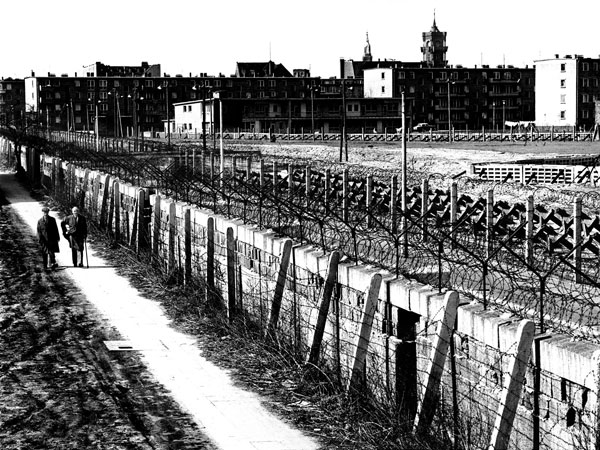
Berlin Wall - Photo Credit: hstrclgrl.blogspot.ca

Berlin Wall – Photo Credit: hstrclgrl.blogspot.ca

When I told them about my trips to Spain and Yugoslavia I indirectly conveyed to them the kind of freedom I enjoyed on the other side of the Wall. Also I enthusiastically talked about my career plans, namely to study high frequency technology. Uncle Artur, a leading scientist in a related field, a son-in-law already involved with electronics in the NVA (National People’s Army), Anje, the second youngest daughter also planning to become an electronics engineer, we all warmed up to this refreshingly apolitical topic with Aunt Alma cheerfully chiming in, “Wouldn’t it be nice, if Peter and Anje could study together in the exciting world of electronics!” With this comment Aunt Alma more concerned about good family relations than about politics made a profound statement about the tragedy of a divided Germany.
Juliane Klopp (1877 – 1960) Part 1

The Viennese ‘Artist’ and Hotel Owner at Scharmützel Lake (Chart I – II)

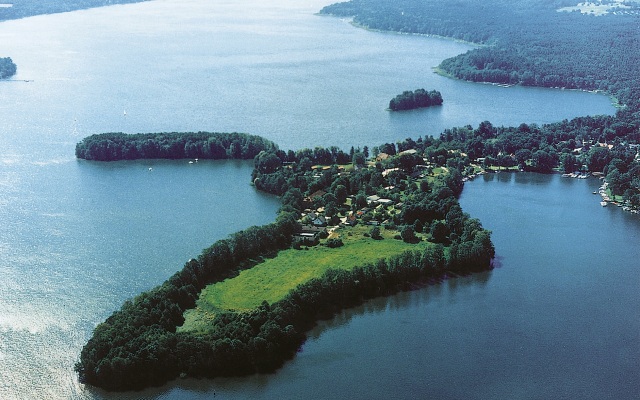
Scharmützel Lake Southeast of Berlin - Photo Credit:mittelalterkleidung.science

Scharmützel See Southeast of Berlin – Credit:mittelalterkleidung.science

Condensed and translated from the Klopp Family History (Ein Brief an die Nachfahren der Familie Klopp) with kind permission by the author Eberhard Klopp

To see the Klopp Family Tree click here.

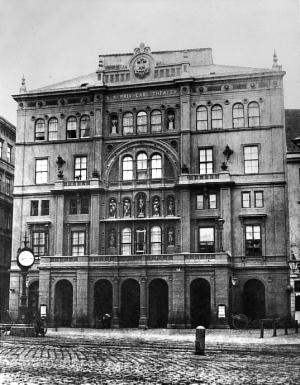
On June 15 I concluded the story of Friedrich Klopp, the eldest child of my grandparents Peter and Emma Klopp. Now it is time to turn our attention to my aunt Jula (Juliane). She was born on February 2, 1877 in Elbeu. Her father P.F.W. Klopp at the time was still a miller’s apprentice in the neighboring town of Jersfelde. As a young girl she went for her education to Vienna and spent her teenage years in the home of her aunt Luise Necker née Bauer. Due to her long stay the good-looking Klopp daughter was known as Miss Necker.She maintained close ties with the arts and theater circles centered around the “Carl Theater” in Vienna.

The Carl Theatre where Artists and Performers met around 1900 - Photo Credit: aeiou.at

The Carl Theatre around 1900 – Photo Credit: aeiou.at

Around the turn of the century Jula Klopp became acquainted with Friedrich Steuer, son of a the mining magnate. The Steuers like Jula’s foster parent Max Necker had made a fortune by owning and profitably operating a coal mine in the Harz Mountains near Blankenburg.

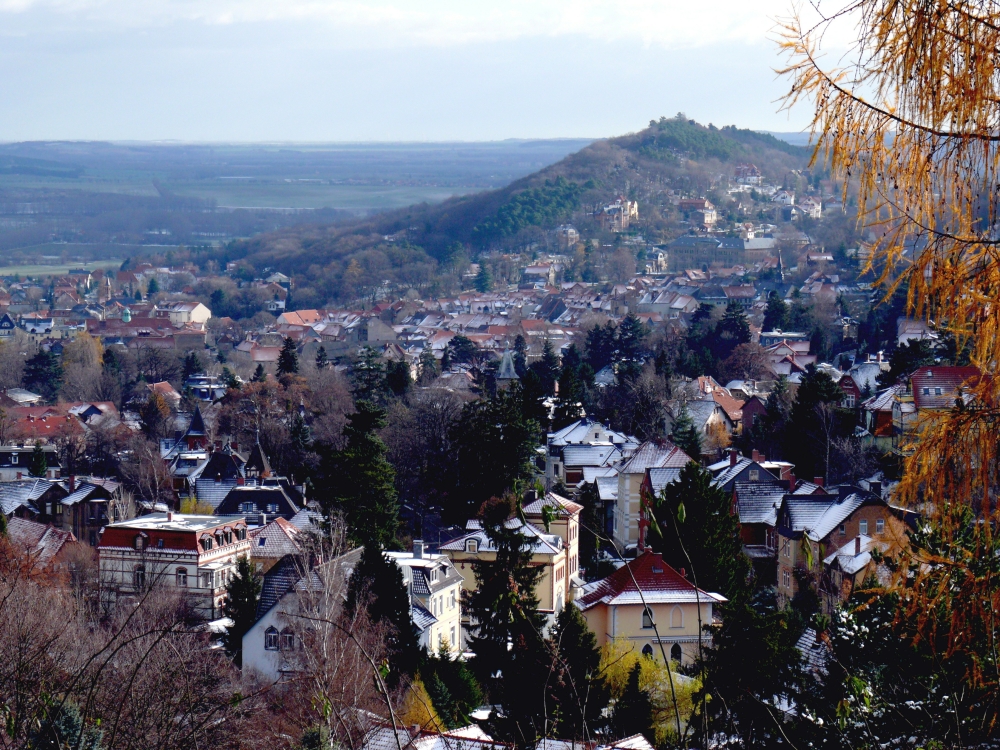
The Town of Blankenburg near the Harz Mountains - Photo Credit: wikipedia.org

Town of Blankenburg (Harz Mountains) – Photo Credit: wikipedia.org

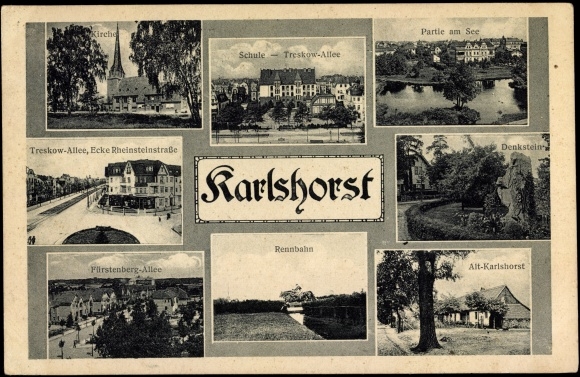
A chance encounter during vacation time at that tourist center developed into a serious relationship. At the wedding of the 23 year old Jula with Fritz Steuer, called the Moose, there was talk about a dowry in the amount of 80,000 gold marks. The wedding took place at the upper class hotel “White Elk” in Dresden. Friedrich and Jula Steuer lived during the first years of their marriage in Berlin-Karlshorst.

Berlin-Karlshorst (Old Postcard) - Photo Credit: akpool.de

Berlin-Karlshorst (Old Postcard) – Photo Credit: akpool.de

Continues next week …

To read about my visit to Aunt Jula in 1959 on a previous post, click here.

Chapter XIV of the P. and G. Klopp Story – Part 4

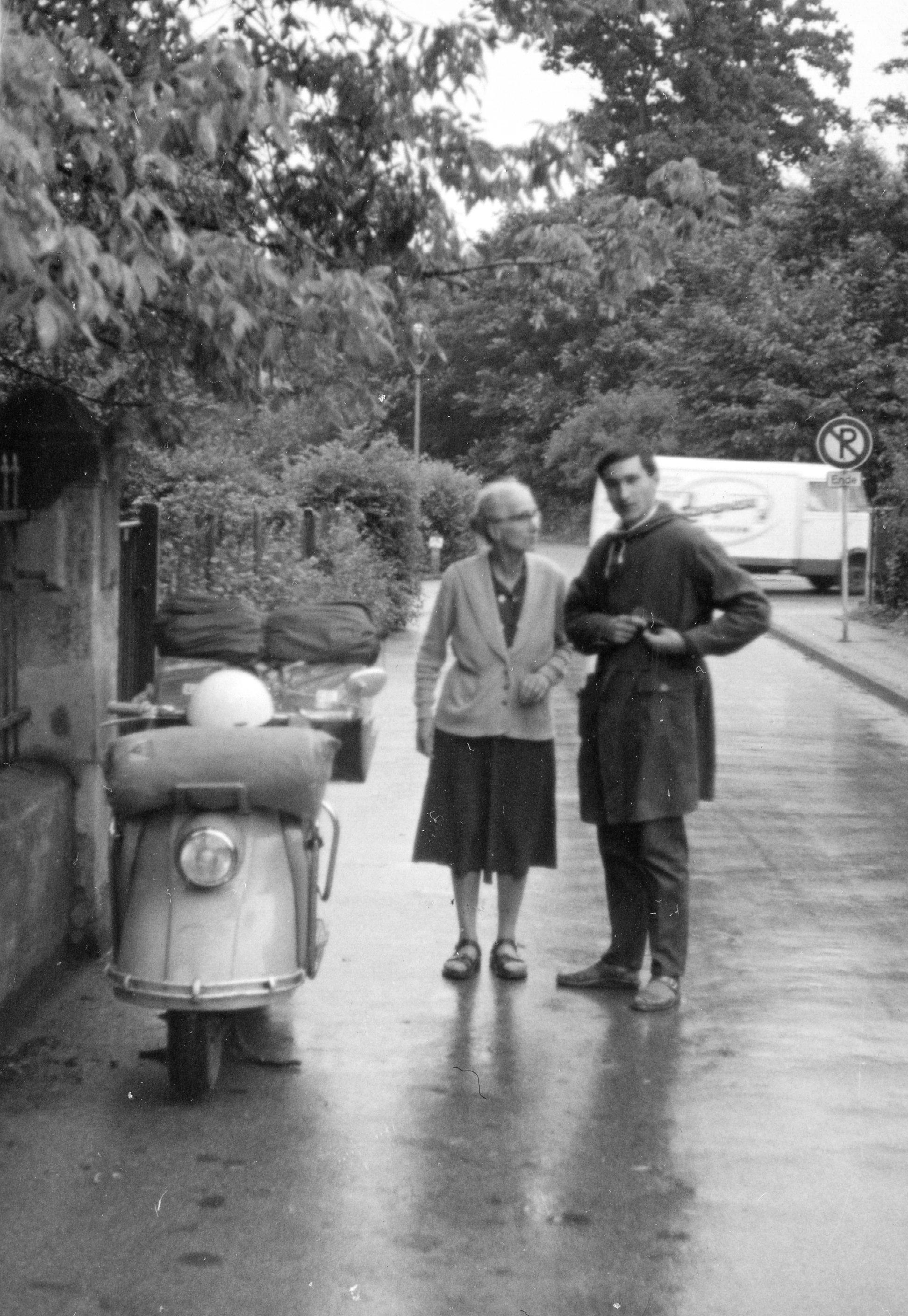
On a Two-Seater Scooter to Yugoslavia (1961)


Peter Saying Good Bye to Mother

Peter Saying Good Bye to Mother

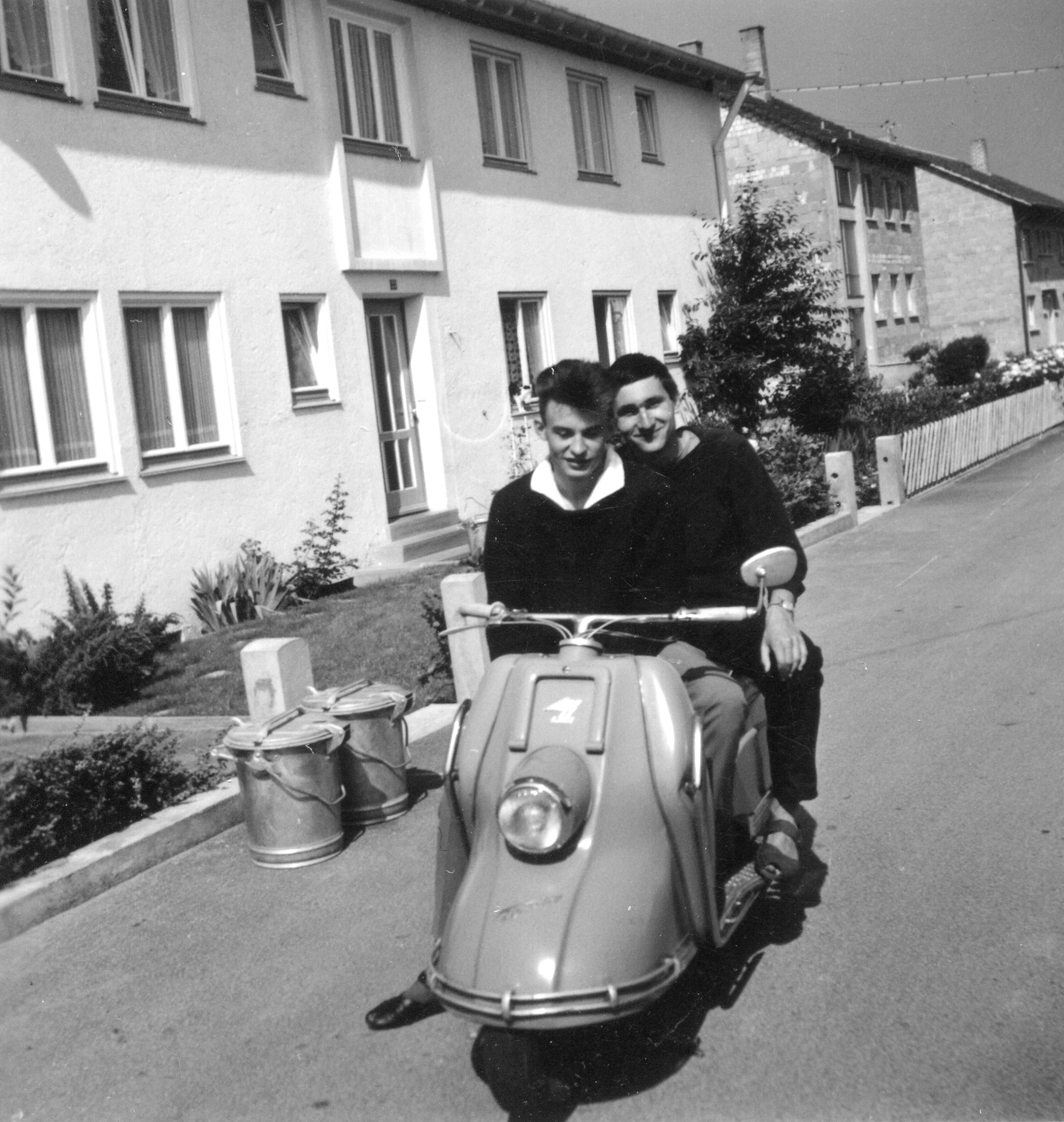
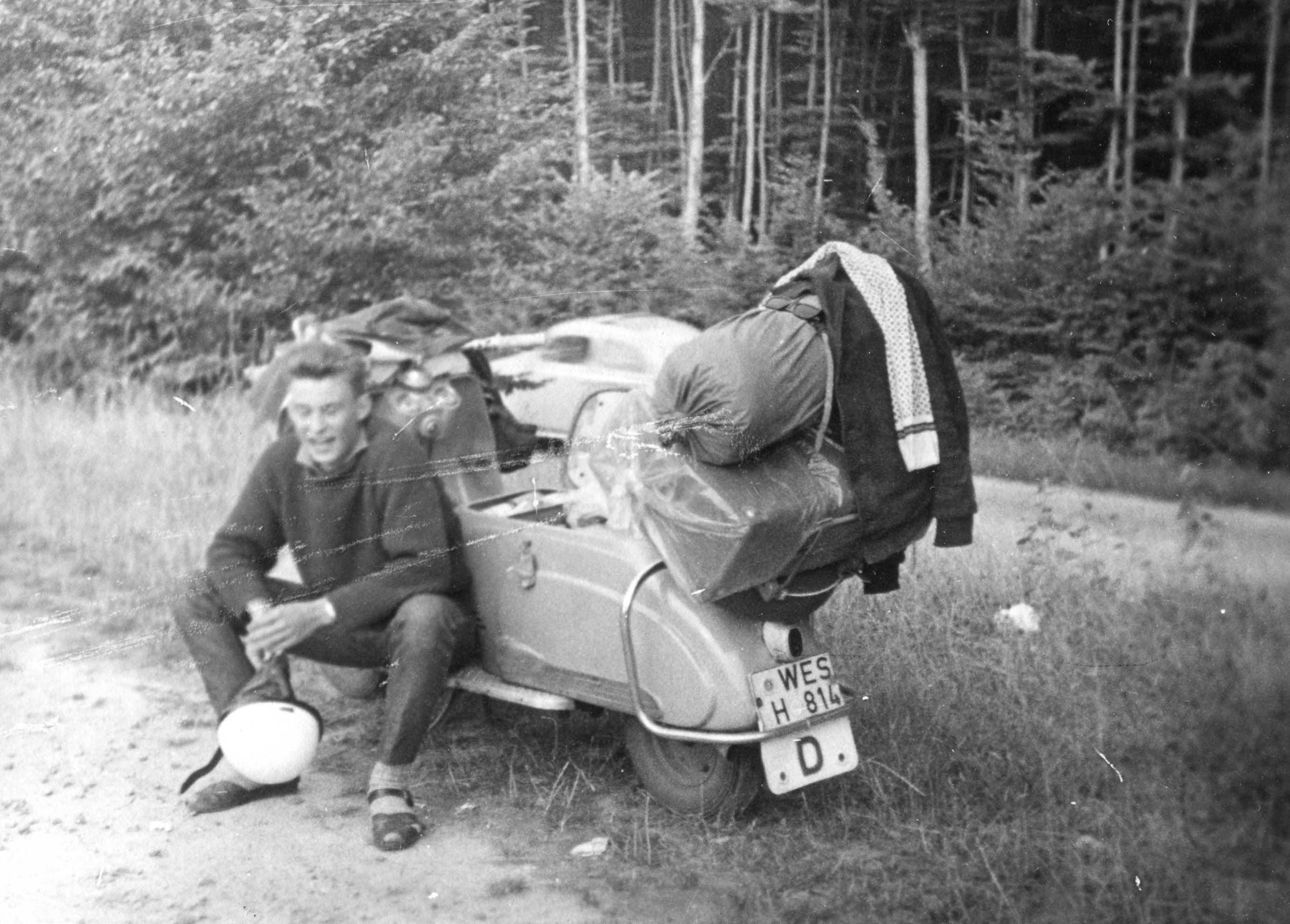
One of my favorite tunes that I often played and still play on my harmonica was the popular scout song about the Adriatic Sea. So that was where Klaus and I were heading in the summer of 1961. Klaus had just passed his driver’s license test and had acquired a used scooter that was going to carry us via Austria and Northern Italy into Yugoslavia, which later on after the death of communist leader General Tito broke apart into half a dozen small countries due to strife and ethnic tension. Yugoslavia was just opening up its borders to attract tourists to their beautiful rugged coastline.

Klaus and Peter on the Way to former Yugoslavia

Klaus and Peter on the Way to former Yugoslavia

I remember very little about our journey to the southeastern part of Europe, partly because we kept no journal, but also because sitting on the back seat of a scooter does not offer as much opportunity for human contact as you would have traveling by car or train.

Klaus Taking a Break from Hours of Driving

Klaus Taking a Break from Hours of Driving

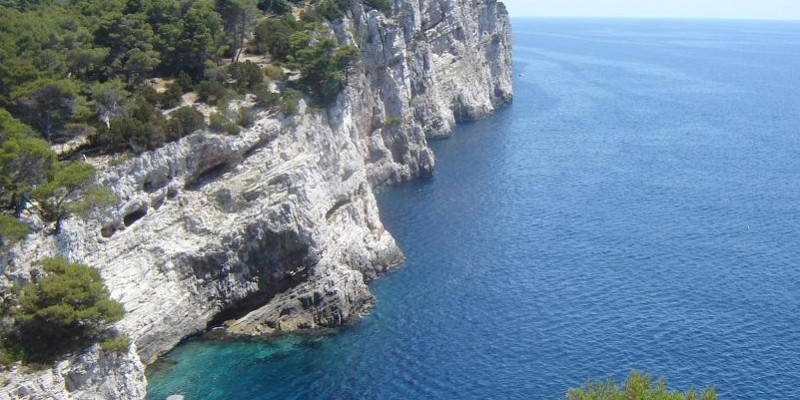
After a smooth ride on the newly built super-strada from Trieste to the border of this immense Balkan country, we were quite a bit disappointed by the shabby look of towns and villages we were passing through. Dilapidated houses in various stages of neglect and decay, communist slogans crudely written on house walls, the red star painted on any bare surface, dusty streets gave us the impressions as if we had traveled back in time. I cannot remember how far we traveled south along the Adriatic coast.

Adriatic Sea in Croatia

Adriatic Sea in Croatia

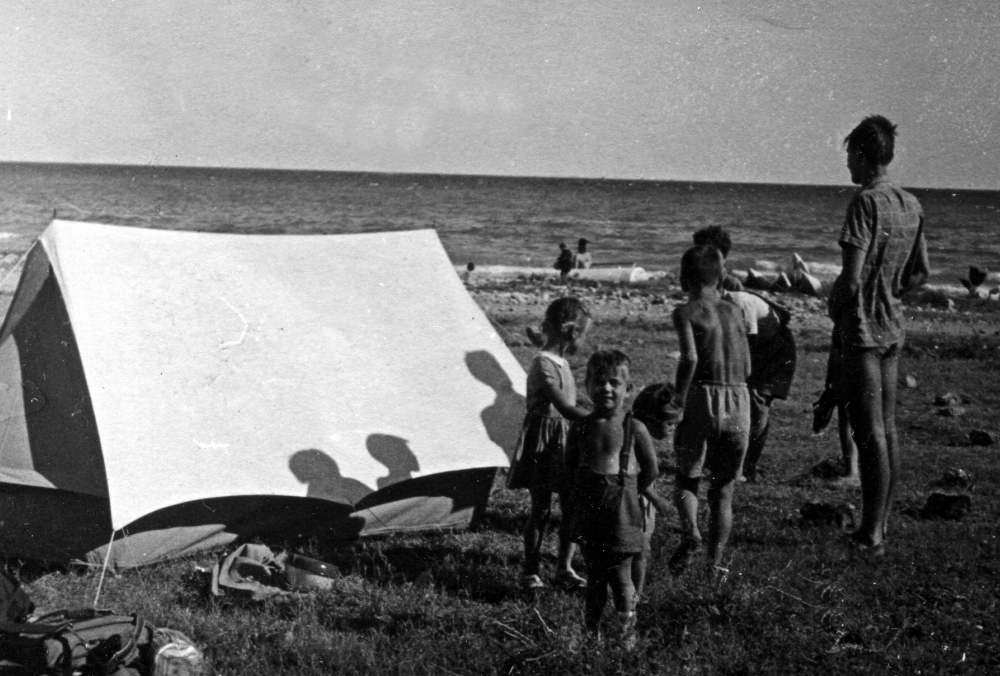
Our aim was to find a secluded beach at the rugged coastline away from this eerie state-dominated world. When we had finally found such a place, which would be overcrowded by sun seekers from Northern Europe today, we pitched our tent not more than 10 m from the crystal clear waters of the Adriatic Sea. We stayed there, until our food ran out, perhaps 2 or 3 days.

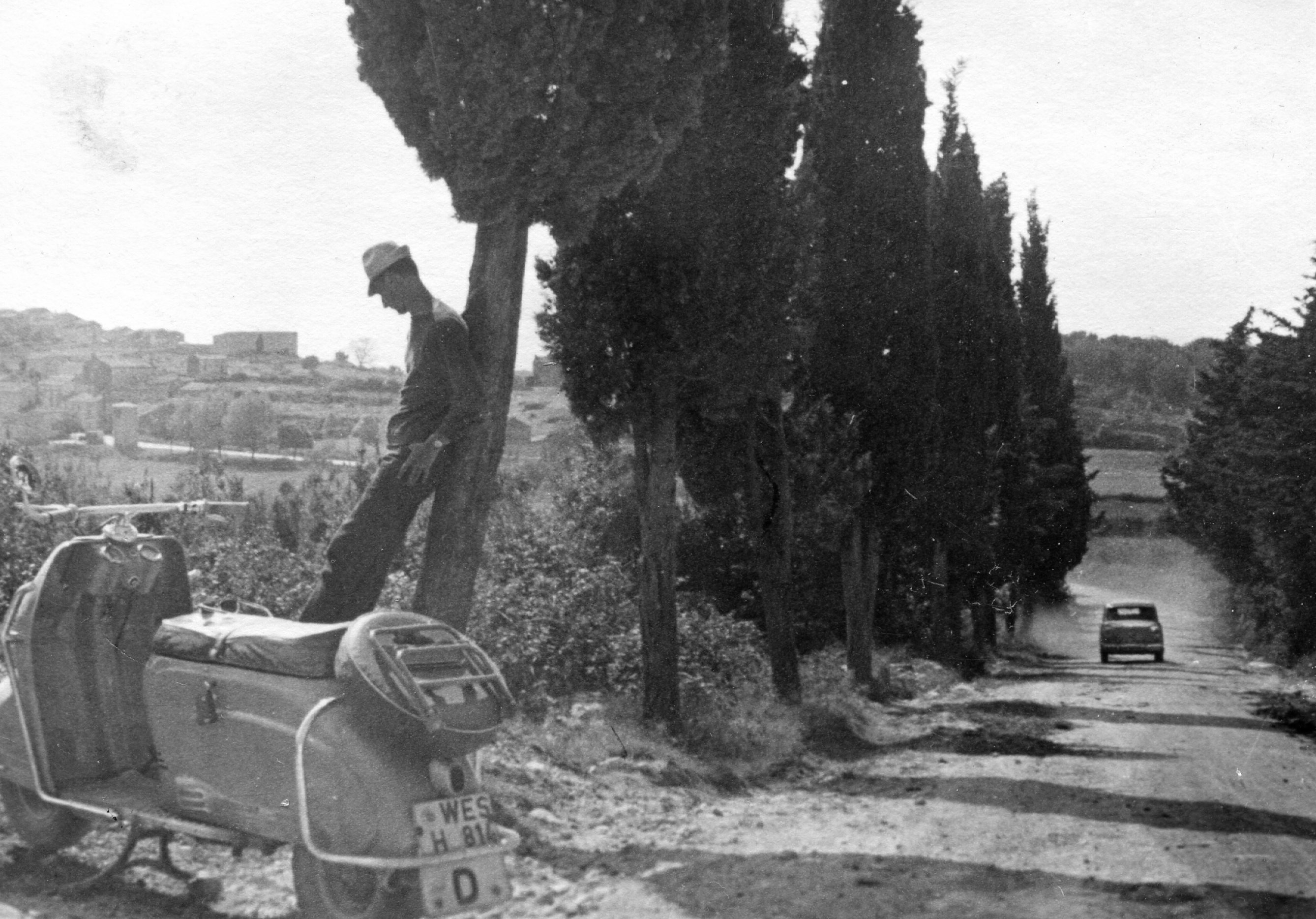
Peter Leaning against a tree on a Dusty Road

Peter Leaning against a tree on a Dusty Road

One event will stand out forever in my mind. On our way home we were held up for several days in a small Austrian town, where the old scooter had broken down with engine problems and needed a major repair job. It was the morning of August 13th. On our walk from the campground to the repair shop, we noticed that the usually tranquil, almost sleepy ambience had drastically changed overnight. An ominous gloom hung over this little Alpine resort. In front of shops, restaurants and cafés, on the market square, everywhere groups of people huddled together, some talking in subdued tones, others shouting angrily. Nobody paid any attention to us. It was eerie. Seeing so many people out on the street and not knowing what they were discussing instilled in us the uncanny feeling of imminent doom. Here and there we snatched up phrases from some of the more vociferous voices: There will be war. World War III. We are not going to fight another war. Austria is neutral. She will not be sucked into another conflict. What on earth had happened, we wondered, that made the people in this remote mountain town so excited?

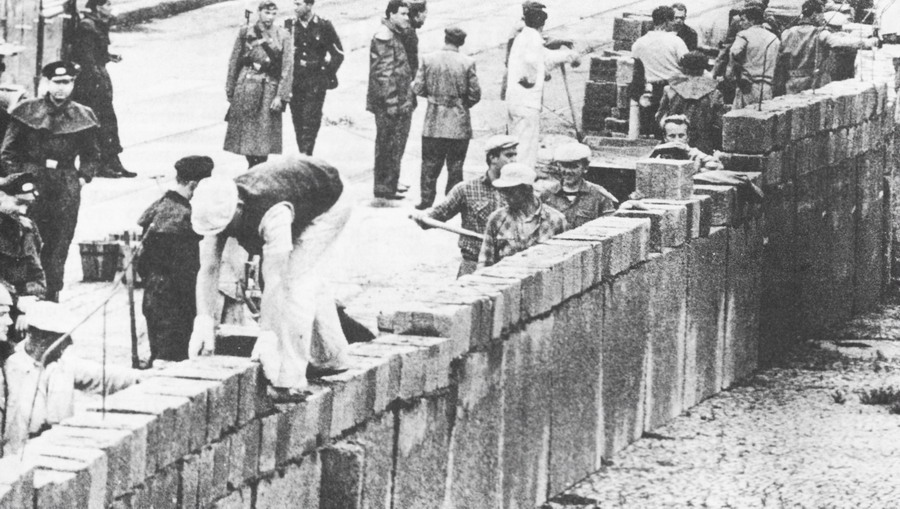
The Building of the Berlin Wall August 13, 1961

The Building of the Berlin Wall August 13, 1961

As we found out later, troops in East Germany, in flagrant violation of East-West agreements, had sealed the border between East and West Berlin, shutting off the last remaining escape route. The soldiers had put up barbed wire fences during the night, and Berliners woke to find they were living in a divided city. The fences were just the first step in a sequence of desperate measures to stem the flow of thousands of refugees. Train services between the two sectors had been cut off, and road traffic across the border came to a sudden halt. In the weeks that followed, work crews replaced the temporary fence by building the infamous Berlin Wall. If Klaus and I had heard the news over the radio or read the headlines in the papers, the impact of this momentous event in modern history would not have been as powerful on us as our witnessing of the passionate reaction of common people to such blatant attack on human liberty.

Chapter XIV of the P. and G. Klopp Story – Part 3

España, here we come (1960)

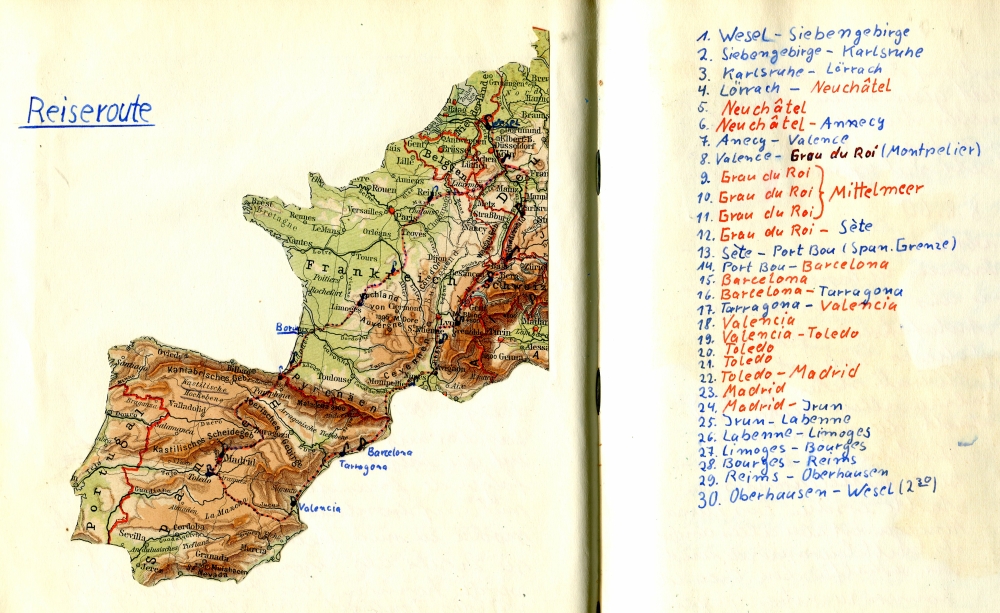
The Itinerary of our Trip to Spain 1960

The Itinerary of our Trip to Spain 1960 Taken from my Journal

When you travel, travel young. Your mind is still open to perceive the world in an unbiased way. It will stay a crack open, when you get older. You retain your precious memories much better and you are able and willing to undergo hardships, seek and find solutions in emergencies without giving up your dreams. When traveling with my friend and scout companion Klaus F. to Spain, I kept a journal of our journey, in which we two on alternate days made entries to describe our daily experiences.

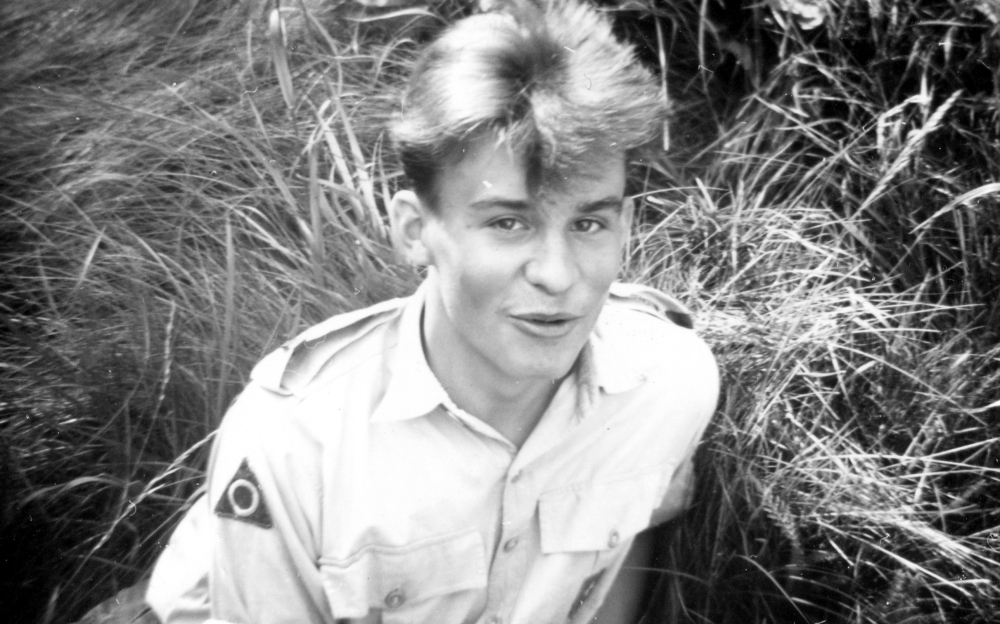
My Friend Klaus in Scout Uniform

My Friend Klaus in Scout Uniform

We described them with humor and wit often exaggerating each other’s foibles in a good-natured fashion. If a particular attack on one’s ego turned out to be a bit too caustic, there was always an opportunity for rebuttal and counterattack the very next day. We traveled on the cheap by hitchhiking through Germany, Switzerland and Southern France all the way to the Spanish border, where we bought train passes, because hitchhiking was next to impossible on the nearly deserted country roads. The journal, which is still in my possession, was my first major writing attempt apart from the mandatory boring school assignments. By composing in vivid and expressive language descriptions of land and people, I discovered and developed a talent for creative writing that led me to dabble in the art of writing poetry, short story, even a novel in the following years. Klaus and I looked handsome and respectable in our khaki uniforms. With them we instilled confidence, especially in older drivers, who would not have otherwise given us a ride.

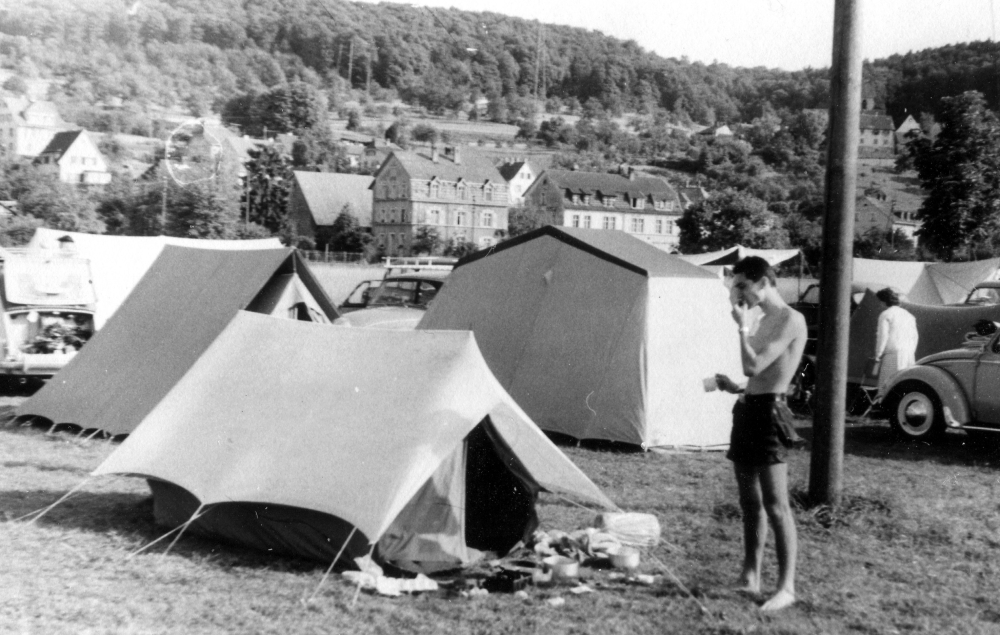
Campground near Montpellier, France

Campground near Montpellier, France – Peter Contemplating the Mess

By train mostly in fourth-class compartments we made an exciting semi-circle tour of the northern half of Spain including Tarragona, Barcelona, Valencia, Toledo and Madrid. In the overcrowded train cars we were with body and soul close to the life of common people. Even though we did not understand a single word of Spanish, we felt the excitement of being part of it all. Wine was being passed around in bulging wineskins. The chatter of peasants talking about their crops and livestock was filling the smoky compartments. The train stopped at every minor railroad station, where women brought cages of chicken on board in the hope of selling them at the next major market place first thing in the morning. Somewhere from another compartment we heard singing (or was the sweet wine we had a little bit too much of?), which lulled us to sleep, as the train was rumbling through the night.

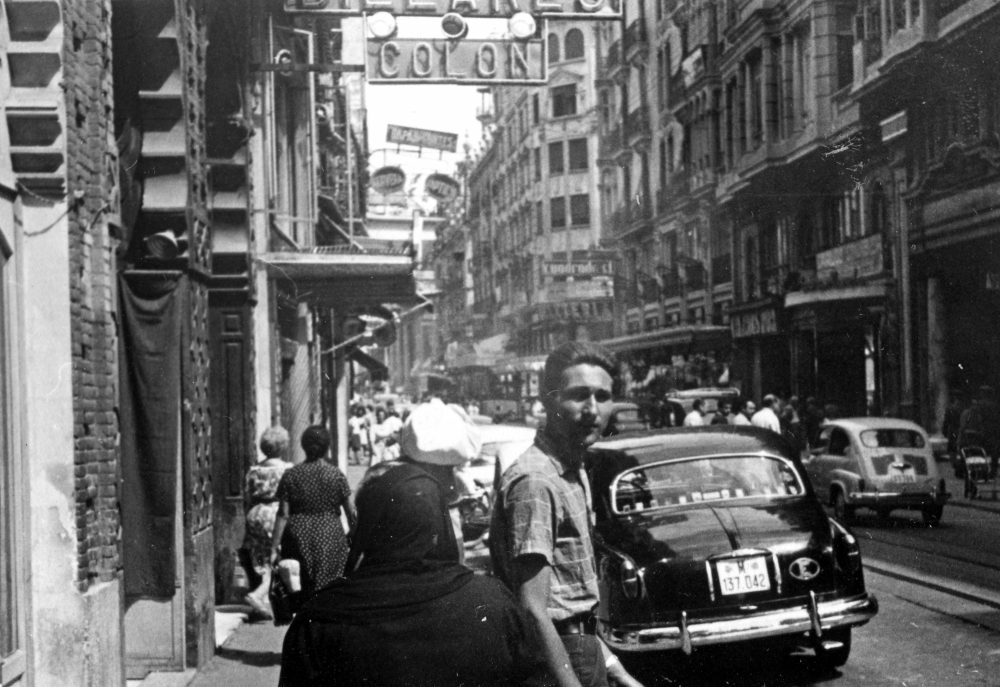
Exploring Spain's Capital City Madrid

Peter Exploring Spain’s Capital City Madrid

We spent a few days in the capital of Spain, where a visit to the national arts museum, the famous Prado, was on our agenda. There we stood in awe in front of Ruben’s illustrious oil paintings depicting voluptuous women in the buff with their blissful expressions on their faces. A bit shy about this entirely new experience it was not surprising that the erotic assault on our senses did not find any mention in the otherwise so open-minded journal.

The Three Graces by Peter Paul Rubens - Prado Museum Madrid

The Three Graces by Peter Paul Rubens – Prado Museum

The youth hostel in Madrid was modern and had more the appearance of a hotel than that of a simple shelter for young people on the go. We ate; no, we gorge ourselves with delicious food and wine from large pitchers placed generously on the dining tables in the cafeteria. Unfortunately, in this not overly sanitary environment Klaus picked up the stomach flu, which made him stay close to the nearest bathroom for the next couple of days. Our last train ride through the green, lush Basque countryside fed by the mist of the nearby Atlantic Ocean was not exactly a pleasure trip. We lost all interest in the scenic beauty, as my friend’s condition worsened by the hour. By the time we crossed the border into France, he was plagued by a high fever. He needed rest. So at the first opportunity I quickly set up our tent on a lakeshore and made Klaus crawl inside and lie on his air mattress to get if possible a little bit of sleep and recuperate from the ordeal of the train ride.

Camping at the Mediterranean Sea

Camping at the Mediterranean Sea

At a good distance from the tent I heard some yelling and screaming by frantic French women whose message was that we should leave the beach area. While Klaus was uttering incoherent sentences and I was tempted to ignore the warnings pretending not to understand any French, the good ladies shouted all the more loudly and more urgently with words I could not fail to miss lake, ocean, connected, tide, drown. Finally I comprehended that the tide was coming in and we would be under water within three hours or less. Now I had to convince Klaus that we were in grave danger and that we had to move our tent up away from the beach. After much coaxing he reluctantly came out, whereupon I pulled out all the pegs and dragged the tent and its content up to higher grounds. When perusing the old journal and rereading some of the other entries, I became aware how many perilous situations we had encountered on our otherwise fascinating road trip.

Chapter XIV of the P. and G. Klopp Story – Part 2

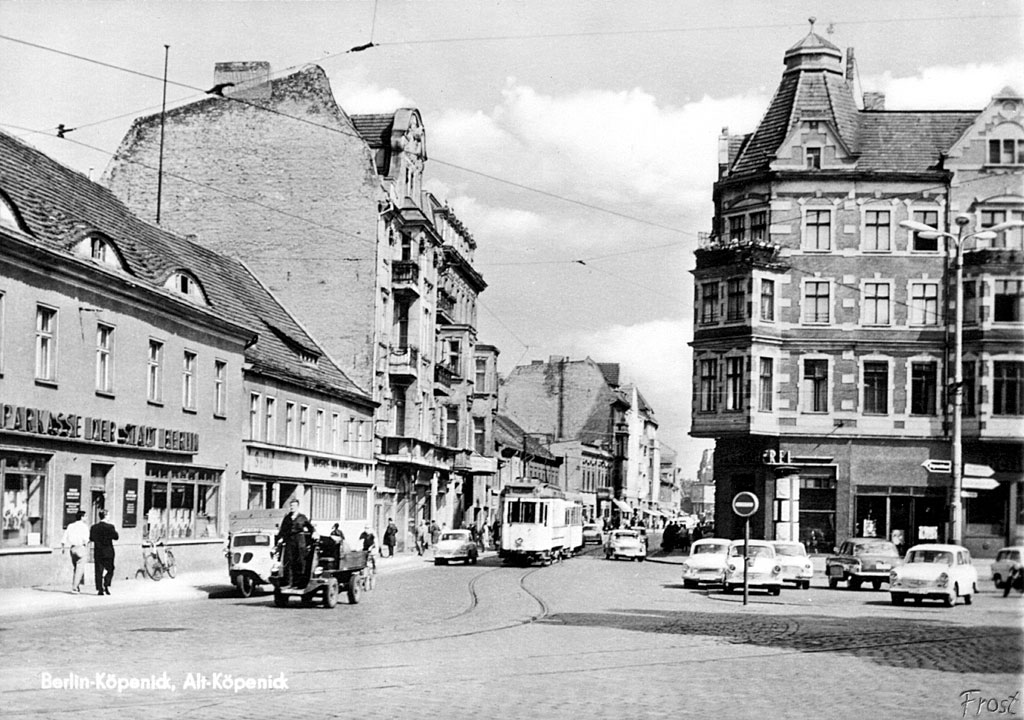
koepenick 1

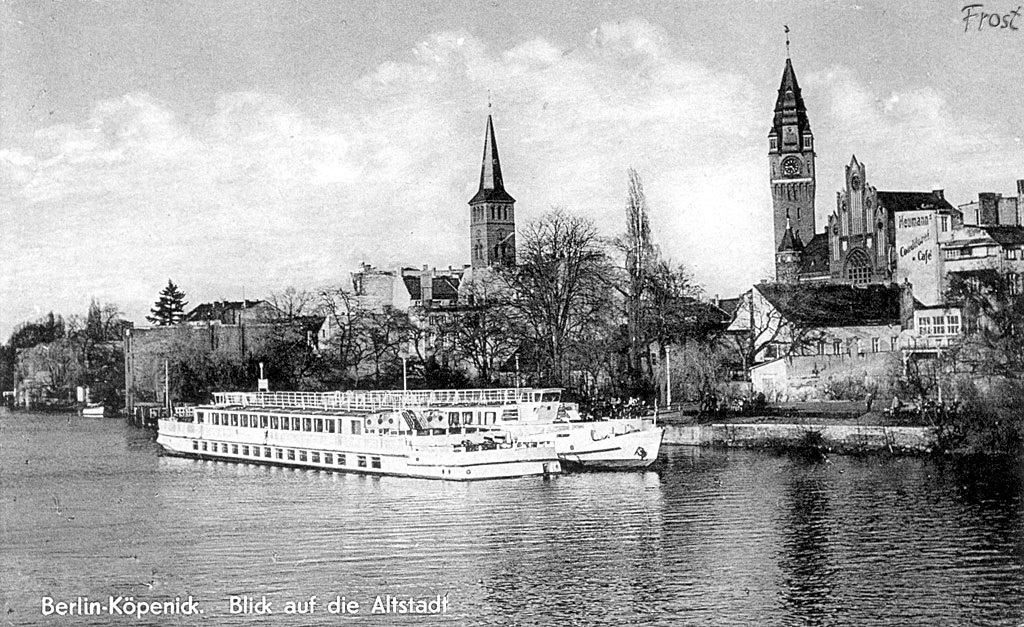
Berlin-Köpenick, Dahmeufer, Altstadt, Panorama – Photo Credit: Andreas Steinhoff

Visiting Relatives in East Berlin 1959

Chart I – II of the Klopp Family Tree

A few days after the sightseeing tour with Peter I went to see Aunt Alma in Berlin-Köpenick. In contrast to Aunt Meta’s tranquil life in Freiburg, the apartment in Köpenik was a beehive of activity of more than ten family members bustling about. The spacious living room could hardly accommodate the large family. On the one hand I felt like a guest of honor, being the youngest son of Alma’s youngest brother (my father). But I also had the impression that they all had come together to gawk at this rare specimen from West Germany. At age 77 Aunt Alma was still strong in spirit and body to run the household of her daughter Else and son-in-law Artur Thiess and their four daughters. Two were already married with children at the time of my visit.

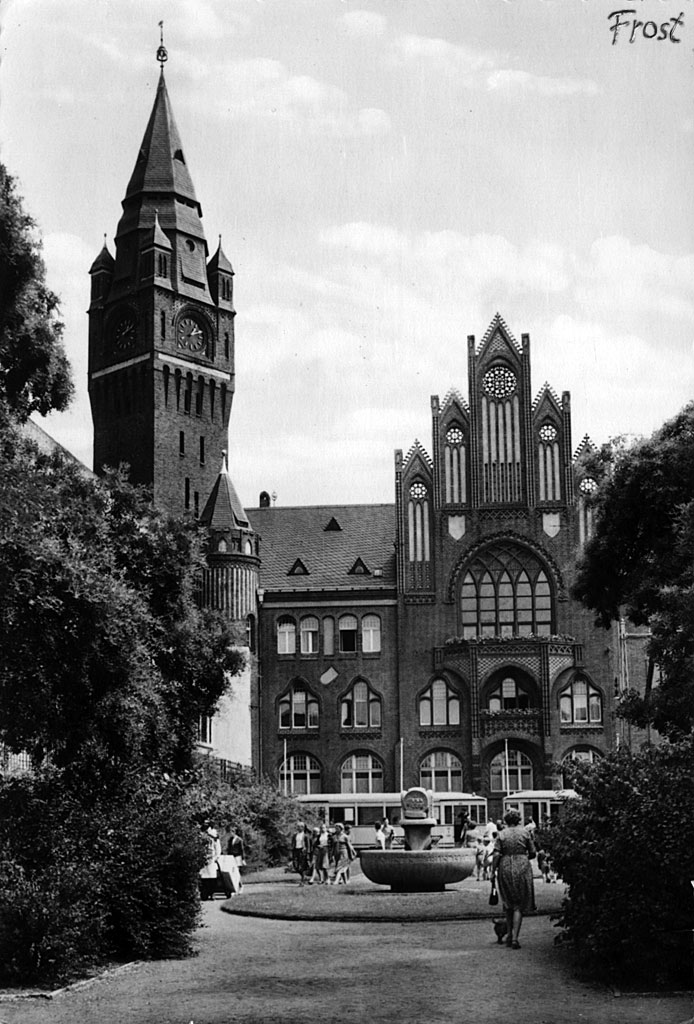
Rathaus 1961 - Photo Credit: koepenick.net

City Hall (Rathaus) 1961 – Photo Credit: koepenick.net

Uncle Artur was actually my cousin. But I called him uncle, because he was almost forty years older than I. He was engineer. He had published a book on low frequency communication technology and was giving lectures at the Humboldt University as a specialist in the field of electronics. I took an instant liking to him, not because of my hobby akin to his academic work, but rather because of the fact that he was one cut above the rest of those adult family members, who had chauvinistically embraced the communist-socialist ideology. He impressed me with his sharp wit and disarming humor, with which he distanced himself from the political narrow-mindedness of his sons-in-law. Perhaps more importantly, he was for me a father figure radiating kindness and affection. No wonder I maintained contact by corresponding with him until his death in 1992. Apart from the one-sided political talk about the advantages of their peace-loving society versus the corrupt war-mongering system of western capitalism, to which I had nothing to add, confirm or oppose, it was a very enjoyable time spent in a family so wonderfully knit together. One thing of great interest to me was the stereoscopic viewer, in which Uncle Artur had inserted glass plates each containing two b/w images that he had taken with his special 3d camera. The quality of these images was absolutely stunning. For the first time in my life I got a glimpse of the land, where I was born. Artur had taken many pictures on his various visits to Father and Mother’s place at Gutfelde (Zlotniki). When I looked at them, it was like traveling back to a time, when my parents were happy and managed together the three large estates entrusted to them.

View of the Altstadt - Photo Credit: koepenick.net

View of the Altstadt – Photo Credit: koepenick.net

In the afternoon Aunt Alma took me to the cottage of her elder sister in the garden district of Berlin-Köpenick. Aunt Jula was born as the second child to Friedrich and Emma Klopp in 1877. She had lived a colorful life spending her teenage and early adult years in Vienna as student and artist. She struck it rich by marrying a wealthy mining director. Later on she became the proud owner and manager of a hotel, but lost it all again during the turbulent inflation years after WWI. In a deal that went bad she took out a mortgage on her property to help out her brother Hermann, a classical rags-to-riches story in reverse.

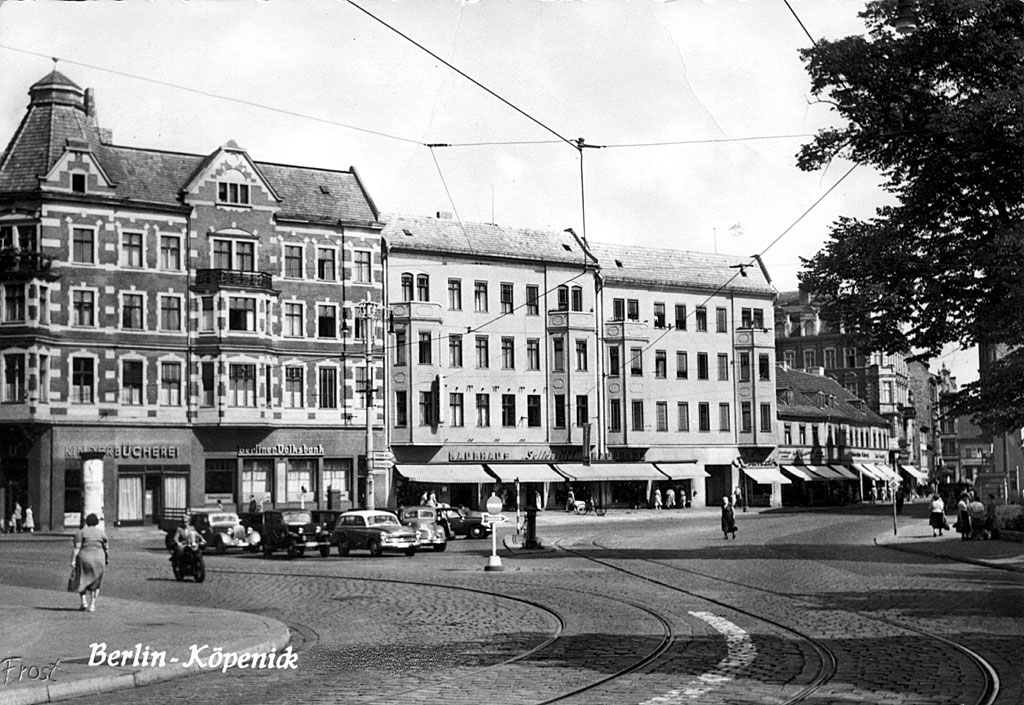
Schlossplatz - Photo Credit: koepenick.net

Castle Square (Schlossplatz) – Photo Credit: koepenick.net

This feisty old lady must have absorbed the whole gamut of communist ideology and firmly believed in it. For she presented her distorted views with so much passion that only unwavering conviction can deliver. In her strident tirades against capitalism she did not spare the West German Chancellor Konrad Adenauer, a Nazi in disguise in her strong opinion, who was planning to wage a revisionist war against her peace-loving republic.

Altköpenick Sparkasse (Credit Union) - Photo Credit: koepenick.net

Credit Union (Altköpenick Sparkasse)  – Photo Credit: koepenick.net

She served stale coffee and moldy cake that someone may have brought to her humble abode a few weeks earlier. Aunt Alma signaled to me not to eat it and drop it quietly under the table. To my great relief she soon announced to her sister that it was time for her to leave and prepare supper for her folks at home. I was a bit disappointed with the visit to Father’s eldest living sister. However, I did not feel personally attacked by my aunt. Being an apolitical teenager, I had already forgotten this unpleasant episode upon my return to West Berlin.

Chapter XIV of the P. and G. Klopp Story – Part 1

Travels to Berlin (1959), Spain (1960) and Yugoslavia (1961)


The world is a book and those who do not travel read only one page.

St. Augustine

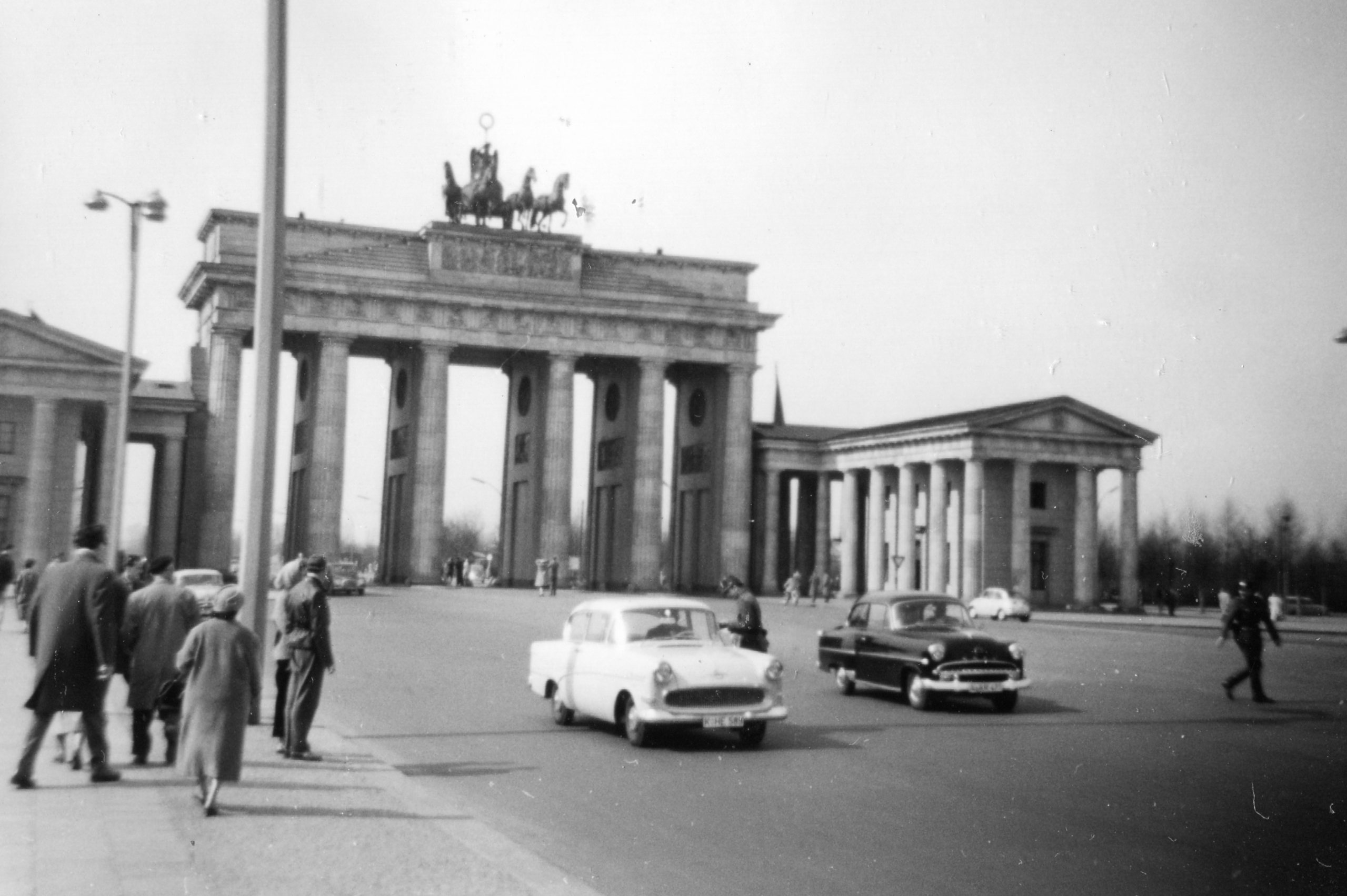
Brandenburg Gate 1959

Brandenburg Gate 1959

During my Easter holidays Mr. and Mrs. Peter L., who had recently escaped from the German Democratic Republic (GDR), invited me to come and visit them in West Berlin. Whether they were distant relatives or just friends of the family, I can no longer tell with certainty. But after their escape from the Eastern Zone, as the GDR was called, they had often visited us in Wesel. In those days West Berlin was geographically isolated from West Germany. It was an exclave surrounded by communist East Germany. Also a fence stretching over a thousand kilometers following the inner German border complete with thousands of observation towers prevented the mass migration from the east. Many people died in their attempt to flee from their ‘socialist paradise’.

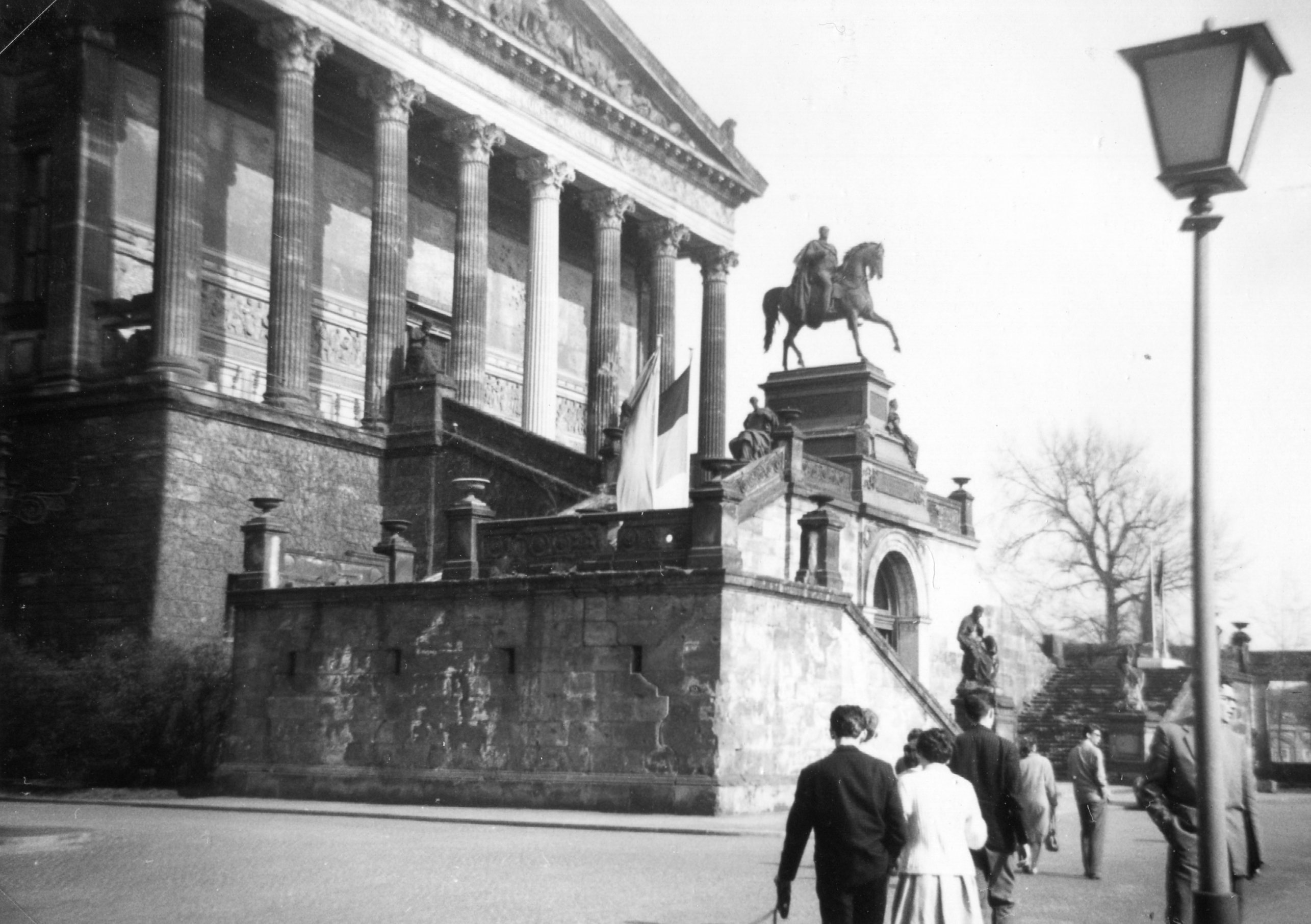
State Museum 1959

Old State Museum 1959

The rapid train I had taken from Cologne stopped at the border where travelers had to show their passports to cross the Iron Curtain to go from one part of Germany through another part of Germany to Berlin. This was the only stop for the train. After it had been given the green light, it sped through all the major railway stations past many towns as if trying to shield us from the ugly sights of a country that still lay in ruins so many years after the war. At the border station near West Berlin another even more thorough inspection was being made that included the search for fugitives who might have jumped in transit onto the train. Border guards were using specially trained dogs to sniff out any potential escapees clinging to the train’s undercarriages in their desperate attempt to get to freedom. Finally the train was given clearance and allowed to cross into West Berlin. I breathed a sigh of relief, when our train rumbled into the main station, where Peter L. was waiting for me at the platform.

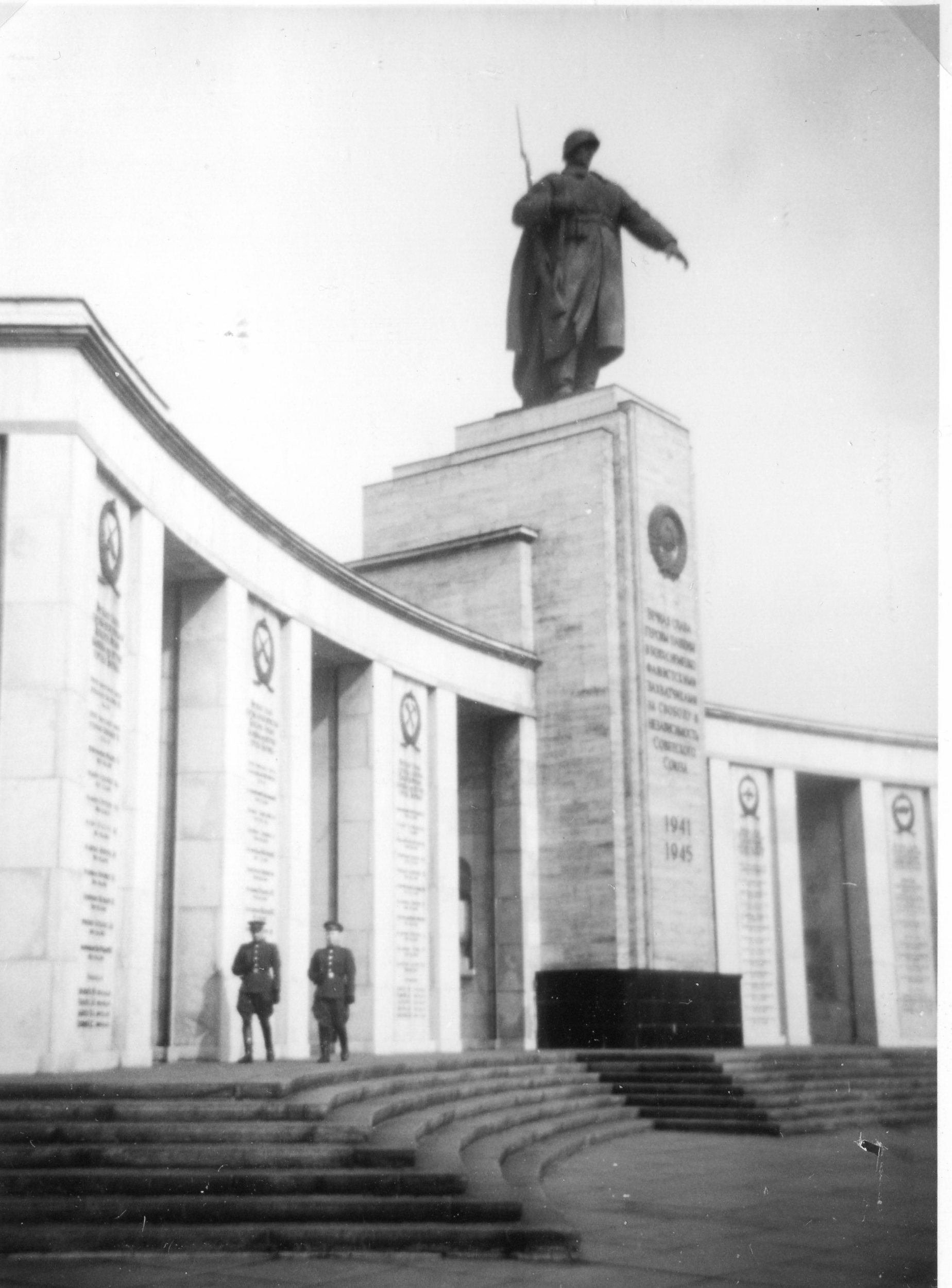
Soviet War memorial commemorating the 80,000 Russian soldiers who died in April and May 1945

Soviet War Memorial 1959

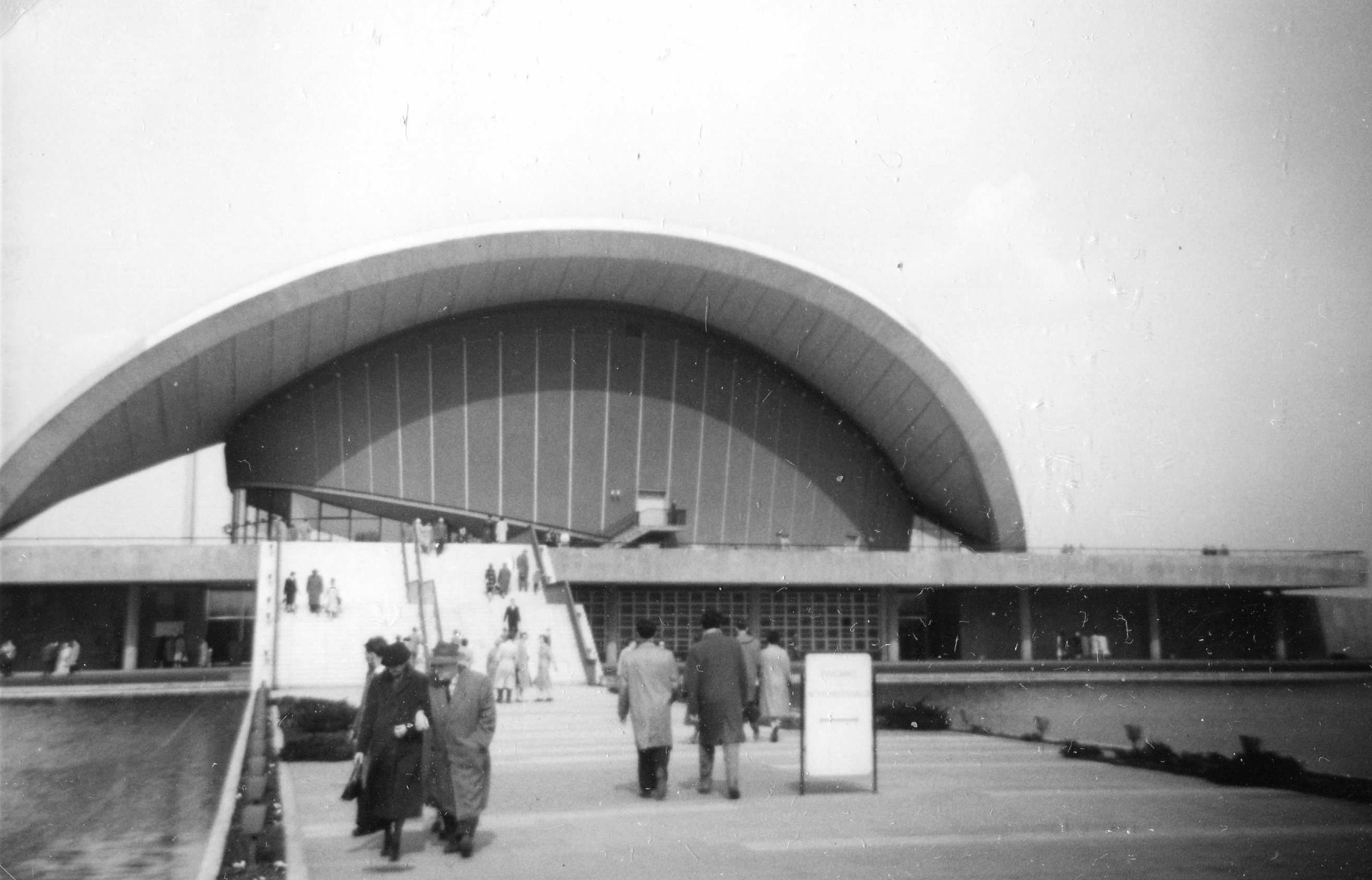
On the very next day Peter took me on a whirlwind sightseeing tour through the divided city that was still interconnected by subway, streetcar and roads. Thus, Berlin was the only remaining escape route for thousands of refugees, until the building of the infamous wall stopped the ever-increasing flow in 1961. Among the sights were the illustrious Brandenburg Gate, which stood right behind the border crossing in East Berlin, and the Soviet War memorial commemorating the 80,000 Russian soldiers who died in April and May 1945 in the Battle of Berlin. Then we went to see the Congress Hall, which on account of its shell-like shape the Berliners irreverently call the Pregnant Oyster. Here Bill Haley and his rock and roll band caused an uproar, when he whipped the mob of young fans into such a frenzy that they demolished their seats normally reserved for more conservative concert goers.

The Congress Hall (Pregnant Oyster)

The Congress Hall (Pregnant Oyster)

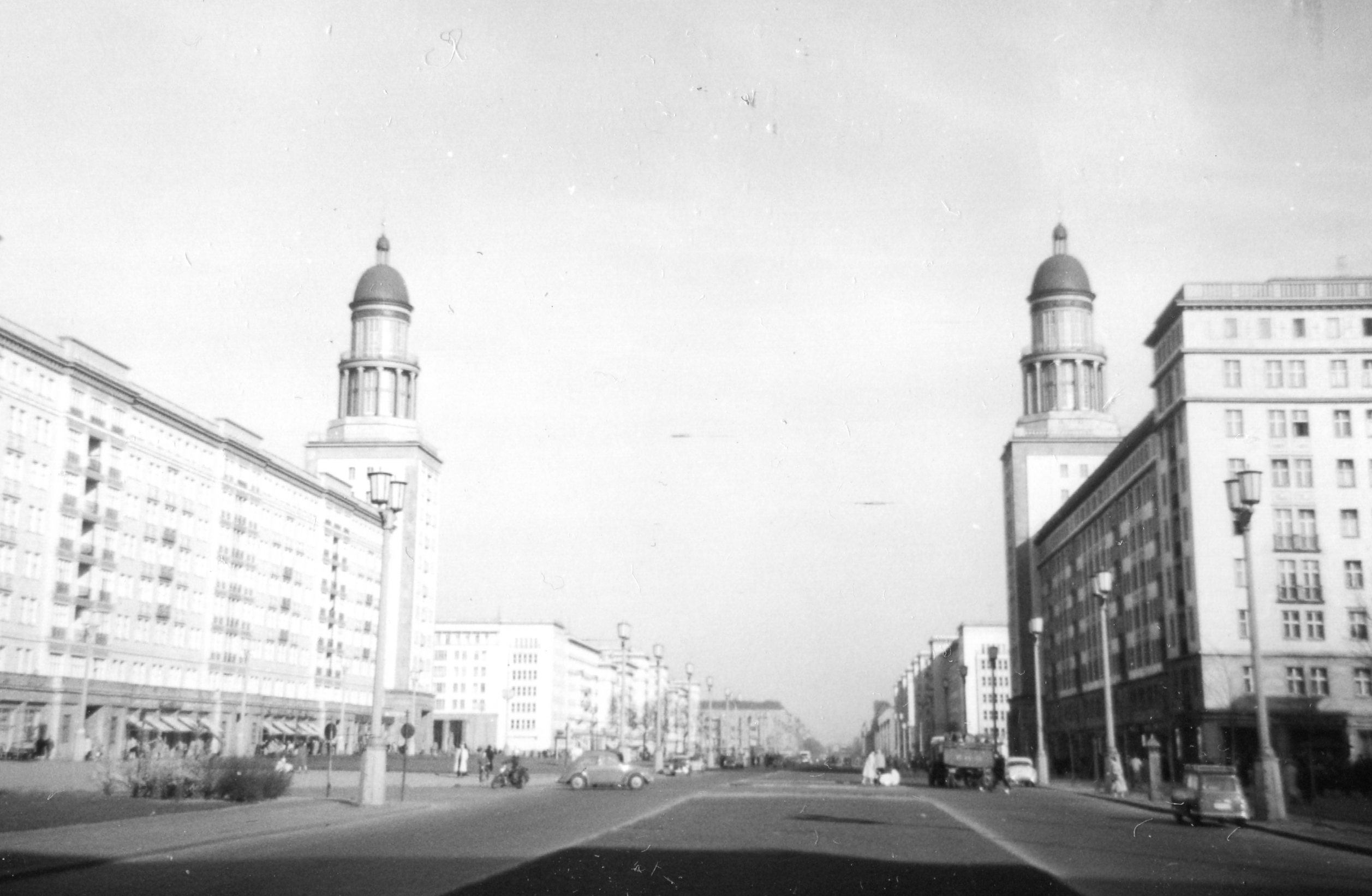
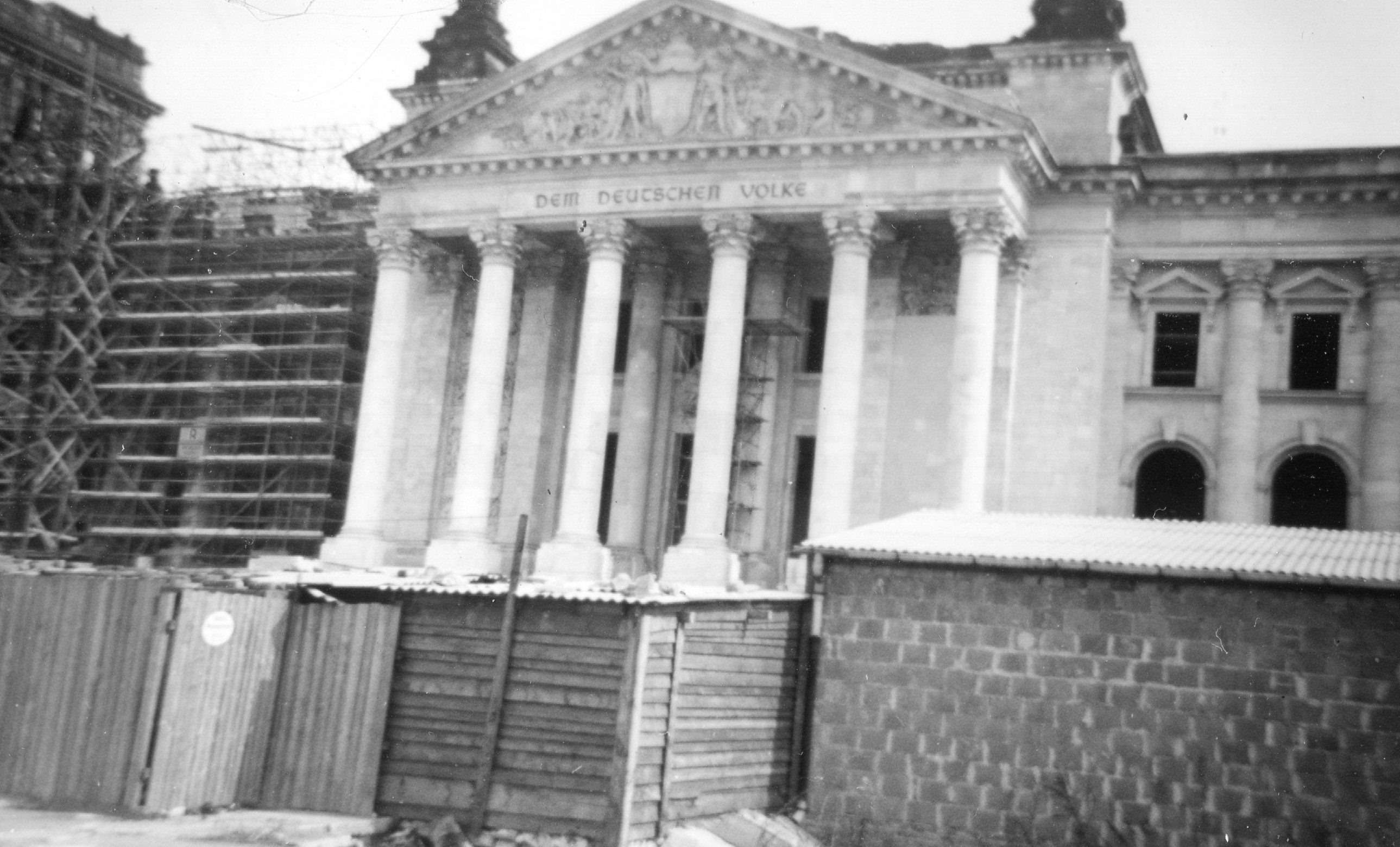
We also looked at the Reichstag building, which was almost completely destroyed during WWII and now was being reconstructed. We were not much impressed by the Stalin Boulevard.

Stalin Boulevard - Now it is called again Unter den Linden

Stalin Boulevard – Now it is called Karl-Marx Street.

With its new box-like massive apartment buildings, built Soviet style, the structures were completely out of tune with modern architecture, but were designed to serve as a showpiece of the fledgling East German capital. There were so many impressions that at the end of the day I could no longer absorb any more sights. In today’s language I began to suffer from a severe case of information overload.

The Reichstag Building under Reconstruction 1959

The Reichstag Building under Reconstruction 1959

So I was glad when Peter suggested we should go and find a place to eat. As a former citizen of the GDR he knew that the basic necessities of life, such as food, were heavily subsidized by the socialist state. As it was close to dinnertime, he took me to the great student-dining hall of the Humboldt University in East Berlin. There we feasted with a good appetite on an excellent meal complete with roast beef, fresh veggies, beer and dessert for the extremely low price of two east marks. Considering the depressed value of the currency often trading at less than one tenth of the value of the West German mark, we had our fill for the measly amount of 20 pennies, for about a Canadian nickel. Even though I had learned early to look out for a bargain, it did not feel right to take advantage of a state supported facility that was not based on profit but on service to the people. Later on I found out that the West German government in Bonn heavily subsidized West Berlin to help with housing and food expenses. Even luxury items, such as coffee, cigarettes and liquor were selling so cheaply that even I could buy half a dozen bottles of fruit wine with my pocket-money for as little as six marks. West Berlin had become a showcase for the entire world, a giant billboard of glamour and glitter, the gateway to the ‘Golden West’. Refugees from East Germany found out upon their arrival the harsh realities of life in camps, old army barracks, and other emergency shelters. The reader may wish to read more on this topic in my wife’s blog bieneklopp.com.