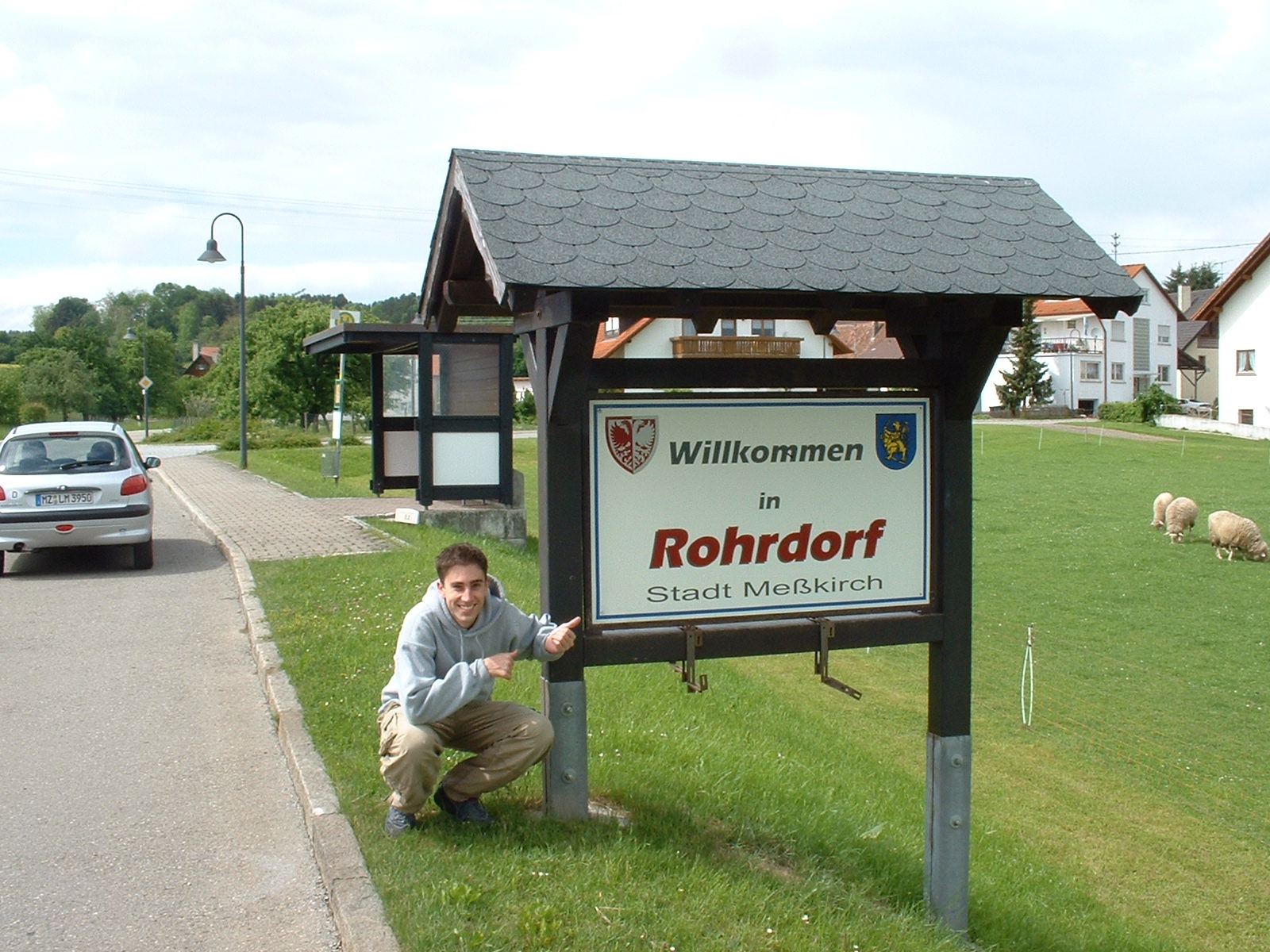
The P. and G. Klopp Story – Chapter IX Part II

Fun at the Fairgrounds and Breaking Bedtime Rules

Many towns and villages in Germany had and still have an annual Kermesse, a sort of funfair that has its origins in the Middle Ages. When this highly popular event came to Messkirch, the colors and sounds of the fairgrounds attracted me. There were the noisy roller coasters, the gentler merry-go-rounds for little children and the giant Ferris wheel, the cacophony of music blaring from loudspeakers cranked up to full capacity, showmen at dozens of sideshows clamoring for the attention of hundreds of people milling through the narrow alleys, the tantalizing odors of frying Bratwursts, the games people played, such as target shooting with air rifles, throwing darts, knocking down pyramids of cans with tennis balls. Being part of a giant colorful human canvass in motion, I enjoyed just being there. I had no money to spend on a ride on the roller coaster, or on a paper cup filled with French fries topped with mayonnaise, or to pay for the fun of popping a balloon with a dart to win a prize.
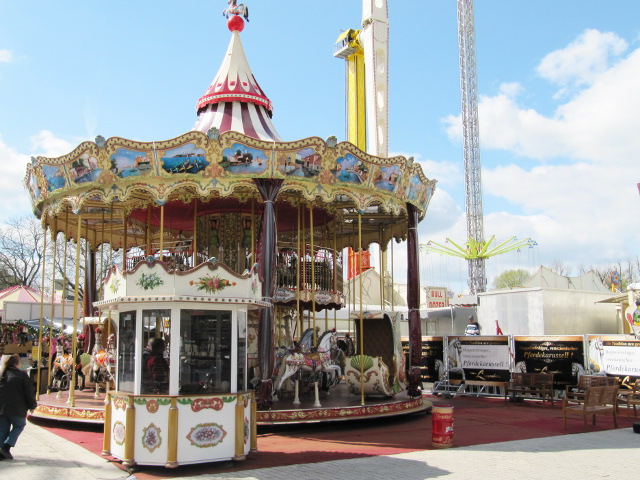
Merri-go-round - Photo Credit: volksfestundkirmes.de

Merry-go-round – Photo Credit: volksfestundkirmes.de

When I returned to the Kermesse on the following afternoon, it so happened that one of the attendants of the merry-go-round had not yet shown up for work. The operator who had spotted me hanging around at the ticket booth approached me and asked, if I was interested in a little job in return for free rides. All I had to do was to take and tear up the tickets of the people sitting in the gondolas and waiting for the merry-go-round to start. That was very enjoyable except that it lasted only a few minutes. The tardy worker arrived and my job was done. But to my surprise the operator honored his promise. So I was taking rides for the remainder of the afternoon for free. Unfortunately I had not yet learned much about self-control and did yet comprehend that there is something we call too much of a good thing. Yes, I experienced the thrill of being twirled around in a sea of color and sound. But after the fifth or sixth ride the initial excitement gave way first to boredom, then to nausea. Stubbornly I kept taking one ride after another, until motion sickness forced me to quickly leave the fairgrounds feeling sick to the point of throwing up. Late, far too late I arrived at Schloßstraße 18 pale and exhausted. To make matters worse, Herr Stoll in his anger about my tardiness slapped me hard in the face with his powerful carpenter’s hand and sent me off to bed. Sick and hungry I spent a long time tossing around in my little bed before eventually falling asleep.

My eldest brother Karl attended the same high school in Messkirch. He had lost a couple of years of schooling due to the turmoil in the years immediately after the war. When he was finally reunited with our family in Rohrdorf, the school administration allowed the 18-year old Karl to participate in classroom instructions with students six or seven years younger. The first foreign language offered in all the schools of this part of  Germany was French. Hence Karl who had received no instruction in this language before had to start over again at the lowest high school level. However, in all other subjects he was clearly superior and so he could concentrate all his energies on French. As soon as he obtained the necessary language proficiency, he was allowed to jump to the next higher grade. He did this often several times in a single school year. It did not take very long for Karl to acquire a reputation for being a genius. Enveloped in an aura of success he became a legend, even before he left the school. Teachers and fellow students alike marveled at his exemplary accomplishments. At first I was pleased to hear so many good things about my brother. However, with the accolades heaped upon that miracle student also came high expectations, which I was unable to meet. Instead of doing my homework I spent the afternoons outdoors with friends, whose company Herr Stoll did not approve.

One evening, it was already getting dark and it was time for me to be in bed. Suddenly I remembered a math assignment that was due the next morning. Pretending to sleep, I waited quietly until Herr and Frau Stoll had gone out for their evening stroll. Then I switched on the light, knelt in front of the tiny night table to do my homework. I had barely finished the first exercise, when I heard the staircase creak and the thump-thump of heavy footsteps. In panic I switched off the lamp on my mini-desk and in doing so I knocked over the small ink pot. In the darkness I tripped over my shoes and hit the wooden floor headfirst with a thud. Hastily I got up and jumped into my bed. Too late! The door burst open and the bright light from the ceiling made me squint. I was dazed and unable to move. Herr Stoll walked up to me, and slapped me in the face. Without saying a single word he switched off the light, slammed the door behind him, barely concealing his uncontrollable anger. His wife was waiting for him at the bottom of the staircase. I overheard him saying, “That will teach him obeying bedtime rules.” Even though this time they were really going for their evening stroll, I did not dare to switch the night lamp back on. I crawled under my blanket and listened in horror, as the ink was dripping drop by drop onto the wooden floor.

Soon afterwards our homeroom teacher prepared letters to be taken home to warn parents, whose children were in danger of failing the grade. Fräulein Welte gave me one to be signed by my father. I guess I would have had to present the letter to Herr Stoll, even though it was addressed to Ernst Klopp. Fearful of severe punishments I forged my father’s signature, but was dumb enough to brag about it to my classmates. It did not take very long, before Fräulein Welte got wind of my offense and mailed a letter to my home address in Rohrdorf. Fortunately Father was preoccupied with his own problems and was too far away to deal effectively with mine at school.

The P. and G. Klopp Story – Chapter IX Part I


Away from Home and the Thrill of ‘Mountaineering’

Power is of two kinds. One is obtained by the fear of punishment and the other by acts of love. Power based on love is a thousand times more effective and permanent than the one derived from fear of punishment.
Mahatma Gandhi


The German school system differed considerably from its North American counterpart. While the emphasis in the United States and Canada was on equality of opportunity for all in a democratic society, the system in Germany was based on an elitist model that provided high school education only to those students deemed capable of handling an academically demanding program. At the end of grade 4 or 5, the teacher would decide and make recommendations as to which students would be leaving the elementary branch to continue in high school for another nine years with the purpose of obtaining the prestigious graduation certificate (Abitur). The remaining students, who were unable to jump that hurdle or whose parents did not wish their child to pursue the high school route, would continue their elementary schooling up to grade 8. Then they would choose a trade, enter an apprenticeship program, during which time they would attend once a week a trade school. The school system in Germany was superior in that it produced on the one hand highly qualified trades people and on the other high school graduates who were better equipped for the rigors of a postsecondary education. It suffered, however, from a couple of major flaws. A teacher ultimately had the power of deciding on a child’s academic career, or parents from a lower class background with no appreciation for higher education could prevent their child from taking the high school route, even though he or she was very talented. Finally the overall system was inflexible. Once a student had embarked on the apprenticeship program, it was next to impossible to access a postsecondary education.

Coat of Arms of Messkirch

Coat of Arms of Messkirch

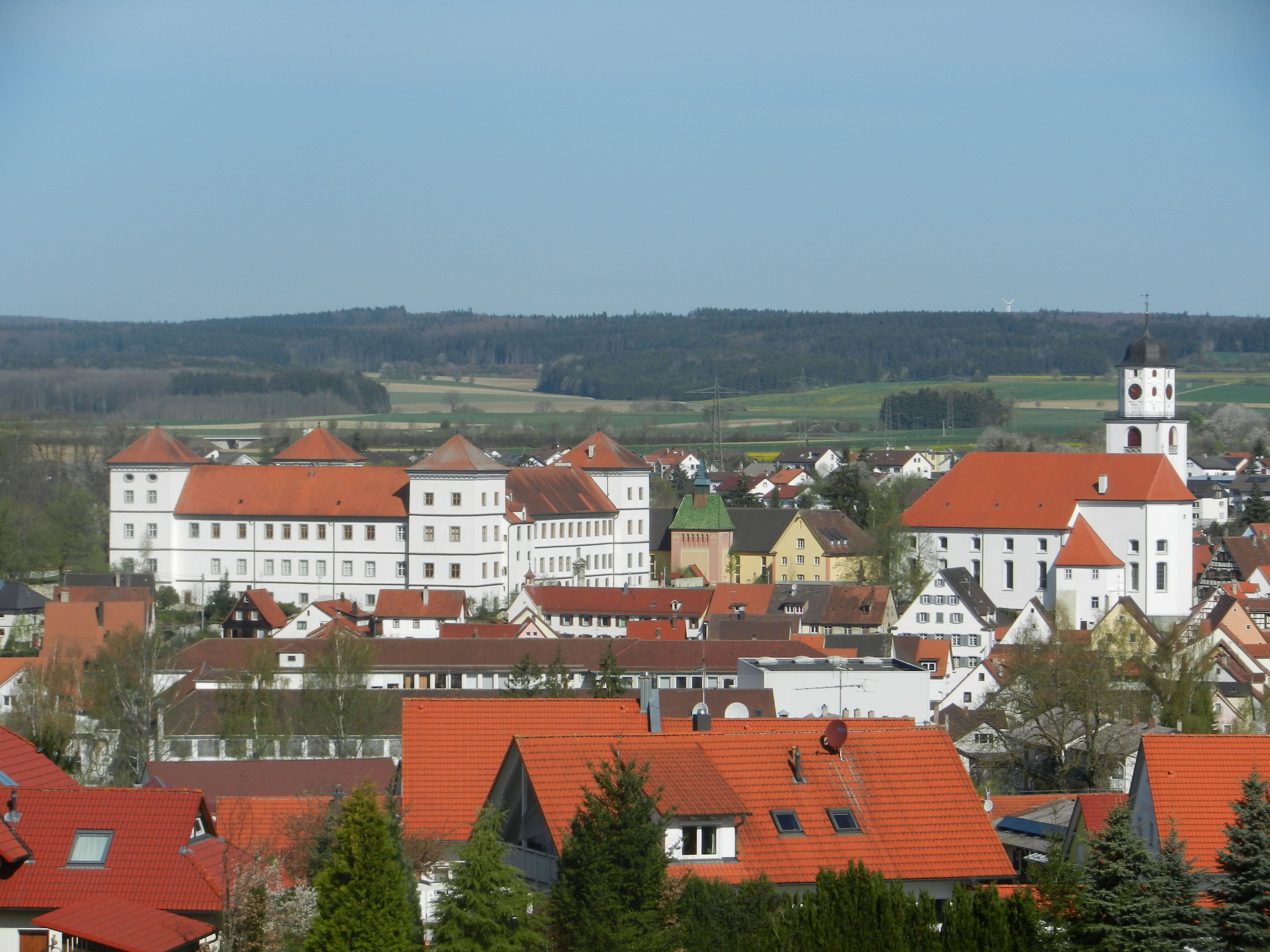
In April 1953 I was admitted at the Messkirch High School (Progymnasium). Since there was no public transportation between Rohrdorf and Messkirch, my parents had made arrangements with carpenter master Stoll to provide room and board and to act ‘in loco parentis’. Herr Stoll, a tall and sturdy man in his mid-thirties, lived with his young wife and his aging half-deaf mother above his carpenter’s workshop on Schloßstraße 18, a street near the famous St. Martin church and the renaissance castle with its adjoining park. Herr and Frau Stoll had recently married and were expecting their first child. They gladly received me into their home on the second floor. The living quarters were divided by a steep staircase into a kitchen and living room area on one side and into bedrooms, storage rooms and an old-fashioned drawing-room on the other. There was also a dachshund, which spent most of his time indoors, but occasionally accompanied the Stoll couple on their evening stroll through the nearby park. For me being away from home for a longer period of time, I felt good that the couple tried very hard to make me feel at home. There was plenty of delicious food on the table. Frau Stoll prepared and served a nourishing meat dish almost every day. I am sure that the rich diet was not intended for the skinny boy from the country, but rather for her husband, a giant of a man with the strength of an ox. Oh, how I loved the meat salad drenched in mayonnaise on my sandwiches at night. Most Germans ate their big meal at noon and were content with a few slices of bread with butter, sausage or cheese in the evening.

View of Messkirch 2012 - Photo Credit: wikipedia.org

View of Messkirch 2012 – Photo Credit: wikipedia.org

One day Herr Stoll took me to the top of the hill that was overlooking the beautiful medieval town. There was a rather steep incline on the part of the crest that led down to the town square and its market place. There he pointed out to me a faint line in the pavement, which would the starting line of the annual soapbox derby for young children over 10 years old. He once participated in such a race and won a ribbon, when he was about my age. He began reminiscing, and carried away by his nostalgic feelings that brought back happy memories, he promised that I would participate in the upcoming soapbox competition. When he saw my puzzled expression on my face, he quickly added that he would build a car for me in his carpentry shop. A simple soapbox then consisted of a wooden frame often brightly painted in red, blue and yellow colors, two axles, one fixed, the other connected to a primitive steering mechanism and of course the four wheels that hopefully would not fall off during the heat of the race. It was not uncommon to reach more than fifty km/h at the steepest part of the hill. So I, the dreamer of the Klopp family, had something very exciting to dream about. All in all this warm reception at the Stoll’s contributed greatly to ease my transition from country to city life away from home.

By the time I attended high school, I had become completely familiar with my role as a temporary foster child, which is to say that I felt confident enough to be myself again, the boisterous eleven-year old boy who did not quite fit the romantic image Herr and Frau Stoll had in their hearts and minds. It seems to me that before their own child was born I had given them an opportunity to practice, the art of parenting and apply some of the techniques they may have learned from reading books on the fine points of child rearing. Unfortunately, for this role they had unrealistic, rather rigid expectations about obedience, punctuality, choice of my friends, and above all my conduct within the narrow confines of their image of an ideal child. In that regard, it is safe to say that I bitterly disappointed them.

On May 29th 1953, the New Zealander Edmund Hillary and Tanzing Norgay, a Nepali sherpa climber, reached the summit of Mount Everest. The news of their successful ascent of the highest mountain spread like a wildfire over the entire world and quickly reached Msskirch, had its citizens talk about at home, at work and in the pubs. The buzz of this great achievement set off a spark that ignited the fertile imagination of us children. Near the starting line of the upcoming soapbox derby was a limestone outcropping covered almost entirely by moss and by grass at the bottom except for its bare pinnacle towering over the Adlerplatz (Eagle Square) below. Here my friends and I often gathered to play. Now this was our Mount Everest. This was our fantasy world, where we lived and experienced the glory of success and agony of near defeat, the dangers of climbing on vertical cliffs, the physical and mental stress and pain of Himalayan mountain climbing. On the long afternoons after school (in Germany school hours were usually from 8 a.m. to 1 p.m.) when we should have been doing our homework, we climbed in groups or in pairs like Edmund Hillary and his sherpa supported by each other by imaginary ropes. Invisible to a dull onlooker we made full use of every imaginable piece of mountaineering equipment, mountain boots and gloves, helmets, lanterns, tents, sleeping bags, crampons, pitons, ice axe, first aid kit, and so on. The materials needed for our assault on the limestone summit sprang up like magic in our creative minds. We held nothing in our hands, yet our imagination provided everything we needed that no Disney world with all its fantasy gadgets would ever be able to match.

Chapter VIII of the P. and G. Klopp Story – Part IV

 Great Acting, a Chocolate Stand and a Scary Tale

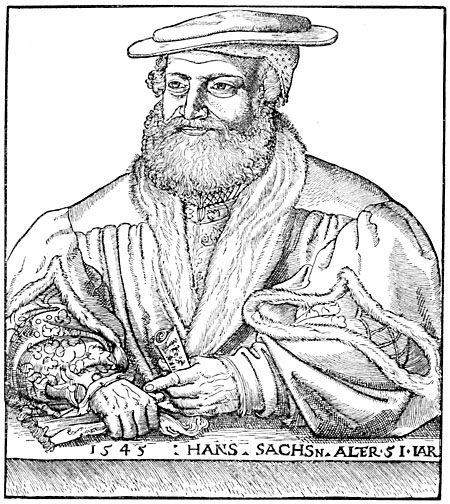
 Each year the school organized a concert for the parents and the general public. We students would sing in a choir, recite poetry, and put on plays. In this annual event we had an opportunity to showcase our artistic achievements. As to the drama performance this year, Frau Schroff was especially ambitious. She selected a medieval play, the farcical comedy: The Wandering Scholar from Paradise. The author Hans Sachs gained international fame as the central figure of Richard Wagner’s opera: Die Meisteresinger von Nürnberg. Sachs was a Meistersinger or mastersinger, who plied his trade as a shoemaker in the city of Nurnberg. He was also a creative narrator in the local guild of poets and musicians. ‘The Wandering Scholar from Paradise’ is about a farmer’s gullible wife, who falls victim to a traveling student’s claim that he had seen her beloved first husband in paradise. Frau Schroff decided that I would be the best candidate to play the role of the wandering student. And I did not disappoint her. As it turned out this challenging comedy was such a success on our modest school stage that we three actors received a standing ovation. Needless to say our teacher was beaming with pride over our success. At the end of the concert, she took me aside to tell me that I had earned with my spectacular performance the price of a new ruler. She also promised not to write that ominous letter to my parents. So I did not only bask in the glory of a wonderful performance that evening, but I also felt a great relief from the anxiety caused by my recklessness in the classroom.

Hans_Sachs

Hans Sachs, Author of ‘Travelers from Paradise’ – Image Credit: Wikipedia

It is one thing to do something creative because it is a school function, such as organized and directed by a competent teacher. It is quite another when young children prompted by their own inspiration start an activity strictly for their own enjoyment. This is exactly what happened in a group of seven boys, which we called ‘The Rohrdorf Village Musicians’. Once or twice a week, when the weather was fine and the grass was dry, we would get together on a sunny hillside between the Upper and Lower Village at least two km away from the nearest farmhouse, where nobody could disturb us during band practice. Our immensely talented bandleader was Klaus. His personality radiated confidence and enthusiasm. I remember the energetic movements of his arms, hands and fingers controlling our musical endeavors with the élan worthy of a professional conductor. But what was there to conduct, since we had hardly any musical instruments? There were only two, one was a tin bucket placed upside down, which served in combination with two wooden spoons as the drum section. The other was slightly more complicated and consisted of a large comb with widely spaced teeth and a sheet of wax paper loosely wrapped around it. The musician had to hum and barely touch the wax paper with his lips to create a rasping musical note. Today one can buy a metallic kazoo for as little as two dollars. The boys without instruments would add variety to the sonorous qualities of the kazoo and the tinny clang of the drum by whistling and humming. My friend Günther even managed to complement the drum by clicking his tongue. I for my part added tonal depth to the ensemble by creating a flute-like sound. To do this I clasped both hands, interlocked my fingers and thus created a hollow between my palms. All I had to do was to blow at a certain angle between the thumbs changing the pitch by expanding or contracting the cavity. With each band session our repertoire of the most common German folksongs grew until we were able to play for half an hour without repeating any of the tunes. Even though we never played for others, it was a most enjoyable experience, a definite highlight of my childhood years.

Continue reading

Chapter VIII of the P. and G. Klopp Story – Part III

 Sledding Accident and Trouble in School

After the first heavy snowfall the boys and girls of the Lower Village took out their sleds to celebrate the beginning of winter on our long and steep hill. The Davos sled named after a Swiss village, where this most popular sled in the world originates, is traditionally fashioned from hardwood and is 80 to 130 cm long accommodating up to three persons in an upright position. Two metal runners in this otherwise all-wood construction ensure a smooth and stable ride. The Klopp children had only one long sled. So we took turns to take on the 1 km run down the street that had next to no traffic in the winter. Gerhard would lie down on the slatted seat and I would sit on top. Safety helmets were unknown in those days. The speed increased with each run, as the snow was packed down and turned into a icy surface. Exhilarating was the experience, when I felt the fresh air in my face and the sensation of being part of the fun in the community of children young and old. Soon someone came up with the idea to form a human train by hitching the sleds together. One simply had to hook the feet into the upward-curved front of the next sled. Up to half a dozen sleds connected this way and expanded into a super long snake-like figure. The pilot alone in the front had to make sure that the trip down the hill would be safe and would not result in broken bones. Often I was allowed to sit on the back of the front man. Being the only one sitting erect, I felt like an admiral in charge of an entire fleet. When I think of having so much fun together with friends and family, very fond memories still linger in the crevices of my mind after all these years.

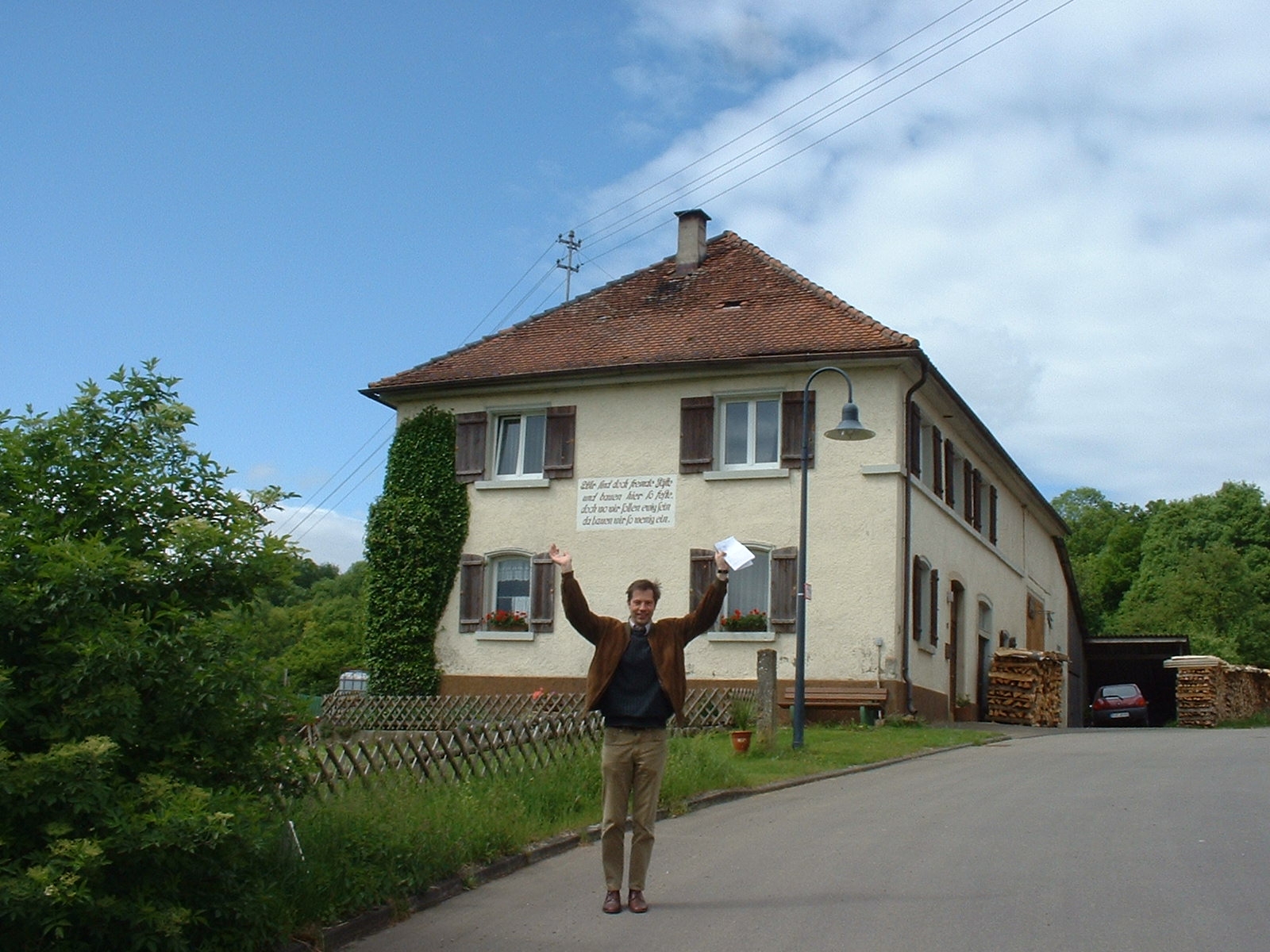
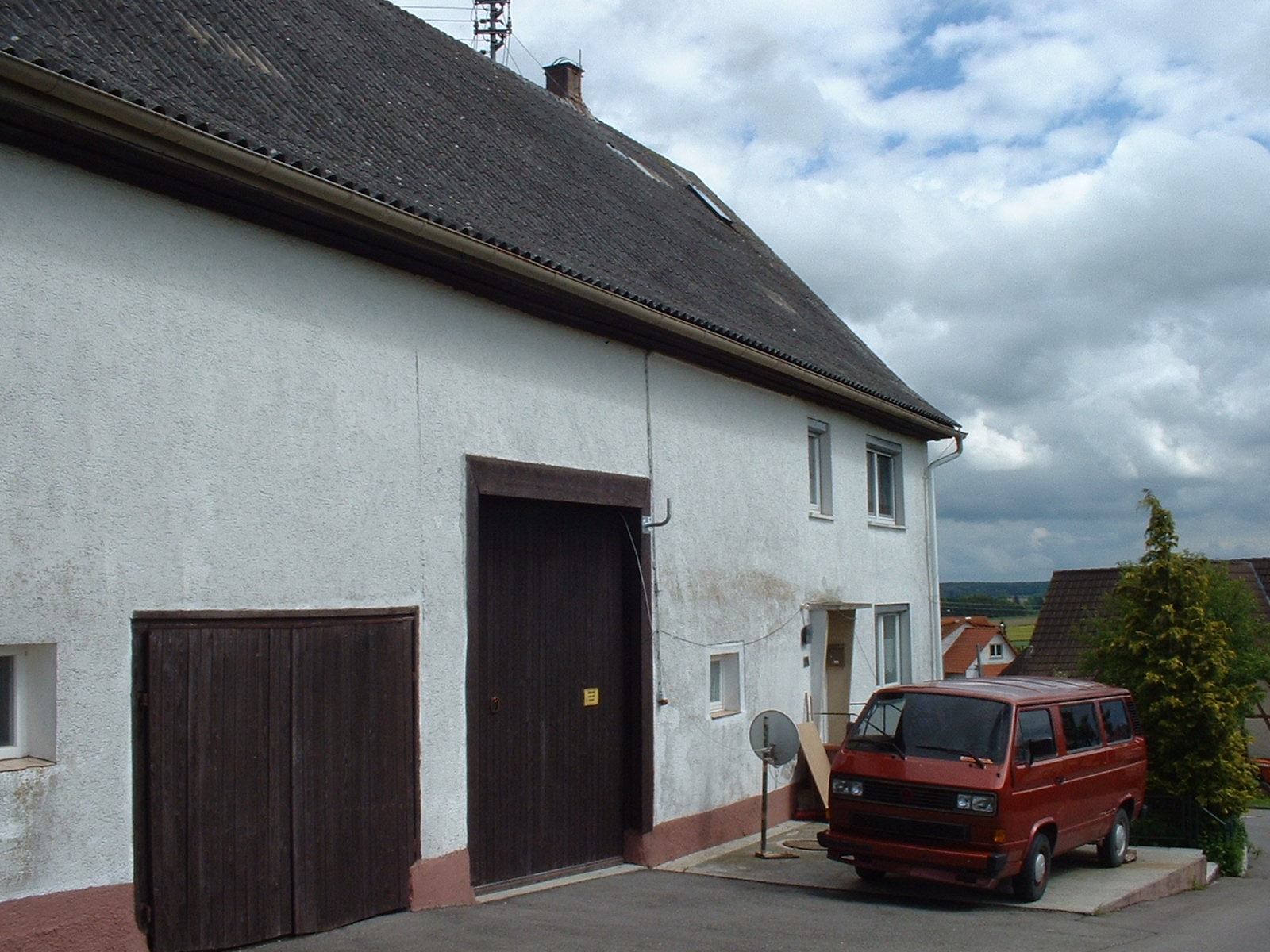
House across from the Ös Farm 2003 - Photo Credit: Stefan Klopp

House across from the Ös Farm 2003 – Photo Credit: Stefan Klopp

 When I was a little older, perhaps 10 or 11, I was allowed to use the family sled to go sledding with my friends on a nearby hill. Cattle would be grazing there in spring, summer and fall. It was completely fenced in except for a gate just wide enough to allow a hay wagon to pass through. When cows were on the pasture, the farmer simply closed the gate by sliding two poles through the horseshoes that were hammered into both end posts of the fence.

The frost in the night before had turned the snow into a crusty surface strong enough that we could with some care walk on it without breaking through. As we were climbing up to the top, an idea suddenly occurred to me,

“Hey, guys, how about making a single pair of tracks with our sleds on the first run. Then we don’t have to plow through deep snow on the following runs and we will go faster, faster, and FASTER.”

“Plus”, I added, “guess what? We don’t have to steer anymore. We will be zipping down the track like a speeding freight train!”

The plan found instant approval with loud cheers. In less than three trial runs we created the double track. And indeed, as I had predicted, our speed increased, because with each trip down the hill the sleds’ runners packed down the snow more and more into a hard and slippery surface. It was about the tenth time that I had climbed to the starting point.

As before I shouted, “Clear the gate opening! I’m coming”, and in one jump I landed belly-down on the slatted seat.

Now I zipped down the track reaching top speed about half way down the hillside. Looking up for the first I noticed that my friends had ignored my warning and were still blocking the gate. Even if they moved out of the way now, it would be too late. Fear of crashing into them gripped and paralyzed me. I was less than twenty meters away. I could have rolled off the sled and let it continue to speed toward the human target, but I didn’t. The collision seemed inevitable within just a few more seconds. Suddenly another force took control over my mind, a force that ignores all danger to oneself and only cares about the welfare of one’s fellow human beings.

My left foot dug deep into the snow. It exerted enough force to make the sled jump out the tracks and veer to the left and away from where my buddies were still idly standing. But now I had to think of myself, as the barbed wire fence and its posts appeared to rush toward me. In a desperate attempt to reduce speed I used both feet now and pushed my boots as far down into the icy crust as possible. I slowed down a bit. But it was too late. The post, worse the iron horseshoe on the post, was less than a meter away. An automatic reflex made me raise my right hand and cover my forehead, before everything around me submerged into complete darkness. When I came to, only a few of my friends were standing around me. Some had run home to get help, but others had left the gory scene of the accident, because they had never seen so much blood before. I was bleeding profusely. Eventually I was able to get up. Completely dazed I took my sled and stumbled home with injuries to the hand and forehead, which the visiting doctor later determined as a severe concussion. The scar under my right index finger reminds me to this day how my hand covering my forehead had softened the potentially fatal impact.

Continue reading

Chapter VIII of the P. and G. Klopp Story – Part II

Getting Caught in the Hen House and Schadenfreude at its Best

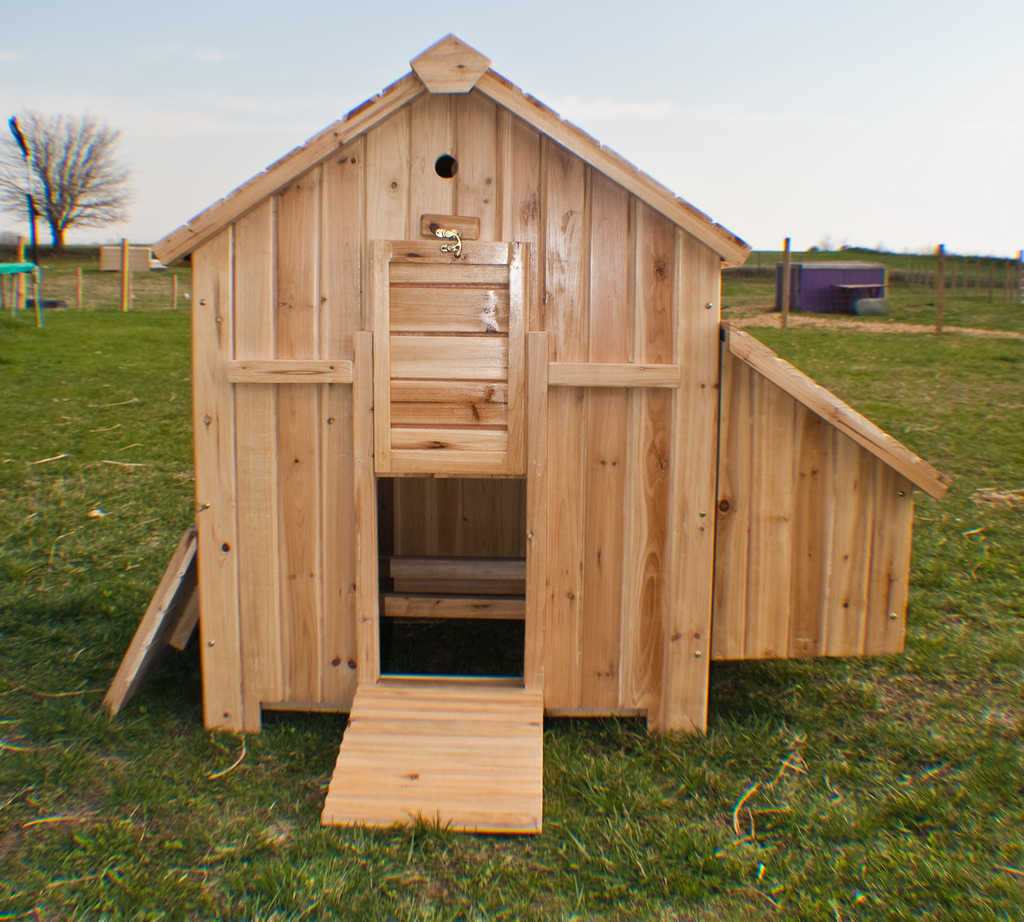
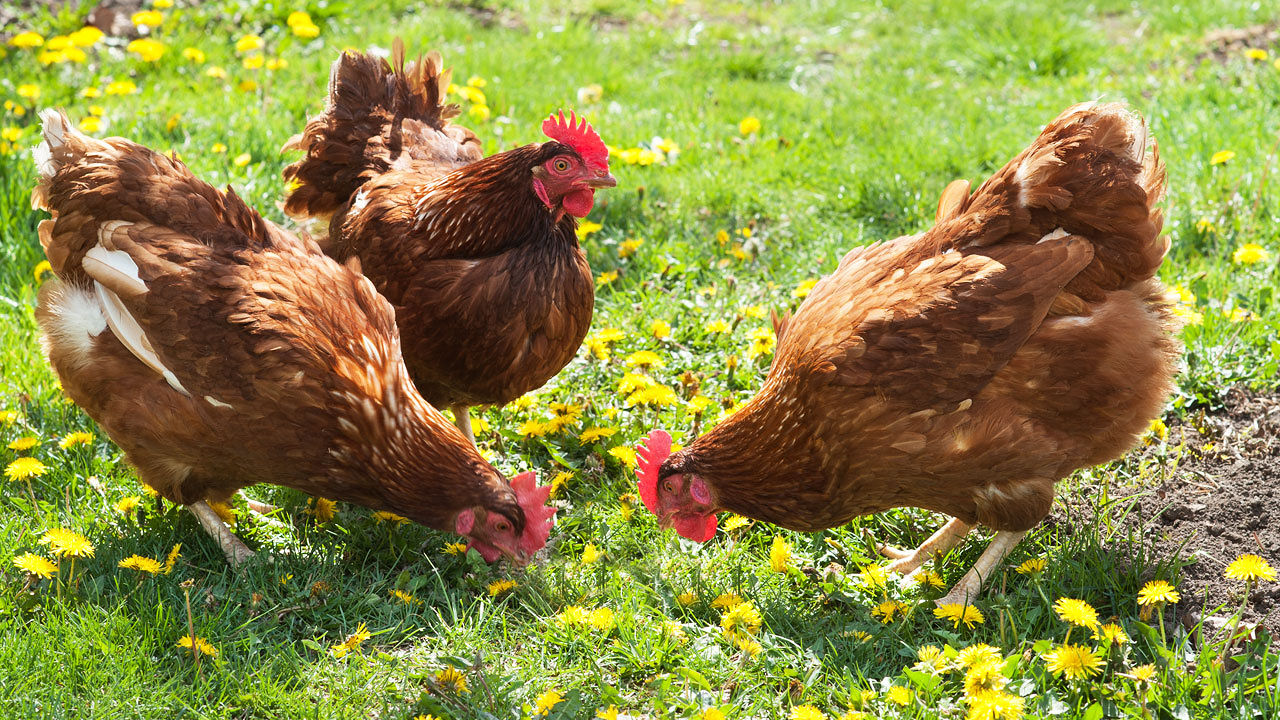
The new hen house that Father had built brought much joy to Mother. Early in the morning, when the chickens were still sitting on their roost, Mother would enter quietly the chicken coop and perform the finger test to find out, which ones were ready to lay an egg that day. She grabbed one and held it firmly in her left arm while inserting the little finger of her right hand. If the tip her finger pushed against something hard, she knew that an egg was on its way, and the chicken would have to spend the rest of the morning in the wooden cage, until it had done its duty. On the other hand the chicken that had failed Mother’s test would immediately be released into the yard. The eggs that our feathery friends produced for our household were of excellent quality. Today we would claim them to be 100% organic and delivered by free-range chickens.

Photo Credit: tobuildachickencoop.com

Photo Credit: tobuildachickencoop.com

To acquire money – so I had learned on my daily milk run – involves work. After I received my pay, I would convert it into anything I wanted provided that there was enough of it. However, my parents insisted that I saved most the money I earned. So unfortunately, it turned into a meaningless number in a tiny savings booklet issued by the local credit union.

Photo Credit: fastcoexist.com

Photo Credit: fastcoexist.com

 It did not take me very long to see the connection between a commodity, such as an egg, and its monetary value. What my slowly developing conscience did not recognize right away was that just because something was there within reach of my little hands did not mean that it was mine. So one day while I was exploring the chicken coop, I discovered an egg in the wooden cage under a chicken. I immediately set her free and released her into our yard. I took the egg, which was still warm, into my hands. Seeing this wonderful oval object in front of me was in my mind almost like owning it. So I walked to the nearest grocer in the Upper Village and converted the egg into cash. This was my first sale. Its success goaded me to look for more eggs in the following days and to sell them to the colluding grocer who was not asking me any disquieting questions. This went on for a while, until Mother caught me red-handed in the hen house. Normally she took care of matters of discipline, but this case of mine was severe enough to let Father deal with it. I did not have a good feeling, when he took me to the barn, where he made it absolutely clear with the help of his cane on my bare bottom that taking something that did not belong to me was the same as stealing. This was another major lesson I learned, and there were certainly many more to follow.

Photo Credit: imgarcade.com

Photo Credit: imgarcade.com

Winter was approaching again, but it had lost its harsh bite, since we had moved into the Ös farmhouse. On the contrary, the cold enhanced the feeling of comfort and coziness, especially when the tile stove was radiating its warmth throughout the entire house. Firewood – split and neatly stacked – lay ready in large enough quantities to provide heat during the coming cold months of the year. Adolf, my second oldest brother, had helped in a big way to make sure that we would not run out of fuel for our stoves. In his eagerness to show off the highest and most beautiful stack in the world, he had built it just a trifle too high. The stack was already leaning away from the wall at a precarious angle, when he added one more piece of wood to complete his masterpiece. That extra weight broke the camel’s back, and with thundering might the entire stack came crashing down fortunately leaving Adolf unharmed on the ladder on which he was standing. Now this was embarrassing enough for him, who had just been bragging about his stacking skills. But living in a family, where Schadenfreude, the pleasure derived from the misfortune of others, was not completely unknown, poor Adolf had to put up with derisive laughter and spontaneous mock poetry coming from our sister Eka (Lavana). She sang,

“Öcher, Öcher, Bum, Bum!

 Dem Beuger fiel die Beuge um!“

This would roughly translate into English as,

“Shame on you, shame on you, clumsy packer!

 The pretty stack fell down, you lousy stacker!”

Even though Adolf rebuilt the stack with great dexterity to make sure it would not tumble over again, the lines and accompanying melody were very catchy, and soon all his siblings were singing and reciting the jingle. It goes to his credit that he took it in stride and waited good-humoredly for the torture to end.

To be continued …

Chapter VIII of The P. and G. Klopp Story – Part I (Chart I – III) The Ös Farm

Troublesome Use of Language and My First Job


“Home is the nicest word there is.”

Laura Ingalls Wilder


 In 1950 an elderly local couple by the name of Ös retired from their small farm. Having no one in the family to take over, they decided to lease it to Father. So in the summer of the same year the Klopp family finally moved out of the ‘poorhouse’ into the Ös farmhouse. In terms of mere living space that was quite an improvement and we all enjoyed the spaciousness of our new dwelling place. But the farmland itself was most likely one of the smallest in the entire village and consisted only of 15 acres of arable land. I daresay all the fields combined were not larger than our park-like backyard in Gutfelde.

The Ös Farm - Photo Credit: Stefan Klopp 2003

The Ös Farm – Photo Credit: Stefan Klopp 2003

While Father’s dream was to restart on a very small scale an agricultural venture for which he was qualified, the chances of success were rather slim. To make things worse from a financial point of view, he had to take out a loan and burden himself with a considerable debt load. Father and Mother at least at the beginning were full of optimism, and we children could enjoy a more comfortable life. As for me, being just eight years old, I was totally unaware of my parents’ worries. I happily attended the Rohrdorf Elementary School, spent many hours playing with my best friend Günther L., an orphan living with his grandparents next door in the last house on our hill, and discovered with him that when play begins to negatively impact our fellow human beings, grown-ups call these games pranks, vandalism and irresponsible behavior. I in particular had to learn the hard way that for every inappropriate action there were consequences ranging from mildly unpleasant to extremely painful. A good part of this chapter in my life will deal with a string of episodes – not necessarily in the right chronological order – with such actions of mine and their consequences.

 Children have an amazing ability to absorb new thoughts, ideas, concepts and especially words. Even if they do not understand them fully at first, they play with them very much like they would with pebbles on the beach. They arrange and rearrange them to form patterns and designs, which in turn invite to do more explorations lending meaning and sense to the physical and linguistic world the curious children live in. When visiting my friend Günther at his place, I overheard his grandparents complain about some people in the village. Naïve, as a young boy like me could possibly be, I thought that they needed a little bit of encouragement. So I took a deep breath and declared with great conviction without knowing what I was saying, “They all should be castrated!”

The response was quite the opposite of what I had expected. For a moment there was a dreadful moment of silence. Then Grandpa Lehmann exploded into a bitter tirade on the corruption of young children by unconscientious parents having no business being here with their strange customs from the Eastern provinces. My friend and I not knowing why he was so upset stood there totally immobile as if nailed to the wooden floor. Then Grandpa glared at me with his angry eyes and yelled at me, “To hell with you! Out of my house! And don’t you dare ever to come back!”

 I felt like a dog that had just been severely beaten and slinked out of the door shaken up and completely puzzled. Fortunately, the forever was only a week. Perhaps Grandma Lehmann put in a good word for me and convinced her husband that I truly did not know what he was saying. This had been a first-class lesson for me: Speak only when you know what you are saying and then only when it is appropriate.

 On the left side road from the highway to Castle Wildenstein lived a fairly prosperous dairy farmer, who owned more than 40 cows. Their main job was to provide milk. The farm also boasted the use of the latest  milking machines, which was quite rare among the farmers in Rohrdorf in the early 50’s. The farmer needed someone to deliver the fresh milk to the local dairy 2 km away at the far end of the Upper Village. He hired me to push a two-wheeled cart with two 20 liter milk cans to the dairy, have the milk weighed in, processed and return home with an equal amount of skim milk. For this job I received every evening upon the completion of the 4 km run a chunk of home-made bread and a piece of bacon rind and at the end of each month a wage of three marks. This was hard work for me, the full cans were heavy and the hill leading up to the Upper Village was very steep. I could take my time though and make frequent stops, as long as I reached the dairy before closing time.

Village entrance where the dairy use to be - Photo Credit: Stefan Klopp 2003

Village entrance where the dairy use to be – Photo Credit: Stefan Klopp 2003

One evening, I arrived late. The door to the dairy was already looked. The workers were cleaning up inside and were getting ready for the next night. With a little bit of a bad conscience over the neglect of my duty, I brought the milk back to the farm and collected my daily bread and my bacon treat without saying anything to the farmer’s wife. When I showed up the next evening having almost forgotten about the incident the night before, the farmer himself was waiting for me and gave me a thorough dressing down for bringing back the raw milk without reporting my failure to deliver it at the dairy. “The pigs that are being fed with raw milk can get easily sick”, he sternly advised me. “Not to mention the loss for not delivering the milk to the dairy”, he added. I decided that as long as I held this job this would never happen again!

To be continued …