Speech by Bernice Rutski on the History of the Edgewood Schools

The First Schools in and around Edgewood BC and the Grand Opening of the New Edgewood School in 1983

This slideshow requires JavaScript.

SPEECH: Written and delivered by Bernice Rutski, Board Chairperson, on behalf of the Board of School Trustees, on the occasion of the official opening of Edgewood Elementary School, December 2nd, 1983.

It is my great pleasure to welcome you on behalf of the Board of School Trustees, on this momentous occasion.

This evening we witness the culmination of long years of planning and consultation, designing and decisions, by a great number of people.

Now, I’d like to tell you a story – a true story, to take you back on a journey in time; to follow through, from the birth and growth of education, in Edgewood and Inonoaklin Valley – your Valley! I’d also like to name some of the people, and history, involved in this part of your past, some who are now long gone, and those who are with us yet.

Legend has it that the Indians named this Valley. It seems that long ago, before the arrival of the settlers, when the Indians visited the Valley, there was a fire burning, the whole area seemed to be one huge flame. Hence, the name “Fire Valley”.

The year was 1909, the place, Fire Valley School in Sleepy Hollow (which is now on the Gary Wood property). The proposed teacher was a Dr. George Heaton. There was, however, one big problem. The magic number of 6 year olds and up needed to start a school was then 7. There were but 6 youngsters, rumour says, all from one family. Nothing daunted, the elders searched the Valley far and wide, found one little 5-year-old boy named Frank Olds whose schooling began then and there.

That same year, 1909, another school was opened in old Edgewood town site (in what some of you may remember as the old Vroom home) . The teacher here was also a Heaton – named Leonard, and brother to Dr. George Heaton.

1918 saw a new Valley School built by Jack McLeod’s father, and known as the “old school-house”. A retired soldier named Ashmore was the first teacher in this school.

Edith Flick’s brother Harry Olds was Secretary-Treasurer of the local Valley School Board until some time in the mid or late 20’s. Edith Flick attended the Valley School at one time. Some of the teachers during these years were: Cole, Freeman, Don Burch, the late Wilfred Jowett, Dora Olsen and Mary Mills.

Much later in 1973, the old Fire Valley School was rented, and a library was opened by Joanne Shipman and Vivian Paseka, who kept it going for 2 years.

Late in 1979, Ambrose Laboucaine bought the place, is gradually renovating it, and plans to make it his permanent home.

The following year, 1919, old Edgewood had a new Grade 1-8 school.

The dividing line between the old Edgewood and Valley School attendance zones was Ferret Road. This is the road to Gerald Ferguson’s place. Each school had its own School Board at this time as well.

The 1920’s and 1930’s saw farmers come and go. Some farmers felt that the name “Fire Valley”, was a deterrent to gaining new settlers. They were instrum­ental in having that name changed to “Inonoaklin Valley”.

These years (30’s) were also the “Depression Years”. Scores of people, some young and some not so young, were on the move, looking for work. Due to the then limited access to this Valley, more people came here by design, than by chance. Some who came to teach were Edith Cummings, Mrs. Lees, Freddy Job and Vince Downing. With the advent of war in 1939 many of the young men left this Valley, some temp­orarily, others forever.

1940’s – Education in the 1940’s, as now, was important to the people, and to certain people that meant getting involved. For several years in the 40’s Minnie deGans, Mother of Margaret Bateman, was a school trustee for the Valley School.

During the years of the 1930’s and up to 1947, for those who wished to go beyond a Grade 8 education, there were 2 choices. One was to take the required courses by correspondence, and the other was to lodge in and attend school in a larger centre, such as Vernon, Nakusp, which was, to say the least, expensive.

Several, who ventured out, were Evelyn DeYeager, Winifred Ferguson and Hedwig Kline who went on to Trail and Vancouver.

1946-47 – Consolidation of schools took place in 1946 and into 1947. This meant that all local schools were incorporated into District No. 10. Local school boards were disbanded. Initially one person was appointed and one was elected to rep­resent this area.

1947 – Changes made by consolidation by 1947 were:

  1. All Grades 1-4 students from Needles, Edgewood and the Valley went to the Edgewood school. (Elsie Sugden, the teacher)
  2. Grades 1-5 went to Fauquier School.
  3. All Grades 6 and 7′ attended the Valley School, Doris B. Gibbs the teacher.
  4. Grades 8-9-10 went to Needles School (with John Wood  as teacher).

1949 – In 1949 a new 2 room Grades  1-6 School  was built in Edgewood, while a new 2 room School with Grades 7-12,    was built in Needles. This resulted in the closing of the Valley School.

1950 – From January to June of 1950, Hazel Haggart, still of Edgewood, replaced Elsie McBurnie nee Sugden, in the old Edgewood site school.

1950’s – A newcomer to the Valley in 1952 was a teacher named Yvonne Pattie, who taught 1 year here and 1 year in Nakusp, then she and Roy Donselaar were married in 1954 and Yvonne quit teaching. In 1957 Yvonne came back to teach and taught until 1966. Then in 1968-69 she was asked to teach High School students in Needles for its final year.

The year 1952 also saw electrical power made available to the Valley.

1950’s – Two of the trustees who represented the Valley and Edgewood during the 1950’s were Roy Bateman and Roy Donselaar.

As well, old timers, who have left us, Scotty Delvin, Charlie Claridge, and Vance Taylor served on the School Board from other areas of the District during the 50’s.

In 1959, the Edgewood School received an addition of a third room to house the Grades 1-6 students from Fauquier, Needles, Edgewood and the Valley.

The early 1960’s saw the introduction of T.V. to Edgewood and surrounding area.

1962 – By 1962, unease was growing in the District, due to fear of ratification of the Columbia Treaty. This treaty, which could and eventually did, changed the lives and the whole world adversely for a great many people.

1962 and on – Teachers coming into the District from 1962 on, had great difficulty in securing accommodation, due to the influx of Hydro workers in the area.

1962 and 1963 saw two new teachers come to the area, Erick Walters, and a young lady, who soon became Mrs. Terry Ewings. Nina has remained a teacher on staff since that time. Very commendable, Nina!

Mid 1962-66 – During the next few years, mid 1962-66, numerous people – Board members, parents, B.C. Hydro officials and teachers all spent a great deal of time trying to decide on a logical location for a new school. The difficulty was to accurately gauge the potential growth areas.

1966 – The trustees of this time, 1966, some of whom were the late Bill Craft of Fauquier, Don Williams and E. Milne of Edgewood, Robazzo of Burton, Glen Weatherhead and Jotf Lee of Nakusp were striving for a realistic sum of monies to be realized from the sales of schools, garages, teacherages and much land, south of Nakusp, with an option to purchase given buildings from B.C. Hydro, should they so desire. Eventually, the sum of $251,000 was received.

The Superintendent of Schools during the negotiations with B.C. Hydro was Claude Bissell, and H. Miller was the Secretary-Treasurer, until July 1966, when Laura Beingessner took on the job in September 1966. All dealings with B.C. Hydro were done before July 1966.

In 1967 the School Board accepted B.C. Hydro’s offer of 4.1 acres of land on the edge of new Edgewood town site for $1,200. The cost of the ATCO’s (trailers) and set up on the new site was $50,050.

With the impending flooding of Arrow Lakes imminent, October 1968 saw a new 3 room (ATCO) School in New Edgewood town site for Grades 1-7. Grades  8 -12 were bused to Nakusp, with Bill Penner as the driver.

It’s interesting to note that the school populations down the lake, which include High School students, vary little from then to now: Then – 243; Now – 253.

The garage from the old Edgewood town site school and the Needles garage, which Roy Donselaar dismantled, were used to make the 2 bus garage recently demolished to accommodate this new 1983 School.

In 1978-79 a kindergarten room was added to the Edgewood school (due to population explosion a few years earlier). The cost to the School District was $25,000 for the ATCO building alone.

During the years, the School Board, some of whom are with us tonight, was aware that the ATCO’s needed more than band-aid treatment. The buildings were wearing out quickly. Major repairs were needed, and a decision had to be made.

Finally in 1981 definite steps were taken. Late that year (81) Ministry Officials visited the District and the necessity for a new building was concurred with.

1981-82 – Much red tape was dealt with by the Senior Administration, (Stewart Ladyman and Norm Kuhn),in the next two years. The file on obtaining a bit of Crown Land is one inch thick.

  • 1981 The Board engaged the Architectural firm of Allen, Huggins, Thorburn in early 1982 to draw up plans for this school, estimated cost to be 1.2 million dollars. All staff, the community and various levels of government were involved in its design and services.

What was a dream in ink is now a reality in brick.

My thanks to all for the interest, co-operation and help shown me in my quest for historical information. A special thank you to Yvonne and Roy Donselaar and as well to my patient husband, who has been a brick (no pun intended).

On behalf of the Board of School Trustees I thank all those people, who in any way were involved in making this building a functional, educational environment for the students, and the adults of our Valley.

THANK YOU.


Eine ergreifende Liebesgeschichte – 6. Teil

Gespräch über „Gott und die Welt“

Gisela und Hartmut (Kegler Stammbaum Chart II a – III) lernten Albert während ihrer Verlobung kennen, die in Quitzöbel gefeiert wurde. Hier sorgten Vati und Jürgen, Muttis jüngerer Bruder, für lustige Unterhaltung. Hartmut führte an diesem Tag ein langes Gespräch mit Albert, das er bis heute nicht vergessen hat:


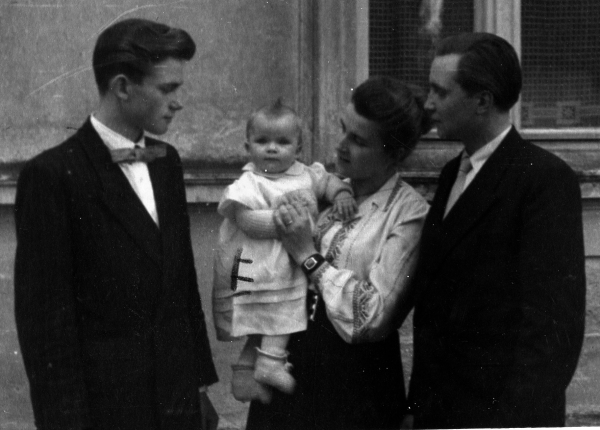
Eddas Taufe 1955 mIt Jürgen Hartmut Gisela

Eddas Taufe 1955 mit Jürgen, Hartmut und Gisela

Hartmut:

„An Eberhards Vater erinnert mich ein endlos langes, heftig geführtes Gespräch über „Gott und die Welt“. Ich vertrat damals die kirchliche Seite, er dagegen war überzeugter Atheist. Als ich später Ludwig Feuerbachs denkwürdige Schrift über das „Wesen des Christentums“ las, wuchs mein Respekt vor jenem streitbaren Gesprächspartner. Er erwies sich als ausgezeichneter Kenner der Bibel und argumentierte auf dieser Grundlage so folgerichtig, dass ich ihm mit meiner stümperhaften Theologie nicht gewachsen war. Das ärgerte mich auch gehörig, trug aber, als ich etwas vernünftiger wurde, auch zu meiner kirchenkritischen Einstellung bei. Ein einfacher Kutscher hatte einem jungen Akademiker geistig auf die Sprünge geholfen!“


Albert lebte vielleicht ein Jahr bei unseren Eltern. Als Eberhard an die Schule nach Baek versetzt wird und Familie Trampenau nach Gulow zieht, geht er in ein Altersheim nach Mecklenburg. Elisabeth hatte sich durchgesetzt!


In dieser Zeit hatte sich unsere Oma Hanna an der Hilfsschule in Bad Wilsnack als Lehrerin beworben und war auch dorthin versetzt worden. Sie bekam dort eine kleine Wohnung, zwei Zimmerchen mit Küche im ersten Stock, die nur über eine steile Treppe erreichbar war. Für Opa Manuel, der ja nur mit Krücken laufen konnte, war der Weg in die Wohnung sehr beschwerlich. Aber da es in der Ehe von Johanna und Emanuel ohnehin gerade ziemlich kriselte, wohnten Oma Hanna und Omchen zeitweise allein in Bad Wilsnack.

Edda 1956

Edda 1956

Auch Elisabeth, Eberhard und die kleine Edda besuchten sie hier von Zeit zu Zeit. Einmal, als auch Jürgen gerade dort war, wurde Edda, die gerade laufen konnte und daran gewöhnt werden sollte, ihr Geschäft auf dem Töpfchen zu verrichten, auf dasselbe gesetzt. Sie wollte aber nicht sitzen bleiben, stand immer wieder auf und tappelte zu Großmutter in die Küche. Jürgen setzte sie wieder hin, und als sie sofort wieder aufstehen wollte, brüllte er sie an: „Setz dich jetzt hin!!“. Edda, die sonst von Jürgen nur lustige Töne gewohnt war, plumpste mit fassungslos aufgerissenen Augen wieder auf den Topf, erledigte umgehend ihr Geschäft, und alle lobten Jürgen ob seiner pädagogischen Fähigkeiten.

Emanuel kam in Mellen sehr schlecht allein zurecht.

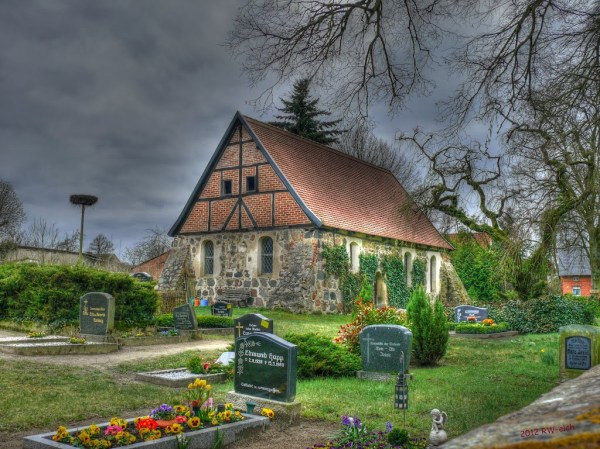
Dorfkirche mit Friedhofsansicht in Mellen - Photo Credit: Panoramio

Dorfkirche mit Friedhofsansicht in Mellen – Photo Credit: Panoramio

Jürgen(Kegler Stammbaum Chart II a – III) :

Nachdem Emanuel mit seiner ständigen Nörgelei allen die Nerven zersägt hatte, kam Hartmut bei einem seiner Besuche auf die Idee einer Scheidung. Wir, Elisabeth und ich, griffen das begeistert auf, Omchen schwieg sehr beredt dazu, denn Scheidung war in ihrem Lebensbild etwas Unanständiges. Hartmut drängte mit Argumenten, Elisabeth und ich emotional. Schließlich fuhr das scheidungswillige Ehepaar zum Amtsgericht in Perleberg vor den Scheidungsrichter. Ich war bei dem Termin dabei. Es gab keinen, der nach dem Gesetz schuldig war, und so wurde nach Scheidungsgründen gefragt. Weder Emanuel noch Johanna wusste so richtig darauf zu antworten, denn Nörgelei war kein Grund, und dass die Kinder es so wollten, auch nicht. Also entschied der Richter, sie mögen doch zu Hause noch einmal in Ruhe darüber nachdenken und schloss die Sitzung. Sichtlich erleichtert fuhren die Eheleute wieder nach Mellen zurück. Ich war überzeugt, wäre Emanuel nicht an Krücken gegangen, dann hätten die beiden das Amtsgericht Händchen haltend verlassen. Ich war natürlich enttäuscht, Elisabeth und Hartmut nicht minder.

Im Nachhinein, nachdem ich schon im Westen war und Emanuel verstorben, schien mir der Ausgang des Scheidungsversuches sehr glücklich, denn meine Mutter hätte sicher bis an ihr Lebensende an dem Selbstvorwurf gelitten, einen hilfsbedürftigen Menschen im Stich gelassen zu haben.


Oma Hanna und Omchen zogen – zu unserem Glück – wieder nach Mellen zurück.


Eine ergreifende Liebesgeschichte – 5. Teil

Gewitterwolken am Horizont

In der nächsten Zeit wohnen unsere Eltern in Quitzöbel in der schönen Lehrerwohnung. Am 9. Juli 1954 legt Mutti am Institut für Lehrerbildung in Schwerin die Staatliche Abschlussprüfung ab und ist jetzt eine richtige Lehrerin mit Lehrbefähigung für die Unterstufe der allgemeinbildenden Schulen. Im September wird Edda geboren, und eigentlich könnte jetzt alles so schön sein, wie es sich die beiden immer erhofft hatten. Doch schon waren neue Gewitterwolken am Horizont aufgetaucht. Von je her werden unzählige Probleme, die bei jungen Paaren die Harmonie der trauten Zweisamkeit stören und zu Spannungen führen, von Eltern und Schwiegereltern verursacht, die meinen, ihre eigenen Erfahrungen seien tiefgreifend genug, um sie auch den jungen Leuten überstülpen zu müssen. Gutgemeinte Ratschläge, eine gewisse Rivalität gegenüber Schwiegertochter oder Schwiegersohn, zu häufige Anwesenheit machen es jungen Paaren oft schwer, ihren eigenen Weg zu finden, der auch eigene Fehler mit einschließt.

0022 Edda 1955 mit Eltern

Eberhard und Elisabeth Trampenau mit der kleinen Edda – 1955

In diesem Fall waren es Eberhards Eltern, die sich getrennt hatten. Während Minna bei ihrer Tochter Edula in Berlin lebte, war man übereingekommen, Vater Albert mit nach Quitzöbel in die Lehrerwohnung zu nehmen. Nun war Albert ein nicht ganz einfacher Mensch, so wie auch sein Leben nicht gerade einfach gewesen war. Geboren wurde er in Ostpreußen, und zwar als uneheliches Kind. Seine Mutter, die als Magd auf einem Gutshof arbeitete und sich mit dem Gutsherrn wohl mehr als gut verstand, behielt das Ergebnis dieses guten Verhältnisses, den kleinen Albert, nicht bei sich, sondern gab ihn in ein Heim, wohl weil es in der damaligen Zeit völlig unmöglich war, als ledige Mutter ein Kind großzuziehen. Albert prahlte später oft mit dem „blauen Blut“, das in seinen Adern fließe, vielleicht war es aber auch nur Zynismus, der von seiner nicht sehr glücklichen Kindheit ablenken sollte. Er war ein sehr kluger Mann, sehr belesen, ein Unikum, der die Leute oft mit Bauchreden verblüffte. Er hatte eine starke Abneigung gegen die Kirche und war nicht nur ziemlich neugierig, sondern oft auch streitsüchtig. Und so blieb es nicht aus, dass es nicht selten Zoff gab, vor allem zwischen ihm und Elisabeth.

In seinem grenzenlosen Wissensdurst inspizierte Albert regelmäßig nicht nur Schränke und Schübe, sondern auch den Mülleimer. Elisabeth war in ihrem Humor häufig nicht gerade zimperlich, und so machte sie sich einmal den Spaß, aus den Hinterlassenschaften in Eddas Windel kleine braune Kügelchen zu formen und gut sichtbar im Müll zu platzieren. Und wirklich, es hat geklappt, wenig später sah man Albert sich heftig und gründlich die Hände schrubben…

Chapter 21 of the P. and G. Klopp Story – Part III

Storm Clouds on the Horizon

In the meantime Biene had an exciting vacation with her family in Bavaria, often went paddling on Lake Ammer with her parents’ folding boat. She and her twin brother Walter almost drowned, when their boat capsized in a violent storm. They traveled to the German Alps and even took a gondola ride up to the Zugspitze, which is with an altitude of 3000 m the highest mountain in Germany. She returned home filled with wonderful memories. There was so much to tell, but the flow of letters began to ebb. The intervals between them began to widen into two-week gaps. Something must have happened that made me worry. Had my letters lost its fervor? Were the thoughts expressed too philosophical, self-centered, out of touch with reality? I could not tell.

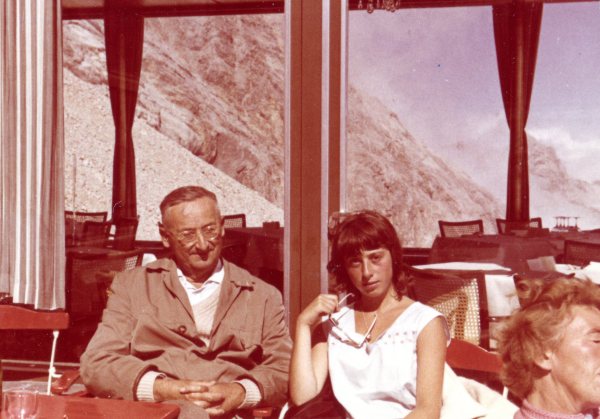
Biene and her father on the Zugspitze 1963

Biene and her father on the Zugspitze 1963

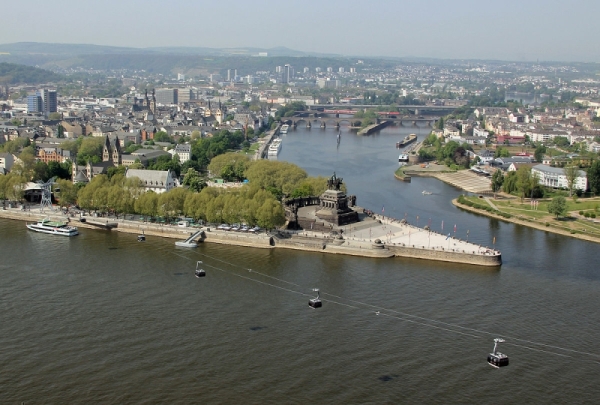
Fall was a beautiful time in Koblenz. The park at the German Corner, located at the confluence the Rivers Moselle and Rhine, was ablaze with brilliant red, yellow and orange colors. There I often sat on a park bench alone away from the noisy inner city and read about the fall and utter destruction of Rome’s rival Carthage in Mommsen’s History of Rome. I was fascinated to discover that the cause of the three Punic wars was the same as of most other conflicts in the history of mankind, namely the desire for economic power and growth at the expense of some other country. I gained important insights into the ways in which imperialistic expansions were intertwined with a general decay of the moral fiber of a nation. I saw so many parallels in our modern world that I contemplated writing a novella on the mighty city on the North African shore, if I could only add and weave in some personal experiences to the story to make it more interesting. These experiences were coming my way faster than expected, and in the end I got more than I had bargained for. Indeed I would have preferred not to write the novella in exchange for the pleasant status quo.

Deutsches Eck in Koblenz, Germany

Deutsches Eck in Koblenz, Germany – Photo Credit: wikipedia.org

I had just settled into the routine of orderly army life with its duties of monthly night watches, sessions of theoretical and practical instructions and the occasional maneuvers, which I enjoyed more and more, because they took place in the great outdoors away from the stuffy barracks in the city. Then a command from the newly formed signal corps at Maxhof in Bavaria went out to all army divisions to provide two truck drivers each. Our crafty commanding officer in Koblenz selected private Gauke and me for the transfer effective October 1st, even though we had no driver’s license for those colossal Mercedes communications trucks. Obviously, he wanted to keep his precious truck drivers for himself. We were told that we would receive professional training and certification that could be very useful later on, when we returned to civilian life. However, it was immediately clear to my that with the transfer to Maxhof, I would lose out on the chance of becoming part of the upcoming officer’s training program. It would upon successful completion raise me to the rank of a lieutenant of the reserve with a much higher pay-out at the end of my two-year term. The wheels had been set in motion. I had no recourse to an appeal process. The decision was final. I was devastated.

58

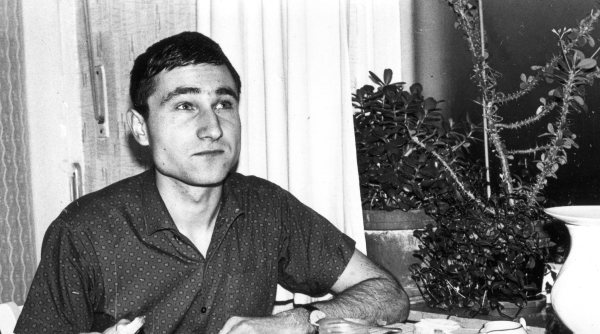
Peter in a contemplative mood at home in Watzenborn-Steinberg

August Otto Wilhelm Klopp (1884 – 1886) – Part II

Amazing Fertility in the Face of Death

The euphoria during the following two and a half years was almost without limits, even though P.F.W.Klopp’s milling business was on the decline. Around the time of Christmas 1884, most likely while they were still living in Magdeburg, Friedrich Klopp went about having another child. Anna, born on September 29, 1885, was the eighth child in the ever-growing Klopp family. Friedrich took his clan and moved back to Jersleben, where he found accommodation and presumably gainful employment with one of the three mill owners of his apprenticeship years. There he devoted his energies to the creation of yet another offspring and succeeded at the beginning of March 1886 in getting his wife expecting again.

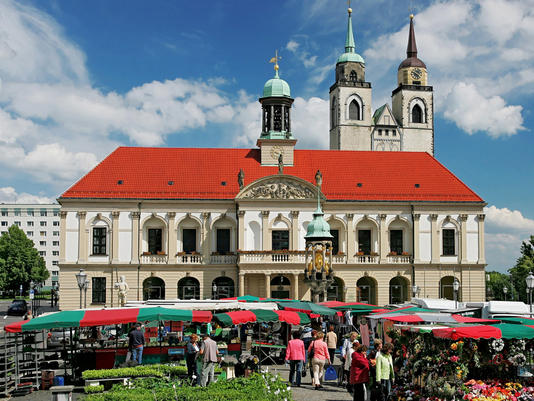
Weekly Market in Today's Magdeburg - Photo credit: magdeburg.de

Weekly Market in Today’s Magdeburg – Photo credit: magdeburg.de

At the beginning of the same month on March 5, 1886 the sickly August Otto Wilhelm passed away at the age of one year and seven months. This early childhood death points to the poor standards of hygiene in the mill environment at Jersfeld of this era and highlights the tribute, which the family had to pay at their return to their home turf. The loss was bearable and soon forgotten.

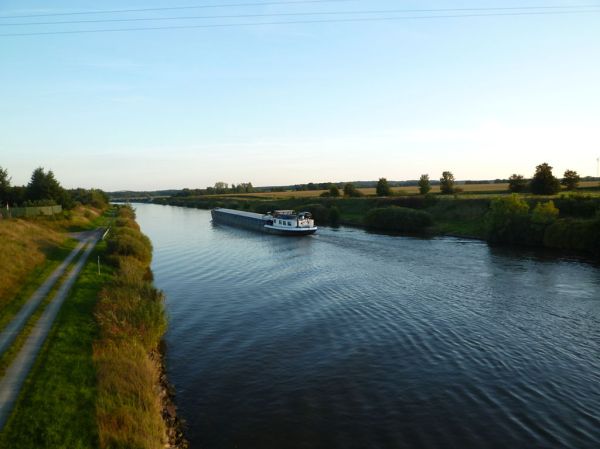
Midland Canal near Jerleben - Photo Credit: wikipedia.org

Midland Canal near Jerleben – Photo Credit: wikipedia.org

During the weeks of Emma’s mourning 33-year-old husband Friedrich provided plenty of physical comfort and warmth, the result of which excluded any fear of extinction of the male lineage in the Klopp family.  Exactly nine months later on December 8, 1886, Wilhelm, the fifth son and by now the ninth child, made his entrance into the family. August Otto Wilhelm is the only Klopp child to be buried in the cemetery of the Jersleben church yard.

Eine ergreifende Liebesgeschichte – 4. Teil

Bitten um Verständnis

Am gleichen Tag erreichte die Familie ein Brief, in dem Elisabeth u.a. schrieb:

„Eberhard und ich haben an dem Tag, an dem Ihr diesen Brief bekommt, also am 4.6., geheiratet. Wir tun es deshalb so schnell, weil wir uns auf ein Kindchen freuen dürfen. Ich weiß nicht, ob es eine Entschuldigung dafür gibt, was ich Euch angetan habe! Das ist mein ganzer Kummer, denn ich habe Euch so lieb, dass es mir unsagbar weh tut, Euch so leiden zu sehen. Wenn Ihr könnt, verzeiht mir. Denkt bitte daran, dass auch Ihr, als Ihr liebtet, fest bei Eurem Entschluss bliebt. Über das, was geschehen ist, möchte ich nichts anderes sagen, als dass es aus Liebe geschehen ist. Ich habe lange darüber nachgedacht, konnte es aber nicht bereuen. Ihr wisst, dass ich es nicht ertragen würde, wenn Ihr nichts mehr von mir wissen wolltet. Ich brauche zu nötig Eure Liebe und Euer Verstehen.“

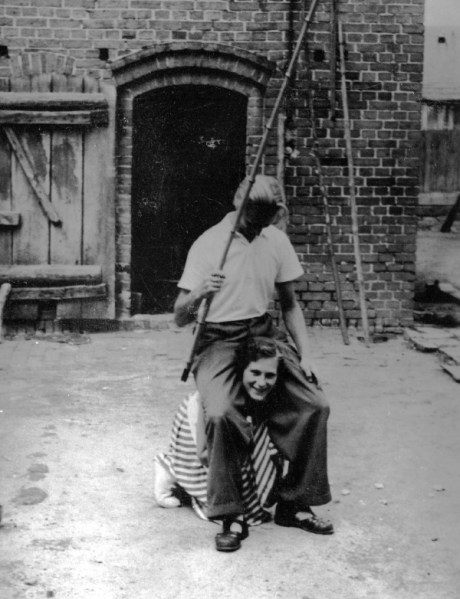
Glückliche Tage der Verliebten 1955 - Titel: Don Quichote auf Rosinante

Glückliche Tage der Verliebten 1955 – Titel: Don Quichote auf Rosinante

Auch Eberhard wendet sich an seine Schwiegermutter, unter anderem mit folgenden Zeilen: „Seit wir Gewissheit hatten, dass Elisabeth ein Kindchen haben würde, stand unser Entschluss fest, so schnell wie möglich zu heiraten. Sie werden das alles vielleicht nicht verstehen, Sie werden sehr böse auf mich sein und wer weiß was von mir denken, weil Sie mich zu wenig kennen. Ich verstehe das wohl. Die Zeit wird es beweisen, dass wir zueinander passen und glücklich sein werden.

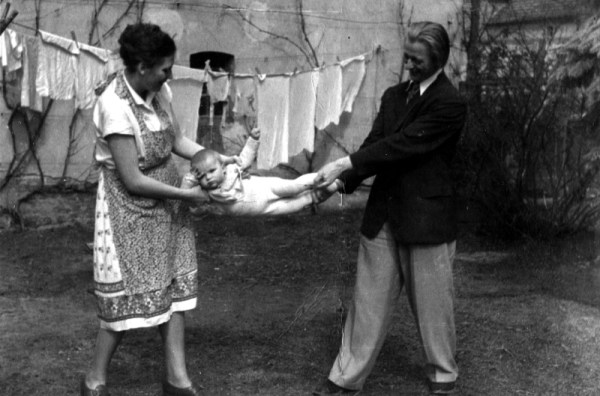
Die kleine Edda mit Eltern 1955

Die kleine Edda mit Eltern 1955

In unseren Freudenbecher werden ein paar bittere Tropfen fallen. Wir wissen, dass Sie mit unserer Ehe nicht einverstanden sind. Aus diesem einfachen Grunde erhalten Sie so spät Nachricht von der bevorstehenden Trauung. Ich wünsche und hoffe nur das Eine: dass die Liebe des Mutterherzens in Ruhe und Besonnenheit die rechte Entscheidung fällt. Ich könnte mir nicht vorstellen, dass ein Mutterherz sich so verhärten kann. Wenn Sie mich auch nicht anerkennen, verschließen Sie Elisabeth nicht die Tür. Sollten Sie sich von uns abwenden, werden wir warten. Unsere Tür wird Ihnen stets geöffnet sein. Einmal werden Sie wieder gut sein, diesen Tag sehnen wir voller Hoffnung herbei.“

Diese eindringlichen Worte und Bitten um Vergebung haben scheinbar ihre Wirkung nicht ganz verfehlt. Schon bald findet im Haus von Elisabeths Mutter und ihrem Stiefvater Emanuel in Mellen ein kleines Fest statt, auf dem das jungvermählte Paar gefeiert und beglückwünscht wird. Gäste waren hier Eberhards Eltern, Minna und Albert, sowie Vera und Paul Rohra, ein befreundetes Ehepaar aus Mellen. Die Wogen haben sich zunächst geglättet und die Zukunft der beiden – und damit auch die unsrige – nimmt ihren Lauf.