Chapter XIV of the P. and G. Klopp Story – Part 6

Brandenburg Gate - Photo Credit: rosch.homepage.eu

Brandenburg Gate with Wall in front – Photo Credit: rosch.homepage.eu

Paralyzed by Fear

On my way back to the youth hostel I sat apprehensively in the city train that used to run unimpededly across the border, but now would stop at a new terminal a short distance from the nearest checkpoint. I had hoped to immerse myself into the anonymity of a large commuter crowd. But there were only a few passengers and at each stop more and more people stepped off the train, until I was almost by myself. I looked at my watch. In less than half an hour I would be at the border checkpoint. I was just beginning to relax a little, when a young man stepped into my compartment. He sat down on the bench opposite mine, and recognizing me by my clothes as a Westerner immediately addressed me and compelled me to listen to his story. In a torrent of words he seemed to have broken the dam of pain, anger and frustration deep within his troubled mind. He apparently was totally oblivious to the fact that a spy might be listening in and denounce him to the authorities. The more boldly he spoke, the more fearfully I listened. Enthralled by his tale and unable to move from my seat, I felt like the wedding guest in Coleridge’s poem ‘The Rime of the Ancient Mariner’.

“He holds him with his glittering eye –

The wedding guest stood still,

And listened like a three-years’ child.

The mariner hath his will.”

“Last year,” the young began his story, “I was just finishing my apprenticeship program. Many friends and family members had already fled to the West. There were rumors that the inner city border would be closed soon. Every week many people, first by the hundreds, then by the thousands, escaped to start a new life in freedom. Then my girlfriend also left with her entire family just one week before they built this horrible wall.” The young man was now sobbing and screaming.
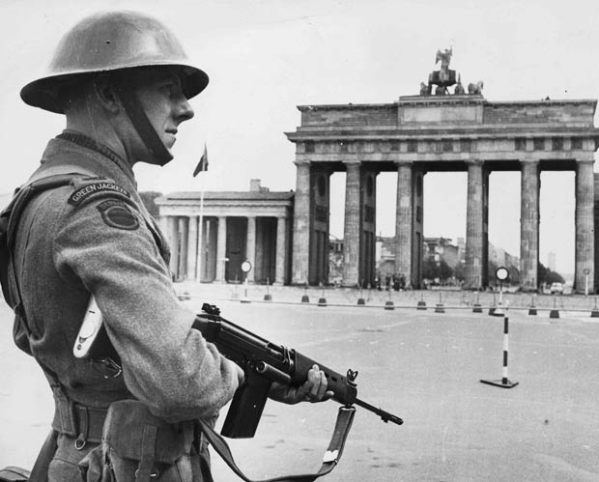
British Soldier on Guard - Photo Credit: www.telegraph.co.uk

British Soldier on Guard during a Crisis – Photo Credit: telegraph.co.uk

“To get a good start with a completed journeyman ticket, I promised her that I would follow her as soon as I had passed my exam. How stupid I was in trying to be responsible. Over a better job I lost my love. I will never see her again. Like all the others her family is on the black list. She would be arrested and thrown into prison, if she tried to see me.” He was venting his anger and frustration so loudly that everyone left on the train could hear, but pretended not to.
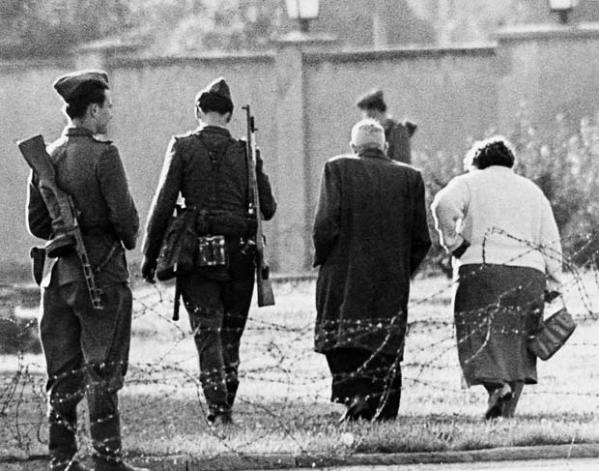
This Couple Failed to Escape - Photo Credit: telegraph.co.uk

This Couple Failed to Escape – Photo Credit: telegraph.co.uk

“We live in one giant prison here! No, we live like animals in a zoo. Westerners may come and gawk. I feel like a monkey behind bars, when I look from my apartment window over the wall into West Berlin, where people are free to move about as they please. My girlfriend is out there somewhere. She cannot even write a letter for fear to land me in prison as someone befriending a traitor of socialism. Oh, how I loathe that ugly word!”

Checkpoint Charlie Border Crossing; Photo Credit: gonback.com

Checkpoint Charlie Border Crossing; Photo Credit: gonback.com

Suddenly the apprentice grew very quiet. He had unburdened himself by boldly telling his story. I knew that there was nothing I could do for him. How to give hope, when there is no hope, or how to offer a comforting word, when you cannot find it within yourself? A comment no matter how carefully chosen would have added insult to injury. It was good that I remained silent and listened to what he had to say. But to find the right words to show compassion to my fellow human beings had never been my forte and remains a problem to this very day. Without saying another word, the young man got off the train on the second last station. Five more minutes and I would be at the terminal.

I sat there on my bench all alone. Indeed the entire train car was empty now. The emptiness began to oppress me. I felt ashamed of having been so afraid. The apprentice from East Berlin was not. I began to realize that there was another kind of freedom that came from within independent of where one happens to live. But the realization of the converse hit me even harder. One could live in the best society – if there ever was one – with all the rights and privileges enshrined in its constitution and still be a slave to fear.

Gathering Strength Through Inner Calm

Within the next thirty minutes I had to deal with fear all over again. The guard on duty at the border checkpoint carefully examined my passport and was just about ready to check off my name from the list, when he asked for my camera, which I had left behind at my relatives. Under normal circumstances this would not have been a big deal. I could have given the camera as a gift to my aunt, lost it on the train, or gotten rid of it in myriads of other ways. But this was not considered normal. The guard asked me to follow him into the drab border building, where he made me enter a small office room, and then quickly left closing the door behind him. Sitting on a chair opposite a giant empty desk I felt trapped. I had the feeling, as if I was being watched for my reaction through hidden cameras. But to my surprise, a great calm pervaded my inner being. I had done nothing wrong, I had simply visited my relatives with official permission, had left a camera behind, which was not a crime, but a trivial oversight. After a five-minute wait a security officer neither friendly nor unfriendly entered the room and said without making any reference to the missing camera that he was going to ask me a few questions. Even though he made me feel that the whole process was a mere formality, it appeared to me like a full-fledged interrogation. There was nothing to hide. To all his questions about myself, my family, relatives in East and West Germany I gave prompt answers without showing any signs of nervousness. After being convinced that I was not a spy, he finally turned his attention to the camera. If it had not been recorded on the inventory list, there would not have been any problems. But since it was, I would have to go back, pick up the camera at my aunt’s place and show it to him, before his shift would end be at midnight. I said that this would be quite impossible for me to do considering that the youth hostel closes its gate at 11 o’clock, that I would be locked out, and that the teacher would report me as a missing person. To make a long story short, the officer showed some human understanding for my case behind the mask of his stern face and let me go under the condition that I would have to return during his shift on the very next day. If I did not comply and did not show him the camera, my relatives would be in serious trouble. Whether there was a bit of humanity shining through or whether it was even the fear for having broken some rules, I could not say. Perhaps it was a mixture of both.
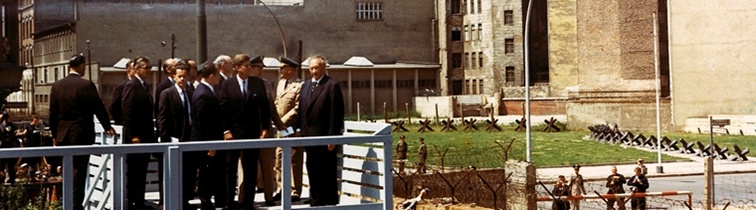
President Kennedy at the Berlin Wall - Photo Credit: jfklibrary.org

President Kennedy at the Berlin Wall (June 1963)- Photo Credit: jfklibrary.org

Juliane Klopp (1877 – 1960) Part 2 (Chart I – II)

Young Artist and Hotel Owner Juliane Steuer (about 1900)

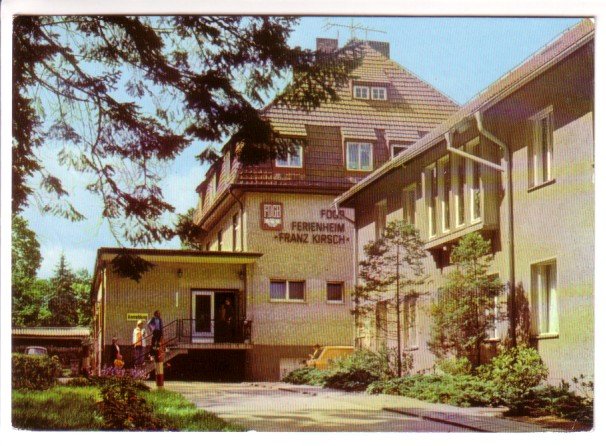
At the beach road at Scharmützel Lake leading up to Diensdorf Fritz Steuer and his wife Emma Juliane acquired in 1911 a brick manufacturing plant. It was located very close to today’s guesthouse “Café Glück Auf”. Around 1912/13 the couple built a villa there, which was connected to the machine shop of the brick factory. In the mid 1920’s Friedrich Steuer added yet another building, ‘Hotel Seehof”, which survived the GDR years as a vacation center by the name of “Franz-Kirsch-Heim”. In 2006 it was rescued from falling into disrepair, was completely modernized and turned into a 4-star hotel.

Former "Hotel Seehof" Renovated, Today's Wellness Center

Former “Hotel Seehof” Completely Renovated and Today’s Wellness Center

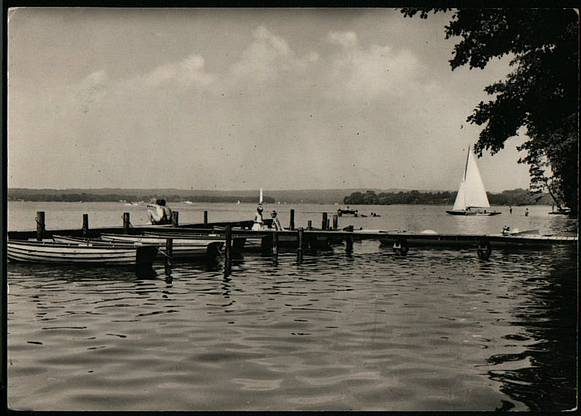
In 1923 Fritz employed the two Klopp brothers Ferdinand (1879-1952) and Hermann (1892-1937) in his Diensdorf work place. In response to inflation and decreasing demand for building materials the Steuers converted their villa into a hotel. They called it “Gasthof und Fremdenlogis Strandhotel” (Guesthouse and Beach Hotel ). It was here that Juliane’s sister Else Klopp (1895- 1934) got acquainted with her future husband, army defense officer Drusus Stier. The beach hotel was a favorite meeting place for officers of the garrison town of Fürstenwalde/Spree. Also brother Ernst Klopp, my father, came shortly before his wedding for a longer visit at his eldest sister.

Scharmützel Lake in the 1920's

Scharmützel Lake in close Proximity to ‘Hotel Seehof’ in the 1920’s

When her brother Hermann Klopp ran into financial difficulties on his estate Breitenberg/Pomerania in the early 1930’s, Jula helped him out with obtaining a mortgage by providing the required security. When Hermann was unable to make the payments, Jula lost a huge sum of money that she was never able to retrieve in spite of the fact that she won several court battles with the creditors after Hermann’s death in 1937. The specter of bankruptcy was looming on the horizon. Eventually the couple lost the factory, the two hotels and was forced to move to Berlin, where with the remnant of their liquid assets they were able to run a small pub at Feldstrasse 2. The childless couple separated, but refrained from formal divorce. Friedrich Steuer died in Berlin in 1934, suffering from lip cancer.

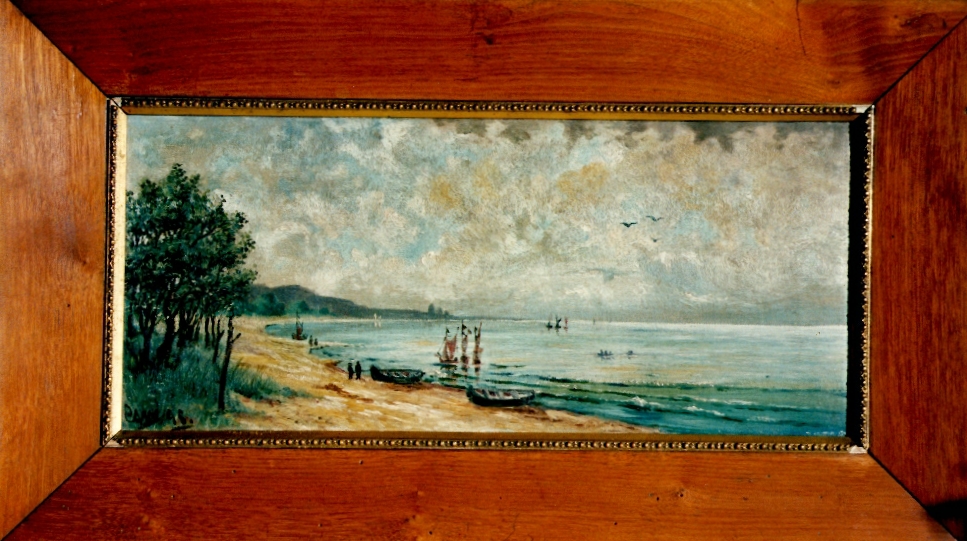
The now 57-year old Jula acquired a house in Köpenick, Am Spielplatz 13. In 1938 she spent some time at my father’s place at the Ernst-Flos-Hof estate in Belgard. During her stay she created an oil painting depicting a beach scene at the Baltic Sea.

Juliana's Painting of the Baltic Sea

Juliana’s Painting of the Baltic Sea

Jula survived as widow the Hitler years, World War II, and the early years of the German Democratic Republic almost up to the building of the Berlin Wall. To see an earlier post of my visit to Aunt Jula, click here.

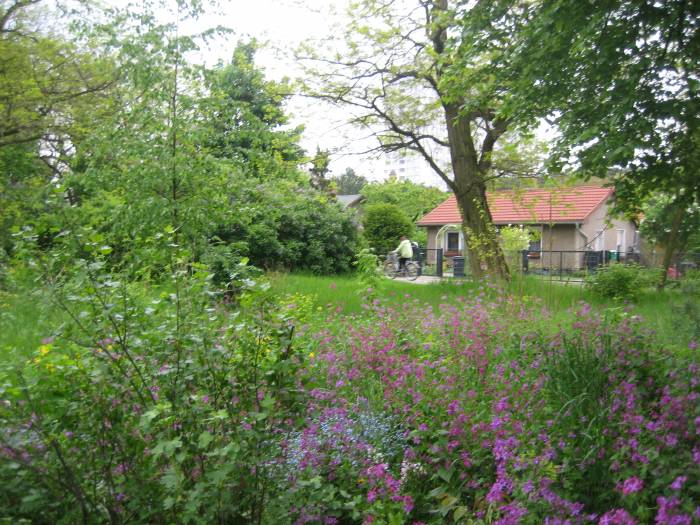
Garden Region near the Spree

Recent Photo of the Garden Region, where Aunt Jula had her Cottage

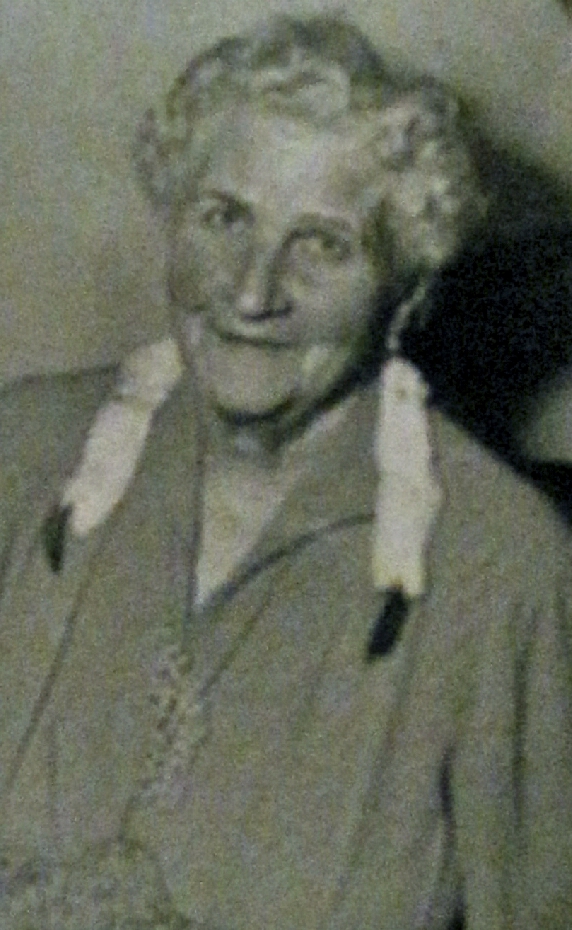
After the war she gave up all her properties and retired in the picturesque garden section of Köpenick, where she lived in a modest cottage for the remaining years of her life getting by on a small pension, to which she was entitled from her late husband Friedrich Steuer, from whom she was never formally divorced. From this sad period there is a photo, which shows a friendly, kind, somewhat sad Klopp portrait of an old lady that had seen better days. On account of the photo session she dressed up with a pearl necklace and ermine fur. Completely impoverished she passed away on June 8, 1980 at the age of 83.

Aunt Juliane (late 1950's)

Aunt Juliane (photo taken in the late 1950’s)

Heart Creek Bridge Nearing Completion

Excerpt from the Arrow Lakes News

Reprinted with their Kind Permission

Illustrated by my own Photos
Insurmountable Barrier for Spawning Fish 2014

Insurmountable Barrier for Spawning Fish 2014

In a previous issue of Arrow Lakes News, it was stated that the collapse of the highway was not a technical issue.

“This is a Mother Nature issue, not a maintenance issue,” said Bart Chenuz, area manager for roads with the Ministry of Transport and Infrastructure.

Repairs couldn’t begin until ground had stopped moving. A geological technician had been keeping track of the site. As of March 1, the ground had stopped moving, and work could begin.

Construction on the bridge began in mid-July after the contract to build it was awarded to the company Neel-co in May of 2015.

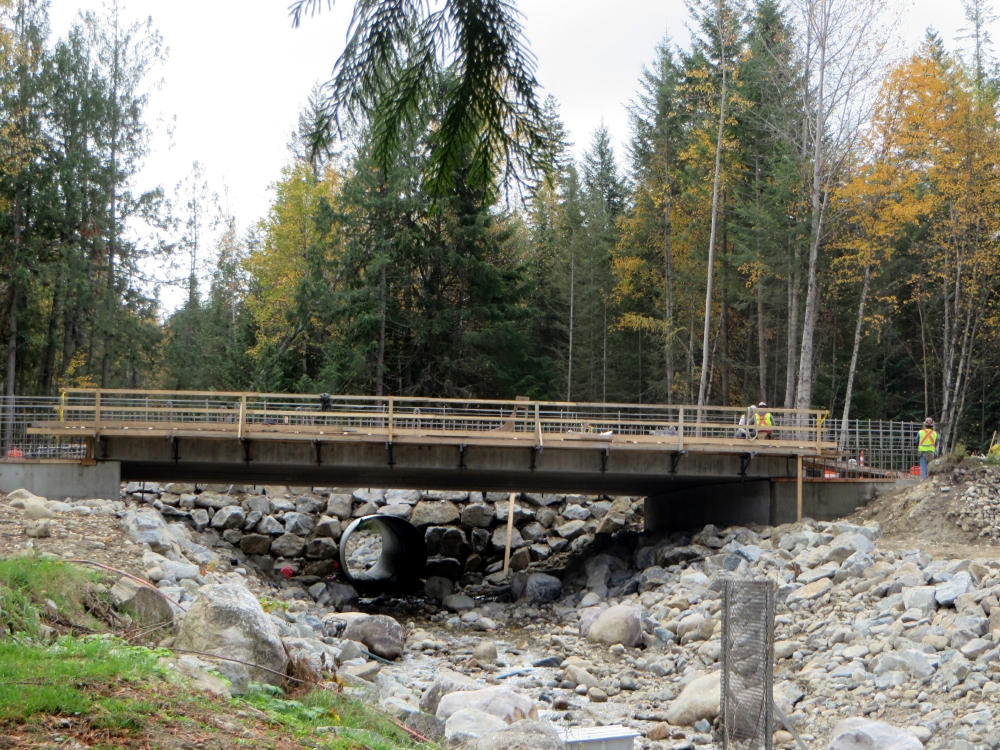
Part of the reason the bridge is being worked on is because there was a barrier for fish spawning in the river. The barrier was the fact that the fish couldn’t access the upper part of the Creek. The increased length allowed Kokanee to spawn upstream of Highway 6 this year for the first time in 45 years.

Bridge Replacing the Culvert almost Complete

Bridge Replacing the Culvert almost Complete

Once completed, fish such as Kokanee, Rainbow Trout and Bull Trout will have better access to the lower part of the stream.  The new clear span bridge will enable the habitat of the fish to be doubled.

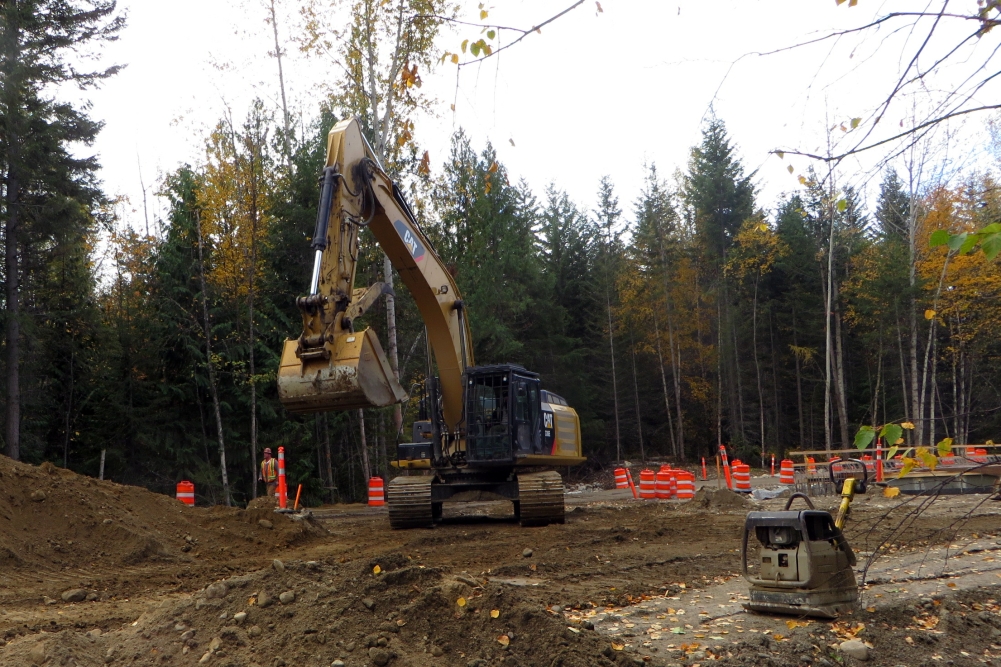
Heavy Duty Machines October 2015

Heavy Duty Machines October 2015

The bridge is 18 metres long and almost 11 metres wide. It will feature steel H-piles with reinforced concrete abutments. H-Piles are dimensionally square structural beams that are driven in the ground for deep foundation applications.

The pilings are imbedded 23 metres into the ground. The bridge deck will be constructed of concrete with steel railings.

Precautions to protect the bridge have been taken if the road ever washes out again. The creek channel has been reinforced with rock in order to contain it within the existing channel.

Construction is scheduled to wrap up around mid-November.

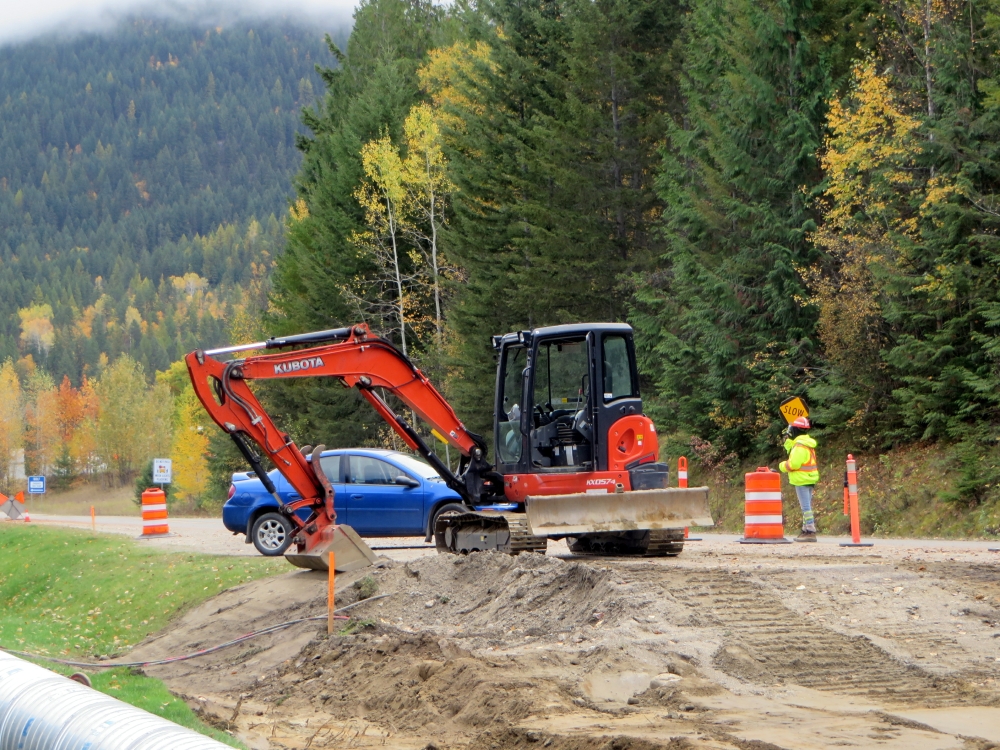
One Lane Traffic until Completion of Project

One-Lane Traffic until Completion of Project

Chapter XIV of the P. and G. Klopp Story – Part 5

School Visit of the Berlin Wall (1961)

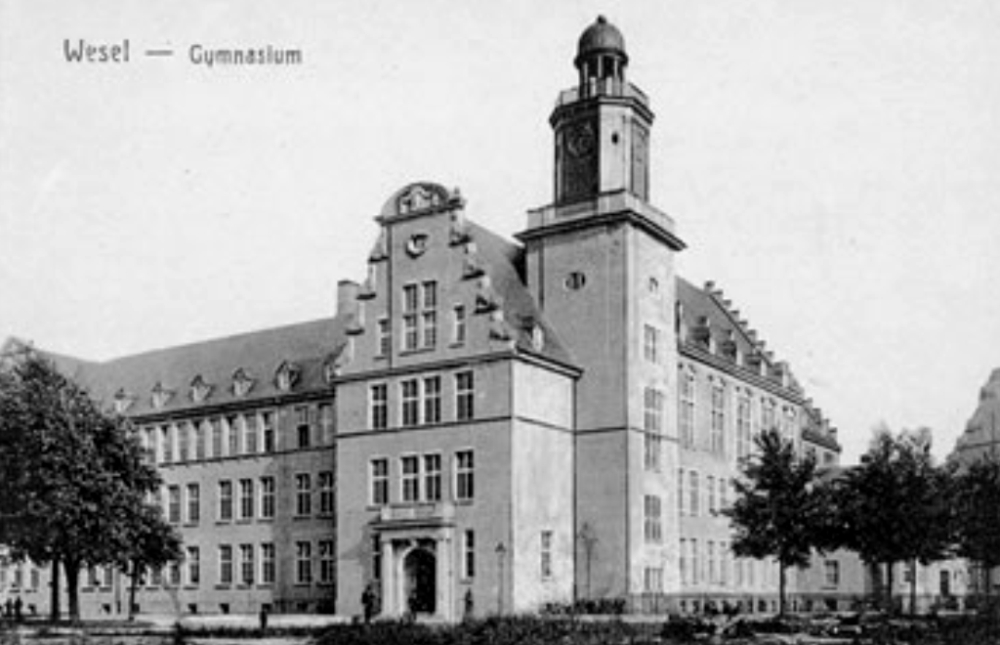
Our High School in Wesel built in 1912 - Now Court House Building

Our Former High School in Wesel built in 1912 – Now Court House Building

It is not surprising that the Wesel High School amongst many other schools in North Rhine-Westphalia organized, one year before our graduation, a field trip to the capital of Germany to provide the students with first-hand experience of the wall that was going to separate Germans from Germans for almost 30 years. The day after our class had participated in a guided tour of a small section of the wall, the teacher in charge of our group granted me permission to go see my relatives in East Berlin. Mr. Zorn with the Latin nickname Ira was personally responsible for our safety. I often wondered how he could have allowed me to cross the border on my own with all the horror stories circulating in the daily newspapers about harassments, arrests, even disappearances of people from West Germany. At the checkpoint I had to list all my personal belongings. I had nothing to declare except my cheap DM 20.00 camera.

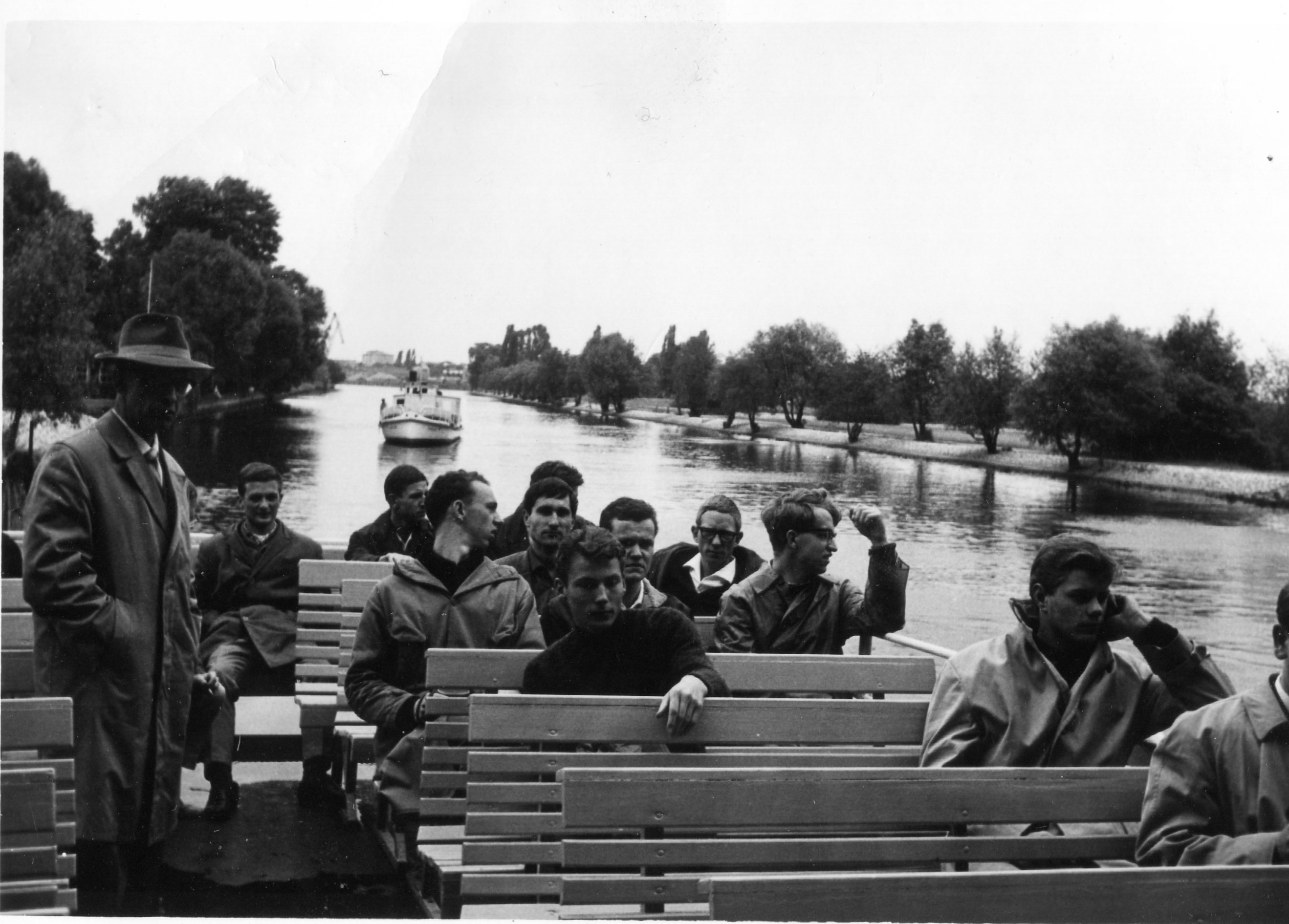
Boat Ride in Berlin

Boat Ride in Berlin – Peter on the Second Last Bench on the Far Left

Again I enjoyed a most pleasant visit with Aunt Alma and her family. I cannot recall having announced my coming, but I must have sent them a card, because the whole family had assembled in the living room, when I arrived at their door. Uncle Artur with his biting sarcasm softened only by a disarming sense of humor was again, as on my previous visit, at his best poking fun at the political system in general, but especially at the wall very much to the chagrin of his party-loyal sons-in-law. He asked whether I knew why there were so many round holes in the wall. When I shook my head, he answered the question for me, “To let off the cabbage steam.” Now this riddle makes only sense in English if one knows that cabbage steam (Kohldampf) was a euphemism for ravenous hunger.

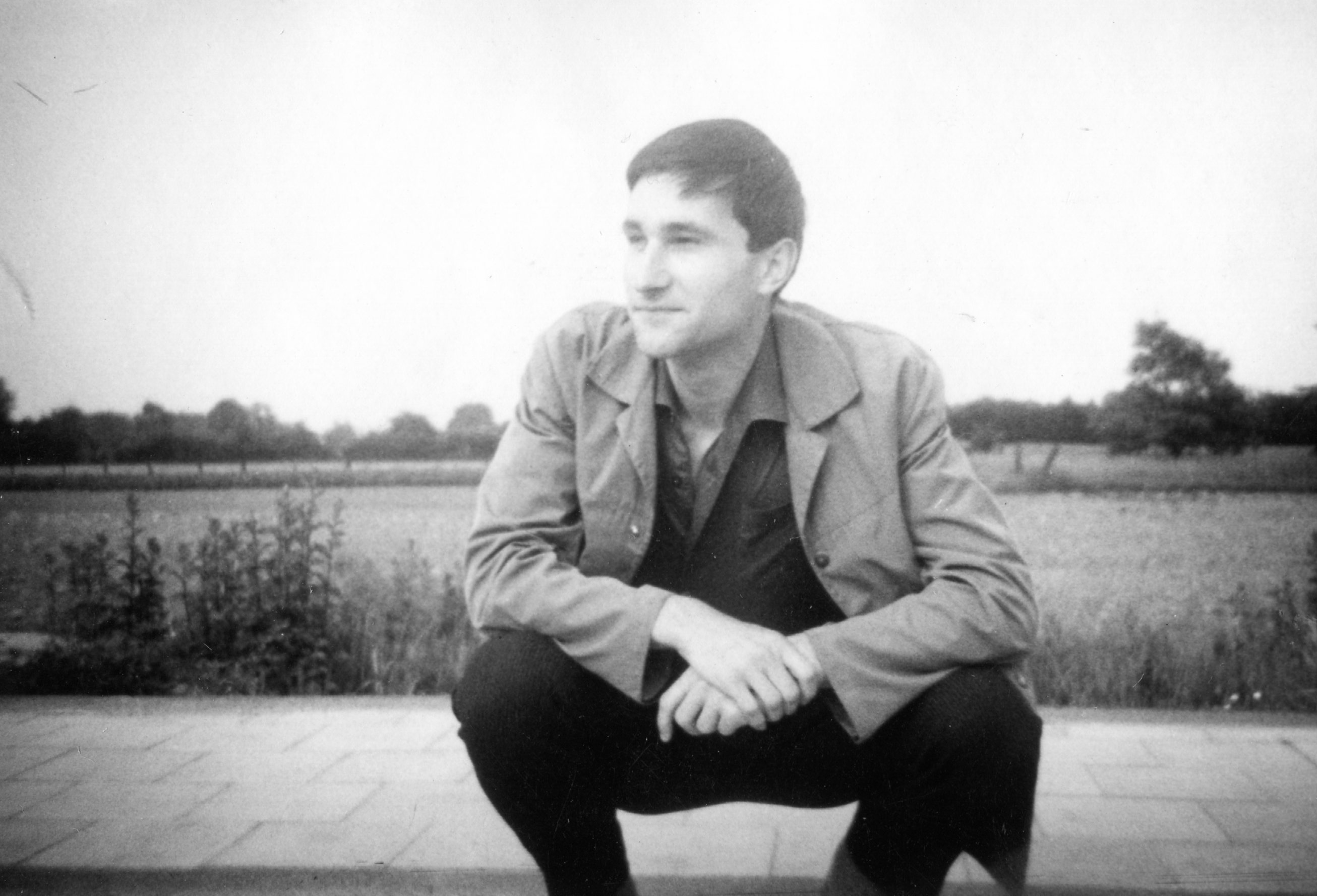
Peter Klopp at Age 19

Peter Klopp at Age 19

Now the sons-in-law had their turn to inform me from their perspective the raison d’être for the wall. It was built, so they insisted, to protect the citizens of the GDR from the attacks of the Western imperialists. Surely I must have seen the tank traps and the barbed wire in front of the wall facing west. They would serve as the first line of defense. If they were intended to keep people from leaving their socialist country, they would have been set up behind the wall. I remained unimpressed. Their fervor for the system showed me that they had pulled blindfolds over their eyes. They believed what they wanted to believe on the principle that you do not slap the hand that feeds you. With Uncle Artur`s help the family finally steered away from the political hogwash and focused on their guest.

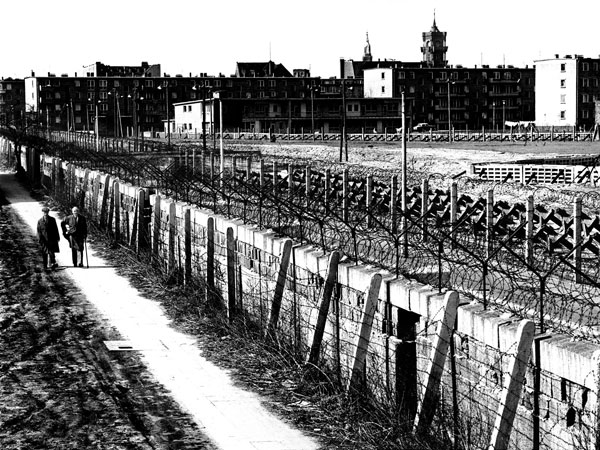
Berlin Wall - Photo Credit: hstrclgrl.blogspot.ca

Berlin Wall – Photo Credit: hstrclgrl.blogspot.ca

When I told them about my trips to Spain and Yugoslavia I indirectly conveyed to them the kind of freedom I enjoyed on the other side of the Wall. Also I enthusiastically talked about my career plans, namely to study high frequency technology. Uncle Artur, a leading scientist in a related field, a son-in-law already involved with electronics in the NVA (National People’s Army), Anje, the second youngest daughter also planning to become an electronics engineer, we all warmed up to this refreshingly apolitical topic with Aunt Alma cheerfully chiming in, “Wouldn’t it be nice, if Peter and Anje could study together in the exciting world of electronics!” With this comment Aunt Alma more concerned about good family relations than about politics made a profound statement about the tragedy of a divided Germany.

Evironmental Concern/Jal Mahal & Mansagar Lake

In one form or another we have seen the same problem on every continent. Let’s spread the word. Be responsible!

arv!'s avatarJaipurThruMyLens

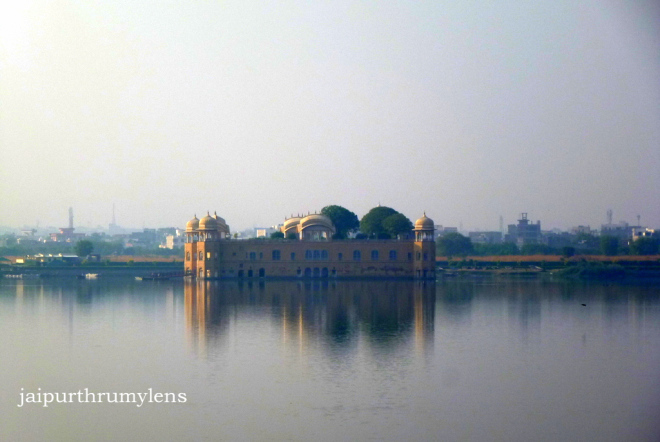
Following pictures were clicked atManagar lake where world famous  Jal Mahal is located.

(Apologies for slightly low quality pictures)

jal mahal jaipur

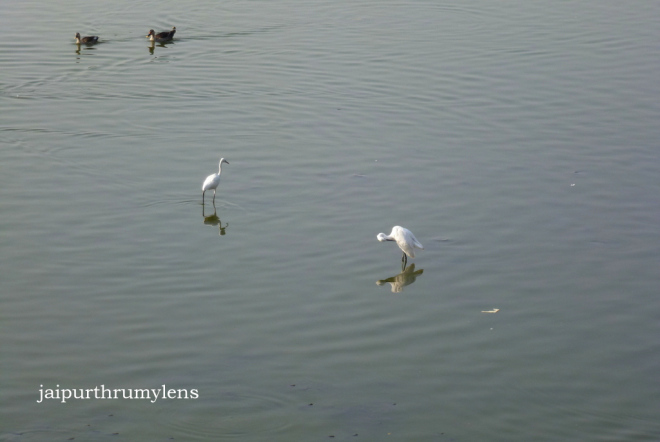
jal-mahal-jaipur-birding

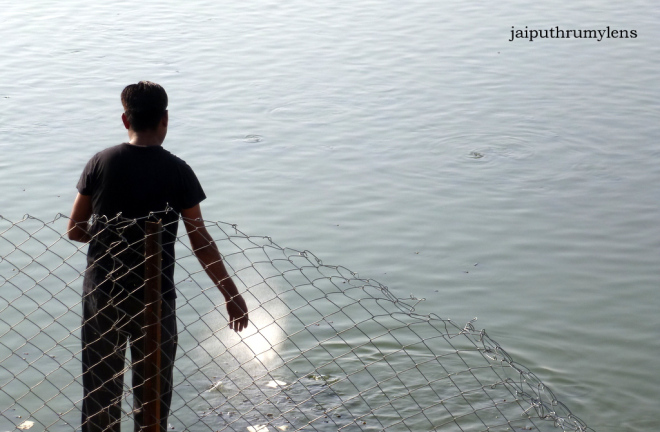
jal mahal conservation Feeding fishes, Mansagar Lake, Jaipur

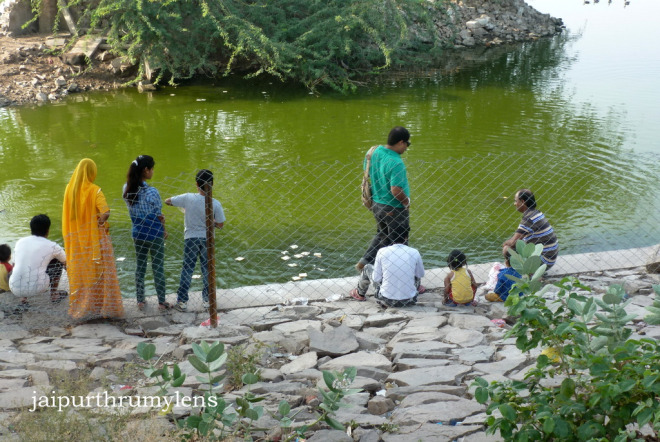
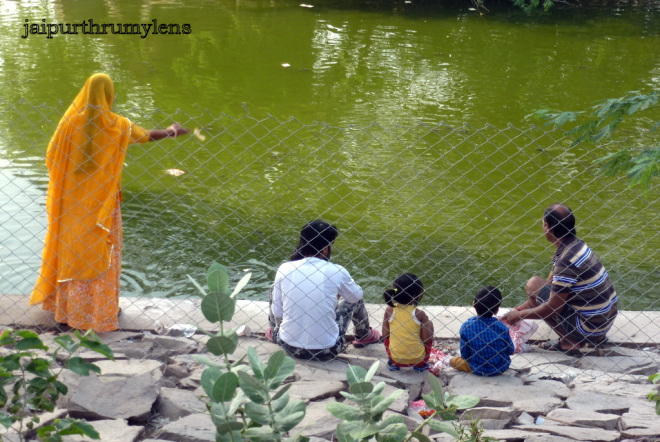
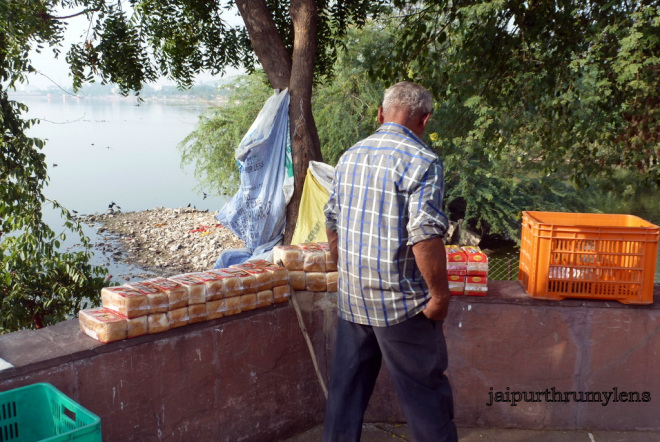
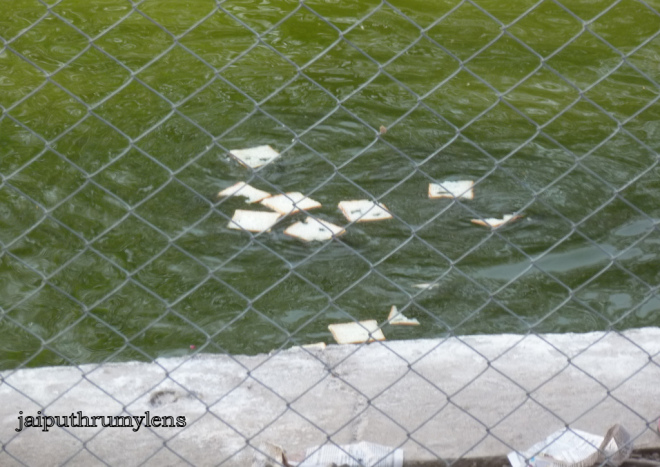
Everyday hundreds of people visit Mansagar lake around Jal Mahal to feed resident fishes. Its a common sight to find people throwing biscuits, flour and bread into the lake water, right from the early morning till late evening. People doing so, hardly understand the effect of their action.

jal-mahal-cleanup Family throwing bread pieces into the Mansagar Lake

mansagar-conservation working for earning some good karmas!!!

lake conservation at jal mahal Mansagar Lake. facilitating polluters?

jal-mahal-conservation initiative Mansagar Lake. polluters threatening ecology!!

Someone might argue that feeding another living organism is a good act? Its a good karma, after all???

From religious or humane point of view, it might be acceptable or desirable act. But from environmental aspect its a disaster in the making!

Apart from feeding fishes, empty bread and biscuit wrappers can be found…

View original post 38 more words

Juliane Klopp (1877 – 1960) Part 1

The Viennese ‘Artist’ and Hotel Owner at Scharmützel Lake (Chart I – II)

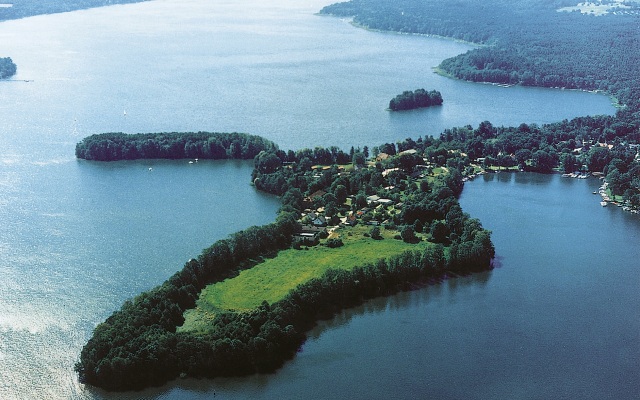
Scharmützel Lake Southeast of Berlin - Photo Credit:mittelalterkleidung.science

Scharmützel See Southeast of Berlin – Credit:mittelalterkleidung.science

Condensed and translated from the Klopp Family History (Ein Brief an die Nachfahren der Familie Klopp) with kind permission by the author Eberhard Klopp

To see the Klopp Family Tree click here.

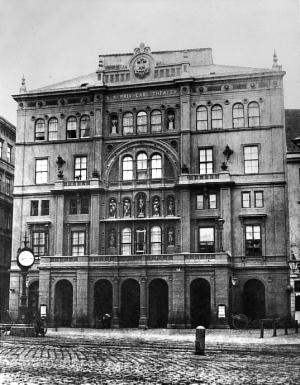
On June 15 I concluded the story of Friedrich Klopp, the eldest child of my grandparents Peter and Emma Klopp. Now it is time to turn our attention to my aunt Jula (Juliane). She was born on February 2, 1877 in Elbeu. Her father P.F.W. Klopp at the time was still a miller’s apprentice in the neighboring town of Jersfelde. As a young girl she went for her education to Vienna and spent her teenage years in the home of her aunt Luise Necker née Bauer. Due to her long stay the good-looking Klopp daughter was known as Miss Necker.She maintained close ties with the arts and theater circles centered around the “Carl Theater” in Vienna.

The Carl Theatre where Artists and Performers met around 1900 - Photo Credit: aeiou.at

The Carl Theatre around 1900 – Photo Credit: aeiou.at

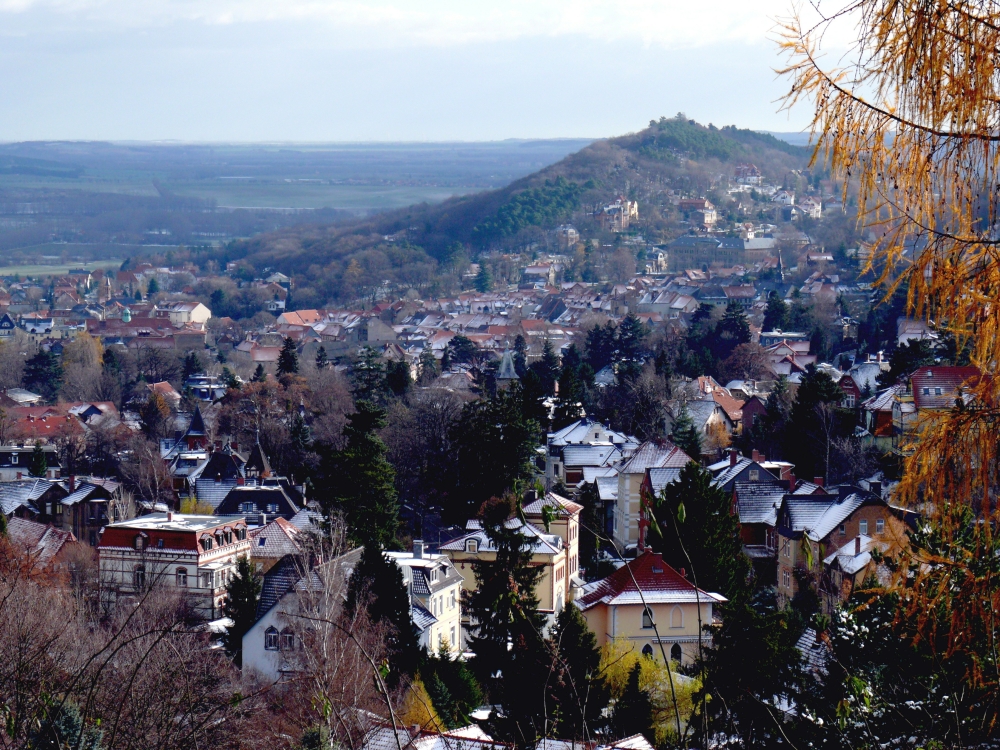
Around the turn of the century Jula Klopp became acquainted with Friedrich Steuer, son of a the mining magnate. The Steuers like Jula’s foster parent Max Necker had made a fortune by owning and profitably operating a coal mine in the Harz Mountains near Blankenburg.

The Town of Blankenburg near the Harz Mountains - Photo Credit: wikipedia.org

Town of Blankenburg (Harz Mountains) – Photo Credit: wikipedia.org

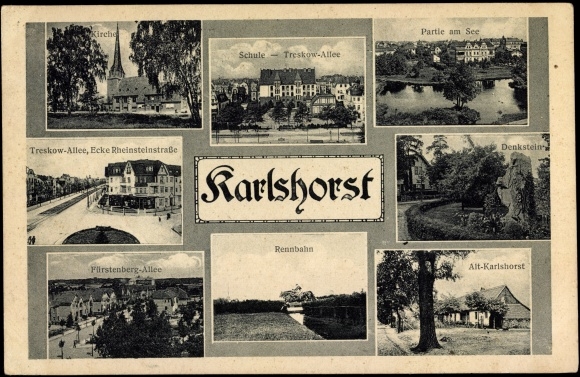
A chance encounter during vacation time at that tourist center developed into a serious relationship. At the wedding of the 23 year old Jula with Fritz Steuer, called the Moose, there was talk about a dowry in the amount of 80,000 gold marks. The wedding took place at the upper class hotel “White Elk” in Dresden. Friedrich and Jula Steuer lived during the first years of their marriage in Berlin-Karlshorst.

Berlin-Karlshorst (Old Postcard) - Photo Credit: akpool.de

Berlin-Karlshorst (Old Postcard) – Photo Credit: akpool.de

Continues next week …

To read about my visit to Aunt Jula in 1959 on a previous post, click here.