Gerhard Kegler, the general, who dared to disobey Himmler – Part V

In and Out of the Generals’ Reserve List 1944/45

(Chart II a – II)

Before I took a break from writing at the end of June, I described in several posts my uncle’s military career in the German army and the events leading up to the disintegration to the Woldenberg Division. By clicking on the Kegler family page, you will find the combined posts in chronological order.

For the newcomers I will give a summary of the dramatic story of my uncle’s last two weeks before he was arrested and charged for failing to defend the city of Landsberg (Gorzów Wielkopolski) on the Warta river.

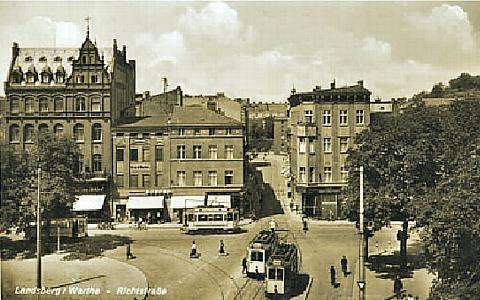
Landsberg before WWII

Landsberg before WWII

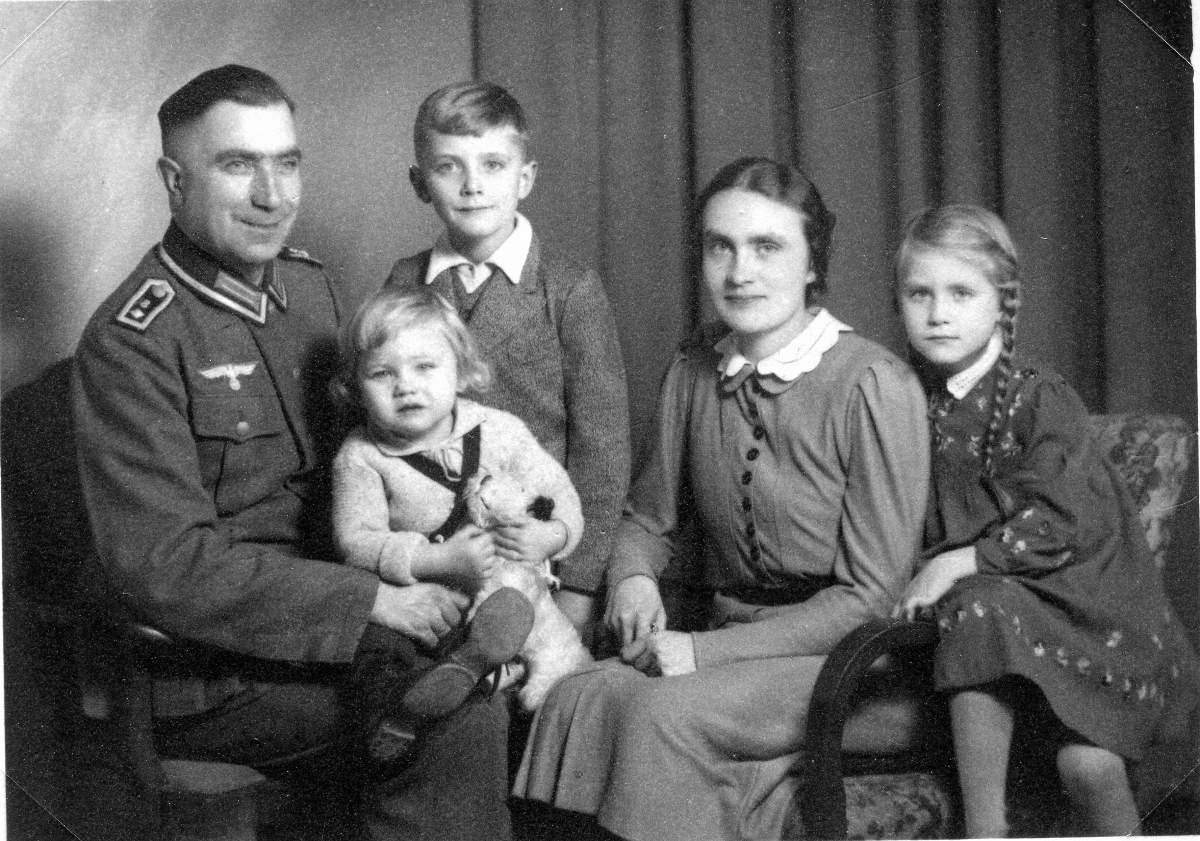
What follows is partly translation partly adaptation of a report I found in the German army encyclopedia: Lexicon der Wehrmacht. On January 14, 1945 Gerhard Kegler was put on the generals’ reserve list, which was no surprise considering the fact that so many entire German divisions were wiped out during the closing weeks and months of WWII. During that time he took a six-week medical leave at my parents’ place at Gutfelde (Zlotniki) near the town of Dietfurt (Znin), where I was born in 1942.

Bild Gutfelde 29

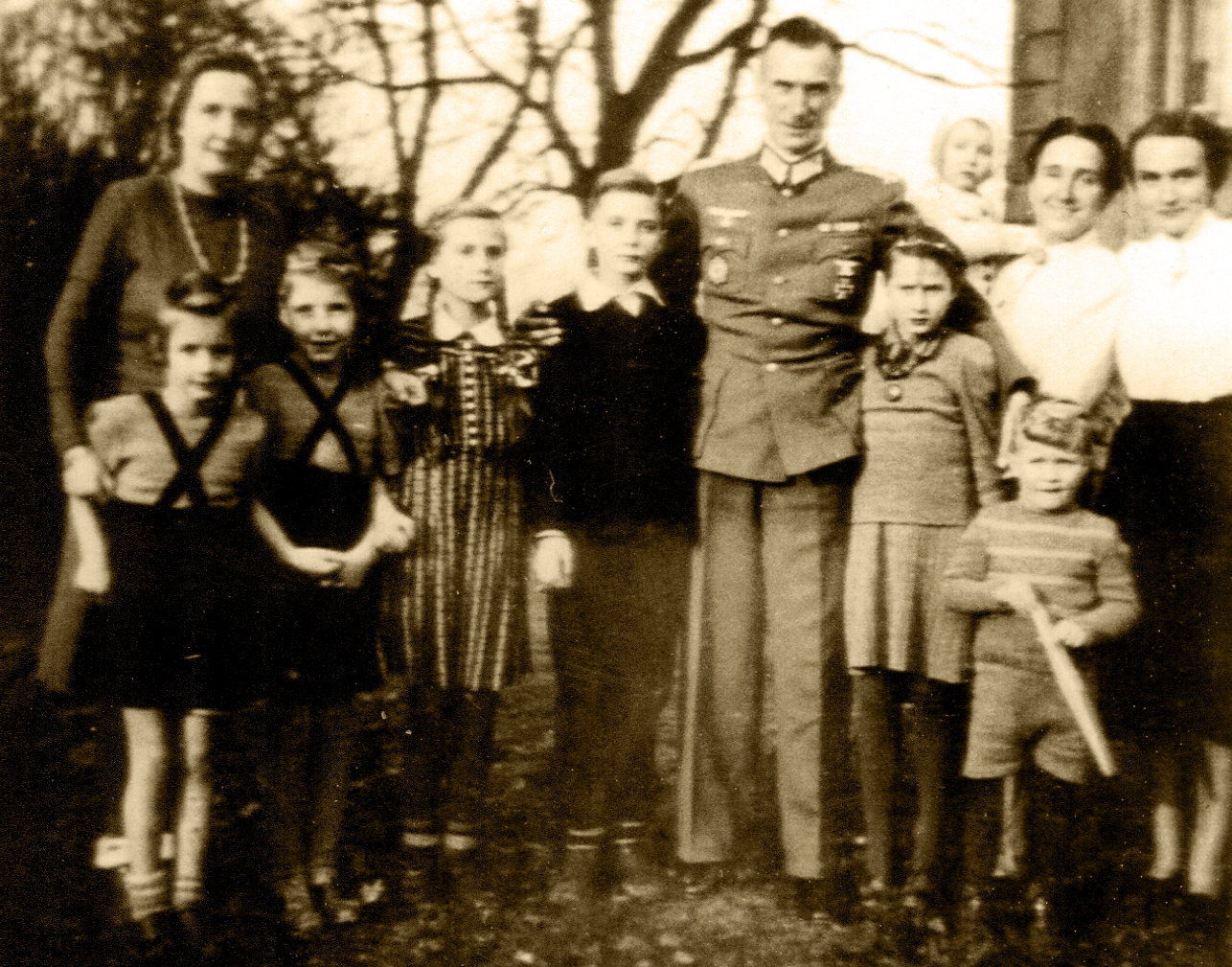
Uncle Gerhard in the Middle, his Wife, Aunt Margot, on the Left, my Mother with me on her Arm, and Aunt Johanna, Uncle Bruno’s Wife to the Right of the General

He believed he would best recuperate in the presence of his wife and children, who had found refuge in Gutfelde from the bombing raids in Central Germany. Perhaps, if he had gone to an official health spa instead, to which he had been entitled, he might have avoided all the troubles that lay in wait for him.

To be continued …

Highlights of Summer 2015

On a Mountain High and then the Accident
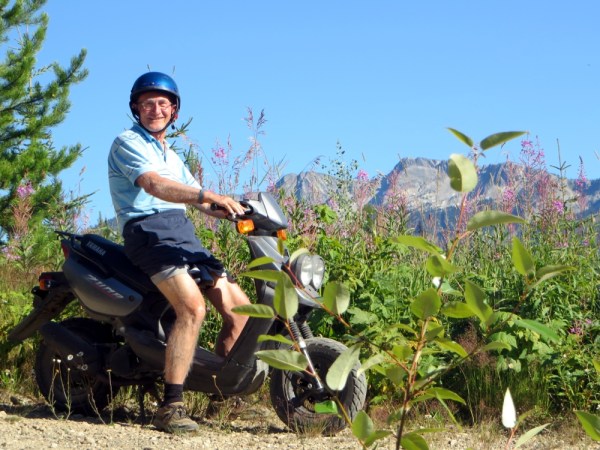
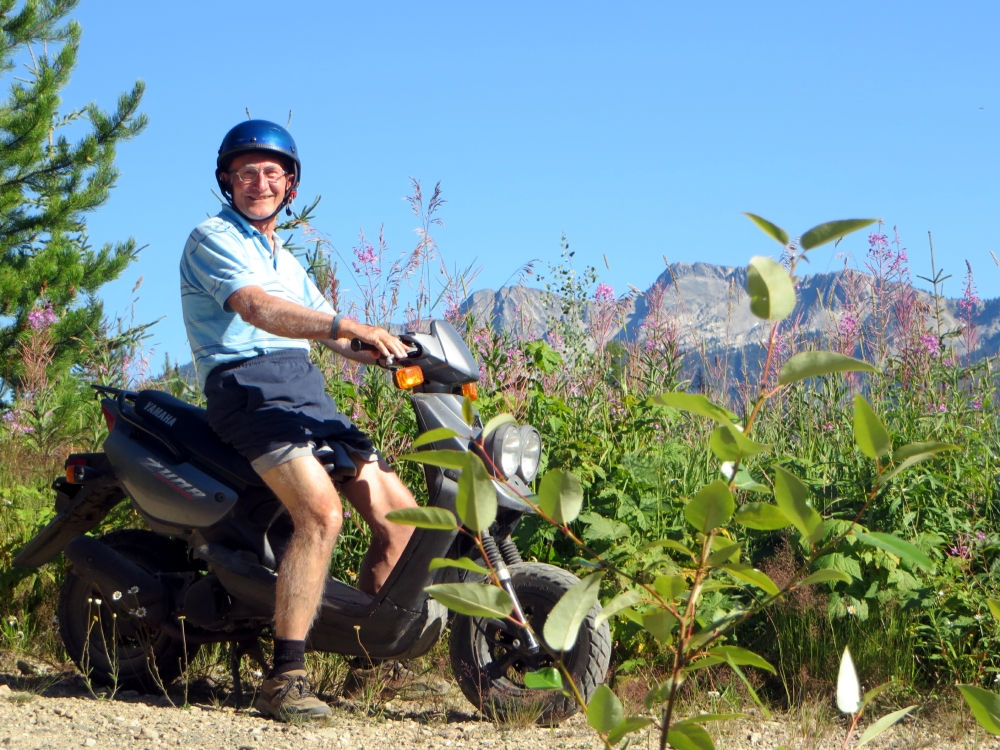
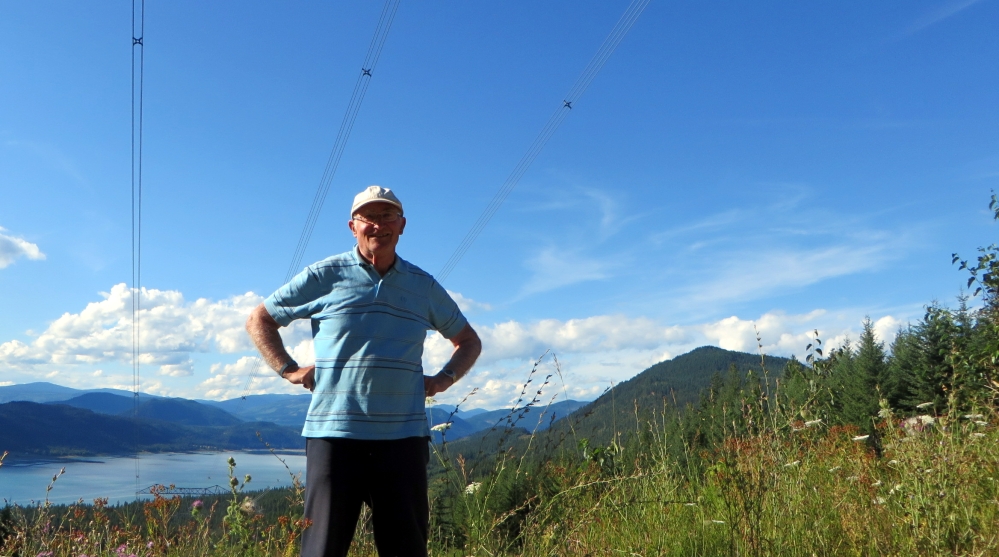
Peter on Top of the Power Line Road

Peter on Top of the Power Line Road

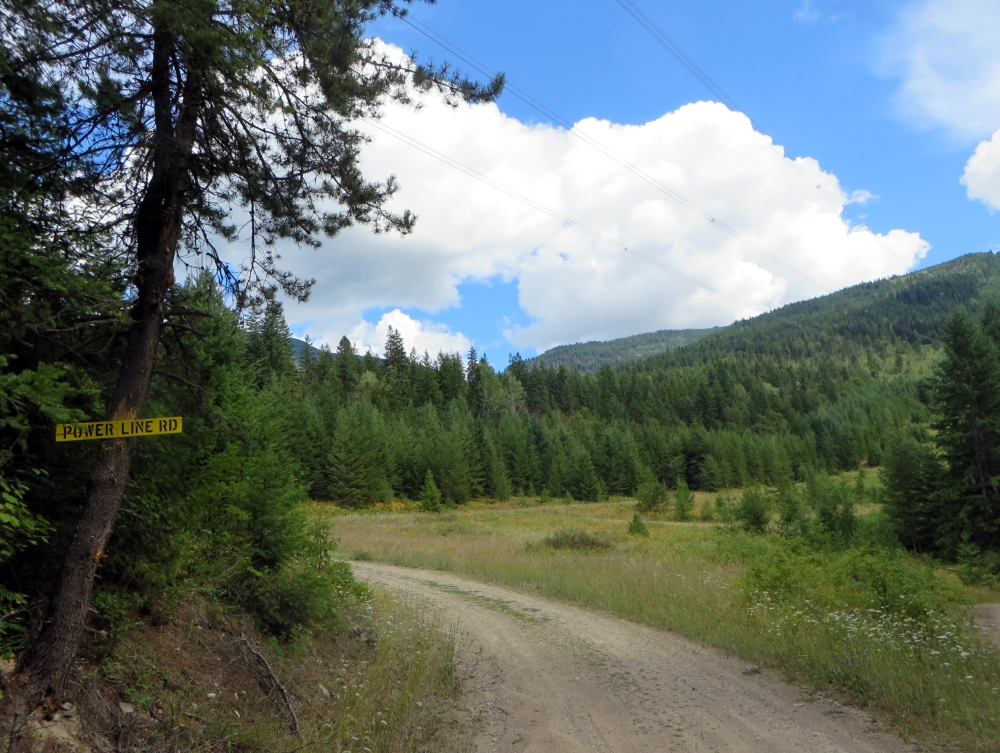
On my Yamaha scooter I made several exploratory trips on the nearby forestry roads. The one that grabbed my attention was the Power Line Road so named because it provides access of the BC Hydro crews to the transmission line that carries 500,000 V electricity across the border to the highest bidder in the United States. It is a steep and winding road leading to a ridge from which one can view the Valkyr Range. I heard that the hydro tower on that route has at 2000m the highest altitude in the entire province of BC.
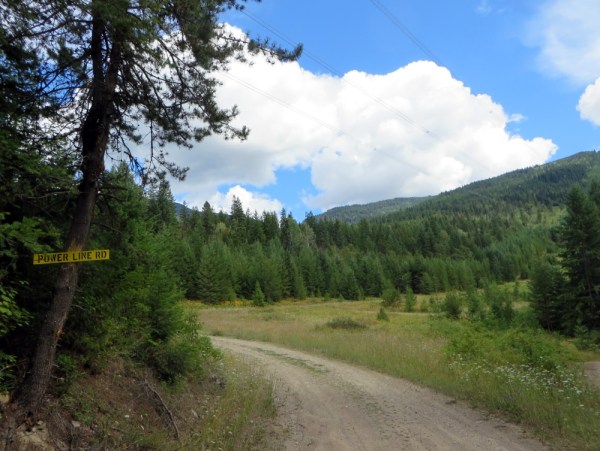
Start of the Power Line Road

Start of the Power Line Road

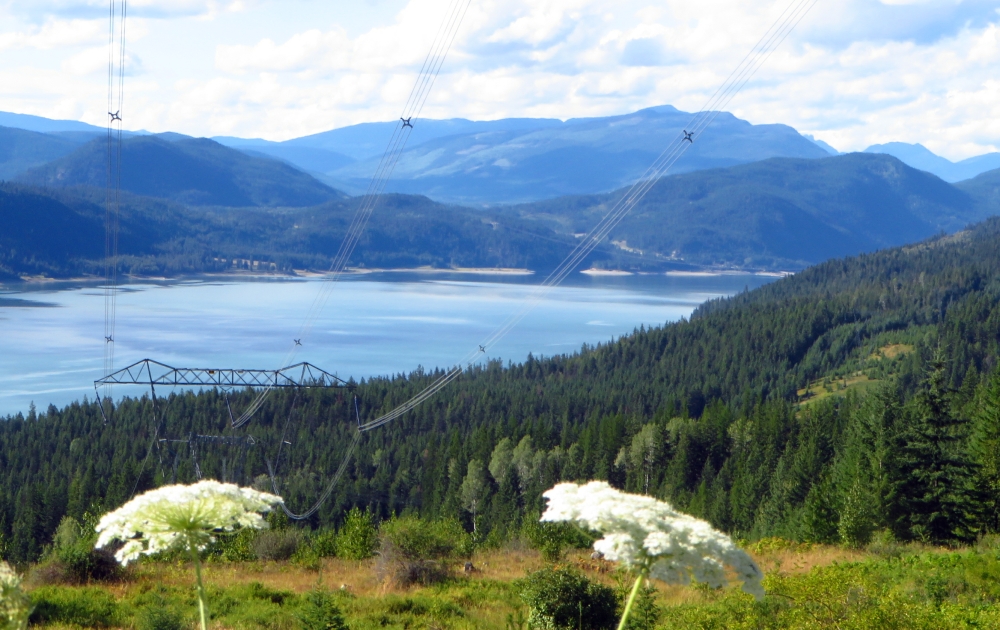
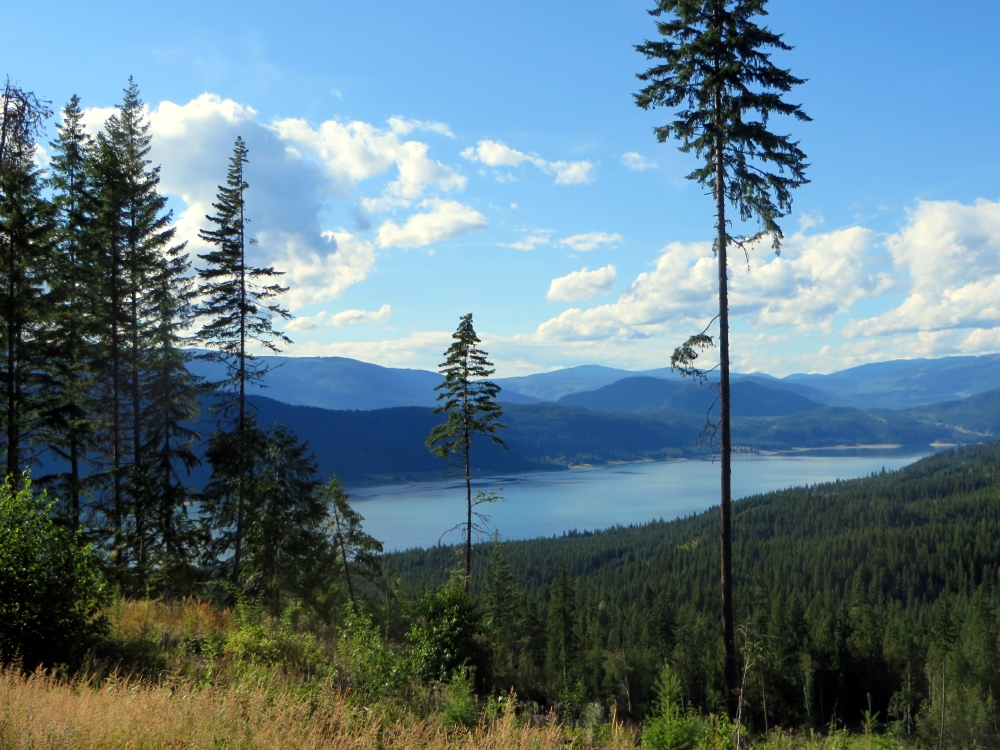
My aim was to ride my scooter to a viewpoint, from which I could look down onto the lake and see the mountains to the south. When I checked later on a map with contour lines, I found out that I had climbed a total of 1000 m to reach my destination.
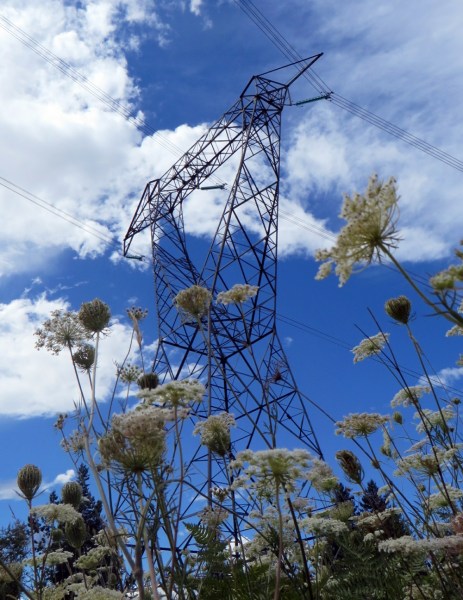
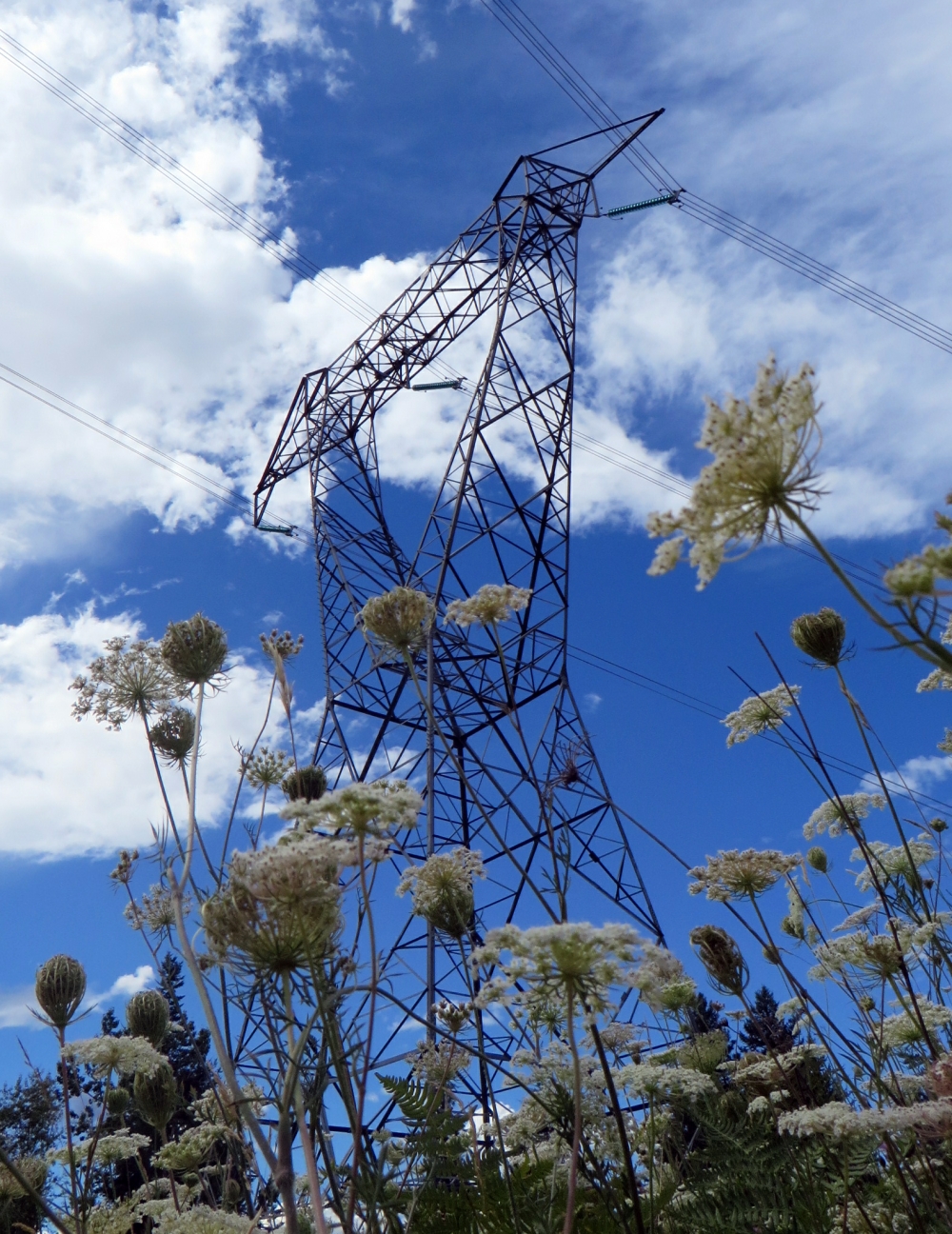
Low Shot of one of the Majestic Power Structures

Low Shot of one of the Majestic BC Hydro Towers

The magnificent scenery can hardly be put into words, and the photos on my post can offer only a glimpse of the beauty that I experienced with all five senses, the amazing colors of the valley and the Arrow Lake below, the rustling of dry grasses in the wind, the scent of the wild flowers, the cool mountain air gently stroking my face, and the bitter-sweet taste of wild black currants growing on the sun bathed slopes.
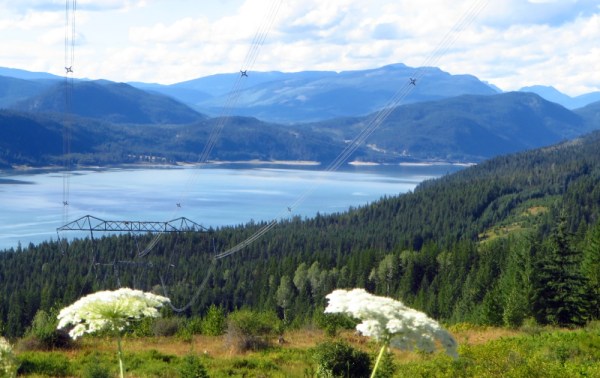
View from Halfway up the Power Line Road

View from Halfway up the Power Line Road

One can imagine how excited I was coming down from the Valkyr range frequently stopping to take pictures, happily whistling and, yes, even singing a few German scout songs that unexpectedly popped into my head, until quite suddenly at the very bottom of the road two giant trailers blocked the access to the campground.
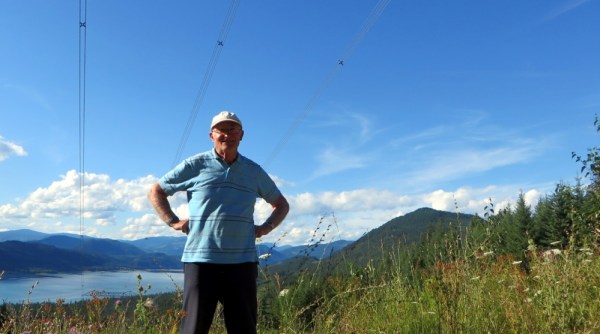
Peter Making a Self-portrait with View onto the Arrow Lake

Peter in a Self-portrait with View onto the Arrow Lake

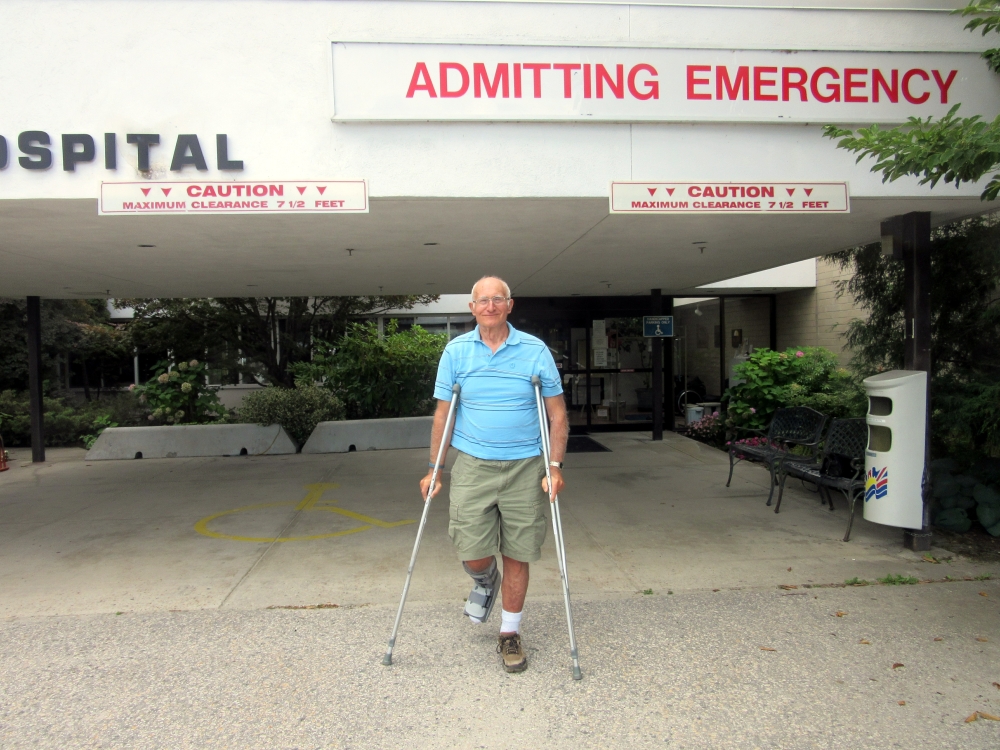
Anxious to tell Gertrud about my adventure I attempted to maneuver my scooter past these two monstrous recreational vehicles. Everyone knows that when you are riding on two wheels and bring your speed down to zero, you lose your balance. So to make a long story short, I fell off onto the rocky ground with the foot guard of the scooter falling on my right leg. Without really knowing at first I had broken my fibula bone slightly above the ankle.
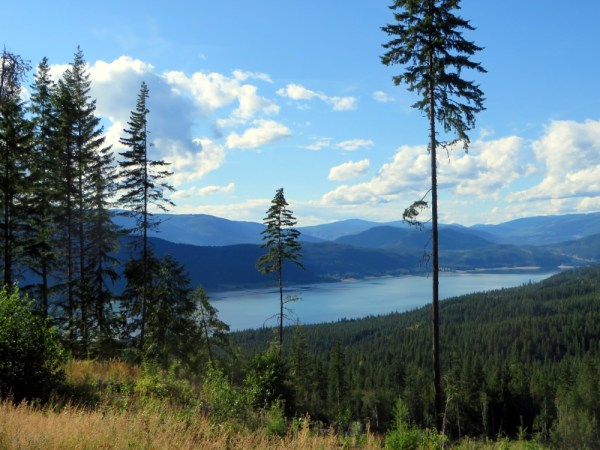
One could hike to this fantastic viewpoint in abt. 2 hours.

One could hike to this fantastic viewpoint in about. 2 hours.

The consequences were altogether unpleasant to say the least: Gertrud’s anger with my stupidity of going into the mountains without wearing more protective clothing, the physical pain I suffered, my frustration over being severely curtailed to a life of inactivity for more than six weeks, and a lot of regret. Fortunately, my spirits were rising in step with the gradual easing of the pain in my right ankle.
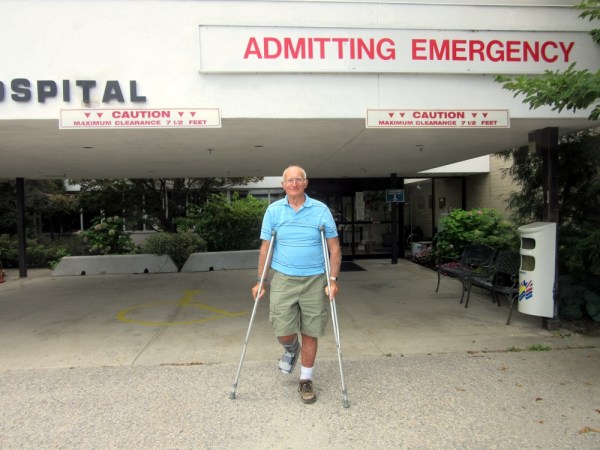
Peter on Crutches at the Arrow Lakes Hospital

Peter on Crutches in front the Arrow Lakes Hospital

While I had to spend many hours on the couch with a so-called aircast on my right foot, the thought occurred to me that the accident may have prevented something much worse. Perhaps I would have become too bold, taken greater risks with my scooter on the following days, and driven even farther away from help on some remote mountain road. Then there were these devastating forest fires in the Southern Okanagan with smoke so dense that air quality alert were being issued at the time we had planned for our vacation at Hedley. So while I was languishing on the couch, I had at least the time to reflect, ponder, meditate and pray. And in itself that was a good thing.
Chapter XIII of the P. and G. Klopp Story – Part 3

Dangerous Play with Ammunition

The Siegfried Line (Westwall) was a German defense system covering a distance of 630 km with over 18,000 bunkers, tunnels and tank traps, the so-called dragon’s teeth. It started in Kleve on the border with the Netherlands along the western border and went as far south as the town of Weil am Rhein on the border with Switzerland. Touted by the Nazi propaganda as a unbreachable bulwark, the Siegfried Line was only able to delay the Allied advance to the center of Germany for a very short time in early 1945.

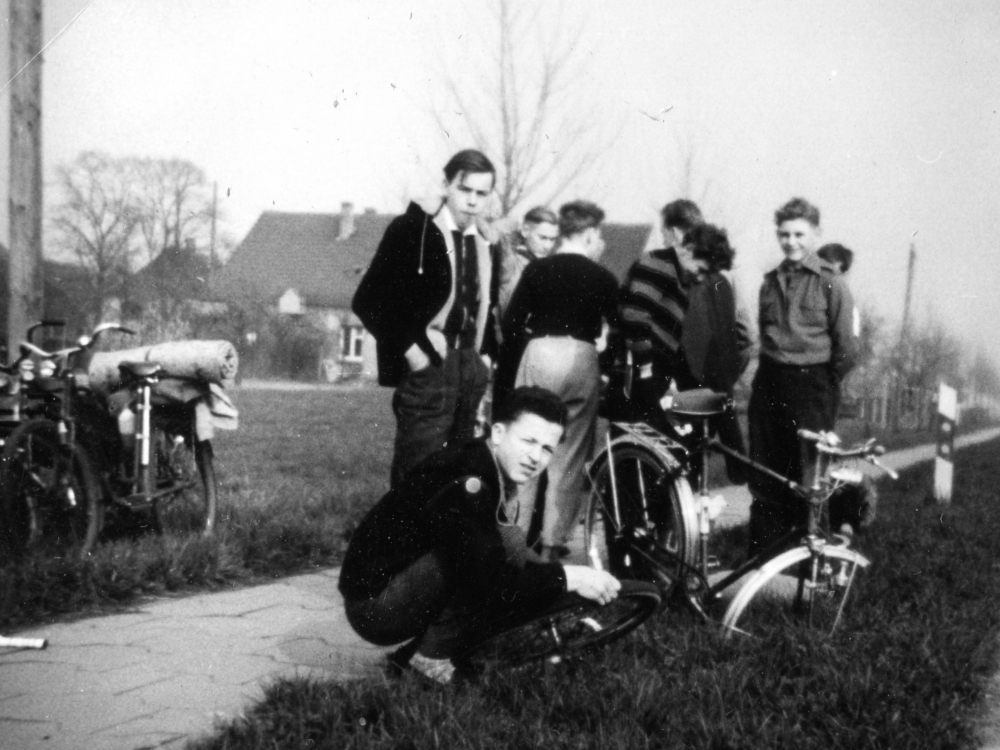
Fixing a Flat Tire on the Way to our Hide-Out

Fixing a Flat Tire on the Way to our Hide-Out

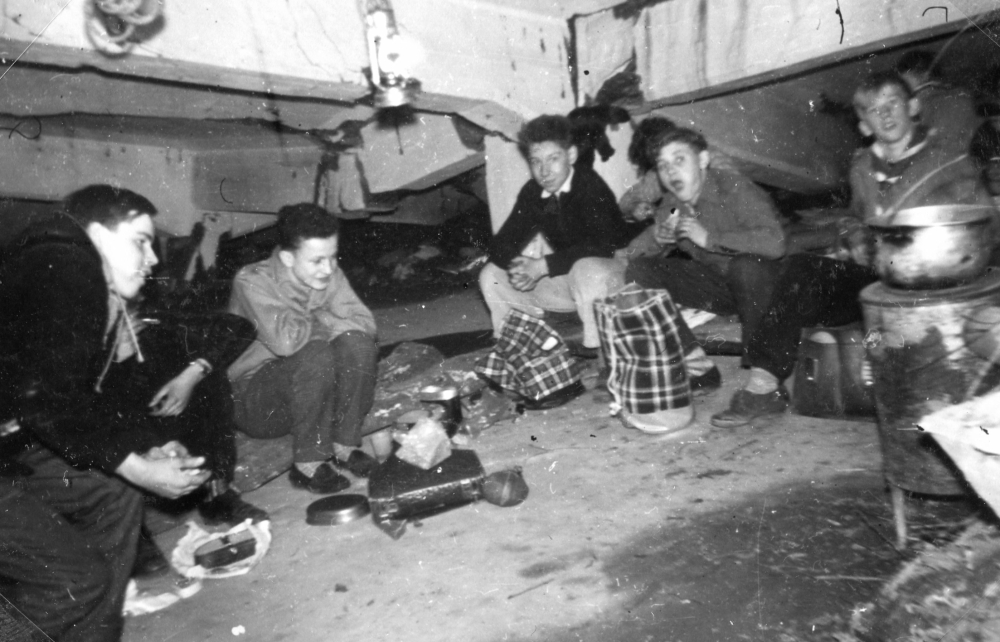
On our way home taking another route away from the main highway we discovered deep in the forest of the Reichswald a number of bunkers from that famous last line of defense. Their walls and ceiling were 1.5 meters thick and had once offered room for a dozen soldiers each. This would be an ideal shelter and hideout for my clan, I thought. Far from the major traffic routes we would be shielded from curious eyes. There in the densest part of the forest we selected the least damaged bunker that would serve as a permanent base for our outdoor activities. I instantly realized the advantage of a bunker over a tipi. The communal tent would have to be laboriously set up. Young trees would have to be cut to provide the poles for the tipi that was barely large enough to accommodate the clan. Of course, enthusiasm among the scouts was high. Attendance went up and new members showed up for our weekly sessions in the citadel. After two or three weekend trips to our fortress, we had transformed the austere looking concrete dwelling into a cozy shelter complete with beds, table and chairs all made of dead wood that we had picked up from the forest floor. We even had turned a barrel into a primitive stove, which provided warmth during the chilly nights of the approaching fall season.

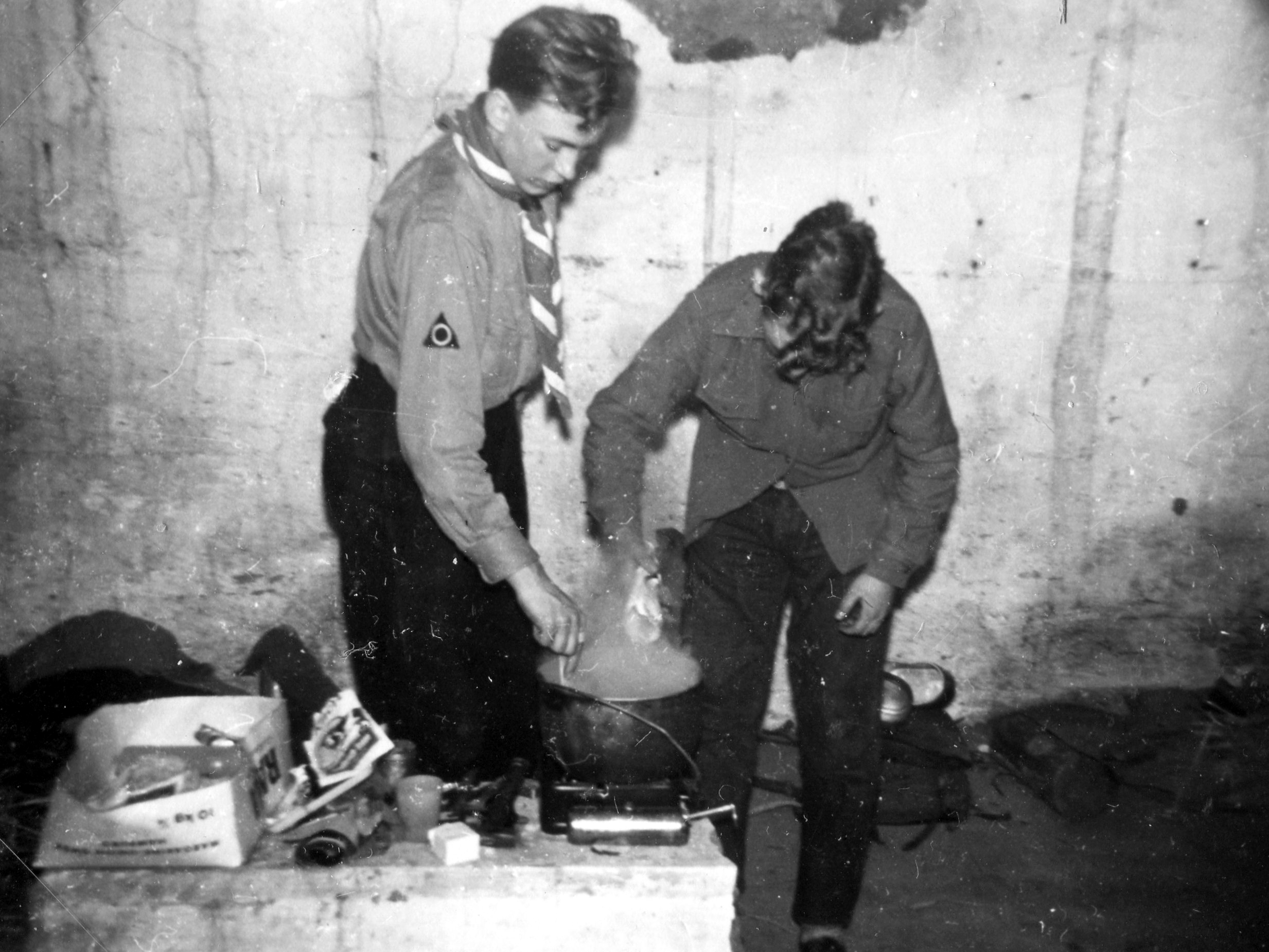
Hans and a Fellow Scout Preparing a Meal for the Clan

Hans and a Fellow Scout Preparing a Meal for the Clan

Fifteen years after the war great dangers were still lurking in this section of the Reichswald. Heavy fighting must have taken place around our bunker. For we found unexploded shells, so-called duds on the forest floor. One young scout stumbled over one of these rocket-shaped shells and tossed it against the concrete wall. I guess in his total ignorance of the potentially fatal consequences he expected it to blow up like a giant firecracker. Fortunately for us it did not go off. When I had somewhat recovered from the initial shock, I blew the whistle as a signal to the scouts to assemble around me. Then pointing to the shell I gave them a stern lecture on the danger to life and limb and ordered them not to touch any of these explosive devices. As punishment for the reckless boy I ordered that they should throw a rope over a sturdy tree branch and attach to it a stick, on which the delinquent would have to sit. In a somber, authoritative voice I pronounced the verdict. The boy shall be pulled up three meters above the ground, where he will have time to reflect on his reckless behavior and serve as a warning to all others who might be tempted to imitate his foolish act. While I maintained a straight face, the entire clan including the culprit took the whole proceedings as excitement and fun. With shouts of hooray they pulled at the rope to raise the boy to the desired height. There he was swinging back and forth until his release from his lofty prison.

Peter's Clan Relaxing in a WW2 Bunker

Peter’s Clan Relaxing in a WWII Bunker

Had I learned my very own lesson about safety regarding WWII projectiles? Looking back, I would say no. For on the day we were breaking camp, I secretly wrapped one of the best looking shells in a towel, placed it deep inside my luggage bag and took it home. There it stood for a while like a trophy in my room on the windowsill. With a new coat of red paint it looked shiny and new and attracted the attention of my visiting friends. It was a very fitting display at a time, when the Russians were launching with great fanfare the first man-made satellites, their famous Sputniks.

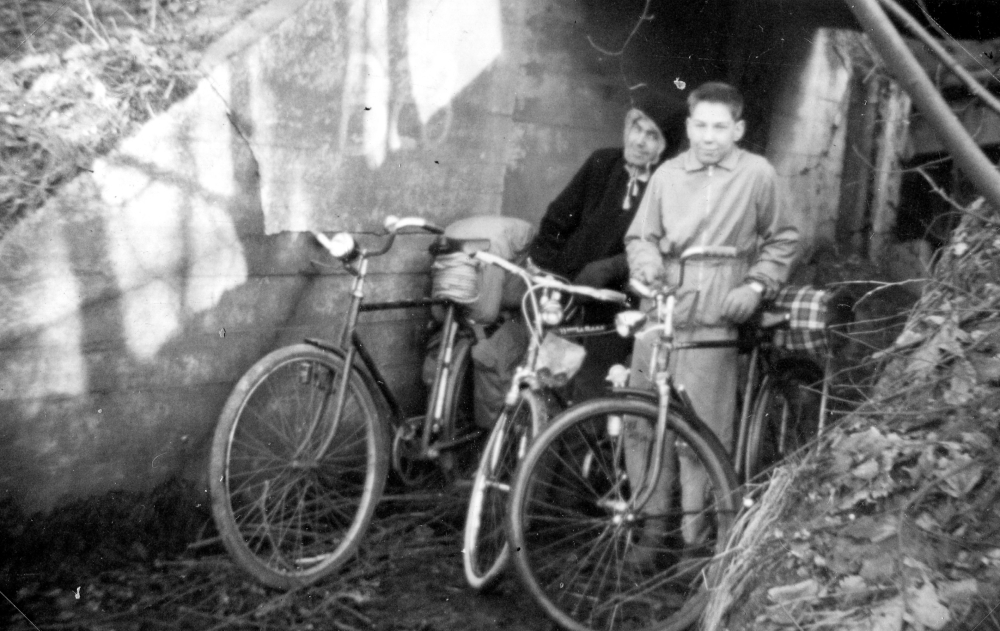
Two Scouts Posing in front of Our Bunker

Two Scouts Posing in front of Our Bunker

On the next bike trip to our bunker we were in for a great disappointment. Someone had discovered our weekend base and reported it to the police as a potential hideout for fugitives from the law. Thus, being alerted, they began patrolling the access roads to the Reichswald. How surprised were they when instead of nabbing a gang of criminals they caught a bunch of teenage boys dressed in neat scout uniforms. Unlike the irate youth hostel man the officer told us in a calm, professional manner how dangerous it was to camp out here with all those explosive devices lying all over the forest floor. He also gave us a scare when he recorded all our names and addresses with a warning that he would notify our parents and that there would be possible fines for trespassing. Luckily, the letters never came. But the encounter with the police made us go to safer wooded areas and sleep again in our tipi. As for me the leader of the clan, I now realized that even though I had taken vigorous measures to alert the scouts to the dangers of the shells I should have avoided the bunkers in the first place. In retrospect it was like divine intervention that the police had put a sudden stop to our adventurous trips to the Siegfried Line. That very same weekend I took the ‘rocket’ and threw it in the garbage can. For all I know it still rests somewhere in the Wesel garbage dump.

Highlights of Summer 2015

Camping at Taite Creek

IMG_7738

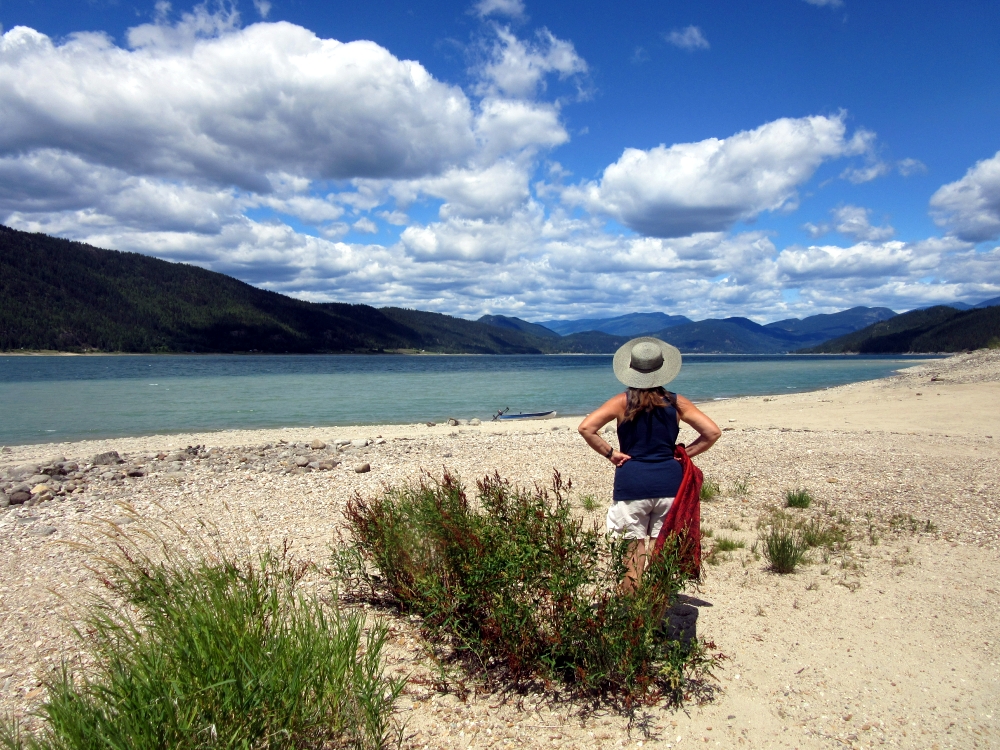
Gertrud at the Taite Creek Beach

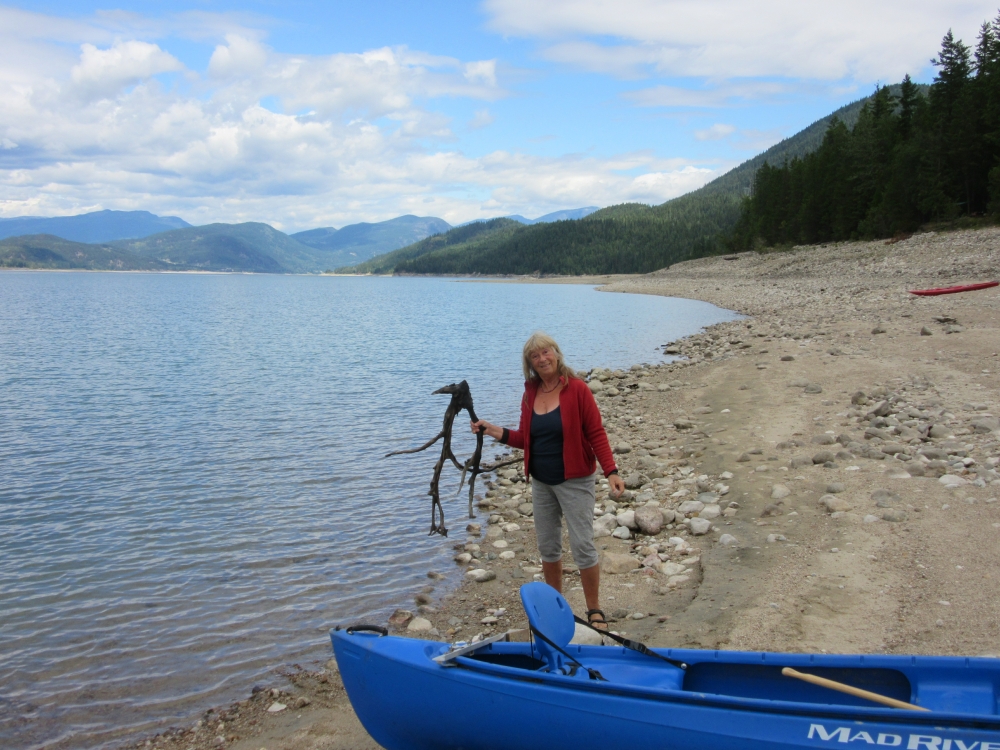
One week after we had returned from Victoria I pulled our little trailer the 10 km distance to our favorite campground at Taite Creek. Over the years word about this oasis at the Arrow Lake had spread all over the land. Outdoor enthusiasts from BC and even from the neighboring province of Alberta were flocking to this little paradise in the sun.

Gertrud with a Piece of Driftwood

Gertrud with a Piece of Driftwood

Gertrud and I were lucky to have found a vacant site in the middle of the summer. When we started camping, campfire bans were in effect due to the unusually hot and dry weather. What is camping without that romantic ritual of sitting around the campfire in the cool evening air, sipping a glass of wine, and having a good and relaxing time with your neighbors and friends? But Gertrud and I have learned to be content with what we have and not pine for the things we lack. In other words we made do with the given circumstances, enjoyed our daily swims in the refreshing lake, took canoe rides, went on photo excursions, spent some time with our camping friends, and played crib before retiring into our cozy trailer for the night.

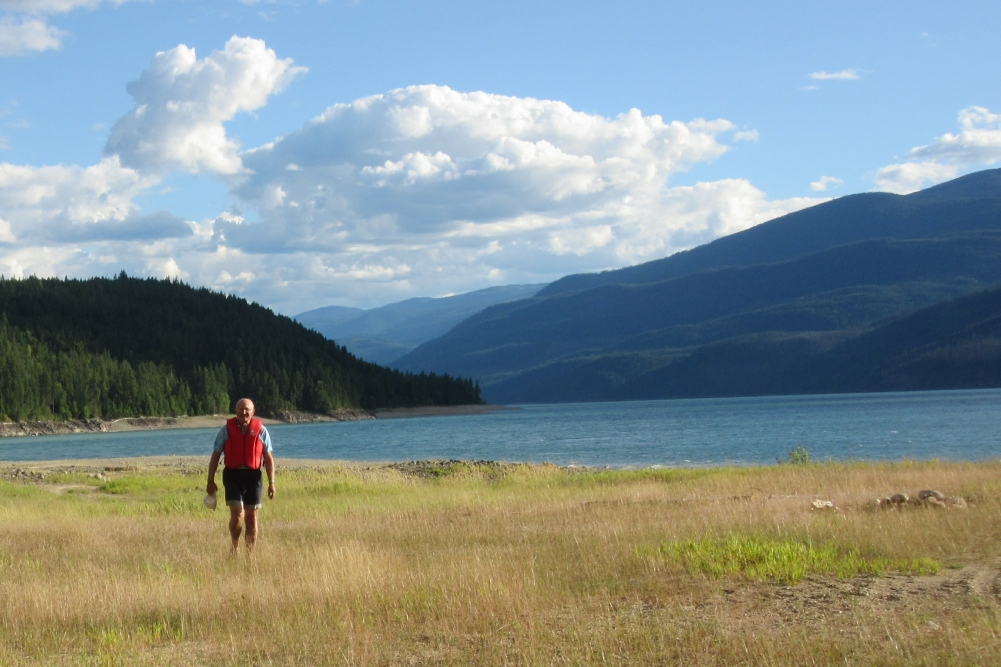
Peter Returning from a Canoe Ride

Peter Returning from a Canoe Ride

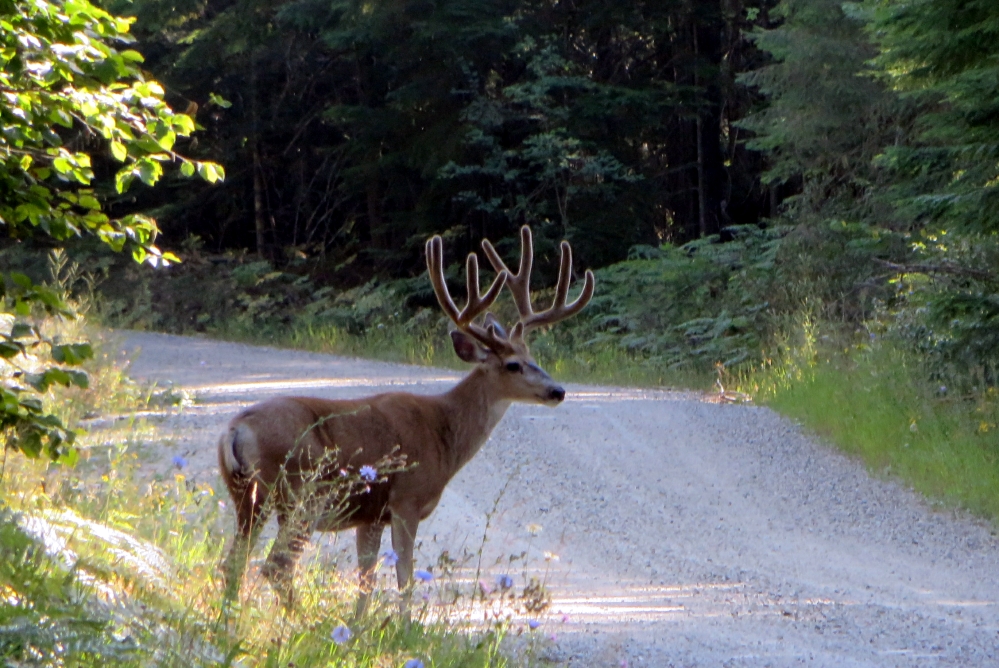
Every other day quite early in the morning I drove home to look after our yard and garden and to get fresh food supplies for our camping needs. On one of those trips I got very lucky. A buck was standing on the side of the road. I immediately stopped the car hoping to capture his majestic image on my digital camera. Alas, the camera was stored away somewhere in the back of the vehicle. I opened the door very quietly and stepped out on the road. The buck did not move. I walked to the back and opened the tail gate. The buck still did not move. I quickly grabbed my camera and aimed it at the buck, who was still standing at the same spot and then as if he wanted to pose for the picture turned his beautiful antlers in my direction. Then to my utter amazement he allowed me to approach him, while I was taking one picture after another. At 20 m he decided that I was a bit too close for comfort and trotted leisurely off into the forest. This encounter with one of the finest specimens in the animal kingdom made my day and I proudly shared his image on Flickr with the rest of the world.

Buck with Antlers Illuminated by the Morning Sun

Buck with Antlers Illuminated by the Morning Sun

A Touching Love Story in German

Die Wunderbare Liebesgeschichte meiner Großeltern

von Anke Schubert  ( Chart II a – II & IV)
Published in English on Jan. 30, 2015
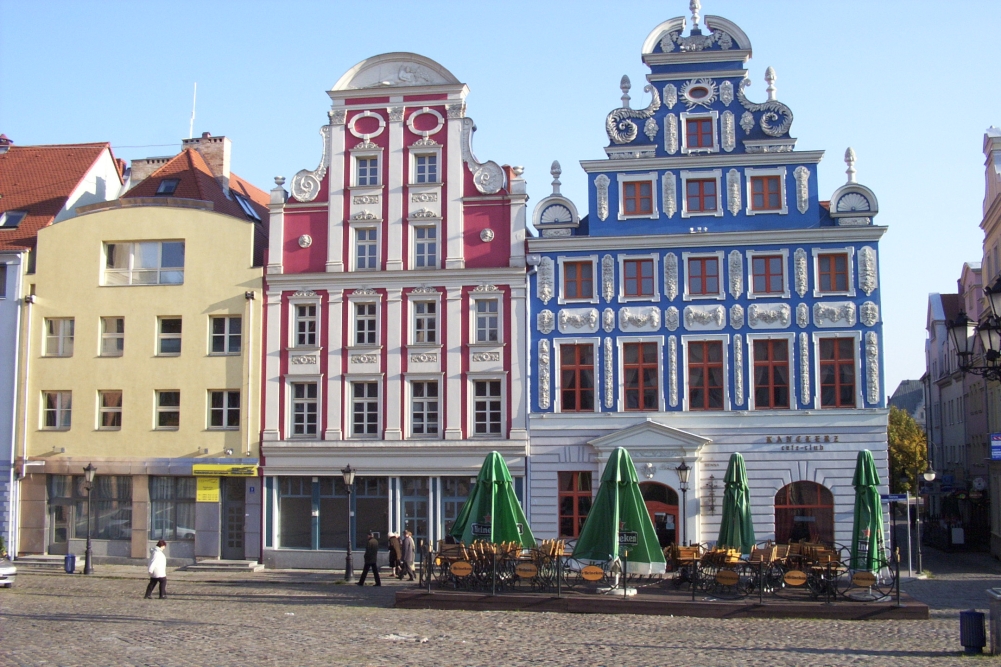
Altstadt von Stettin (heute Szczecin) Photo Credit: Wikipedia.org

Altstadt von Stettin (heute Szczecin) Photo Credit: Wikipedia.org

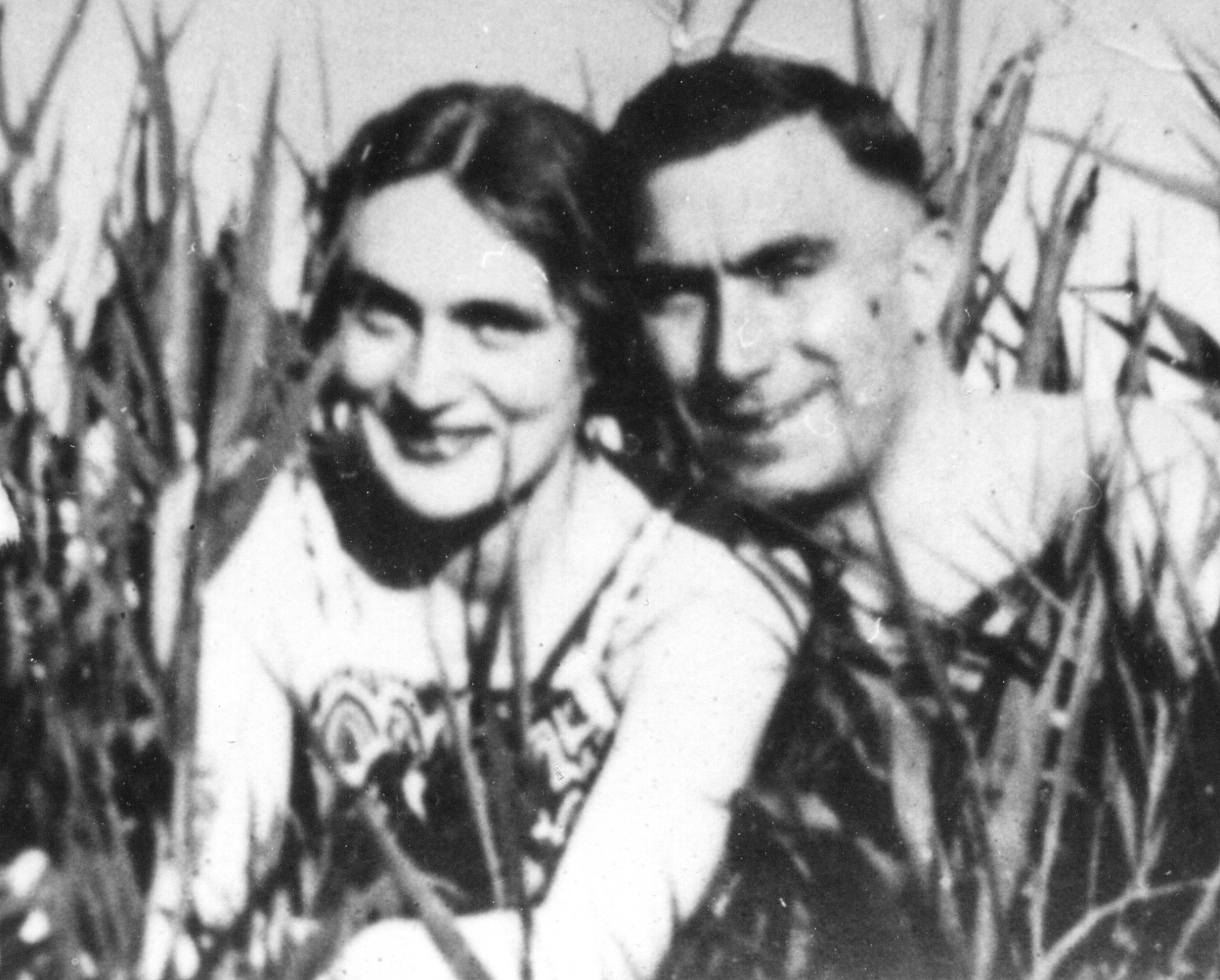
Meine Großmutter Johanna besuchte von 1929 bis 1931 ein Lehrerseminar in Stettin. Sie stammte aus Hirschberg im Riesengebirge. Ihr Vater, der Oberschullehrer Ludwig Engel, hatte diese Lehranstalt ausgesucht, weil hier im Gegensatz zu anderen Hochschulen nur Studentinnen ausgebildet wurden. Nun trug es sich zu, dass bei einer Cousine von Johanna ein junger Zollbeamter namens Bruno Kegler zu Gast war. An der Wand der Wohnung hing ein Bild von Johanna, und Bruno fragte neugierig, wer das sei. Ihm wurde Bescheid gegeben, und er bat darum, der Cousine einen Gruß ausrichten zu dürfen. Das wurde ihm gestattet. Als Johanna ihre ersten Semesterferien zu Hause in Hirschberg verlebte, erhielt sie eines Tages eine Brief mit fremder Schrift und mit der ihr bis dahin fremden Anrede „Sehr geehrtes gnädiges Fräulein!“. Lachend zeigte sie die Zeilen ihren Eltern und las ihnen vor, dass der Briefeschreiber um ein Treffen bat, um ihr die Grüße ihrer Cousine ausrichten zu dürfen. Vater Ludwig sagte sogleich: „Du schreibst, dass aus dem Treffen nichts wird, da du ja gerade in Hirschberg bist“. Johanna setzte sich sofort hin und schrieb auf einem winzigen Briefkärtchen die Absage. Der Brief wanderte in den Briefkasten – der Vater kontrollierte das vom Balkon aus – und Johanna verlebte zufrieden ihre Ferien.

Als sie wieder in Stettin war, schrieb Bruno wieder nach Hirschberg. Der Brief wurde geöffnet, aber Johanna immerhin nach Stettin nachgeschickt. Er enthielt die wiederholte Bitte, die Grüße ausrichten zu dürfen. Johanna zeigte das Schreiben ihren Klassenkameradinnen, die sie vor den energischen Schriftzügen warnten. Sie antwortete aber trotzdem und gab den Termin und den Ort – ein Café – an. Alle Klassenkameradinnen wollten mitkommen!

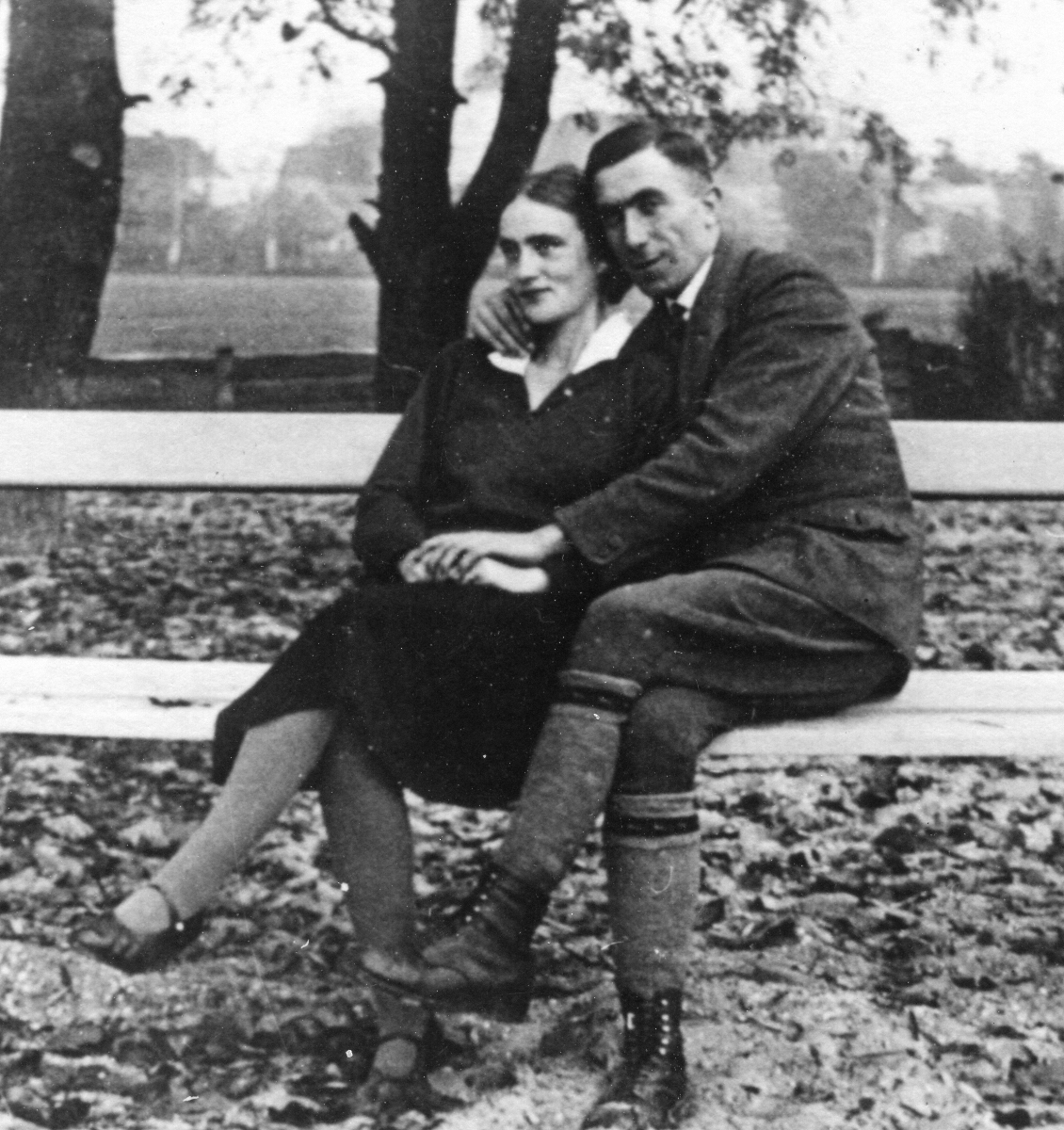
Bruno und Johanna - Eine Glückliche Zeit

Bruno und Johanna – Eine Glückliche Zeit

Als Kennzeichen hatte Bruno angegeben, dass er einen grauen Anzug mit einer weißen Nelke im Knopfloch tragen würde, Johanna wollte ein weißes Kleid und einen weißen Schal tragen.

Als sie sich an dem verabredeten Termin im Café einfand, sah sie … zwei Herren in grauen Anzügen, und keiner hatte eine weiße Nelke im Knopfloch! Aber einer stand auf, kam auf sie zu und stellte sich vor – und es war, als ob sie sich seit Jahren kennen würden.

Bruno und Johanna - Liebe auf den Ersten Blick

Bruno und Johanna – Liebe auf den Ersten Blick

Für Johanna begann nun eine wunderschöne Zeit. Sie sahen sich so oft sie konnten, unternahmen gemeinsame Wanderungen und Dampferfahrten.

Schon nach dem ersten Treffen sagte Bruno zu den beiden alten Damen, bei denen er als „möblierter Herr“ wohnte, er habe gerade seine zukünftige Ehefrau kennen gelernt. Ohne Johannas Wissen schrieb er an ihre Eltern, schilderte seine wirtschaftliche Lage und seine Familie und bat darum, einen Besuch machen zu dürfen. Das wurde ihm gestattet, man lernte sich kennen und am 29. April 1930 heirateten Johanna und Bruno. Sie waren sehr glücklich miteinander, und in den folgenden Jahren wurde dieses Glück durch die Geburt ihrer Kinder Hartmut, Elisabeth und Jürgen vervollkommnet.

Bild 26