A Relaxing Easter Outing at Taite Creek Campground
Chapter VIII of the P. and G. Klopp Story – Part II
Getting Caught in the Hen House and Schadenfreude at its Best
The new hen house that Father had built brought much joy to Mother. Early in the morning, when the chickens were still sitting on their roost, Mother would enter quietly the chicken coop and perform the finger test to find out, which ones were ready to lay an egg that day. She grabbed one and held it firmly in her left arm while inserting the little finger of her right hand. If the tip her finger pushed against something hard, she knew that an egg was on its way, and the chicken would have to spend the rest of the morning in the wooden cage, until it had done its duty. On the other hand the chicken that had failed Mother’s test would immediately be released into the yard. The eggs that our feathery friends produced for our household were of excellent quality. Today we would claim them to be 100% organic and delivered by free-range chickens.
To acquire money – so I had learned on my daily milk run – involves work. After I received my pay, I would convert it into anything I wanted provided that there was enough of it. However, my parents insisted that I saved most the money I earned. So unfortunately, it turned into a meaningless number in a tiny savings booklet issued by the local credit union.
It did not take me very long to see the connection between a commodity, such as an egg, and its monetary value. What my slowly developing conscience did not recognize right away was that just because something was there within reach of my little hands did not mean that it was mine. So one day while I was exploring the chicken coop, I discovered an egg in the wooden cage under a chicken. I immediately set her free and released her into our yard. I took the egg, which was still warm, into my hands. Seeing this wonderful oval object in front of me was in my mind almost like owning it. So I walked to the nearest grocer in the Upper Village and converted the egg into cash. This was my first sale. Its success goaded me to look for more eggs in the following days and to sell them to the colluding grocer who was not asking me any disquieting questions. This went on for a while, until Mother caught me red-handed in the hen house. Normally she took care of matters of discipline, but this case of mine was severe enough to let Father deal with it. I did not have a good feeling, when he took me to the barn, where he made it absolutely clear with the help of his cane on my bare bottom that taking something that did not belong to me was the same as stealing. This was another major lesson I learned, and there were certainly many more to follow.
Winter was approaching again, but it had lost its harsh bite, since we had moved into the Ös farmhouse. On the contrary, the cold enhanced the feeling of comfort and coziness, especially when the tile stove was radiating its warmth throughout the entire house. Firewood – split and neatly stacked – lay ready in large enough quantities to provide heat during the coming cold months of the year. Adolf, my second oldest brother, had helped in a big way to make sure that we would not run out of fuel for our stoves. In his eagerness to show off the highest and most beautiful stack in the world, he had built it just a trifle too high. The stack was already leaning away from the wall at a precarious angle, when he added one more piece of wood to complete his masterpiece. That extra weight broke the camel’s back, and with thundering might the entire stack came crashing down fortunately leaving Adolf unharmed on the ladder on which he was standing. Now this was embarrassing enough for him, who had just been bragging about his stacking skills. But living in a family, where Schadenfreude, the pleasure derived from the misfortune of others, was not completely unknown, poor Adolf had to put up with derisive laughter and spontaneous mock poetry coming from our sister Eka (Lavana). She sang,
“Öcher, Öcher, Bum, Bum!
Dem Beuger fiel die Beuge um!“
This would roughly translate into English as,
“Shame on you, shame on you, clumsy packer!
The pretty stack fell down, you lousy stacker!”
Even though Adolf rebuilt the stack with great dexterity to make sure it would not tumble over again, the lines and accompanying melody were very catchy, and soon all his siblings were singing and reciting the jingle. It goes to his credit that he took it in stride and waited good-humoredly for the torture to end.
To be continued …
Chapter VIII of The P. and G. Klopp Story – Part I (Chart I – III) The Ös Farm
Troublesome Use of Language and My First Job
“Home is the nicest word there is.”
Laura Ingalls Wilder
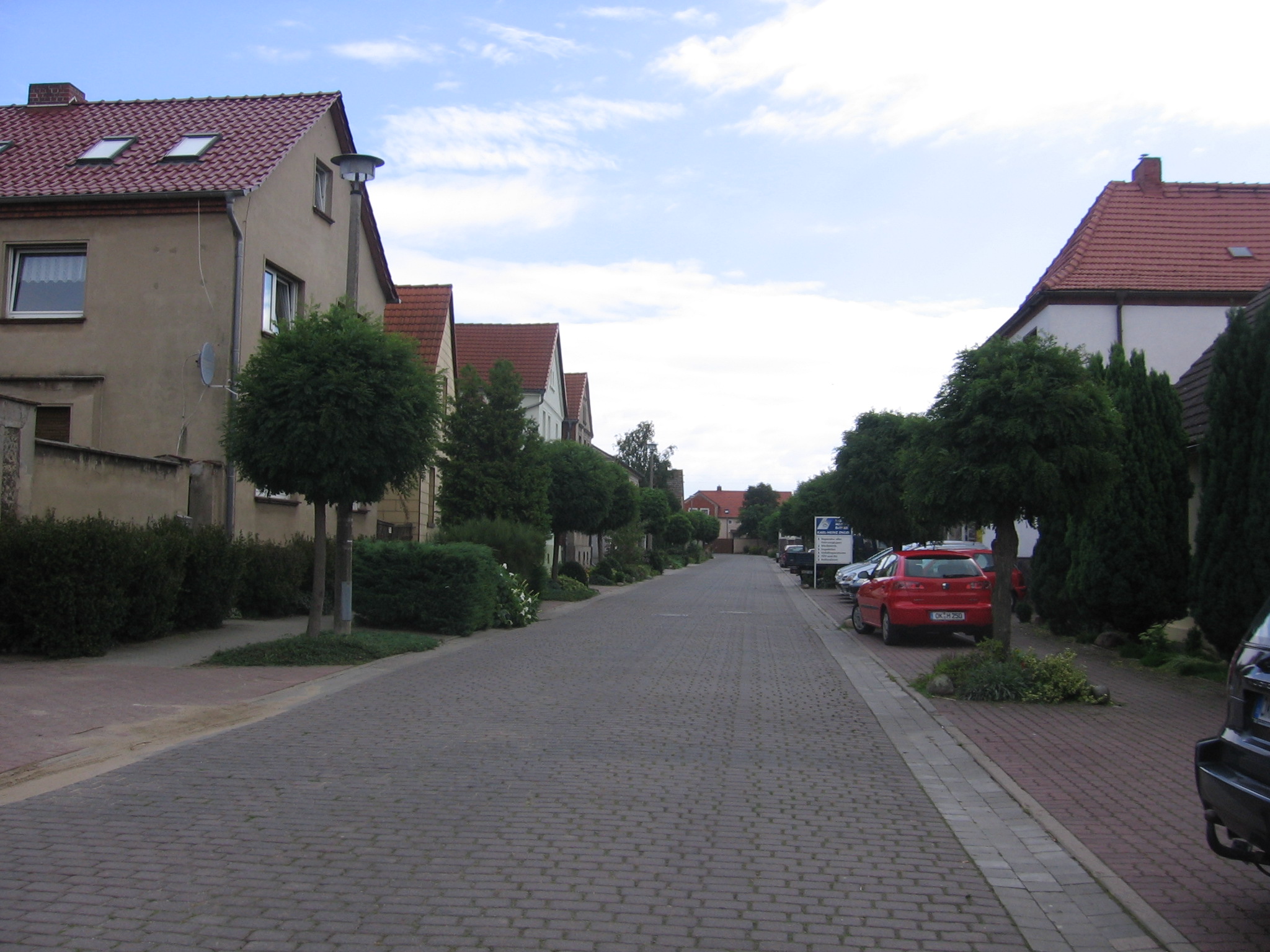
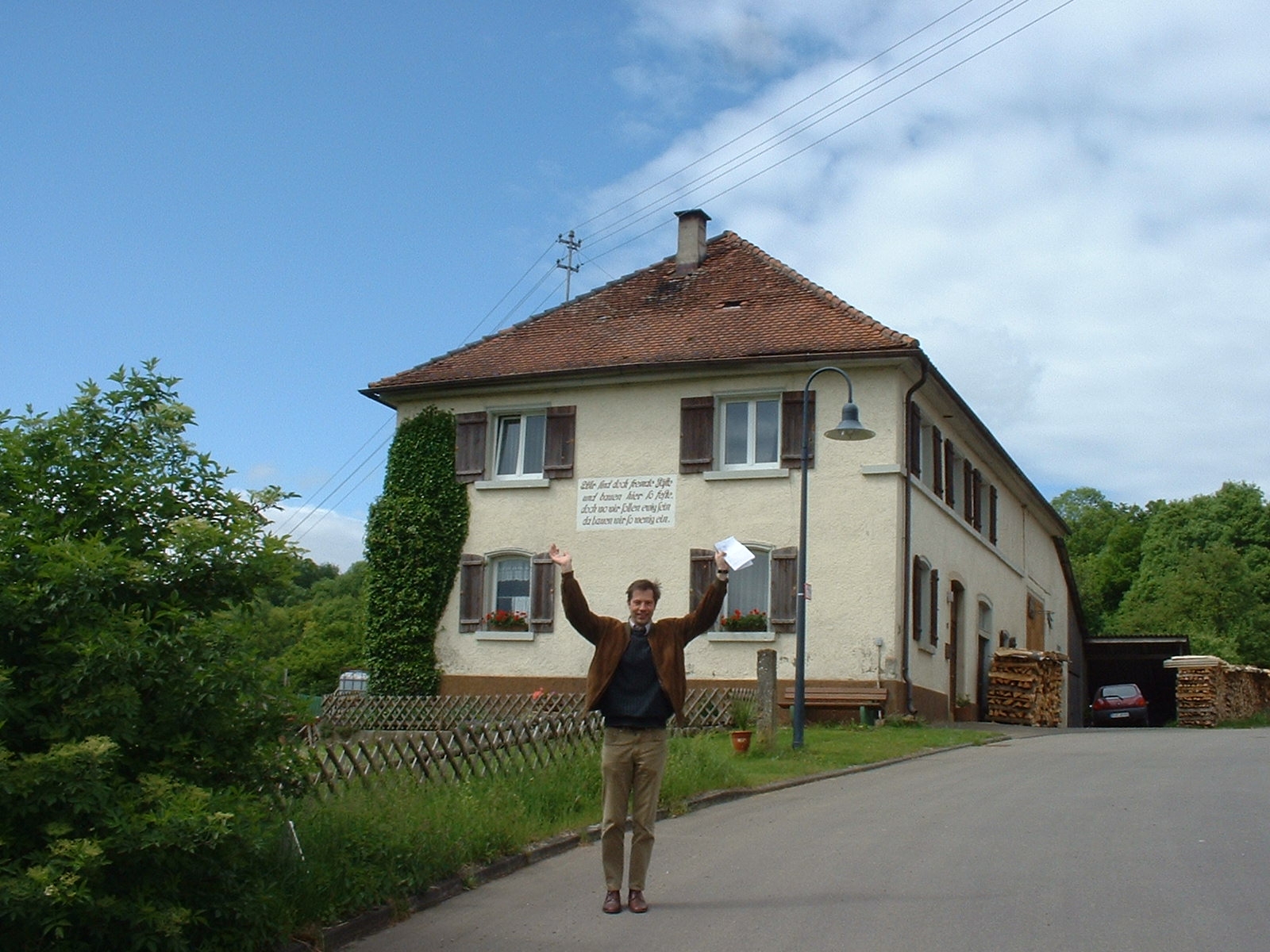
In 1950 an elderly local couple by the name of Ös retired from their small farm. Having no one in the family to take over, they decided to lease it to Father. So in the summer of the same year the Klopp family finally moved out of the ‘poorhouse’ into the Ös farmhouse. In terms of mere living space that was quite an improvement and we all enjoyed the spaciousness of our new dwelling place. But the farmland itself was most likely one of the smallest in the entire village and consisted only of 15 acres of arable land. I daresay all the fields combined were not larger than our park-like backyard in Gutfelde.
While Father’s dream was to restart on a very small scale an agricultural venture for which he was qualified, the chances of success were rather slim. To make things worse from a financial point of view, he had to take out a loan and burden himself with a considerable debt load. Father and Mother at least at the beginning were full of optimism, and we children could enjoy a more comfortable life. As for me, being just eight years old, I was totally unaware of my parents’ worries. I happily attended the Rohrdorf Elementary School, spent many hours playing with my best friend Günther L., an orphan living with his grandparents next door in the last house on our hill, and discovered with him that when play begins to negatively impact our fellow human beings, grown-ups call these games pranks, vandalism and irresponsible behavior. I in particular had to learn the hard way that for every inappropriate action there were consequences ranging from mildly unpleasant to extremely painful. A good part of this chapter in my life will deal with a string of episodes – not necessarily in the right chronological order – with such actions of mine and their consequences.
Children have an amazing ability to absorb new thoughts, ideas, concepts and especially words. Even if they do not understand them fully at first, they play with them very much like they would with pebbles on the beach. They arrange and rearrange them to form patterns and designs, which in turn invite to do more explorations lending meaning and sense to the physical and linguistic world the curious children live in. When visiting my friend Günther at his place, I overheard his grandparents complain about some people in the village. Naïve, as a young boy like me could possibly be, I thought that they needed a little bit of encouragement. So I took a deep breath and declared with great conviction without knowing what I was saying, “They all should be castrated!”
The response was quite the opposite of what I had expected. For a moment there was a dreadful moment of silence. Then Grandpa Lehmann exploded into a bitter tirade on the corruption of young children by unconscientious parents having no business being here with their strange customs from the Eastern provinces. My friend and I not knowing why he was so upset stood there totally immobile as if nailed to the wooden floor. Then Grandpa glared at me with his angry eyes and yelled at me, “To hell with you! Out of my house! And don’t you dare ever to come back!”
I felt like a dog that had just been severely beaten and slinked out of the door shaken up and completely puzzled. Fortunately, the forever was only a week. Perhaps Grandma Lehmann put in a good word for me and convinced her husband that I truly did not know what he was saying. This had been a first-class lesson for me: Speak only when you know what you are saying and then only when it is appropriate.
On the left side road from the highway to Castle Wildenstein lived a fairly prosperous dairy farmer, who owned more than 40 cows. Their main job was to provide milk. The farm also boasted the use of the latest milking machines, which was quite rare among the farmers in Rohrdorf in the early 50’s. The farmer needed someone to deliver the fresh milk to the local dairy 2 km away at the far end of the Upper Village. He hired me to push a two-wheeled cart with two 20 liter milk cans to the dairy, have the milk weighed in, processed and return home with an equal amount of skim milk. For this job I received every evening upon the completion of the 4 km run a chunk of home-made bread and a piece of bacon rind and at the end of each month a wage of three marks. This was hard work for me, the full cans were heavy and the hill leading up to the Upper Village was very steep. I could take my time though and make frequent stops, as long as I reached the dairy before closing time.
One evening, I arrived late. The door to the dairy was already looked. The workers were cleaning up inside and were getting ready for the next night. With a little bit of a bad conscience over the neglect of my duty, I brought the milk back to the farm and collected my daily bread and my bacon treat without saying anything to the farmer’s wife. When I showed up the next evening having almost forgotten about the incident the night before, the farmer himself was waiting for me and gave me a thorough dressing down for bringing back the raw milk without reporting my failure to deliver it at the dairy. “The pigs that are being fed with raw milk can get easily sick”, he sternly advised me. “Not to mention the loss for not delivering the milk to the dairy”, he added. I decided that as long as I held this job this would never happen again!
To be continued …
Günther Kegler, Chief of the Kegler-Clan (Part III), Charts II a & b – II
Günther Kegler at the Brink of a Mental Breakdown
The Boys and the Old Men – Cannon Fodder
January to May 1945
On September 19, 1944 Günther Kegler became leader of the military registration offices at Sangerhausen and Querfurt, Thuringia, about an hour’s drive northeast of Gotha, Biene’s place of birth.
As he could clearly see the imminent collapse of his beloved country on the horizon, he did everything in his power to save what was in his mind the only resource left after Germany’s defeat. To spare young boys from the draft was foremost on his mind. After January 1945 even the diehards of the regime could see the writing on the wall. But instead of preparing for a quick surrender, which would have saved tens of thousands of lives, they obstinately clung to the glimmer of hope for final victory. Goebbels’ relentless propaganda machine fueled a patriotic fervor, especially among boys. Men capable of carrying a rifle or an antitank weapon were to be conscripted.
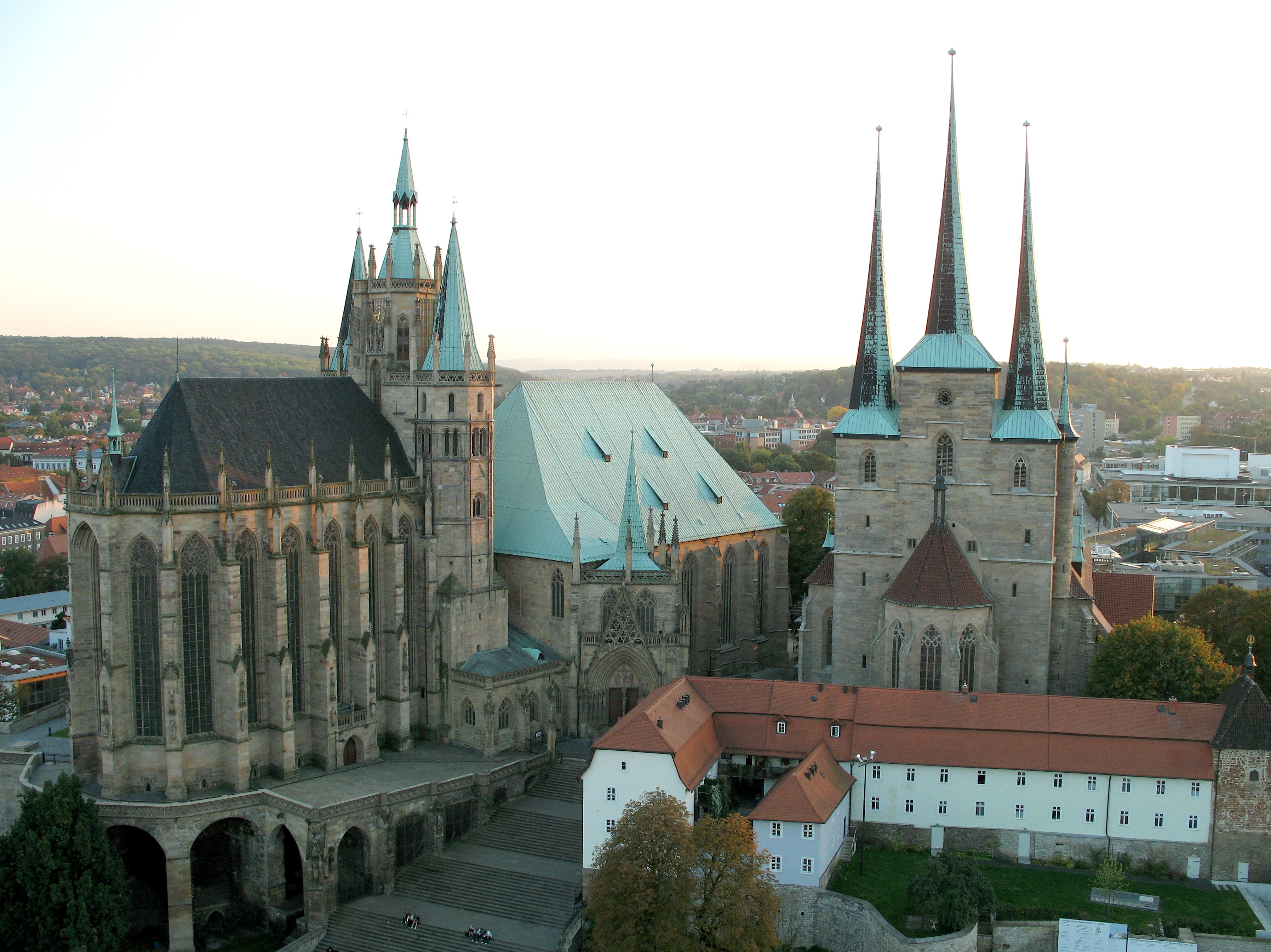
The leader of the NS district Querfurt started to meddle in Lieutenant-Colonel Kegler’s realm of authority and insisted that 16-year old boys be included in the draft procedures. They were to fill the gaps of the dwindling forces of the war machine. Against this directive Günther Kegler put up as much resistance as was in his power. But the constant pressure and harassment from above wore him out. Then he heard about Himmler’s horrific order of his court martialed brother General-Lieutenant Gerhard Kegler being demoted to a private and slated to be executed after the final victory. (His amazing story will be published at a future post.) Günther Kegler broke down under the burden of these fateful events and was admitted to a sanatorium at Erfurt on April 1, 1945. He stayed until May 31, 1945 and recovered sufficiently to allow him to return to his family at Nonnenrain Street, Erfurt.
Unfortunately, his ordeal was far from over. By prior arrangement between the US and the Soviet Union, the American occupation forces withdrew from Thuringia and handed over the administration of the province to the Russians. Arrests, interrogations mostly conducted at night, closing of savings accounts and all sorts of other chicanery followed in quick succession. As my uncle stated in his family chronicle, it was the fate of countless other German officers in the Soviet Occupation Zone.
To be continued …
West Kootenays in Perfect Harmony with the Seasons
Happy Easter!
On a recent walk around town I talked to a neighbor, who like me is also making his daily round. I mentioned to him that I had observed over the years that nature in our little community was as perfectly as it can get in synchrony with the seasons. As surely as we have snow for Christmas, Mother Nature begins to stir in the West Kootenays on or around the spring equinox.
My neighbor agreed, “We are sitting on the right time line here in God’s country.”
Yes, I know that down at the coast, people enjoy the blooming of snowdrops in early February and golfers in Victoria are playing their favorite game on New Year’s Eve. But I like to experience the quarterly changes that best symbolize our journey through life.
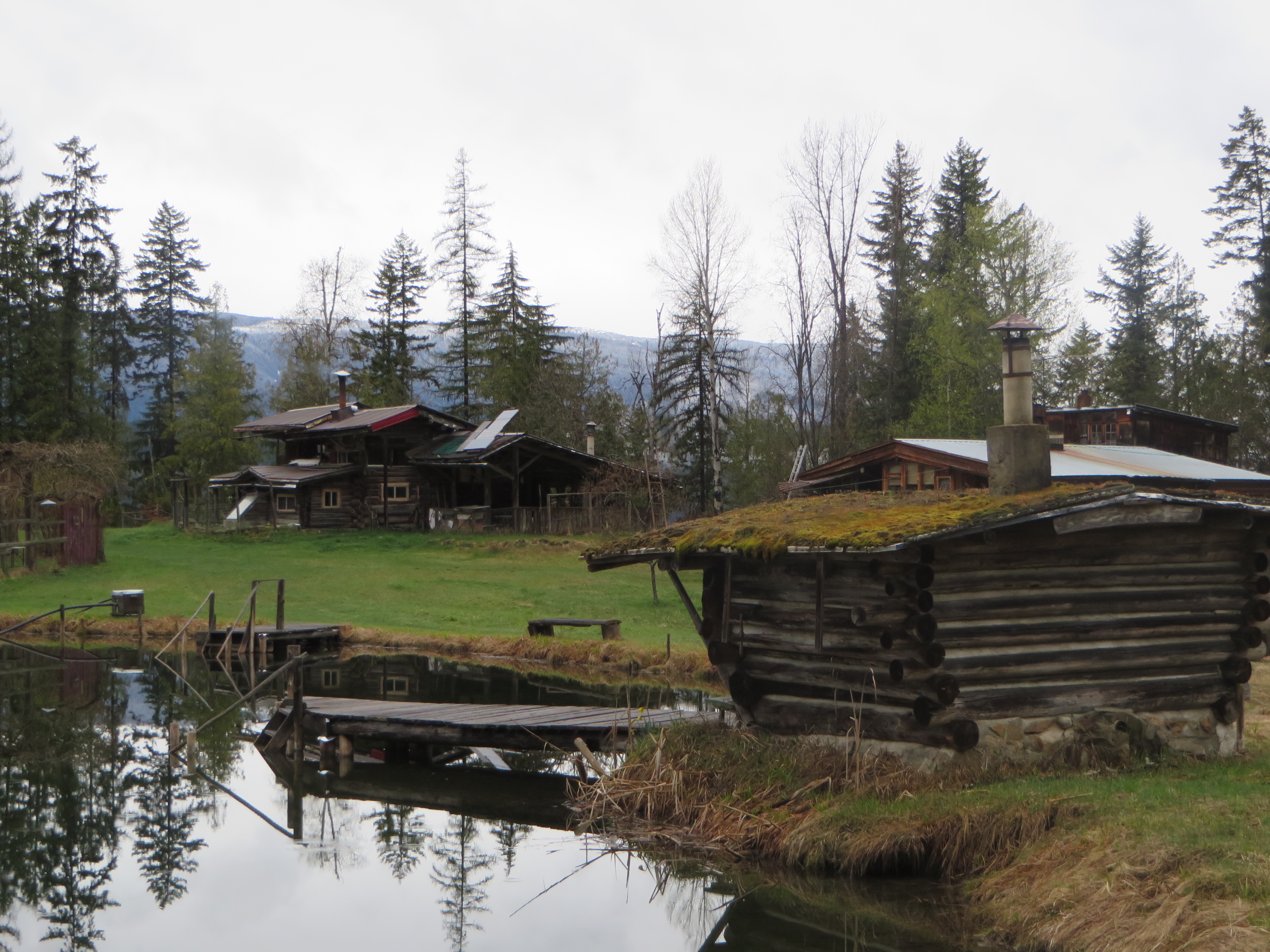
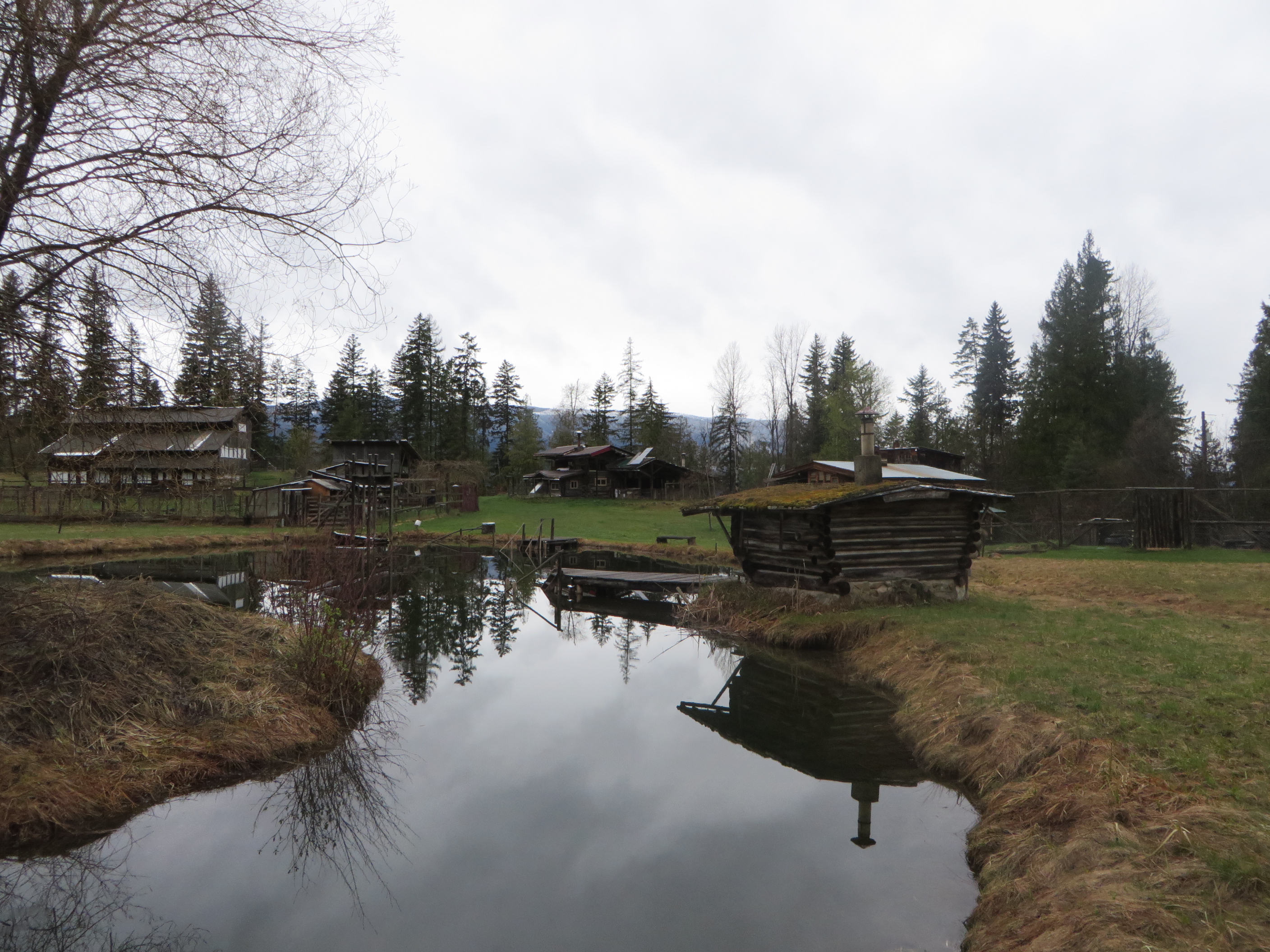
Here are a few photos I have taken only a few days ago showing the beauty of vernal awakening in the budding of trees, bushes and flowers. The promise of new life is also evident in the spiritual renewal we may find in the celebration of Easter every year in spring.