Breaking the Code – Part III

 The Unholy Union of Success and Failure

img_1536

The Unicorn by Batik Artist Bill Laux

The new external disk drive arrived. Hooray, it worked! I was able to retrieve one floppy after another. The feeling of success after such a long wait almost created a sense of euphoria. After checking some fifty disks with all those enticing file names, I came across only one disk that the floppy disk drive could not read. Some contained images, but most had text files all carefully numbered by chapters indicating that massive amounts of research were hidden on these archaic storage devices. That was exactly what I was hoping to find. I randomly picked one disk and transferred its content onto my harddrive. In our era abounding in giga- and terabytes, we easily forget the times when we had to struggle to make do with 3.5 kilobytes, with which the Vic-20, the dinosaur of ancient computer world, came so equipped. Still if the content was merely text and NOT the byte gobbling images and videos, then an entire novel of 800 pages would easily fit on a floppy disk.
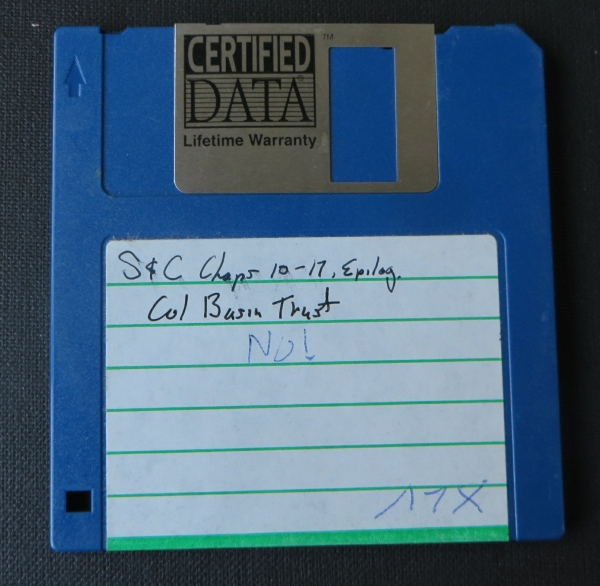
img_1540

One of the Dozens of Floppy Disks with Bill Laux’s Writing

Now came that long expected moment to get a first look at Bill’s writing. From the first list of titles I could tell that their content dealt mostly with the political wrangling over the building of the great Canadian transcontinental railway, whose purpose was to unite the second largest country in the world.
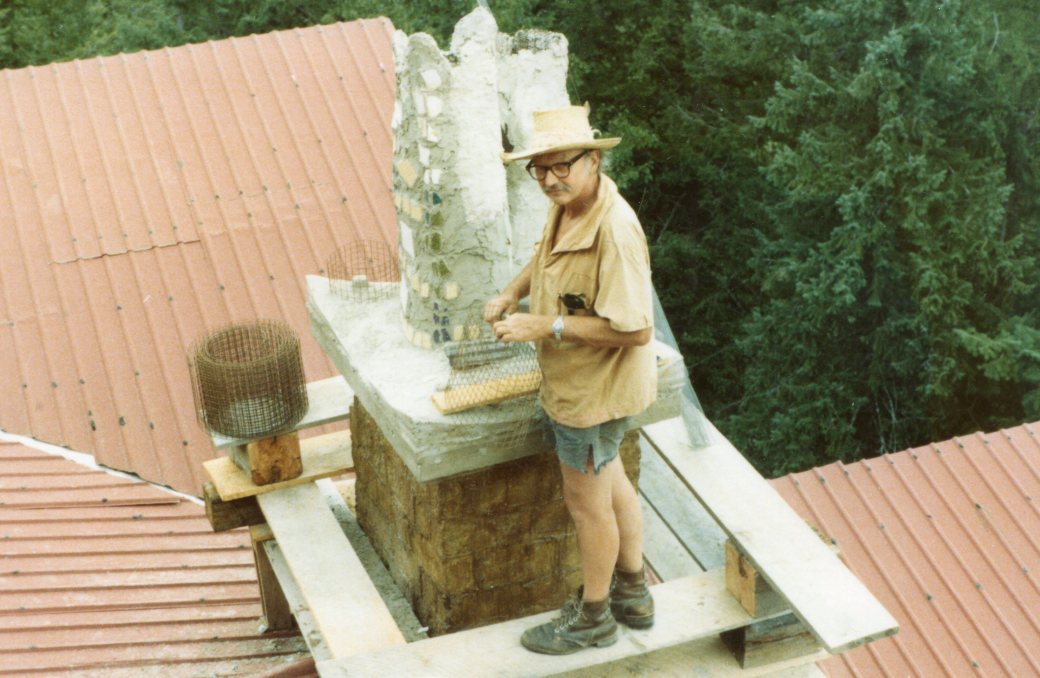
27

Bill Laux Working on his Castle at the Arrow Lake in 1977

Full of anticipation, I double-clicked on chapter1.cwk. Like a lightning bolt out of the blue sky, I was struck by the ominous computer message on the screen, “Windows cannot open this file”. Upon further investigation, I discovered that the file extension cwk comes from the extinct word processor Clarisworks, which the Apple company had acquired in 1998, renamed it AppleWorks, but later on abandoned it after its final upgrade in 2004. Owning 4 different word processors, I was almost certain that at least one of them would be capable of decoding those archaic files. Having thus recovered from my disappointment, I loaded one text file into the queen of all word processors (of course, I am referring to Word by Microsoft). But its performance was a total disaster. All it could produce was a whole pile of gobbledygook on the screen. Similar results surfaced, when I tried the other three word processors. Great was my disappointment, but I was not yet ready to give up. How the story ends will be revealed in next week’s post on Bill Laux and his mysterious collection. So stay tuned.
Origin of Needles, BC

Needles took name from Arrow Lake Sandspits

by Greg Nesteroff

reprinted by kind permission from Arrow Lakes News

Needles, the western terminal of the Lower Arrow Lake ferry, was for­merly known as The Needles, and was first mentioned in the Nelson Miner of Nov. 30,1895, concerning two mining claims recorded by John D. McDonald and A. A. McPherson “at the Needles, Lower Arrow Lake.” In an interview published in the Arrow Lakes News on June 19,1958, Rose Wright explained the names origin: ‘“Why do you and many old timers speak of Needles as The Needles?’ ‘Well, it was always The Needles in the old days, due to the long points that reached out into the lake. It is only in later years that it has been shortened to Needles.”’ Actually, the shortened version actually first appeared in the Miner a week after the long version debuted, also in relation to mining claims, but it wasn’t until the Fire Valley post of­fice was renamed Needles on Oct. 1, 1906 that it became commonplace. Even so, the “The” stuck around for some time — the Nelson Daily News of July 13,1911 noted “Welford Beeton of the Needles came in last night…”

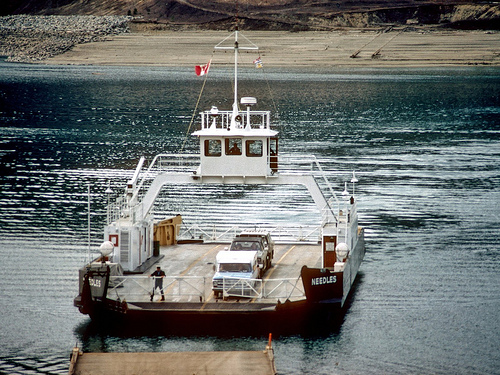
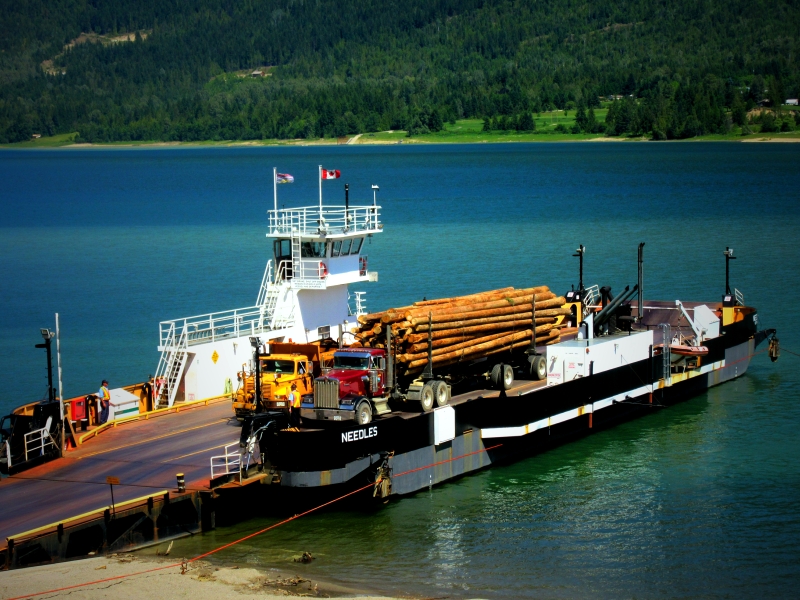
Needles Ferry (Fauquier - Needles) - Photo Credit: Gertrud Klopp

Needles Ferry (Fauquier – Needles) – Photo Credit: Gertrud Klopp

According to the BC Geographical Names database, Needles is the land­ing’s name, but The Needles is still the official name of the narrows, even though construction of the High Arrow Dam in the 1960s submerged both the sandspits and the commu­nity that grew up there.

A new Needles post office was established in 1908 and closed in 1968 upon the flooding of the Arrow Lakes. Today the only thing left of the old community is its cemetery.

In 1910, A.H. Green surveyed what’s now Fauquier, on the east side of the lake, but the map called it Needles Ranch, a name by which it had been known since at least 1905.

According to Just Where is Edgewood, a place between Needles and Edgewood was known as McKallister’s Landing, after “the land agent who settled the townsite of Needles.”

No contemporary examples have been found of this place name and it’s not known exactly who its namesake was, although he was apparently still in the area selling property as of 1911.

The late Bill Laux said McKallister’s (or McAllister’s) Landing was the site of the original Fire Valley post office, which opened in 1894. Later, the CPR called this place Page’s Landing after William Henry Page (1861-1933), an English miner who came to the area from Butte, Mont. around 1893 and served as Fire Valley postmaster from 1908 to 1910.

Just Where is Edgewood (which erroneously calls him Walter Page) describes him thusly: “ [H]e lived on the lakeshore between Edgewood and Needles … He had been married at one time but his wife never moved to the valley. He was always referred to as Captain Page and often took the part of Santa Claus in the early Edgewood years. He was a fat, jolly type of person.”

He was among the first burials at the Needles cemetery, although his grave is unmarked. A mountain ridge was supposedly named for him as well, but it’s no longer on the books.

Pages Landing was first referred to in the Revelstoke Kootenay Mail of Sept. 26,1902: “The scene of the new strike is only 16 miles from Page s Landing, on Arrow Lake …”

It was only ever mentioned a few more times.

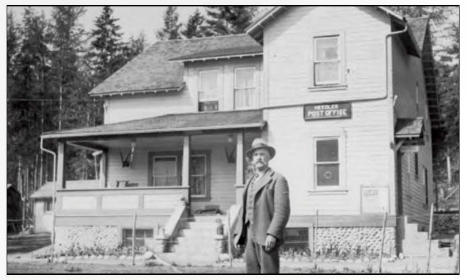
George Craft is seen in front of the Needles Hotel, which was also the post office. He was postmaster from 1920 until his death in 1942, whereupon his wife Edith took over the job. Today all that’s left of the old Needles townsite is the cemetery. Courtesy Ed and Marian Craft

George Craft is seen in front of the Needles Hotel, which was also the post office. He was postmaster from 1920 until his death in 1942, whereupon his wife Edith took over the job. Today all that’s left of the old Needles townsite is the cemetery.
Courtesy Ed and Marian Craft


Outdoor Education at the Arrow Lakes

Guest Post by Erika Momeyer

Article reprinted from the ‘Rural Root’ Publication

ErikaM pic

Erika has been a classroom teacher for more than 10 years and previously worked as a park naturalist and environmental educator. Currently, Erika teaches in a K-3 classroom in Edgewood, part of the Arrow Lakes School District (SD10). During the past 7 years, Erika and her students have been going for weekly outings walking, skiing, snowshoeing, stomping, tramping, strolling, sauntering and discovering that outdoor experiential learning can be fun. Erika is also on the board for the Columbia Basin Environmental Educators Network (CBEEN) as well as the Local Pro D Chair for the Arrow Lakes Teachers’ Association.

Double 1

Back in September we collected a variety of nature materials to create self portraits with. Students were tasked with the challenge of using only objects from nature to make their portrait. It was inspiring to see the student’s faces jump out from the page. From a head of blond curls made of curled birch leaves, a long straight side ponytail made of grasses and a wide toothy grin of ghost berries or a students were able to use nature to show their physical characteristics and some personality. We used white craft glue to stick these portraits onto heavy cardboard. We also gathered sticks to spell out our names with and glued these to cardboard. Both of these projects are on display on our Wonder Wall, a place where we explore and ask questions about the world around us.

Double 2

During one of our walks students each collected a fallen leaf. We gathered at our meeting spot under the Pondering Pine and reviewed what symmetry means. During this time students gave me their leaves and I cut them in half along their axis of symmetry. The leaves were then taped into our Nature Notebooks. Students were asked to draw the other side of their leaf. Pencil crayons and shading techniques were used to try and match the drawn side to the real leaf. Students were then had to label parts of their leaf and write a brief description of their observations. To preserve the leaves in the journals we placed a small piece of clear shelf paper directly over the taped leaf and pressed firmly to seal.

Clay

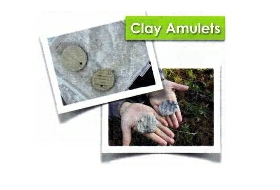
Each student has a special bond with their Thinking Tree. These trees are chosen each September by the students and these trees become of place for journalling, observation, quiet exploration and occasional group play area. We try to visit bur Thinking Trees once or twice a month. It never seems to happen as frequently as we’d like. In order to carry a piece of our trees with us we made special amulets. We are fortunate enough to have a kiln at our school so we used regular clay. Air dried clay would also work for these. Back in the classroom I pre-rolled balls of clay about the size of a bouncy ball. In the forest students flattened the balls against the bark of their tree. We tried to find interesting patterns to press the clay into. We also poked holes in the top. Once dried and glazed we tied these to our walking backpacks. Students with extra time found other patterns including leaves and insect holes to make other amulets. These were made into necklaces and keychains.

Stars

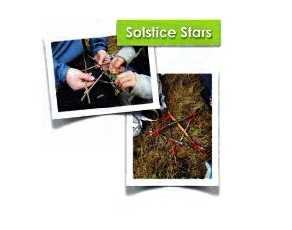
Shortly before the Winter Break we made these Winter Solstice stars. During our walk students were asked to find 5 sticks about the length of their forearm and width of a pencil. We collected dead sticks from the ground. Using colourful yarn or natural twine we wove and tied the ends together creating a star shape. In order to maintain the shape we also tied the sticks near the middle where they crossed over other sticks. They weren’t too hard to make but definitely required teamwork and an adult to get them going. While I helped students with their star, the other students wrote in the Nature Notebooks about what they thought their Animal Personas were doing to prepare for winter. Animal Personas are animal names the students chose to use during our Walking Wednesdays and Outdoor Exploration activities. We have names such as Dr. Hornet, Sir Bobcat and Queen Owl. The stars looked great hanging in the window of our classroom.

Short History of the Fauquier-Needles Ferry

Special Thanks to the Arrow Lakes Historical Society

for the Newspaper Clipping of 1922

The community of Fauquier has been around for over a hundred years. If you are new to this site, it would be a good idea to view and read a few of the previous articles on the colorful history of mining. logging, fruit-growing in this little town. They can be found under the heading of Fauquier BC.

Early Fauquier Ferry - Photo Credit: Anette Devlin's Personal Archive, Fauquier BC

Early Fauquier Ferry – Photo Credit: Anette Devlin’s Personal Archive, Fauquier BC

Right from the start there was a great need to ferry people, goods and cattle across the Arrow Lake between Fauquier and Needles, which was a thriving and much larger settlement on the west side of the lake. A few enterprising people began to provide transportation by using their boats and barges. But as the newspaper article of the Arrow Lakes News of September 27, 1922, clearly indicated that was no longer good and safe enough.

Traffic Between Edgewood and Nakusp on Increase – Roads Need Attention

NAKUSP, Sept 27, 1922

With the in­crease in the number of motor cars in the various towns along the Arrow lakes making the through run between Edgewood and Nakusp and intermediate points, there is an equally increasing need of a proper ferry service between the east and west side of the lake at Fauquier and Needles. The present ar­rangement of a crude raft operated by an enterprising rancher at Fauquier for the public convenience is inadequate and even dangerous, especially for heavy cars.

 On Sunday alone four cars were fer­ried across both ways, one of which had its wheels in the water. There is much credit, due to Mr. Kendrik of Fauquier for assisting autoists across the water, but the operation is accompanied with a great amount of danger to lives. It is full time that the public works department of the provincial government rises to the occasion and build a ferry similar to that at Robson. The request has been made and passed by the asso­ciated board of trade on more than one occasion, but so far nothing has been done. A petition is being drawn up and circulated praying that this be carried out this fall, also the overhauling of four miles of road three miles south of Burton, which is covered with brush.

Fully Navigable Ferry - Photo Credit: flickriver.com

Fully Navigable Ferry – Photo Credit: flickriver.com

The outcome of increasing public pressure for better service was that the provincial government provided from that point on regular, safe and reliable transportation facilities, which included not only the ferry between the two communities, but also a highway link to Vernon over the Monashee Pass. When in 1967 the valley was flooded through the building of the dam near Castlegar, the provincial government was going to build a bridge across the lake at Fauquier. When this proved to be too expensive, a promise was made to provide government ferry service 24 hours a day free of charge.

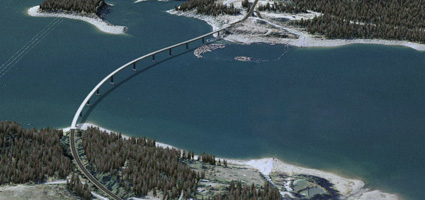
Some thirty years later the costs of running and maintaining the service has become prohibitively expensive. The government attempted to wiggle itself out their obligation to the public by cutting back the time the ferry would be running and by charging a fee. This did not sit very well with the populace and public protests made the government back down. Another bridge building proposal surfaced, which almost became reality if it had not been for a sudden and unexpected increase in steel prices. The photo below shows the designer’s areal perception of the wonderful bridge that never was.

Photo Credit: http://www.b-t.com/

Photo Credit: http://www.b-t.com/

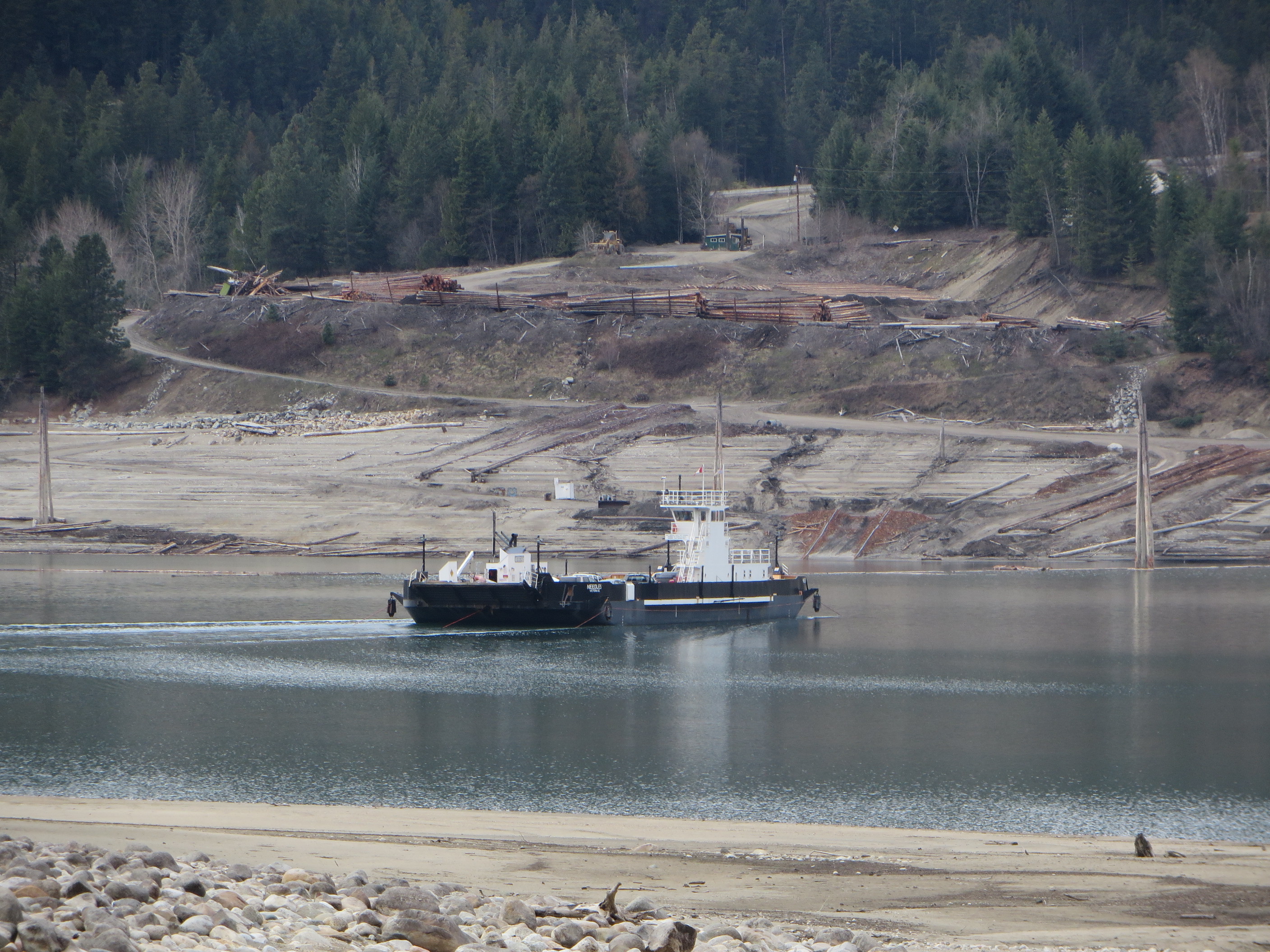
So today the cable ferry is still ferrying people, trucks and cars back and forth between Fauquier and Needles every 30 minutes between 6 am and 10 pm and is on call during the remaining night hours.

Fauquier Cable Ferry 2015

Fauquier Cable Ferry 2015