Walter Panknin (1898 – 1977) and His Family Ch6 Part 24

Angelika’s Traumatic Childhood

Biene wrote this post.

 One day I talked to my mom about this, and she told me Angelika’s story, which offered a possible explanation.

Angelika’s parents married very young, towards the end of the war.  Her mom was still in medical school studying medicine when she became pregnant.  Angelika’s dad was fighting at the front.

Angelika’s mom decided to put her newborn daughter in a foster home to get her back when her husband returned, and she had completed her studies.

For four years, Angelika lived in foster care until she was finally reunited with her parents.   Trying to make up for a lost time, they showered her with love and attention, but Angelika did not seem to return their affection.   She was reticent,  almost withdrawn and easily upset.  She avoided social interactions and did not like to play with other children.   Her parents were overjoyed when Angelika finally developed a close friendship with me.  Angelika was capable of closeness and affection with other human beings.

Angelika never talked about the time she spent in foster care. But she often told me that she always wanted a sister or a brother; she envied me for having a twin brother. She thought I was never lonely and had always had a close friend.  I did not want to shatter her illusion, but at that time, my brother and I didn’t love and appreciate each other.
Walter Panknin (1898 – 1977) and His Family Ch6 Part 21

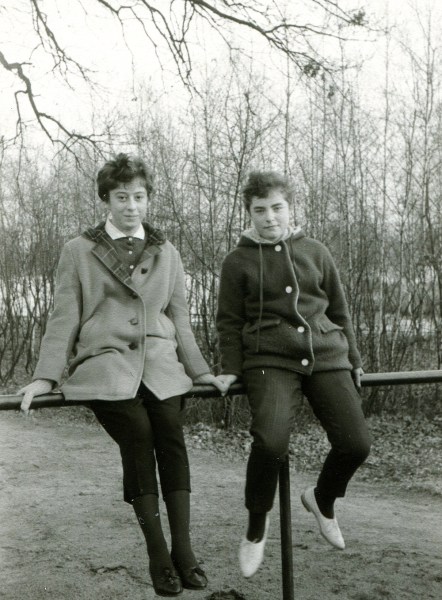
Biene’s New Friend Angelika

Biene wrote this post.

It didn’t take us long to overcome our initial shyness, and we started to get to know each other during recess. Towards the end of the week, Angelika asked if I would be allowed to visit her on the last day of the school week. We could walk together to her place, and her dad would drive me home at night.

Biene and her Friend Angelika


My parents had no objections, and on Saturday, after early dismissal, we walked together to her home. It was a long walk to an unfamiliar part of town. There were lots of trees and beautiful yards. In Germany, most people do not own houses but live in apartments. Angelika stopped at a big cast-iron gate and opened it with a key. We walked through a long garden path to a big house with many windows. A slender young lady opened the front door. She had raven black hair and pale blue eyes. She kissed Angelika on the cheek with a gentle smile and then greeted me. I hadn’t expected Angelika’s mother to look so young. She served us some delicious little pastries in a bright sunroom. The delicate cakes looked like the ones I had longingly admired in the window of the fancy pastry shop in town. Finally, I tasted these small fruit tarts covered with strawberries and topped with whipped cream.
Frau Janzen asked me many questions about my family, interests, hobbies, and school. She had a gentle voice and kind eyes. After our refreshments, she showed me all the rooms in the beautiful house, and I was reminded of our big, wonderful home in Gotha, which we had lost. Our room at the Old House where we lived now was about the size of this sunroom.

Walter Panknin (1898 – 1977) and His Family Ch6 Part 16

Two Outstanding Teachers

Biene wrote this post.

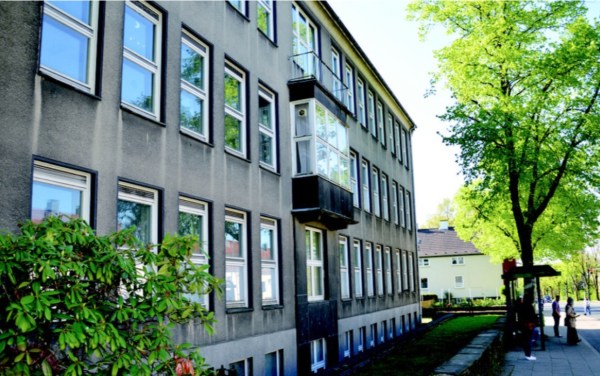
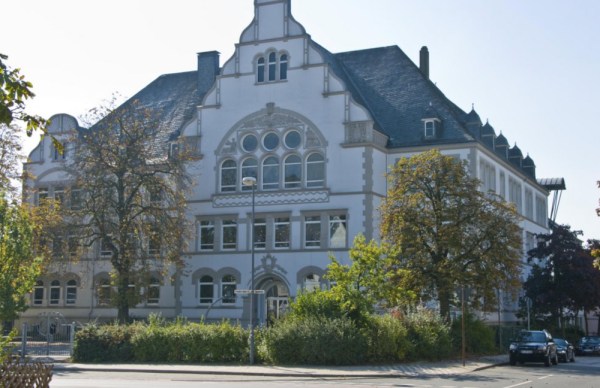
This is the beloved school I attended for nine years. Over the entrance was a stained glass window that read “Non scholae sed vitae.” I hardly ever missed a day and was always eager to go and learn for life.

Biene’s High School in Velbert

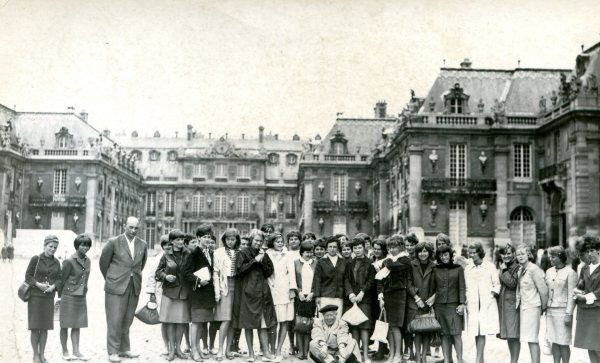
We started with 45 girls in grade 5, and after nine years, only 15 of us graduated. Our homeroom teacher was called Mr. Meckenstock. He mentored us for the entire school time. We fondly nicknamed him Mecki after our generation’s beloved little stuffed hedgehog toy. Mecki faintly resembled the little toy because he had lost most of his hair. However, he was very strict (like almost all German teachers) and also kind and warm-hearted. Above all, he was a unique character full of contradictions. He taught us English and French with lots of enthusiasm. He was proficient in both languages, even though he had never studied them in his native country. He had never been abroad until we went on a field trip to Paris with him in grade 11. The comical adventures of that memorable trip I will never forget. But I will talk about them in detail later. Mecki laid great stress on oral participation in classroom discussions which I liked. I enjoyed sharing thoughts and opinions on ideas or books we had to read in English and French.

Biene’s Class in Paris

Our math teacher, nicknamed Ata (father), was also popular; this short, round, red-cheeked jovial man was a wizard with numbers. Every math lesson he magically turned into a fun experience by engaging us in group math competitions on the blackboard. He cared that we understood and freely helped us when we had problems. We tried very hard not to disappoint him.

These two outstanding teachers probably had the most significant influence on my academic achievement. I will talk more about other teachers soon; teachers at my time were highly respected. When they entered the classroom, we had to rise and greet them in unison. Whenever we volunteered an answer, we also had to stand up. In their presence, we had to act and speak politely and respectfully. But life is full of paradoxes. We girls were not as docile and disciplined as was expected.Before concluding this post,  one more afterthought on our school building.  As I mentioned, the boy’s high school was adjacent to ours.  The schools were so close that we had to cross the boy’s schoolyard to go down some rock steps to our yard. We were not allowed to talk or interact with the boys when walking to our yard below.   The boys would stand at the retaining wall and look down on us.  Maybe that reflected an attitude symbolic of that time.

Walter Panknin (1898 – 1977) and His Family Ch6 Part 15

Biene and Her Twin Brother Attending Separate High Schools

Biene wrote this post.

When my twin brother and I were at the end of grade 4,  my parents had to decide if they wanted us to attend high school. After successfully concluding grade 13, we would obtain the senior matriculation certificate, Abitur in German, a prerequisite for post-secondary education at a university.

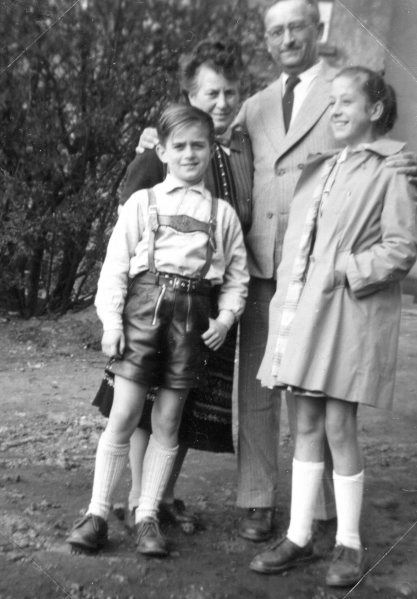
Biene and her twin brother Walter with their parents

Only a tiny percentage of students would enter high school.  Your elementary teacher had to recommend you based on your performance, and you had to pass a stringent entrance exam.  While all children by law received eight years of free elementary school education,  high school students had to pay tuition fees and finance their books and other educational materials.  It was an honour and a privilege to attend high school.  You belonged to an elite group if you passed your senior matriculation.  Only about half the number of students that started high school would accomplish that goal.

There were scholarships for top students who had financial difficulties paying the tuition fees.  My twin brother and I, plus my best friend Gisela,  were the lucky recipients after completing grade 4 with top marks.

My twin brother and I would attend different schools for the first time in our life.  The two high schools in Velbert were segregated by gender and academic orientation.  I went to the modern language branch for girls and my brother to the science and ancient language branch for boys.  While the school buildings were nearby,  we had no contact with students of the opposite sex for our entire high school life except for a short extracurricular ballroom dancing course in grade 10.

While our school had a high percentage of male teachers, my brother only once,  for a short time,  had a female teacher teaching at his school.  She enjoyed a special status that was “sensational” for the boys.  The boys “adored” her like a queen.

Walter Panknin (1898 – 1977) and His Family Ch6 Part 14

Field Trip to Cologne

Biene wrote this post.

To my relief, the school year came to an end about two weeks later.   Our new teacher in grade 5 quickly restored my faith and trust in teachers. Although he was very strict,  he never lost his temper or control.  I loved his exciting lessons, fairness, warm smile, and sense of humour.

This teacher decided to take us on a field trip to meet Vater Rhein or Father Rhine, as it is fondly called the longest and mightiest  German river. On a beautiful sunny spring day, we went by train to Cologne.  Cologne is the fourth largest city in Germany, situated on the Rhine river. We visited the awe-inspiring cathedral, which towers majestically at the river shore.  We went down to the banks and immersed our hands in the water to greet Father Rhine.  He was starting to get polluted.  When revisiting the Rhine river, my friends prevented me from putting my hands in the water because of the dangerous pollution levels.  Now Father Rhine is clean and safe again.

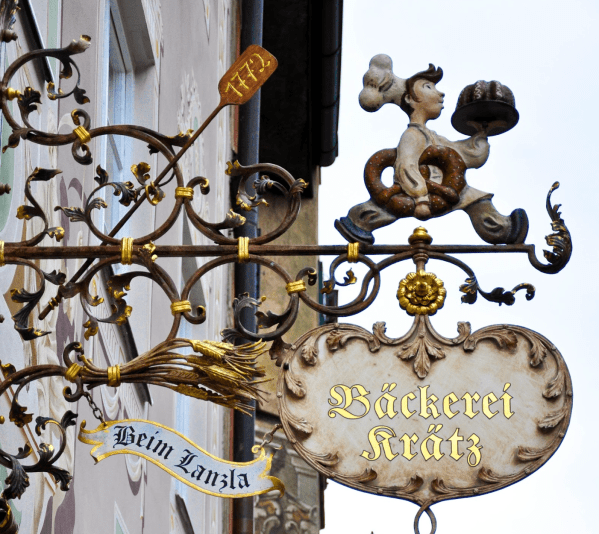
Towards the end of our excursion, we walked through the Altstadt, the picturesque historic part of the city.  We did window shopping and were allowed to buy some small souvenirs in the romantic boutiques. I remember the fun we had reading the ornate and artistically designed shop and pub signs hanging on beautifully crafted cast iron brackets. We laughed at the often funny and clever names.  A butcher shop was called  The Jolly Fat Pig; A wine pub was named  The Bottomless Barrel.  In the Busy Bee Bakery, we bought some honey-sweetened pastries.

Back at school, we had to write about our excursion.  Our teacher told us that the best report would be published in our class journal.   We all had to read out what we had written and then voted on which one we liked best.  I was the proud and happy winner because I described all the humorous signs and other fun impressions of our exciting trip.

Walter Panknin (1898 – 1977) and His Family Ch6 Part 13

Injustice and Humiliation at School

Biene wrote this post.

As I mentioned in a previous post, I was happy to have regular school again and looked forward to classes every day.

Two days after my mom had enrolled us at the Elementary School Am Baum  (at The Tree),  I woke up with a sore throat.  I was prone to severe allergies,  especially during the pollen season in the spring.  My mother suggested I stay home, sending my brother off at the usual time.  I did not want to miss school and pleaded with my mother to let me go until she relented.

I ran as fast as I could not be late, but classes had just started when I arrived.   Out of breath, I reached the classroom door where my teacher received me.  As I already indicated earlier, he seldom smiled and was very strict.   He looked earnest this morning,  “Why are you late?”. he asked in a stern voice; still out of breath, I stammered, “I wasn’t feeling well.”

“Don’t lie to me!” he shouted and, without warning, slapped me across the face.

Never before had I been physically punished by my parents or other adults. For a moment, I felt frozen in time.   I was so stunned and shocked that I did not know what was happening.  Eventually, like a sleepwalker,  I made it to my desk and sat there dazed until dismissal time.  I felt humiliated by this unjust punishment and very sad.  Until then, I had idolized and adored teachers.  In my mind, they embodied the highest human qualities like wisdom, knowledge, fairness, justice and kindness.  This undeserved slap in my face shattered that illusion.

Elementary School Velbert

Only when I got home did I cry.  It wasn’t the physical pain of the slap in my face that hurt but the emotional pain of undeserved punishment and the betrayal of trust by an abusive person in authority.

Most people did not own phones when I grew up, so my mother talked in person to the teacher the next day, but the damage was done.