Friedrich Ernst Klopp – The Sixteenth and Last Child of Friedrich and Emma Klopp

My Father – Friedrich Ernst Klopp (1900 – 1964)

Introduction Part I

While translating parts from the family chronicles written by my cousin Eberhard Klopp, my main focus was on rendering an accurate translation. My personal interest in our family history and a deeply felt responsibility towards the Klopp branch and future descendants living in Canada provided me with the motivation and necessary persistence to delve into this laborious and time-consuming undertaking. With the exception of four aunts and my father Ernst Klopp, I did not get to know the other twelve children of my paternal grandparents Emma Christiane and Peter Friedrich Klopp. 

As I was writing down the wealth of ancestral information of Eberhard Klopp’s book containing more than 200 pages in small print and then publishing it on my blog one uncle and one aunt at a time, I gained deep insight into the causes of what makes a family function in harmony and of what makes it fall apart. Quite frankly, reading some of the stories shocked me so intensely that I hesitated for a long time to publish them online.

My readers, who read the posts on my nephew Georg von Waldenfels, a Nazi SS officer, may understand as to why I was tempted to leave out this embarrassing chapter of our family history. In the 1930s many people were misled by the promises made by the Nazi propaganda for a more prosperous and stronger Germany after having suffered through the worst economic depression in German history. Actually, at least initially, their hopes and aspirations were being fulfilled. While millions of people had been struggling to make ends meet, every person willing to work was now gainfully employed and able to put bread and butter on the table. They had no idea that the Third Reich that was supposed to last a thousand years would lie in ruins so quickly and millions of soldiers and civilians would be sacrificed on the altar of an insane ideology.
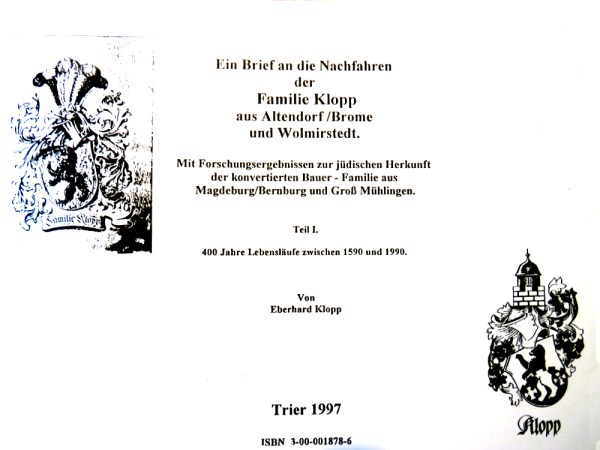
Title Page of the Klopp Family Chronicle


The Klopp Grandparents VI

Friedrich Klopp and the Demise of the Rope Making Business

Part I – Chart I – I & II

Adapted from Eberhard Klopp’s Family Chronicle

On March 16, 1900 the eldest son Friedrich Klopp (1875 – 1946) married in Wolmirstedt the 20-year old seamstress Auguste Louise Weihe (1880 – 1924) from Zielitz. Two months after the wedding his father, Peter F. Klopp died.

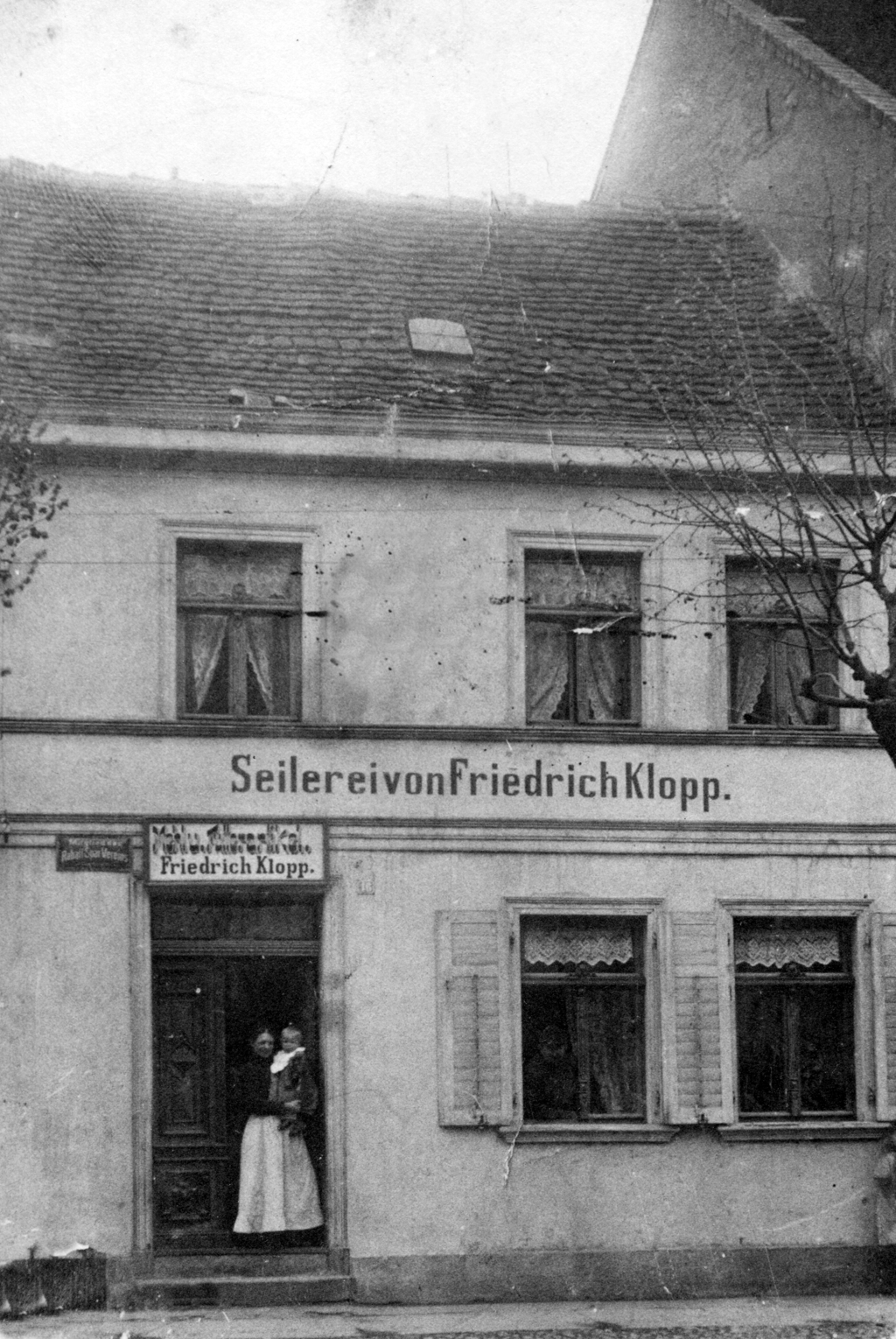
4 Seilerei Klopp

The house at Magdeburg Street 16 (today Friedenstr.), which his father had acquired around 1890 did not fulfill the hopes for a prosperous middle class existence of the two family branches. It appears that Friedrich  had already set up shop in this house in 1898 right after his military service. For his sister Meta Emma (1898 – 1984) was not born here, but in Jersleben. Already before the sale of the water-mill, Friedrich Klopp  had built in 1902 an addition to the backside of the house.

The new construction contained two floors. The kitchen and the living room plus two small bedrooms were located on the ground floor. A hallway and a stairway led to the upper floor with two more bedrooms and two additional rooms. The largest room was only 15 sq m in size. The new addition had a height of 5.6 m and a slanting roof. Seven or eight people could be accommodated here. The outhouse stood in the yard at the fence close to the neighbor’s garden.

Friedrich had intended the addition to be used by his mother Emma and her children, while he reserved the much larger house at the front for his rope manufacturing plant and his own small family of three. Looking at this rather unfair  living arrangement, we may see the root cause of the ensuing family feud. Being treated in such an undignified manner, Emma stayed at most 18 months with her eldest son in Wolmirstedt.

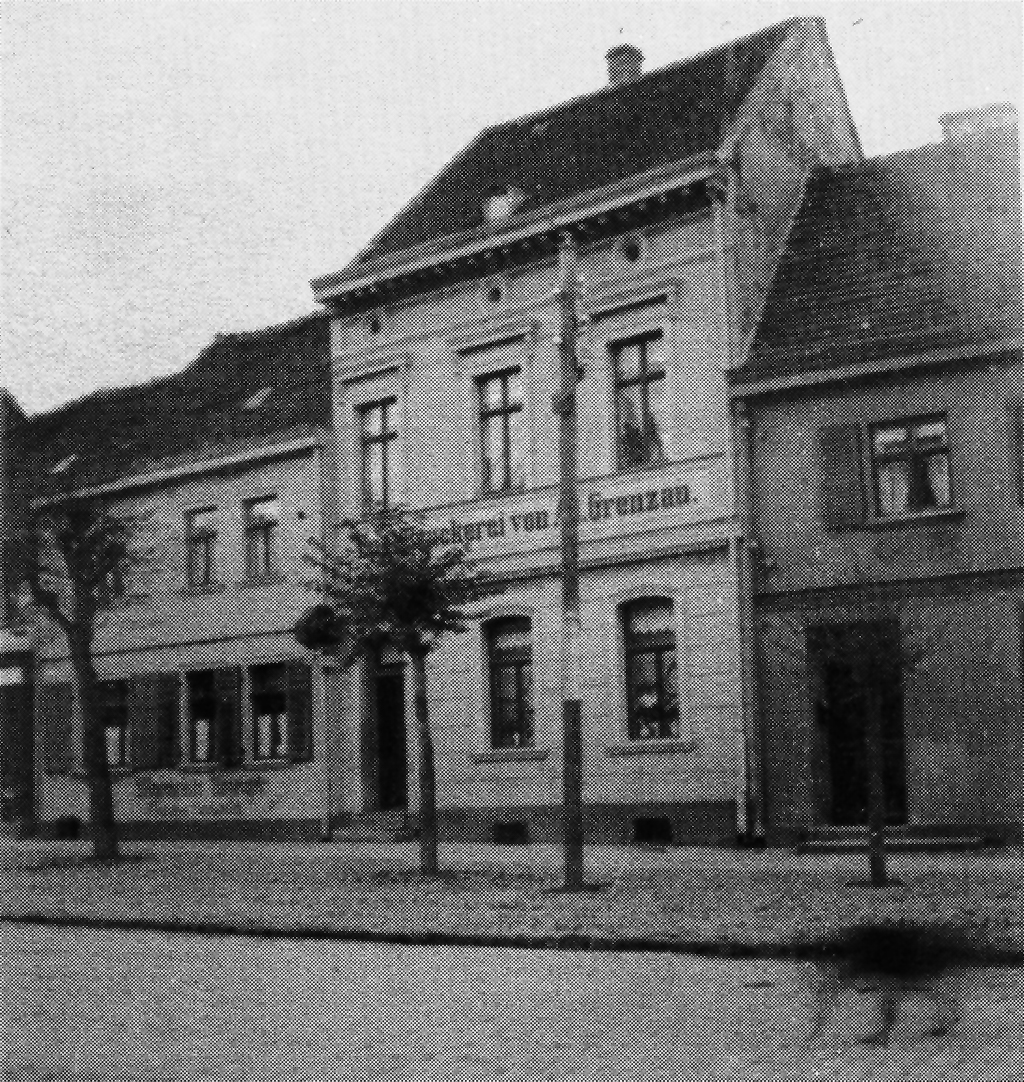
5 Druckerei Grenzau, links daneben Seilerei Klopp

Printing Business Grenzau to the left of the Klopp House in Wolmirstedt

When Friedrich and his pregnant wife took over the house in 1900 at the latest, mother Emma’s plans and her very basis for a comfortable existence within the family were severely shattered. The acquisition of the water-mill turned out for her to be merely an emergency solution, which was for a while financially sustainable. For Emma worrisome years followed. While Ferdinand, one of Friedrich’s younger brothers, was in the United States more or less successfully exploring efficient flour production methods, widow Emma suddenly saw herself confronted with unexpected hostilities.

To be continued …