Walter Panknin (1898 – 1977) and His Family Ch 8 Part 2

Biene, the Picky Eater

Already in early childhood, Biene had developed into a picky eater. She was taller than her twin brother Walter and looked skinny and undernourished.  When she came down with scarlet fever, a bacterial disease that was quite common among young children of post-war Germany, she had to spend a long time in the hospital. The food was adequate for the hospitalized young girl, probably more abundant and abundant than for the family at home.  One thing among many other food items Biene hated the most was the blood sausage on her diet. She reluctantly swallowed down the vegetables, until only the blood sausage was left. Then she squeezed the sausage so hard between the metal plates and spread the resulting fatty cream that the nurse on duty would not notice anything. Back at home on the road to recovery, Biene refused to eat all the good things the doctor had recommended. No pleading, bribes or threats would change her mind. In the end, the doctor and parents agreed to let her eat whatever she liked, which was very little.
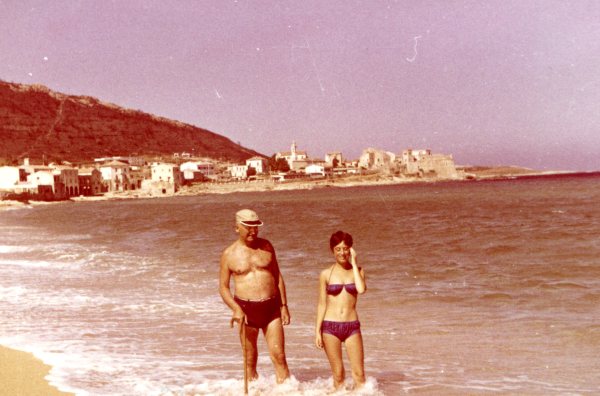
Papa Pankin and his daughter Gertrud (Biene) on the Island of Corsica in the summer of 1962.

A decade later, when Biene entered her rebellious teenage years, Mamma and Papa Panknin were getting really concerned. Being tall and skinny may have been an ideal image, as dictated by the fashion moguls of the day. Still, it was a worrisome indication of an impending case of anorexia. Having successfully managed to eat only what she liked for so many years, she has now become very clever in deceiving her parents into believing that what was offered on the plate had gone into her stomach. At school, she became quite popular, when she started handing out to her classmates the most delicious and nutritious lunches her mother had so lovingly prepared for her. Biene designed elaborate schemes at the dinner table to make undesirable chunks of meat and portions of green vegetables disappear. To her mother’s chagrin, such food items were later found strewn under the table. Often the defiant teenager would take a napkin and ostentatiously wipe her mouth and then quickly cover a pile of unpalatable food as if she had made it disappear by magic.

Of course, Biene could not hide these tricks forever. The consequence was that Papa, who had almost died of starvation as a POW, was getting so upset over his daughter’s show of disrespect for the fine food that they could finally afford to eat. In the end, for the sake of peace and quiet, Papa Panknin had his supper at a different time apart from the rest of the family.


Walter Panknin (1898 – 1977) and His Family Ch 8 Part 1

The Eternal Recurrent of the Same

The Challenge of Raising Teenagers in the Early 1960’s

Peter writes from the present post onward.

The children now love luxury; they show disrespect for elders and love chatter in place of exercise. Children are tyrants, not servants of the households. They no longer rise when their elders enter the room. They contradict their parents, chatter before company, gobble up dainties at the table, cross their legs, and tyrannize over their teachers.’ This quote is attributed to Socrates. While it has not been authenticated, it reflects the idea, based on painful parental experiences, that, throughout the millennia, children have always been perceived as unruly, rude and disrespectful to their parents and those in authority.


Portrait of Socrates. Marble, Roman artwork (1st century), perhaps a copy of a lost bronze statue.

Papa Panknin wrote many letters addressing and responding to friends and relatives. His literary ruminations could easily exceed the volume of a 500-page novel. The correspondence entailed a plethora of topics, such as politics, the rapidly changing customs and mores, the ills of post-war West Germany, and the challenges of bringing up their two teenage twins, Walter and Gertrud (Biene).

I will focus only on matters relating to the history of the Walter and Elisabeth family and their children. Furthermore, to make the final chapters more colourful and authentic, I will at times deviate from the strictly chronological path. I will make extensive use of Papa’s correspondence and will try my best to translate the German passages to give all of you a genuine understanding of my father-in-law, mother-in-law, Walter and Gertrud (Biene). Biene and I, as some of you may recall, met on the Pentecost weekend at Lake Baldenay and four years later, got married in Calgary on the Victoria weekend in 1966.

Walter Panknin (1898 – 1977) and His Family Ch7 Part 15

Outdoor Activities through Camping and Boating

Ten years passed before the Panknin family could dream about camping and canoeing again. After securing financial security, they started with short local trips to the nearby Baldeney Lake at the Essen-Werden Campground. When they fled Soviet-controlled East Germany in 1954, they had to leave their belongings behind, including their camping gear and folding boats. So they bought, bit by bit, tents, air mattresses, cooking utensils and, of course, last but not least, folding kayaks. It was at the Werden Campground where I met, under the most mysterious circumstances, my future wife Gertrud Panknin (Biene) on the long Pentecost weekend in May 1962.

At this time, Papa had already given up his dream of going on extensive boating excursions with his family due to the children’s reluctance to accept their father’s river paddling fantasies. Also, Mama’s health was rapidly declining, and she was no longer willing to participate in strenuous travel adventures.

In 1960, Papa, prompted by sweet nostalgic memories of his journey on the Danube in 1939, decided on a similar expedition on the idyllic little River Weser that flows northwestern into the North Sea. No matter how carefully he had planned the river adventure down to the last detail, he could not order suitable weather for their journey. Always good with words, especially when presented in writing, he describes with a bitter touch of regret the misery his rebellious family was no longer willing to endure.

Walter Panknin (1898 – 1977) and His Family Ch07 Part 14

Early Boating Adventures

Papa Panknin and his wife, Elisabeth (1900 -1974), have been outdoor enthusiasts for as long as I can trace back their vacation activities. Bodies of water, be it the Baltic Sea, lakes, or the mighty rivers of Germany, had always exerted a magical attraction. So it is unsurprising to learn that their love of the great outdoors led them to camping trips, which often included boating adventures in their folding kayaks. Three events, spread over three decades, stand out as highlights for the Panknin family.

Boating on the Danube 1939

Established in 1907, the German boat manufacturing company Klepper is still building folding kayaks. Papa owned one of these floating marvels and took his wife and stepdaughter Elsbeth on an adventurous journey on the Danube from Passau to Vienna in 1939. Then the horrible World War II broke out and ended their idyllic lifestyle. 

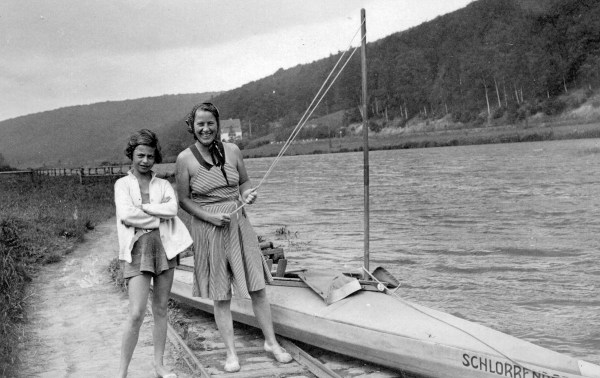
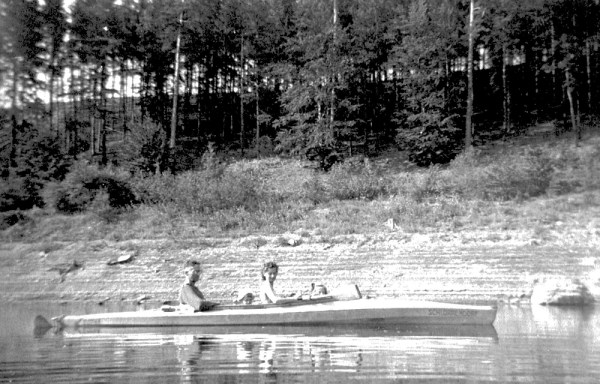
Saaldorf, Thuringia, Papa and his Family at the River Saale 1951

When content with the most primitive and essential camping gear, you can still enjoy nature at a very low cost. While living in the former German Democratic Republic under the control of the Soviet Union, my father-in-law and his family pulled a tent, camping utensils, and folding boat out of storage. They set up camp at the lovely meadows at the Saaldorf campground in Thuringia, near Gotha, Biene’s birthplace.

Walter Panknin (1898 – 1977) and His Family Ch7 Part 09

The Sunset Years

Before the ‘golden years’ arrived, the division of labour was fair for both husband and wife. In the following posts, I will talk about the injustice of the heavy burden for Frau Panknin as a mother, housekeeper, cook, and wife. I will also show how much, on the other hand, Papa enjoyed his sunset years as a father, hiker, traveller, hobbyist, and history enthusiast.

Grocery shopping has drastically changed since the early 1960s. Nowadays, well-to-do families living in their homes or modern high-rise apartment buildings take the elevator down to the ground floor, step into their car and drive to a nearby shopping centre. After they are done shopping, they may have time to dine in a family restaurant and take the kids to a bowling alley or the movies for some weekend entertainment.

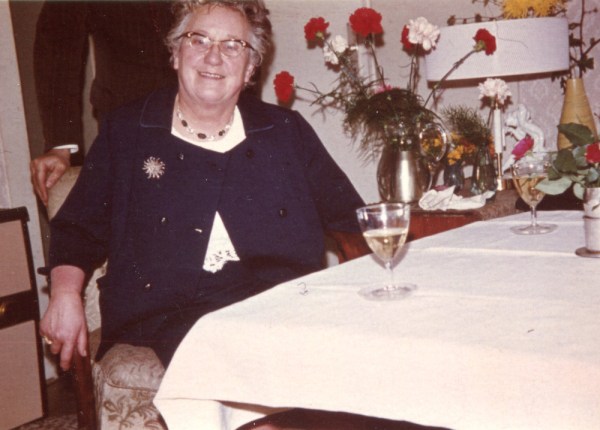
Elisabeth Panknin on her 60th Birthday – 1960

Sixty years ago, in the little town of Velbert, Elisabeth Panknin went shopping at least twice a week. She takes two large cloth bags and descends the 120 steps down to the ground floor of the three-story building. The tiny neighbourhood corner store only carries bare essentials, like bread, milk and butter. Frau Panknin takes the bus to a larger city. She only buys as much as she can carry. Public transportation poses a problem when the bags are filled to the hilt, and there is no seat for a sixty-year-old woman in an overcrowded bus reeking from the nauseating fumes of cigarette smoke. It is also time-consuming. If you miss the bus, you may have to wait up to an hour to catch the next one. Mutter Panknin finally stands at the entrance of the apartment building. Huffing and puffing, she climbs up the staircase with the two heavy bags of groceries. Then, you will not believe this. She immediately starts cooking the evening meal for her husband and the twins Gertrud and Walter.

Walter Panknin (1898 – 1977) and His Family Ch7 Part 8

The Turning Point

In late 1960, shortly before Christmas, a letter from the highest state court arrived at the Panknin residence with the long-awaited good news. Their request for Papa’s pension and the refugee status associated with all the rights and privileges had been granted. However, having battled for seven years with the various government agencies, they had paid a high price. Frau Panknin had been travelling by bus and train to talk to the officials in person. At the same time, Papa Panknin did the massive paperwork to make requests and provide written proof to the authorities. One day, Elisabeth Panknin collapsed from juggling the nerve-wracking travels and her housekeeping chores at home. Papa had to write the Christmas letters to all their relatives and friends, as his wife was too weak to do so. Fortunately, Mutti recovered just in time to prepare the Christmas dinner for the family. After over ten years, they could finally sit down on Christmas Eve and enjoy feasting on a sumptuous goose dinner with all the trimmings.

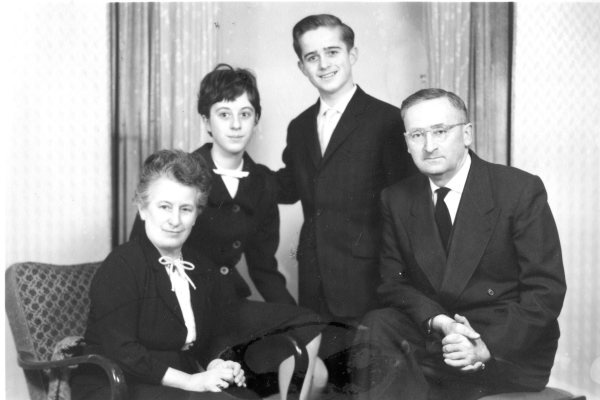
From left to right: Elisabeth, Gertrud (Biene), Walter Junior, and Walter Panknin 1960


The celebration of their victorious battle with the West German bureaucracy marked the end of their financial woes. It also turned out to be the end of their workload’s fair and equitable sharing. Up to this point, the couple had performed their domestic and professional duties along traditional lines. Papa, as a police officer, worked under highly stressful conditions under the Nazi regime, while his wife, in charge of their beautiful home, lovingly took care of the children. In those days, it was rare in most societies to have the predefined roles of husband and wife reversed. Today, it is very common, especially in Western societies, for a wife with higher qualifications to go out to work and leave the nurturing of the children to the father. Unfortunately, the basic things of life, such as shelter, food, and transportation, have become so expensive that both need to provide an income to make ends meet. They have to entrust their children to others all too often at an exorbitant price.
Coming back to my father-in-law, I believe that he was so deeply rooted in the culture of a bygone era that he, without any qualms, left the entire burden of the household to his wife while he was experiencing to the fullest extent the joys of early retirement.

More details in the next post …