Walter Panknin (1898 – 1977) and His Family Ch6 Part 6

Moving to Another Camp

Biene wrote this post.

One day in early spring, our mother told us that we would soon be leaving the camp in Aurich, East Frisia; we would move to Velbert, situated in the Rhineland region of  West Germany.  My mother sounded very excited and joyful because she was born and raised in the Rhineland, a beautiful part of Germany. It meant saying goodbye to my best friend Ingeborg and all our other playmates with whom we had shared so many exciting adventures and experiences.

However, before moving to Velbert, we first had to spend several weeks in a transitory camp in Massen,  a small town near Unna, close to Dortmund,  our second station in the “Golden West.”   I remember from that short stay that my mom was quite upset because we had to sleep in a big dormitory again with lots of strangers.  And to make things worse, we had to lie on straw mattresses.  But my parents consoled themselves with the prospect that we would soon move to Velbert.  That’s where apartment buildings for refugees were being constructed rapidly.
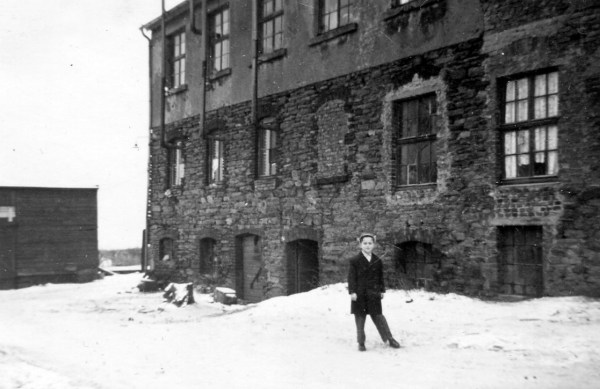
Biene’s Brother Walter Standing in Front of Transitory Camp in Massen

On a bright, sunny day in early Spring, we were loaded with all our luggage and several other families onto the open back of a big, old transport truck with makeshift benches. My brother and I had rarely ridden in a car.  This was my first time in a vehicle. For us, it was exciting!  My mom thought it was odd that we were transported like baggage. She didn’t like that we were all crammed together in this small, draughty and not too clean space. But my brother and I were laughing with the other kids and some boisterous men enjoying the cool breeze and the changing scenery. After a few hours, we were all shaken up by the bumpy ride.  The increasing cool drafts, the loud noise of the motor, and the vehicle’s rattling started to make us feel sick. Suddenly the truck came to an abrupt halt beside an old, dilapidated stone building that looked almost like a dungeon, dark and foreboding.
Walter Panknin (1898 – 1977) and His Family Ch6 Part 2

First Impressions of the  Sandhorst Refugee Camp

Biene wrote this Post

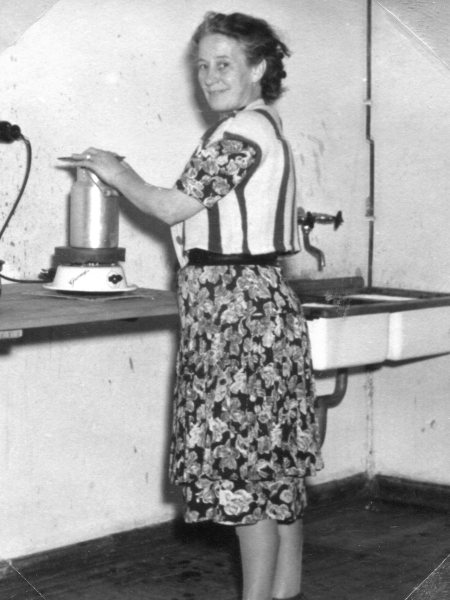
My mother was distraught after our first night in the crowded dormitory shared with twelve strangers and other strangers passing through our room from the adjacent sickroom.  She feared for our health and well-being due to the proximity of the contagious people who had to pass frequently through our door to visit the facilities or other places in the building.

Mutti Panknin at the Refugee Camp

After my mother voiced her concerns to the management, we were assigned to a small private room furnished with two metal bunk beds, a table with four chairs and a small wardrobe.  Although this room was smaller than my father’s study in Gotha, we felt happy to have more privacy.  We still had to share our door to the hallway with the occupants of the neighbouring room; a young widow and her two children.  Her son was five years older than my brother and me, while her daughter was two years younger than us.  But despite the age difference, we became good friends.

Rainer and Gabi’s mom always looked glamorous. She dressed like a film star.  I knew what film stars looked like from pictures of American actors and actresses in the packages of chewing gum.  I started collecting those pictures when staying with our friends in Dortmund. When I commented on her mom’s clothes to Gabi, she told me her mother’s secret.  Her mom had found a way to contact actors’ fan clubs in the United States.  She would tell them about her plight as a widowed refugee asking for charitable donations.  She would receive big parcels with the most fashionable, expensive outfits, shoes and accessories, often only worn a few times by her idols. Gabi’s brother Rainer went to the Merchant Marine Corps as a cadet after he turned 14 years old and had passed grade 8.   He brought me a beautiful scarf from one of his training sessions in Hamburg, the biggest harbour in Germany.  My mom proudly displayed it on the wall, as you can see in the picture. I admired and adored Rainer.  He would be travelling to many of the places my dad had shown us on the world map.

Walter Panknin (1898 – 1977) and His Family Ch6 Part 1

Memories of the Aurich Refugee Camp 1953/54

Biene wrote this post.

Happy to be reunited with our beloved parents, we had to say goodbye to our new friends in Dortmund. Our parents told us that we would not go back home to Gotha for a long, long time until the two separated Germanys would be reunited again. First, we would have to live in a refugee camp for some time until we would hopefully find a new home in the Rhineland region where my mother was born.  After the destruction caused by the war and the rapid immigration of refugees from the East, housing was in short supply.   There was a construction frenzy all over West Germany to keep up with the urgent demand for housing.  People had to live in temporary shelters often for an extended period.

We were assigned to live in a refugee camp in Lower Saxony.  Abandoned military barracks were converted into a refugy camp in Sandhorst, a small community close to Aurich, a quaint small town. This camp could house thousands of refugees. The buildings looked bright and clean.  Lots of green spaces surrounded them.  Meadows and lush pastures stretched to the endless horizon on this flat landscape. We were assigned to a room with six bunk beds.  Three other families shared the room with us. A door led to another room about the same size as our dormitory.  Occupants of that adjacent room shared our entry to the hallway.  Thus there was much traffic through our room, and there was little privacy. We were told that we should avoid close contact with the people in the neighbouring room because they had a very contagious disease. I noticed that my mother looked quite shocked when she heard that. However, my brother and I were very excited about the prospect of sleeping on the upper bunk beds.

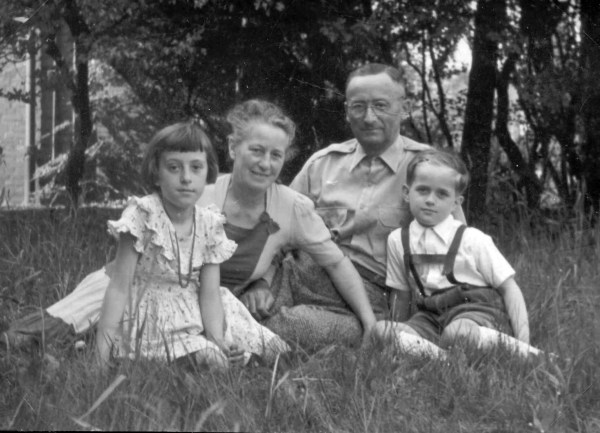
After we stored our small suitcases under our beds, the camp attendant led us to a big hall lined with multiple long racks of clothing of all sizes.  American charities and other organizations donated them, and people from all over the world. We were invited to pick some clothing we needed and liked.  That was exciting for me because I had never had the opportunity to choose a dress on my own.  I had always worn hand-me-downs sent from my mom’s distant relatives. I picked a dress, which the attending lady told us was donated by a family from South Africa. I loved the dress and imagined a girl like me having worn it in a faraway place. The kind lady invited us to pose in our newly chosen clothes for a photo out on the lawn in the mild spring air. We all looked happy in this rare family picture, the first in the “Golden West.”

Walter Panknin (1898 – 1977) and His Family Ch5 Part 20

Escaping to the ‘Golden West’

Biene wrote this post.

Finally, at home, we hastily ate some hot cabbage soup. After supper, my mother made us change into good warm clothes instead of getting us ready for bedtime. Without explanation, she made us kiss our dad goodbye and then, grabbing a big suitcase from a closet in the hallway, whisked us out of the front door. When we stepped out on the snow-covered sidewalk faintly illuminated by occasional street lights, my mother whispered to us that we would have to go on a long walk, but there would be a surprise. We walked silently like in a dream world enveloped by the thickly falling snow. Tired and dazed, we walked for a long time until we finally reached the railway station.

Biene’s Birthplace

Once we were settled in an empty train compartment, my mother told us that she had received permission to visit her sick guardian aunt in the West. My dad had to stay back as a guarantor for our return. If we did not come back, he would be severely punished.
My brother immediately fell asleep in my mother’s arm when the train started rolling. I, however, had my face pressed against the cold dark window. I did not want to miss the “Golden West” first glimpse once we crossed the border.

Walter Panknin (1898 – 1977) and His Family Ch5 Part 8

Failed Attempt to Escape

Biene contributed this post.

My brother and I were three years old when my mom made the first attempt to escape with us to the West. Fences, ditches and surveillance towers did not yet fortify the newly established borders between the divided Germanys. Heavily armed border guards patrolled the unmarked dividing line between the East and the West. My mom planned to cross the densely forested border at a remote village with my sister and us two. Once safely across, my sister would take us by train to relatives in the West while my mother would return home to escape with my Dad via Berlin to the West to rejoin us later. At that time, the East German regime had not yet built the wall, and it was still possible to escape from the eastern part of the city to the West by the subway system, which still joined the two parts of Berlin.

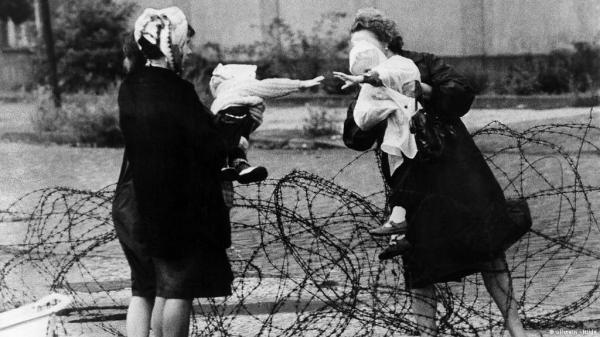
Early Border between East and West – Infants Reaching out across a FencePhoto: DW

The memories of that night are etched in my memory forever. My mom and my sister struggled to push our twin stroller over a rugged forest path at the approach of the night. When the going was getting too rough, my mother allowed us to walk a short distance ahead of them. My brother and I didn’t like being cooped up in the stroller for too long. We started to run and chase each other around a bend of the narrow path when a gigantic figure with a gun stepped out of the dense bush and blocked our way. We all stood motionless for a long moment until my mother and sister came around the path.  My sister started to scream with fright, but my mother stayed calm. She tried to explain that we had lost our way, but she could not fool the guard. He told my mother that he would walk the other way pretending he never met us, on condition that she immediately returned to the village. If she refused to comply, he would have to shoot, as were his strict orders. If he showed mercy, his own life was at stake. He did show some pity by giving my mother directions to a house nearby. There we would find the porch door unlocked and spend the night under a roof.  “There will be shooting tonight,” were his last words. 

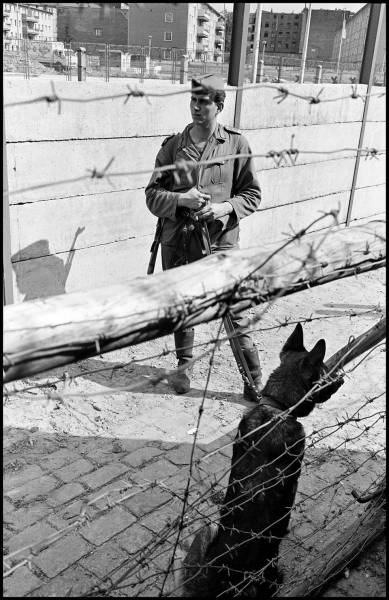
East German Border Guard with Dog Photo: DW

Once again, we experienced the unexpected mercy of an enemy soldier. We spent the night huddled in the corner of a spacious porch. My sister broke down, crying hysterically. We had never heard her cry before, and it scared us more than the sounds of shots fired in the distance. Part of my sister’s breakdown was that she experienced the first stages of pregnancy still unknown to her.A few months later, she married her long-time boyfriend, and soon after, our first nephew was born. Thus, my brother and I became uncle and aunt at the tender age of four.

Walter Panknin (1898 – 1977) and His Family Ch5 Part 7

Gotha, Thuringia, Germany

Biene contributed this post.

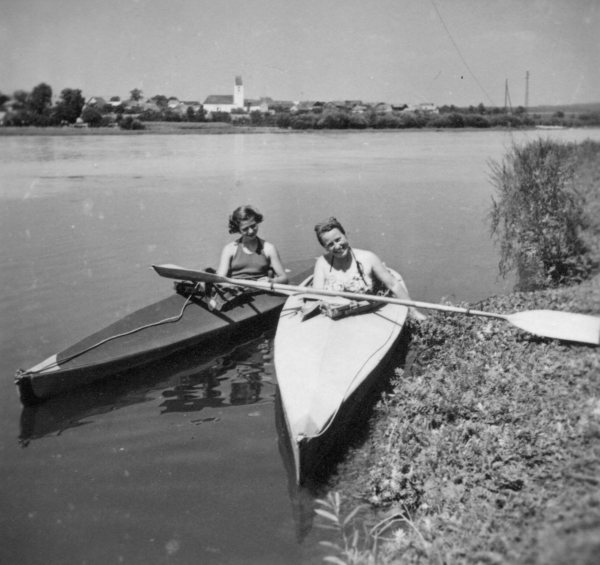
Gotha is a picturesque city located in Thuringia, one of the most beautiful regions of Germany. It is called the Green Heart of Germany because of its vast pine and mixed forests stretching over rolling hills. My dad did not have the outgoing, cheerful personality of my mom. Although he could be humorous and enjoy company, he was more introverted and loved reading, studying, and writing. History was his passion. But he also was an outdoor enthusiast and loved to hike, bike, ski, swim, go camping and boat in his canoe-like paddle boat. My mom and dad explored all the major rivers of Germany by embarking on extensive boating and camping trips in the summer.

Mutti Panknin and Daughter Elsbeth – Paddling on the Danube

Until late in his life, my dad led hiking clubs. He loved exploring and marking new trails. He also loved collecting mushrooms and became an expert in researching new species and cataloging them. He also liked to compose poetry, especially ballads, illustrating with beautiful ink drawings. The only thing he lacked was practical skills. According to my mom, he could not even “cook water.” While my mom was loved, my dad was respected.

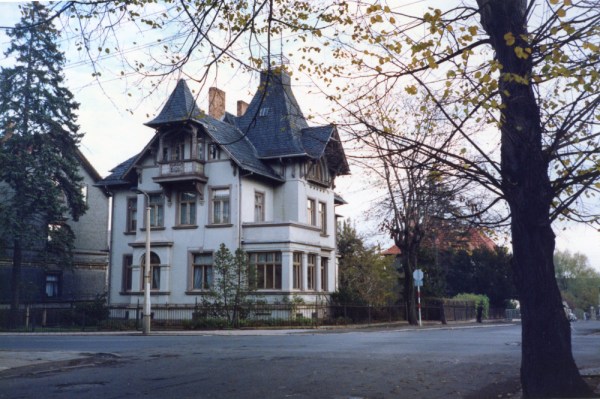
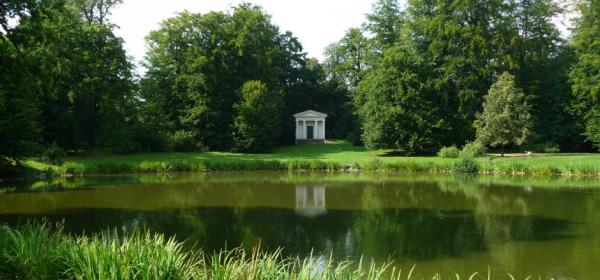
 Our family lived on the main floor of a spacious villa not far from the castle and its fantastic park. It is the most famous landscape park in Germany and contains many rare and exotic trees. This wonderful park became our playground. Every weekend through the changing seasons, my father would take us on long walks to this charming place.

Castle Park in Gotha, Germany

Before we even went to school, he had taught us to identify and name trees, flowers, plants and animals, more than I can recognize now. My brother and I would collect colourful leaves, tasty hazelnuts, shiny chestnuts, acorns, pine cones, rose hips, and other seeds and berries. These treasures would delight us more than toys. We loved to watch the birds, chipmunks, insects, butterflies, frogs, toads, snakes, salamanders and other small animals living in this enchanting realm. Two big ponds were another exciting attraction to explore. Some of my earliest memories are holding my dad’s hand and walking in this peaceful and magical place.