Chapter 17 of the P. and G. Klopp Story Part I

Some Reflections on the So-called Coincidences of Life

“Coincidence is God’s way of remaining anonymous.”
Albert Einstein

Camping with Hans and Helmut
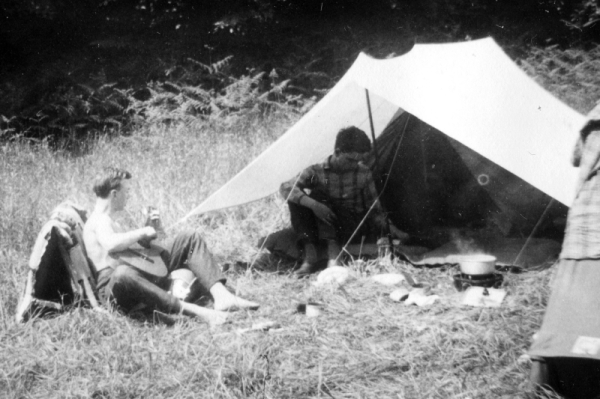
Hans Playing the Guitar and Helmut Sitting in frontofmy Tent

Hans playing the Guitar and Helmut sitting in front of my Tent

          Spring came early in 1962. I no longer played an active role in the scout movement. But my desire to get out of the city and enjoy nature in the company of friends was as strong as ever. Among my friends, who had survived the nine-year culling process at the high school, only Hans and Helmut were left. All the others were either eliminated by the academic hurdles or departed on their own looking for other ways of moving up the educational ladder. Ever since I did Helmut that great favor at the ballroom final, he was seeking my friendship and clung to me like a burr on a woolen sweater. He wanted to be included in our overnight camp-outs. When I objected on the grounds that there was not enough room in my tent, he replied that he would sleep in his own tent. So it happened one sunny weekend that three young men went out camping together, with Helmut – so it appeared – being the odd man out. Hans and I in spite of our differences shared a bond that had lasted for more than five years. Our friendship was based on experiences in the boy scout movement, on our common interest in experimental electronics, all the way back to early days on the school yard, when I was Ede Wolf and Hans one of three piglets that I was supposed to catch. Helmut was a newcomer and in a sense also an intruder, gentle, polite, simply wanting to be part of our camaraderie. Perhaps on his part it was a struggle against loneliness that intellectuals feel more intensely, but we perceived him as an intruder just the same.

13

Peter strumming a few tunes on Hans’ guitar

          It was evening, when we arrived on our heavily packed bikes at a clearing. We quickly erected our tents helping each other to get ready for the night. After we had wolfed down our sandwiches, which our mothers had so lovingly prepared, we hurried into the woods, gathered dead branches and proudly started a campfire with only one match. In no time, flames leaped up and around the kettle, which we had suspended over the fire on a wooden tripod. Helmut, in my eyes still an intellectual nerd, impressed me how well he had learned the basics of camping in such a short time, and most of all how hard he tried to be helpful. The tea water in the kettle had almost come to a boil. Hans and I ceremoniously took turns adding tea bags, plenty of red wine, pepper and other assorted spices into the steaming brew. We lifted the kettle off the tripod to prevent the alcohol from evaporating. To fortify the punch some more, I pulled from my coat pocket a small bottle of rum and poured its brown content under the approving applause of my friends into the aromatic brew. By now it was getting dark. The stars began to shine in ever increasing numbers on the canopy of a moonless sky. The fire merrily crackled and its fiery tongues shot up high casting dancing shadows of us onto the mossy ground. It was time to fill our cups to the rim, to cheer to each other’s health and happiness, and drink. Hans grabbed his six-string and entertained us for a while with Spanish guitar music, which he played superbly off the cuff. In the meantime, the cups needed a refill. The warmth of this miraculous elixir penetrated deep into our bodies and spirits. During a pause I suggested to Hans to do something together, while the drink was good and the fire burning, “Let’s raise our voices and sing our favorite scouting songs.” Helmut being a good sport supported my suggestion, even though he did not know the lyrics of most of these specialized traveling songs. He would whistle along, whenever he recognized the tune, he said. Soon a chorus in a strange blend of young male voices, guitar chords, and whistling rose above the campfire strengthened in volume and enthusiasm by the concoction from the kettle. The birds waking up in the forest may have wondered why we were making such a cheerful noise. The more the night advanced, the more boisterously we belted out the songs, which glorified the violence and cruelty of the German and Swedish pike men in the Thirty-Year War in lines like, ‘We also came to Rome, there we threw the pope from his throne.’ ‘The little nobleman’s daughter we cast her into hell.’ And ‘Hang the chaplain on the window cross’. The booze, the raucous singing, the flickering flames, the starry night, all contributed to conjure up images in our young hearts of a time wild and free, in which we participated for this one short moment and in which Helmut had become a member of our friendship circle. Long after midnight we poured the remaining dregs from the kettle over the embers and happy and sleepy crawled into our sleeping bags.

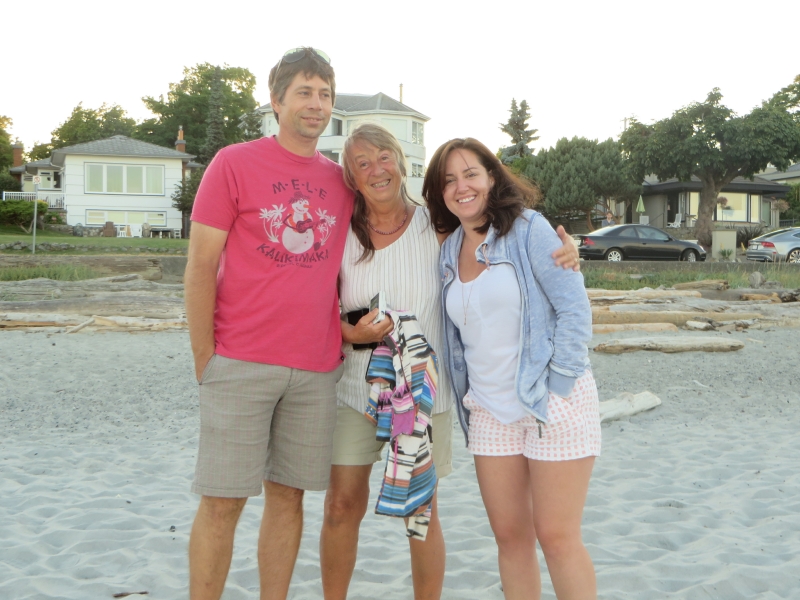
Pictorial Review of 2015 III

At Tony and Lisa’s New Home

Victoria BC (July 2015)

and a brief visit to Stefan’s Place

Vancouver BC (last 3 images)

(See Klopp Family Tree, Chart I – III & IV)

01 02

03 04 05 06 07 08 09 10 11 12

Next Week I will publish a short contribution by my grandparents’ great-great-granddaughter Johanna Pasdeloup of Paris, France.

Chapter 16 of the P. and G. Story Part V

Learning to Dance

In the year before graduation social convention for students attending high school required that they attended a school for formal ballroom dancing. The purpose was that under the tutelage of a competent instructor we would not only learn the various types of dances both classical and modern, but also to teach us good manners and etiquette. The list of dances offered in the program was quite extensive including the slow waltz, the Viennese waltz, the foxtrot, the rumba, the cha-cha-cha, and the tango. Our dance instructor, a lady not disdaining modern trends, did not exclude the twist and rock ‘n’ roll from her impressive repertoire.

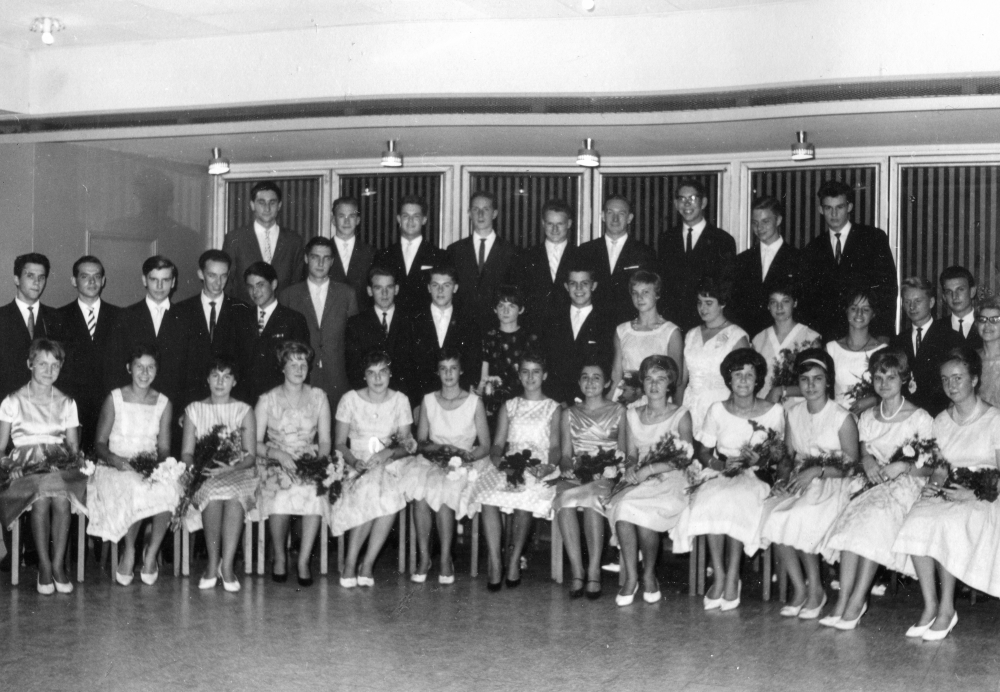
Dance Graduation Class at Wesel - Peter in the Upper Row on the Far Left - 1962

Graduation Class of Ballroom Dancing at Wesel – Peter in the Upper Row on the Left

Clumsy as I was in those days I looked at first at dancing as a dreadful extension of the P.E. program at school. At least in the gym class I could show off my expertise in yoga and compensate a little for my shortcomings. But to dance gracefully and skillfully with young ladies was an entirely different story. I was thrown into unfamiliar waters. I had to swim or sink. Dropping out was out of the question. Aunt Mieze had paid the non-refundable fee. Besides I was not a quitter. Thus I got together with a classmate, who struggled with similar problems in physical dexterity. Helmut B. was a lawyer’s son. He reflected in his appearance and demeanor the stereotypical image of an intellectual. He wore old-fashioned wide-rimmed glasses. His hands were always moist and sweaty, which made him quite unattractive, when German greeting formality required the mandatory handshake. I still cringe when I see in my mind the ludicrous scene of the two of us practice dancing steps and sequences in my tiny bedroom – one, two, cha-cha-cha; one, two, cha-cha-cha. When Helmut had gone home, I tenaciously carried on with the practice, until I felt I could do the required movements in my sleep. The reward of my efforts came at the weekly dance class in the Wesel Community Hall, which was located not far from the main railroad station. A word or two of praise from the dance mistress worked wonders for my low self-esteem and made my peers look up in genuine surprise at my newly found dexterity. Perhaps not noticeable to others I still mechanically went through the motions, but I discovered the joy of dancing to the tune and rhythm of the music that a portable record player provided. It was through this challenge of learning how to dance that I discovered the principle of success underlying virtually all human endeavors. The ingredients are ninety percent hard work and dedication, the rest being taken up by inspiration, talent and intelligence. The success in overcoming a major hurdle gave me confidence that with the same determination I could work on other weaknesses, such as my mediocre school performance. All of a sudden my life had become goal-oriented.

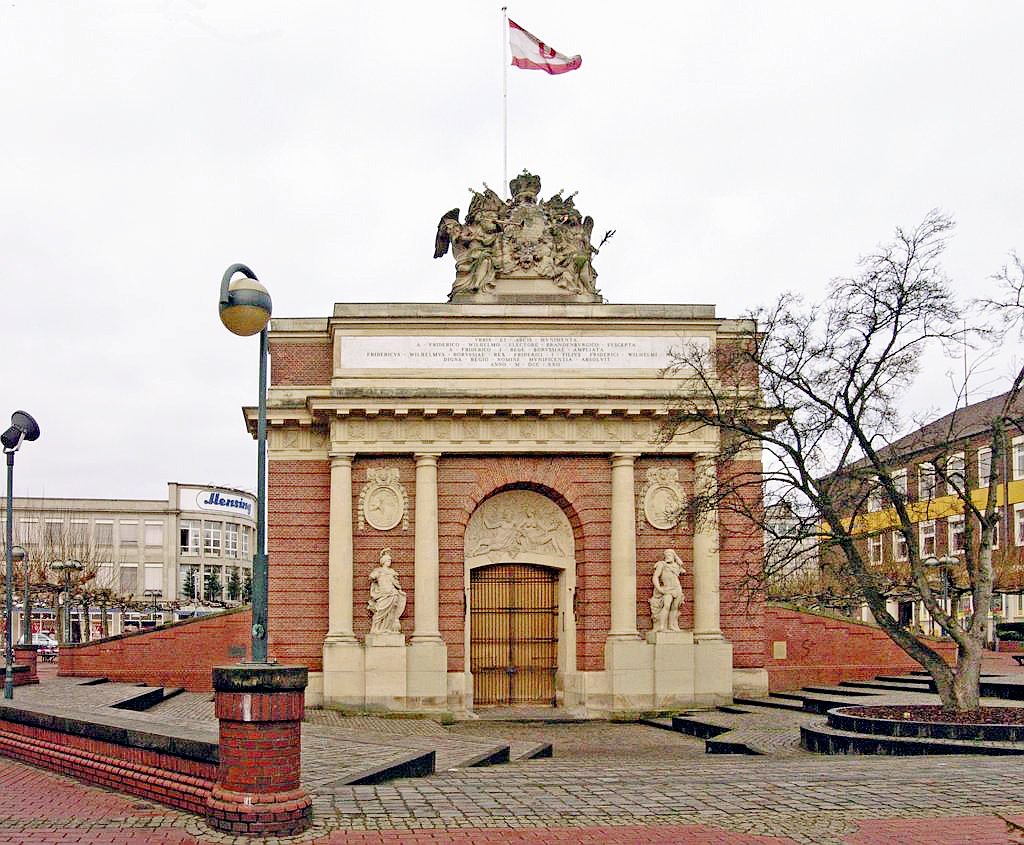
Berlin Gate at Wesel 2012 - Phot Credit: wikipedia.org

Berlin Gate at Wesel 2012 – Phot Credit: wikipedia.org

As the final day for the grand ball was approaching, we needed a dance partner with whom we could present our dancing skills to parents, relatives and friends. They were going to be invited to the formal graduation festivities. During the course of our practice sessions I had ample opportunity to dance with most of the girls. Even though my skills to move about on the dance floor through my exercises at home had tremendously improved, I still felt shy about the sociable aspects of being so close in touch with the opposite sex. I mechanically followed the rules laid out by our instructor, like walking up to the girl of my choice and saying, ‘May I have the honor and request this dance with you?’ Etiquette required that the girl could not turn me down. So everything on the surface appeared safe. Yet, I felt awkward and could not see within this formal setting the stage for enjoyable personal social interaction. Although I had no problem competing with the guys in the race for a dancing partner, I often turned to the plain-looking and unpretentious girls, whose simple looks and natural composure were more appealing to me. On the suggestion of our dance mistress we often changed partners, which made sure that even the so-called wallflowers would not be neglected. There was one pearl among them. Gerda M. was her name. She was a bit short for her age, but was quite pretty in my eyes. While I was dancing with her, she made me feel at ease with her contagious cheerfulness and her forgiving acceptance of my occasional faux pas in a complicated step sequence. One day after the lessons she offered to share her umbrella on the way home, as it was raining cats and dogs. I accepted the invitation, as we were both heading in the same direction. We strolled down Railway Street and like in a game of hopscotch jumped over the puddles that had quickly formed on the sidewalk. In spite of or rather because of the rain and the occasional gust that threatened to tear the umbrella out of my hand it was a delightful walk. After I had said good-bye at the intersection where our ways parted, I realized too late that she had wanted me to ask her to become my dance partner at the final ball. The following week Wilhelm von N. accomplished to my great disappointment what I had failed to do. Losing Gerda as my partner was the price I had to pay for my procrastination. Now I had to hurry, for we were told that if we had not made any arrangements on our own, the dance instructor would make the decision for us. The threat of winding up with a randomly selected partner prompted me to ask Margret X., a tall girl about my size, with whom I had danced a few times before. Having had similar concerns and being quite comfortable with me for the dancing test, she readily agreed, and the matter was settled for the final ball as well. Poor Helmut, who did not have the courage to ask out of fear of rejection, approached me during the break and entreated me to make the arrangements with Fräulein Z. for him. Somewhat reluctantly I walked up to the girl that Helmut had indicated to me and passed on his invitation to become his partner, which she joyfully accepted. She did wonder aloud though, why on earth he would use me to ask her, which I discretely left unanswered.

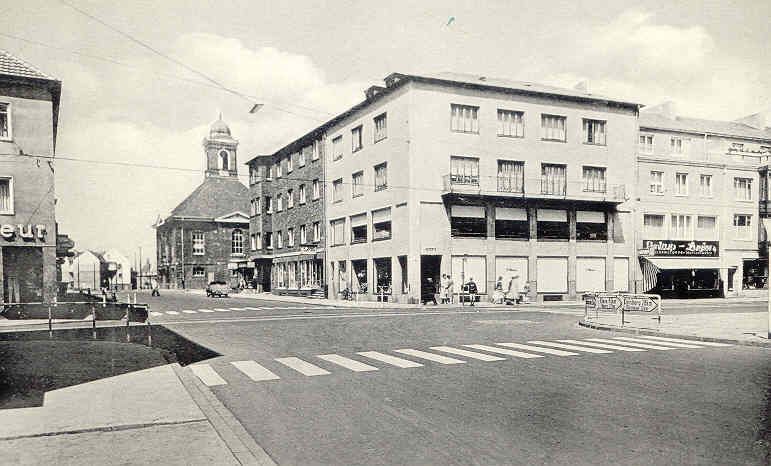
Downtown Wesel in the early 1960's

Downtown Wesel in the early 1960’s

The final ball proceeded with much pomp rivaling in decorum and detail a high school graduation ceremony. The event was definitely a crowd-pleaser for participants and invited guests alike. When it was our turn to show off our newly acquired skills in a mock test (nobody actually failed), Margret and I did the slow waltz as our first number and then the rock ‘n’ roll dance to the beat of contemporary rock music. We had not left out any of the prescribed dance sequences, such as the spin, change of hands behind the back, two hands wrap and turn, and many variations to the rotations of my partner and myself, but best of all the pretzel, which because of its difficulty I have never used since. What I liked about this dance was the freedom to choose any combination of the learned sequences so that each dance felt like your own creation. To show their appreciation for our creativity, the audience rewarded us with a longer than usual applause.

Thus an important formative segment of my life came to a satisfying conclusion. Many of the dance skills acquired during that period eventually faded with the passage of time. Like with so many other skills the truth of the saying remains, “Use it, or lose it.” But the memory being rekindled through my writing here will stay. This coming-of-age phase, when I was about to turn twenty, was going to play a significant role in my metamorphosis from adolescence into adulthood in the years that followed.

Chapter XIV of the P. and G. Klopp Story – Part 4

On a Two-Seater Scooter to Yugoslavia (1961)


Peter Saying Good Bye to Mother

Peter Saying Good Bye to Mother

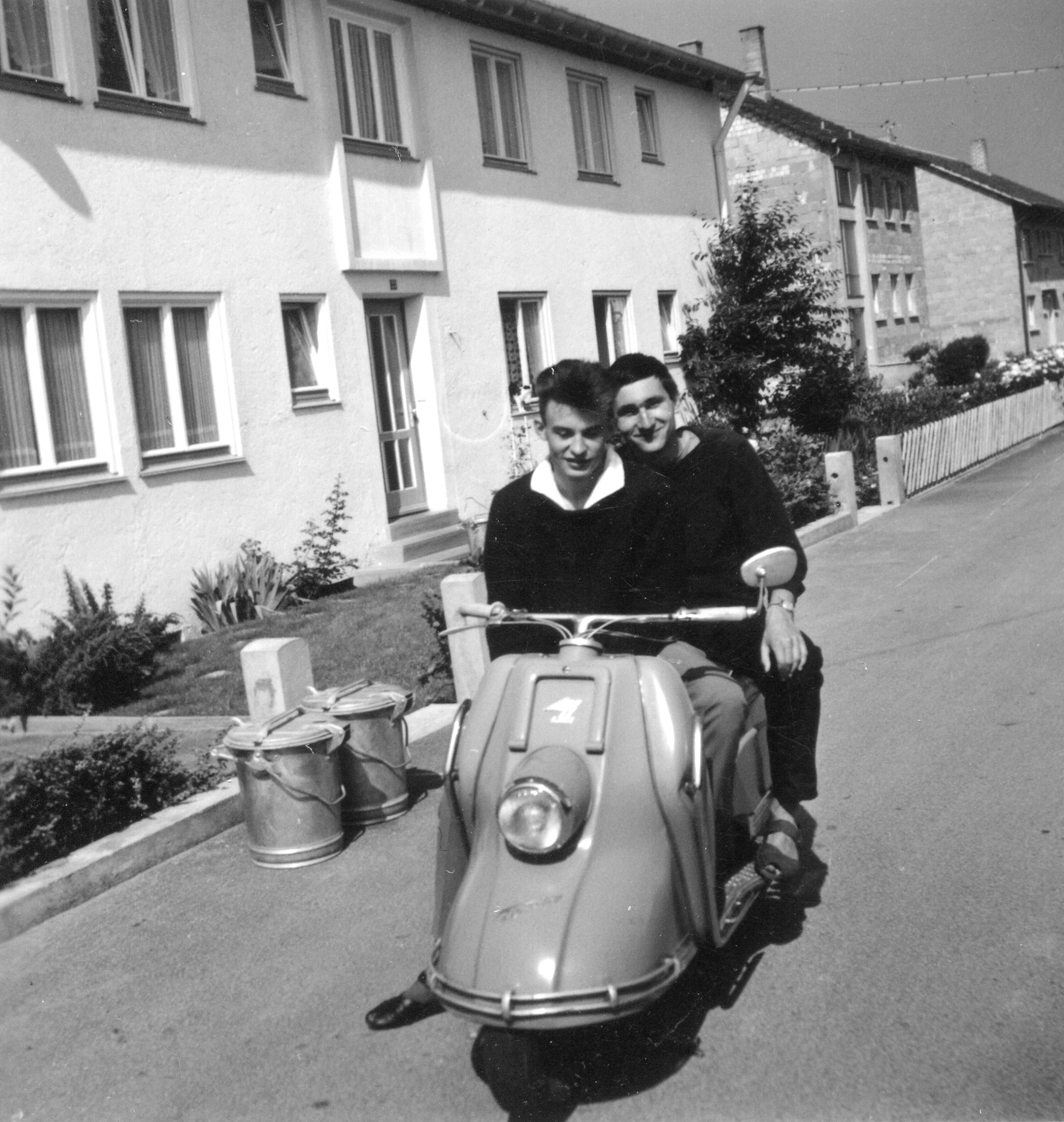
One of my favorite tunes that I often played and still play on my harmonica was the popular scout song about the Adriatic Sea. So that was where Klaus and I were heading in the summer of 1961. Klaus had just passed his driver’s license test and had acquired a used scooter that was going to carry us via Austria and Northern Italy into Yugoslavia, which later on after the death of communist leader General Tito broke apart into half a dozen small countries due to strife and ethnic tension. Yugoslavia was just opening up its borders to attract tourists to their beautiful rugged coastline.

Klaus and Peter on the Way to former Yugoslavia

Klaus and Peter on the Way to former Yugoslavia

I remember very little about our journey to the southeastern part of Europe, partly because we kept no journal, but also because sitting on the back seat of a scooter does not offer as much opportunity for human contact as you would have traveling by car or train.

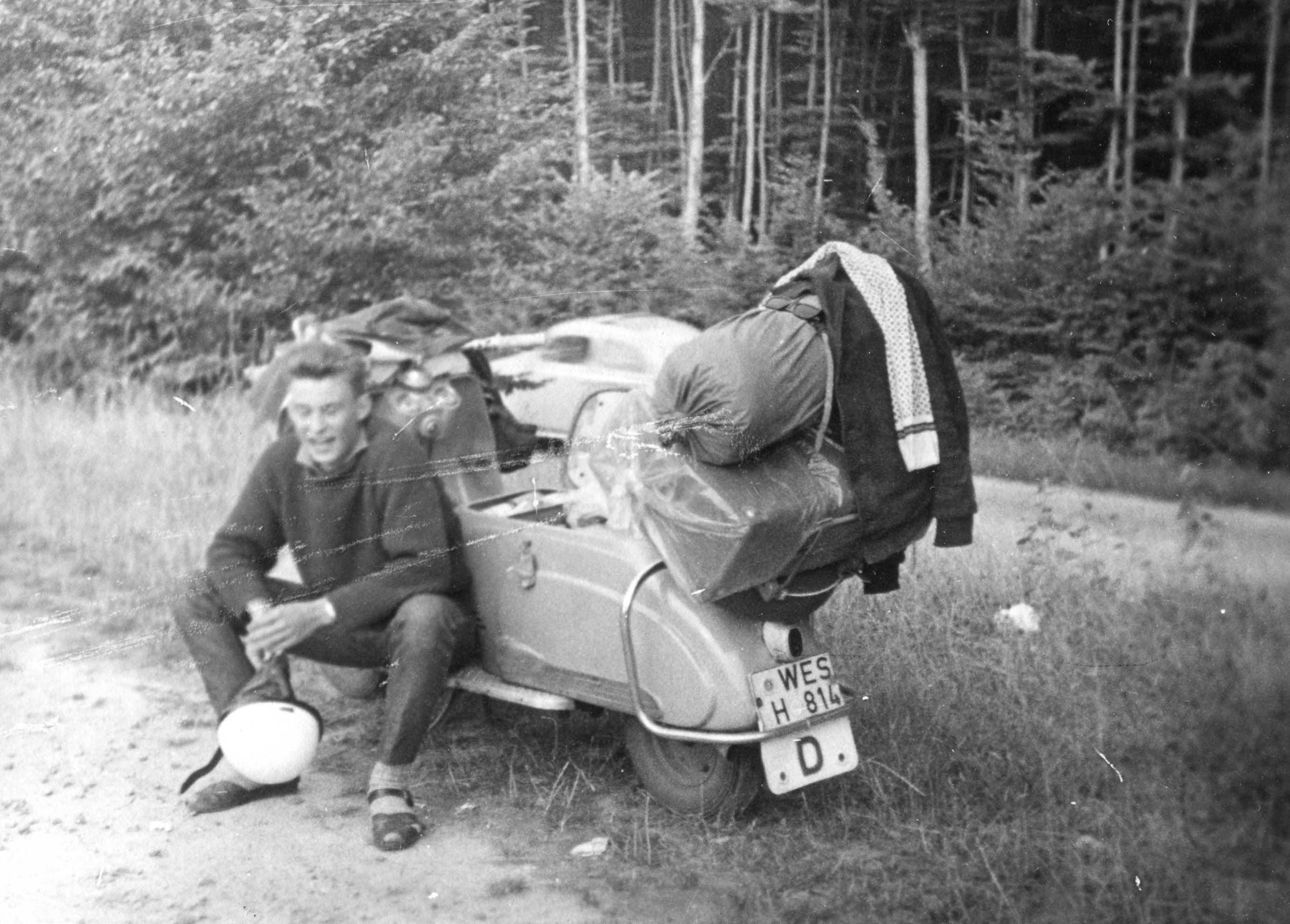
Klaus Taking a Break from Hours of Driving

Klaus Taking a Break from Hours of Driving

After a smooth ride on the newly built super-strada from Trieste to the border of this immense Balkan country, we were quite a bit disappointed by the shabby look of towns and villages we were passing through. Dilapidated houses in various stages of neglect and decay, communist slogans crudely written on house walls, the red star painted on any bare surface, dusty streets gave us the impressions as if we had traveled back in time. I cannot remember how far we traveled south along the Adriatic coast.

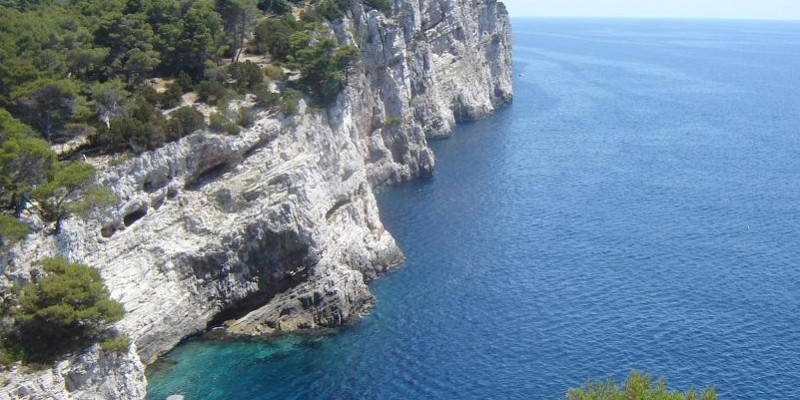
Adriatic Sea in Croatia

Adriatic Sea in Croatia

Our aim was to find a secluded beach at the rugged coastline away from this eerie state-dominated world. When we had finally found such a place, which would be overcrowded by sun seekers from Northern Europe today, we pitched our tent not more than 10 m from the crystal clear waters of the Adriatic Sea. We stayed there, until our food ran out, perhaps 2 or 3 days.

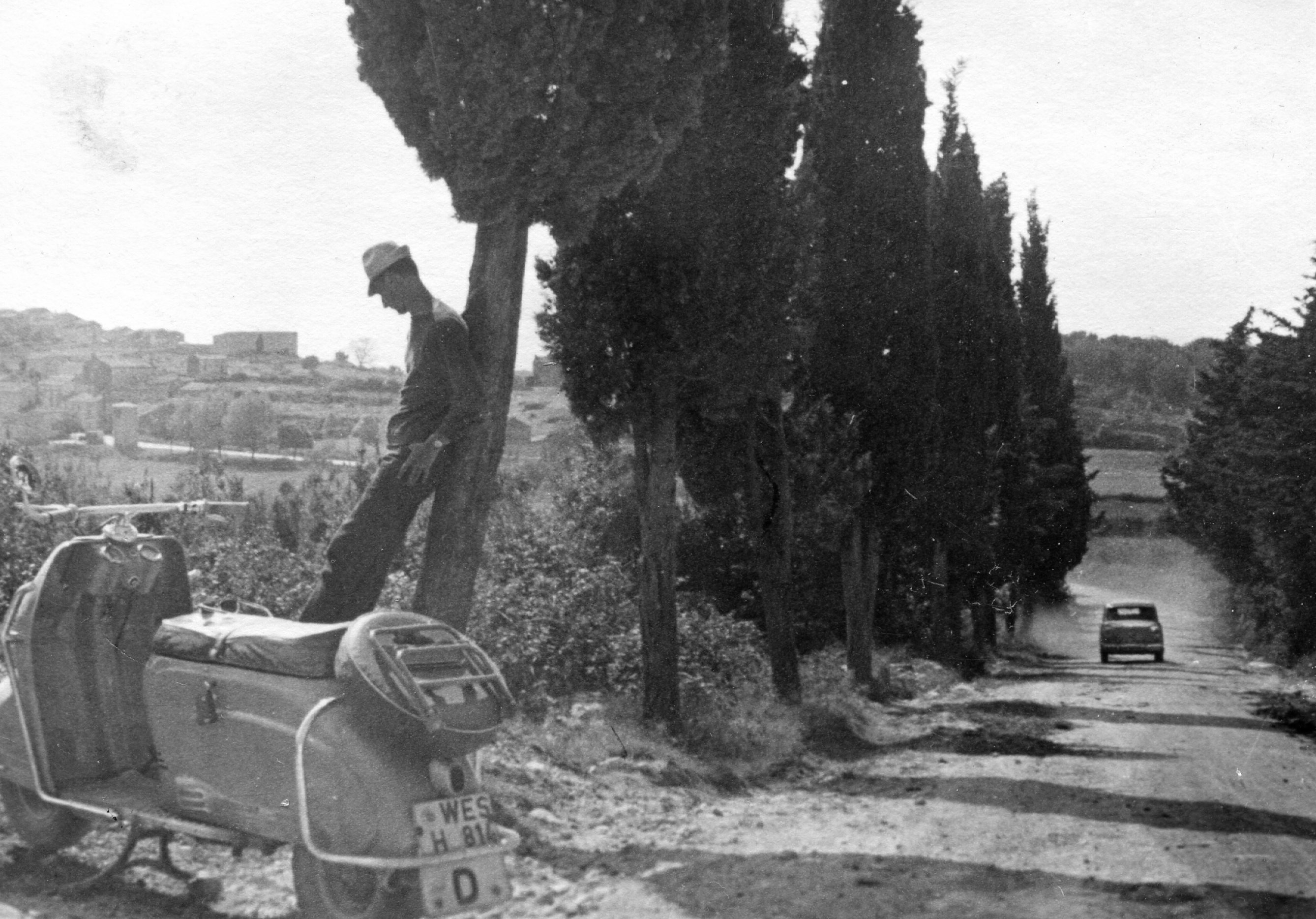
Peter Leaning against a tree on a Dusty Road

Peter Leaning against a tree on a Dusty Road

One event will stand out forever in my mind. On our way home we were held up for several days in a small Austrian town, where the old scooter had broken down with engine problems and needed a major repair job. It was the morning of August 13th. On our walk from the campground to the repair shop, we noticed that the usually tranquil, almost sleepy ambience had drastically changed overnight. An ominous gloom hung over this little Alpine resort. In front of shops, restaurants and cafés, on the market square, everywhere groups of people huddled together, some talking in subdued tones, others shouting angrily. Nobody paid any attention to us. It was eerie. Seeing so many people out on the street and not knowing what they were discussing instilled in us the uncanny feeling of imminent doom. Here and there we snatched up phrases from some of the more vociferous voices: There will be war. World War III. We are not going to fight another war. Austria is neutral. She will not be sucked into another conflict. What on earth had happened, we wondered, that made the people in this remote mountain town so excited?

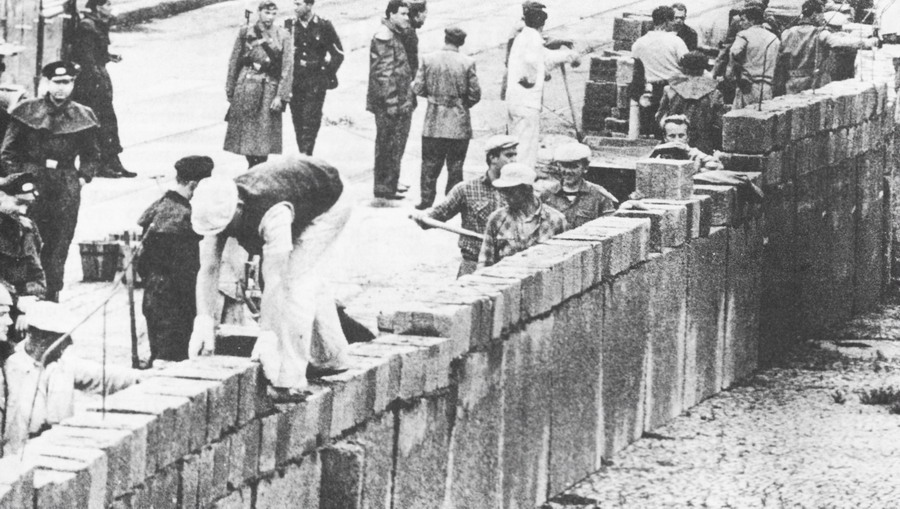
The Building of the Berlin Wall August 13, 1961

The Building of the Berlin Wall August 13, 1961

As we found out later, troops in East Germany, in flagrant violation of East-West agreements, had sealed the border between East and West Berlin, shutting off the last remaining escape route. The soldiers had put up barbed wire fences during the night, and Berliners woke to find they were living in a divided city. The fences were just the first step in a sequence of desperate measures to stem the flow of thousands of refugees. Train services between the two sectors had been cut off, and road traffic across the border came to a sudden halt. In the weeks that followed, work crews replaced the temporary fence by building the infamous Berlin Wall. If Klaus and I had heard the news over the radio or read the headlines in the papers, the impact of this momentous event in modern history would not have been as powerful on us as our witnessing of the passionate reaction of common people to such blatant attack on human liberty.

Adding Meaning to Thanksgiving

Michael and Angie Helping Gathering Firewood

Chart I – IV

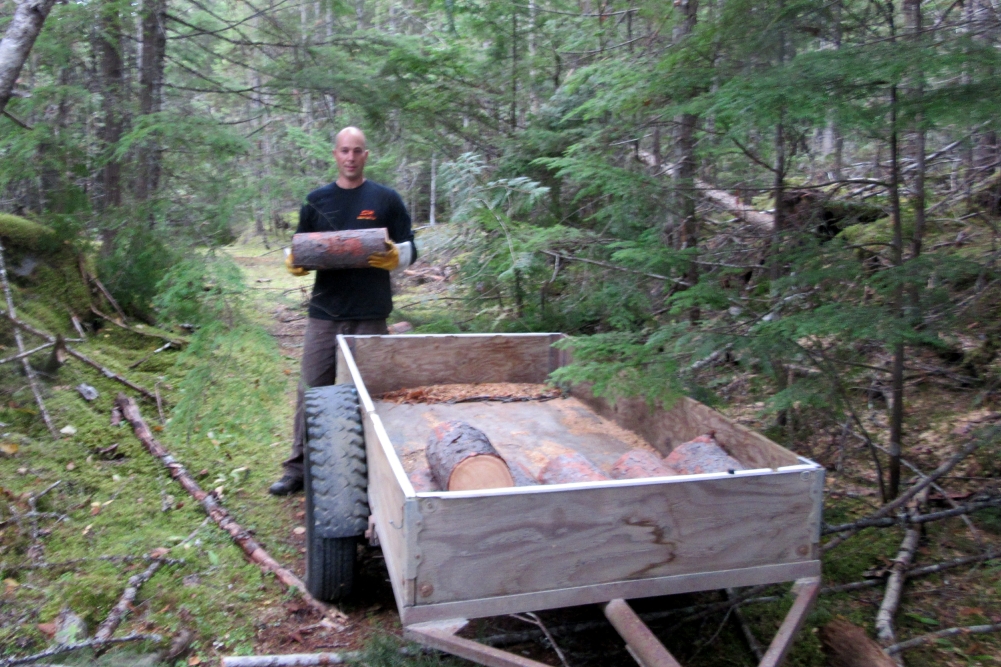
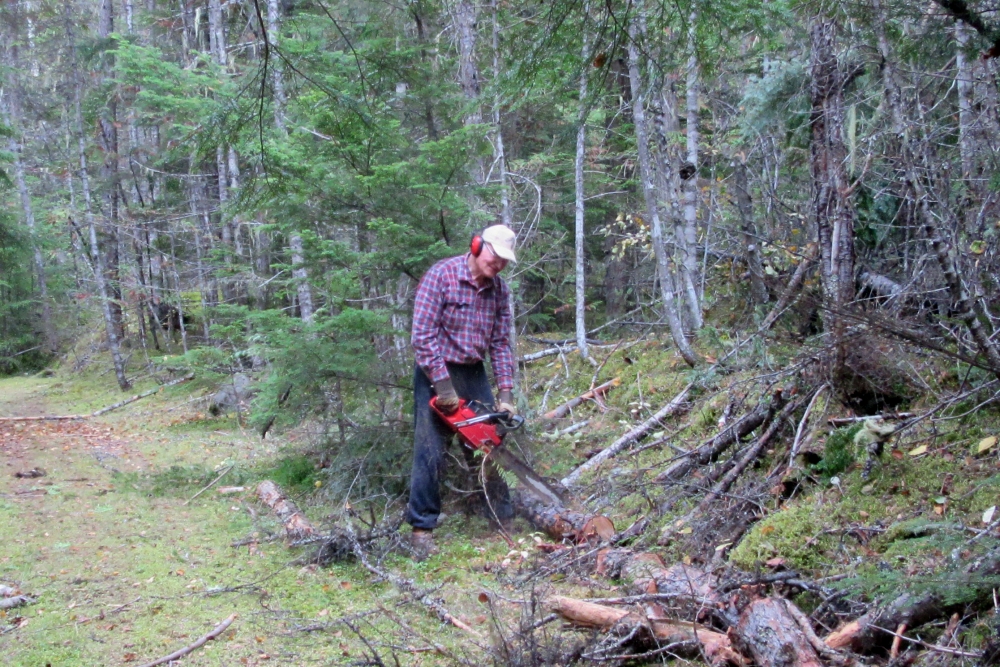
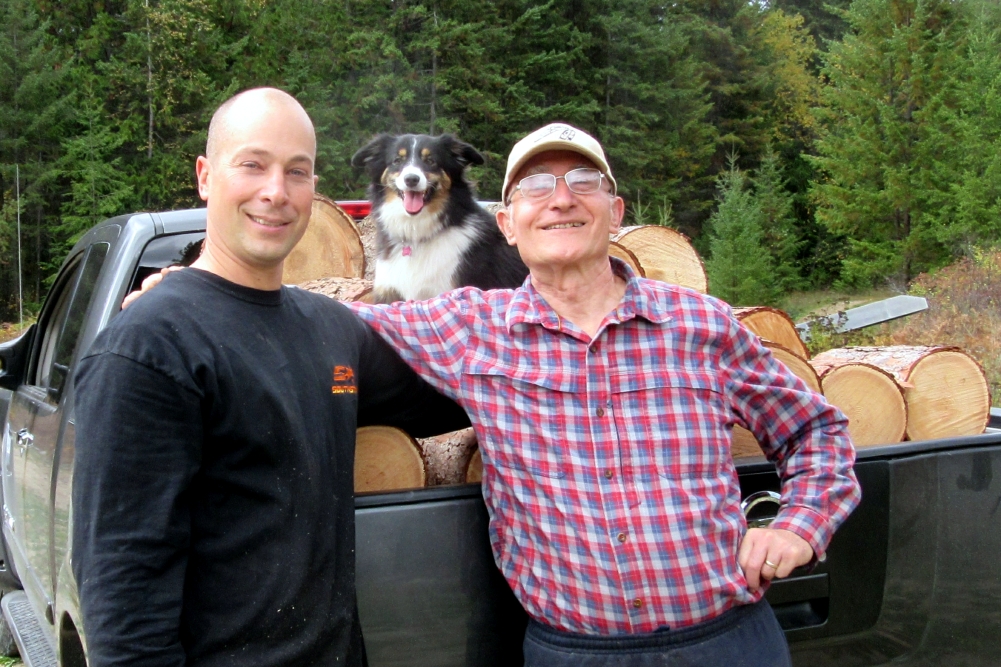
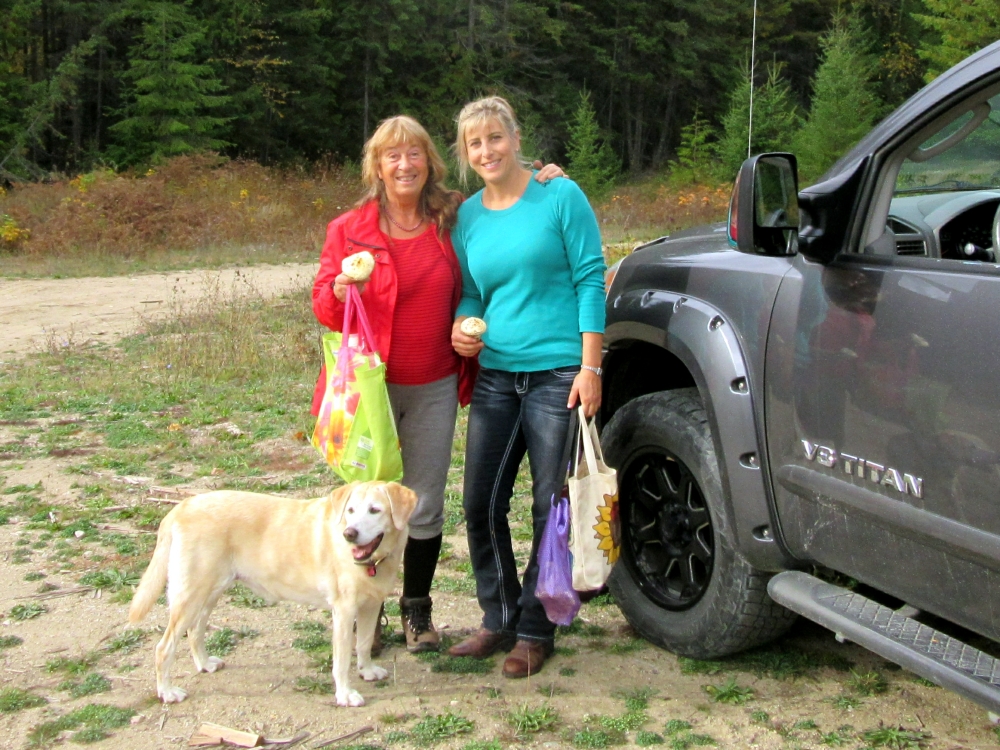
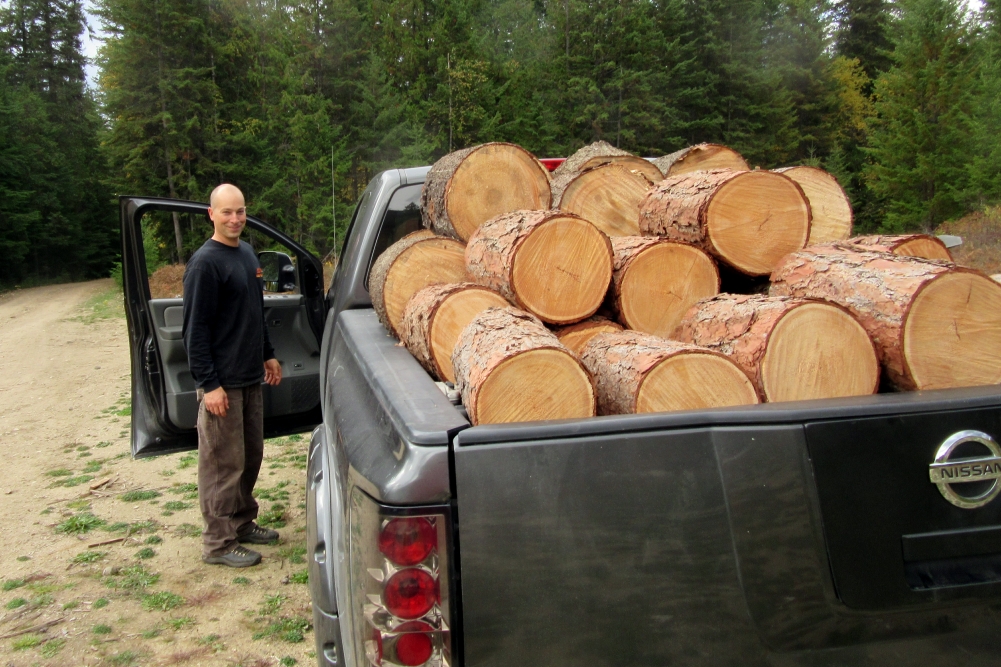
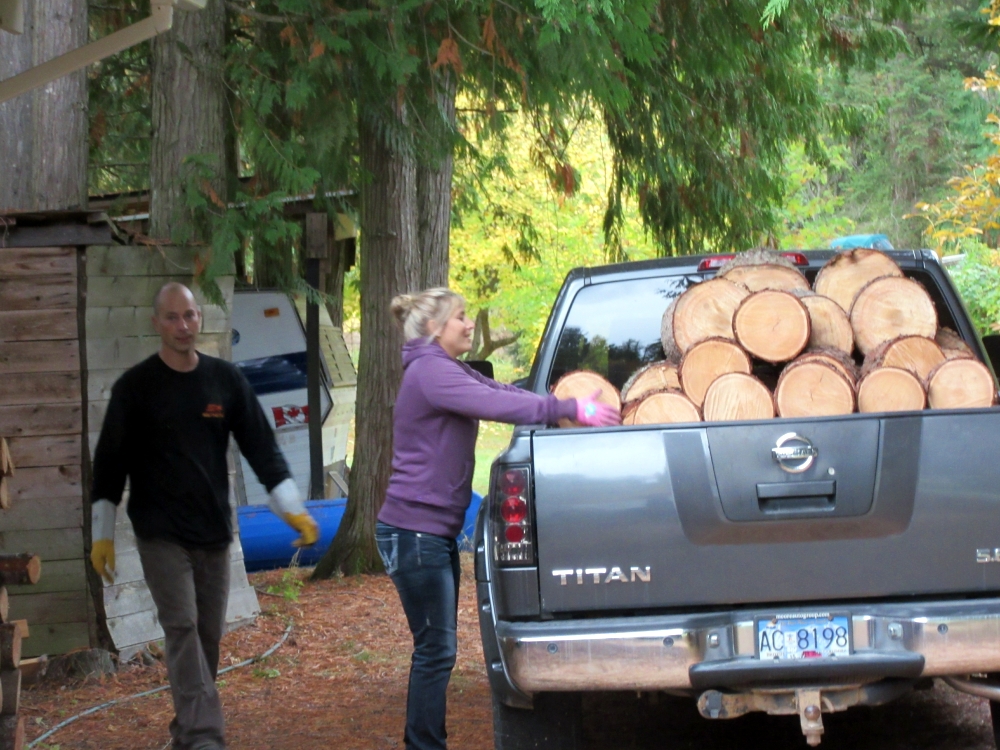
On the Canadian Thanksgiving Weekend our son Michael and daughter-in-law Angie dropped in on a surprise visit. And what a surprise it was! They came to help  to get some firewood out of the Taite Creek area. While my foot had healed quite well over the past eight weeks, our family doctor insisted that I should not yet go into the woods picking mushrooms or cutting firewood. So the following photo essay will express our joy and appreciation for what Michael and Angie have done for us.

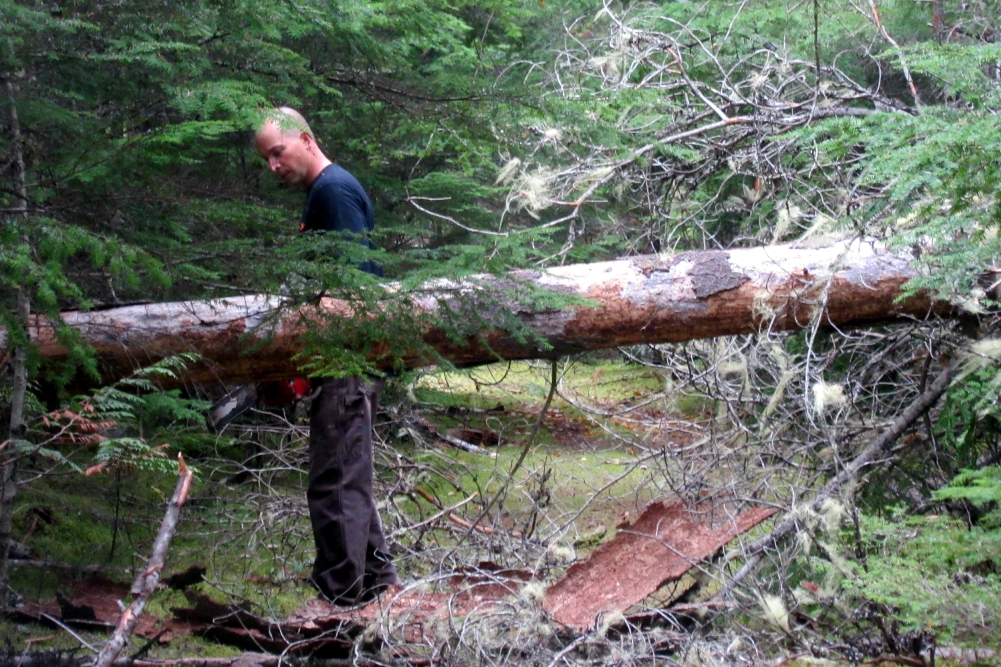
After Michael's truck was loaded with logs from a large pine tree, Michael cut down a larch for my small trailer.After Michael’s truck is loaded with logs from a large pine tree, Michael cuts down a larch for my small trailer.
Still having to be careful with my right foot, I cut the fallen tree into small pieces, while Michael carried them to the trailer,Still having to be careful with my right foot, I cut the fallen tree into small pieces, while Michael carries them to the trailer.
When there was still room for more logs on the trailer, Michael cut down another pine tree.Because there is still room for more logs on the trailer, Michael cuts down another pine tree.
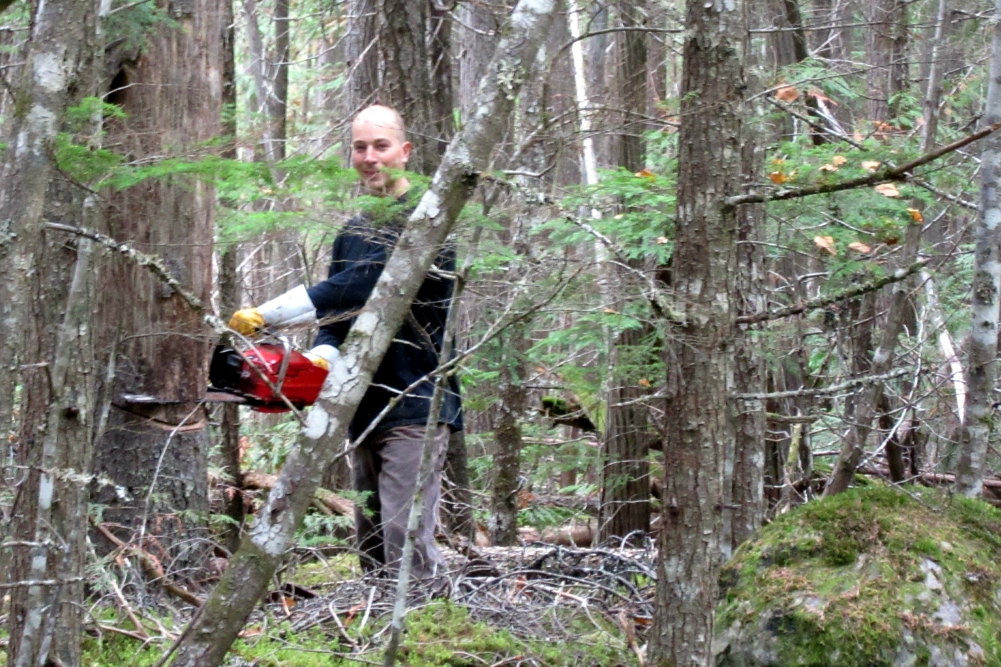
Since the fallen pine tree was blocking the road, Michael cut the middle section out of the tree.Since the fallen pine tree is blocking the road, Michael cuts the middle section out of the tree.
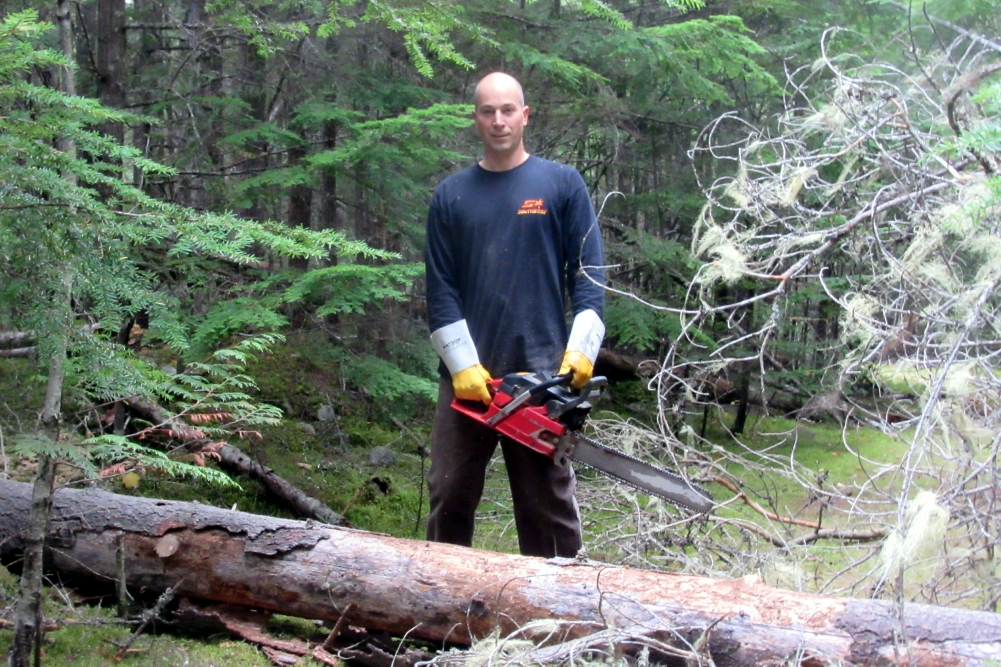
05He expertly accomplishes this task by two undercuts and then proudly presents himself with the chainsaw for the photo above.
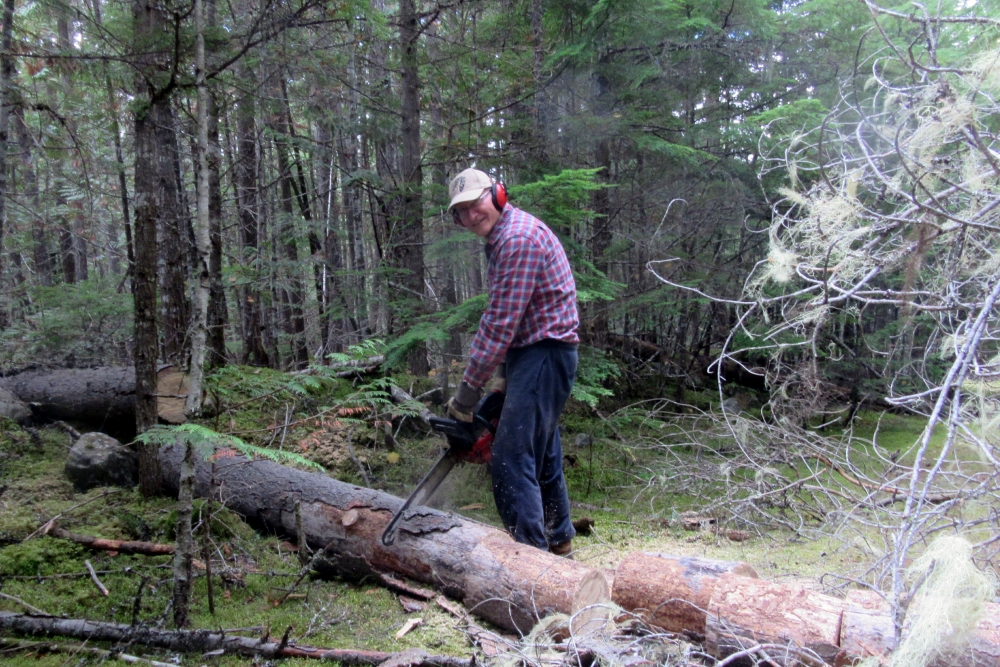
Then it was my turn to cut the large section into logs that Michael carried to the trailer.Then it is my turn to cut the large section into logs that Michael then carries to the trailer.
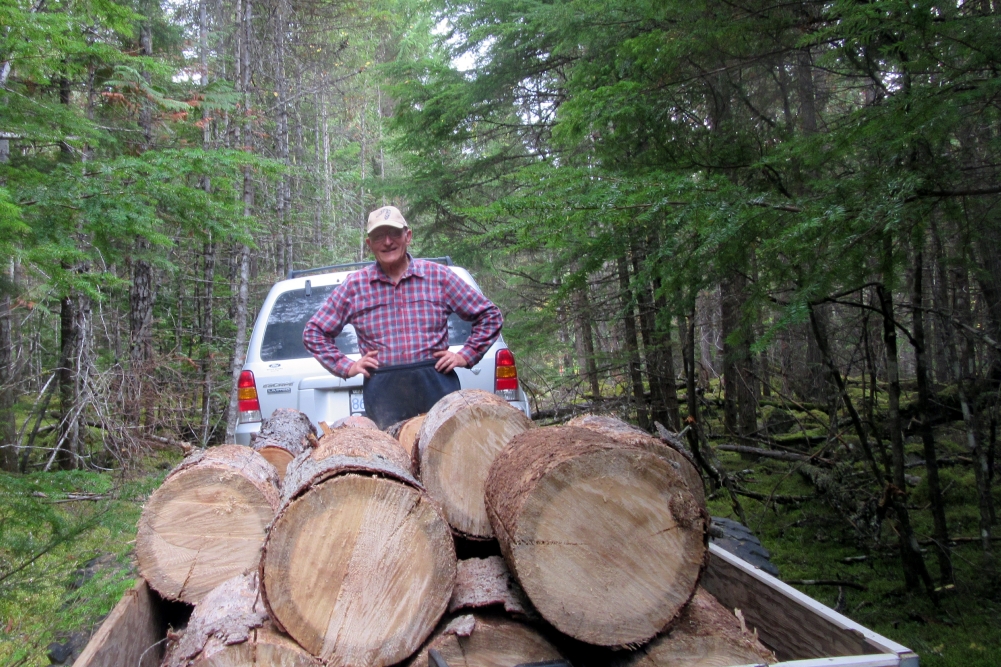
07Standing behind our trailer, I am looking thankfully at the load of pine and larch firewood.
08With a truck full of precious firewood, we are thankful and all smiles. Even Piper, the miniature Australian shepherd, appears to make a happy face.
09In the meantime Biene and Angie had been scouring the woods for those elusive pine mushrooms and are showing off their loot.
11Now it is time to bring home the treasure to keep us warm this coming winter season.
12While I am taking pictures, Michael and Angie are unloading the truck. What a joy in a father’s heart!

After all this hard work, we all sat down for an early Thanksgiving dinner that Biene had so lovingly prepared before our outing into the woods.

Happy Thanksgiving to you all!


Chapter XIII of the P. and G. Klopp Story – Part 3

Dangerous Play with Ammunition

The Siegfried Line (Westwall) was a German defense system covering a distance of 630 km with over 18,000 bunkers, tunnels and tank traps, the so-called dragon’s teeth. It started in Kleve on the border with the Netherlands along the western border and went as far south as the town of Weil am Rhein on the border with Switzerland. Touted by the Nazi propaganda as a unbreachable bulwark, the Siegfried Line was only able to delay the Allied advance to the center of Germany for a very short time in early 1945.

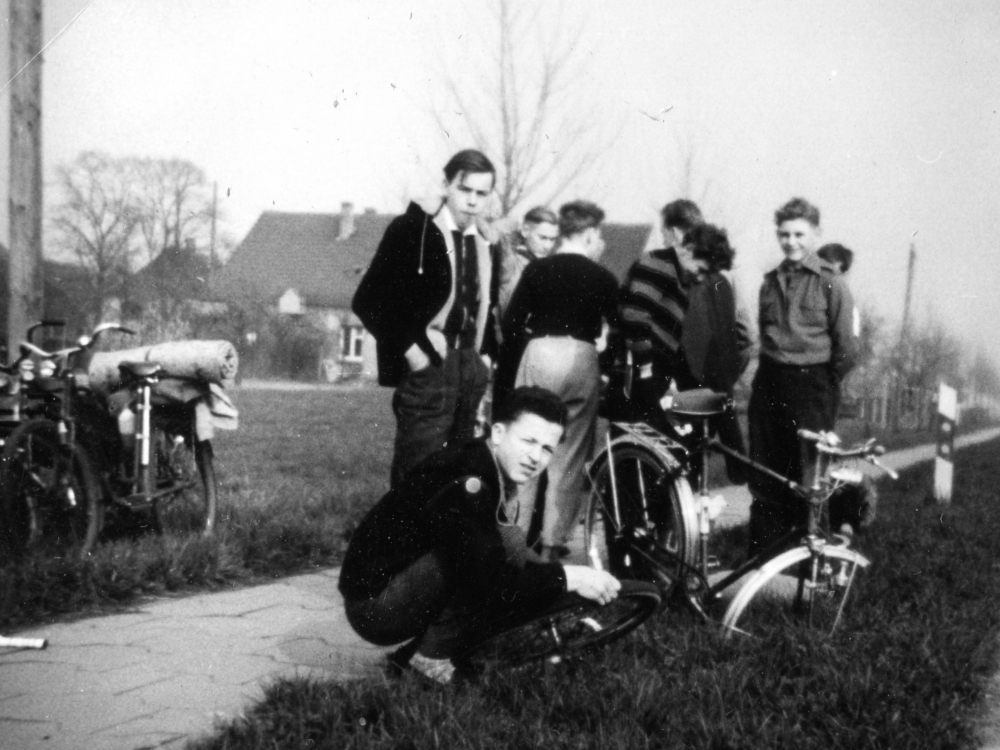
Fixing a Flat Tire on the Way to our Hide-Out

Fixing a Flat Tire on the Way to our Hide-Out

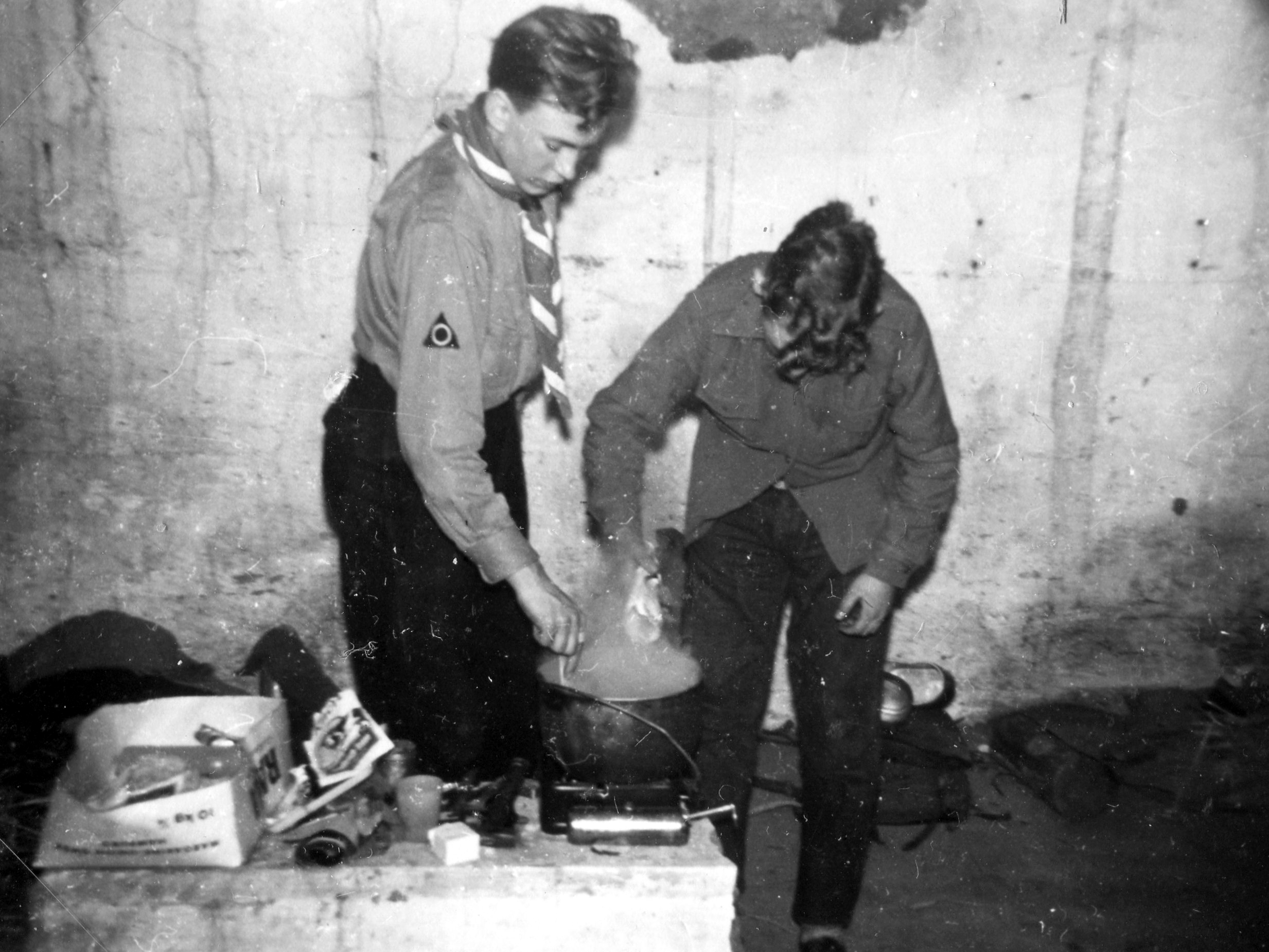
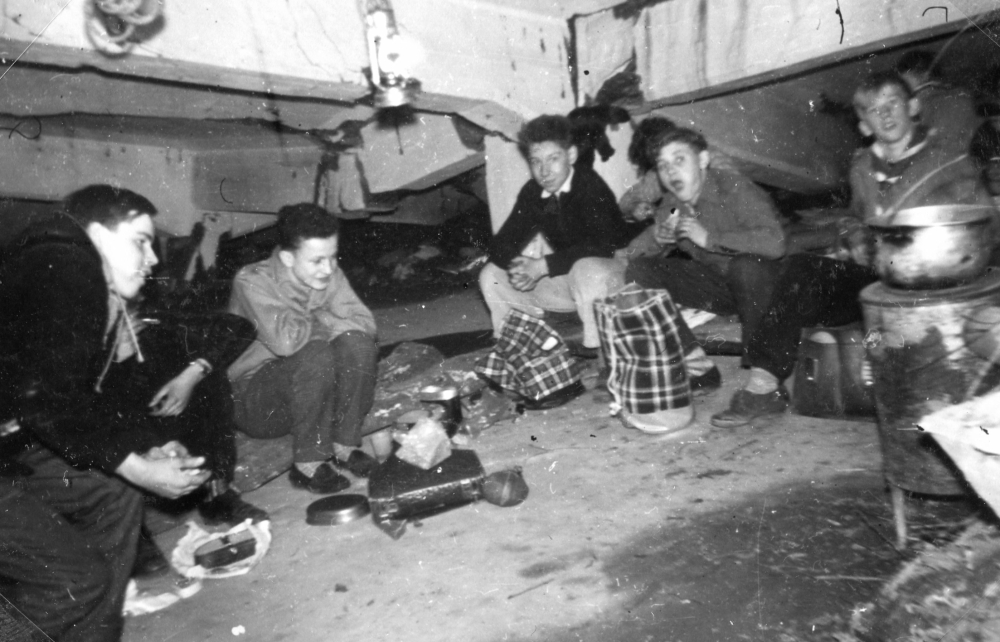
On our way home taking another route away from the main highway we discovered deep in the forest of the Reichswald a number of bunkers from that famous last line of defense. Their walls and ceiling were 1.5 meters thick and had once offered room for a dozen soldiers each. This would be an ideal shelter and hideout for my clan, I thought. Far from the major traffic routes we would be shielded from curious eyes. There in the densest part of the forest we selected the least damaged bunker that would serve as a permanent base for our outdoor activities. I instantly realized the advantage of a bunker over a tipi. The communal tent would have to be laboriously set up. Young trees would have to be cut to provide the poles for the tipi that was barely large enough to accommodate the clan. Of course, enthusiasm among the scouts was high. Attendance went up and new members showed up for our weekly sessions in the citadel. After two or three weekend trips to our fortress, we had transformed the austere looking concrete dwelling into a cozy shelter complete with beds, table and chairs all made of dead wood that we had picked up from the forest floor. We even had turned a barrel into a primitive stove, which provided warmth during the chilly nights of the approaching fall season.

Hans and a Fellow Scout Preparing a Meal for the Clan

Hans and a Fellow Scout Preparing a Meal for the Clan

Fifteen years after the war great dangers were still lurking in this section of the Reichswald. Heavy fighting must have taken place around our bunker. For we found unexploded shells, so-called duds on the forest floor. One young scout stumbled over one of these rocket-shaped shells and tossed it against the concrete wall. I guess in his total ignorance of the potentially fatal consequences he expected it to blow up like a giant firecracker. Fortunately for us it did not go off. When I had somewhat recovered from the initial shock, I blew the whistle as a signal to the scouts to assemble around me. Then pointing to the shell I gave them a stern lecture on the danger to life and limb and ordered them not to touch any of these explosive devices. As punishment for the reckless boy I ordered that they should throw a rope over a sturdy tree branch and attach to it a stick, on which the delinquent would have to sit. In a somber, authoritative voice I pronounced the verdict. The boy shall be pulled up three meters above the ground, where he will have time to reflect on his reckless behavior and serve as a warning to all others who might be tempted to imitate his foolish act. While I maintained a straight face, the entire clan including the culprit took the whole proceedings as excitement and fun. With shouts of hooray they pulled at the rope to raise the boy to the desired height. There he was swinging back and forth until his release from his lofty prison.

Peter's Clan Relaxing in a WW2 Bunker

Peter’s Clan Relaxing in a WWII Bunker

Had I learned my very own lesson about safety regarding WWII projectiles? Looking back, I would say no. For on the day we were breaking camp, I secretly wrapped one of the best looking shells in a towel, placed it deep inside my luggage bag and took it home. There it stood for a while like a trophy in my room on the windowsill. With a new coat of red paint it looked shiny and new and attracted the attention of my visiting friends. It was a very fitting display at a time, when the Russians were launching with great fanfare the first man-made satellites, their famous Sputniks.

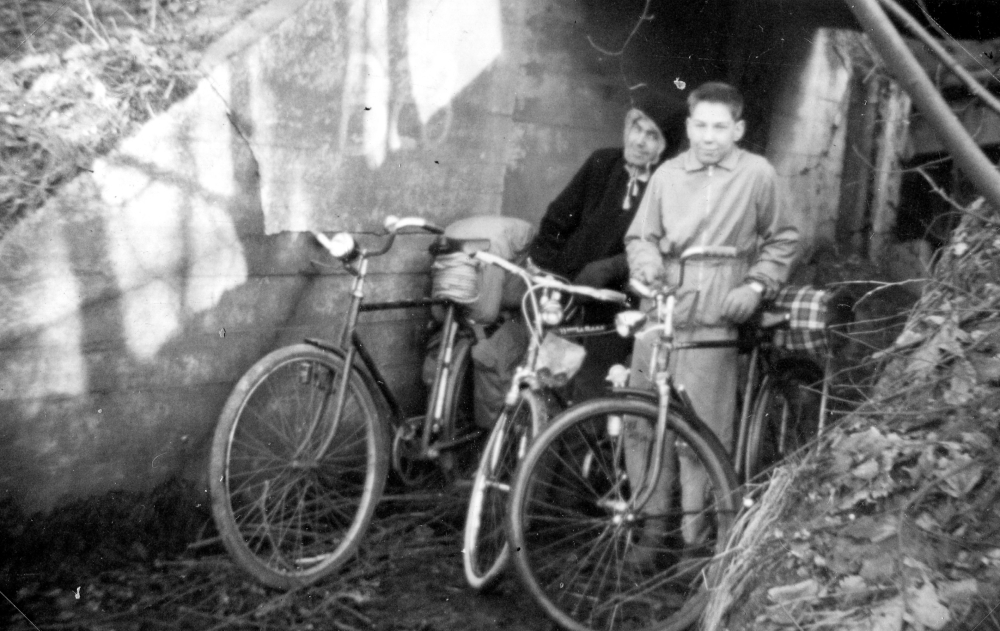
Two Scouts Posing in front of Our Bunker

Two Scouts Posing in front of Our Bunker

On the next bike trip to our bunker we were in for a great disappointment. Someone had discovered our weekend base and reported it to the police as a potential hideout for fugitives from the law. Thus, being alerted, they began patrolling the access roads to the Reichswald. How surprised were they when instead of nabbing a gang of criminals they caught a bunch of teenage boys dressed in neat scout uniforms. Unlike the irate youth hostel man the officer told us in a calm, professional manner how dangerous it was to camp out here with all those explosive devices lying all over the forest floor. He also gave us a scare when he recorded all our names and addresses with a warning that he would notify our parents and that there would be possible fines for trespassing. Luckily, the letters never came. But the encounter with the police made us go to safer wooded areas and sleep again in our tipi. As for me the leader of the clan, I now realized that even though I had taken vigorous measures to alert the scouts to the dangers of the shells I should have avoided the bunkers in the first place. In retrospect it was like divine intervention that the police had put a sudden stop to our adventurous trips to the Siegfried Line. That very same weekend I took the ‘rocket’ and threw it in the garbage can. For all I know it still rests somewhere in the Wesel garbage dump.