Biene, the Picky Eater
Already in early childhood, Biene had developed into a picky eater. She was taller than her twin brother Walter and looked skinny and undernourished. When she came down with scarlet fever, a bacterial disease that was quite common among young children of post-war Germany, she had to spend a long time in the hospital. The food was adequate for the hospitalized young girl, probably more abundant and abundant than for the family at home. One thing among many other food items Biene hated the most was the blood sausage on her diet. She reluctantly swallowed down the vegetables, until only the blood sausage was left. Then she squeezed the sausage so hard between the metal plates and spread the resulting fatty cream that the nurse on duty would not notice anything. Back at home on the road to recovery, Biene refused to eat all the good things the doctor had recommended. No pleading, bribes or threats would change her mind. In the end, the doctor and parents agreed to let her eat whatever she liked, which was very little.
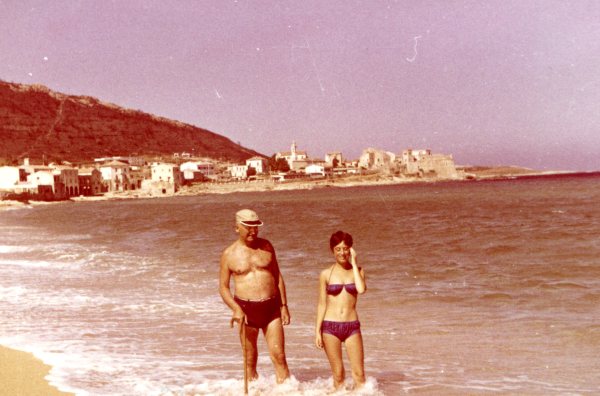
Papa Pankin and his daughter Gertrud (Biene) on the Island of Corsica in the summer of 1962.
A decade later, when Biene entered her rebellious teenage years, Mamma and Papa Panknin were getting really concerned. Being tall and skinny may have been an ideal image, as dictated by the fashion moguls of the day. Still, it was a worrisome indication of an impending case of anorexia. Having successfully managed to eat only what she liked for so many years, she has now become very clever in deceiving her parents into believing that what was offered on the plate had gone into her stomach. At school, she became quite popular, when she started handing out to her classmates the most delicious and nutritious lunches her mother had so lovingly prepared for her. Biene designed elaborate schemes at the dinner table to make undesirable chunks of meat and portions of green vegetables disappear. To her mother’s chagrin, such food items were later found strewn under the table. Often the defiant teenager would take a napkin and ostentatiously wipe her mouth and then quickly cover a pile of unpalatable food as if she had made it disappear by magic.
Of course, Biene could not hide these tricks forever. The consequence was that Papa, who had almost died of starvation as a POW, was getting so upset over his daughter’s show of disrespect for the fine food that they could finally afford to eat. In the end, for the sake of peace and quiet, Papa Panknin had his supper at a different time apart from the rest of the family.
 The Peter and Gertrud Klopp Family