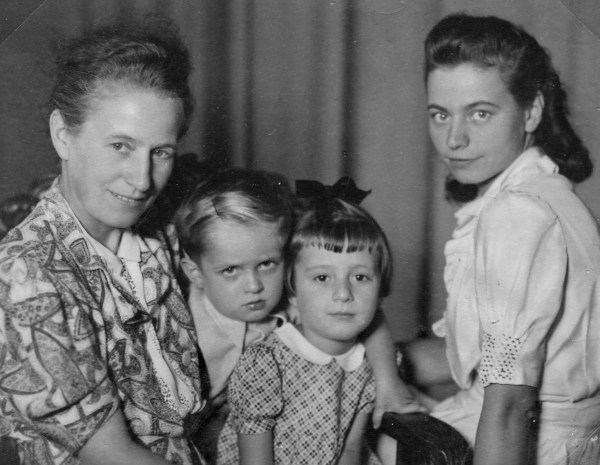
Walter Panknin (1898 – 1977) and His Family Ch 8 Part 3

Papa Panknin’s Comments on Gertrud’s Eating Habits

Some of my blogging friends are quite right in pointing out that just because Biene was a picky eater does not mean that she was anorexic. To summarize this rather sad development, I let Papa Panknin speak through his letters to friends and family between 1959 and 1963. Hopefully, not too much of Papa’s sarcasm and irony is getting lost in translation.

1959-12-20 “After many years, we are looking to a joyful Christmas. For the first time in eighteen years, I have been thinking about having once again a roasted goose on the table and a bottle of wine. But that thought evaporated into thin air. The kids reject any poultry with an expression of utmost disgust. My wife and I cannot eat an entire goose all by ourselves. So we are planning to have a rabbit dinner. There is no harm in having two eaters less at the dinner table.”
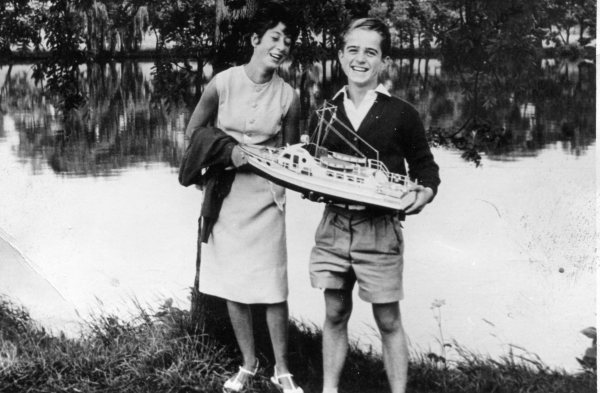
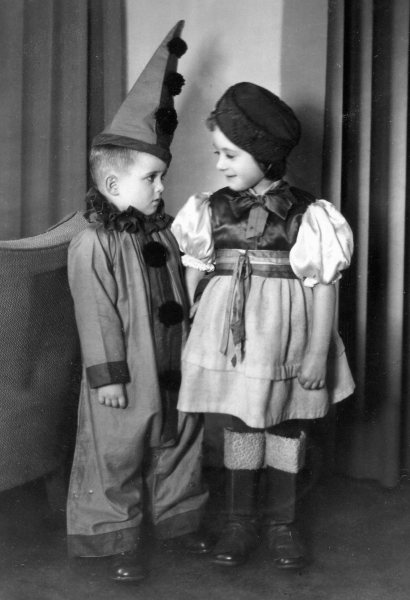
The Twins Gertrud (Biene) and Walter Panknin 1961

1961-12-06 “Gertrud is adopting an unnatural lifestyle. It is God’s plan that a young girl should work and be in constant motion from dawn to dusk. Instead, the kids sit on school benches all morning and lazily spend the afternoons on couches. Biene only eats apples. According to books and magazines, eating apples makes you slim and good-looking. Which woman and, even more so, which girl isn’t prepared to make big sacrifices on the altar of beauty. When fashion moguls declare that an old jam pot would serve as a fashionable head cover, it would be done without questioning. Of course, the industry would not do such a stupid thing and suggest something to reduce their profits. Mamma worries a lot about our daughter’s lack of appetite. Biene eats nothing, almost nothing, only fruits. Consequently, she has no bowel movements. Someone who eats nothing has no bowel movements. I know this from my time as a POW.”
Walter Panknin (1898 – 1977) and His Family Ch 8 Part 2

Biene, the Picky Eater

Already in early childhood, Biene had developed into a picky eater. She was taller than her twin brother Walter and looked skinny and undernourished.  When she came down with scarlet fever, a bacterial disease that was quite common among young children of post-war Germany, she had to spend a long time in the hospital. The food was adequate for the hospitalized young girl, probably more abundant and abundant than for the family at home.  One thing among many other food items Biene hated the most was the blood sausage on her diet. She reluctantly swallowed down the vegetables, until only the blood sausage was left. Then she squeezed the sausage so hard between the metal plates and spread the resulting fatty cream that the nurse on duty would not notice anything. Back at home on the road to recovery, Biene refused to eat all the good things the doctor had recommended. No pleading, bribes or threats would change her mind. In the end, the doctor and parents agreed to let her eat whatever she liked, which was very little.

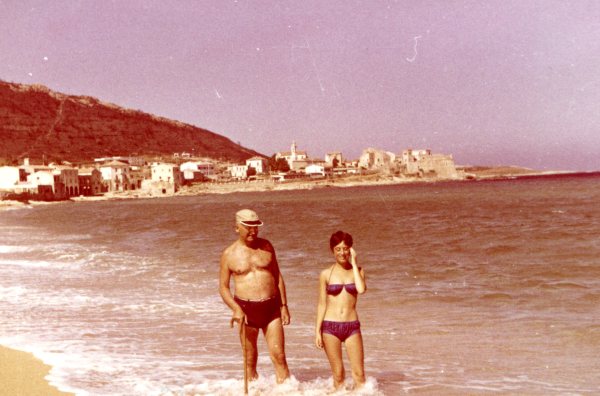
Papa Pankin and his daughter Gertrud (Biene) on the Island of Corsica in the summer of 1962.

A decade later, when Biene entered her rebellious teenage years, Mamma and Papa Panknin were getting really concerned. Being tall and skinny may have been an ideal image, as dictated by the fashion moguls of the day. Still, it was a worrisome indication of an impending case of anorexia. Having successfully managed to eat only what she liked for so many years, she has now become very clever in deceiving her parents into believing that what was offered on the plate had gone into her stomach. At school, she became quite popular, when she started handing out to her classmates the most delicious and nutritious lunches her mother had so lovingly prepared for her. Biene designed elaborate schemes at the dinner table to make undesirable chunks of meat and portions of green vegetables disappear. To her mother’s chagrin, such food items were later found strewn under the table. Often the defiant teenager would take a napkin and ostentatiously wipe her mouth and then quickly cover a pile of unpalatable food as if she had made it disappear by magic.

Of course, Biene could not hide these tricks forever. The consequence was that Papa, who had almost died of starvation as a POW, was getting so upset over his daughter’s show of disrespect for the fine food that they could finally afford to eat. In the end, for the sake of peace and quiet, Papa Panknin had his supper at a different time apart from the rest of the family.

Walter Panknin (1898 – 1977) and His Family Ch7 Part 20

A Perilous Sailing Adventure

Sailing Adventure Part 2

In no time we reached the middle of the lake.  “Strange”,  I suddenly thought,  “there are no other boats here. Why do they  keep on sailing parallel to shore?”  I tried to gently shift my weight to look back to our now distant beach. Suddenly there was a strong gust of wind billowing our sails.  My brother frantically tried to maneuver the sails.  “Sit on the edge of the boat, quick! ” he commanded sternly looking worried.  Although I had reservations, I did not dare to voice an objection. I quickly lifted myself up to sit on the narrow rim of the boat,  when the wind shifted again without warning. Then everything happened like in slow motion.

I see the look of horror on my brother’s face while I am gently tilted backwards into the water with the white fluttering sails tipping in my direction. I am sinking deep down into the cold water.  When I finally surface I see my brother beside the capsized boat looking shocked and angry.  My first reaction is a fit of hysterical laughter.  “What happened?” I stupidly ask while trying to catch my breath.  It all seems so unreal.  “Stop laughing!” my brother yells holding on to the overturned boat. When he tells me to cry for help I am racked by another fit of laughter.  “Why don’t you?” I manage to reply.  “We’ll swim to shore”,  I suggest.  I am a strong swimmer with lots of stamina. Almost beside himself, my brother shouts back, “Never!!! We must stay with the boat”  Slowly I am regaining my sanity.  I am looking around trying to assess the situation.  We are in the middle of the lake far from either shore.  The waves are high. The water is churned up and cold.  We don’t have life vests. No boats are in sight except the sailing boats looking like miniature toys in the distance.  Suddenly panic seizes me.

Our desperate attempts to right the boat fail.  The weight of the water-logged sails is beyond our strength.  One of our paddles floats away on the waves.  My brother does not allow me to retrieve it.  We continue to cling to the boat bobbing in the waves, occasionally crying out for help which we realize is useless.  Nobody can hear us. 

To be continued …

Walter Panknin (1898 – 1977) and His Family Ch7 Part 19

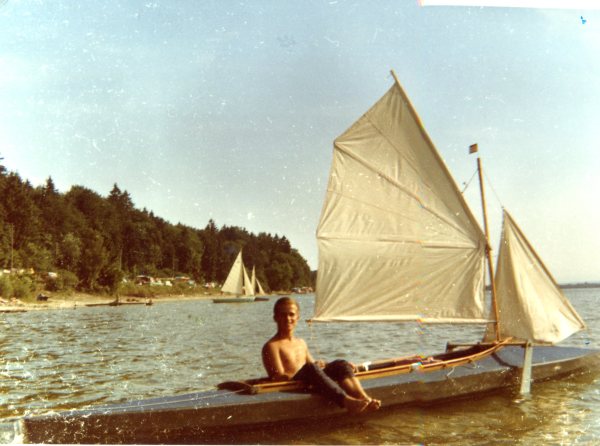
A Klepper Folding Boat with Sails

Sailing Adventure Part 1

Biene writes:

My brother was a bit disappointed that he had not been able to go sailing yet. However, that was to change on the first weekend.   On a beautiful Sunday morning, Walter and I went to the beach very early. Our parents had gone on a short excursion by themselves.  I was absorbed by my novel when my brother suddenly called me.  Looking up from my book, I noticed lots of boats sailing gracefully close to shore on the white-capped lake. Sitting in a secluded and sheltered spot, I had been protected from the wind.  

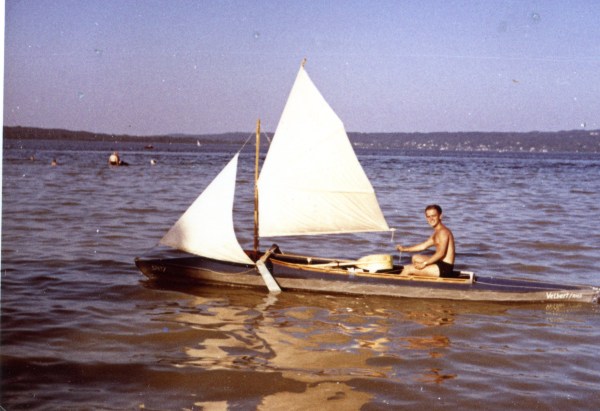
Twin Brother Walter Relaxing in the “Sailboat”

“Biene, do you see all those sailboats?”  my brother shouted excitedly. “Let’s go and try ours.” Suddenly, a cool breeze blew through my hair.  It wasn’t very often that my brother invited me to participate in his fun activities.  I quickly grabbed my towel, wrapped it around my book, and followed him to the water where our boat was anchored.

Walter expertly got everything ready for our first sailing adventure. To try it out,  we first sailed fairly close to shore like the real sailboats in the distance.  It was exhilarating to speed effortlessly through the waves.  My brother felt like a captain in command.  He would tell me to shift my weight occasionally from side to side. I obediently followed his commands.  Normally, we would argue about everything.  But I had never sailed before.   Imperceptibly, the wind was getting stronger and the waves higher.  We were ecstatic!  This was fun!   Lots of other boats were sailing ahead of us along the coastline.  Suddenly, my brother suggested, “Why don’t we try to cross the lake?  We have never been to the other side.  At this speed, we’ll be there in no time.”   I had no objections. I loved adventures and was curious to explore the other shore.

To be continued …

Walter Panknin (1898 – 1977) and His Family Ch5 – Part 13

School Memories

Biene contributed this post.

As I already mentioned, my dad prepared us well for school. Before every lesson in his roomy study, he would say in English, “I am your teacher.” He wanted to acquaint us with a foreign language early on in life. He refused to teach us Russian, which would have been more helpful in a communist state controlled by the Soviet Union. Math was always fun. My brother and I had competitions in mental math, which I would usually win. Until my last years in high school, I consistently outperformed my brother. But then he surpassed me, and I could never catch up. Calculus was my downfall.


We had to memorize poems, ballads and, of course, lots of folk songs, which we would sing on long hikes in the beautiful forests of Thuringia. Most of the songs are still fresh in my mind. They bring back happy memories of picking berries, swimming in rivers and lakes, and picnics under beautiful trees. My dad would tell us legends and fairy tales often connected to the region’s folklore on these outings. Since the German language has fairly consistent phonetic rules, I learned reading almost on my own before entering school.

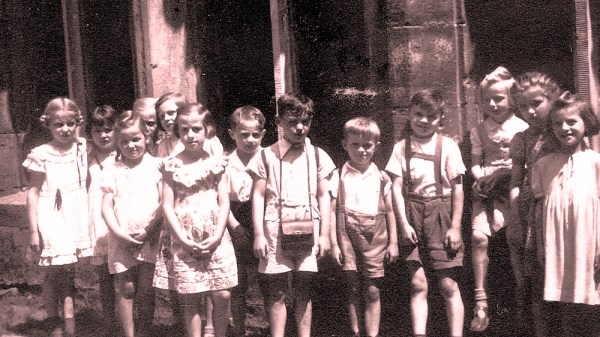
Walter and Biene

The famous German “Zuckertüte” or sugar cone bag originated in Thuringia near Gotha. This giant, brightly decorated cone-shaped paper bag was filled with chocolates, candies and other delicacies or little gifts to “sweeten” the first day of school. I wished we had a picture of ours. But at that time, my parents did not have the means to buy films.
We only had a few hours of school every morning for the first few years, including Saturdays. Students were expected to do homework and practice their new skills after school. Since my brother and I were fast learners, we had lots of free time to play when we returned home for lunch.

Walter Panknin (1898 – 1977) and His Family – Ch5 Part 10

Early Childhood Education at Home

Biene contributed this post.

When we turned four years old, my father started teaching us on weekends.  He had a large world map, which covered a wall in his study. He introduced us to geography. We had to point to and name all the continents, major countries, capitals, rivers, mountain ranges and oceans.

We had to draw maps and were rewarded with pennies if they were accurate. Papa explained the solar system to us and allowed us to colour his beautiful pen drawings for the ballads he had written. At bedtime, he would read books of the great explorers and inventors of the past or other historical events.  I loved cuddling close to my father on the bench of the big tile stove and listen to the great stories of mankind. 

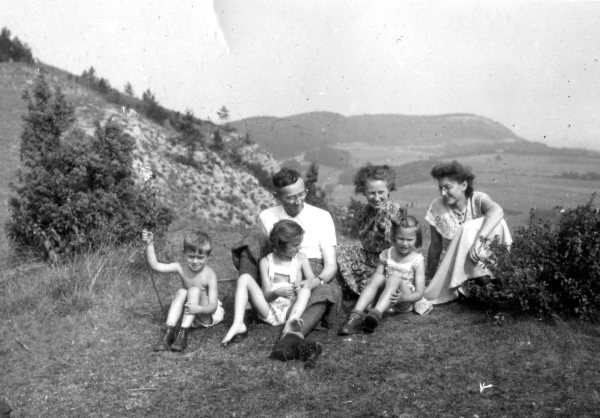
Hiking – From the left: little Walter, Gertrud (Biene), Walter and Elisabeth Panknin

I learned to read before I even went to school and have always been a voracious reader from then on. I was six years old when I read my first novel. My mom had the book sitting on her night table. It was a gift from my father, who loved historical novels. Whenever I had the opportunity. I secretly read this big book which intrigued me. It introduced me to an exciting world far beyond my years. To this day, it is my favourite novel. The author is Hervey Allen, and the title is “Anthony Adverse.”  It was translated into German. 

Elisabeth Panknin, the twins and their sister Elsbeth

Although religious practices were tolerated under the new regime, they were not being encouraged. My mother had been strictly brought up in the catholic faith by her guardians.  However, my father was protestant.  Shortly after our birth, even before my dad had a chance to meet us, she had us baptized in the protestant faith out of respect for my father. My mother was always a firm believer in the Christian faith and instilled this faith in me. For her, the differences among the various religious denominations were not of great importance. She believed in a personal relationship with God and salvation through Jesus Christ. She would always encourage us to pray and believe in the power of God’s love.

We were introduced to the word of God by an interdenominational Christian group that read bible stories to preschool children. They must have sown seeds falling on fertile ground. To this day, I have never lost my faith in the goodness and truth of God’s word and the miracle of Christ’s promise of salvation.