Walter Panknin (1898 – 1977) and His Family Ch 8 Part 3

Papa Panknin’s Comments on Gertrud’s Eating Habits

Some of my blogging friends are quite right in pointing out that just because Biene was a picky eater does not mean that she was anorexic. To summarize this rather sad development, I let Papa Panknin speak through his letters to friends and family between 1959 and 1963. Hopefully, not too much of Papa’s sarcasm and irony is getting lost in translation.

1959-12-20 “After many years, we are looking to a joyful Christmas. For the first time in eighteen years, I have been thinking about having once again a roasted goose on the table and a bottle of wine. But that thought evaporated into thin air. The kids reject any poultry with an expression of utmost disgust. My wife and I cannot eat an entire goose all by ourselves. So we are planning to have a rabbit dinner. There is no harm in having two eaters less at the dinner table.”
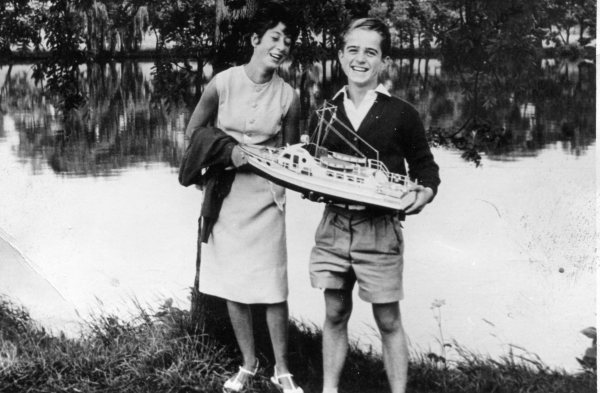
The Twins Gertrud (Biene) and Walter Panknin 1961

1961-12-06 “Gertrud is adopting an unnatural lifestyle. It is God’s plan that a young girl should work and be in constant motion from dawn to dusk. Instead, the kids sit on school benches all morning and lazily spend the afternoons on couches. Biene only eats apples. According to books and magazines, eating apples makes you slim and good-looking. Which woman and, even more so, which girl isn’t prepared to make big sacrifices on the altar of beauty. When fashion moguls declare that an old jam pot would serve as a fashionable head cover, it would be done without questioning. Of course, the industry would not do such a stupid thing and suggest something to reduce their profits. Mamma worries a lot about our daughter’s lack of appetite. Biene eats nothing, almost nothing, only fruits. Consequently, she has no bowel movements. Someone who eats nothing has no bowel movements. I know this from my time as a POW.”
Walter Panknin (1898 – 1977) and His Family Ch 8 Part 2

Biene, the Picky Eater

Already in early childhood, Biene had developed into a picky eater. She was taller than her twin brother Walter and looked skinny and undernourished.  When she came down with scarlet fever, a bacterial disease that was quite common among young children of post-war Germany, she had to spend a long time in the hospital. The food was adequate for the hospitalized young girl, probably more abundant and abundant than for the family at home.  One thing among many other food items Biene hated the most was the blood sausage on her diet. She reluctantly swallowed down the vegetables, until only the blood sausage was left. Then she squeezed the sausage so hard between the metal plates and spread the resulting fatty cream that the nurse on duty would not notice anything. Back at home on the road to recovery, Biene refused to eat all the good things the doctor had recommended. No pleading, bribes or threats would change her mind. In the end, the doctor and parents agreed to let her eat whatever she liked, which was very little.

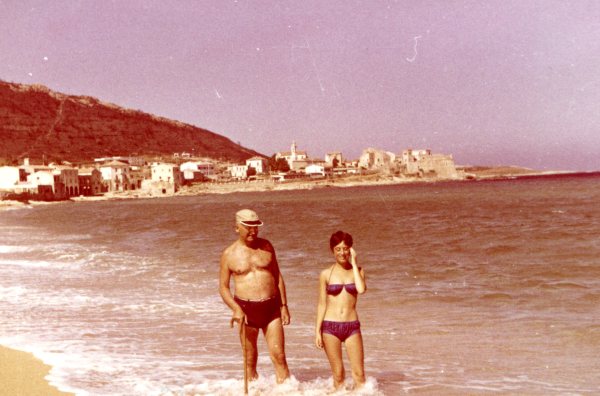
Papa Pankin and his daughter Gertrud (Biene) on the Island of Corsica in the summer of 1962.

A decade later, when Biene entered her rebellious teenage years, Mamma and Papa Panknin were getting really concerned. Being tall and skinny may have been an ideal image, as dictated by the fashion moguls of the day. Still, it was a worrisome indication of an impending case of anorexia. Having successfully managed to eat only what she liked for so many years, she has now become very clever in deceiving her parents into believing that what was offered on the plate had gone into her stomach. At school, she became quite popular, when she started handing out to her classmates the most delicious and nutritious lunches her mother had so lovingly prepared for her. Biene designed elaborate schemes at the dinner table to make undesirable chunks of meat and portions of green vegetables disappear. To her mother’s chagrin, such food items were later found strewn under the table. Often the defiant teenager would take a napkin and ostentatiously wipe her mouth and then quickly cover a pile of unpalatable food as if she had made it disappear by magic.

Of course, Biene could not hide these tricks forever. The consequence was that Papa, who had almost died of starvation as a POW, was getting so upset over his daughter’s show of disrespect for the fine food that they could finally afford to eat. In the end, for the sake of peace and quiet, Papa Panknin had his supper at a different time apart from the rest of the family.

Walter Panknin (1898 – 1977) and His Family Ch 8 Part 1

The Eternal Recurrent of the Same

The Challenge of Raising Teenagers in the Early 1960’s

Peter writes from the present post onward.

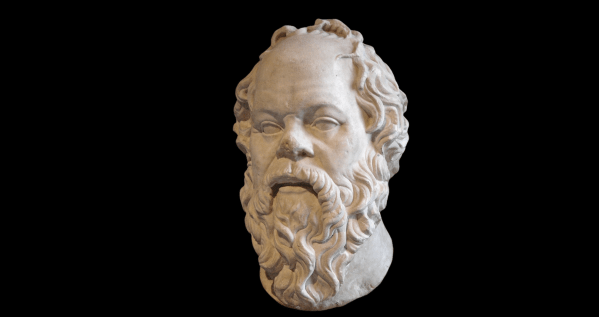
The children now love luxury; they show disrespect for elders and love chatter in place of exercise. Children are tyrants, not servants of the households. They no longer rise when their elders enter the room. They contradict their parents, chatter before company, gobble up dainties at the table, cross their legs, and tyrannize over their teachers.’ This quote is attributed to Socrates. While it has not been authenticated, it reflects the idea, based on painful parental experiences, that, throughout the millennia, children have always been perceived as unruly, rude and disrespectful to their parents and those in authority.


Portrait of Socrates. Marble, Roman artwork (1st century), perhaps a copy of a lost bronze statue.

Papa Panknin wrote many letters addressing and responding to friends and relatives. His literary ruminations could easily exceed the volume of a 500-page novel. The correspondence entailed a plethora of topics, such as politics, the rapidly changing customs and mores, the ills of post-war West Germany, and the challenges of bringing up their two teenage twins, Walter and Gertrud (Biene).

I will focus only on matters relating to the history of the Walter and Elisabeth family and their children. Furthermore, to make the final chapters more colourful and authentic, I will at times deviate from the strictly chronological path. I will make extensive use of Papa’s correspondence and will try my best to translate the German passages to give all of you a genuine understanding of my father-in-law, mother-in-law, Walter and Gertrud (Biene). Biene and I, as some of you may recall, met on the Pentecost weekend at Lake Baldenay and four years later, got married in Calgary on the Victoria weekend in 1966.

Walter Panknin (1898 – 1977) and His Family – Ch07 Part 16

Old Dreams and How the Ems River Adventure Ended

Papa writes, “The Ems is a fascinating little river from a landscape point of view but not like one would envision from reading the river and camping guide. Our trip resembled a rather strenuous exploratory expedition through sparsely populated jungle territories. Numerous weirs – some were not even mentioned in the tour guide – forced us to portage our heavy gear for a 700-metre distance and longer. We were the only long-distance paddlers on the river. That was partly due to the bad weather. At least, we had picked the most tolerable three weeks of this rained-out summer. 

We launched our canoe in Warendorf east of Münster, and broke off the journey at Meppen near the Dutch border. I wanted to move on, but I allowed myself to be guided by the basic principle: Ce que la femme veut, Dieu veut aussi. (What the wife wants, God wants also.) And it was the right decision. The weather, by now, had deteriorated such that stubbornly going on would have ended in disaster.

For Biene, not yet sixteen years old, holding a different notion of a romantic vacation, the River Ems had been a highway of tears. On top of spending a lot of time in the rain, she suffered through unpleasant experiences that her parents strangely found delightful and very nutritious. She painfully recalls one incident when her mother returned from a nearby farm with a pail of milk so recently milked that it was still steaming. For Mama and Papa, it was the ultimate earthly pleasure and a gift from hell for the children.

Walter Panknin (1898 – 1977) and His Family Ch7 Part 15

Outdoor Activities through Camping and Boating

Ten years passed before the Panknin family could dream about camping and canoeing again. After securing financial security, they started with short local trips to the nearby Baldeney Lake at the Essen-Werden Campground. When they fled Soviet-controlled East Germany in 1954, they had to leave their belongings behind, including their camping gear and folding boats. So they bought, bit by bit, tents, air mattresses, cooking utensils and, of course, last but not least, folding kayaks. It was at the Werden Campground where I met, under the most mysterious circumstances, my future wife Gertrud Panknin (Biene) on the long Pentecost weekend in May 1962.

At this time, Papa had already given up his dream of going on extensive boating excursions with his family due to the children’s reluctance to accept their father’s river paddling fantasies. Also, Mama’s health was rapidly declining, and she was no longer willing to participate in strenuous travel adventures.

In 1960, Papa, prompted by sweet nostalgic memories of his journey on the Danube in 1939, decided on a similar expedition on the idyllic little River Weser that flows northwestern into the North Sea. No matter how carefully he had planned the river adventure down to the last detail, he could not order suitable weather for their journey. Always good with words, especially when presented in writing, he describes with a bitter touch of regret the misery his rebellious family was no longer willing to endure.

Walter Panknin (1898 – 1977) and His Family Ch07 Part 14

Early Boating Adventures

Papa Panknin and his wife, Elisabeth (1900 -1974), have been outdoor enthusiasts for as long as I can trace back their vacation activities. Bodies of water, be it the Baltic Sea, lakes, or the mighty rivers of Germany, had always exerted a magical attraction. So it is unsurprising to learn that their love of the great outdoors led them to camping trips, which often included boating adventures in their folding kayaks. Three events, spread over three decades, stand out as highlights for the Panknin family.

Boating on the Danube 1939

Established in 1907, the German boat manufacturing company Klepper is still building folding kayaks. Papa owned one of these floating marvels and took his wife and stepdaughter Elsbeth on an adventurous journey on the Danube from Passau to Vienna in 1939. Then the horrible World War II broke out and ended their idyllic lifestyle. 

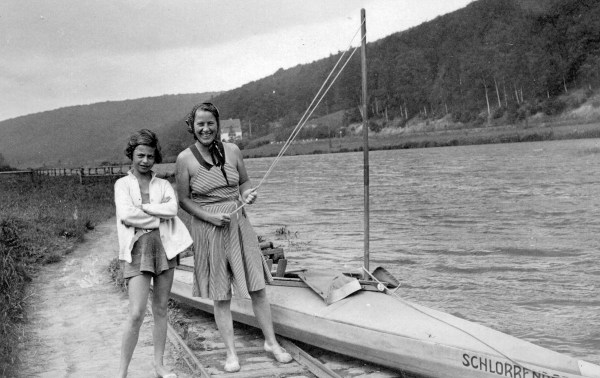
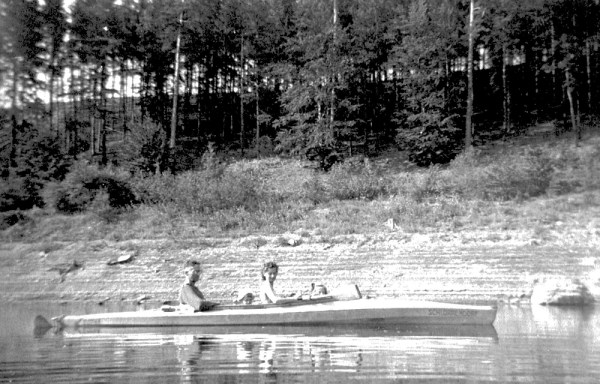
Saaldorf, Thuringia, Papa and his Family at the River Saale 1951

When content with the most primitive and essential camping gear, you can still enjoy nature at a very low cost. While living in the former German Democratic Republic under the control of the Soviet Union, my father-in-law and his family pulled a tent, camping utensils, and folding boat out of storage. They set up camp at the lovely meadows at the Saaldorf campground in Thuringia, near Gotha, Biene’s birthplace.