Walter Panknin (1898 – 1977) and His Family Ch7 Part 4

Walter Panknin’s Fight for Justice Part 1

Bit by bit, in an all-out power grab, the Nazis were taking control of the various institutions, such as the justice system, local and regional police forces, the banks, as well as the army, navy and air force. In a letter to the Minister of Interior Affairs in 1959, Walter Panknin wrote that membership in the NSDAP was mandatory for every police department in Germany. At a time when even foreign ministries initially recognized the legitimacy of the Nazi government, Papa Panknin was forced to join the party in 1934. However, he resisted joining the SS that all the higher-ranked officers were expected to become part of. Despite a barrage of threats and chicaneries, he steadfastly refused to become part of the infamous SS or to quit the Lutheran Church of Germany. Most officers in the armed and police forces had incredible advancements waiting for them, climbing up the rank ladder at a great speed, especially after the start of WW2. My father-in-law never moved any higher than his actual rank of captain during the entire war years. He had to take a punitive transfer to a battalion stationed in Croatia, which turned out as a blessing in disguise. (see chapter 3).

Herr Panknin described, while dealing with the federal and provincial government departments, his battles in army-like terms, his quest for justice. He fought a paper war on many fronts:  

  1. His right to fair and equal treatment as a former officer of the regular armed forces compared with officers of the former members of the SS of the same rank,
  2. Recognition of his refugee status C, which was denied because, as an anti-fascist, he had no reason to leave the Soviet-controlled Zone of East Germany as he was told,
  3. Entitlement to a Pension as a former officer or at least granting a meagre old age pension, 
  4. Compensation for the well-documented bicycle accident in the early 1930s (somewhat like the BC Workmen’s Compensation Board), which he was eligible to receive and did not get.
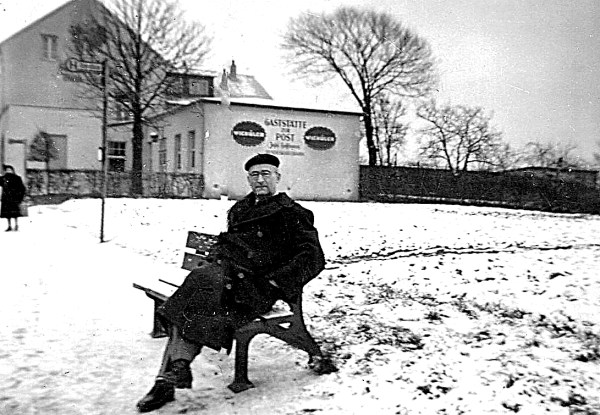
Papa Panknin

The reason why Papa Panknin and his family had so much trouble  finding justice in West Germany as a refugee from the former German Democratic Republic can be found in an article published by the German News Magazine ‘Der Spiegel.’

“Roughly 80 percent of the judges and prosecutors who had served Hitler’s regime of terror until May 8 were soon dispensing justice once again — but this time in the young Federal Republic. “Perhaps there is truly evidence,” wrote Nazi expert Jörg Friedrich, “that a constitutional state can stand on a judicial mass grave.”

In the misery of the postwar era, lawyers were urgently needed. Although the crime rate skyrocketed in the era of black markets and refugees, there was a shortage of judges to hear cases. To make up for the deficiencies, the occupiers of the western zones appointed judges who had retired before 1933, or they hired lawyers untainted with Nazi connections. Starting in October 1945, the British practiced the so-called “piggyback procedure” in the recently established judicial administration: For each judge without a Nazi past, one judge with former Nazi connections could be appointed. But, by the summer of 1946, even this restriction had been dropped.

To be continued …
Walter Panknin (1898 -1977) and His Family Ch7 Part 3

Papa Panknin’s Life in Review

Born and raised in Kalthof, West Prussia, steeped in the traditional work ethics of his time, Walter Panknin perceived his employment as a police officer as a contract between the state and the individual. The state offers the individual a permanent position with an income commensurate with his rank and the prospect of a pension providing security and a comfortable living for retirement. In return, the individual faithfully and honourably delivers a service to his country.

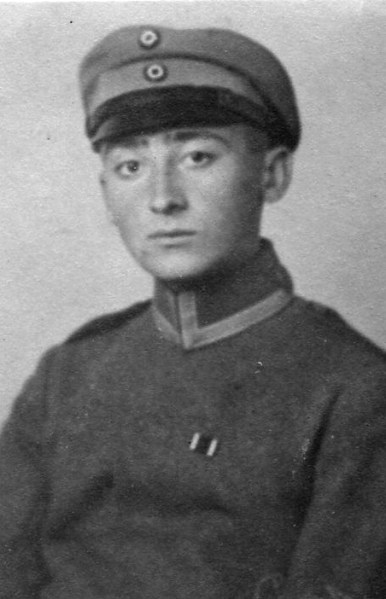
Walter Panknin 1918

In 1915, barely seventeen years old, Papa volunteered and served as a soldier in the Great War. When the German army was reduced to 100,000 men in 1919, he embarked on a career in the police force in North Rhine-Westphalia. His leadership qualities were soon recognized, and he moved quickly up the ranks, becoming a leader of a police detachment in a small town near Dortmund during the turbulent time of the Weimar Republic. One day, while riding his bike to work, he took a spill and fell to the ground. Unfortunately, as he landed on the cobblestone street, his service pistol went off and sent a bullet through his abdomen. At the hospital, the surgeon discovered that the shot had destroyed his left kidney. So Papa had to spend the rest of his life with only one kidney.

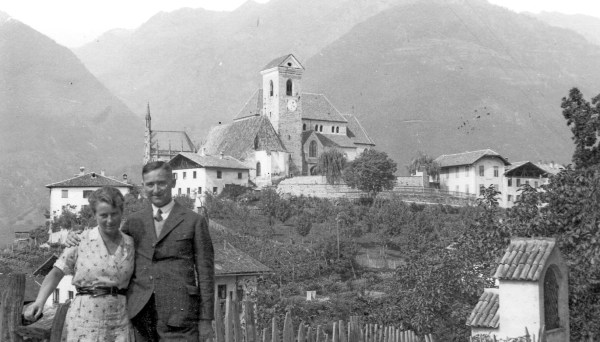
Walter and Elisabeth Pankin on their Honeymoon in Italy

The night before the Nazis seized power in 1933, rowdy Brownshirts (SA stormtroopers) terrorized the townspeople with their unruly behaviour in the streets. Walter Panknin, responsible for law and order, sent out the police force and had the troublemakers arrested. The very next day, a call came from the Nazi headquarters, demanding his immediate resignation. His career as a police officer would have ended if some influential friends had not put in a good word for him. That was his first brush with the new dictatorial regime.

Walter Panknin (1898 – 1977) and His Family Ch7 Part 2

Struggle for Justice

Biene described in vivid detail her mother’s exhausting trips by public transportation and on foot to the government offices in the bigger cities. With unwavering determination, she bypassed the lower-ranked officials. She gained access to the ministers of justice and social services, an incredible feat that only people familiar with the German bureaucracy can understand. In those days, there was no phone service for the general public, no emails, and no Internet search engines that we in the twenty-first century take for granted. With her tenacity and unshakeable resolve, she managed to open doors, scout for invaluable information and find assistance in the fight to recognize their refugee status and Papa Panknin’s pension claim.

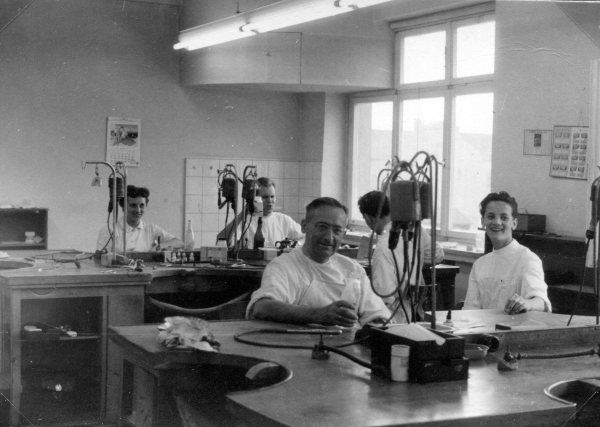
Walter Panknin at the Dental Lab 1957


To fully understand their situation, we need to go back to 1957. The Panknin family, like so many refugees from the Soviet-controlled eastern part of Germany (GDR – German Democratic Republic), lived in extreme poverty. My father-in-law, former captain of the police force and later commander of an army unit in former Yugoslavia, provided with his meagre income the cost of food and shelter for the family of four. He worked as a dental technician in a lab in a nearby city. What his wife had accomplished by blazing a trail and opening doors to influential politicians, Walter Panknin complemented her efforts by resorting to his powerful writing skills. Reading his elaborate correspondence with the movers and shakers of the government ministries of the West German province of Rhineland-Westphalia, I gained great insight into their struggle for justice. What really impressed me was how the couple worked together as a team. I also learned that despite the glitz and glamour of the economic boom (Wirtschaftswunder), there was something rotten in Germany.

Walter Panknin (1898 -1977) and His Family Ch6 Part 27

Papa’s Shocking Letter from Home

Biene wrote this post.

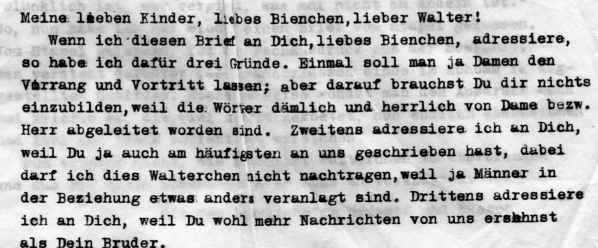
One day, we were all supposed to write a postcard home. I wrote a desperate plea to my parents to come and get me as soon as possible. A few days later, I received a letter from my father.  I eagerly opened this welcome message from home with joyful anticipation. But what my father wrote to me seemed to top off all the bullying I had endured. Instead of comforting words, my father wrote what he may have thought to be a witty  “dissertation.” He explained the linguistic origin of the German words ‘dämlich’ and ‘herrlich,’  roughly translated as ‘dumb’ and ‘masterful.’   Unfortunately, the allusions and fine points of his linguistic examinations are lost in translation.  There are no equivalents in the English language. He told me that the word “dumb” derives from the word “dame.”  On the other hand, “masterful” or “manly” originates from master or man,  and ‘Herrlich’  also has the connotation of wonderful or glorious.

Extract of Papa’s Letter in German (1956)

I could not finish reading my father’s letter because tears of shame and disappointment blinded my vision.  But miraculously, my pain was short-lived.  A supervisor approached me and told me I had a visitor waiting for me in the main office.  When we entered, there was my beloved mother!  It seemed like a miracle. She had made the long and costly trip by bus and train to see me against my father’s advice. I was overjoyed.  We spent the beautiful afternoon together walking in the forest and talking.  I unburdened my heart, and she listened with empathy.   When evening approached, she gave me the choice of going back home with her or staying for the remainder of the vacation.

One thing my father’s letter had accomplished. It stirred up my pride and courage. I was going to show him that I was not that ‘dumb’  weak ‘dame’  intimidated by the ‘wonderful masters.’ I would not give him the satisfaction of proving his point. I decided to stay.I enjoyed the remainder of my time at the youth camp. I learned to ignore verbal assaults and not take them personally. I avoided playing unsupervised games with rough boys and sought out the company of friendly girls.  I also noticed that the supervisors intervened more readily when they saw inappropriate behaviours. Maybe due to my mother’s visit, they were more vigilant.

Summer camp, in many respects, was a great learning experience for me and made me stronger. Thanks to my mother’s love, I felt happy and relieved that I did not quit or give in to fears and feelings of insecurity.  In retrospect, I also appreciate my father’s words.  Although it was not so obvious,  he acted out of concern for me.  He knew that by taunting me, I would rise to the challenge.   In his words, I learned to  ‘master’ my fears.

Walter Panknin (1898 – 1977) and His Family Ch6 Part 12

Long Walks with Papa

Biene wrote this post.

Located near Essen is the beautiful lake Baldeney, a dammed reservoir of the Ruhr River.  It was the destination of one of our first family excursions on a sunny spring day.  It would become our favourite recreation spot.  Lake Baldeney has personal significance for me because it changed my life forever.  But I won’t get ahead of myself.

My dad, who loved nature and, above all, water sports, was delighted to have this jewel of a lake in our vicinity.   It would still take some effort to travel there by bus, but these outings were recreational highlights and brightened our otherwise drab existence in the Old House.

 My dad and I walked approximately 16 km distance through forests and fields a few times.  I felt very proud to keep up with my dad on these long hikes.  My brother, who was not fond of swimming in cold water and hated exertion, seldom accompanied us.

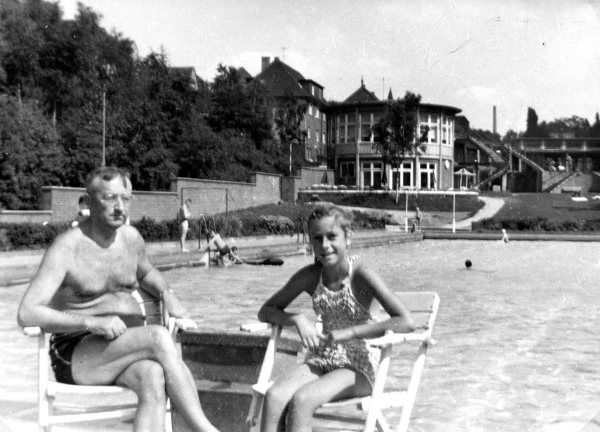
Papa Panknin and his Daughter Biene

My dad and I would often daydream about the future on those hikes.  We envision a beautiful home built on a hill surrounded by forests and overlooking a big lake.  Far, in the end, this dream would come true for me at the Arrow Lakes in Canada.  On his last visit to Canada before his death, my father experienced the fulfilment of our vision for a short time with us.

The first time we walked barefoot at the shore of Lake Baldeney, we were puzzled that our feet were sooty black even after a swim in the clear water.  At that time, the coal industry was still in total production, and there was heavy pollution around Essen.   As seen in these pictures, blue skies were rare in my childhood, but I appreciated it when we had them.

Walter Panknin (1898 – 1977) and His Family Ch6 Part 9

Finally Regular School Again

Biene wrote this post.

When I woke up from a deep sleep the following day, I could see through the big window that a clean blanket of snow had covered the drabness of the yard outside the Old House of Rocky Docky.  My father had heard the famous song on the radio and aptly applied it to our new abode.  It would always cheer us up to listen to our “theme song,”  We would sing it with gusto to make the old house rock.

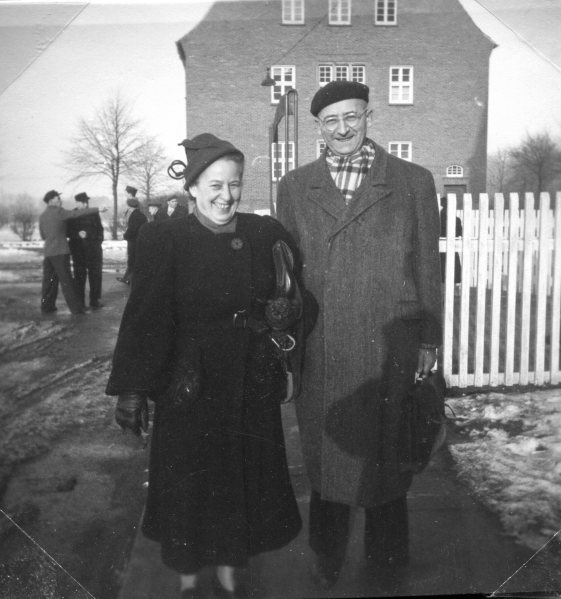
Walter and Elisabeth Panknin smile at the prospect of having their own apartment soon.

The bright morning sun made the snow crystals sparkle and dance; Despite the first signs of spring earlier, winter was not over yet. My parents were already dressed to go out. My mother told us that the manager of the refugee shelter had allocated them some funds to buy household items, utensils and other necessary equipment for everyday living. Our mother told us that before she would go shopping, she would enroll us in the nearby school called Elementary School at the Tree.   Since we had missed classes for more than a month in the transition camp in Massen,  we were looking forward to regular school life again.