The Peter and Gertrud Klopp Family Reunion August 2014

Our Family Gathering at Taite Creek

Chart I – III, IV & V

Our son Richard and our two little granddaughters Azure and Emeline  are coming for a visit this coming Monday. Then I will depart from my weekly blogging routine and dedicate all posts to our visitors. I will give short reports about their daily activities with lots of pictures to boot. My wife and I are looking forward to seeing our loved ones, who are coming all the way from Montreal. Stefan, our youngest son, will be joining them, and perhaps Michael and Angie, if they can get away from their busy work schedule. The last time we were together, we had a big family reunion at Taite Creek Campsite close to the beach of the beautiful Arrow Lake. So before our guests arrive, I thought it would be a good idea to post a few pictures of our wonderful family from last August.

 Fun at the Beach and in the Water

 After the Games – Time to Eat

At our family reunion in August 2014 the entire Peter and Gertrud Klopp family was present. At the first picture in the top gallery, the family members from left to right are Michael and his wife Angie, Richard and Youki with Emeline on the arm and Azure standing, Mateo, Robert, Biene (Gertrud), Peter (myself) and Stefan, thirteen people in all.

Chapter XI of the P. and G. Klopp Story – Part I

 Until one has loved an animal, a part of one’s soul remains unawakened.
Anatole France

 Adventures Above and Below the City of Wesel

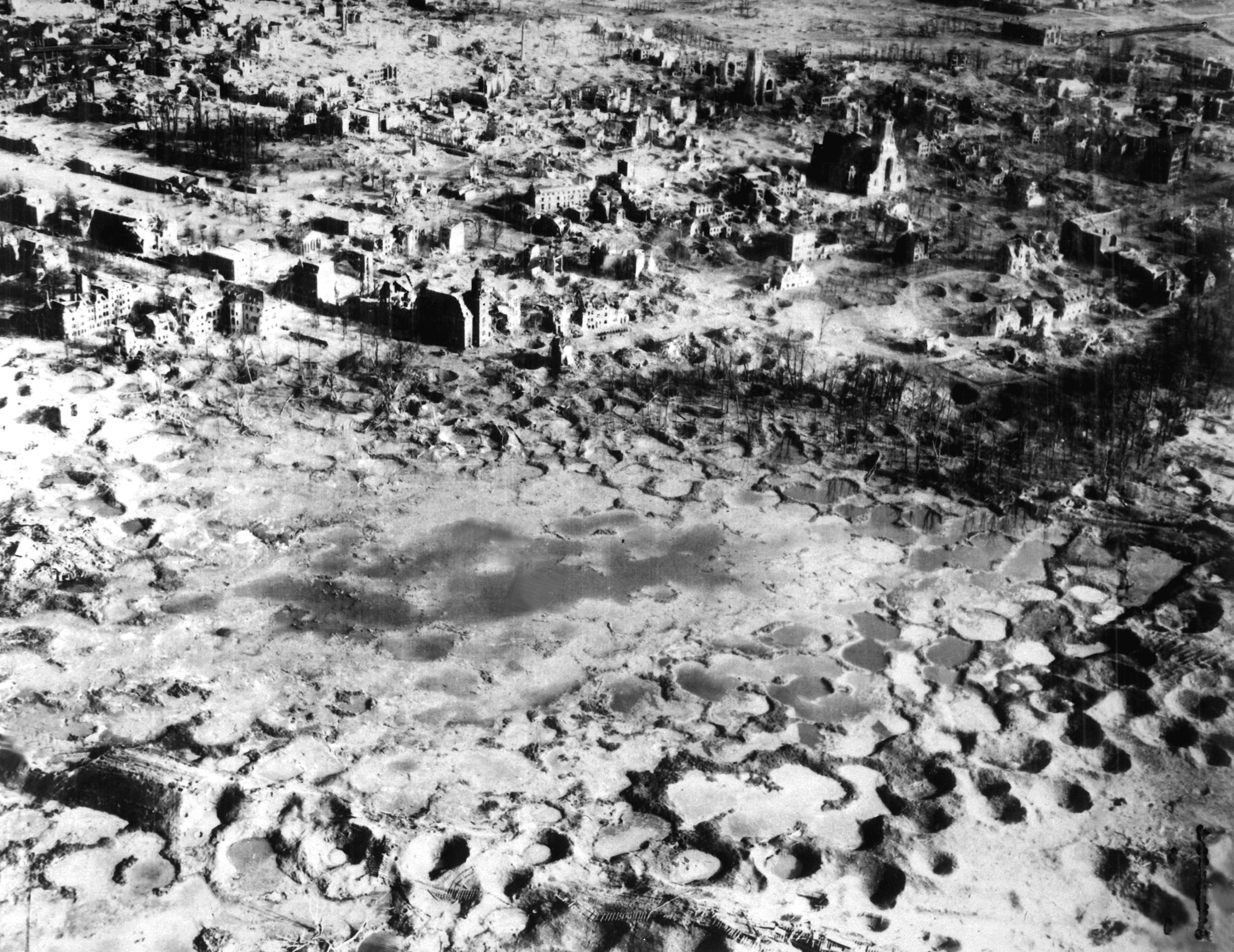
In 1956, the same year my brother Gerhard (Gerry) immigrated to Canada, Mutter, Aunt Mieze and I moved into our brand-new apartment near the center of the city of Wesel. Just a little over a decade after the war, the city lay still to a large part in ruins. Reconstruction was in full swing. Looking from my bedroom window I had an unobstructed view of a three km stretch with no houses standing all the way to the railroad station.

Walls of houses of Wesel still stand, as do the churches, but a great part of the town was destroyed when the German commander forced the Allied troops to fight their way street by street through the ruins.  Germany, 1945.  Army.  (OWI) Exact Date Shot Unknown NARA FILE #:  208-N-39903 WAR & CONFLICT BOOK #:  1336

Wesel after Allied Bombing Raids in March 1945 – Photo Credit: wikipedia.org

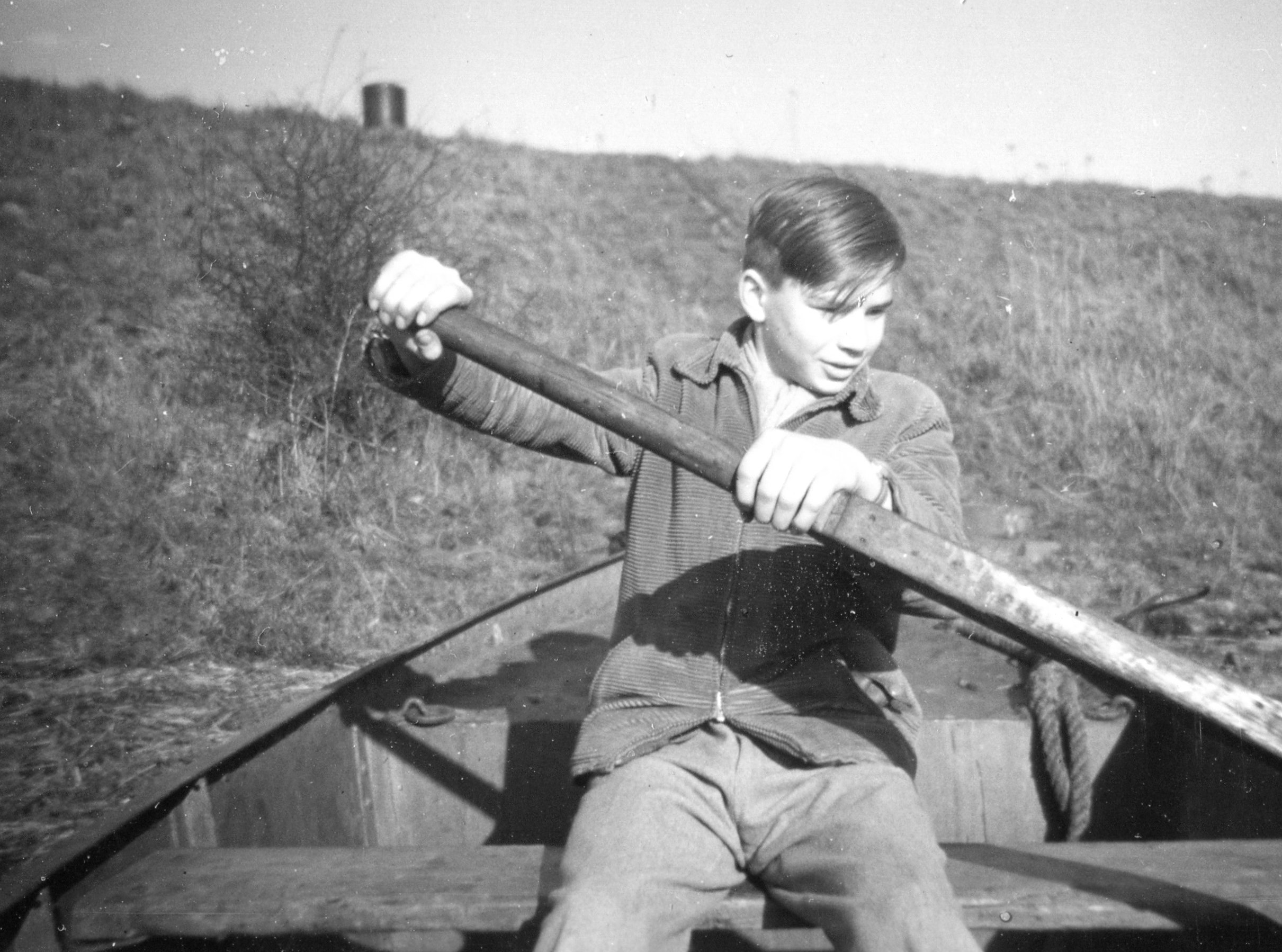
Of course, from a boy’s perspective, the city was an exciting place waiting to be explored. With my friend Hartmut I went on adventurous exploration into the huge bombed-out area not far from the street with the melodious-sounding name Auf dem Dudel, where I lived. Not finding much in the rubble that had been picked clean long time ago, we felt the magnetic pull of the few houses, which had been declared unsafe by the authorities. There were warning and ‘no trespassing’ signs. Did curious teenagers ever heed such notices? Hartmut and I found a window at the back that the city workers had forgotten to board up. Assisting each other we gained quick access to the interior of the house that had miraculously escaped total destruction from the Allied carpet-bombing raid a decade ago. We climbed up a fancy wooden staircase to explore the upper rooms. From the ornamental engraving and carving of the railing and the decorative oak panels on the walls we knew we had entered a small mansion. Eagerly we scurried from room to room in search of some treasure that the owner might have left behind. To our greatest disappointment the rooms were bare and the floors had been swept clean. Only the old-fashioned flowery wallpaper offered a hint that this little mansion had seen better days. To get at least one benefit out of our discovery, we decided to come back and turn one room into the headquarters of our secret society that we soon formed under the mysterious name “The Black Hand”. Unfortunately on the following excursion, we made the sad discovery that the only remaining opening into our hiding place had been properly nailed shut.

Friend Hartmut on the River Rhine at Wesel

Friend Hartmut on the River Rhine at Wesel

At the outskirts of the city there was a brand new sewage treatment plant. Construction workers were still busy installing underground concrete pipes more than two meters in diameter. A few weeks before the town sewage and drainage system was to be connected to the new facility, Hartmut and I came across an open manhole, which led down via an iron ladder to one of the underground tunnels. Our plan was to come back the next day with flashlights and to embark on a new adventure underneath the city of Wesel. The following afternoon we descended into what seemed to our excited imagination Minotaur’s labyrinth. Fear of the unknown and the desire to prove our courage heightened the excitement. Iron rung by iron rung we lowered ourselves into the municipal underworld, where three giant pipes joined to form a Y-connection. We decided to follow the larger pipe that led away from the city. It was eerie to walk through the dark passageway, where the feeble flashlights could not reach farther than a few meters. The echo of our steps reverberated a million times from the smooth concrete walls. We did not dare to speak, for we were afraid of our own hollow sounding voices. Every ten minutes or so we encountered a shaft leading up to a manhole. But they were all securely closed and the metal lid would have been too heavy for us to lift. With some trepidation we realized that we had to return to the manhole we had just climbed through, if we wanted to get out of this gloomy environment. We were just about ready to turn around, when I saw a faint circular light. It was the proverbial light at the end of the tunnel. It gave us hope to escape a little sooner from this frightening darkness, since our flashlights were already beginning to fade. We were moving faster now toward the exit. Soon we were close enough to hear the grinding noises and then we felt the vibrations from heavy machines. Just then a crane was lowering another pipe section into place, when the foreman of the work crew spotted us emerging from the darkness into the broad daylight.

“What the hell are you little devils doing down there? Get out of there this very minute! I want to talk to you.” Seeing the man seething with anger and hearing the verbal abuse that came raining down upon us, we stood there stunned and paralyzed for a short while as if glued to the edge of the pipe. But when he threatened to call the police, we regained our mobility. We quickly turned around and rushed back into the safety of the underworld that just a moment ago we were so eager to escape from. With the flashlight flickering and threatening to go out completely we raced back without granting ourselves a single break fearing all the time that the foreman had sent his work crew to catch us. The two or three kilometers seemed endless, but all of sudden we had reached, huffing and puffing, the Y-section, where our adventure had begun. Except for our heavy breathing no footsteps from the other end could be heard. The light from the open manhole above signaled that we were safe. We were totally exhausted from the run, but very happy to see the light of day again.

Chapter X of the P. and G. Klopp Story – Part III

Creative Use of Margarine Cards and Early Insights into Marital Spats

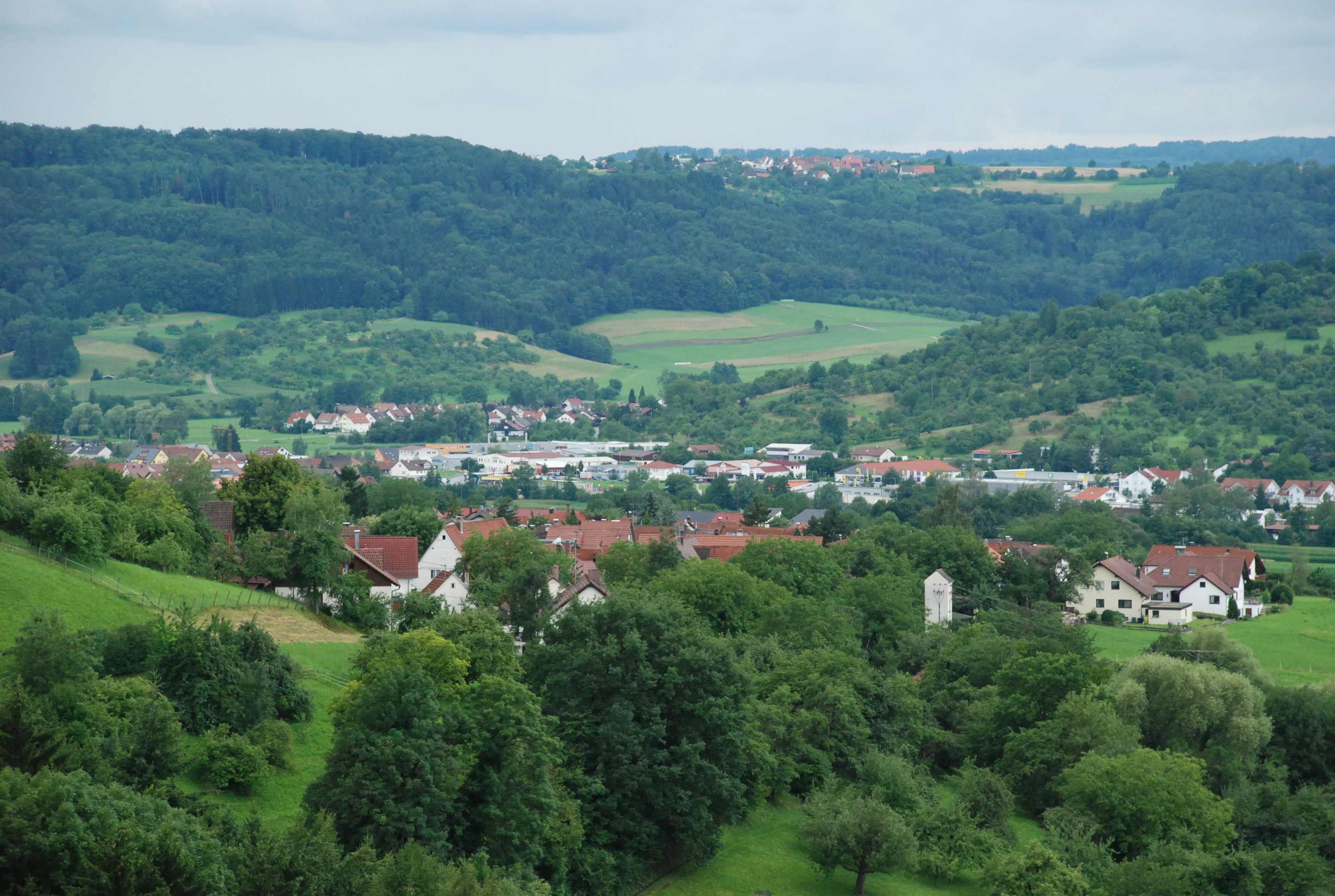
When Mother had a day off, we were able to do things together. What I liked the most was to go with her on hikes through the wooded hill country surrounding the town. At the end of a two- or three-hour leisurely walk along the highways that were not plagued too much by traffic, we always found a cozy roadside inn, where we dropped in for some refreshment and relaxation. Mother would order a cup of coffee for herself and for me a glass of mineral water or some homemade apple juice. On one occasion the innkeeper, who was running a small farm on the side, was too busy to stay with us being the only guests. So Mother and I spent the afternoon alone in the guest room and watched a movie on the small b/w TV screen. This was the very first time that I watched TV. I was thrilled getting acquainted with the new media that was just beginning to conquer the German entertainment market. The film most likely boring by today’s standards caught my immediate interest with its simple but captivating story about an immigrant from Europe who was on death row in an US state prison. He asked for and was granted permission to write letters to his aging mother in the Old Country. Within two weeks he wrote more than a hundred post-dated letters describing his imaginary tale about his proud achievements leading him from rags to riches in the New World. After his execution a prison guard with a heart sent off a letter every few months to his mother. A sad, but compelling story I remember vividly to this day.
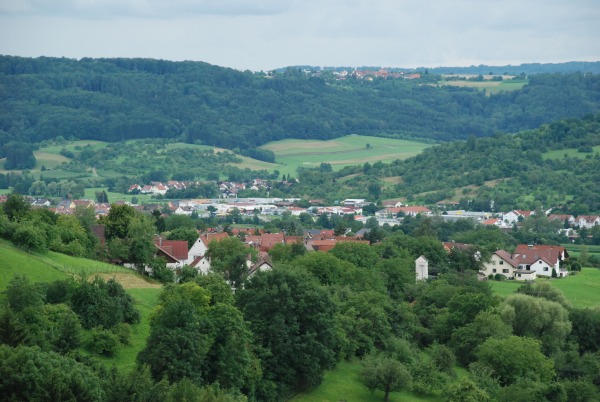
Rudersberg - Photo Credit: weather-forecast.com

Rudersberg – Photo Credit: weather-forecast.com

On the few rainy days, when we could not go on our beloved hikes, we stayed in Mother’s room and played her particular variation to the German card game ‘Six-and-Sixty’ with a double-deck of cards, which allowed us to unite in ‘marriage’ lots of queens and kings. Each marriage resulted in twenty more points than the marriage before. On these occasions Mother inspired by a glass of local wine or a satisfying victory in the card game would talk about her life in Pomerania, both sad and humorous stories. At times she would back to her childhood years in Grünewald. Proudly she told me that what she enjoyed the most. She liked horsing around and roughhousing with her brothers, which, although not becoming for a girl, was very much respected by her older brothers. Curiously she did not talk much about Father, nor did I ask any questions about him. I lived in the present; the future and the past did not yet have any meaning for me.

Back in Brünen, where the excellent food from the Wefelnberg country kitchen did miracles to the still slightly undernourished pre-teenage body of mine. In no time I gained enough weight so that I suddenly appeared quite chubby, perhaps even a little stout. There are no photos of the time, but I remember distinctly that I easily won wrestling matches with boys of my age by simply pinning them to the ground on account of my sheer weight.
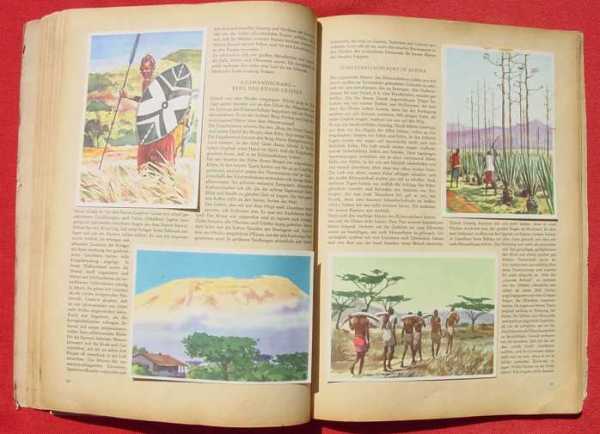
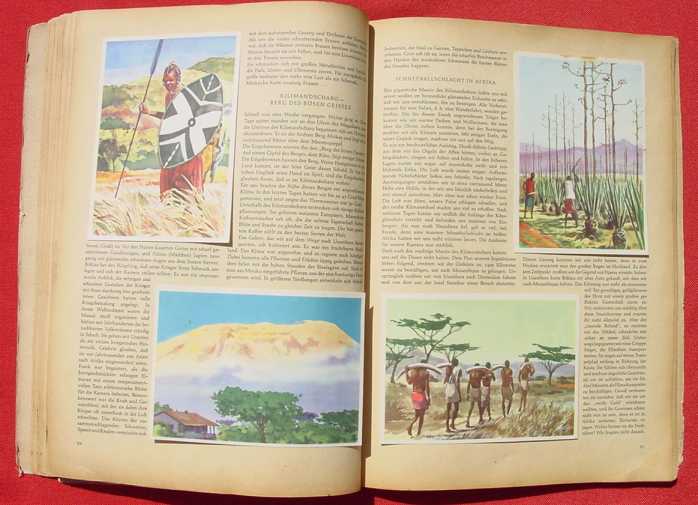
Sanella Album of Africa - Photo Credit: delcampe.net

Sanella Album of Africa – Photo Credit: delcampe.net

Butter was still expensive in the mid-fifties. Many households therefore were using margarine made of vegetable oil as an alternative to butter. One of the major margarine manufacturers added picture cards in the size of a standard 4 by 6 in. photo to their packaging and encouraged customers through their advertising to collect them and eventually paste them into booklets available from the company for a small fee. These booklets contained text and additional drawings, maps and illustrations for the cards and when completed represented a veritable treasure trove in the geography of Germany and other countries. I eagerly collected these cards. Frau Welfelnberg made sure that I would get them, when she opened another margarine package. Since there were many doubles, I traded them like stamps with many like-minded friends in the neighborhood. Since I had no money to order the corresponding booklets, I sorted them by themes of my own creation and glued them together to make a roll of forty to fifty pictures. Out of a sturdy cardboard box I fashioned a miniature stage. I cut out a rectangle roughly the size of one picture, inserted a round wooden peg on the right side of the box to serve as a pick-up spool for the roll of colorful images that would slip through the rectangular viewing area one picture at a time.

Now it was time to invite all my friends together with their younger brothers and sisters for the show that would take place in the natural theater of the backyard. The children sat on the lawn, while I presented the pictures very close to them on a small table taken out of the house for the performance. I invented the accompanying story and presented it extemporaneously in the form of a travelogue. The slide presentation became an instant success. The spectators not yet spoiled by children’s TV shows wanted to see more episodes. To help me they gathered as many picture cards they could scrounge up at home. What a creative way on the part of the Sanella margarine company to get people to buy their product!

One evening, while I lay on my bed that was wedged between the walls of my tiny bedroom, I overheard a conversation between the young miller and his wife, whose names I have completely forgotten. I witnessed a most peculiar spat between husband and wife behind the wall that separated their bedroom from mine.

Wife: How do like my new dress?

Husband: It looks beautiful on you.

Wife: Don’t you think it is VERY beautiful?

Husband: It is beautiful, indeed.

Wife: Now, now, you must admit that it is VERY beautiful.

Husband: There is nothing to admit here. It is my honest opinion that the dress is beautiful.

Wife: But you must see that my dress, the dress I bought with my own money, is VERY beautiful.

Husband: Whether you or I paid for it has nothing to do with its beauty. That’s illogical, my dear!

Wife: Leave me alone with your logic. Don’t you want me to look VERY beautiful?

Husband: Indeed, indeed! I want to …

Wife: So then, why don’t you say that the dress looks VERY beautiful on me?

Husband: Because there is a difference between beautiful and very beautiful.

Wife: So what you’re saying is that I look less than very beautiful. Why don’t you come right out and say I look VERY ugly in my new dress.

The conversation went on for a long time and became more and more animated and vociferous, but suddenly and rather abruptly ended with the wife sobbing quite miserably and with the husband deciding that it would be wiser to add no more fuel to the heated argument. It was time for the couple to make peace. A few minutes later the not so quiet springs of the marital mattress announced that love had overcome their verbal sparring. I had often pondered about the meaning of this curious episode.

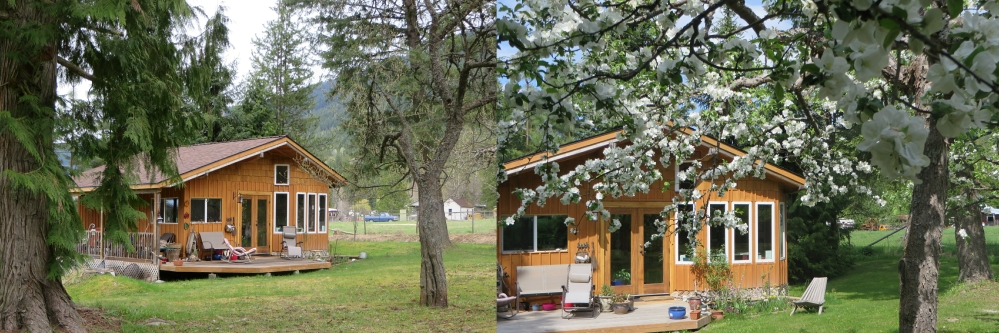
Four Seasons Journey Through Our Yard – Part III

Four Weeks Later – What a Difference!

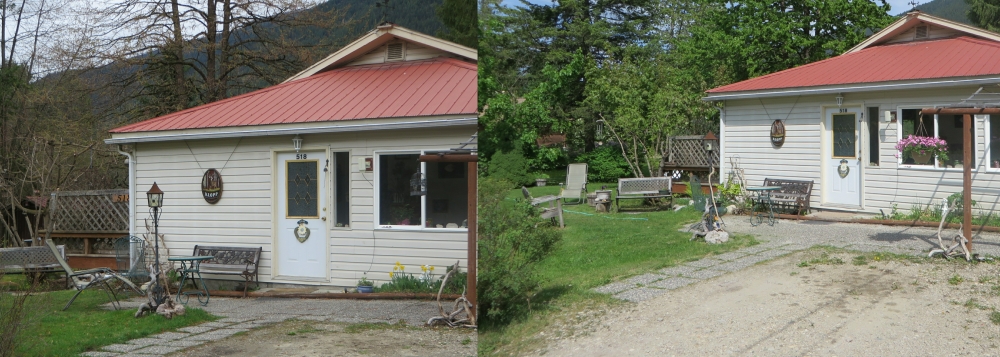
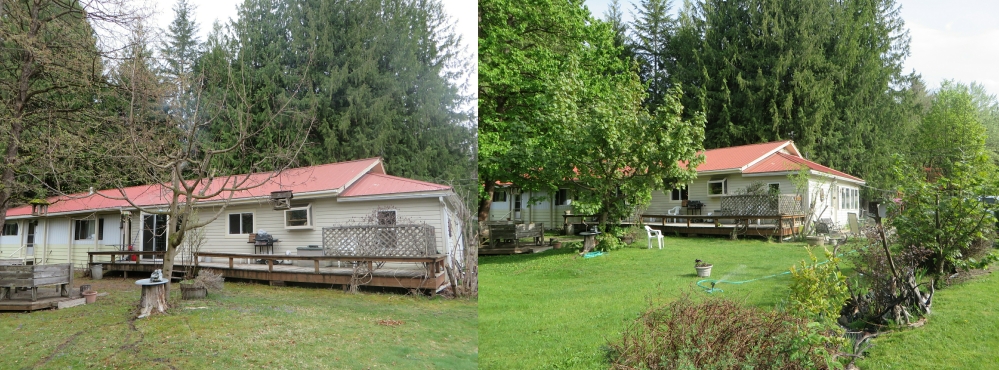
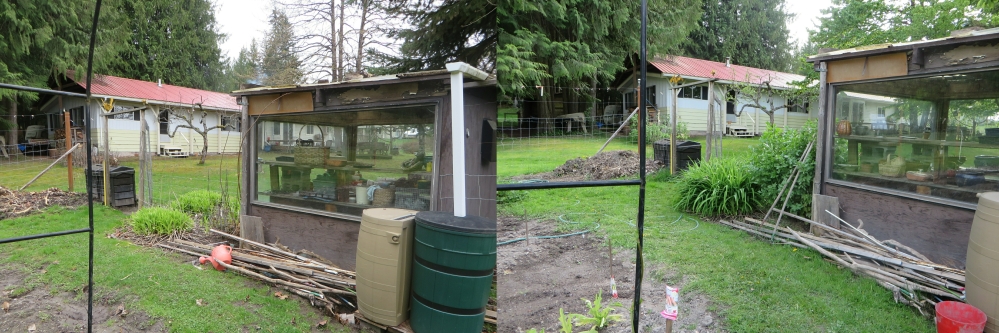
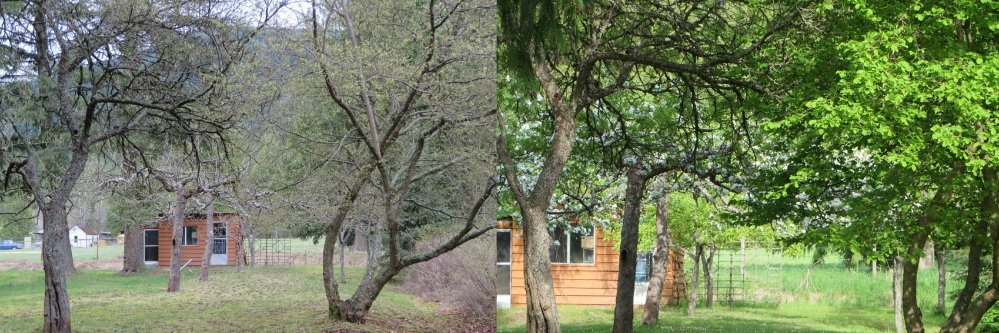
You may wish to go back to the previous post that showed the difference of two weeks. What the pictures show below is the contrast between April 12 and May 12 in our yard. The next comparison will happen in a month, when we will be approaching the beginning of summer here in Fauquier, British Columbia.

set 1set 2set 4set 3set 5

On the very last picture you can see the blossoms of the Grafenstein apple trees, which we will harvest in September. They produce the biggest and sweetest apples in the Kootenays. The only drawback is that they don’t keep too long. If all goes well with the weather this year, we will have a bumper crop.

Heart Creek Culvert in Fauquier Soon to be Replaced by a Bridge

Fish Enhancement Project on Heart Creek in Fauquier Gets Go-ahead

by Jan McMurray

Reprinted with kind permission by http://www.valleyvoice.ca

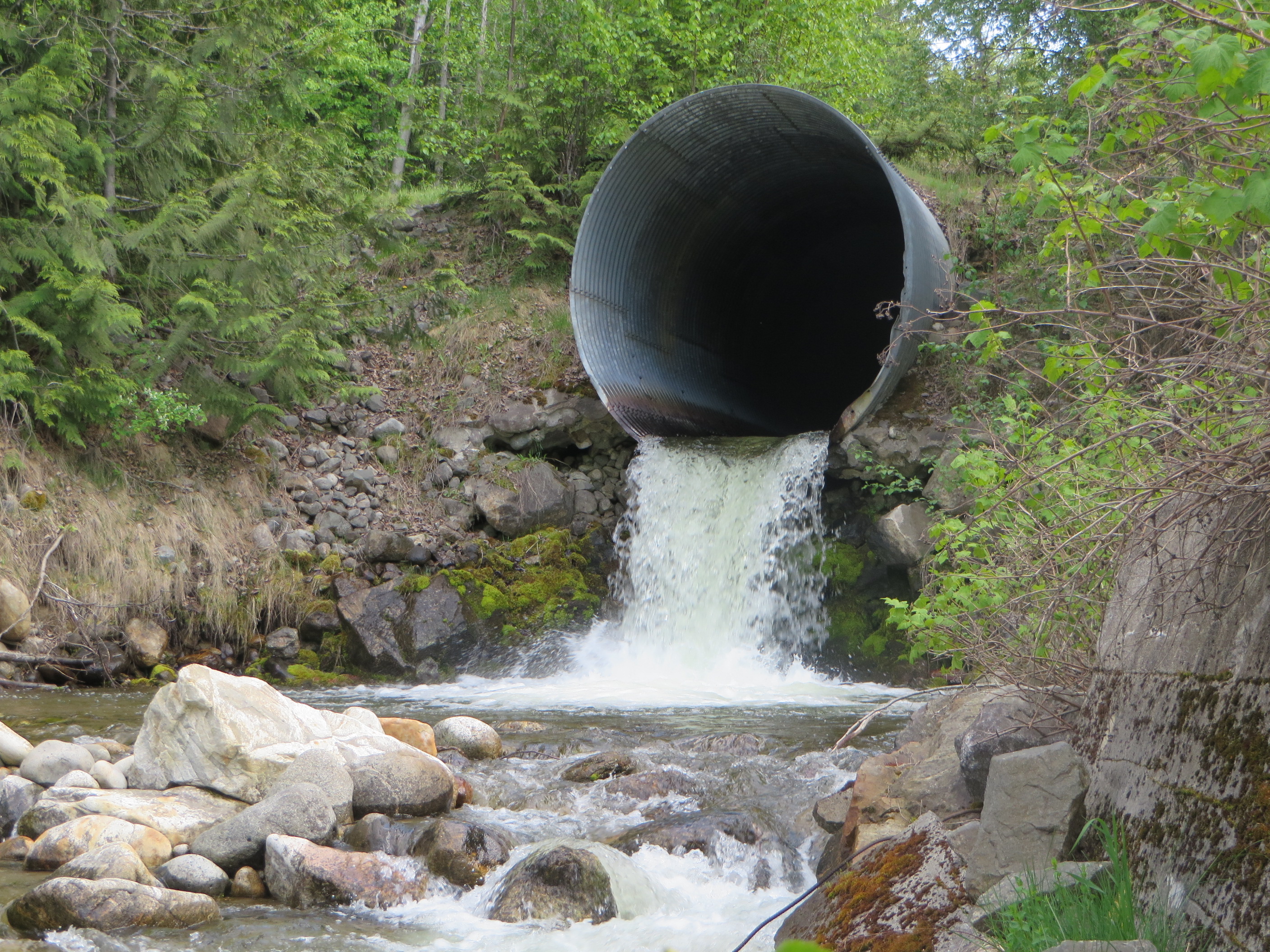
A project to eliminate a fish barrier at the mouth of Heart Creek in Fauquier is a go for this year. A large culvert will he replaced with a bridge, hopefully by the end of October.

Photo of Heart Creek Culvert on Highway 6 by Peter Klopp

Photo of Heart Creek Culvert on Highway 6 by Peter Klopp

“The fish want to go up that stream to spawn, but that culvert must be a six-foot jump,” said Hank Scown, president of the Nakusp Rod and Gun Club. “It’s an impossible height for those fish to leap up and get into the culvert.”

The Ministry of Transportation has partnered with the Nakusp Rod and Gun Club, the Fish and Wildlife Compensation Program, and the Department of Fisheries and Oceans through its Recreational Fisheries Conservation Partnership Program, to fund the project.

Scown says there are kokanee, Rainbow trout, and probably Dolly Varden that will spawn in Heart Creek once the culvert is replaced. “Every fish that spawns means potentially many fertilized eggs and more fish that enter the Arrow Lakes,” he said.

Phase two of the project, which Scown says will happen in the “not too distant future,” will see the removal of a second culvert further upstream, opening up an additional 1.2 kilometres of stream habitat for fish.’s

Scown says that if this project proves to be beneficial to fish, “perhaps other systems along the Arrow can be assisted in a similar way. If a creek can naturally produce fish, we should be allowing that to happen.”

He points out that human beings like to manage nature, but it’s been shown over and over that we can’t. “All spawning channels have proven that,” he said. “When things go bad, all your eggs are in one basket.”

Scown said the Nakusp Rod and Gun Club has been wanting to do something about the fish barriers on Heart Creek for a long time. He believes the culverts were installed back in the late 1960’s, when the highway was realigned to accommodate the flooding of the Arrow Lakes and the construction of the High Arrow Dam at Castlegar.

Let us hope that the Fish Enhancement Project will become reality at the Heart Creek in Fauquier, BC.