Chapter XV of the P. and G. Klopp Story – Part 1

Chess, War Games and Birthday Parties

“When you see a good move, look for a better one”
Emanuel Lasker

Since Father had taught me to play chess, the royal game, as he called it, I took every opportunity to challenge my friends and classmates to hone my thinking skills. What I liked about it was that its outcome did not depend on luck. As a matter of fact, the game was for me like a metaphor for life containing all the ingredients necessary for success, such as planning ahead, anticipating good and bad situations, making decisions, keeping a solid grip on your emotions, distinguishing between a real mistake and a bait or trap, being gracious and humble in victory and defeat. The chess literature offers a plethora of anecdotes making fun of the foibles of human nature among chess players, especially among those suffering from an excessive amount of vainglory and self-importance. One character can be added to this list in the following true story.
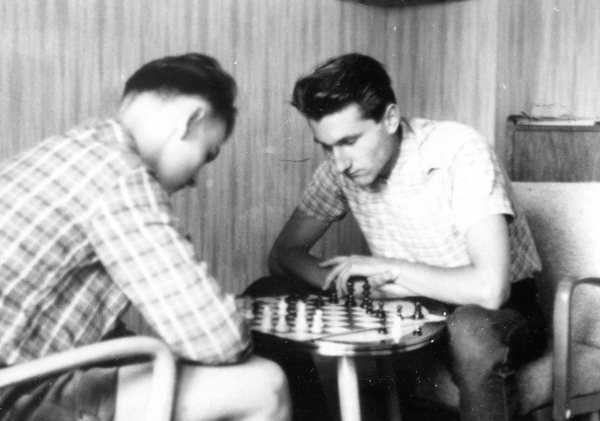
Peter with Spiked Haircut Playing Chess with a Friend

Peter with Spiked Haircut Playing Chess with a Friend

Whether ancient languages, mathematics, physics were the subjects, or playing classical guitar or practically anything else Hans took on, he excelled and was superior to anyone around him during the nine years I happened to know him. Being so good in everything, he could afford to be humble. But when I had beaten him in chess three times in a row, his reaction was definitely not a modest, humble acknowledgement of defeat. He exploded, “I cannot understand how somebody as dumb as you can beat me in chess!” I was so content with my victory over the genius of the Wesel High School that I was not even insulted. Actually I took his disparaging words as a compliment.
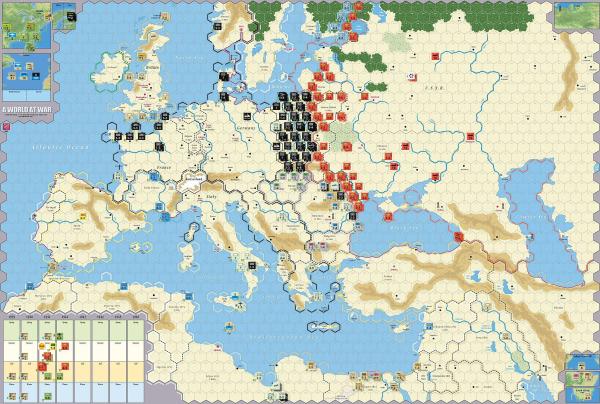
Typical Commercial WW2 Board Game - Photo Credit: warplanner.com

Typical Commercial WWII Board Game – Photo Credit: warplanner.com

The chessboard is like a miniature battlefield except that the opposing armies are at the beginning identical in position, numbers, and strength. But with trillions of possible moves for the average game of thirty moves and counter-moves, the scales begin to tip in favor of the player who has the superior strategy and avoids making mistakes. Somehow it was this combative game that inspired me to create my own war game for four players. From chess I learned that a good game should not depend on luck, on the roll of dice, or cards pulled randomly from a stack. In the final version that would take three to four hours to play, transport vessels and battle ships, tanks, trucks and soldiers had their own movement and attack properties, very much like pawns, bishops, knights, rooks, queen and king in the chess game. On a large piece of  cardboard I had drawn a giant grid of 600 squares, on which I placed the four countries with their respective capitals around the inner sea in a perfectly symmetrical fashion. The successful occupation of a capital by any enemy piece would be equivalent to checkmate with one particular twist: all the lands, islands, the wealth of resources, war material and money would become immediate property of the player who captured the capital. Reflecting realistically the pattern of conquest throughout the history of mankind, the game had to include precious resources not available at the beginning within the borders of the four countries. Gold, iron, and other vital ores were located on the islands at the center of the ocean. To access any of the islands, the player would have to send his transport ships and occupy them. So war was inevitable. Each player depended on the resources to manufacture weapons or to turn them into money whose value fluctuated with the growth or decline of the island possessions. Add to this the player’s ability to form alliances, to make treaties, or arrange secret deals under the table, and we had an exciting game that was in its simplicity of rules and in complexity of scenarios years ahead of the commercial war games, such as ‘Rommel in the Desert’, ‘Eastern Front’, ‘The Battle of the Bulge’, and many others.
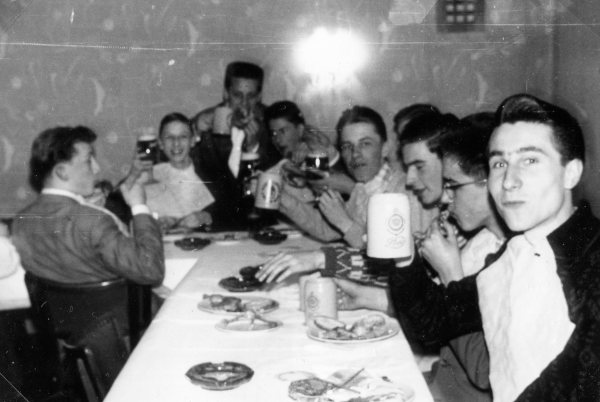
Year End School Party with Classmates

Year End School Party: Peter with raised Stein on the Right

As for me, the inventor of the game, I had the distinct advantage of knowing how to deploy the army and navy units most effectively. So it was no surprise that for most games I emerged victorious either as an ally with a willing partner or daringly going forth all alone. One day I arrived a little late for our weekly war game at Rainer’s place. I immediately sensed that my three friends had come to some sort of agreement to form an alliance against me that was supposed to hold at least until I was defeated and eliminated from the game. I saw my suspicion confirmed, when the two players whose countries were adjacent to mine almost immediately prepared an attack with their ground troops at the two borders, while the third player was directing his naval fleet towards my favorite island amounting to a declaration of war. It was plain to see that Hans, Rainer and Klaus had prearranged this maneuver, because the ships were loaded to their maximum carrying capacity with tanks and trucks, while the borders remained virtually unprotected. Never before had I been in such a precarious scenario, in which I had been outnumbered three to one in a war against all three playing partners. Once the enemy forces would have occupied the islands and cheap production of more war material would have begun, the odds would even be worse. I had to act swiftly and decisively. I suspected that Hans had devised this Machiavellian scheme, since in the past he had always been at the losing end of the stick. Although he amassed his troops at my border, he merely engaged in minor skirmishes. He was obviously hoping that the major battles would be fought by his allies who near the end would be so worn-out that all he would have to do was to let his units undiminished in strength and number march into the poorly defended capitals and taste effortlessly the sweet glory of victory. To his dismay I concentrated most of my forces at his border and forced him into battle. While his allies were making good progress facing only token resistance at land and at sea, Hans suffered heavy losses against an experienced general and began to grumble against his allies. When I cheerfully encouraged Rainer to capture my undefended capital, he was convinced that he had been double-crossed. Although their unexpected success was due to my strategy, he called them traitors and hurled undeserved and unmentionable expletives at their faces. No longer able to control his temper he swept the playing pieces off the game board. Thus, I managed to escape the humiliation of certain defeat at the hands of my three friends and enjoyed the honor of the details of this particular game being discussed by my friends for a long time afterwards.
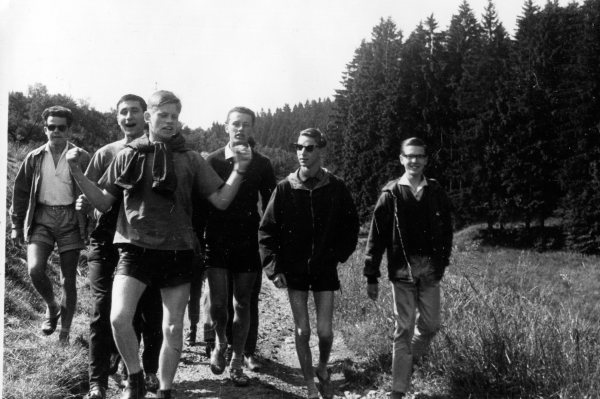
Happy Times: Class on a Hiking Field Trip

Rare Happy School Moments: Class on a Hiking Field Trip
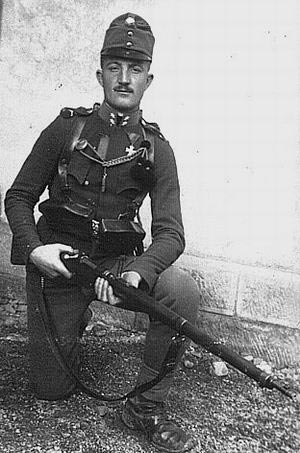
Friedrich Otto Karl Klopp (1878-1957) – Part I

Participant in the Boxer Rebellion (Chart I – II)

To see the Klopp family tree, click here.

Karl, the third child of Friedrich and Emma Klopp (my grandparents), was born in Jersleben on March 25, 1878. From 1884 to 1892 he attended the elementary school in Wolmirstedt and after that was apprentice and then journeyman at the number of dairies.  Until 1898 he was employed in Ebersberg, Bavaria. From there he was drafted as a recruit on October 14, 1898 into the third company of the First Rifle battalion in Straubing. A year later he was promoted to the rank of Oberjäger (corporal).

Typical Rifle Soldier - Photo Credit: guns.com

Rifle Soldier – Photo Credit: guns.com

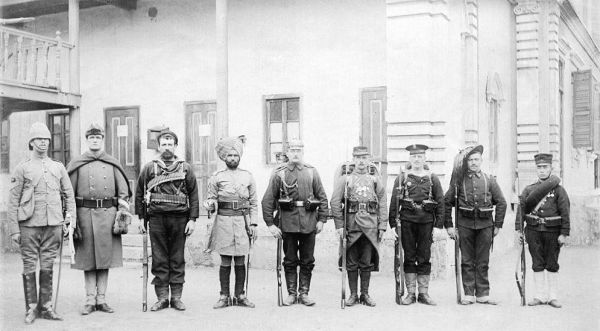
From July 1900 he belonged to the allied armed forces whose task was to quell the so-called Boxer Rebellion in China. As this part of imperialistic history may not be known to many readers of my blog, until myself included, I digress from the narrative of Karl’s adventurous year in China with the following excerpt from wikipedia.org.

Solders of the Eight Nation Alliance - Photo Credit: warfarehistorian.blogspot.com

Eight Nation Alliance – Photo Credit: warfarehistorian.blogspot.com

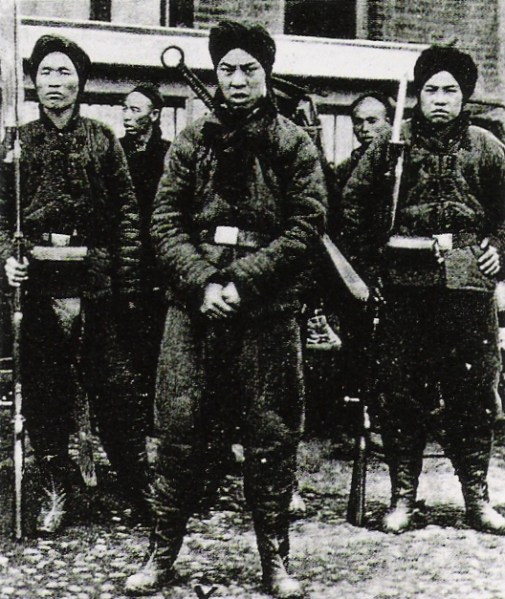
The Boxer Rebellion, Boxer Uprising or Yihetuan Movement was an anti-imperialist uprising which took place in China towards the end of the Qing dynasty between 1899 and 1901. It was initiated by the Militia United in Righteousness (Yihetuan), known in English as the “Boxers”, and was motivated by proto-nationalist sentiments and opposition to foreign imperialism and associated Christian missionary activity. The Great Powers intervened and defeated the Chinese forces.

'Boxer' Soldiers - Photo Credit: wikipedia

‘Boxers’  believed to be invincible.- Photo Credit: wikipedia

The uprising took place against a background of severe drought and the disruption caused by the growth of foreign spheres of influence. After several months of growing violence against the foreign and Christian presence in Shabdong and the North China plain, in June 1900, Boxer fighters, convinced they were invulnerable to foreign weapons, converged on Bejing with the slogan “Support Qing government and exterminate the foreigners.” Foreigners and Chinese Christians sought refuge in the Legation Quarter. In response to reports of an armed invasion to lift the siege, the initially hesitant Empress Dowager Cixi supported the Boxers and on June 21 declared war on the foreign powers. Diplomats, foreign civilians and soldiers as well as Chinese Christians in the Legation Quarter were placed under siege by the Imperial Army of China and the Boxers for 55 days.

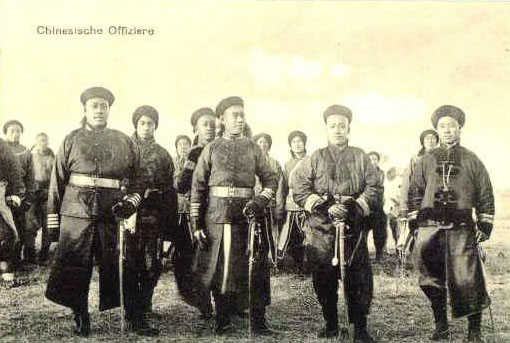
Members of the Qing Imperial Army - Photo Credit: wikipedia.org

Qing Imperial Soldiers- Photo Credit: wikipedia.org

Chinese officialdom was split between those supporting the Boxers and those favoring conciliation, led by Prince Qing. The supreme commander of the Chinese forces, the Manchu General Ronglu (Junglu), later claimed that he acted to protect the besieged foreigners. The Eight-Nation Alliance, after being initially turned back, brought 20,000 armed troops to China, defeated the Imperial Army, and captured Beijing on August 14, lifting the siege of the Legations. Uncontrolled plunder of the capital and the surrounding, along with the summary execution of those suspected of being Boxers.

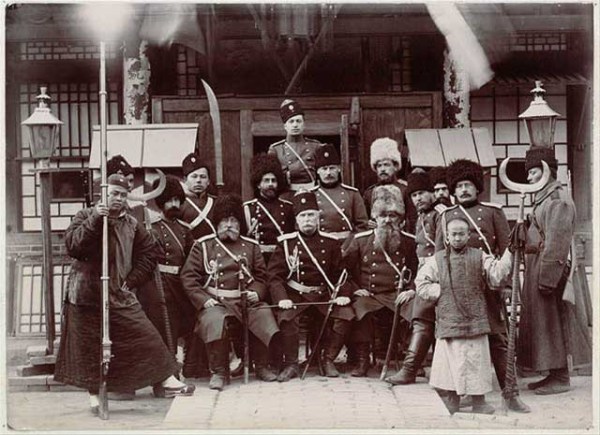
Russian officers in Manchuria during the Boxer Rebellion - Photo Credit: wikipedia.org

Russian officers in Manchuria 1900 – Photo Credit: wikipedia.org

 The Boxer Protocol of September 7, 1901 provided for the execution of government officials who had supported the Boxers, provisions for foreign troops to be stationed in Beijing, and 450 million taels of silver—more than the government’s annual tax revenue—to be paid as indemnity over the course of the next thirty-nine years to the eight nations involved.

More details of these events in East Asia, the atrocities committed on both sides, the role Germany played in the Eight Nations’ Alliance (UK, France, Germany, Italy, Austria-Hungary, Russia, Japan and USA) can be found at https://en.wikipedia.org/wiki/Boxer_Rebellion.

Karl Klopp’s story will be continued next Thursday.

Presenting Author and Activist Lucia Mann

Courage and Commitment in the Face of Modern Day Slavery

Every once in a while on my blog I introduce a past or present resident of Fauquier and area, who have made a significant contribution to our community. There was the colorful personality of Mr. Fauquier, whose name our small village now bears. Then there was Bill Laux, the eccentric artist and castle builder.

Today I would like to introduce you to the illustrious writer, novelist and activist Lucia Mann. It is my hope that this post will help spread her ideas about social justice and increase awareness about modern-day slavery. I am republishing with her kind permission the page about the author, which can be found at http://www.luciamann.com.

LuciaPortrait

Lucia Man is Sicilian-bred, born in British Colonial South Africa in the wake of WWII.  She is a citizen of Britain and Canada who recently applied for a U.S. Green Card because she believes she is an American at heart. She was educated in London, England and retired from freelance journalism in 1998. After suffering from racial prejudice most of her early life because she was part Italian and part South African, she saw and felt firsthand the pain and suffering of those who were thought to be inferior because of the color of their skin. Her mission is to end prejudice and slavery now and in the future.

A woman was recently sentenced to 140 months in prison after using two Nigerian immigrants as personal unpaid servants in her luxury home in Atlanta, Georgia. A few days later, two Ukrainian brothers were convicted of smuggling desperate villagers into the United States to work long hours, cleaning retail stores and office buildings at little or no pay. The prosecuting U.S. attorney in Philadelphia, Daniel Velez, said it was “modern-day slavery. It’s hiding in plain sight.”

However, according to a woman who lived through the racial prejudice, segregation and slavery in post-World War II Europe, the slavery crisis in the modern world is far greater than that.

“Anyone who thinks slavery died when America abolished it in the 1800s has a shock coming to them,” said Lucia Mann, whose mother was a sex slave and a WWII concentration camp survivor.  Mann, a former journalist and author of “RENTED SILENCE” (www.rentedsilence.com), a novel about slavery and racial prejudice based on her life experiences and those of other persecuted souls she witnessed says, “According to the United Nations, there are more than 27 million slaves worldwide, which are more than twice the number of those who were enslaved over the 400 years that transatlantic slavers trafficked humans to work in the Americas. Many are forced into prostitution while others are used as unpaid laborers used to manufacture goods many of us buy in the U.S. In fact, it’s almost impossible to buy clothes or goods anymore without inadvertently supporting the slave trade.”

Mann said that the crisis extends far greater than in the African and Asian nations typically associated with slavery or indentured servitude.

“After the hurricane in Haiti, the economy was so devastated, with as many as 3,000 people sold into slavery right there in their own country,” she added. “It affects all racial groups and slaves come from every single continent on the planet. The irony is that there are more slaves now that slavery is illegal than there were when it was a legal part of international commerce. Moreover, because of its illegal nature, it’s practically impossible to track and contain. It’s not a matter of how to stop it. It’s a matter of how we even begin to address it.”

One of the reasons Mann wrote her book was to establish an awareness of the problem, so that people could have a frame of reference for action.

“The wrongs of the past as well as the present must continue to be exposed so that they can be righted in the present and future,” Mann added. “This means educating society about evil and injustice and motivating them to take steps to ease others’ pain and anguish. The key is to get people aware of it, and then let them know what they can do to end the practice. In America, the first thing we need to do is address our own consumer habits. To help, the United Nations has created an online and mobile phone application to help people track if what they buy is supporting slavers.”

Mann said the awareness and concern of the American people are the first steps to ending slavery around the world.

“If there is no money to be made from enslaving people, it will end,” she said. “Many innocent people become the victims of viciousness or the prey of prejudice. While fear and anger are filling the cells and souls of innocents, the rest of us can bolster their spirits and lighten their load by having the guts to fight their fight and the heart to bring hope to humanity. Courage and commitment are powerful weapons, and we should not hesitate to use them against the dishonorable people of the world”

My wife is presently reading this book and is available on line and at Home Hardware Nakusp.

My wife is presently reading this book, which is available online and at the Home Hardware store at Nakusp.

Visit Lucia’s website at luciamann.com to find out more about her quest for social justice.

Chapter XIV of the P. and G. Klopp Story – Part 6

Brandenburg Gate - Photo Credit: rosch.homepage.eu

Brandenburg Gate with Wall in front – Photo Credit: rosch.homepage.eu

Paralyzed by Fear

On my way back to the youth hostel I sat apprehensively in the city train that used to run unimpededly across the border, but now would stop at a new terminal a short distance from the nearest checkpoint. I had hoped to immerse myself into the anonymity of a large commuter crowd. But there were only a few passengers and at each stop more and more people stepped off the train, until I was almost by myself. I looked at my watch. In less than half an hour I would be at the border checkpoint. I was just beginning to relax a little, when a young man stepped into my compartment. He sat down on the bench opposite mine, and recognizing me by my clothes as a Westerner immediately addressed me and compelled me to listen to his story. In a torrent of words he seemed to have broken the dam of pain, anger and frustration deep within his troubled mind. He apparently was totally oblivious to the fact that a spy might be listening in and denounce him to the authorities. The more boldly he spoke, the more fearfully I listened. Enthralled by his tale and unable to move from my seat, I felt like the wedding guest in Coleridge’s poem ‘The Rime of the Ancient Mariner’.

“He holds him with his glittering eye –

The wedding guest stood still,

And listened like a three-years’ child.

The mariner hath his will.”

“Last year,” the young began his story, “I was just finishing my apprenticeship program. Many friends and family members had already fled to the West. There were rumors that the inner city border would be closed soon. Every week many people, first by the hundreds, then by the thousands, escaped to start a new life in freedom. Then my girlfriend also left with her entire family just one week before they built this horrible wall.” The young man was now sobbing and screaming.

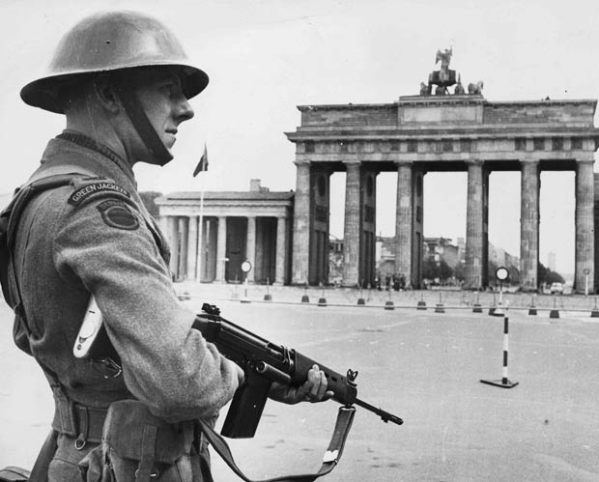
British Soldier on Guard - Photo Credit: www.telegraph.co.uk

British Soldier on Guard during a Crisis – Photo Credit: telegraph.co.uk

“To get a good start with a completed journeyman ticket, I promised her that I would follow her as soon as I had passed my exam. How stupid I was in trying to be responsible. Over a better job I lost my love. I will never see her again. Like all the others her family is on the black list. She would be arrested and thrown into prison, if she tried to see me.” He was venting his anger and frustration so loudly that everyone left on the train could hear, but pretended not to.

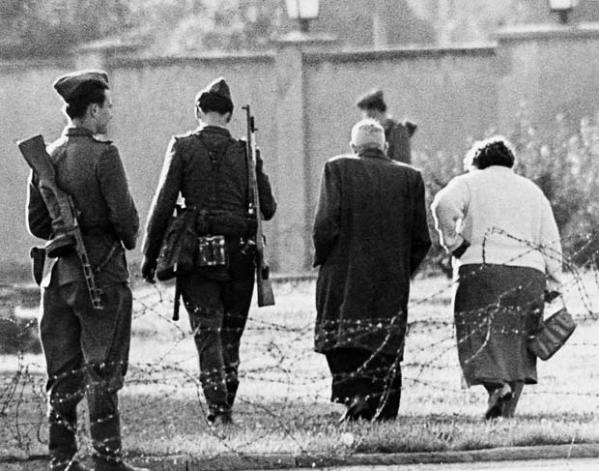
This Couple Failed to Escape - Photo Credit: telegraph.co.uk

This Couple Failed to Escape – Photo Credit: telegraph.co.uk

“We live in one giant prison here! No, we live like animals in a zoo. Westerners may come and gawk. I feel like a monkey behind bars, when I look from my apartment window over the wall into West Berlin, where people are free to move about as they please. My girlfriend is out there somewhere. She cannot even write a letter for fear to land me in prison as someone befriending a traitor of socialism. Oh, how I loathe that ugly word!”

Checkpoint Charlie Border Crossing; Photo Credit: gonback.com

Checkpoint Charlie Border Crossing; Photo Credit: gonback.com

Suddenly the apprentice grew very quiet. He had unburdened himself by boldly telling his story. I knew that there was nothing I could do for him. How to give hope, when there is no hope, or how to offer a comforting word, when you cannot find it within yourself? A comment no matter how carefully chosen would have added insult to injury. It was good that I remained silent and listened to what he had to say. But to find the right words to show compassion to my fellow human beings had never been my forte and remains a problem to this very day. Without saying another word, the young man got off the train on the second last station. Five more minutes and I would be at the terminal.

I sat there on my bench all alone. Indeed the entire train car was empty now. The emptiness began to oppress me. I felt ashamed of having been so afraid. The apprentice from East Berlin was not. I began to realize that there was another kind of freedom that came from within independent of where one happens to live. But the realization of the converse hit me even harder. One could live in the best society – if there ever was one – with all the rights and privileges enshrined in its constitution and still be a slave to fear.

Gathering Strength Through Inner Calm

Within the next thirty minutes I had to deal with fear all over again. The guard on duty at the border checkpoint carefully examined my passport and was just about ready to check off my name from the list, when he asked for my camera, which I had left behind at my relatives. Under normal circumstances this would not have been a big deal. I could have given the camera as a gift to my aunt, lost it on the train, or gotten rid of it in myriads of other ways. But this was not considered normal. The guard asked me to follow him into the drab border building, where he made me enter a small office room, and then quickly left closing the door behind him. Sitting on a chair opposite a giant empty desk I felt trapped. I had the feeling, as if I was being watched for my reaction through hidden cameras. But to my surprise, a great calm pervaded my inner being. I had done nothing wrong, I had simply visited my relatives with official permission, had left a camera behind, which was not a crime, but a trivial oversight. After a five-minute wait a security officer neither friendly nor unfriendly entered the room and said without making any reference to the missing camera that he was going to ask me a few questions. Even though he made me feel that the whole process was a mere formality, it appeared to me like a full-fledged interrogation. There was nothing to hide. To all his questions about myself, my family, relatives in East and West Germany I gave prompt answers without showing any signs of nervousness. After being convinced that I was not a spy, he finally turned his attention to the camera. If it had not been recorded on the inventory list, there would not have been any problems. But since it was, I would have to go back, pick up the camera at my aunt’s place and show it to him, before his shift would end be at midnight. I said that this would be quite impossible for me to do considering that the youth hostel closes its gate at 11 o’clock, that I would be locked out, and that the teacher would report me as a missing person. To make a long story short, the officer showed some human understanding for my case behind the mask of his stern face and let me go under the condition that I would have to return during his shift on the very next day. If I did not comply and did not show him the camera, my relatives would be in serious trouble. Whether there was a bit of humanity shining through or whether it was even the fear for having broken some rules, I could not say. Perhaps it was a mixture of both.

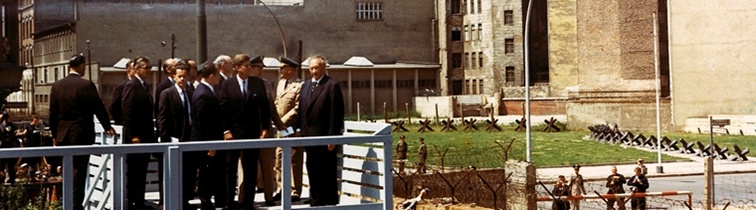
President Kennedy at the Berlin Wall - Photo Credit: jfklibrary.org

President Kennedy at the Berlin Wall (June 1963)- Photo Credit: jfklibrary.org

Juliane Klopp (1877 – 1960) Part 2 (Chart I – II)

Young Artist and Hotel Owner Juliane Steuer (about 1900)

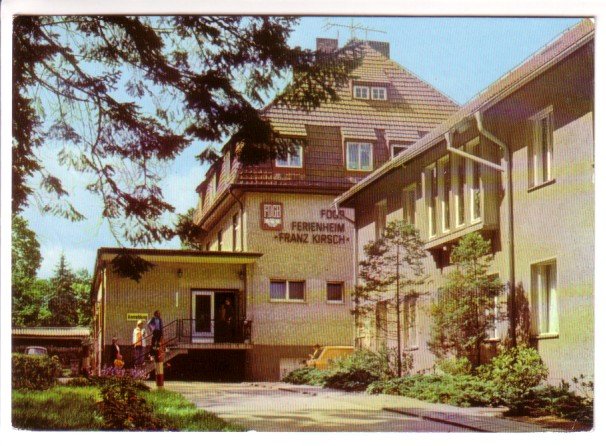
At the beach road at Scharmützel Lake leading up to Diensdorf Fritz Steuer and his wife Emma Juliane acquired in 1911 a brick manufacturing plant. It was located very close to today’s guesthouse “Café Glück Auf”. Around 1912/13 the couple built a villa there, which was connected to the machine shop of the brick factory. In the mid 1920’s Friedrich Steuer added yet another building, ‘Hotel Seehof”, which survived the GDR years as a vacation center by the name of “Franz-Kirsch-Heim”. In 2006 it was rescued from falling into disrepair, was completely modernized and turned into a 4-star hotel.

Former "Hotel Seehof" Renovated, Today's Wellness Center

Former “Hotel Seehof” Completely Renovated and Today’s Wellness Center

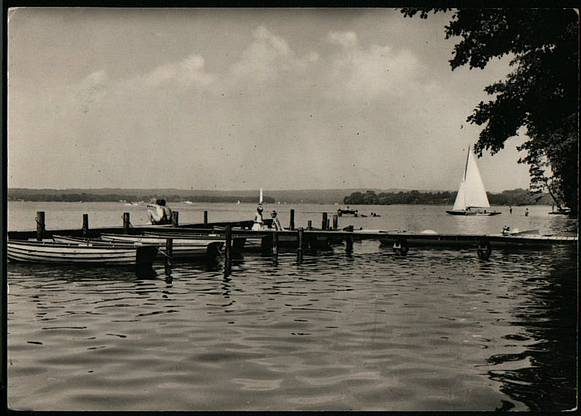
In 1923 Fritz employed the two Klopp brothers Ferdinand (1879-1952) and Hermann (1892-1937) in his Diensdorf work place. In response to inflation and decreasing demand for building materials the Steuers converted their villa into a hotel. They called it “Gasthof und Fremdenlogis Strandhotel” (Guesthouse and Beach Hotel ). It was here that Juliane’s sister Else Klopp (1895- 1934) got acquainted with her future husband, army defense officer Drusus Stier. The beach hotel was a favorite meeting place for officers of the garrison town of Fürstenwalde/Spree. Also brother Ernst Klopp, my father, came shortly before his wedding for a longer visit at his eldest sister.

Scharmützel Lake in the 1920's

Scharmützel Lake in close Proximity to ‘Hotel Seehof’ in the 1920’s

When her brother Hermann Klopp ran into financial difficulties on his estate Breitenberg/Pomerania in the early 1930’s, Jula helped him out with obtaining a mortgage by providing the required security. When Hermann was unable to make the payments, Jula lost a huge sum of money that she was never able to retrieve in spite of the fact that she won several court battles with the creditors after Hermann’s death in 1937. The specter of bankruptcy was looming on the horizon. Eventually the couple lost the factory, the two hotels and was forced to move to Berlin, where with the remnant of their liquid assets they were able to run a small pub at Feldstrasse 2. The childless couple separated, but refrained from formal divorce. Friedrich Steuer died in Berlin in 1934, suffering from lip cancer.

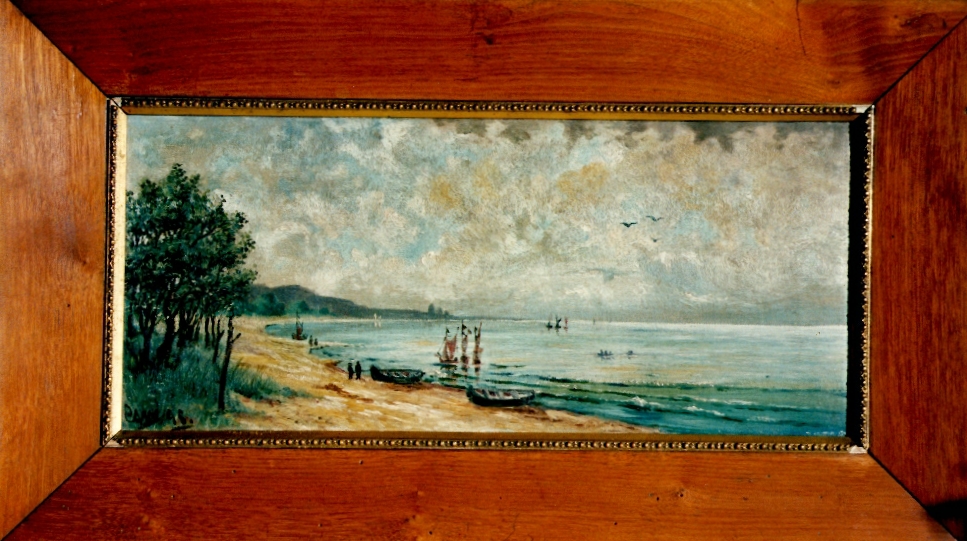
The now 57-year old Jula acquired a house in Köpenick, Am Spielplatz 13. In 1938 she spent some time at my father’s place at the Ernst-Flos-Hof estate in Belgard. During her stay she created an oil painting depicting a beach scene at the Baltic Sea.

Juliana's Painting of the Baltic Sea

Juliana’s Painting of the Baltic Sea

Jula survived as widow the Hitler years, World War II, and the early years of the German Democratic Republic almost up to the building of the Berlin Wall. To see an earlier post of my visit to Aunt Jula, click here.

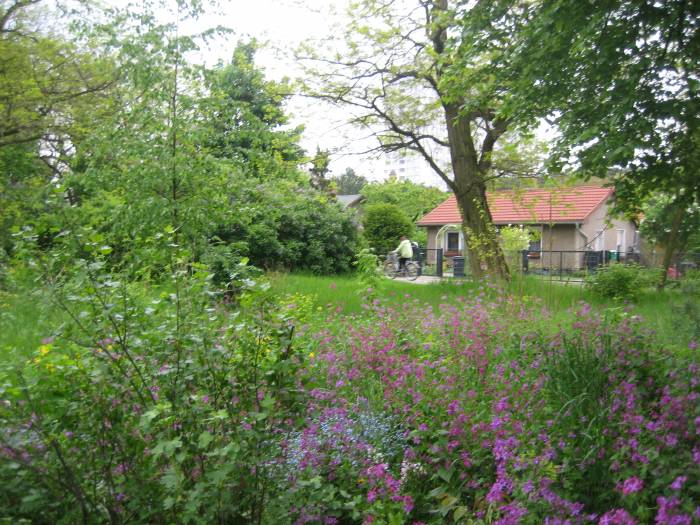
Garden Region near the Spree

Recent Photo of the Garden Region, where Aunt Jula had her Cottage

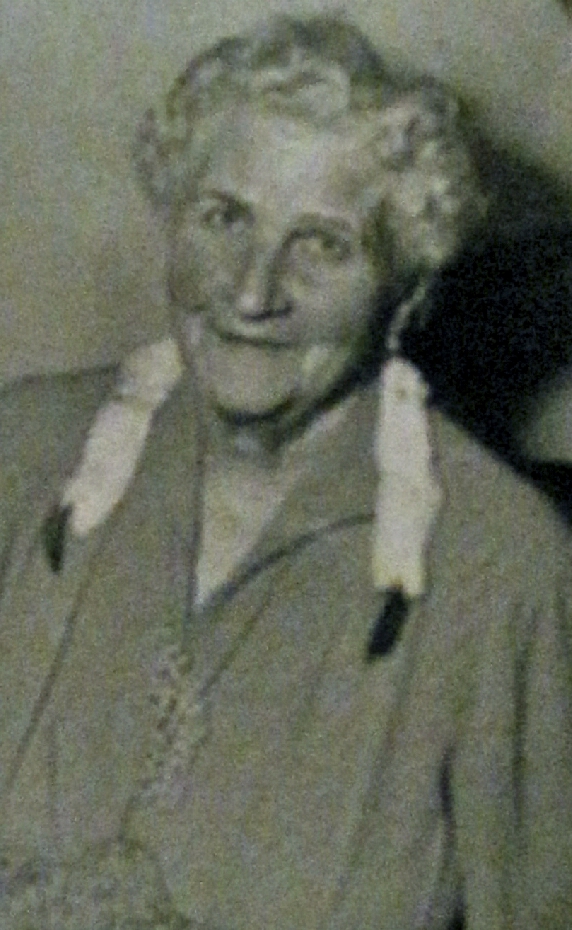
After the war she gave up all her properties and retired in the picturesque garden section of Köpenick, where she lived in a modest cottage for the remaining years of her life getting by on a small pension, to which she was entitled from her late husband Friedrich Steuer, from whom she was never formally divorced. From this sad period there is a photo, which shows a friendly, kind, somewhat sad Klopp portrait of an old lady that had seen better days. On account of the photo session she dressed up with a pearl necklace and ermine fur. Completely impoverished she passed away on June 8, 1980 at the age of 83.

Aunt Juliane (late 1950's)

Aunt Juliane (photo taken in the late 1950’s)