The Ring
A most unconventional, secret engagement had taken place. Biene and I did not feel any need to share the joyful news of our clandestine arrangement with anyone. While our parents, relatives and friends saw our love story unfolding before their eyes, they did not suspect anything more than what was normal at our age to do, to have a few dates, to meet at regular albeit long intervals. However, breaking well-established and meaningful conventions, such as a formal engagement, was not without peril, which we in our elevated state of romantic ecstasy did not foresee and whose warning signs we did not heed.
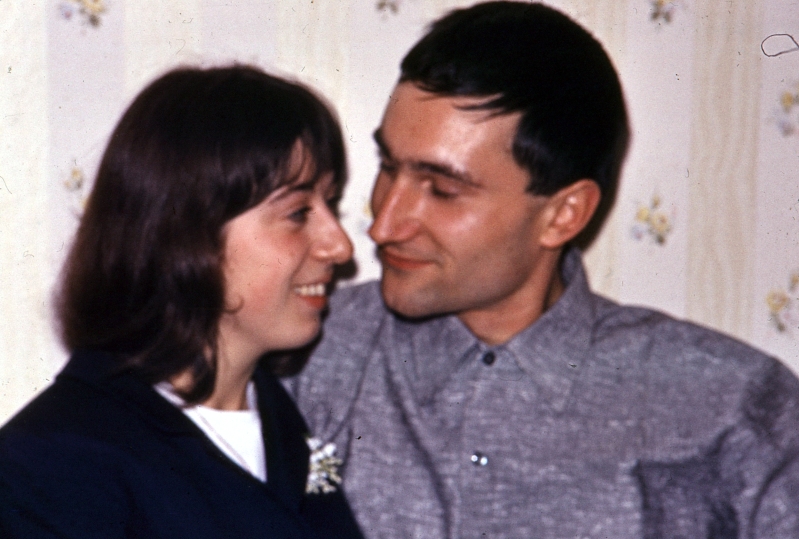
Another danger was lurking from deep within me, the tendency to fast forward into the future, then to look back from an imaginary vantage point and view in horror all the possible things that could go wrong. The worst of these mental acrobatics was that I was afraid that I would have to take the blame for Biene’s future hardships, suffering and pain. These were the thoughts that were passing through my convoluted mind. In simple terms, I was also a bit scared about having the boldness to ask her to marry me in the light of having ahead very little income, an uncertain future, and a long period of separation. So I wrote in a letter:
“Now I recall something else I wanted to tell you. I would very much like, when I am no longer in Germany, that you feel obligated by nothing except by your heart and feeling. Do you know what I mean? We have always striven to be honest even when we found it hard to do so. But it is exactly that honesty, which unites us so firmly. Perhaps you had expected to hear from me more concise plans on our walk through the snow to the old mill and back. See, my dear Biene, this was also the reason, why I found it so difficult to talk. I do not wish to exert any pressure on you. When I tell you, I need you –I really need you -, then in a sense I have already exerted pressure. Therefore, dear Biene, I urge you to let your heart decide.”
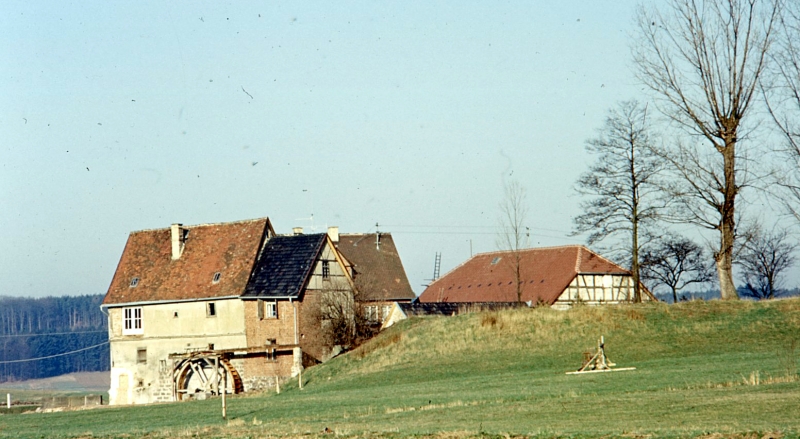
The Old Mill at the Edge of Town
The promise we made to each other on our wintry walk was barely one week old. And already I had cast doubts on the strength of our love for each other. I was very lucky that Biene did not take it as an insult. Even though it had never been my intention, one could have accused me of putting her love to the test. Of course, from her response I could tell that she felt saddened by the doubts I still had about her true feelings. But at the same time, my letter had compelled her to say that she loved me so much that she could belong to no one but me. I had to smile when I read the following lines,
“And if you were as poor as a church mouse, I would rather be a church mouse. Peter, don’t laugh, I really mean it. I would also like to give you a sign. May I give you my ring? It is the most precious thing I possess except for your letters and the book you wrote for me. Never would I have parted with it, but with you I find it easy to do. You must not think I am superstitious, but I believe it will bring you luck. And one day, dear Peter, when you write to me, ‘Biene, come to me!’ you can return it to me. Oh Peter, it makes me so indescribably happy to believe in a future with you. I am always thinking of us and I am indescribably happy about our secret. Dear Peter, I am so thankful that you have always stuck with me even though I so often hurt you, because I didn’t know that I loved you so much.”
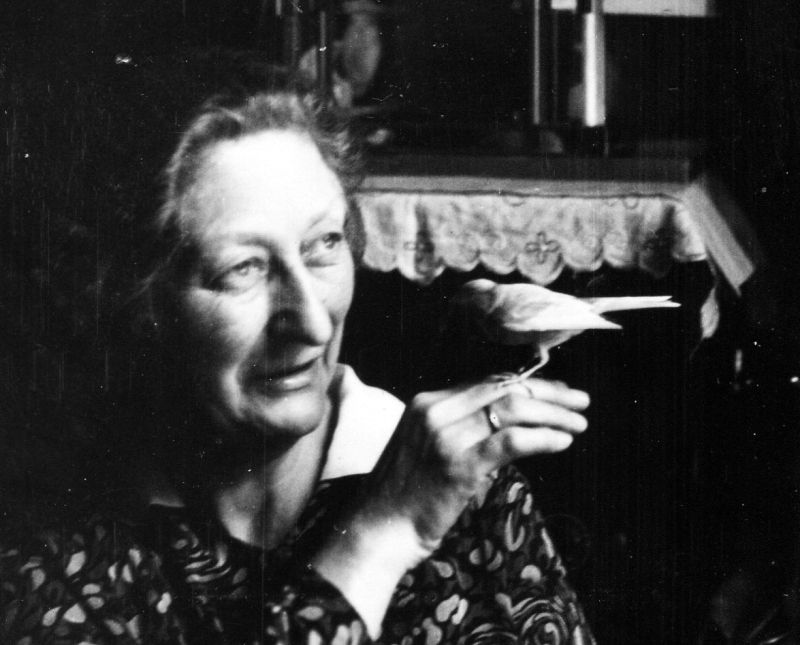
Gertrud Pankni, Biene’s Grandmother – 1931
The ring turned out to be a very precious family heirloom that was being passed down from Biene’s great-grandmother to her grandmother Gertrud and then, after the latter had passed away, finally to Biene. It was symbolic in more than one way. But the meaning as an engagement ring escaped me completely at the time. Of course, I was happy with it as a gift and as a token of Biene’s love. It was a bit too small to wear on my ring finger. To be sure, if I had, it would have raised a few eyebrows in my military environment. But I did wear it on my little finger during the night and turned it a few times to let it do its magic. Alas, in spite of all that talk about talking frankly and freely, I never understood the real meaning of Biene’s gift, and Biene did not have the courage to ask me for an engagement ring. If the reader thinks I needed to be rich and gainfully employed, before humbly falling on his knees to ask for her hand in marriage, he would have been misled by the Anglo-American custom of buying a diamond ring for one’s sweetheart. In Germany, all one needs is a golden ring, which one wears on the ring finger of the right hand for the engagement and on the left hand at the wedding. What a simple and affordable tradition! Yet, I was blind and did not interpret Biene’s gift as her most ardent desire to wear a ring from me, before we separated for a very long time.
 The Peter and Gertrud Klopp Family