Albert Schweitzer – Seminar #5

Die Geschichte vom Juden Mausche

Eines Tages trieb ein alter Mann mit Sommersprossen im Gesicht und mit einem langen Bart einen Esel durch das Dorf. Der Esel zog einen kleinen Karren. Der Mann hieß Mausche. Er war Jude und ein Viehhändler aus dem Nachbardorf. Die Kinder fanden ihn etwas komisch mit seinem Bart, dem großen Hut. dem langen Mantel und seinem Esel. Deshalb lachten sie auch über ihn. Sie rannten hinter ihm her, hüpften um ihn herum, schnitten Grimassen, steckten die Zunge heraus und riefen immer „Mausche, Mausche, Mausche!“

Viele Leute schauten aus den Fenstern und lachten mit. Alle glaubten, dass der Jude Mausche nun böse wird und die Jungen verjagt. Doch der Jude Mausche blieb ganz ruhig, hielt seinen Esel an und schaute freundlich zu den ungezogenen Jungen. Er lächelte gütig, strich einem der Jungen über das Haar und ging dann weiter.

Albert hatte das beobachtet und den Juden Mausche nicht ausgelacht. Eigentlich tat er ihm sogar leid, denn er war ein guter Mensch und hatte es nicht verdient, ausgelacht zu werden. Albert fasste sich sogar ein Herz und lief dem Juden Mausche nach, bis er ihn erreicht hatte. Dann nahm er seine Hand und ging mit ihm gemeinsam weiter durch das Dorf. Die Leute wunderten sich nun sehr: Da ging der junge Christ Albert mit dem alten Juden Mausche Hand in Hand die Straße entlang. Nicht nur die Jungen, sondern auch die älteren Leute hörten nun auf zu lachen und einige schämten sich sogar, dass sie den alten, gütigen Mann nur wegen seines Aussehens ausgelacht hatten.

Schweitzer 5

THE MINING ERA OF THE CANADIAN COLUMBIA by Bill Laux – Chapter 3

THE FUR TRADE INTERLUDE

The significance of the Fur Trade Era to later mining development on the Columbia was the establishment of the first permanent European settlements in the Northwest, and the improvement of the Aboriginals’ trails for use by pack stock, and on the Columbia Plateau by wagon.    Not less important, the question of sovereignty was finally resolved, and a border was surveyed and monumented, dividing the Northwest into American territory and British.

In September, 1805, in an eerie coincidence, the Columbia drainage was being entered by two parties almost simultaneously.   The Canadian fur traders, under Simon Fraser of the Northwest Company of Montreal, were entering  through Howse Pass in the Rockies, while five hundred miles to the south, Lewis and Clark were crossing Lehmi Pass to enter the Salmon River watershed for the Americans.    The Americans returned east the following year to report to their government, but the Northwesters under Fraser and James Thompson stayed, establishing  year-round trading posts from Fort St James in the north to Kullyspell in Montana and Spokan House in present Washington.

The immense distances the furs had to be transported on mens’ backs across the Rockies and by canoe down the rivers and lakes to Lake Superior at Fort William, prompted the Canadian company to find an outlet to the Pacific where furs might be carried back to Montreal in ships and supplies sent out.   In 1811, David Thompson, for the Northwest Company, set out to find that route to the Pacific.   In June 1811, he left Kootenai House near lake Windermere on the Canadian Upper Columbia, and traveled south along the great Rocky Mountain Trench and the Kootenay River to where Jennings, Montana is today.  From there the party took the Flathead Indian  trail south to Saleesh House on the Clark Fork River.   Spokan House was reached in a few days, and from there Thompson and his men took the Indian trail to Kettle Falls on the Columbia River.   They paused there to build  a boat, embarked and descended the Columbia to the Pacific.    At the river’s mouth they found the fort of John Astor’s American Pacific Fur Company which had been established from the sea from New York. 

The question of sovereignty was ticklish.   The Europeans coveted land anywhere, aboriginally occupied or not.   Spain claimed as far north as the Russian settlements at latitude 57º North.   The British claimed on the basis of Captains Cook and Vancouver’s explorations of the coast and Lieutenant Boughton’s ascent of the Columbia as far as present Vancouver, Washington.    The American expansionists cited the explorations of Lewis and Clark and the discovery of the mouth of the Columbia by the American Captain Gray. 

  On the ground, at Fort Astoria, the two parties, David Thompson for the Canadians, and David Stuart (also a Canadian in the employ of Astor) for the American company, being both practical men rather than political zealots, sensibly decided to cooperate and trade jointly.

Stuart moved up the Columbia with his men that year, trading as they went.    They found the Indians well disposed and eager to trade.   At the mouth of the Wenatchee River they traded one yard of calico and two yards of ribbon for four horses, and found Chief Sop eager to trade even more horses.   Stuart founded Fort Okanogan two miles above the confluence of the Okanagan and Columbia rivers and left trader Ross there.   With the rest of his men he ascended the Okanagan, and crossed over the low divide to the South Thompson.   At the confluence of the north and south Thompson rivers he established a post, calling it Fort Kamloops.   A few weeks later a party of Northwesters established their Fort Kamloops close nearby.   Sending most of his party back to Astoria, Stuart and Montigny wintered at Kamloops, Ross at Okanagan.     Trading was brisk and enormously profitable.  In the 188 days Ross remained at Fort Okanagan, he took in 1550 beaver skins worth $12,000 at the Canton, China market at a cost in trade goods of $175.     The Northwest fur trade, the Astorians discovered, was hugely profitable and worth a contest with the Northwest Company.    

David Thompson returned up the Columbia to the Snake River and ascended it to the mouth of the Palouse.   From there he took the Indian trail to the Spokane River and turned west again to Kettle Falls, reaching it on August 28.    Finan Mc Donald had been up the Columbia from Kettle Falls as far as present Revelstoke, but there was still that stretch of the river from the Illecillewat River to Boat Encampment to be explored.   On September 2, Thompson, with 8 canoes of Sinixt Indians began the last leg of his journey.   The first night the party camped somewhere above the site of present Northport, Washington .  On the next day they got as far as Murphy Creek in B.C.   On September 5 they camped at present Castlegar, getting as far as Deer Park the next day.   On the 7th they entered Lower Arrow Lake, and paddled to a campsite somewhere below Edgewood.   All of Thompson’s campsites were most probably the established camps of the Indians in his party.  The Sinixt Indian families had long established summer fishing grounds and camps along the Arrow Lakes.   September 8 the party camped in “the Narrows,” possibly Burton or Mosquito Creek.   Thompson and his men entered Upper Arrow Lake on the next day and got as far as Halcyon.   One the 10th they cleared the Upper Lake and camped somewhere along the river above Arrowhead.   On the next day they reached the Illecillewat at present Revelstoke.   The river above Revelstoke had rapids and white water, and their progress was slowed.   Probably they lined the canoes through the worst of the water.  They camped somewhere near Eight Mile Creek.   On the 13th Thompson reported “a hard day,”making 12 miles, passing through Steamboat Rapids, and camping near Carnes Creek. The next day they passed Downie Creek at noon and then had to ascend or line through Death Rapids (Thompson says negotiating it with “care and safety”) where so many voyageurs and miners would be drowned in succeeding years.   By September 18 they were back at Boat Encampment and Thompson made a short exploratory trip up the Canoe River to examine the country for its fur potential.   Then it was time to head back on foot across the Rockies for supplies and trading goods.

The pragmatic cooperation between the Northwest Company men and Astor’s traders was destroyed the very next year by the news that the War of 1812 had broken out between the British and the Americans.   With war, the men at Astoria felt threatened.  The British had warships in the Pacific, the Americans none.   British naval ships could blockade any American post, preventing  furs from being shipped.   If that happened,. the Astorians were ready to abandon the Fort, and try to take what furs they had back across the Rockies on foot.

The Northwest Company, taking advantage of the state of war, had sent out its ship the Isaac Todd, armed with cannon as a privateer, to sail around the Horn and capture Fort Astoria.

At the same time, the Northwester, John Stuart, came down the Columbia with 70 men to camp

opposite Fort Astoria and wait for the Isaac Todd with her guns.   With the Northwesters at their gates, and the Isaac Todd expected any week, the Astorians, most of whom were Canadians recruited from the Northwest Company, considered a third option.   On the 16th of October, 1813, the men of the American Pacific Fur Company sold Fort Astoria with all of its furs and supplies to the Northwesters for $80,000 in credit notes.    Most of its men then promptly joined their former employer, the Northwest Company.  Astoria was promptly renamed, “Fort George,” and became a Northwest Company post.

This pragmatic solution was to be shortly undone by a glory-seeking British Navy Captain.  Captain Black sailed his frigate, HMS Raccoon, into the mouth of the Columbia two weeks later to “capture” Fort Astoria.   What he found was disappointing to a glory-hungry Naval Captain; a shabby log fort, already British, squatting in the mud at the edge of an impenetrable forest.   “Why I could batter it down with my guns in two hours,” he wrote.   Nevertheless, he came ashore with his marines, took formal possession in the King’s name, raised a flagpole, hoisted the Union Jack, fired a salute, and broke a bottle of wine against the pole.    This was supposed to solemnize the occasion, but the thoughts of the thirsty

Northwesters as they saw the precious wine trickling into the mud could scarcely have been  solemn.

This formal act of Captain Black converted a simple commercial transaction into a “seizure,” an “Act of War,” and was to have serious consequences.    The Treaty of Ghent, which ended the War of 1812, provided for “Status quo ante;”  all military conquests were to be returned to their original owners, and the Americans prodded by Jacob Astor, were insistent on having Astoria restored to them.    Thus, the British lost the only post south of the Columbia, and with it, any claims to territory south of the river.

THE COMPANY WAR

The Northwest Company had been formed in Montreal in 1763 to take over the French  Quebecers’ fur trade which had fallen into disarray after the French defeat at the Plains of Abraham.   Its principals were Scots Jacobite noblemen obliged to flee their homeland after their defeat at the battle of Culloden in 1745.   Many were Catholic; all bitterly hated the British.     The rival London based Hudson’s Bay Company had a Royal Charter awarding it a monopoly on trade in all lands draining into Hudson’s Bay.   The Northwesters had begun by moving legally  into those areas south of the Height of Land where the HBC had no exclusive rights.    Gradually, following the beaver, the Northwesters began to invade the territory the HBC considered it own, and set up rival posts.   The HBC countered by sending its trappers south to the Missouri river and west to the Rockies, at that time claimed by Spain.   

The HBC was a trading company on the model of the East India Company, caste-bound and exclusively British.   Its traders had to be white, gentlemen, and of good family.    All others, French, Metis, Iroquois, were the company’s indentured servants, and could never rise to the rank of Trader.    The Northwesters, on the other hand, were a more egalitarian group, each one of whom was a shareholder in the company and partook of its profits.    A young man, even one of mixed blood, could enter as a clerk and rise by diligence to the the rank of Trader.    The Northwesters to a man hated the English, and by sharp trading, and physical harassment, tried to drive the HBC posts out of the areas they coveted.   The HBC responded by encouraging the Aboriginals, who had some reason to resent the Northwester’s sharp trading practices, to raid their fur brigades and steal their furs, which the HBC would then buy.   In the lands between Lake Superior and the Rockies a kind of post-Jacobite war between Scots and English continued, with no government in place to put a stop to it.   

West of the Rockies was peace.  This was Northwest Company’s preserve; the HBC had no posts on the Pacific Slope.    The furs from “New Caledonia,” the lands north of the Thompson River, went out across Athabaska Pass over the Rockies, and by canoe down the rivers through HBC territory to Fort William on Lake Superior.   From there, large boats carried them down the lakes to Montreal.   

Furs from “Columbia,” the lands south of the Thompson, went down the Columbia River to Fort George (Astoria) where they were loaded on the Isaac Todd.   It was the Isaac Todd on one of her supply trips to Fort George that brought the first white woman to the Northwest.    Jane Barnes was an adventurous barmaid from Portsmouth, England, seeking a well to do husband.   In this endeavour, she shipped aboard one of the supply voyages of the Isaac Todd as the mistress of one of its officers.    At Fort George, however,  she found herself scorned by the Northwesters who found her pretensions to be a great lady simply because she was the only lady, ridiculous.   The pragmatic Northwesters much preferred to take Indian wives who conferred valuable trading alliances to various tribes in the area.   Finding the Fort George Scots more concerned with the trading advantages of a marriage than romance, the indignant Miss Barnes left Fort George with the Isaac Todd, to disembark in Hong Kong where she married a wealthy Englishman.

The Isaac Todd circled the globe on every voyage.   Leaving Montreal with a cargo of provisions and trader’s goods, she called at Fort George to resupply the traders and take on the year’s harvest of furs.   She then sailed to Hong Kong and Canton where the best and showiest furs could be traded for tea and porcelain ware.    From China, the Isaac Todd sailed to England to disembark the remainder of her furs and take on a cargo of trade goods, a good deal of alcohol included.    At Montreal she loaded up with provisions, potatoes, flour, dried cod,and set out again for Fort George.

In the Boundary Treaty of 1819, the Americans and the British, neither feeling strong enough to oust the other, agreed on a dual sovereignty for the Northwest, with citizens of both nations free to enter and to trade.    The Aboriginals, essential parties to this trade, were not, of course, consulted.    With this treaty the  Spanish claims were settled.   It fixed the northern boundary of Mexico from the Pacific to the Rockies at latitude 42º North, the present northern boundary of California, Nevada and Utah.

This anomalous situation of dual sovereignty with non interference in Aboriginal affairs continued without the shadow of a government presence by either country, and was broken only by rare visits of naval vessels along the coast, “showing the flag.”   Peace was kept and a sort of rude order maintained by dialogs between the traders and the chiefs of the various Indian nations.

Troubles erupted only along the coastline where the Northwest Company had no presence, and where American independent trading vessels (“The Bostons,” as the Indians called them) were guilty of depredations among the coastal Indians.   Their practice was to demand that the Indians trade; if they refused, they were harassed and their villages burned under the cannon of the trading ships.   From these abuses, a pervasive Indian hostility toward the “Boston Men” developed that was to last well into the mining era. 

East of the Rockies, a virtual civil war between the two companies had developed, Scots against Englishmen, with the British under Lord Selkirk settling Scots farmers in the Red River Colony.   As the Colony with its fort, blocked the Northwester’s supply route from Fort William, open warfare broke out.   Lord Selkirk’s Colony was attacked, burnt and destroyed by the Northwesters.   It was reoccupied and rebuilt by the Britishers, only to be sacked again.   The Governor General of the Canadas was obliged to send in British troops to arrest the leaders on both sides.   To compel peace, the Colonial Office in 1821 required the two companies to unite.   The Northwest Company was folded into the HBC with each Northwester receiving one HBC share.   The new HBC was then given official warrant to extend its operations to the Pacific.

The reason the HBC was selected to take over the Northwest Company was the British distrust of the Montreallers. The Colonial Office could see that in the Northwest, the sovereignty issue with the Americans was bound to come to a head.   It felt that it was essential that a London company, wholly British controlled, should be the commercial entity in this contentious region. The Montreallers were not trusted by the British; they shipped their furs to New York, not London.    Many of them had built mansions in New York with their profits, and all were on excellent terms with the Americans.   It was feared in London that the Northwest Company might well, for commercial reasons, make common cause with the Americans and lose the Northwest to the Yankees.    Therefore they had to be brought under direct British supervision.  Whether this might have happened is unclear; the point was the British thought it might, and an alliance between disaffected Scots and Americans would be dangerous for all of Canada in the British view.

The augmented HBC chose George Simpson to be its Governor in Chief in North America.   Simpson was a cold, harsh man, unpleasant in person, but a whirlwind of energy.    He at once made a tour of the Northwest and instituted thoroughgoing changes.    Some posts that had not been productive were closed, new ones in promising territory were opened, and a first  program of agriculture begun.   The posts were now to grow their own food and not depend on costly foodstuffs shipped out from Britain or Montreal on the Isaac Todd.   

In the 1830s the American expansionists were clamoring for the annexation of the Oregon Territory, as they called the entire Northwest.    Governor Simpson, along with his London  masters, foresaw that in any division of territory, the lands south of the Columbia would most likely fall to the Americans.   He therefore closed the indefensible Fort George (though returned to the Americans, Jacob Astor chose not to reopen it as a trading post, and the British had continued their trade out of an American post) on the south bank of the river, and founded a new headquarters for the Columbia Department at Fort Vancouver, 50 miles upstream and on the north bank, opposite the mouth of the Willamette.   The Columbia Department was placed in charge of the Canadian born, former Northwester, Dr. John Mc Loughlin.    Archibald Mc Donald took over at Fort Colvile on the upper Columbia where the Basin grasslands gave way to the northern forests.     William Connolly was in charge of the New Caledonia Department at Fort St James.  All these former Northwesters who liked to live well, had to be chivvied and verbally harassed by Governor Simpson to bring their establishments into line with the much more frugal and self sufficient style of the HBC.

Simpson also had to deal with the American trappers who were now beginning to cross the Rockies and take furs from that same Northwest territory which was by agreement, open to both nations.   Governor Simpson conceived the plan of trapping out the western slope of the Rockies, to render it bare of furs, thus discouraging American entry.   To undertake this dangerous and ticklish task of trapping out the headwaters of the Snake River and the western slopes of the Rockies under the harassment of the Americans, Simpson chose wild Peter Ogden, a Northwester who had skipped west across the Rockies in 1821 to avoid a murder warrant.   “That dangerous fellow, Ogden,” was sent on five successive expeditions to create a beaverless strip around the eastern and southern reaches of the Northwest.   Such expeditions were not without great danger; the American trappers were encountered, and chose to believe the Northwest was American soil, regardless of international conventions.   An uneasy hostility resulted, but both groups were restrained by the presence of superior numbers of Indians.   In a pinch, the whites would stick together. 

Simpson’s scheme worked.   After a few years the American fur traders were discouraged; the HBC bought their Fort Hall (near Pocotello) from them in 1837.    However, a rush of land hungry settlers was something Governor Simpson had not counted on.   Over the trails blazed by Peter Ogden and the American fur traders (“The Oregon Trail”), they came, to settle in the Willamette Valley, south of the Columbia.    The HBC tried to counter this by sending out its own  party of French Canadian settlers, company employees.   But the French Canadians quickly had enough of the autocratic Governor Simpson and the class-conscious  British.   They threw in their lot with the Americans, and settled in the Willamette Valley, south of the Columbia.

The new American settlers at once petitioned their government to annex Oregon.   Jingoist politicians in the East and Midwest took up the cry, and demanded all the lands up to the Russian line at 57º North.    President Polk, elected on an expansionist platform, declared American title to the Northwest was “clear and unquestionable.”   This stunning repudiation of the treaty of 1819 left the British thunderstruck.   Negotiations over a division of the Northwest between the Americans and the British government began in 1846.    The HBC had proposed in 1825 a line that ran down the Rockies from the 49th parallel, cut east through Missoula to headwaters of the Clearwater River, then down to the Snake and Columbia.   In 1846 the British were willing to settle for less, a line along the 49th parallel to the Columbia River, and down the Columbia to the Pacific.   This was reasonable; it placed all of the British occupied and administered area with Britain, and the American settled areas with the Americans.    The Americans, however, insisted on a port on Puget Sound.   They threatened war, and demanded the 49th parallel straight to the Pacific, cutting  Vancouver Island in two.

On the ground the American position was weak.   Their “war hawks” had dragged them that year into a war with Mexico.    Their Army was then in Mexico, their navy in the Gulf of Mexico, while a  British naval squadron cruised the North Pacific facing no opposition.   Had the British stood firm, it is likely they would have got their border down the Columbia. 

However, the British Foreign Secretary at this time was a pacifist idealist, Lord Aberdeen, determined, like Neville Chamberlain a century later, to appease the belligerent Americans with territory he chose to believe was of no importance to Britain.     Aberdeen got the Americans to draw their line around the southern tip of Vancouver Island and then gave them their boundary and everything north of the Columbia up to 49º north.    The day the news that treaty was signed in Washington, the British Government fell.   The supine Aberdeen was replaced by a spirited Palmerston who would have certainly gone to war rather than concede British occupied and administered territory.    But the deed was done and a furious Governor Simpson, would have to live with it.

With the drawing of the line, the HBC moved its headquarters and depot to a new Fort Victoria on Vancouver Island.   By the treaty the HBC was empowered to continue to operate its posts and to own land in the new Oregon Territory.    The Fur Trade, however was diminishing., demand for beaver was down.    In 1844, some Florentine hatters produced the first black silk top hat.   It was an instant success.  Silk hats were the fashion all over Europe, and the beaver hat became gradually obsolete.   Vagaries in fashion, as well as politics, were determining the future of the Hudson’s Bay Company.

Beginning with Governor Simpson’s decrees that each HBC post should become self sufficient in food, the company was now developing an agricultural enterprise.    HBC produced grain, potatoes, dried salmon, cattle, horse, coal, and lumber.    Simpson had noted the absence of refrigeration in San Francisco and beef rotting before it could be sold.   With characteristic energy, he chartered a number of ships and sent them north to the Gulf of Alaska where the seamen chopped loads of ice from the glaciers and icebergs.   The HBC sold this ice to San Francisco butchers.

  In 1848 the HBC set up the first sawmill in Victoria to supply local needs.   Captain Grant and others were beginning an export trade in Douglas Fir logs for spars and masts.   The British Admiralty had tested a shipment of Douglas Fir in 1847 for naval use and found the new species superior to any available in Europe.   In 1860 the Anderson Mill was set up at the head of Alberni Inlet, producing Douglas Fir lumber exclusively for export.   In order to offset the $1 per thousand board feet duty the Americans imposed, the HBC, controlling all resources, lowered its royalty on timber accordingly to allow the Anderson mill to compete in the U.S. market.   This would set the future pattern for the export oriented timber industry in British Columbia; to this day American import regulations determine timber royalties for the B.C. government.   

These HBC products found eager markets in Hawaii, San Francisco, and with the new American settlements on Puget Sound.   All this mercantile trade was kept as a monopoly by the HBC, however, under its amended charter of 1821.   Actually, quite illegally, since the HBC monopoly by proclamation extended only to trade with the Aboriginals.   

With all of Governor Simpson’s energy, and following him, the vigour and determination of Governor James Douglas, the HBC never quite fully converted itself to a mercantile establishment.   Its traders and officials all felt themselves a kind of British Proconsuls charged with bringing orderly rule to a wild and distant land.   Customers in want of supplies, might come to the HBC posts where their wants would be accommodated, but no HBC man would stoop to deliberately soliciting their trade; that was Yankee pushiness, and beneath the dignity of a Royally chartered institution.    

The new government in Britain realized that the ambiguous situation of the lands north of the 49th parallel  continued to make them vulnerable to the American doctrine of “Manifest Destiny” and the U.S. political expansionists.    These lands were not politically organized parts of the empire, but merely British claims, “possessions.”  Accordingly, in 1849, Vancouver Island, but not the mainland, was created a British Crown Colony.   At the same time, so as not to make it a drain on the British Exchequer, it was granted entirely to the Hudson’s Bay Company on the condition that the company establish a settlement of British colonists.   All the island land became HBC property to sell or lease.    In this way the Empire gained a colony but left the expense of its maintenance and administration to a private corporation.    It was a cheap solution, but ultimately unwise.    In those first ten years of its existence, the Colony of Vancouver Island, poor and isolated, with its handful of HBC officers and servants, functioned in fact as a hinterland of San Francisco which was its principal commercial partner.

  All that was to change in September, 1854.    While Peter Ogden, that wildest and most intrepid of the Northwesters, lay dying in his Oregon home where he had deliberately retired out of British control, an HBC teamster, Joseph Morell and his companions at the Fort Colvile HBC post, found gold in the gravel bars along the Columbia River. 


Natural Splendour of the Arrow Lake

Wednesday’s Photos

November Flowers

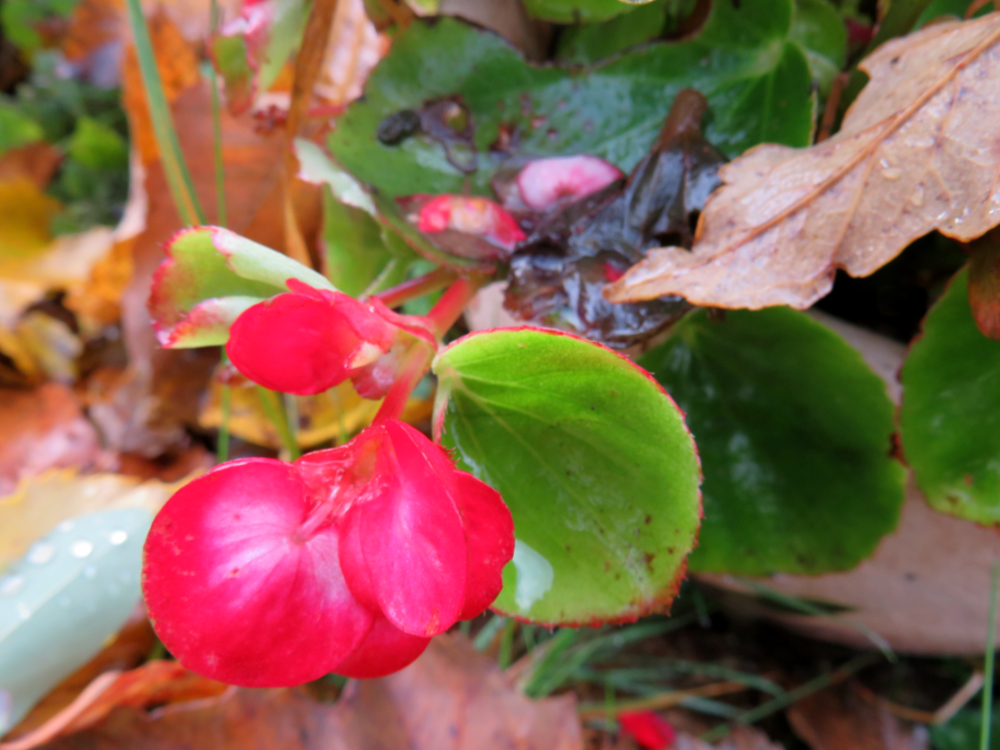
This year we experienced the longest frost-free period at our little community of Fauquier, BC. It was not unusual to see the meadows in the valley white covered in hoarfrost in the early morning hours at the end of August. Now we are already in November and the hardier flowers are still blooming, which I decided to photograph for your enjoyment.

IMG_4962EdIMG_4963EdIMG_4964EdIMG_4968EdIMG_4971Ed

The Peter and Gertrud Klopp Story Chapter XXI

Sorrows of Young Peter

“The Five W’s of Life:
WHO you are is what makes you special. Do not change for anyone.
WHAT lies ahead will always be a mystery. Do not be afraid to explore.
WHEN life pushes you over, you push back harder.
WHERE there are choices to make, make the one you won’t regret.
WHY things happen will never be certain. Take it in stride and move forward.”

Anonymous

With the transfer to the Falckenstein Barracks in Koblenz things were looking up for me. Our room was only slightly smaller than the one we had at the basic training camp, but instead of fifteen men only ten would share the sleeping facilities. The only drawback at the beginning was that the windows were facing one of the major north-south traffic arteries. The noise from the trucks and cars was considerable and lasted right through the night. At first I thought I could not sleep at all in a room inundated by the roar of engines and swishing of tires even with the windows closed. But little by little I got used to it and like the loud surf at the seashore at the Baltic Sea it no longer bothered me after a few days. I am sure that if the din below had suddenly stopped the silence would have woken me up.

80

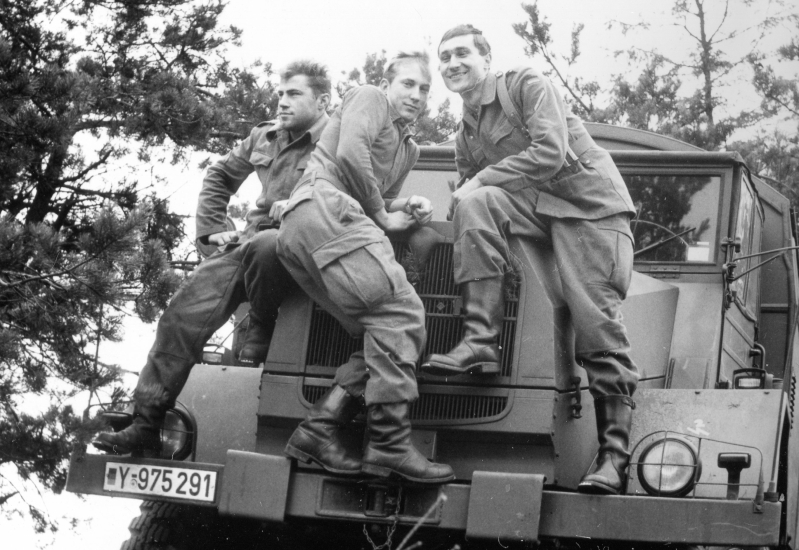
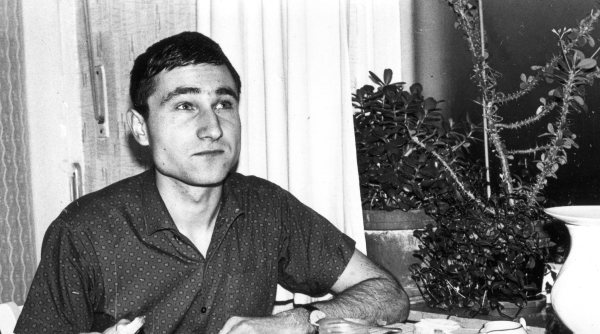
Peter on the right with truck driver and communication assistant

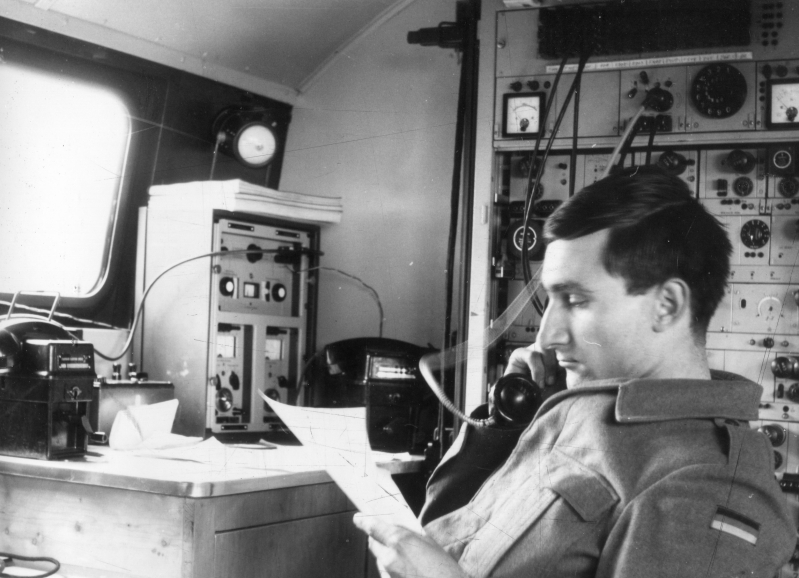
Also the pace of our daily routines significantly slackened. We still had to line up and stand at attention for the morning and noon announcements. But there were now more instructional sessions both theoretical and practical with emphasis on specialization depending to which of the three major groups we belonged in the signal corps. The linemen were responsible for connecting the various field centres during military exercises. They had from a physical perspective the toughest job. Rain or shine, heat or cold, their task was to unroll miles of cable and when the maneuver was over roll it back onto the empty drums on their backs. I had the good fortune that I was assigned to the second group. I was working inside a Mercedes truck packed with electronic gear, which I had learned to operate during my training sessions. The linemen would arrive huffing and puffing after a strenuous march through forests and fields. All I had to do was to connect the wires to the carrier frequency sets, call up my counterpart at the other end and tune up the line so that it would be capable of carrying several channels at once. It was the latest technology in those days, but miniscule by today’s standards, where thousands of telephone calls can be placed over a single wire or a wireless connection. The third and most prestigious group consisted of the wireless operators trained to set up and maintain point-to-point, line-of-sight connections. To be useful, the linemen also had to connect them by cable to our stations. I liked maneuvers of this kind, especially the ones that lasted a whole week, and often as a bonus resulting in an extra long weekend pass. It was during these action filled times that I began to reflect on the career proposal the captain had made to me less than a month ago. During guard duty, which I had to do every three weeks or so, whenever my turn was announced on the company bulletin board, I had also some time to do some thinking on the purpose and meaning of military service in a world that lived under the spell of the Cold War and under the threat of a massive attack by communist forces to take over Western Europe. While walking inside the fenced perimeter of our barracks I was searching for answers to those questions that popped up in my mind during the boring two-hour shifts in the dead of night. I composed a poem, which I included here in the hope that not too much is lost in translation.

Peter at work at his 'home' packed with electronic gear

Peter at work at his ‘home’ packed with electronic gear

Night Watch

Drearily the rain is falling.

I am walking in monotone even steps.

Nothing is moving in the semi-darkness.

Radio trucks like monsters are staring at me.

They appear to mock me,

Indeed threaten to devour me.

You servants of men!

To what end are you being abused?

Abused?

Aren’t you defending freedom and peace?

If you prevent that

For which you have been built,

Then sacred is your presence.

Yeah, just stare at me!

Your power brings me joy.

And I am walking past them

In monotone even steps.

To avoid war, an army must be strong so that an aggressor will understand that nothing would be gained and much more would be lost. It was the balance of power that kept the peace in the Cold War period, in which I was a soldier.

Discussion with a Friend on the Nature of Love

Mother had just returned from a visit to Gerry, daughter-in-law Martha and her one-year old grandson Wayne in Medicine Hat, Alberta, Canada. It so happened that I was on a ten-day leave and spent a relaxing vacation with her and Aunt Mieze, Aunt Lucie and Uncle Günther at their wonderful house in Watzenborn-Steinberg (Pohlheim). Mother talked a lot about her exciting trip to Canada. The proud grandmother had traveled with Gerry’s family over the Rocky Mountains all the way to beautiful British Columbia. Gerry described the countryside with its lush valleys, wild rushing streams, spectacular scenery and mild climate as God’s country. True to a long family tradition in the Kegler branch of the family, Mother wrote a report of her experiences of her journey to the land of the beavers.

12

Mother Erika Klopp with Gerry on her visit to Canada

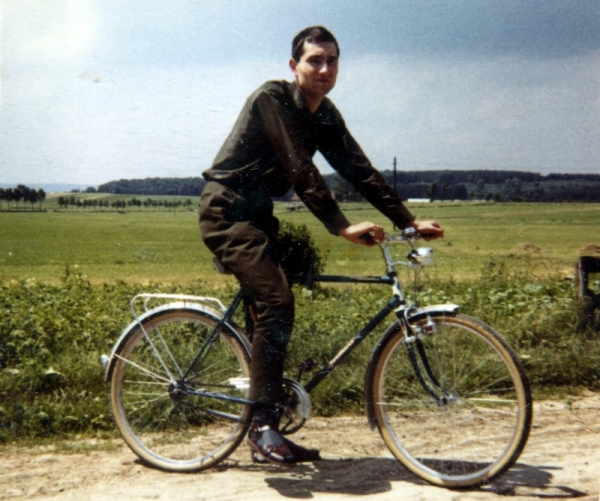
Biene’s school holidays were approaching. In 1962 her family had spent their vacation on the Mediterranean island of Corsica. Now they were planning to spend a couple of weeks at Lake Ammer in Bavaria. Even though I felt my love for Biene was getting stronger with every passing week, I did not openly declare it to her, because I erroneously assumed that she would already know. When she once asked me if I had ever been in love, I missed the golden opportunity to reveal what was on my heart. Instead I used a ride on my brand-new bicycle as a metaphor to describe in the most abstruse way the chaotic state of my inner being. I described how I got lost in the woods. I did not know which way to choose to get out. I dug deep into my psyche, too deep for comfort. Not yet realizing that the good and the evil lie close together within each and every human being, I criticized the world for failing to give me directions. Blind as a bat to my own flaws and weaknesses, I declared the entire world with its political systems, the church, and the army rotten and corrupt. These pathetic meanderings of my mind did very little to express my true feelings for her and would have been better left unsaid.

28a

Peter on his Bicycle

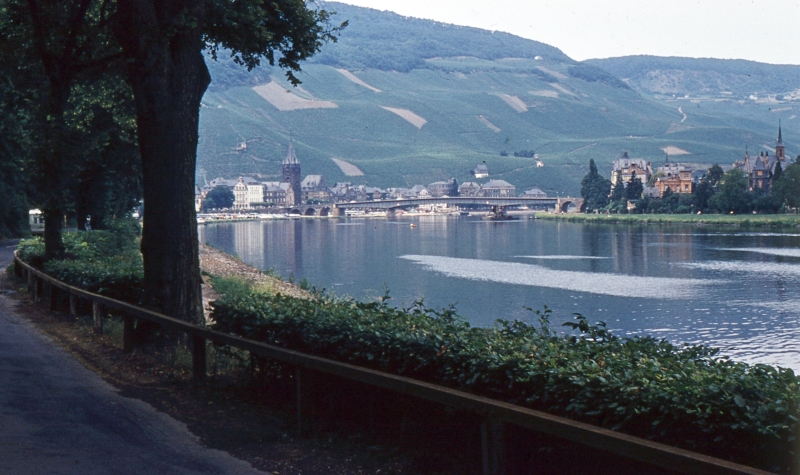
For the remaining three or four days I went on a bicycle tour with Dieter, my new army buddy. We traveled first up the River Moselle, then climbed up into the Eifel Mountains and stopped at a beautiful campsite named Pomerania, which reminded me of my grandparents’ lost home province in the east. At nightfall we sat in front of our tent looking at the rising moon in a cloudless sky. The day before I had bought a bottle of Moselle wine, a Riesling well known for its distinguished qualities due to the grapes, which incredibly ripen more fully during extended periods of autumnal fog in the river valley. Gazing at the crescent of the rising moon I remarked, “If me girl-friend in Velbert also looked at the moon this very minute, our eyes would be fixed on the same heavenly object and in some esoteric way we would be connected with one another.”

X294

Famous Moselle Valley with Germany’s finest Vineyards

Dieter chortled a few times, before he retorted, “But my friend, don’t be an idiot. That is not the same as being physically present. When I kiss my beloved Heidi, I know real love, love that you cannot even fathom with your strange romantic ideas in your head.” And that was the beginning of a long discussion on the nature of love. When we had savoured the last drop of the wine and were ready to crawl into the tent, we had moved away from our opposite points of view and found some middle ground. We agreed that in order for a relationship to be meaningful both the physical and spiritual dimensions would have to be present. We learned something important from each other. As for me, I resolved to arrange a rendezvous with Biene at the first opportunity that would offer itself in the near future. But you never know to start with, how things turn out in the end.

Storm Clouds on the Horizon

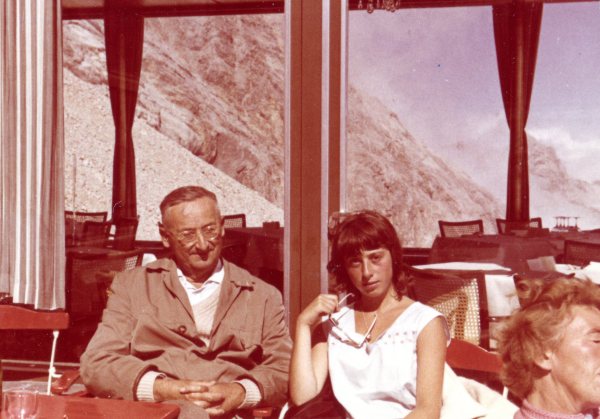
In the meantime Biene had an exciting vacation with her family in Bavaria, often went paddling on Lake Ammer with her parents’ folding boat. She and her twin brother Walter almost drowned, when their boat capsized in a violent storm. They traveled to the German Alps and even took a gondola ride up to the Zugspitze, which is with an altitude of 3000 m the highest mountain in Germany. She returned home filled with wonderful memories. There was so much to tell, but the flow of letters began to ebb. The intervals between them began to widen into two-week gaps. Something must have happened that made me worry. Had my letters lost its fervour? Were the thoughts expressed too philosophical, self-centred, out of touch with reality? I could not tell.

Biene and her father on the Zugspitze 1963

Biene and her father on the Zugspitze 1963

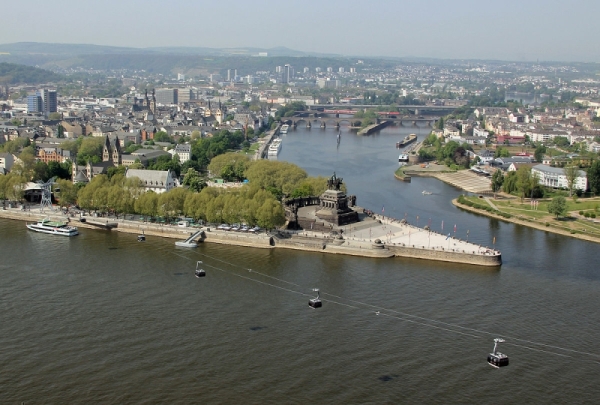
Fall was a beautiful time in Koblenz. The park at the German Corner, located at the confluence the Rivers Moselle and Rhine, was ablaze with brilliant red, yellow and orange colours. There I often sat on a park bench alone away from the noisy inner city and read about the fall and utter destruction of Rome’s rival Carthage in Mommsen’s History of Rome. I was fascinated to discover that the cause of the three Punic wars was the same as of most other conflicts in the history of mankind, namely the desire for economic power and growth at the expense of some other country. I gained important insights into the ways in which imperialistic expansions were intertwined with a general decay of the moral fibre of a nation. I saw so many parallels in our modern world that I contemplated writing a novella on the mighty city on the North African shore, if I could only add and weave in some personal experiences to the story to make it more interesting. These experiences were coming my way faster than expected, and in the end I got more than I had bargained for. Indeed I would have preferred not to write the novella in exchange for the pleasant status quo.

Deutsches Eck in Koblenz, Germany

Deutsches Eck in Koblenz, Germany – Photo Credit: wikipedia.org

I had just settled into the routine of orderly army life with its duties of monthly night watches, sessions of theoretical and practical instructions and the occasional maneuvers, which I enjoyed more and more, because they took place in the great outdoors away from the stuffy barracks in the city. Then a command from the newly formed signal corps at Maxhof in Bavaria went out to all army divisions to provide two truck drivers each. Our crafty commanding officer in Koblenz selected private Gauke and me for the transfer effective October 1st, even though we had no driver’s license for those colossal Mercedes communications trucks. Obviously, he wanted to keep his precious truck drivers for himself. We were told that we would receive professional training and certification that could be very useful later on, when we returned to civilian life. However, it was immediately clear to my that with the transfer to Maxhof, I would lose out on the chance of becoming part of the upcoming officer’s training program. It would upon successful completion raise me to the rank of a lieutenant of the reserve with a much higher pay-out at the end of my two-year term. The wheels had been set in motion. I had no recourse to an appeal process. The decision was final. I was devastated.

58

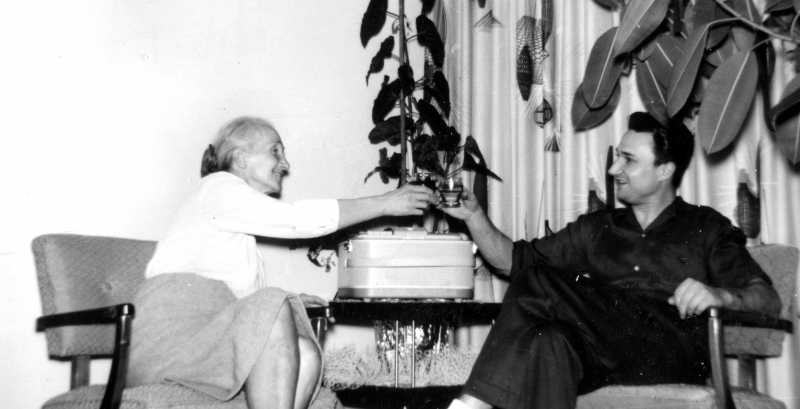
Peter in a contemplative mood at home in Watzenborn-Steinberg


One Misfortune Never Comes Alone

I was still reeling under the blow of the unexpected military transfer to Maxhof, Bavaria, when another one hit me like a bolt out of the blue. Biene wrote that she had met a young Dutch man by the name of Henk, to whom she was now engaged. They were dreaming about their own home at the edge of a forest near the city of Arnhem and were planning to get married. The news nearly tore me apart, all the more as Biene described our relationship as merely a nice correspondence between friends. Although my emotions were running high, I immediately responded to her letter and thanked her for being honest. It was a miracle of sort that I agreed to keep writing her. That promise was so terribly out of character, so contrary to what my pride and sense of honour would have allowed me to do that there was only one explanation. I was still in love with her.

Biene on Vacation at Lake Ammer 1963

Biene on Vacation at Lake Ammer 1963

Sleepless nights followed. I held endless conversations with myself. At times I would place the entire blame on my shoulders. Dieter was perhaps right, when he said that a kiss is more powerful than words, passion stronger than tender sentiments expressed merely in letters. Then the American folk song ‘On Top of Old Smokey’ was going through my mind during those agonizing hours of wakefulness. The apparent truth of the line ‘I lost my true lover for courting too slow’ hit me especially hard. Suddenly the pendulum swung into the opposite direction. For a short while, I found relief by putting the blame on Biene. ‘Surely, one does not get engaged overnight’, I argued. ‘Why didn’t she write me sooner? Why did she allow the correspondence to drag on so long? What about her other pen pals, the young man from Morocco for example? Does she want to keep all her options open? Is she like a bee, as her name implies, flying in a kind of romantic dance from flower to flower to see where she would find the sweetest nectar?’ Having experienced both ends of the emotional spectrum, I finally settled for a more balanced view. The wildly swinging pendulum was coming to rest in the middle. Concern for Biene pushed anger and jealousy aside; she might have responded to the lure of marital bliss too quickly. These internal monologues went on and on through several nights, at the end of which I was completely exhausted. But I had calmed down enough to finish my letter to Biene with the words, “Just one thing you must promise me. If you perceive a danger for your happiness in that you cannot distinguish between true friendship and love between a man and a woman or if your future husband does not like our correspondence, then have the courage to say goodbye. For I do not want to destroy your happiness.”

Frauenkirche, Munich, Bavaria - Photo Credit: wikipedia.org

Frauenkirche, Munich, Bavaria – Photo Credit: wikipedia.org

With my Phillips tape recorder in one hand and a heavy suitcase in the other, train tickets and army papers in my wallet, I stepped on the Intercity train to Munich. Private Gauke, whose first name I no longer recall, accompanied me to our destination. We were both in uniform, as this was a requirement when traveling on official assignments. While the high-speed electric train was rushing toward the Bavarian capital, Gauke tried to cheer me up by pointing out all the advantages of the prestigious truck driver’s license later in civilian life. But he succeeded only partly in pulling me out of my morose taciturn shell. He did not yet know about the other problem, for which the possession of a driver’s license offered no solution. In Munich we had to catch a local train to Starnberg. Thousands of passengers were milling about the main station. At the crowded automated billboard announcing arrival and departure times I spotted the wrinkled face of my former scout leader, Günther von A. He was as surprised to see me, as I was to see him. What were the chances of this occurring? Once in a million or less. And what were the chances of still being in love with Biene? The question made me think about fate and destiny, a topic that philosophers and theologians great and small have been grappling with for centuries, a can of worms, which I decided in my present state of mind to leave unopened.

Army Heaven

Lake Starnberg, Bavaria - Photo Credit: bavaria.by

Lake Starnberg, Bavaria – Photo Credit: bavaria.by

Maxhof, a modern army training centre, was a pleasant surprise to me. In contrast to the drab sameness of the 19th century design of the Falckenstein barracks, Maxhof impressed me with its pleasant appearance. It had more the looks of a hypermodern youth hostel than of a military building complex. Trees and ornamental shrubs surrounded the sleeping quarters, the cafeteria, and the administration building. There were even flowerbeds at the main entrance. Best of all was the room, where we were going to sleep. With its comfortable beds, its large windows with a view from the park-like setting all the way up to the nearby mountains, its brightly painted walls, a spacious desk for Gauke and me, all I needed was Mother’s fancy tablecloth, a vase with some pretty fall flowers to have the illusion of being at home.

Maxhof with Lake Starnberg in the background

Maxhof with Lake Starnberg in the background

Gauke and I reported for duty the following morning at the main building. There was a momentary kafuffle over us two soldiers from Koblenz. Apparently the officer in charge of the transfer was supposed to have provided certified truck drivers. The officer behind the counter was very much upset over being cheated out of two valuable experienced drivers. But in the end he assigned us to a driving instructor and informed us to show up for our lessons the very next morning. Gauke and I could hardly show restraint in our ecstatic joy over this most fortunate turn of events. Apart from our first positive impressions about the physical surroundings we noticed with glee that there were no mandatory line-ups, no check-ups of room, closet, and clothes; this was army heaven.

Massive Mercedes truck - the type we were trained on

Massive Mercedes truck – the type we were trained on

After two weeks of enjoyable driving lessons on the big Mercedes trucks, the compass needle of my inner life was no longer spinning out of control. More than three weeks had passed by now. Biene had not yet responded to my letter and I thought that if our correspondence was to end it should at least end on a good note. So I wrote,” … A relationship, no matter how you look at it, which had so beautifully and lovingly developed, is not the kind that we just break off. Something of that, which we shared, will remain open and will eat forever at our hearts. Therefore, I would like to amiably end, what we have so amiably started. Let us if not in reality then at least symbolically shake hands and without any bitter feelings part from each other. I am thankful for all the dear letters and  I tell you once more that you have given me much during the time of inner trouble and distress. Please do not turn down my last request, dear Biene, and write to me just one more time. One last sign from you, and I will be content…”

But there was no sign, and I was not content.

Destruction of Ancient Carthage

A Metaphor for Emotional Turmoil

There was enough explosive emotional energy bottled up inside me. Having no one to write to, I had to return to the unfinished novella to release it. At the park bench near the German Corner in Koblenz I had most of its content on Carthage written up in my notebook. The personal experiences making the story come alive were missing though. Now they were burning with a searing fire in my heart. My fingers were itching to commit them to paper.

Ancient Carhtage - Image Credit: ancient.eu

Ancient Carthage – Image Credit: ancient.eu

Our driving lessons had unexpectedly ended. We were told that the instructor was needed elsewhere and we would start over together with the next batch of soldiers coming in to render the course more efficient. Gauke and I were delegated to work  in the office. The assignment was to catalog the total electronic equipment with all its individual parts down to the last nut and bolt. Thus, we created a giant database for the signal corps stationed at Maxhof. I dictated the names and parts numbers and Gauke typed. One can hardly imagine anything more boring than this. But there was one advantage. We only worked during regular office hours, and we were done with our daily chores of number crunching by 4:30 p.m.

69

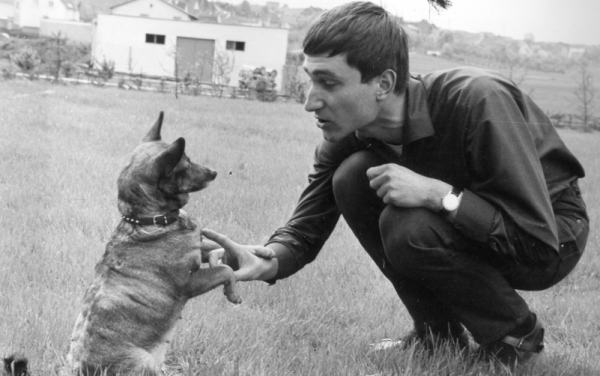
Peter playing with the neighbor’s dog (1963)

So I had more time than ever before to write in the semi-private room of our Maxhof residence. The historical sections of the novella heavily leaned on Mommsen’s historical work ‘History of Rome’ and to the best of my knowledge they described the power politics and Machiavellian schemes of Rome very accurately. My heart, which had lost two girlfriends within the span of less than six months, was the fertile breeding ground for the stuff that good writing feeds on. I transformed my former pen pal Margret, into Bersika, the daughter of a wealthy member of the Peace Party of Carthage to make the final dramatic encounter in the burning capital of the Carthaginians more believable. On the other hand, Claudia (Biene) and her twin brother received a more realistic description reflecting our first encounter at Lake Baldeney and the ensuing correspondence, which had ended so painfully. On the Palatine Hill in Rome Publius (Peter) and his friend became acquainted with an old sage, who introduced the young men to the philosophical centre piece of the novel, which reflected my ideas, in part burrowed from Democritus, on God and His creation and how He lives within it in a mysterious interplay between mind and matter. The destruction of Carthage, the fierce house to house street fighting, the slaughter of tens of thousands of civilians, the senseless resistance of the dictatorial ruling party against the almighty Roman war machine, the burning houses, the stench of unburied corpses provided the background for the final scene symbolizing my chaotic troublesome state of mind.

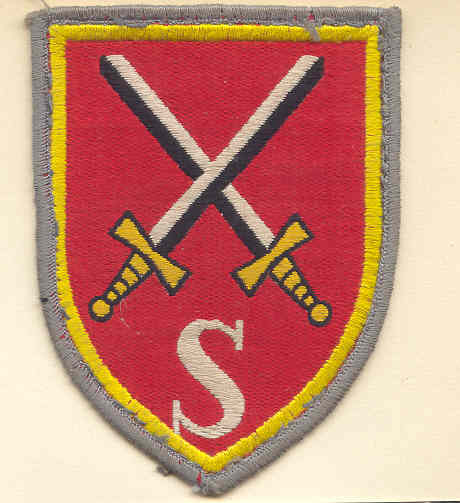
Crest of the Signal Corps

Crest of the Signal Corps

When I had penned the last line, I felt an eerie calm come over me. For a while I sat at my desk without a thought, without a feeling; it seemed that my inner being had been poured out into the thick writing book before me. Private Gauke entered the room. He had been teasing me about my writing craze for the past couple of weeks and had noticed with genuine concern how I was withdrawing more and more into my crusty shell. He said, “Peter, it is about time that you get off your chair. I just discovered a cozy pub in Feldafing. Let’s go and have a drink of that great Bavarian beer.” Gauke was a fine fellow. I gladly came along. The novella was finished.

New Year’s Eve Party

Chief Günther Kegler provides some much needed distraction

The stupendous outpour of pent-up emotions alleviated the anger and the pain. I began to enjoy the almost daily outings with my friend Gauke. But in spite of the pleasant distractions the visits to the pubs provided by the excellent beer, wholesome food, Bavarian music in the background, and the pretty waitresses in their traditional dirndls, I could not push the troubling spectre of my lost love out of my mind. I had asked her for a farewell letter or card to end amiably what had started amiably. Two months had passed. The silence became unbearable. So against my own conviction like a moth attracted to the flame of a burning candle I wrote her another letter from home before Christmas, in which I reiterated how much I appreciated her supportive letters during the hard days of my basic training, Then all of a sudden as if triggered by the emotionally cry of despair on the last pages of my novella, I let the proverbial cat out of the bag, “… Add to that the devastating fantasy, which produced during our correspondence the strangest imaginary flowers. At times I saw you – please don’t be alarmed, dear Biene – in my arms, then at my side travel to Canada, study with me in Marburg or Berlin, and in the more distant, but all the more brighter future spend a life with you through joy and sorrow. All these fantasies essentially destroyed our relationship…”

Biene and Mother ß Christmas 1963

Biene (Gertrud) and her mother  Elisabeth Panknin – Christmas 1963

Again I urged her to reply, even if she had no desire to write, just one more time. Before I sealed the envelope, I inserted a short story, which I had especially written for her. I hoped that it would in allegorical terms evoke the tender feelings we had once felt for one another. I did not mention the novella, which as an unedited rough copy I did not yet consider complete. Within three days and just in time for Christmas a miracle occurred. The letter that I no longer expected, but had hoped for arrived. And what it contained surpassed all my expectations. Instead of a farewell message, she wrote that my story about little Irwin had moved her to tears, but more importantly that she had once entertained similar thoughts and dreamed similar dreams about the two of us living a life time together. Even though she too had also allowed her fantasy to go too far and expressed doubts about the fickle nature of dreams, which often do not bring the fulfillment one had longed for.  She placed her trust in the mysterious force called Fate that one day things would work out between the two of us. The way she was wording her sentences I sensed that she had gone through some troublesome times during that long period of silence in our correspondence. Some way or another the anguish was connected to her fiancé Henk, whose father had suddenly and unexpectedly passed away. Nevertheless the news that our friendship at least at the correspondence level had been restored gave me a big boost.

Helga Kegler - daughter of General Gerhard Kegler

Helga Kegler – daughter of General Gerhard Kegler

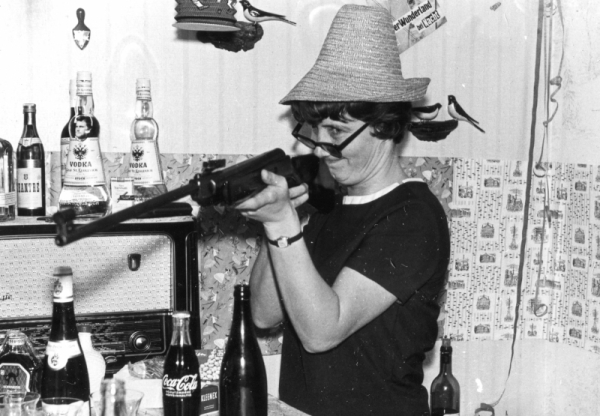
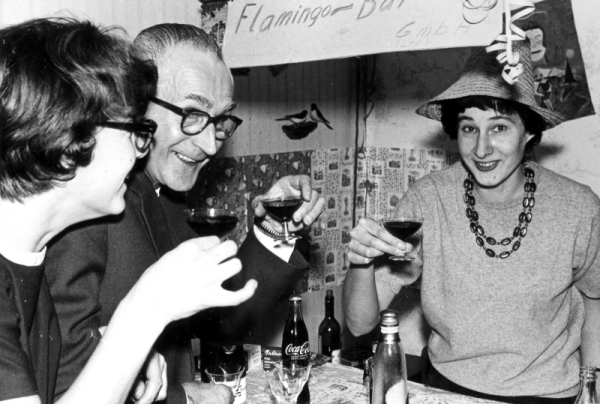
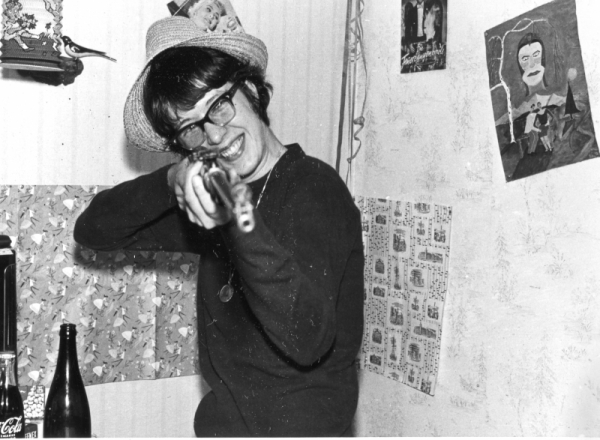
I participated eagerly in the preparations for the New Year’s family party planned by the ‘chief’ of the Kegler clan, Uncle Günther. In the large vestibule of the basement suite we set up a bar, which we dubbed the Flamingo Bar. The good uncle had it well stocked with choice wine and beer as well as nonalcoholic drinks for this festive occasion. We decorated the wall with pictures, photos and old movie posters. I even contributed my painting of the 21st century space woman now looking down on a happy party crowd. Happy and diverse indeed was the crowd ringing in the New Year, young and old celebrating in perfect harmony, Uncle Günther, Aunt Lucie, Mother and Aunt Mieze, Adolf, Erika, my cousins Helga and Jutta, two young ladies, the daughters of a pastor’s couple, whose names I can no longer recall, and my humble self. My tape recorder provided the background music for the party, and whenever there was a call for a dance I cranked up the volume and switched the music to a livelier beat.

From left to right: Helga, Uncle Günther, and my sister Eka (Lavana)

From left to right: Helga, Uncle Günther, and my sister Eka (Lavana)

At midnight we raised and clinked our champagne glasses wishing each other a Happy New Year. With Biene’s letter tucked away in my suit pocket I looked with confidence into the future. I felt that 1964 was going to be a great year for me. However, if I had read Goethe’s autobiographical novel ‘The Sorrows of Young Werther’ and understood how I, like Werther, was also entangled in a love triangle, I would have been less optimistic. The frayed thread on which our love was hanging was ready to snap any time. Whether I would have shot a bullet through my brain on a night watch in the army, if Biene had married Henk, was doubtful. Eventually I would have found and married another girl. But the oppressive awareness of having lost my first love would have lingered on my consciousness for the rest of my life.

Jutta Kegler - Youngest daughter of General Gerhard Kegler

Jutta Kegler – Youngest daughter of General Gerhard Kegler


THE MINING ERA OF THE CANADIAN COLUMBIA by Bill Laux – Chapter 2

CHAPTER TWO

THE EUROPEAN EXPLORERS

The Aboriginals first contact with the Europeans came in 1744 when the Spanish mariner, Juan Perez made a landfall on the Queen Charlotte Islands, and met the Haida who came out in canoes to trade.   Spain claimed the entire Northwest under the Bull of Pope Alexander VI of 1493 which divided the New World lands between Spain and Portugal.    It had come to the ears of the Spanish King, Carlos II, that the Russians had been sending out parties to begin a sea otter trade with the Aboriginals of Alaska.   The Viceroy of Mexico was instructed to send out expeditions to establish a Spanish claim to the Northwest Coast, and seek for the supposed  Strait of Ainan that was believed, on the basis of fictitious maps, to connect the Pacific Coast with Hudson’s Bay.

Perez was sent north in the frigate, Santiago, from Monterey in Alta California in 1774, to sail north to latitude 60º north to investigate what other Europeans might be doing in those waters, to make contact with the natives, and on his return voyage to make “Acts of Possession” at suitable places.   The voyage was only a partial success.   Dangerous shoal waters, cold, and contrary winds, and sickness among the crew, were all reasons Perez gave on his return for failing to make a landing and turning around at latitude 55º N.   The truth probably is that Perez was scared.   The precipitous mountains, densely forested, descending to the shore, all empty of human habitation, the fjord-like inlets shrouded in perpetual fogs and beset with hazardous rocks daunted this seaman.   To be cast away by misadventure on such an inhospitable shore would mean certain death by starvation to a European.   His ship’s carpenters dismantled the wooden cross they had made with a message claiming the land for Spain, and Perez sailed for sunny California and home.

But on his way back, on the 18th of July, sailing past the Queen Charlotte Islands, he was sighted by the Haida Indians.   Those aboard the Santiago saw a series of fires lighted along the coast to signal their presence as they sailed past.   On the 20th large Haida canoes came out, almost as long as the tiny Santiago.   The cautious Haida refused to come aboard the Santiago; the prudent Spaniards refused to go ashore.   Some trade ensued with the sailors letting down knives and trinkets from the ship by rope, and pulling up furs and Chilkat blankets.   They saw that one of the Indians had a harpoon with an iron head.   This may have come from the Russians; alternatively, it may have come from Aboriginal Siberian ironworkers by repeated trades down the Alaska coast.   Further south, at Nootka Sound, Perez encountered more natives, and these apparently came aboard his tiny ship, for in the lively trading, one of them lifted some silver spoons from Jose Martinez, the second officer.

The Spanish Viceroy was understandably dissatisfied with this timid expedition.   He demoted Perez and sent the Santiago north again in 1775, commanded by Bruno Heceta, along with the even smaller (at 36 feet) Sonora under Bodega y Quadra.   This was to overcome the mariners’ objection that all would perish should the Santago be wrecked on one of those hostile shores.   Heceta was ordered to sail north to Latitude 65º and make the Act of Possession.

But Heceta, even more cautious than Perez, turned around at the southern tip of Vancouver Island and sailed back to Monterrey.   Bodega y Quadra however, in Sonora, not larger than a Haida canoe, went as far north as 57º and there made the symbolic Act of Possession.   That seemed to satisfy the Viceroy for the time being, since no more northern expeditions were sent out.

The British, too, had heard of Russian activities on the Northwest Coast, and of the secretive Spanish expeditions in that area.   In 1776, the master mariner, Captain James Cook was sent out at his own insistence to explore this unknown Coast for the shadowy Straits of Ainan, which, if they existed, the Admiralty was determined, should be firmly held in British hands as an All British route to the Far East. 

Cook, sailing around the Horn, came up through the South Pacific Islands to “discover” Hawaii, whose inhabitants, competent seafarers in their own right, thought they needed no “discovery” by anyone.   Cook reached the Oregon Coast in March, 1778, but stormy weather prevented a landing.   By 29 March he was in Nootka Sound, greeted by the Indians in their canoes, eager to trade, among other things, the same silver spoons purloined from Jose Martinez four years previous.

Unlike the Spanish, Cook came ashore, sent his men into forest to cut spars and spare masts.   He replenished the Resolution’s water casks and brewed spruce beer from the local spruce needles as a remedy against scurvy.   Cook again sailed north at the end of April getting his ship into the Aleutian Islands and returning to Hawaii for the winter where he was killed in February 1779 in a skirmish with the locals.   

His second in command, Charles Clerke, took over, and entered the Bering Sea, sailing north until he was blocked by ice.   Clerke died of tuberculosis in August 1779, and Lieutenant Gore took over to sail the expedition south to Canton, where to their surprise, the crew discovered that the sea otter pelts they had traded for with the Indians, brought amazingly high prices.  They sailed back to England with the news, which, like the Russians and the Spanish, the British tried to keep secret.   But crew members let it out.   John Ledyard, deserting to America published his account of the voyage in 1783, telling the world that “skins which did not cost the purchaser six pence sterling, sold in China for 100 dollars.”

The news that these bleak lands, as hostile as the Norwegian Fjords, would support a trade in furs to China more valuable than anyone had dreamed, brought the commercial world to the Northwest.   For the next seventy years the Northwest, that dark and mythic land, would see a great commercial struggle for domination of its trade while distant governments fumbled toward a solution to its sovereignty.