Surprise Photo

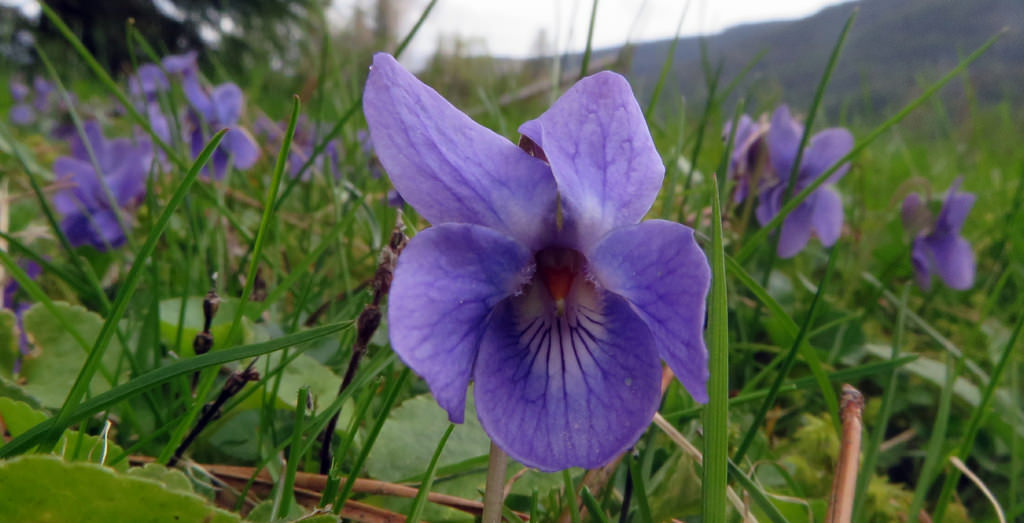
No, it isn’t spring yet in our northern latitudes. Charles, a dear blogging friend,  after honestly praising my snow and ice photo essay yesterday, suggested nevertheless to post a flower, which would bring some comfort to all, who are presently suffering from the dismal cold. Hopefully, this violet will be the signal for spring to arrive soon.

Natural Splendour of the Arrow Lake

Wednesday’s Photos

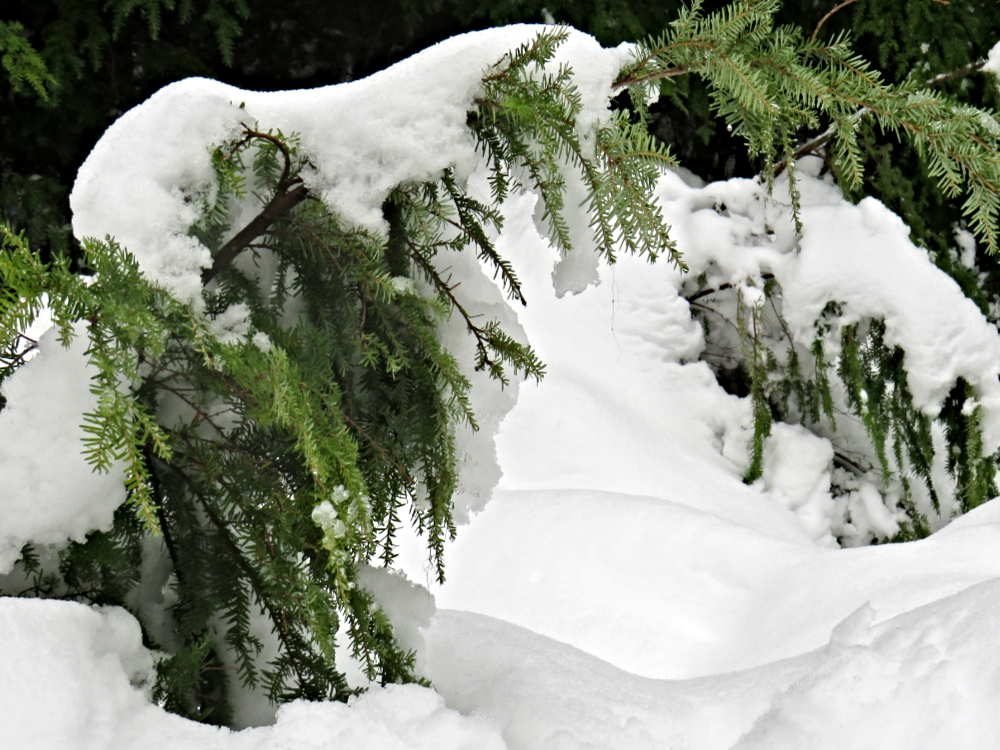
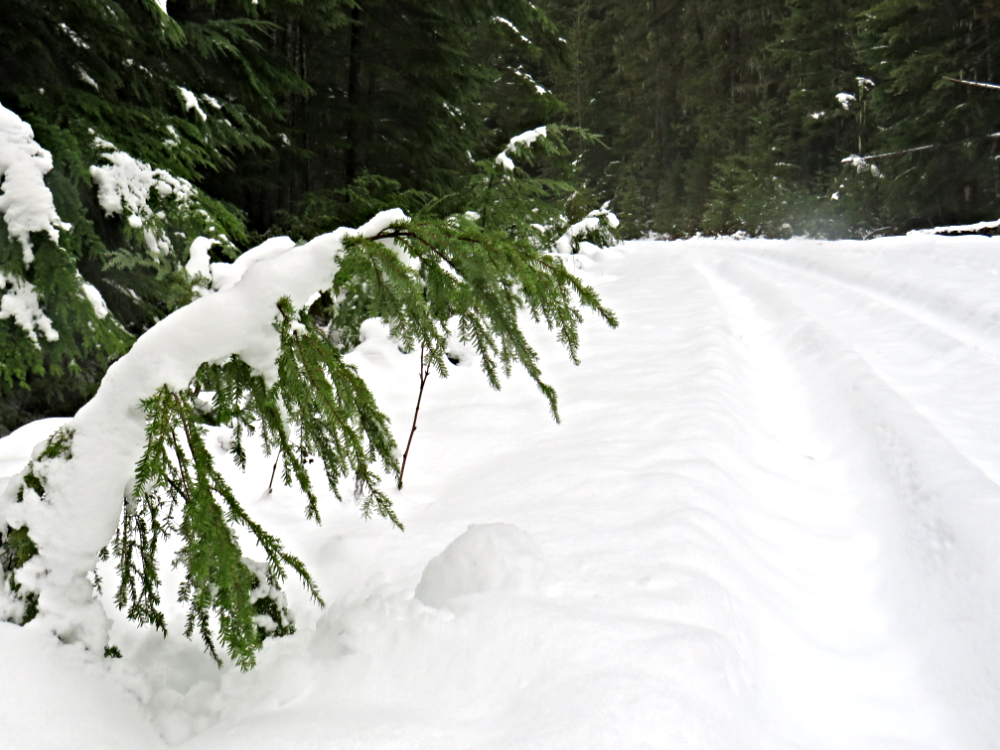
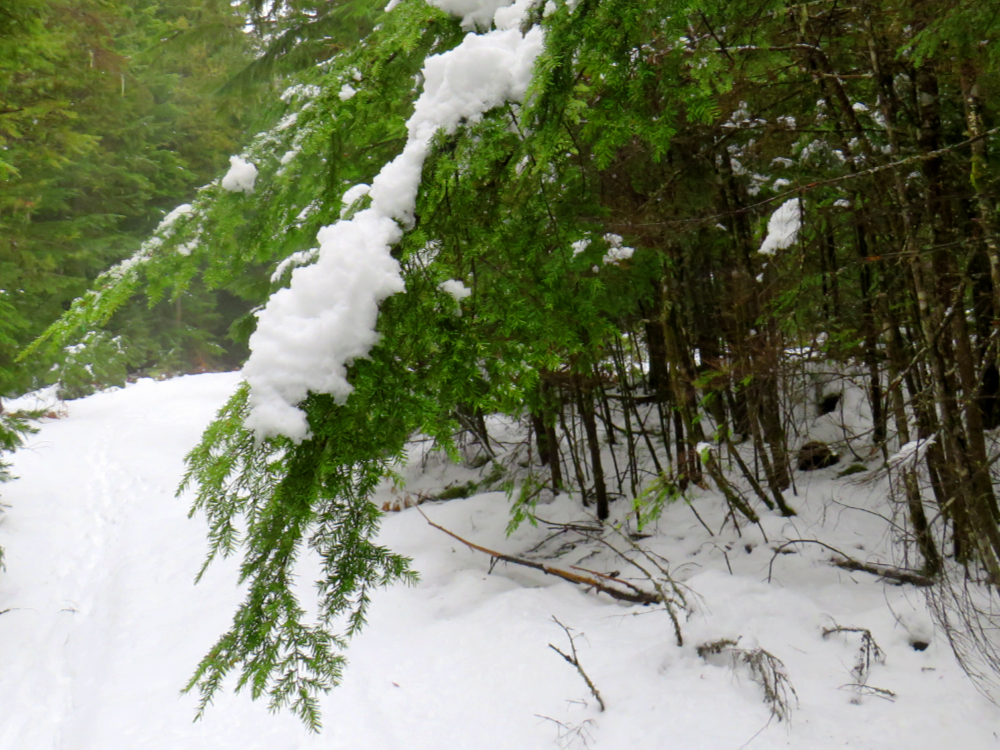
Bending, but not Breaking

It is good to have a focus when you go out into nature for a photo session. One way to sharpen your focus is to have a theme. With this in mind my wife and I went to the same trail leading down to the Taite Creek Campsite last weekend. One of the great laws of survival, not just for plants and animals, but also for us human beings, is to be able to bend, to be flexible, but NOT to break and succumb to the adversities of life. Here are the photos dwelling on this theme. Enjoy.

iamg_5622iamg_5621iamg_5612aimg_5628aimg_5656

The Peter and Gertrud Klopp Story – Chapter XXXIII

My apology to all my dear readers and followers, who have been missing this post last week. I  skipped over to Chapter 34 by mistake and left out the events that had brought new energy, hope and joy to Biene and me. At that time we had new idea that dark storm clouds were brewing on the horizon of our love story.

First Semester at the University of Calgary

UAC1

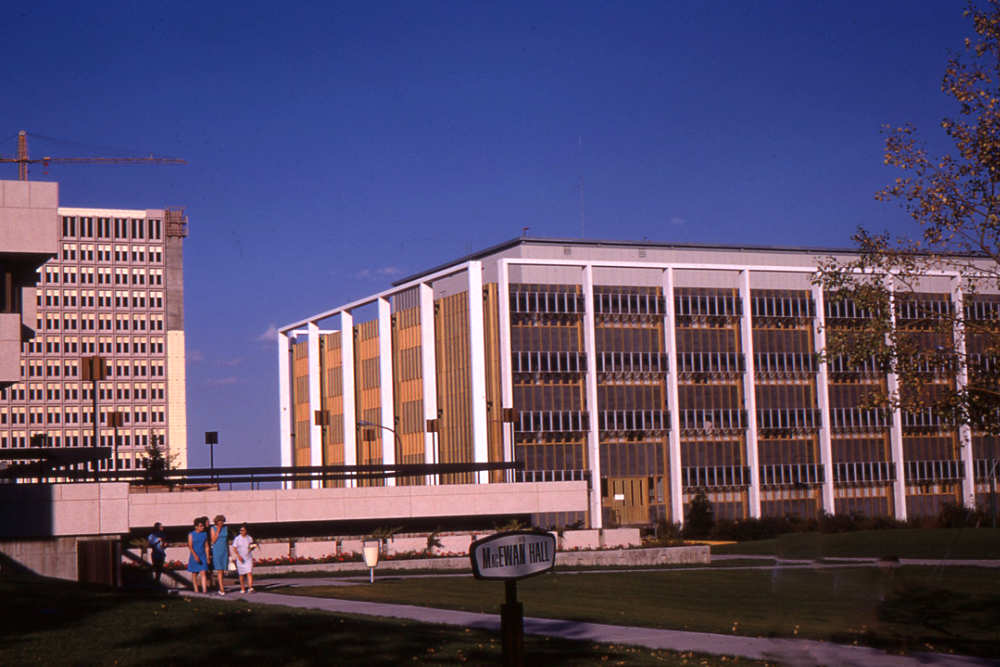
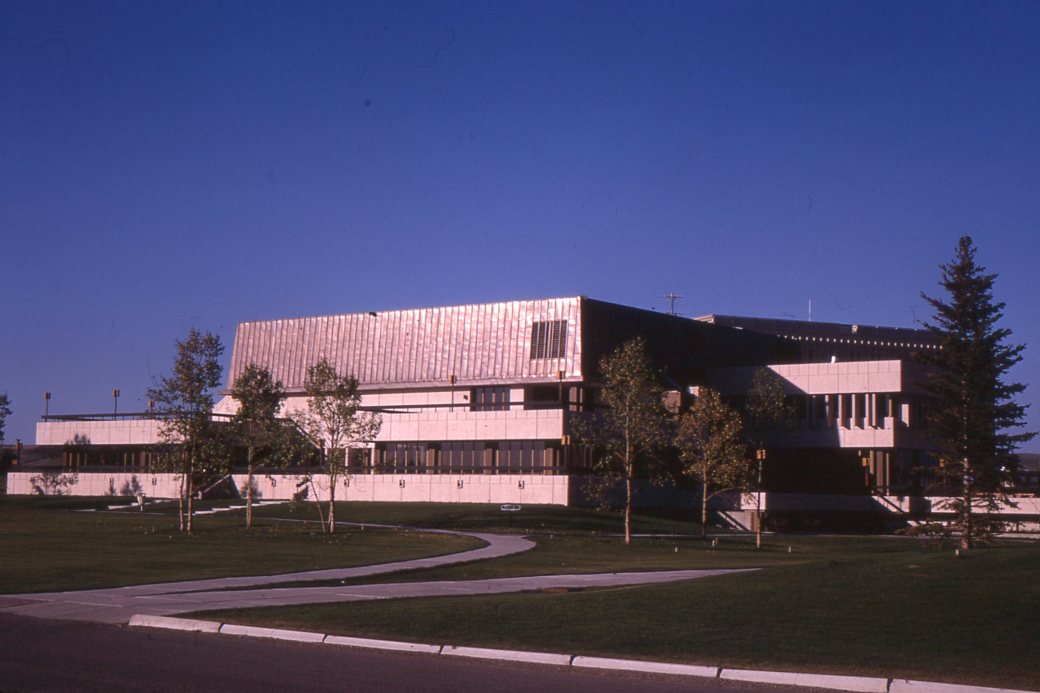
Brand-new University of Calgary – Author’s own Historical Photo

“I will ask no more of life than this that I might love you through all my days, and that you may find peace and joy in the constancy of my heart.”  Robert Sexton

Faithfulness Revisited

While searching for a quote that described best my feelings about love and faithfulness, I came across many quotes about fidelity, loyalty, and faithfulness. These virtues have always found strong support across the ages from philosophers, theologians, and rulers, as long as they were part of an individual’s commitment to an ideal, religion, or country. When I narrowed my search down to the love between a man and a woman, I discovered to my dismay that there were two camps of opinions, which differed from each other like day and night. The dark side would have scoffed at Robert Sexton’s quote as if he was promoting boredom and loss of freedom in human relationships. It ridiculed commitment through faithfulness by quotes, such as ‘The follies which a man regrets the most in his life are those he didn’t commit when he had the opportunity’, ‘A bridegroom is a guy who has lost his liberty in pursuit of happiness’, and ‘Absence makes the heart go wander’. The list is almost endless.

Biene and I were poorly prepared and had nothing except our love to repel the onslaught of subversive opinions and temptations. To this day I am grateful to Biene’s sister Elsbeth for trying to warn Biene about the dangers of a long separation. Even though we were not too happy about the doubts she had cast into our hearts, she at least forced us to confront the issue. By being made aware of the perils for our romantic relationship so far apart from each other, we were able to recognize situations that could potentially destroy it.

Before Biene went to England, she had to learn first hand how a commonly held opinion could put belief in faithfulness into question as something both unrealistic and old-fashioned. A nice young man, a fellow student of the Wuppertal University, no doubt infatuated and attracted to her natural charm and beauty, pursued her and in vain tried to weaken her resolve to wait for me. She was dismayed to see that so few people believed in the power of love, which would give us the strength to be faithful. Incidences of this kind prompted her to ask for a ring as a form of protection against aggressive suitors in Germany and  in England.

I for my part had no such outer sign, with which I started my studies in Calgary. But I thought being male I would find it easier to avoid the pitfalls of temptation. For in the mid sixties it was the man, who would normally invite a girl to a date. While being very worried about Biene in this regard and actually sharing my concerns with her, I myself felt secure in my belief that my female fellow students, who may have taken a fancy to me, would not pursue me, as Biene’s aggressive suitor did in Wuppertal. As it turned out I was quite mistaken. I had to learn and I learned quickly that their methods were not as obvious, rather a lot subtler in their outward manifestations.

For the eighteen-year old female graduates from high school, the faculty of education was the most favourite department to enrol. Very few were willing to face the exacting demands of engineering, nor were they welcome in this male dominated field in those years. But there was also another reason why they were outnumbering young men in the teachers’ training program almost at the ratio two to one. This was still the time when well-to-do parents would send their daughters to college in the hope to marry them off to a professional young man, who would be acceptable within their socially elevated family status.

Missing Biene

65

Another historic photo of the University of Calgary in the mid 1960’s!

At the end of the frosh week, during which we new students received our orientation and introduction into the life on campus, the university had organized a dance in the huge gymnasium of the Physical Education complex. Six bands were playing alternately rock and more traditional music. They made sure that there was never a break for the indefatigable couples on the dance floor. Having no friends to hang out with, I felt lonely and wished that Biene were there sharing this special moment with me. With all the tables taken I had no place to sit down. I leaned against the back wall taking in some of my favourite music I remembered so well from my birthday parties. But I was not in the mood to enjoy it. So I left, took the next available bus and returned to my humble basement room. To overcome my feeling of loneliness I wrote a letter to Biene.

September 19th Calgary

My dear Biene, now you will get to know how things turned out with my search for an apartment and with my introduction to the university. For days I have been running around in the northwestern section of Calgary, until I finally decided on a small basement suite. I am exaggerating if I say suite, because it is only one large room. Table and chairs, bed and cupboard, as well as a gas heater and some basic cooking facilities are included in the rent, which is thirty dollars a month. To be totally independent, I decided to exclude bedding from the rental agreement, which would have cost me five dollars more. Now it is gradually turning into a really cozy place All day long I scrubbed the dirty walls, mopped the linoleum floor and cleaned the windows. My old wooden crate has been converted into a cooking stand so that the table remains free for my studies. Oh and then came all the shopping I had to do: bedclothes, blankets, cutlery, bowls and plates, a small radio, etc. Now I am satisfied and wonder whether you would like it.

An old lady also lives down here in the basement adjacent to my room. She is very pleasant and enjoys the sound of my guitar, which I sometimes play for relaxation. I could hardly suppress my astonishment about her ignorance of geography. When I told her that I had come from Germany, she asked me, where that city was located in Canada.

Yesterday we had our orientation complete with welcome speeches and formal ceremonies for the frosh. The professors spoke so clearly and distinctly that all my fear disappeared from my anxious heart. I have already made the acquaintance with a couple of classmates and hope to meet them again later on. To understand them is quite a bit harder for me, because they just don’t make the effort to speak clearly and distinctly.

Yes, dear Biene, if you were here, my happiness would be complete. How much I miss you, I again felt last night, when after the formalities the six largest bands of the city were playing music in the gymnasium, where everyone was dancing except you and me …

The very next day the fall session began. Since I was in a first year program, most of the lectures were held in auditorium-sized rooms accommodating more than a hundred students at a time. Courses like calculus and psychology that were being shared by other departments were especially crowded. Having chosen a senior course in German turned out to be a blessing. Dr. Cardinal, a very likeable professor, was teaching The Age of Goethe to our small group of three students. Here my mind could at least take a short break from the great demands in the other subject areas. Ever since Biene and I had decided on starting our life together as husband and wife in Canada, I knew that I had not merely entered a race for the survival in the academic training program, but also committed myself to an all-out effort to achieve an above average standing. For only with a grade point average of close to an A could I hope to receive substantial government grants and scholarships for the second year. I had poured my entire savings from my army service and my summer earnings as a labourer into the cost of tuition, textbooks, rent and living expenses. There would be little left for me to finance another academic year except with the help of financial support from the Alberta Government. Thus, in spite of my limited English language skills I set my goal to nothing less that a B+ over all standing. To achieve this, I had to get near perfect scores in German and Calculus, while maintaining a minimum of 70% final grade in the other subjects. For the first couple of weeks this appeared to be an unobtainable target. I often communicated my concerns and worries with Biene. I told her that I did not want our life to start in poverty with no chance for a prosperous future. Even just to finish the year with merely passing grades looked like a great challenge to me in the beginning. Then came another shock. I had set my hopes on studying lecture notes and textbooks and on doing well in the multiple-choice tests that were becoming very popular in the mid sixties. Instead we were required to write one essay after another. I felt that I could not compete very well in this challenging field  with my Canadian fellow students. A visit to the office of my English professor was going to shed some light onto the nebulous trail of my academic future at the U of C.

Facing the Challenges of the English Literature Course

66

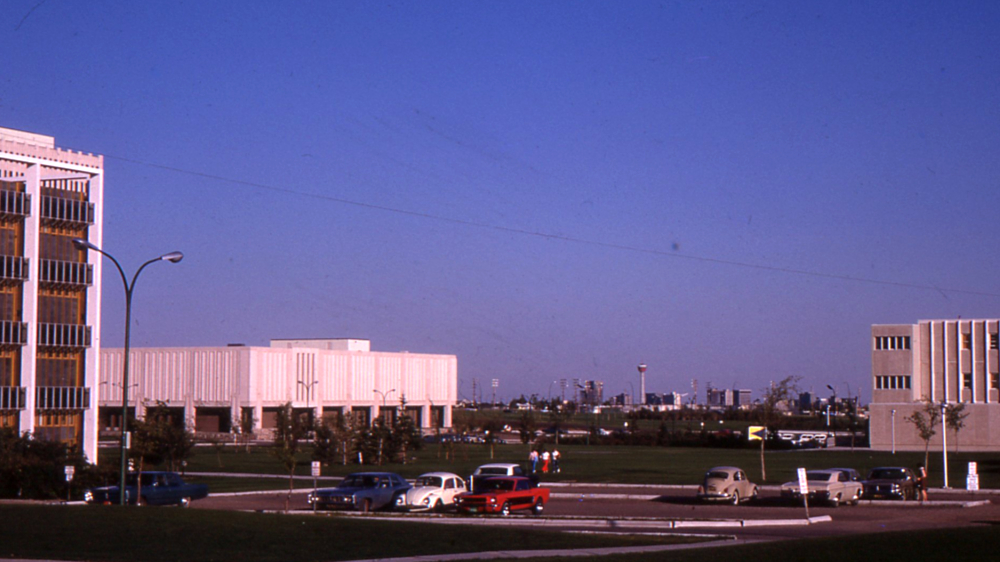
University Campus with the Calgary Tower in the Background

I took some comfort in the fact that the English literature classes were small. The one I attended had only twenty students under the loving tutelage of Dr. Alexander. In my mind I called her Dr. Nightingale, because she was frequently teasing her students for not knowing the European songbird that had taken such a prominent place in John Keat’s ‘Ode to a Nightingale’. I went to see her one day after class in her office to get advice as to how to cope with my language problems. Apparently having a good knowledge of the European high school system, she pointed out that I had studied the principles of essay writing for much longer and in greater depth than my Canadian fellow students. What I would have to do was to concentrate my efforts on expanding my active and passive vocabulary and thus build up my confidence.

I became very eager to prove my ability to write well after this encouraging and heart-warming interview.  Near the end of one of the Friday morning lectures Dr. Alexander announced to the class that for Monday she planned on giving us a written test on one of two topics having to do with poems of English Romanticism. Having all weekend to prepare myself I chose the topic I felt most comfortable with, I first wrote the essay on a piece of scrap paper, then memorized the three pages sentence by sentence. When I could recite the entire text out loud, I was looking forward to take the test. All I needed to do now was to rewrite the essay from memory on the official exam paper on Monday. How proud I would feel, if I could report to Biene my first A in English 240!

Well rested and as I thought well prepared I sat at my desk in the small lecture room waiting for Dr. Alexander to come in, while others were chatting about all the fun they had over the weekend. A bit annoyed that they were partying while I had been studying so hard, but at the same time quite relieved that with their poor preparation I would have a better chance of getting a high mark on the test, I attempted to tune them out and tried to focus on the precious content I had stored in my memory. By now I was well known to the other students for my strong, not necessarily unpleasant German accent and my often-stilted way of expressing myself. Some asked, “Well, Peter, I bet, you studied really hard for the exam.”

“I studied hard enough to get by with a passing grade,” I replied trying to be modest.

Then our professor walked in with her endearing smile. Without further ado she handed out the papers and then announced, “You will write on the second topic”, whereupon she sat down apparently quite content to spend the lecture free morning watching us write.

In the meantime I felt the emotional shockwaves of her incredible announcement racing through my mind. Believing we had a choice between the two topics, I had studied for the first one. For several minutes I stared at the blank paper in front of me. The pen I held in my right hand did not move for a very long time. Then finally I began to calm down. Under pressure and time constraints, where others would fall apart, I had the ability to make the best out of a bad situation. In a creative surge I took the parts of the memorized essay, which at least by some stretch of imagination bore some resemblance to topic two, reworded them and recombined them with ideas which I had picked up at the lectures. In spite of the initial delay I was able to hand in my finished work at the end of the fifty-minute session. With some apprehension I was awaiting the return of my paper. Great was my relief when I read the professor’s comment, ‘Well written! But very weak conclusion! 67%.’

Walking the Line

64

Historical Photo of the University of Calgary in the Mid 60’s

After a few sessions in the Calculus Course I realized that I had underestimated the scope and depth of this extremely demanding subject area. I was of the mistaken belief that I could easily sail through its content with a minimum of effort, as the course appeared to be merely a review of what I had already learned at the German high school. Also the lecture hall for the Math 211 students was overcrowded with more than two hundred students in attendance. The course was compulsory for all first-year students in the Departments of Engineering and Education. Then there were the obligatory tutorial classes, which were much smaller and more conducive to the nature of a question-and-answer period. The tutor, a young graduate student by the name of Jenkins, was very keen on telling us off-colour jokes and even more questionable mathematical riddles very much to the embarrassment of the female students in the class. When asked to explain how to go about solving a particular math problem, he appeared often evasive and rarely was of any real help to anyone. So we got into the habit of helping each other.

This is how I got to know Brian Fisher, with whom I immediately struck up a friendship that was going to last a lifetime. I helped him to get through the course with a passing grade, while he freed me from my social isolation  His mother was a very caring person. Seeing that I had been on a hunger diet she insisted that I should join the family for Thanksgiving. For the first time in my life I looked at an oven-roasted turkey, smelled the aroma of the carved up slices on my plate that together with the mashed potatoes drenched in mouth watering gravy, the cranberry sauce, and the mix of carrots and peas presented a most wonderful culinary delight. This was truly a treat for someone like me, who out of budgetary constraints was content with a diet alternating between chicken noodle soup on one day and chunky dinner out of a can on the next.

In the meantime the calculus course had become increasingly more difficult. We were now struggling with the concepts of mathematical limits and the first derivative. At the end of the tutorial class a female student intending to become a music teacher approached me rather timidly and asked if I could give her some help with a problem that Mr. Jenkins had been unwilling or unable to explain. Why the curriculum required that primary, music, art and all other teachers not embarking on a career in secondary math had to take this course, I could never figure out. I was able to give her some valuable clues without providing the answer. On the next tutorial class she cheerfully told me that thanks to my help she was able to solve the problem and asked me a little less timidly this time if I could spare a few minutes again after the tutorial to assist her with a question she had some trouble with. As I showed her the steps that would lead her with some work of her own to the answer, I noticed how excited she had become during my lesson. And when I saw her joyfully singing and prancing down the hallway, I realized that she had more on her mind than just receiving extra help from me. So I told her there and then that my fiancée was coming to Canada next spring and that we intended to get married soon after her arrival. Disappointment was written all over her face. But she managed to say, “I am so happy for you two.” I had to repeat the story a few more times during the course of the year, when I felt I was being approached by some other girl with similar intentions. I had no trouble doing so and did it each time I felt in my heart that someone has been trying to cross the line. Before I immigrated to Canada I had often listened to the popular Johnny Cash song ‘I walk the line’ on the American Forces Network in Munich. It has been one of my favourite tunes and lyrics to this very day.

Discussing Marriage at Lunch Break

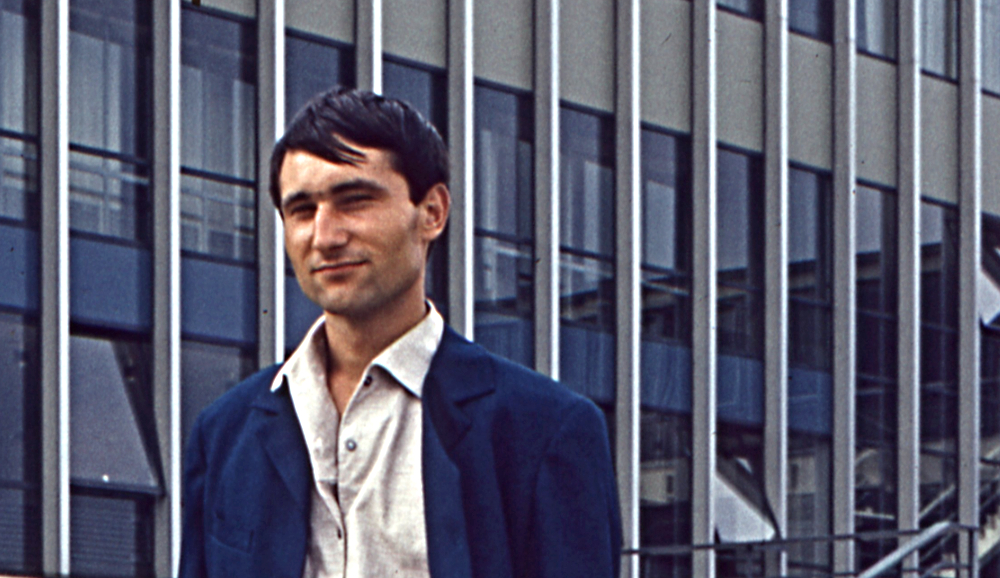
Student Peter

Peter in front of the University of Calgary

On the wall of my basement room hung a timetable, a rigid what-to-do list that was to govern my life for the next seven months. On weekdays I got up at six and after a cornflakes-and-milk breakfast spent sixty minutes to have an early morning study period. Then I took the bus for my first morning class at campus. I had one hour for lunch that always consisted of the same homemade bologna and cheese sandwiches washed down with the watery coffee from the vending machine. During this time, when I managed to relax a little bit, I often met with three students on alternate days, as they all had their own schedules to follow.

On Tuesdays and Fridays I sat together with Brian Fisher, since we both attended the same afternoon tutorial class for Math 211. It made me feel very good to be able to help him with many of the questions from the weekly assignment sheets. In turn I got gradually used to the informal, casual way of English conversation. On the other days I met with two women, both married, one from Great Britain, whose husband had recently been promoted to a managerial position in an IBM sponsored business in downtown Calgary, the other Mrs. Karen Bolso, an immigrant from Norway. Both were attending the same late morning psychology lecture. In a country that was built on the skills and talents of hundreds of thousands of immigrants the voices of three individuals producing an interesting blend of Oxford English, Scandinavian and German accents were not unusual in the student lounge. All three of us, coming from Europe, had interesting stories and experiences to share. The British student, whose name I can no longer recall, had recently followed and joined her husband in Calgary and was pursuing a teaching career to get out of the house as she put it, while her husband was busy setting up calculating machines, the forerunners of business computers. Her main point of advice relating to happiness in marriage was that the two partners should come from the same ethnic and cultural background. Their children would integrate quickly with their new environment, but the parents would take a long time to adjust. “Like oil and water Canadian and immigrant spouses just do not mix,” she stated her opinion with a slightly superior air.

Mrs. Bolso, whose marriage was on the rocks, protested and said, “Well, let me tell you something. I was married to a Norwegian, and yet things did not work out at all. When I arrived as his bride from Norway, he lavished gifts on me, bought me a diamond ring and a fur coat with money he did not have. He had bought all these luxury goods on credit, even though he held only a low paying job. He could barely put enough food on the table for our two children and me. I would rather have a husband, who would show his love in a financially responsible manner. Your theory is all wrong!”

Then it was my turn to voice my opinion. I spoke quite eloquently presenting an entirely idealistic viewpoint, which, as I could see from their reaction, took them by surprise. “Even if a partner could afford the most expensive diamond ring, a fancy car, and an even more fanciful house, it would be all for naught, if love and faithfulness were not present to hold the two together.” Then I thought it would be a good time to talk about my invisible engagement ring, the story about Biene, my fiancée, who was going to join me here in Calgary next spring. After many exclamations of ‘O, how wonderful’, ‘You must be so happy’ and the like, we moved on to other topics.

For the evening my timetable allowed me one hour for preparing and eating a frugal meal for supper. Two hours of studying followed till nine, after which I granted myself a little bit of time to play and practice a few tunes on my guitar. But if I had gotten stuck in my attempt to solve a particularly difficult calculus problem, there was no time for relaxation, until I had found the solution. One evening I had been working over a thorny differential equation. Stubborn as I was when working on problem solving, I did not want to give up. It was way past my bedtime. Midnight was rapidly approaching. Finally common sense prevailed and I decided to go to bed. But the brain having been overstimulated did not want to come to rest. So many possible solutions were gliding by in front of my inner eye that it took another hour before I managed to fall asleep. Before the alarm went off, I woke up with a jolt. My body had rested, but my brain had not. I jumped out of bed, ran up to the table, grabbed paper and pencil, and before it would fade away, I jotted down the solution, which my brain had worked out correctly in my sleep. Having no coffee maker, I put an extra spoonful of ground coffee into the cooking pot, added water and brought the brew to a boil over my two-element stove to make myself a cup of strong coffee. What a life!

Empathy for Peter

62

Brand New University of Calgary in the Mid 60’s

In Educational Foundations we studied the great philosophers of education from Socrates to Piaget. For this course also the university had set up tutorial classes to facilitate the exchange of ideas in small discussion groups. I spite of my language difficulties I felt I had a noticeable advantage. I was about five years older and therefore more mature in many aspects of learning. I also brought a wealth of life experiences, which enabled me to enrich the class with new and fresh ideas. To the amazement of my much younger fellow students I was not afraid to criticize the great thinkers of the past. There was venerable Rousseau for example, who advocated locking up disobedient children in a dark room instead of using corporal punishment. Remembering all too well my own ordeals being locked up as a young child in the dingy storage room of Mr. Stoll’s carpentry shop, I declared that in my opinion locking up a child was one of the cruelest forms of punishment and that ultimately spanking justly applied without causing physical harm was to be preferred.

Some other time we were discussing the importance of the family in early childhood development. Having a much broader concept of education in mind, I emphasized with as much conviction as I still have today, “The family is the smallest unit in a society. As healthy cells make a healthy body, so family units that are intact and provide a caring environment for the children are the building blocks for a strong society. Take away the health of the family and the state will sooner or later suffer and begin to disintegrate.” I am sure that I expressed these thoughts quite differently, but the idea came across with electrifying results. The students were most likely wondering, where this immigrant student had all his ideas from. Little did they know that I had studied Mommsen’s ‘History of Rome’ and that the ideas about the importance of the family were as old as the Roman Republic!

One day our tutorial instructor felt the need to divide us into groups of four or five students each. To develop a feeling for empathy, a term that can be easily defined in clinical terms but is otherwise quite an elusive concept, we needed someone in our group, who would be willing to take on the role of a client and come up with a story, to which the others as would-be councillor would react with supportive questions and remarks. A lot of time was being wasted, because nobody wanted to be saddled with the difficult role of the client. After a long pause, I said, “OK, I’ll do it. Just give me a little bit of time to think.”

Then I began without referring to any specific time or place to tell the story of my father, how close we had become before he had left home, how he gave me a guiding hand with my schoolwork, how much I was shaken up by my parents’ divorce, how I had to wait for five long years before I could see him again, how I spent many happy hours at his new home, then how suddenly and unexpectedly I had lost my father all over again and this time forever, when he died of a massive heart attack. By the time I had spoken the last sentence, it was so quiet that you could hear a pin drop in the tutorial room. All other groups had stopped their exercise to listen in to the extraordinary story that was grabbing everybody’s attention. Then the students were getting noisy with shouts of praise and admiration. After the tutor regained quiet and order, he said to me, “It seems your creative story caused quite an outpour of empathy. How did you think it all up so quickly?”

In a strange mix of pride and self-pity, I replied, “I’d wish it had been just a story.” With these words I quickly left the room. In my heart I was thankful to tutor and students for respecting my privacy and not asking any more questions in the sessions that followed.

Albert Schweitzer – Seminar #15

AS01


Wie Albert Schweitzer einem Kranken erklärt, warum er nach Lambarene kam

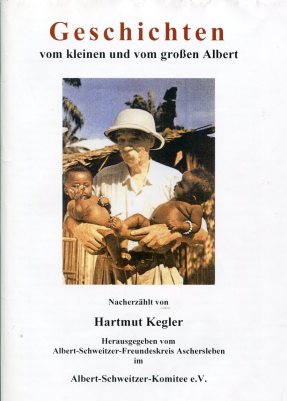
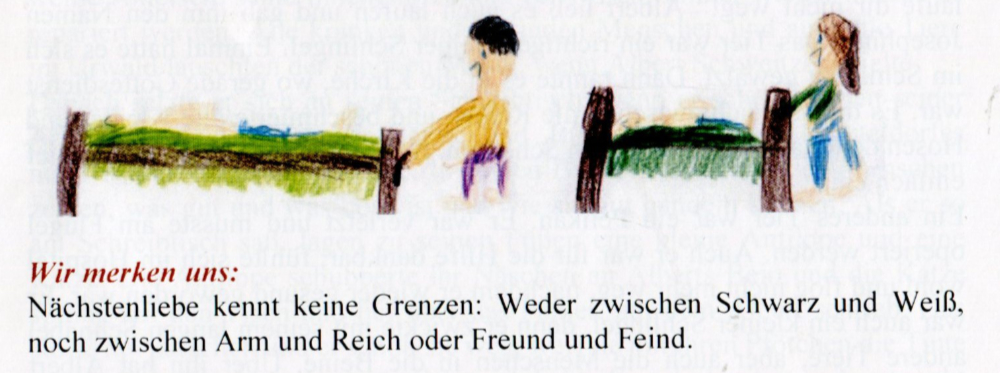
Als alle Bretter und Pfähle aus dem Sägewerk angekommen waren, konnte der Bau der Baracken beginnen. Dazu wurden Flächen eingeebnet und glatt geharkt. Dann zog der Doktor lange Striche in den Boden, wo die Baracken stehen sollten. Zuerst wurden Pfähle eingegraben, auf denen die Häuschen stehen sollten. Beim Ausgraben der Löcher für die Pfähle achtete Albert darauf, dass keine Käfer oder Würmer hineingefallen waren. Wenn das doch passiert war, kniete er sich hin und hob die Tierchen aus dem Loch, damit sie nicht sterben mussten. Die Pfähle waren für die Häuser wichtig, damit beim Regen nicht das Wasser in die Räume floss und damit auch keine Schlangen hineinkriechen konnten. In den Räumen wurden breite Betten aufgestellt, welche die Angehörigen für ihre Kranken bauen mussten. Auch hierfür hat ihnen Albert Schweitzer alles gezeigt. Dabei hat er sich an die Tischler in seinem Heimatdorf Günsbach erinnert, denen er als Kind immer bei der Arbeit zugesehen hatte. In den Betten lag trockenes Gras, das als Matratze diente.

Da sie keine Dachziegeln hatten, deckten sie die Dächer mit Palmenblättern ab. Auch sie hielten den Regen ab und spendeten Schatten. Glasfenster gab es nicht, sondern nur offene Türen, durch die die Luft hindurchziehen konnte. Dann war es nicht zu heiß.

Es gab auch einen großen Raum in einer Baracke. Der diente als Operationssaal. Nun hatten Albert, Helene und Joseph genügend Platz zum Operieren. Aber sie hatten noch kein elektrisches Licht, sondern mussten sich mit Öllampen begnügen. Das erschwerte ihre Arbeit sehr, denn man konnte nur schlecht sehen.

Einmal wurde ein kranker Mann in das Hospital gebracht. Er hatte einen eingeklemmten Bruch am Bauch. Seine Bauchwand war aufgerissen und der Darm trat hervor. Das schmerzte sehr und der Mann stöhnte und weinte. Albert legte ihm die Hand auf die Stirn und tröstete ihn: „Du brauchst keine Angst zu haben. Du wirst gleich einschlafen und wenn du wieder aufwachst, hast du keine Schmerzen mehr!“ Der Kranke wurde auf den Operationstisch gelegt, und Helene gab ihm die Narkose. So schlief er schnell und fest ein. Dann reichte Joseph dem Doktor das Operationsmesser, mit dem er den Bauch aufschnitt und den eingeklemmten Darm wieder in die Bauchhöhle drückte.

Schließlich nähte er die Bauchwand wieder zu. Als der Kranke wieder aus der Narkose erwachte, rief er aus: „Ich habe nicht mehr weh!“ Er ergriff die Hand des Doktors und dankte ihm. Doch Albert sagte ihm: „Mir brauchst du nicht zu danken! Mich hat Jesus geschickt und hat gesagt, dass ich dir und anderen Menschen helfen soll. Und viele weiße Menschen in Europa und Amerika haben Geld gespendet, damit ich Medizin kaufen kann.“ Das hat der operierte schwarze Mann verstanden. So saßen der weiße Albert und der schwarze Afrikaner beieinander und erkannten: Wir alle sind Brüder!

albert

THE MINING ERA OF THE CANADIAN COLUMBIA by Bill Laux – Chapter 14

POLITICS AND RAILROADS

Canada had come into existence in 1867 as a confederation of the Eastern Colonies, independent of Britain, although its citizens remained British subjects.   Union with the new Canada was seen as one solution to the depressed economy in British Columbia.   Once the miners had departed from the Cariboo, Wild Horse and Big Bend, the flow of gold ceased, and many of the businesses supplying the miners failed.   There was a net out-migration from the Colony.

Protectionist sentiment in the U.S. had imposed a 10 per cent duty on imports from B.C., and the lumbermen, farmers and fishers of Oregon and the new Washington Territory were supplanting British Columbia in the California markets.   In 1854  the San Francisco lumber firm of Pope and Talbot had come north to set up the first steam sawmill in the American Northwest at Port Gamble on Puget Sound.   To allow B.C. lumbermen to compete in the U.S. market, the government’s royalty on timber was lowered, beginning a practice which continues to this day: letting U.S. market conditions determine the price British Columbia loggers pay for trees.

As well, the Colonial status was now seen as a hindrance to progress, an obsolete and inefficient form of government unrepresentative of the people’s wishes.   It was absurd to have all political decisions subject to ratification by London and the 6 months it took to get a question to the Colonial Office and a reply back.  The great trade centres of British North America were on the Atlantic seaboard; B.C. customers were in the Sandwich Islands (Hawaii, still an independent kingdom), Hong Kong, 5000 miles to the west and the modest settlements of Oregon and the Washington Territory.   If a wagon road could be built to link British Columbia with Lake Superior, B.C. merchants believed they could then enter into partnerships with the great eastern houses.   Walter Moberly was given the job in 1864 of surveying a route for a coach road over the Selkirk and Rocky Mountains and east toward the new nation of Canada.  In 1868, Joseph Truch, Chief Commissioner of Lands and Works for the Colony, presented a Minute to the Colonial Assembly, An Overland Coach Road to Canada.  In it he outlined three possible routes and recommended one that would go by the Cariboo Road  to Cache Creek, its branch to Savona’s; by sternwheel steamer to Eagle Pass Landing (Sicamous); over the Eagle Pass to Farwell’s (Revelstoke); up the Columbia around Big Bend and over Howse Pass to the navigable North Saskatchewan River.   From there sternwheel steamer would be used down the North Saskatchewan and Saskachewan Rivers to Lake Winnipeg, and by the Red River cart road from Fort Garry to Fort William on Lake Superior where lake boats connected to Toronto and Montreal.   Truch thought of the project as a coach road only, as the many transfers from wagon to boat and back to wagon would make the shipment of freight uneconomic; it could better be sent by ship around the Horn.   

The chief sentiments animated those British Columbians who sought union with the Canada were the wish for representative government, and the hope of profitable trading partnerships with the east.   Above all, it was essential that a union with Canada “must be to the material and pecuniary advantage of this Colony,” Dr. Helmken insisted in the Legislature.  Amor de Cosmos, representing the populist view, envisioned a more radical kind of democracy,

“I would not object to a little revolution now and again in British Columbia, after Confederation,

if we were treated unfairly; for I am one of those who believes that political hatreds attest to the vitality of the state.”

Among the opponents of Confederation with Canada were those who would lose their Colonial appointments.   Judge Haynes, speaking for the appointed officials asked that some means be found to place them “…in safety, in view of the changes likely to take place on this Colony entering Confederation.”   The officials of the Hudson’s Bay Company, as well, were opposed to union, reluctant to lose their commercial ascendancy.    They would, however, make no common cause with the other anti-confederationists, whom they regarded as effete and snobbish drones.   There was also, among most British Columbians, a disdain for and dislike of  Canadians, who were found to be joyless and heavy Methodists, grasping and materialist.   To be obliged to accept these crude social inferiors as the Senior government, and lose their direct contact with Her Majesty and her Ministers was an intolerable thought for Anglophiles.   

With opinion divided in British Columbia, Governor Musgrave, who had succeeded Governor Seymour, suggested to the Colonial Secretary in London that, “If a railway would be promised, scarcely any other question would be allowed to be a difficulty.”   Like the idea of the Great Coach Road, a Railway from Montreal to the Pacific was to politicians but a line on a map, something that could be casually turned over to the Engineers for execution.    This was serious politics, and no one questioned the expense, the formidable mountains to be crossed, the availability of financing.   How sincere was this promise of a railway remains an unanswered question.   The suggestion seems to be that, should British Columbians appear likely to reject the terms of union with Canada, the promise of a railway, that red line on a map, would swing the vote in favour of confederation.   Once B.C. was in, the question of actual construction of such a work could be addressed, and its practicality and timing considered.   

In British Columbia, however, the railway was seen as real, an actual timber and steel line of unbroken track, a functioning link with the commercial centres of the east.  The railway, infinitely more than political union with the despised Methodists, would link its merchants with prosperous Eastern houses, and rescue the Colony from bankruptcy which now loomed since the gold diggers had departed.    

The terms of union were agreed on by the British Columbia and the Canadian delegations, and the proposal went to Parliament in Ottawa for ratification.   The terms provided that the Dominion of Canada would assume the Colony’s debt, and that the new Province of British Columbia would be granted an annual subsidy of $216,000.   Half of this sum was supposed to be a payment for a Provincial grant of a “Railway Belt,” 40 miles wide, along the route of the proposed track.   The future sale of these  Railway Belt lands were to pay for the construction of the line.   The railway construction was to be begun within two years, and be completed by ten.   Further, Canada would pay the salaries of the Lieutenant Governor, the judges, would maintain a postal service, a telegraph service, customs, militia, a penitentiary, and a geological survey.  Those Colonial officials who would be displaced would receive Canadian pensions, and the new province was to introduce responsible government whenever that might be desired by the inhabitants.

South of the border, however,  another railway was being projected for the Northwest, the American Northern Pacific line which was to run from Lake Superior to Puget Sound.   In the deliberations of the U.S. Congress the Northern Pacific was seen as a line which would open the Northwest of British North America to American annexation.   In  July, 1866, before the Confederation of the Canadian Colonies, Congressman, General N.P. Banks, introduced his Northern Pacific railroad bill to provide for, “…the States (sic) of Nova Scotia, New Brunswick, Canada East and Canada West, and the territories of Selkirk, Saskatchewan and Columbia (sic) are constituted and admitted as States and Territories of the United States.” On December 9, 1868 Senator Ramsey of Minnesota moved a resolution that asked, “ That Canada, with the consent of Great Britain, shall cede to the United States the districts of North America west of Longitude 90º on the conditions following…”

     Senator Ramsey proposed that the U.S. should pay the HBC $6,000,000 for its claims and rights.   The U.S. would also assume the debt of British Columbia to the amount of $2,000,000, and that the Northwest Territory should be organized into three territories with the same rights and privileges and government as the Montana Territory.    Further, the U.S. government should guarantee dividends of 5% on the stock of the Northern Pacific Railroad.   It is obvious that in the American mind the Northern Pacific Railroad was to be built to exploit the British as well as the American Northwest.  The resolution was passed and sent to the Railroad Committee for detailed consideration.   In their report, released in February 1869 the Committee noted that:

“The line of the North Pacific (sic) runs for 1500 miles near the British possessions and when built will drain the agricultural products of the rich Saskatchewan and Red River Districts east of the mountains, and the gold country of the Fraser, Thompson and Kootenay Rivers west of the mountains…  The opening by us of a North Pacific Railroad seals the destiny of the British possessions west of the 91st Meridian.   They will become so strongly Americanized in interest and feelings that they will be in effect severed from the new Dominion and the question of their annexation will be but a question of time.”

It was the view of politicians in the U.S. that the Northern Pacific Railroad was to Americanize the Canadians, while to the Canadians, the proposed Canadian Pacific Railway was to Canadianize those difficult British Columbians.   It is not at all evident that the Canadians in Ottawa followed the railway debates in the U.S. Congress.   From whatever they thought of the proposed Northern Pacific Railway, they seemed to suppose that Great Britain would not permit it to enter British Columbia.

But from the beginning, doubts were expressed, both in Ottawa and B.C., that the railway promise was sincere.   Building the railway would require a country of but 3 million to build two thousand miles of track to link up with only 10,000 Europeans and perhaps 30,000 Aboriginals.  It seemed to the hard headed, and the Canadians were certainly these, that it was a mad enterprise.   Nevertheless, south of the border, on February 15, 1870, the Northern Pacific began building  west from the head of Lake Superior headed for Puget Sound.   The next month debate on the motion for Union with Canada.   In the British Columbia Assembly Dr. Helmken expressed his deep misgivings, and suggested that if the Canadian railway were not in place in ten years, the Province would demand compensation and have good cause to secede.    He may well have been thinking that the Northern Pacific would be completed by then and ready to extend its tracks across the border into British Columbia.     

In Ottawa Parliamentary ratification of the terms of union was not automatic as had been assumed at the start.  Debate began on April 1, 1871.   Two weeks previous the Northern Pacific began construction on the western end of their line, by grading north from Kalama on the Columbia toward Puget Sound.   Whatever the Canadian parliament decided, the American railway would soon be in place to capture B.C. trade.   In Ottawa the opposition Liberals argued that the railway promise would bankrupt the country if built.   The governing Tories were unwilling to be bound by that ten year promise.  Debate began on April 1, 1871, and the government found itself in difficulty with its own members at once over that promise to begin construction in two years and complete it by ten.   Joseph Truch, who was a member of the Legislative Council of B.C. proposed to win over the recalcitrant  government members by softening the promise.   He apparently told the caucus that the people of B.C. would not hold them precisely to their promise, a statement which he had no authorization whatever to make.  Publicly he produced a masterful equivocation: British Columbians, he said, were a reasonable people and it would be a fallacy to assume that they would demand the railway promise “ to be carried out in the exact interpretation of the words themselves, regardless of all expectation.”   Truch was a British Colonial Officer, and these words reflected the genteel mendacity with which the British had for a century been administering their colonies.

Back in British Columbia, however, Truch’s statement was considered treasonous.   He had sided with the hated Ontarians, and betrayed B.C.   But the weasel words had worked.   The Union was approved, Truch was rewarded by being appointed Lieutenant Governor of the new Province of British Columbia in place of Amor De Cosmos who would have been the popular choice.

By betraying B.C. aspirations, Truch had accomplished two things, he had achieved union, and he had kept the populist leader from power in Victoria.    He had done the will of Great Britain and the Ontarians.   As Lieutenant Governor, Truch represented the members of the old HBC hegemony in British Columbia, and he attempted to govern it in the manner of the old Colonial despots, Simpson and Douglas.   He used his power as Lieutenant Governor to pick an utter non-entity, John McCreight as Provincial Premier, when again, the choice should have gone by popular will, to Amor De Cosmos.   And in a further perversion of his powers, Truch insisted on sitting in on all Cabinet meetings.    This would not be tolerated in Britain, nor anywhere else, and it was a bad beginning to a Provincial government which was to perpetuate in future legislatures, a tyranny of the government over the opposition.

In choosing union with Canada, the majority of British Columbians had opted for political change, for representative government.   What they had gotten, thanks to Joseph Truch’s betrayal, was the old Colonial system of appointed officials domineering over elective representatives.   The force for change, however, was stronger than Truch expected.   At the end of 1872, the ineffective Mc Creight was forced out, and Truch had to grit his teeth and call on De Cosmos, the only candidate with the confidence of the Legislative Assembly, to form a government.   De Cosmos took over and refused absolutely to hold a cabinet meeting with the Lieutenant Governor in the room.   Truch was obliged to distance himself, and finally, painfully, representative government was allowed to begin functioning in British Columbia.

Interior B.C. was, except for the old Colonial officers, quite untouched by the union with Canada.   The Langevin Report for 1870 stated that the Kootenays had 103 white males, 5 white females, 2 coloured males, 139 Chinese males, no Chinese females.   Aboriginals were not recorded. Of these 249 persons, 6 were employed in agriculture, none in manufacturing, 20 in trading, and 222 in mining.   The occupation of the one missing person is not recorded; perhaps this was the magistrate.     The HBC traders at Fort Shepherd and Tobacco Plains, the miners, some thousand or so Indians, and a judge comprised the population, the majority of which was Chinese.   Probably most of them had not heard of the Union.

  The Union was a fact, however, and the District of Yale-Kootenay was to send one member to the Dominion Parliament.   No one but Captain Houghton could be bothered.   Now, in 1871, he made his way to Yale on horseback to the nomination convention.   But astonishingly, there could be found but two eligible voters in Yale willing and able to participate. Nor was there any other candidate.   Captain Houghton was nominated by a vote of 2 to 0, and elected by acclamation.   It is doubtful if anyone in Kootenay, knew or cared.     

The Provincial Legislature continued a contentious body.   There were no political parties in British Columbia at this time.   In the Colonial Administration the Colonial Council had divided always into the majority of appointed members, representing the Governor, and the minority of elected members, the opposition.   Now, with a fully elected house, the members broke into local factions, which carried on the old quarrel between the two colonies, the Vancouver Island members opposing the Mainland members.   Those few from the Interior opposed both Coastal interests.    

In Ottawa B.C’s six members had no party affiliation, but were bound to support Prime Minister Mc Donald whose government had promised the railroad.   By the terms of Union, railroad construction was to begin by 1873.  The year came; there was no sign of construction.   Amor De Cosmos, who had promoted Union, and fought for it so vigorously, was now in trouble.   He went to Ottawa to lobby for the promised railway.   But the problem for Mc Donald and his Conservatives was to find someone to finance this extremely costly undertaking.   The efforts to put together a syndicate of wealthy men resulted in a corruption scandal that brought down the government.  The new Liberal government under Mc Kenzie was firmly set against building the railway until it could be afforded.   He suggested to a desperate De Cosmos that the terms of union be renegotiated with the railway time clause eliminated.    De Cosmos was devastated; he was now the man who had led B.C. into a union with a government which was refusing to honour its promises.    The best De Cosmos could get from Mc Kenzie was an immediate $1 million cash loan, and a further cash grant in lieu of the promised drydock.    But for these he had to agree to let the Dominion government indefinitely postpone the railway.

De Cosmos returned to B.C. to find a Legislature and a people wholly opposed to any changes whatsoever in the terms of union until Mackenzie should publicly and unequivocally promise the railway.   Now one of those salutary little revolutions that De Cosmos had previously favoured, took place.   A mob, insistent on presenting their demands for a referendum on any changes to the terms of union, stormed the legislature chanting, “We’ll hang old De Cosmos on a sour apple tree.”   Disorder followed.   Clubs were brandished, guns were drawn, the Legislature was thrown into tumult.   Although no blood was spilled, De Cosmos was obliged to lock himself in his room for safety, and the Speaker hastily adjourned the house and fled the assembly.

A victim of the “political hatreds attesting to the vitality” of British Columbians, De Cosmos resigned his seat in the legislature, but kept his seat as a Dominion member of parliament, and fled east to orderly Ottawa.    When the B.C. Legislature met again, it acknowledged the wishes of the people that the mob had represented, and passed a resolution that no change could be made in the terms of Union without the consent of the electorate.

With De Cosmos’ departure, Anthony Walkem became Premier and spokesman for the forces against the mendacity of Ottawa.   However, a split appeared in the pro railway forces, whether innocent or manipulated cannot be determined.    As the province was spilt politically between the Island and the Mainland, the railway supporters split as well.   Two routes for the Railway had been proposed, one would be a northerly route, reaching salt water at Bute Inlet, cross by boat (or improbably by a very long bridge) to Vancouver Island, and proceed by rail down the Island to Victoria.    The other route, equally formidable, would come down the Fraser canyon and reach tidewater at Burrard Inlet with a ferry connection to Victoria.  Premier Walkem chose the Bute Inlet route, since that would make Victoria the terminus of this transcontinental railway, while the Fraser Canyon route would put the terminus and its port on the Mainland.

The Imperial Government, which was responsible for introduction of the railway promise into the terms of union, now feared that separation was a real possibility if something substantial were not offered the disaffected Canadians of British Columbia.   It certainly did not wish to reassume the financial burden of the bankrupt Colony.    A compromise was proposed.   An immediate start was to be made on a railway to link the two Island cities, Victoria and Nanaimo, and railway surveys were to begin on the mainland.   A wagon road and a telegraph line were to be built from the Red River to the Pacific.   It was promised that $2,000,000 were to be spent annually on railway construction, but no firm completion date was mentioned.   These were the Carnarvon Terms from London.

This compromise could have been accepted by both parties in Ottawa and would have got the Dominion government out of an embarrassing spot.  For, if B.C. separated from Canada, the Americans stood ready to purchase her with their own Northern Pacific railway line which, delayed by mismanagement and failure of financing, was slowly creeping toward completion. In 1874 its trains were running from Portland to Tacoma, although the line through the Rockies was still to be built.  In Ottawa the influential Liberal, Eward Blake was implacably opposed to any subsidies whatever to the Pacific Province, and was quite willing to see it secede if that would preserve financial prudence.   Blake’s opposition tied MacKenzie’s hands and the Carnarvon Terms were rejected by the Dominion Senate. 

As a shamefaced sop to B.C. Mackenzie and Blake offered a cash payment of $750,000 as compensation for delay in beginning the railway.   This offer was greeted with intense suspicion by British Columbians and the Walkem government.   The cash offer could be interpreted as a payment for future as well as past delay.  Accepting it could be seen as releasing the Dominion government from its promise.   Standing on these principles, the offer was rejected in 1876, and a resolution was passed calling for secession from Canada.   The then situation in B.C. was intolerable; in joining Canada the province had been obliged to give up its chief sources of revenue, the Customs and Excise collections, to the Dominion government.  Without a revenue, B.C. was reduced to subsisting on humiliating handouts from Ottawa.   Without the railway there was no hope of integration into the Canadian economy which could have saved it.

With B.C.’s rejection of the cash grant and its threat of separation, the Liberal Government in Ottawa lost its nerve and dithered.   De Cosmos angrily attempted to insert an amendment into an unrelated bill calling for work on the Esquimalt to Nanaimo railway to begin at once.   Only six eastern members joined the British Columbians in voting for the amendment.   This vote made it clear to B.C. citizens just how little regarded they were in central Canada.   Their threat of separation had been met with casual indifference.   The Walkem government was  disgraced and driven from office.  It had stood on principle and refused the cash offer.   It had threatened separation, and Canada had not cared.   

Andrew Elliot, a former Colonial magistrate, took over as Premier.   His government was as ineffectual as Walkem’s.   The citizens of British Columbia were in a foul and angry mood and ready to lash out at anyone.    The Government in London had the Dominion Governor General  make a Viceregal tour in the old Imperial way, with smashed wine bottles and flag raisings.   The populist faction of the citizenry were unimpressed.   They erected the traditional arches festooned with fir boughs to welcome the Marquess of Dufferin, but pointedly hung signs on them threatening secession if the railway were not commenced at once.   His Excellency, equally pointedly, refused to pass under any arches so placarded.   Amid all this archaic symbolism, the situation worsened.   In 1878, De Cosmos rose in parliament to utter a new threat.  If the railway were not begun at once, British Columbia would have no other alternative but to seek annexation to the United States.   De Cosmos hated Americans from his time in California.   He made the threat, which only spite would have made him carry out, to try to make parliament understand the depth of feeling and legitimate anger of his constituents.   Parliament’s response was little more than a yawn.

In British Columbia the feeble Elliot government fell, and Walkem came back, promising to solve the railway impasse.   British Columbia had but one card to play, that of secession.   On August 9, 1878 Walkem moved an address to the Queen, asking Her Majesty, in light of the broken promises of the Dominion Government, to grant British Columbia the right to withdraw from the union and receive compensation for the defaulted pledges.   The motion passed, 14 to 9.

But at this point Walkem lost his nerve.    Instead of sending the message to London where it would have elicited some sort of action, he weaseled and sent it to the Dominion Secretary of State in Ottawa for forwarding to Her Majesty.   This made it clear to the MacKenzie government that the message was just one more threat directed at it, and not a serious move to separate.   MacKenzie’s government simply “mislaid” the Address to the Queen, and it was never transmitted.   Shortly after, MacKenzie’s government was defeated and Mac Donald was back with his Conservatives and a new National Policy in which the Railway to the Pacific was a major plank. 

The decade of political turmoil and mendacity of the 1870s had all been quite absurd.   The Province of British Columbia had for six years begged, cajoled, threatened and gone to the brink of secession over the railroad with the Dominion government.   Now, with a simple election, the railroad was to be built.  It should not be thought that the MacDonald had announced  his railway policy to mollify British Columbians, or to redeem the promise of 1870 as the residents of the Pacific Province believed.  Mc Donald had cleverly annouced the railway as a  National Project that would project the commercial interests of Ontario and Quebec onto the Pacific Coast so that they might enter the lucrative Asian trade.   This was the Conservatives’s railway policy, an expansion of Central Canada’s power to the Pacific; the wishes of 10,000 British Columbians were quite insignificant in Ottawa.

Amor De Cosmos, who had been politically destroyed by the railway issue, rose in bitter anger in the house in April of 1879 to excoriate the members of both parties for five years of hostility to British Columbia.   In wild sarcasm he challenged them to do in fact what for five years they had done by indifference, moving a motion to exclude B.C. from Canada.    British Columbia, he said, “has been called an excrescence, and incubus, has been accused of endeavouring to gain something from this Dominion without any equivalent.   I ask the honourable members who say they wish to get rid of this province, to second the motion.”   The house was silent.   Not even one of the five other B.C. members would second De Cosmos’ motion.   He concluded with the angrily prophetic  statement,  “The people of British Columbia have as little faith in one side (party) as they had in the other.”    De Cosmos, now eclipsed, had expressed the bitter judgment of the people of B.C.: the Dominion government, under whatever party, would never be trustworthy.    They wanted a Canadian commercial front on the Pacific, but they would never be willing to pay the price for the union of British Columbia.   It is a distrust of the Ottawa government, and an anger at central Canada that subsists in B.C. to this day, and is regularly exploited by Provincial politicians of all parties.     

The actual construction of the long promised railway was, if anything, even more difficult and frustrating than the five years of political wrangling over whether it was to be built at all.   First, the Dominion government had to find that syndicate of wealthy men able to raise the funds for 1900 miles of construction through an uninhabited country, four mountain ranges and six hundred miles of solid and barren rock north of Lake Superior.   Sir Sanford Flemming, who had surveyed the route through the tumultuous Seventies, had estimated it would cost $100 million, an astronomical sum for a country of but four million.

The wealthy banker George Stephen, whom MacDonald had with difficulty persuaded to lead the syndicate to built the CPR, held out for concessions without which he absolutely refused to undertake the project.   

First, was a monopoly clause in the contract, prohibiting any other railway from building between the CPR and and the U.S. border.   This was directed at the Northern Pacific Railway which had been completed in 1883 and had become the de facto link between British Columbia and Canada.   One took a steamer from Victoria or New Westminster to Tacoma, rode the Northern Pacific to St Paul, the Milwaukee Railroad to Chicago and the Grand Trunk to Toronto, Ottawa or Montreal.  All freight went in bond via this route as well and U.S. line was planning an extension north up the Red River Valley to Winnipeg.    The Dominion Government could enforce this prohibition in the empty Northwest Territory where it had sole authority.   In Ontario and British Columbia, MacDonald promised to have the Dominion Government disallow any Provincial Railway charter for a line in this CPR claimed territory.    This promise was redeemed  in 1883 when the B. C. legislature authorized the American Ainsworth Syndicate with mines on Kootenay Lake, to build a 40 mile portage railway around the falls and rapids on the Lower Kootenay River.   The Dominion Government found the Ainsworth’s railway to be essentially an entry of the Northern Pacific into the lands promised the CPR as its exclusive territory.

Second, the syndicate insisted on a cash subsidy of  $25 million and a land grant of 25 million acres along the right of way.

Third, that whoever built the railway should “run it forever.”

Fourth, that the syndicate would receive those portions of the railway already built or contracted for by the government.

These were enormous gifts, but the undertaking was even more enormous.   By its completion in 1885, it would very nearly bankrupt the syndicate, and nearly defeat the government as more and more loan guarantees had to be made to keep the work from collapsing.

No one knows to this day what it cost; $150 millions is a probably a good guess.
Natural Splendour of the Arrow Lake

Wednesday’s Photos

Curves and Undulations in Ice and Snow

Today’s theme helped me find objects on this chilly winter day, which I would have missed to capture with my camera. I believe I mentioned it before, how important it is to have a theme in your mind before going out to take pictures. It gives you the focus needed to see things, which you would otherwise miss. In the following images the focus was on the many ways Nature expresses itself in curves and undulations. Enjoy.

AIMG_5765AIMG_5774AIMG_5794AIMG_5809AIMG_5813