The Peter and Gertrud Klopp Story – Chapter XXXIV

Storm Clouds on the Horizon
83

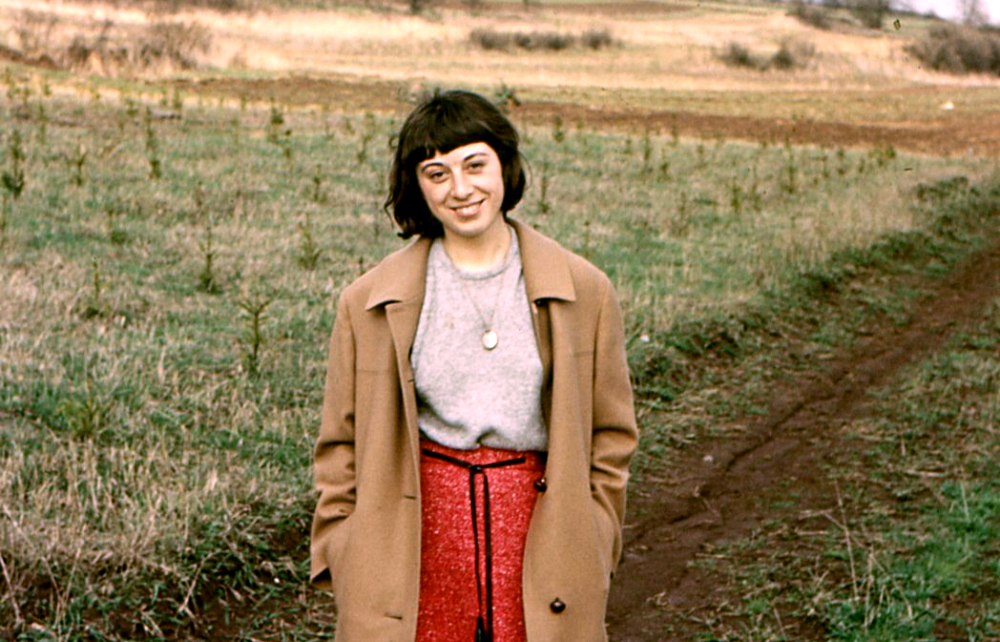
Key Player #1 in Chapter 34: Gertrud (Biene) Panknin 1965

As the drama unfolds I will introduce for each part of this chapter one person, who played a major role in our desperate struggle for being reunited in Canada.

We define our identity always in dialogue with, sometimes in struggle with against the things our significant others want to see in us.  Even after we outgrow some of the others – our parents, for instance – and they disappear from our lives, the conversation with them continues within us as long as we live. Charles Taylor

The Letter to Biene’s Parents

To merely summarize the troubles we experienced, the opinions we voiced, the arguments we had and the decisions we made, the agonies and struggles of the heart would have distorted the true picture we had created through our correspondence between October 1965 and March 1966. On the one hand an objective approach, if it were possible at all, would never have succeeded in describing the passionate appeals we fervently made to one another in the face of dire adversities. On the other hand a purely emotional account would most certainly have embodied on my part a lot of bias and subjectivity. So for the next two chapters I mostly let the letters speak for themselves. They include more and more often our first attempts to correspond with each other in English. Here and there I corrected a few grammatical errors and edited out some awkward expressions without changing the intended meaning.  The letters in a sense are also a fine record of our progress in the use of the English language. As to those still written in German it is my hope that not too much of their emotional impact has been lost in translation.

September 25th Didsbury

My dear Peter,

…From my mother I had an immediate reply to my letter, which was going to prepare her for the letter from you. With her words my mother has taken a big burden off my heart; for she writes that she is glad that things are working out for us and that she would help us in as much as she could. She congratulates you to your success at your entrance exam and is confident that we somehow will make it together. Strangely, I felt my heart ache, even though I was happy all the same. Please, dear Peter, write to my parents soon; for now they have been prepared. How I wished I were already with you! Then I would know that everything was true and not just a dream.

Be lovingly kissed, Your Biene

October 15th Calgary

My dear Love,

There are a lot of important things I have to tell you. But first of all I have to apologize that my letter is so late. It is quite possible this will happen again and again for the next couple of months, because the academic work is overwhelming. Only with a time schedule from dawn to dusk I am likely to pass the final examination in the spring, Therefore, dear Gertrud (I guess it sounds better in English to say your real name), remember that I am working hard, that I am devoting more love to you by spending every minute available to me for studying.

About a fortnight ago, I wrote a long letter to your parents. I am still waiting for an answer. I don’t know what they will think of me, and in which way they will react. I only hope positively. I explained the situation and spoke of you as Biene without recognizing that, because this name had become so familiar to me, I had forgotten at this moment that a little more formality would be required. I hope they will not mind it. Canada was shown not in terms of a paradise for their daughter, but as the place to start a completely new life with all the uncertainties of the future, which I cannot anticipate now. They have seen the financial problem as well as the problem of my professional career. Now it is up to them to make their decisions, I hope, in favour of both of us…

With a thousand warm kisses, Your Peter

The letter I wrote to Biene’s parents does no longer exist. As the events unfolded it became very clear that I had made a grave mistake by describing honestly and realistically all the challenges we would be facing in a letter that was supposed to make them agree to let their daughter go to Canada and marry me.

Ominous Rumblings from Biene’s Home Front
Peter copy

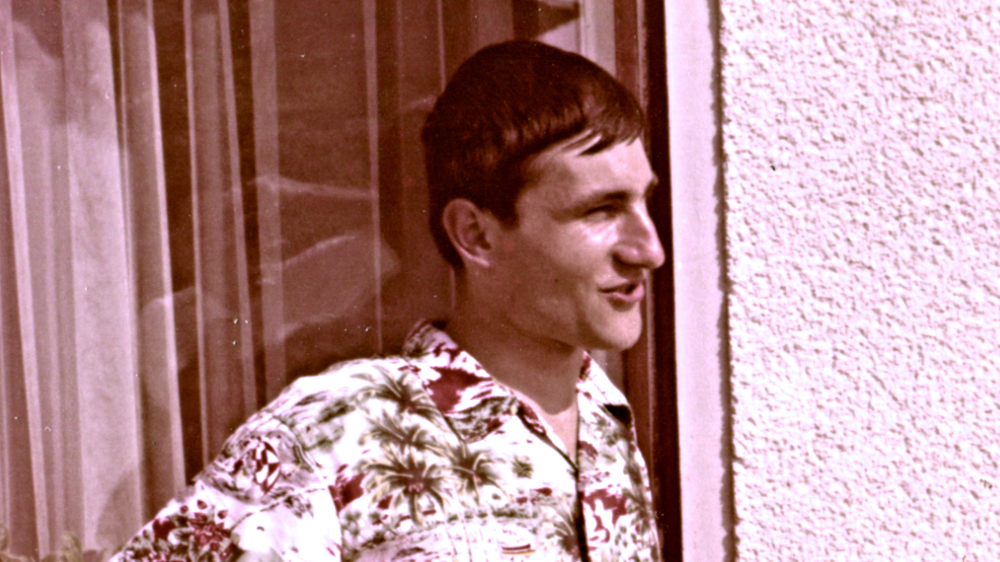
Key Player #2 in Chapter 34: Peter Klopp

After having dispatched my letter to Biene’s parents I felt very much at ease. With vim and vigour and guided by an indomitable desire to achieve high marks in my academic endeavours, I embraced a regime of self-denial, a kind of mental forced  labour. I cut my leisure hour of guitar practice in the evening, shortened my social lunch time with friends and fellow students at the university, and allocated an extra hour to my studies at home in the morning. I had no idea about the potential danger to my health by placing so many burdens on my shoulder. But I was happy in the sweet knowledge that all the hard work would pay off in the end. Little did I know, however,  of the storm clouds gathering on the other side of the Atlantic and of the ominous rumblings coming from Biene’s home turf.

October 20th, 1965 Didsbury

My dear Peter, Life is like a brilliant symphony. Again and again I feel this. Every day has its special tune and colour and atmosphere and you need to be a poet in order to give a vivid and colourful picture of it. Sometimes the melody of the day is light and joyful, in other times dark and full of melancholy.

Today was a bright and sunny October day, and pushing the carriage with the little laughing Paul through the park, I felt happy and at peace with the world. Here in England I have gained new aspects of life and I really feel for the first time free and independent. Two letters, which arrived with the second post, made me hurry to the place, where I usually have a little rest in the sun. I got your letter as well as my mother’s and I have a lot to tell you. At first, Peter, be assured that my parents got your long letter. Don’t worry about not having received an answer until now. I am going to tell you the reason although I rather would not like to speak or even think of it, because it makes me feel unhappy. My aunt (you know, I sometimes talked about her, because I loved her very much) died a fortnight ago. My parents went immediately to Berlin and stayed for a week to arrange everything for her funeral. All the tasks connected with my aunt’s death caused my parents much grief and my mother felt mentally and physically exhausted after the journey and she was not even able to write to me. As soon as she feels better she will let you know what decisions she and my father have made. She asks me to tell you that this is the reason for their long silence. My mother had to tell me so much about the last happenings that she only gave notice to me of the mere fact that she got the letter from you. Yet she did not discuss it. She only reassured me that she would stick to her promise and try to help us in any case…

In love yours forever, Gertrud

A day later, having not sent off the letter, she continued on in German, which I took as a bad omen, and so it was.

My dear Peter,

Today I received a long letter from my brother, which contained the main thoughts and arguments, which he as he told me had written also to you. It is quite impossible for me at the moment to delve into all the details. I didn’t know at all that you don’t find it easy to stay in Canada. This is in any case the way my brother interprets your words. As soon as I have answered my brother, I pass on his letter to you. Dear Peter, my decision is firm, and nothing can detract me from what I recognized as the right thing to do. I have no fear of an uncertain future. This just for today! As soon as I have a little more time and leisure I will write you everything, which I have considered and decided.

Your Biene

I knew all along that, when this moment came, everybody would be against our plans.

For the moment it was very easy for Biene to stick to her decision. To join me in Canada was not only the right thing to do, but also fulfilled the promise of love between the two of us. She was still far removed from the source of disapproving views on getting married to a young adventurer with an uncertain future in the far-off and hitherto unknown country of Canada. Thus, she was able to take a firm stand against the first volley shot by her twin brother Walter across the English Channel.

Gradual Descent into Emotional Hell
 

Walter

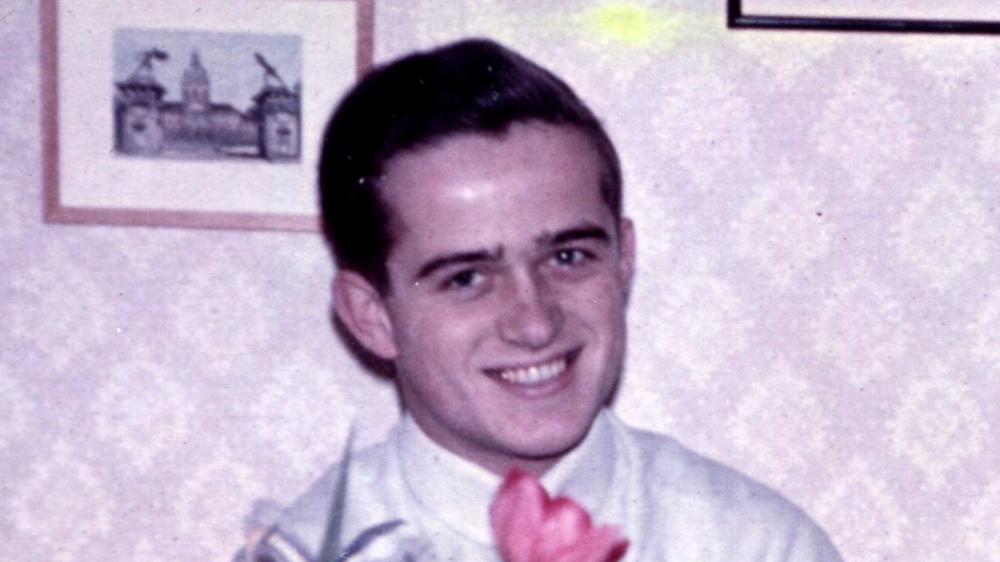
Key Player #3 in Chapter 34: Walter Panknin, Biene’s Twin Brother

On the 23rd of October, 1965 I had not yet received the devastating news about her family’s opposition to our wedding plans. Not being aware of the storm clouds gathering over our sweet hopes and aspirations, I wrote Biene a cheerful birthday letter. Being in a most jocular frame of mind, I teased her about the severe yoke of marriage and encouraged her tongue-in-cheek to enjoy the few remaining months of freedom until our wedding day in May . A few days later my mood changed drastically, when I received the bad news.

October 25th, 1965 Calgary University

My dear Gertrud,

If this turns out to be true what you have just been describing in your last letter, you will be in great trouble pretty soon. I had to force myself to work yesterday, because I kept thinking about your problem, which consequently is also my problem.

First of all, what your brother told you is definitely wrong or it is at least the wrong impression. I have never mentioned that I wouldn’t like to be in Canada. The more I think about it, the more I do believe that your parents and brother don’t have any objections against me, but against the fact that their only daughter and sister should leave them in a couple of months. Thinking of returning to Germany is now out of the question. I thank you again for not having interfered in the time of undecided matters and inner conflicts before I entered the university. But if you had done so, it would have been the only possibility of getting me back to the Old Country. Now I have decided to stay. It is not only the money (about one thousand dollars) that is invested now into my studies for the winter session, I am also personally involved with great delight in the courses, especially in German literature and cannot give it up just because your folks want to have you around for a few more years.

But you were resolute and are still resolute, as you wrote me. Didn’t your parents know that you intended to follow me after some time? Sure, they did. The only conclusion I can draw from this is that they must have hoped that our relationship would eventually come to nothing. I guess on this particular point they underestimated the strength and sincerity of our love. Maybe they will think quite differently when they realize that they cannot change your mind. Though I wished I could do more, I cannot help except politely answering your parents’ letter, but definitely stating that I am willing to stay.

There is something else I want to tell you. You said your brother is going to write me too. He may write as often as he wants to, but he cannot expect me to answer his letters as long as I haven’t gotten word from your parents. I know what an awful impact a death of a close relative can have so that I fully understand why they couldn’t answer. In this case I’m willing to wait another fortnight and even longer, but I cannot accept your brother as a mediator between your parents and me. Do you understand me? I think the matter is too important to have it delegated to your brother. I wrote your parents and expect no answer from anybody but from them alone. How can I find out that the arguments are his and not those of his parents? Would you mind telling him that I really enjoy studying now that ‘I really like to be in America’ and his conclusions must have been a misunderstanding.

Although I don’t want to, I am getting quite a bit worried. But when you are involved, how can I remain calm! Nevertheless celebrate with an untroubled spirit your 21st birthday. I hope you will get a day off on Friday.  As to your next year it is my heart-felt wish that in spite of all adversities all things will come to pass that you are hoping for right now

With lots of love, your Peter

Biene’s Bold Reaction to Five Letters from Germany
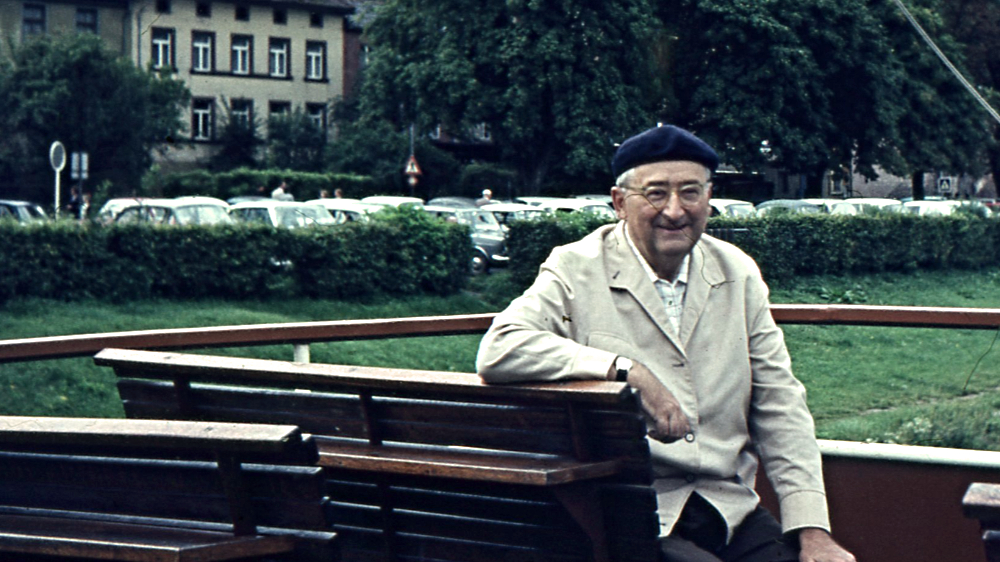
Papa

Key Player #4 of Chapter 34: Papa Walter Panknin

November 2nd 1965 Didsbury

My dear Peter,

Before I respond to your messages and also tell you about my life here, I want to deal with the main issue at hand. Dear Peter, my parents and my brother’s reaction came so unexpectedly for me that every letter from home was a real shock for me.

First of all my brother wrote, who until now has only written this long letter to me. He tried to logically explain that our plans are against all reason that out of several reasons I would be unhappy with you in Canada and above all that I would make my parents unhappy. Shortly afterwards I received an equally long and logical letter from my father with similar arguments and the threat that if I acted against all warnings and reason, I would in no way receive any support from him. Then finally came a long letter from my mother. She desires that we two come together and that she was prepared to let me go ‘one day’ to Canada. However, influenced by my father and brother’s arguments, she too thinks that it would be too early and that we would only be unhappy. Even my brother-in-law and sister asked me in long letters to take everything into consideration and let reason prevail rather than listen to my heart.

Dear Peter, as I can only roughly indicate to you, their main concern was about my happiness and the fear to lose me. Therefore, Peter, I cannot feel any anger or disappointment. You are right, Peter, my parents must have hoped all the time that everything, as you said, would fizzle out between us at the end. And only now I understand as to why without any objections they let me go to England. I believe that they hoped it would lead me to different thoughts. Dear Peter, you can imagine in what kind of conflict I find myself! I have never been so determined in my life as now! I come to you, even if I have to earn the sea voyage myself. My decision is final, and nothing can dissuade me from it. Therefore, Peter, prepare everything.

My parents fear that the hard work would make me unhappy. O Peter, I realized here in England how physical work in harmony with intellectual work creates happiness. And to work together with you for our life can truly make me happy! Mrs. Lande literally cried, when I told her that I would have to leave at Christmas time. She thinks that never before had a girl managed to do so well with the work and the children as I have. These words give me self-confidence; for I came  with no experience whatsoever. My mother always says, ‘Where there is a will, there is a way.’ I also believe in it. Sometimes I think that I am hard-hearted and egotistical, because I want to come to you, although I know how much pain I am causing to all the people that love me. Yet, Peter, don’t we need to live our life as our parents lived theirs? My father writes that he would rather travel to European destinations four times a year than to spend a single penny for a trip to Canada to visit his daughter, who has abandoned her home country. You too will feel while reading this, how much these words have hurt me. When I come home for Christmas, I will talk calmly with my parents. If they insist on their position and refuse us any help, then Peter I will come in spite of it all. I have so much confidence in our future. Perhaps we can only convince our parents with an iron will! O Peter I think that I appear so hard-hearted toward them, for I can sense how they must feel. But I know that it is right to go to you.

In the meantime you will have received my brother’s letter. Don’t take it as an insult that my parents have used my brother as mediator. I am more offended than you; for I know that only my brother’s influence could have changed my parents’ mind. However, Peter, all parents would just like my parents try to keep their children at their side, especially if it means to let them go into a world of uncertainty. And Canada is for them uncertainty. We must understand them. But nothing can change my decision.

My dear Peter, now I have not yet dealt with many of your questions and problems you brought up in your letters. However, I shared the main issue with you so that you can undertake all the necessary steps and you can tell me what I need to do. As always in a big hurry, unfortunately!

Be lovingly embraced by your Biene

Having observed in the past quite a few of Biene’s vacillations during times when decisions of the heart had to be made, I felt total admiration for Biene’s courageous handling of a dilemma out of which there seemed to be no escape. In my eyes she ruled like a queen over the complex issues that were going to haunt us for a long time to come. Indeed I was awed by her bold stand against the odds that were stacked against her. However, what I did not realize at the time, when her letter  gave my anxious heart a lift, was the fact that Biene was fighting far away from home the  good fight in the safe haven of her British employer.

A Letter from Biene’s Twin Brother
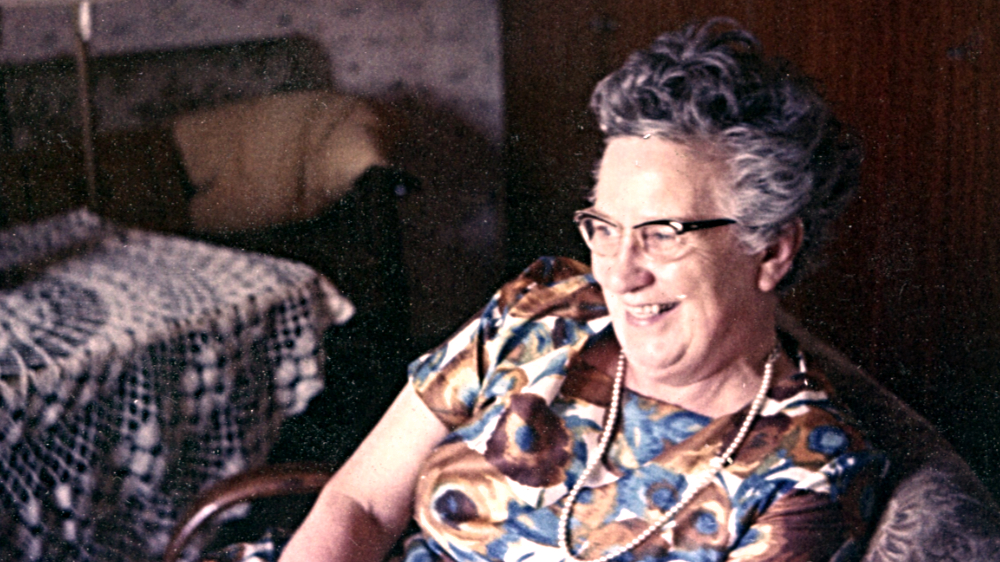
Mutti2

Key Player #5: Elisabeth Panknin, Biene’s Mother

November 8th 1965 Calgary

My dear Biene,

I would like to embrace you and kiss you a thousand times for your decisive letter on Monday. If it had only arrived on Saturday! Then I would not have gone through the hell of emotional turmoil. My brother Gerry brought your brother’s letter from the Fyffe Road. It had been sitting there for the past fourteen days, Dear Biene, not even during the worst time in the German Army had I been so devastated! I was incapable to do anything sensible. But one thing at a time in the right order! How great you have become again in my heart. I know now what made me happy. In my mind you have already been with me all this time. We celebrated your birthday together. I played your Don Giovanni record, while getting up in the morning. I did all kinds of repairs, bought a picture to decorate our little basement room, and you helped me choose it. You spurred me on at my studies. Imagine I wrote one of the best essays on the Canterbury Tales with very few mistakes. Here too my independent individual opinion was being admired. In Math there have been only very good results on tests and assignments. I have been welcomed into the social life. Everywhere I have gained friends not just with my professor, who is already looking forward to meeting you, but also with my fellow students. I am helping some in Math, others in History. And I did all this as if you were already living with me and made me happy. Dear Biene, quite frankly with this certainty in my heart I could have waited another two or three years. But now I am completely cured. Biene, how good it is that you want to come. Otherwise I would have to ask, yes indeed I would have to beg you to come!

But now let’s look at this letter. If I hadn’t developed in my life so much sensibility, I would have perceived the letter as completely harmless. He had taken my letter to your parents apart into thousand fragments and quoted, quoted, and quoted. In his opinion there was nothing that would keep me in Canada, the prospects in Germany were a thousand times better and so on and so forth. After he had completely blackmailed me morally, he added injury to insult by threatening with financial blackmail. Imagine, I was so dumb as to believe that these were his own ideas. I deemed your father too good to threaten me. Still awake in bed at three o’clock in the morning I could no longer take it anymore and wrote till six a long letter to your parents and presented piece-by-piece positive arguments. Above all I mentioned that the Alberta government will pay for the second year at university, that all my relatives here in Canada had offered financial assistance, that there are still 1,500 marks left in my German bank account, and that thanks to you I have great success in my studies here in Calgary.  O Biene, it is no use. If they are not willing, then even the best arguments will not help. I will have insulted your father; for I attacked your brother by stating that I hold myself too good to accept such mean-spirited blackmails. They will mark me as an evil character. O Biene, be firm and strong and hold on to me. I feel you are almost stronger than I, because I have been deeply insulted. But a determined will can bring them still to reason. Besides I think much of your mother’s influence, when the time for action will have actually come. Again thank you for your letter! I am stuck in the midterm exams and need peace, inner peace. How strong has your unshakeable determination made me!

Now that I can breathe more freely again, I will outline precisely, what needs to be done. With your approval I will go to the immigration office in the next couple of days. But I think that in spite of it all I should wait for a reply from your parents. Should I give to the immigration official your address in Velbert or my mother’s address? Don’t do anything, until you receive a message from Cologne. They will set a date for giving you a physical examination in Cologne. Be accurate with all information regarding your relatives in East Germany. When they notice that you were not telling the truth, they may reject your eligibility for immigration. Beforehand you have to get your lungs x-rayed. You need a valid passport as well, for which you must apply in due time. For the voyage you must been inoculated against small pocks, if this has not been done during the past two years. As soon as you are done with these preliminaries, you must see a travel agent to make arrangements for the trip. There will be no immigration visa without a ticket! If it is an efficient travel bureau, you will have no trouble with your luggage crate. They will pick it up and take it to the railroad station. Only in Montreal you will see it again. You yourself will be lost there without any help, because there will be nobody to look after you, when you have been cleared by customs Canada. I will have to be there, when you come. But that much money I will have left over. O Biene, it is not the most beautiful prospect that we both have to work very hard to have things work out for us. But on weekends we will be able to travel to the mountains for a few days  for sure. Oh, how I feel well again.

Many thanks for your letter! I still have so much to tell you.

With a thousand dear kisses,

Your Peter
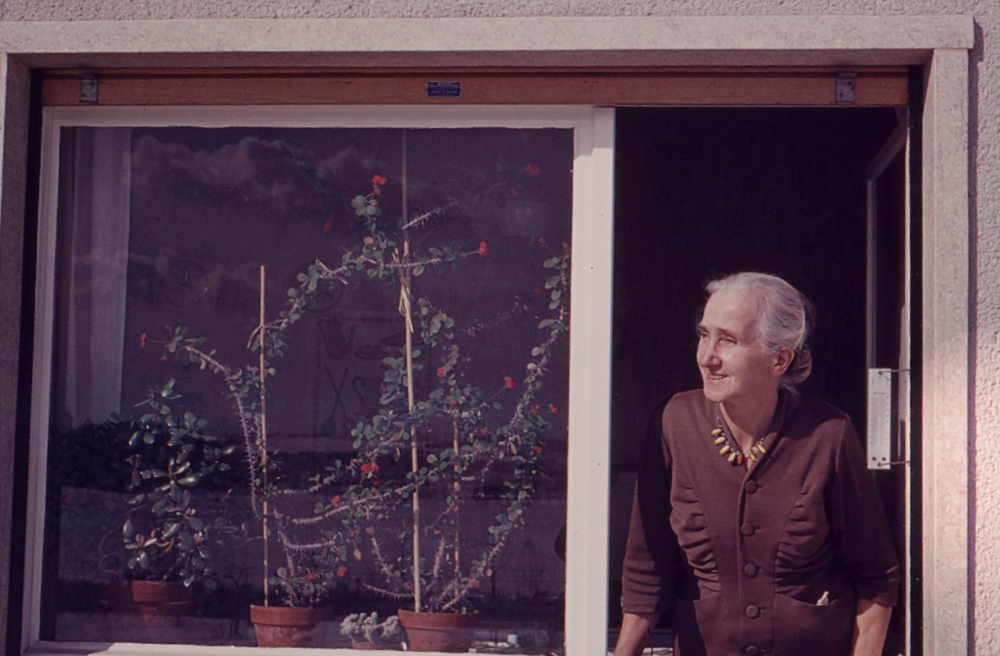
Mother2.jpg

Key Player #6: Erika Klopp, Peter’s Mother

As the drama unfolds I will introduce for each part of this chapter one person, who played a major role in our desperate struggle for being reunited in Canada.

Stepping up the Pace

“It is easier in spite of the great distance to visit relatives in Canada than those in East Germany. And we will lose our children we try to hold captive. In a higher sense we will regain them as we let them go.”  Peter’s Mother

From the moment the avalanche of opposing letters came crashing down on us, Biene and I accelerated the pace of our correspondence to a feverish pitch, as far as the notoriously slow mail service between England and Canada  would allow any speeding up at all. Biene continued to be resolute and firm in her decision to come to Canada and marry me as early as the following spring. While I had nagging doubts about our future, her bold attitude emanating from her letters was like a shining exemplar encouraging me to be strong and not to despair. Biene’s twin brother had planted poison in my heart. I had premonitions, even believed to hear inner voices with dire warnings of imminent disaster. Fortunately, Biene was always able to dispel such dark fears, which usually surfaced on my distraught mind after stepping down into my dingy basement room after a long, hard day at the university.

With every new letter she rekindled my longing for her presence. Her passionately written words filled my heart with warmth and confidence, fortifying me for the long pause in our correspondence, which was to come even before she returned to Germany. For the longest time like a weary wanderer leaning on his walking stick, I clung to her words.

Do you know Peter that I have the same feelings like you namely that I might become a good wife to you? I am longing for you so much! Your words saying that we must both grow together touched me deeply because that’s what I feel every day more. Yet, Peter is it not a miracle all the same? Look we both are going through the same experiences of life although thousands of miles are between us. In mind we are together. I feel so closely linked to you that to a certain extent the distance does not matter. Yet we are living beings of flesh and blood and not only souls. Therefore even the strongest mental link is only a substitute for being together. I want to feel your arms around me, touch you, speak to you and kiss you. Please undertake all the necessary steps for my coming at once. Have always confidence in me and never let doubts prevail over you.

My dear blogging friends, let me break the rules for writing an objective autobiography and allow me to address you directly. After reading these passionately written lines, tell me who would be the young man whose pulse would not go up a notch faster, would not feel the warmth of tender anticipation flood his heart, and would not foretaste in all its intensity the embrace of his beloved sweetheart ? Even a heart of stone would melt after being exposed to so much loving-kindness!

How could Biene have so much confidence that everything would work out in the end? Was it naive and wishful thinking or blind trust in Providence? Was she truly prepared to enter the lions’ den, especially after the barrage of opposing letters suddenly ended and dead silence from parents and brother was sending out ominous warning signals?

Canada’s Moral Code for Biene’s Immigration
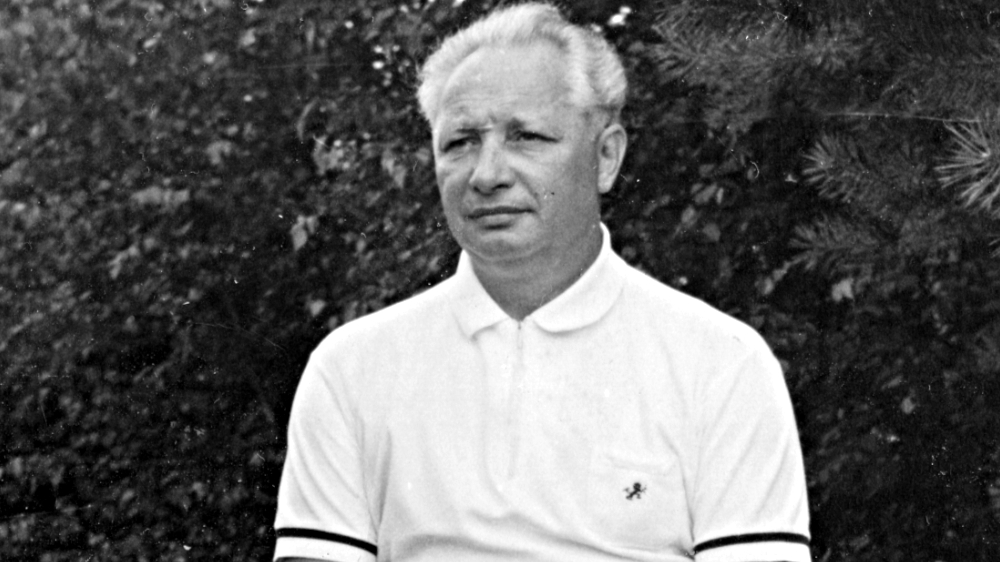
Paul

Key Player #7: Paul Werner, Biene’s Brother-in-Law

December 5th 1965 Calgary

My dear Little Bee!

Your admission to Canada is more complicated than I had thought before and is connected with some obligations. Dear Gertrud, you know that I like to talk about each step with you. However, it would take too much time, and I had better hurry up so that you can come next spring. I hope you will agree with all I am undertaking now. First of all there is no other possibility of your coming except that you come as my fiancée. Second, I have to declare that I am willing to marry you within 30 days after your arrival. That means, I cannot compromise with your parents as I have suggested to them that we shall marry after a trial period of a year or so.

I have many things to do now. But I hope that I’ll be at the department of immigration on Monday and have all the requirements fulfilled for them. I have to provide the following pieces of information:

1) A letter from some responsible person, preferably a married woman, who will have accommodation for you until the day of the proposed wedding. (I got a letter from Martha and Gerry). This is probably for maintaining the good morals.

2) A letter from a minister stating that I am of good character, free to marry and that he will perform the wedding ceremony within thirty days of your arrival. I’ll get this letter tomorrow after church.

3) Then I have to give them an exact report to demonstrate that we are well acquainted,  that we correspond regularly and that we have exchanged recent photographs etc. This is already done.

4) And I need to provide additional facts relating to you and to me.

It was really wise to start the whole matter from here, for it would have been difficult for you to apply for your immigration in Cologne without having somebody financially responsible for you. If anything goes as the officer in charge has promised me, I might embrace you in May 1966.

How good you are in English! I see you have learned the natural way of expressing yourself. No wonder that you had so much success at your school. You are really familiar with the so-called everyday English that still eludes me. Will you promise me to speak English after we meet again, at least during the regular course of the day? You know, in my second year at the university I will begin with student teaching at the high schools. Therefore, I must have a satisfactory command of the English language.

In longing and in love

Your Peter
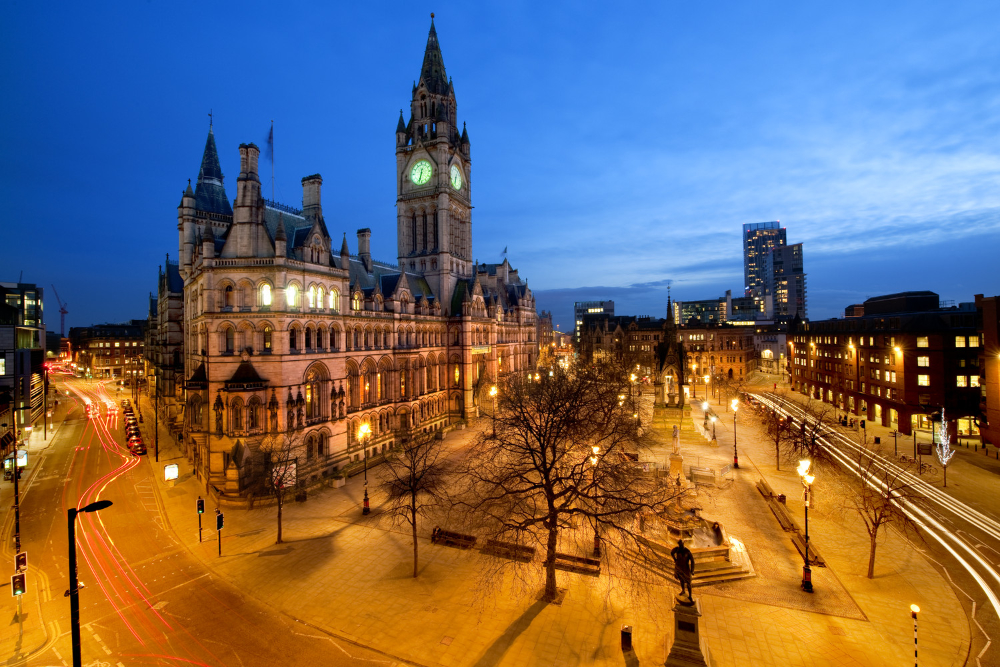
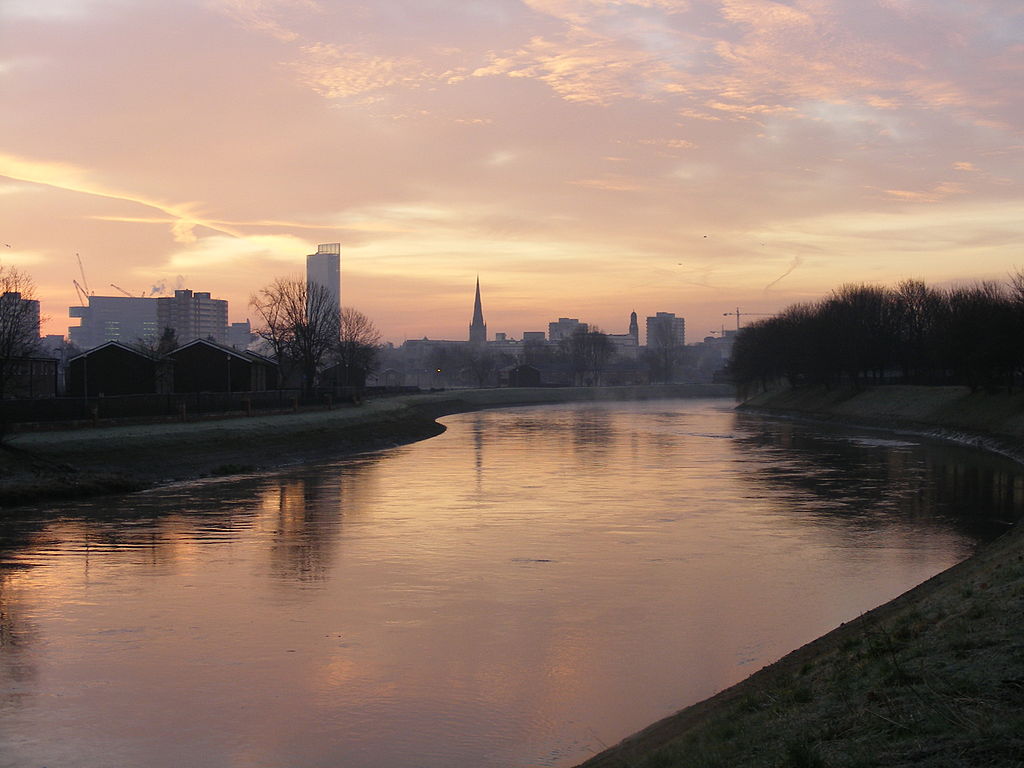
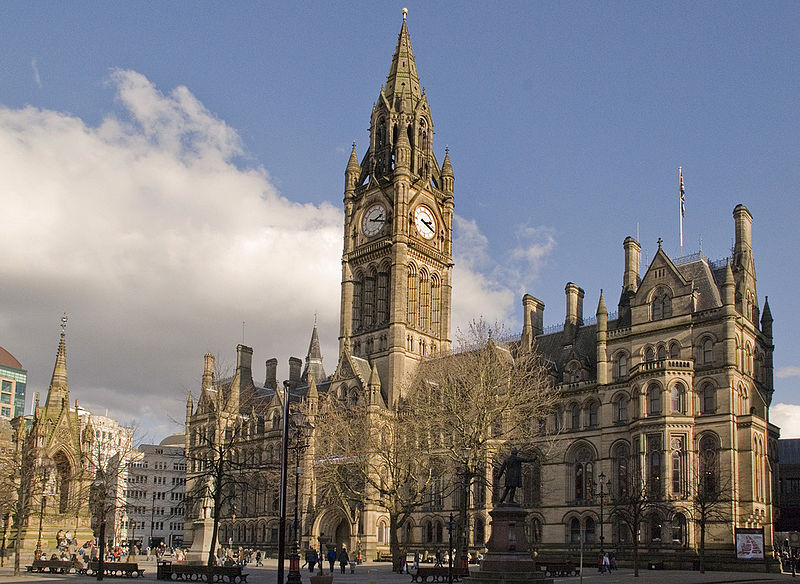
Manchester-england - tourist-destination

Manchester, England – Photo Credit: tourist-destinations.com

Biene’s Last Letter from England

December 10th, 1965 Didsbury

My dear love Peter,

As usual I can just drop a few lines although I am dying to write you all I have on my mind. Your last letter contained quite a lot of exciting news concerning my coming to you in Canada. I feel so relieved that everything is set going for it. I think the conditions are quite sensible and I do agree with them. Peter, imagine we both will get married in less than half a year. On the one hand it seems quite natural to me to get married to you because I cannot imagine another husband for me than you. Yet on the other hand it seems like an unbelievable marvellous wonder, which only happens in dreams and fairy-tales. The thought of it is really overwhelming me with thousands of exciting feelings.

On the 23rd I am flying home. I booked my flight yesterday in town. I am afraid that I will have to face much trouble at home. Yet I feel strong enough to defend my cause. My brother has caused all my relatives to write to me in order to bring me to reason. Are we really that foolish, Peter? I admit that our plans are extraordinary, yet the more I think it over the more I feel that we are doing nothing wrong. I must convince my family! I have so many arguments. But perhaps on both sides the emotional sphere is more powerful than reason, and since strong feelings are involved it will be difficult to come to terms. Oh I really wish I could see clear. At home I will see.

Mrs. Lande often wonders where I get all my patience from and why nothing can shake me and then she says that she really wished to know you because judging from me you must be a really marvellous man to make me always so happy. Do you know Peter that it is about a year ago that I realized how much I am in love with you? It was after the ‘Don Giovanni’ opera, after I had given you the little good luck charm, the magic ‘Glücksbringer’ and after you had left me, and the train had disappeared. I suddenly felt for the first time that I could never live anymore without you loving me. This discovery shook me so very much and stirred up all my feelings and frightened me to such a degree that I was really ill at night and then I wrote to you and then … oh Peter, I sometimes cannot believe that all I had so desperately wished in that night has come true. I do not believe in magic at all, yet you must admit that it was a strange coincidence that I gave you the ‘Glücksbringer’ just on that particular night. 

Yours for ever Gertrud

After this passionately written letter more than two weeks passed until I received a card, which did not even arrive on time for Christmas, because it had been sent by surface mail. But her last letter from England was so heart-warming that its message of courage and love sustained me through the darkest days of the season. In quick succession I jotted down all my thoughts about the best possible strategy for Biene’s handling of parental opposition to our plans. I decided to keep writing in small instalments and wait, until I had received word from Biene before sending off the compiled letters. This method also served to bridge the time. However, as Christmas was drawing near, worries about how Biene was making out in her struggle with her parents occupied my heart and soul. Was it not exactly two years ago that I had worried about losing her forever during the gloomy days in the army? Should it be possible that her parents gain the upper hand? Would they be able to soften her resolve to come and marry me in the spring? With no Christmas greetings from Biene or from her parents the stage was set for the loneliest Christmas of my entire life.
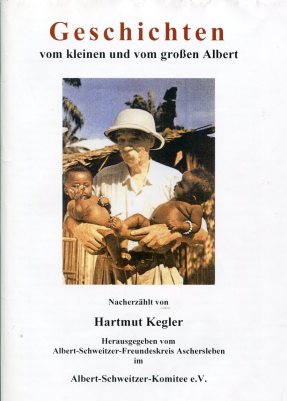
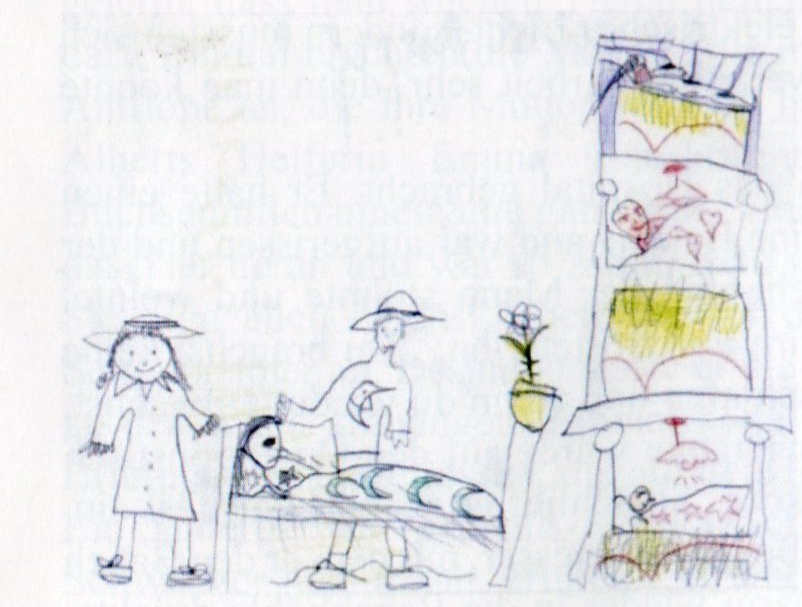
Albert Schweitzer – Seminar #14

AS01

Wie Albert Schweitzer Häuser baute

Immer mehr Kranke kamen zu Doktor Albert Schweitzer und seiner Frau Helene. Von morgens bis abends arbeiteten sie schwer. Sie operierten, impften; verbanden die kranken oder verletzten Menschen, die oft lange geduldig warten mussten, bis sie an der Reihe waren. Doch wo sollten sie die vielen Kranken und ihre Familienangehörigen unterbringen? Sie konnten ja nicht immer im Freien schlafen! Sie mussten vor der Hitze und vor den heftigen Tropengewittern geschützt werden. Also mussten Baracken gebaut werden. Doch es gab im Urwald keine Baufirma, die das erledigte, und es gab auch keinen Baumarkt, wo man Bretter und Nägel kaufen konnte. Also musste alles selbst geschaffen werden.

So zog Albert Schweitzer mit starken Männern, die ihre kranken Frauen im Hospital hatten, in den nahen Urwald. Dort fällten sie große Bäume und zersägten sie. Die Arbeit war bei der Hitze schwer und der Schweiß rann ihnen in Strömen von der Stirn. Die zersägten Bäume wurden dann an das Ufer des Flusses gerollt oder getragen und von dort in Kähne geladen und zu einem fernen Sägewerk gebracht. Danach kamen die Bretter dann wieder zurück und wurden zum Trocknen aufgestapelt. Auch dabei hat Albert geholfen, obwohl er schon vom Operieren ziemlich müde war. Doch er trug die Bretter mit wie alle anderen Männer. Da kam ein Afrikaner in vornehmem Anzug vorbei. Albert rief ihm zu: „He, Kamerad, helfen Sie uns bitte die Bretter tragen. Es wird gleich regnen und die Bretter werden nass!“ Aber der Afrikaner antwortete: „Das ist keine Arbeit für mich! Ich bin ein Studierter!“ Albert schüttelte nur den Kopf und sagte: „Schade, dass ich kein Studierter bin!“ Dabei hatte Albert Schweitzer viel mehr und viel länger studiert als der „vornehme“ Afrikaner!

Was hatten die fleißigen Hände  von Albert Schweitzer nicht alles zu tun! Am Vormittag mussten sie operieren, impfen und Salben auftragen; am Nachmittag galt es, Pfähle zu setzen, Dächer zu decken und Bretter zu nageln; abends spielten sie auf dem Tropenklavier und nachts schrieben sie Briefe und dicke Bücher. Nur wenige Stunden der Ruhe waren ihnen vergönnt.

14

Wir merken uns: Kein Mensch ist für einfache Arbeiten zu schade. Man soll jede Arbeit achten und auch bereit sein, sie zu verrichten.


THE MINING ERA OF THE CANADIAN COLUMBIA by Bill Laux – Chapter 13

SILVER ON KOOTENAY LAKE

The placer miners of the 1860s had noted in may places the presence of gold and silver in hard rock veins but had been obliged to pass them by. Lode deposits required money and machinery to develop. Tunnels and shafts would have to be dug, and the ore crushed by powerful machines. Lode mining was for capitalists; the ordinary prospector had but his pan and his shovel, and needed a gravel bar with gold at the bottom of it.

For the silver and copper showings, a smelter would be required to extract the metal, and none existed in the North American West in the early Sixties. Transportation was again the deciding factor.  Without an economical means to bring in heavy machinery and to move the ore out to a smelter, investors would not risk their money on lode mines.

However, that lead deposit on Kootenay Lake continued to attract attention. In 1868, American prospector Henry Doan investigated the surface showings of galena, on which he staked a claim.  In 1873,  he sent a very rich sample of ore which he said was from his claim (it was not) to some San Francisco investors who were impressed. They bonded the claim for $10,000, paying Doan $1000 in advance.  They then sent mining engineer, George Hearst, to examine the deposit and advise them if it was worth buying. Hearst came north from San Francisco by boat to Portland, by steamer to Walulla, and stage coach to Colville.   At Marcus, Hearst and Doan engaged Captain Albert Pingston, now without a steamer, but with serviceable rowboat, to take them up the Columbia, and then to portage around the falls and rapids of the Kootenay River to reach Kootenay Lake. On the portage Doan suggested to Captain Pingston that he “lose” the assay outfit that Engineer Hearst had brought along. Pingston indignantly refused.  At the lake Pingston rowed them across to the peninsula with the huge iron stain on the bluff overlooking the lake. Here was Doan’s claim. Hearst tested the surface showings and apparently built a small furnace of stones where he smelted  some of the ore over charcoal to test its lead and silver content.   Hearst’s assays revealed a low grade deposit with  6% lead, 8% zinc, and 2.8 oz. of silver to the ton. True, there was a lot of it, and it was on the surface, but it was nothing like the bonanza silver-lead ore Doan had sent him.

Furious at having been duped by the false sample, and having come all this way at considerable expense, Hearst, who had hired the boat, refused to let prospector back into it for the return trip. Captain Pingston protested to Hearst, “You can go and thrash him if you like but you cannot leave him there to starve and you must let him come back in the boat to where he can get something to eat.”   Presumably well thrashed, Doan was allowed back in the boat to return to Colville, though a still furious Hearst may have kicked him out at Fort Shepherd. It was supposed by prospectors around Colville, that the sample Doan had sent to San Francisco was specimen silver ore from one of the Colorado mines.

For the remainder of the Seventies, the Big Ledge of lead-silver ore on the east side of Kootenay lake remained undisturbed, except perhaps by Kootenais and Sinixt Indians casting balls for their Hudson’s Bay Company trade muskets..

There was a Canadian Pacific Railway promised to British Columbia by the Dominion government as part of the terms of union in 1870.   But it was virtually in limbo, as the result of a political scandal concerned with its financing.   The Conservative Party, which supported it, was out of power as a result of the CPR scandal, and the Liberals were offering money instead, and a government dry dock to the new Province to try to get out of the very costly railway promise.

In the 1880s with CPR, still unbuilt, it was the Northern Pacific Railroad, building from Duluth on Lake Superior, to Tacoma on Puget Sound, that revived mining interest in the Kootenays.   The Northern Pacific was to run down the Clark Fork River in western Montana to Pend Orielle Lake and Sandpoint, Washington.   This would put it just 30 miles from Bonner’s Ferry by that easy valley bottom route of the Walla Walla trail.   Suddenly, that low grade lead and silver deposit Henry Doan had tried to sell George (now Senator) Hearst was going to be within reach of a railroad.

  Robert Sproul, an American from Kennebec County, Maine, was in the Washington Territory in the 1870s prospecting for coal to supply the Northern Pacific Railroad which was under construction.   He was accused of claim jumping by another coal prospector, John Stone of Puyallup, and apparently framed by Stone or some other for a barn burning.   He was released by the Puyallup magistrate, who could find no evidence he was the culprit, and he quickly put the Cascade Mountain between himself and his adversary. 

In 1880 he turned up in Colville, and was befriended by the Jacob Meyers family.  In the spring of 1881 he was in Bonner’s Ferry helping the Fry brothers, Richard and Martin build a scow with which they intended to begin a transportation service down the river to Kootenay Lake.   The Frys, who as trappers and traders, knew the lake well, told him of the big galena outcrop on the east shore of that lake.  The next summer he obtained a grubstake from a Colonel Hudnut of Sandpoint, and with his friends, Jesse Hunley, and Jacob Meyers from Colville, borrowed a rowboat from the Frys to go down the river and prospect Kootenay Lake.   With the map the Frys had drawn for them, the three men found the place.   Sproul staked the Bluebell, and, believing himself to be the discoverer, staked an extra claim, the Comfort, for Col. Hudnut.   Hunley staked the Kootenay Chief, and Meyers staked the Ruby.   The mining law in effect in British Columbia at that time had been drawn up for placer miners working their claims though the summer season.   It required the claimant to remain on his claim throughout the season, June 1 – Oct. 31, not leaving it for more than 72 hours at a time.   This was intended to prevent disputes in which one miner might mine another’s gold in his absence.   It had no real relevance to lode mines, few of which had been staked in the Province up until this time.  It was amended to accommodate lode mining the following year.   But the law in effect in 1881 also required the claim to be registered at the nearest mining recorder’s office, which at that time was William Fernie at Wild Horse Creek, a difficult journey back to Bonner’s Ferry and up the old Wild Horse trail which could not possibly be accomplished in 72 hours.

Sproul, Meyers and Hunley were not the only prospectors interested in Kootenay Lake that summer.   By this time the Northern Pacific crews building from Wallula on the Columbia had laid rails as far as Sandpoint.   This brought the Ainsworths of Portland back into the boundary country.   They had put two steamers on Pend Orielle Lake and the Clark Fork River to supply the Northern Pacific contractors, and now an Ainsworth prospecting party came up the just completed line to Sandpoint.    With the rails a scant 30 miles from Bonner’s Ferry and navigable water to Kootenay Lake,  Kootenay minerals could have the transportation that had so long been lacking.   The Ainsworth syndicate’s party comprised Captain John C’s son, George; Enoch Blaisdel; the Englishman, Thomas Hammil; a man named Maxwell; and New York journalist, A. Y. Woodbury.   They were to investigate mining possibilities on Kootenay Lake.   The provision of bringing along a New York journalist ensured that any mines the expedition might discover would be reported in the American press and so generate investor interest.  With wise forethought, Woodbury wrote William Fernie, the mining recorder at Wild Horse, asking him to come to Kootenay Lake to give legal sanction to their mining enterprise, and record what claims they might stake.   All of this careful planning suggests that the Ainsworths had advance knowledge that there was mineral on Kootenay Lake and even where it was to be found.

William Fernie, who may well have been the source of the Ainsworth’s information as he knew the Lake region well, did come and met the Ainsworth party.   Sproul was able to record his Bluebell claim with Fernie on July 31, 1882.

Hunley and Meyers did not stay the full season, as required by the law, to hold their claims.  They probably did not think low grade lead worth the trouble, since Sproul had been unable to sell a half interest in his Bluebell to Fernie.   Fernie doubtless informed them that their discoveries had been recorded and abandoned several times previously, and in his opinion were not worth much.   Sproul, though,  stayed on, developing his claim and building a stone powder house.   It seems clear he intended to mine it if he could not sell it.   But on October 25 he tacked a note stating he was ill and out of food to one of his claim stakes, and set off in the Fry’s boat to row to Bonner’s Ferry.

  Upon his departure, Hammil and Woodbury came to the Bluebell camp and jumped Sproul’s, Hunley’s and Meyer’s claims.   This, under the law, was technically legal, as the men had left before the end of the season.    William Fernie was right there to record Sproul’s Bluebell for Thomas Hammil, Hudnut’s Comfort and Meyer’s Ruby for Woodbury, and Meyer’s Kootenay Chief in the name of Enoch Blaisdel.   Fernie’s actions in so openly favouring the Ainsworth party are open to question.    He had told Sproul that he was not the discoverer of the east shore galena deposits, and therefore not entitled to a second claim, though recording a claim in the name of a friend was a common American practice and sanctioned by most miners.   But it was clearly not proper for Fernie to record two claims for Woodbury.   Jumping claims, even under the color of a legal technicality, was a despicable act in the view of the miners of the Eighties, and William Fernie’s actions strongly suggests that he had been co-opted by the Ainsworths.

On the other side of the lake, the Ainsworth party set up their camp at the hot springs where they filed a townsite claim for 160 acres around the spring to be called Ainsworth.   As well, they located other mineral claims on the west shore in the area of their townsite.  This was obviously no speculative prospecting expedition; the Ainsworths intended to become the dominant influence on the lake.

The following spring Sproul and Hammill  returned to Kootenay Lake.    Robert Sproul  found the Ainsworths had jumped his claims, and Thomas Hammill was setting up camp at the Big Ledge as it was called, a few hundred yards from the disputed claims.  Sproul filed a lawsuit against Hammill, but since the decline of the Wild Horse diggings there was no experienced civil servant assigned to the Kootenays as magistrate.   Instead, a well liked but largely ineffectual local storekeeper at St Eugene Mission on Moyie Lake, the elderly Edward Kelly, had been  appointed Justice of the Peace.

At the end of August, 1883 Judge Kelly came to Kootenay Lake to hear the lawsuit.  Hammill had wanted to bring in a prominent lawyer from the Coast, but the man either could not or would not make the arduous trip. Sproul engaged the English sportsman, W.A. Bailie-Grohman, to speak for him. This was probably a bad choice, since Baillie-Grohman was a notorious meddler, more interested in the figure he cut in the wild Kootenays, than concerned for his client.   The trial was a choice morsel for the book of Western Adventures, Baillie Grohman was writing.

Baillie-Grhoman’s description of the trial, probably somewhat embellished for his English audience,  follows.

“…Judge Kelly, a genial old timer, whose silvery locks and quaint Irish humour soon gained him the respect of all concerned, arrived in due time.   It was a somewhat memorable scene.   The canoe bringing him had been sighted from the enemy’s camp,  for the little cove in in which it lay, faced south.   Forgetting for the moment all the dire threats exchanged by both camps, Winchesters and six shooters were laid aside, and the inmates of both camps streamed down to the shore to receive the representative of the law.   We were a motley little crowd, six or seven for our side, for some necessary witnesses had arrived, and twice that number in Hammil’s party…  It became unavoidable that Judge Kelly should take up his quarters in one or the other of the rival camps.   ‘Now boys,’he addressed the crowd, ‘I think it would be fair to both camps if I grub in the one and sleep in the other, so just let me know which has the better grub outfit.’   A hasty exchange of information concerning our respective culinary possessions…left no doubt that the enemy’s grub box was far better stocked then ours.   Molasses, onions, and canned stuff, of which we had none, decided the question in which camp the judge would take his meals.   Every morning and evening he was escorted to and from from one camp to the other by one of his late hosts, the distance being a few hundred yards…  

The largest of the three shanties in the two camps was selected as the courthouse where the trial took place… The court opened on Aug. 31, and the first thing Judge Kelly insisted on was that all revolvers were to be deposited in a box at his side so long as the court sat… The litigation had resolved itself into four distinct cases,  for each of the two parties had taken up the same four claims on the Big Ledge.  As several important witnesses were absent, two or three short adjournments became necessary, and it was only on October 16, 1883, that Judge Kelly gave his last judgment.   All four were decided in our favour!   Judge Kelly was an old miner himself, and knew little of  law; hence he took the view which from the first I had recognized as the saving of our case, namely the common sense interpretation of the actions of men, who, from causes beyond their control, could not possibly comply with the strict letter of the mining regulations…”

Thomas Hammil had the resources of the Ainsworth Syndicate behind him, and at once appealed Judge Kelly’s decision to the B.C. Supreme Court.   Justice Begbie heard the appeal

in March, 1884. His decision reversed Judge Kelly in respect of  Hunley and Meyers.   They had in fact abandoned their claims, Begbie decided, and forfeited them. But Robert Sproul had made a genuine effort to stay with his discovery until the end of the season, so he was entitled to a leave of absence, being ill, and could retain his Bluebell claim.   Justice Begbie made it clear that he considered Thomas Hammill a despicable claim jumper and Baillie-Grohman a meddlesome obfuscater.   

Sproul, who had meantime secured an appointment as Road Commissioner for the Third District of Kootenai County, Idaho, organized a  company to construct and operate a 32 mile toll road from Mud Slough, near the Northern Pacific’s Kootenai Station, to a spot he called Galena Landing on the Kootenai River near Bonner’s Ferry.    Having lost his associates’ claims to the Hammill-Ainsworth party, he intended to control their access to the Lake.    In 1883 Sproul had assigned a 1/3 interest in his Bluebell claim to Col. Hudnut, but the Colonel refused to pay the court costs of the transfer. To settle the debt the 1/3 interest was put up for sale. It was bought, to Sproul’s fury, by Thomas Hammill.   The fact that neither Sproul nor his partners bid on the 1/3 interest suggests possible collusion between the court and the Ainsworth interests.

  In June, 1884, Sproul met Dr. Wilbur A. Hendryx of Grand Rapids, Michigan in Sandpoint.   Dr. Hendryx was representing a brass fabricating company in Connecticut owned by himself, his brother, and Edwin W. Herrick of Minnesota.   Sproul took Dr. Hendryx to inspect the Bluebell claim at the Big Ledge Camp on Kootenay Lake, and convinced the would-be mining entrepreneur of its value. He also pointed out to the Doctor that he held a toll road franchise for the route Bluebell ore would have to travel to reach the Northern Pacific at Kootenai Station. Sproul sold Dr. Hendryx a half interest in his toll road franchise and transferred his interest in the Bluebell claim to the doctor in exchange for shares in the Hendryx brothers’ Kootenay Mining and Smelting Company of New Haven, Connecticut. Once the toll road was built, the Hendryx brothers intended to mine the Bluebell ore and bring it out to the Northern Pacific for shipment to a Missouri smelter. 

Now the Kootenay Lake region became the focus of two rival groups of American capitalists grasping for control. The meddlesome Baillie-Grohman was fortunately distracted, getting up a Mountain Goat hunt with the future American President, Theodore Roosevelt.   Looking down from the high mountains on the wide bottomlands of the Kootenay River near present Creston, Baillie-Grohman conceived the idea of draining the marshy lands to reclaim them for farming. He had the idea that if he went to the Rocky Mountain Trench in the East Kootenay north of Wild Horse, he could divert the Kootenay River into the Columbia, a scant five miles away. Then the lowered flow down the Kootenay would leave the bottomlands dry and farmable. Roosevelt refused to become involved in such a visionary scheme, but did make inquiries about mines which might be for sale before returning to the U.S. Baillie-Grohman, infatuated with his idea, approached one of the construction engineers for the Northern Pacific, then building through Sandpoint. He brought the engineer to the flooded lands and took him over to the site of his proposed canal, and asked for his professional opinion on the scheme. The engineer pronounced the thing possible, and Baillie-Grohman lost no time in forwarding the engineer’s report to his English friends, soliciting their funds for his Kootenay Lands Reclamation Company.

What Baillie-Grohman apparently did not know was that the Ainsworths were deeply involved in the Northern Pacific Company, and the NP engineer dutifully reported Baillie Grohman’s scheme to George Ainsworth. Ainsworth in turn set up his own Kootenay Lands Reclamation Company, and the dispute as to who was to get or drain the drowned lands went into the courts.  The incident demonstrates that the Ainsworth Syndicate’s intent was to dominate the Kootenay region, in mining, agriculture and whatever other possibilities might surface, shutting  all others out. 

Baillie-Grohman’s schemes, though well financed from Britain, came to nothing. He built his canal with Indian labor, but it presently silted up with debris from the spring runoff, and became useless.  The Ainsworth’s stronger rivals, the Hendryx group, proposed to ship Kootenay Lake ore via boat or scow up the Kootenay River to Bonner’s Ferry, and then wagon haul it down their toll road to Kootenai Station and the Northern Pacific Railroad where the Hendryx brothers had set up their headquarters.

  The Ainsworth group’s plan was revealed to be even more ambitious. They intended a portage railroad from the outlet of Kootenay Lake (Balfour), around the falls and rapids, 40 miles to the Columbia, and from there via one of the Ainsworth’s sternwheel steamers to Portland. Captain John C. Ainsworth had commissioned Captain Pingston and his rowboat to survey the Columbia from the Canadian line down to the then head of navigation at Priest Rapids to determine if it could be worked by steamboats.   Captain Pingston reported that with several short portages, at Priest Rapids, and  Rock Island Rapids, the river could be run for “2/3 of the season.”   However a 15 mile portage railroad would be required from Rickey’s Rapids around the 20 foot Kettle Falls, to Marcus.  

Captain Ainsworth then began lobbying the U.S. congress for the improvements  Pingston had recommended. Congress in turn sent out the Army’s Lieut. Symons to repeat Pingston’s survey and report precisely what engineering works would be required to allow U.S. steamers to reach Canada. The services of journalist Woodbury were next used to plant alarming stories in the B.C. newspapers about a supposed Northern Pacific invasion of the Kootenay district with a branch line from its Kootenai Station.   Once the fear of losing a potential Kootenay trade had gripped the Victoria and New Westminster merchants, Captain Ainsworth presented himself at the Legislature to request a charter for his portage railroad.

  Posing as a friend of British Columbia, and concealing his connection to the Northern Pacific Railroad, he painted a picture of a wagon road to be built from Shuswap Lake, navigable from Kamloops, across the low Eagle Pass to Farwell’s (Revelstoke) on the Columbia.   From there, he told them, his steamers would carry merchandise down through the Arrow Lakes to the mouth of the Kootenay where his railroad would connect to Kootenay Lake.   The ore from the Kootenay Mines would come out via the same route and the trade would be preserved for B.C., defeating the Northern Pacific’s plan to build a branch to Bonner’s Ferry. The B.C. Board of Trade and the Provincial legislators were enthusiastic about this scheme.  They  gave the Captain his charter in 1883, and let a contract to G.B. Wright, who represented the Ainsworth’s Syndicate in B.C., to build the Eagle Pass wagon road. To finance the costly and isolated piece of track, they set aside a strip of Kootenay Land from which Captain Ainsworth might choose any 750,000 acres for his Syndicate.

All of this, and especially the generous land grant, aroused opposition, particularly in Victoria where the huge grant of some of the Island’s best land to the CPR to build the Esquimault and Nanaimo Railway was being  bitterly opposed.   Handing his choice of Kootenay lands to this American for a mere promise of a distant railway to an even more distant bluff of lead, was held to be scandalous. However, before he could build his railway and claim his grant the Captain had to obtain Federal Charter as well. In Ottawa, apparently for the first time, someone actually consulted a map.  While Captain Ainsworth had concealed his backing for the sternwheeler, Forty Nine which had stolen the trade of the Big Bend for the Colville merchants in the Sixties, it was perfectly obvious to the Federal Minister of Railways and Canals that an Ainsworth steamer could just as easily connect the Columbia terminus of his proposed railway from Kootenay lake to Marcus, Washington Territory, as to Farwell’s and the proposed wagon road to Shuswap Lake.   The hated “traders out of Colville” could then use the railway to steal the Kootenay Lake trade, and Ainsworth’s Columbia and Kootenay railway would become a feeder to the Northern Pacific at Spokane Falls. Accordingly, the Dominion government disallowed the B. C. legislation, which brought on another crisis between B.C. and Canada.   In British Columbia, it was thought wicked enough for the Federal Government to intervene in Provincial matters, nullifying its legislation, but the worse insult was that in doing so it exposed an egregious B.C. blunder.   

The matter went into the courts for the next seven years, the Ainsworth’s with the backing of B.C.. trying to get back their charter and land grant, the Federal Government blocking them in favour of the nearly bankrupt CPR which was making its halting way toward the Kootenays, where it, and not the Portland merchants, could profit from a portage railway around the Lower Kootenay River rapids and falls.  The tragic events of 1885 were to be the result of this bitter struggle between the Eastern Hendryxs and the Portland Ainsworths for control of the Kootenay mines and commerce.

As the mining season of 1885 opened, Robert Sproul, now an officer of the Kootenay Mining and Smelting Company, hired three miners in Sandpoint, Charles Howes, from Shoshone County, Idaho, and the two Wolfe brothers, Adam and Charles, part Indians, from the Palouse.  The four arrived at the Big Ledge on May 29.   The Hammill party of six miners, was camped at the Ainsworth townsite across the lake.     On the 31st both the Sproul party and the Hammill party were working their adjacent claims.   A rifle shot was heard in the forenoon and at noon, miner Velnoweth of the Hammill party found Thomas Hammill lying on the ground, alive, but shot through the pelvis and spine.   Hammill was carried to his cabin where he died without being able to say who shot him.

Constable Anderson was summoned from the Ainsworth camp across the lake.  On questioning the other members of the Sproul party, he learned that Sproul had set off in a rowboat, for Bonner’s Ferry.   The Constable swore in a posse, and pursued Sproul in another boat.   Picking up a pair of Indian paddlers at the Outlet (Balfour), Anderson rowed furiously up the lake.   Sproul’s boat was shortly found abandoned on the lakeshore, but no trace of the miner was found.   Anderson had his men men row on up the Kootenay River to the boundary where the Boundary Commission’s 100 foot swath cut through the timber twenty years before, formed an open corridor down which anyone trying to cross into the U.S. could be spotted.   It was crucial for Anderson to intercept Sproul here, since if he managed to cross into the U.S. he could not be arrested.   

Three days later Sproul was spotted, walking out of the timber, and arrested for the murder of Hammill.   He was bound over for trial at Victoria before Judge Grey.   Adam Wolfe’s rifle was established as the murder weapon, and the defence did its best to implicate the two Indians. But Sproul was the only person at the Big Ledge that day with a motive for killing Hammill, and had been heard to make threats to him. He was found guilty and sentenced to hang.   The fact that only circumstantial evidence linked Sproul with the murder, and the repudiation by the two Indians, Adam and Charles Wolfe of their testimony raised a cry in the press for commutation to life imprisonment. The case went through appeals, up to the Supreme Court of Canada, with the Americans, and the Hendryx party protesting Sproul’s innocence, but judgment was eventually upheld.   Sproul was hanged at Victoria, still claiming to be innocent, on October 29, 1886. 

The controversy surrounding Sproul’s guilt or innocence brought general opposition to  the Ainsworth’s Kootenay projects. It was noted that the Ainsworth’s employee, the victim, Thomas Hammill, had been cited as a despised claim jumper by Justice Begbie. Miners in particular, sympathetic to a man who may have shot such a hated figure, began to oppose the Ainsworths.  For their part, the Ainsworths shunned publicity, while labouring quietly in Ottawa to reverse the Federal Government’s decision.     

With the Ainsworths in self imposed eclipse, Dr. Hendryx staked the Silver King claim along the shore of Kootenay Lake just west of the Bluebell.  From this spot he began tunnelling toward the Bluebell, intending to intersect the Bluebell glory hole at depth and bring out the ore though the tunnel.  In 1885 he bought a 31 foot screw propeller steamer named “Surprise” in Chicago, and had her shipped by rail out to Kootenai Station, where she was hauled by sled  to Bonner’s Ferry over the toll road, and launched. Pushing a scow ahead of her, the Surprise brought the Bluebell ore to Bonner’s Ferry where it was wagon hauled to the railroad and shipped to an eastern smelter.  In 1888 she was replaced by the larger twin screw steamer, Galena, built at Bonner’s ferry and capable of taking two scows on her trips to and from the Kootenay Lake mines, serving both the Hendryx and Ainsworth camps. Over on the Columbia in 1884, Captain Pingston bought a tiny steam launch, the Alpha, built in Hong Kong, and used it to barge supplies up to the CPR railroad camp at Farwells, for the Canadian Pacific Railway crews were  now across the Rockies, and would reach the Columbia river in 1885.

Natural Splendour of the Arrow Lake

Wednesday’s Photos

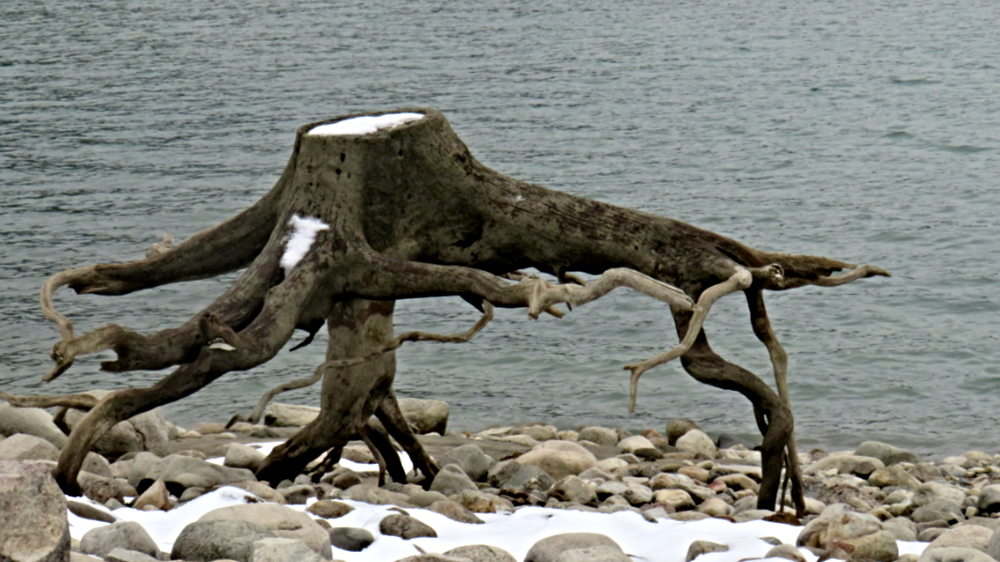
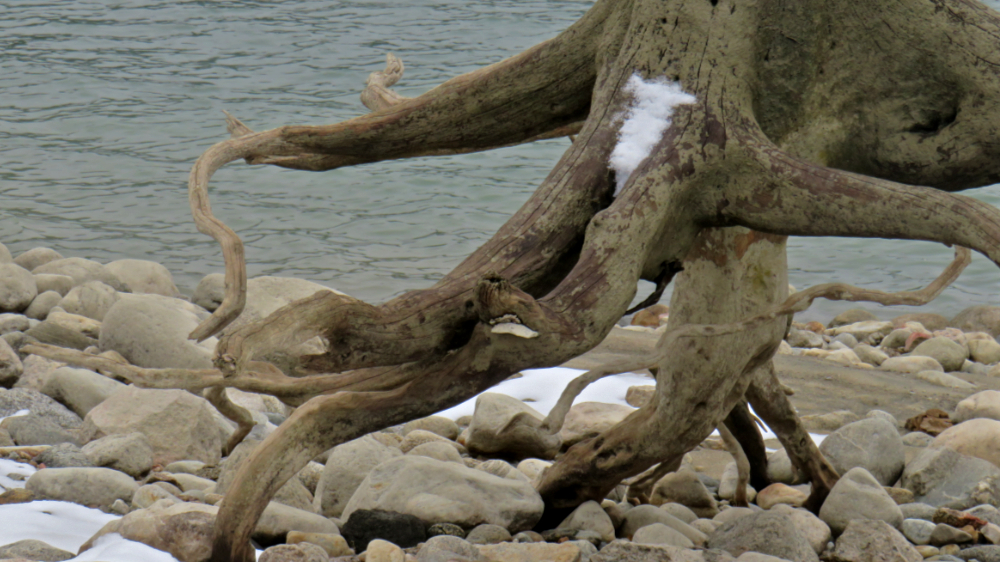
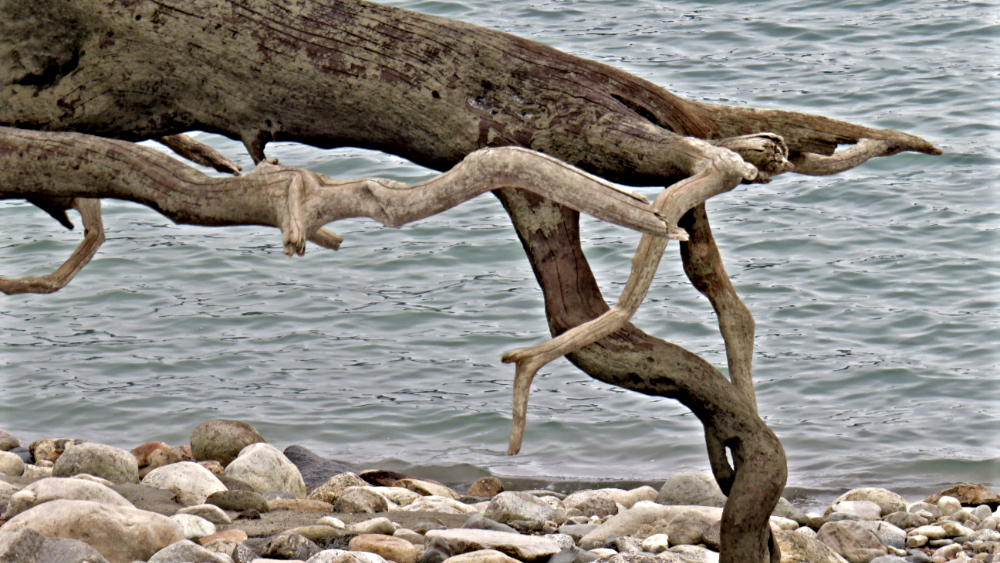
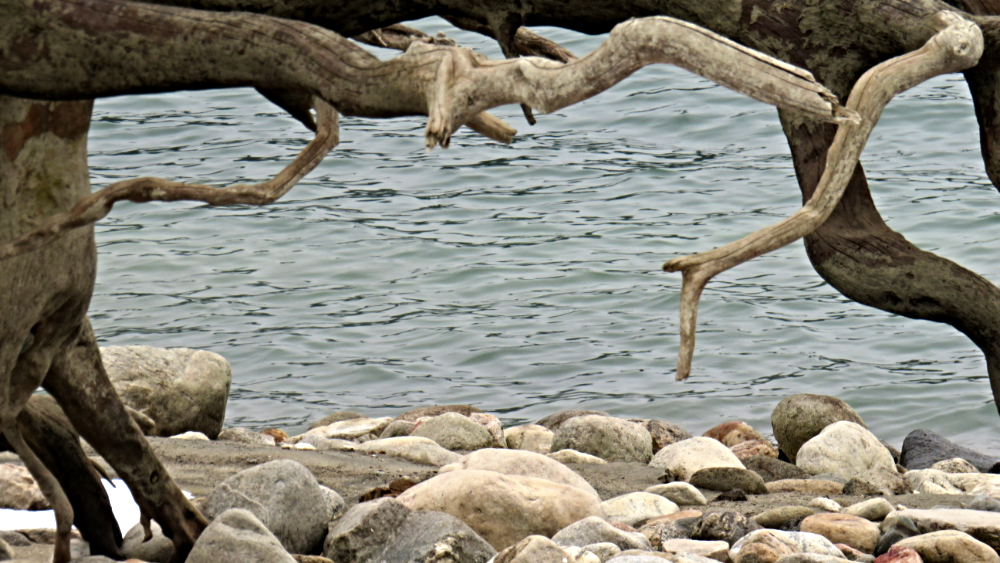
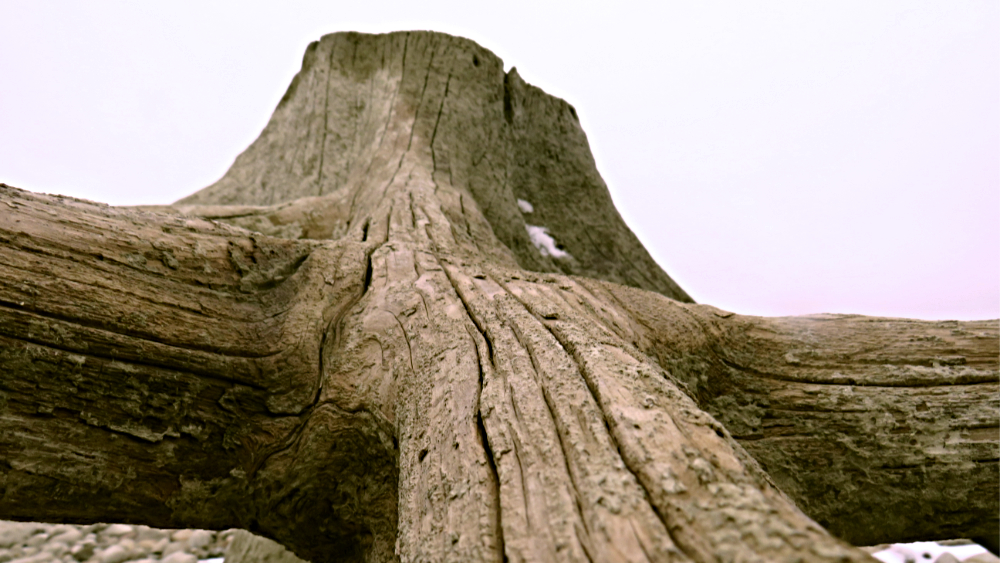
Anatomy of an Old Tree Trunk

On one of our recent walks along the shoreline of the Arrow Lake my wife and I came across an old trunk of a tree that had been cut down more than 50 years ago. That mighty tree together with thousands of others had to go in order to clear the area for the flooding of the valley. It was a sad time for the many people, who were expropriated and driven off their land by this gigantic BC Hydro project. The venerable old tree trunk I am presenting here today has not lost its  beauty over so many years and I decided to devote the entire post to the natural splendour of  its individual parts. Enjoy.

aimg_5634

Well Rooted and Anchored to Last Hundreds of Years

aimg_5643

Its Centre Root Washed Free by the Changing Lake Level

aimg_5640

Elegantly Shaped Lateral Roots

aimg_5635

Its Centre Providing a Frame for a View

aimg_5646

Artistic Lines Leading to the Top

The Peter and Gertrud Klopp Story – Chapter XXXII

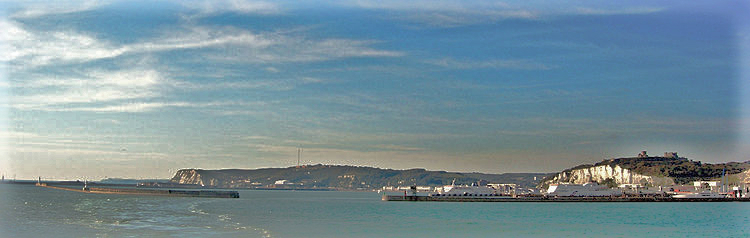
Dover

Port of Dover and the Famous White Cliffs of Dover – Photo Credit: wikipedia.org

Biene Travels to England

“If you want to eat well in England, eat three breakfasts.”

W. Somerset Maugham

In the meantime Biene had exchanged quite a few letters with Mrs. Lande, her employer-to-be in Manchester, England. She found out that she would be working in a modern household with three small children all less than six years of age. In spite of the many warnings from her friends regarding tough working conditions, Biene was looking forward to her job as an au pair girl, which offered a great opportunity for improving her English language skills through direct contact with people speaking their native tongue.  Becoming familiar with running a household while earning some money also proved useful for the young lady from Germany.

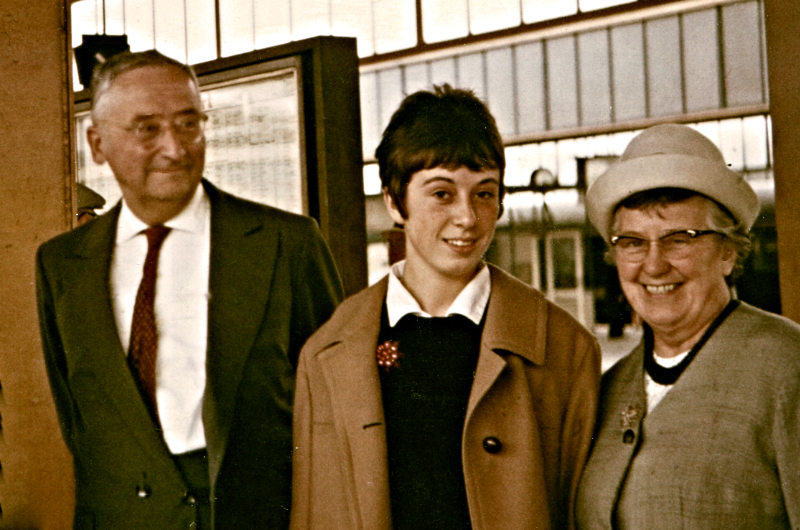
At the railroad station

Biene and her Parents at the Düsseldorf Railway Station – August 1965

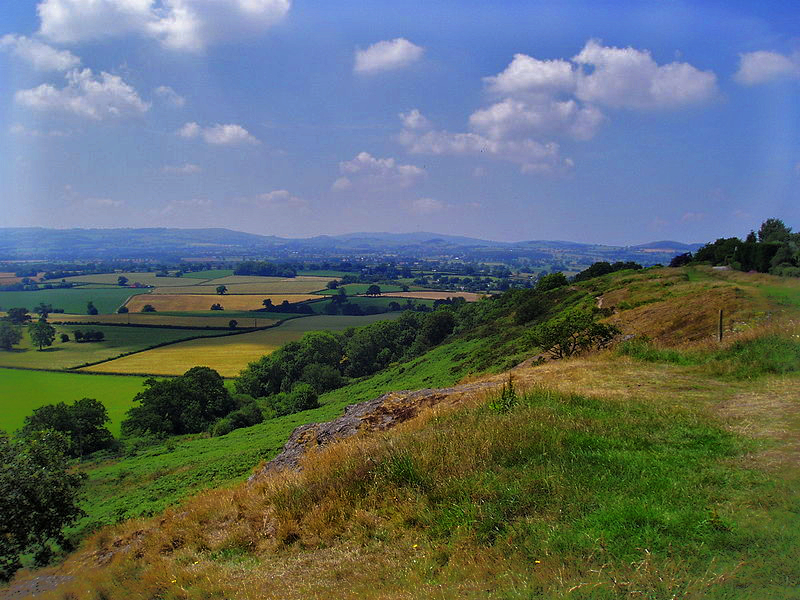
On August 10th Biene took the train from Düsseldorf to Calais to catch the ferry to England. At dawn the ferry reached her port of call at Dover, where Biene had to endure a gruelling time at customs and at the passport control station. She arrived at London by train two hours later than expected and therefore missed her connection to Manchester. Fortunately at Dover she had enough time to send off a telegram to Mrs. Lande. After a brief sightseeing tour of Westminster Abbey and the Tower of London she was on the train again and traveled through a very pleasant landscape, the so-called Midlands, featuring one of Britain’s finest scenery, greenest countryside and grandest views, through a picturesque patchwork of streams, valleys and woodlands.

Midlands Lyth_Hill_01

The Midlands of England – Photo Credit: wikipedia.org

After the cold night onboard of the ferry Biene felt sleepy and happy in the warm afternoon sun that was peering through her compartment window. After she had conducted her first English conversation with a nice elderly couple, who almost overwhelmed her with good luck wishes for her time in England, she fell asleep and awoke only, when the train was already approaching Manchester. The closer she got the more excited she became and wondered if Mrs. Lande would recognize her on the platform.

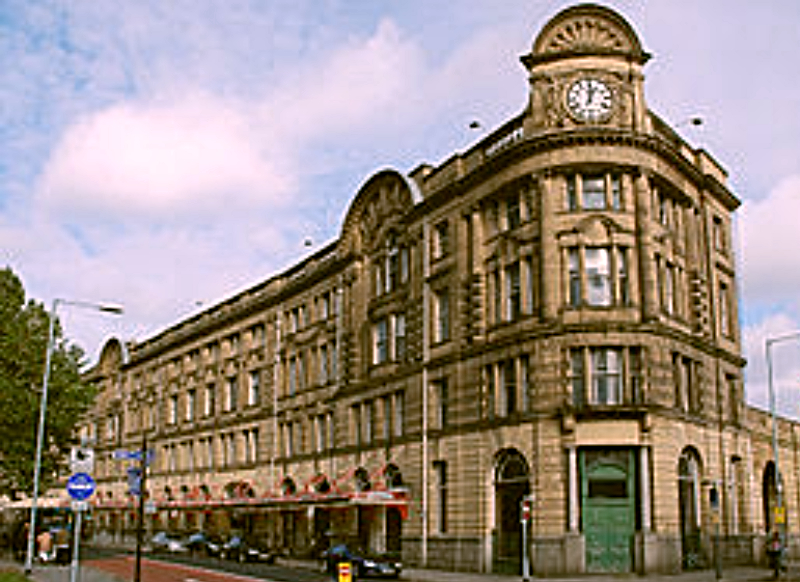
Manchester_Victoria_station Edited

Victoria Station, Manchester, England – Photo Credit: wikipedia.org

But she worried about that for nothing, because her employer was nowhere to be seen. In vain she looked around and after some time she was standing with her suitcases all alone on the deserted platform. She asked a black porter, who looked at her with pitiful eyes, to carry her suitcases to a taxi. When he found out that she was from Germany, where his mother was living, he was so delighted to be able to help her that he did not take any tip from her. Biene was quite touched by his helpfulness, especially after the porters in London had shamelessly taken advantage of her uncertainty over how much money would have been the appropriate amount for a tip. In the taxi she felt drowsy and suddenly very tired after so many wakeful hours. She could barely follow the verbal onslaught of the taxi driver, who in his zeal to share his local knowledge wanted to tell her about all the remarkable sights of Manchester.

Biene’s Plunge into Life’s Reality

Lande's House at the Corner

Lande’s House at the Corner of Parkfield Road in Didsbury, Manchester, UK

What a pleasant surprise unfolded before her eyes, when the taxi stopped at a large house with a friendly appearance. Immediately all tiredness disappeared. Mrs. Lande received her with open arms. The two became instant friends. That night Biene slept like a log. And it was good, because there was a lot of work waiting for her the very next morning. Mrs. Lande had just returned from her vacation in Spain and needed all the help she could get with the children. There was little baby Paul, who was being potty-trained. He was not too eager to cooperate and constantly climbed off  his tiny chair. While Biene was putting him back, where he was supposed to do his business, Caroline and Simon were pinching each other and screeching like howling dervishes. Gradually Biene was adapting to a totally new routine in her life. A 7:30 Paul woke her up with his crying, because he was wet and the diapers needed changing, all the while the older siblings were hanging on to her skirt and were hollering for attention. They wanted to get washed, dressed and fed breakfast all at once. And when at rare occasions a little bit of peace and quiet reigned in the Lande household, a pile of children’s clothes, the entire gamut from diapers to pants, were waiting on the ironing board. So Miss Panknin was on her feet from dawn to dusk seven days a week, during which she had altogether one half-day off. But even then Mrs. Lande occasionally brought Paul into Biene’s room, because she could not handle him any more.

Nearby Park Didsbury Manchester England

Lots of Green Spaces in Nearby Parks

In spite of the hard work Biene was happy. Every night, when after a relaxing bath she sank into her bed, she fell asleep with a sense of accomplishment she had never experienced before. In her letters she would often mention to me that through her work with the children, as challenging and arduous it really was, she was able to draw herself out of the darkness of idleness into the light of meaningful activity with little children. It was heartwarming for me to see that she too was going through an important trial period albeit quite different from mine. By dealing so intensely with young children she was in a much better position to decide on a small or large or no family at all. She learned first hand how much love and labor one needed to invest in raising a large family. Being an au pair girl was a real eye opener for her.

Leisure time had become a precious commodity for Biene. Whereas back home at Velbert she had often idled away her time, she now began to appreciate every free moment that she had at her disposal. What allowed her to truly enjoy her time off was the heightened awareness that what she was doing in Mrs. Lande’s household was not drudgery she needed a break from, but deeply satisfying service to others.

On one of her half-days Biene took little six-year old Caroline to a nearby cinema. Mrs. Lande had recommended the movie ‘Sound of Music’, which had gained the status of a box office hit not just in England, but also in translation practically all over the world. Completely enraptured by the picture and the music Caroline cozily sat on Biene’s lap. She was proud that she had been allowed to go out with the new so amiable au pair girl in the family.

Sound of Music

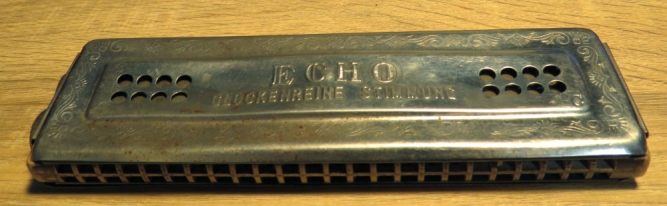
Little Paul also brought much joy to Biene. Barely two years old he had already turned with his cute baby talk into a real chatterbox. One of his favourite words to express his admiration or approval for something she suggested to him was ‘nice’. When she played on the harmonica I had bought her in Schotten, he dropped all his toys and looked at her with his big dreamy eyes as if a fairy had just arrived to play for him on her magical instrument. Then he clambered up into her bed. Every time she stopped playing, he would nudge her to play some more by tapping with his fingers on the harmonica and by humming and crooning a melody of his own. On another day in the evening, when the kids had all been put to bed, Simon, the middle child, sleepy-eyed with drooping eyelids, stepped into her room, snuggled up to her on the bed and like an affectionate little darling laid his head on her lap. She stroked and caressed him, until he finally fell asleep.

IMG_0928

The Original Harmonica – Banged Up but still Functional


Biene’s Engagement Ring

 Her Half-Day Cultural Activities

On one of these half-days my letter with the engagement ring arrived.  Biene having no idea what it contained and filled with joyful anticipation placed it prominently on the mantle piece. She did not want to open it until all her work was done. This way she would enjoy reading the latest news from Canada in the peace and quiet of her room.  The morning hours crept by at a snail’s pace. Finally the moment had come, when she could open the letter. I thought it would be best to let her describe her reaction upon finding the engagement ring in the envelope, about which we both had given up hope of ever seeing it again.

The Ring

The Engagement Ring

O Peter, if I had opened it any sooner, I would not have been able to do any work. Now I was by myself, and it took me a very long time, until I had recovered from the joyful shock. I was totally unprepared for this! Now your ring is on my finger and I have to keep looking at my hand, because I can hardly believe it. And how accurately you have chosen size and form as if we two had bought it together! Is it not like a miracle that your letter with its precious content after a journey half  around the globe finally landed in my hands? How did I yearn for it in June and then later again, when you thought it could arrive by surface mail! And now it has come so unexpectedly! Will it always be like this with us? I keep thinking of the quote from Bodelschwingh you had given to me in Michelbach, ‘To learn to wait is our merit …’. Ever since I love you, Peter, even waiting fills me with joy. All I do is for you, and all I experience, I experience in thought with you. It is unimaginable how much inner peace and how much strength you have given me after all these years, in which I had been torn and  tossed to and fro by feelings as if I had been living in a labyrinth. Now it seems to me as if I have found the right way. No, it is actually not like that, for I know that I found it through you …

As hard as her daily chores often were, they did not diminish her enthusiasm for the care she was able to provide for the children. Having received much love during her childhood, she was able to pass it on to the Lande children. In fact the close relationship with them aroused feelings of tender anticipation of the not too distant future, when she would be looking after our own children in the land of our dreams in Canada.

Every once in a while, she granted herself a little treat and went out to immerse herself into the British cultural environment. When she attended a performance by the internationally renowned Bolshoi Ballet, which happened to be in Manchester on its tour throughout the United Kingdom, the dancers and the music enchanted her such that in her imagination I was sitting next to her just like on our rendezvous at the opera in Wuppertal and with this romantic image on her mind she no longer felt alone among all those strangers in the theatre.

On rare occasions she went out to dine sometimes alone, sometimes with a friend. With all the work that Biene had to do, there never seemed to be enough food for her on the dinner table. Indeed, at times she was so hungry that she often resorted to eating candies, which was certainly not helping to keep her teeth in good health. The dentist in town paid for by the generous medical program, which included foreigners with a work permit, took care of many a cavity in her teeth.

Like me at my road trip through Canada, she was sometimes puzzled by certain customs, peculiar expressions and idiomatic expressions. One day while waiting for her meal to arrive in an East Indian restaurant, she was looking at the little trays, which the waiter had placed in front of her on the table. One of them particularly attracted her attention with its dark aromatic liquid, which Biene thought to be an appetizer. After all this was an exotic eatery, and while she did not recognize what it was, good manners and etiquette required that she at least tried and tasted some of these mysterious substances. The saying ‘When in Rome, do as the Romans do’ may have also prompted her to reach for the teaspoon and dip it into the liquid that appeared to her as most appetizing. The strong piquant flavour was not altogether disagreeable. However, when the observant waiter saw the young lady from Germany sample another spoonful, he came rushing to her table and discretely said, “Excuse me, Miss. The items are not hors d’oeuvres, but rather condiments for the main course you had ordered.”

condiments (3)

Some other time she went out to dine with her friend Susan. They had ordered a glass of wine to complement their meal. As they happily savoured the delicious food, the waiter came by their table and announced in a tone that was supposed to convey his appreciation for his customers, “The drinks are on the house.” Biene pondered on the meaning of his puzzling remark. In her mind she visualized drinks being placed somewhere on top of the restaurant. But she was smart enough not to ask any questions or make a silly remark, as I had once done on my trip with Adolf through Canada. Susan clued her in later saying that the waiter meant that the drinks were free this evening.

Biene’s Academic Endeavours

KingsCollegeChapelWest

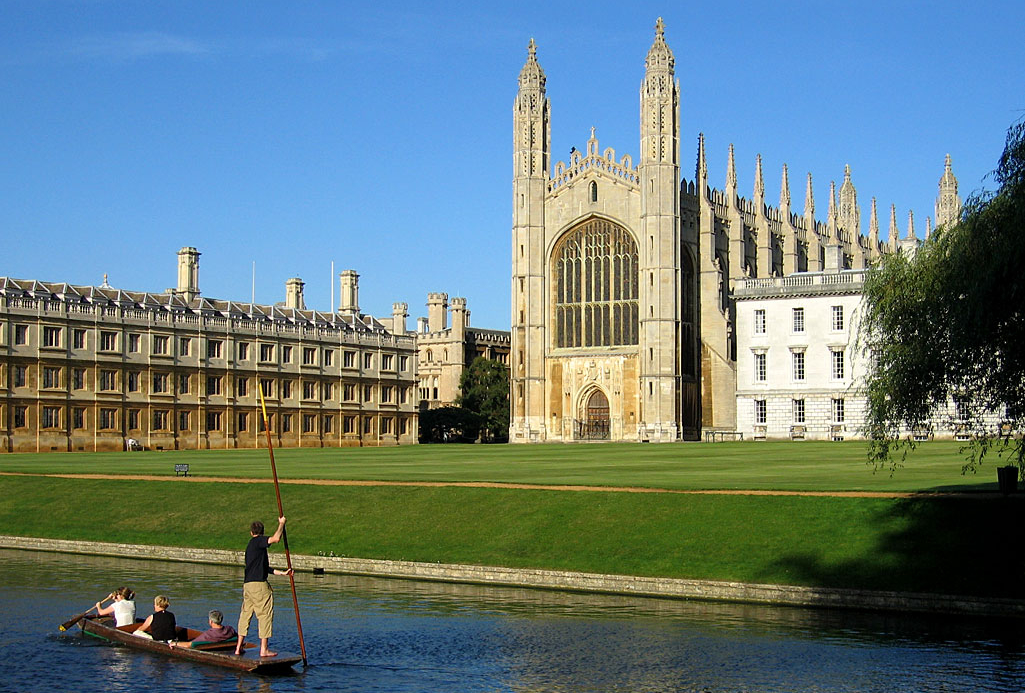
Cambridge University, which administered a branch in Manchester – wikipedia.org

To strengthen and further develop her language skills Biene enrolled at the Manchester branch of the Cambridge University, which offered English proficiency courses to foreign students. By some administrative error they had placed her at a lower level program, which was way too easy for her. When she brought her concerns to her teacher’s attention, he made sure that she would participate in a more challenging course. There the curricular material was quite difficult. But Biene, never afraid of tackling new challenges, attended the evening sessions with vim and vigour. Many nationalities were represented in her class, all striving to obtain the prestigious Proficiency Certificate. In spite of having less time for studying than her fellow students she made excellent progress. She soon became known in her class as the ironical author. Her instructor was so impressed with her ironical style that he read out her essay to the students as an exemplary piece of writing. The topic was ‘First Impressions of the Typical Character of the Englishman’. Based on her own experiences, she attempted to show and to prove that there was no such thing as typical Englishmen. Like other human beings, they all have their own individual character traits. The recognition, which she received from her teacher, was a great boost for her morale and strengthened her self-esteem. She was proud to see not only her language skills improve,  but also to see herself evolve as an independent thinker. Great was her joy, when she heard that her composition would be published in the official school magazine.

The Dream Word of Bienes Stories

Her facility to express herself well in the English language also came in handy in the Lande household. Being able to communicate well with the members of the family had become truly a source of great pleasure for her. This was especially the case when dealing with the older children at bedtime. She discovered the joy of story telling, not just any story that she may have read in a children’s book. In fact, she invented them in her creative mind at the spur of the moment. Caroline and Simon were fascinated, because they were involved in shaping the development of the story and felt important that they had a say in how the story would end. Each time Biene got lost in the maze of her own thoughts and paused for a brief moment, the children would spark with their questions new wonderful ideas and thus often contributed to a fanciful, fairy-tale kind of ending. To the children the most popular stories with all their variations were about the ‘Little Moon Man’ and his friend, the ‘Little Star Friend’. When Caroline and Simon listened as quiet as a mouse, Biene was happy about her success and dreamt of creating story and picture books for our own children. Until then a lot of water would spill over the Niagara Falls, she regretfully wrote to me in one of  her letters.

Peter’s Passionate Plan

1024px-Irwell,_Salford

The River Irwell at Salford, looking towards Manchester City Centre – wikipedia.org

With the intent of giving Biene a mild shock followed by a pleasant surprise I wrote Biene  a letter, which seemed to suggest that the waiting period might be cut short by more than she had anticipated.

Calgary, September 11th 1965

My dear Biene, I have to bitterly disappoint you. Believe me, my pain is greater than yours not to see you as quickly again as we first thought possible. We must resign ourselves to some unforeseen circumstances. I don’t know how it all came about. Either the official of the university exam committee did not have all his marbles or I wasn’t quite there myself, but — I passed the test!

Aren’t you a little glad now that you will be able to come to Canada as early as next spring? Oh, how happy I am to finally have gained a foothold in Canada. This will be the last letter with my brother’s return address; for I will immediately start looking for a small apartment to rent in the northwest of Calgary close to the university. From there I will write to your parents in Velbert. I hope that they will have some understanding for our unusual plans. But I have to ask them soon, if everything related to your immigration should pan out as intended. Right after your parents have given us their consent, I will pay a visit to the immigration office and will initiate the process. You need not do anything, until the Canadian Embassy in Cologne will give you further notice and tell you what to do. Greetings with love, Peter

Biene thought she had prepared her parents well, before she had left for England. She now wrote a letter to her mother, who had given her until now her full support for our plans in Canada. In it she let her know that a letter from me would be coming soon, in which I would ask the parents to grant me permission to marry her beloved daughter. Shortly afterwards, Biene urged me, “Please write my parents soon. For now they have been prepared.”

800px-Manchester_Town_Hall_from_Lloyd_St

Manchester Town Hall – Photo Credit: wikipedia.org

In my mind, I was merely going through a number of steps that would involve a few letters going back and forth with questions about my progress at my studies, my job prospects in the teaching profession and my assurances that Biene would be well looked after and be happy. In my mind the exchange of letters was a mere formality, a remnant of an old custom that appeared antiquated in the modern world, yet had a useful function of getting to know one another. This was especially true in my case, where a formal visit from Canada was out of the question. With Biene having done her best to have her parents prepared for my letter and in view of the fact that she would be of age to determine her own destiny, I did not spend one minute worrying about a negative reply. Besides, after passing my English proficiency test, I was riding on a wave of renewed optimism and was looking forward to boldly taking on the next major hurdle, two intensive semesters back to back with hardly a break in between. My ambitious goal was not just to get by with average marks, but to excel with a high enough grade point average to be eligible for government grants to acquire the necessary financial support for the following year.