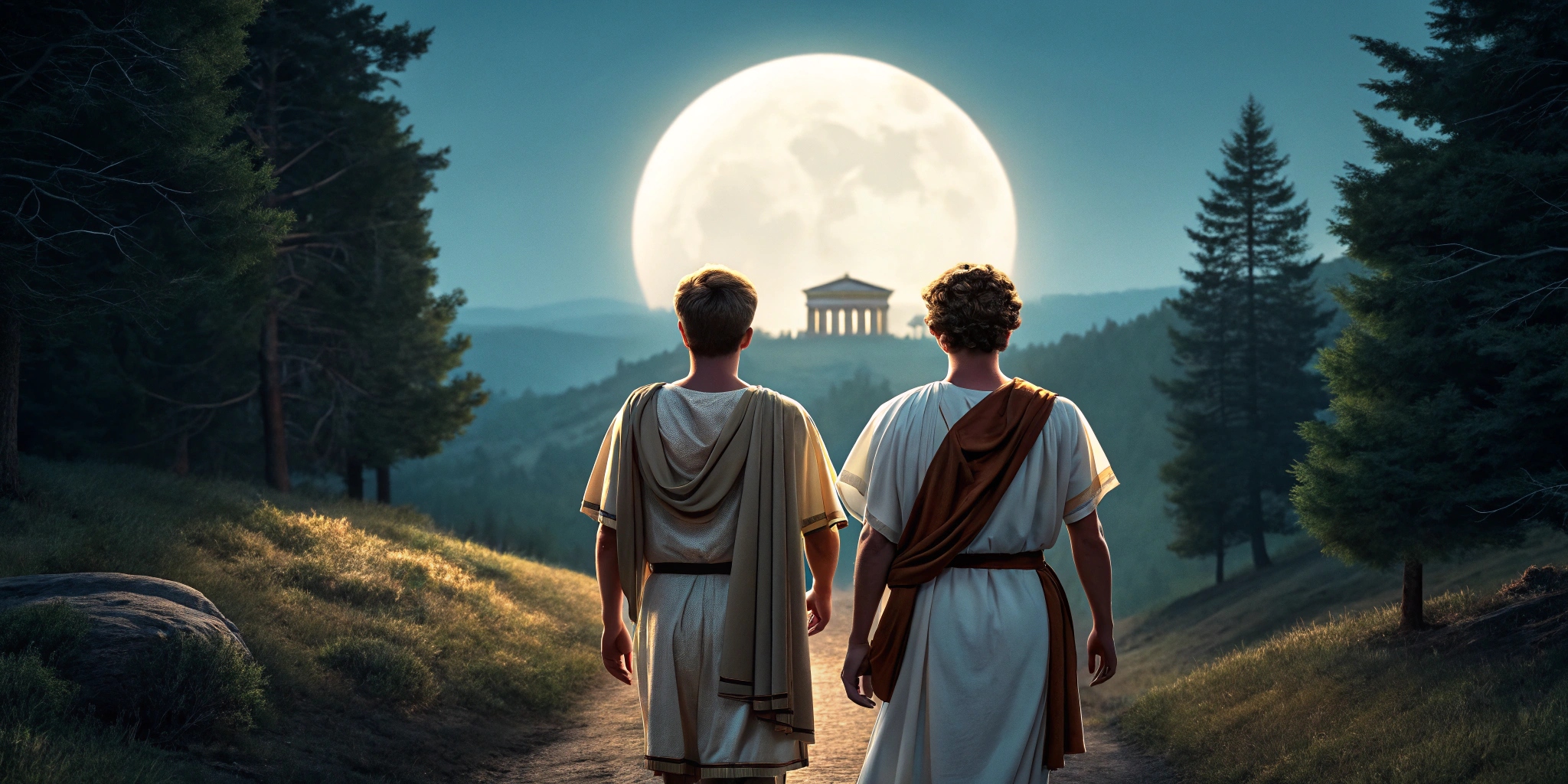
Carthage by Peter Klopp ©
The Decline of Old Customs and Traditions
They had now almost climbed the mountain and, somewhat exhausted, sat down on a stone staircase that led to a dilapidated summer palace belonging to one of the last kings. It was said that the ghost of this king still lived in the ruins, suspiciously guarding his meagre possessions.
It was a mild night. In the distance, the fires of the wall guards blazed, while from there to the city it grew darker and darker. Here and there, oil lamps flickered through the windows of the town houses. But what caught the two’s attention was not the fire on the wall, nor the peaceful city lying there, but the Temple of Venus at their feet. The marble columns stood out bizarrely against the midnight blue sky. They could not see the eternal fire, guarded with pious zeal by the Vestal Virgins. But for Publius and Mark, it was as if they were standing by the sacred fire, their spirits being warmed by its power.
Publius sighed, “How long will people continue to gather there and maintain the old customs? What are we, young people, supposed to cling to when our fathers despise popular belief and throw it overboard! Oh, those Greeks with their pernicious influence! I’m beginning to believe that we have been more thoroughly defeated by the spirit of the Hellenes than they were in the great battle of Pydna. See, the Greek actors are corrupting the people, keeping them equally away from work and from the gods. Their sects teach that the power of the gods is small; others even deny their existence. Greedily, the people seize the teachings and absorb them. And even the police cannot prevent their followers from growing ever larger and fewer people from participating in the votive offering.”
Karthago von Peter Klopp ©
Der Niedergang alter Sitten und Bräuche
Sie hatten nun fast den Berg erklommen und setzten sich ein wenig erschöpft auf eine Steintreppe, die zu einem verfallenen Lustschloss eines der letzten Könige führte. Man sagte, der Geist dieses Königs hause noch in den Ruinen und überwache argwöhnisch seinen kargen Besitz.
Es war eine milde Nacht. In der Ferne loderten die Feuer der Mauerwachen, während es von dort zur Stadt immer dunkler wurde. Hier und da flackerten Öllampen durch die Fenster der Bürgerhäuser. Aber was die Aufmerksamkeit der beiden erregte, war nicht das Feuer an der Mauer und auch nicht die friedlich da liegende Stadt, sondern der Venustempel zu ihren Füßen. Bizarr hoben sich die Marmorsäulen gegen den nachtblauen Himmel ab. Das ewige Feuer, von Vestalinnen mit frommem Eifer behütet, konnten sie nicht sehen. Aber für Publius und Markus war, als ob sie am heiligen Feuer ständen und ihr Gemüt durch dessen Kraft erwärmt würde.
Publius seufze, „Wie lange werden die Menschen sich noch dort versammeln und die alten Bräuche pflegen? Woran sollen wir, junge Menschen, uns halten, wenn unsere Väter, den Volksglauben verachten und über Bord werfen! Oh, diese Griechen mit ihrem alles zersetzenden Einfluss! Bald glaube ich, dass wir gründlicher vom Geist der Hellenen besiegt worden sind als jene in der großen Schlacht bei Pydna. Sieh, die griechischen Schauspieler zersetzen das Volk, halten es gleichermaßen von der Arbeit und den Göttern ab. Ihre Sekten lehren, dass die Macht der Götter gering sei, andere leugnen sogar ihre Existenz. Gierig greift das Volk die Lehren auf und saugt sie in sich auf. Und selbst die Polizei kann es nicht verhindern, dass ihre Anhänger immer mehr zunehmen und immer weniger Menschen am Weihopfer teilnehmen.“
 The Peter and Gertrud Klopp Family
I need a little history lesson, Peter.
It’s my understanding that the Romans basically adopted the Greek Pantheon and adapted the Gods to their needs, giving them new names and maybe some new responsibilities. To what is Publius referring in his diatribe against the Hellenes?
LikeLike
Tanja, sixty years ago, I put these words into Publius’ mouth. I did extensive research on the Roman empire at the time of extreme emotional turmoil and saw many parallels in our modern world. Thank you, Tanja, for your challenging question! This is what I dug up for you on the Internet:
The Roman writer who famously described the cultural conquest of Rome by Greece was Horace. He wrote the line “Graecia capta ferum victorem cepit” which translates to “Conquered Greece took captive her savage conqueror”. This quote highlights the significant influence of Greek culture on Roman society, even after Rome’s military conquest of Greece.
While Roman audiences appreciated Greek drama, they often preferred adaptations that catered to their own tastes, which sometimes resulted in a perceived decline in quality compared to the original Greek plays. Romans valued spectacle and entertainment, leading to grander productions that sometimes overshadowed the philosophical and artistic depth of the original Greek works.
LikeLiked by 1 person
I appreciate the added information, Peter, thank you.
LikeLiked by 1 person