Chapter 34 of the Peter and Gertrud Klopp Story – Part IV

Biene’s Bold Reaction to Five Letters from Germany
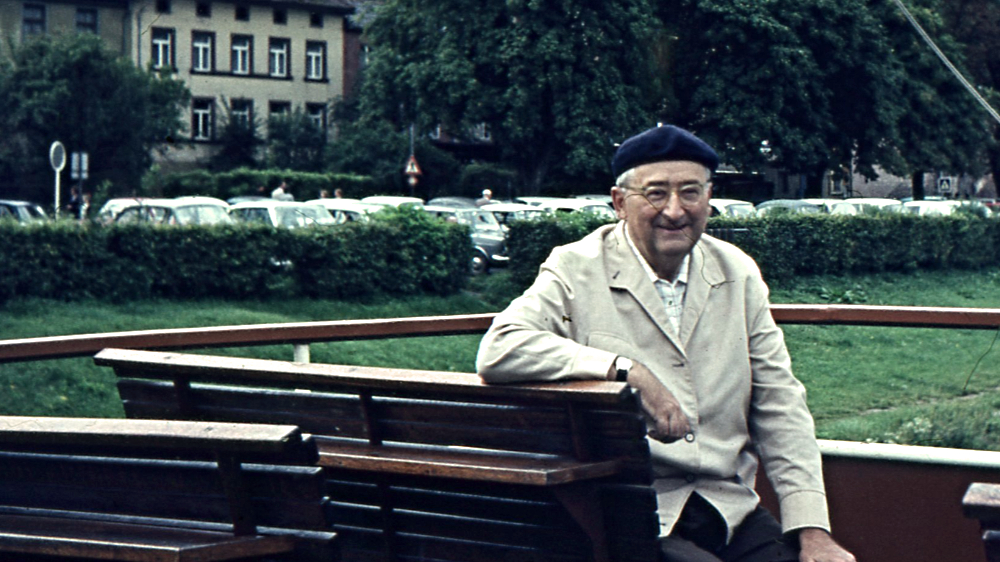
Papa

Key Player #4 of Chapter 34: Papa Walter Panknin

As the drama unfolds I will introduce for each part of this chapter one person, who played a major role in our desperate struggle for being reunited in Canada.

November 2nd 1965 Didsbury

My dear Peter,

Before I respond to your messages and also tell you about my life here, I want to deal with the main issue at hand. Dear Peter, my parents and my brother’s reaction came so unexpectedly for me that every letter from home was a real shock for me.

First of all my brother wrote, who until now has only written this long letter to me. He tried to logically explain that our plans are against all reason that out of several reasons I would be unhappy with you in Canada and above all that I would make my parents unhappy. Shortly afterwards I received an equally long and logical letter from my father with similar arguments and the threat that if I acted against all warnings and reason, I would in no way receive any support from him. Then finally came a long letter from my mother. She desires that we two come together and that she was prepared to let me go ‘one day’ to Canada. However, influenced by my father and brother’s arguments, she too thinks that it would be too early and that we would only be unhappy. Even my brother-in-law and sister asked me in long letters to take everything into consideration and let reason prevail rather than listen to my heart.

Dear Peter, as I can only roughly indicate to you, their main concern was about my happiness and the fear to lose me. Therefore, Peter, I cannot feel any anger or disappointment. You are right, Peter, my parents must have hoped all the time that everything, as you said, would fizzle out between us at the end. And only now I understand as to why without any objections they let me go to England. I believe that they hoped it would lead me to different thoughts. Dear Peter, you can imagine in what kind of conflict I find myself! I have never been so determined in my life as now! I come to you, even if I have to earn the sea voyage myself. My decision is final, and nothing can dissuade me from it. Therefore, Peter, prepare everything.

My parents fear that the hard work would make me unhappy. O Peter, I realized here in England how physical work in harmony with intellectual work creates happiness. And to work together with you for our life can truly make me happy! Mrs. Lande literally cried, when I told her that I would have to leave at Christmas time. She thinks that never before had a girl managed to do so well with the work and the children as I have. These words give me self-confidence; for I came  with no experience whatsoever. My mother always says, ‘Where there is a will, there is a way.’ I also believe in it. Sometimes I think that I am hard-hearted and egotistical, because I want to come to you, although I know how much pain I am causing to all the people that love me. Yet, Peter, don’t we need to live our life as our parents lived theirs? My father writes that he would rather travel to European destinations four times a year than to spend a single penny for a trip to Canada to visit his daughter, who has abandoned her home country. You too will feel while reading this, how much these words have hurt me. When I come home for Christmas, I will talk calmly with my parents. If they insist on their position and refuse us any help, then Peter I will come in spite of it all. I have so much confidence in our future. Perhaps we can only convince our parents with an iron will! O Peter I think that I appear so hard-hearted toward them, for I can sense how they must feel. But I know that it is right to go to you.

In the meantime you will have received my brother’s letter. Don’t take it as an insult that my parents have used my brother as mediator. I am more offended than you; for I know that only my brother’s influence could have changed my parents’ mind. However, Peter, all parents would just like my parents try to keep their children at their side, especially if it means to let them go into a world of uncertainty. And Canada is for them uncertainty. We must understand them. But nothing can change my decision.

My dear Peter, now I have not yet dealt with many of your questions and problems you brought up in your letters. However, I shared the main issue with you so that you can undertake all the necessary steps and you can tell me what I need to do. As always in a big hurry, unfortunately!

Be lovingly embraced by your Biene

Having observed in the past quite a few of Biene’s vacillations during times when decisions of the heart had to be made, I felt total admiration for Biene’s courageous handling of a dilemma out of which there seemed to be no escape. In my eyes she ruled like a queen over the complex issues that were going to haunt us for a long time to come. Indeed I was awed by her bold stand against the odds that were stacked against her. However, what I did not realize at the time, when her letter  gave my anxious heart a lift, was the fact that Biene was fighting far away from home the  good fight in the safe haven of her British employer.
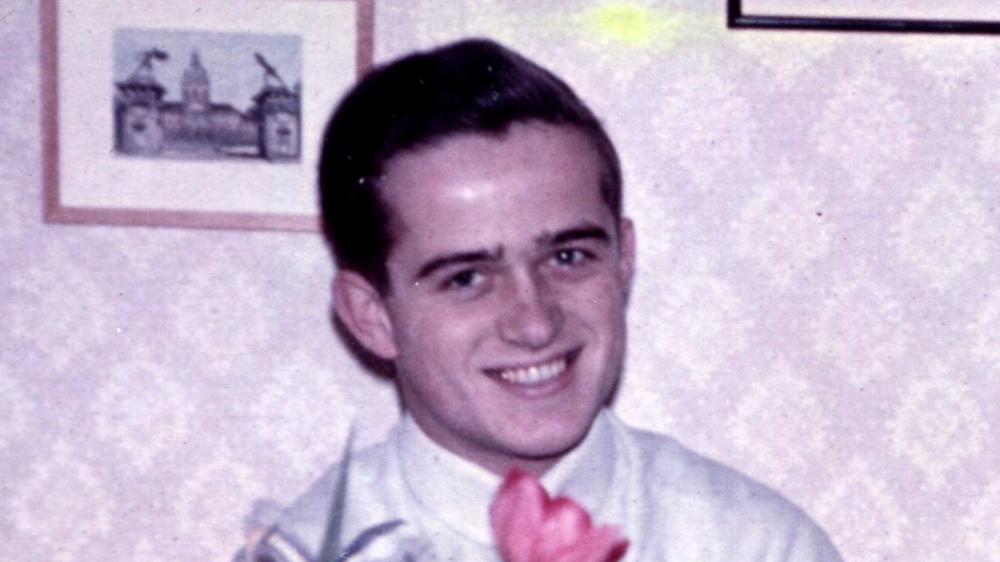
Chapter 34 of the Peter and Gertrud Klopp Story – Part III

Gradual Descent into Emotional Hell


Walter

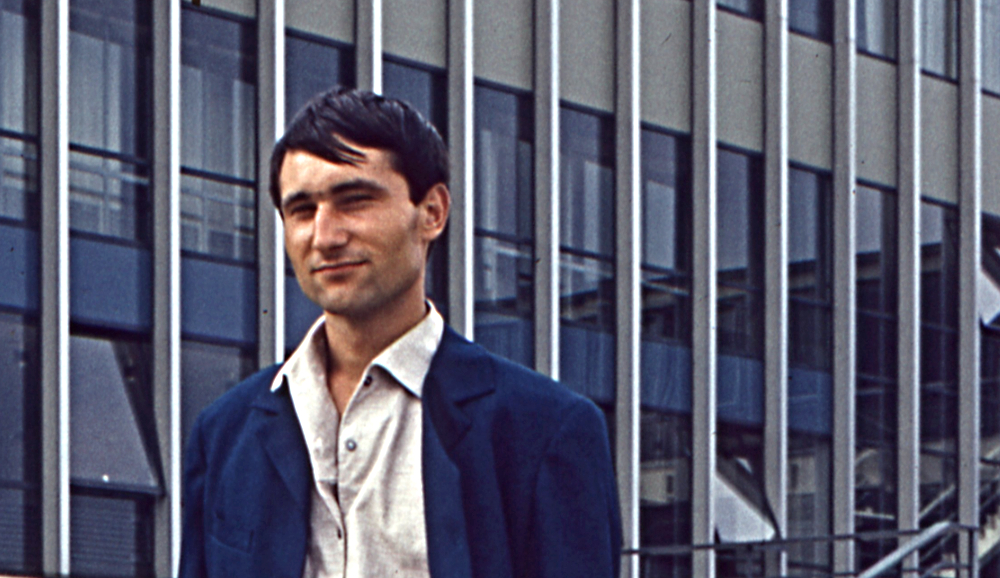
Key Player #3 in Chapter 34: Walter Panknin, Biene’s Twin Brother

As the drama unfolds I will introduce for each part of this chapter one person, who played a major role in our desperate struggle for being reunited in Canada.

On the 23rd of October, 1965 I had not yet received the devastating news about her family’s opposition to our wedding plans. Not being aware of the storm clouds gathering over our sweet hopes and aspirations, I wrote Biene a cheerful birthday letter. Being in a most jocular frame of mind, I teased her about the severe yoke of marriage and encouraged her tongue-in-cheek to enjoy the few remaining months of freedom until our wedding day in May . A few days later my mood changed drastically, when I received the bad news.

October 25th, 1965 Calgary University

My dear Gertrud,

If this turns out to be true what you have just been describing in your last letter, you will be in great trouble pretty soon. I had to force myself to work yesterday, because I kept thinking about your problem, which consequently is also my problem.

First of all, what your brother told you is definitely wrong or it is at least the wrong impression. I have never mentioned that I wouldn’t like to be in Canada. The more I think about it, the more I do believe that your parents and brother don’t have any objections against me, but against the fact that their only daughter and sister should leave them in a couple of months. Thinking of returning to Germany is now out of the question. I thank you again for not having interfered in the time of undecided matters and inner conflicts before I entered the university. But if you had done so, it would have been the only possibility of getting me back to the Old Country. Now I have decided to stay. It is not only the money (about one thousand dollars) that is invested now into my studies for the winter session, I am also personally involved with great delight in the courses, especially in German literature and cannot give it up just because your folks want to have you around for a few more years.

But you were resolute and are still resolute, as you wrote me. Didn’t your parents know that you intended to follow me after some time? Sure, they did. The only conclusion I can draw from this is that they must have hoped that our relationship would eventually come to nothing. I guess on this particular point they underestimated the strength and sincerity of our love. Maybe they will think quite differently when they realize that they cannot change your mind. Though I wished I could do more, I cannot help except politely answering your parents’ letter, but definitely stating that I am willing to stay.

There is something else I want to tell you. You said your brother is going to write me too. He may write as often as he wants to, but he cannot expect me to answer his letters as long as I haven’t gotten word from your parents. I know what an awful impact a death of a close relative can have so that I fully understand why they couldn’t answer. In this case I’m willing to wait another fortnight and even longer, but I cannot accept your brother as a mediator between your parents and me. Do you understand me? I think the matter is too important to have it delegated to your brother. I wrote your parents and expect no answer from anybody but from them alone. How can I find out that the arguments are his and not those of his parents? Would you mind telling him that I really enjoy studying now that ‘I really like to be in America’ and his conclusions must have been a misunderstanding.

Although I don’t want to, I am getting quite a bit worried. But when you are involved, how can I remain calm! Nevertheless celebrate with an untroubled spirit your 21st birthday. I hope you will get a day off on Friday.  As to your next year it is my heart-felt wish that in spite of all adversities all things will come to pass that you are hoping for right now

With lots of love, your Peter

Chapter 34 of the Peter and Gertrud Klopp Story – Part II

Ominous Rumblings from Biene’s Home Front

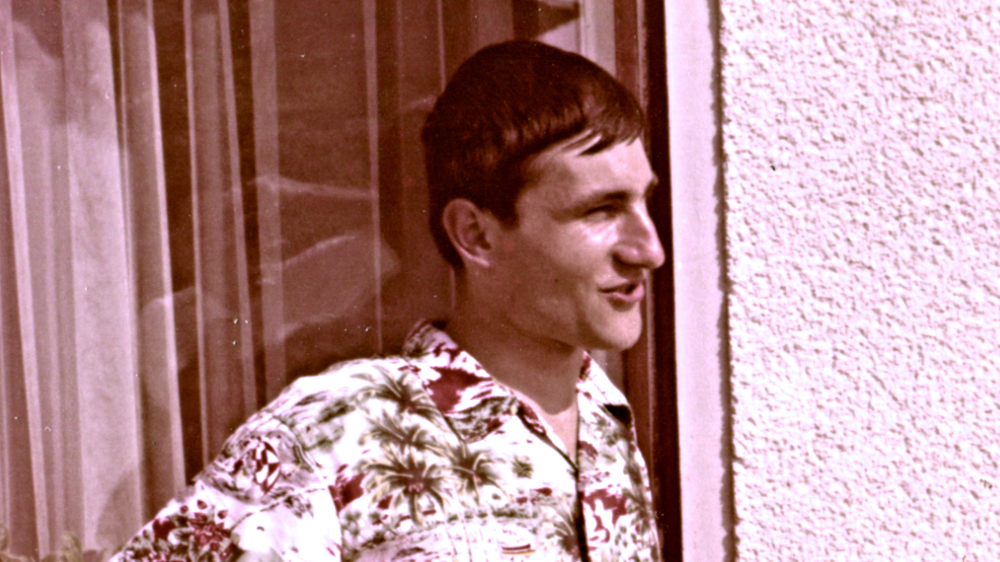
Peter copy

Key Player #2 in Chapter 34: Peter Klopp

As the drama unfolds I will introduce for each part of this chapter one person, who played a major role in our desperate struggle for being reunited in Canada.

After having dispatched my letter to Biene’s parents I felt very much at ease. With vim and vigour and guided by an indomitable desire to achieve high marks in my academic endeavours, I embraced a regime of self-denial, a kind of mental forced  labour. I cut my leisure hour of guitar practice in the evening, shortened my social lunch time with friends and fellow students at the university, and allocated an extra hour   to my studies at home in the morning. I had no idea about the potential danger to my health by placing so many burdens on my shoulder. But I was happy in the sweet knowledge that all the hard work would pay off in the end. Little did I know, however,  of the storm clouds gathering on the other side of the Atlantic and of the ominous rumblings coming from Biene’s home turf.

October 20th, 1965 Didsbury

My dear Peter, Life is like a brilliant symphony. Again and again I feel this. Every day has its special tune and color and atmosphere and you need to be a poet in order to give a vivid and colourful picture of it. Sometimes the melody of the day is light and joyful, in other times dark and full of melancholy.

Today was a bright and sunny October day, and pushing the carriage with the little laughing Paul through the park, I felt happy and at peace with the world. Here in England I have gained new aspects of life and I really feel for the first time free and independent. Two letters, which arrived with the second post, made me hurry to the place, where I usually have a little rest in the sun. I got your letter as well as my mother’s and I have a lot to tell you. At first, Peter, be assured that my parents got your long letter. Don’t worry about not having received an answer until now. I am going to tell you the reason although I rather would not like to speak or even think of it, because it makes me feel unhappy. My aunt (you know, I sometimes talked about her, because I loved her very much) died a fortnight ago. My parents went immediately to Berlin and stayed for a week to arrange everything for her funeral. All the tasks connected with my aunt’s death caused my parents much grief and my mother felt mentally and physically exhausted after the journey and she was not even able to write to me. As soon as she feels better she will let you know what decisions she and my father have made. She asks me to tell you that this is the reason for their long silence. My mother had to tell me so much about the last happenings that she only gave notice to me of the mere fact that she got the letter from you. Yet she did not discuss it. She only reassured me that she would stick to her promise and try to help us in any case…

In love yours forever, Gertrud

A day later, having not sent off the letter, she continued on in German, which I took as a bad omen, and so it was.

My dear Peter,

Today I received a long letter from my brother, which contained the main thoughts and arguments, which he as he told me had written also to you. It is quite impossible for me at the moment to delve into all the details. I didn’t know at all that you don’t find it easy to stay in Canada. This is in any case the way my brother interprets your words. As soon as I have answered my brother, I pass on his letter to you. Dear Peter, my decision is firm, and nothing can detract me from what I recognized as the right thing to do. I have no fear of an uncertain future. This just for today! As soon as I have a little more time and leisure I will write you everything, which I have considered and decided.

Your Biene

I knew all along that, when this moment came, everybody would be against our plans.

For the moment it was very easy for Biene to stick to her decision. To join me in Canada was not only the right thing to do, but also fulfilled the promise of love between the two of us. She was still far removed from the source of disapproving views on getting married to a young adventurer with an uncertain future in the far-off and hitherto unknown country of Canada. Thus, she was able to take a firm stand against the first volley shot by her twin brother Walter across the English Channel.

Chapter 34 of the Peter and Gertrud Klopp Story – Part I

Storm Clouds on the Horizon

83

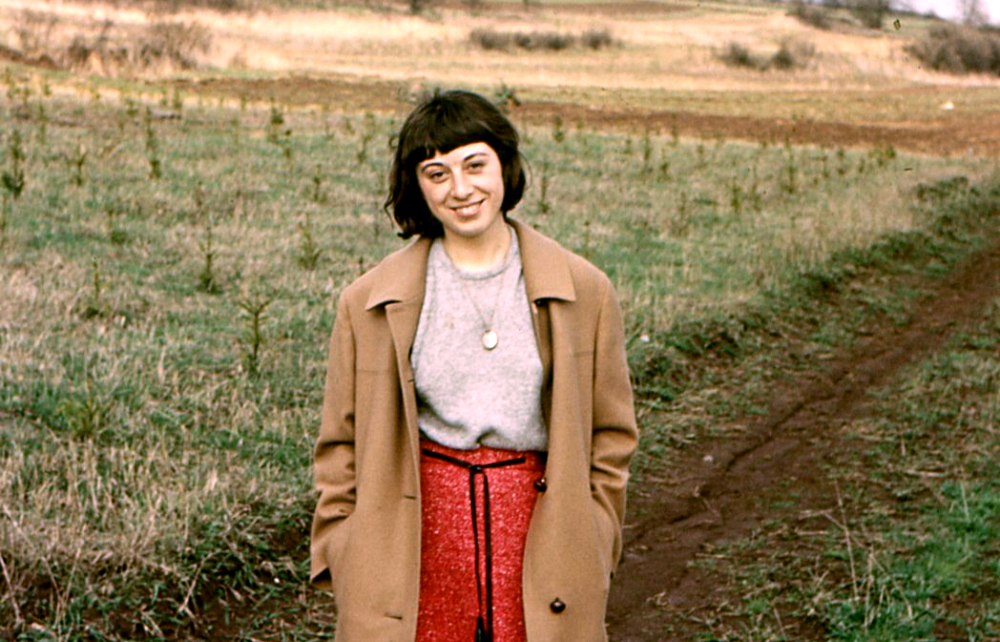
Key Player #1 in Chapter 34: Gertrud (Biene) Panknin 1965

As the drama unfolds I will introduce for each part of this chapter one person, who played a major role in our desperate struggle for being reunited in Canada.

We define our identity always in dialogue with, sometimes in struggle with against the things our significant others want to see in us.  Even after we outgrow some of the others – our parents, for instance – and they disappear from our lives, the conversation with them continues within us as long as we live. Charles Taylor

The Letter to Biene’s Parents

To merely summarize the troubles we experienced, the opinions we voiced, the arguments we had and the decisions we made, the agonies and struggles of the heart would have distorted the true picture we had created through our correspondence between October 1965 and March 1966. On the one hand an objective approach, if it were possible at all, would never have succeeded in describing the passionate appeals we fervently made to one another in the face of dire adversities. On the other hand a purely emotional account would most certainly have embodied on my part a lot of bias and subjectivity. So for the next two chapters I mostly let the letters speak for themselves. They include more and more often our first attempts to correspond with each other in English. Here and there I corrected a few grammatical errors and edited out some awkward expressions without changing the intended meaning.  The letters in a sense are also a fine record of our progress in the use of the English language. As to those still written in German it is my hope that not too much of their emotional impact has been lost in translation.

September 25th Didsbury

My dear Peter,

…From my mother I had an immediate reply to my letter, which was going to prepare her for the letter from you. With her words my mother has taken a big burden off my heart; for she writes that she is glad that things are working out for us and that she would help us in as much as she could. She congratulates you to your success at your entrance exam and is confident that we somehow will make it together. Strangely, I felt my heart ache, even though I was happy all the same. Please, dear Peter, write to my parents soon; for now they have been prepared. How I wished I were already with you! Then I would know that everything was true and not just a dream.

Be lovingly kissed, Your Biene

October 15th Calgary

My dear Love,

There are a lot of important things I have to tell you. But first of all I have to apologize that my letter is so late. It is quite possible this will happen again and again for the next couple of months, because the academic work is overwhelming. Only with a time schedule from dawn to dusk I am likely to pass the final examination in the spring, Therefore, dear Gertrud (I guess it sounds better in English to say your real name), remember that I am working hard, that I am devoting more love to you by spending every minute available to me for studying.

About a fortnight ago, I wrote a long letter to your parents. I am still waiting for an answer. I don’t know what they will think of me, and in which way they will react. I only hope positively. I explained the situation and spoke of you as Biene without recognizing that, because this name had become so familiar to me, I had forgotten at this moment that a little more formality would be required. I hope they will not mind it. Canada was shown not in terms of a paradise for their daughter, but as the place to start a completely new life with all the uncertainties of the future, which I cannot anticipate now. They have seen the financial problem as well as the problem of my professional career. Now it is up to them to make their decisions, I hope, in favour of both of us…

With a thousand warm kisses, Your Peter

The letter I wrote to Biene’s parents does no longer exist. As the events unfolded it became very clear that I had made a grave mistake by describing honestly and realistically all the challenges we would be facing in a letter that was supposed to make them agree to let their daughter go to Canada and marry me.

Chapter 33 of the Peter and Gertrud KLopp Story – Part VI

Empathy for Peter

62

Brand New University of Calgary in the Mid 60’s

In Educational Foundations we studied the great philosophers of education from Socrates to Piaget. For this course also the university had set up tutorial classes to facilitate the exchange of ideas in small discussion groups. I spite of my language difficulties I felt I had a noticeable advantage. I was about five years older and therefore more mature in many aspects of learning. I also brought a wealth of life experiences, which enabled me to enrich the class with new and fresh ideas. To the amazement of my much younger fellow students I was not afraid to criticize the great thinkers of the past. There was venerable Rousseau for example, who advocated locking up disobedient children in a dark room instead of using corporal punishment. Remembering all too well my own ordeals being locked up as a young child in the dingy storage room of Mr. Stoll’s carpentry shop, I declared that in my opinion locking up a child was one of the cruelest forms of punishment and that ultimately spanking justly applied without causing physical harm was to be preferred.

Some other time we were discussing the importance of the family in early childhood development. Having a much broader concept of education in mind, I emphasized with as much conviction as I still have today, “The family is the smallest unit in a society. As healthy cells make a healthy body, so family units that are intact and provide a caring environment for the children are the building blocks for a strong society. Take away the health of the family and the state will sooner or later suffer and begin to disintegrate.” I am sure that I expressed these thoughts quite differently, but the idea came across with electrifying results. The students were most likely wondering, where this immigrant student had all his ideas from. Little did they know that I had studied Mommsen’s ‘History of Rome’ and that the ideas about the importance of the family were as old as the Roman Republic!

One day our tutorial instructor felt the need to divide us into groups of four or five students each. To develop a feeling for empathy, a term that can be easily defined in clinical terms but is otherwise quite an elusive concept, we needed someone in our group, who would be willing to take on the role of a client and come up with a story, to which the others as would-be councillor would react with supportive questions and remarks. A lot of time was being wasted, because nobody wanted to be saddled with the difficult role of the client. After a long pause, I said, “OK, I’ll do it. Just give me a little bit of time to think.”

Then I began without referring to any specific time or place to tell the story of my father, how close we had become before he had left home, how he gave me a guiding hand with my schoolwork, how much I was shaken up by my parents’ divorce, how I had to wait for five long years before I could see him again, how I spent many happy hours at his new home, then how suddenly and unexpectedly I had lost my father all over again and this time forever, when he died of a massive heart attack. By the time I had spoken the last sentence, it was so quiet that you could hear a pin drop in the tutorial room. All other groups had stopped their exercise to listen in to the extraordinary story that was grabbing everybody’s attention. Then the students were getting noisy with shouts of praise and admiration. After the tutor regained quiet and order, he said to me, “It seems your creative story caused quite an outpour of empathy. How did you think it all up so quickly?”

In a strange mix of pride and self-pity, I replied, “I’d wish it had been just a story.” With these words I quickly left the room. In my heart I was thankful to tutor and students for respecting my privacy and not asking any more questions in the sessions that followed.

Chapter 33 of the Peter and Gertrud Klopp Story – Part V

Discussing Marriage at Lunch Break

Student Peter

Peter in front of the University of Calgay

On the wall of my basement room hung a timetable, a rigid what-to-do list that was to govern my life for the next seven months. On weekdays I got up at six and after a cornflakes-and-milk breakfast spent sixty minutes to have an early morning study period. Then I took the bus for my first morning class at campus. I had one hour for lunch that always consisted of the same homemade bologna and cheese sandwiches washed down with the watery coffee from the vending machine. During this time, when I managed to relax a little bit, I often met with three students on alternate days, as they all had their own schedules to follow.

On Tuesdays and Fridays I sat together with Brian Fisher, since we both attended the same afternoon tutorial class for Math 211. It made me feel very good to be able to help him with many of the questions from the weekly assignment sheets. In turn I got gradually used to the informal, casual way of English conversation. On the other days I met with two women, both married, one from Great Britain, whose husband had recently been promoted to a managerial position in an IBM sponsored business in downtown Calgary, the other Mrs. Karen Bolso, an immigrant from Norway. Both were attending the same late morning psychology lecture. In a country that was built on the skills and talents of hundreds of thousands of immigrants the voices of three individuals producing an interesting blend of Oxford English, Scandinavian and German accents were not unusual in the student lounge. All three of us, coming from Europe, had interesting stories and experiences to share. The British student, whose name I can no longer recall, had recently followed and joined her husband in Calgary and was pursuing a teaching career to get out of the house as she put it, while her husband was busy setting up calculating machines, the forerunners of business computers. Her main point of advice relating to happiness in marriage was that the two partners should come from the same ethnic and cultural background. Their children would integrate quickly with their new environment, but the parents would take a long time to adjust. “Like oil and water Canadian and immigrant spouses just do not mix,” she stated her opinion with a slightly superior air.

Mrs. Bolso, whose marriage was on the rocks, protested and said, “Well, let me tell you something. I was married to a Norwegian, and yet things did not work out at all. When I arrived as his bride from Norway, he lavished gifts on me, bought me a diamond ring and a fur coat with money he did not have. He had bought all these luxury goods on credit, even though he held only a low paying job. He could barely put enough food on the table for our two children and me. I would rather have a husband, who would show his love in a financially responsible manner. Your theory is all wrong!”

Then it was my turn to voice my opinion. I spoke quite eloquently presenting an entirely idealistic viewpoint, which, as I could see from their reaction, took them by surprise. “Even if a partner could afford the most expensive diamond ring, a fancy car, and an even more fanciful house, it would be all for naught, if love and faithfulness were not present to hold the two together.” Then I thought it would be a good time to talk about my invisible engagement ring, the story about Biene, my fiancée, who was going to join me here in Calgary next spring. After many exclamations of ‘O, how wonderful’, ‘You must be so happy’ and the like, we moved on to other topics.

For the evening my timetable allowed me one hour for preparing and eating a frugal meal for supper. Two hours of studying followed till nine, after which I granted myself a little bit of time to play and practice a few tunes on my guitar. But if I had gotten stuck in my attempt to solve a particularly difficult calculus problem, there was no time for relaxation, until I had found the solution. One evening I had been working over a thorny differential equation. Stubborn as I was when working on problem solving, I did not want to give up. It was way past my bedtime. Midnight was rapidly approaching. Finally common sense prevailed and I decided to go to bed. But the brain having been overstimulated did not want to come to rest. So many possible solutions were gliding by in front of my inner eye that it took another hour before I managed to fall asleep. Before the alarm went off, I woke up with a jolt. My body had rested, but my brain had not. I jumped out of bed, ran up to the table, grabbed paper and pencil, and before it would fade away, I jotted down the solution, which my brain had worked out correctly in my sleep. Having no coffee maker, I put an extra spoonful of ground coffee into the cooking pot, added water and brought the brew to a boil over my two-element stove to make myself a cup of strong coffee. What a life!