Walter Panknin (1898 – 1977) and His Family – Part 24

Food and Cleanliness at the POW Camp

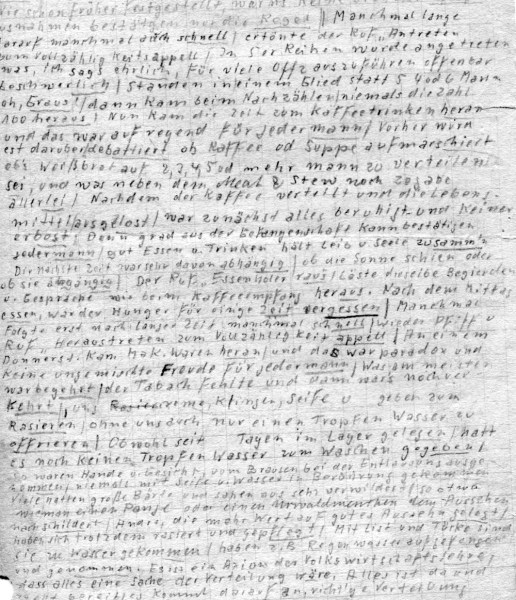
In the next section of his narrative poem, he addresses in a satirical fashion liberally sprinkled with sarcasm all housewives in general and his wife Elisabeth in particular. To wash clothes is easy, he says, when you have buckets, detergent, water, and means of bringing it to a boil. With those things readily available, every man could do the same, he claims. Then he begins to enumerate all the difficulties of doing the laundry in a POW camp. In wartime, people have to line up for butter and bread. Similarly, the prisoners first had to stand in line to receive some water, then sneak into the packed laundry house. To wash your clothes anywhere else was strictly forbidden. For the entire cleansing exercise, the camp rules allowed per company only twenty minutes, during which time the POWs could wash their face and body. Papa bemoaned the resulting failure of keeping body and attire clean. 
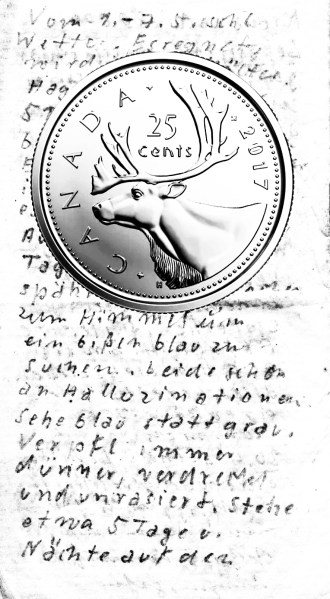
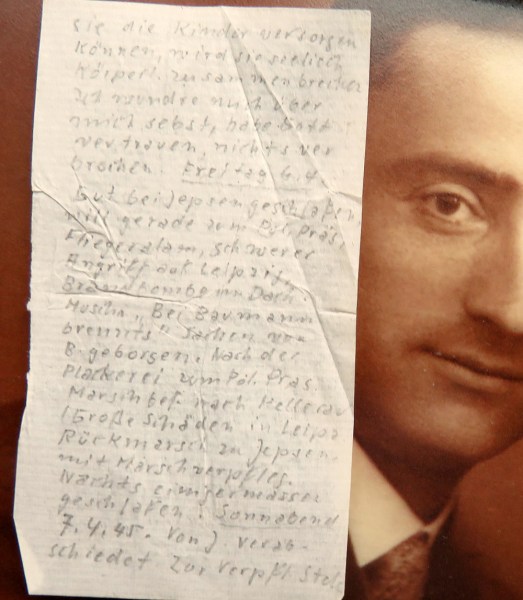
I placed a quarter on the tiny paper that Papa had written his POW notes. It gives you a sense of how tiny the paper was he used.

Dust also was a big problem when they were beating their blankets in the morning or frantically tried to sweep off the dusty dirt floors. Following the vigorous action of multiple brooms in action, fine particles remained floating in the air for a long time and eventually settled exactly in nooks and crannies in a never-ending cycle, which would make German housewives boil over in anger and frustration. Papa would have written many more verses on dirt and dust in the camp. Alas, for lack of paper and pencil, he was unable to jot them down. When finally he traded in a good chunk of chocolate for those most precious writing utensils, he had forgotten them all. And indeed, there were more important things to report.
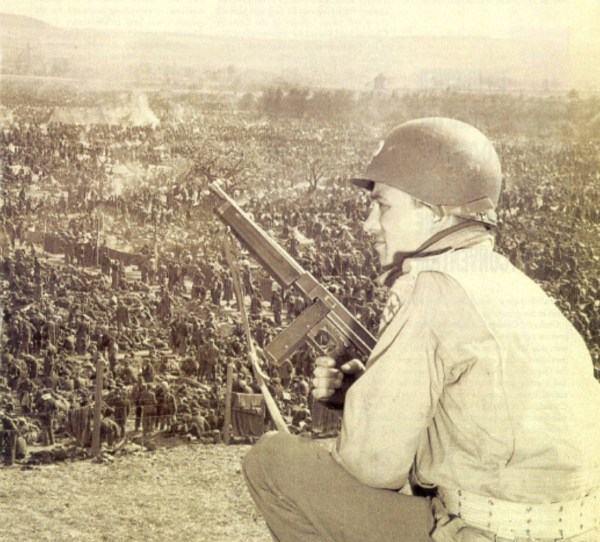
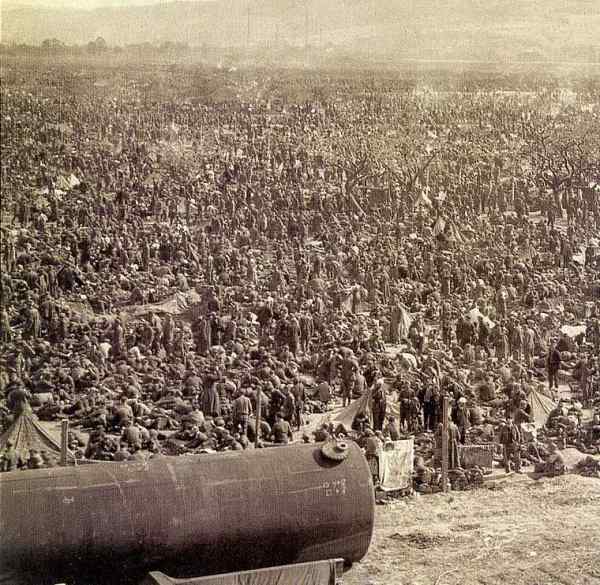
Kinzig-Remagen POW Camp Spring 1945 – U.S. Army Archives

Food or rather its dwindling rations became once again the number one topic at the camp. And the chicaneries resumed. The POWs complained that the kitchen staff had maltreated them at a recent call to a non-existing breakfast. In a sadistic response to the justified complaint, the German kitchen personnel collaborated with their American supervisors and devised another sinister plan to make life more miserable for the prisoners. What they came up with was to serve breakfast between four and five. That would take care of the complaint of being called for breakfast and not getting one. Breakfast consisted from now on of watery vegetable soup. Add to this the long wait for lunch, which made their suffering even worse. When finally they received coffee or tea with one slice of wheat bread, it became evident they were set on a starvation diet. The word circulated from company to company that they should do as little physical activity as possible to conserve precious calories. Their survival was at stake.
Walter Panknin (1898 – 1977) and His Family – Part 23

Crammed, Deloused and Harrassed

Then suddenly and just as unexpectedly as a balmy spring breeze and sunshine had brought relief, good food and drink cheered up the POWs. Bread, corned beef, cheese and calorie-rich soup, although not too plentiful, have now become part of their daily diet, supplemented by a few chunks of chocolate for dessert. Although the adage says that hunger is the best cook, they all agreed that the cooks were doing an excellent job. To round things off, they had as a beverage a choice of tea or coffee. The coffee tasted so good that many imbibed too much of the excellent brew, which kept them awake half through the night. On June 16, all men, whose hometown had become part of the Soviet-occupied zone of Germany, were put on a special list. Rumours about early release from their prison camp instantly circulated among Papa’s comrades. How soon would the Americans let them go home? Would army trucks drive them to the border? How would the Red Army men receive and treat them? Would Papa be free after his release from the camp? These were some of the questions and worries the POWs had. The troublesome thoughts burdened Papa’s heart at the time when he should have been rejoicing to be finally free from hunger and cold.

Photo Credit: Wikipedia


Near the end of the month, it rained again. But the air was mild, and the POWs now found shelter in the hastily erected wooden barracks. But they had to put up with cramped conditions. Space was so limited that there was not enough room on the primitive floor for everyone to sleep on his back. Packed tight like in a can of sardines, many had to sleep on their side. Thus, it was very likely that lice would have a heyday and spread like wildfire among the hapless bunch of humanity. The camp authorities had them march to the delousing stations to prevent the infestation from gaining the upper hand. There they had to undress and wait in the pouring rain for their turn to be deloused. Papa did not fail to see the irony, at least for this embarrassing moment. Like slaves powerless and naked, they stood before their black masters, who searched in a bout of chicanery for anything they deemed dangerous. Nail clippers and files, even pencils, were considered dangerous weapons and promptly confiscated. Papa must have hidden his precious writing tools in the sleeping quarters, knowing full well that he would be punished for having them in his possession. After being thoroughly deloused, they returned to their barracks and felt a lot better after receiving a bowl of sweet soup. Papa bitterly remarked that the worst form of chicanery did not come from their American guards but rather from their own ranks. Those lucky enough to be chosen as helpers and supervisors in the camp kitchen now turned against their comrades to be sure in part to impress their American guards. At 4:30 in the morning, when everyone was still fast asleep, they would holler with a commanding voice, ‘Get up, you sleepy heads! Pick up your grub!’ Everybody understood this message too well. For if you did not comply or you were too slow to respond, you would miss out on your breakfast and have nothing to eat till noon. From all the shelters, you could see the prisoners rushing to the source of food. To have something in your belly was more important than an extra hour of sleep. But when they arrived in joyful expectation of a nutritious breakfast, the German kitchen helpers were laughing their heads off at their successful prank and shouted, ‘Get back to sleep. You should know that we don’t serve breakfast until six!’

Walter Panknin (1898 – 1977) and His Family – Part 22

Reflections on Life as a POW

With more time for thought and reflection, Papa, making full use of his poetic talent, began to describe his life as a POW more vividly and in much greater detail. To make it easier for the reader to decipher this unusual piece of literature, he underlined the rhyming words and indicated with a slash the end of each line. Papa often went beyond a mere description of the good and bad times at camp.


He began by reflecting upon what makes a man truly free and what makes him a prisoner, not just in the literal sense of being surrounded by miles of barbed wire fences and guards ready to shoot at anyone attempting to escape. Freedom for Papa was more than having food, drink and shelter; slavery more than being deprived of these things. If the human spirit prevails despite severe deprivations, it is free. If, on the other hand, it drowns in a flood of material goods, it becomes a slave, not of some exterior force, such as a dictatorial political system, it puts on shackles of its own making.
Papa stated in his notes that something very positive came out of these horrible times at camp. He appreciated food, even the simplest meals, so much more. (Indeed, he would get furious when his children refused to eat what was so lovingly prepared and often left on the plate what he would have gladly eaten while being a POW. ) He addressed the reader directly by saying, ‘There is a sense of fair balance in human life. The hungry and deprived individual relishes a slice of dried bread and finds that it tastes much better than a rich man would ever experience eating a sumptuous gourmet dinner. Indeed simple, modest food will spare the less fortunate in life many diseases afflicting the wealthy gluttons in society. Dear reader, remember that times of adversity can be helpful. So if you don’t forget them, you will savour even the most basic food with great enjoyment when you are doing better. The more you are mindful of your past ordeals, the more you will thank God and be content when you receive your daily bread and no longer suffer from your hunger pangs.’

Walter Panknin (1898 – 1977) and His Family – Part 21

Microscopic Note Writing

Finally, on May 7, the weather showed signs of improvement, and on the following day, the sun broke through the cloud cover, bringing much-needed warmth for body and soul. However, Papa’s feet and toes were numb; he felt a tingling sensation throughout his lower limbs and could barely walk. His heart began to give him trouble. He knew that he would not have lasted much longer. But now, as he was feeling better and his feet were no longer bothering him and after he was finally able to clear himself of all the dirt on his body, wash his shirt and socks, a sense of new optimism was surging through his entire being. Rumours were also circulating through the camp that the POWs would get permission to go home. The war was over now. Why would the Americans want to keep them any longer? Would it not be cheaper to make them go home and save the expense of looking after, feeding and guarding 80,000 men? But just as Papa was looking in vain for blue patches in the leaden sky, so all his hopes for early dismissal vanished into thin air. Camp life went on with its daily routines. The camp guards became rather more severe as days dragged into weeks and weeks into months. They meted out ruthless punishments after some POWs in constant search for firewood had ripped off some of the toilet seats from the camp latrines.

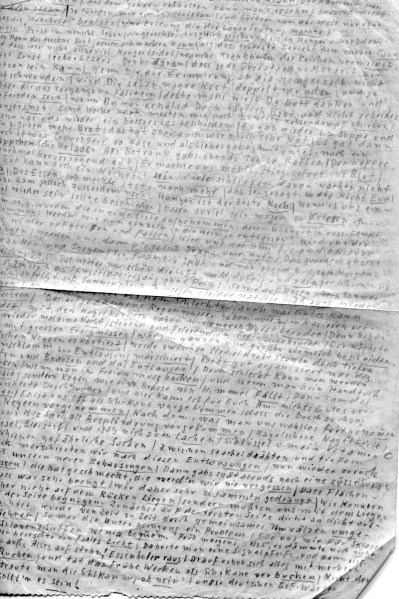
It is truly amazing how much information Papa Panknin could cram onto a small piece of paper.

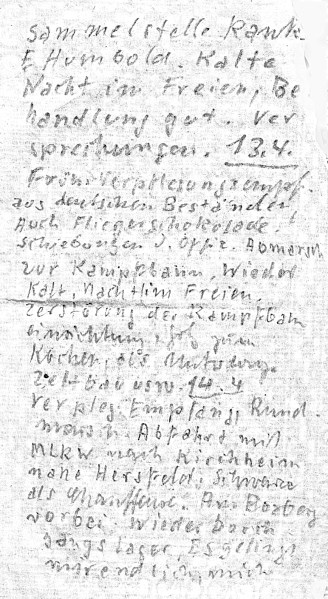
Papa was not the type who would not want to idle away the time by just sitting around in the sunshine or play cards for endless hours, even if it was his favourite card game, ‘Skat’. He wrote his notes now on slightly larger paper but continued with the same microcosmic handwriting. Of course, Papa knew that it was strictly forbidden to record his experiences at the camp and therefore was extremely careful not to let anyone see him write. I guess the reason for these rules was that nothing should ever go out to the outside world that might tarnish the image of the Americans.

Walter Panknin (1898 – 1977) and His Family – Part 20

Coping with Rain, Mud, and Hunger

Suddenly, the weather changed from one day to the next and brought rain and more for the next seven days. Temperatures plunged to near freezing at night, while water soon filled their clay huts and made it impossible to sleep on the ground. Poor Papa Panknin tried to sleep while standing on one leg for a couple of minutes, then switching to the other. Once, he succeeded in catching a few winks, only to wake up in horror discovering to his utter dismay that he had plunged face down into the mud. He summarized his dismal experiences as triple torture of standing, starving and freezing. From the highest-ranking officer down to the common soldier, every POW had to endure the cold nights and the rainy days. The weather made no distinction. It fooled the prisoners by raising their hopes when short periods of clear skies promised a sunny, dry day, only to revert to more rain during the day.

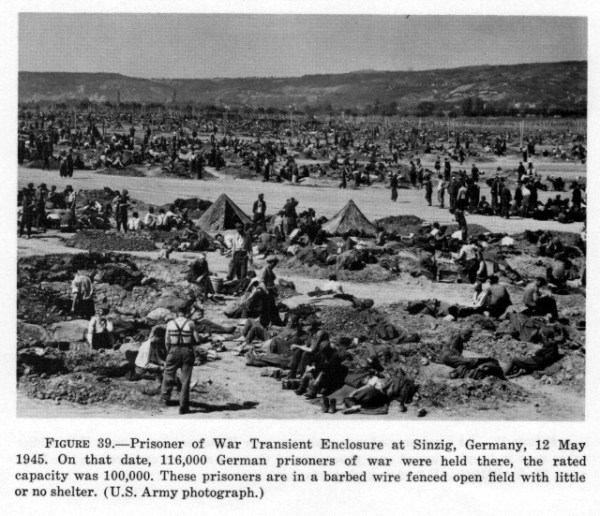
One of the many overcrowded POW camps: The Rhinewiesen Camps, where Papa landed in April 1945

In the first week of May, the sun did not show its face for five long days. Papa was constantly scanning the sky for a sign of change in the weather. His long gaze created the hope that if he looked hard enough, he would perhaps discover a patch of blue on the murky horizon. Indeed, Papa thought he had found a definite shift from gray to blue. When he proudly announced his comrades the changes he had observed in the clouds, they all laughed at him. Like a desert traveller fancying an oasis, where there is none, so Papa had fallen victim to the mirage that had formed in his desperate mind. Perhaps hot, nutritious meals would have helped a little to provide some strength and warmth. Alas, the thin soups were getting lighter and often arrived cold at their swampy mud hole.

The posts on Walter Panknin are based on the notes he had written on tiny cigarette paper before and during his POW time. How he could write his experiences on such miniscule paper will be perhaps be forever a mystery.

During one night, Papa tried to find some rest for his tired feet by sitting on a water container, but completely exhausted fell two times asleep and into the muck. Unkempt and unshaven, covered in filth, he felt more like an animal than a human being. There was strife and petty spats over tiny morsels of food. There was no wood to make a fire, not even for roasting the few potatoes that had been made available for the hungry men. Papa built a primitive grating tool out of a tin can, into which he had punched some twenty holes. Now he could shred a potato into a porridge-like pulp, which he ate raw to get some badly needed nutrients, minerals and vitamins into his belly.

Walter Panknin (1898 – 1977) and His Family – Part 19

Arrival at the Rheinwiesen Camp

 Soon an army truck pulled up at the house to pick up the prisoners. The order was to move them farther to the west. After all, the war wasn’t over yet.  The prisoners had to be as far away from the battlefield as possible. The Germans had built the concrete superhighways, the so-called Reichsautobahns, to carry troops and supplies under the motto ‘The wheels must roll for victory.’ Now they ironically assisted the enemy in bringing in war materiel even faster while moving the POWs away from the front. Together with thousands of other POWs, their final destination was Bad Kreuznach, a picturesque town west of the River Rhine. But the camp near the city was anything but romantic. Sheer horror seized Papa when he saw a giant empty field surrounded by a high barbed-wire fence. It did not even remotely look like a camp. There were no buildings for shelter against the cold and the rain. Soon it began to dawn on him that the cramped quarters at the confiscated house in Hersfeld were luxury accommodation by comparison to this desolate place without tents or barracks.

Papa Panknin wrote his POW experiences on cigarette paper. The example above is one of the over 60 papers I found among his belongings. Only after scanning and magnifying them I was able to read his notes. How he was able to write on these tiny pieces of paper with a pencil is a mystery.

Like cattle, the guards drove them onto this field of muck and clay. There they left them without any provisions for shelter during the night. Before nightfall, the American camp officers organized the new arrivals into companies and then ordered them to build primitive hovels out of clay. They were somewhat like the sandcastles that tourists would make on the beaches of the Baltic Sea. Fortunately, although the nights were uncomfortably cold in late April and early May, the bright sunshine and fair weather contributed a lot to make life quite pleasant for the POWs. Some were sunning themselves, while others played games to while away the time. It didn’t take Papa, a passionate Skat player, very long to find partners for the most popular card game in Germany.