Friedrich Otto Karl Klopp (1878-1957) – Part IV

Karl’s Many Stations during World War I

Part 1 (1914-1916)

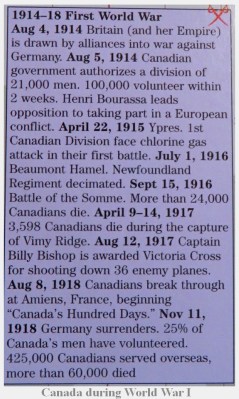
Into my historical posts I will insert from now on a fact sheet to show what made the news headlines during the same time period in Canada.

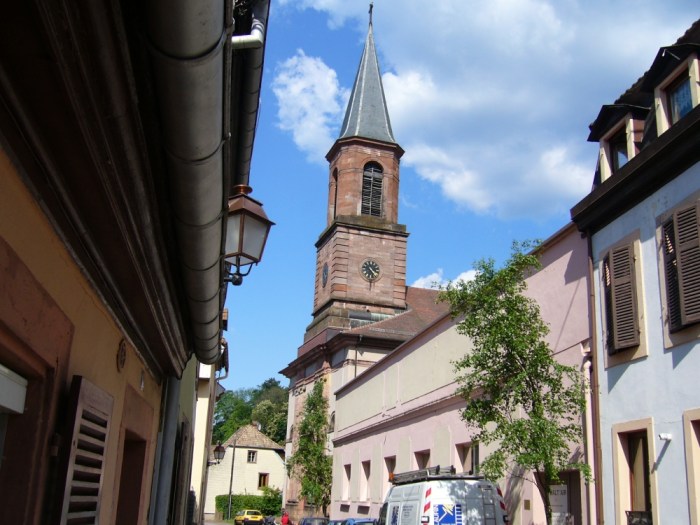
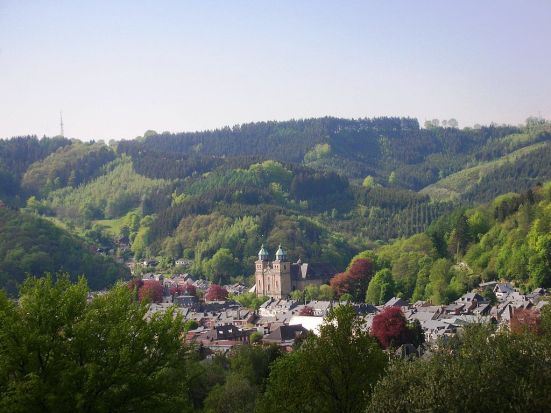
Malmedy, Belgium - Photo Credit: wikipedia.org

Picturesque Malmedy, Belgium – Photo Credit: wikipedia.org

Four weeks after the beginning of World War I Karl Klopp was drafted into the Second Reserve Infantry Regiment on September 1, 1914 and was sent to the front in Belgium on September 11, 1914. On the same day he was promoted to the rank of a sergeant. Two weeks later he had an accident during a bad fall and was placed into the care of the field hospital at Beaumont south of Malmedy. On October 2, 1914, a hospital WorldWarItrain brought him to Munich, where he recovered from his injury. Then in the middle of October he was reassigned to the infantry battalion at Passau as an officer’s substitute. There he remained until September 1915. Together with the 3rd battalion he was again shipped to the Western Front. In his personnel files we read in the reports that as part of a reconnoitering troupe he participated in position combat in the region near Sainte-Marie-aux-Mines in the Central Vosges Mountains. That was the operational area of the 81st Infantry Regiment ‘Schusterberg’.

Sainte-Marie-aux-Mines - Photo Credit: wikipedia.org

Sainte-Marie-aux-Mines  (Vosges Mountains) – Photo Credit: wikipedia.org

From November 1915 until the end of January 1916 he served in the occupational forces of the fortress Strassburg. When his knee injury began to bother him again, he was given treatment at the field hospital at Saarburg, whence he was relocated again for duty to the infantry battalion at Passau. Here preparations were underway for deployment at the Eastern Front

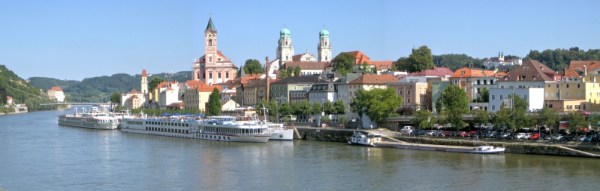
Passau Altstadt Panorama - Photo Credit: wikipedia.org

Panorama of Passau on the River Danube – Photo Credit: wikipedia.org

To be continued next week.

Friedrich Otto Karl Klopp (1878-1957) – Part III

Karl’s Professional Development

(Klopp Family Tree – Chart I – II)

To see the Klopp family tree, click here.

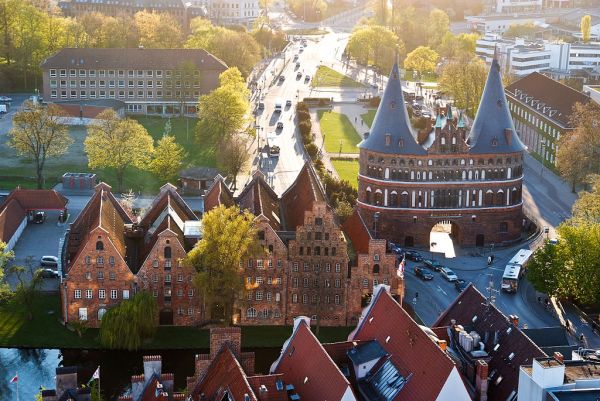
View of Lübeck - Photo Credit: wikipedia.org

View of modern-day Lübeck – Photo Credit: wikipedia.org

After his active service of ‘4 years, 11 months and 27 days’ Karl Klopp returned to civilian life. He attended a training course of the agricultural department at Greifswald, Pomerania, and then became adminstrator and manager of dairies and export companies, also construction foreman of the machine assembly plant H.G. Schröder in Lübeck.

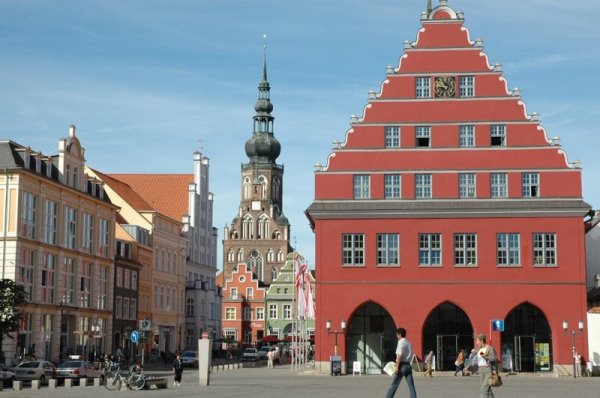
Greifswald_-_Town_Hall

Town Hall of Greifswald – Photo Credit: wikipedia.org

In 1905 he succeeded in getting a management position of the dairy in Hüttenkofen near Straubing, Bavaria. In 1907 Karl attended the dairy institute at Nortrup not far from Quakenbrück and obtained the certificate officially qualifying for a management position.

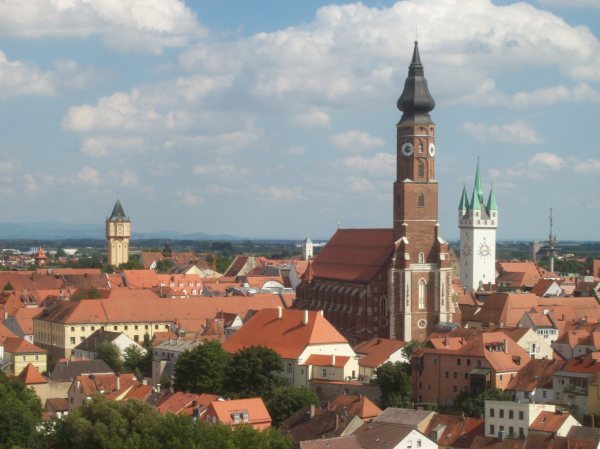
City View of Straubing, Germany - Photo Credit: wikipedia.org

City View of Straubing, Germany – Photo Credit: wikipedia.org

In the same year he married the teacher’s daughter Augusta (neé Hauer). Two daughters Luise (1907) and Auguste (1908) were born. In 1908 Karl bought the dairy of his former employer in Hüttenkofen and also became owner of a house at Radkofer Street 7 with a total assessed value of 29,000 marks. Karl Klopp, industrious and goal-oriented worked his way up into a respectable and wealthy Bavarian dairy owner.

To be continued next Thursday …

Friedrich Otto Karl Klopp (1878-1957) – Part II

Military Service in China and Bavaria (Chart I – II)

To see the Klopp family tree, click here.

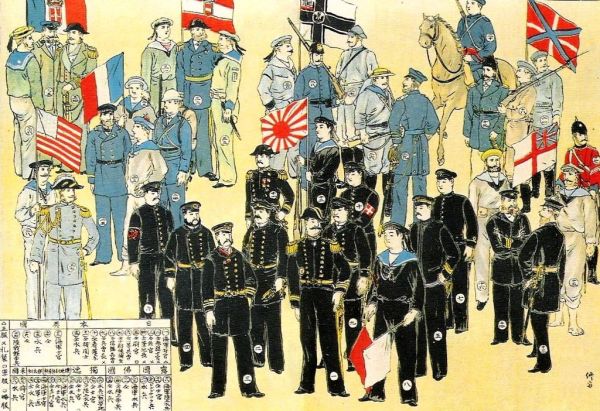
The Eight-Nations Alliance in the Boxer Rebellion

The Eight-Nations Alliance in the Boxer Rebellion 1900-1901 – wikipedia.org

During the Boxer Rebellion Karl Klopp first belonged until June 1001 to the 4th East Asian Infantry Regiment ‘Count Montgelas’, then until the completion of the campaign in October 1901 he was part of 2nd Infantry Regiment.

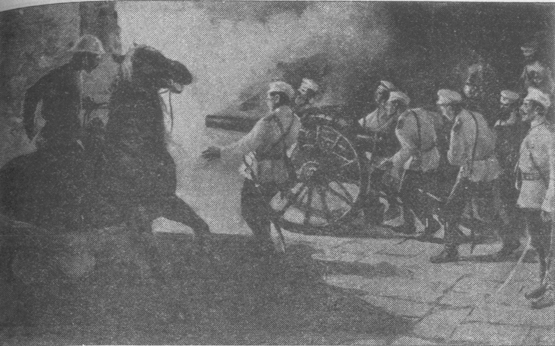
Russian Troops Storming Beijing_Gates - Photo Credit: wikipedia.org

Russian Troops Storming Beijing_Gates – Photo Credit: wikipedia.org

On March 8, 1901 he participated in a mountain battle at the Thanscheng Pass. There he succeeded in the capture of four cannons, for which he received for the first time military recognition. Overall he was awarded during his service the Bavarian medal for bravery, the Prussian military medal, the Austrian First Class Medal for Bravery, the China Commemorative Coin and the Prince Regent Luitpold medal.

Typical Commemorative Medals - wikipedia.org

Typical French Commemorative Medals 1900-1901 – Photo Credit: wikipedia.org

After his return from China he served until September 1903 again at his home battalion at Straubing. There on March 1, 1902 he was promoted to the rank of a sergeant. His subsequent assignment to the Infantry Regiment ‘Prince Ruprecht’ can be seen as a special privilege and preference in recognition of his exemplary role as a leader.


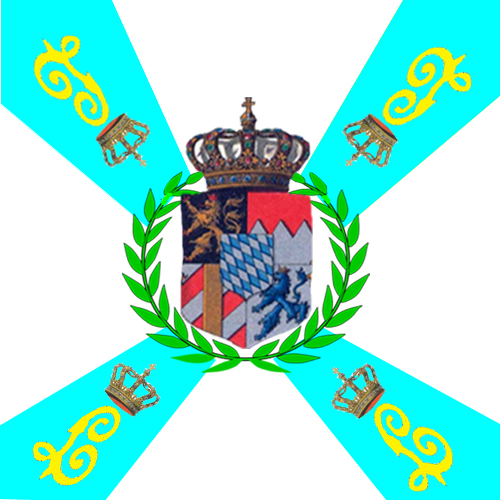
Insignia of the Bavarian Army - Photo Credit: wikipedia.org

Insignia of the Bavarian Army – Photo Credit: wikipedia.org

During that time he suffered an injury to his left knee and was transferred on October 5, 1903 to the reserve beginning his civilian life.

To be continued next Thursday …

Friedrich Otto Karl Klopp (1878-1957) – Part I

Participant in the Boxer Rebellion (Chart I – II)

To see the Klopp family tree, click here.

Karl, the third child of Friedrich and Emma Klopp (my grandparents), was born in Jersleben on March 25, 1878. From 1884 to 1892 he attended the elementary school in Wolmirstedt and after that was apprentice and then journeyman at the number of dairies.  Until 1898 he was employed in Ebersberg, Bavaria. From there he was drafted as a recruit on October 14, 1898 into the third company of the First Rifle battalion in Straubing. A year later he was promoted to the rank of Oberjäger (corporal).

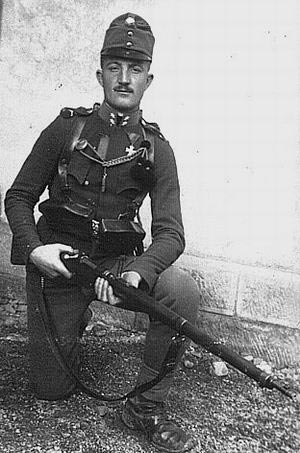
Typical Rifle Soldier - Photo Credit: guns.com

Rifle Soldier – Photo Credit: guns.com

From July 1900 he belonged to the allied armed forces whose task was to quell the so-called Boxer Rebellion in China. As this part of imperialistic history may not be known to many readers of my blog, until myself included, I digress from the narrative of Karl’s adventurous year in China with the following excerpt from wikipedia.org.

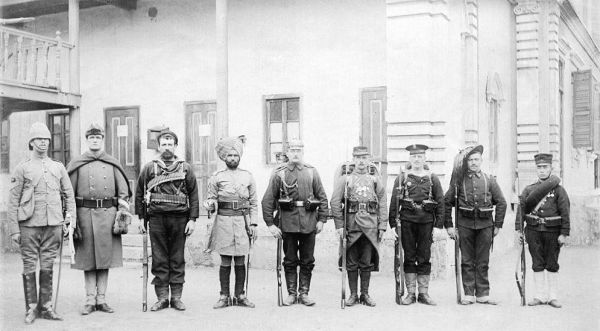
Solders of the Eight Nation Alliance - Photo Credit: warfarehistorian.blogspot.com

Eight Nation Alliance – Photo Credit: warfarehistorian.blogspot.com

The Boxer Rebellion, Boxer Uprising or Yihetuan Movement was an anti-imperialist uprising which took place in China towards the end of the Qing dynasty between 1899 and 1901. It was initiated by the Militia United in Righteousness (Yihetuan), known in English as the “Boxers”, and was motivated by proto-nationalist sentiments and opposition to foreign imperialism and associated Christian missionary activity. The Great Powers intervened and defeated the Chinese forces.

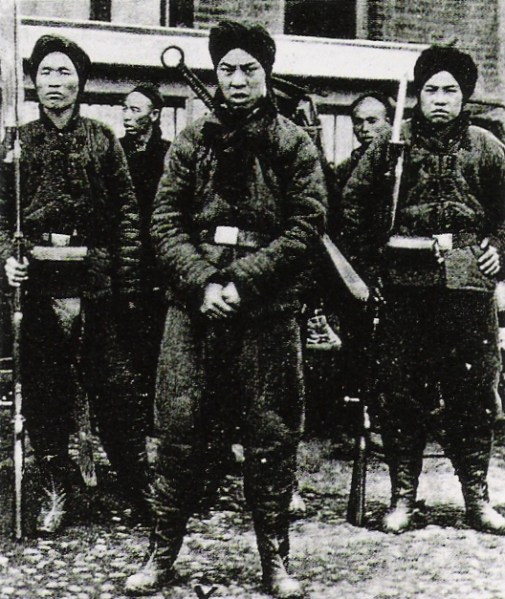
'Boxer' Soldiers - Photo Credit: wikipedia

‘Boxers’  believed to be invincible.- Photo Credit: wikipedia

The uprising took place against a background of severe drought and the disruption caused by the growth of foreign spheres of influence. After several months of growing violence against the foreign and Christian presence in Shabdong and the North China plain, in June 1900, Boxer fighters, convinced they were invulnerable to foreign weapons, converged on Bejing with the slogan “Support Qing government and exterminate the foreigners.” Foreigners and Chinese Christians sought refuge in the Legation Quarter. In response to reports of an armed invasion to lift the siege, the initially hesitant Empress Dowager Cixi supported the Boxers and on June 21 declared war on the foreign powers. Diplomats, foreign civilians and soldiers as well as Chinese Christians in the Legation Quarter were placed under siege by the Imperial Army of China and the Boxers for 55 days.

Members of the Qing Imperial Army - Photo Credit: wikipedia.org

Qing Imperial Soldiers- Photo Credit: wikipedia.org

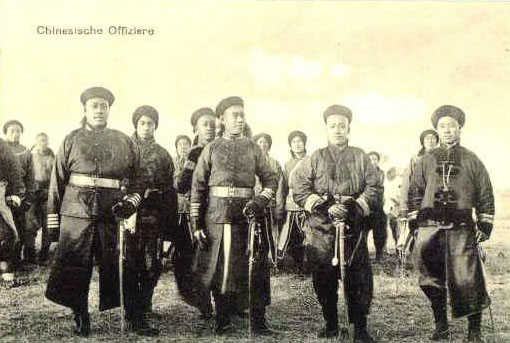
Chinese officialdom was split between those supporting the Boxers and those favoring conciliation, led by Prince Qing. The supreme commander of the Chinese forces, the Manchu General Ronglu (Junglu), later claimed that he acted to protect the besieged foreigners. The Eight-Nation Alliance, after being initially turned back, brought 20,000 armed troops to China, defeated the Imperial Army, and captured Beijing on August 14, lifting the siege of the Legations. Uncontrolled plunder of the capital and the surrounding, along with the summary execution of those suspected of being Boxers.

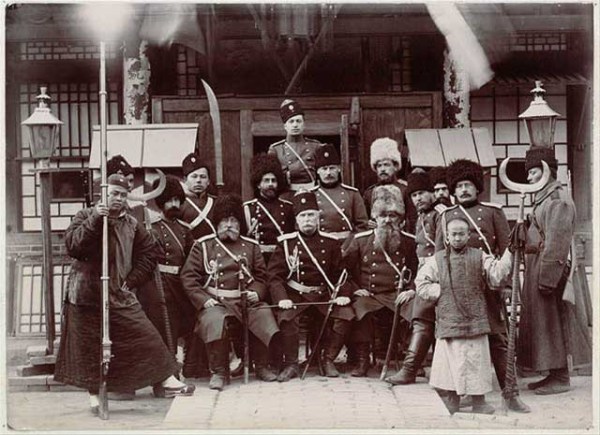
Russian officers in Manchuria during the Boxer Rebellion - Photo Credit: wikipedia.org

Russian officers in Manchuria 1900 – Photo Credit: wikipedia.org

 The Boxer Protocol of September 7, 1901 provided for the execution of government officials who had supported the Boxers, provisions for foreign troops to be stationed in Beijing, and 450 million taels of silver—more than the government’s annual tax revenue—to be paid as indemnity over the course of the next thirty-nine years to the eight nations involved.

More details of these events in East Asia, the atrocities committed on both sides, the role Germany played in the Eight Nations’ Alliance (UK, France, Germany, Italy, Austria-Hungary, Russia, Japan and USA) can be found at https://en.wikipedia.org/wiki/Boxer_Rebellion.

Karl Klopp’s story will be continued next Thursday.

Chapter XIV of the P. and G. Klopp Story – Part 6

Brandenburg Gate - Photo Credit: rosch.homepage.eu

Brandenburg Gate with Wall in front – Photo Credit: rosch.homepage.eu

Paralyzed by Fear

On my way back to the youth hostel I sat apprehensively in the city train that used to run unimpededly across the border, but now would stop at a new terminal a short distance from the nearest checkpoint. I had hoped to immerse myself into the anonymity of a large commuter crowd. But there were only a few passengers and at each stop more and more people stepped off the train, until I was almost by myself. I looked at my watch. In less than half an hour I would be at the border checkpoint. I was just beginning to relax a little, when a young man stepped into my compartment. He sat down on the bench opposite mine, and recognizing me by my clothes as a Westerner immediately addressed me and compelled me to listen to his story. In a torrent of words he seemed to have broken the dam of pain, anger and frustration deep within his troubled mind. He apparently was totally oblivious to the fact that a spy might be listening in and denounce him to the authorities. The more boldly he spoke, the more fearfully I listened. Enthralled by his tale and unable to move from my seat, I felt like the wedding guest in Coleridge’s poem ‘The Rime of the Ancient Mariner’.

“He holds him with his glittering eye –

The wedding guest stood still,

And listened like a three-years’ child.

The mariner hath his will.”

“Last year,” the young began his story, “I was just finishing my apprenticeship program. Many friends and family members had already fled to the West. There were rumors that the inner city border would be closed soon. Every week many people, first by the hundreds, then by the thousands, escaped to start a new life in freedom. Then my girlfriend also left with her entire family just one week before they built this horrible wall.” The young man was now sobbing and screaming.
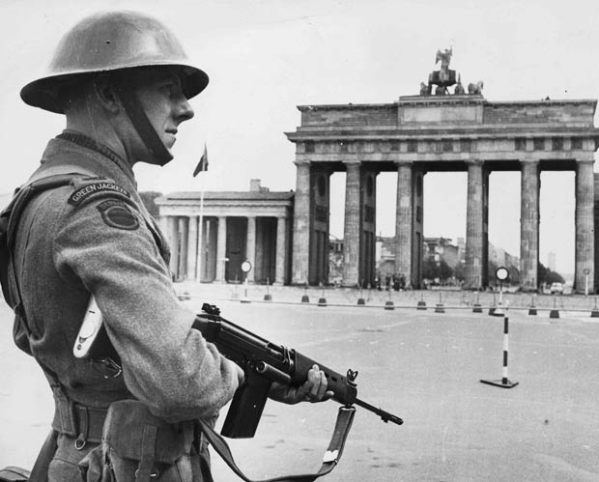
British Soldier on Guard - Photo Credit: www.telegraph.co.uk

British Soldier on Guard during a Crisis – Photo Credit: telegraph.co.uk

“To get a good start with a completed journeyman ticket, I promised her that I would follow her as soon as I had passed my exam. How stupid I was in trying to be responsible. Over a better job I lost my love. I will never see her again. Like all the others her family is on the black list. She would be arrested and thrown into prison, if she tried to see me.” He was venting his anger and frustration so loudly that everyone left on the train could hear, but pretended not to.
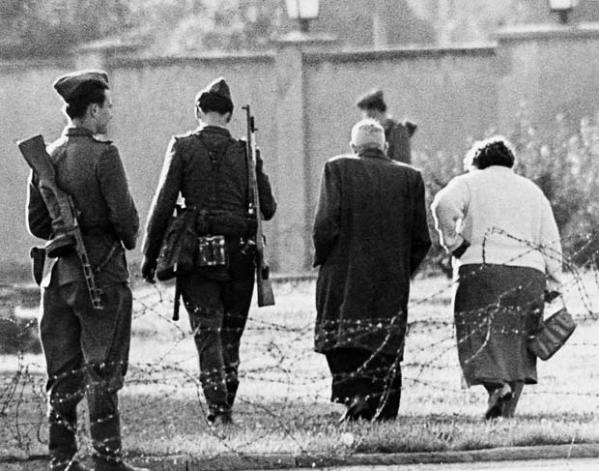
This Couple Failed to Escape - Photo Credit: telegraph.co.uk

This Couple Failed to Escape – Photo Credit: telegraph.co.uk

“We live in one giant prison here! No, we live like animals in a zoo. Westerners may come and gawk. I feel like a monkey behind bars, when I look from my apartment window over the wall into West Berlin, where people are free to move about as they please. My girlfriend is out there somewhere. She cannot even write a letter for fear to land me in prison as someone befriending a traitor of socialism. Oh, how I loathe that ugly word!”

Checkpoint Charlie Border Crossing; Photo Credit: gonback.com

Checkpoint Charlie Border Crossing; Photo Credit: gonback.com

Suddenly the apprentice grew very quiet. He had unburdened himself by boldly telling his story. I knew that there was nothing I could do for him. How to give hope, when there is no hope, or how to offer a comforting word, when you cannot find it within yourself? A comment no matter how carefully chosen would have added insult to injury. It was good that I remained silent and listened to what he had to say. But to find the right words to show compassion to my fellow human beings had never been my forte and remains a problem to this very day. Without saying another word, the young man got off the train on the second last station. Five more minutes and I would be at the terminal.

I sat there on my bench all alone. Indeed the entire train car was empty now. The emptiness began to oppress me. I felt ashamed of having been so afraid. The apprentice from East Berlin was not. I began to realize that there was another kind of freedom that came from within independent of where one happens to live. But the realization of the converse hit me even harder. One could live in the best society – if there ever was one – with all the rights and privileges enshrined in its constitution and still be a slave to fear.

Gathering Strength Through Inner Calm

Within the next thirty minutes I had to deal with fear all over again. The guard on duty at the border checkpoint carefully examined my passport and was just about ready to check off my name from the list, when he asked for my camera, which I had left behind at my relatives. Under normal circumstances this would not have been a big deal. I could have given the camera as a gift to my aunt, lost it on the train, or gotten rid of it in myriads of other ways. But this was not considered normal. The guard asked me to follow him into the drab border building, where he made me enter a small office room, and then quickly left closing the door behind him. Sitting on a chair opposite a giant empty desk I felt trapped. I had the feeling, as if I was being watched for my reaction through hidden cameras. But to my surprise, a great calm pervaded my inner being. I had done nothing wrong, I had simply visited my relatives with official permission, had left a camera behind, which was not a crime, but a trivial oversight. After a five-minute wait a security officer neither friendly nor unfriendly entered the room and said without making any reference to the missing camera that he was going to ask me a few questions. Even though he made me feel that the whole process was a mere formality, it appeared to me like a full-fledged interrogation. There was nothing to hide. To all his questions about myself, my family, relatives in East and West Germany I gave prompt answers without showing any signs of nervousness. After being convinced that I was not a spy, he finally turned his attention to the camera. If it had not been recorded on the inventory list, there would not have been any problems. But since it was, I would have to go back, pick up the camera at my aunt’s place and show it to him, before his shift would end be at midnight. I said that this would be quite impossible for me to do considering that the youth hostel closes its gate at 11 o’clock, that I would be locked out, and that the teacher would report me as a missing person. To make a long story short, the officer showed some human understanding for my case behind the mask of his stern face and let me go under the condition that I would have to return during his shift on the very next day. If I did not comply and did not show him the camera, my relatives would be in serious trouble. Whether there was a bit of humanity shining through or whether it was even the fear for having broken some rules, I could not say. Perhaps it was a mixture of both.
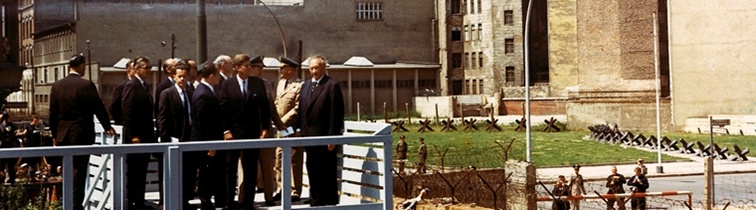
President Kennedy at the Berlin Wall - Photo Credit: jfklibrary.org

President Kennedy at the Berlin Wall (June 1963)- Photo Credit: jfklibrary.org
Juliane Klopp (1877 – 1960) Part 2 (Chart I – II)

Young Artist and Hotel Owner Juliane Steuer (about 1900)

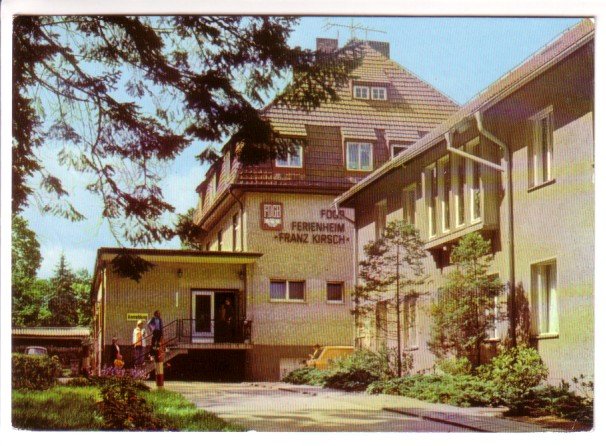
At the beach road at Scharmützel Lake leading up to Diensdorf Fritz Steuer and his wife Emma Juliane acquired in 1911 a brick manufacturing plant. It was located very close to today’s guesthouse “Café Glück Auf”. Around 1912/13 the couple built a villa there, which was connected to the machine shop of the brick factory. In the mid 1920’s Friedrich Steuer added yet another building, ‘Hotel Seehof”, which survived the GDR years as a vacation center by the name of “Franz-Kirsch-Heim”. In 2006 it was rescued from falling into disrepair, was completely modernized and turned into a 4-star hotel.

Former "Hotel Seehof" Renovated, Today's Wellness Center

Former “Hotel Seehof” Completely Renovated and Today’s Wellness Center

In 1923 Fritz employed the two Klopp brothers Ferdinand (1879-1952) and Hermann (1892-1937) in his Diensdorf work place. In response to inflation and decreasing demand for building materials the Steuers converted their villa into a hotel. They called it “Gasthof und Fremdenlogis Strandhotel” (Guesthouse and Beach Hotel ). It was here that Juliane’s sister Else Klopp (1895- 1934) got acquainted with her future husband, army defense officer Drusus Stier. The beach hotel was a favorite meeting place for officers of the garrison town of Fürstenwalde/Spree. Also brother Ernst Klopp, my father, came shortly before his wedding for a longer visit at his eldest sister.

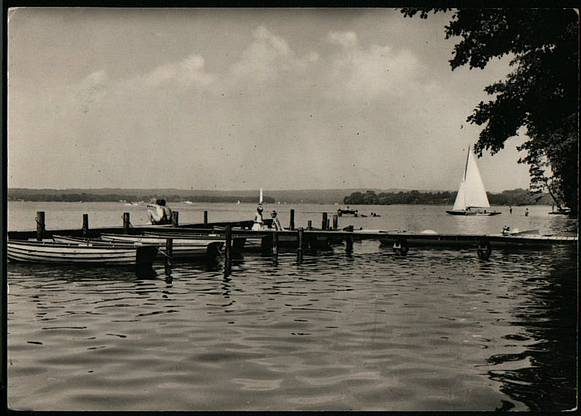
Scharmützel Lake in the 1920's

Scharmützel Lake in close Proximity to ‘Hotel Seehof’ in the 1920’s

When her brother Hermann Klopp ran into financial difficulties on his estate Breitenberg/Pomerania in the early 1930’s, Jula helped him out with obtaining a mortgage by providing the required security. When Hermann was unable to make the payments, Jula lost a huge sum of money that she was never able to retrieve in spite of the fact that she won several court battles with the creditors after Hermann’s death in 1937. The specter of bankruptcy was looming on the horizon. Eventually the couple lost the factory, the two hotels and was forced to move to Berlin, where with the remnant of their liquid assets they were able to run a small pub at Feldstrasse 2. The childless couple separated, but refrained from formal divorce. Friedrich Steuer died in Berlin in 1934, suffering from lip cancer.

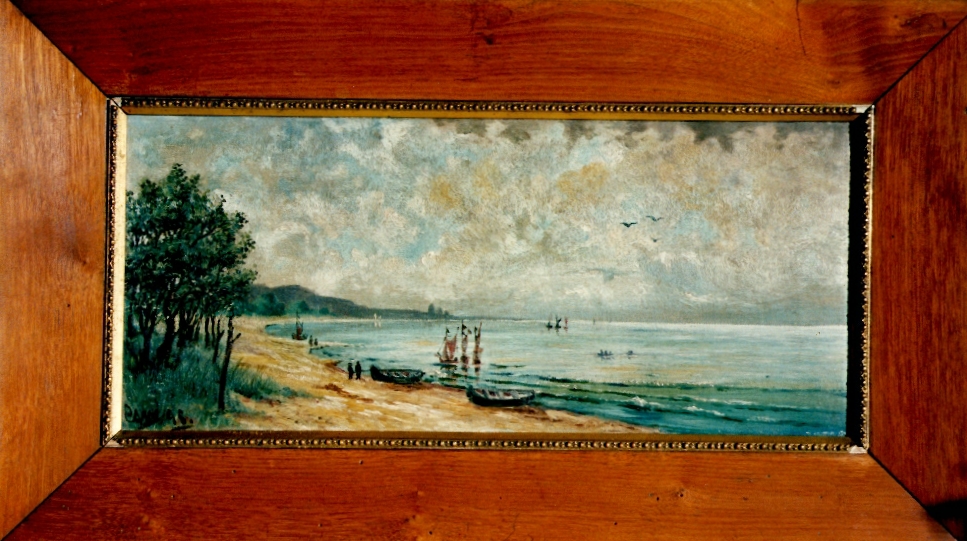
The now 57-year old Jula acquired a house in Köpenick, Am Spielplatz 13. In 1938 she spent some time at my father’s place at the Ernst-Flos-Hof estate in Belgard. During her stay she created an oil painting depicting a beach scene at the Baltic Sea.

Juliana's Painting of the Baltic Sea

Juliana’s Painting of the Baltic Sea

Jula survived as widow the Hitler years, World War II, and the early years of the German Democratic Republic almost up to the building of the Berlin Wall. To see an earlier post of my visit to Aunt Jula, click here.

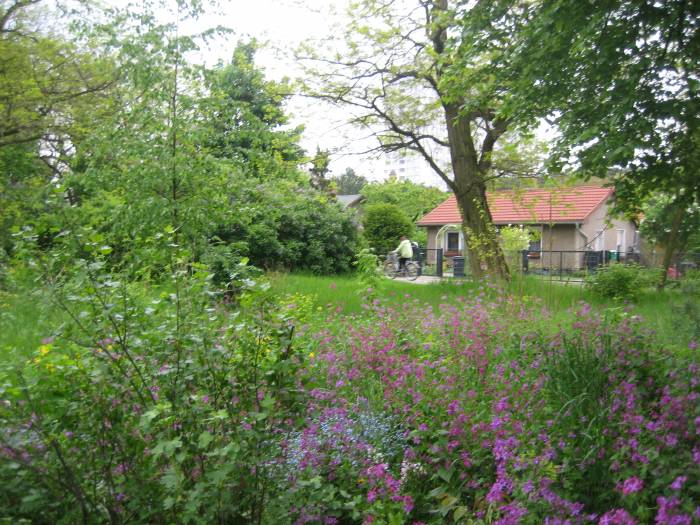
Garden Region near the Spree

Recent Photo of the Garden Region, where Aunt Jula had her Cottage

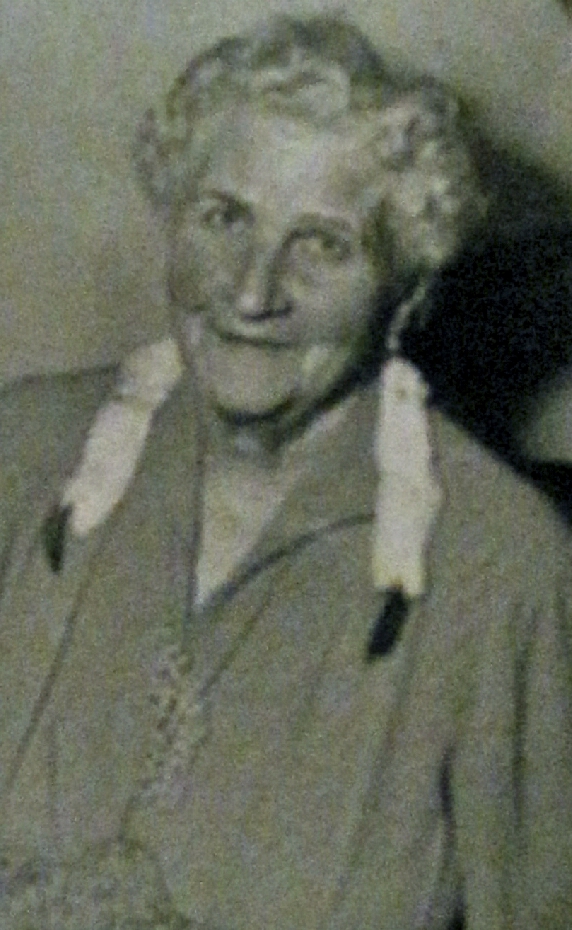
After the war she gave up all her properties and retired in the picturesque garden section of Köpenick, where she lived in a modest cottage for the remaining years of her life getting by on a small pension, to which she was entitled from her late husband Friedrich Steuer, from whom she was never formally divorced. From this sad period there is a photo, which shows a friendly, kind, somewhat sad Klopp portrait of an old lady that had seen better days. On account of the photo session she dressed up with a pearl necklace and ermine fur. Completely impoverished she passed away on June 8, 1980 at the age of 83.

Aunt Juliane (late 1950's)

Aunt Juliane (photo taken in the late 1950’s)