Günther Kegler, Chief of the Kegler-Clan (Part VI)

The Golden Years

After Elfriede Diesselhorst’s husband suddenly and unexpectedly passed away, widow Elfriede continued to work as pharmacist’s helper until 1963. She then moved back to Sangerhausen.

On June 1, 1970 Günther and Elfriede, having both lost their spouses, married in Watzenborn-Steinberg (now Pohlheim) and moved into  the aforementioned Seniors’ apartment complex in Kassel-Wilhelmshöhe. In spite of the many blows that fate had dealt her during her childhood and later years, she never lost her innate cheerfulness and thus brought much joy into my uncle’s life.

The Acropolis Hill - Photo Credit: wikipedia.org

The Acropolis Hill – Photo Credit: wikipedia.org

Adventurous and still youthful in spirit they often traveled abroad, taking in the sights of cultural centers in Europe. They journeyed to Athens and visited the Acropolis. Along with Günther’s sisters and brother Gerhard they ventured in a  family excursion to the Mediterranean Sea in Southern France.
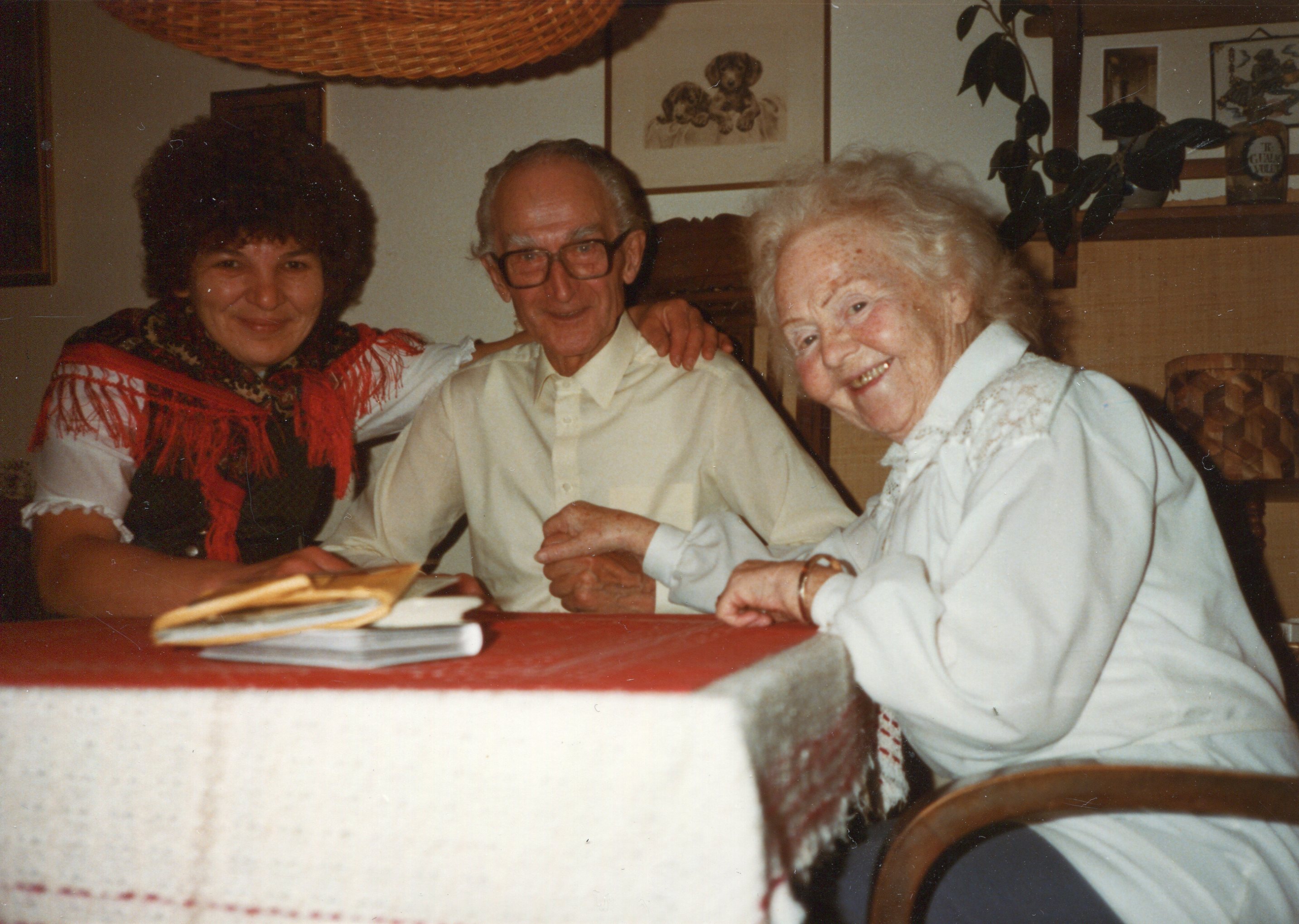
My brother Adolf and his wife Mary visiting the Keglers in Germany

Picture taken while my brother Adolf and his wife Mary were on visit to Germany

A highlight in their sunset years must have been their trip overseas to the distant ‘tribe’ of the Klopp-Kegler Clan in Canada. In the early 70’s they visited  their nephews Gerhard and me and our families in Calgary and Consort, Alberta. Like having been on a military inspection tour, he could accurately report back to the entire family on both sides of the Atlantic that ‘All is well on the Western front’. With such visits, which included family members of Uncle Bruno’s descendants  behind the Iron Curtain, he greatly contributed to a deep sense of family in spite of huge distances and political boundaries.
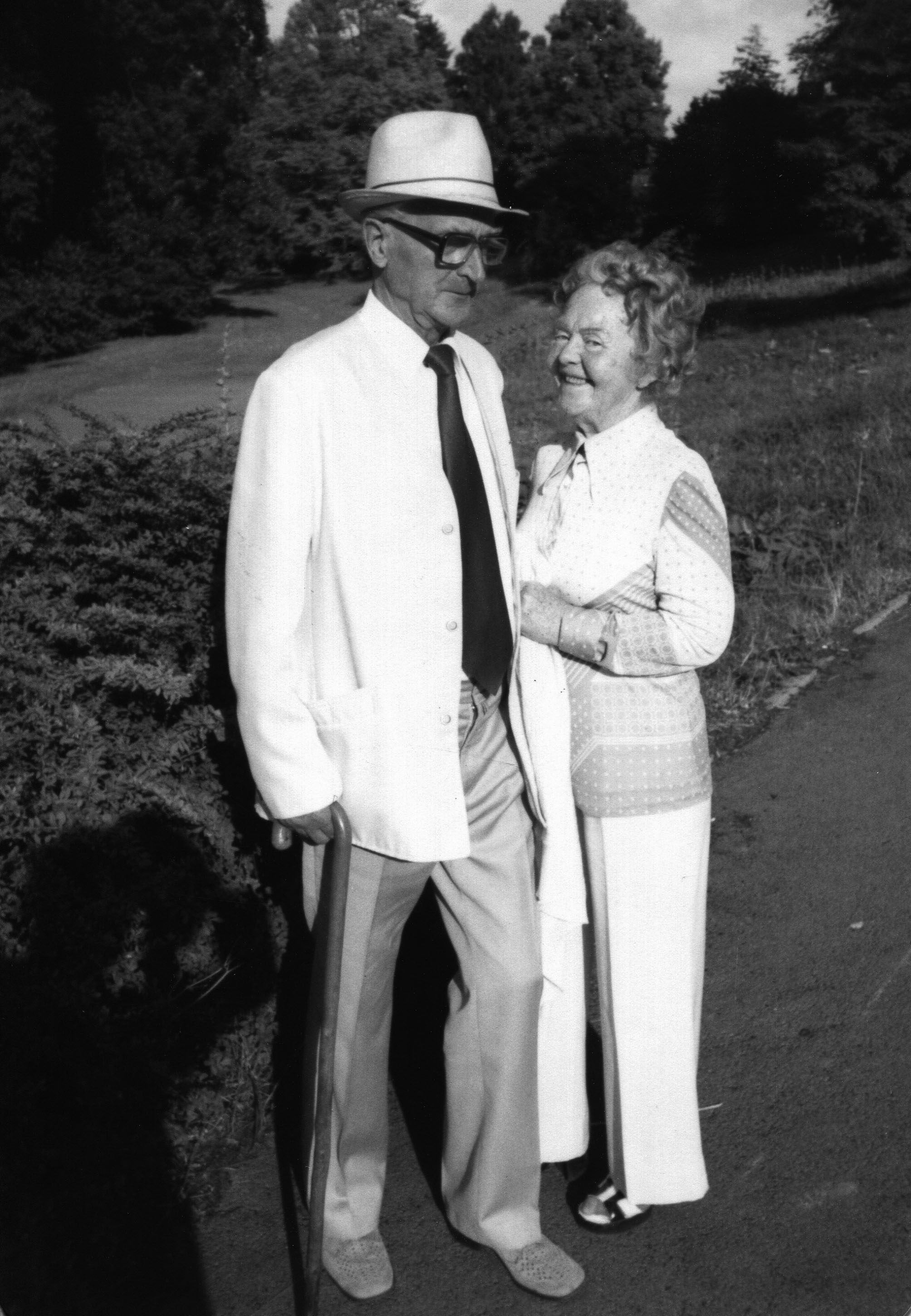
 

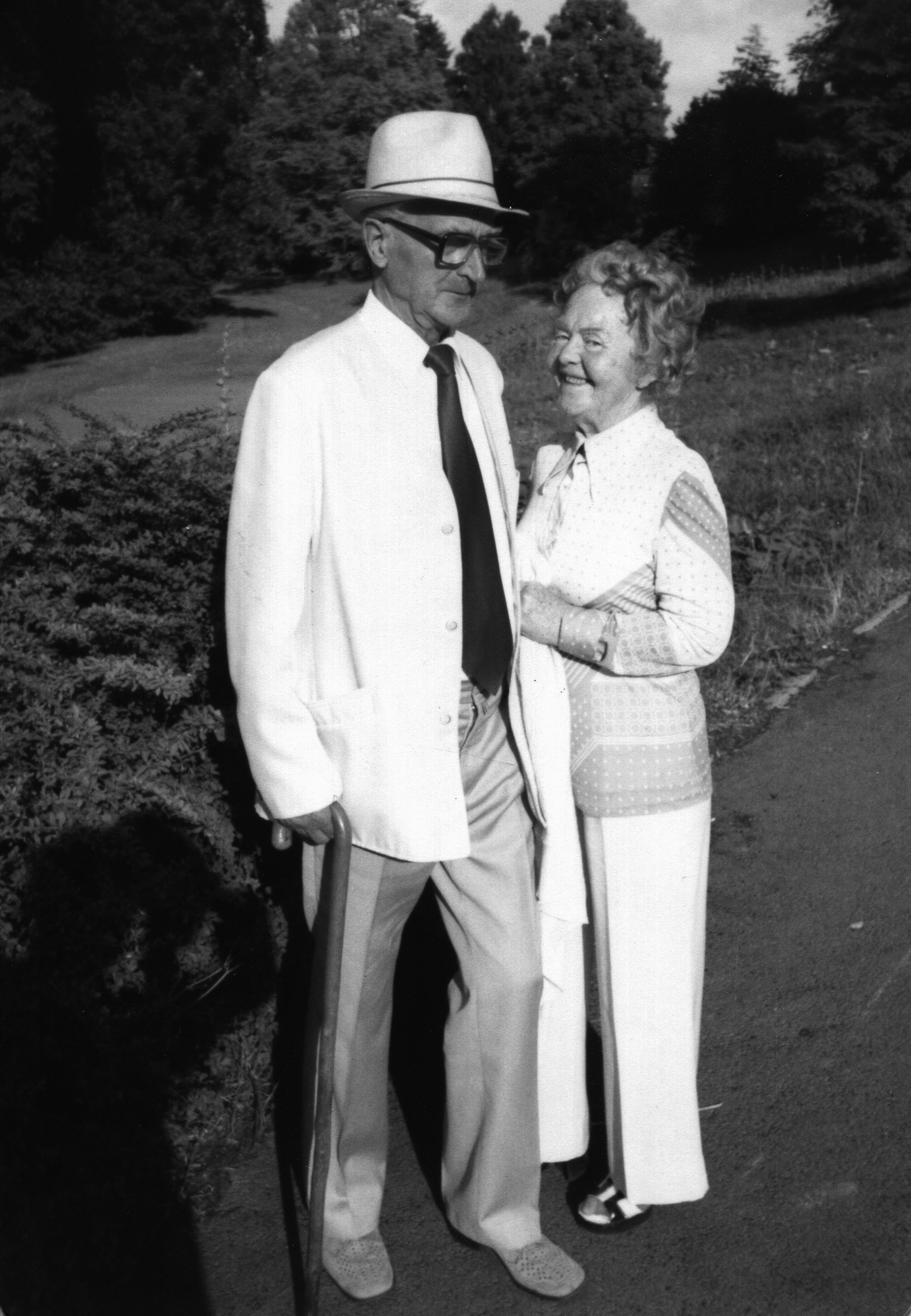
Günther  and Elfriede1976 Kassel-Wilhelmshöhe

Günther and Elfriede1976 in Kassel-Wilhelmshöhe
Ferdinand’s Return from America and Challenges to Friedrich’s Inheritance

The Widening Gulf within the Klopp Family

Chart I – II

In 1903 or at the latest in early 1904 Emma Klopp had relocated in distant West Prussia. One is tempted to interpret the move as flight from unpleasant family relations regarding the ownership of the house in Wolmirstedt. Then in June 1905 her third son Ferdinand unexpectedly showed up in town. He had just returned from the United States. His brother Friedrich passed on the property to him presumably on the basis of unclear and unresolved inheritance issues. He retreated to the neighboring village of Loitsche. It appears, however, that within the year rope maker Ferdinand must have ceded ownership back to his disgruntled brother. He followed his mother Emma to West Prussia.

Under almost unbearable chaotic  conditions Friedrich managed to bridge the short time gap in Loitsche through masonry work. It provided adequate income during the building boom period at that particular time. In the fall of 1905 the Friedrich Klopp family returned to the Wolmirstedt house. A few months before on July 15, 1905 his son Friedrich was born in Loitsche. It appears his father Friedrich had finally won the battle for the house and the rope making factory. In reality it was a Pyrrhic victory. Malice and viciousness from family members accompanied Friedrich’s private attempts to disentangle the often chaotic financial and inheritance problems that he was facing. Without any legally binding papers he had to put up with the never ending claims made on the property in Wolmirstedt. Thus, under such fruitless prospects he took over his father’s business. The cost of his return to the rope making business was high. It led to the irreparable break-up with nearly all his siblings and his mother Emma.

To be continued …

Günther Kegler, Chief of the Kegler-Clan (Part V)

Elfriede Kegler née Grempler

Chart II a – II

Once Günther and his second wife were comfortably settled in their Seniors’ apartment in Kassel-Wilhelmshöhe, they were truly riding into the sunset on a joyful note. But before I get into their adventures and travels of their golden years, we need to have a brief look of Elfriede’s family background.

Uncle Günther and Aunt Friedel in Kassel-Wilhelmshöhe 1976

Uncle Günther and Aunt Friedel in Kassel-Wilhelmshöhe 1976

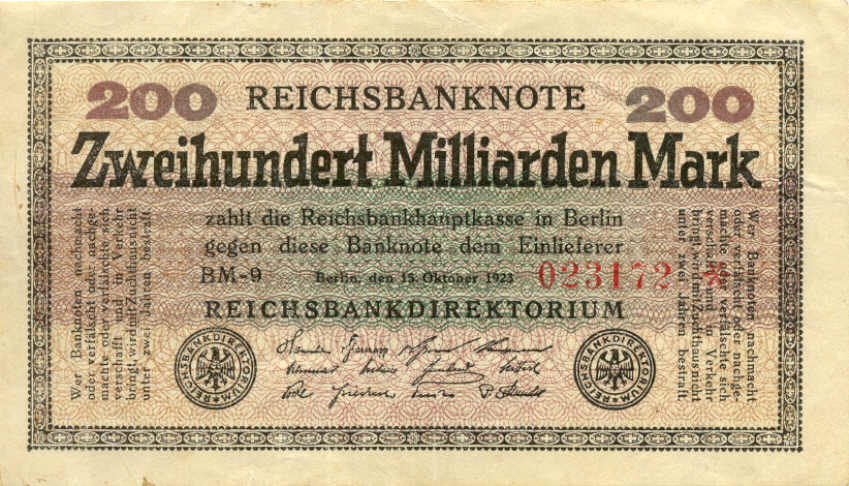
Elfriede Kegler (née Grempler, widowed Diesselhorst) graduated from the all girls Sangerhausen High School in 1919 and received her training in her father’s pharmacy. Then in 1921 she worked for six months as a druggist’s helper in Halberstadt. After father’s sudden death she sought and found employment as payroll bookkeeper at the stoneware plant in Wallhausen. For a complete understanding of the difficulties she experienced my uncle described the following scenario that most Germans faced after Word War I: End of the Imperial Reich, merciless Treaty of Versailles, revolts, bloody unrest, political murders, hunger and misery, unemployment by millions of people, total devaluation of the money, which occurred from 1919 to 1923, first at a crawling pace, then crashing down like an avalanche, change of paper money from thousands to billions of Reichsmark bills, money earned today was worthless in only a few days, the black market flourished with all its evil social repercussions, a dance on the volcano!

A 200,000,000,000 Reichsmark bill worth next to Nothing

A 200,000,000,000 Reichsmark bill worth next to nothing

Now we get the picture of Elfriede’s task as bookkeeper in the stoneware plant of around 250 employees. If she had access to a modern-day computer, it would have certainly crashed under the load of zillions of zeros that needed to be crunched every single day. It was a severe strain on her brain, which caused her to have nightmares.

In 1927 she married the pharmacist Otto Diesselhorst of Hanover. Within in a few years the two managed to pay off the debt of the pharmacy. It was during this time that a life-long friendship developed between the Kegler and the Diesselhorst couples.

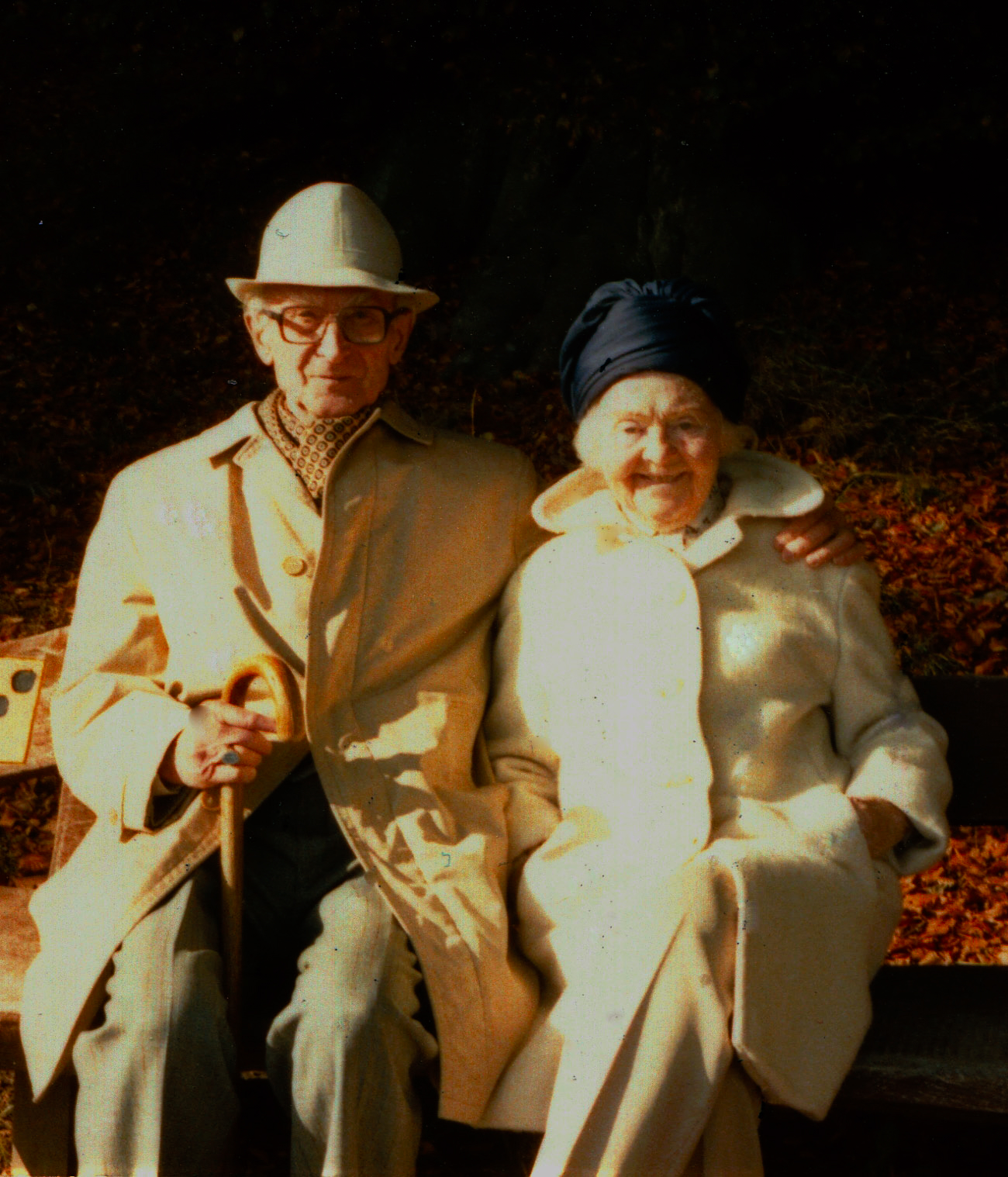
Uncle Günther and Aunt Friedel in Kassel-Wilhelmshöhe in 1984

Uncle Günther and Aunt Friedel in Kassel-Wilhelmshöhe in 1984

To be concluded in a post next week …

The Klopp Grandparents VIII

Adding Oil to the Fire

Friedrich Klopp and His Mother-in-law (Chart I – I & II)

Translated and Adapted from Eberhard Klopp’s Family Chronicle

Crest of Loitsche - Photo Credit: Wikipedi.org

Crest of Loitsche – Photo Credit: Wikipedi.org

Out of the marriage between Friedrich Klopp and Marie-Louise Weihe came two sons and two daughters. The first child Frieda was born on June 7, 1900 in the Wolmirstedt house, also Liesbeth on June 5, 1907 and Hermann on September 16, 1908. But their eldest son was not born here, but in 1905 in Loitsche about 20 km north of Magdeburg, so to speak as a consequence of mother-in-law’s meddlesome behavior. Behind the interruption of the birth sequence in Wolmirstedt we may see Friedrich’s attempt to escape from the scene of a now poisoned family atmosphere.

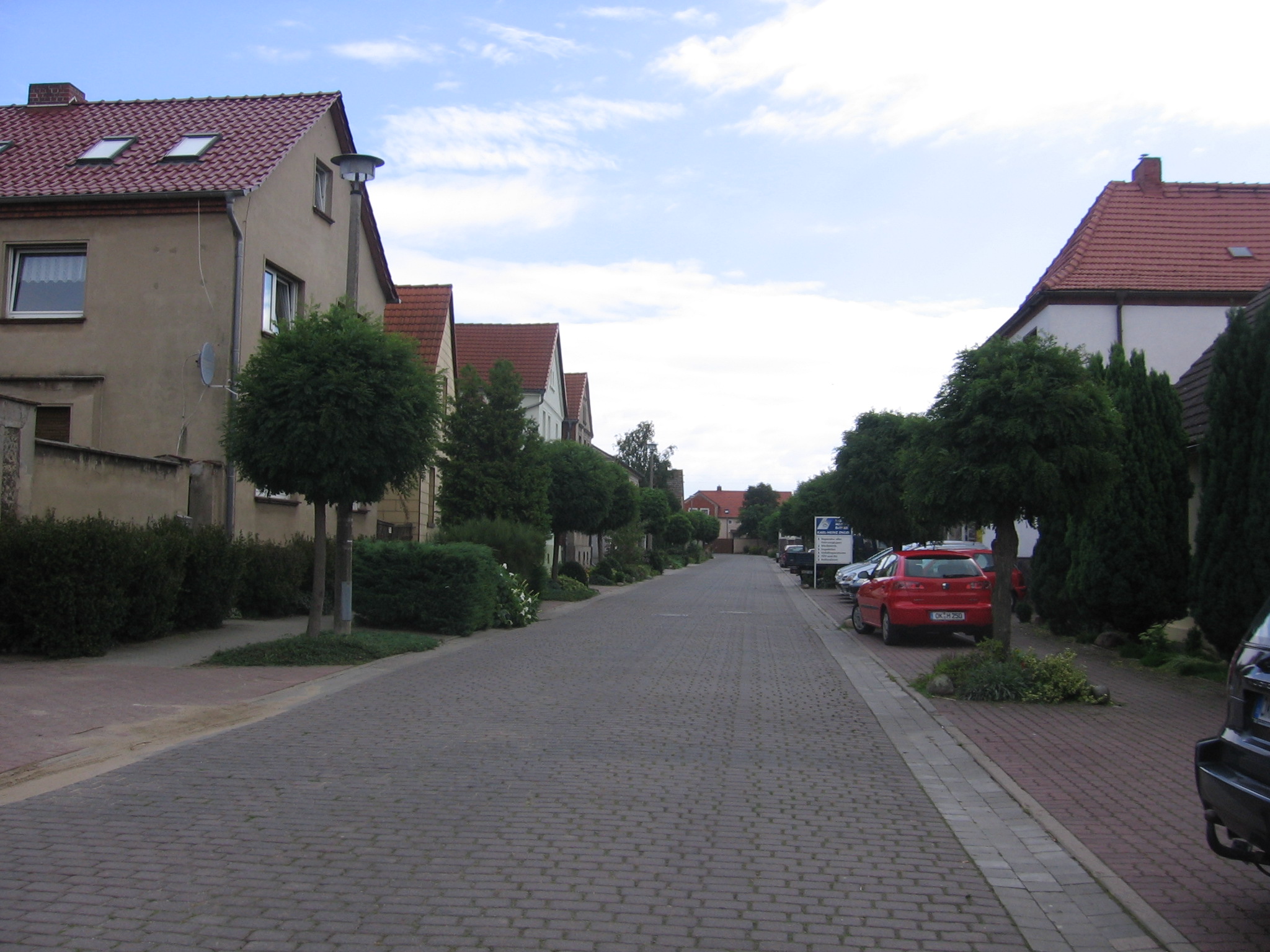
Loitsche Today

Today’s Loitsche – Photo Credit: tokiohotel.myblog.de

Acting on his wife’s prompting Friedrich tried to establish a new economic base in another trade. A determining factor may also have been the return of his brother Ferdinand from the United States, who failed to realize his economic plans there. Suddenly his younger brother was making inheritance claims on business and property, which Friedrich obviously did not recognize as valid. Considering the additional fact the economic picture of the land was not exactly rosy, it is not hard to understand that the flour and feed business was slow and did not prosper in Wolmirstedt.

Unnerving were also the events, which their brother Hermann recalled 90 years later. Grandmother Louise Weihe of Zielitz without any commercial experience interfered in all matters pertaining to the purchase and sale of goods. To add insult to injury, she circulated all kinds of rumors about her son-in-law and family with harmful effects on the business. To make matters worse, her sister started also to pour oil on the fire.

One particular rumor was making the rounds among family members. The insidious claim was that Emma’s daughter Anna Auguste Louise (1885-1967) had an illegitimate child, whose father was supposed to have been the ‘Polish Jew Grasmück’. Actually the story was quite different, as will be explained in another post on my Aunt Anna at a later date. The nonsense, completely made up of thin air, broke the camel’s back.

All these events cast some light on the chasm-deep hateful feelings, which the mother-in-law from Zielitz dumped without any compunction on the Klopp family. On the other hand, the Emma Klopp side in turn did not hesitate to make Friedrich worry a lot about his inheritance, Insults and cantankerousness dominated from now on the scene of the warring parties.

To be continued …

Günther Kegler, Chief of the Kegler-Clan (Part IV)

Günther Kegler Struggling Through the Postwar Era

From June 1946 to April 1975

Charts II a & b – II

In June 1946 former Lieutenant-Colonel Günther Kegler had the humiliating experience of two long years of unemployment, which in all likelihood was forced upon him by the new Soviet rulers of East Germany. On rare occasions he was able to hire himself out privately as a common laborer or as a helper in all kinds of pest control in and around Erfurt. During this time, as reported in Chapter 6 in the P. and G. Klopp Story, his nephews Karl and Adolf and later his niece Eka (Lavana) quite unexpectedly arrived at his doorstep. The Klopp children had no idea of the whereabouts of their parents. It was a miracle that the entire Ernst Klopp family was reunited in 1948 in the small village Rohrdorf in Southern Germany.

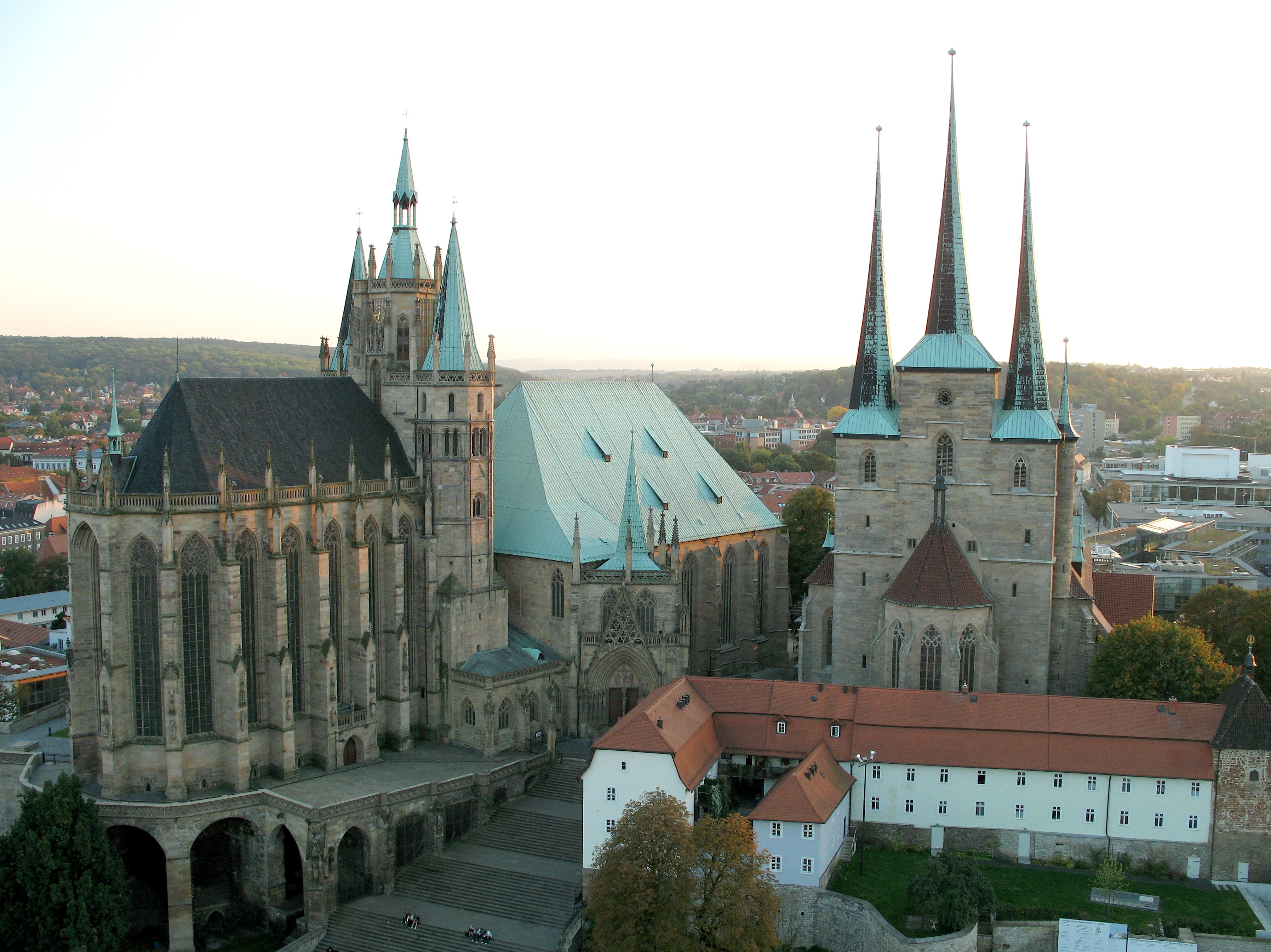
Erfurt Cathedral and Severi Church - Photo Credit: Wikipedia.org

Erfurt Cathedral and Severi Church – Photo Credit: Wikipedia.org

Finally in March 1947 Günther Kegler found employment at his son-in-law’s beverage plant in Erfurt and in 1950 within the same company became its bookkeeper. Thus, he could make use of his skills in accounting, which he had practiced between the two World Wars. On April 28, 1955 he fled with his wife Lucie to West Germany leaving behind all his furniture and other bulky belongings. Fortunately, he found immediate employment at the newly established beverage company that was owned by his son-in-law A. Lotz, who also had fled from East Germany. In 1956 his status as a refugee from the GDR was officially recognized. In the same year he was able to retire with a pension that at last provided a comfortable standard of living for the rest of his life.

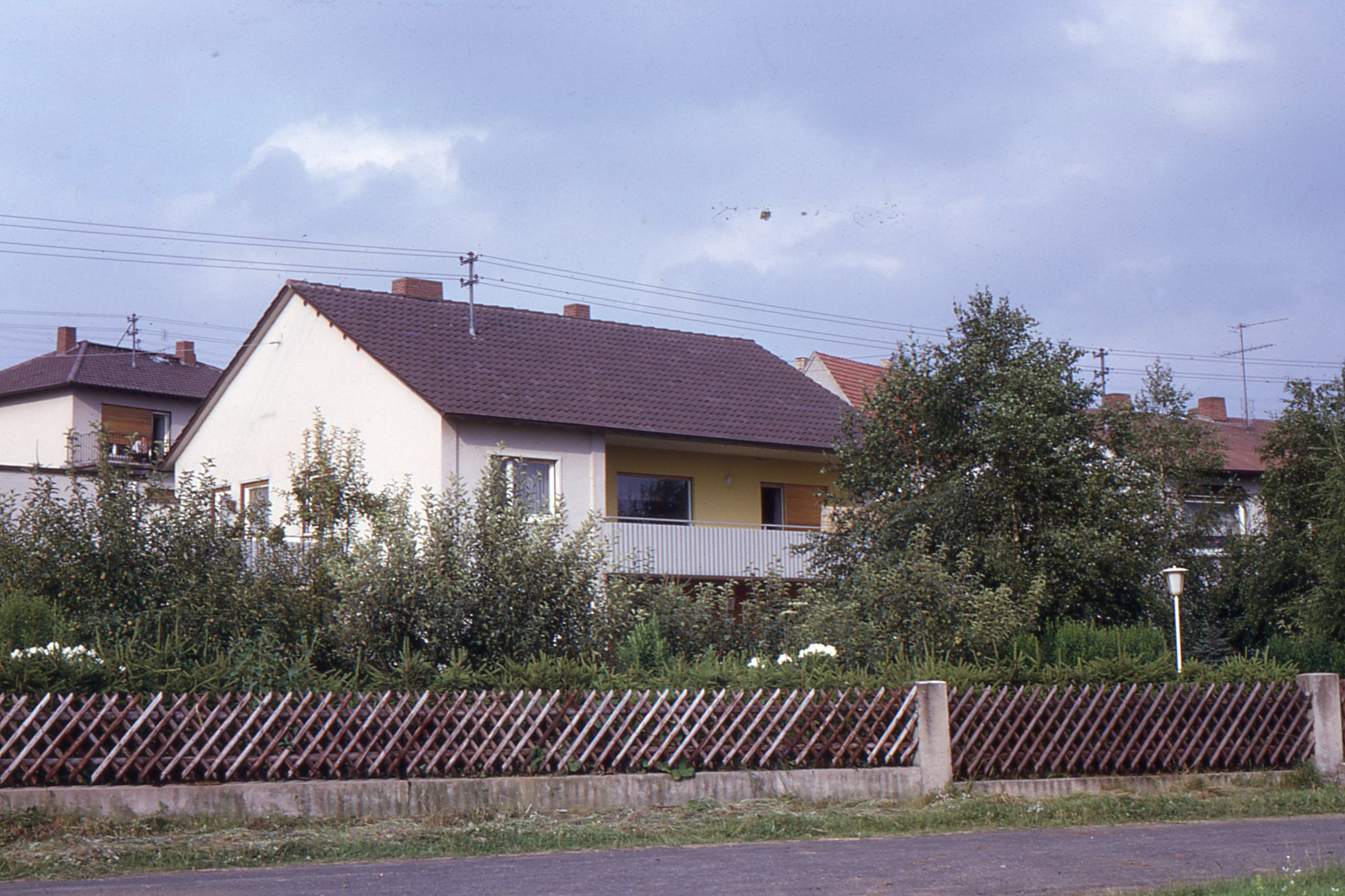
The Rental House in Watzenborn-Steinberg (now Pohlheim)

The Rental House in Watzenborn-Steinberg (now Pohlheim)

However, his plan was not to live out the remaining years in meaningless idleness. On the contrary, he helped many people with advice on legal issues, accounting problems, and above all he gave assistance in their struggle with the notoriously slow  bureaucracy of the West German government offices. In 1962 he invited his sisters Marie and Erika to join him and share a beautiful rental house in Pohlheim (former Watzenborn-Steinberg). That’s where his wife Lucie after a lengthy illness passed away in 1968. My uncle spent the next decade with his second wife Elfriede in their seniors’ apartment in Kassel-Wilhelmshöhe. I will write about Elfriede in another post.

65

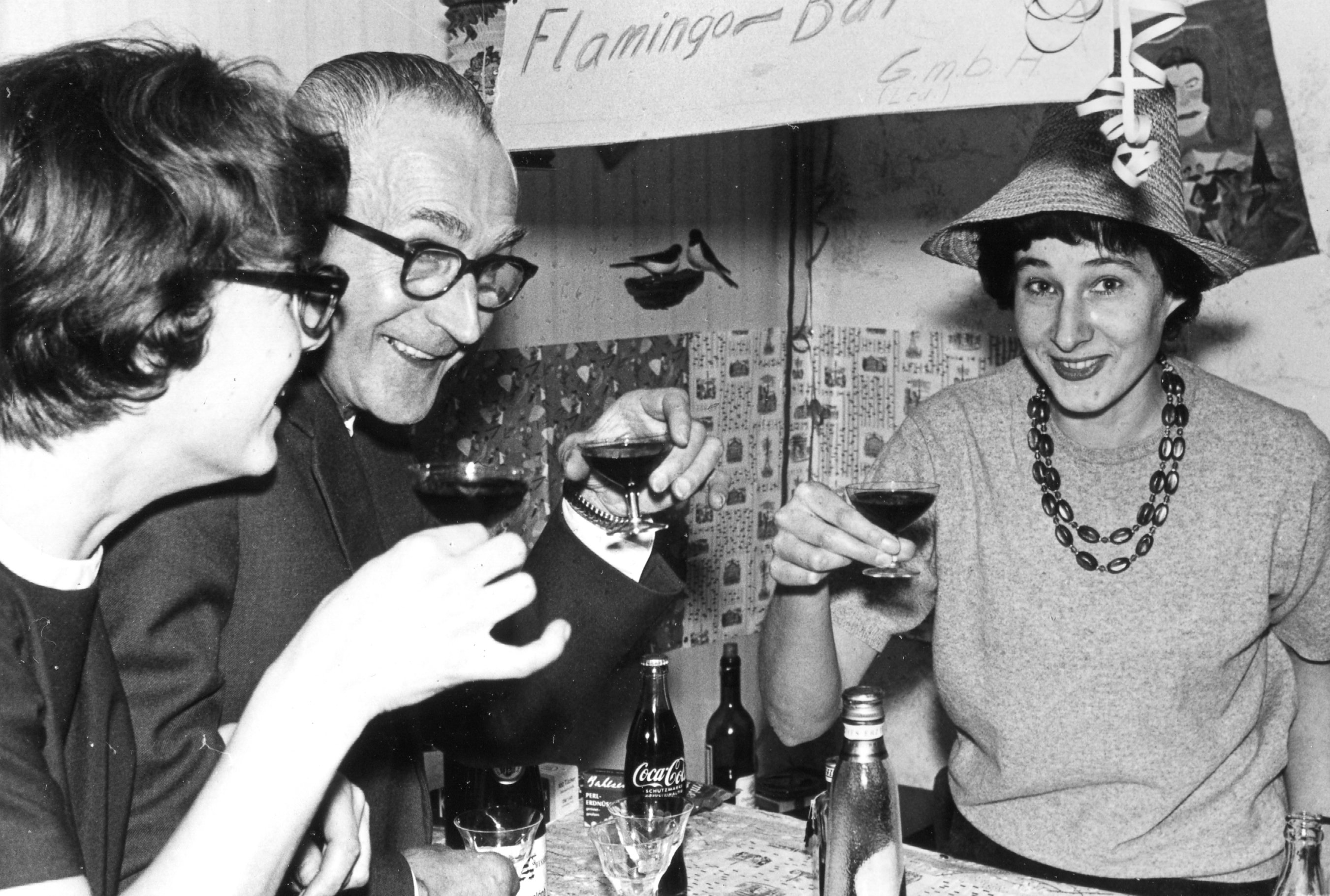
New Year’s Eve Party 1963 – Helga Kegler, Uncle Günther, and Eka (Lavana)

I remember Uncle Günther as a dear friend, who was also a fun loving individual. He enjoyed a good beer and passionately played the German card game ‘Doppelkopf’. In our correspondence we exchanged all kinds of humorous tales, while I was a soldier in the West German Armed Forces. He held the family together in a spirit of giving and outstanding hospitality. He truly deserved the prestigious title ‘Chief of the Kegler-Clan. Long after I emigrated to Canada, he sent me in keeping with his admirable Prussian sense of duty documents, which he had carefully arranged by date and importance. With the help of these papers I was able to draw some forty years later a small pension for my military service in Germany. Every month I buy two cases of beer with that money. And when I drink the refreshing brew, I often think of my dear old uncle in Germany.

The Klopp Grandparents VII

The Meddling of a Troublesome  Mother-in-law

Chart I – I & II

Adapted from Eberhard Klopp’s Family Chronicle

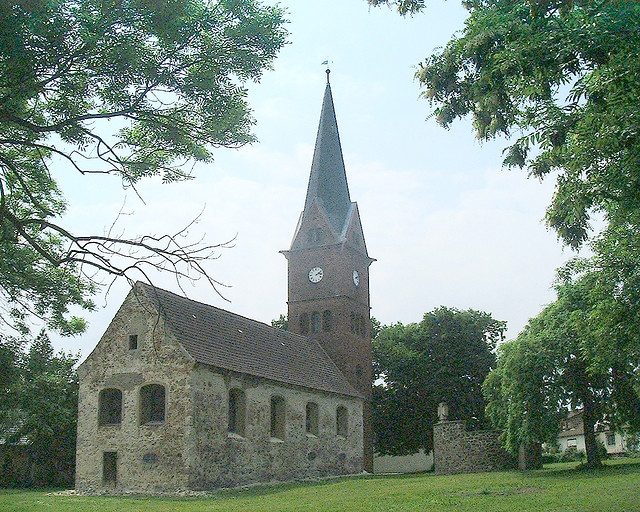
Zielitz Church

When Emma’s eldest son Friedrich married Auguste Weihe of Zielitz, he could not foresee how much trouble the new connection would bring to the entire Klopp family. The cause was not so much his young wife, whom he loved dearly, but rather his mother-in-law Luise Weihe, who had her own ideas about the way the couple should conduct their life and business. She insisted that her daughter should share with no one her new nest in Wolmirstedt. She was not exactly excited over Auguste’s choice of her son-in-law. So her daughter should at least be spared from Friedrich’s siblings and relatives. She viciously described them as the ‘vagabond and fugitive children of Cain’ with reference to the Bible verse in Genesis 4, 14.

Behold, thou hast driven me out this day from the face of the earth; and from thy face shall I be hid; and I shall be a fugitive and a vagabond in the earth; and it shall come to pass, that every one that findeth me shall slay me. King James Bible

With this remark Luise Weihe not only poisoned the climate of the newly established household, but also brought on the estrangement  of Emma and her younger children with the family of her eldest son.

Emma’s grandfather Johann Christian Bauer (1792-183) was of Jewish ancestry. It would go beyond the set limits of this blog to report in detail the colorful and eventful life of Johann Bauer. However, it is important to note here that his parents had already converted to the Christian faith and that their 14-year old son had been confirmed in Sudenburg-St. Ambrosius and also got married as a protestant groom on October 29, 1843 in the same place.

At the turn of the 20th century antisemitism was already a malignant phenomenon and spread like an epidemic throughout Germany. So far Friedrich’s mother-in-law had only hinted at her antisemitic sentiments against the Klopp family. But now she went too far with her unconcealed, racially driven diatribes, which she shamelessly showered on Emma and the rest of the ‘children of Cain’. The result was that even the young wife, her very own daughter, could not take it any more. She was by nature and temperament a resolute and energetic woman. In the end she too distanced herself from all connections to her parental home in Zielitz.

Her father Friedrich Weihe (1854-1944) suffered a great deal from his wife’s convoluted thoughts and attacks against the Klopp clan. But he was unable or unwilling to do anything about it except to contemptuously break wind on each step of the staircase he climbed to withdraw himself from the incessant and repetitive tirades in the living room below. This was in a sense his running commentary on his wife’s annoying and irksome prattle, which seemed to have no end.

To be continued …